
HGS200B Semi-Automatic Hot-Fill Blow Molding Machine – 1.25L | 400–550 BPH
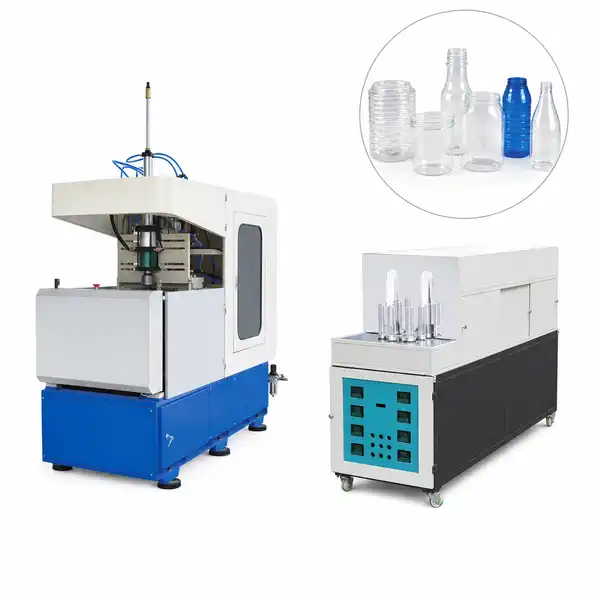
Semi-automatic PET hot-fill stretch blow molding machine at 380×210 mm pillar space, 120–200 mm mold capacity, 360 mm stretching stroke, 400–550 BPH for hot-fillable PET containers up to 1.25 litres. Temperature resistance 88–95°C — suitable for tea beverage, juice, and pasteurisation hot-filling lines. Korea Ever-Power HGS Series special variant — 500 kg, 1,550×560×1,450 mm.
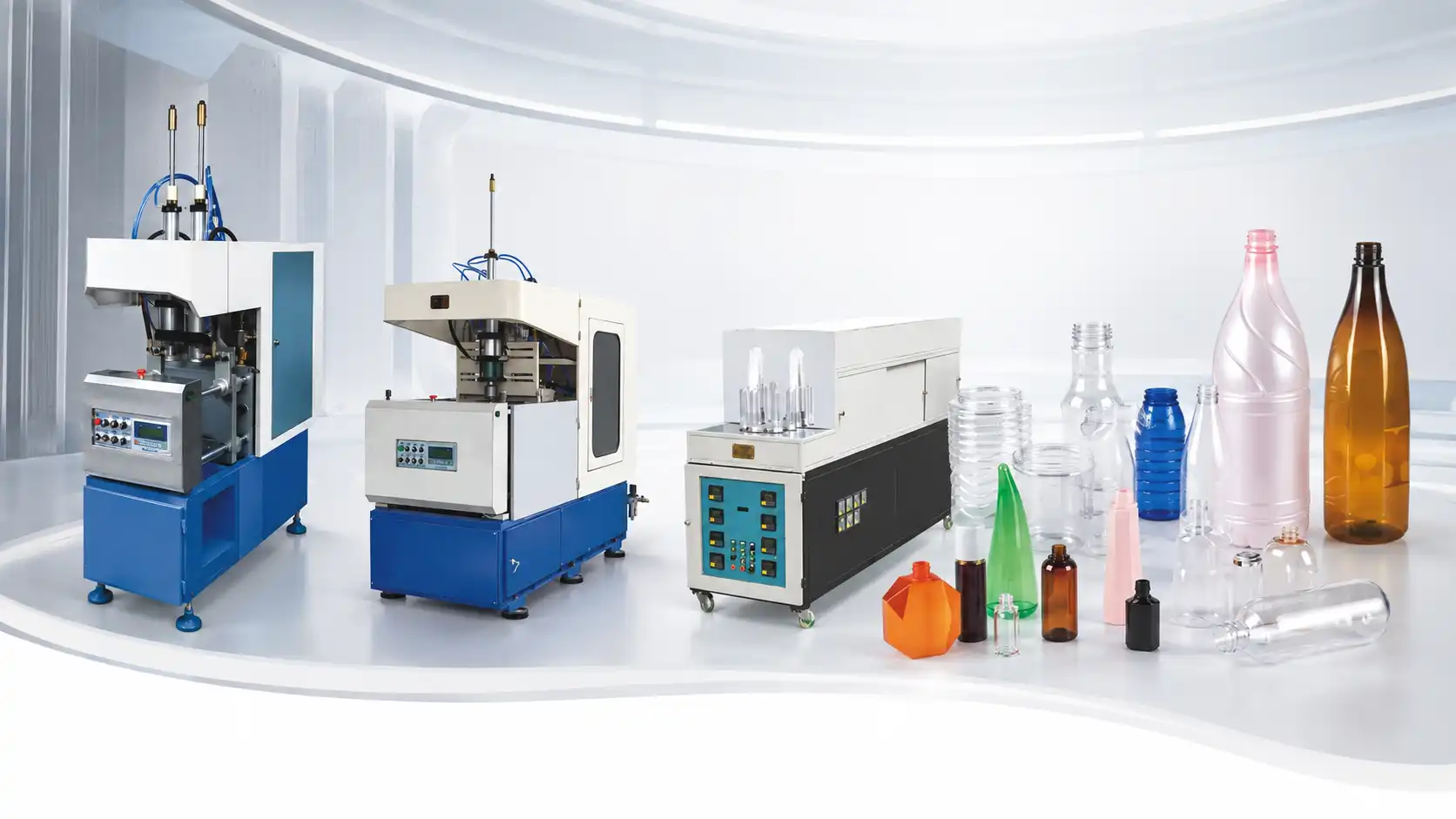
HGS200B
Semi-Automatic Hot-Fill PET Blow Molding Machine — 380×210 mm Pillar Space · 120–200 mm Mold · 360 mm Stretch · 88–95°C
1.25 Litre Max · 400–550 BPH · 500 kg · 1,550×560×1,450 mm · Tea Beverage & Pasteurisation · Korea Ever-Power
Product Overview
The HGS200B is Korea Ever-Power's hot-fill specialist variant in the HGS Series — the only machine in the range purpose-built for producing PET containers that must withstand the thermal stress of hot-fill beverage production. With a temperature resistance of 88–95°C, the HGS200B meets the requirement of tea beverage hot-filling lines and the pasteurisation processes used in beverage bottling where product is filled above 85°C.
A standard cold-fill PET bottle — produced on the HGS200A or any other cold-fill blow molding machine — deforms when filled above approximately 60°C. Hot-fill PET bottles require specific structural design (vacuum panels, base geometry, neck crystallisation) and a modified blow process: slower stretching, controlled crystallinity through heat-setting at the mold wall, and a longer overall cycle. The HGS200B is configured for this process — its 360 mm stretching stroke (10 mm more than the HGS200A's 350 mm) and 400–550 BPH output range reflect the extended cycle time inherent to hot-fill bottle production.
▶ Tea beverage hot-filling lines filling above 85°C
▶ Juice, functional drink & RTD beverage pasteurisation packaging
▶ Small-batch hot-fill production where a full automatic line is not viable
▶ Development and sampling of hot-fill bottle designs
The HGS200B is not a re-tuned HGS200A. Hot-fill PET production involves fundamental differences in bottle design, blow process, and cycle control that require a dedicated machine configuration.
What the HGS200B Produces — 88–95°C Fill Capability
Ready-to-drink tea filled at 85–92°C — the primary application for the HGS200B. Bottled green tea, black tea, oolong, herbal blends, and milk tea formats in 500 ml to 1.25 litre PET containers that require heat resistance up to 95°C. The HGS200B meets the thermal performance requirements of tea beverage hot-filling production lines.
100% juice, nectar, and fruit drink PET bottles filled at 85–90°C. Hot-fill juice requires the same 88–95°C bottle thermal resistance as tea beverage — both applications use the pasteurisation hot-fill process and require the vacuum-panel bottle geometry the HGS200B is designed to produce.
Vitamin drinks, isotonic beverages, and functional beverages that use hot-fill pasteurisation for extended shelf life without refrigeration. The HGS200B's 120–200 mm mold capacity covers the full range of standard functional drink bottle body geometries in the 1-litre to 1.25-litre range.
New hot-fill bottle designs for beverage brand clients — structural validation of vacuum panel geometry, drop resistance, and top-load performance under hot-fill conditions. The HGS200B produces hot-fill samples at semi-automatic scale for laboratory testing before committing to full automatic line tooling.
Technical Specifications
| Mold Configuration | |
| Pillar Space (W × H) | 380 × 210 mm |
| Mold Capacity Range | 120 – 200 mm |
| Open Mold Stroke | 200 mm |
| Stretching Stroke | 360 mm — extended for hot-fill crystallinity control |
| Sealing Stroke | 40 mm |
| Mold-Locking Mechanism | Pneumatic hydraulic linkage (toggle-type) |
| Hot-Fill Performance | |
| Temperature Resistance | 88 – 95°C — suitable for tea beverage hot-filling & pasteurisation |
| Fill Process Compatibility | Hot-fill (≥85°C), pasteurisation (Bactofuge / tunnel pasteuriser) |
| Container Specifications | |
| Bottle Capacity | Up to 1.25 Litres (1,250 ml) |
| Compatible Preform Material | PET (hot-fill grade, higher IV recommended) |
| Production Performance | |
| Output Efficiency | 400 – 550 BPH (extended cycle for hot-fill process) |
| Electrical & Air System | |
| Power Supply | 220V / 50Hz |
| Operating Air Pressure | 0.8 MPa |
| Blowing Air Pressure | 3.0 MPa |
| Machine Dimensions | |
| Size (L × W × H) | 1,550 × 560 × 1,450 mm |
| Machine Weight | 500 kg |
| Matching Heater Unit (sold separately) | |
| Recommended Heater Models | HGJ-CL (standard neck, 96-position, 68 mm max) — most hot-fill beverage preforms use standard neck finishes |
| Heater Power | 5 – 8 kW (three-phase four-wire) |
HGS200B vs HGS200A — Choosing the Right Machine
The HGS200B and HGS200A share the same pillar space and mold capacity — but they are not interchangeable. The choice between them is determined entirely by how the bottle will be filled.
| Parameter | HGS200B — Hot-Fill | HGS200A — Cold-Fill |
|---|---|---|
| Fill Temperature | 85–95°C | Ambient – ~60°C |
| Heat Resistance | 88–95°C | ~60°C (standard PET) |
| Stretching Stroke | 360 mm | 350 mm |
| Output (BPH) | 400–550 | 500–980 |
| Pillar Space | 380×210 mm | 380×210 mm |
| Mold Capacity | 120–200 mm | 120–200 mm |
| Machine Weight | 500 kg | 480 kg |
| Primary Application | Tea, juice, hot-fill beverage | Water, CSD, cold-fill beverage, personal care, condiments |
Core Engineering Features
88–95°C Temperature Resistance — Pasteurisation Line Compliant
The HGS200B produces bottles that withstand the full thermal profile of tea beverage and juice hot-fill production: fill temperature at 85–92°C, capping and immediate inversion at elevated temperature, and the gradual cooling phase that causes internal vacuum formation and activates the vacuum panels. The 88–95°C thermal resistance ensures no geometric deformation occurs at any stage of the hot-fill process, including tunnel pasteurisation where bottles are exposed to sustained elevated temperatures.
360 mm Stretching Stroke — Built for Hot-Fill Biaxial Orientation
Hot-fill PET requires higher biaxial orientation than cold-fill — the crystalline structure that provides heat resistance is produced by the combination of stretching and the controlled heat-set period at the mold wall. The HGS200B's 360 mm stroke (10 mm more than the HGS200A) gives the additional axial travel needed to achieve the orientation ratio required for consistent heat-set crystallinity across the bottle body, particularly in the critical shoulder and base regions where hot-fill bottles are most prone to failure.
400–550 BPH — Extended Cycle for Process Integrity
The lower BPH of 400–550 compared to the HGS200A's 500–980 is a direct consequence of the hot-fill blow process: the heat-set dwell period — during which the blown bottle is held against the mold wall at controlled temperature to develop crystallinity — extends the total cycle time per bottle. This is not a limitation; it is the mechanism by which hot-fill capability is achieved. Operators attempting to run hot-fill molds at cold-fill cycle speeds produce bottles with insufficient crystallinity that fail under hot-fill conditions.
Compatible with Vacuum-Panel Mold Geometry
Hot-fill PET bottles incorporate vacuum panels — recessed sections in the bottle sidewall that flex inward as the hot-filled product cools and contracts, absorbing the volume reduction without distorting the bottle's external geometry. Vacuum-panel molds have more complex internal cavity geometry than standard cold-fill molds. The HGS200B's 380×210 mm pillar space, 120–200 mm mold capacity, and extended stretch stroke are compatible with vacuum-panel mold tooling within this dimension range.
Same Footprint as HGS200A — Hot-Fill Capability, No Extra Space
The HGS200B's 1,550×560×1,450 mm footprint is identical in length and width to the HGS200A — only 80 mm shorter in height. For operations adding hot-fill capability to an existing production floor alongside cold-fill machines, the HGS200B requires no additional floor space allocation compared to a standard HGS200A installation. This makes the HGS200B suitable for existing facilities with space-constrained layouts.
Hot-Fill PET Sampling at Semi-Automatic Cost
Validating a new hot-fill PET bottle design requires producing bottles for thermal testing, drop testing, top-load testing, and shelf-life trials — typically 200–2,000 bottles per design iteration. Using a full automatic hot-fill blow molding line for this volume is prohibitively expensive per sample. The HGS200B produces hot-fill validation samples at semi-automatic cost — with the same process integrity as production bottles — making it a practical tool for beverage brand R&D and packaging development programs.
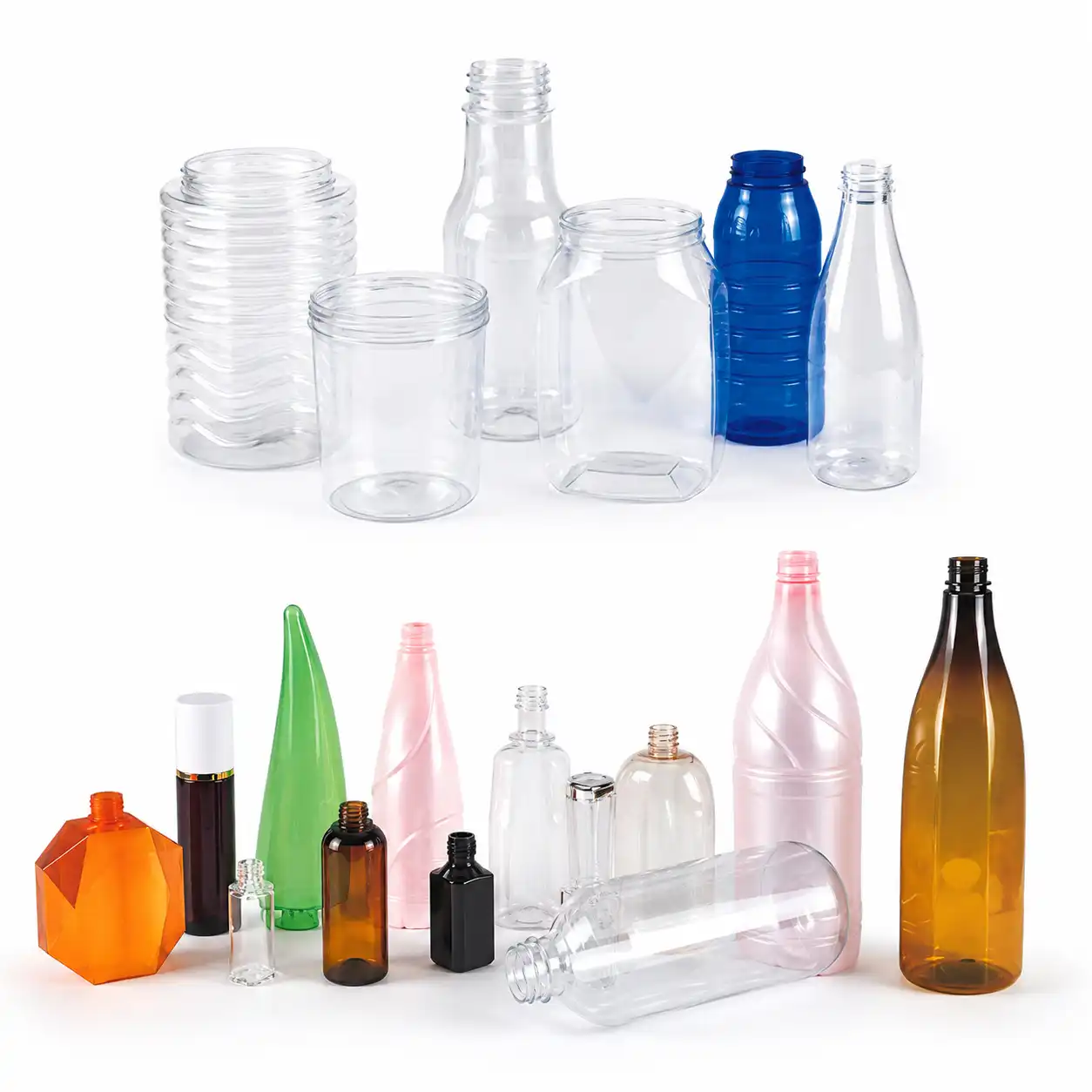
PET bottle formats producible on the HGS200B — tea beverage, juice, functional drink, and other hot-fill applications requiring 88–95°C temperature resistance up to 1.25 litres.
About Korea Ever-Power
Korea Ever-Power is a dedicated PET blow molding machine manufacturer with over 20 years of R&D and production experience, operating from a 20,000 m² production facility. The HGS200B is Korea Ever-Power's answer to the hot-fill beverage market at semi-automatic scale — providing the thermal performance required for tea beverage and juice hot-filling without the capital commitment of a full automatic hot-fill line. Multiple national patents and ECM Verification of Compliance. Export destinations span Malaysia, Indonesia, Peru, Chile, Russia, Philippines, Norway, Morocco, Qatar, and more.
✅
Each HGS200B is tested on hot-fill PET molds — the 360 mm stretch stroke, extended dwell cycle, and 88–95°C thermal performance are confirmed before shipment.
🔧
Korea Ever-Power designs vacuum-panel hot-fill molds for the HGS200B's 120–200 mm capacity range. Provide your bottle drawing and fill specification for mold feasibility review.
🌡️
Hot-fill PET bottles require higher IV (intrinsic viscosity) preforms than standard cold-fill. Korea Ever-Power provides preform specification guidance at the quotation stage to ensure correct raw material selection.
📚
Korea Ever-Power's commissioning team provides on-site heater zone tuning and cycle parameter setup specifically for hot-fill PET — the process variables differ from cold-fill and require dedicated setup time.
Frequently Asked Questions
Can I use the HGS200A to produce hot-fill bottles instead of the HGS200B?
No. The HGS200A produces standard cold-fill PET bottles with a heat resistance of approximately 60°C — these will deform when filled above that temperature. Hot-fill production requires the HGS200B's specific configuration: the 360 mm stretch stroke for hot-fill orientation ratios, the extended cycle capability for heat-set dwell, and mold tooling designed with vacuum panels. Running hot-fill molds on the HGS200A produces bottles that appear correct but fail thermally during filling.
Why is the HGS200B's BPH (400–550) lower than the HGS200A (500–980)?
Hot-fill PET production requires a heat-set dwell period — a controlled time during which the blown bottle is held against the mold wall at elevated temperature to develop the crystalline structure that provides heat resistance. This dwell period adds to the total cycle time per bottle, reducing BPH compared to the cold-fill cycle where no dwell is required. The 400–550 BPH reflects the correct process — operators who skip or shorten the dwell period to increase output produce bottles that fail thermally under hot-fill conditions.
What is the realistic monthly output from one HGS200B on two shifts?
At 480 BPH sustained operator pace (mid-range of the 400–550 BPH spec) and 85% utilisation over 8 hours, each shift produces approximately 3,264 bottles. On a 22-day monthly schedule at two shifts, output is approximately 143,000 hot-fill PET containers per month from a single HGS200B. For tea beverage or juice operations producing 80,000–200,000 bottles per month, one or two HGS200B machines cover the volume without an automatic hot-fill line.
Do I need special preforms for the HGS200B?
Yes. Hot-fill PET bottles require preforms made from higher intrinsic viscosity (IV) PET resin — typically IV 0.80–0.85 dl/g compared to 0.72–0.78 dl/g for standard cold-fill preforms. Higher IV resin produces better biaxial orientation and higher crystallinity during the hot-fill blow process, which directly contributes to the bottle's thermal resistance. Standard cold-fill preforms can be blown on the HGS200B but will not achieve the 88–95°C thermal resistance. Korea Ever-Power provides preform specification guidance at the quotation stage.
What is the difference between the HGJ-CL and HGJ-B heater for the HGS200B?
The HGJ-CL (96-position, up to 68 mm neck) is the standard heater for most hot-fill beverage preforms — tea, juice, and functional drink preforms typically use standard neck finishes within the 68 mm ceiling. The HGJ-B (18/36-position, up to 130 mm wide neck) is used when the preform neck finish exceeds 68 mm — this is uncommon in hot-fill beverage but can apply to wide-mouth hot-fill formats. Specify your preform neck finish at the quotation stage.
Can the HGS200B also produce standard cold-fill bottles when hot-fill production is not running?
Technically the HGS200B can run cold-fill molds — the mold configuration (380×210 mm pillar, 120–200 mm capacity) is the same as the HGS200A. However, the extended cycle configuration of the HGS200B means cold-fill production will run at the lower 400–550 BPH rather than the HGS200A's 500–980 BPH. For operations that need both hot-fill and high-throughput cold-fill, the better solution is one HGS200B for hot-fill and one HGS200A for cold-fill, which also prevents any cross-contamination of mold tooling between the two processes.
Customer Reviews
"We produce bottled green tea and oolong tea filled at 88°C — 110,000 bottles per month across two SKUs on a single HGS200B. The machine holds the thermal spec consistently across production runs. Korea Ever-Power's team tuned the cycle dwell parameters on-site — we went from unstable early bottles to consistent 90°C thermal resistance within two days. The BPH at 480 sustained is exactly what they told us to expect."
HGS200B
"We needed hot-fill PET bottle sampling for a new juice brand client — 500 bottles per design, 4 design iterations across two months. The HGS200B was the only machine we found that could produce genuine hot-fill thermal-spec samples at semi-automatic cost. Our clients can now test shelf-life and drop performance on real hot-fill bottles before committing to full line tooling."
HGS200B
"Good machine. Key note: preform selection matters enormously on the HGS200B — our first batch used standard IV 0.76 preforms and thermal resistance was inconsistent. Switching to IV 0.82 high-IV preforms as Korea Ever-Power recommended resolved this immediately. Budget time for process dialing-in during commissioning. Korea Ever-Power's on-site support was thorough."
HGS200B
"We use the HGS200B alongside an HGS200A — hot-fill RTD tea on the 200B, cold-fill water on the 200A, both in the same production bay. Same floor space, same air supply standard, same operator training base. The separation of the two processes onto dedicated machines has eliminated any cross-process quality issues we had when trying to adapt cold-fill equipment for hot-fill."
HGS200B
"We are a new tea beverage brand — 80,000 bottles per month, one SKU, one shift. The HGS200B on a single shift at 500 BPH sustained covers our monthly volume with capacity headroom. Investment was a fraction of the automatic hot-fill line we were quoted. Korea Ever-Power designed both the machine and our vacuum-panel mold — the integration was seamless."
HGS200B
Get a Quote for the HGS200B
Tell us your fill temperature, bottle volume and body diameter, neck finish, preform specification, and required monthly output. We will confirm HGS200B compatibility and provide machine, heater, and hot-fill mold package quotation within 2 business days.
Additional information
| Editor |
|---|
Related products
-
HGJ-CL Standard-Neck Preform Heater – 96 Position | 200–2,100 Preforms/Hour
-
HGS200A Semi-Automatic Blow Molding Machine – 1.25L | 500–980 BPH
-
HGS350A Semi-Automatic Blow Molding Machine – 20L | 150–400 BPH
-
HGS250A Semi-Automatic Blow Molding Machine – 5L | 500–980 BPH
-
HGS280A Semi-Automatic Blow Molding Machine – 10L | 500–980 BPH
-
HGJ-B Wide-Neck Jar Preform Heater – 18/36 Position | 500–1,000 Preforms/Hour
-
HGS150A Semi-Automatic Blow Molding Machine – 1L | 500–1100 BPH