
INDUSTRY APPLICATION
Wide-Mouth Food Jar Production: ISBM Guide for Korean Kimchi, Sauce & Spread Producers
Korean food exports crossed 12 billion USD in 2024, with jarred kimchi, gochujang, doenjang, and specialty sauces anchoring global retail presence. Wide-mouth food jars demand process disciplines beyond beverage production: 63-89 mm neck finish tolerancing, hot-fill crystallization resistance, and vacuum closure integrity. This guide covers the ISBM platforms, mould architecture, and food-contact compliance that Korean producers in Jeonju, Gwangju, and Cheongju use to produce jars meeting global food retail specifications.
In This Guide
- Korean Food Jar Market Landscape
- Food Jar Categories & Specifications
- Wide-Mouth Geometry Challenges
- Hot-Fill & Heat-Set Requirements
- Resin Selection for Food Jars
- Food-Contact Regulatory Compliance
- Mould Design for Wide-Mouth Jars
- Recommended ISBM Platforms
- Korean Food Producer Case Studies
- Conclusion
1. Korean Food Jar Market Landscape
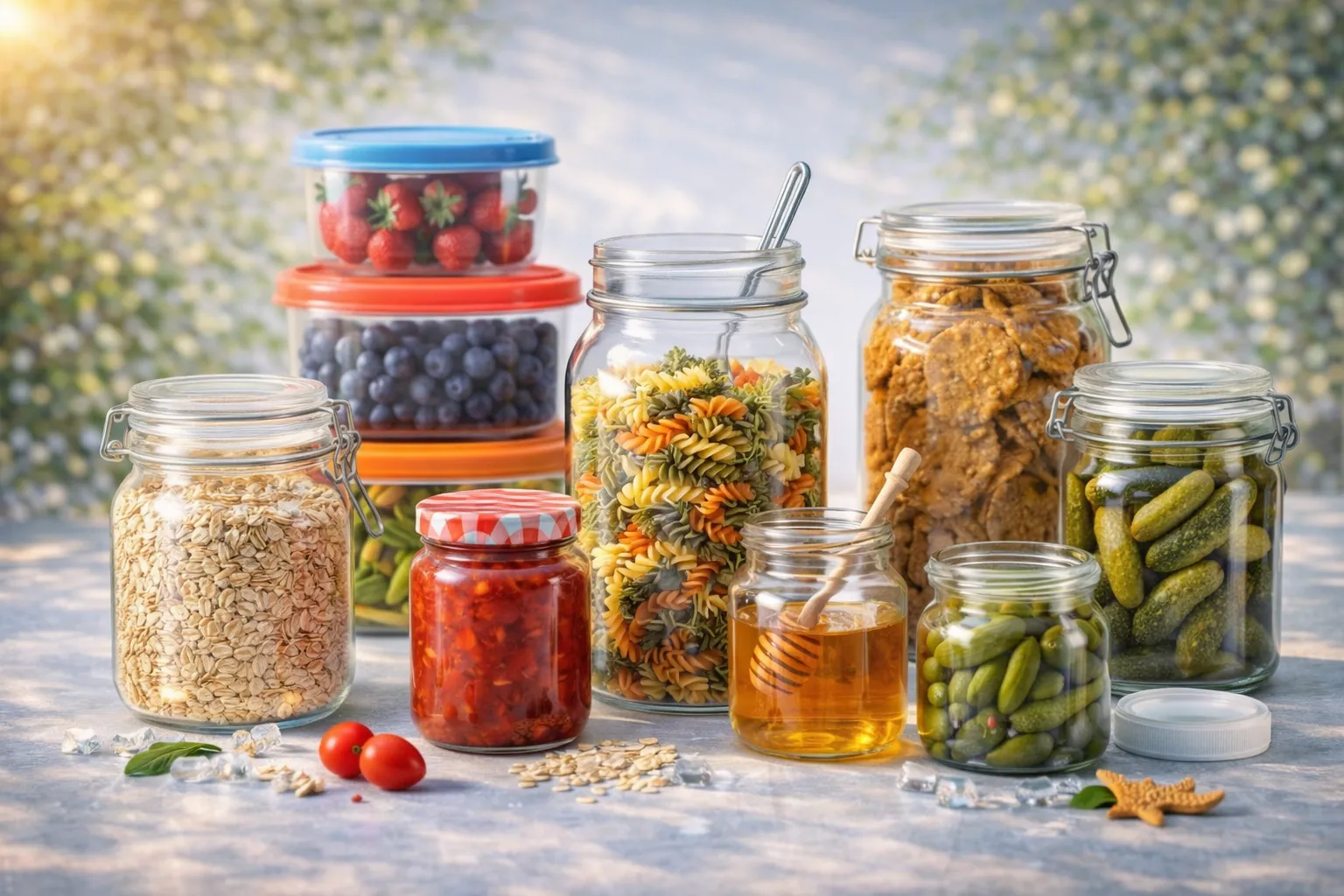
Korean wide-mouth food jars — the packaging standard for kimchi, gochujang, doenjang, and traditional Korean sauces in global retail
Korean food exports crossed 12 billion USD in 2024, driven by the global rise of K-food retail presence in North American, European, and Southeast Asian grocery chains. Packaged traditional Korean foods (kimchi, gochujang red chili paste, doenjang soybean paste, ssamjang dipping sauce) account for roughly 2.8 billion USD of this volume, with jarred formats capturing 65-70% of export-channel product packaging. Major Korean food producers including CJ CheilJedang (Bibigo), Daesang Corporation, Ottogi, Sempio Foods, and Pulmuone operate ISBM production lines dedicated to wide-mouth jar manufacturing.
Korean food jar production concentrates in four regional clusters. Jeonju-Jeollabuk-do hosts traditional Korean food manufacturing heritage and modern-scale contract production for premium kimchi and fermented foods. Gwangju serves sauce and condiment processing for the southwestern Korean food belt. Cheongju supports central Korean food processing including gochujang and seasoning blends. Gimhae supports southeastern export-focused packaging for Japanese and Southeast Asian markets. Together these four clusters produce roughly 800 million wide-mouth food jars annually for domestic retail and export.
Wide-mouth food jar production differs from beverage and cosmetic bottle manufacturing in five dimensions: 63-89 mm neck finish versus 22-28 mm beverage standard, heavy wall thickness (1.5-3.5 mm versus 0.25-0.40 mm beverage) supporting product weight and thermal cycling, hot-fill process compatibility at 85-95°C product temperature, vacuum closure integrity maintaining 25-35 kPa negative pressure through shelf life, and food-contact compliance across multi-market regulatory frameworks. Each dimension requires dedicated process windows and machine specifications that beverage bottle lines cannot accommodate without substantial retooling.
2. Food Jar Categories & Specifications
Small Sauce Jars (150-350 ml)
Typical products: table-top gochujang, ssamjang dipping sauce, sesame oil blends, premium specialty sauces. Neck finish 63/78 mm or 63/106 mm twist-off. Wall thickness 1.2-1.8 mm. Annual volume per SKU 1.5-4 million units for domestic retail, 0.5-1.5 million units for export channels.
Medium Kimchi & Paste Jars (400-800 ml)
Typical products: family-size kimchi, gochujang bulk, doenjang soybean paste, chili oil. Neck finish 82/89 mm or 89/106 mm wide-mouth twist-off. Wall thickness 1.8-2.5 mm. Export-dominant category; single highest volume in Korean food jar production at roughly 280 million units per year.
Large Bulk Jars (1-3 L)
Typical products: foodservice kimchi, restaurant bulk gochujang, commercial doenjang, catering sauces. Neck finish 89/106 mm or 110/120 mm extra-wide. Wall thickness 2.5-3.5 mm. Lower unit volume (1-2 million per SKU annually) but higher margin; dominant in Korean foodservice channel and Asian diaspora retail in international markets.
Premium Specialty & Gift (200-500 ml)
Typical products: premium small-batch kimchi, artisanal fermented products, gift-boxed traditional foods, export-channel flagship SKUs. Heavy-wall PETG or PCTG replaces standard PET for premium aesthetic. Wall thickness 2.5-4.0 mm. Lower volume but highest margin; roughly 4-8% of Korean food jar production but 15-20% of category revenue.
3. Wide-Mouth Geometry Challenges
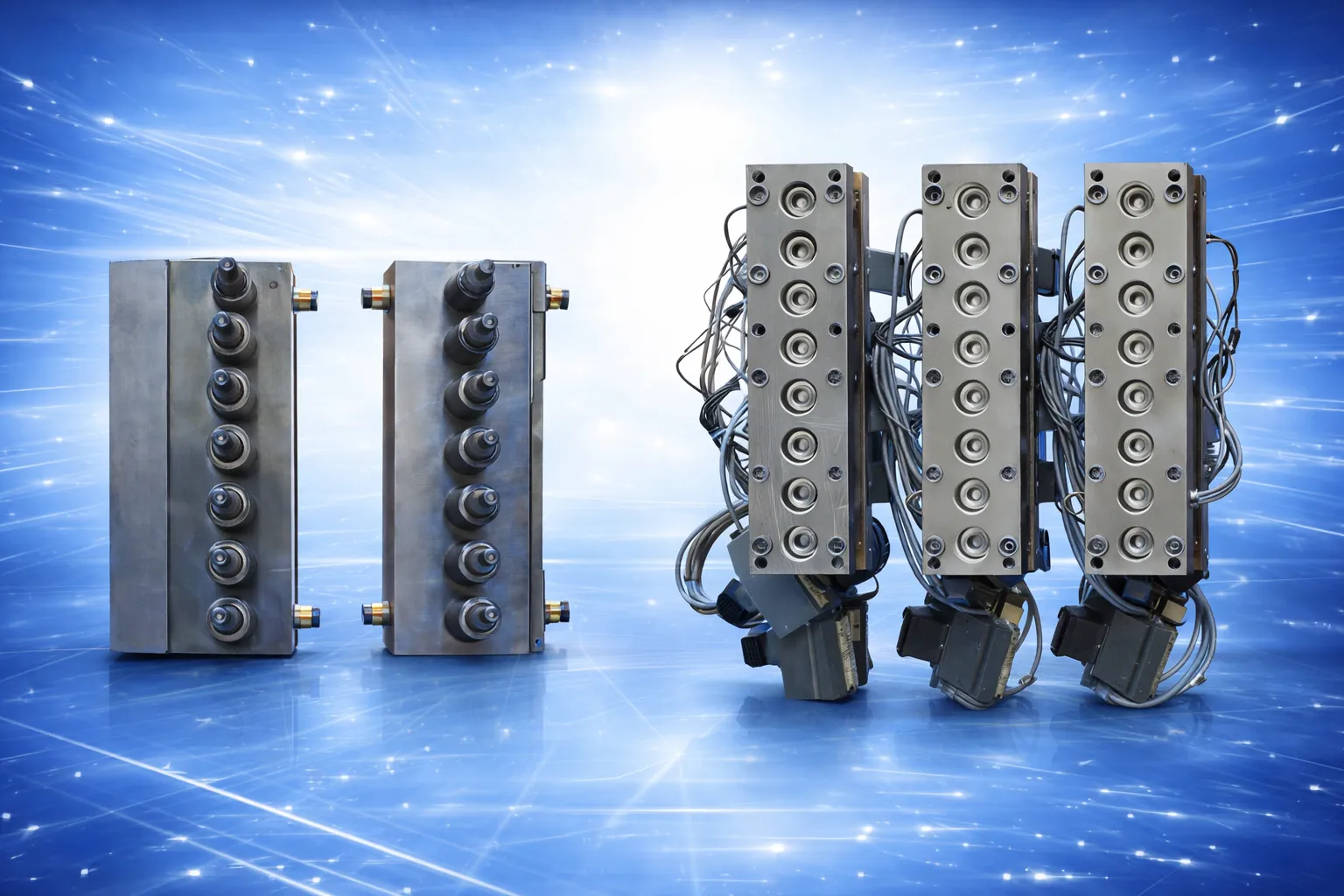
Wide-mouth jar mould with 82mm twist-off neck finish — preform design and stretch ratio calibration handle the challenging neck-to-body transition
Wide-mouth geometry fundamentally changes ISBM process dynamics. Where standard 28 mm beverage necks allow preform-to-bottle stretch ratios of 10-14× total, wide-mouth 82-89 mm necks constrain the neck-to-body transition to roughly 4-6× effective stretch, which must be compensated through preform wall thickness and specialized stretch profiles. Three engineering challenges dominate wide-mouth production.
Neck Support Ring Strength
Filling lines transfer filled jars by gripping under the neck support ring. For heavy kimchi/paste jars weighing 600-1,200 g filled, the neck ring must hold this load without deformation. Ring thickness typically 3.5-4.5 mm (vs 1.2-1.8 mm beverage), and neck ring crystallinity should be above 35% for load-bearing durability.
Shoulder-to-Body Transition Geometry
Sharp shoulder transitions between the wide neck and jar body produce thin-zone defects when preform stretching concentrates at the transition radius. Minimum recommended shoulder radius is 12-18 mm for 82 mm neck, 15-25 mm for 89 mm neck, and 18-30 mm for 110 mm ultra-wide necks. Aggressive transitions below these minimums require specialized stretch rod profiles to prevent wall thinning.
Vacuum Panel Accommodation
Hot-filled jars develop negative pressure (25-35 kPa) as contents cool, requiring designed vacuum absorption panels to prevent random paneling/denting. Jar body typically incorporates 6-8 symmetric concave panels that flex predictably under vacuum. Panel geometry must balance vacuum absorption with retail shelf aesthetics; poorly designed panels produce visually irregular bottles that retailers reject.
4. Hot-Fill & Heat-Set Requirements
Many Korean food jar applications fill product at elevated temperature for shelf stability. Hot-fill temperatures range from 75°C for mild pasteurized products to 95°C for fully-sterilized commercial shelf-stable items. Standard biaxially-oriented PET distorts and shrinks above approximately 70°C, making hot-fill incompatible without heat-set processing that pushes thermal stability to 90-95°C.
Heat-set PET process overview:
- ✓Hot mould temperature: blow cavity held at 120-150°C during the blow cycle (vs 10-18°C cold-fill mould)
- ✓Extended dwell time: bottle held in hot mould 2-4 seconds for thermal crystallization of biaxially-oriented PET
- ✓Crystallinity target: 25-35% crystalline content (vs 5-10% standard biaxially-oriented PET)
- ✓Thermal stability: shrinkage less than 1.5% after 95°C hot-fill exposure (vs 3-6% standard PET)
- ✓Cycle time impact: heat-set adds 3-5 seconds to cycle time versus cold-fill production
Heat-Set Mould Infrastructure Cost
Heat-set moulds require dedicated cartridge heater systems, hot-oil circulation, and specialized insulation that raises mould cost 40-60% above cold-fill equivalent. Machines running heat-set production need dual-temperature mould temperature control units capable of switching between 10-18°C cold-fill and 120-150°C heat-set depending on product being run.
Fermented Korean foods (kimchi, gochujang, doenjang) traditionally ship cold-chain or require refrigeration after opening rather than commercial shelf-stable processing, so heat-set hot-fill is less critical for traditional Korean food jars than for Western condiment production. However, export market extension to ambient-temperature retail shelves (US, EU, Southeast Asian supermarket channels) increasingly drives adoption of pasteurized hot-fill variants with extended shelf life, which then requires heat-set PET infrastructure.
5. Resin Selection for Food Jars
Wide-mouth food jar resin selection balances cost, clarity, heat resistance, and chemical compatibility with fermented and acidic food products. Three resin options cover 95% of Korean food jar applications. For material science background, see our biaxial orientation guide.
| Resin | Typical Use | Hot-Fill Compat | Cost Index |
|---|---|---|---|
| Standard PET | Cold-fill mass tier, refrigerated | ≤ 70°C | 1.0× |
| Heat-Set PET | Commercial shelf-stable, pasteurized | 90-95°C | 1.15-1.25× |
| PETG | Premium cold-fill, heavy-wall clarity | ≤ 70°C | 1.4-1.6× |
| PCTG | Premium gift, heavy-wall, retort | 85-90°C | 1.8-2.2× |
UV-blocking resin variants (amber PET, brown-tint PETG) accommodate fermented product categories where light exposure accelerates oxidation and flavour drift. Korean gochujang and doenjang traditionally use brown-tinted jars emulating the traditional earthenware onggi container aesthetic while also providing UV protection. Resin colourant loading typically 0.3-0.6% for standard amber tint, up to 1.2% for dark earthenware-emulation opacity.
6. Food-Contact Regulatory Compliance
Food jar production requires food-contact material compliance across all destination markets. Korean producers exporting to global retail typically maintain certifications covering five regulatory frameworks simultaneously.
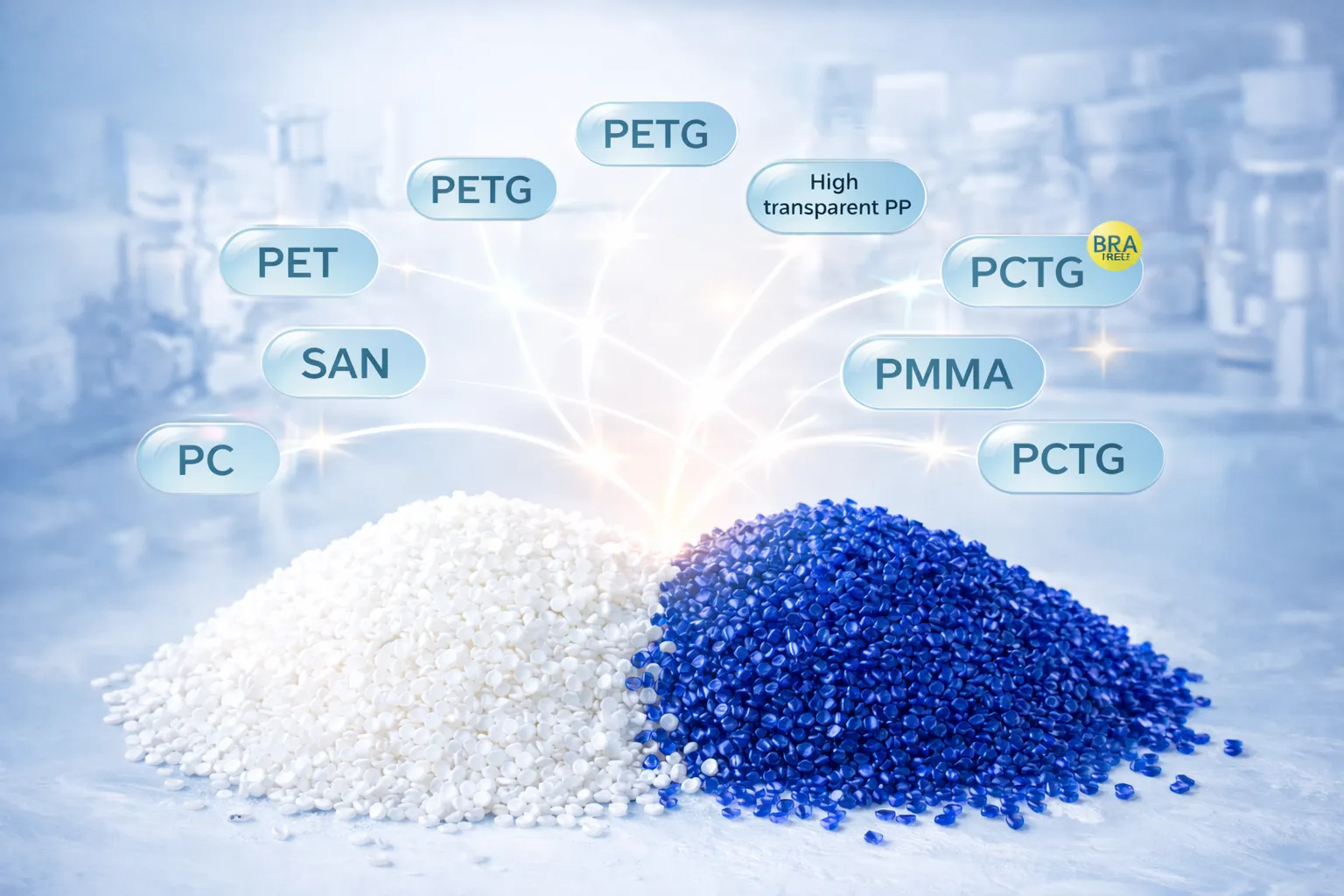
Global food-contact compliance checklist:
- ✓Korea KFDA Food Sanitation Act: food-contact material notification, specific migration testing, overall migration limits
- ✓US FDA 21 CFR 177.1630: PET food-contact compliance; 21 CFR 177.1660 for PETG; food-contact substance notification for non-standard additives
- ✓EU Regulation 10/2011: plastic food-contact materials; Union list of authorized substances; overall migration ≤ 10 mg/dm²
- ✓Japan MHLW Notice 370: food-contact polymer positive list; manufacturer notification under Positive List system
- ✓China GB 4806 series: national standards for food-contact plastics; manufacturer registration under CFSA
- ✓Migration testing specific to fermented foods: 4% acetic acid simulant (for kimchi/fermented products), 20% ethanol (for fermented sauces), 3% salt solution
7. Mould Design for Wide-Mouth Jars
Wide-mouth jar moulds require specialized design approaches distinct from beverage bottle moulds. Neck thread form complexity, wide parting line geometry, and vacuum panel integration together demand custom mould tooling tailored to the specific jar application.
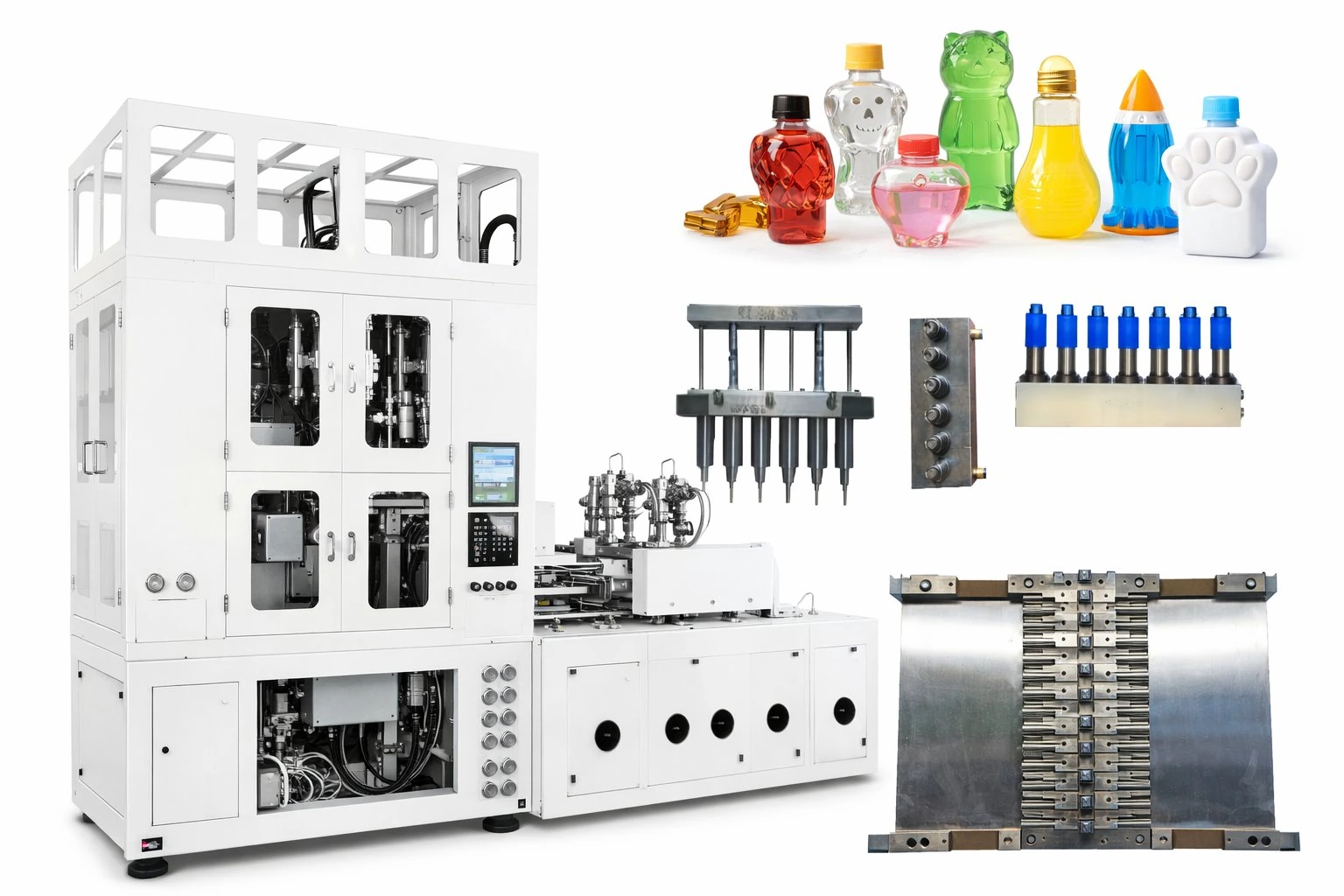
Wide-mouth mould design requirements:
- ▸Neck thread profile: 63/78, 82/89, 89/106 twist-off thread form; precision ground to ±0.05 mm tolerance
- ▸Neck support ring crystallization control: external heater band holds ring temperature 180-200°C during injection for thermal crystallinity
- ▸Parting line placement: centre of jar body height, minimizes stress concentration and visual artifact
- ▸Vacuum panel inserts: 6-8 symmetric panels integrated into cavity; 35-45 mm panel depth typical
- ▸Base pinch-off geometry: flat or slightly domed base, no petaloid structure; wide-mouth jars stand on flat base
- ▸Debossed graphics: brand logo, volume markings, product category indicator integrated into cavity wall
8. Recommended ISBM Platforms
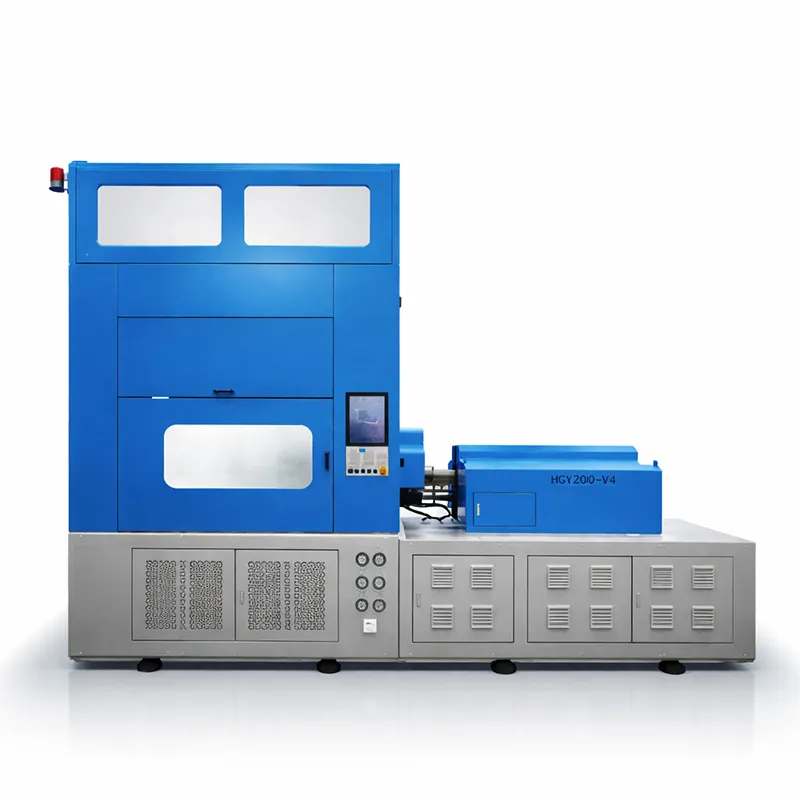
HGY200-V4 platform — the core Ever-Power recommendation for 150-800 ml wide-mouth food jar production
Wide-mouth food jar production platform selection balances jar volume, wall thickness, and hot-fill capability. Two Ever-Power platforms cover the primary Korean food jar segments.
HGY200-V4 for 150-800ml Food Jars
The HGY200-V4 4-station platform handles standard cold-fill food jar production across small sauce (150-350 ml) and medium kimchi/paste (400-800 ml) categories at 2-4 cavity configurations. 200 KN injection clamping accommodates the heavier preforms required for wide-mouth thick-wall production. Heat-set variant available for pasteurized hot-fill applications.
HGY250-V4 for 1-3L Foodservice Bulk
For foodservice bulk kimchi, commercial gochujang, and restaurant-size doenjang containers at 1-3 L capacity, the HGY250-V4 platform provides the additional clamping force and mould daylight required for the larger preforms. 1-2 cavity configuration typical for this segment.
9. Korean Food Producer Case Studies
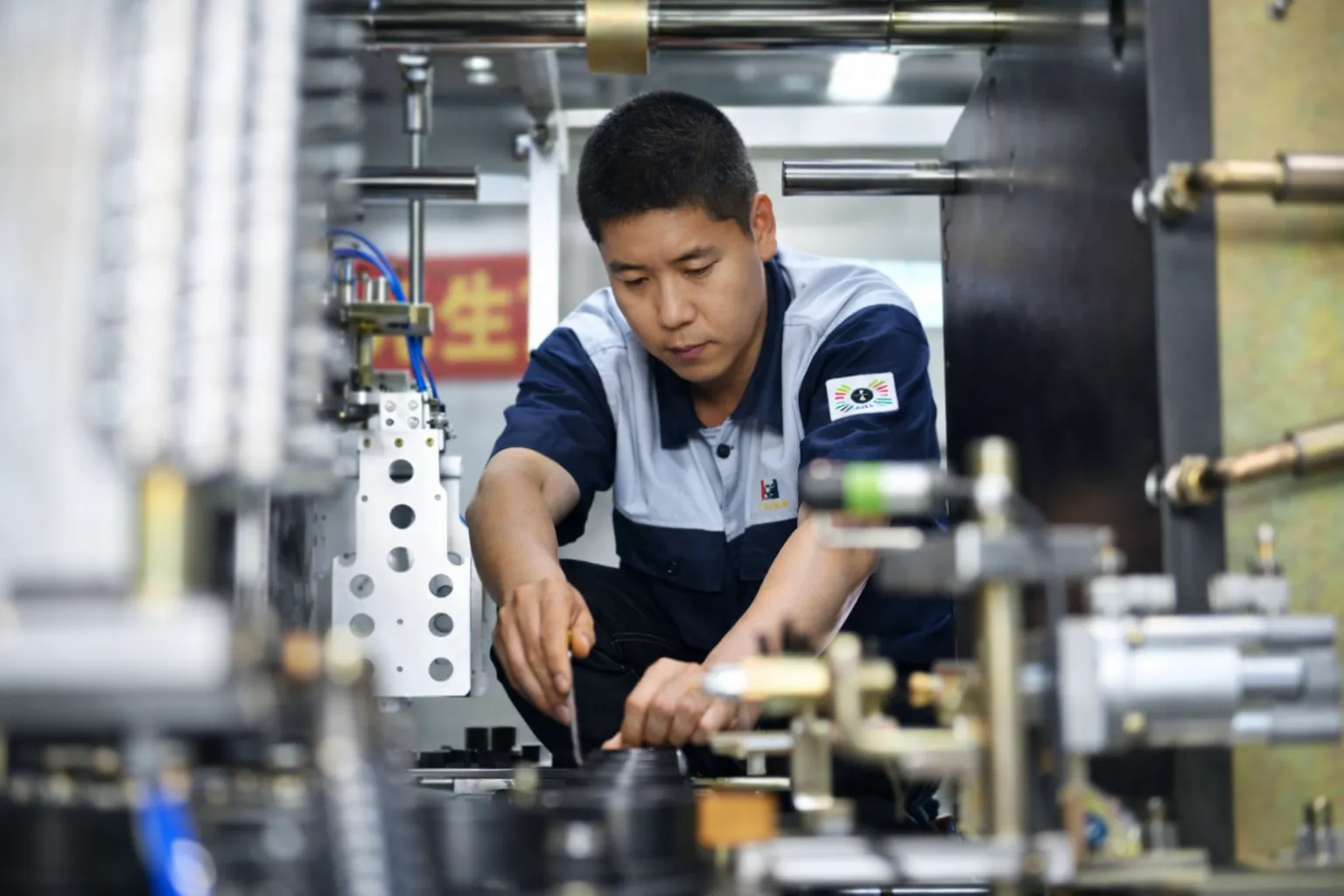
Case Study 1 · Jeonju Premium Kimchi Exporter
560ml Kimchi Jar for US Specialty Retail (4.2M units/year)
Challenge: Premium Korean kimchi brand entering US specialty retail (Whole Foods, HMart premium line) required 82/89 twist-off neck finish with 45 kPa vacuum retention, FDA 21 CFR 177.1630 compliance, and retail-tier visual quality with no visible parting line.
Result: HGY200-V4 with 3-cavity custom moulds delivered consistent 42-47 kPa vacuum retention through 14-day shelf life testing. FDA compliance documentation secured first-pass approval. Initial 800K unit trial order expanded to 4.2M unit annual contract within 12 months.
Case Study 2 · Gwangju Gochujang Contract Filler
Mixed 250ml/500ml/1L Amber Gochujang Jars (22M units/year)
Challenge: Large contract filler serving major Korean gochujang brands required multi-SKU production with rapid changeover between three jar sizes using amber UV-blocking PET resin. Previous Japanese supplier delivered 4-hour changeover that limited responsiveness to brand promotional cycles.
Result: HGY200-V4 with QMC mould mounting and PLC recipe library reduced changeover to 100-110 minutes across the three SKUs. Annual production capacity rose from 18M to 22M units on same facility footprint. Amber PET specific heat profiles pre-programmed into PLC eliminated batch-start scrap loss.
Case Study 3 · Cheongju Foodservice Bulk Producer
1.5L Restaurant Bulk Doenjang Jars (3.8M units/year)
Challenge: Foodservice supplier entering Korean restaurant chain supply required heavy-wall 110 mm ultra-wide-mouth 1.5 L doenjang jars with neck support ring strong enough for automated high-speed filling lines. Previous producer experienced 3-5% neck ring deformation on filling line transfer.
Result: HGY250-V4 with 2-cavity custom mould featuring thermally-crystallized neck ring support (35% crystallinity) eliminated deformation on filling line. Contract secured with major Korean restaurant chain at 3.8M unit annual volume. Customer rejection rate on delivery dropped from 4.1% to 0.3%.
10. Conclusion
Wide-mouth food jar production combines heavy-wall ISBM mechanics, hot-fill thermal processing, vacuum panel engineering, and multi-market food-contact compliance into a single application that differs substantially from beverage or cosmetic bottle manufacturing. Korean producers in Jeonju, Gwangju, Cheongju, and Gimhae clusters produce roughly 800 million wide-mouth jars annually because Korean process discipline meets the combined quality, compliance, and variety demands that global K-food retail expansion drives.
Ever-Power’s HGY200-V4 (150-800 ml standard food jar) and HGY250-V4 (1-3 L foodservice bulk) platforms cover the Korean food jar size range with the 200-250 KN injection clamping capacity, wide-mouth mould mounting accommodation, and heat-set option availability that the category requires. Combined with custom mould tooling for 63/78 through 110/120 mm neck finish range and PLC recipe library for multi-SKU changeover efficiency, the platforms match the production economics Korean food contract fillers need to compete for premium export business.
Wide-Mouth Food Jar Key Takeaways
- ✓Korean food jar market: 800M units/year from Jeonju, Gwangju, Cheongju, Gimhae clusters
- ✓Four volume categories: small sauce (150-350ml), medium kimchi/paste (400-800ml), bulk (1-3L), premium gift
- ✓Neck finish: 63/78, 82/89, 89/106, 110/120 mm twist-off (vs 22/28 mm beverage)
- ✓Wall thickness: 1.2-3.5 mm (vs 0.25-0.40 mm beverage) for product weight and thermal stability
- ✓Hot-fill/heat-set: 120-150°C mould temp, 25-35% crystallinity, 90-95°C thermal stability
- ✓Resin options: Standard PET cold-fill, Heat-Set PET hot-fill, PETG premium clarity, PCTG retort-grade
- ✓Five-market food-contact compliance: Korea KFDA, US FDA, EU 10/2011, Japan MHLW, China GB 4806
- ✓Platform match: HGY200-V4 (150-800ml standard) / HGY250-V4 (1-3L foodservice bulk)
Ready to Build Your Food Jar Production Line?
Share your jar specifications, target retail markets, fill temperature, and annual volume projection. Our Korean engineering team returns a complete platform recommendation with neck finish tooling, resin selection, and food-contact compliance documentation scope within 48 hours.