家用化学品 IBM · 洗发水和清洁用品 · 韩国 Ever-Power

注塑吹塑成型
家用化学品瓶

Korean household chemical IBM production — shampoo, conditioner, cleaning product and wide-mouth household jar containers — is the application where IBM’s zero-flash economics, pump neck precision and ESCR-appropriate HDPE grade selection make the most direct difference to Korean factory operating cost. This guide covers HDPE grade for surfactant resistance, pump neck dimensional requirements, wall thickness specification and the annual volume threshold at which IBM outperforms EBM for Korean household chemical production.

ESCR 等级选择
泵颈精度
IBM 与 EBM 成本交叉

韩国永动力工程部 · 安山市 · 2026年7月


韩国家用化学品 IBM — 关键参考

ESCR ≥50 小时

韩国表面活性剂接触型HDPE IBM容器的最低F50 ESCR要求

5-8个龋洞

Typical IBM cavity count at 500 ml shampoo — vs EBM’s 2–4 cavities

零闪光

IBM 取消闪存修整站——与 EBM 相比,每年可节省 1500 万至 2500 万韩元(EBM 每年 500 万台设备)。

±0.05 毫米

IBM泵颈外径——可实现韩国灌装线上的零泄漏泵颈连接

1. 韩国家用化学品市场与 IBM 经济研究
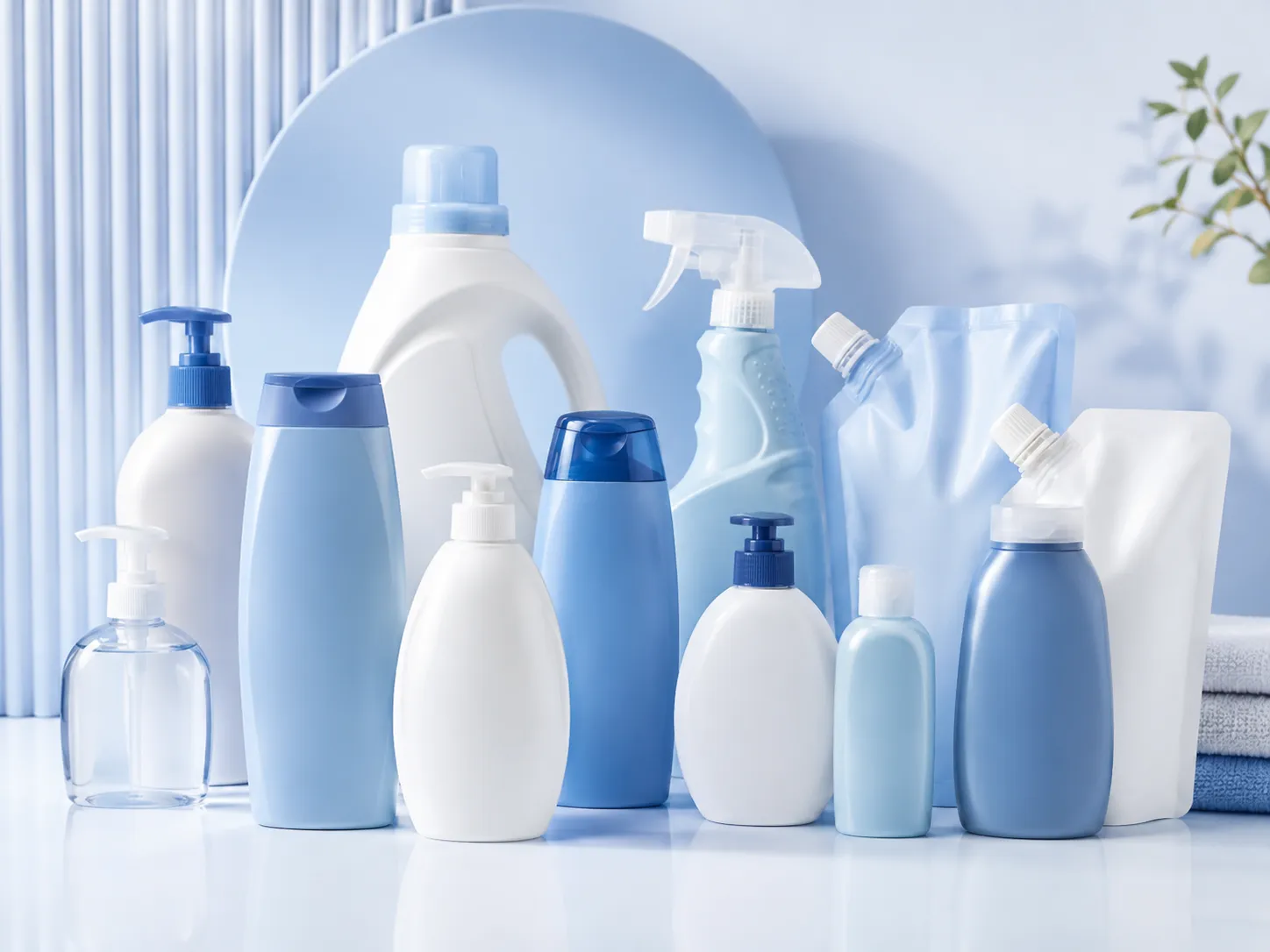
Korean household chemical HDPE IBM injection blow molded bottles — 500ml shampoo bottle with pump neck 24/410, 500ml conditioner, 1000ml liquid cleaning product, 500ml liquid hand soap — produced by Korea Ever-Power ZQ80 ZQ110 IBM machine at 5-8 cavity 500ml production for Korean national brand household chemical OEM packaging
采用注塑吹塑工艺生产的韩国家用化学品高密度聚乙烯(HDPE)容器——500毫升洗发水瓶(带24/410泵颈)、500毫升护发素瓶和1000毫升液体清洁剂。在500毫升容量下,IBM ZQ80注塑机每个循环可生产5-8个模腔,每小时可生产约5400-7200瓶洗发水——比EBM工艺3-4个模腔的产量高出30-80%,且无需修边工位,无飞边,并满足韩国灌装线泵颈连接所需的泵颈外径精度要求。

Korean household chemical packaging is the largest single IBM application by container volume outside pharmaceutical production — Korean shampoo, conditioner, body wash, liquid hand soap, dishwashing liquid, fabric softener and household cleaning products collectively consume approximately 800–1,000 million HDPE containers per year at 250–1,000 ml formats. This volume is split between Korean national brand manufacturers (LG H&H, AmorePacific, Aekyung, CJ), Korean private-label OEM producers, and Korean mass-market brands sold through Korean e-commerce and Korean discount retail. IBM has been progressively replacing EBM for Korean household chemical containers above 2 million units per year per format — driven by IBM’s three commercial advantages that compound with production scale: zero flash material efficiency, pump neck dimensional precision for Korean filling line automation, and higher cavity count output per machine.

The economic case for Korean household chemical IBM versus EBM is straightforward to quantify: at 5 million 500 ml shampoo units per year, IBM’s annualised advantages over EBM are approximately KRW 15–25 million in flash material savings (10% flash at HDPE KRW 1,600/kg), KRW 8–15 million in trim station operator savings (one operator at Korean minimum wage + benefits), and KRW 5–10 million in neck calibration equipment elimination. Total IBM operating cost advantage: approximately KRW 28–50 million per year at 5 million units — against an IBM machine premium over EBM of approximately KRW 40–80 million at the ZQ60 level. The payback period at 5 million units per year is typically 1.5–3 years. Above 10 million units, the payback period shortens below 1 year, making IBM unambiguously the correct Korean household chemical packaging investment.

2. 用于家用化学品IBM的高密度聚乙烯等级:ESCR作为主要选择驱动因素

Korean household chemical HDPE grade selection is governed by environmental stress crack resistance (ESCR) — the most critical material property for HDPE containers in contact with surfactant-based products. ESCR is the resistance of HDPE to stress cracking when in contact with a chemical stress cracking agent (such as a surfactant). Korean household chemical formulations contain surfactant concentrations that can reduce HDPE’s effective ESCR by 40–70% compared to water contact, making ESCR the decisive material property that determines whether a Korean household chemical HDPE IBM container survives its full 18–24 month product shelf life without field failure.

韩国应用程序 HDPE MI(克/10分钟) ESCR F50 最低要求 理由
洗发水(硫酸盐基) 0.8–1.2 ≥80 小时 SLS/SLES表面活性剂是一种中等强度的ESCR剂——24个月的保质期要求在0.6-0.8毫米壁厚下F50≥80小时。
阳离子型护发素 0.8–1.5 ≥50 小时 阳离子表面活性剂的ESCR作用强度低于阴离子硫酸盐——F50≥50小时即可满足18个月的保质期要求。
浓缩型洗洁精 0.6–1.0 ≥100 小时 浓缩型韩国洗洁精(活性成分25-30%)是一种强效的ESCR(环境、表面和结构腐蚀)剂——需要更高分子量的HDPE(高密度聚乙烯)才能保证其使用寿命。
衣物柔顺剂 1.0–2.0 ≥30 小时 阳离子织物柔软剂的ESCR活性较低——≥30小时即可满足要求;更高的MI等级可用于优化流量填充。
多用途家用清洁剂 0.8–1.2 ≥80 小时 碱性(pH 9–11)清洁剂与非离子表面活性剂结合使用——中等腐蚀性;需要≥80小时F50

ESCR testing for Korean household chemical IBM containers should be conducted as a filled product test at Korean retail storage conditions (40°C, 75% RH for 12 weeks) rather than relying solely on standard ASTM D1693 ESCR (Igepal solution test), because Korean household chemical surfactant blends produce ESCR activity that differs from Igepal and varies significantly between product formulations. Korean household chemical brand QA teams should provide the Korean IBM container supplier with the complete formulation surfactant composition before HDPE grade selection is finalised — the MI and ESCR specification should be determined from the specific formulation’s ESCR activity, not from generic household chemical HDPE guidelines. The detailed HDPE grade selection framework for Korean IBM is in the HDPE IBM 加工指南.

3. IBM泵颈精密加工,适用于韩国家用化学品
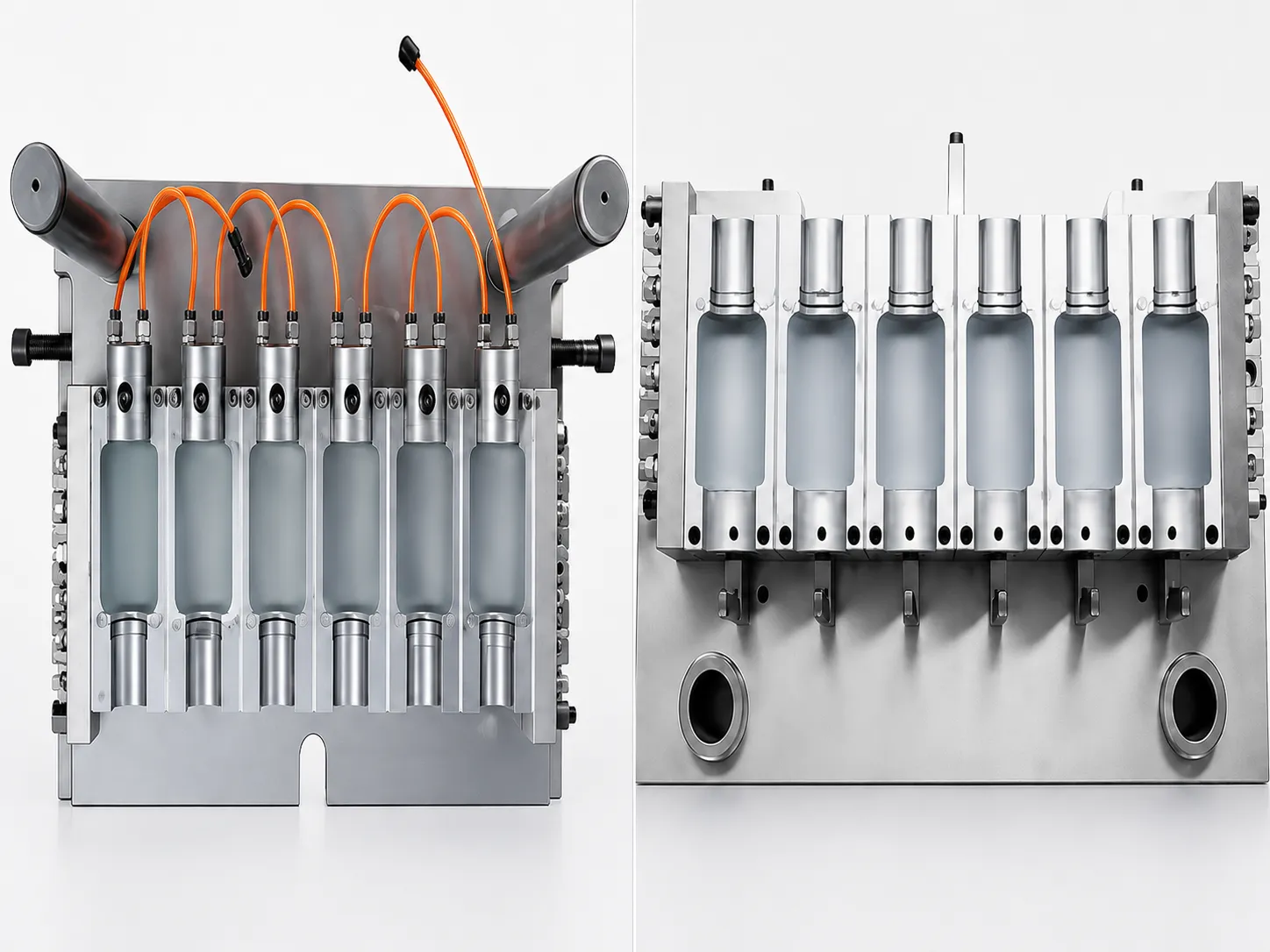
IBM injection blow molding household chemical pump neck mould — 24/410 pump neck insert in injection mould core rod assembly producing ±0.05mm neck OD for Korean pump-dispenser collar attachment, neck bore ID ±0.06mm for pump dip tube seal, flat neck sealing land Ra≤0.05μm for pump collar gasket seal — Korea Ever-Power ZQ80 household chemical IBM mould for Korean shampoo conditioner liquid soap pump container
IBM家用化学品泵颈模具——注塑模具中的24/410泵颈嵌件,在所有5-8个生产型腔中,将泵颈连接处的外径控制在±0.05毫米以内。韩国的自动灌装线以每分钟80-120瓶的速度,使用扭矩控制的泵压盖头进行泵的安装——任何超过±0.10毫米的颈部外径偏差都会导致泵颈错位,从而造成扭矩不足的封盖,并可能导致泄漏或泵密封不严。

韩国高端家用化学品泵式包装容器(如洗发水、护发素、洗手液、洗衣液和沐浴露)对泵颈外径的精度要求与药品泵式包装容器相同,但颈部表面处理标准不同。韩国家用化学品泵式包装容器通常采用 24/410 GPI 颈部表面处理(外径 24 毫米,螺纹数 410),而韩国个人护理产品采用 20/400,韩国眼科产品采用 13/415——但尺寸精度要求相同:所有生产腔的颈部外径精度均为 ±0.05–0.06 毫米。

韩国灌装线泵附件要求

Korean household chemical filling lines run at 80–120 bottles per minute with automated pump attachment stations that torque-crimp or snap the pump collar onto the bottle neck. At this speed, the pump attachment head engages each bottle neck for approximately 0.5–0.75 seconds — insufficient time for the head to correct for neck OD variation by adjusting its engagement. The Korean filling line’s pump attachment head is calibrated to a specific neck OD nominal (24.00 mm for 24/410) and attachment torque target: if a bottle’s neck OD is 0.15 mm oversized (EBM tolerance), the pump collar contacts the neck with higher-than-designed interference and may cross-thread or fail to crimp fully — producing a pump that dispenses product from around the collar seal rather than through the pump orifice. IBM’s ±0.05 mm neck OD prevents this: at worst, a 24.05 mm neck OD bottle encounters 0.05 mm more interference at the pump head than a 24.00 mm nominal bottle — an interference difference that the Korean filling line’s pump head spring mechanism absorbs without changing the pump attachment outcome.

螺旋盖和卡扣盖家用化学品容器

Korean household chemical containers that use screw caps or snap caps rather than pump dispensers — fabric softener, liquid bleach, multi-surface cleaner — have slightly more relaxed neck OD requirements (screw cap thread tolerance is typically ±0.08–0.10 mm) but still benefit from IBM’s precision for Korean filling line automated capping. Korean high-speed rotary cappers for household chemical containers operate at torque-controlled settings where neck OD variation above ±0.10 mm produces cap application torque outside the target range — either under-torqued (caps that spin off at Korean retail distribution) or over-torqued (caps that Korean consumers cannot open). IBM’s ±0.05 mm neck OD keeps all production within the rotary capper’s optimal engagement range without requiring filling line capper recalibration between production batches.

4. 韩国家用化学品IBM的壁厚规格

韩国家用化学品IBM容器的壁厚由三个相互冲突的要求决定:最低ESCR性能(壁厚增加应力开裂剂的扩散路径,从而改善ESCR性能)、最低机械性能(抗跌落性、抗挤压性,以利于泵送)以及最低材料成本(壁薄则每瓶用料更少)。最佳壁厚应在这三个要求之间取得平衡,同时确保重量最小,并满足所有性能标准。

250–500毫升洗发水/护发素

体壁厚度:0.55–0.75 毫米
泵式分配挤压阻力要求泵体面板厚度≥0.55毫米。SLS含量≥12%时,24个月货架期的ESCR要求厚度≥0.60毫米。从1.0米高度跌落至韩国零售地面:底部拐角处厚度至少≥0.55毫米。目标厚度:平均泵体厚度0.65毫米。

500–1000毫升液体清洁产品

体壁厚度:0.65–0.90 毫米
较大规格的包装需要更厚的壁厚,以便在韩国的配送托盘上进行顶部装载堆叠压缩(1000毫升家用包装需堆叠6层以上)。浓缩碱性配方(pH 10-12)需要ESCR≥80小时——这可以通过MI 0.8-1.0和最小壁厚0.70毫米来实现。

浓缩液体洗涤剂

体壁厚度:0.75–1.00 毫米
韩国浓缩型液体洗涤剂(活性表面活性剂为25–35%)对韩国家用IBM容器的ESCR要求最高。较低的MI等级(0.6–0.8)和较厚的壁厚(目标值为0.80毫米)均会导致浓缩型洗涤剂18个月保质期所需的ESCR F50≥100小时。

5. 洗发水和护发素 IBM 生产:韩国规模经济

韩国洗发水和护发素的包装箱生产是家用化学品包装箱应用领域中产量最大的——韩国个人护理市场每年生产约3.5亿至4.5亿个500毫升的HDPE洗发水和护发素容器,用于韩国国内消费和出口。500毫升容量的5-8腔包装箱适用于韩国本土品牌的OEM生产规模;而ZQ80和ZQ110型号的6-8腔包装箱则是韩国最常见的洗发水包装箱配置。

ZQ模型 500毫升装 瓶/小时 年产能 韩国概况
EP-ZQ40 3 ~2,700 约950万 韩国沙龙品牌,韩国专业洗发水,韩国自有品牌小批量生产
EP-ZQ60 3–4 约2700-3600 约950万至1260万 韩国地区品牌,韩国便利店自有品牌
EP-ZQ80 5-6 约4500-5400人 约1580万至1890万 韩国国家品牌OEM厂商,韩国超市连锁供应商
EP-ZQ110 6-8 约5400-7200 约1890万至2520万 韩国知名品牌OEM,韩国电商家用化学品秤
EP-ZQ135 8 ~7,200 约2520万 韩国大型家用化学品制造商,韩国国家级出口品牌

ZQ80 5-6腔500毫升洗发水注塑机是韩国最常见的洗发水注塑机配置,因为它能够满足韩国大多数国民品牌OEM洗发水生产合同中1500万至1900万件的年产量范围。为韩国主要品牌(如LG H&H、爱茉莉太平洋家居护理)供货的韩国OEM洗发水工厂,其每个产品SKU的年产量通常为2000万至4000万件(500毫升装)——而6腔ZQ80注塑机只需约3700至7400个年生产工时即可完成这一产量,完全符合韩国两班制生产模式的年度生产周期,且不会造成过高的加班风险。

6. 清洁产品和宽口家用 IBM
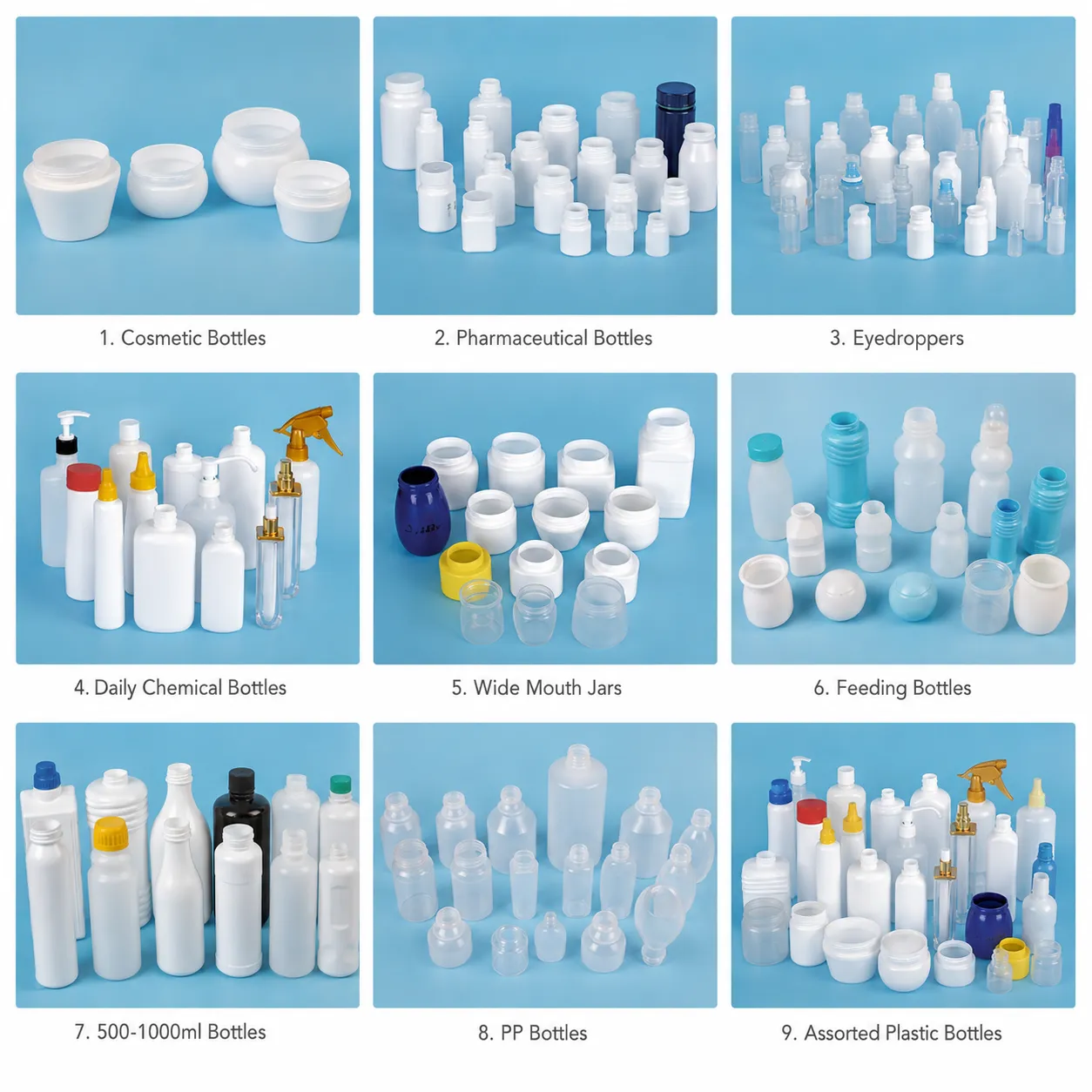
Wide-mouth household chemical HDPE IBM container — 500ml wide-mouth cleaning product jar, 250ml household chemical wide-mouth container, HDPE wide-mouth IBM injection blow molded without base seam, injection-moulded wide neck for Korean household chemical lid compatibility — Korea Ever-Power ZQ80 ZQ110 household chemical IBM wide-mouth jar
Wide-mouth HDPE IBM household chemical containers — 250 ml and 500 ml wide-mouth jars for Korean cleaning powder, Korean laundry booster tablets, Korean multi-surface cleaning concentrate and Korean bulk hand sanitiser. IBM’s native wide-mouth capability produces consistent wide-neck geometry that Korean household chemical brands need for compatible Korean standard lid closure — without the EBM parting-line seam at the base that would trap product residue in Korean powder-format cleaning products.

液体清洁产品瓶(250–1,000 毫升)

Korean multi-surface cleaners, liquid bleach, liquid toilet cleaners and Korean kitchen spray concentrates are produced in HDPE IBM containers at 250–1,000 ml with standard screw-cap or flip-top neck finishes. The IBM advantages for liquid cleaning products over EBM are particularly clear: alkaline cleaning concentrates (pH 9–12) are moderately aggressive ESCR agents that require HDPE grades with F50 ≥80 h, and the base seam that EBM produces creates a stress concentration point at the base pinch zone where ESCR-induced cracking most commonly initiates in alkaline cleaning product containers. IBM’s seam-free base eliminates this stress concentration, extending the effective ESCR life of the same HDPE grade by 20–40% compared to an equivalent EBM container at the same wall thickness — allowing Korean household chemical producers to use a higher-MI (lower-cost) HDPE grade in IBM than would be needed in EBM to meet the same ESCR shelf-life requirement.

广口家用化学品罐

Wide-mouth HDPE IBM containers for Korean household chemical powder products (Korean laundry booster tablets, Korean cleaning powder sachets, Korean dishwasher salt) are a specific IBM application where IBM’s native wide-mouth capability — discussed in the 注塑吹塑机 产品范围——IBM包装方式比ISBM或EBM包装方式更能满足韩国家用化学品品牌的需求。在ZQ80生产线上,IBM包装方式生产250毫升8腔或500毫升5腔宽口瓶时,每小时可生产约7200个或4500个宽口瓶,且瓶底接缝处不会残留韩国清洁粉。已从EBM包装方式转为IBM宽口瓶包装的韩国粉状家用化学品品牌表示,EBM包装方式消除了产品在瓶底接缝处结块的问题,这是一个持续的质量优势——尤其对于韩国吸湿性清洁产品(如柠檬酸粉、过碳酸钠洗衣助剂)而言,EBM包装方式容易导致产品在瓶底接缝处吸收水分而结块,韩国消费者往往认为这是产品本身的问题,而不是包装的问题。

7. IBM 与 EBM 在韩国家用化学品领域的对比:年度销量成本交叉分析

The IBM vs EBM decision for Korean household chemical containers is primarily economic — both processes are technically capable for HDPE containers at 250–1,000 ml, and the correct choice depends on the annual production volume per format and the Korean factory’s cost structure for flash management, operator headcount, and neck calibration. The cost crossover analysis below is based on Korean 500 ml shampoo production at HDPE KRW 1,600/kg, Korean factory operator cost KRW 35M/year (salary + benefits), and Korea Ever-Power ZQ80 IBM versus a Korean EBM machine at 4-cavity 500 ml.

EBM 年度成本(按每年 500 万单位/500 毫升计算)

闪光材料(10%) 1760万韩元
修整站操作员 3500万韩元
颈部校准设备 800万韩元
重磨质量停机时间 500万韩元
EBM年度总管理费用 6560万韩元

IBM 每年的成本(按 500 万单位/年计算,即 500 毫升/年)

闪光材料 韩元 0
修整站操作员 韩元 0
颈部校准设备 韩元 0
IBM 高级运营成本 800万韩元
IBM年度总开支 800万韩元

每年运营成本节省:500万台/年 5760万韩元。 IBM machine premium over EBM (ZQ80 vs comparable Korean EBM): approximately KRW 60–80M. Payback period: approximately 12–17 months at 5 million 500 ml units per year. Below approximately 2 million units per year, EBM’s lower machine capital may win the total cost comparison — at very low volumes, the annual operating savings are insufficient to recover the IBM machine premium within a reasonable payback horizon. Above 5 million units per year, IBM is unambiguously the correct economic choice for Korean household chemical production.

IBM’s output rate advantage reinforces the economics at higher volumes: at 10 million units per year, the ZQ80 at 6-cavity 500 ml runs approximately 1,852 hours per year (53% utilisation at two-shift schedule), while EBM at 4 cavities requires approximately 2,315 hours (66% utilisation) — the IBM machine provides more production headroom for the same annual volume, meaning Korean household chemical brands experience fewer schedule pressure events and have better ability to respond to Korean retail promotional demand spikes without machine overtime.

8. 韩国家用化学品IBM的ZQ系列选型

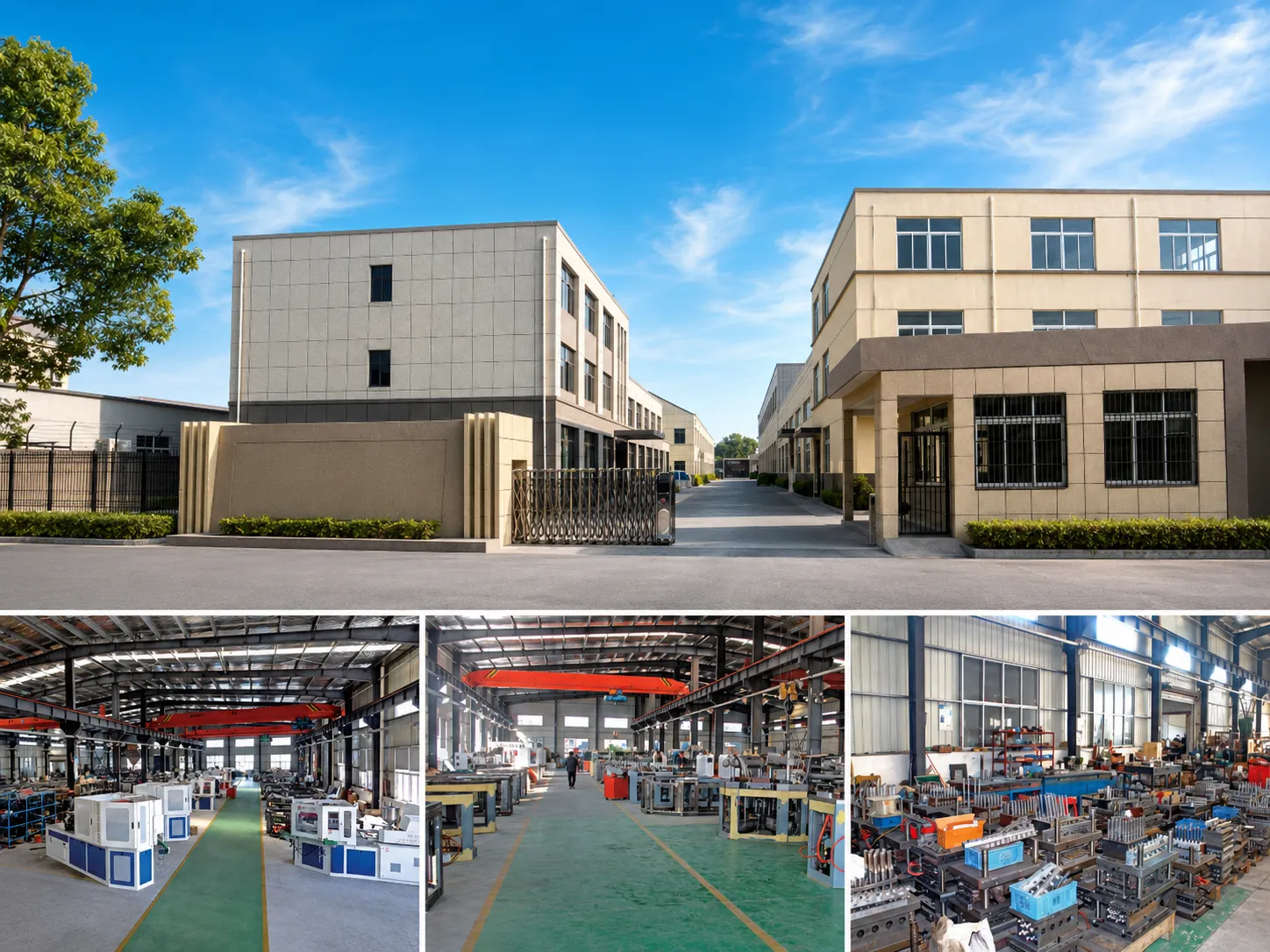
Korea Ever-Power IBM machine manufacturing workshop — ZQ series household chemical IBM machine production engineering team quality control dual hydraulic system precision assembly for Korean HDPE shampoo cleaning product household chemical bottle production
Korea Ever-Power manufacturing facility — each ZQ series IBM machine for household chemical production is tested with food-grade hydraulic oil and verified for dual hydraulic circuit energy saving performance before shipment. Korea Ever-Power’s engineering team provides Korean household chemical IBM producers with ESCR grade selection consultation, mould cavity count analysis and Korean factory cost comparison versus EBM as part of the pre-purchase application support.

韩国家用化学品 IBM 的 ZQ 系列机型选择遵循主要容器规格的年产量,此外还要考虑在同一台机器上生产多个产品 SKU 的韩国家用化学品合同包装厂——规格更换频率和模具更换时间对于家用化学品 IBM 来说比对于制药 IBM 更重要,因为家用化学品品牌在不同产品 SKU 之间更频繁地更换规格。

年产量(500毫升) 受到推崇的 龋齿 韩国家庭背景
低于1200万/年 ZQ60 3–4 韩国地区性家用品牌、韩国沙龙自有品牌、韩国初创快速消费品
每年 1200 万至 2000 万美元 ZQ80 5-6 韩国国家品牌OEM厂商,韩国超市连锁供应商
每年 2000 万至 2800 万美元 ZQ110 6-8 韩国大型快速消费品品牌OEM,韩国电商家用化学品秤
每年超过2800万 ZQ135 8 韩国民族品牌自主生产,韩国家用快速消费品全国出口

For Korean household chemical contract packaging factories that run 8–15 different formats per machine per year, mould change time efficiency is as important as cavity count. Korea Ever-Power’s ZQ80 household chemical mould sets (5–6 cavity 500 ml, weight approximately 80–120 kg per mould component set) change in approximately 3.5–4.5 hours with two trained operators and a floor-mounted mould handling trolley — achieving 3–4 format changes per week without disrupting the production schedule. The EP-ZQ80 是用途最广泛的韩国家用化学品 IBM 平台,因为它的 5-6 腔 500 毫升输出量可以满足大多数韩国国产家用化学品 SKU 的单班包装需求,每次换型即可完成,因此成为拥有多种包装规格的韩国家用化学品合同包装工厂的首选平台。

常见问题解答

Q1 — 韩国家用化学品IBM生产商应该对其HDPE树脂供应商提出怎样的ESCR规范要求?

Korean household chemical IBM producers should specify HDPE ESCR as a minimum F50 value per ASTM D1693 (Condition B, 10% Igepal CO-630 at 50°C) on the resin certificate of analysis for every production lot. The minimum F50 specification depends on the product contact, as shown in the grade selection table in S2, but as a general rule: Korean shampoo and conditioner HDPE IBM should specify ESCR F50 ≥80 h; Korean concentrated liquid detergent should specify ≥100 h; Korean fabric softener can specify ≥30 h. Beyond specifying the F50 minimum, Korean household chemical IBM producers should additionally verify ESCR performance with a filled product compatibility test: fill IBM containers with the specific Korean household chemical formulation at the commercial concentration, store at 40°C for 12 weeks (accelerated equivalent of 24-month ambient shelf life), and inspect for crazing, cracking, or deformation at the base, lower body panel and shoulder. This filled product test uses the actual surfactant blend rather than Igepal — necessary because Korean household chemical formulations’ specific surfactant combinations (AOS, betaine, CAPB, sulphonate mixtures) produce ESCR activity profiles that do not always correlate with ASTM D1693 Igepal results. Korean HDPE resin suppliers including LG Chem (Lusene grades), Lotte Chemical (Lottene grades) and Hanwha Solutions (HY-Series grades) provide technical data sheets with filled product ESCR guidance for Korean household chemical applications — request this application-specific data alongside the standard certificate of analysis ESCR figure when qualifying a new HDPE lot for Korean household chemical IBM.

Q2 — 当韩国家用化学品灌装线上的 IBM 泵颈外径不符合规格时会发生什么?

When IBM pump neck OD falls outside the ±0.06 mm specification window at the Korean household chemical filling line, two failure modes occur depending on the direction of deviation. High OD (neck wider than specification): the pump collar’s torque-crimp head tightens beyond the calibrated target torque before the pump is fully seated against the neck sealing land — producing a pump that is visually attached but has a gap between the pump collar gasket and the neck sealing surface, causing product leakage during Korean retail shelf storage. This failure is not always visible at the Korean filling line’s inline camera inspection (the gap is at the inner seal surface, not externally visible) and produces Korean consumer returns with leaking pump dispensers within 2–4 weeks of purchase. Low OD (neck narrower than specification): the pump collar’s torque-crimp head does not reach the calibrated target torque before the pump is fully seated — the capper stops at travel limit rather than torque limit, and the pump is correctly attached geometrically but the collar’s retention bead has not fully deformed into the neck retention groove, producing a pump collar that pulls off under normal Korean consumer dispensing use. The correct preventive action for Korean household chemical IBM producers is two-stage: (1) verify all cavity neck ODs in the production mould to be within ±0.04 mm before first production (taking a tighter process target than the ±0.06 mm specification minimum to ensure process variation does not push individual cycles outside specification); (2) establish a Korean filling line pump attachment torque monitoring programme that triggers automatic rejection and IBM mould neck OD check when pump attachment torque trends outside ±0.05 Nm of the target — implementing process control at the filling line as the downstream process check that catches IBM neck OD drift before it produces Korean consumer returns.

Q3 — 韩国资源流通法如何影响家用化学品 HDPE IBM 容器的设计?

Korea’s Resource Circulation Act (자원순환법, Act No. 18651) and the associated Korean Ministry of Environment packaging guidelines create three specific design requirements for Korean household chemical HDPE IBM containers that affect mould specification and production planning. First, recycling identification: all Korean household chemical HDPE containers must have the resin identification code (삼각형 내 숫자 2 for HDPE) moulded into the container base at minimum 6 mm triangle height — this embossed marking must be included in the IBM blow mould’s base insert design at mould manufacture. IBM blow mould base inserts for Korean household chemical production should include the resin ID as a standard feature rather than as a post-mould label addition, since the Korean Resource Circulation Act requires the marking to be permanently integrated into the container. Second, label removability: Korean 자원순환법 implementation guidelines encourage Korean household chemical container labels to be removable for recycling — adhesive labels that leave residue on HDPE containers reduce the recycled HDPE’s quality. Korean HDPE IBM producers serving Korean household chemical brands should recommend shrink sleeve labels (which tear and separate cleanly from HDPE in float-sink recycling) or water-washable adhesive labels rather than permanent adhesive-backed paper labels that reduce HDPE recyclate quality. Third, mono-material preference: Korean household chemical IBM containers with HDPE bodies, HDPE caps and removable labels contribute to higher-quality Korean HDPE recyclate than multi-material containers. Korean brand packaging designers working with IBM container suppliers should specify HDPE snap-fit caps (same material as the bottle, improving recyclate quality) rather than PP or PE flip-top caps that contaminate the HDPE recyclate stream at Korean separation facilities.

Q4 — IBM 能否生产带有一体式把手的 HDPE 家用化学品容器?

IBM cannot produce integral handles — this is a fundamental process constraint that applies to all IBM machines including the ZQ series. IBM’s core rod must be extractable from the finished container at the stripping station; a handle that bridges from one side of the container to the other prevents core rod extraction. For Korean household chemical containers where an integral handle is required — typically 2-litre and above liquid detergent, 3-litre bleach, and 5-litre cleaning concentrate where Korean consumers need a grip for pouring — EBM is the correct process. IBM serves the Korean household chemical market from 250 ml to approximately 1,500 ml without handle requirements; above 1,500 ml where handles become functionally necessary, EBM remains the process of choice regardless of IBM’s other advantages. Korean household chemical IBM producers who supply both handle and non-handle formats typically operate both IBM and EBM machines — IBM for the 250–1,000 ml pump and screw-cap formats (the majority of volume) and EBM for the 2–5 litre handle formats. The overall Korean household chemical packaging portfolio for most Korean brands divides approximately 70–80% by volume to the IBM formats and 20–30% to the EBM handle formats, making the IBM investment the primary capital commitment even for Korean brands with full product range coverage requirements.

Q5 — 对于韩国 500 毫升 HDPE 洗发水的生产,IBM 在经济效益上优于 EBM 的最低年产量是多少?

基于韩国市场成本参数——HDPE价格为1600韩元/公斤,韩国运营商年运营成本为3500万韩元,韩国ZQ60 IBM机器相对于韩国EBM机器的溢价约为4000万至6000万韩元——韩国500毫升HDPE洗发水的IBM与EBM经济效益的临界点出现在年销量约为250万至350万件时。低于250万件/年:在五年内,EBM的总拥有成本可能更低,因为IBM机器每年节省的运营成本(包括毛边材料、修边操作员和瓶颈校准费用,在500万件/年时约为5700万韩元/年)不足以在250万件/年以下收回IBM机器的溢价。在250万件/年时,IBM机器每年可节省约2800万韩元的运营成本——这意味着5000万韩元的机器溢价可在五年内收回(处于经济效益的临界点)。年产量超过 350 万件:IBM 的五年经济效益明显更优,投资回收期通常在 2-3 年内,且随着产量增长,每年的节省额也会增加。年产量超过 500 万件:IBM 的投资回收期通常在 18 个月以内,五年总成本优势超过 2 亿韩元。此外,每台机器可加工的规格数量也会影响这一优势:韩国的合同包装工厂通常使用一台 IBM 机器加工 4-6 种不同的 HDPE 规格,这样可以将机器溢价分摊到多种规格的经济效益计算中,从而有效地降低了 IBM 的每种规格的合理产量门槛,​​对于一台可加工 5 种规格的机器来说,每种规格的最低产量约为 150 万至 200 万件。

Q6 — HDPE IBM 在活性物质含量高的韩国浓缩洗衣液配方中表现如何?

Korean concentrated liquid laundry detergent at 20–35% active matter (Korean Ultra-concentrated formats such as Korean brand compressed laundry liquid in 500 ml serving 40–60 wash loads) creates the most demanding HDPE IBM ESCR environment in Korean household chemical packaging. At 25–35% active matter surfactant concentration — typically linear alkyl benzene sulphonate (LAS) combined with fatty alcohol ethoxylate (AEO) and betaine co-surfactant — the combined ESCR activity reduces HDPE effective ESCR to approximately 25–40% of the pure-HDPE ASTM D1693 Igepal F50 value. A Korean laundry detergent HDPE IBM container specifying MI 1.0 HDPE (Igepal F50 ~70 h) in contact with 30% active Korean laundry concentrate may have an effective filled-product ESCR of only 28–42 h — insufficient for 18-month Korean retail shelf life, which requires F50 ≥50 h minimum filled product performance. The correct Korean concentrated laundry detergent HDPE IBM specification: MI 0.6–0.8 (Igepal F50 ≥120 h, effective filled F50 ≥50 h at 30% active), body wall minimum 0.80 mm (providing additional diffusion path for surfactant stress cracking agent), and seam-free IBM base (eliminates the base pinch stress concentration where EBM ESCR failures initiate). Korea Ever-Power’s IBM mould design for Korean concentrated laundry detergent applications specifies a preform gate geometry that produces the heaviest wall at the base corner zone — the zone of highest residual stress and highest ESCR risk — rather than the uniform wall distribution used for Korean pharmaceutical thin-wall containers. This base-reinforced preform design is provided as a standard mould design option for Korean concentrated detergent IBM applications within the Korea Ever-Power mould engineering service.

家用化学品 IBM 查询

评估 IBM 在韩国家用化学品 HDPE 生产中的应用?

韩国永力公司为韩国家用化学品 IBM 生产提供 ESCR 等级选择、IBM 与 EBM 成本分析、泵颈模具设计以及 ZQ 系列机器选择,适用于所有年产量。

请求家用化学品 IBM 分析

相关资源

入门级家用化学品 IBM
EP-ZQ60 注塑吹塑机
600 KN · 500 毫升洗发水 3-4 个空腔 · 韩国地区品牌家用化学品 · ~950 万至 1260 万 500 毫升单位/年 · 与 EBM 相比,零闪蒸。


国家品牌家庭 IBM
EP-ZQ110 注塑吹塑机
1,100 KN · 6-8 个腔体,容量 500 毫升 · 4+N 个桶区 · 22+22 KW 双液压 · 韩国主要快速消费品品牌家用化学品 — ~1890 万至 2520 万个 500 毫升单位/年。


过程比较
IBM 与 EBM:12 个主要区别
IBM 与 EBM 的详细比较——颈部精度、零飞边、ESCR 基缝消除、产量以及韩国家用化工厂的经济效益(涵盖 12 个因素)。


编辑:Cxm


工厂虚拟现实之旅

标签: