قولبة النفخ بالحقن لـ
زجاجات المواد الكيميائية المنزلية
Korean household chemical IBM production — shampoo, conditioner, cleaning product and wide-mouth household jar containers — is the application where IBM’s zero-flash economics, pump neck precision and ESCR-appropriate HDPE grade selection make the most direct difference to Korean factory operating cost. This guide covers HDPE grade for surfactant resistance, pump neck dimensional requirements, wall thickness specification and the annual volume threshold at which IBM outperforms EBM for Korean household chemical production.
Pump Neck Precision
IBM vs EBM Cost Crossover
مكتب الهندسة التابع لشركة كوريا إيفر-باور · مدينة أنسان · يوليو 2026
Korean Household Chemical IBM — Key Reference
ESCR ≥50 h
Minimum F50 ESCR for Korean surfactant-contact HDPE IBM containers
5–8 Cavities
Typical IBM cavity count at 500 ml shampoo — vs EBM’s 2–4 cavities
بدون وميض
IBM eliminates flash trim station — saves KRW 15–25M/year vs EBM at 5M units
±0.05 مم
IBM pump neck OD — enables zero-leak pump collar attachment on Korean filling lines
1. Korean Household Chemical Market and IBM Economics
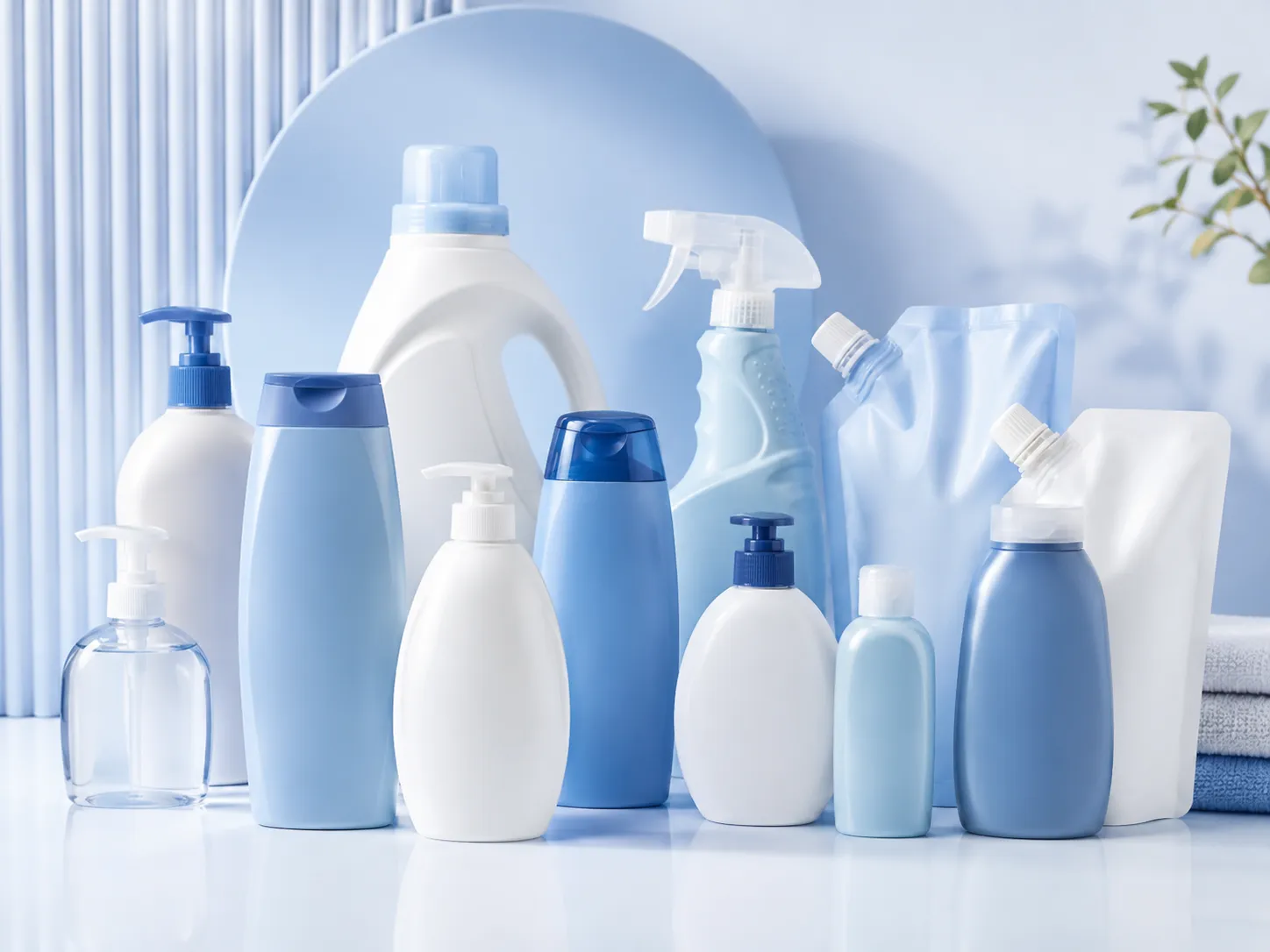
Korean household chemical packaging is the largest single IBM application by container volume outside pharmaceutical production — Korean shampoo, conditioner, body wash, liquid hand soap, dishwashing liquid, fabric softener and household cleaning products collectively consume approximately 800–1,000 million HDPE containers per year at 250–1,000 ml formats. This volume is split between Korean national brand manufacturers (LG H&H, AmorePacific, Aekyung, CJ), Korean private-label OEM producers, and Korean mass-market brands sold through Korean e-commerce and Korean discount retail. IBM has been progressively replacing EBM for Korean household chemical containers above 2 million units per year per format — driven by IBM’s three commercial advantages that compound with production scale: zero flash material efficiency, pump neck dimensional precision for Korean filling line automation, and higher cavity count output per machine.
The economic case for Korean household chemical IBM versus EBM is straightforward to quantify: at 5 million 500 ml shampoo units per year, IBM’s annualised advantages over EBM are approximately KRW 15–25 million in flash material savings (10% flash at HDPE KRW 1,600/kg), KRW 8–15 million in trim station operator savings (one operator at Korean minimum wage + benefits), and KRW 5–10 million in neck calibration equipment elimination. Total IBM operating cost advantage: approximately KRW 28–50 million per year at 5 million units — against an IBM machine premium over EBM of approximately KRW 40–80 million at the ZQ60 level. The payback period at 5 million units per year is typically 1.5–3 years. Above 10 million units, the payback period shortens below 1 year, making IBM unambiguously the correct Korean household chemical packaging investment.
2. HDPE Grade for Household Chemical IBM: ESCR as the Primary Selection Driver
Korean household chemical HDPE grade selection is governed by environmental stress crack resistance (ESCR) — the most critical material property for HDPE containers in contact with surfactant-based products. ESCR is the resistance of HDPE to stress cracking when in contact with a chemical stress cracking agent (such as a surfactant). Korean household chemical formulations contain surfactant concentrations that can reduce HDPE’s effective ESCR by 40–70% compared to water contact, making ESCR the decisive material property that determines whether a Korean household chemical HDPE IBM container survives its full 18–24 month product shelf life without field failure.
| تطبيق كوري | HDPE MI (g/10min) | ESCR F50 Minimum | الأساس المنطقي |
|---|---|---|---|
| Shampoo (sulphate-based) | 0.8–1.2 | ≥80 h | SLS/SLES surfactant is a moderately aggressive ESCR agent — 24-month shelf requires F50 ≥80 h at 0.6–0.8 mm wall |
| Conditioner (cationic) | 0.8–1.5 | ≥50 h | Cationic surfactants are less aggressive ESCR agents than anionic sulphates — ≥50 h F50 adequate at 18-month shelf |
| Liquid dish soap (concentrated) | 0.6–1.0 | ≥100 h | Concentrated Korean dish soap (25–30% active) is highly aggressive ESCR agent — requires higher MW HDPE for field life |
| Fabric softener | 1.0–2.0 | ≥30 h | Cationic fabric softener is low ESCR activity — ≥30 h adequate; higher MI grade acceptable for flow-fill optimisation |
| Multi-surface household cleaner | 0.8–1.2 | ≥80 h | Alkaline pH (pH 9–11) cleaning agents combined with nonionic surfactants — moderately aggressive; requires ≥80 h F50 |
ESCR testing for Korean household chemical IBM containers should be conducted as a filled product test at Korean retail storage conditions (40°C, 75% RH for 12 weeks) rather than relying solely on standard ASTM D1693 ESCR (Igepal solution test), because Korean household chemical surfactant blends produce ESCR activity that differs from Igepal and varies significantly between product formulations. Korean household chemical brand QA teams should provide the Korean IBM container supplier with the complete formulation surfactant composition before HDPE grade selection is finalised — the MI and ESCR specification should be determined from the specific formulation’s ESCR activity, not from generic household chemical HDPE guidelines. The detailed HDPE grade selection framework for Korean IBM is in the دليل معالجة البولي إيثيلين عالي الكثافة من شركة IBM.
3. IBM Pump Neck Precision for Korean Household Chemical
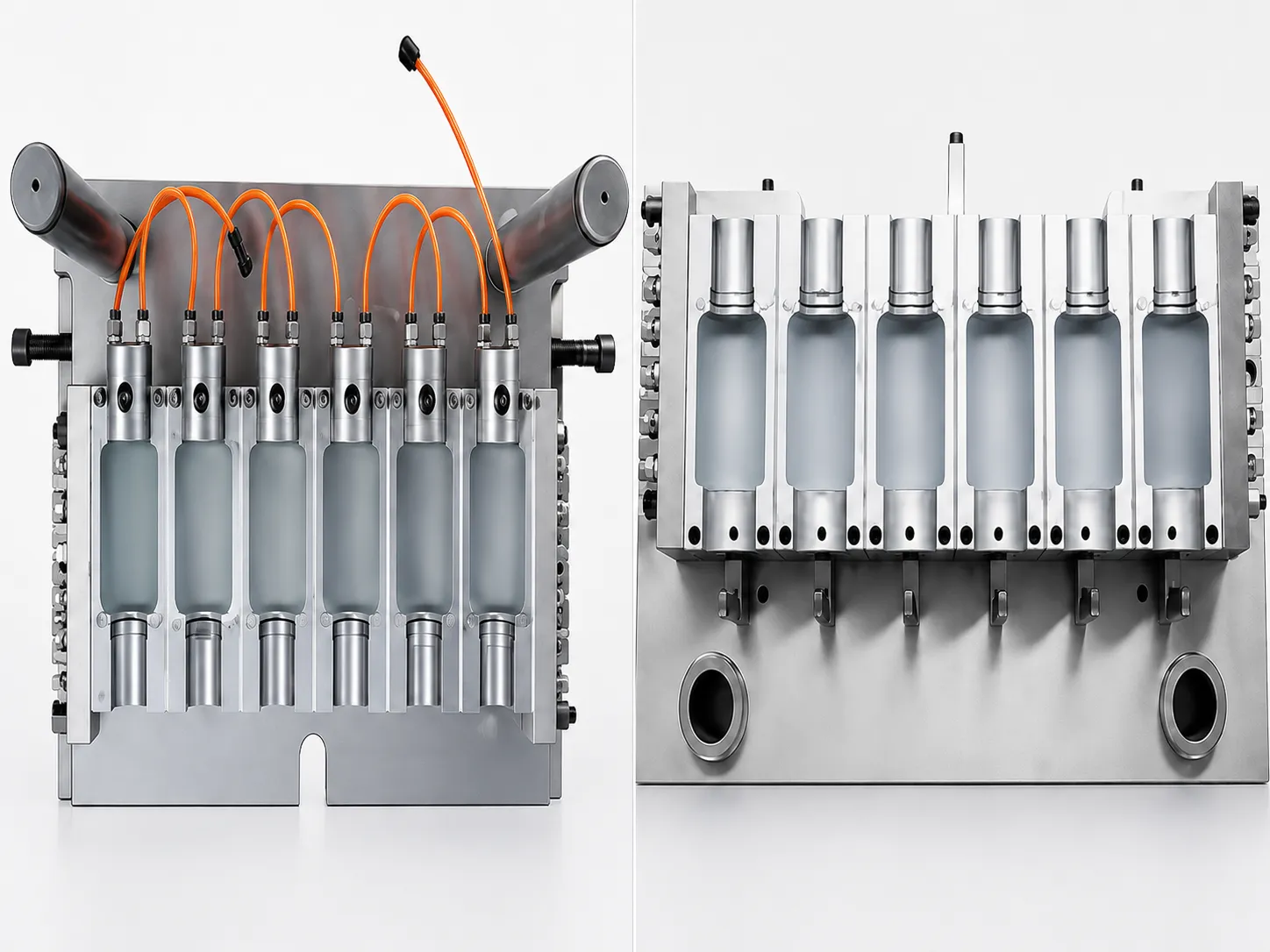
Korean household chemical containers with pump dispensers — shampoo, conditioner, liquid hand soap, liquid detergent, and body wash at premium tier — require the same pump neck OD precision as pharmaceutical pump containers, but at a different neck finish standard. Korean household chemical pump containers typically use 24/410 GPI neck finish (24 mm OD, 410 thread count) versus the 20/400 used for Korean personal care and 13/415 used for Korean ophthalmic — but the dimensional precision requirement is the same: ±0.05–0.06 mm neck OD across all production cavities.
Korean Filling Line Pump Attachment Requirements
Korean household chemical filling lines run at 80–120 bottles per minute with automated pump attachment stations that torque-crimp or snap the pump collar onto the bottle neck. At this speed, the pump attachment head engages each bottle neck for approximately 0.5–0.75 seconds — insufficient time for the head to correct for neck OD variation by adjusting its engagement. The Korean filling line’s pump attachment head is calibrated to a specific neck OD nominal (24.00 mm for 24/410) and attachment torque target: if a bottle’s neck OD is 0.15 mm oversized (EBM tolerance), the pump collar contacts the neck with higher-than-designed interference and may cross-thread or fail to crimp fully — producing a pump that dispenses product from around the collar seal rather than through the pump orifice. IBM’s ±0.05 mm neck OD prevents this: at worst, a 24.05 mm neck OD bottle encounters 0.05 mm more interference at the pump head than a 24.00 mm nominal bottle — an interference difference that the Korean filling line’s pump head spring mechanism absorbs without changing the pump attachment outcome.
Screw-Cap and Snap-Cap Household Chemical Containers
Korean household chemical containers that use screw caps or snap caps rather than pump dispensers — fabric softener, liquid bleach, multi-surface cleaner — have slightly more relaxed neck OD requirements (screw cap thread tolerance is typically ±0.08–0.10 mm) but still benefit from IBM’s precision for Korean filling line automated capping. Korean high-speed rotary cappers for household chemical containers operate at torque-controlled settings where neck OD variation above ±0.10 mm produces cap application torque outside the target range — either under-torqued (caps that spin off at Korean retail distribution) or over-torqued (caps that Korean consumers cannot open). IBM’s ±0.05 mm neck OD keeps all production within the rotary capper’s optimal engagement range without requiring filling line capper recalibration between production batches.
4. Wall Thickness Specification for Korean Household Chemical IBM
Korean household chemical IBM container wall thickness is set by three competing requirements: minimum ESCR performance (thicker wall has longer diffusion path for stress cracking agents, improving ESCR), minimum mechanical performance (drop resistance, squeeze resistance for pump dispensing), and minimum material cost (thinner wall is less material per bottle). The optimum wall thickness balances these three requirements at the minimum weight that meets all performance criteria.
250–500 ml Shampoo / Conditioner
Body wall: 0.55–0.75 mm
Pump dispensing squeeze resistance requires ≥0.55 mm at body panel. ESCR at SLS content ≥12% requires ≥0.60 mm for 24-month shelf. Drop resistance from 1.0 m onto Korean retail floor: ≥0.55 mm base corner minimum. Target: 0.65 mm average body wall.
500–1,000 ml Liquid Cleaning Product
Body wall: 0.65–0.90 mm
Larger format requires heavier wall for top-load stack compression at Korean distribution pallet (6+ layers for 1,000 ml household). Concentrated alkaline formulations (pH 10–12) require ESCR ≥80 h — achieved with MI 0.8–1.0 at 0.70 mm wall minimum.
Concentrated Liquid Detergent
Body wall: 0.75–1.00 mm
Korean concentrated liquid detergent (25–35% active surfactant) is the most demanding ESCR environment for Korean household IBM containers. Lower MI grade (0.6–0.8) and heavier wall (0.80 mm target) both contribute to ESCR F50 ≥100 h required for 18-month concentrated detergent shelf life.
5. Shampoo and Conditioner IBM Production: Korean Scale Economics
Korean shampoo and conditioner IBM production is the highest-volume household chemical IBM application — the Korean personal care market produces approximately 350–450 million 500 ml HDPE shampoo and conditioner containers per year for Korean domestic consumption and Korean personal care export. IBM at 5–8 cavities at 500 ml covers Korean national brand OEM production scale; IBM at 6–8 cavities on ZQ80 and ZQ110 is the most common Korean shampoo IBM configuration.
| نموذج ZQ | Cavities @ 500 ml | Bottles/Hour | الطاقة الإنتاجية السنوية | Korean Profile |
|---|---|---|---|---|
| EP-ZQ40 | 3 | ~2,700 | ~9.5M | Korean salon brand, Korean specialty shampoo, Korean private label small-batch |
| EP-ZQ60 | 3-4 | ~2,700–3,600 | ~9.5–12.6M | Korean regional brand, Korean convenience store private label |
| EP-ZQ80 | 5-6 | ~4,500–5,400 | ~15.8–18.9M | Korean national brand OEM, Korean supermarket chain supplier |
| EP-ZQ110 | 6-8 | ~5,400–7,200 | ~18.9–25.2M | Korean major brand OEM, Korean e-commerce household chemical scale |
| EP-ZQ135 | 8 | ~7,200 | حوالي 25.2 مليون | Korean major household chemical manufacturer, Korean export brand at national scale |
The ZQ80 at 5–6 cavity 500 ml shampoo is the most common Korean shampoo IBM configuration because it covers the 15–19 million annual unit range that defines the majority of Korean national brand OEM shampoo production contracts. Korean OEM shampoo factories that supply Korean major brands (LG H&H, AmorePacific household care) typically run annual volumes of 20–40 million 500 ml units per product SKU — volumes that the ZQ80 at 6 cavities covers in approximately 3,700–7,400 annual production hours, fitting within a single two-shift Korean production year without excessive overtime risk.
6. Cleaning Products and Wide-Mouth Household IBM
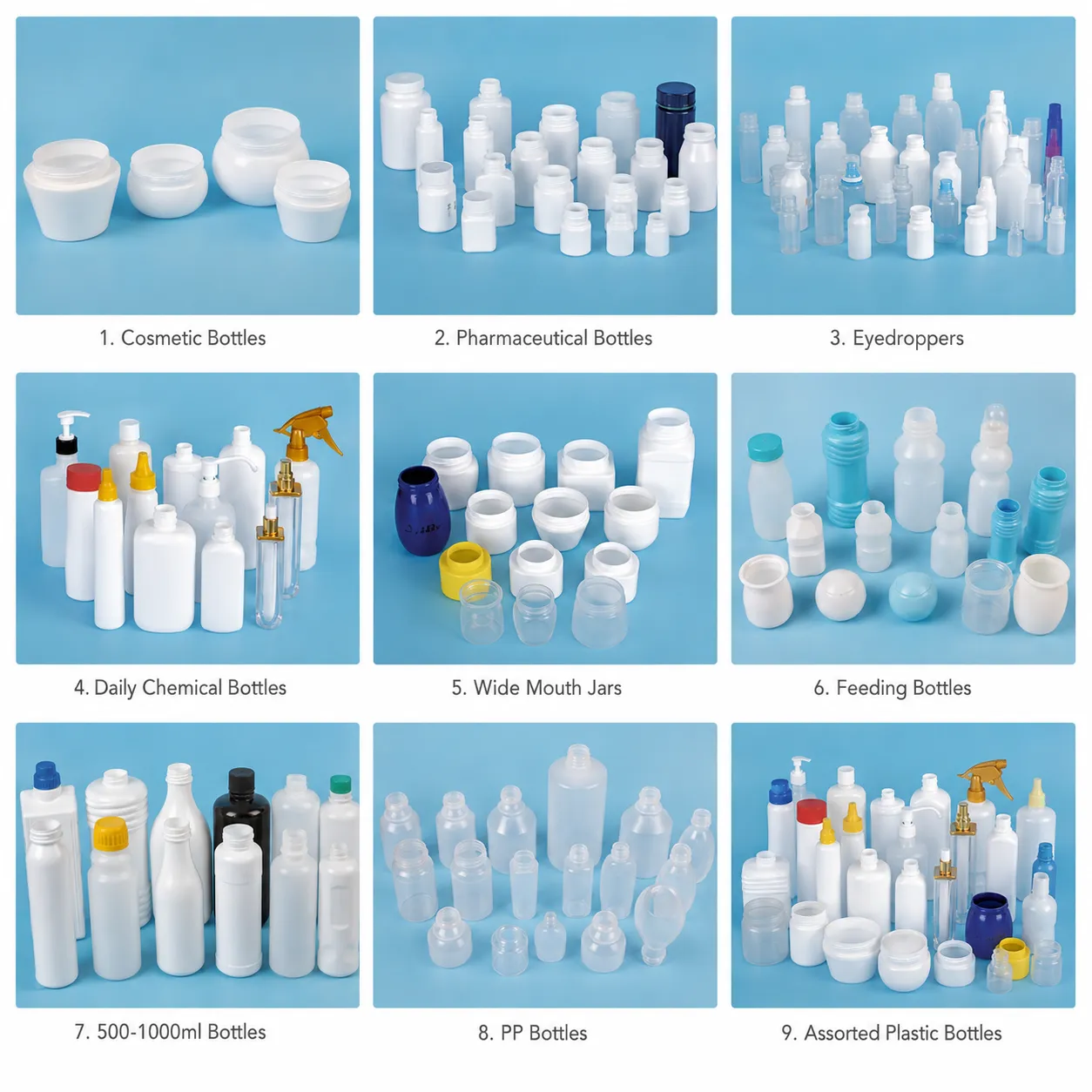
Liquid Cleaning Product Bottles (250–1,000 ml)
Korean multi-surface cleaners, liquid bleach, liquid toilet cleaners and Korean kitchen spray concentrates are produced in HDPE IBM containers at 250–1,000 ml with standard screw-cap or flip-top neck finishes. The IBM advantages for liquid cleaning products over EBM are particularly clear: alkaline cleaning concentrates (pH 9–12) are moderately aggressive ESCR agents that require HDPE grades with F50 ≥80 h, and the base seam that EBM produces creates a stress concentration point at the base pinch zone where ESCR-induced cracking most commonly initiates in alkaline cleaning product containers. IBM’s seam-free base eliminates this stress concentration, extending the effective ESCR life of the same HDPE grade by 20–40% compared to an equivalent EBM container at the same wall thickness — allowing Korean household chemical producers to use a higher-MI (lower-cost) HDPE grade in IBM than would be needed in EBM to meet the same ESCR shelf-life requirement.
Wide-Mouth Household Chemical Jars
Wide-mouth HDPE IBM containers for Korean household chemical powder products (Korean laundry booster tablets, Korean cleaning powder sachets, Korean dishwasher salt) are a specific IBM application where IBM’s native wide-mouth capability — discussed in the ماكينة نفخ القوالب بالحقن product range — serves Korean household chemical brands better than ISBM or EBM alternatives. At 250 ml 8-cavity or 500 ml 5-cavity wide-mouth production on ZQ80, IBM produces approximately 7,200 or 4,500 wide-mouth jars per hour without the base seam that would trap Korean cleaning powder residue in the base pinch zone. Korean powder-format household chemical brands that have switched from EBM to IBM wide-mouth jar production report elimination of product caking at the EBM base seam as a consistent quality benefit — particularly for Korean hygroscopic cleaning products (citric acid powder, sodium percarbonate laundry booster) where moisture absorbed at the EBM base seam caused caking that Korean consumers attributed to the product rather than to the packaging.
7. IBM vs EBM for Korean Household Chemical: The Annual Volume Cost Crossover
The IBM vs EBM decision for Korean household chemical containers is primarily economic — both processes are technically capable for HDPE containers at 250–1,000 ml, and the correct choice depends on the annual production volume per format and the Korean factory’s cost structure for flash management, operator headcount, and neck calibration. The cost crossover analysis below is based on Korean 500 ml shampoo production at HDPE KRW 1,600/kg, Korean factory operator cost KRW 35M/year (salary + benefits), and Korea Ever-Power ZQ80 IBM versus a Korean EBM machine at 4-cavity 500 ml.
EBM Annual Costs at 5M units/year (500 ml)
| Flash material (10%) | KRW 17.6M |
| Trim station operator | KRW 35M |
| Neck calibration equipment | 8 ملايين وون كوري |
| Regrind quality downtime | KRW 5M |
| Total EBM annual overhead | KRW 65.6M |
IBM Annual Costs at 5M units/year (500 ml)
| Flash material | 0 وون كوري |
| Trim station operator | 0 وون كوري |
| Neck calibration equipment | 0 وون كوري |
| IBM premium operating cost | 8 ملايين وون كوري |
| Total IBM annual overhead | 8 ملايين وون كوري |
Annual operating cost saving: KRW 57.6M/year at 5 million units. IBM machine premium over EBM (ZQ80 vs comparable Korean EBM): approximately KRW 60–80M. Payback period: approximately 12–17 months at 5 million 500 ml units per year. Below approximately 2 million units per year, EBM’s lower machine capital may win the total cost comparison — at very low volumes, the annual operating savings are insufficient to recover the IBM machine premium within a reasonable payback horizon. Above 5 million units per year, IBM is unambiguously the correct economic choice for Korean household chemical production.
IBM’s output rate advantage reinforces the economics at higher volumes: at 10 million units per year, the ZQ80 at 6-cavity 500 ml runs approximately 1,852 hours per year (53% utilisation at two-shift schedule), while EBM at 4 cavities requires approximately 2,315 hours (66% utilisation) — the IBM machine provides more production headroom for the same annual volume, meaning Korean household chemical brands experience fewer schedule pressure events and have better ability to respond to Korean retail promotional demand spikes without machine overtime.
8. ZQ Series Selection for Korean Household Chemical IBM
ZQ series model selection for Korean household chemical IBM follows annual production volume at the primary container format, with an additional consideration for Korean household chemical contract packaging factories that produce multiple product SKUs on the same machine — format change frequency and mould change time are more important for household chemical than for pharmaceutical IBM, because household chemical brands run more frequent format changes between product SKUs.
| Annual Volume @ 500 ml | مُستَحسَن | التسوس | Korean Household Context |
|---|---|---|---|
| Below 12M/year | ZQ60 | 3-4 | Korean regional household brand, Korean salon private label, Korean startup FMCG |
| 12M–20M/year | ZQ80 | 5-6 | Korean national brand OEM, Korean supermarket chain supplier |
| 20M–28M/year | ZQ110 | 6-8 | Korean major FMCG brand OEM, Korean e-commerce household chemical scale |
| Above 28M/year | ZQ135 | 8 | Korean national brand own-manufacture, Korean household FMCG export at national scale |
For Korean household chemical contract packaging factories that run 8–15 different formats per machine per year, mould change time efficiency is as important as cavity count. Korea Ever-Power’s ZQ80 household chemical mould sets (5–6 cavity 500 ml, weight approximately 80–120 kg per mould component set) change in approximately 3.5–4.5 hours with two trained operators and a floor-mounted mould handling trolley — achieving 3–4 format changes per week without disrupting the production schedule. The EP-ZQ80 is the most versatile Korean household chemical IBM platform precisely because its 5–6 cavity 500 ml output covers most Korean national brand household chemical SKU volumes within a single shift per format change, making it the platform of choice for Korean household chemical contract packaging factories with diverse format portfolios.
الأسئلة الشائعة
Household Chemical IBM Enquiry
Evaluating IBM for Korean Household Chemical HDPE Production?
Korea Ever-Power provides ESCR grade selection, IBM vs EBM cost analysis, pump neck mould design and ZQ series machine selection for Korean household chemical IBM production at all annual production volumes.
موارد ذات صلة
ماكينة نفخ وحقن القوالب EP-ZQ60
600 KN · 3–4 cavities at 500 ml shampoo · Korean regional brand household chemical · ~9.5–12.6M 500 ml units/year · Zero flash vs EBM.
ماكينة نفخ وحقن القوالب EP-ZQ110
1,100 KN · 6–8 cavities at 500 ml · 4+N barrel zones · 22+22 KW dual hydraulic · Korean major FMCG brand household chemical — ~18.9–25.2M 500 ml units/year.
مقارنة بين IBM و EBM: 12 اختلافًا رئيسيًا
Detailed IBM vs EBM comparison — neck precision, zero flash, ESCR base seam elimination, output rate and Korean household chemical factory economics across 12 factors.