食品包装 IBM · 食品级高密度聚乙烯 · 韩国MFDS · 韩国EVER-POWER

HDPE食品包装 IBM:
食品级 容器指南

Korean food packaging IBM covers soy sauce, ketchup, sesame oil, honey, salad dressing and cooking condiment containers — a format family where IBM’s uniform wall thickness, zero-flash interior and injection-moulded neck deliver measurable production advantages over EBM in squeeze function, fill accuracy and Korean MFDS food contact compliance. This guide covers food-grade HDPE grade selection, Korean food safety certification, squeeze bottle engineering and ZQ series machine selection for Korean food IBM production.

韩国食品安全部食品接触
挤压恢复功能
零闪光内饰

韩国 EVER-POWER · 京畿道安山市 · 2026年7月


系统参考 · HDPE 食品包装 IBM 参数

格式范围

50–500 毫升

韩国食品 IBM 容器容量范围——酱油到调味品

壁面均匀性

±5% CV

IBM壁厚一致性——与EBM±15–20%相比——确保线性挤压力

MFDS迁移限制

≤ 150 ppm

蒸发残留物(正庚烷)—韩国食品药品安全部食品接触塑料标准

ZQ60 输出量 @ 200ml

约9600美元/小时

12个机腔 · 年产量约3360万台 · 韩国两班制

第 01 节

韩国食品工业和HDPE IBM包装
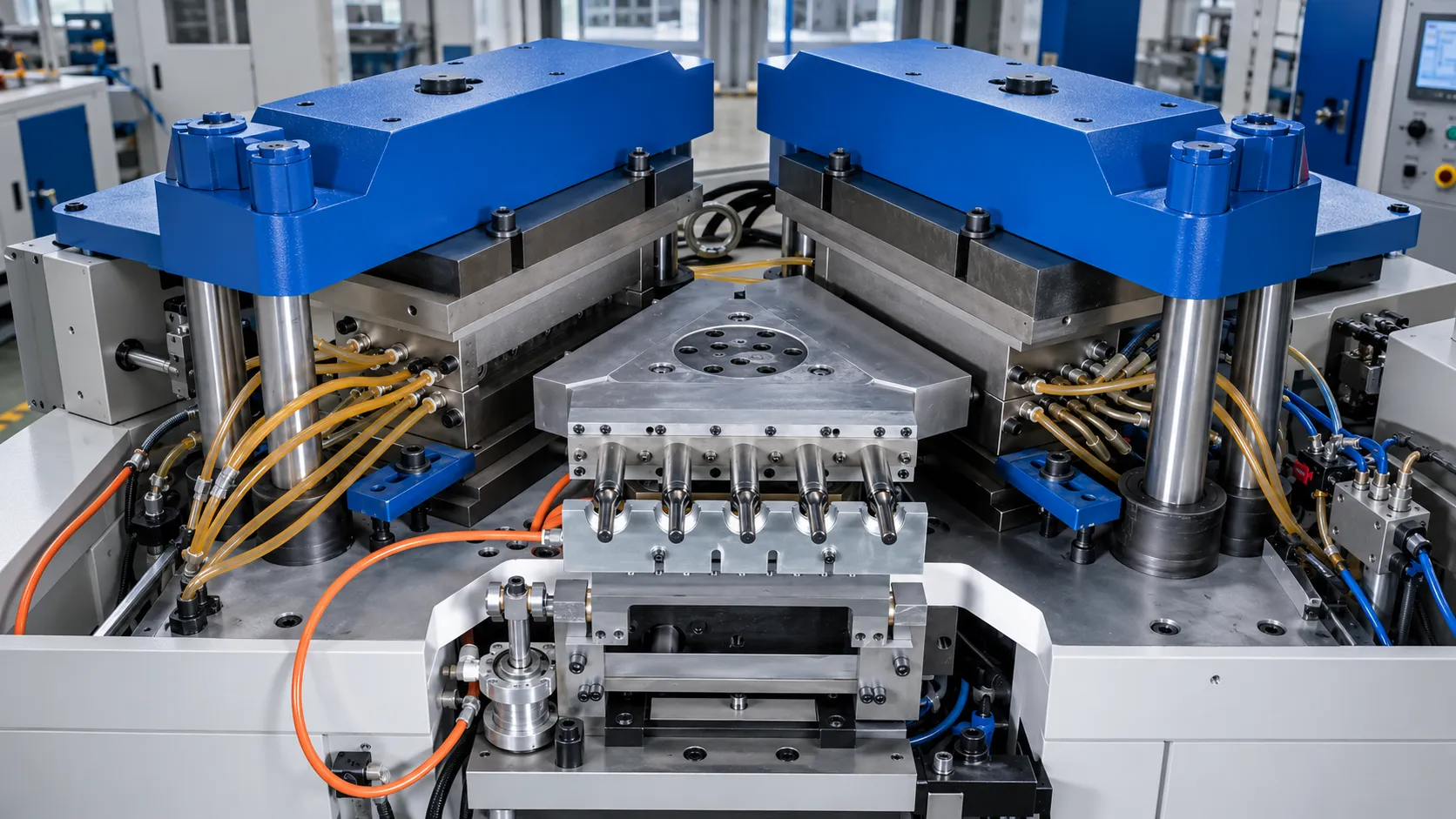
Korea Ever-Power ZQ series IBM machine internal structure for food-grade HDPE packaging production — multi-zone barrel for food-grade HDPE MI 0.3–0.8 processing, dual hydraulic system for Korean food condiment squeeze bottle IBM production at 12–16 cavities
Korea Ever-Power ZQ series IBM machine configured for Korean food-grade HDPE production — multi-zone barrel with temperature profiling for food-grade HDPE MI 0.3–0.8, producing soy sauce, sesame oil, honey and condiment containers at 12–16 cavities. The IBM machine’s stainless steel contact surfaces and zero-flash production principle meet Korean MFDS food contact material requirements without secondary cleaning operations on the container interior.

The Korean food packaging IBM market centres on three product categories with distinct container requirements that collectively make IBM the preferable blow molding process over EBM at annual production volumes above 1 million units per format. Korean condiment packaging — soy sauce (간장), doenjang sauce, gochujang sauce, sesame oil (참기름), vinegar-based dressing — requires squeeze-and-dispense containers where IBM’s uniform wall thickness (±5% CV versus EBM’s ±15–20%) produces the consistent, linear squeeze-force-to-dispensing-volume relationship that Korean food brand quality specifications define. Korean honey packaging — bear-shaped and jar-shaped honey containers from 100 to 500 ml — is a traditional IBM specialty worldwide, with IBM’s seamless one-piece body and injection-moulded neck producing the clean, premium appearance that Korean honey brands use to differentiate specialty honey products at Korean department store and online retail price premiums. Korean cooking oil packaging at 100–500 ml (sesame oil, perilla oil, olive oil) requires HDPE food contact compliance for fatty food contact and UV barrier for shelf-stable Korean cooking oil quality maintenance.

The detailed technical basis for IBM’s HDPE processing — barrel temperature profiles, MI selection, shrinkage calculation — is covered in the HDPE IBM 加工指南本指南重点介绍食品级 HDPE 等级选择、韩国食品药品安全部 (MFDS​​) 食品接触认证要求以及韩国食品包装 IBM 应用特有的容器工程规范。

第 02 节

IBM对食品级HDPE的要求

用于IBM的食品级HDPE与医药级HDPE在监管框架上有所不同,与家用化学品级HDPE在耐化学性要求上也存在差异。韩国食品级HDPE用于 IBM 容器 必须满足韩国食品药品安全部(MFDS)关于食品用具、容器和包装的标准(식품용 기구 및 용기·포장의 기준 및 규іч),该标准规定的迁移限度比药品KP标准宽松,但涵盖了更广泛的食品接触介质,包括酸性食品模拟物(乙酸4%)、脂肪性食品模拟物(正庚烷)和水性食品模拟物。

要求 食品级 IBM 医药级 IBM 家庭 IBM
监管机构 韩国食品安全部食品接触 韩国药品和食品安全部制药有限公司 韩国化学品标签法
蒸发残渣限值 ≤ 150 ppm(正庚烷) ≤ 30 ppm(KP — 所有介质) 无提取物限制
重金属(如铅) ≤ 100 ppm ≤ 1 ppm (KP) 没有直接限制
着色剂限制 韩国食品药品安全部食品接触阳性清单 韩国KFDA药品正面清单 无限制
紫外线稳定剂限制 除非另有规定,否则禁止。 禁止 允许
ESCR要求 高脂肪食物 ESCR 中等——水性制药 高——表面活性剂ESCR

添加剂合规性——食品接触

  • 抗氧化剂:AO-1010、AO-168、维生素E——已列入韩国食品药品安全部(MFDS)食品接触清单
  • 滑爽剂:芥酸酰胺——列入食品接触用清单;硬脂酰胺——列入清单
  • 紫外线稳定剂(HALS、二苯甲酮):韩国食品药品安全部禁止用于直接接触食品的高密度聚乙烯(HDPE)产品。
  • 荧光增白剂:禁止用于韩国食品接触塑料容器

脂肪食品接触的ESCR

用于接触油性食品(如芝麻油、食用油、沙拉酱)的韩国高密度聚乙烯(HDPE)IBM容器,在特定的食品模拟液中,其ESCR F50 ≥ 100小时。油性食品接触是食品包装中最严苛的ESCR条件——HDPE容器表面的脂质会使表面层的非晶区塑化,从而降低容器侧壁和底部的抗应力开裂性能。低密度HDPE(低于0.952 g/cm³)不适用于韩国油性食品IBM容器,因为其壁厚通常为0.5-0.9毫米——韩国食品安全部(MFDS)的食品接触标准包含一项物理完整性要求(在油性食品模拟液中浸泡24小时后,容器不得出现变形、开裂或浑浊),这排除了低密度等级的HDPE。

推荐:韩国芝麻油和食用油IBM容器采用密度≥0.955的HDPE材质

第 03 节

IBM挤压瓶工程

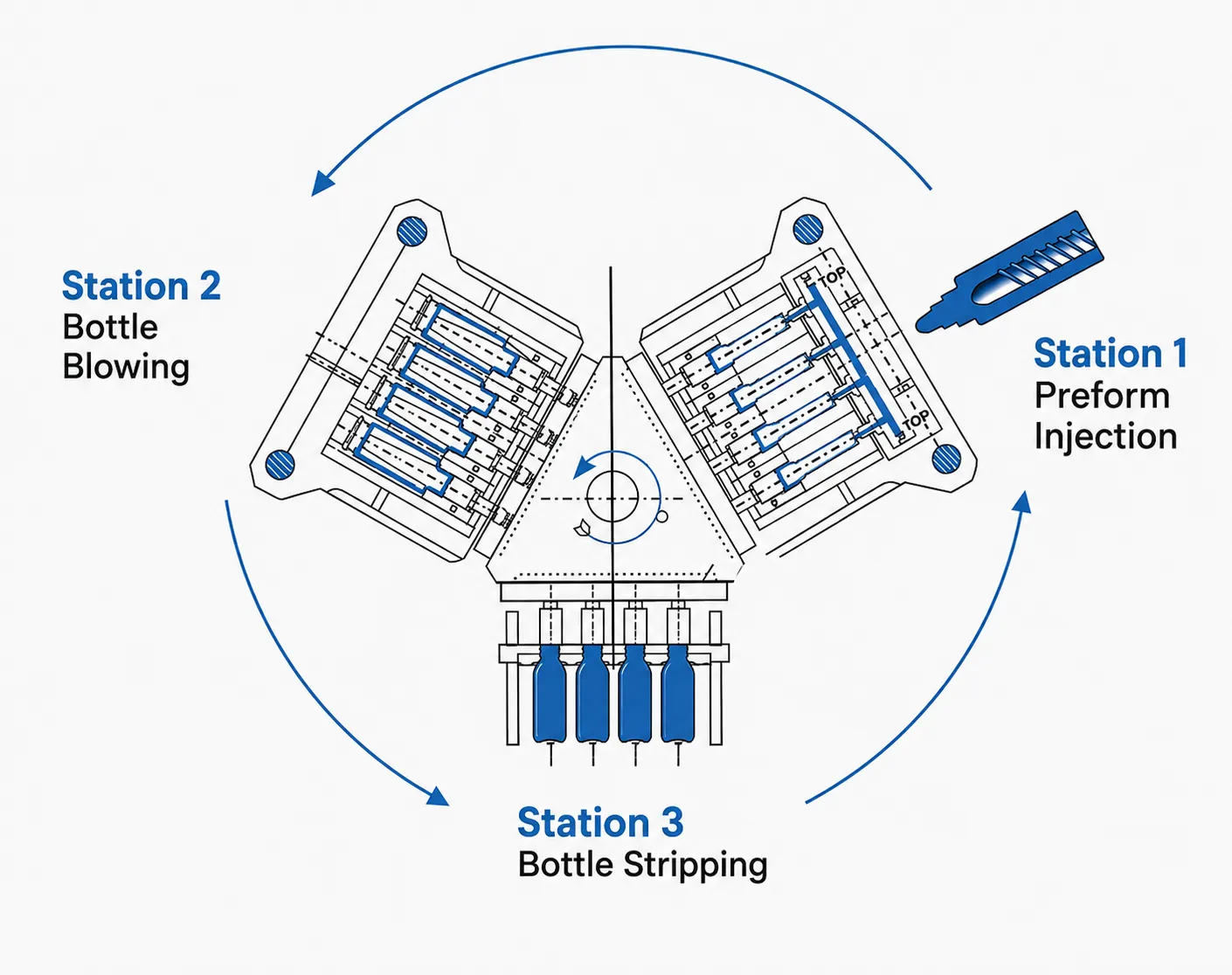
IBM 3-station process for food-grade HDPE squeeze bottle — injection at Station 1 forming preform with soy sauce dispensing neck thread 24/400, blow moulding at Station 2 forming squeeze body with uniform 0.6mm wall, stripping at Station 3 — Korea Ever-Power ZQ60 12-cavity Korean food condiment IBM production
IBM 3-station process for food-grade HDPE squeeze bottle production — the preform’s geometry at Station 1 determines wall distribution in the finished bottle body, enabling Korea Ever-Power to engineer wall thickness profiles that achieve the squeeze-force-to-dispensing-volume linearity specified by Korean food brand packaging teams for soy sauce, honey and condiment dispenser bottles.

IBM’s squeeze bottle advantage over EBM is primarily a wall uniformity advantage: IBM’s preform-determined wall distribution produces body wall thickness CV% of ±5% per production batch, versus EBM’s ±15–20% CV% from parison thickness variation. For Korean food condiment squeeze bottles, this wall uniformity difference produces two customer-visible quality differences.

挤压功能对比 · IBM 与 EBM @ 200ml HDPE 调味瓶

公制

壁厚 CV%

挤压力变化(很多)

挤压后的恢复时间

颈部螺纹外径公差

内部闪光风险

IBM

±5% — 预成型控制

生产批次内±8%

在 0.6 毫米壁厚处 < 0.5 秒

±0.05 毫米 — 注塑成型

无——无修剪操作

循证医学

±15–20% — 平行依赖性

生产批次内±25–30%

0.8–1.5 秒(厚壁区域)

±0.15–0.25 毫米 — 吹塑

现呈——底部捏剪

The first quality difference is dispensing consistency: Korean soy sauce bottle consumers and Korean restaurant buyers evaluate soy sauce bottle quality by the precision of the “1-squeeze = fixed volume” dispensing experience. IBM’s ±8% squeeze force variation across the production lot means the Korean consumer gets a predictable dispensing volume per squeeze; EBM’s ±25–30% squeeze force variation means some bottles in the lot dispense noticeably less per squeeze than others — a quality perception difference that Korean food brand QA teams measure and report as a packaging quality nonconformance against their bottle supplier.

The second quality difference is interior cleanliness: IBM containers are produced without flash trim. EBM condiment squeeze bottles have a base pinch-trim seam — in normal production the trim is clean, but HDPE trim flash particles at the trim seam can detach inside the container during the base trim operation and remain in the container interior at filling. Korean food MFDS standards require filled food containers to be free from foreign material; any HDPE flash particle in the food product is a Korean food contamination finding. IBM’s zero-flash production eliminates this contamination risk entirely — an important quality advantage for Korean MFDS-registered food condiment IBM producers.

第 04 节

韩国食品用IBM容器的HDPE等级选择

韩国食品包装 IBM 使用三种 HDPE 等级类别,按 MI 范围和 ESCR 要求区分——每一种都根据化学腐蚀性和分配功能与特定的食品接触类别相匹配。

A级

榨汁·酱油·醋

B级

蜂蜜·糖浆·粘稠

C级

食用油 · 芝麻油

MI / 密度

0.3–0.6 / 0.952–0.960

MI / 密度

0.5–0.9 / 0.948–0.958

MI / 密度

0.4–0.7 / 0.955–0.965

低粘度指数 (MI) 可实现与酸性水性食品接触(韩国酱油 pH 4.5–5.0,韩国醋 pH 2.5–3.5)时的最大弹性模量 (ESCR)。挤压恢复:粘度指数为 0.3–0.6 的 HDPE 具有更高的弹性,可在 0.5 秒内从 30% 压缩中恢复——这对于单手取用韩国酱油至关重要。韩国食品药品安全部 (MFDS​​) 4% 乙酸迁移量 ≤ 30 ppm,采用壁厚为 0.6–0.8 mm 的 A 级 HDPE 进行验证。

壁厚:0.6–0.8 毫米 · 适用:100–300 毫升韩国酱油、辣椒酱、韩国醋

中等粘度指数 (MI) 适用于高粘度灌装,确保流动性平衡和尺寸精度。韩国蜂蜜 IBM 容器采用略高的粘度指数 (0.6–0.9),以适应高达 55°C 的热灌装——韩国蜂蜜灌装线通常在 45–55°C 下进行灌装,以降低粘度并提高灌装速度。瓶壁厚度为 0.8–1.2 毫米,适用于需要在韩国零售货架展示条件下(堆叠 2–3 层)保持结构刚性的优质蜂蜜瓶。

壁厚:0.8–1.2 毫米 · 适用范围:100–500 毫升韩国蜂蜜、糖蜜、玉米糖浆、果酱

Higher density (0.955–0.965) for maximum ESCR in continuous fatty food contact — Korean sesame oil IBM containers require ESCR F50 ≥ 200 h because sesame oil’s unsaturated fatty acid composition creates a particularly aggressive ESCR environment at the HDPE container wall. Korean perilla oil and olive oil IBM containers also specify high-density HDPE for the same reason. UV barrier pigment (carbon black 0.1–0.3% or UV-blocking TiO₂) added in food contact-listed pigment grade.

壁厚:0.7–1.0 毫米 · 适用范围:100–500 毫升芝麻油、紫苏油、韩国食用油小瓶装

第 05 节

IBM食品级容器加工参数

Korea Ever-Power ZQ60 IBM food-grade HDPE container production — Korean food packaging IBM containers including soy sauce squeeze bottles, sesame oil bottles, honey containers — food contact HDPE production without flash, clean interior for Korean MFDS food contact compliance
韩国Ever-Power ZQ60 IBM食品级HDPE容器生产线——采用无飞边工艺生产韩国酱油、芝麻油和蜂蜜容器,颈部采用注塑成型螺纹,可与韩国食品包装盖兼容。IBM的生产环境不使用脱模剂——这是韩国食品药品安全部(MFDS)对食品接触容器的合规要求,而IBM通过其模具设计本身就满足了这一要求。
范围 榨汁/酱油(MI 0.3–0.6) 蜂蜜/粘稠(MI 0.5–0.9) 食用油(MI 0.4–0.7)
桶计量区 195–210°C 200–215°C 198–213°C
喷嘴 205–218°C 208–220°C 205–218°C
注射压力 100–145兆帕 90–125兆帕 95–135兆帕
吹气压力 0.50–0.80兆帕 0.55–0.85兆帕 0.55–0.85兆帕
模具温度(本体) 18–28°C 20–30°C 18–28°C
周期 3.5–4.5 秒 3.8–5.0 秒 3.5–4.5 秒

不含脱模剂——韩国食品药品安全部(MFDS)要求: Korean MFDS food contact material standards prohibit mould release agents on the internal surface of food contact containers. IBM inherently uses no mould release agents — the IBM core rod surface finish (Ra ≤ 0.10 μm on food contact food zones) and the HDPE material’s natural release from polished steel eliminate the need for any chemical release agent. This is a Korean MFDS compliance advantage over some injection moulding processes where mould release agents are used for complex geometry demoulding. The household chemical IBM guide covers cleaning and maintenance of the IBM mould contact surfaces between Korean food and non-food production runs — relevant for Korean IBM producers running both food and non-food HDPE IBM formats on the same machine.

第 06 节

韩国食品容器规格和IBM腔体选择

容器格式 体积 琴颈饰面 ZQ60腔体 韩国食品应用
挤酱油 100–200 毫升 20/400 GPI 14–18 韩国餐桌酱油、韩国照烧酱、韩国烤肉腌料
蜂蜜熊/罐子★ 150–500 毫升 28/400–38/400 8-14 韩国蜂蜜(洋槐蜜、松树蜜、荞麦蜜),韩国高级蜂蜜礼盒包装
芝麻油/紫苏油 100–300 毫升 24/400 GPI 12-16 韩国芝麻油(참기름)、韩国紫苏油(들기름)、韩国辣椒油
调味品/酱料 150–500 毫升 24/400–28/400 8-12 韩式蛋黄酱、韩式沙拉酱、韩式番茄酱、韩式调味料
醋/液体酱汁 200–500 毫升 28/400 GPI 8-10 韩国苹果醋、韩国米醋、韩国大酱

★ Honey bear bottles are IBM’s globally recognised specialty format — the complex bear-shaped exterior geometry is achievable only in IBM (blow mould defines any external shape) while maintaining a seamless one-piece body with no flash mark on the bear body surface. EBM produces bear-shaped bottles with a visible parting line running vertically through the bear body — rejected by Korean premium honey brands.

第 07 节

IBM容器的韩国MFDS食品接触认证

韩国食品药品安全部 (MFDS​​) 对高密度聚乙烯 (HDPE) 包装容器的食品接触认证,依据是《食品用具、容器及包装安全标准》(식품용 기구 및 용기·포장의 기준 및 규ческие 차)。该认证流程比韩国食品药品安全部 (KFDA) 对药品包装容器的认证流程要简便快捷得多——这正是韩国食品包装容器生产商能够在首批包装容器生产样品完成后 8-12 周内实现产品上市,而药品包装容器则需要 16-28 周的关键原因。

步骤 01材料声明

HDPE树脂供应商提供韩国食品药品安全部(MFDS)食品接触合规声明,确认所有树脂添加剂均在韩国食品药品安全部食品接触安全认可清单(标准附录1)中。该声明是确认材料合规性的主要文件,由树脂供应商提供,IBM容器生产商无需进行任何测试。韩国Ever-Power公司可推荐持有有效韩国食品药品安全部食品接触合规声明的韩国及国际HDPE树脂供应商,这些供应商提供的HDPE产品适用于医药级和食品级HDPE树脂。

步骤 02迁移测试

IBM 容器在商业条件下生产,并由韩国食品药品安全部 (MFDS​​) 认可的食品检测实验室进行测试。HDPE 食品容器的迁移测试介质包括:纯净水(60°C,30 分钟)、4% 乙酸(60°C,30 分钟)和正庚烷(25°C,1 小时)。测试结果必须低于韩国 MFDS 规定的限值:蒸发残留物 ≤ 150 ppm(正庚烷)和 ≤ 30 ppm(乙酸);铅含量 ≤ 100 ppm(以 Pb 计)。测试周期:自样品提交之日起 2-3 周。费用:远低于韩国 KP 药品检测费用。

步骤 03食品接触声明

IBM容器生产商向韩国食品品牌出具食品接触材料合规声明(식품용 기구·용기·포장 적합 확인서)。该声明引用了韩国食品药品安全部(MFDS)的食品接触测试结果、HDPE树脂合规声明以及IBM容器的生产条件(机器、模具、生产场地)。该韩国食品品牌在其韩国HACCP文件和韩国食品药品安全部(MFDS)食品产品注册中使用此声明——无需单独进行韩国食品药品安全部(MFDS)容器注册(与药品KFDA认证不同)。当HDPE树脂等级或IBM生产场地发生变更时,该声明需要更新。

韩国食品 IBM 与制药 IBM 认证时间表: 食品包装IBM认证——从首批生产样品到完成合规声明,耗时4-8周。药品包装IBM认证——耗时16-28周(主要取决于12-24周的兼容性研究)。这一时间差异意味着韩国食品包装IBM生产商能够更好地响应韩国食品品牌新产品上市的节奏(通常从需求分析到产品上架需要12-16周),而无需经历包装认证这一关键的延误环节——这是韩国药品包装IBM生产商在新产品上市方面所不具备的优势。

第 08 节

IBM 生产中韩国食品 ZQ 系列选型
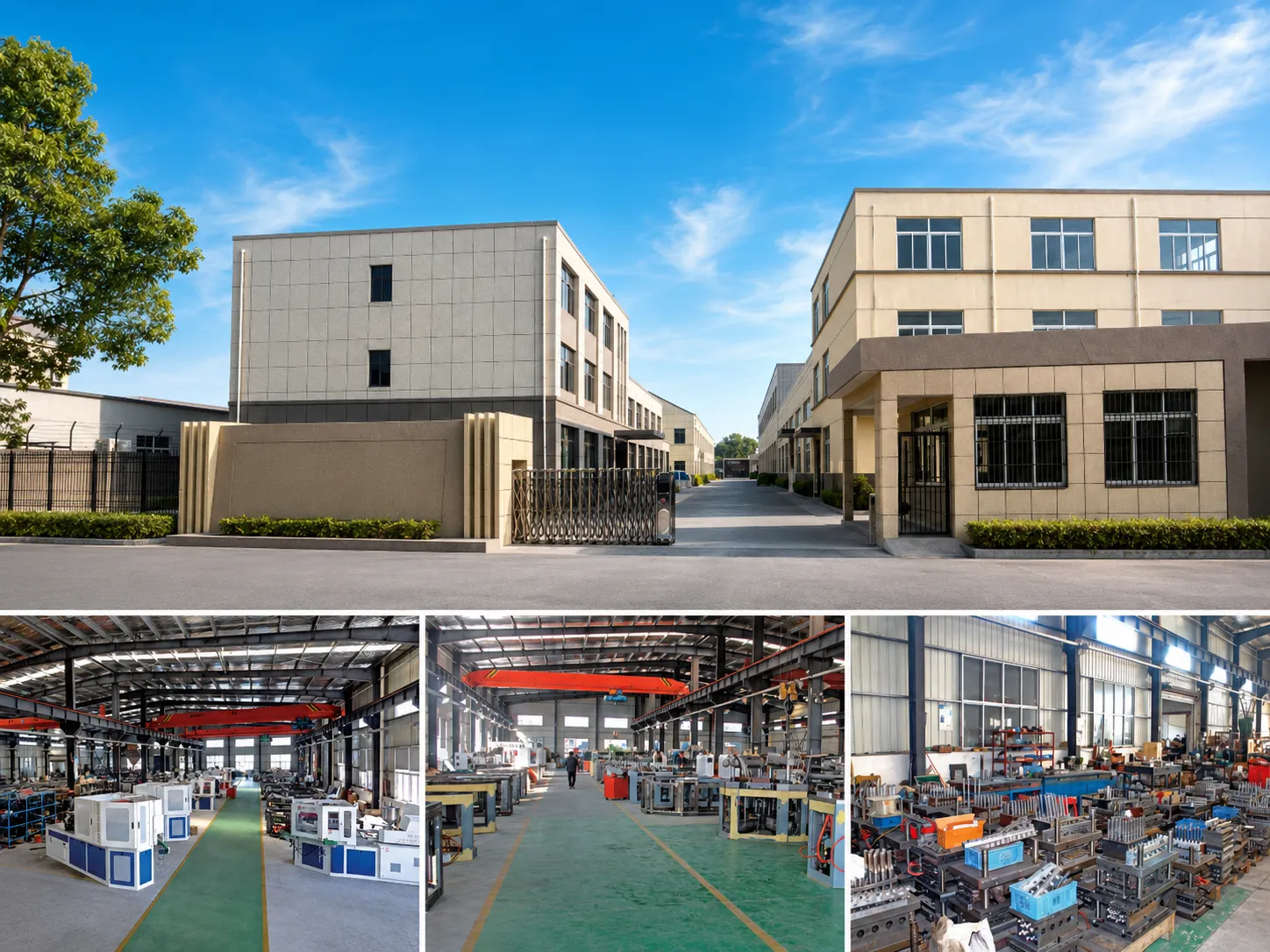
Korea Ever-Power manufacturing facility — ZQ60 ZQ80 food-grade HDPE IBM machine production line for Korean food condiment packaging soy sauce honey sesame oil containers — food contact HDPE IBM without mould release agents Korean MFDS compliant production
韩国Ever-Power制造工厂生产的ZQ系列IBM机器专为韩国食品级HDPE包装而设计。食品级HDPE IBM机器与制药级IBM机器采用相同的ZQ平台——食品级的区别在于HDPE等级、模具表面规格和生产现场卫生条件,而非机器硬件。未来有意升级生产制药级IBM机器的韩国食品级IBM生产商,只需对模具和生产流程进行相应的调整,即可使用同一台ZQ机器满足两种应用需求。

ZQ 选择矩阵 · 食品 IBM @ 200ml HDPE 挤压瓶 (MI 0.5)

ZQ 型号 CAV @ 200毫升 瓶/小时 年度上限。 韩国美食简介
EP-ZQ40 5–7 约4000-5600 约1400万至1960万 韩国特色蜂蜜初创公司,韩国手工调味品品牌,限量版季节限定产品
EP-ZQ60 ★ 12 ~9,600 约3360万 韩国国民食品品牌OEM、韩国酱油生产商、韩国蜂蜜品牌——标杆企业
EP-ZQ80 16 ~12,800 约4480万 韩国大型食品集团,韩国超市自有品牌调味品OEM,多渠道
EP-ZQ110 20 ~16,000 约5600万 韩国大型食品集团旗下酱油,韩国连锁超市自有品牌大规模生产

★ ZQ60 12腔注塑机——韩国食品包装行业IBM标杆产品。单台机器年产能3360万件(200毫升),足以满足韩国国民品牌酱油和特色蜂蜜的年销量需求。 EP-ZQ60 600 kN 的锁模力可完美处理容量为 100–300 ml 的 12–16 腔食品模具。对于计划在一台机器上生产两种规格(调味品 + 蜂蜜)的韩国食品 IBM 生产商而言,应选择配备快速换模装置的 ZQ60,以便在 2 小时内完成规格切换。

工程常见问题解答

IBM 食品包装工程问题

Q 01

为什么IBM生产的蜂蜜熊奶瓶比EBM生产的更好?

IBM produces superior honey bear bottles over EBM for three structural reasons. First, IBM’s blow mould completely defines the external container shape — a bear-shaped blow mould produces a bear-shaped container with all surface details (ear shape, belly contour, eye position embossing) exactly as machined into the blow mould cavity, on every container in every cavity of the production run. The IBM bear container body has no parting line — the mould split line runs at the base, outside the visible body surface, so the bear body is seam-free. EBM bear containers have a prominent parting line running vertically through the bear body from neck to base — highly visible on the bear’s rounded body surface and rejected by Korean premium honey brands for shelf display. Second, IBM bear containers have a seamless one-piece body produced by blowing a preform inside the bear-shaped cavity. The preform’s wall is distributed into the bear body’s varying cross-sectional areas (thin at the ears, thicker at the belly) by IBM’s controlled blow ratio — producing a finished wall thickness distribution of ±5% CV across the bear body. EBM bear containers have ±15–20% CV wall thickness on the bear body surface, producing localised wall thinning at the bear’s shoulder curves and ear junctions — visible as haze lines in natural translucent HDPE that Korean honey brand packaging inspectors reject. Third, IBM neck thread OD ±0.05 mm across all cavities ensures the honey dispensing flip-cap or disc-top closure engages consistently across all production containers — Korean specialty honey gift packaging specifies premium flip-caps with engagement torque ±15% of target, a specification that only IBM’s ±0.05 mm thread OD can meet at scale.

Q 02

对于韩国食品包装而言,IBM 的年产量达到多少时比 EBM 更具经济效益?

The IBM vs EBM economic crossover for Korean food packaging containers depends on container volume and format complexity. For standard cylindrical or simple oval food containers in the 100–300 ml range: the crossover is approximately 3–5 million units per year per format. Below 3 million units, EBM’s lower mould tooling investment (typically 40–60% of IBM 3-piece mould cost) may produce a lower total annual cost. Above 5 million units, IBM is systematically more economical through: (1) higher production rate — IBM’s 3–4 second cycle time at 12–14 cavities (200 ml) produces 9,600–11,200 bottles per hour versus EBM’s 5–8 second cycle at 4–6 cavities producing 2,700–4,300 bottles per hour at comparable machine investment; (2) zero flash trim — IBM eliminates the EBM base trim operation and associated labour (typically 1 operator per 2 EBM machines at Korean food packaging factories); (3) lower resin consumption — IBM’s uniform wall (±5% CV) achieves the minimum wall thickness at all points versus EBM’s over-specification at thin-wall design points to compensate for ±15–20% variation; (4) higher quality acceptance — Korean food brand acceptance at IBM’s quality level reduces returned goods and rework costs. For complex shape containers (bear-shaped honey, embossed surface patterns, integrated handle shapes): IBM’s economic crossover is lower — approximately 1–2 million units per year — because EBM’s parting line on complex shapes typically requires a secondary cosmetic treatment step that IBM eliminates entirely.

Q 03

IBM能否生产出瓶颈处集成喷嘴的韩国酱油瓶?

Yes — IBM can produce Korean soy sauce bottles with a narrow dispensing nozzle neck geometry integrated into the injection-moulded neck, eliminating the need for a separate insert nozzle tip applied after production. IBM’s injection mould neck insert defines the complete neck geometry, including a narrowed dispensing orifice, a controlled orifice diameter, an angled dispensing tip direction and a smooth internal transition from the bottle body bore to the nozzle orifice. The dispensing orifice diameter controls the Korean soy sauce stream width and flow rate — typically 3–5 mm diameter for Korean table soy sauce (producing a thin, controllable stream at 1-hand pouring). IBM neck insert CNC machining tolerance of ±0.05 mm on the dispensing orifice diameter ensures consistent flow rate across all cavities. Korean soy sauce brands specifying IBM dispensing nozzle neck geometry should note: (1) the nozzle geometry must be communicated to Korea Ever-Power’s IBM mould design team before neck insert machining — a 2D nozzle geometry drawing or a reference container cross-section is needed; (2) the dispensing orifice must be above the minimum IBM core rod diameter that can access and demould the neck — typically ≥ 4 mm for 200 ml Korean soy sauce nozzle containers; (3) a flip-cap or push-pull cap closure compatible with the IBM nozzle neck geometry must be specified by the Korean food brand’s packaging team before IBM mould design, as the cap’s sealing surface interfaces with the IBM neck’s dispensing tip geometry.

Q 04

ZQ 同一台机器能否生产食品级和医药级 HDPE IBM 容器?

是的——ZQ机器的硬件在食品级和药用级HDPE IBM(工业包装容器)的生产中是完全相同的。同一台ZQ60或ZQ80机器只需更换模具,即可在同一天生产韩国酱油容器和韩国药用口服液容器,使用不同等级的HDPE材料和存储在ZQ控制系统中的生产配方。然而,韩国的监管要求对在同一工厂内混合生产食品/药用IBM容器造成了操作上的限制,韩国IBM生产商必须应对这些限制。韩国GMP药用IBM容器的生产必须在符合韩国食品药品安全部(MFDS)药品GMP环境标准的专用生产区域进行(包括颗粒物和微生物监测、HEPA过滤、穿戴防护服等)。韩国食品级IBM容器的生产则无需这些环境控制措施——只需符合韩国食品药品安全部的食品卫生标准(洁净室相当于韩国食品加工厂的洁净室,无化学污染风险)。实际上,韩国IBM合同包装工厂通常在同一厂房内设置两个独立的生产车间,用于生产食品和药品包装容器——一个符合GMP标准的药品生产车间配备药品包装机(ZQ机),另一个不符合GMP标准的食品生产车间配备食品包装机(ZQ机)——而不是在同一车间使用同一台机器生产两种类型的产品。这种运营上的分离既能确保工厂符合韩国食品药品安全部(MFDS)的药品GMP审核要求,又能使工厂使用同一套包装机平台投资,同时服务于韩国的食品和药品客户。

Q 05

IBM 容器应用中增长最快的韩国食品有哪些?为什么?

Three Korean food IBM container applications show above-average annual growth in 2024–2026. First, Korean premium honey and natural sweetener packaging: Korean consumer preference for natural, additive-free sweeteners (acacia honey, domestic Korean pine honey, agave syrup, Korean rice syrup) is driving Korean honey IBM container volume growth at approximately 12–15% per year. IBM’s seam-free bear and jar honey containers are the preferred format for Korean premium honey brands targeting Korean department store food halls and Korean online specialty food platforms — the premium appearance justifies a price premium over EBM honey containers at Korean retail. Second, Korean sesame oil and specialty oil packaging: Korean cooking oil IBM containers for sesame oil (참기름) and perilla oil (들기름) are growing at 8–10% per year driven by Korean consumer demand for single-origin, artisan Korean cooking oils at premium price points. IBM containers in 100–200 ml with anti-oxidant amber HDPE or white HDPE with UV barrier pigment are the preferred format for Korean premium oil brands. Third, Korean K-food export condiment packaging: Korean food export to Southeast Asia, the Middle East and the US has driven Korean condiment IBM container demand — soy sauce, gochujang sauce, Korean BBQ sauce and Korean dipping sauce brands targeting international Korean food distribution all specify IBM containers for their export-format SKUs, citing IBM’s leak-free neck thread and consistent dispensing as key quality requirements for export logistics.

Q 06

IBM 如何处理需要热灌装(灌装过程中将芝麻油加热至 60°C)的韩国食品容器?

Korean food IBM containers for hot-fill applications — sesame oil filled at 50–65°C, honey filled at 45–55°C, certain Korean vinegar-based sauces hot-filled for sterilisation at 65–75°C — require specific HDPE grade and wall thickness design to maintain container dimensional integrity and volume fill accuracy at the fill temperature. HDPE’s heat deflection temperature at 0.45 MPa load is approximately 75–85°C for the density range 0.952–0.965 — above the Korean hot-fill temperature range for food applications, confirming that HDPE IBM containers do not deform structurally during Korean food hot-fill. However, thermal expansion of the HDPE container at hot-fill temperature (HDPE linear thermal expansion coefficient ≈ 130–160 × 10⁻⁶/°C) temporarily enlarges the container volume — a 200 ml HDPE IBM container at 60°C fill temperature has approximately 1.8–2.0 ml more volume than at 23°C. For Korean food fill-volume compliance (fill declared volume ±3% for most Korean food container categories), this thermal expansion must be accounted for in the Korean filling line volumetric fill setting — the Korean food filling machine is typically calibrated at the fill temperature to dispense the nominal volume at the container’s expanded hot-fill dimensions, achieving the target volume after the container cools to 23°C Korean storage temperature. Korea Ever-Power can provide thermal expansion correction calculations for Korean food hot-fill IBM container design on request, helping Korean food IBM producers calibrate their filling lines correctly for Korean MFDS fill-volume compliance at their specific hot-fill temperature and declared nominal volume.

食品包装 IBM 询价 · 韩国 EVER-POWER

计划生产高密度聚乙烯(HDPE)食品级IBM容器?

韩国永力公司为韩国食品包装 IBM 生产提供食品级 HDPE IBM 模具设计、韩国食品药品安全部食品接触合规性文件、挤压瓶壁工程和 ZQ 系列机器选型,适用于所有年产量。

请求 IBM 食品包装咨询


工厂虚拟现实之旅

标签: