FOOD PACKAGING IBM · HDPE FOOD-GRADE · KOREAN MFDS · KOREA EVER-POWER
HDPE Food Packaging IBM:
Food-Grade Container Guide
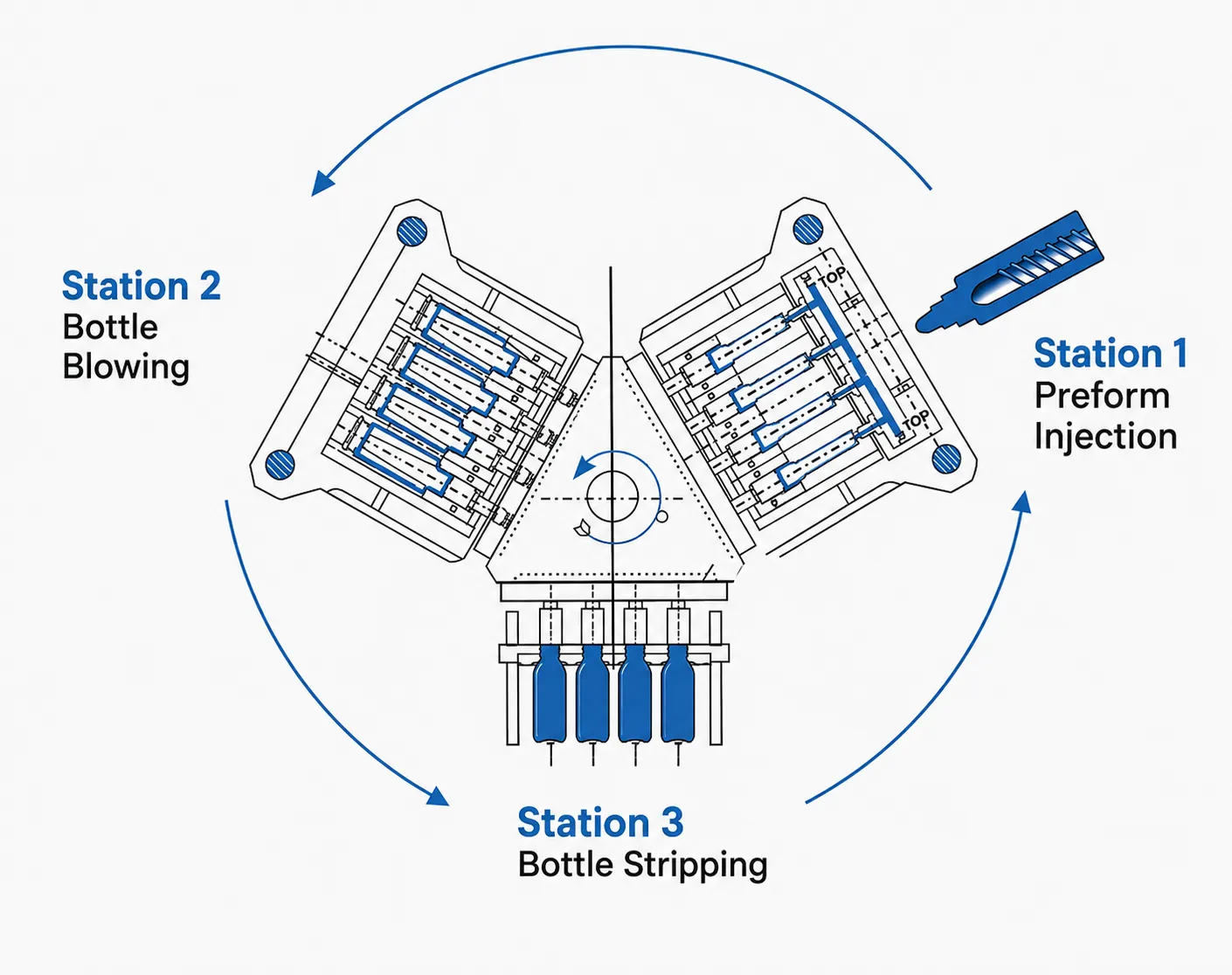
Korean food packaging IBM covers soy sauce, ketchup, sesame oil, honey, salad dressing and cooking condiment containers — a format family where IBM’s uniform wall thickness, zero-flash interior and injection-moulded neck deliver measurable production advantages over EBM in squeeze function, fill accuracy and Korean MFDS food contact compliance. This guide covers food-grade HDPE grade selection, Korean food safety certification, squeeze bottle engineering and ZQ series machine selection for Korean food IBM production.
Squeeze-and-Recover Function
Zero-Flash Interior
KOREA EVER-POWER · ANSAN-SI, GYEONGGI-DO · JULY 2026
SYSTEM REFERENCE · HDPE FOOD PACKAGING IBM PARAMETERS
FORMAT RANGE
50–500 ml
Korean food IBM container volume range — soy sauce to condiment
WALL UNIFORMITY
±5% CV
IBM wall thickness consistency — vs EBM ±15–20% — ensures linear squeeze force
MFDS MIGRATION LIMIT
≤ 150 ppm
Evaporation residue (n-heptane) — Korean MFDS food contact plastic standard
ZQ60 OUTPUT @ 200ml
~9,600/hr
12 cavities · ~33.6M units/year Korean 2-shift
SECTION 01
Korean Food Industry and HDPE IBM Packaging
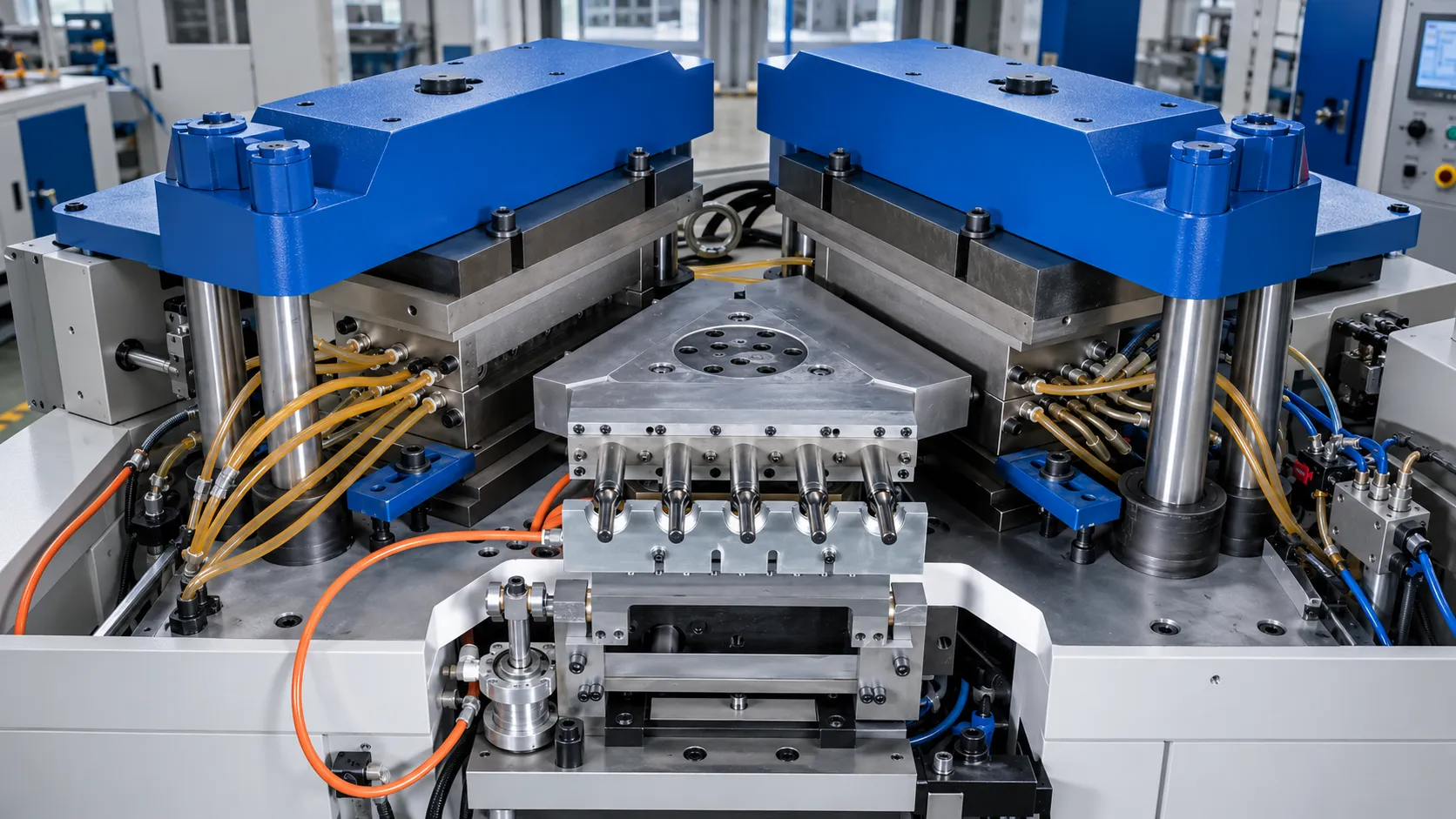
The Korean food packaging IBM market centres on three product categories with distinct container requirements that collectively make IBM the preferable blow molding process over EBM at annual production volumes above 1 million units per format. Korean condiment packaging — soy sauce (간장), doenjang sauce, gochujang sauce, sesame oil (참기름), vinegar-based dressing — requires squeeze-and-dispense containers where IBM’s uniform wall thickness (±5% CV versus EBM’s ±15–20%) produces the consistent, linear squeeze-force-to-dispensing-volume relationship that Korean food brand quality specifications define. Korean honey packaging — bear-shaped and jar-shaped honey containers from 100 to 500 ml — is a traditional IBM specialty worldwide, with IBM’s seamless one-piece body and injection-moulded neck producing the clean, premium appearance that Korean honey brands use to differentiate specialty honey products at Korean department store and online retail price premiums. Korean cooking oil packaging at 100–500 ml (sesame oil, perilla oil, olive oil) requires HDPE food contact compliance for fatty food contact and UV barrier for shelf-stable Korean cooking oil quality maintenance.
The detailed technical basis for IBM’s HDPE processing — barrel temperature profiles, MI selection, shrinkage calculation — is covered in the HDPE IBM processing guide. This guide focuses specifically on the food-grade HDPE grade selection, Korean MFDS food contact certification requirements and container engineering specifications unique to the Korean food packaging IBM application.
SECTION 02
Food-Grade HDPE Requirements for IBM
Food-grade HDPE for IBM differs from pharmaceutical-grade HDPE in regulatory framework and from household-chemical-grade HDPE in chemical resistance requirements. Korean food-grade HDPE for IBM containers must satisfy the Korean Ministry of Food and Drug Safety (MFDS) Standards for Food Utensils, Containers and Packaging (식품용 기구 및 용기·포장의 기준 및 규격), which specifies migration limits less stringent than pharmaceutical KP standards but covering a broader range of food contact media including acidic food simulants (acetic acid 4%), fatty food simulants (n-heptane) and aqueous food simulants.
| REQUIREMENT | FOOD-GRADE IBM | PHARMA-GRADE IBM | HOUSEHOLD IBM |
|---|---|---|---|
| Regulatory body | Korean MFDS food contact | Korean MFDS pharma KP | Korean chemical labeling law |
| Evaporation residue limit | ≤ 150 ppm (n-heptane) | ≤ 30 ppm (KP — all media) | No extractables limit |
| Heavy metals (as Pb) | ≤ 100 ppm | ≤ 1 ppm (KP) | No direct limit |
| Colourant restriction | Korean MFDS food contact positive list | Korean KFDA pharma positive list | No restriction |
| UV stabiliser restriction | Prohibited unless listed | Prohibited | Permitted |
| ESCR requirement | High — fatty food ESCR | Moderate — aqueous pharma | High — surfactant ESCR |
Additive Compliance — Food Contact
- ✓Antioxidants: AO-1010, AO-168, Vitamin E — Korean MFDS food contact listed
- ✓Slip agents: erucamide — listed for food contact; stearamide — listed
- ✗UV stabilisers (HALS, benzophenone): prohibited for Korean MFDS direct food contact HDPE
- ✗Fluorescent brighteners: prohibited for Korean food contact plastic containers
ESCR for Fatty Food Contact
Korean food packaging HDPE IBM containers for fatty food contact (sesame oil, cooking oil, salad dressing) require ESCR F50 ≥ 100 h in the specific food simulant. Fatty food contact is the most aggressive ESCR condition in food packaging — lipids at the HDPE container surface plasticise the amorphous regions at the surface layer, reducing resistance to stress cracking at the container sidewall and base. Low-density HDPE (below 0.952 g/cm³) is unsuitable for Korean fatty food IBM containers at the typical wall thickness of 0.5–0.9 mm — the Korean MFDS food contact standard includes a physical integrity requirement (no deformation, cracking or clouding at 24h fatty food simulant immersion) that rules out low-density grades.
SECTION 03
IBM Squeeze Bottle Engineering
IBM’s squeeze bottle advantage over EBM is primarily a wall uniformity advantage: IBM’s preform-determined wall distribution produces body wall thickness CV% of ±5% per production batch, versus EBM’s ±15–20% CV% from parison thickness variation. For Korean food condiment squeeze bottles, this wall uniformity difference produces two customer-visible quality differences.
SQUEEZE FUNCTION COMPARISON · IBM vs EBM @ 200ml HDPE CONDIMENT BOTTLE
METRIC
Wall thickness CV%
Squeeze force variation (lot)
Recovery time after squeeze
Neck thread OD tolerance
Interior flash risk
IBM
±5% — preform-controlled
±8% across production lot
< 0.5 s at 0.6 mm wall
±0.05 mm — injection-moulded
None — no trim operation
EBM
±15–20% — parison-dependent
±25–30% across production lot
0.8–1.5 s (heavy wall zones)
±0.15–0.25 mm — blow-formed
Present — pinch-trim at base
The first quality difference is dispensing consistency: Korean soy sauce bottle consumers and Korean restaurant buyers evaluate soy sauce bottle quality by the precision of the “1-squeeze = fixed volume” dispensing experience. IBM’s ±8% squeeze force variation across the production lot means the Korean consumer gets a predictable dispensing volume per squeeze; EBM’s ±25–30% squeeze force variation means some bottles in the lot dispense noticeably less per squeeze than others — a quality perception difference that Korean food brand QA teams measure and report as a packaging quality nonconformance against their bottle supplier.
The second quality difference is interior cleanliness: IBM containers are produced without flash trim. EBM condiment squeeze bottles have a base pinch-trim seam — in normal production the trim is clean, but HDPE trim flash particles at the trim seam can detach inside the container during the base trim operation and remain in the container interior at filling. Korean food MFDS standards require filled food containers to be free from foreign material; any HDPE flash particle in the food product is a Korean food contamination finding. IBM’s zero-flash production eliminates this contamination risk entirely — an important quality advantage for Korean MFDS-registered food condiment IBM producers.
SECTION 04
HDPE Grade Selection for Korean Food IBM Containers
Korean food packaging IBM uses three HDPE grade categories differentiated by MI range and ESCR requirement — each matched to a specific food contact category based on chemical aggressiveness and dispensing function.
SQUEEZE · SOY SAUCE · VINEGAR
HONEY · SYRUP · VISCOUS
COOKING OIL · SESAME OIL
MI / DENSITY
0.3–0.6 / 0.952–0.960
MI / DENSITY
0.5–0.9 / 0.948–0.958
MI / DENSITY
0.4–0.7 / 0.955–0.965
Low MI for maximum ESCR in aqueous acidic food contact (Korean soy sauce pH 4.5–5.0, Korean vinegar pH 2.5–3.5). Squeeze recovery: HDPE at MI 0.3–0.6 has higher elasticity, recovering from 30% compression in <0.5 s — essential for 1-hand Korean soy sauce dispensing. Korean MFDS acetic acid 4% migration ≤ 30 ppm confirmed with Grade A HDPE at IBM wall 0.6–0.8 mm.
Mid-MI for balanced flow and dimensional precision at high-viscosity fill. Korean honey IBM containers use slightly higher MI (0.6–0.9) for hot-fill compatibility up to 55°C — Korean honey filling lines typically fill at 45–55°C to reduce viscosity and improve fill speed. Wall thickness at 0.8–1.2 mm for premium honey bottles requiring structural rigidity at Korean retail shelf display conditions (stacked 2–3 high).
Higher density (0.955–0.965) for maximum ESCR in continuous fatty food contact — Korean sesame oil IBM containers require ESCR F50 ≥ 200 h because sesame oil’s unsaturated fatty acid composition creates a particularly aggressive ESCR environment at the HDPE container wall. Korean perilla oil and olive oil IBM containers also specify high-density HDPE for the same reason. UV barrier pigment (carbon black 0.1–0.3% or UV-blocking TiO₂) added in food contact-listed pigment grade.
SECTION 05
IBM Processing Parameters for Food-Grade Containers

| PARAMETER | SQUEEZE / SOY SAUCE (MI 0.3–0.6) | HONEY / VISCOUS (MI 0.5–0.9) | COOKING OIL (MI 0.4–0.7) |
|---|---|---|---|
| Barrel metering zone | 195–210°C | 200–215°C | 198–213°C |
| Injection nozzle | 205–218°C | 208–220°C | 205–218°C |
| Injection pressure | 100–145 MPa | 90–125 MPa | 95–135 MPa |
| Blow air pressure | 0.50–0.80 MPa | 0.55–0.85 MPa | 0.55–0.85 MPa |
| Mould temperature (body) | 18–28°C | 20–30°C | 18–28°C |
| Cycle time | 3.5–4.5 s | 3.8–5.0 s | 3.5–4.5 s |
No mould release agents — Korean MFDS requirement: Korean MFDS food contact material standards prohibit mould release agents on the internal surface of food contact containers. IBM inherently uses no mould release agents — the IBM core rod surface finish (Ra ≤ 0.10 μm on food contact food zones) and the HDPE material’s natural release from polished steel eliminate the need for any chemical release agent. This is a Korean MFDS compliance advantage over some injection moulding processes where mould release agents are used for complex geometry demoulding. The household chemical IBM guide covers cleaning and maintenance of the IBM mould contact surfaces between Korean food and non-food production runs — relevant for Korean IBM producers running both food and non-food HDPE IBM formats on the same machine.
SECTION 06
Korean Food Container Formats and IBM Cavity Selection
| CONTAINER FORMAT | VOLUME | NECK FINISH | ZQ60 CAVITIES | KOREAN FOOD APPLICATION |
|---|---|---|---|---|
| Soy sauce squeeze | 100–200 ml | 20/400 GPI | 14–18 | Korean table soy sauce, Korean teriyaki sauce, Korean bulgogi marinade |
| Honey bear / jar ★ | 150–500 ml | 28/400–38/400 | 8–14 | Korean honey (acacia, pine, buckwheat), Korean premium honey gift packaging |
| Sesame / perilla oil | 100–300 ml | 24/400 GPI | 12–16 | Korean sesame oil (참기름), Korean perilla oil (들기름), Korean chili oil |
| Condiment / dressing | 150–500 ml | 24/400–28/400 | 8–12 | Korean mayonnaise, Korean salad dressing, Korean ketchup, Korean sauce mix |
| Vinegar / liquid sauce | 200–500 ml | 28/400 GPI | 8–10 | Korean apple cider vinegar, Korean rice vinegar, Korean liquid doenjang sauce |
★ Honey bear bottles are IBM’s globally recognised specialty format — the complex bear-shaped exterior geometry is achievable only in IBM (blow mould defines any external shape) while maintaining a seamless one-piece body with no flash mark on the bear body surface. EBM produces bear-shaped bottles with a visible parting line running vertically through the bear body — rejected by Korean premium honey brands.
SECTION 07
Korean MFDS Food Contact Certification for IBM Containers
Korean MFDS food contact certification for HDPE IBM containers is governed by the Korean Ministry of Food and Drug Safety Standards for Food Utensils, Containers and Packaging (식품용 기구 및 용기·포장의 기준 및 규격, Ministry Notice). The certification process is substantially simpler and faster than Korean KFDA pharmaceutical container qualification — a key reason why Korean food IBM container producers can achieve market readiness within 8–12 weeks of first IBM production sample, versus 16–28 weeks for pharmaceutical IBM.
HDPE resin supplier provides a Korean MFDS food contact compliance declaration — confirming all resin additives are on the Korean MFDS food contact positive list (Appendix 1 of the Standards). This declaration is the primary document confirming material compliance; it is provided by the resin supplier and requires no testing by the IBM container producer. Korea Ever-Power can recommend Korean and international HDPE resin suppliers who maintain current Korean MFDS food contact compliance declarations for their pharmaceutical and food-grade HDPE grades.
IBM containers produced at commercial conditions are tested at a Korean MFDS-accredited food testing laboratory. Migration test media for HDPE food containers: purified water (60°C, 30 min), 4% acetic acid (60°C, 30 min), n-heptane (25°C, 1 h). Results must be below Korean MFDS limits: evaporation residue ≤ 150 ppm (n-heptane) and ≤ 30 ppm (acetic acid); lead ≤ 100 ppm as Pb. Testing lead time: 2–3 weeks from sample submission. Cost: significantly lower than Korean KP pharmaceutical testing.
The IBM container producer issues a food contact material compliance declaration (식품용 기구·용기·포장 적합 확인서) to the Korean food brand. This declaration references the MFDS food contact test results, the HDPE resin compliance declaration and the IBM container production conditions (machine, mould set, production site). The Korean food brand uses this declaration in their Korean HACCP documentation and Korean MFDS food product registration — no separate Korean MFDS container registration is required (unlike pharmaceutical KFDA qualification). The declaration is renewed when the HDPE resin grade or IBM production site changes.
Korean food IBM vs pharmaceutical IBM certification timeline: Food IBM certification — 4–8 weeks from first production samples to completed compliance declaration. Pharmaceutical IBM qualification — 16–28 weeks (driven by 12–24 week compatibility study). This timeline difference means Korean food IBM producers can respond to Korean food brand new product launch timelines (typically 12–16 weeks from brief to shelf) without the packaging certification path being the critical delay — an advantage that Korean pharmaceutical IBM producers cannot claim for new container launches.
SECTION 08
ZQ Series Selection for Korean Food IBM Production
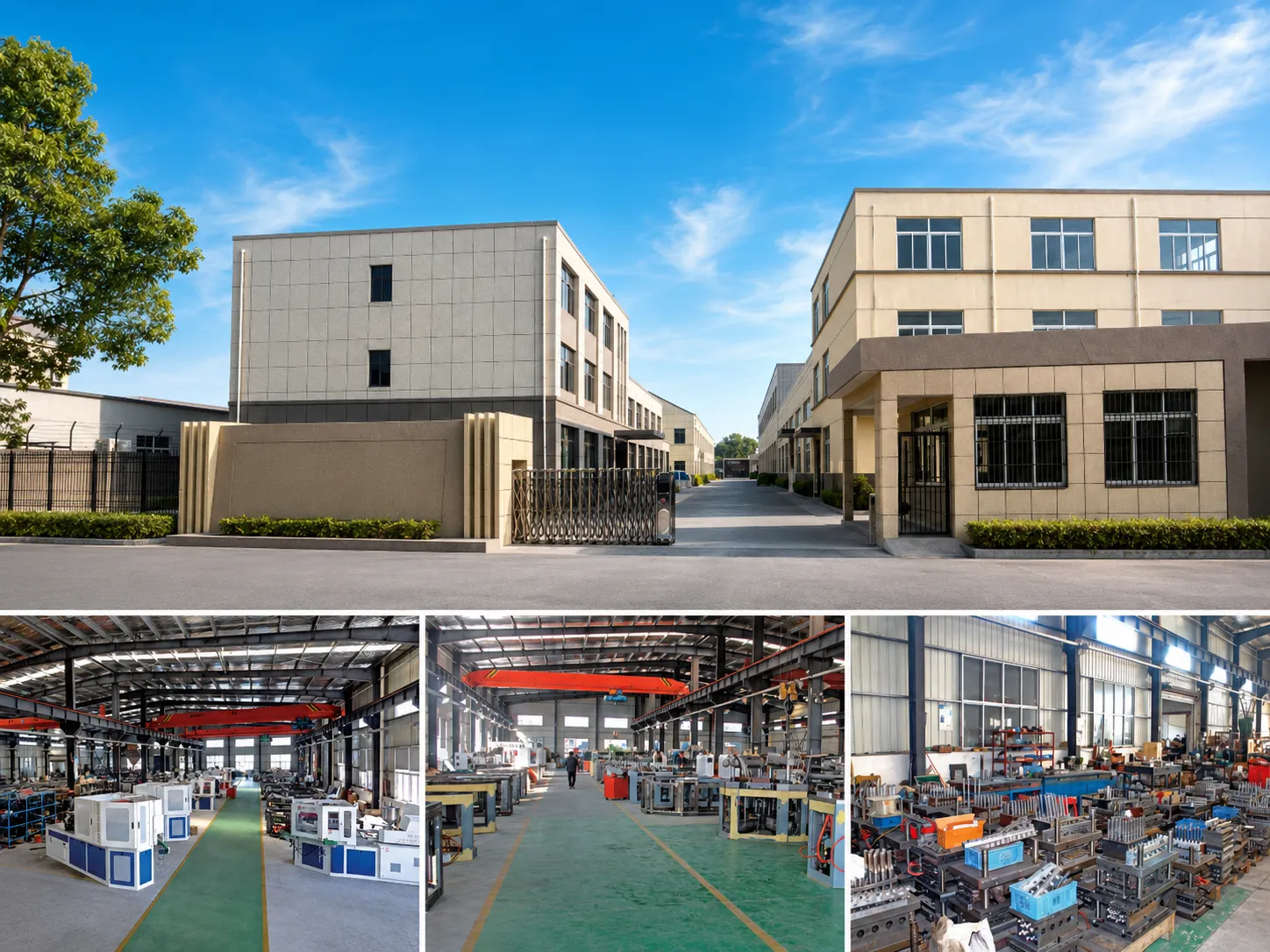
ZQ SELECTION MATRIX · FOOD IBM @ 200ml HDPE SQUEEZE BOTTLE (MI 0.5)
| ZQ MODEL | CAV @ 200ml | BOTTLES/HR | ANNUAL CAP. | KOREAN FOOD PROFILE |
|---|---|---|---|---|
| EP-ZQ40 | 5–7 | ~4,000–5,600 | ~14–19.6M | Korean specialty honey startup, Korean artisan condiment brand, limited edition seasonal |
| EP-ZQ60 ★ | 12 | ~9,600 | ~33.6M | Korean national food brand OEM, Korean soy sauce producer, Korean honey brand — benchmark |
| EP-ZQ80 | 16 | ~12,800 | ~44.8M | Korean major food group, Korean supermarket private label condiment OEM, multi-format |
| EP-ZQ110 | 20 | ~16,000 | ~56.0M | Korean major food conglomerate soy sauce, Korean supermarket chain private-label at scale |
★ ZQ60 at 12 cavities — the Korean food packaging IBM benchmark. 33.6M annual units at 200 ml covers the annual volume range of Korean national brand soy sauce and specialty honey packaging at one machine. The EP-ZQ60 600 KN clamping force handles 12–16 cavity food formats at 100–300 ml optimally. Korean food IBM producers who anticipate dual-format production (condiment + honey) on one machine should specify ZQ60 with quick-change mould mounting for format changeover in under 2 hours.
ENGINEERING FAQ
Food Packaging IBM — Engineering Questions
Why does IBM produce better honey bear bottles than EBM?
IBM produces superior honey bear bottles over EBM for three structural reasons. First, IBM’s blow mould completely defines the external container shape — a bear-shaped blow mould produces a bear-shaped container with all surface details (ear shape, belly contour, eye position embossing) exactly as machined into the blow mould cavity, on every container in every cavity of the production run. The IBM bear container body has no parting line — the mould split line runs at the base, outside the visible body surface, so the bear body is seam-free. EBM bear containers have a prominent parting line running vertically through the bear body from neck to base — highly visible on the bear’s rounded body surface and rejected by Korean premium honey brands for shelf display. Second, IBM bear containers have a seamless one-piece body produced by blowing a preform inside the bear-shaped cavity. The preform’s wall is distributed into the bear body’s varying cross-sectional areas (thin at the ears, thicker at the belly) by IBM’s controlled blow ratio — producing a finished wall thickness distribution of ±5% CV across the bear body. EBM bear containers have ±15–20% CV wall thickness on the bear body surface, producing localised wall thinning at the bear’s shoulder curves and ear junctions — visible as haze lines in natural translucent HDPE that Korean honey brand packaging inspectors reject. Third, IBM neck thread OD ±0.05 mm across all cavities ensures the honey dispensing flip-cap or disc-top closure engages consistently across all production containers — Korean specialty honey gift packaging specifies premium flip-caps with engagement torque ±15% of target, a specification that only IBM’s ±0.05 mm thread OD can meet at scale.
What annual production volume makes IBM more economical than EBM for Korean food packaging?
The IBM vs EBM economic crossover for Korean food packaging containers depends on container volume and format complexity. For standard cylindrical or simple oval food containers in the 100–300 ml range: the crossover is approximately 3–5 million units per year per format. Below 3 million units, EBM’s lower mould tooling investment (typically 40–60% of IBM 3-piece mould cost) may produce a lower total annual cost. Above 5 million units, IBM is systematically more economical through: (1) higher production rate — IBM’s 3–4 second cycle time at 12–14 cavities (200 ml) produces 9,600–11,200 bottles per hour versus EBM’s 5–8 second cycle at 4–6 cavities producing 2,700–4,300 bottles per hour at comparable machine investment; (2) zero flash trim — IBM eliminates the EBM base trim operation and associated labour (typically 1 operator per 2 EBM machines at Korean food packaging factories); (3) lower resin consumption — IBM’s uniform wall (±5% CV) achieves the minimum wall thickness at all points versus EBM’s over-specification at thin-wall design points to compensate for ±15–20% variation; (4) higher quality acceptance — Korean food brand acceptance at IBM’s quality level reduces returned goods and rework costs. For complex shape containers (bear-shaped honey, embossed surface patterns, integrated handle shapes): IBM’s economic crossover is lower — approximately 1–2 million units per year — because EBM’s parting line on complex shapes typically requires a secondary cosmetic treatment step that IBM eliminates entirely.
Can IBM produce Korean soy sauce bottles with the dispensing nozzle integrated into the bottle neck?
Yes — IBM can produce Korean soy sauce bottles with a narrow dispensing nozzle neck geometry integrated into the injection-moulded neck, eliminating the need for a separate insert nozzle tip applied after production. IBM’s injection mould neck insert defines the complete neck geometry, including a narrowed dispensing orifice, a controlled orifice diameter, an angled dispensing tip direction and a smooth internal transition from the bottle body bore to the nozzle orifice. The dispensing orifice diameter controls the Korean soy sauce stream width and flow rate — typically 3–5 mm diameter for Korean table soy sauce (producing a thin, controllable stream at 1-hand pouring). IBM neck insert CNC machining tolerance of ±0.05 mm on the dispensing orifice diameter ensures consistent flow rate across all cavities. Korean soy sauce brands specifying IBM dispensing nozzle neck geometry should note: (1) the nozzle geometry must be communicated to Korea Ever-Power’s IBM mould design team before neck insert machining — a 2D nozzle geometry drawing or a reference container cross-section is needed; (2) the dispensing orifice must be above the minimum IBM core rod diameter that can access and demould the neck — typically ≥ 4 mm for 200 ml Korean soy sauce nozzle containers; (3) a flip-cap or push-pull cap closure compatible with the IBM nozzle neck geometry must be specified by the Korean food brand’s packaging team before IBM mould design, as the cap’s sealing surface interfaces with the IBM neck’s dispensing tip geometry.
Can the same ZQ machine produce both food-grade and pharmaceutical HDPE IBM containers?
Yes — the ZQ machine hardware is identical for food-grade and pharmaceutical HDPE IBM production. The same ZQ60 or ZQ80 machine can produce Korean soy sauce containers and Korean pharmaceutical oral liquid containers on the same day with a mould change, using different HDPE grades and production recipes stored in the ZQ control system. However, Korean regulatory requirements create operational constraints on mixed food/pharmaceutical IBM production at the same facility that Korean IBM producers must manage. Korean GMP pharmaceutical IBM production must be conducted in a dedicated production area that meets Korean MFDS pharmaceutical GMP environmental standards (particulate and microbial monitoring, HEPA filtration, gowning protocols). Korean food IBM production does not require these environmental controls — it requires only Korean MFDS food hygiene standards (clean room equivalent to Korean food processing facility, no chemical contamination risk). In practice, Korean IBM contract packaging factories that produce both food and pharmaceutical containers typically operate two separate production rooms on the same factory floor — one GMP pharmaceutical room with the pharmaceutical ZQ machine(s) and one non-GMP food room with the food ZQ machine(s) — rather than running both product types on the same machine in the same room. This operational separation maintains Korean MFDS pharmaceutical GMP audit compliance while allowing the factory to serve both Korean food and pharmaceutical customers with the same ZQ machine platform investment.
What Korean food IBM container applications are growing fastest and why?
Three Korean food IBM container applications show above-average annual growth in 2024–2026. First, Korean premium honey and natural sweetener packaging: Korean consumer preference for natural, additive-free sweeteners (acacia honey, domestic Korean pine honey, agave syrup, Korean rice syrup) is driving Korean honey IBM container volume growth at approximately 12–15% per year. IBM’s seam-free bear and jar honey containers are the preferred format for Korean premium honey brands targeting Korean department store food halls and Korean online specialty food platforms — the premium appearance justifies a price premium over EBM honey containers at Korean retail. Second, Korean sesame oil and specialty oil packaging: Korean cooking oil IBM containers for sesame oil (참기름) and perilla oil (들기름) are growing at 8–10% per year driven by Korean consumer demand for single-origin, artisan Korean cooking oils at premium price points. IBM containers in 100–200 ml with anti-oxidant amber HDPE or white HDPE with UV barrier pigment are the preferred format for Korean premium oil brands. Third, Korean K-food export condiment packaging: Korean food export to Southeast Asia, the Middle East and the US has driven Korean condiment IBM container demand — soy sauce, gochujang sauce, Korean BBQ sauce and Korean dipping sauce brands targeting international Korean food distribution all specify IBM containers for their export-format SKUs, citing IBM’s leak-free neck thread and consistent dispensing as key quality requirements for export logistics.
How does IBM handle Korean food containers that require hot-fill (sesame oil heated to 60°C during filling)?
Korean food IBM containers for hot-fill applications — sesame oil filled at 50–65°C, honey filled at 45–55°C, certain Korean vinegar-based sauces hot-filled for sterilisation at 65–75°C — require specific HDPE grade and wall thickness design to maintain container dimensional integrity and volume fill accuracy at the fill temperature. HDPE’s heat deflection temperature at 0.45 MPa load is approximately 75–85°C for the density range 0.952–0.965 — above the Korean hot-fill temperature range for food applications, confirming that HDPE IBM containers do not deform structurally during Korean food hot-fill. However, thermal expansion of the HDPE container at hot-fill temperature (HDPE linear thermal expansion coefficient ≈ 130–160 × 10⁻⁶/°C) temporarily enlarges the container volume — a 200 ml HDPE IBM container at 60°C fill temperature has approximately 1.8–2.0 ml more volume than at 23°C. For Korean food fill-volume compliance (fill declared volume ±3% for most Korean food container categories), this thermal expansion must be accounted for in the Korean filling line volumetric fill setting — the Korean food filling machine is typically calibrated at the fill temperature to dispense the nominal volume at the container’s expanded hot-fill dimensions, achieving the target volume after the container cools to 23°C Korean storage temperature. Korea Ever-Power can provide thermal expansion correction calculations for Korean food hot-fill IBM container design on request, helping Korean food IBM producers calibrate their filling lines correctly for Korean MFDS fill-volume compliance at their specific hot-fill temperature and declared nominal volume.
FOOD PACKAGING IBM ENQUIRY · KOREA EVER-POWER
Planning HDPE Food-Grade IBM Container Production?
Korea Ever-Power provides food-grade HDPE IBM mould design, Korean MFDS food contact compliance documentation, squeeze bottle wall engineering and ZQ series machine selection for Korean food packaging IBM production at all annual production volumes.