CRC制药 IBM · KS M ISO 8317 · 韩国KFDA · 韩国EVER-POWER
CRC制药 IBM:
儿童安全 容器指南
Korean child-resistant closure (CRC) pharmaceutical containers are the application where IBM’s ±0.05 mm neck OD precision is not merely an advantage over EBM — it is the prerequisite for Korean KS M ISO 8317 compliance. This guide covers CRC engagement mechanism physics, IBM neck geometry specifications, Korean ISO 8317 test requirements, HDPE grade selection and ZQ series machine selection for Korean CRC pharmaceutical container production.
CRC珠外径±0.05毫米
推拉式机构
韩国 EVER-POWER · 京畿道安山市 · 2026年7月
系统参考 · 韩国 CRC 制药 IBM 参数
CRC珠OD公差
±0.05 毫米
IBM注塑成型——韩国ISO 8317窗口±0.06毫米
KS M ISO 8317 成人
≥ 85%
5分钟内打开率——200名成年测试对象
KS M ISO 8317 儿童
≤ 20%
10 分钟内打开率——200 名儿童受试者(42-51 个月)
HDPE珠粒刚度
MI 0.5–0.8
g/10分钟 · 密度0.955–0.965 — 珠子可抵抗CRC下压变形
第 01 节
韩国CRC制药容器市场和IBM
在韩国,儿童安全包装(CRC)是特定且不断扩大的药品类别的强制性要求。韩国健康保险审查评估院(HIRA)规定,所有含有超过特定剂量阈值的有毒活性成分的韩国处方药、所有分发给六岁以下儿童家庭的韩国处方儿科液体制剂,以及所有超过标准单剂量包装的韩国非处方止痛药(片剂和液体剂型)都必须使用儿童安全包装。自2020年以来,韩国食品药品安全部(MFDS/KFDA)逐步加强了对儿童安全包装要求的执行力度,扩大了需要使用儿童安全包装的韩国药品范围,使其不再局限于最初的药品类别。
IBM is the exclusive blow molding process for Korean pharmaceutical CRC containers because the push-and-turn CRC mechanism’s engagement tolerance window (±0.06 mm on neck engagement bead OD) falls within IBM’s native ±0.05 mm neck precision but exceeds EBM’s ±0.15–0.25 mm neck tolerance by a factor of 3–5×. No secondary neck processing applied to EBM containers can reliably achieve ±0.06 mm CRC engagement bead OD across 2–4 cavities at the production speed required for Korean pharmaceutical filling lines — the neck processing reaming operation’s own dimensional variation (±0.08–0.12 mm reaming tolerance) exceeds the CRC engagement window. IBM eliminates this process chain by producing the engagement bead at ±0.05 mm in the injection mould neck insert as a primary process capability, not as the result of secondary finishing.
更广泛的医药包装容器包装指南全面涵盖了韩国医药初级包装容器的各种规格。本指南重点介绍CRC包装容器的包装容器包装——包括CRC医药包装容器包装特有的接合机制、瓶颈几何规格、韩国ISO 8317合规性、HDPE等级选择以及生产经济性。
第 02 节
CRC 啮合机制和 IBM 颈部精度
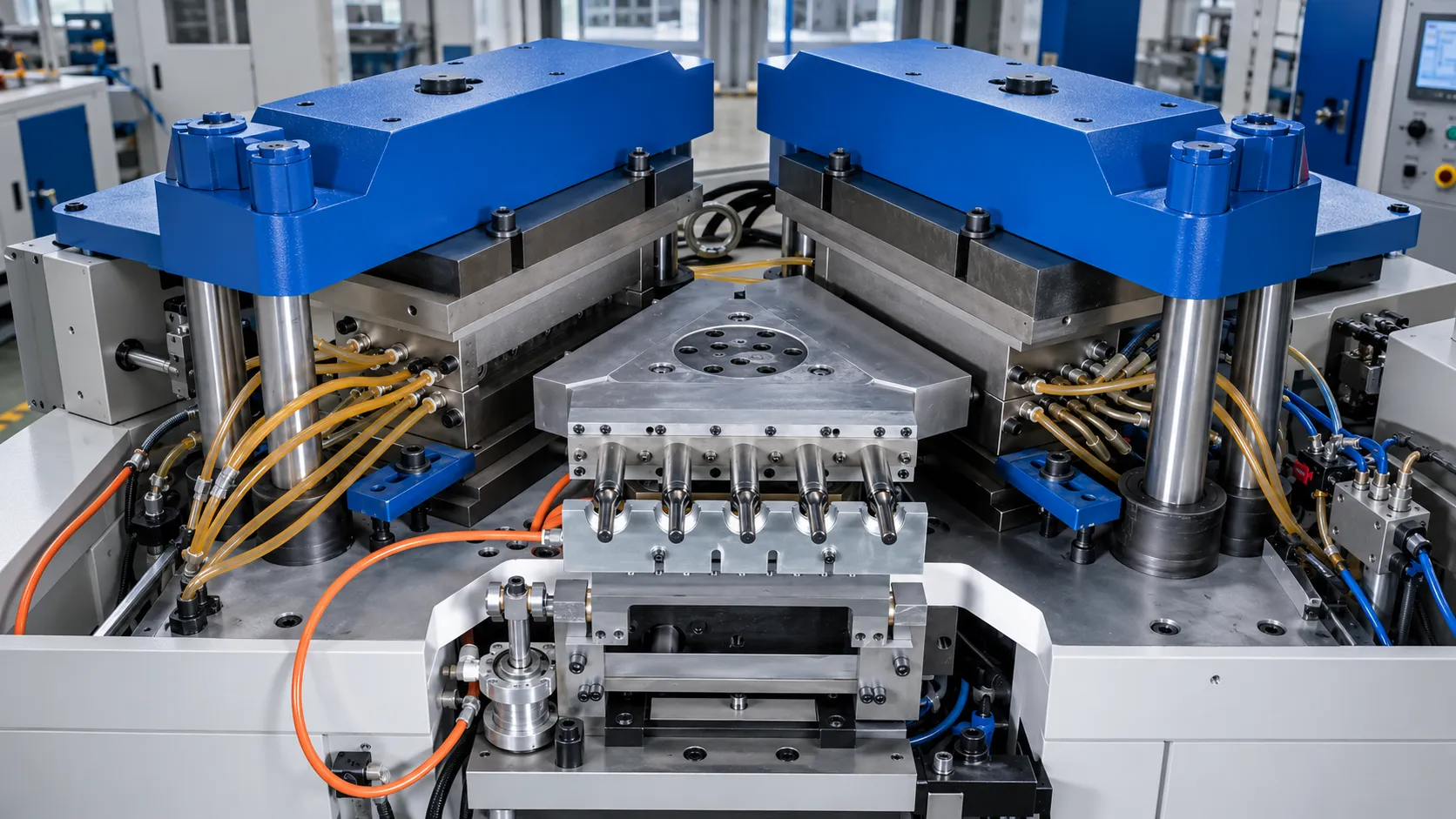
CRC瓶盖采用推拉式旋转设计,其工作原理是通过HDPE材质IBM瓶颈上的环形固定珠与CRC瓶盖裙边内侧的匹配棘轮之间的机械干涉啮合来实现的。理解这种啮合机制的物理原理对于正确设计IBM瓶颈嵌件的几何形状至关重要。
推转式CRC——啮合机制和IBM颈部公差链
第一步——向下推
The Korean patient or pharmacist presses the CRC cap downward, compressing the cap skirt’s spring ratchet teeth over the HDPE neck bead. The engagement bead OD determines the interference force: if bead OD is too wide, the required push-down force exceeds Korean elderly patient capability (adult accessibility failure). If bead OD is too narrow, ratchet teeth cannot compress adequately and CRC function is lost.
步骤二——按住不放转动
在保持向下压力的同时,旋转瓶盖(通常旋转 30–45°),使棘轮齿与瓶颈螺纹啮合起始点对齐。螺纹外径 ±0.05 毫米的 IBM 公差确保螺纹啮合起始点与设计啮合点之间的偏差在 1–2° 以内——防止螺纹交叉卡滞,从而避免因旋转力过大而导致无法通过成人无障碍测试。
步骤 3 — 发布和验证
Cap released — the spring ratchet re-engages the retention bead, locking the cap in the open position (child cannot re-close) or in the closed thread engagement position (product sealed). IBM neck geometry ensures consistent ratchet engagement depth across all production cavities: bead height ±0.05 mm, bead profile radius ±0.03 mm — both produced by the injection mould neck insert and verified in Korea Ever-Power’s pre-delivery production trial.
珠子 OD IBM
±0.05 毫米
ISO 8317 窗口
±0.06 毫米
EBM 耐受性
±0.15–0.25 毫米
加工利润
+0.01 毫米 IBM
IBM produces the CRC engagement bead entirely within the injection mould neck insert — a precision-machined steel component that defines the bead OD, bead height, bead profile radius and bead axial position simultaneously in a single injection stroke. The neck insert is manufactured from S136 stainless steel (HRC 50–52) with CNC turning tolerance of ±0.01 mm on all bead geometry dimensions, producing a finished IBM container bead OD at ±0.05 mm across all production cavities after accounting for HDPE shrinkage compensation (0.8–1.2% applied to the mould bead OD dimension during neck insert CNC machining). Korea Ever-Power’s pharmaceutical IBM neck insert design uses finite element simulation of HDPE shrinkage at the bead zone — the bead’s locally higher wall section shrinks differently from the adjacent cylindrical neck — to calculate the correct mould bead OD that produces the specified container bead OD at the HDPE IBM processing temperature and cooling rate.
第 03 节
韩国KS M ISO 8317儿童安全防护有效性测试
韩国KS M ISO 8317是韩国儿童安全包装的国家标准,与ISO 8317:2015协调一致。该标准规定了一项人体感官测试,由200名成年人和200名儿童组成测试小组,以确认儿童安全包装(CRC)容器-封口系统能够同时满足儿童安全(低儿童开启率)和成人易用(高成人开启率)的要求。该测试必须使用实际灌装的生产容器进行,而不能使用空容器或实验室样品,因为灌装重量、液体粘度和封口扭矩都会影响CRC在测试中的功能表现。
测试参数
儿童组(42-51个月)
成人组(50-70岁)
韩国KFDA药品容器技术文件必须包含每个CRC容器的韩国KS M ISO 8317测试证书——该证书由韩国KS认可的检测实验室出具,该实验室使用CTF中指定的IBM机器和模具组生产的容器进行人体试验。韩国Ever-Power公司专门为此项测试提供交付前生产试验的CRC IBM容器样品——这使得韩国制药品牌能够同时提交ISO 8317测试样品和容器CTF,从而最大限度地确保ISO 8317测试合格结果和完整的CTF能够同时提交,以供韩国KFDA进行GMP资质审核。
第 04 节
CRC IBM容器的HDPE等级和珠粒几何形状
Korean CRC pharmaceutical IBM containers require a specific HDPE grade characteristic that non-CRC pharmaceutical IBM does not: the bead zone must resist plastic deformation under CRC push-down force. When the CRC cap is pushed down, it applies approximately 20–50 N downward force on the HDPE engagement bead — the bead must spring back to its original OD after the push-down force is released to maintain consistent child resistance at the next opening attempt. HDPE with insufficient stiffness (too high MI or too low density) permanently deforms under repeated push-down forces, effectively widening the bead OD over time and reducing child resistance below Korean ISO 8317 requirements within the product’s shelf life.
CRC接合珠几何形状 · IBM注塑模具颈部嵌件规格
珠子外径
标称值±0.01毫米
模腔(已应用HDPE收缩修正)
珠子高度
0.8–1.5 毫米
高于标称颈部外径的气缸——韩国CRC盖供应商特定
珠状轮廓半径
R 0.3–0.6 毫米
CRC棘轮齿啮合采用平滑导入设计——锐利的圆角半径会增加啮合噪音和力度。
珠轴向位置
±0.20 毫米
从颈部密封端面确定CRC盖闭合位置的轴向位置
韩国CRC IBM——推荐的高密度聚乙烯等级
MI(190°C/2.16kg)
0.5–0.8
密度(克/立方厘米)
0.955–0.965
与标准药用HDPE IBM相比,该材料具有更高的密度(0.955–0.965)和更低的MI值(0.5–0.8),从而形成更坚硬的珠粒,能够在韩国24个月的药品保质期内,经受反复的儿童安全压榨循环后,仍能抵抗蠕变变形。对于韩国儿童安全压榨容器,密度≥0.958是首选,以确保在30次压榨循环后仍能保持儿童安全(符合韩国HIRA标准的儿童安全压榨循环测试)。
珠子变形风险因素
- ▸HDPE MI 大于 1.0: 分子量不足以抵抗珠粒蠕变——韩国CRC制药公司IBM不建议使用。
- ▸密度低于 0.952: 结晶度降低会降低珠粒刚度;ISO 8317循环测试中,下压循环15次以上后失效风险增加。
- ▸喷嘴处枪管温度高于 222°C: 热降解会降低珠粒区高密度聚乙烯(HDPE)的分子量,从而降低其刚度和抗蠕变性能,使其低于标称等级的性能。
- ▸浇口处保持压力不足: 填充不足的焊缝区域存在微孔,导致局部密度降低——测量焊缝区域硬度(邵氏D)与规格的对比情况,作为过程控制指标。
第 05 节
IBM CRC 容器处理参数
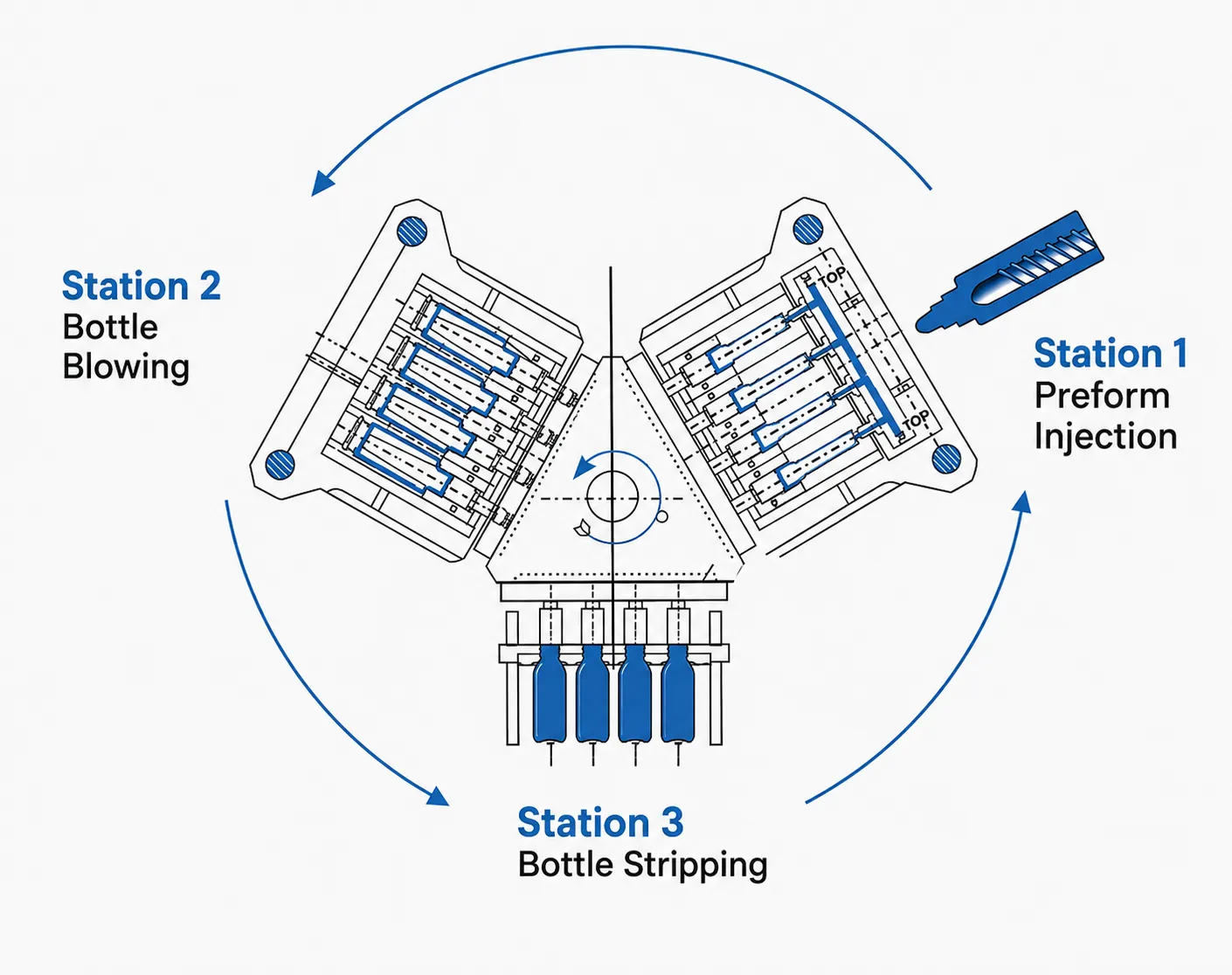
在韩国Ever-Power ZQ系列机器上进行CRC制药用IBM加工,与标准非CRC制药用IBM相比,需要进行两项参数调整:更高的保压压力(以确保压实珠完全填充并确保尺寸稳定性)和更严格的颈部区域冷却(以最大限度地减少因压实区域残余热量导致的挤出后压实珠外径漂移)。所有其他参数均遵循标准制药用HDPE IBM指南。
| 范围 | 标准制药 IBM | CRC PHARMA IBM — 调整 |
|---|---|---|
| 保持压力 | 峰值 50–65% | 峰值 65–75% — 珠区完全填充 |
| 保持时间 | 0.4–0.8 秒 | 0.6–1.0 秒 — 延长以确保珠流道密封 |
| 颈部区域模具温度 | 14–18°C | 12–16°C — 珠粒区更紧密的冷却,以更快地固定OD值 |
| 计量区桶 | 200–215°C | 200–215°C(不变) |
| 珠子外径测量频率 | 每批次每腔30个 | 每个模腔30个 + 每2小时进行一次批次中期检查 |
⚠ 珠子外径弹出后漂移: 在脱模时(工位 3)立即测量的 CRC 接合珠外径通常比脱模后 30 分钟测量的珠外径大 0.02–0.04 毫米——这是因为脱模时珠区残留的热量会导致 HDPE 结晶引起的持续收缩,从而使珠外径略微变窄。韩国 KFDA 认证所需的珠外径测量必须在容器脱模后于 23°C ±2°C 下稳定至少 30 分钟后进行。在机器出口输送机处立即进行珠外径取样不符合韩国 KFDA 的认证要求——它会系统性地高估稳定后的生产珠外径。
第 06 节
CRC容器规格范围和瓶颈表面处理选择
| 体积 | 琴颈饰面 | CRC类型 | ZQ80腔体 | 韩国应用程序 |
|---|---|---|---|---|
| 30毫升 | 24/400 GPI | 推转 | 16–18 | 韩国儿科镇痛药,韩国单剂量液体抗生素 |
| 60毫升★ | 28/400 GPI | 推转 | 14 | 韩国儿童糖浆 CRC(最常见的韩国 CRC 格式) |
| 100毫升 | 33/400 GPI | 推转 | 10-12 | 韩国处方口服抗生素,韩国成人止痛液 |
| 150毫升 | 33/400 GPI | 推转 | 8 | 韩国处方多剂量液体,韩国抗酸混悬液 CRC |
| 100–150毫升 | 33/400 GPI | 挤压旋转 | 8-10 | 韩国关节炎和老年患者 CRC(向下按压的力小于推转法) |
★ 60毫升 28/400 推拉式 CRC 是韩国医药行业 IBM 标准 CRC 包装规格,也是韩国儿科抗生素处方中用量最大的 CRC 包装容器。韩国 IBM 生产商通常首先对该规格进行认证,并将其作为多规格 CRC 生产计划的参考规格。
第 07 节
CRC + 感应封条组合格式
CRC+感应密封组合形式——即在感应密封容器上加装CRC外盖——是韩国药品生产中IBM瓶颈精度要求最高的标准。韩国健康保险审查评估署(HIRA)对儿科处方液体药品的要求日益严格,要求在同一主容器上同时具备CRC(儿童安全)和感应密封(防篡改、防潮)功能。这一组合要求IBM在单个瓶颈嵌件上同时实现三种独立的精密特征。
CRC珠OD
封堵土地平坦
螺纹外径
±0.05 毫米
CRC推拉功能——棘轮啮合干涉在韩国ISO 8317窗口内
±0.10 mm TIR
感应箔密封粘合——箔片与HDPE密封层在所有14个腔体处完全周边接触
±0.05 毫米
CRC thread engagement — Korean pharmacist’s twist-off overcap engagement after induction seal broken
All three requirements are met simultaneously by IBM’s injection mould neck insert — produced in a single S136 stainless steel insert machined to ±0.01 mm on all three geometry features. No secondary processing required. EBM cannot achieve any of the three requirements without secondary neck finishing.
The combined CRC + induction seal IBM container qualification for Korean KFDA requires two separate closure function tests included in the container technical file: the Korean KS M ISO 8317 CRC effectiveness test (human panel, 200 adults + 200 children) and the induction seal integrity test (100% bubble test at 10 kPa, plus peel force ≥ 8 N/15 mm width). Both tests must use production containers from the same IBM production run at the qualified machine and cavity count. Korea Ever-Power’s pre-delivery production trial produces sample containers for both test submissions simultaneously, providing the Korean pharmaceutical brand with all required test samples within a single pre-delivery production batch.
第 08 节
韩国 CRC IBM 生产环境的 ZQ 系列选型

ZQ series machine selection for Korean CRC pharmaceutical IBM follows the same annual volume framework as other pharmaceutical IBM formats. The CRC-specific consideration is that CRC containers at the same volume typically allow fewer cavities per ZQ model versus non-CRC containers of the same volume — because the CRC engagement bead’s larger neck OD (bead OD is typically 1.6–3.0 mm larger than the nominal neck OD) increases the per-cavity injection clamping requirement and the platen footprint per cavity.
ZQ 选择矩阵 · CRC IBM @ 60 毫升 28/400 按压旋转式 (HDPE MI 0.6)
| ZQ 型号 | CAV @ 60ml CRC | 瓶/小时 | 年度上限。 | 韩国CRC制药公司简介 |
|---|---|---|---|---|
| EP-ZQ40 | 6-8 | 约4800-6400 | 约1680万至2240万 | 韩国制药初创公司、韩国结直肠癌临床试验、韩国罕见儿科疾病 |
| EP-ZQ60 | 10-12 | 约8000-9600 | 约2800万至3360万 | 韩国中型儿科仿制药CRC制药 |
| EP-ZQ80 ★ | 14 | ~11,200 | 约3920万 | 韩国国家品牌儿科抗生素 CRC OEM — 标杆平台 |
| EP-ZQ110 | 18 | ~14,400 | 约5040万 | 韩国大型制药CRC合同包装商,韩国主要儿科品牌 |
| EP-ZQ135 | 22 | ~17,600 | 约6160万 | 韩国国家儿科抗生素供应链,韩国医院大规模供应CRC |
这 EP-ZQ80 at 14-cavity 60 ml CRC is the Korean pharmaceutical CRC IBM benchmark — covering 39M annual CRC paediatric syrup units per Korean 2-shift year within a single machine qualified for Korean KFDA pharmaceutical GMP. The ZQ80 dual hydraulic system (standard, 20–30% energy saving) reduces HVAC load in Korean pharmaceutical cleanroom CRC production, and the machine’s angle divider mechanism ensures that bead OD cavity-to-cavity standard deviation (±1.8% CV% at 14 cavities on ZQ80) stays well below the ±0.05 mm specification at the 99.7th percentile of the production distribution — confirmed in Korea Ever-Power’s pre-delivery bead OD circularity and cavity-to-cavity dimensional reports provided with every pharmaceutical CRC IBM machine delivery.
工程常见问题解答
CRC制药 IBM — 工程问题
为什么IBM是韩国制药CRC容器唯一可行的吹塑工艺?
IBM is the only viable blow molding process for Korean pharmaceutical CRC containers because the Korean KS M ISO 8317 CRC engagement bead OD tolerance requirement (±0.06 mm) falls within IBM’s native process capability (±0.05 mm) but exceeds EBM’s achievable tolerance (±0.15–0.25 mm) by 2.5–4× at best. This is not a marginal difference that secondary neck processing can bridge: EBM neck reaming operations have their own dimensional variation (typically ±0.08–0.12 mm reaming tolerance) that equals or exceeds the entire ±0.06 mm ISO 8317 engagement window. Even if individual EBM containers are reamed to within ±0.06 mm of bead OD nominal, the reaming operation’s inter-cycle variation causes some fraction of the production lot to be outside the window at each end of the tolerance — and Korean KS M ISO 8317 human panel tests all 200 adult and 200 child subjects with the same container type, so any systematic OD variation across the production lot (which EBM + reaming produces) will generate a proportion of containers that either fail child resistance (too wide) or fail adult accessibility (too narrow). IBM eliminates this problem structurally: the IBM injection mould neck insert produces all cavities at nominal ±0.05 mm with no secondary processing, no inter-cycle reaming variation, and no process chain in which a secondary operation can introduce dimensional outliers. This structural advantage is why Korean pharmaceutical regulatory bodies accept IBM CRC containers on the basis of IBM machine and mould qualification dimensional documentation alone, without requiring secondary processing verification — a simplification that EBM + reaming cannot achieve.
是什么原因导致韩国CRC制药公司的IBM容器无法通过成人无障碍测试?
Korean CRC pharmaceutical IBM container adult accessibility failures — where more than 15% of the 200 adult test subjects (aged 50–70) cannot open the container within 5 minutes — trace to three causes from the IBM container side. First, bead OD above specification upper limit: a bead OD higher than nominal + 0.05 mm increases the CRC cap’s push-down engagement force beyond the elderly Korean adult’s hand grip and push-down capability — the container is effectively too child-resistant to pass adult accessibility. Diagnostic: measure bead OD from all cavities with bead OD near or above the specification upper limit. Root cause: injection mould neck insert bead OD above nominal (requires insert re-measurement and possible re-machining); or HDPE shrinkage below expected (occurs when mould temperature is lower than qualified baseline, producing less crystallisation and therefore less shrinkage, and a larger bead OD than shrinkage compensation predicted — increase mould neck zone cooling to intended setpoint). Second, bead profile radius too sharp: an angular bead profile (radius < 0.3 mm) produces a step function in the CRC cap engagement force — the force required spikes sharply as the cap ratchet engages the bead, rather than building gradually, making the engagement feel sudden and resistant. IBM bead profile radius should be R 0.3–0.6 mm as specified in Section 4. Third, HDPE creep enlargement of effective bead OD: if the HDPE IBM container has been stored at elevated temperature before ISO 8317 testing (above 30°C for extended periods), the bead can creep outward under the sustained engagement force from a previously applied CRC cap, effectively widening the bead OD above nominal. Korean pharmaceutical brands should specify that IBM containers used for ISO 8317 testing have not been subjected to temperatures above 25°C after production, and should conduct ISO 8317 testing within 90 days of IBM production to avoid thermally induced bead OD drift in the test sample population.
Does the CRC engagement bead OD need to be specified separately from the Korean CRC cap supplier’s drawing, or does the IBM mould follow the cap supplier’s nominal?
The IBM container engagement bead OD must be specified separately from the Korean CRC cap supplier’s engagement drawing nominal — it cannot simply follow the cap nominal without accounting for the engagement system’s designed interference fit. The push-and-turn CRC mechanism functions by the CRC cap’s retention ratchet engaging the bottle neck bead with a designed interference: the cap’s ratchet engagement diameter is intentionally smaller than the bead OD nominal by the designed interference amount (typically 0.10–0.20 mm, specified by the Korean CRC cap manufacturer). If the IBM container bead OD equals the CRC cap’s engagement ratchet nominal — without the designed interference — the ratchet slides over the bead without snapping engagement, producing a container that passes adult accessibility (easily opened) but fails child resistance (children can also open it trivially). The correct IBM bead OD specification is: Korean CRC cap supplier’s engagement ratchet nominal + designed interference (from the CRC cap supplier’s mating component drawing) = IBM container bead OD nominal, with ±0.05 mm IBM tolerance applied. Korea Ever-Power requires the Korean pharmaceutical brand to provide the Korean CRC cap supplier’s engagement drawing before IBM neck insert CNC machining — the bead OD nominal dimension machined into the neck insert is derived from the CRC cap drawing, not from a generic pharmaceutical IBM standard. Without this cap supplier drawing, the IBM mould neck insert cannot be correctly dimensioned, and ISO 8317 testing failure is likely on the first submission.
同一台 ZQ 机器能否同时运行 CRC 和非 CRC 制药 IBM 格式?
Yes — the same ZQ series machine can run CRC and non-CRC pharmaceutical IBM formats using different mould sets, with each mould set’s production recipe stored in the ZQ control system and recalled by the operator during mould change. A ZQ80 that runs a 14-cavity 60 ml CRC paediatric syrup mould set (HDPE MI 0.6, hold pressure 70%, neck cooling 13°C) can also run a 20-cavity 10 ml ophthalmic mould set (HDPE MI 0.4, hold pressure 60%, neck cooling 15°C) after a mould change and recipe recall — the machine hardware does not change between formats. The Korean KFDA pharmaceutical container qualification, however, is container-specific: the 60 ml CRC mould set and the 10 ml ophthalmic mould set each require their own separate container technical files with their own cavity-by-cavity dimensional reports — both produced at the same ZQ80 machine serial number but from different mould sets. Korean pharmaceutical IBM producers should identify both mould sets in the machine’s qualification documentation — recording both mould serial numbers against the single ZQ80 machine serial number in their Korean GMP production master file — to support the audit trail for Korean MFDS GMP inspections of multi-format pharmaceutical IBM production on the same machine.
IBM接合珠的外径在韩国Ever-Power模具交付后、韩国KFDA认证申请提交前是如何验证的?
IBM engagement bead OD verification for Korean KFDA CRC qualification uses a specific measurement protocol that differs from standard pharmaceutical neck OD measurement. Standard pharmaceutical neck OD measurement uses a contact digital caliper or laser OD gauge measuring the neck’s largest diameter in a single plane. CRC engagement bead OD measurement requires: (1) Measurement at 4 angular positions around the bead circumference (0°, 90°, 180°, 270°) per container — confirming bead circularity (out-of-roundness ≤ 0.04 mm TIR) as well as bead OD nominal; (2) Measurement at the maximum bead diameter point (the bead’s highest point above the neck cylinder) — using a step-gauge contact probe rather than a caliper, because caliper jaws that span the full neck diameter measure the neck OD average rather than the bead OD maximum; (3) Statistical analysis: 30 measurements per cavity (120 measurement readings per cavity for the 4-angular-position protocol) across all production cavities, with Cpk ≥ 1.33 confirmation for bead OD at the specification of nominal ±0.05 mm. Korea Ever-Power uses a dedicated bead OD step-gauge contact measurement system during the pre-delivery production trial, with data output directly to the cavity-by-cavity bead OD dimensional report format required for Korean pharmaceutical container technical file submission. This dedicated measurement system is not available at most Korean IBM container producer facilities — Korea Ever-Power provides the pre-delivery bead OD report precisely because this specialised measurement data is typically not reproducible at the Korean customer’s production facility without Korea Ever-Power’s measurement tooling support.
What happens to Korean CRC pharmaceutical IBM container child resistance over the product’s 24-month shelf life?
Korean CRC pharmaceutical IBM container child resistance changes over the 24-month Korean shelf life through two mechanisms: HDPE engagement bead OD drift and CRC cap spring ratchet fatigue. IBM container-side bead OD drift: HDPE crystallisation continues slowly at ambient Korean storage temperatures (15–25°C retail pharmacy storage, 10–30°C Korean household storage) for approximately 6–12 months after production — during this period, the bead OD typically decreases slightly (0.01–0.03 mm) due to continuing crystalline-phase densification. This OD decrease slightly increases the CRC engagement interference, making the container marginally more child-resistant at 6–12 months versus at production — a generally conservative change for Korean KFDA compliance purposes. After 12 months, HDPE crystallisation is complete and bead OD is dimensionally stable for the remainder of the 24-month shelf life under normal Korean pharmaceutical storage conditions. CRC cap spring ratchet fatigue (a cap-side issue rather than IBM container-side): the CRC cap’s polypropylene spring ratchet teeth lose approximately 8–15% of their elastic modulus over 24 months at 20–25°C Korean storage — slightly reducing the push-down force required to depress the ratchet over the bead and potentially increasing the proportion of Korean adult test subjects who could open the container in the ISO 8317 re-test at 24 months. Korean pharmaceutical brands who specify CRC containers for 24-month Korean shelf life should verify with their Korean CRC cap supplier that the cap’s spring ratchet fatigue data (elastic modulus retention at 24 months at Korean storage conditions) supports continued ISO 8317 adult accessibility and child resistance compliance through shelf life — the IBM container’s bead OD stability is not the limiting factor; the cap’s material performance is.
CRC制药 IBM询价 · 韩国 EVER-POWER
计划在韩国CRC制药公司生产IBM集装箱?
韩国永力公司提供从交付前生产试验到韩国 CRC 药用容器 IBM 生产的 CRC 接合珠 OD 尺寸鉴定、韩国 KS M ISO 8317 测试样品容器、KFDA GMP 文件包和 ZQ 系列机器选择等服务,适用于所有年度产量。