
CRC PHARMACEUTICAL IBM · KS M ISO 8317 · KFDA da Coreia · KOREA EVER-POWER
CRC Pharmaceutical IBM:
Resistente a crianças Guia de contêineres
As embalagens farmacêuticas coreanas com fecho de segurança infantil (CRC) representam uma aplicação onde a precisão de ±0,05 mm no diâmetro externo do gargalo da IBM não é apenas uma vantagem sobre a EBM, mas sim um pré-requisito para a conformidade com a norma ISO 8317 coreana (KS M). Este guia aborda a física do mecanismo de engate do CRC, as especificações geométricas do gargalo da IBM, os requisitos de teste da norma ISO 8317 coreana, a seleção do grau de HDPE e a seleção da máquina da série ZQ para a produção de embalagens farmacêuticas com CRC na Coreia.
Diâmetro externo da esfera CRC ±0,05 mm
Mecanismo de empurrar e girar
KOREA EVER-POWER · ANSAN-SI, GYEONGGI-DO · JULHO DE 2026
REFERÊNCIA DO SISTEMA · PARÂMETROS DA IBM PARA FARMACÊUTICA CRC COREANO
TOLERÂNCIA DE DIÂMETRO EXTERNO DO ESFERÃO CRC
±0,05 mm
Moldagem por injeção IBM — Janela ISO 8317 coreana ±0,06 mm
KS M ISO 8317 ADULT
≥ 85%
Taxa de abertura em 5 minutos — 200 participantes adultos no teste
KS M ISO 8317 CRIANÇA
≤ 20%
Taxa de abertura em 10 minutos — 200 crianças (42–51 meses)
RIGIDEZ DAS ESFERAS DE PEAD
MI 0,5–0,8
g/10min · densidade 0,955–0,965 — a esfera resiste à deformação por compressão CRC
SEÇÃO 01
Mercado coreano de embalagens farmacêuticas CRC e IBM
Na Coreia, as embalagens farmacêuticas com fecho de segurança infantil (CRC, na sigla em inglês) são obrigatórias para uma lista específica e crescente de categorias de produtos farmacêuticos. O Serviço Coreano de Avaliação e Revisão do Seguro Saúde (HIRA) exige embalagens com CRC para todos os medicamentos coreanos com prescrição médica que contenham substâncias ativas tóxicas acima dos limites de dosagem especificados, para todas as formulações líquidas pediátricas coreanas com prescrição médica distribuídas a famílias com crianças menores de seis anos e para todos os analgésicos coreanos de venda livre em comprimidos e líquidos em embalagens com doses unitárias acima do padrão. O Ministério da Segurança Alimentar e Farmacêutica da Coreia (MFDS/KFDA) tem intensificado progressivamente a fiscalização dos requisitos de CRC desde 2020, expandindo a lista de produtos farmacêuticos coreanos que exigem embalagens primárias com CRC para além da lista original restrita de categorias de medicamentos.
IBM O processo de moldagem por sopro é exclusivo para embalagens farmacêuticas coreanas com sistema CRC, pois a tolerância de engate do mecanismo CRC de encaixe por pressão e rotação (±0,06 mm no diâmetro externo do cordão de engate do gargalo) está dentro da precisão nativa de ±0,05 mm do gargalo da IBM, mas excede a tolerância de ±0,15–0,25 mm do EBM em um fator de 3 a 5 vezes. Nenhum processamento secundário do gargalo aplicado às embalagens EBM consegue atingir de forma confiável ±0,06 mm no diâmetro externo do cordão de engate do CRC em 2 a 4 cavidades na velocidade de produção exigida pelas linhas de envase farmacêuticas coreanas — a própria variação dimensional da operação de alargamento do gargalo (tolerância de alargamento de ±0,08–0,12 mm) excede a tolerância de engate do CRC. A IBM elimina essa cadeia de processos produzindo o cordão de engate com ±0,05 mm no inserto do gargalo do molde de injeção como uma capacidade primária do processo, e não como resultado de um acabamento secundário.
O guia mais abrangente sobre embalagens farmacêuticas IBM aborda os formatos de embalagens primárias farmacêuticas coreanas de forma completa. Este guia se concentra especificamente nas embalagens IBM da CRC — a física do mecanismo de encaixe, as especificações da geometria do gargalo, a conformidade com a norma coreana ISO 8317, a seleção do grau de HDPE e os aspectos econômicos de produção exclusivos do formato de embalagem farmacêutica IBM da CRC.
SEÇÃO 02
Mecanismo de engajamento CRC e precisão do pescoço IBM
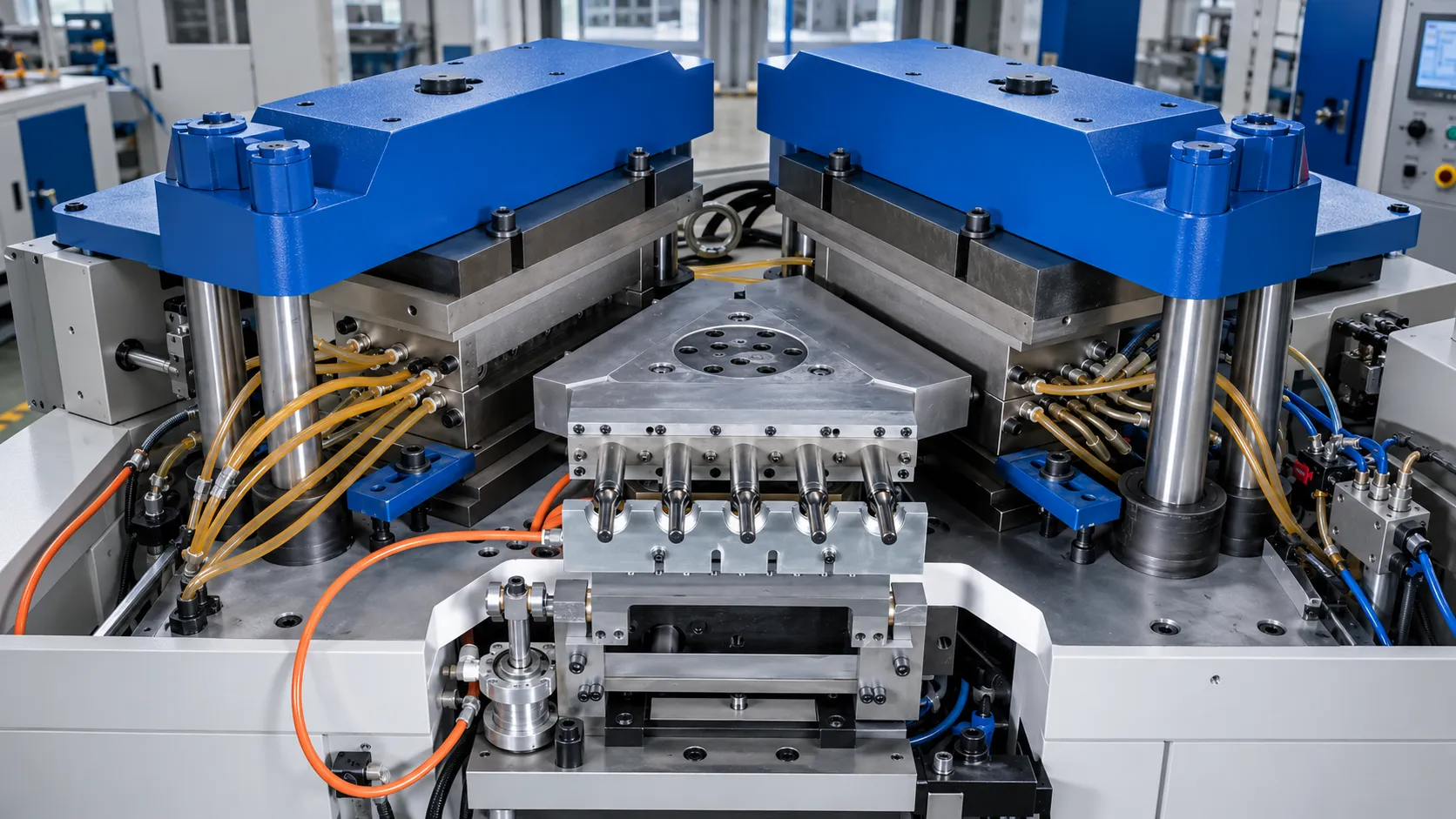
A tampa CRC de encaixe por pressão e rotação funciona através de um encaixe mecânico por interferência entre um ressalto de retenção circunferencial no gargalo de HDPE da garrafa IBM e uma trava de encaixe correspondente na parte interna da saia da tampa CRC. Compreender a física do mecanismo de encaixe é essencial para especificar corretamente a geometria do inserto do gargalo da garrafa IBM.
CRC DE ENGATE E GIRO — MECÂNICA DE ENGATE E CORRENTE DE TOLERÂNCIA DO PESCOÇO DA IBM
Passo 1 — Pressione para baixo
O paciente coreano ou o farmacêutico pressiona a tampa do CRC para baixo, comprimindo os dentes da catraca da saia da tampa sobre o cordão de HDPE do gargalo. O diâmetro externo do cordão de encaixe determina a força de interferência: se o diâmetro externo do cordão for muito largo, a força de pressão necessária excede a capacidade do paciente idoso coreano (falha de acessibilidade para adultos). Se o diâmetro externo do cordão for muito estreito, os dentes da catraca não conseguem comprimir adequadamente e a função do CRC é perdida.
Passo 2 — Gire enquanto pressiona
Mantendo a pressão descendente, a tampa é girada (normalmente de 30 a 45°) para alinhar os dentes da catraca com o ponto de encaixe da rosca no gargalo da garrafa. A tolerância de ±0,05 mm no diâmetro externo da rosca (IBM) garante que o ponto de encaixe esteja dentro de 1 a 2° do ponto projetado, evitando o travamento da rosca que aumentaria a força de giro além da especificação e resultaria em falha nos testes de acessibilidade para adultos.
Etapa 3 — Liberar e verificar
A tampa é liberada — a catraca de mola engata novamente o cordão de retenção, travando a tampa na posição aberta (a criança não consegue fechá-la novamente) ou na posição de engate da rosca fechada (produto selado). A geometria do gargalo da IBM garante uma profundidade de engate da catraca consistente em todas as cavidades de produção: altura do cordão ±0,05 mm, raio do perfil do cordão ±0,03 mm — ambos produzidos pelo inserto do gargalo do molde de injeção e verificados no teste de produção pré-entrega da Korea Ever-Power.
CONTA OD IBM
±0,05 mm
JANELA ISO 8317
±0,06 mm
TOLERÂNCIA EBM
±0,15–0,25 mm
MARGEM DE PROCESSO
+0,01 mm IBM
A IBM produz o cordão de engate CRC inteiramente dentro do inserto do gargalo do molde de injeção — um componente de aço usinado com precisão que define simultaneamente o diâmetro externo, a altura, o raio do perfil e a posição axial do cordão em um único ciclo de injeção. O inserto do gargalo é fabricado em aço inoxidável S136 (HRC 50–52) com tolerância de torneamento CNC de ±0,01 mm em todas as dimensões geométricas do cordão, produzindo um diâmetro externo final do cordão para o recipiente IBM de ±0,05 mm em todas as cavidades de produção, após considerar a compensação da contração do HDPE (0,8–1,2% aplicado à dimensão do diâmetro externo do cordão do molde durante a usinagem CNC do inserto do gargalo). O projeto do inserto do gargalo IBM para a indústria farmacêutica da Korea Ever-Power utiliza simulação de elementos finitos da contração do HDPE na zona do cordão — a seção da parede localmente mais alta do cordão contrai de forma diferente do gargalo cilíndrico adjacente — para calcular o diâmetro externo correto do cordão do molde que produz o diâmetro externo especificado para o recipiente na temperatura de processamento e taxa de resfriamento do HDPE IBM.
SEÇÃO 03
Teste de eficácia de dispositivo à prova de crianças coreano KS M ISO 8317
A norma coreana KS M ISO 8317 é o padrão nacional coreano para embalagens resistentes a crianças, harmonizada com a ISO 8317:2015. Ela especifica um teste com um painel de 200 adultos e 200 crianças para confirmar se o sistema de fechamento de recipiente CRC atende simultaneamente aos requisitos de resistência à abertura por crianças (baixa taxa de abertura por crianças) e acessibilidade para adultos (alta taxa de abertura por adultos). O teste deve ser realizado com recipientes de produção cheios — e não com recipientes vazios ou amostras de laboratório — pois o peso do conteúdo, a viscosidade do líquido e o torque de aplicação do fechamento afetam o desempenho da função CRC no teste.
PARÂMETRO DE TESTE
PAINEL INFANTIL (42–51 meses)
PAINEL DE ADULTOS (50–70 anos)
O dossiê técnico de embalagens farmacêuticas da KFDA (Administração Coreana de Alimentos e Medicamentos) deve incluir o certificado de teste ISO 8317 da KS M para cada embalagem CRC — um documento emitido por um laboratório de testes credenciado pela KS na Coreia, que realizou o teste com painel humano utilizando embalagens de produção da máquina IBM e o conjunto de moldes identificados no CTF (Documento Técnico de Embalagens). A Korea Ever-Power fornece amostras de embalagens CRC IBM do ensaio de produção pré-entrega especificamente para este teste — permitindo que a marca farmacêutica coreana submeta as amostras para o teste ISO 8317 e o CTF da embalagem simultaneamente, maximizando a probabilidade de que o resultado do teste ISO 8317 e o CTF completo estejam disponíveis ao mesmo tempo para a análise de qualificação GMP da KFDA.
SEÇÃO 04
Grau de HDPE e geometria do cordão para contêineres CRC IBM
As embalagens farmacêuticas coreanas CRC IBM exigem uma característica específica do HDPE que as embalagens farmacêuticas não-CRC IBM não possuem: a zona de contato deve resistir à deformação plástica sob a força de pressão da tampa CRC. Quando a tampa CRC é pressionada, aplica uma força descendente de aproximadamente 20 a 50 N no contato de HDPE — o contato deve retornar ao seu diâmetro externo original após a liberação da força de pressão para manter uma resistência consistente à abertura por crianças na próxima tentativa. O HDPE com rigidez insuficiente (índice de rigidez muito alto ou densidade muito baixa) deforma-se permanentemente sob forças de pressão repetidas, aumentando efetivamente o diâmetro externo do contato ao longo do tempo e reduzindo a resistência à abertura por crianças abaixo dos requisitos da norma coreana ISO 8317 durante o prazo de validade do produto.
Geometria do cordão de engate CRC · Especificação do inserto do gargalo do molde de injeção IBM
Conta OD
Nominal ±0,01 mm
Cavidade do molde (com correção de retração de HDPE aplicada)
Altura do colar
0,8–1,5 mm
Cilindro com diâmetro externo do gargalo acima do nominal — específico para fornecedor de tampas CRC coreanas
Raio do perfil do talão
R 0,3–0,6 mm
Entrada suave para engate dos dentes da catraca CRC — raio agudo aumenta o ruído e a força de engate.
Posição axial do cordão
±0,20 mm
A partir da face de vedação do gargalo — determina a localização axial da posição fechada da tampa CRC.
CRC coreano IBM — Grau de HDPE recomendado
MI (190°C/2,16kg)
0,5–0,8
Densidade (g/cm³)
0,955–0,965
Densidade mais elevada (0,955–0,965) e menor índice de fluidez (0,5–0,8) do que o HDPE IBM farmacêutico padrão — resultando em um cordão mais rígido que resiste à deformação por fluência sob ciclos repetidos de compressão e fechamento por pressão durante o prazo de validade de 24 meses para produtos farmacêuticos na Coreia. Densidade ≥ 0,958 é preferencial para embalagens de compressão e fechamento por pressão na Coreia, especificadas para manter a resistência à abertura por crianças após 30 ciclos (teste de ciclo de compressão e fechamento por pressão em conformidade com a norma HIRA coreana).
Fatores de risco de deformação das contas
- ▸HDPE MI acima de 1,0: Peso molecular insuficiente para resistência à fluência das partículas — evite para a empresa farmacêutica coreana CRC IBM.
- ▸Densidade abaixo de 0,952: A menor cristalinidade reduz a rigidez das esferas; o risco de falha no teste de ciclo ISO 8317 aumenta após 15 ou mais ciclos de compressão.
- ▸Temperatura do cilindro acima de 222°C no bocal: A degradação térmica reduz o peso molecular do HDPE na zona de contato, diminuindo a rigidez e a resistência à fluência em comparação com as propriedades nominais do grau de qualidade.
- ▸Pressão de retenção insuficiente no ponto de fixação do talão: A zona de cordão com compactação insuficiente apresenta microvazios que reduzem a densidade local — meça a dureza da zona de cordão (Shore D) em relação à especificação como indicador de controle do processo.
SEÇÃO 05
Parâmetros de processamento da IBM para contêineres CRC
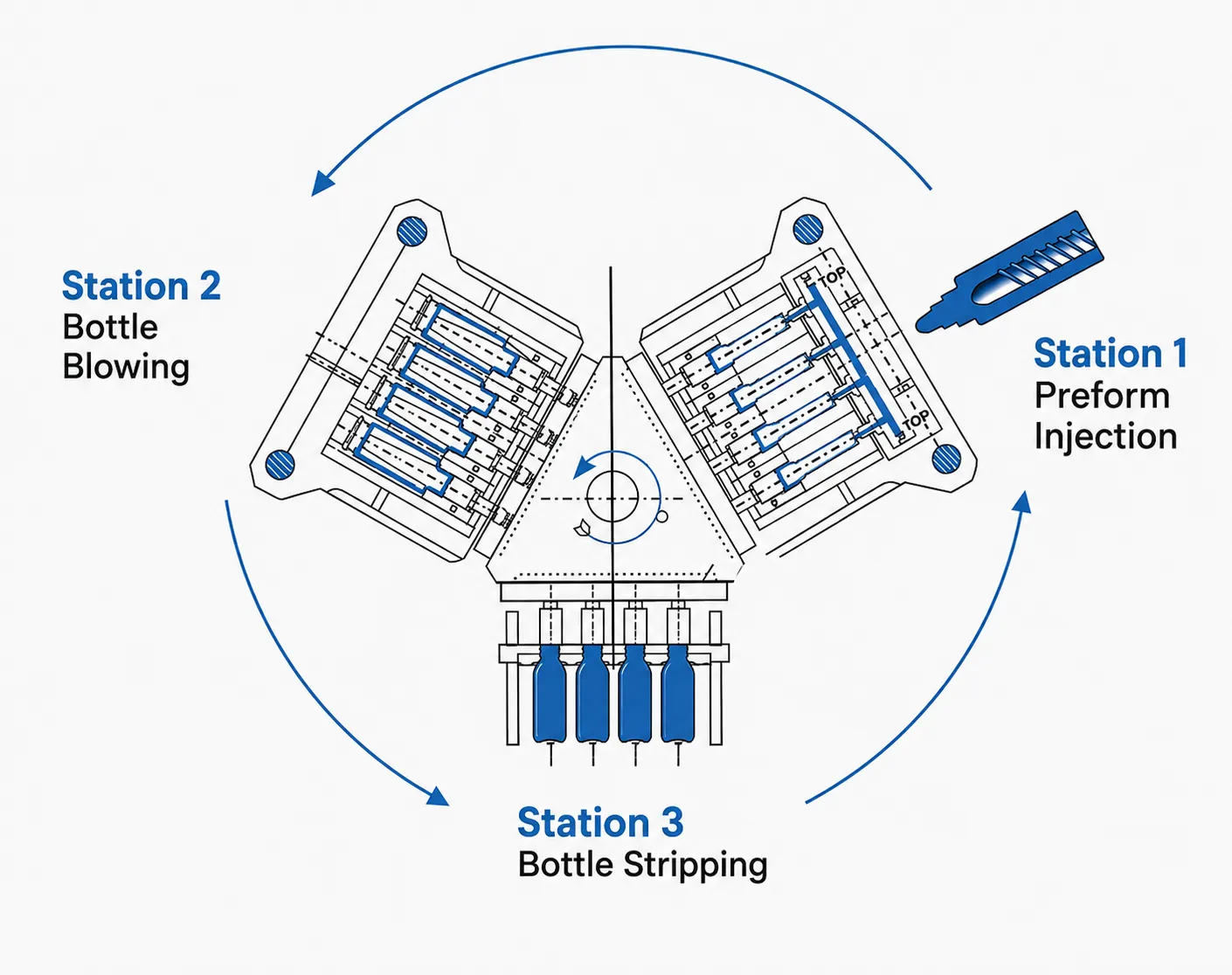
O processamento farmacêutico CRC IBM em máquinas da série ZQ da Korea Ever-Power requer dois ajustes de parâmetros em comparação com o processamento farmacêutico IBM padrão não-CRC: maior pressão de retenção (para compactar totalmente o cordão de engate e garantir a estabilidade dimensional) e resfriamento mais eficiente da zona do gargalo (para minimizar a deriva do diâmetro externo do cordão após a ejeção devido ao calor residual na zona do cordão). Todos os outros parâmetros seguem as diretrizes padrão para processamento farmacêutico de HDPE IBM.
| PARÂMETRO | STANDARD PHARMA IBM | CRC PHARMA IBM — AJUSTE |
|---|---|---|
| Mantenha a pressão | 50–65% do pico | 65–75% do pico — empacotamento completo da zona de esferas |
| Tempo de espera | 0,4–0,8 s | 0,6–1,0 s — prolongado para garantir a vedação do ponto de injeção. |
| temperatura do molde na zona do pescoço | 14–18°C | 12–16 °C — resfriamento mais intenso na zona de formação do cordão para fixar o diâmetro externo mais rapidamente. |
| barril da zona de medição | 200–215°C | 200–215°C (inalterado) |
| Frequência de medição do diâmetro externo do grânulo | 30 por cavidade por lote inicial | 30 por cavidade + verificação a cada 2 horas no meio do lote |
⚠ DERIVA PÓS-EJEÇÃO DO BOLHO OD: O diâmetro externo (DE) do cordão de engate CRC medido imediatamente após a remoção (Estação 3) é tipicamente 0,02–0,04 mm maior do que o DE medido 30 minutos após a ejeção — isso ocorre porque o calor residual na zona do cordão no momento da ejeção permite a contração contínua induzida pela cristalização do HDPE, o que reduz ligeiramente o DE. O DE do cordão para a qualificação pela KFDA coreana deve ser medido após os recipientes se estabilizarem a 23 °C ± 2 °C por um mínimo de 30 minutos após a ejeção. A amostragem do DE do cordão imediatamente na esteira de saída da máquina não é uma medição válida para qualificação pela KFDA coreana — ela superestima sistematicamente o DE de produção estabilizado.
SEÇÃO 06
Seleção de formatos de recipientes CRC e acabamento de gargalo
| VOLUME | ACABAMENTO DO BRAÇO | TIPO CRC | Cavidades ZQ80 | APLICAÇÃO COREANO |
|---|---|---|---|---|
| 30 ml | 24/400 GPI | Empurre e gire | 16–18 | Analgésico pediátrico coreano, antibiótico líquido coreano em dose unitária. |
| 60 ml ★ | 28/400 GPI | Empurre e gire | 14 | Xarope pediátrico coreano CRC (formato CRC mais comum na Coreia) |
| 100 ml | 33/400 GPI | Empurre e gire | 10–12 | Antibiótico oral com receita coreana, analgésico líquido para adultos coreanos |
| 150 ml | 33/400 GPI | Empurre e gire | 8 | Suspensão antiácida coreana multidose com receita médica CRC |
| 100–150 ml | 33/400 GPI | Aperte e gire | 8–10 | Paciente coreano idoso e com artrite CRC (força de pressão para baixo menor do que a de empurrar e girar) |
★ O frasco CRC de 60 ml 28/400 com sistema push-and-turn é o formato de referência CRC da indústria farmacêutica coreana, utilizado pela IBM — o frasco CRC de maior volume em prescrições de antibióticos pediátricos na Coreia. Os fabricantes coreanos de IBM geralmente qualificam este formato primeiro e o utilizam como referência para o planejamento da produção de frascos CRC em múltiplos formatos.
SEÇÃO 07
Formato combinado CRC + Selo de Indução
O formato combinado CRC + selo de indução — uma sobretampa CRC aplicada sobre um recipiente selado por indução — é o requisito de precisão de gargalo mais exigente da IBM na produção farmacêutica coreana. A regulamentação HIRA coreana para medicamentos líquidos pediátricos sob prescrição médica especifica cada vez mais a presença simultânea de CRC (segurança infantil) e selo de indução (inviolabilidade e barreira contra umidade) no mesmo recipiente primário. Essa especificação combinada exige que a IBM produza três características de precisão independentes em um único inserto de gargalo simultaneamente.
CRC Bead OD
Planicidade do terreno selado
Rosca OD
±0,05 mm
Função de engate por pressão e rotação CRC — interferência do engate da catraca na janela ISO 8317 coreana
±0,10 mm TIR
Vedação hermética por indução com folha metálica — contato perimetral completo entre a folha e a área de vedação em HDPE em todas as 14 cavidades.
±0,05 mm
Engate da rosca CRC — Engate da tampa de rosca de um farmacêutico coreano após rompimento do lacre de indução
Os três requisitos são atendidos simultaneamente pelo inserto de gargalo para molde de injeção da IBM — produzido em um único inserto de aço inoxidável S136 usinado com precisão de ±0,01 mm em todas as três características geométricas. Nenhum processamento secundário é necessário. A tecnologia EBM não consegue atender a nenhum dos três requisitos sem um acabamento secundário do gargalo.
A qualificação combinada de embalagens IBM com vedação por indução e sistema CRC para a KFDA coreana exige dois testes de funcionamento de fechamento distintos, incluídos no dossiê técnico da embalagem: o teste de eficácia do sistema CRC coreano KS M ISO 8317 (painel humano, 200 adultos + 200 crianças) e o teste de integridade da vedação por indução (teste de bolhas 100% a 10 kPa, mais força de descascamento ≥ 8 N/15 mm de largura). Ambos os testes devem utilizar embalagens de produção do mesmo lote de fabricação IBM, na máquina qualificada e com a mesma quantidade de cavidades. O teste de produção pré-entrega da Korea Ever-Power produz embalagens de amostra para ambos os testes simultaneamente, fornecendo à marca farmacêutica coreana todas as amostras de teste necessárias em um único lote de produção pré-entrega.
SEÇÃO 08
Seleção da Série ZQ para a produção coreana de CRC da IBM.

A seleção de máquinas da série ZQ para a indústria farmacêutica coreana de injetáveis em recipientes CRC (IBM) segue a mesma estrutura de volume anual que outros formatos de IBM para a indústria farmacêutica. A consideração específica para recipientes CRC é que estes, com o mesmo volume, normalmente permitem menos cavidades por modelo ZQ em comparação com recipientes não-CRC do mesmo volume — isso porque o diâmetro externo (DE) maior do gargalo do anel de engate do CRC (o DE do anel é tipicamente 1,6 a 3,0 mm maior que o DE nominal do gargalo) aumenta a necessidade de fechamento por cavidade e a área ocupada pela plataforma por cavidade.
MATRIZ DE SELEÇÃO ZQ · CRC IBM @ 60 ml 28/400 EMPURRE E GIRE (HDPE MI 0,6)
| Modelo ZQ | CAV @ 60ml CRC | GARRAFAS/HORA | LIMITE ANUAL. | PERFIL DA CRC PHARMA COREANA |
|---|---|---|---|---|
| EP-ZQ40 | 6–8 | ~4.800–6.400 | ~16,8–22,4 milhões | Startup farmacêutica coreana, ensaio clínico de câncer colorretal na Coreia, doença pediátrica rara na Coreia |
| EP-ZQ60 | 10–12 | ~8.000–9.600 | ~28,0–33,6 milhões | Medicamento pediátrico coreano de médio porte, genérico coreano para câncer colorretal. |
| EP-ZQ80 ★ | 14 | ~11,200 | ~39,2 milhões | Antibiótico pediátrico de marca nacional coreana CRC OEM — plataforma de referência |
| EP-ZQ110 | 18 | ~14,400 | ~50,4 milhões | Grande empresa coreana de embalagens terceirizadas para produtos farmacêuticos (CRC), marca pediátrica de destaque na Coreia. |
| EP-ZQ135 | 22 | ~17,600 | ~61,6 milhões | Cadeia de suprimentos de antibióticos pediátricos do país coreano, suprimentos hospitalares coreanos em larga escala. |
O EP-ZQ80 A máquina de concentrador de 60 ml com 14 cavidades (CRC) é a referência coreana para a indústria farmacêutica, produzindo 39 milhões de unidades de xarope pediátrico CRC por turno em uma única máquina qualificada para as Boas Práticas de Fabricação (BPF) da KFDA (Administração de Alimentos e Medicamentos da Coreia). O sistema hidráulico duplo ZQ80 (padrão, com economia de energia de 20–30%) reduz a carga do sistema de climatização (HVAC) na produção de concentrador em salas limpas na indústria farmacêutica coreana. Além disso, o mecanismo divisor de ângulo da máquina garante que o desvio padrão do diâmetro externo do grânulo, cavidade a cavidade (±1,8% CV% em 14 cavidades na ZQ80), permaneça bem abaixo da especificação de ±0,05 mm no percentil 99,7 da distribuição de produção. Esse resultado é confirmado nos relatórios de circularidade do diâmetro externo do grânulo e de dimensões entre cavidades, fornecidos pela Korea Ever-Power com cada máquina de concentrador de 60 ml (CRC) entregue pela empresa.
PERGUNTAS FREQUENTES SOBRE ENGENHARIA
CRC Pharmaceutical IBM — Questões de Engenharia
Por que a IBM é o único processo viável de moldagem por sopro para embalagens CRC da indústria farmacêutica coreana?
A moldagem por sopro com IBM é a única opção viável para embalagens farmacêuticas CRC coreanas, pois a tolerância de diâmetro externo (DE) do cordão de encaixe da norma ISO 8317 para embalagens CRC coreanas (±0,06 mm) está dentro da capacidade do processo nativo da IBM (±0,05 mm), mas excede a tolerância alcançável pela moldagem por sopro com EBM (±0,15–0,25 mm) em, no máximo, 2,5 a 4 vezes. Essa diferença não é marginal e pode ser facilmente compensada por um processamento secundário do gargalo: as operações de alargamento do gargalo em EBM apresentam sua própria variação dimensional (tipicamente uma tolerância de alargamento de ±0,08–0,12 mm) que iguala ou excede toda a faixa de encaixe de ±0,06 mm da norma ISO 8317. Mesmo que os recipientes EBM individuais sejam alargados com uma precisão de ±0,06 mm do diâmetro externo nominal do cordão, a variação entre ciclos da operação de alargamento faz com que uma fração do lote de produção fique fora da faixa de tolerância em cada extremidade. Além disso, o painel humano coreano KS M ISO 8317 testa todos os 200 adultos e 200 crianças com o mesmo tipo de recipiente. Portanto, qualquer variação sistemática no diâmetro externo ao longo do lote de produção (que o processo EBM + alargamento produz) gerará uma proporção de recipientes que não atendem aos padrões de resistência infantil (muito largos) ou que não são acessíveis a adultos (muito estreitos). A tecnologia IBM elimina esse problema estruturalmente: o inserto de gargalo do molde de injeção IBM produz todas as cavidades com precisão nominal de ±0,05 mm, sem processamento secundário, sem variação de alargamento entre ciclos e sem uma cadeia de processos na qual uma operação secundária possa introduzir valores discrepantes dimensionais. Essa vantagem estrutural é o motivo pelo qual os órgãos reguladores farmacêuticos coreanos aceitam os recipientes CRC da IBM com base apenas na documentação dimensional de qualificação da máquina e do molde da IBM, sem exigir verificação de processamento secundário — uma simplificação que o processo EBM + alargamento não consegue alcançar.
O que faz com que uma embalagem da IBM para um medicamento CRC coreano falhe nos testes de acessibilidade para adultos?
As falhas de acessibilidade para adultos nas embalagens da farmacêutica coreana CRC, fabricadas pela IBM — em que mais de 151 dos 200 adultos testados (com idades entre 50 e 70 anos) não conseguiram abrir a embalagem em 5 minutos — foram atribuídas a três causas relacionadas à embalagem da IBM. Primeiro, o diâmetro externo do cordão de silicone acima do limite superior da especificação: um diâmetro externo do cordão de silicone superior a 0,05 mm (nominal) aumenta a força de engate da tampa da CRC além da capacidade de preensão e pressão de um adulto coreano idoso — a embalagem torna-se, na prática, muito resistente a crianças para ser considerada acessível a adultos. Diagnóstico: medir o diâmetro externo do cordão de silicone em todas as cavidades com diâmetro próximo ou acima do limite superior da especificação. Causa raiz: diâmetro externo do cordão de silicone no inserto do gargalo do molde de injeção acima do nominal (requer nova medição do inserto e possível reusinagem); ou contração do HDPE abaixo do esperado (ocorre quando a temperatura do molde é inferior à linha de base qualificada, produzindo menos cristalização e, portanto, menos contração, e um diâmetro externo do cordão de silicone maior do que a compensação de contração prevista — aumentar o resfriamento da zona do gargalo do molde para o ponto de ajuste pretendido). Em segundo lugar, o raio do perfil do cordão é muito acentuado: um perfil de cordão angular (raio < 0,3 mm) produz uma função degrau na força de engate da tampa CRC — a força necessária aumenta abruptamente quando a catraca da tampa engata no cordão, em vez de aumentar gradualmente, fazendo com que o engate pareça repentino e resistente. O raio do perfil do cordão IBM deve ser R 0,3–0,6 mm, conforme especificado na Seção 4. Em terceiro lugar, alargamento por fluência do diâmetro externo efetivo do cordão devido ao HDPE: se o recipiente IBM de HDPE tiver sido armazenado em temperatura elevada antes do teste ISO 8317 (acima de 30 °C por períodos prolongados), o cordão pode sofrer fluência para fora sob a força de engate sustentada de uma tampa CRC aplicada anteriormente, alargando efetivamente o diâmetro externo do cordão acima do nominal. As marcas farmacêuticas coreanas devem especificar que os recipientes IBM usados para o teste ISO 8317 não foram submetidos a temperaturas acima de 25 °C após a produção e devem realizar o teste ISO 8317 dentro de 90 dias após a produção do IBM para evitar a deriva do diâmetro externo do cordão induzida termicamente na população de amostras de teste.
O diâmetro externo (OD) do cordão de engate CRC precisa ser especificado separadamente do desenho do fornecedor coreano da tampa CRC, ou o molde da IBM segue as especificações nominais do fornecedor da tampa?
O diâmetro externo (DE) do encaixe da tampa CRC no recipiente IBM deve ser especificado separadamente do desenho de encaixe nominal do fornecedor coreano da tampa — não pode simplesmente seguir o nominal da tampa sem levar em conta a interferência projetada para o sistema de encaixe. O mecanismo de encaixe por pressão e giro da tampa CRC funciona com a catraca de retenção da tampa CRC engatando no gargalo do recipiente com uma interferência projetada: o diâmetro de engate da catraca da tampa é intencionalmente menor que o DE nominal do encaixe pela quantidade de interferência projetada (tipicamente 0,10–0,20 mm, especificada pelo fabricante coreano da tampa CRC). Se o DE do gargalo do recipiente IBM for igual ao DE nominal da catraca de engate da tampa CRC — sem a interferência projetada — a catraca desliza sobre o gargalo sem encaixar, resultando em um recipiente que é acessível para adultos (fácil de abrir), mas não oferece resistência para crianças (crianças também podem abri-lo facilmente). A especificação correta do diâmetro externo (DE) do cordão de vedação da IBM é: diâmetro nominal da catraca de encaixe do fornecedor coreano da tampa CRC + interferência projetada (a partir do desenho do componente de acoplamento do fornecedor da tampa CRC) = diâmetro externo nominal do cordão de vedação do recipiente IBM, com tolerância IBM de ±0,05 mm aplicada. A Korea Ever-Power exige que a marca farmacêutica coreana forneça o desenho de encaixe do fornecedor coreano da tampa CRC antes da usinagem CNC do inserto do gargalo IBM — a dimensão nominal do diâmetro externo do cordão de vedação usinada no inserto do gargalo é derivada do desenho da tampa CRC, e não de um padrão farmacêutico genérico IBM. Sem esse desenho do fornecedor da tampa, o inserto do gargalo do molde IBM não pode ser dimensionado corretamente e a reprovação no teste ISO 8317 é provável na primeira submissão.
A mesma máquina ZQ pode executar formatos IBM farmacêuticos com e sem CRC?
Sim — a mesma máquina da série ZQ pode processar formatos farmacêuticos IBM CRC e não-CRC usando diferentes conjuntos de moldes, com a receita de produção de cada conjunto de moldes armazenada no sistema de controle ZQ e recuperada pelo operador durante a troca de moldes. Uma ZQ80 que processa um conjunto de moldes para xarope pediátrico CRC de 60 ml com 14 cavidades (HDPE MI 0,6, pressão de retenção 70%, resfriamento do gargalo a 13 °C) também pode processar um conjunto de moldes oftálmicos de 10 ml com 20 cavidades (HDPE MI 0,4, pressão de retenção 60%, resfriamento do gargalo a 15 °C) após a troca de moldes e recuperação da receita — o hardware da máquina não muda entre os formatos. A qualificação de embalagens farmacêuticas da KFDA coreana, no entanto, é específica para cada embalagem: o conjunto de moldes para CRC de 60 ml e o conjunto de moldes oftálmicos de 10 ml exigem arquivos técnicos de embalagem separados, com seus próprios relatórios dimensionais cavidade por cavidade — ambos produzidos na mesma máquina ZQ80, mas com conjuntos de moldes diferentes. Os produtores coreanos de embalagens farmacêuticas IBM devem identificar ambos os conjuntos de moldes na documentação de qualificação da máquina — registrando os números de série de ambos os moldes em relação ao número de série único da máquina ZQ80 em seu arquivo mestre de produção GMP coreano — para garantir a rastreabilidade para inspeções GMP da MFDS coreana na produção de embalagens farmacêuticas IBM de múltiplos formatos na mesma máquina.
Como é verificada a dimensão externa (OD) do cordão de encaixe da IBM após a entrega do molde pela Korea Ever-Power e antes da submissão para qualificação à KFDA coreana?
A verificação do diâmetro externo (DE) do grânulo de engate da IBM para a qualificação CRC da KFDA coreana utiliza um protocolo de medição específico que difere da medição padrão do DE do gargalo farmacêutico. A medição padrão do DE do gargalo farmacêutico utiliza um paquímetro digital de contato ou um medidor de DE a laser, medindo o maior diâmetro do gargalo em um único plano. A medição do DE do grânulo de engate CRC requer: (1) Medição em 4 posições angulares ao redor da circunferência do grânulo (0°, 90°, 180°, 270°) por recipiente — confirmando a circularidade do grânulo (desvio de circularidade ≤ 0,04 mm TIR), bem como o DE nominal do grânulo; (2) Medição no ponto de diâmetro máximo do grânulo (o ponto mais alto do grânulo acima do cilindro do gargalo) — utilizando uma sonda de contato escalonada em vez de um paquímetro, porque as mandíbulas do paquímetro que abrangem todo o diâmetro do gargalo medem a média do DE do gargalo em vez do DE máximo do grânulo; (3) Análise estatística: 30 medições por cavidade (120 leituras de medição por cavidade para o protocolo de 4 posições angulares) em todas as cavidades de produção, com confirmação de Cpk ≥ 1,33 para o diâmetro externo do grânulo na especificação nominal de ±0,05 mm. A Korea Ever-Power utiliza um sistema dedicado de medição por contato com calibrador de diâmetro externo de grânulos durante o teste de produção pré-entrega, com saída de dados diretamente para o formato de relatório dimensional de diâmetro externo de grânulos por cavidade, exigido para a submissão do dossiê técnico da embalagem farmacêutica coreana. Este sistema de medição dedicado não está disponível na maioria das instalações de produção de embalagens IBM na Coreia — a Korea Ever-Power fornece o relatório de diâmetro externo de grânulos pré-entrega precisamente porque esses dados de medição especializados normalmente não são reproduzíveis na instalação de produção do cliente coreano sem o suporte de ferramentas de medição da Korea Ever-Power.
O que acontece com a resistência à abertura da embalagem do produto farmacêutico coreano CRC IBM durante seu prazo de validade de 24 meses?
A resistência à abertura por crianças da embalagem IBM (Infant Milk Products) do medicamento CRC coreano se altera ao longo dos 24 meses de prazo de validade na Coreia por meio de dois mecanismos: variação do diâmetro externo (DE) do grânulo de HDPE e fadiga da catraca da mola da tampa CRC. Variação do DE do grânulo no lado da embalagem IBM: a cristalização do HDPE continua lentamente em temperaturas ambientes de armazenamento na Coreia (15–25 °C para farmácias, 10–30 °C para residências) por aproximadamente 6 a 12 meses após a produção. Durante esse período, o DE do grânulo normalmente diminui ligeiramente (0,01–0,03 mm) devido à densificação contínua da fase cristalina. Essa diminuição do DE aumenta ligeiramente a interferência no encaixe da tampa CRC, tornando a embalagem marginalmente mais resistente à abertura por crianças após 6 a 12 meses em comparação com a produção — uma alteração geralmente conservadora para fins de conformidade com a KFDA (Kenya Food and Drug Administration). Após 12 meses, a cristalização do HDPE está completa e o DE do grânulo permanece dimensionalmente estável pelo restante dos 24 meses de prazo de validade, sob condições normais de armazenamento de medicamentos na Coreia. Fadiga da catraca da mola da tampa CRC (um problema na tampa, e não no recipiente IBM): os dentes da catraca de polipropileno da tampa CRC perdem aproximadamente 8–15% do seu módulo de elasticidade ao longo de 24 meses em condições de armazenamento coreanas de 20–25 °C — reduzindo ligeiramente a força necessária para pressionar a catraca sobre o sifão e potencialmente aumentando a proporção de adultos coreanos que conseguiram abrir o recipiente no reteste ISO 8317 após 24 meses. As marcas farmacêuticas coreanas que especificam recipientes CRC para um prazo de validade de 24 meses na Coreia devem verificar com o seu fornecedor coreano de tampas CRC se os dados de fadiga da catraca da mola da tampa (retenção do módulo de elasticidade após 24 meses em condições de armazenamento coreanas) garantem a conformidade contínua com a norma ISO 8317 para acessibilidade por adultos e resistência à abertura por crianças durante todo o prazo de validade — a estabilidade do diâmetro externo do sifão do recipiente IBM não é o fator limitante; o desempenho do material da tampa é.
CRC PHARMACEUTICAL IBM ENQUIRY · KOREA EVER-POWER
Planejando a produção de contêineres IBM para a indústria farmacêutica CRC na Coreia?
A Korea Ever-Power fornece qualificação dimensional do diâmetro externo (OD) do cordão de engate CRC a partir do teste de produção pré-entrega, contêineres de amostra de teste KS M ISO 8317 coreanos, pacote de documentação GMP da KFDA e seleção de máquinas da série ZQ para a produção de contêineres farmacêuticos CRC IBM coreanos em todos os volumes de produção anuais.