
PET Water and Beverage Bottle Manufacturing — Choosing the Right Machine for Your Output
Every beverage brand that packages its product in PET bottles reaches the same inflection point: the monthly bottle volume grows to where purchasing finished bottles from a third-party supplier starts to look more expensive than making them in-house. At that point — typically somewhere between 80,000 and 200,000 bottles per month depending on bottle size and the local supply market — the question becomes: which PET bottle manufacturing machine is the right investment for this output level, this bottle range, and this production team?
This guide answers that question for beverage bottlers specifically — whether you are researching a PET water bottle machine for a new spring water brand, evaluating a water bottle blow moulding machine to replace outsourced supply, or asking how to start a PET bottle manufacturing business from the equipment side. It covers the business case for in-house production, how to select the right machine by bottle volume, the specific considerations for large-format 5L, 10L, and 20L jug production, hot-fill beverage requirements, the infrastructure a production line needs, and a concrete two-shift return on investment calculation.
The Business Case for Self-Blown PET Bottles
The financial logic of investing in a PET bottle manufacturing machine is straightforward: the cost per bottle produced in-house falls as monthly volume rises, because the fixed cost components (machine depreciation, mould depreciation, operator cost) are spread over more units. The variable cost per bottle — resin, energy, compressed air — is relatively stable per unit regardless of volume. The outsource cost per bottle, conversely, is flat or rising as demand increases, because suppliers price higher volumes at the same per-unit rate or with only marginal discounts.
The crossover point — where in-house production becomes cheaper than outsourcing — depends primarily on three variables: the size of the bottle (which determines resin cost per unit), the local market price for finished bottles, and the landed cost of the machine and mould. For the most common beverage formats in the Korean and Southeast Asian market, the crossover typically occurs at:
80,000+
bottles/month
500 ml PET water bottle — entry crossover for a basic HGS150A programme on single shift
60,000+
bottles/month
1-litre juice bottle — slightly earlier crossover due to higher per-unit resin cost in purchased bottles
30,000+
jugs/month
5-litre or 20-litre water jug — earliest crossover due to high outsource price for large-format containers and typically regional supply constraints
Beyond the financial crossover, beverage producers cite four operational benefits of in-house water bottle blow moulding that do not appear in a pure cost comparison: eliminating minimum order quantity constraints (you can blow exactly as many bottles as you need for each production run); reducing lead time (no 3–6 week preform-to-bottle delivery cycle from a supplier); enabling bottle design changes without renegotiating supplier contracts; and maintaining quality control over the container, not just the fill.
Operations below the crossover threshold — typically below 50,000 bottles per month on small formats — are usually better served by purchasing finished bottles or partnering with a local contract blower until their volume justifies machine investment. Investing in a blow moulding machine primarily to gain independence from suppliers, before the volume economics are positive, produces a machine that runs below its break-even utilisation rate and cannot recover its depreciation from production savings.
Three Blow Moulding Methods for Beverage PET Bottles
Three distinct blow moulding technologies are used in beverage PET bottle production, each suited to a different volume and quality level. Selecting the wrong technology for your production context — most commonly investing in fully automatic equipment before the volume justifies it — is the most expensive equipment mistake in the beverage packaging market.
Two-Step Reheat Stretch Blow Moulding (REHB) — High-Volume Standard
Fully automatic two-step REHB lines — the technology behind every large beverage company’s bottle production — feed preforms from a bulk hopper, reheat them through an infrared oven conveyor, and blow them in a multi-cavity rotary blow station at 1,500–10,000 bottles per hour depending on cavitation and bottle size. This is the correct technology for operations producing a single SKU at above 500,000 bottles per month on continuous shifts. Its weaknesses for small and mid-size beverage operations are its high capital cost (5–10× the cost of a comparable semi-automatic setup), slow mould changeover (2–6 hours), and minimum practical run length — changing a mould on a 24-cavity automatic line for a 20,000-bottle production run is economically absurd.
Semi-Automatic Two-Step SBM — Small-to-Medium Volume, Multiple SKUs
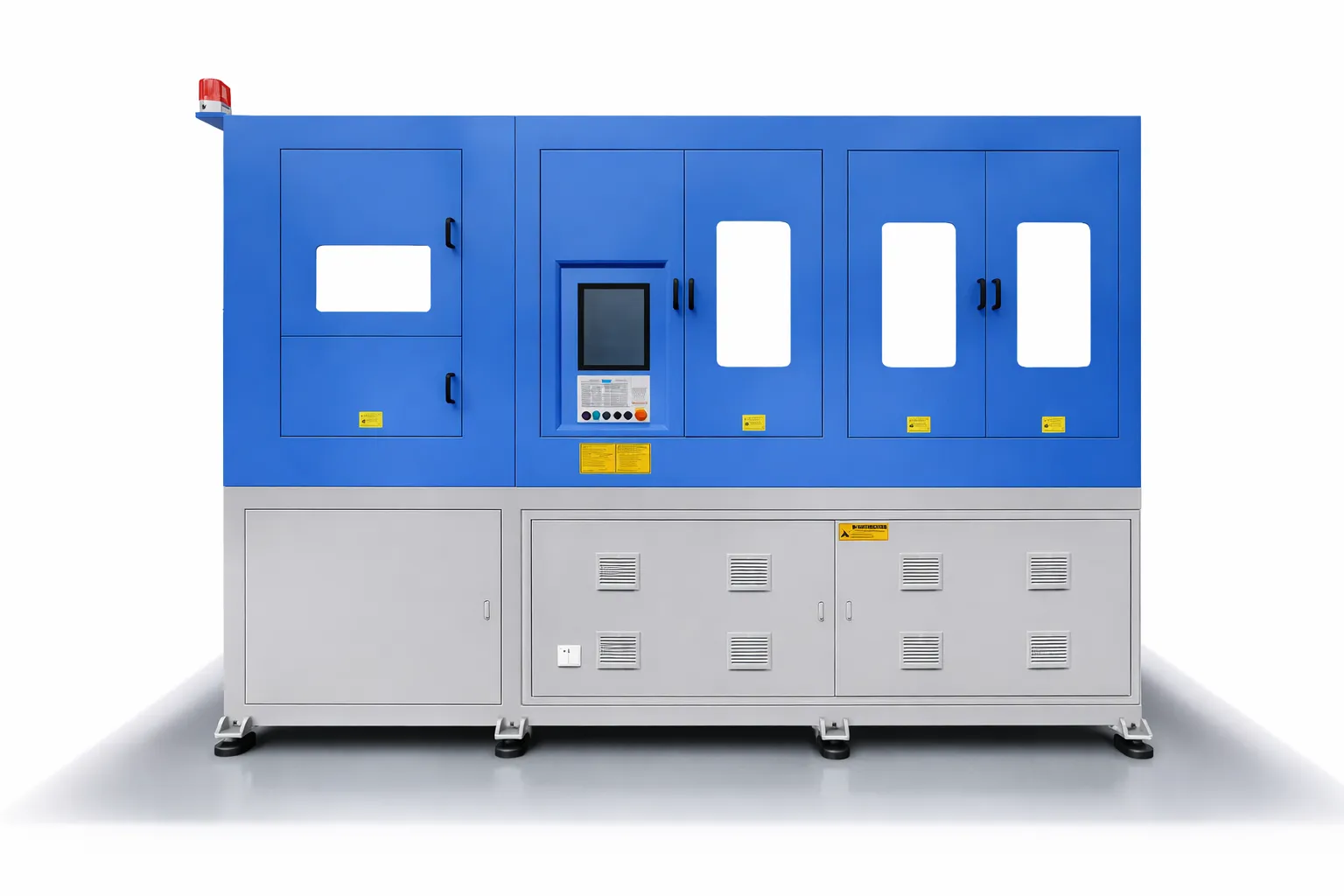
The Korea Ever-Power HGS series semi-automatic blow moulding machines represent this category: an operator loads heated preforms from the companion HGJ-CL heater into the machine’s blow station, and the machine automates the stretch-blow sequence. Output is 300–550 BPH depending on model and bottle volume. This is the correct technology for beverage producers in the 50,000–500,000 bottles per month range who run multiple bottle sizes, need fast mould changes between SKU runs, and want the lowest practical capital investment for in-house bottle production. The HGS series covers this segment from 500 ml (HGS150A) to 20-litre jugs (HGS350A).
One-Step ISBM — Premium Bottles, Zero Surface Contact
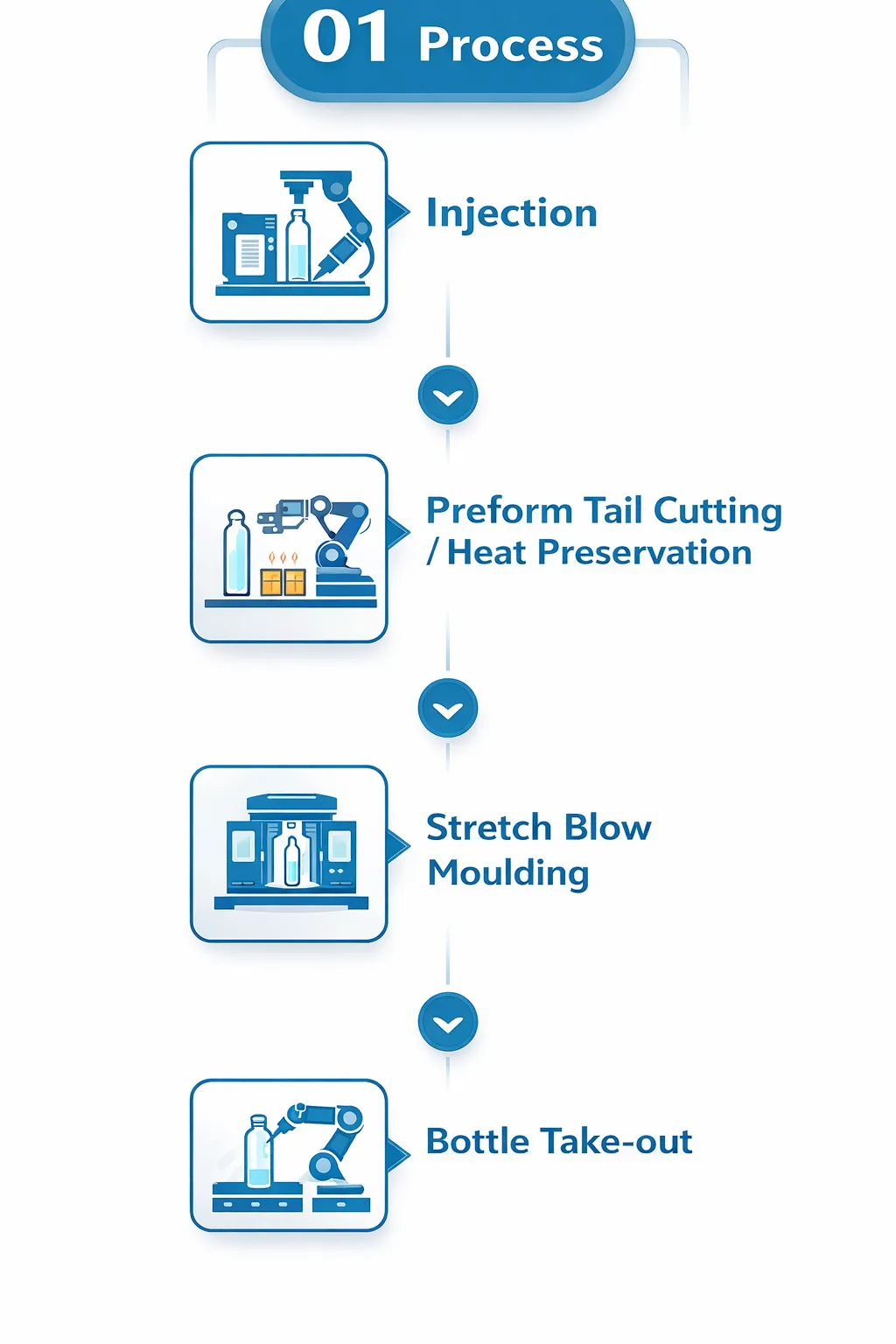
One-step injection stretch blow moulding machines inject the preform and blow it in a single machine cycle, without the preform ever being handled between stations. This eliminates the preform scuffing that occurs in two-step processes — making ISBM the standard for premium cosmetics, pharmaceutical containers, and K-Beauty packaging. For commodity beverage bottles (water, juice, sports drinks) where surface contact marks are acceptable and the cost structure of the two-step process is appropriate, ISBM is not the standard choice — it is higher capital cost and lower output than two-step REHB at comparable cavitation. ISBM becomes relevant in the beverage segment for premium brand packaging — bespoke bottle shapes, high-clarity PETG containers, or pharmaceutical-grade beverage formats — where the one-step quality advantages justify the investment. Korea Ever-Power’s HGY series 3-station ISBM machines serve this premium beverage segment.
Selecting the Right Machine by Bottle Volume
For beverage producers entering semi-automatic blow moulding, the primary selection criterion is maximum bottle volume — which governs both the pillar space required for the mould block and the stretching stroke needed to achieve the axial orientation depth for that bottle height. The table below maps each HGS model to its beverage bottle application:
Monthly figures calculated at 2-shift × 22 production days × 16 hours, with 85% utilisation factor for mould changes, minor maintenance, and shift handovers.
Large-Format Bottles — 5L, 10L, and 20L Water Jug Production
The large-format bottled water market — 5-litre family containers, 10-litre office dispensers, and 19–20-litre water jugs for home and office dispensers — represents one of the fastest-growing segments in Southeast Asian and South Asian beverage markets, and one of the highest-value cases for in-house PET bottle manufacturing. Three factors make large-format jugs particularly well-suited to semi-automatic production:
The Economics of 20-Litre Water Jug Self-Production
A 20-litre PET water jug is a high-value container — typically 4–6× the price of a 500 ml bottle by weight of resin, but 10–15× the price by unit selling value to the bottler. The outsource price for 20-litre jugs is particularly high in markets where local jug production capacity is limited, because large-format moulds are expensive to build and few contract blowers invest in them. Operations that can produce their own 20-litre jugs are effectively capturing a margin that would otherwise go entirely to the container supplier.
The HGS350A’s output at 20-litre jug size — approximately 150–200 jugs per hour — sounds low compared to 500-ml bottle output, but the economics look entirely different when you factor in that each 20-litre jug contains approximately 550–600 g of PET resin (versus 10–12 g in a 500 ml bottle) and retails to the bottler at a price reflecting its size. A single HGS350A on two shifts producing 20-litre jugs generates a cost saving per unit that is significantly larger than the same machine on a 500 ml programme — simply because each jug has more value at stake.
Why Large-Format Bottles Need a Dedicated Machine — The Pillar Space Constraint
The most common mistake buyers make when entering the large-format jug market is attempting to produce 10-litre or 20-litre jugs on an HGS250A or HGS280A machine that was purchased for 1.5–2 litre beverage bottles. The physical constraint is the pillar space — the horizontal and vertical clearance between the machine’s tie-bar pillars that defines the maximum mould block size. A 20-litre jug mould block typically measures approximately 380 mm × 340 mm or larger; the HGS250A’s 400 × 250 mm pillar space cannot accommodate this block, and the HGS280A’s 430 × 280 mm is marginal at best for the largest jug moulds.
The HGS350A (480 × 350 mm pillar space) is the only Korea Ever-Power semi-automatic machine that can reliably run 20-litre jug moulds. Operations that plan to enter the large-format market should specify the HGS350A from the outset, even if initial production starts with 5-litre containers — because a machine upgrade from HGS280A to HGS350A is a complete machine replacement, not a mould swap.
Hot-Fill Beverages — Tea, Juice, and Functional Drinks
The RTD tea, juice, and functional beverage segment that fills at 88–95 °C requires a machine specifically engineered for hot-fill production — not a standard HGS-A model with an oil-heated mould attached. The distinction matters because the defining requirement of a hot-fill PET bottle is the degree of biaxial orientation achieved during blowing: if the axial stretch ratio (ASR) does not reach at least 3.0, the strain-induced crystallinity that develops during the heat-set dwell is insufficient (below ~20%) to prevent the bottle from deforming when filled at 90 °C.
Achieving ASR ≥ 3.0 for a standard 1.25-litre hot-fill beverage bottle requires a stretching stroke of at least 340–360 mm. The standard HGS-A series reaches a maximum stretching stroke of 280 mm (HGS350A) — which is insufficient for the 1.25-litre hot-fill format. The HGS200B is specifically engineered for this application with a 360 mm stretching stroke and an integrated oil-heated mould circuit that maintains the blow cavity at 120–150 °C during production — the heat-set temperature required for 20–30% wall crystallinity.
For brands entering the hot-fill RTD beverage market — Korean barley tea, aloe vera drink, cold-pressed juice — the HGS200B is the correct machine. At 400–550 BPH on 1.25-litre hot-fill bottles, a single HGS200B on two shifts produces approximately 200,000–230,000 hot-fill bottles per month — a realistic entry volume for a regional brand launching in one to three distribution areas.
Machine Selection by Beverage Category
As a quick reference, the following matrix maps the most common beverage categories to the Korea Ever-Power machine that serves each best:
Production Line Infrastructure
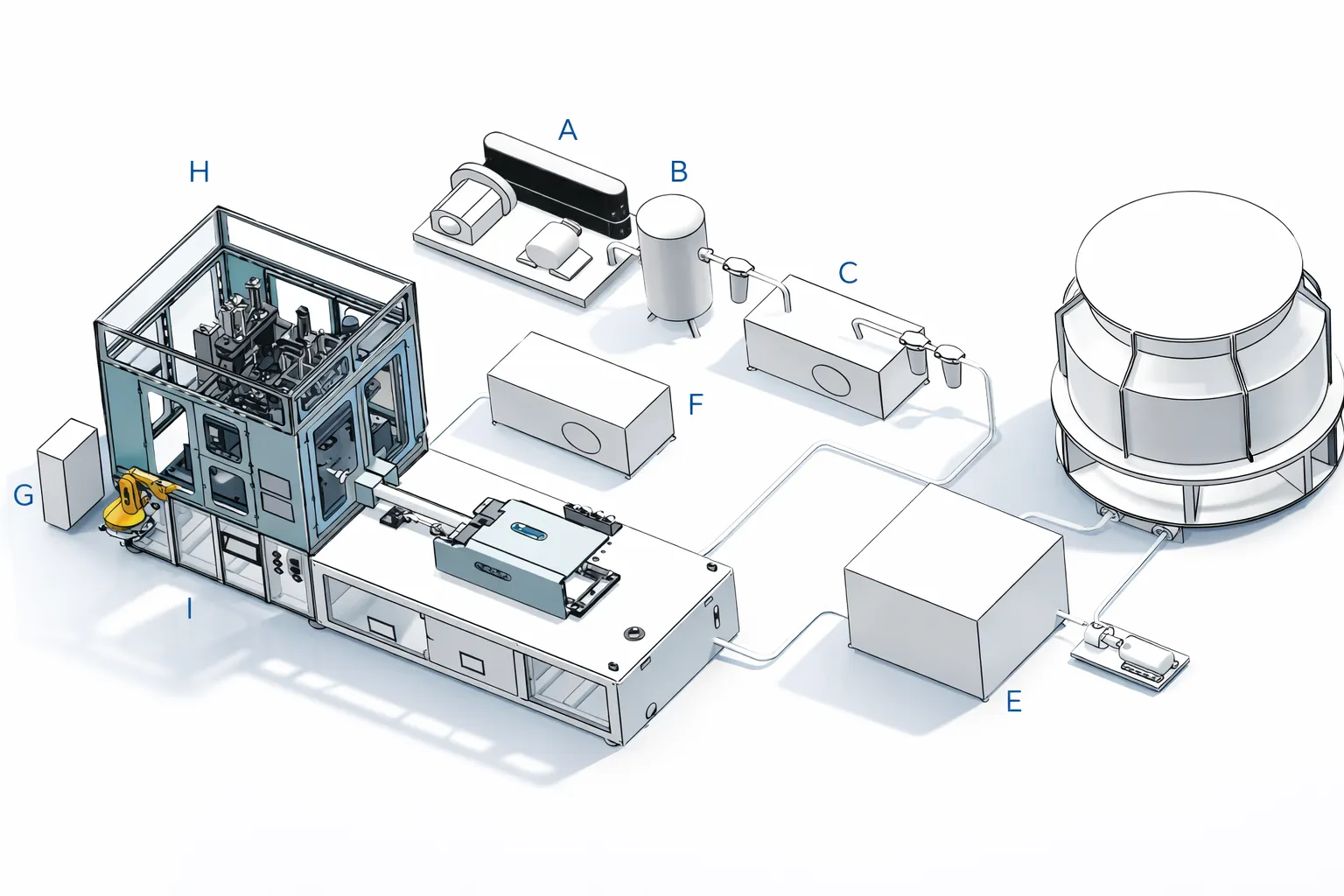
A beverage PET bottle production line centred on an HGS semi-automatic machine requires the following utilities and space. These are confirmed minimum requirements, not aspirational specifications — operations that undersize any of these items discover it on the first production day, not during planning:
High-Pressure Air — 3.0 MPa
Oil-free compressor delivering 3.0 MPa (30 bar) continuous. Required air flow depends on model and BPH: HGS200A at 450 BPH requires approximately 0.9–1.1 m³/min free air delivery; HGS350A at 200 BPH (20-litre jugs) requires approximately 1.2–1.6 m³/min due to the larger cavity volume per blow cycle. Standard factory compressed air (0.7–0.8 MPa) cannot power the blow station — a dedicated compressor is mandatory.
Cooling Water — 8–15 °C
Chilled water circuit for mould cooling at 3–8 L/min. In hot climates (Vietnam, Indonesia, Thailand), ambient-temperature tap water at 28–32 °C produces inconsistent cycle times and wall thickness variation; a refrigerating water chiller is essential, not optional. Size the chiller for the mould heat load: typically 1–3 kW of refrigerating capacity per production mould set.
Electrical Supply
Three-phase 220V/50Hz for all HGS models. Total connected load for machine plus heater: 12–22 kW depending on model. Dedicated MCB and earth connection required. Note: the HGJ-CL heater is the primary power consumer (8–15 kW heating elements); the machine itself uses 3–7 kW.
Floor Area and Staff
Minimum 5 × 4 m clear for machine and heater including operator working space. Add 3 × 3 m for preform storage input and 3 × 4 m for bottle output staging. Minimum ceiling height 3.0 m. For 20-litre jug production, the output staging area requirement is substantially larger — allow 5 × 5 m minimum for jug accumulation before packing. Staff: 1 operator per shift plus 1 quality check person per production run (can be shared across multiple machines).
Two-Shift ROI Calculation — HGS200A on 1-Litre Water Bottles
The following is a worked example of the return on investment calculation for a regional water bottler investing in an HGS200A to produce 1-litre PET water bottles in-house. Figures are illustrative; buyers should substitute local resin prices, electricity tariffs, and outsource purchase prices into the same framework.
◆ Главный вывод
For beverage producers in the 80,000–500,000 bottles per month range, a semi-automatic water bottle blow moulding machine is the highest-ROI entry point to in-house PET bottle manufacturing. Select by the largest bottle volume in your current and planned programme — HGS150A/200A for small-format beverages, HGS350A for 5L–20L jug production, HGS200B exclusively for hot-fill beverages filled above 65 °C. Budget for the high-pressure compressor and chiller at the outset; they are not optional extras but required components of a functional production line.
Заключение
The decision to invest in a PET bottle manufacturing machine for beverage production is a straightforward financial calculation once the key variables are in place: monthly volume, bottle size range, fill type (cold or hot), and the local outsource price for finished bottles. For the overwhelming majority of small and mid-size beverage producers in Korea and Southeast Asia, the semi-automatic HGS series delivers a payback period of 2–4 years on a two-shift production schedule — a return that fully justifies the investment and provides the operational independence to adjust bottle specifications without supplier negotiation.
Корейская компания Ever-Power HGS series semi-automatic blow moulding machines cover the full beverage volume range from 330 ml single-serve to 20-litre office water jugs, with the HGS200B addressing the specialist hot-fill beverage segment. Submit your bottle drawing(s), monthly volume target, and fill type to Korea Ever-Power to receive machine recommendation, mould feasibility, and project cost estimate within three business days.
Об этой статье: Prepared by the Korea Ever-Power Technical and Sales Teams. BPH figures are at standard operating conditions on PET preforms at rated weight for each model. Monthly volume figures use 2-shift × 22-day × 16-hour × 85% utilisation model. ROI illustration uses indicative costs; actual project economics depend on local resin price, electricity tariff, labour cost, and outsource bottle purchase price. Buyers should request project-specific cost modelling with their actual inputs.
Рекомендуемая литература: Semi-Automatic Blow Moulding Machine Buying Guide — Specifications and Common Mistakes | Hot-Fill PET Bottles — Process, Design, and Machine Requirements | ISBM Machine Price — Total Cost of Ownership
Редактор: Cxm