IBM BEVERAGE BOTTLE · PP PCTG WATER JUICE SPORTS · FOOD CONTACT · KOREA EVER-POWER ZQ
IBM for Beverage
Bottle Production: Water, Juice and Sports Drink Guide
Non-carbonated beverage bottles — still water bottles, functional water bottles, cold-pressed juice bottles, sports drink bottles and flavoured water containers — represent a growing IBM PP and PCTG application as premium beverage brands seek parting-line-free body aesthetics, food-contact-compliant PP monomaterial, and precise flip-top or screw-cap neck OD for beverage filling line cap application on Korea Ever-Power ZQ series IBM machines.
200ml – 1,000ml Water Juice Sports
ZQ40 • ZQ60 • ZQ80 IBM
KOREA EVER-POWER · ANSAN-SI, GYEONGGI-DO · JULY 2026
IBM BEVERAGE BOTTLE · KEY SPECIFICATION REFERENCE
VOLUME RANGE
200ml – 1,000ml
IBM beverage bottle range: 200ml (functional water mini-bottle, ZQ40 8-cavity) to 1,000ml (sports drink large-format, ZQ80 2-cavity). Core Korean premium beverage IBM formats: 300ml (still water premium bottle, ZQ60 8-cavity), 500ml (sports drink, ZQ60 6-cavity), 350ml (cold-pressed juice, ZQ60 6-cavity). PCTG: 200ml–500ml crystal-clear premium juice and functional water
MATERIAL
PP • PCTG
PP IBM: standard for opaque and translucent sports drink, functional water and reusable beverage bottle (PP food contact FDA 21 CFR 177.1520; EU 10/2011; Korean MFDS food container standard). PCTG IBM: crystal-clear premium cold-pressed juice, flavoured water and functional beverage bottle where liquid colour and clarity is a brand retail differentiator. PP monomaterial for Korean EPR recyclability label
NECK SPECIFICATION
28mm • 38mm OD
IBM beverage neck: 28/410 flip-top or screw cap for 200–500ml still water and functional beverage (28mm OD ±0.05mm for flip-top snap-on engagement); 38/400 wide-mouth screw cap for sports drink direct-drink opening (38mm OD for wide-mouth sports drink IBM bottle); 28mm PCO-type for beverage brand seeking cross-format cap rationalisation with PET ISBM line
ZQ RECOMMENDATION
ZQ40 / ZQ60
ZQ40: 200–350ml premium beverage bottle (6–10 cavities PP or PCTG). ZQ60: 300–600ml sports drink and juice bottle (4–8 cavities). ZQ80: 600ml–1,000ml large sports drink or functional water (2–4 cavities). ZQ60HE all-electric for beverage brand sustainability programme (lower carbon footprint IBM production metric)
SECTION 01
IBM Beverage Bottle: PP and PCTG Advantages for Premium Drinks Packaging
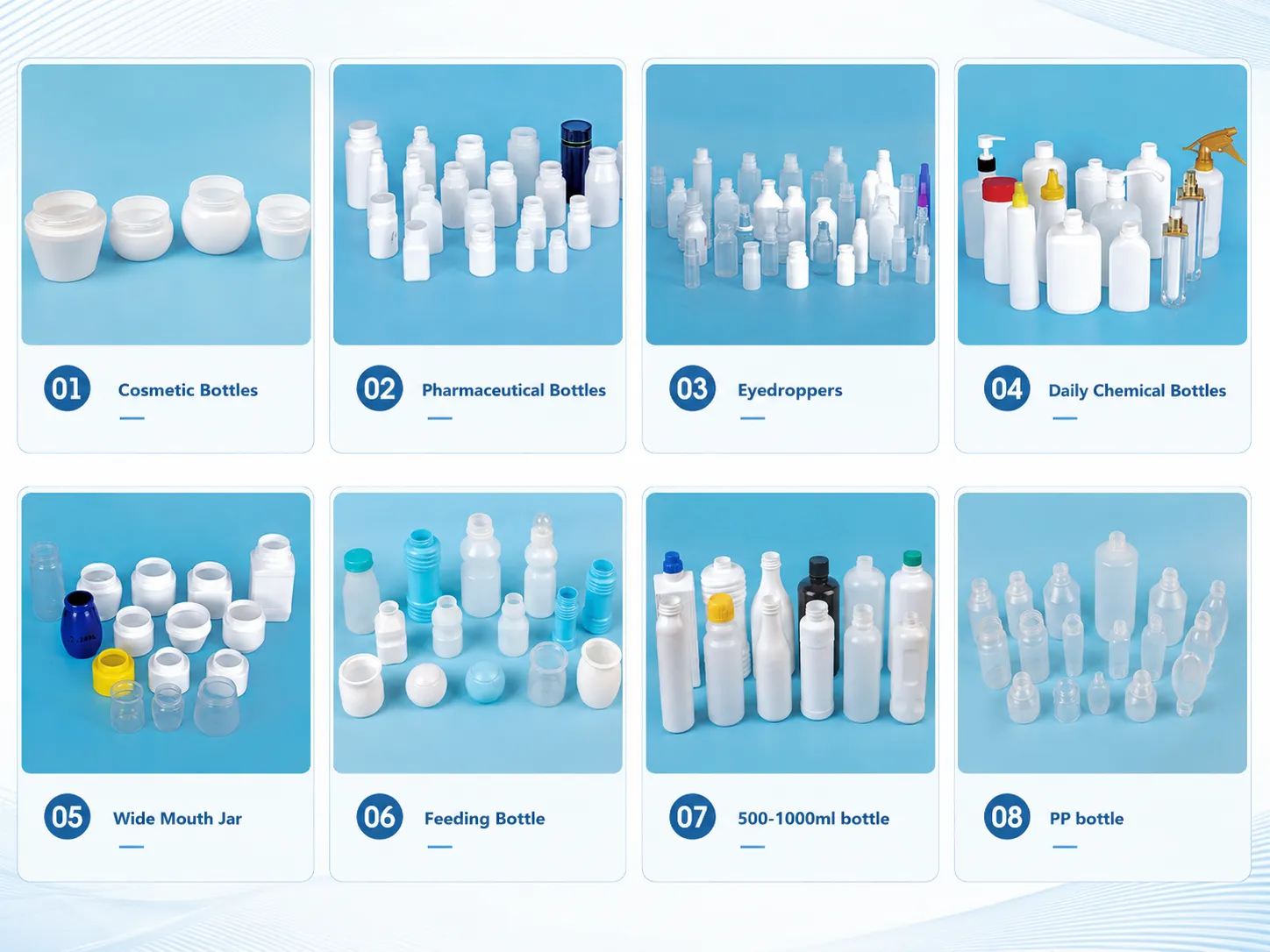
Premium non-carbonated beverage brands — Korean functional water (hydrogen water, alkaline water, vitamin water), cold-pressed juice, Korean energy drinks, sports nutrition drinks and herbal infused water — increasingly specify IBM PP and PCTG over commodity PET ISBM because IBM’s parting-line-free body, premium surface options and PP monomaterial recyclability deliver differentiated premium shelf presence at Korean convenience store (CU, GS25, 7-Eleven Korea), Korean duty-free and global specialty food retail that PET ISBM’s commodity aesthetic cannot match. Korea Ever-Power’s ZQ series IBM machines produce food-contact-compliant PP and PCTG beverage bottles from 200ml mini-water through 1,000ml large sports drink at Ansan-si, Gyeonggi-do.
IBM vs PET ISBM for Premium Non-Carbonated Beverage
PET ISBM dominates global non-carbonated beverage packaging at commodity volume (PET 500ml water bottle is the globally ubiquitous commodity beverage container produced at billions of units/year by ISBM). IBM PP and PCTG beverage bottles occupy the premium tier where four IBM advantages create commercial value for Korean beverage brand above standard PET ISBM pricing. IBM PP monomaterial recyclability: PP #5 monomaterial IBM beverage bottle + PP flip-top or PP screw cap = mono-PP beverage container; PET #1 bottle + PP cap is bi-material, reducing recyclability at Korean mechanical recycling facility and limiting Korean EPR eco-label claim. IBM frosted PP body for premium water: bead-blast IBM PP blow mould cavity at Ansan-si produces frosted PP beverage bottle body at IBM production without secondary decoration; PET ISBM frosted beverage bottle requires secondary spray-frost or acid-etch process adding cost and delivery time. PCTG IBM juice bottle clarity: PCTG IBM bottle at haze <2% displays cold-pressed juice (vibrant green matcha, amber turmeric, purple beet) at premium Korean specialty food retail (SSG Food Market, Hyundai Dept. Food Hall, Korean Whole Foods equivalent) where product visible quality is primary purchase driver. IBM PP no oxygen sensitivity: PP IBM beverage bottle has no hydrolysis sensitivity that PET experiences at elevated temperature (Korean summer logistics: trucks at 40–50°C; PET bottle may develop slight haze from moisture-temperature cycling at delivery temperature extremes; PP is unaffected).
Beverage IBM Bottle Chemical Compatibility
PP and PCTG IBM beverage bottle chemical compatibility with common premium Korean and global beverage formulations: still water (mineral or purified, pH 6.5–8.0): PP and PCTG both fully compatible; no PP or PCTG swelling or flavour migration at ambient and refrigerated storage. Hydrogen water (dissolved H2 in water, pH 7.0–7.5): PP IBM bottle suitable; PCTG IBM preferred for consumer visibility of water clarity. Vitamin water (B-group vitamins, ascorbic acid, mineral water base, pH 3.0–4.5): PP IBM fully resistant to acidic vitamin water at ambient storage; confirm vitamin C (ascorbic acid) non-reactivity with PP contact surface by 12-month stability study (no PP-catalysed ascorbic acid degradation expected at standard storage). Cold-pressed juice (fruit/vegetable pH 3.5–6.0, no preservative): PCTG IBM preferred for juice product visibility; PP IBM adequate for opaque or tinted juice bottle. Sports drink (glucose, fructose, electrolyte salts, citric acid, pH 3.5–4.5): PP IBM fully resistant; sports drink electrolytes (NaCl, KCl, MgCl2) are non-corrosive to PP and PCTG. Herbal infused water (herbal extract in water, pH 5.5–7.0): PP and PCTG both compatible; validate essential oil components (citrus terpenes, eucalyptol) against PP MVTR for herbal volatile retention over shelf life. Functional beverage with adaptogens (ashwagandha, lion’s mane extract in water base): PP and PCTG both compatible with aqueous adaptogen extracts at standard beverage concentration.
SECTION 02
PP vs PCTG IBM for Beverage: Material Selection by Drink Type
| BEVERAGE TYPE | PP IBM | PCTG IBM | RECOMMENDED |
|---|---|---|---|
| Still water / hydrogen water (premium brand) | Frosted PP IBM: premium matte aesthetic, PP EPR recyclability label, no product visibility required | Crystal-clear PCTG: water purity visual communication, premium transparency at Korean specialty water retail | Frosted PP IBM (sustainability); PCTG IBM (clarity premium) |
| Cold-pressed juice (vibrant colour, no preservative) | PP natural (semi-translucent): partial product colour visible; lower cost; adequate for juice brand with opaque label covering full body | PCTG preferred: crystal-clear display of vibrant juice colour (green matcha, golden turmeric, purple beet) — primary purchase driver for Korean premium cold-press juice retail | PCTG IBM (preferred for colour-visible juice) |
| Sports drink (isotonic, electrolyte, coloured) | PP IBM: blue, green or orange tinted PP for sports drink brand colour identity; wide-mouth 38mm OD for direct-drink sports bottle; squeeze-resistant body for one-hand sports use | PCTG possible for clear sports drink; higher cost vs PP IBM | PP IBM (tinted sports bottle, cost-efficient) |
| Functional / vitamin water (health segment) | PP RCP (random copolymer) natural: semi-transparent, vitamin water colour visible; PP EPR label; premium frosted finish option for K-wellness brand | PCTG: crystal-clear functional water for ultra-premium K-wellness brand targeting Korean department store and export specialty health retail | PP RCP IBM (mid-premium); PCTG IBM (ultra-premium) |
SECTION 03
Beverage IBM Bottle Neck Design: Flip-Top, Wide-Mouth and Screw Cap
Flip-Top Beverage IBM Neck (28mm OD)
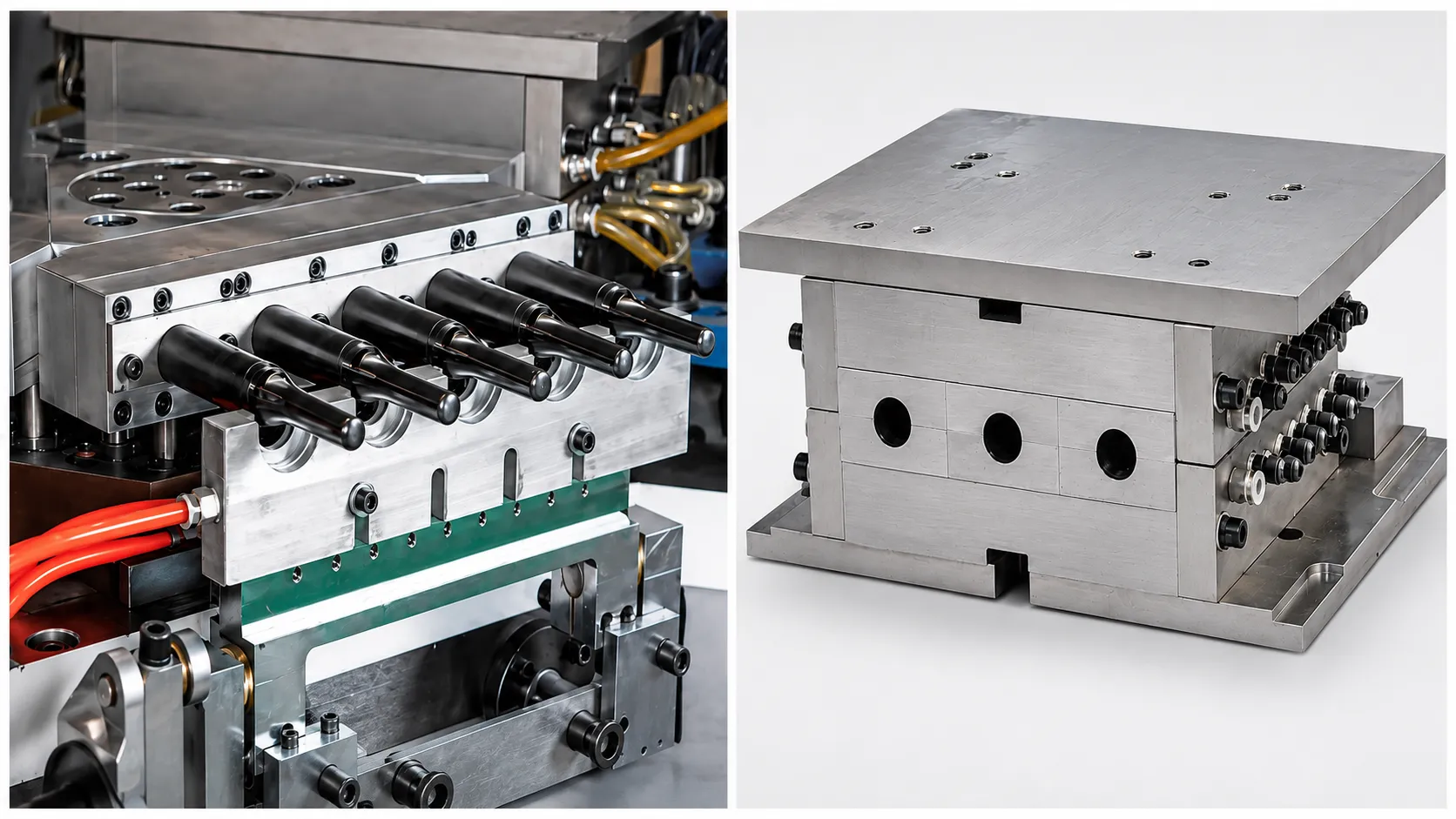
IBM PP beverage bottle flip-top closure (28mm OD snap bead neck) is the most common Korean premium water and functional beverage IBM closure format, providing convenient one-hand open-and-drink access without cap removal for consumer active use (gym, commute, outdoor exercise). IBM 28mm flip-top bead neck design at ZQ Station 1: circumferential snap bead OD 28.5–29.0mm (±0.05mm) for PP flip-top closure snap-in at 20–35 N application force; bead height 1.0–1.5mm above neck thread OD; flip-top orifice bore at IBM core rod neck (orifice diameter 8–12mm for controlled water sip-flow from flipped spout). Flip-top cap validation at Korea Ever-Power T1 trial: 20 IBM PP beverage T1 bottle samples assembled with Korean flip-top supplier’s PP closure (CTK Cosmotech, Yonwoo or Maspack PP flip-top for beverage) and tested for snap-on force (20–35 N), snap-off resistance (>80 N — flip-top cap must not accidentally separate from IBM bottle body during sports activity), flip-top hinge cycles (50 open-close cycles without hinge fracture — PP hinge fatigue resistance confirmation at ambient Korean temperature). IBM PP beverage bottle flip-top is produced without tamper-evident feature for reusable water bottle application (consumer-reusable 300ml or 500ml PP IBM water bottle with integral flip-top — Korea Ever-Power adds a PP tear-band TE link on the flip-top hinge at injection mould design if beverage brand requires first-opening tamper evidence for single-use premium water retail).
Wide-Mouth Sports Drink IBM Bottle (38mm OD)
Wide-mouth IBM PP sports drink bottles (38mm OD, 38/400 screw neck for screw sports cap or wide flip-top) are specified by Korean sports nutrition and isotonic drink brands for two consumer benefits: rapid fluid intake during sport (wide 38mm opening allows high-flow drinking without bottle-squeeze-and-tilt technique; consumer drinks directly from wide IBM bottle mouth at full tilt for fast hydration mid-exercise); easy fill and clean for reusable sports bottle (Korean reusable sports drink IBM PP bottle with 38mm wide mouth can be filled from standard tap without funnel and cleaned by standard bottle brush — key consumer attribute for K-wellness brand’s reusable sports bottle line at Korean gym equipment retail). IBM PP sports drink bottle 38/400 neck design: 38mm OD (±0.05mm), 400 series continuous thread, 2-start for fast quarter-turn cap application; wide pour bore (38mm ID inner bore from IBM core rod OD at 38mm neck — full-width mouth opening for direct drinking and cleaning access); optional TE band ledge below thread (if screw sports cap with TE skirt is specified for single-use Korean sports drink retail product at Korean convenience store C-store GS25, CU or 7-Eleven Korea channel). Korea Ever-Power designs 38mm wide-mouth IBM sports drink bottle blow ratio: 38mm neck OD / body OD target (typically 65–75mm for 500ml wide-mouth sports drink) = blow ratio 1.7–2.0× — low blow ratio for wide-mouth IBM, producing adequate body wall (0.85–1.0mm) for squeeze-resistant sports drink IBM bottle at standard PP homopolymer MFR 20 g/10min and 6 bar blow pressure on ZQ60.
SECTION 04
Food Contact and Regulatory Compliance for IBM Beverage Bottles
IBM BEVERAGE BOTTLE · FOOD CONTACT REGULATORY COMPLIANCE BY MARKET
Korea MFDS
Korean Ministry of Food and Drug Safety Food Container Standard (식품용 기구 및 용기·포장의 기준 및 규격): PP and PCTG IBM beverage bottle must pass Korean MFDS food contact plastic standard (overall migration ≤30 mg/L in 4% acetic acid and n-heptane simulants; specific migration limits for Pb, Cd, Hg; KMnO4 consumption test for PP). Korea Ever-Power provides Korean MFDS food container standard test data from NIFDS or KOLAS-accredited Korean testing laboratory for IBM PP and PCTG beverage bottle for Korean beverage brand product registration
EU Regulation 10/2011
EU Regulation 10/2011 (plastic materials and articles in contact with food): IBM PP beverage bottle compliance test (overall migration ≤10 mg/dm² or 60 mg/kg food simulant; specific migration for authorised substances in Union List Annex I). PP food simulant: ethanol 10% for aqueous acidic beverage; isooctane for fatty simulant (not applicable for water/juice IBM bottle). Korea Ever-Power provides EU 10/2011 Declaration of Conformity from Ansan-si IBM PP and PCTG beverage bottle production for Korean beverage brand EU export market food contact compliance
US FDA 21 CFR
FDA 21 CFR 177.1520 (PP food contact): IBM PP beverage bottle compliant at standard PP food contact conditions (aqueous, acidic and basic food contact). PCTG food contact: Eastman PCTG TX1001 FDA 21 CFR 177.2490 compliant for food contact applications. Korea Ever-Power uses FDA 21 CFR 177.1520-listed PP resin (LG Chem HP250J or equivalent Korean food-grade PP) for IBM beverage bottle production at Ansan-si for US export market beverage brand FDA food contact compliance
BPA-Free and Recyclability
PP and PCTG IBM beverage bottles are inherently BPA-free (neither PP nor PCTG uses bisphenol A as monomer — in contrast to polycarbonate PC, which is BPA-based and not used by Korea Ever-Power for food-contact IBM). Korean consumer BPA-free claim: IBM PP and PCTG beverage bottles can be labelled BPA-Free at Korean and global markets. Korean EPR: PP IBM beverage bottle (PP #5) achieves recyclability grade under Korean EPR eco-label scheme; PCTG IBM beverage bottle (PETG/PCTG) listed separately in Korean EPR but achievable recyclability claim with mono-PCTG bottle
SECTION 05
IBM Beverage Bottle Output: ZQ40 and ZQ60 Production Data
| FORMAT | ZQ MODEL | CAVITIES | BOTTLES/HR | BOTTLES/DAY (16HR) |
|---|---|---|---|---|
| 200ml PCTG juice vial (flip-top, 28mm OD) | ZQ40 | 8 | ~5,200 | ~83,200 |
| 300ml PP frosted water bottle (flip-top) | ZQ60 | 8 | ~4,200 | ~67,200 |
| 350ml PCTG cold-pressed juice (screw cap) | ZQ60 | 6 | ~3,600 | ~57,600 |
| 500ml PP sports drink (38mm wide-mouth) | ZQ60 | 6 | ~3,200 | ~51,200 |
| 1,000ml PP sports hydration bottle (38mm OD) | ZQ80 | 2 | ~900 | ~14,400 |
SECTION 06
Korean Premium Beverage IBM Market and Global Functional Drink Export
Korean Premium Beverage IBM Market
The Korean premium beverage market (estimated KRW 3.5–5.0 trillion total including functional water, premium juice, sports drink and health beverage, growing 15–25% annually driven by Korean K-wellness MZ consumer trend) is the fastest-growing IBM beverage bottle demand segment in Korea. Korean premium beverage brands using or transitioning to IBM PP/PCTG: Korean functional water brands (Hyundai Water, Lotte Chilsung premium water, SK Eco Prime functional water) transitioning from PET to PP IBM for Korean EPR recyclability label and premium frosted aesthetic; Korean cold-pressed juice brands (CJ Fresh Way cold-press, Ildungpoom premium juice, Korean cold-press startup brands) selecting PCTG IBM for juice colour visibility at Korean SSG Food Market and Hyundai Dept. specialty food hall; Korean sports drink brands (Pocari Sweat distributor Korean, Korea Gatorade, Korean sports nutrition brand Muscle Fit) using PP IBM wide-mouth for premium sports hydration bottle at Korean gym equipment retail and Korean sports event merchandise. Korea Ever-Power supports Korean premium beverage brand IBM programmes at ZQ40/ZQ60/ZQ80 Ansan-si with Korean MFDS food contact documentation, frosted PP and PCTG clarity option, and Korean food packaging HACCP-linked supplier certification for Korean beverage brand HACCP system compliance.
Global K-Functional Drink IBM Export
Korean functional beverage brands exporting K-wellness drink products (Korean adaptogen water, Korean collagen drink, Korean ginseng functional beverage, Korean red ginseng sports drink) to global markets (US Korean-American community, Southeast Asian Korean Wave market, Japanese Korean food retail, Middle East premium food retail) require IBM PP or PCTG beverage bottles that carry multi-market food contact compliance documentation for global distribution. Korea Ever-Power Ansan-si provides Korean functional beverage IBM export programmes with: multi-market food contact compliance package (Korean MFDS food container standard + EU 10/2011 Declaration of Conformity + FDA 21 CFR 177.1520 compliance letter); BPA-free declaration (PP and PCTG IBM beverage bottle inherently BPA-free — Korea Ever-Power issues BPA-free declaration at request for beverage brand’s global market marketing claim); cold chain compatibility data (PP IBM beverage bottle at −20°C deep freeze and −5°C refrigerated distribution: PP brittle transition below −5 to −10°C for PP homopolymer — Korea Ever-Power recommends PP block copolymer or PP RCP for Korean functional water brand’s cold-chain distribution route where package temperature falls below −5°C during frozen Korean logistics network). Korea Ever-Power Ansan-si IBM PP and PCTG food-contact beverage bottle export from Korean port of origin (Pyongtaek or Busan) with Korean phytosanitary certificate and Korean Certificate of Origin for Korean-manufactured premium beverage IBM bottle qualifying under Korea’s FTA preferential tariff for export to ASEAN, EU and US Korean FTA partner markets.
ENGINEERING FAQ
IBM Beverage Bottle Engineering Questions
Q 01
Can PP IBM beverage bottles withstand hot-fill at 85°C for juice pasteurisation?
Hot-fill at 85°C (the standard juice pasteurisation hot-fill temperature for high-acid juice at pH <4.6) presents a significant challenge for standard PP IBM beverage bottles because PP softening begins near 130°C but the bottle undergoes significant thermal deformation from the vacuum created as hot-fill juice cools inside the sealed bottle after hot-fill capping. PP IBM bottle hot-fill challenge: hot fill at 85°C creates approximately 6–8% volume reduction (juice shrinks on cooling from 85°C to ambient 25°C: approximately 3.5% density change for juice-like aqueous liquid); this volume reduction creates internal vacuum (negative gauge pressure) of approximately −40 to −60 kPa inside the sealed PP IBM bottle. At this vacuum level, standard 0.75–0.90mm PP IBM beverage bottle body wall buckles inward (panel collapse) because PP at ambient temperature has insufficient modulus and wall stiffness to resist −50 kPa vacuum at thin-wall beverage bottle geometry. Hot-fill PP IBM bottle engineering options: (1) vacuum-resistant rib design: IBM blow mould cavity includes structural ribs (4–6 vertical ribs on bottle body exterior, formed at ZQ blow station from rib grooves in blow mould cavity) that significantly increase second moment of area of the PP bottle body cross-section, resisting vacuum-induced panel collapse. PP IBM ribbed beverage bottle at 0.90–1.1mm body wall + 4 vertical ribs (rib height 3–5mm, rib width 8–10mm) withstands −60 kPa vacuum without visible panel collapse at ambient and Korean summer ambient (35°C). (2) PP copolymer (PP RCP or PP block copolymer): PP random copolymer has higher impact resistance and slightly lower modulus than PP homopolymer, but similar hot-fill vacuum resistance at equivalent wall. PP block copolymer has better low-temperature impact but lower hot-fill modulus — not preferred for hot-fill. Korea Ever-Power recommends ribbed PP IBM bottle body design at 0.90–1.1mm wall for Korean premium juice brand targeting hot-fill pasteurisation at 85°C, confirming hot-fill vacuum resistance by K-beverage brand’s hot-fill simulation test (fill IBM PP bottle with water at 85°C, cap immediately, cool to 25°C, measure panel deflection — target <5mm panel inward deflection for hot-fill pass). For cold-filled pasteurised juice (flash pasteurisation + cold fill): standard IBM PP bottle adequate without hot-fill ribbing.
Q 02
What Korea Ever-Power IBM PP or PCTG beverage bottle certifications support Korean HACCP food safety management system compliance?
Korean beverage brand HACCP (Hazard Analysis and Critical Control Points) food safety management system requires that all packaging materials and containers contacting the beverage product meet Korean food container safety standards and that packaging supplier documentation is maintained for HACCP system critical control point monitoring and audit traceability. Korea Ever-Power Ansan-si provides the following IBM PP and PCTG beverage bottle certifications and documentation supporting Korean beverage brand HACCP compliance. Korean MFDS food container standard test report: Korea Ever-Power provides IBM PP (or PCTG) beverage bottle material test report from Korean NIFDS-accredited or KOLAS-accredited testing laboratory confirming compliance with Korean food container plastic standard (overall migration, specific migration, heavy metals, KMnO4 consumption test for PP). This report is the primary Korean HACCP packaging material safety documentation required for Korean HACCP certified beverage producer’s packaging material pre-approval record. Resin CoA with food-grade specification confirmation: Korea Ever-Power provides Korean beverage brand with PP or PCTG resin manufacturer’s Certificate of Analysis (CoA) for each IBM beverage bottle production batch, confirming food-grade resin lot traceability (resin manufacturer’s name, grade, lot number, MFR, density — all traceable to Korean MFDS-registered food contact material resin). Production batch record with material lot traceability: Korea Ever-Power ZQ IBM beverage bottle production batch record (PP resin lot, colour masterbatch lot, production date, ZQ machine number, mould number, QC weight check result) retained at Ansan-si for 5 years — available for Korean food safety authority HACCP audit at Korean beverage brand’s request. ISO 9001:2015 certificate: Korea Ever-Power Ansan-si ISO 9001:2015 QMS certification covers IBM beverage bottle production quality management, providing Korean beverage brand with third-party-audited quality system assurance for packaging supplier HACCP material safety critical control point. Korea Ever-Power provides the full Korean HACCP packaging documentation package to Korean beverage brand at IBM beverage bottle commercial production commencement, supporting Korean beverage brand’s annual HACCP system renewal audit with current-year packaging material compliance documentation.
Q 03
How does IBM PP beverage bottle flavour scalping compare with PET ISBM for juice products?
Flavour scalping — the sorption (absorption) of aroma compounds from the beverage into the plastic bottle wall, reducing aroma intensity and altering flavour perception over shelf life — is a critical packaging performance parameter for premium juice and functional beverage IBM bottles where consumer flavour expectation at point-of-consumption must match fill-time flavour. PP IBM beverage bottle flavour scalping: PP has higher affinity for lipophilic aroma compounds (limonene, linalool, α-terpineol, geraniol from citrus and berry juice) than PET due to PP’s less polar, more amorphous surface character. PP limonene sorption coefficient (Kp/food) approximately 2.5–8.0 at 25°C for standard PP homopolymer versus PET limonene sorption coefficient approximately 0.05–0.2 (PET 10–40× lower flavour scalping than PP for limonene). Practical juice shelf life impact: for orange juice (limonene-dominant aroma, approximately 100–200 ppm limonene in fresh OJ): PP IBM bottle at 0.8mm wall reduces headspace limonene by approximately 15–35% over 4-week ambient storage — potentially perceptible as reduced orange aroma intensity to trained panel. PET ISBM at 0.3mm wall reduces headspace limonene by approximately 2–5% over same period — below sensory threshold. Korea Ever-Power recommendations for flavour-sensitive beverage IBM: for orange juice and citrus beverage with limonene >50 ppm: PCTG IBM preferred over PP IBM (PCTG flavour scalping similar to PET: PCTG amorphous, high polarity, lower lipophilic aroma sorption than PP); or PP IBM with accelerated shelf-life validation (juice brand confirms 4–8 week ambient shelf-life sensory panel pass criterion for PP IBM format at agreed fill specification); for apple juice, pear juice, watermelon juice (less limonene, predominantly more polar esters: ethyl 2-methylbutyrate, hexyl acetate): PP IBM flavour scalping impact smaller than citrus — PP IBM adequate for apple/pear/berry juice at Korean 30–45 day premium juice shelf life; for herbal water and functional water (minimal aroma compound content): PP IBM flavour scalping negligible — no sensory impact at 30-day shelf life for herbal water at standard aroma concentration.
Q 04
What is the IBM PP beverage bottle reuse cycle performance for K-wellness reusable water bottle programmes?
K-wellness reusable PP IBM water bottle programmes (premium Korean water brand’s refillable bottle subscription service, Korean corporate office water station reusable bottle, Korean gym reusable hydration bottle) require IBM PP bottle structural and surface durability over repeated consumer use cycles (target: 50–200 use cycles per bottle over 6–24 month consumer use period). PP IBM reusable beverage bottle design for multi-cycle durability: body wall increase for reusable PP IBM bottle versus single-use: Korea Ever-Power recommends 1.0–1.2mm body wall (versus 0.75–0.90mm for single-use premium PP water bottle) for reusable PP IBM beverage bottle, providing adequate impact resistance against consumer carry-and-drop events over the reusable cycle period. PP IBM reusable bottle drop performance: 300ml PP IBM bottle (0.90mm wall, PP homopolymer MFR 20 g/10min) drop test at 1.2m drop height (ISTA 2A protocol) from filled (300g gross) condition: passes without crack or split at room temperature. For Korean winter outdoor reusable bottle (consumer gym bag at −5°C in Korean winter): Korea Ever-Power recommends PP block copolymer for reusable PP IBM water bottle to maintain adequate drop impact resistance at −5°C ambient (PP block copolymer brittleness temperature −20°C versus PP homopolymer −5 to −10°C). Dishwasher compatibility: PP IBM reusable water bottle dishwasher safety (European A++ dishwasher cycle, 65°C): PP IBM bottle at 0.90–1.1mm body wall dimensionally stable at 65°C dishwasher temperature (PP Vicat softening above 150°C for PP homopolymer at 10N load; 65°C dishwasher well below PP heat deformation threshold). PP IBM bottle post-dishwasher dimensional change: ≤0.2mm body OD change at 65°C × 30-minute dishwasher cycle (confirmed by Korea Ever-Power dimensional measurement before and after 10 consecutive dishwasher cycles at ZQ IBM bottle qualification test at Ansan-si). Korean K-wellness brand reusable PP IBM bottle sustainability communication: PP IBM reusable bottle life-cycle assessment (LCA) compared with single-use PET bottle: PP IBM reusable water bottle used 100 times replaces 100 single-use PET bottles — LCA carbon footprint of PP IBM reusable bottle equivalent to 10–15 single-use PET bottles in manufacturing energy; net carbon saving versus 100 single-use PET: approximately 85–90 PET bottle manufacturing carbon equivalents per reusable PP IBM bottle lifetime. Korea Ever-Power provides Korean K-wellness brand with PP IBM reusable bottle manufacturing carbon footprint data (kgCO2e per IBM bottle) from Korea Ever-Power Ansan-si production energy monitoring for Korean brand’s product carbon labelling and K-wellness sustainability communication at Korean and global market.
Q 05
Can Korea Ever-Power produce IBM beverage bottles with direct printing instead of label for K-wellness brand?
Direct printing on IBM PP or PCTG beverage bottles (printing brand graphics, ingredient information and barcode directly onto the bottle body surface without a separate label or sleeve) is achievable through two main direct decoration methods compatible with Korea Ever-Power IBM PP beverage bottle surface at Korean brand’s Korean or global contract decoration partner. UV inkjet direct-to-bottle printing (most versatile): UV-curable inkjet printing system (Videojet, Leibinger, or Dekron UV direct-to-bottle printer installed at Korean beverage filling line or at Korean contract decorator) prints brand graphics and text in up to 8 colours directly onto IBM PP beverage bottle body by rotating the bottle on a mandrel under multiple inkjet print heads. PP surface pre-treatment: IBM PP beverage bottle body must be flame- or corona-treated to ≥38 dynes/cm before UV inkjet printing for adequate UV ink adhesion (target ink adhesion: ≥3 N/mm peel at 90° peel test per ISO 2409 cross-hatch adhesion Grade 0). IBM PP beverage bottle body OD uniformity ±0.10mm (versus EBM HDPE ±0.3–0.5mm) enables consistent print registration on UV direct-to-bottle inkjet system at Korean beverage production line speeds (print speed 20–60 bottles/minute for full-body UV inkjet on 300ml IBM PP water bottle). Silkscreen printing (2–4 colour): UV-cure silkscreen (screen printing on rotary screen) for 2–4 colour brand logo, product name and volume on IBM PP beverage bottle exterior at Korean beverage brand contract decorator. Silkscreen achieves clean solid colour blocks and line graphics at high durability (dishwasher-safe silkscreen UV ink on PP IBM reusable bottle). Limitation: silkscreen ≤4 colour passes, flat panel required on IBM PP bottle body for optimal silkscreen print registration (Korea Ever-Power designs flat body panel zone in IBM blow mould cavity for beverage brand requesting silkscreen direct print). PCTG IBM beverage bottle direct print: PCTG’s higher surface energy (PCTG surface energy 38–42 dynes/cm as-produced, versus PP 29–33 dynes/cm requiring pre-treatment) makes PCTG IBM bottle directly printable by UV inkjet with reduced or no pre-treatment, simplifying Korean beverage brand’s direct-to-bottle decoration line for PCTG crystal-clear premium juice IBM bottle at Korean specialty food retail.
Q 06
What IBM mould investment and MOQ does Korea Ever-Power require for a 350ml PCTG cold-pressed juice bottle programme?
Korea Ever-Power IBM mould investment and minimum order for a new 350ml PCTG cold-pressed juice bottle programme on ZQ60 (PCTG crystal-clear, 28/400 screw cap, cylindrical body with flat label panel, 6-cavity mould at S136 stainless steel injection cavity and blow mould for SPI A1 PCTG clarity): mould investment: KRW 18–28M for 6-cavity ZQ60 350ml PCTG juice bottle mould (S136 stainless injection cavity + core rod at SPI A1 polish Ra ≤0.010μm; H13 or S136 blow mould cavity at SPI A2–A1 polish for PCTG haze <2% at 0.65mm body wall). S136 mould premium over H13 for 350ml PCTG juice bottle: approximately KRW 4–8M above equivalent H13 mould (S136 material cost + SPI A1 polishing time premium versus H13 SPI A2 standard for PP IBM). Mould manufacture lead time: 45–60 days from 3D CAD file approval (S136 injection cavity heat treatment and SPI A1 polish adds 7–10 days versus H13 SPI A2 standard programme). T1 trial and PCTG clarity qualification: ZQ T1 at Ansan-si on ZQ60 with PCTG TX1001 (Eastman) at 250–255°C barrel, 18–22°C blow mould cooling, 5.5 bar blow pressure. T1 PCTG clarity check: 20 IBM T1 PCTG juice bottle samples measured for haze (ASTM D1003, integrating sphere spectrophotometer at 0.65mm body wall). Target: haze <2.0%. If T1 haze >2.0%: Korea Ever-Power Ansan-si mould polishing team re-polishes S136 blow cavity to deeper Ra at affected body zones and re-shoots T2 until haze <2.0% achieved. Minimum order quantity for commercial supply: 6,000 bottles (ZQ60 6-cavity at approximately 3,600 PCTG juice bottles/hour: 6,000 bottles requires approximately 1.7 ZQ60 production hours). Below MOQ Korea Ever-Power can supply 500–1,000 PCTG T1/T2 trial samples for Korean cold-pressed juice brand’s filling trial and juice shelf-life testing at Korean cold-press juice CMO before committing to 6,000-bottle commercial MOQ. Total programme timeline from 3D CAD approval to first 6,000-bottle commercial delivery: 55–75 days (S136 mould manufacture 45–60 days + T1 clarity qualification 5–7 days + brand approval 7 days + commercial production 3 days).
BEVERAGE IBM BOTTLE ENQUIRY · KOREA EVER-POWER
Planning a Premium Beverage Bottle IBM Programme?
Korea Ever-Power provides PP and PCTG beverage IBM bottle mould development, ZQ40/ZQ60/ZQ80 production, food contact compliance documentation and K-beverage brand OEM supply from Ansan-si, Gyeonggi-do.
Editor: Cxm