Guia Completo de Aquisição de Moldes da ISBM 2026:
Prazos de entrega, seleção de aço, layout de cavidades e a lista de verificação de aceitação de 12 pontos que os compradores coreanos precisam.
Um molde ISBM representa um investimento de 15 a 90 milhões de KRW, com um prazo de entrega de 8 a 22 semanas. Compradores coreanos que iniciam esse processo de aquisição sem uma estrutura definida frequentemente recebem moldes que exigem retrabalho dispendioso, não cumprem os prazos de entrega ou falham nos testes de aceitação. Todos esses problemas podem ser evitados com a especificação correta e uma estrutura de gestão de fornecedores estabelecida antes da formalização do pedido.
Fluxo de trabalho de desenvolvimento em 14 etapas
Lista de verificação de aceitação em 12 pontos
1. O panorama da aquisição de moldes ISBM para compradores coreanos
Os fabricantes coreanos de moldes ISBM obtêm seus produtos por meio de três canais principais, cada um com um perfil de risco e custo distinto. Compreender as vantagens e desvantagens antes de optar por um canal de fornecimento é tão importante quanto a própria especificação do molde.
Fabricante de moldes coreano ou taiwanês (direto)
Vantagens: Comunicação próxima, possibilidade de auditoria presencial na fábrica, suporte pós-venda local, tempo de resposta mais rápido para retrabalho.
Risco: O custo do molde 15-30% é superior ao das alternativas chinesas. A variação de qualidade entre os fornecedores coreanos de moldes é grande — a seleção de fornecedores exige uma auditoria na fábrica, e não apenas uma comparação de preços.
Pacote completo pronto para uso do fornecedor de máquinas
Vantagens: Responsabilidade centralizada pela interface máquina-molde. Argumento mais forte para compradores coreanos de ISBM (Molde, Máquina e Molde) pela primeira vez. A justificativa para o tratamento. máquina e molde como um único investimento integrado A eficácia é comprovada quando a geometria do anel de condicionamento, o comprimento da haste de estiramento e o alinhamento da porta de pressão de sopro são fatores críticos para a qualidade desejada da garrafa.
Risco: A margem de lucro do fornecedor da máquina sobre o molde. Menos flexibilidade para moldes subsequentes caso haja mudanças na relação comercial.
Especialista chinês em moldes (custo mais baixo)
Vantagens: O modelo 20-35% apresenta um custo inferior ao de fornecedores coreanos ou taiwaneses com especificações equivalentes. É competitivo para moldes PET padrão para bebidas com especificações bem definidas.
Risco: Prazos de entrega mais longos (acrescente 3 a 4 semanas para alfândega e envio). Gestão remota de retrabalho. Maior risco de comunicação para especificações complexas. Auditoria presencial na fábrica não é viável para a maioria dos compradores coreanos.
2. Preencha as especificações do molde antes de solicitar orçamentos.
Compradores coreanos de moldes que solicitam orçamentos antes de preencherem uma especificação detalhada recebem preços que não podem ser comparados de forma significativa entre fornecedores e que quase certamente mudarão após a emissão do pedido — porque o fornecedor preenche as lacunas da especificação com estimativas de menor custo, e essas estimativas são revisadas para cima quando os requisitos reais são esclarecidos. A especificação mínima que deve estar completa antes de qualquer solicitação de orçamento é a seguinte:
✓
Volume da garrafa, altura do corpo, diâmetro externo do corpo e padrão de acabamento do gargalo (PCO 1881, PCO 1810, 28mm BPF, 38mm GPI, 63mm, etc.)
✓
Tipo de resina (PET, PETG, PP, Tritan) e fração de rPET necessária, se aplicável.
✓
Especificação de peso da pré-forma (com precisão de ±0,3 g) — exigir que o fornecedor forneça essa informação, não uma estimativa.
✓
Número de cavidades necessárias por estação de moldagem
✓
Tipo de comporta (comporta de ponto com altura máxima de vestígio ou comporta de válvula) e especificação de aceitação de vestígio.
✓
Preferência de grau de aço (718H, 2316, NAK80) ou descrição da aplicação para recomendação de grau.
✓
A marca, o modelo e o tamanho da estação da máquina são fatores críticos para a geometria da base do molde e as dimensões da estação de sopro.
✓
Vida útil do molde (em injeções) e expectativa de garantia (em meses a partir da entrega).
Compradores coreanos que não conseguirem preencher esta lista antes de solicitar orçamentos devem encomendar primeiro uma revisão de engenharia de pré-formas. Encomendar um molde sem especificações completas é a forma mais segura de receber um molde que exige retrabalho dispendioso após a entrega — e as disputas sobre retrabalho entre compradores coreanos e fornecedores de moldes quase sempre decorrem de lacunas nas especificações que existiam no momento da encomenda, e não de falhas de fabricação do fornecedor.
3. Número de cáries: o equilíbrio entre economia e flexibilidade
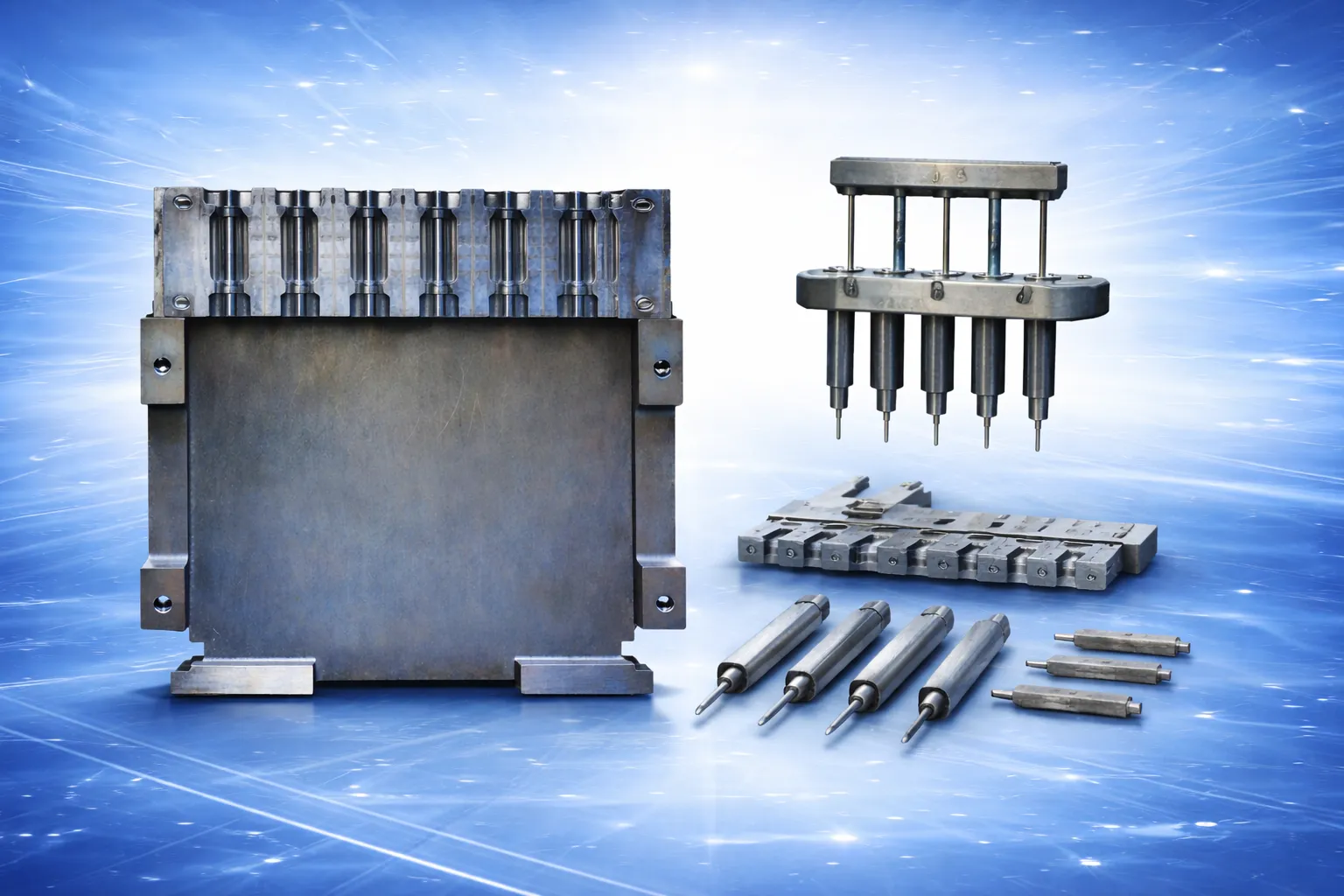
A quantidade de cavidades é a decisão individual com o maior impacto tanto no custo do molde quanto na economia de produção por garrafa. A relação não é linear — a base do molde e o sistema de canais quentes têm custos praticamente fixos, independentemente da quantidade de cavidades, portanto o custo por cavidade diminui significativamente de 1 para 4 e para 8 cavidades, estabilizando-se em seguida. No entanto, um número maior de cavidades reduz a flexibilidade de produção para fabricantes com múltiplos SKUs que precisam alternar frequentemente entre formatos de garrafa.
| Contagem de cáries | Custo típico do molde (100ml PETG) | Produção anual (10 segundos, 2.500 horas) | Custo/Cavidade | Volume mais adequado |
|---|---|---|---|---|
| 2 cavidades | KRW 18–24M | 1,7 milhão de unidades | KRW 9–12M | <2 milhões de unidades/ano |
| 4 cavidades | KRW 28–38M | 3,5 milhões de unidades | KRW 7–9,5 milhões | 2–4 milhões de unidades/ano |
| 6 cavidades | KRW 40–54M | 5,2 milhões de unidades | KRW 6,5–9M | 4–6 milhões de unidades/ano |
| 8 cavidades | KRW 52–72M | 7,0 milhões de unidades | KRW 6,5–9M | Mais de 6 milhões de unidades por ano |
Tabela 1. Referências de custo e produção de moldes ISBM coreanos por número de cavidades — frasco cosmético de PETG de 100 ml, aço 718H, injeção pontual. Os custos são estimativas de mercado (2026). Produção anual de 2.500 horas/ano com tempo de ciclo de 10 segundos. A vantagem de custo por cavidade acima de 6 cavidades é mínima — o principal argumento para 8 cavidades é a produtividade, não o custo.
A decisão entre moldes de 4 e 6 cavidades é crucial para a maioria dos fabricantes coreanos de máquinas-ferramenta ISBM, pois determina tanto os requisitos da plataforma da máquina (4 cavidades são compatíveis com a HGY150-V4; 8 cavidades exigem a HGY200-V4 ou superior) quanto o volume mínimo anual que justifica o investimento no molde. Um fabricante coreano que estima uma produção de 3,5 milhões de unidades por ano deve optar por moldes de 4 cavidades; se posteriormente esse mesmo fabricante precisar de 6 milhões de unidades com o mesmo molde, enfrentará uma limitação de capacidade. A construção de moldes com uma cavidade a mais do que a previsão de volume atual é uma prática padrão na Coreia para moldes destinados à produção por mais de 5 anos.
4. Seleção do grau de aço: 718H, 2316 ou NAK80?
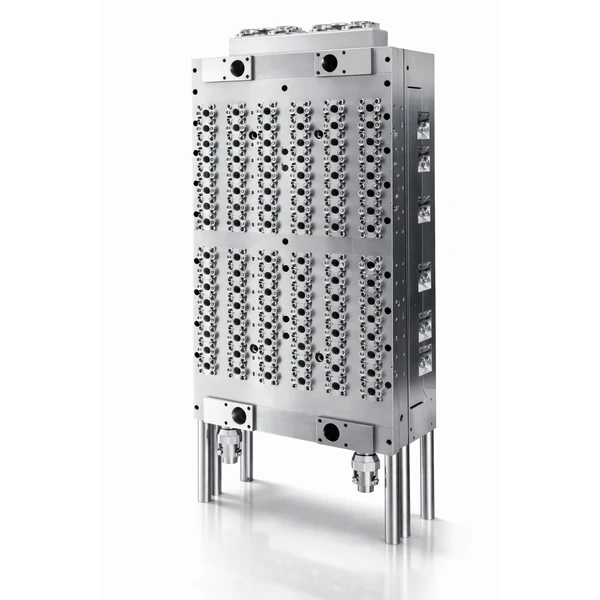
A seleção da classe de aço determina tanto a vida útil do molde quanto a qualidade da superfície da cavidade que pode ser alcançada — e é a especificação de material mais importante que os compradores coreanos de moldes ISBM fazem. A classe de aço incorreta não pode ser corrigida após a usinagem do molde.
| Grau do aço | Dureza (HB) | Melhor Ra (μm) | Resistência à corrosão | Custo vs 718H | Aplicação coreana correta |
|---|---|---|---|---|---|
| 718H (P20+Ni) | 330–370 | 0,04–0,08 | Ruim (precisa de cromagem) | 1,0× (linha de base) | PET para bebidas, alimentos e produtos de limpeza doméstica em alto volume de produção. Não adequado para armazenamento úmido sem proteção na Coreia. |
| 2316 Aço inoxidável | 290–330 | 0,03–0,05 | Excelente (13% Cr) | 1,6–1,9× | PETG para produtos de beleza coreanos, farmacêuticos, qualquer aplicação com umidade não controlada em fábricas coreanas. Sem risco de ferrugem. |
| NAK80 (Daido) | 370–400 | 0,008–0,015 | Moderado (requer o Chrome) | 2,3–2,8× | PETG óptico premium para K-Beauty (Sulwhasoo, linha The Whoo). Ra <0,015 μm com qualidade de espelho. A única opção para clareza cosmética sem relevo de grão. |
Tabela 2. Comparação das classes de aço para moldes ISBM coreanos. Os produtores coreanos que especificam "aço padrão" sem confirmação da classe geralmente recebem o aço 718H — que é adequado para a produção de PET para bebidas e alimentos, mas inadequado para PETG de produtos de beleza coreanos (K-Beauty) ou para aplicações farmacêuticas, onde a resistência à corrosão e o grau de polimento são requisitos de qualidade do produto.
Uma abordagem comum na construção de moldes ISBM coreanos, que aproveita ao máximo os benefícios com custo reduzido, consiste em especificar aço inoxidável 718H para a base do molde (que não entra em contato com o produto) e aço inoxidável 2316 ou NAK80 apenas para os insertos da cavidade. Essa construção híbrida reduz o custo adicional do aço em 40–60% em comparação com um molde totalmente em aço inoxidável, ao mesmo tempo que oferece resistência à corrosão e qualidade de superfície onde são necessárias.
5. O fluxo de trabalho de desenvolvimento de moldes ISBM em 14 etapas
Passo 1
aprovação do desenho da garrafa
O comprador coreano aprova o desenho final da garrafa com todas as tolerâncias. Este é o documento principal — todas as decisões subsequentes o utilizam como referência.
Etapa 2
Revisão prévia de engenharia
Cálculo de peso, relação L/D, espessura da parede da zona, tipo de comporta. Documentação escrita a ser entregue antes do início da usinagem.
Etapa 3
Projeto de layout de cavidade
Cálculo do equilíbrio dos dutos de refrigeração, roteamento dos canais de resfriamento, posicionamento das aberturas de ventilação, estratégia da linha de junção.
Passo 4
Análise de design do comprador coreano
Aprovação por escrito do comprador quanto ao layout do molde. Nenhuma aquisição de aço será feita antes do recebimento dessa aprovação.
Etapa 5
Aquisição de aço
Grau especificado (718H / 2316 / NAK80) encomendado. Certificado de fábrica obtido e arquivado junto com a documentação do molde.
Passo 6
Desbaste e semiacabamento
Fresagem CNC da base do molde, geometria aproximada da cavidade e furos do canal de refrigeração.
Passo 7
Detalhe da cavidade EDM
Usinagem por eletroerosão para conformação de roscas, acabamento de pescoços e características geométricas complexas que exigem precisão inferior a 0,05 mm.
Passo 8
Polimento de cavidades
Polimento progressivo com abrasivos de acordo com a especificação Ra. O NAK80 segue para acabamento diamantado; o 718H para cromagem após o polimento final.
Passo 9
Conjunto de canais quentes
Coletor de canais quentes, aquecedores, termopares e conjunto da ponta do bico. Todas as zonas tiveram a temperatura verificada em equilíbrio (meta de ±3°C).
Passo 10
Verificação dimensional CMM
Inspeção por máquina de medição por coordenadas de todas as dimensões críticas em comparação com o desenho. Relatório de medição gerado.
Passo 11
Sessões de fotos de teste internas — mínimo de 200
200 injeções na máquina do fornecedor. Pesar 50 pré-formas. Medir 12 garrafas. Verificar a altura do vestígio e o excesso de material na linha de junção em todas as cavidades.
Passo 12
Submissão de amostra para teste
Amostras e relatório de medições enviados ao comprador coreano para revisão e aprovação antes da entrega.
Passo 13
Teste de aceitação do comprador
O comprador opera o molde na máquina de produção. A lista de verificação de aceitação de 12 pontos é concluída. O retrabalho corretivo é definido, se necessário.
Passo 14
Qualificação de produção
Teste de estabilidade com 2.000 disparos. Pacote final de registros de qualidade emitido. Molde aprovado para produção comercial.
6. Prazo de Entrega Real: O Que os Compradores Coreanos Devem Esperar
Os prazos de entrega de moldes ISBM coreanos são frequentemente subestimados na fase de proposta e estendidos após a confirmação do pedido. Este não é um problema exclusivo dos fornecedores de moldes coreanos — trata-se de um padrão em toda a indústria, impulsionado por empresas que apresentam o melhor prazo possível para fechar o negócio e, em seguida, gerenciam o cronograma de produção real após o recebimento do depósito. Os compradores coreanos que baseiam seus cronogramas de lançamento de produtos em prazos de entrega estimados, em vez de prazos realistas, invariavelmente não conseguem cumprir os prazos de lançamento.
Compradores coreanos que lançam novos produtos devem adicionar uma margem de segurança de duas semanas a qualquer prazo de entrega publicado, para a possibilidade de uma iteração de retrabalho. Essa margem não é pessimismo — ela reflete a realidade estatística de que aproximadamente 351 TP3T de moldes de primeira peça da ISBM coreana requerem pelo menos um ciclo de correção antes de serem aprovados nos testes de aceitação do comprador. Incluir essa margem no cronograma do projeto não tem custo adicional se não for utilizada e evita atrasos no lançamento caso a correção seja necessária.
7. Protocolo de Teste de Aceitação Pré-Entrega
Os compradores coreanos devem exigir que os fornecedores de moldes realizem um teste padronizado de pré-entrega antes do envio de qualquer molde ISBM. O teste padrão mínimo consiste em 200 ciclos de produção contínuos na máquina ISBM do fornecedor, de classe equivalente à máquina de produção do comprador, seguidos da medição de 30 garrafas dos últimos 100 ciclos dessa produção, para todas as dimensões críticas e espessura da parede, e o envio do relatório de medição juntamente com o molde.
A especificação de “últimas 100 injeções” — e não as primeiras 20 — é crucial. Muitos problemas de qualidade dos moldes ISBM manifestam-se somente após o molde atingir o equilíbrio térmico, o que leva de 80 a 120 injeções. O aço do molde, o coletor de canais quentes e os circuitos de refrigeração atingem temperaturas estáveis somente após esse período de aquecimento, e as medições dimensionais realizadas nas primeiras 20 injeções não representam o desempenho estável em produção. Compradores coreanos que aceitam amostras de teste das injeções 1 a 20 descobrem consistentemente desvios dimensionais durante o aquecimento de suas próprias linhas de produção — um problema que estava presente no fornecedor, mas não foi observado porque o teste pré-entrega não foi suficientemente longo.
O A configuração da ponta do bico do canal quente afeta a qualidade da injeção. de maneiras que só são visíveis depois que o canal quente atinge a temperatura de regime permanente. O equilíbrio térmico da ponta do bico deve ser verificado em todas as cavidades após pelo menos 100 injeções, e não após a conclusão do aquecimento gradual. Uma variação do vestígio do ponto de injeção entre cavidades acima de ±0,15 mm após 100 injeções indica um desequilíbrio na temperatura do canal quente que deve ser corrigido antes da entrega.
8. A lista de verificação de 12 pontos para aceitação do comprador coreano
Os compradores coreanos devem preencher formalmente esta lista de verificação na entrega do molde, antes de liberar a última parcela do pagamento. Cada item reprovado na verificação gera um documento de escopo de retrabalho — o fornecedor deve resolver todos os itens que precisam ser refeitos antes que o molde seja aceito e o pagamento final seja liberado.
1
Relatório dimensional CMM fornecido — Diâmetro externo do acabamento do braço, formato da rosca, diâmetro externo da borda de suporte, altura do corpo, diâmetro externo do corpo, todos medidos e dentro da tolerância de desenho em todas as cavidades (não média — cada cavidade individualmente).
2
Certificado de qualidade do aço fornecido — O certificado confirma a classe, o número da corrida e a dureza Brinell de cada bloco de inserção da cavidade. Os aços inoxidáveis (2316) exigem certificado de teste de resistência à corrosão.
3
A rugosidade superficial da cavidade (Ra) foi medida e confirmada. — Leitura do medidor de brilho ou perfilômetro dentro da especificação para cada face da cavidade. Critério de aceitação: dentro de ±10% do Ra especificado.
4
Uniformidade da temperatura do canal quente verificada — Todas as zonas dentro de ±3°C do ponto de ajuste no equilíbrio térmico após um mínimo de 100 disparos. Equilíbrio de temperatura entre cavidades confirmado.
5
Altura do vestígio do portão medida em todas as cavidades. — de acordo com as especificações do desenho em cada cavidade individualmente. Critério de aceitação: nenhuma cavidade excede a altura máxima de vestígio especificada em mais de 0,05 mm.
6
Consistência do peso da pré-forma confirmada — Medição do peso de 50 garrafas, atingindo uma média dentro de ±0,3g da especificação; desvio padrão inferior a 0,25g.
7
Equilíbrio de peso entre cavidades confirmado — nenhuma cavidade individual produzindo um desvio superior a ±5% em relação ao peso médio das múltiplas cavidades. O desequilíbrio acima desse limite indica desigualdade no volume do corredor que deve ser corrigida.
8
Distribuição da espessura da parede da garrafa confirmada — Medição em 8 pontos em 10 frascos de amostra do teste de entrega. Nenhuma medição abaixo da especificação mínima.
9
linha de separação flash zero — Ausência de rebarbas visíveis em qualquer linha de separação nas amostras de frascos do teste de entrega. Rebarbas em qualquer linha de separação indicam problema na calibração da força de fechamento ou na geometria do plano de separação, necessitando de correção.
10
Fluxo e integridade do circuito de refrigeração verificados — todos os circuitos funcionando na vazão especificada, sem vazamento entre circuitos, todas as conexões de desconexão rápida classificadas para a temperatura e pressão de resfriamento da produção.
11
Lista de peças sobressalentes, desenhos da cavidade e especificações do bico do canal quente fornecidos. — Desenhos de inserção da cavidade para pedidos futuros de manutenção; número de peça da ponta do bico do canal quente e contato do fornecedor para reabastecimento de consumíveis.
12
Certificado de garantia assinado — Período de garantia por escrito (mínimo de 12 meses a partir da aceitação), abrangência (o que está e o que não está coberto) e contato para resolução de problemas, confirmados por escrito e assinados por ambas as partes.
9. Garantia, peças de reposição e suporte pós-venda
As garantias de moldes ISBM coreanas geralmente cobrem defeitos de fabricação na usinagem e montagem por 12 a 24 meses a partir da entrega — e não o desgaste normal de produção. Os itens mais comumente contestados em reclamações de garantia de moldes ISBM coreanas são: desgaste da superfície da cavidade devido à produção (não coberto — desgaste normal); rebarbas no anel do gargalo devido à sobrepressão na produção causada pelo operador (não coberta — erro do operador); falha do aquecedor do canal quente em até 6 meses (coberto — defeito de fabricação); desvio dimensional devido ao resfriamento inadequado do molde (contestado — a cobertura depende de se a especificação de resfriamento era de responsabilidade do comprador ou do fornecedor). Todas essas ambiguidades devem ser resolvidas explicitamente no contrato de compra antes da formalização do pedido. Um adendo de uma página sobre o escopo da garantia, anexado ao pedido de compra do molde, elimina a maioria das disputas pós-entrega.
O contexto financeiro para avaliar o investimento em moldes — incluindo como calcular o custo total de propriedade ao longo da vida útil de produção de um molde e comparar a viabilidade econômica de diferentes métodos de aquisição — está contemplado no Cálculo do ROI do molde e período de retorno do investimento estrutura, que modela as decisões de investimento da ISBM coreana, incluindo amortização do custo do molde, contagem de ciclos e cenários de volume de produção anual.
10. Programa de Moldes ISBM Personalizados Ever-Power da Coreia
A Korean Ever-Power gerencia todo o processo de desenvolvimento de moldes ISBM personalizados para compradores coreanos, através de um fluxo de trabalho de 14 etapas com aprovações por escrito do comprador nas etapas 4, 12 e 14. Cada molde entregue no âmbito do programa inclui: um relatório dimensional verificado por CMM, certificados de usinagem do aço com confirmação da dureza Brinell, um pacote de medição de teste pré-entrega de 200 injeções (30 garrafas das injeções 101 a 200), registros de teste de fluxo do circuito de refrigeração e um certificado de garantia por escrito. Os compradores coreanos recebem toda a documentação em formato coreano para uso em auditorias de qualidade da KFDA ou do cliente da marca. O programa está disponível para todas as plataformas de máquinas da Korean Ever-Power e para máquinas ASB e Aoki compatíveis com a base instalada, através do serviço de compatibilidade de placas adaptadoras da Korean Ever-Power.
Perguntas frequentes
Programa de Moldes Personalizados
Planejando investir em moldes ISBM na Coreia?
Obtenha um processo claro desde a especificação até a entrega.
A Ever-Power, da Coreia do Sul, gerencia todo o processo de desenvolvimento de moldes em 14 etapas — da engenharia da pré-forma aos testes de aceitação em 12 pontos — com documentação escrita em cada fase. Sem lacunas nas especificações. Sem custos inesperados de retrabalho.
Recursos relacionados
Molde personalizado
Moldes ISBM personalizados Ever-Power de uma etapa da Coreia
Projeto e fabricação de moldes ISBM totalmente personalizados — todas as geometrias de garrafas, todas as plataformas de máquinas coreanas Ever-Power, testes de aceitação completos de 12 pontos e documentação incluídos.
Configuração padrão
Conjunto de molde ISBM de 150 ml para ASB-12M (1×12 cavidades)
Molde ISBM coreano padrão para fabricantes que utilizam plataformas Nissei ASB-12M — prazo de entrega mais curto e custo menor do que um molde totalmente personalizado para esta classe de máquinas.
Gama completa de moldes
Linha de produtos de moldes ISBM da Ever-Power, Coreia do Sul
Moldes ISBM padrão e personalizados para todas as plataformas coreanas Ever-Power — com total transparência em relação à qualidade do aço e documentação de testes de aceitação em cada orçamento.