IBM vs EBM · Contenant cosmétique K-Beauty · Emballage cosmétique coréen · Série ZQ
IBM vs EBM
pour contenant K-BeautyGuide des emballages cosmétiques coréens
Les marques coréennes de cosmétiques (K-beauty) qui choisissent un procédé de soufflage pour leurs pots de crème, flacons de lotion, toniques et sérums sont confrontées à un choix crucial : le soufflage par injection (IBM) sur les machines Korea Ever-Power ZQ ou le soufflage par extrusion (EBM). Ce choix détermine la qualité de la surface du contenant, la précision du diamètre extérieur du col, la présence de la ligne de joint, les options de matériaux et la rentabilité de la production des emballages cosmétiques coréens.
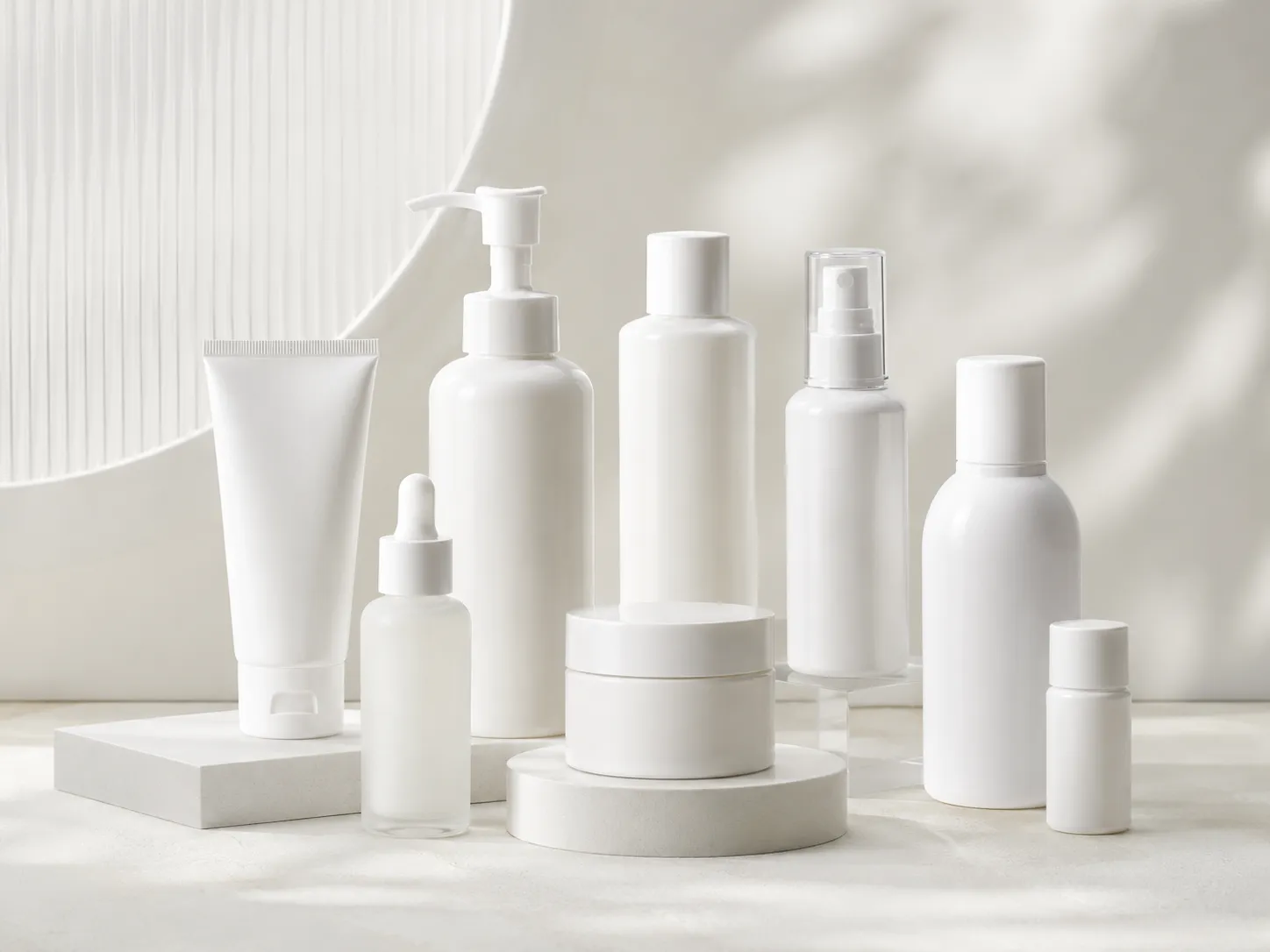
Pot de crème K-Beauty • Flacon de lotion
Machine IBM ZQ40 • ZQ60
CORÉE EVER-POWER · ANSAN-SI, GYEONGGI-DO · JUILLET 2026
IBM vs EBM POUR LA K-BEAUTY · FACTEURS CLÉS DE DÉCISION
LIGNE DE SÉPARATION
IBM : Aucun
Les flacons cosmétiques IBM ne présentent aucune bavure de moulage par soufflage, ni sur le corps ni sur le fond : la ligne de moulage se situe sur le fond, où elle est invisible. Les flacons cosmétiques EBM, quant à eux, présentent une ligne de moulage visible qui parcourt toute la longueur du flacon et traverse le fond, depuis le point de pincement du moule EBM. Il est donc nécessaire de les ébarber, ce qui laisse une ligne de moulage visible sur le flacon.
TOLÉRANCE DU DIAMÈTRE EXTÉRIEUR DU COL
IBM ±0,05 mm
Tolérance du diamètre extérieur du col IBM : ±0,05 mm (la tige centrale contrôle la géométrie du col aux 3 stations IBM). Tolérance du diamètre extérieur du col EBM : ±0,15–0,30 mm (le col EBM est formé par pincement du moule et ne peut égaler la précision de la tige centrale IBM). Pour le montage des pompes de beauté coréennes (pompe Aptar 24/410, pompe Yonwoo 28 mm) : une tolérance IBM de ±0,05 mm est requise pour un couple d’application constant de la pompe coréenne ; une tolérance EBM de ±0,15–0,30 mm peut entraîner une variabilité du montage de la pompe coréenne sur la ligne de remplissage cosmétique coréenne.
OPTIONS DE MATÉRIAUX
IBM : PP, PCTG
IBM : PP (blanc opaque, coloré, nacré, métallisé), PCTG (cristal transparent), PEHD. EBM : PEHD (matériau EBM principal pour les cosmétiques coréens : shampoing, gel douche, crème solaire), PEBD (tubes souples), PP (le PP EBM est possible, mais offre une qualité de surface inférieure au PP IBM), PVC (en déclin sur le marché cosmétique coréen). Le PP IBM est préféré au PP EBM pour les contenants cosmétiques haut de gamme des cosmétiques coréens en raison de la qualité de surface supérieure et de la précision du diamètre extérieur du col.
INVESTISSEMENT EN OUTILLAGE
IBM Supérieur
L'investissement dans les moules IBM pour contenants cosmétiques (7 à 18 millions de wons coréens pour un moule IBM de 8 à 12 cavités chez Korea Ever-Power Ansan-si) est supérieur à celui des moules EBM (2 à 6 millions de wons coréens pour un moule EBM standard de 4 à 8 cavités pour flacons cosmétiques). L'investissement dans l'outillage IBM se justifie pour les contenants cosmétiques haut de gamme de la K-beauty, qui ne nécessitent aucune ligne de joint, un diamètre extérieur de col précis et une recyclabilité du polypropylène monomatériau, pour des volumes annuels supérieurs à 200 000 unités.
SECTION 01
IBM vs EBM : La différence de processus pour les contenants cosmétiques
Les procédés IBM (Injection Blow Moulding) et EBM (Extrusion Blow Moulding) produisent tous deux des contenants en plastique creux en gonflant une forme polymère chaude contre une cavité de moule grâce à la pression de l'air. Cependant, ils diffèrent dans la méthode de création de cette forme polymère chaude, ce qui engendre une qualité de contenant fondamentalement différente pour les applications cosmétiques coréennes de la K-beauty. L'IBM utilise une préforme moulée par injection (formée avec des dimensions précises sur une tige centrale), tandis que l'EBM utilise un tube extrudé (paraison) de polymère fondu. Machines IBM série ZQ Les fabricants coréens de contenants cosmétiques EBM utilisent des machines EBM pour produire des flacons de shampoing, de gel douche et de crème solaire en PEHD et PP.
Point de départ du processus IBM : préformée injectée
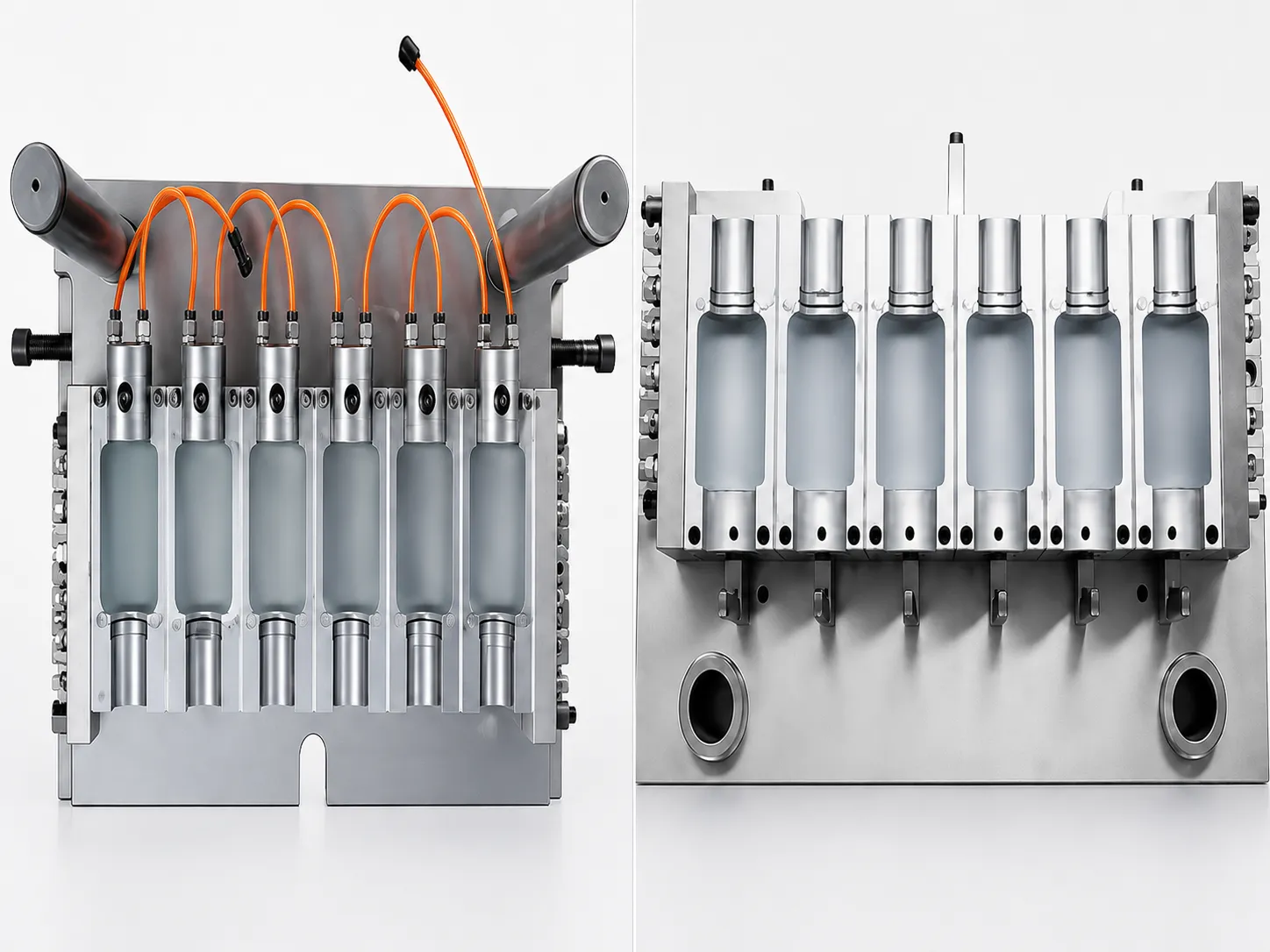
IBM commence par injecter du polymère fondu (PP ou PCTG sur une machine coréenne Ever-Power ZQ) dans une cavité d'injection de précision entourant une tige centrale en acier trempé à la station 1. La cavité d'injection et la tige centrale définissent les dimensions de la préforme avec une grande précision : le filetage du col, le diamètre extérieur du col, le diamètre extérieur du corps de la préforme et l'épaisseur de la paroi de la préforme sont tous formés à ±0,05 mm par l'outillage d'injection. La préforme reste sur la tige centrale et est acheminée vers la station 2 (soufflage) où le gonflage à l'air comprimé dilate le corps de la préforme contre la cavité du moule de soufflage. Grâce à la géométrie du col formée par injection à la station 1 et au maintien du diamètre extérieur du col par la tige centrale tout au long des trois stations, le col du conteneur IBM est le plus précis dimensionnellement de tous les procédés de moulage par soufflage, sans ligne de joint sur le col ni sur le corps.
Point de départ du procédé EBM : Paraison extrudée
Le procédé EBM débute par l'extrusion d'un tube continu de polymère fondu (paraison) vers le bas, depuis la tête d'extrusion. Lorsque la paraison atteint la longueur requise, les deux moitiés du moule EBM se referment autour d'elle. Le pincement du moule scelle la base de la paraison (créant ainsi la soudure du fond du récipient et la ligne de joint), et une injection d'air gonfle la paraison contre la cavité du moule. Le pincement du moule EBM crée une soudure et une bavure visibles sur toute la longueur du corps du récipient et sur sa base, qui doivent être ébarbées après moulage. Le col du récipient EBM est formé par le pincement supérieur du moule, ce qui entraîne une variation de diamètre extérieur du col de ±0,15 à 0,30 mm en moyenne – supérieure à celle du procédé IBM (±0,05 mm) – due aux variations de diamètre de la paraison et à l'irrégularité du pincement du moule lors du procédé EBM.
SECTION 02
Comparaison complète IBM vs EBM : qualité de surface, col, paroi et matériau
| PARAMÈTRE | IBM (Corée Ever-Power ZQ) — PP/PCTG | EBM — Cosmétique PEHD/PP |
|---|---|---|
| Ligne de séparation sur la carrosserie | Aucune — Ligne de moulage par soufflage IBM uniquement sur la base, non visible sur le corps | La ligne de raie visible s'étend sur toute la longueur du corps (nécessite une découpe ; couture résiduelle visible sous l'éclairage des magasins coréens) |
| Tolérance du diamètre extérieur du col | ±0,05 mm (tige centrale IBM) | ±0,15–0,30 mm (pincement EBM) |
| couture de base | Base sans couture (pas de couture à la base) | Point de pincement à la base (point de fuite potentiel pour les formulations de cosmétiques coréens à faible viscosité) |
| uniformité de l'épaisseur de la paroi | ±0,05 mm (préforme IBM contrôlée par la tige centrale + cavité d'injection) | ±0,15–0,25 mm (variation de l'affaissement et du pincement de la paraison EBM) |
| Conteneur transparent | PCTG IBM : transparence cristalline (opacité <2% à 1 mm d’épaisseur) pour flacons de toner et sérum haut de gamme de la K-beauty | L'EBM ne permet pas de produire des contenants cosmétiques transparents de haute clarté (EBM en PEHD et PP : opaques ou translucides uniquement, de qualité commerciale pour les cosmétiques coréens). |
| Pot à large ouverture (pot à crème) | IBM : recommandé pour les pots de crème de beauté coréens (diamètre extérieur de l’ouverture : 40–100 mm, rapport de soufflage : 1,2–1,8:1) | EBM : permet de produire des pots en PEHD à large ouverture, mais la ligne de jointure EBM sur le corps et la base du pot constituent un critère de disqualification pour les pots de crème haut de gamme des cosmétiques coréens (K-beauty). |
| Recyclage EPR coréen | PP IBM : score de recyclabilité EPR le plus élevé en Corée (monomatériau PP #5, compatible avec le tri sélectif des plastiques en Corée) | PEHD EBM : recyclable selon la norme EPR coréenne (PEHD #2), mais son score de recyclabilité est inférieur à celui du PP IBM pour les emballages cosmétiques coréens dans le cadre de l’évaluation EPR coréenne 2025+. |
SECTION 03
Avantages des conteneurs K-Beauty IBM par rapport à EBM : exigences de qualité de la marque
Exigences d'IBM pour une marque cosmétique coréenne de premier plan que l'EBM ne peut satisfaire
Les spécifications des contenants des marques cosmétiques coréennes de premier plan Amore Pacific (Sulwhasoo), Laneige, Innisfree et LG H&H (The Whoo, Ohui, VDL) définissent des seuils de qualité que les contenants cosmétiques EBM ne peuvent structurellement pas atteindre : absence de ligne de séparation visible à 1 000 lux, sous un éclairage d’évaluation de 6 500 K (conditions d’affichage standard de vente au détail coréennes de premier plan) — même après une découpe de précision, la ligne de séparation EBM laisse une trace résiduelle que les inspecteurs du contrôle qualité coréens de premier plan rejettent sous cet éclairage ; diamètre extérieur du col ±0,03 mm (norme coréenne de premier plan, plus serré que la norme ±0,05 mm) pour une constance du couple de fermeture coréen premium de premier plan — les EBM ±0,15–0,30 mm ne peuvent pas s’en approcher ; La variation d'intensité de couleur (ΔE) ≤ 1,5 par rapport à la norme de la marque coréenne est constatée sur l'ensemble du lot. La variation d'épaisseur de paroi de l'EBM (± 0,15–0,25 mm) entraîne une variation de profondeur de couleur sur l'ensemble du corps du contenant. Les contenants cosmétiques opaques en EBM ne répondent donc pas à la norme coréenne de niveau 1 (ΔE ≤ 1,5) pour un même lot. De plus, les contenants cosmétiques transparents en PCTG (PCTG étant un matériau IBM, l'EBM ne permet pas de produire des contenants cosmétiques transparents en PCTG de qualité commerciale) sont soumis à des exigences spécifiques. Pour la fourniture de contenants cosmétiques de marque coréenne de niveau 1, l'utilisation d'IBM est requise par le cahier des charges. L'EBM est disqualifié en raison de défauts de qualité au niveau de la ligne de joint et du diamètre extérieur du col.
Compromis entre IBM et EBM, marques coréennes de milieu de gamme
Les marques coréennes de cosmétiques de milieu de gamme (Innisfree, Etude, Nature Republic, marque distributeur Olive Young) ont des exigences de qualité pour leurs contenants plus souples que les marques coréennes de premier plan. Cela ouvre la voie à l'utilisation de contenants cosmétiques EBM pour certaines références de K-beauty, où l'avantage économique de l'EBM compense les lacunes en matière de qualité. Pour ces marques, le compromis entre l'IBM et l'EBM s'apparente à deux approches : les avantages de l'IBM (absence de ligne de joint, diamètre extérieur du col de ±0,05 mm, monomatériau PP, transparence du PCTG) au prix d'un coût de production IBM supérieur d'environ 15 à 251 TP3T par contenant à celui d'un flacon équivalent en PEHD EBM de même volume pour une lotion coréenne de 100 ml ; face à l'avantage économique de l'EBM (coût de la résine PEHD inférieur à celui du PP, investissement en outillage moindre de 2 à 6 millions de KRW contre 7 à 18 millions de KRW pour l'IBM, et cadence de production plus élevée pour les flacons de shampoing en PEHD à investissement machine équivalent). Korea Ever-Power recommande aux équipes d'emballage des marques coréennes de milieu de gamme d'évaluer la technologie IBM pour les pots de lotion, de tonique et de crème (où les avantages qualitatifs de l'IBM sont commercialement significatifs pour l'esthétique des contenants destinés aux consommateurs coréens) et de réserver le PEHD EBM aux formats destinés aux bars à produits coréens (shampoing, après-shampoing, gel douche) où la ligne de séparation du PEHD EBM est moins visible sur les grands flacons souples en PEHD et où la sensibilité des consommateurs coréens à la ligne de séparation est moindre que pour les contenants de crèmes et de lotions pour le visage haut de gamme coréens.
SECTION 04
Quand EBM est meilleur qu'IBM pour l'emballage des produits de beauté coréens
EMBALLAGE DE PRODUITS DE BEAUTÉ CORÉENS : APPLICATIONS PRÉFÉRÉES D’EBM
Grand flacon de shampoing en PEHD
Le PEHD EBM est privilégié pour les flacons de shampoing, d'après-shampoing et de gel douche coréens de plus de 300 ml. Le coût par flacon de 400 à 500 ml en PEHD EBM est nettement inférieur à celui d'un flacon équivalent en PP IBM. La ligne de jointure EBM sur un flacon de shampoing de 500 ml en PEHD est moins visible que sur un flacon de lotion pour le visage de 50 ml, et la décision d'achat des consommateurs coréens pour les shampoings/gels douche est moins influencée par la qualité de la surface des flacons que pour les produits cosmétiques pour le visage.
Tube de crème solaire coréenne
Les tubes souples de crème solaire et de BB crème coréennes (PEBD ou PEHD, 50 à 150 ml) sont fabriqués par EBM. Les tubes souples IBM sont possibles, mais le PP IBM est plus rigide que le PEBD EBM pour la distribution par pression. Le PEBD EBM ou un mélange PEBD/PEHD offre la souplesse de distribution recherchée par les consommateurs coréens de crèmes solaires et de crèmes pour le visage en format souple.
Lotion corporelle en PEHD (grand format)
Les lotions et beurres corporels coréens (K-beauty) en flacons PEHD de 400 à 1 000 ml (avec pompe ou bouchon à clapet) sont généralement fabriqués en PEHD EBM pour les prix pratiqués sur le marché coréen (par exemple, la lotion pour le corps de marque Olive Young ou la crème pour le corps vendue en pharmacie en Corée). En flacons de 400 à 500 ml en PP IBM (ZQ80, 2 à 4 cavités), le prix unitaire est nettement plus élevé que celui du PEHD EBM à volume équivalent pour les lotions corporelles destinées au marché coréen, où la sensibilité au prix est plus forte que pour les soins du visage.
Démarrage à très petit volume
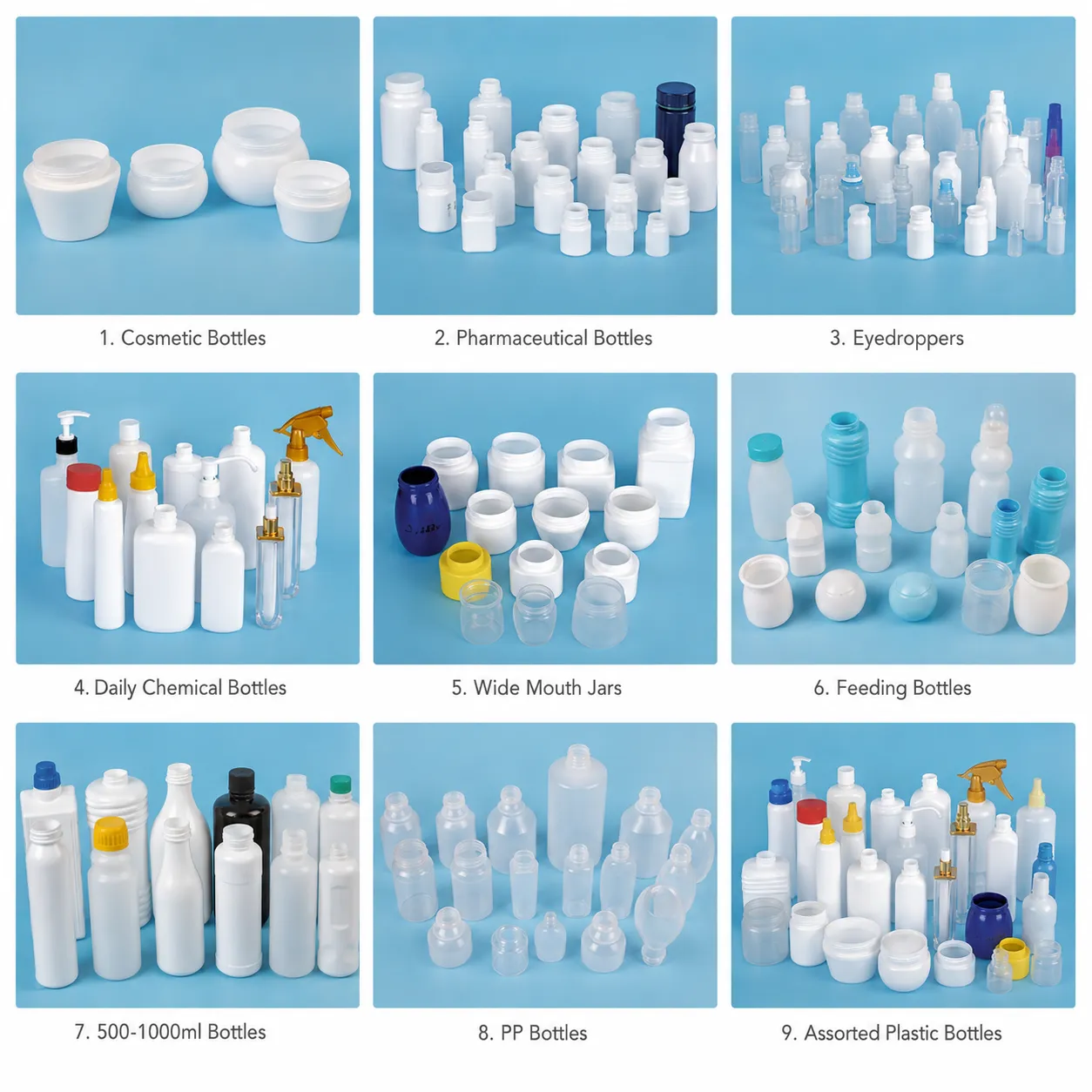
Les jeunes marques de cosmétiques coréennes, dont le volume annuel de production est inférieur à 50 000 unités et le budget d'investissement en emballage limité, peuvent utiliser les moules standards EBM (les sous-traitants EBM coréens disposent de nombreux moules pour flacons cosmétiques, sans investissement spécifique de la part des marques coréennes) pour leur premier lancement sur le marché coréen. Ce procédé leur permet de réaliser des économies initiales par rapport aux moules sur mesure IBM (7 à 18 millions de wons coréens). La marque coréenne peut ensuite opter pour les moules sur mesure IBM pour ses lancements suivants, une fois que le volume du marché coréen justifie l'investissement.
SECTION 05
Marques de cosmétiques coréennes IBM et EBM : sélection par type de contenant
| TYPE DE CONTENANT K-BEAUTY | PROCESSUS RECOMMANDÉ | RAISON PRINCIPALE |
|---|---|---|
| Pot de crème (PP, 15–200 ml) | IBM (ZQ40/ZQ60) | Absence de ligne de séparation sur le pot de crème ; diamètre d’ouverture précis de 40 à 100 mm pour le serrage du couvercle des cosmétiques coréens ; conformité EPR en polypropylène monomatériau |
| Flacon de lotion avec pompe (PP, 100–200 ml) | IBM (ZQ40/ZQ60) | Diamètre extérieur du col IBM ±0,05 mm pour le montage sur pompe coréenne ; absence de ligne de joint sur le corps du flacon de lotion ; monomatériau PP pour la marque coréenne de cosmétiques EPR |
| Flacon de toner/essence (PCTG, 100–150 ml) | IBM (ZQ60HE) | Seule IBM peut produire des flacons de lotion tonique transparente en PCTG pour les cosmétiques coréens ; EBM ne peut pas produire de flacons de lotion tonique transparente en PCTG. |
| Flacon de shampoing (PEHD, 300–500 ml) | EBM (PEHD) | L'avantage de coût du PEHD EBM est significatif pour les flacons de 300 à 500 ml ; la différence de prix entre le flacon de shampoing EBM et le flacon de PEHD est moins visible pour le consommateur dans ce format et sur le marché de masse coréen. |
| Tube souple de crème solaire (PEBD, 50–100 ml) | EBM (LDPE) | La flexibilité du LDPE est requise pour la distribution des tubes de crème solaire coréens ; le PP IBM est trop rigide pour cette application. |
| Lotion pour le corps (PP, 200–300 ml) | IBM (ZQ60/ZQ80) — pour les produits haut de gamme ; PEHD EBM pour les produits de grande consommation | Lotion corporelle coréenne haut de gamme (Laneige, Innisfree) : IBM PP sans ligne de séparation. Lotion corporelle coréenne grand public (Olive Young PL, pharmacies coréennes) : EBM HDPE, coût unitaire inférieur à volume équivalent. |
SECTION 06
Machines IBM Ever-Power ZQ coréennes pour les programmes conteneurisés de K-Beauty
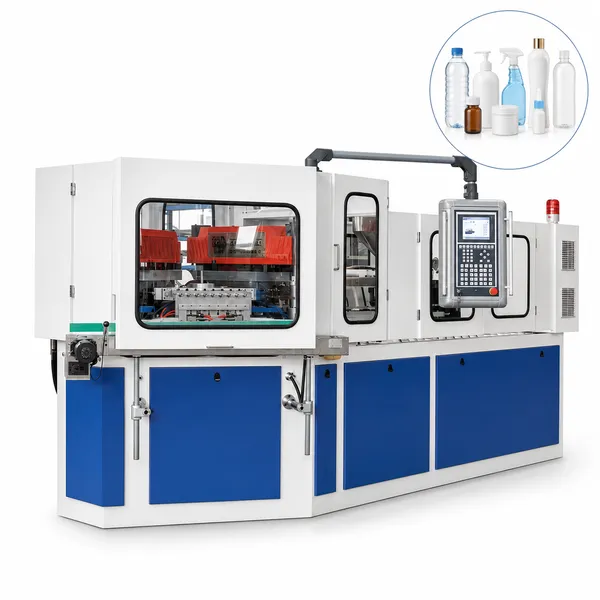
La machine de moulage par injection-soufflage Korea Ever-Power ZQ60 offre une force de fermeture de 600 kN, une vis de 45/50 mm, un poids d'injection maximal de 260/383 g et un cycle de séchage de 4 secondes. La ZQ60 est la machine IBM la plus largement utilisée par Korea Ever-Power pour la production de contenants cosmétiques coréens (K-beauty), notamment des flacons de lotion en PP (100-200 ml, 6-10 cavités), des flacons de toner en PCTG (50-150 ml, 4-8 cavités) et des pots de crème en PP (50-100 ml, 6-8 cavités). La ZQ60 IBM produit des contenants cosmétiques coréens (K-beauty) sans ligne de joint sur le corps, avec un diamètre extérieur du col de ±0,05 mm et une construction monomatériau en PP ou PCTG – autant de paramètres de qualité que les contenants cosmétiques en PEHD moulés par injection électronique (EBM) ne peuvent atteindre pour les programmes d'emballage des marques coréennes de premier plan et haut de gamme (K-beauty).
Gamme de machines IBM ZQ pour la K-Beauty, conteneur IBM
La Corée Ever-Power machines de moulage par injection-soufflage de la série ZQ Couvrant l'ensemble des formats de contenants IBM pour les cosmétiques coréens, où la technologie IBM est privilégiée par rapport à l'EBM : ZQ40 (400 kN) : Mini-formats pour les cosmétiques coréens — pot de crème contour des yeux (15–30 ml), lotion de voyage (50 ml), flacon d'essence (30–50 ml). 8 à 12 cavités, environ 6 000 à 8 600 contenants/heure. ZQ60 (600 kN) : Formats de base pour les soins du visage coréens — pot de crème visage (50–100 ml), flacon de lotion avec pompe (100–200 ml), flacon de toner (100–150 ml). 6 à 10 cavités, environ 3 600 à 6 500 contenants/heure. ZQ60HE entièrement électrique (600 kN, servo) : Production haut de gamme de flacons transparents PCTG pour toner et essence destinés aux fabricants d'équipement d'origine (OEM) en salle blanche de grandes marques coréennes. Environ 4 200 contenants PCTG/heure (8 cavités). ZQ80 (800 KN) : Formats IBM pour soins corporels coréens — lotion pour le corps (200–300 ml PP), flacons de complément alimentaire (200–500 ml PP). 4 à 8 empreintes. Toutes les machines IBM ZQ produisent des flacons sans jointure, avec un diamètre extérieur du col de ±0,05 mm et en PP ou PCTG monomatériau — des avantages qualité IBM qui distinguent les flacons IBM pour cosmétiques coréens des alternatives EBM destinées à l’approvisionnement des marques de cosmétiques coréennes.
Passer d'EBM à IBM : Parcours de montée en gamme des marques coréennes
Les marques de cosmétiques coréennes (K-beauty) utilisant actuellement des contenants en PEHD moulé par extrudé (EBM) et envisageant une transition vers le PP moulé par extrudé (IBM PP) pour améliorer la qualité ou se conformer à la réglementation coréenne sur la responsabilité élargie des producteurs (REP) suivent une procédure de migration définie avec le soutien de Korea Ever-Power. Étape 1 : Évaluation de la faisabilité de la transformation IBM pour le format de contenant existant — Korea Ever-Power Ansan-si évalue les dimensions 3D des flacons cosmétiques en PEHD EBM actuels afin de déterminer leur aptitude à la transformation IBM (taux de soufflage, compatibilité du filetage du col, épaisseur cible des parois). La plupart des flacons de lotion et pots de crème coréens actuellement produits en PEHD EBM peuvent être repensés ou directement convertis en PP IBM, tout en conservant un volume et des fonctionnalités équivalents. Étape 2 : Impact du changement de matériau sur la formulation des cosmétiques coréens — Le PP IBM est compatible avec les formulations coréennes actuellement conditionnées en PEHD EBM dans la plupart des cas ; Korea Ever-Power fournit des conseils sur la compatibilité du PP avec la chimie spécifique des formulations de la marque coréenne. Étape 3 : Outillage et qualification — Korea Ever-Power développe un moule IBM pour le nouveau format de contenant et réalise une qualification FAI (Fabrication Assistée par Ordinateur) conformément aux spécifications de la marque coréenne ; délai de 35 à 55 jours après validation de la conception 3D. Étape 4 : Fourniture commerciale — Les contenants IBM PP sont fournis à la marque coréenne selon les conditions commerciales OEM standard d’IBM d’Ever-Power Ansan-si (Corée). Ever-Power a accompagné avec succès les marques coréennes de cosmétiques (K-beauty) dans leur transition des flacons de lotion EBM HDPE vers les contenants IBM PP, avec validation du contrôle qualité de la marque coréenne dès le premier article. Cette transition leur permet de bénéficier d’une qualité supérieure IBM (absence de ligne de joint, diamètre extérieur du col de ±0,05 mm, PP monomatériau EPR) à un coût par contenant équivalent ou inférieur, pour des volumes annuels supérieurs à 500 000 unités.
FAQ INGÉNIERIE
Questions sur l'emballage des produits de beauté coréens : IBM vs EBM
Q 01
Une marque coréenne de cosmétiques (K-beauty) peut-elle utiliser le même design de contenant pour la production IBM et EBM ?
Un contenant de marque coréenne de cosmétiques (K-beauty) conçu pour le moulage par injection de matière (IBM) peut généralement être adapté à la fabrication par injection de matière (EBM). Cependant, un contenant conçu spécifiquement pour l'EBM peut nécessiter des modifications de conception afin d'obtenir une qualité IBM optimale. Conversion IBM vers EBM : les contenants cosmétiques conçus pour l'IBM (col défini par la tige centrale, taux de soufflage spécifique optimisé pour l'IBM) peuvent être produits par EBM moyennant des modifications de la finition du col (le col EBM est défini par le pincement et l'insert de finition, et non par la tige centrale ; les spécifications de finition du col peuvent donc nécessiter un ajustement) et du taux de soufflage (l'EBM supporte des taux de soufflage plus élevés que la plage de 1,2 à 3,5:1 de l'IBM). Toutefois, la conversion IBM vers EBM introduit systématiquement des caractéristiques de qualité EBM (ligne de joint, tolérance plus large au niveau du col) qui peuvent ne pas être conformes aux spécifications de qualité existantes de la marque coréenne. Conversion EBM vers IBM : Les conceptions de contenants cosmétiques EBM destinées à la conversion vers IBM doivent être évaluées en fonction du taux de soufflage IBM (les flacons de shampoing en PEHD EBM avec un taux de soufflage supérieur ou égal à 4 peuvent nécessiter une refonte du profil du contenant pour la plage de taux de soufflage privilégiée par IBM, de 1,2 à 3,5:1) et de la finition du col (le profil du filetage EBM doit être validé pour sa compatibilité avec le filetage des tiges de noyau IBM). Korea Ever-Power Ansan-si propose une étude de faisabilité de la conception des contenants de marque coréenne pour la conversion EBM vers IBM sous 3 jours ouvrés coréens à compter de la soumission du fichier 3D ou d'un échantillon du contenant, identifiant les modifications de conception nécessaires à la qualification de production IBM sur ZQ40/ZQ60 au format de contenant cible de la marque coréenne.
Q 02
Pourquoi IBM produit-il une meilleure finition de surface qu'EBM pour les flacons de cosmétiques coréens ?
IBM produit une meilleure finition de surface que l'EBM pour les flacons cosmétiques coréens grâce à trois avantages fondamentaux liés au procédé de fabrication de la surface extérieure du flacon. Qualité de surface de la préforme d'injection : la préforme IBM est moulée par injection contre une cavité d'injection polie avec précision (Ra 0,025–0,05 µm), ce qui lui confère une surface extérieure de qualité cosmétique avant le soufflage. La station de soufflage IBM gonfle cette surface pré-polie contre la cavité du moule, préservant ainsi la qualité de la surface du flacon IBM. Qualité de surface de la paraison EBM : la paraison extrudée EBM présente une qualité de surface inférieure à celle de la préforme d'injection IBM. Les lignes de la filière EBM (marques d'outillage dues à l'extrusion) sont présentes sur la surface de la paraison et se reportent sur le flacon EBM, créant une texture diagonale caractéristique visible sur les flacons cosmétiques coréens en PP EBM sous un éclairage oblique. Mode de contact par fusion : La station de soufflage IBM gonfle la préforme contre la paroi de la cavité du moule de soufflage, pressant fermement sa surface externe contre la cavité polie et reproduisant ainsi la texture de cette dernière sur le corps du contenant IBM. Le procédé EBM consiste à gonfler la paraison extrudée contre la cavité du moule EBM. Cependant, la surface externe de la paraison EBM, au niveau de la station de soufflage, a déjà commencé à refroidir sous l'effet de l'air ambiant lors de son extrusion. De ce fait, la surface de la paraison EBM refroidie ne reproduit pas la finition de la cavité du moule de soufflage EBM avec la même précision que la surface de la préforme IBM fraîchement injectée. La surface de la cavité du moule de soufflage IBM Ever-Power ZQ de Corée est polie à Ra 0,025–0,1 µm pour la production de contenants cosmétiques coréens haut de gamme, permettant ainsi d'obtenir des contenants cosmétiques IBM avec une finition de surface Ra 0,05–0,15 µm, conforme aux exigences de qualité des marques cosmétiques coréennes de premier plan.
Q 03
Est-ce qu'IBM ou EBM fabriquent un contenant plus lourd pour un flacon de cosmétique coréen de même volume ?
À volume et épaisseur de paroi équivalents, les contenants cosmétiques IBM PP sont généralement plus légers que les contenants cosmétiques EBM HDPE de même volume nominal en raison de la différence de densité du matériau (densité du PP 0,90–0,91 g/cm³ contre densité du HDPE 0,95–0,97 g/cm³) et de l'absence de bavure de pincement EBM (la zone de pincement de la base du contenant EBM crée une zone de paroi en HDPE multicouche compressée à la base du contenant, ajoutant du matériau au-delà de la spécification nominale de la paroi). À matériau équivalent (comparaison entre le PP IBM et le PP EBM pour les flacons de cosmétiques coréens) : un flacon en PP IBM est généralement 5 à 121 TP3T plus léger qu’un flacon en PP EBM, pour un même volume nominal et une même épaisseur de paroi cible. Ceci s’explique par l’uniformité de la paroi du PP IBM (±0,05 mm contre ±0,15 à 0,25 mm pour l’EBM), permettant ainsi de concevoir un moule avec une épaisseur minimale plus faible sans risque de zones trop fines susceptibles de compromettre l’intégrité structurelle du flacon. Les spécifications du PP EBM doivent prendre en compte la variation d’épaisseur de ±0,15 à 0,25 mm en concevant un flacon avec une épaisseur minimale cible plus élevée que celle du PP IBM. Il en résulte une paroi moyenne en PP EBM plus épaisse (et donc plus lourde) que celle en PP IBM, pour des performances structurelles équivalentes. Pour les marques de cosmétiques coréennes (K-beauty) ayant des engagements en matière d’ESG (environnement, gouvernance et service) ou d’allègement des emballages, les flacons en PP IBM offrent une opportunité d’allègement par rapport au PEHD ou au PP EBM, à volume et performances structurelles équivalents. Ceci contribue aux objectifs annuels de réduction de matériaux des marques coréennes, conformément à la REP (Responsabilité Énergétique des Entreprises) et aux exigences de reporting de durabilité des marques de cosmétiques coréennes.
Q 04
Les contenants IBM PP utilisés dans les produits de beauté coréens (K-beauty) peuvent-ils être marqués à chaud ou sérigraphiés de la même manière que les contenants EBM HDPE ?
Les contenants en polypropylène (PP) IBM utilisés dans la K-beauty coréenne peuvent être marqués à chaud et sérigraphiés selon les mêmes techniques de décoration que les contenants en PEHD EBM, avec de légères différences de paramètres dues à l'énergie de surface du PP par rapport à celle du PEHD. Prétraitement de l'énergie de surface : les contenants cosmétiques en PP IBM et en PEHD EBM nécessitent un prétraitement de l'énergie de surface avant la sérigraphie ou le marquage à chaud. Le PP IBM requiert un prétraitement corona ou à la flamme pour atteindre une énergie de surface ≥ 38 dynes/cm² afin d'assurer l'adhérence de l'encre de sérigraphie UV ; le PEHD EBM requiert un prétraitement corona similaire, à ≥ 40 dynes/cm². Différence d'intensité de traitement : le PEHD est légèrement plus facile à traiter par effet corona que le PP pour une meilleure adhérence de l'encre d'impression cosmétique coréenne. Les imprimeurs d'emballages cosmétiques coréens augmentent généralement l'intensité du traitement corona de 10 à 15 TP3T pour les contenants en PP IBM par rapport aux contenants en PEHD EBM lors du passage d'un matériau à l'autre sur une même ligne d'impression cosmétique coréenne. Marquage à chaud : Les contenants cosmétiques IBM PP acceptent les films de marquage à chaud standard des marques cosmétiques coréennes (Kurz Korea, API Foils Korea, qualité PP) à une température de plateau et un temps de maintien équivalents à ceux utilisés pour le PEHD EBM. La surface plus lisse des contenants IBM PP (Ra 0,05–0,15 µm contre Ra 0,1–0,3 µm pour le PEHD EBM) améliore l’uniformité d’adhérence du film de marquage à chaud par rapport au PEHD EBM, à paramètres de marquage identiques. Il en résulte une meilleure définition des bords pour le marquage à chaud des marques coréennes sur IBM PP que sur les contenants équivalents en PEHD EBM. Sérigraphie UV : Les contenants cosmétiques IBM PP sont sérigraphiés UV avec des encres UV pour PP (disponibles auprès des fournisseurs coréens d’encres pour emballages cosmétiques Toyo Ink Korea et DIC Korea, conformes aux spécifications d’impression standard des marques cosmétiques coréennes) à un débit équivalent à celui du PEHD EBM sur la même ligne de sérigraphie coréenne.
Q 05
Quelle est la différence de coût entre IBM et EBM pour un flacon de lotion K-beauty coréen de 100 ml, à raison de 1 million d'unités par an ?
Comparaison des coûts du PP IBM par rapport au PEHD EBM pour un flacon de lotion K-beauty coréen de 100 ml, à raison de 1 million d'unités par an (prix de référence du marché coréen 2026, analyse Korea Ever-Power Ansan-si) : Flacon de lotion IBM PP 100 ml (ZQ40, 10 cavités, moule existant) : coût de la résine (PP RCP LG SP191 à 1 700 KRW/kg, soit environ 18 g par flacon de lotion de 100 ml) = 31 KRW/flacon ; coût de fonctionnement de la machine ZQ40 + opérateur + charges = environ 18 à 22 KRW/flacon pour un volume annuel de 1 million d'unités ; amortissement du moule (moule ZQ40 à 10 cavités, 10 millions de KRW sur une durée de vie de 5 millions de cycles) = 2 KRW/flacon ; coût total du PP IBM 100 ml : environ 51 à 55 KRW/flacon. Flacon de lotion EBM PEHD de 100 ml (entrepreneur EBM coréen, machine EBM PEHD 6 cavités, moule en stock existant) : coût de la résine (PEHD à 1 400 KRW/kg, environ 22 g par flacon de lotion PEHD de 100 ml — densité du PEHD supérieure à celle du PP, plus de matériau par contenant) = 31 KRW/flacon ; coût de fonctionnement de la machine EBM + opérateur = environ 12 à 16 KRW/flacon ; amortissement du moule (moule en stock, pas de coût d’outillage de marque coréenne) = 0 KRW/flacon ; ébavurage EBM + manutention = 4 à 6 KRW/flacon ; total EBM PEHD 100 ml : environ 47 à 53 KRW/flacon. Pour une production annuelle de 1 million d'unités de flacons de lotion K-beauty coréens, les matériaux IBM PP et EBM HDPE présentent des coûts globalement équivalents (51 à 55 KRW contre 47 à 53 KRW). Le PP IBM offre l'absence de ligne de joint, un diamètre extérieur de col de ±0,05 mm et les avantages du PP monomatériau EPR coréen, pour un coût total approximativement égal à celui du HDPE EBM à ce volume. Le PP IBM devient nettement plus compétitif que le HDPE EBM pour des volumes supérieurs à 2 millions d'unités par an. À ce niveau, l'efficacité d'utilisation de la machine ZQ permet de réduire le coût unitaire du PP IBM en dessous du coût total du HDPE EBM pour un volume annuel coréen équivalent.
Q 06
Korea Ever-Power peut-elle fournir à la fois des conteneurs IBM et des conteneurs EBM pour une ligne d'emballage complète d'une marque coréenne de cosmétiques (K-beauty) ?
Korea Ever-Power Ansan-si fabrique exclusivement des machines IBM de la série ZQ. Korea Ever-Power est un fabricant de machines IBM et un fournisseur de contenants IBM, et non un fabricant de machines EBM ni un fournisseur de contenants EBM. Pour les marques coréennes de cosmétiques (K-beauty) qui ont besoin à la fois de contenants cosmétiques IBM PP (pots de crème, flacons-pompes pour lotion, flacons de toner) et de contenants EBM PEHD (shampoing, gel douche, crème solaire en tube) pour l'ensemble de leur gamme, Korea Ever-Power peut fournir des contenants IBM PP issus de sa production IBM ZQ d'Ansan-si et orienter les marques coréennes vers des sous-traitants coréens qualifiés pour leurs besoins en emballages EBM PEHD. Le service de conseil en emballage de Korea Ever-Power aide les marques coréennes à déterminer quels contenants de leur gamme complète sont les mieux adaptés à une production IBM (Korea Ever-Power ZQ) et lesquels à une production EBM (sous-traitant EBM coréen). Ce service fournit aux équipes d'emballage des marques coréennes une justification claire du choix entre IBM et EBM pour chaque format de référence cosmétique, en fonction des exigences de qualité des marques coréennes, des objectifs de responsabilité environnementale (REP) coréens et des impératifs économiques de l'emballage cosmétique en Corée. Les marques de K-beauty coréennes dont le portefeuille de produits exige à la fois des conteneurs IBM et EBM peuvent gérer Korea Ever-Power (IBM) et un sous-traitant EBM coréen comme deux fournisseurs de conteneurs distincts avec des formats de documentation de contrôle qualité cosmétique coréens coordonnés pour une gestion intégrée du contrôle qualité entrant de la marque coréenne dans l'entrepôt d'emballage de la marque coréenne ou dans l'installation de remplissage ODM coréenne.
DEMANDE D'INFORMATIONS SUR LES CONTENEURS IBM · CORÉE SÉRIE EVER-POWER ZQ
Comment évaluer l'IBM par rapport à l'EBM pour votre contenant cosmétique K-Beauty ?
Korea Ever-Power propose des services de consultation comparative des procédés IBM, une étude de faisabilité des conteneurs IBM et une recommandation de machines IBM ZQ pour les marques coréennes de K-beauty évaluant le PP IBM par rapport au PEHD EBM pour la production de contenants cosmétiques.
Éditeur : Cxm