
Herstellung von PET-Kosmetikflaschen – ISBM-Maschinen für K-Beauty und Premiumverpackungen
Korean cosmetic brands — from mass-market skincare to the ultra-premium K-Beauty segment exported globally — apply a standard of packaging quality that is genuinely difficult to achieve consistently with any bottle-making process other than Spritzstreckblasformen. A serum bottle with a single visible surface scratch will be rejected at brand incoming inspection. A PETG toner bottle with 2% haze fails the clarity benchmark. A pump neck that is 0.12 mm out of specification creates fitment resistance on the filling line capper that stops production. These are not aspirational standards — they are the baseline expectations of Korean cosmetic packaging quality management, and they are why ISBM has become the de facto standard for cosmetic PET bottle manufacturing in Korea, Japan, and the premium cosmetics markets of Southeast Asia — and why the cosmetic PET bottle machine of choice across these markets is, in almost every case, an injection stretch blow moulding platform.
This guide explains why the one-step ISBM process is structurally suited to K-Beauty packaging requirements, which resins and container formats it handles, how to select the right machine specification for your bottle programme, what cleanroom and GMP considerations apply, and what a real ISBM cosmetic bottle production setup looks like in practice.
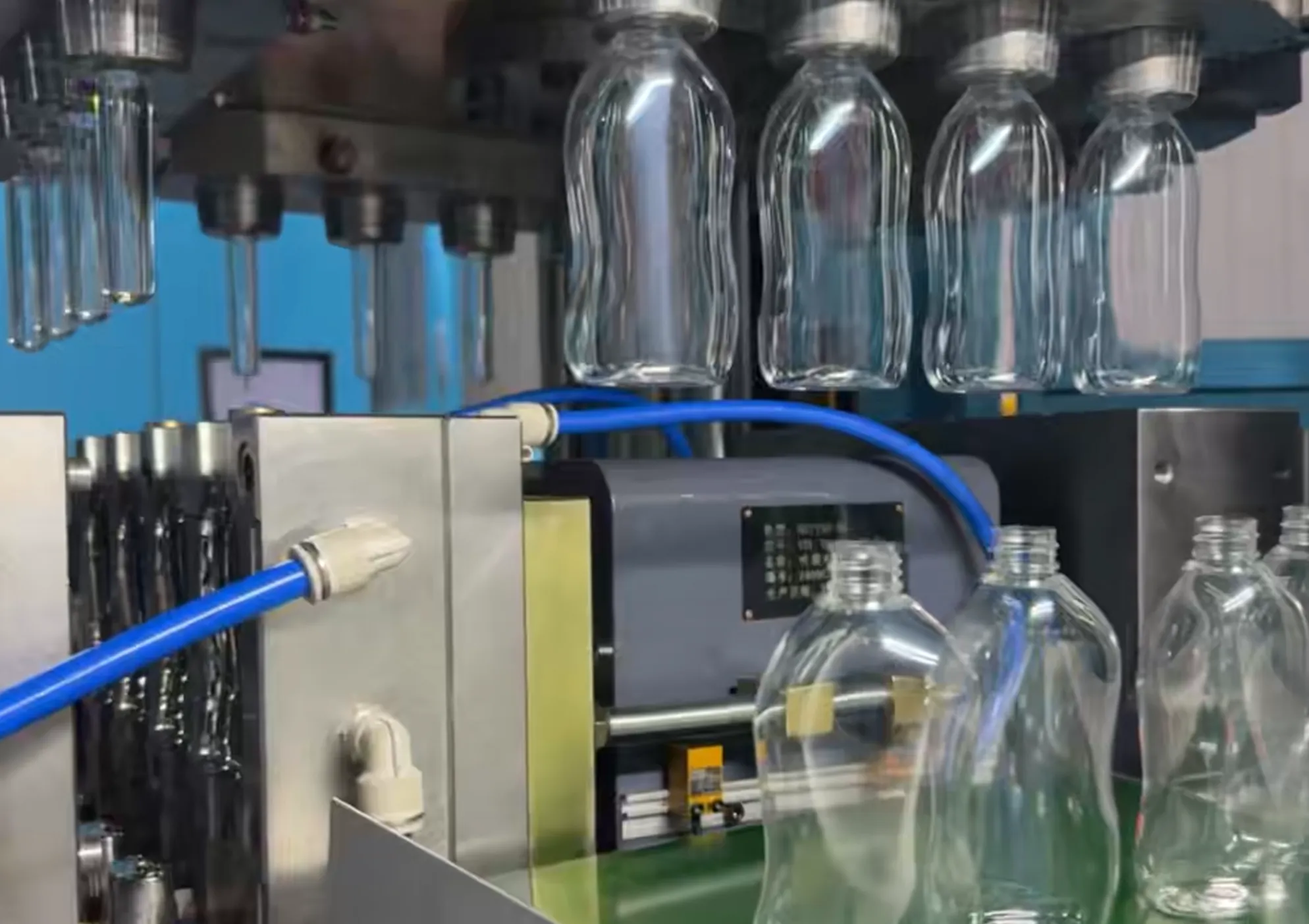
Why Cosmetics Demand a Different Standard of Bottle Production
The cosmetics industry — and K-Beauty in particular — applies packaging quality criteria that are genuinely more demanding than almost any other consumer goods category. Three requirements in particular drive the choice of bottle manufacturing process:
Zero Surface Defects — No Scuffing, No Haze, No Inclusions
A cosmetic bottle is a brand’s most visible physical communication. In the Korean premium skincare market, a serum bottle sits on a bathroom shelf alongside its product claims — and its surface quality is the first signal the consumer reads about the brand’s quality positioning. A bottle with a hairline scratch from preform-to-preform contact in bulk storage, a tiny inclusion from contaminated preform handling, or even a slight cloudiness from inadequate temperature control during blowing will be rejected — not reworked, rejected — at the brand’s incoming inspection.
This zero-tolerance standard for surface defects is the primary reason two-step reheat blow moulding is rarely used for premium cosmetic bottle production. In two-step production, preforms are stored in bulk gaylords where surface-to-surface contact is unavoidable, creating scratches that survive the blow cycle in the finished bottle. ISBM’s closed-loop one-step process eliminates this risk entirely: the preform is injected and blown in the same machine cycle without ever being ejected into a storage container or handled between machines.
Optical Clarity — PETG at Below 0.5% Haze
Premium K-Beauty packaging increasingly specifies PETG rather than standard PET — because PETG’s amorphous, non-crystallising structure produces a genuinely glass-like transparency at thick wall gauges where PET would haze through spherulitic crystallisation. An ISBM machine producing PETG at the correct conditioning station temperature (90–100 °C body zone, carefully profiled to stay within ±3 °C of target) regularly achieves haze values below 0.5% in the finished bottle wall — a clarity level that requires close inspection under direct light to distinguish from glass.
Achieving this clarity consistently in a production run requires temperature control precision that only ISBM’s dual-surface conditioning station (temperature-regulating barrel and core operating in separate circuits) can deliver for thick-wall PETG preforms. If the conditioning temperature drifts above 102 °C on PETG, strain-induced crystallisation begins during the blow cycle and the bottle wall hazes permanently. This is not a reject that can be sorted away — the entire production window of bottles affected must be scrapped. Consistent PETG clarity is a process engineering discipline, not an outcome that can be achieved by any blow moulding machine regardless of its specification.
Neck Finish Precision — Pump and Airless Dispenser Fitment
The dispensing system — pump, airless mechanism, mist sprayer, or dropper — is usually selected and sourced before the bottle design is finalised. The neck finish thread form, diameter, and pitch must conform to the dispenser manufacturer’s specified fitment tolerance, which for premium dispensers is typically ±0.05–0.08 mm. A neck that is 0.12 mm out of specification on diameter will create fitment resistance on the capper or will produce a closure that slips under use — both commercially unacceptable outcomes. ISBM’s injection-formed neck finish — formed around the core pin and cooled before the preform leaves the injection station — consistently achieves neck dimensional tolerances within ±0.05 mm, a precision level that other blow moulding processes cannot reliably replicate.
Why ISBM Is the Standard for Premium Cosmetic Packaging
The case for ISBM as the standard process for premium cosmetic blow moulding rests on four structural advantages that are inherent to the one-step process architecture, not achievable by process optimisation of alternative methods.
Zero Scuffing — Closed-Loop Process
The preform is injected and blown inside a single machine without being handled between stations. No preform-to-preform contact occurs at any point. The bottle exits the machine already in its final form, with a surface that has never touched another preform or a conveyor surface. This is the only process architecture that structurally eliminates scuffing as a quality risk, not merely reduces it.
Glass-Like Clarity — PETG in One Step
PETG’s glass-like clarity at thick wall gauges is only consistently achievable in ISBM’s dual-surface conditioning environment. The conditioning station’s barrel-and-core system maintains the preform body at 90–100 °C — within PETG’s narrow 10 °C stretch window — across the full preform wall thickness, something infrared reheating in two-step systems cannot achieve at thick gauges without surface overheating.
Neck Precision — ±0.05 mm from Injection
The neck finish is formed in the injection station and dimensionally locked by cooling before the preform reaches the blow station. It is never deformed by the stretch-blow cycle. The result is neck thread geometry formed to the same tolerances as injection moulding — ±0.05 mm — which is what premium pump and airless dispenser fitment specifications require.
Design Versatility — Non-Round Shapes
ISBM’s stretch rod and blow pressure control allows precise material distribution in non-cylindrical cavities — oval cross-sections, squared bodies, faceted shoulders, and offset-neck designs that K-Beauty brands specify for shelf differentiation. The dual-axis orientation control available through independent stretch rod speed and blow pressure profiling distributes material more uniformly in asymmetric cavities than two-step infrared reheating can achieve.
Resins Used in Cosmetic ISBM Production
The cosmetic packaging industry uses a broader range of resins in ISBM production than any other sector — because the combination of material properties, aesthetic attributes, and regulatory requirements varies significantly across product categories, price points, and markets. Selecting the correct resin is the first decision in a cosmetic bottle project, and it determines the machine specification, mould design, and processing parameters for every subsequent stage.
Among these, PETG is the fastest-growing resin in Korean cosmetic ISBM production. The K-Beauty premium segment’s preference for glass-like packaging aesthetics has driven significant demand for PETG bottles that genuinely appear indistinguishable from glass on shelf — thicker walls, heavier feel, higher refractive clarity — while maintaining the practical advantages of plastic (lightweight, shatter-proof, lower shipping cost, design flexibility). PETG’s chemical resistance to high-alcohol formulations (toners, essences, and serums frequently exceed 50% ethanol content) also addresses a compatibility concern that standard PET does not fully resolve at long contact times.
Container Formats Produced for K-Beauty

Korean cosmetic brands produce a wider range of distinct container formats per product range than almost any other personal care market — driven by the industry’s intense focus on packaging as a brand communication and gifting vehicle. The following formats represent the core ISBM production programme for a typical mid-to-premium K-Beauty manufacturer:
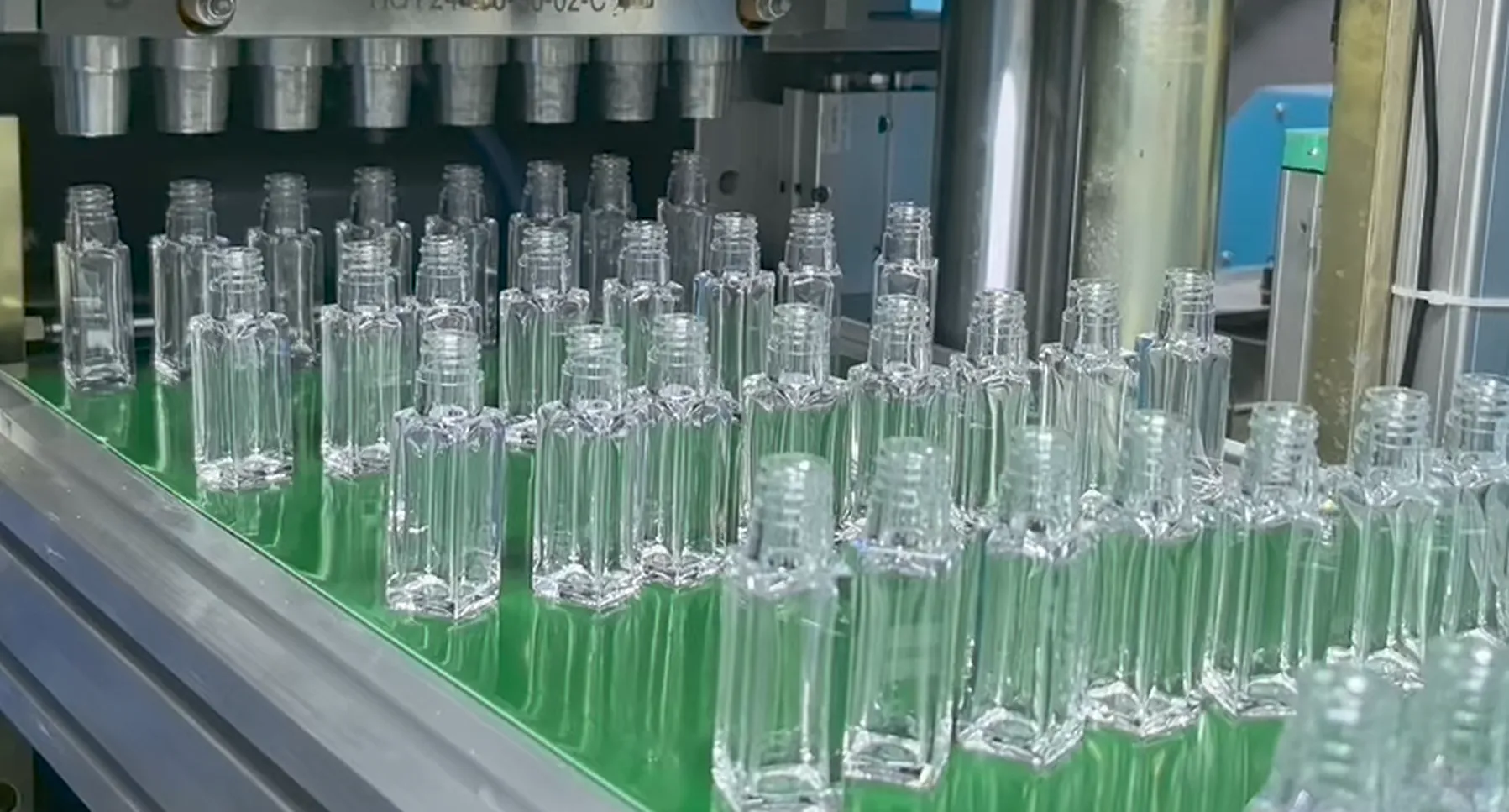
Serum & Ampoule Bottles
Volume: 15–50 ml | Height: 120–200 mm
Resin: PETG or PET | Nacken: 18/410 or 20/410
Typically 1–2 cavities; requires high surface polish; elongated shoulder geometry; pump or dropper neck. The most demanding format for surface clarity and neck precision.
Toner & Essence Bottles
Volume: 100–200 ml | Height: 150–200 mm
Resin: PET or PETG | Nacken: 24/410 oder 28/410
High production volume; 2–4 cavity configurations common; chemical resistance important for alcohol-based toners above 50% ethanol content.
Lotion & Emulsion Bottles
Volume: 100–250 ml | Height: 150–220 mm
Resin: PET or PETG | Nacken: 24/410 pump or 28/415
Pump dispenser neck is standard — neck torque specification (pump application and removal torque) is a critical quality parameter requiring ±0.05 mm neck dimension conformance.
Wide-Neck Cream Jars
Volume: 30–200 ml | Height: 50–120 mm
Resin: PETG (preferred) or PET | Nacken: 48–80 mm wide
Thick walls (2–4 mm) require PETG for clarity. Wide neck formed in injection — the defining ISBM advantage for jars, since IBM cannot produce PETG clarity and two-step REHB cannot manage PETG preform temperature consistently.
Mist & Facial Sprayers
Volume: 80–150 ml | Height: 140–180 mm
Resin: PET or PETG | Nacken: 24/410 fine mist
Fine-mist sprayer neck fitment is the most demanding neck specification in cosmetic packaging — typically ±0.04 mm on inner diameter — because the sprayer’s dip tube seal depends on a precise interference fit with the neck inside diameter.
Tall Slim Premium Bottles
Volume: 30–100 ml | Height: 180–250 mm
Resin: PETG | Nacken: 15–22 mm
The hallmark of ultra-premium K-Beauty — elongated, slim, architecturally proportioned bottles. Requires an ISBM machine with a 460 mm upper mould stroke to accommodate heights above 200 mm. This format is exclusively producible on mid-range machines such as the HGY150-V3.
Machine Selection for Cosmetic ISBM — HGY50-V3 vs HGY150-V3
For most Korean cosmetic ISBM programmes, the machine selection decision comes down to two questions: how tall is the tallest bottle in the programme, and how heavy is the heaviest preform? These two parameters — maximum bottle height and maximum shot weight — are the hard mechanical constraints that determine which machine platform is appropriate.
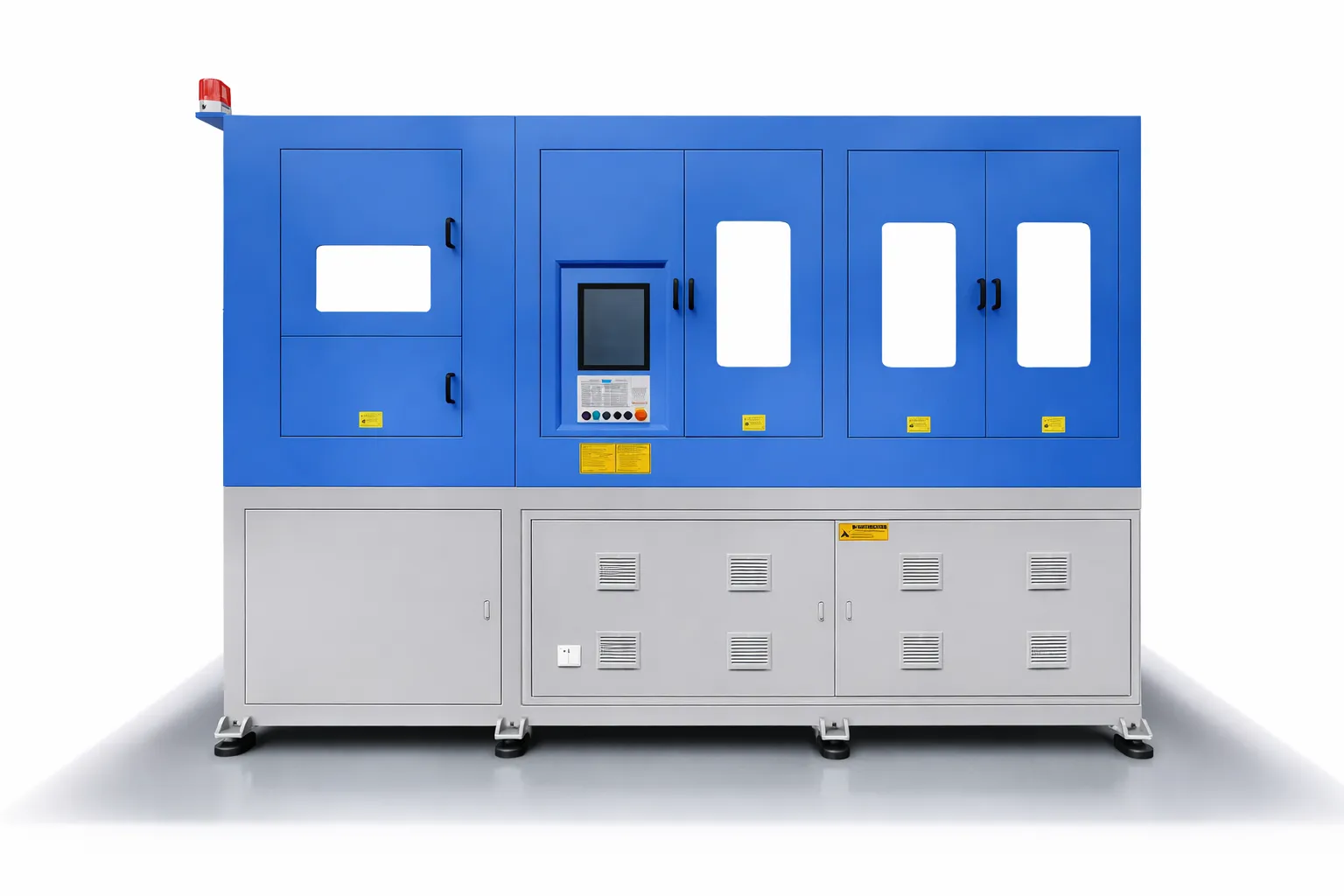
For most Korean cosmetic manufacturers producing toners, lotions, mist sprayers, and serum bottles up to 200 mm in height, the HGY50-V3 or HGY50-V3-EV platform covers the full product range with 1–6 cavity flexibility. Operations producing ultra-premium tall slim bottles (180–250 mm), large PETG wide-neck jars, or heavy Tritan luxury containers where preform weight exceeds 188 g need the HGY150-V3‘s 315 g injection capacity and 460 mm upper mould stroke.
Mould Design for Cosmetic Containers
High-Polish Cavity Surface — Grade A for Premium Cosmetics
Premium cosmetic bottle cavities are finished to Grade A mirror polish — Ra below 0.05 µm — across the entire bottle body and shoulder. This level of finish is achieved through a progressive hand-polishing sequence: rough grinding with #320 abrasive, through #600, #1200, #2000 papers, and finishing with diamond paste on felt. The polishing sequence must follow the cavity contour precisely — any swirl marks or directional scratches in the polishing pattern will transfer to the bottle surface and become visible in PETG or PET under direct lighting.
Mould material for Grade A cosmetic cavities is typically S136 or equivalent stainless tool steel, hardened to HRC 50–54. Stainless steel is specified over conventional tool steels because it prevents the rust staining that develops in water-cooled cavity blocks in humid Korean factory environments — rust contamination from cavity surfaces can transfer to PETG bottle surfaces and is extremely difficult to detect until bottles reach brand incoming inspection.
Neck Finish Tooling for Pump and Sprayer Fitment
Cosmetic dispensing systems — pumps, airless mechanisms, fine mist sprayers — are precision assemblies manufactured to tight tolerances that assume a corresponding tolerance in the bottle neck. The critical neck dimensions for pump fitment are the external thread outer diameter (controls pump closure thread engagement), the neck inside diameter (controls dip tube seal and internal pump fit), and the neck height from support ledge to top (controls headspace and pump depth). Each of these dimensions must be held to ±0.05–0.08 mm across a full production batch for consistent dispenser fitment on the filling line capper.
Korea Ever-Power's cosmetic bottle mould design process includes verification of neck finish conformance to the specified dispenser manufacturer’s interface drawing before steel is committed. Where the dispenser specification requires dimensions tighter than ±0.05 mm (some high-specification airless mechanisms require ±0.03 mm on neck ID), the neck thread insert is machined from beryllium copper rather than hardened steel — exploiting BeCu’s superior machinability at very high tolerance levels, and its thermal conductivity advantage for rapid neck cooling.
Cavity Count for Cosmetic Production Volumes
Cosmetic production schedules are typically multi-SKU and seasonal — a brand launching a new collection may produce 30,000–80,000 units of each new SKU for the launch quarter, then adjust volume based on retail sell-through. This volume profile typically favours 1–2 cavity configurations for premium formats (serum, luxury jar), where lower per-batch quantities make multi-cavity tooling cost uneconomical, and 2–4 cavity configurations for higher-volume standard formats (toner, lotion pump). The Korea Ever-Power HGY50 range’s 1–6 cavity flexibility within a single machine platform allows a cosmetic manufacturer to match cavity count to volume requirements across a product range without purchasing additional machines.
Cleanroom and GMP Considerations
Korean cosmetic manufacturers producing pharmaceutical-grade cosmetics (cosmeceuticals), OTC-classified skincare, and eye-contact products under Korean MFDS cosmetic GMP guidelines require their packaging production to be conducted in a controlled environment. For blow moulding, this has specific implications:
● Cleanroom ISBM Requirements for Korean Cosmetic GMP
No hydraulic oil: Hydraulic oil mist from conventional blow moulding machines is incompatible with cleanroom classifications. Oil particles settle on bottle surfaces and are not detectable by standard visual inspection. GMP cleanroom installations require oil-free machine drives.
HEPA-filtered compressed air: The high-pressure blowing air must pass through coalescing filters and HEPA post-filters before entering the blow valve. Any oil or particulate contamination in the blowing air is deposited on the inside of the bottle — the surface in direct contact with the cosmetic formula.
Enclosed machine design: The machine should be designed with enclosed working areas that prevent dust and airborne particles from settling on preforms or finished bottles during the blow cycle.
Traceability documentation: Each production batch must be linked to material lot numbers, machine parameter records, and operator qualification records for GMP documentation purposes.
The fully electric HGY50-V3-EV is the Korea Ever-Power machine specifically suited to cosmetic GMP and cleanroom installations. Its all-servo-electric drive system eliminates hydraulic oil entirely — no oil tank, no hydraulic lines, no oil mist — making it inherently compatible with the cleanroom environment requirements of Korean cosmetic GMP guidelines. The machine also delivers higher injection pressure (210 MPa vs 160 MPa on the hydraulic V3) and shot-weight repeatability of ±0.1 g — directly supporting the bottle-to-bottle consistency required for GMP documentation of container specifications.
Production Case Study — K-Beauty Premium Serum Bottle Line
The following case study is a representative production configuration based on typical Korea Ever-Power cosmetic ISBM installations. Specific customer details are not disclosed; the configuration, machine settings, and quality outcomes reflect real production programme parameters.
◆ Wichtigste Erkenntnis
Für cosmetic PET bottle manufacturing, ISBM is not simply an alternative process option — it is the only process that structurally eliminates preform scuffing, achieves consistent PETG clarity below 0.5% haze, and delivers the ±0.05 mm neck precision that premium pump and sprayer dispensers require. The machine selection choice — HGY50 for standard cosmetic formats up to 200 mm, HGY150-V3 for tall-slim and heavy-preform luxury formats, fully electric EV variant for GMP cleanroom environments — should be driven by bottle height, preform weight, and production environment requirements, not by machine price alone.
Abschluss
The Korean cosmetics industry’s quality expectations are among the most demanding packaging standards in the world, and they exist because the K-Beauty market rewards brands that consistently deliver a premium product experience — and penalises those who do not. The ISBM process, in the hands of the right machine specification and properly designed tooling, is the platform on which those standards are consistently met: zero-scuff surface quality from the closed-loop one-step process, glass-like PETG clarity from the dual-surface conditioning station, and pump-ready neck precision from the injection-formed neck finish.
Korea Ever-Power's HGY series 3-station ISBM machines cover the full range of Korean cosmetic container formats — from 15 ml premium serum bottles to 200 ml wide-neck PETG jars — with mould design, DFM review, 3D prototyping, and commissioning support included in each project. Contact Korea Ever-Power with your bottle drawing and dispenser specification to receive mould feasibility review and machine recommendation within three business days.
Über diesen Artikel: Prepared by the Korea Ever-Power Technical Team and Mould Design Department. Production case study parameters reflect representative Korea Ever-Power ISBM installations for cosmetic customers in the Gyeonggi-do and Seoul metropolitan area. Specific customer identification is not disclosed. Haze values (ASTM D1003), wall thickness data, and neck conformance figures are from Korea Ever-Power production records and mould qualification documentation.
Weiterführende Lektüre: What Is Injection Stretch Blow Moulding? — Technical Guide | ISBM Mould Design — Preform, Blow Cavity, and Core Pin Engineering | Biaxial Orientation in PET Bottles — Engineering Guide
Herausgeber: Cxm