
What Is Injection Stretch Blow Moulding (ИСБМ)? — A Complete Technical Guide
Injection stretch blow moulding — abbreviated ИСБМ, also written as injection stretch blow molding — is the manufacturing process behind the clearest, most dimensionally precise, and structurally strongest plastic bottles in the world. When you hold a premium K-Beauty serum bottle that feels almost like glass, a pharmaceutical eye dropper with a perfectly formed neck thread, or a Tritan baby bottle with zero surface marks, it was almost certainly made by an ISBM машина.
This complete technical guide explains how the injection stretch blow moulding process works step by step, why it produces superior containers compared to injection blow moulding (IBM) and two-step reheat blow moulding (REHB), which materials it processes, what containers it produces best, and which machine specifications determine the quality and economics of your production line.
ISBM in One Sentence
Injection stretch blow moulding is a one-step plastic bottle manufacturing process in which resin is injected around a core pin to form a preform, that preform is immediately temperature-conditioned to the optimal stretch window, mechanically stretched and air-blown into the final bottle shape, and then ejected — all inside a single rotary machine without the preform ever leaving the controlled environment between stations.
That single sentence contains five concepts that distinguish ISBM from every other blow moulding process. We examine each one in the sections below.
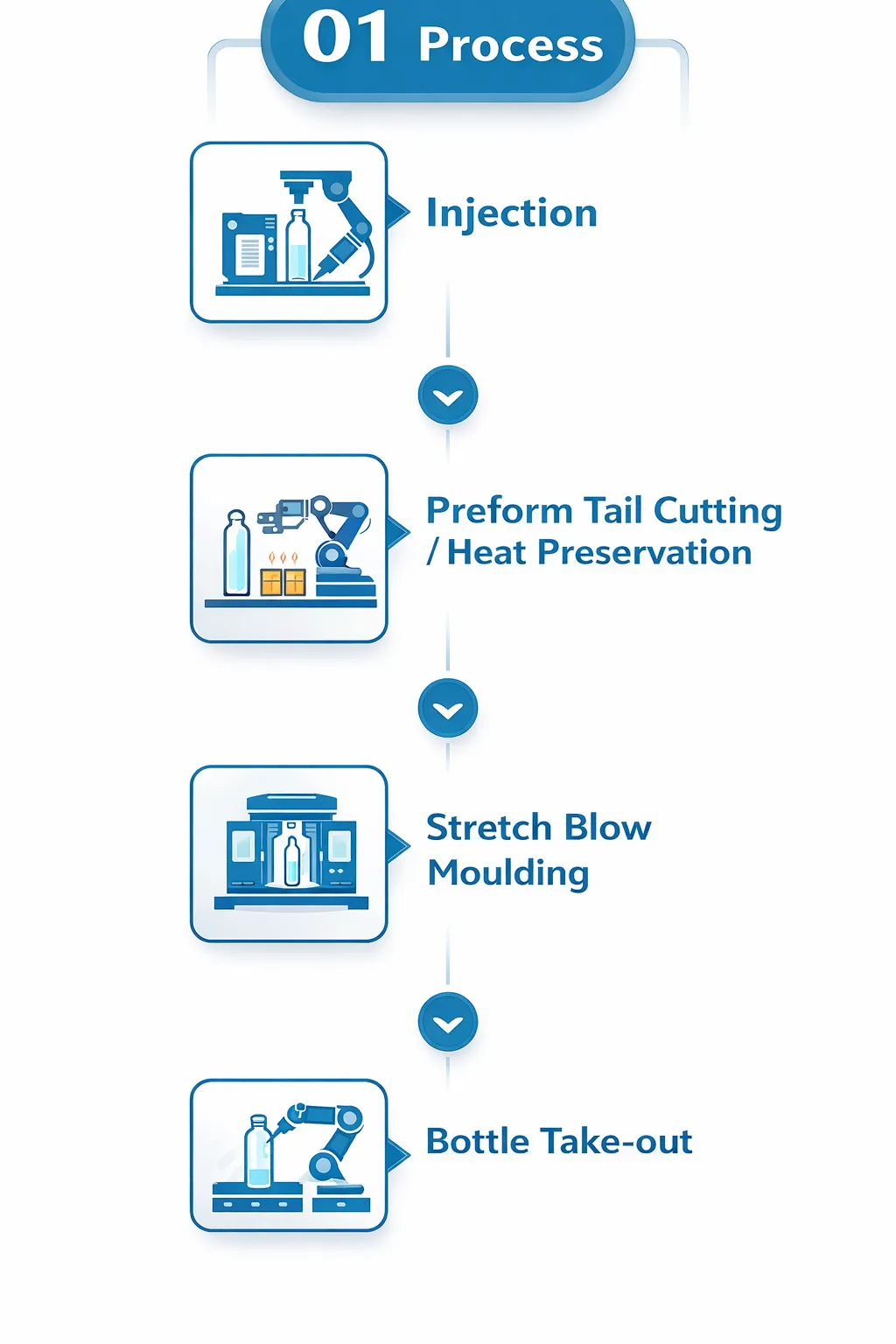
The Four Stations of an ISBM Machine
A 3-station ISBM machine rotates through four events — three active processing stations plus ejection — in a continuous cycle. The rotary table carries three sets of cavities: while Set A is being injected at Station 1, Set B is being conditioned at Station 2, and Set C is being blown at Station 3, with finished bottles taken out before the table advances again. The machine cycle time is determined by the slowest station, not the sum of all three.
1Injection Moulding the Preform
The process begins at the injection station. Polymer resin — most commonly ПЕТ — is fed from a hopper into a heated barrel. The reciprocating screw plasticises the resin through mechanical shear and conductive heating, reaching melt temperatures of 270–290 °C for PET. Once the programmed shot volume has accumulated ahead of the screw tip, the screw advances as an injection ram, forcing the melt through a hot runner system into the preform cavities, where it flows around and encapsulates the precision-machined core pins.
The core pin defines the inner diameter of the preform and — crucially — the inner surface of the завършек на врата: the threaded section that will later accept a cap, pump, or dropper. Because the neck is formed in injection and never subsequently deformed, ISBM achieves neck thread tolerances of ±0.05 mm, a precision level impossible to replicate in two-step REHB where preforms are stored and reheated before blowing. Barrel zone temperatures are held to ±1 °C; even 2 °C of variation changes PET melt viscosity enough to cause cavity-to-cavity fill imbalance, directly producing wall-thickness variation in the blown bottle.
● Injection Station — Reference Parameters
Barrel temp accuracy: ±1 °C per zone
Налягане на впръскване: 160–210 MPa
Screw speed: 0–240 RPM
Shot capacity (HGY50): 188 г
Shot capacity (HGY150): 315 г
Neck thread tolerance: ±0,05 мм
2Temperature Conditioning
After injection, the mould opens and the rotary table advances the preforms — still on their core pins — to the temperature conditioning station. This is the element of ISBM most often misunderstood by engineers familiar with two-step systems.
In two-step REHB, preforms are injected, cooled to room temperature, stored, and later reheated in a separate blow machine using infrared lamps — a full thermal round-trip from ~280 °C injection temperature down to ~25 °C storage temperature and back up to ~110 °C blow temperature. In ISBM, the preform never cools fully. The conditioning station uses residual injection heat, adding or removing heat differentially to produce a precise temperature profile across the preform wall:
- Preform body: brought to the optimal stretch window — 105–115 °C for PET (well above its Тг of ~80 °C), 90–100 °C for PETG — where the material is rubbery enough to stretch uniformly but stiff enough to retain biaxial orientation once blown.
- Neck finish zone: actively cooled below the material’s heat deflection temperature so that the thread geometry set during injection is not distorted. Differential cooling is applied through separate fluid circuits in the conditioning core and barrel.
The dual-surface conditioning — a temperature-regulating barrel around the preform body and a temperature-regulating core inside it — achieves through-wall temperature uniformity that single-surface infrared reheating cannot replicate. This distinction is especially significant for thick-wall preforms used in PETG cosmetic jars and Tritan baby bottles, where the centre of the preform wall must reach the stretch temperature without the outer surfaces overshooting.
3Stretch Blow Moulding — Where Biaxial Orientation Is Created
The conditioned preform advances to the blow station, where the two blow cavity halves close around it with clamping forces of 70–120 kN. The sequence:
- Предварително издухване — low-pressure air (0.5–1.0 MPa) stabilises the preform before the stretch rod descends.
- Mechanical axial stretch — the stretch rod descends at 300–400 mm/s, elongating the preform body toward the cavity base. This is the axial orientation event. Stretch rod speed is a critical parameter: too slow allows molecular relaxation before blowing; too fast causes stress whitening.
- High-pressure radial blow — simultaneously or immediately after the rod reaches its terminal position, 2.0–3.5 MPa of compressed air expands the preform radially against the cooled cavity wall. This is the hoop (radial) orientation event.
- Задръжте — blow pressure is maintained while the chilled cavity wall extracts heat from the bottle wall, locking the molecular orientation into the solid polymer structure.
- Exhaust and open — pressure releases, cavity halves open, bottle releases from the core pin.
Steps 2 and 3 together create двуосна молекулярна ориентация — the simultaneous alignment of polymer chain segments in the axial (vertical) and hoop (circumferential) directions. The resulting orientation ratios are described by two parameters:
4Ejection
After the blow station releases pressure, the finished bottle is transferred to the take-out position, where a mechanical stripper and take-out arm eject it from the core pin. On Korea Ever-Power machines the take-out stroke is 170 mm — sufficient clearance for bottles up to 250 mm in body height on the HGY150-V3.
Total cycle time for a 3-station ISBM machine running standard PET is typically 12–18 seconds per shot. A 4-cavity machine running a 16-second cycle produces 4 bottles × 3,600/16 = 900 bottles per hour. For PETG and PC, conditioning dwell time extends the cycle to 18–24 seconds; for hot-fill heat-set production, add a further 2–4 seconds for the blow-hold period.
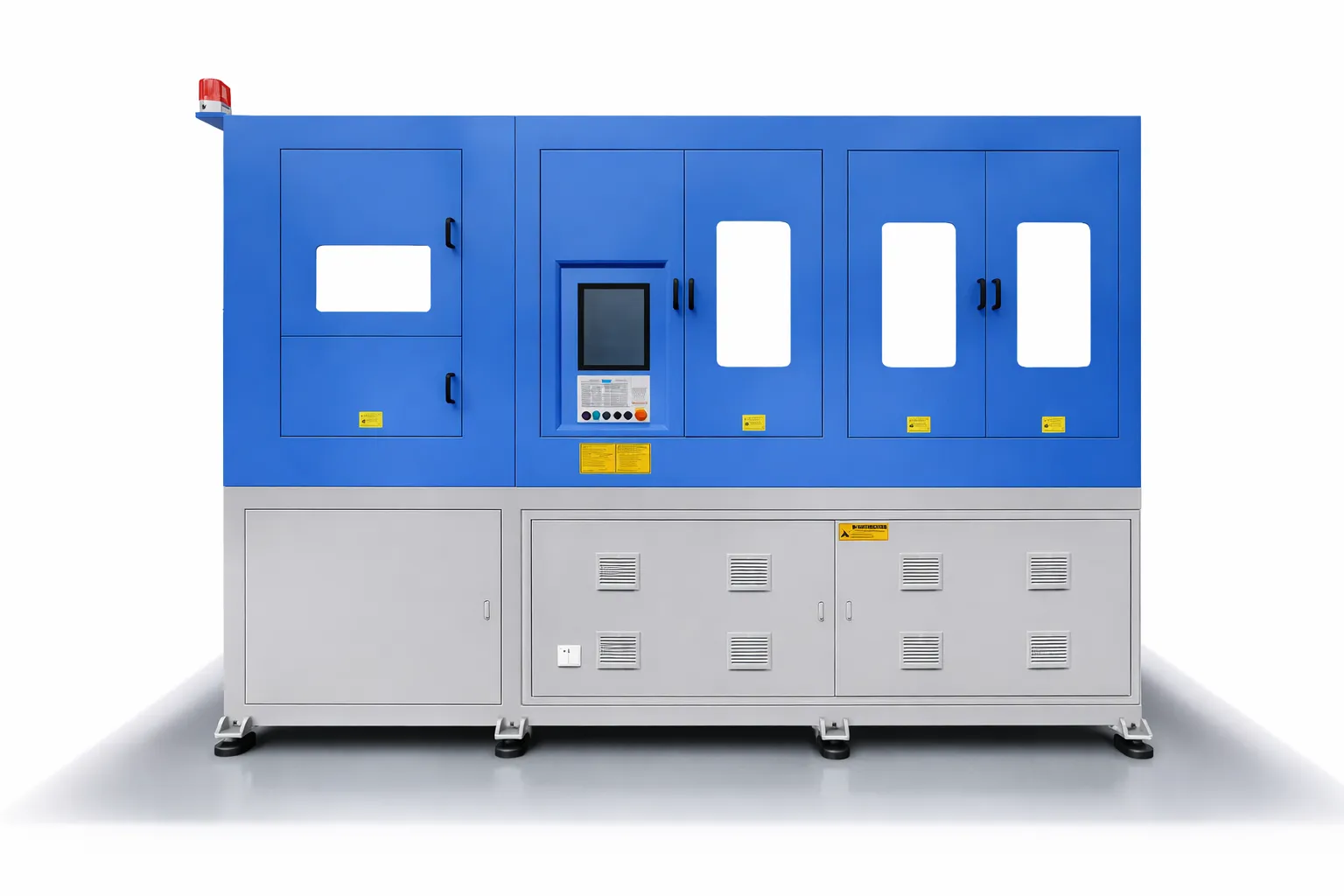
Why ISBM Produces Better Bottles
No Preform Storage — Zero Surface Contamination
In two-step REHB, injection-moulded preforms are tumbled into bulk containers, stored for days or weeks, transported to the blow machine, and reloaded through a sorting and orientation system before entering the infrared oven. Each step introduces risk: surface scratches from preform-to-preform contact, dust and particulate contamination from the storage environment, and moisture absorption — which in PET causes hydrolytic degradation during reheating, producing a visible haze reduction in bottle clarity.
In ISBM, none of this happens. The preform is injected, conditioned, and blown without ever leaving the machine or being handled between stations. The result is a zero-scuff, zero-contamination surface on every bottle — the default quality expectation in pharmaceutical GMP lines and K-Beauty cosmetic packaging, and essentially impossible to guarantee consistently in two-step production without extraordinary quality-control investments.
Biaxial Orientation — Five Measurable Property Improvements
Biaxial molecular orientation is not a marketing claim — it is a measurable structural phenomenon that improves five distinct bottle properties simultaneously. The mechanism: amorphous PET has polymer chain segments oriented randomly in three dimensions. When the stretch rod pulls axially and blow pressure expands the preform radially, those chain segments align simultaneously in the axial and hoop directions. Aligned chains are closer together, interact more strongly through van der Waals forces, and present a more regular geometry to both mechanical stress and light — which is why all five properties improve together.
One-Step Energy Efficiency — 15–40% Lower Than Two-Step
Two-step REHB requires the full thermal round-trip: injection at 280 °C → cool to 25 °C → reheat to 110 °C. ISBM avoids the cool-down entirely. Process engineering studies comparing equivalent container formats consistently show ISBM consuming 15–25% less energy per bottle due to elimination of the reheat step.
The energy advantage is compounded on fully electric machines. The HGY50-V3-EV fully electric ISBM machine replaces continuous-running hydraulic pumps with demand-driven servo motors that consume energy only during active actuation — reducing total machine energy draw by approximately 40% compared to hydraulic equivalents, and making it one of the most energy-efficient PET bottle production platforms available.
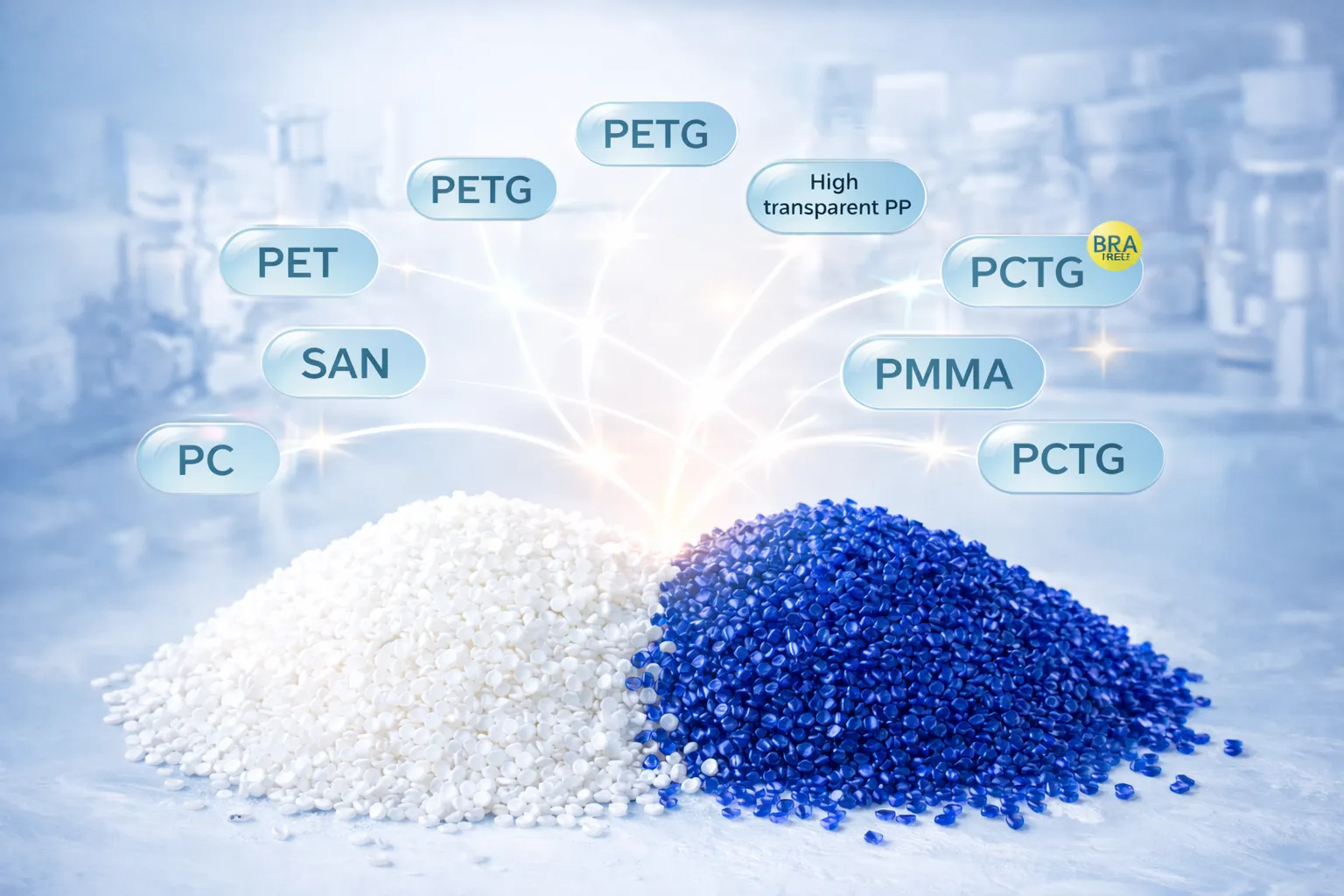
Materials ISBM Can Process

ПЕТ is the dominant ISBM resin — low raw material cost, well-characterised biaxial orientation behaviour, and broad regulatory clearance for food and pharmaceutical contact. Cold-fill bottles use IV 0.72–0.78 dl/g; hot-fill applications require higher-IV resin (0.80–0.85 dl/g) to develop the thermal crystallinity needed to withstand fill temperatures of 85–95 °C.
ПЕТГ (glycol-modified PET) achieves crystal clarity in thick-walled containers that standard PET cannot produce without hazing — making it the default material for premium cosmetic jars. The glycol co-monomer disrupts crystallisation, keeping PETG permanently amorphous and glass-clear regardless of wall thickness.
Тритан (Eastman Chemical) has become the standard for BPA-free baby bottles because it combines PETG-like clarity with a higher Тг of ~98 °C and better impact resistance. Processing Tritan requires barrel temperature control of ±1 °C — insufficient uniformity causes yellowing, the most common quality failure in Tritan ISBM. The heavier preforms Tritan demands (its density is higher than PET) mean that the HGY150-V3 with its 315 g injection capacity is the appropriate platform for most Tritan baby bottle programmes.
Containers ISBM Produces Best
ISBM is not the optimal process for every container. It delivers its strongest combination of quality and economics in applications where its inherent properties — one-step cleanliness, biaxial orientation, and precise neck finish — directly address the packaging requirement. Two-step REHB outperforms ISBM for very high single-SKU volumes where dedicated multi-cavity tooling justifies its higher capital cost.

3-Station vs 4-Station ISBM Machines
3-Station Machines — The Compact Standard
The rotary table carries three preform sets. At any moment: Set A is being injected, Set B is being conditioned, Set C is being blown — and after the blow station opens, finished bottles are ejected before the table advances. 3-station machines like Korea Ever-Power’s HGY50-V3, HGY50-V3-EVи HGY150-V3 are the standard for 1–6 cavity programmes across cosmetics, pharmaceutical, baby, and premium beverage applications. Their footprint — 2,500×1,100 mm to 4,200×1,400 mm — fits in standard Korean production halls and pharmaceutical cleanrooms without structural modification.
4-Station Machines — Independent Station Timing
A 4-station machine separates ejection into its own dedicated station, giving four active positions: injection → conditioning → stretch-blow → take-out. This architecture allows the injection and blow stations to run independently on their own timing — useful when larger shot weights require longer injection time than the blow cycle, or when conditioning dwell requirements differ significantly from injection cycle length. 4-station machines typically support higher cavity counts (up to 12) and are the platform of choice for large-format containers and higher-volume single-SKU programmes.
Key Machine Specifications Explained
Understanding what each specification physically controls — rather than treating it as a number in a table — enables informed comparison across machine models and manufacturers.
Theoretical Injection Capacity (g)
The maximum resin mass the injection unit can deliver per cycle (including sprue and runner). Your preform weight × cavity count must fall within this limit. Common values: 188 г (HGY50-V3), 315 г (HGY150-V3). Exceeding the limit causes short shots and incomplete preforms.
Maximum Bottle Height (mm)
Governed by the upper mould stroke — the travel available to open the mould around the blown bottle. HGY50-V3 (250 mm stroke) → max ~200 mm bottle body. HGY150-V3 (460 mm stroke) → max ~250 mm. A container taller than the stroke-limited ceiling simply cannot be ejected — this is a hard mechanical constraint.
Injection Clamping Force (kN)
Holds the preform mould closed during the shot. Insufficient clamping force causes flash at the preform parting line — a surface defect that transfers directly to the blown bottle and creates a seam visible in high-transparency PETG. Higher-IV resins and larger shot weights require proportionally higher clamping. HGY50: 50 кН; HGY150: 150 кН.
Blow Clamping Force (kN)
Holds the blow cavity closed during 2.0–3.5 MPa air expansion. At 3.5 MPa on a 100 mm diameter cavity, the cavity-opening force exceeds 2,700 N — the blow clamp must exceed this with margin. Insufficient blow clamping causes parting-line seams and geometric distortion. HGY50-V3: 70 кН; HGY50-V3-EV: 100 кН; HGY150: 120 кН.
Mould Compatibility Standard
Defines the physical interface dimensions between machine and mould. АСБ-12М is used by the HGY50-V3 and V3-EV; Аоки 100 by the HGY150-V3. Matching the mould standard of your existing tooling library eliminates the cost of rebuilding cavity sets when switching machine suppliers — often the most significant hidden cost in an ISBM machine purchase.
Drive System — Hydraulic vs Servo-Electric
Хидравличен (HGY50-V3, HGY150-V3): lower purchase cost; proven technology; continuous pump running. Fully electric servo (HGY50-V3-EV): ~40% lower energy; no hydraulic oil → cleanroom/GMP compliant; higher injection pressure (210 MPa vs 160 MPa); shot-weight repeatability ±0.1 g. The trade-off is higher purchase price and a larger machine footprint (3,800×1,200 mm vs 2,500×1,100 mm).
Често задавани въпроси
Is injection stretch blow moulding the same as one-step blow moulding?
Yes — ISBM and one-step blow moulding are the same process. “One-step” emphasises the contrast with two-step REHB, in which injection and blowing occur on separate machines with preform storage between them. Note that IBM (injection blow moulding) is a different, older process that does not use a stretch rod and does not produce biaxial orientation — ISBM always involves mechanical axial stretching; IBM does not. The distinction matters: bottles produced by IBM have lower tensile strength and poorer barrier properties than ISBM bottles for the same resin and wall thickness.
What production volume justifies investing in an ISBM machine?
There is no single threshold — the justification changes by segment. Below ~10,000 units/month per SKU, purchasing bottles externally is typically more economical. Between 10,000 and 500,000 units/month, ISBM is usually the most economical self-production method because it requires one machine, one mould set, and one operator. Multi-SKU operations should aggregate volume across their bottle range rather than evaluating each SKU individually — an ISBM machine producing 12 different container formats on a rotating schedule may justify itself even when no individual SKU reaches 50,000 units/month. Above 500,000 units/month on a single, unchanging SKU, two-step REHB with multi-cavity tooling typically achieves lower per-bottle cost.
How long does an ISBM machine last?
The main machine frame, rotary table, and control system have a service life of 15–20 years with routine maintenance. Wear items follow shorter schedules: hydraulic filters (every 500 hours), screw barrel inspection (every 5,000 hours or annually), hydraulic oil (every 2,000 hours on hydraulic machines), and mould tooling (varies by material — aluminium tooling typically achieves 500,000–1,000,000 cycles; hardened steel 2–5 million cycles). Fully electric machines (HGY50-V3-EV) have lower maintenance frequency because servo motors and drive systems have longer service intervals than hydraulic pumps and valves — and eliminate the hydraulic oil and filter change cycle entirely.
Can ISBM produce hot-fill bottles for tea and juice?
Yes — but it requires a specific heat-set configuration. Standard PET blown on a cold-fill cycle (chilled mould wall ~8–15 °C) deforms above ~60 °C fill temperature. Hot-fill PET bottles withstand 85–95 °C by developing thermal crystallinity during a heat-set blow process: after blowing, the bottle is held against a hot cavity wall (120–150 °C) for 2–4 additional seconds, which develops 20–30% crystallinity in the bottle wall. The mould must also incorporate вакуумни панели to accommodate the 2–3% volume contraction as hot contents cool. For semi-automatic hot-fill production, the Korea Ever-Power HGS200B is specifically configured for this heat-set cycle, with a 360 mm stretch stroke and mould tooling designed for vacuum panel geometry.
What compressed air specification does an ISBM machine require?
Two separate supplies are needed. Low-pressure utility air (0.6–0.8 MPa) for pneumatic actuation and clamping — a standard plant compressed air ring main is usually adequate. High-pressure blowing air (2.0–3.5 MPa) for the stretch-blow station — this supply must be oil-free. Oil contamination in blowing air deposits a film on the inside of PET bottles, causing rejection in pharmaceutical GMP audits and incompatibility with food-contact regulations. Korea Ever-Power recommends a dedicated 15–22 kW oil-free screw compressor with integrated refrigerated dryer and coalescing filters meeting ISO 8573-1 Class 1 air quality (oil content ≤ 0.01 mg/m³, particle size ≤ 0.1 µm, pressure dew point ≤ −70 °C). For a 4-cavity machine on PET, flow requirement is typically 2.0–2.5 m³/min at 3.5 MPa.
◆ Ключов извод
Шприцване чрез разтягане и бръснене (ISBM) is the optimal manufacturing process when surface quality, neck finish precision, wall-thickness consistency, or GMP environment compatibility are primary packaging requirements. Its one-step architecture eliminates preform handling damage; biaxial orientation delivers measurable gains in tensile strength (+45%), wall uniformity (<0.05 mm), gas barrier (+25%), and clarity (<1% haze); and its single-machine footprint minimises facility space, labour, and capital complexity.
Conclusion — Is ISBM the Right Process for Your Production?
Injection stretch blow moulding is the standard manufacturing process for any application where bottle surface quality, neck precision, structural performance, or cleanroom compatibility are non-negotiable requirements. K-Beauty and luxury cosmetics brands specify it because no other process delivers the combination of PETG clarity and surface perfection they require. Pharmaceutical manufacturers specify it because GMP-compatible production without preform handling contamination is a regulatory necessity, not a preference. Baby product manufacturers specify it because only one-step ISBM guarantees a zero-contamination path from resin to finished container.
Where two-step REHB outperforms it — very high single-SKU volumes with dedicated multi-cavity tooling — ISBM remains competitive for multi-SKU producers, new market entrants, and operations scaling from prototype to production. Its mould changeover time of 20–35 minutes for an experienced crew means that a single ISBM machine producing 15 different container formats in rotation can often outperform two-step alternatives on total production flexibility and per-format tooling cost.
The practical question for most buyers is not whether ISBM is the right process — it almost always is for the applications described above — but which machine specification matches the injection capacity, bottle height, cavity count, drive type, and mould standard that your specific production programme requires.
Korea Ever-Power — 3-Station ISBM Machines
188 g · 160 MPa · 70 kN blow clamp
1–6 cavities · ASB-12M · 3,000 kg
183 g · 210 MPa · 100 kN blow clamp
34.8 kW servo · −40% energy · Oil-free
315 g · 150 kN inj clamp · 120 kN blow
250 mm bottle height · Aoki 100
Относно тази статия: Written by the Korea Ever-Power Technical Team, drawing on 20+ years of ISBM machine design, manufacturing, and commissioning experience across Korea, Vietnam, Thailand, and Brazil. Tensile strength improvement data aligned with published biaxially oriented PET literature (PETRA Technical Report TR-2011). Resin processing parameters sourced from Eastman Chemical (Tritan™ design guide), Dupont (PET processing guide), and Korea Ever-Power’s internal process validation records.
Свързано четиво: All 3-Station ISBM Machines | ISBM vs IBM vs Two-Step REHB — Process Comparison | Biaxial Orientation in PET Bottles — Engineering Guide | How to Choose an ISBM Machine — 8 Specifications Explained
Редактор: Cxm