ISBM Machine Financing Korea 2026: KDB Loans, KODIT Guarantees, Equipment Leasing, and Korean Ever-Power Deferred Payment — The Complete Korean Funding Comparison
Korean ISBM machine investment does not need to be funded entirely from cash reserves. In 2026, Korean ISBM producers have access to four distinct financing structures — each with different interest rates, collateral requirements, and cash flow implications — that can reduce effective financing cost by 15–35% versus standard commercial bank lending.
KODIT Credit Guarantee
Operating Lease vs Purchase
1. The Korean ISBM Financing Landscape in 2026
Korean ISBM machine investment in 2026 ranges from KRW 280M for an entry-level HGY50-V3-EV to KRW 1,050M for a 6-station HGYS280-V6 — a capital commitment that most Korean SME plastic manufacturers cannot absorb entirely from retained earnings or standard short-term commercial bank loans. The Korean government’s policy lending infrastructure for manufacturing SMEs (through KDB and KCF) provides below-market-rate loans specifically designed to enable this type of capital equipment investment, while the Korean tax credit system provides an immediate 7–10% return on machine investment for Korean SMEs in qualifying sectors.
Korean ISBM producers who have not evaluated the full range of available financing structures typically end up paying commercial bank interest rates of 5.5–7.5% on ISBM machine loans, versus the 2.5–3.5% achievable through Korean policy lending. On a KRW 500M machine financed over 5 years, this interest rate difference represents KRW 30–50M in cumulative financing cost savings — equivalent to approximately 6–10% of the machine purchase price. The Korean ISBM machine ROI calculator should include the financing structure in its cash flow model — the choice of financing instrument directly affects the payback period calculation that Korean ISBM investment decisions are based on.
2. Option 1 — Korea Development Bank (KDB) SME Manufacturing Loan

Korea Development Bank’s SME Manufacturing Facility Loan (중소기업 시설자금대출) is the primary policy lending product for Korean ISBM machine investment. Key parameters for 2026:
| 范围 | KDB SME Manufacturing Facility Loan 2026 |
|---|---|
| Loan amount | KRW 100M–3,000M per project |
| Interest rate | 2.5–3.5% fixed (base rate + 0.5–1.0% spread for SME tier) — confirm current rate with KDB at application |
| Loan term | 7 years maximum (including 2-year grace period) |
| Eligible use | New manufacturing equipment purchase, including ISBM machines and mould tooling |
| Collateral | Equipment lien on ISBM machine, supplemented by property collateral for larger loans |
| Eligibility | Korean SME (under 300 employees, under KRW 80B revenue for manufacturing), Korean business registration |
| Processing time | 6–10 weeks from application to disbursement; Korean ISBM machine purchase order must be submitted with application |
Korean ISBM producers who qualify for KDB policy lending should apply before placing the machine order with Korean Ever-Power — because KDB requires the purchase order as supporting documentation for the loan application, but will issue a conditional approval letter before disbursement that allows the Korean producer to commit to the Korean Ever-Power order before final KDB approval. The 30% deposit required at Korean Ever-Power order placement can be funded from the Korean producer’s working capital and reimbursed from the KDB disbursement when it arrives.
3. Option 2 — Korea Credit Guarantee Fund (KODIT) Guarantee + Commercial Bank
For Korean ISBM producers who need faster processing than KDB’s 6–10 week timeline, or who lack the collateral required for a KDB direct loan, KODIT (Korea Credit Guarantee Fund, 신용보증기금) provides a government-backed credit guarantee that reduces the commercial bank’s loan risk and enables preferential lending rates.
How KODIT works for Korean ISBM machine financing: KODIT issues a guarantee certificate covering 70–85% of the commercial bank loan amount. The Korean commercial bank (Woori, Hana, Shinhan, IBK) then lends the remaining 100% at a rate reflecting the KODIT-guaranteed lower risk — typically 3.5–4.8% versus 5.5–7.5% for an uncollateralised SME loan. The Korean ISBM producer pays KODIT an annual guarantee fee of 0.8–1.2% of the guaranteed amount in addition to the commercial bank interest — making the total all-in financing cost approximately 4.3–6.0%, still below standard commercial bank SME lending.
Processing time advantage: KODIT guarantee processing takes 3–5 weeks versus KDB’s 6–10 weeks — because KODIT’s credit assessment is based on the Korean SME’s financial statements and credit history rather than the detailed business plan review that KDB requires. For Korean ISBM producers with time-sensitive machine delivery schedules, KODIT is often the faster path to confirmed financing.
4. Option 3 — Korean Equipment Operating Lease
Operating lease (운용리스) of Korean ISBM machines — where the leasing company owns the machine and the Korean ISBM producer pays monthly rent for use — is available through Korean equipment leasing companies registered with the Korean Lease Finance Association (KLFA). Key differences from loan financing:
Tax advantage
Operating lease payments are 100% deductible as operating expenses in the year paid — no depreciation schedule. For Korean ISBM producers in high-profit years, the tax benefit of full operating expense deduction can offset 30–35% of the lease payment value (Korean corporate tax rate 21%).
Off-balance sheet
Operating leases are not recognised as debt on the Korean ISBM producer’s balance sheet (under Korean K-IFRS if structured correctly) — preserving debt capacity for working capital lines. Note: K-IFRS 16 lease accounting applies above materiality threshold — consult Korean accountant.
Total cost comparison
Lease monthly payments at 2.2–2.8% of machine cost per month equate to an implied annual financing cost of 8–12% — higher than KDB or KODIT options. The tax benefit partially compensates but operating lease is generally higher total cost than policy loan for Korean ISBM producers in the 21% Korean corporate tax bracket.
5. Option 4 — Korean Ever-Power Deferred Payment Structure

Korean Ever-Power offers a structured deferred payment arrangement for qualified Korean domestic customers — the 30/30/40 structure that provides a built-in financing benefit without requiring a separate bank application. Structure:
On order confirmation
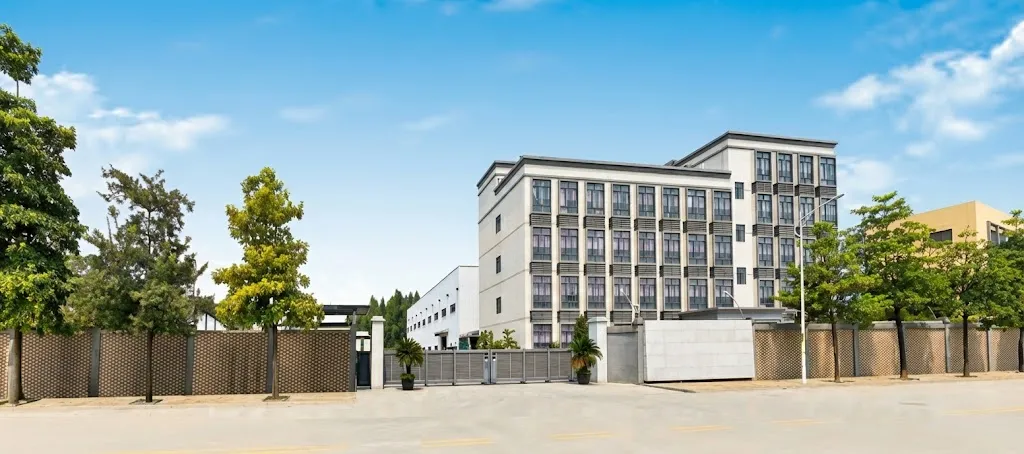
Triggers machine production at Korean Ever-Power’s Ansan-si facility. For a KRW 500M machine, this is KRW 150M — typically fundable from Korean producer’s working capital without bank assistance.
On machine delivery to Korean customer
Paid when the machine arrives at the Korean ISBM producer’s factory and passes basic functional acceptance. Coincides with the Korean ISBM producer’s maximum capital flexibility — they have not yet begun production but can see the machine.
6 months post-commissioning
The terminal 40% payment (KRW 200M on a KRW 500M machine) is due 6 months after machine commissioning — by which time the Korean ISBM producer has been generating production revenue for 6 months and can often fund the terminal payment from production cash flow. The implied financing benefit of this deferred structure is approximately KRW 6–9M interest-free.
Qualification for Korean Ever-Power deferred payment: Subject to Korean Ever-Power credit assessment for Korean domestic customers. Required: Korean business registration, 3-year financial statements, and confirmation of the production application. The machine and mould investment Korean budget allocation guide covers how the Korean Ever-Power deferred payment structure can be combined with a KODIT-backed bank loan for the 30% delivery payment to minimise upfront cash requirements.
6. Korean Investment Tax Credit (ITC) for ISBM Machine Purchases
The Korean Investment Tax Credit (투자세액공제) under the Korean Tax Incentives Limitation Act provides Korean SME manufacturers with a direct credit against Korean corporate tax for investment in new manufacturing equipment. For Korean ISBM machine purchases in 2026: 10% ITC on machine investment for Korean SMEs classified in designated industries including plastic container manufacturing (KSIC 222). The credit is deducted directly from the Korean corporate tax liability in the fiscal year of machine installation — not an income deduction but a direct tax reduction.
On a KRW 500M machine: Korean ITC = KRW 50M direct tax reduction. This is the equivalent of a 10% discount on the machine purchase price — entirely funded by the Korean government through tax policy rather than from the Korean ISBM producer’s cash. Korean ISBM producers who purchase machines before their Korean fiscal year end (December 31 for most Korean companies) and install them before year end can claim the ITC in that fiscal year’s Korean corporate tax return. Korean ISBM producers who miss the fiscal year end by even one day lose the current-year ITC claim and must wait until the following year.
7. Combining Multiple Korean Financing Instruments
The most capital-efficient Korean ISBM machine financing structure combines multiple instruments to maximise benefits from each:
Illustrative optimal structure for a KRW 500M Korean ISBM machine investment: (1) Korean ITC: KRW 50M immediate tax credit in year of purchase — effectively reduces net investment to KRW 450M; (2) Korean Ever-Power 30/30/40 deferred payment on KRW 450M net: 30% (KRW 135M) on order from working capital, 30% (KRW 135M) on delivery from KODIT-backed commercial bank short-term loan, 40% (KRW 180M) at 6 months from 5-year KDB term loan; (3) KDB term loan of KRW 180M at 3.0% for 5 years covers the terminal payment. Total all-in financing cost: approximately KRW 16–22M in cumulative interest (KDB loan only) versus KRW 55–80M for a standard 5-year commercial bank loan on the full KRW 500M purchase price. Net saving from optimal financing structure: KRW 33–58M — equivalent to 7–12% of machine purchase price.
8. Financing Decision Framework: Which Structure Fits Your Korean ISBM Business?

| Korean Producer Situation | Recommended Financing Structure |
|---|---|
| First-time Korean ISBM investment, strong balance sheet, 10 weeks lead time available | KDB policy loan (lowest rate) + Korean ITC claim at year end |
| First-time Korean ISBM investment, limited collateral, 4-week decision needed | KODIT guarantee + commercial bank (faster) + Korean ITC at year end |
| Korean ISBM machine upgrade, existing Korean Ever-Power relationship, profitable year | Korean Ever-Power deferred payment + Korean ITC + KDB loan for terminal payment only |
| Korean ISBM producer in high-profit year, wants operating expense deduction | Operating lease (full operating expense deduction), assess after-tax vs ITC comparison with Korean accountant |
| Korean ISBM producer buying for export market production expansion | KEXIM or K-Sure export financing — see Section 9 |
The optimal financing structure depends on the Korean ISBM producer’s specific tax situation, balance sheet, and timing — the 10-factor Korean ISBM machine selection framework includes financing suitability as Factor 9, noting that the right machine at the wrong financing structure costs more over the machine’s life than a slightly less optimal machine at the right financing structure.
9. Korean ISBM Export Financing: KEXIM and K-Sure Options
KEXIM (Export-Import Bank of Korea) manufacturing facility loan: For Korean ISBM producers investing in production capacity specifically for Korean export container production, KEXIM provides manufacturing facility loans at 2.8–3.8% — slightly above KDB domestic manufacturing loans but available to Korean exporters who do not qualify for the Korean SME KDB domestic programme. KEXIM eligibility requires confirmed export contracts or export track record (minimum 3 years of Korean export revenue in the qualifying category).
K-Sure (Korea Trade Insurance Corporation) export credit insurance: K-Sure’s export credit insurance (discussed in the Korean ISBM export strategy guide) protects Korean ISBM producers against foreign buyer payment default — but also provides a collateral basis for commercial bank export financing. Korean commercial banks will lend to Korean ISBM producers at more favourable rates when the export receivable is K-Sure insured, because the K-Sure insurance de-risks the lender’s exposure to foreign buyer credit risk. Korean ISBM producers building export revenue should apply for K-Sure coverage before their first significant export shipment and use the K-Sure insurance certificate as a negotiating point in their Korean bank export financing discussions.
10. Korean Ever-Power Financing Consultation Service
Korean Ever-Power provides a structured machine financing consultation for Korean domestic customers as part of the machine procurement process — including identification of the optimal financing structure for the customer’s specific situation, KDB/KODIT application documentation support, and Korean ITC calculation confirmation. The financing consultation is available at no charge for Korean ISBM producers who have received a formal Korean Ever-Power machine quotation. Korean ISBM producers who want to explore machine investment but are uncertain about financing feasibility are encouraged to request the financing consultation before machine selection — understanding the financing structure available often resolves the “affordability question” that delays Korean ISBM investment decisions and has the effect of deferring production capacity expansion that the Korean producer’s market position could support.
常见问题解答
Financing Consultation
Planning a Korean ISBM Machine Investment and Uncertain About Financing?
Korean Ever-Power’s Free Consultation Identifies Your Optimal Structure.
KDB application support, KODIT qualification assessment, ITC calculation, and Korean Ever-Power deferred payment eligibility review — available at no charge for Korean domestic machine enquiry customers.
Related Resources
6-Station PlatformKorean Ever-Power 6-Station ISBM RangeHGYS280-V6 — the highest capital investment in the Korean Ever-Power range and a candidate for KEXIM export financing for Korean export production expansion.
ROI CalculatorKorean ISBM Machine ROI CalculatorInclude financing cost in the ROI model — KDB vs commercial bank rates produce materially different Korean ISBM payback period calculations.