
Starting a PET Bottle Manufacturing Business in Southeast Asia — Equipment Guide for Vietnam, Indonesia, and Thailand
Southeast Asia’s PET bottle manufacturing business opportunity is not a future possibility — it is happening now, driven by rising household incomes, a rapid shift from bulk purchasing to packaged goods, and the emergence of local consumer brands across every product category that uses plastic bottles. Beverage brands in Vietnam’s provincial cities, cooking oil producers in Java, personal care manufacturers in Bangkok, and drinking water bottlers across the Philippines, Malaysia, and Cambodia are all, at some point, reaching the same decision: to start PET bottle production in-house rather than buying finished containers from importers or distant domestic suppliers.
This guide is written for the entrepreneur, small-to-mid-size manufacturer, or investor asking how to start PET bottle manufacturing in Vietnam, Indonesia, or Thailand — the three largest and most commercially active markets for blow moulding equipment entry in Southeast Asia. Whether the question is “how do I start PET bottle production in Vietnam’s beverage market” or “what is the best blow moulding machine for a small business entering Indonesia’s cooking oil segment,” the answer begins with the same five decisions: product category, volume target, machine platform, infrastructure, and import logistics. This guide covers all five, plus the ROI framework and after-sales support criteria that determine whether the equipment investment succeeds across its full service life.

The Opportunity — Why PET Bottle Production Is Growing in SE Asia
Three structural forces are driving investment in domestic PET bottle production capacity across Southeast Asia, and they are operating simultaneously in all three countries this guide covers:
Rising Packaged Goods Demand
As Southeast Asian households move up the income ladder, they shift from bulk purchasing and refillable containers to branded, packaged products. Every category that transitions — cooking oil sold in bags to cooking oil sold in sealed PET bottles; water from municipal supply to bottled purified water; shampoo in sachets to pump-dispenser bottles — creates new demand for PET container production. This transition is not speculative; it is visible in every supermarket in Hanoi, Jakarta, and Bangkok and measurable in domestic packaging industry growth rates.
Local Brand Emergence
Vietnam, Indonesia, and Thailand have each produced a generation of domestic consumer brands over the past decade — beverages, personal care, food condiments, and functional nutrition — that are competing with imports from multinationals. These brands typically start by outsourcing packaging and then reach a scale point, usually 100,000–300,000 units per month, where in-house blow moulding becomes financially rational. This is the most active buyer segment for small-business blow moulding equipment in the region.
Import Substitution Economics
In markets where finished PET bottles are imported from China or Thailand into Vietnam, or from Malaysia into Indonesia, import substitution through domestic production is financially compelling: a PET bottle produced domestically at USD 0.02–0.05 per unit replaces an imported equivalent at USD 0.04–0.08 per unit landed cost. For a producer consuming 200,000 bottles per month, this difference pays for a semi-automatic machine in one to two years — making the investment self-funding from the first year’s import cost savings alone.
Semi-Automatic or Fully Automatic — How to Decide
The first and most consequential equipment decision in a Southeast Asian PET bottle venture is not which brand or which model — it is which production technology: semi-automatic blow moulding (the HGS series approach, where an operator loads preforms from a companion heater) or fully automatic (a rotary REHB line where preforms feed automatically from a hopper). This decision has a larger impact on capital requirements, operating complexity, and financial risk than any other single choice in the project.
The recommendation for Southeast Asian market entry is clear: begin with a semi-automatic machine unless you already have confirmed purchase orders for more than 500,000 bottles per month of a single SKU and the operating cash to staff a three-shift line from day one. The semi-automatic path builds the production competency, customer relationships, and cash flow that justify automatic scale-up later — without the capital risk of an automatic line running below its break-even utilisation rate while the market develops.
The Business Case for a Semi-Automatic HGS Line
The return on investment framework for a semi-automatic PET bottle production line in Southeast Asia follows a consistent structure. The specific numbers vary by country (resin prices, electricity tariffs, labour costs, and local bottle selling prices differ), but the framework is transferable:
Machine Selection by Country and Product Category
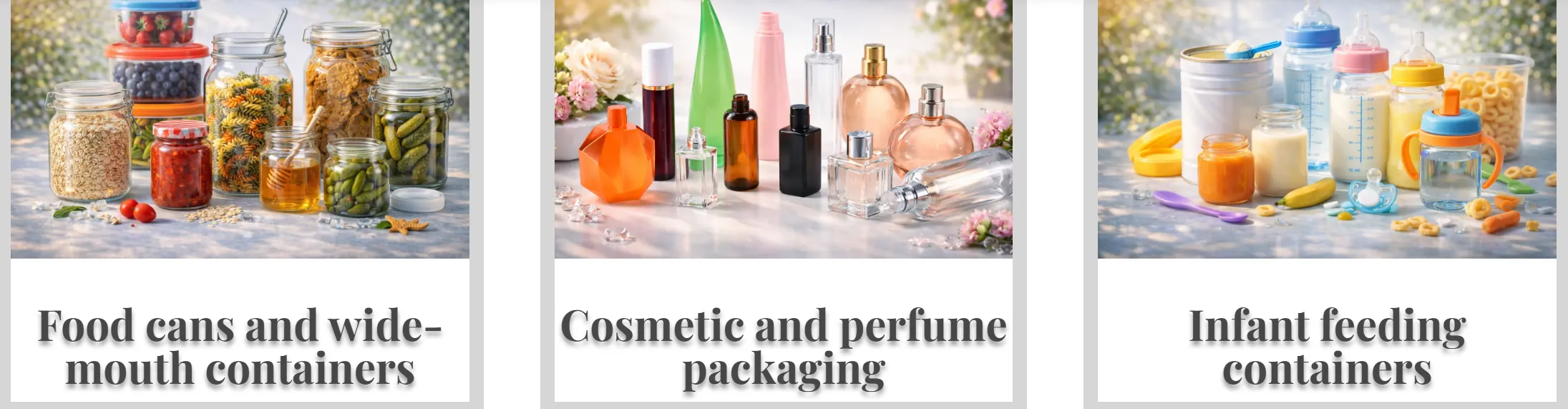
The right first machine for a Southeast Asian PET bottle operation is determined primarily by the product category — because each product defines the bottle volume range, fill type, and output rate required. Country-specific market context influences which categories are highest-demand; the machine specification follows from the product, not the geography. The Korea Ever-Power HGS series semi-automatic machines cover the full range:
For a detailed guide to PET bottle machine selection by bottle volume and beverage category — covering the full HGS series capacity range from 330 ml to 20-litre — see our complete PET water and beverage bottle manufacturing machine guide.
Infrastructure Requirements in SE Asian Facilities
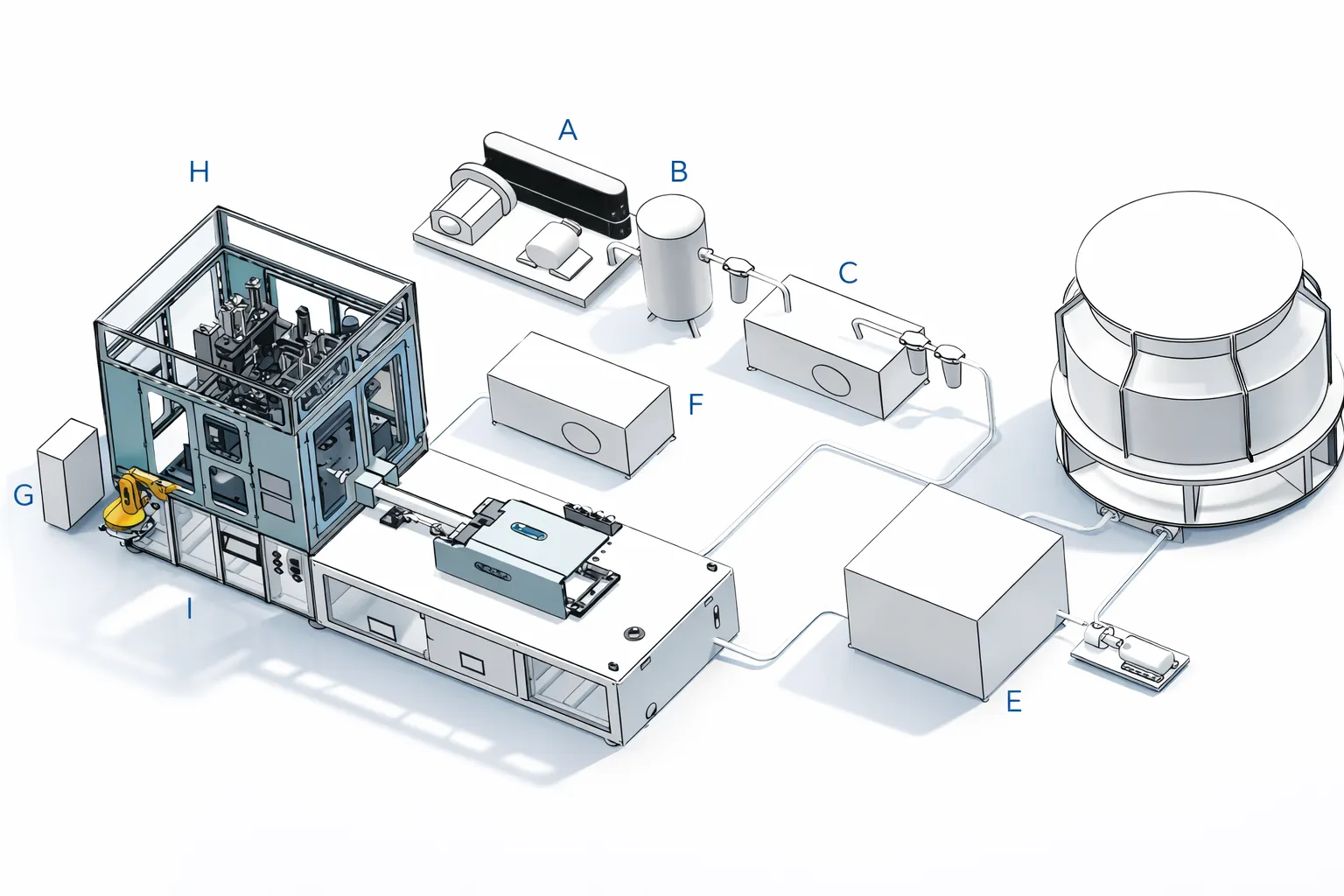
Southeast Asian industrial facilities — converted warehouse spaces, purpose-built light industrial units, or food-grade production buildings — typically meet the structural requirements for blow moulding installation, but two utility specifications are consistently underestimated:
⚠ High-Pressure Air — 3.0 MPa
Standard factory compressed air at 0.7–0.8 MPa cannot power a blow moulding machine. A dedicated oil-free compressor delivering 3.0 MPa (30 bar) at the machine’s rated free air delivery (typically 0.8–1.5 m³/min for HGS series) is mandatory. In SE Asia, this compressor must also handle humidity — specify an air dryer with the compressor, as humid tropical air at 30 bar saturates rapidly and causes water contamination in the blow moulding cycle. Budget for the compressor and dryer as a required line item, not an optional add-on.
⚠ Cooling Water — 8–15 °C
In tropical climates where ambient temperature is 30–35 °C, tap water cooling cannot maintain the 8–15 °C mould temperature required for consistent bottle cycle times and wall thickness. A refrigerating water chiller is essential in Vietnam, Indonesia, and Thailand — not optional as it might be in a temperate climate. Without it, cycle time variability increases significantly as ambient temperature fluctuates through the day, and quality failures (thin spots, dimensional drift) appear in the hottest hours of the afternoon shift.
Power Supply
Three-phase supply required: 220V/50Hz (Vietnam, Indonesia, Thailand standard). Total connected load for machine + heater + compressor + chiller: 25–45 kW depending on model. Ensure the facility’s main breaker and MCB panel can accommodate this load on a dedicated circuit. Voltage fluctuations common in some SE Asian industrial estates can cause PLC faults — specify a voltage stabiliser if supply quality is uncertain.
Floor Space and Ceiling Height
Minimum clear floor area: 6 × 5 m for the machine, heater, and immediate output staging. Add 3 × 3 m for preform input storage and 3 × 4 m for bottle output accumulation. Minimum ceiling height: 3.0 m clear (4.0 m preferred for overhead lighting and ventilation). Floor load capacity: 500 kg/m² minimum — the machine base alone is typically 600–900 kg; foundation reinforcement may be required for lightweight warehouse slabs.
Importing Blow Moulding Equipment — CIF, FOB, Lead Times, and HS Code
For most Southeast Asian buyers purchasing their first blow moulding machine, the import process is unfamiliar territory. The following section addresses the questions Korea Ever-Power receives most frequently from first-time equipment importers in the region:
CIF vs FOB — Which Should a SE Asian Buyer Choose?
FOB (Free on Board) means the seller delivers the machine to the port of origin (typically Ningbo or Shanghai for Korea Ever-Power machines shipped from Hangzhou), loaded on the vessel. The buyer arranges and pays for ocean freight, marine insurance, and all import costs from the port of departure. FOB gives the buyer full control over freight routing and insurer choice — and is the correct choice if the buyer has an established freight forwarding relationship and the buying entity’s bank requires FOB for letter of credit purposes.
CIF (Cost, Insurance, Freight) means the seller arranges and pays for ocean freight and marine insurance to the port of destination (e.g., Ho Chi Minh City, Tanjung Priok, Laem Chabang). The buyer pays import customs duties, VAT, and inland transport from the destination port. CIF is simpler for first-time equipment importers who do not have an established freight relationship — and is the correct choice when the buyer’s priority is simplicity over freight cost optimisation. Korea Ever-Power offers both terms; the price quoted will differ by the freight and insurance cost.
Lead Times — Factory to Production
HS Code and Customs Classification
Blow moulding machines are classified under HS Code 8477.40.00 (“Machinery for moulding or retreading pneumatic tyres or for moulding or otherwise forming inner tubes — blow moulding machines”) in the Harmonized System used by all ASEAN countries. Verifying the applicable import duty rate — and whether any applicable FTA preferential rate reduces it — is one of the first steps in the import cost calculation. Korea Ever-Power provides a complete commercial invoice, packing list, and certificate of origin (Form AK for ASEAN-Korea FTA) for every shipment.
After-Sales Support — The Overlooked Purchase Criterion
First-time blow moulding machine buyers in Southeast Asia almost universally report that they evaluated machine price and specifications carefully before purchasing — and regretted not evaluating after-sales support with the same rigour. When a machine stops, or when a quality problem appears that the operator cannot diagnose from the manual, the value of after-sales support becomes immediately apparent — and the absence of it equally so.
Three after-sales criteria are most critical for Southeast Asian operations:
Response Language and Time
Technical support communicated through a translation chain — Chinese manufacturer to Chinese-speaking agent to local interpreter to Vietnamese operator — loses precision at every step. Korea Ever-Power provides English-language technical support by email and video call for all SE Asian installations, with same-day response during Hangzhou business hours. For on-site emergencies, a commissioning engineer can be deployed to Vietnam, Indonesia, or Thailand within 48–72 hours.
Spare Parts Lead Time
A critical spare part (blow valve, thermocouple, check ring) sourced from a supplier with no regional inventory can take 2–4 weeks to arrive in SE Asia by sea freight — or 5–7 days by air freight at significant cost. Korea Ever-Power recommends purchasing a starter spare parts kit at the time of machine purchase: typically USD 800–1,500 worth of common wear items that cover the first two years of normal operation without air freight urgency.
Documentation in Working Language
Machine manuals provided in Chinese only are not useful to a Vietnamese, Indonesian, or Thai operator. Korea Ever-Power provides English-language machine manuals, HMI screens in English (with operator-specific Vietnamese/Indonesian/Thai labelling options available), and commissioning documentation in English as standard. The English-language manual is the working document for the operator and maintenance team across the machine’s service life.
Five Steps to Start PET Bottle Production in Southeast Asia
● Your PET Bottle Manufacturing Business Launch — Step by Step
◆ Key Takeaway
Starting a PET bottle manufacturing business in Southeast Asia is a financially sound investment for producers at the right volume threshold — typically above 80,000 bottles per month for small formats, or above 25,000 units per month for large-format 5L–20L containers. The semi-automatic entry path is the right choice for the overwhelming majority of first investments: lower capital risk, multiple SKU flexibility, and an 18–36 month payback period that is achievable without betting the business on a single high-volume programme. The machine, the mould, the infrastructure, and the after-sales support are all equally important components of a successful PET bottle production investment — addressing all four from the outset is what separates the operations that scale from those that stall.
Conclusion
The Southeast Asian PET bottle market is large, growing, and under-served by domestic production capacity relative to the demand that is already present. Vietnam’s RTD tea market, Indonesia’s cooking oil and 20-litre water jug segment, and Thailand’s cosmetic and personal care production base all represent real, currently active demand for blow moulding production capacity from first-time market entrants — not speculative future demand that requires a market bet to access.
Korea Ever-Power’s HGS series semi-automatic machines have been selected by producers across Vietnam, Indonesia, Thailand, and the broader ASEAN region for their combination of accessible capital cost, multi-format flexibility, English-language operation, and Korea Ever-Power’s direct technical support capacity in English and Korean. Submit your bottle drawing, target market, and monthly volume to Korea Ever-Power to receive a machine recommendation, mould feasibility, and FOB/CIF project quotation within five business days.
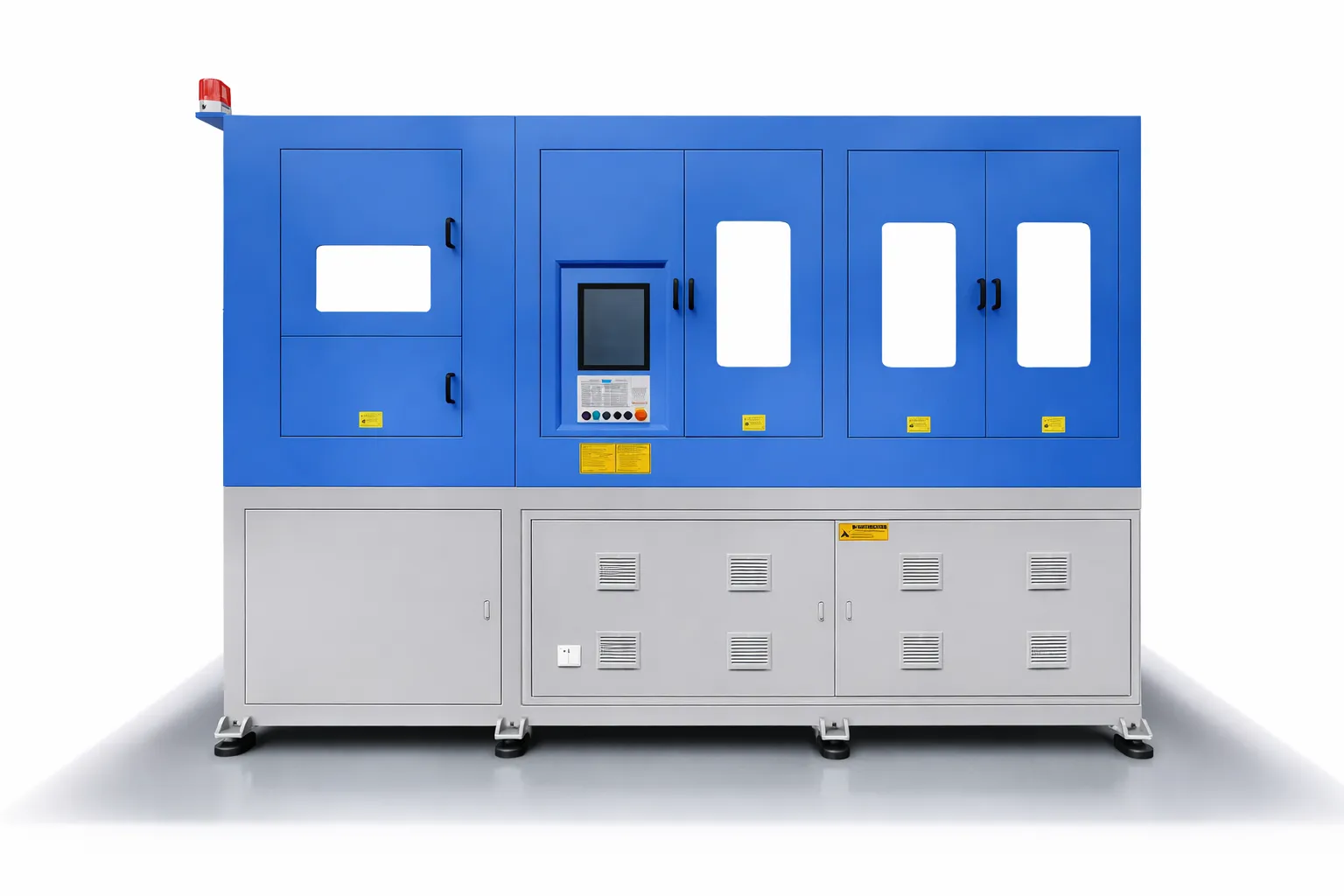
About this article: Prepared by the Korea Ever-Power Technical and Sales Team based on market observations and customer engagement across Vietnam, Indonesia, Thailand, and the broader ASEAN region. ROI figures are illustrative frameworks; substitute local input costs for project-specific calculations. HS code classifications and FTA tariff rates referenced should be verified with a licensed customs broker in the destination country before finalising import cost calculations — tariff schedules are updated periodically.
Related reading: PET Water and Beverage Bottle Manufacturing — Choosing the Right Machine | Semi-Automatic Blow Moulding Machine Buying Guide | PET Packaging Industry Trends 2025–2030
Editor: Cxm