
Eliminando rebarbas: a engenharia mecânica por trás da fixação com servo duplo e da compensação de alta pressão.
Rebarbas e marcas na linha de junção não são um defeito de qualidade isolado — são a assinatura inevitável de uma força de fechamento inadequada durante o sopro de alta pressão. Sistemas de fechamento hidráulico-pneumáticos mais antigos perdem pressão durante o sopro de 2,0 a 3,5 MPa, o molde sofre microaberturas de 0,05 a 0,15 mm e a resina escapa pela linha de junção. Veja como o sistema de fechamento elétrico com servo duplo e compensação de alta pressão da empresa coreana Ever-Power elimina completamente essa falha.
defeitos de flash As linhas de separação nas garrafas não são um problema do molde, mas sim da força de fechamento. Quando o sopro gera uma pressão interna de 2,0 a 3,5 MPa, as metades do molde sofrem uma força de separação na faixa de 180 a 600 kN. Os sistemas de fechamento hidráulico perdem pressão durante esse processo, o molde sofre microaberturas e a resina vaza pela linha de separação. O acabamento manual é a solução encontrada, mas custa aos produtores coreanos entre 80 milhões e 250 milhões de won coreanos por ano em mão de obra desnecessária.
Arquitetura de fixação de servo duplo da Ever-Power coreana Utiliza dois servomotores coordenados que proporcionam travamento mecânico rígido em vez de pressão hidráulica, além de um circuito ativo de compensação de alta pressão que injeta força oposta em microssegundos quando a pressão de sopro aumenta repentinamente. Resultado final: zero rebarbas, zero marcas de linha de partição, zero trabalho manual de acabamento e vida útil do molde de 4 a 6 vezes maior, porque as bordas da cavidade nunca são danificadas por eventos repetidos de microabertura.
1. A Física do Flash: Por que o Fixador Hidráulico Falha Sob Pressão de Sopro
Rebarba — a fina película de plástico extrudada ao longo da linha de junção de uma garrafa acabada — é um dos defeitos mais comuns em linhas de produção ISBM antigas ou de baixo custo. Os fabricantes coreanos geralmente respondem com a remoção manual da rebarba, tratando-a como algo inevitável. Mas não é. A rebarba tem uma única causa raiz, identificável e mecanicamente eliminável: força de fechamento insuficiente durante o processo de sopro de alta pressão.
Durante a fase de sopro de um ciclo ISBM, ar comprimido a 2,0–3,5 MPa é injetado na pré-forma para inflá-la contra a superfície da cavidade do molde. Essa pressão interna é o que confere às garrafas de PET, PETG e Tritan sua forma final e fidelidade de superfície. Mas essa pressão interna também exerce força externa sobre as metades do molde — e as metades do molde são mantidas fechadas apenas pelo sistema de fechamento da máquina. Se a força de fechamento cair temporariamente abaixo da força de separação induzida pelo sopro, o molde se abre micro-organicamente por uma fração de milímetro — e durante essa pequena abertura, a resina vaza pela linha de partição como rebarba.
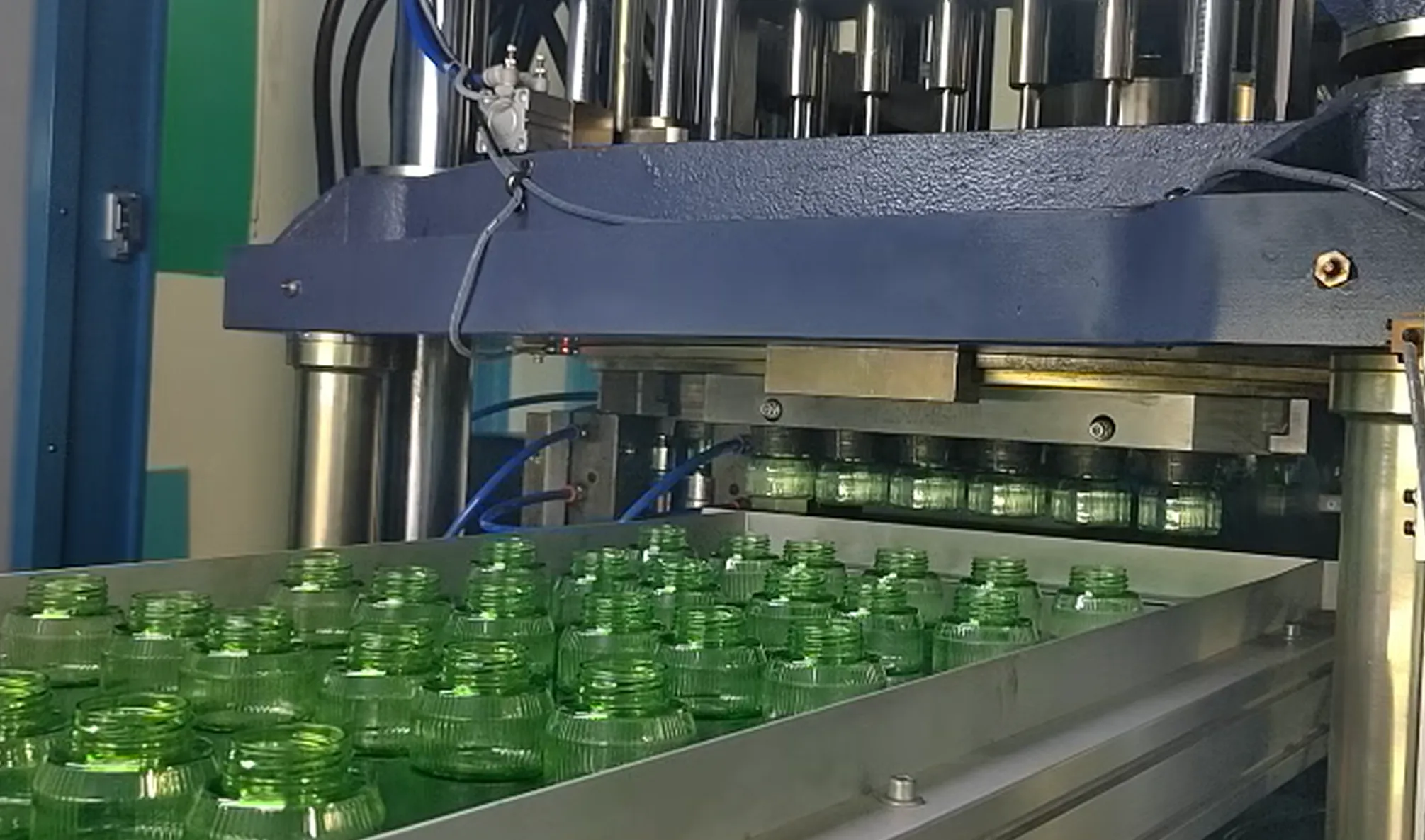
Os sistemas de fechamento hidráulico são particularmente vulneráveis a essa microabertura porque o fluido hidráulico é compressível em escalas de tempo de milissegundos, relevantes para os transientes de pressão de sopro. À medida que a pressão de sopro aumenta repentinamente, o circuito de fechamento hidráulico sofre uma breve queda de pressão enquanto a bomba se ajusta — e durante esses poucos milissegundos, o molde se abre, a rebarba se forma e o ciclo continua com uma garrafa defeituosa. Este é um dos defeitos canônicos analisados em nosso estudo. Guia de campo com 15 defeitos comuns em garrafas ISBM.
2. Quantificando a Força: Matemática da Separação da Linha de Partição
A força de separação que um sistema de fixação deve resistir pode ser calculada diretamente a partir da pressão de sopro e da área projetada do frasco no plano de separação. Para um frasco típico de cosmético coreano de 50 ml com área projetada de 40 mm × 60 mm a uma pressão de sopro de 3,0 MPa: força de separação = 0,04 × 0,06 × 3.000.000 Pa = 7.200 N (≈720 kgf) por cavidade.
Para um molde de garrafa de bebida de 500 ml com 4 cavidades e área projetada de 70 mm × 200 mm a 3,0 MPa: força de separação = 0,07 × 0,20 × 3.000.000 × 4 cavidades = 168.000 N (≈17 toneladas-força). Para um molde de alto volume com 8 cavidades, esse valor se aproxima de 35 toneladas-força.
Os sistemas de fixação devem fornecer uma margem de segurança de pelo menos 1,3 a 1,6 vezes a força de separação para evitar a formação de rebarbas. No caso de 8 cavidades mencionado acima, isso significa que a máquina precisa de uma força de fixação efetiva de aproximadamente 50 toneladas. Sistemas hidráulicos que fornecem 50 toneladas nominais frequentemente apresentam uma queda para 35 a 42 toneladas durante o milissegundo do pico de pressão de sopro transitório — e é exatamente nesse momento que a rebarba se forma. A arquitetura elétrica de servo duplo da Ever-Power, da Coreia do Sul, mantém a força de fixação nominal sem essa queda transitória.
3. Como funciona mecanicamente a fixação por servo duplo
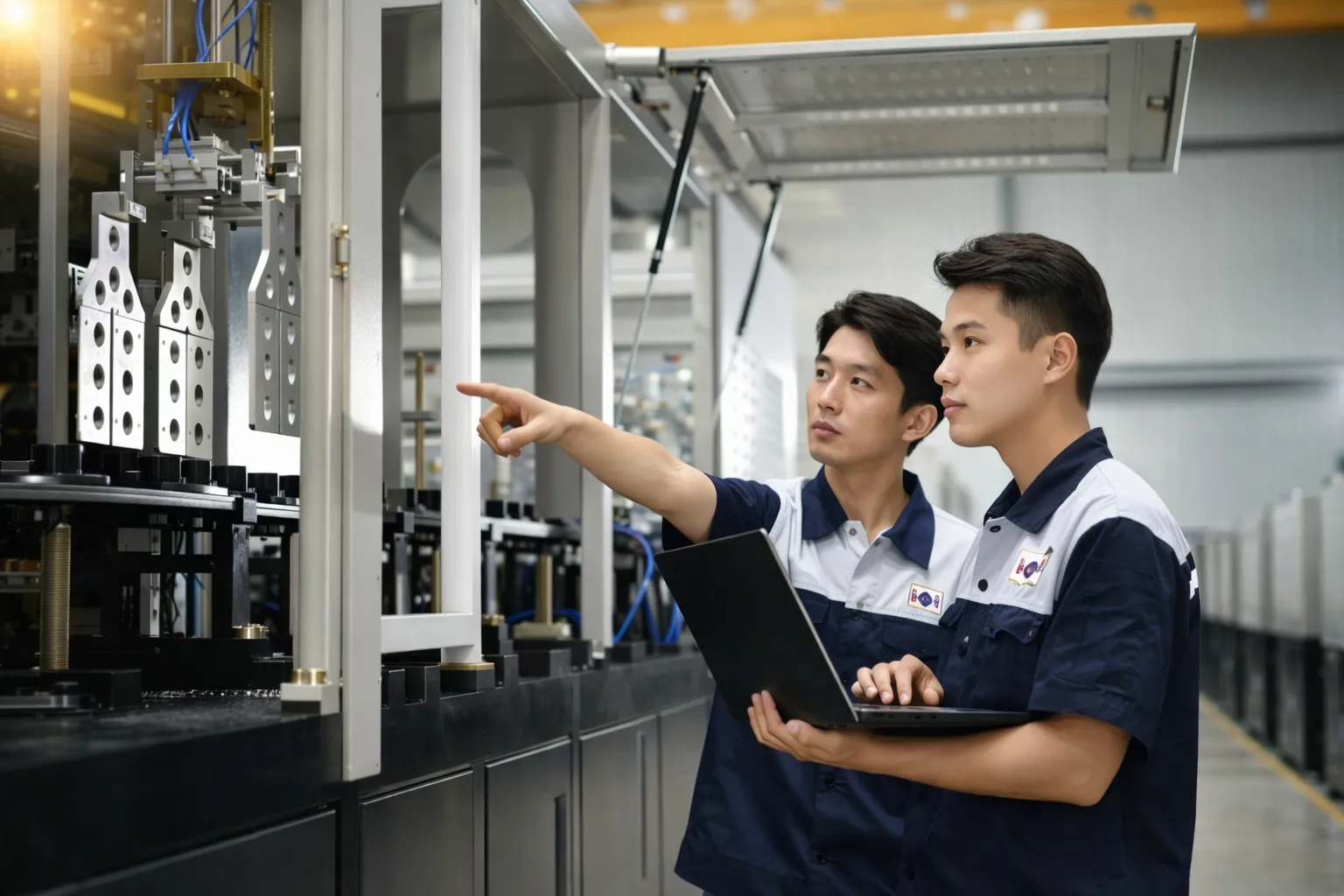
O sistema de fixação elétrica com servo duplo substitui o cilindro hidráulico por dois servomotores sincronizados que acionam mecanismos de fuso de esferas ou de alavanca de precisão. O resultado é um travamento mecanicamente rígido, em vez de um que dependa da pressão do fluido — e as implicações para a engenharia são significativas.
Fase 1 — Abordagem
Durante o fechamento do molde, ambos os servomotores impulsionam a placa móvel em direção à placa fixa em alta velocidade (tipicamente 350–500 mm/s para máquinas de médio porte). Os controladores Ever-Power EV coreanos otimizam esse movimento para desacelerar suavemente até a posição de contato mínimo, eliminando o impacto brusco que desgasta as superfícies do molde em sistemas hidráulicos mais baratos.
Fase 2 — Bloqueio
Ao toque, o mecanismo de alavanca passa pela geometria central, que multiplica mecanicamente o torque do servo em uma força de fixação massiva. Essa é a elegância do design de servo duplo: na posição travada, a força de fixação é mantida pela geometria da alavanca, e não pelo torque contínuo do motor ou pela pressão hidráulica. Os motores praticamente não consomem energia quando travados — eles simplesmente mantêm a posição.
Fase 3 — Resistência a eventos de soco
Quando o pico de pressão de sopro chega, a geometria da articulação resiste mecanicamente à força de separação. Não há transientes hidráulicos, compressão de fluido ou queda de pressão. As metades do molde permanecem travadas com uma precisão de 0,001 mm — muito abaixo do limite em que rebarbas podem se formar. O resultado final é uma precisão na linha de junção com exatidão em nível micrométrico, que é exatamente o que os compradores do segmento premium exigem, conforme discutido em nosso [link para o artigo/recurso]. Calculadora de contagem de cavidades e força de fixação ISBM.
4. Compensação de Alta Pressão: Injeção Ativa de Força
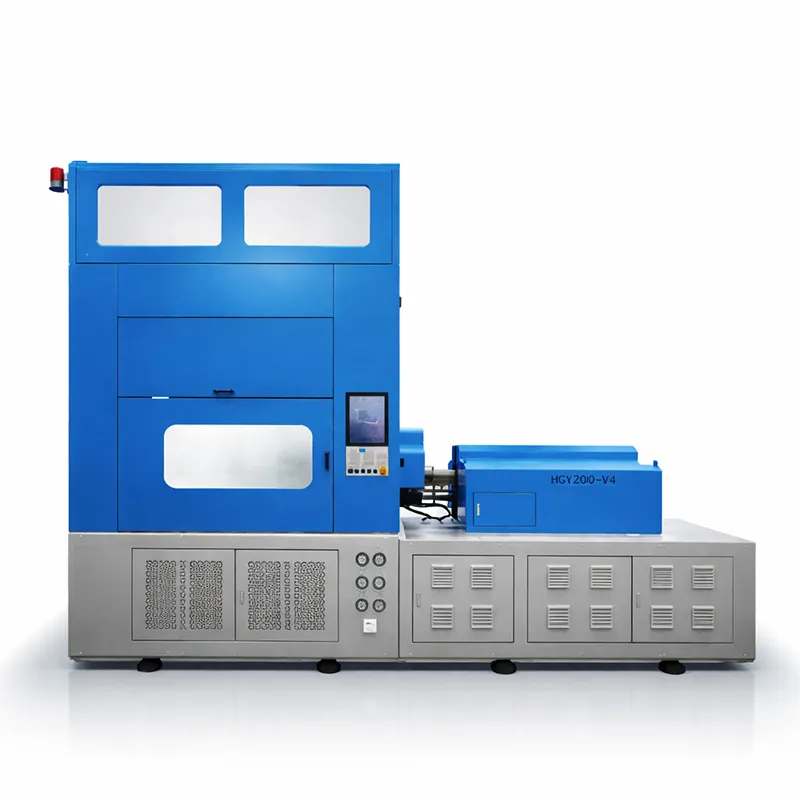
Mesmo com travamento mecânico rígido, impactos extremos em moldes de garrafas grandes podem momentaneamente exceder a resistência elástica da trava. As máquinas coreanas Ever-Power para trabalhos pesados — os modelos HGY250-V4, HGY650-V4 e a plataforma de 6 estações HGYS280-V6 — incluem um sistema adicional de travamento mecânico. circuito de compensação de alta pressão ativo que monitora a pressão da câmara de sopro em tempo real e aplica força oposta através dos servomotores quando eventos de separação são detectados.
O circuito de compensação opera com tempos de resposta inferiores a um milissegundo: um transdutor de pressão no circuito de sopro envia um sinal de retorno ao controlador EV, que comanda um torque servo adicional sincronizado com o evento de sopro. Trata-se de um controle em malha fechada na escala de constante de tempo da máquina — algo impossível em sistemas hidráulicos, pois os atuadores hidráulicos não conseguem responder em microssegundos.
Para produtores coreanos que realizam trabalhos pesados — galões de água de 5 litros, grandes potes de kimchi ou jarras de alimentos no Plataforma ISBM para serviço pesado HGY650-V4 — A compensação de alta pressão é o que diferencia uma produção repetível de um fluxo constante de garrafas rejeitadas por vazamento.
5. Por que dois servos, e não um: Geometria de sincronização
Uma questão de engenharia pertinente é por que a empresa coreana Ever-Power utiliza dois servomotores sincronizados por placa de fixação em vez de um motor maior. A resposta está no paralelismo do plano de separação — e isso importa mais do que o custo do segundo motor.
Um sistema de fixação com um único motor aplica força em um ponto específico da placa móvel. Sob carga, a placa sofre uma leve deflexão, com o lado mais próximo do motor permanecendo paralelo e o lado oposto curvando-se de 0,05 a 0,20 mm, dependendo da rigidez da placa. Essa deflexão produz uma folga irregular na linha de junção, o que resulta em rebarbas parciais no lado sem carga da garrafa, mesmo com uma força de fixação total adequada.
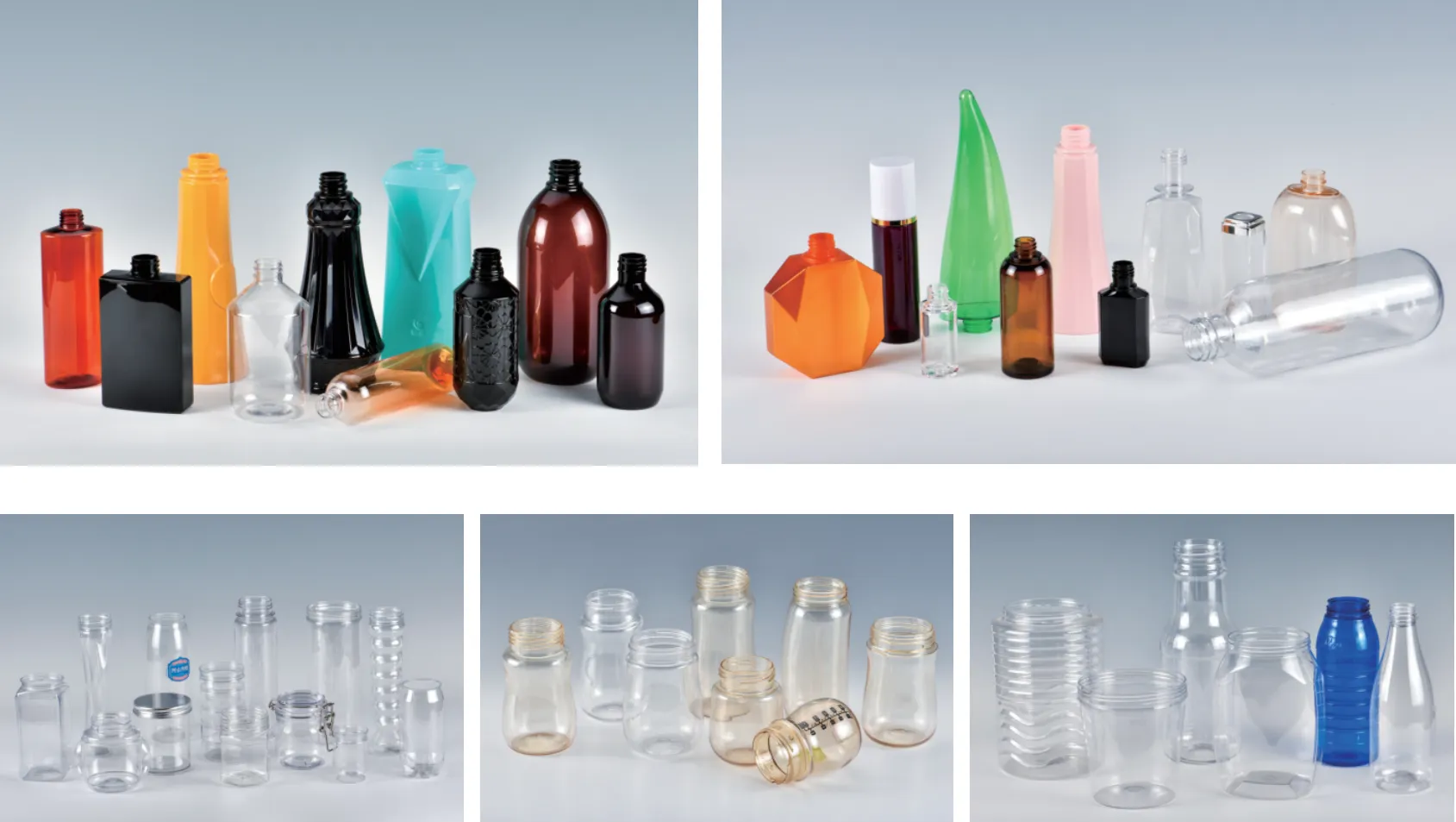
A arquitetura de servo duplo aplica a força de fixação simetricamente — tipicamente nos cantos superior esquerdo e inferior direito da placa móvel, ou em ambos os cantos superiores em projetos de fixação horizontal. A placa experimenta uma carga equilibrada, a deflexão é reduzida em 60–80% e o plano de separação permanece paralelo com uma precisão de 0,005 mm em toda a superfície. A garrafa não tem um lado preferencial para formação de rebarbas — e, portanto, as rebarbas não se formam em nenhum lugar. Essa precisão é um dos motivos pelos quais as plataformas coreanas Ever-Power suportam a produção de produtos premium. Enchimento de frascos de cosméticos coreanos por contrato com a precisão exigida pelos sistemas de qualidade da Amorepacific e da LG H&H.
6. Ciclo de vida do mofo: de 2 anos a mais de 8 anos
A microabertura do molde não apenas produz rebarbas — ela danifica fisicamente a borda da cavidade do molde. Cada ciclo de sopro em um sistema de fechamento inadequado golpeia a borda da cavidade com uma carga de impulso de 1.000 a 3.000 N, à medida que o molde se fecha contra a pressão da resina. Ao longo de milhões de ciclos, isso martela e deforma a borda da linha de partição, acelerando o aparecimento de rebarbas permanentes que nenhuma força de fechamento consegue eliminar.
Os fabricantes coreanos relatam ciclos de vida típicos de moldes de 1,5 a 2,5 anos antes que danos nas bordas exijam uma reforma significativa, quando operados com sistemas de fechamento hidráulico. A mesma geometria de molde em uma plataforma Ever-Power de servo duplo, também coreana, opera rotineiramente de 6 a 10 anos antes da necessidade de reforma — porque as bordas das cavidades nunca são submetidas a cargas de impulso de microabertura. Para um molde premium de 8 cavidades para produtos de beleza coreanos, que custa entre 80 milhões e 150 milhões de won coreanos, essa extensão do ciclo de vida representa uma economia de capital de 50 milhões a 120 milhões de won coreanos por molde — e a maioria das linhas de produção utiliza de 6 a 12 moldes.
Esse efeito de preservação do molde é o motivo pelo qual clientes que utilizam moldes japoneses antigos (Nissei ASB, Aoki) em máquinas coreanas Ever-Power frequentemente observam que seus moldes antigos duram mais do que as máquinas originais para as quais foram projetados — veja nossa análise de Executando moldes Nissei ASB e Aoki em motores Ever-Power coreanos. para a lógica completa de proteção contra custos irrecuperáveis.
7. Eliminando o corte manual: a matemática da mão de obra coreana
O trabalho manual de acabamento — operadores que usam ferramentas de rebarbação para remover o excesso de material das garrafas acabadas — é o custo oculto que faz com que os produtores coreanos relutem em admitir que têm um problema de fechamento. Essa mão de obra é pouco glamorosa, difícil de recrutar e cada vez mais impossível de preencher à medida que o perfil demográfico da indústria manufatureira coreana muda.
Uma linha de produção coreana típica, com capacidade de 25 milhões de garrafas por ano e que utiliza o sistema 30% para o acabamento, emprega de 2 a 3 operadores dedicados em diferentes turnos. Com um custo mensal de 4,2 a 5,1 milhões de KRW em plena capacidade, isso representa um custo de mão de obra de 100 a 185 milhões de KRW por ano, que existe apenas para compensar a fixação inadequada. Eliminar esse custo por meio de um sistema de fixação servo-assistida dupla representa, essencialmente, uma economia contínua — durante toda a vida útil da linha.
Há também uma dimensão de qualidade: os operadores de corte manual introduzem variabilidade. Algumas garrafas saem perfeitamente cortadas; outras apresentam marcas visíveis onde a ferramenta de rebarbação deslizou; outras ainda têm rebarbas residuais que passaram despercebidas. Para compradores das indústrias farmacêutica e de cosméticos coreanos (K-Beauty), essa variabilidade é inaceitável. Eliminar as rebarbas na origem — e não posteriormente — é a única solução que atende aos requisitos de qualidade do segmento premium. A estrutura completa da taxa de refugo está detalhada em nosso [documento/referência]. estrutura de redução da taxa de sucata.

8. Conformidade com a Qualidade: Linhas de Separação e Mercados Premium
Os sistemas de qualidade de compradores premium especificam explicitamente as tolerâncias da linha de junção. Os principais fabricantes de produtos de beleza coreanos (subsidiárias da Amorepacific, empresas da LG H&H, COSRX) geralmente não permitem nenhuma marca visível da linha de junção nas embalagens primárias de cosméticos — medida visualmente sob iluminação padrão de inspeção à distância de um braço. Os compradores de produtos farmacêuticos coreanos (Daewoong, Yuhan, JW Pharm, Hanmi Pharm) especificam projeções da linha de junção inferiores a 0,05 mm para frascos de envase estéril. Os fabricantes de mamadeiras — que precisam atender aos padrões regulatórios da KFDA, FDA e da UE 10/2011 — enfrentam limites explícitos para resíduos de partículas e da linha de junção.
Os fabricantes que tentam se qualificar para esses relacionamentos premium com clientes usando sistemas de fixação hidráulica praticamente não conseguem. A precisão da linha de junção exigida está abaixo do que os sistemas hidráulicos podem fornecer de forma confiável, ciclo após ciclo, durante anos. As plataformas de servo duplo Ever-Power, da Coreia do Sul, não são um "diferencial" para a qualificação no segmento premium — elas são funcionalmente obrigatórias.
Para os produtores coreanos de embalagens de alimentos que atendem clientes como CJ CheilJedang (Bibigo), Daesang, Sajo, Sempio ou Ottogi, a precisão da linha de junção importa um pouco menos, mas a produção sem rebarbas continua sendo um diferencial de qualidade que permite preços contratuais mais altos.
9. Bônus de Eficiência Energética: Por que o servomotor supera o hidráulico
Além de eliminar o excesso de material, o sistema de fixação com servomotores duplos proporciona um ganho substancial em eficiência energética. Os sistemas de fixação hidráulica mantêm a bomba hidráulica funcionando continuamente, mesmo quando a máquina está ociosa entre os ciclos — com uma carga parasita típica de 8 a 15 kW por máquina. Os sistemas servomotores consomem energia significativa apenas durante o movimento efetivo, caindo para menos de 0,5 kW quando travados.
Em um regime de produção 24 horas por dia, 7 dias por semana, com 8.400 horas de operação por ano, a diferença no consumo parasita é de 60.000 a 115.000 kWh anualmente por máquina — a uma tarifa industrial da KEPCO de 165 a 185 KRW por kWh, isso representa de 10 a 21 milhões de KRW por máquina por ano. Combinando isso com a eliminação das trocas de fluido hidráulico, da manutenção de filtros hidráulicos e da substituição de vedações, a economia operacional total se aproxima de 18 a 32 milhões de KRW anualmente por máquina. A análise detalhada da diferença de energia entre sistemas servo e hidráulicos está disponível em nosso [link para o relatório/documento/etc.]. Análise detalhada da economia de energia do veículo elétrico totalmente servo ISBM 40%..
10. Como auditar a qualidade da fixação antes da compra
Ao avaliar máquinas ISBM de qualquer fornecedor, os fabricantes coreanos devem solicitar evidências específicas da arquitetura de fixação, em vez de aceitar alegações de marketing:
Item de auditoria 1 — Especificações do servomotor. Solicite a marca do motor, a potência nominal, o torque máximo e a resolução do encoder. As plataformas Ever-Power EV coreanas publicam as especificações completas dos servomotores (normalmente Yaskawa ou Inovance, dependendo do tamanho da máquina).
Item de auditoria 2 — Alternar dados de geometria. Solicite a relação de alavancagem e a posição do ponto morto; fornecedores confiáveis compartilharão essas informações. Relações de alavancagem menores indicam maior multiplicação mecânica e melhor rigidez de fixação.
Item de auditoria 3 — Detalhes do circuito de compensação de alta pressão. Confirme se existe o circuito de compensação, qual transdutor de pressão é utilizado e qual o tempo de resposta em malha fechada. As plataformas coreanas da Ever-Power divulgam tempos de resposta de 3 a 8 ms.
Item de auditoria 4 — Evidência de medição da linha divisória. Solicite a produção de garrafas a partir de testes PAT e peça à sua equipe de controle de qualidade que meça a projeção da linha de junção usando um paquímetro ou inspeção óptica. Resultado aceitável: inferior a 0,03 mm, idealmente inferior a 0,015 mm.
Item de auditoria 5 — Dados de resistência em ciclo longo. Solicite dados de medição da linha de junção após 100.000 ciclos de testes de resistência. Se um fornecedor não puder ou não quiser fornecer esses dados, é provável que seu sistema de fixação não consiga manter a precisão ao longo da vida útil da produção.
Perguntas frequentes
P1. A Ever-Power coreana consegue adaptar um sistema de fixação servo-dupla a uma máquina hidráulica já existente?
Geralmente não — a placa de fixação, a rigidez da estrutura e a arquitetura de controle de movimento estão muito interligadas ao projeto hidráulico original. Os produtores que enfrentam problemas crônicos de rebarba geralmente se beneficiam mais substituindo a máquina por uma nova plataforma Ever-Power EV coreana do que tentando uma adaptação parcial. Os moldes existentes normalmente são transferidos e continuam produzindo na nova máquina por mais 4 a 6 anos ou mais.
Q2. O sistema de fixação com servo duplo funciona para garrafas muito grandes (recipientes de água com mais de 5 litros)?
Sim — a plataforma HGY650-V4 oferece uma força de fechamento de 400 kN com arquitetura de servo duplo e compensação de alta pressão, projetada especificamente para a produção de garrafas pesadas de 5 a 20 litros. Apesar das maiores forças de separação envolvidas, o sistema de servo duplo mantém a precisão da linha de separação melhor do que sistemas hidráulicos com potência equivalente.
P3. Qual o impacto da compensação de alta pressão no tempo de ciclo?
Funcionalmente, nenhuma. O circuito de compensação não adiciona praticamente nenhum tempo ao ciclo, pois opera durante a fase de sopro existente, em vez de prolongá-la. Alguns perfis otimizados chegam a reduzir ligeiramente o tempo de ciclo, permitindo rampas de pressão de sopro mais agressivas, agora que o risco de vaporização instantânea foi eliminado — tipicamente, uma economia de 0,2 a 0,5 segundos por ciclo em garrafas na faixa de 100 a 500 ml.
Q4. Como posso saber se o meu problema atual de rebarba é um problema de fixação e não um problema do molde?
Teste de diagnóstico: aumente a força de fechamento em 15–20% e observe se há redução no excesso de material. Em caso afirmativo, o problema é a adequação da força de fechamento. Caso contrário, o problema provavelmente está na geometria da linha de partição ou na condição da superfície do próprio molde. Os engenheiros da Ever-Power coreana podem analisar os parâmetros do processo e amostras de garrafas remotamente para fornecer um diagnóstico em 2 a 3 dias úteis, sem custo adicional.
Q5. Existem situações em que a fixação hidráulica é realmente preferível?
Para a produção de água/refrigerantes PET em volumes extremos (mais de 300 milhões de garrafas anualmente com SKUs idênticos), o fechamento hidráulico em linhas de dois estágios continua sendo competitivo em termos de custo, pois os requisitos de tolerância da linha de junção são menores. Para todos os outros produtos — K-Beauty, mamadeiras, produtos farmacêuticos, potes de alimentos, alimentos e bebidas premium — o fechamento elétrico com servomotor duplo é a tecnologia comprovadamente a melhor opção para os produtores coreanos em 2026.
Pronto para eliminar rebarbas e recuperar o ciclo de vida do mofo?
Os engenheiros da Ansan-si da Korean Ever-Power analisarão seus dados atuais de defeitos na linha de junção, recomendarão a configuração correta da plataforma de servo duplo e quantificarão a economia de mão de obra e de vida útil do molde em relação ao seu volume de produção específico. O diagnóstico inicial geralmente é concluído em até 5 dias úteis.