Recipientes para aquicultura e hidroponia em sistemas ISBM coreanos: compatibilidade de nutrientes, resistência aos raios UV e o modelo de produção para embalagens na agricultura inteligente coreana.
O setor de agricultura inteligente e de ambiente controlado da Coreia está criando uma nova demanda por embalagens PET especializadas — frascos para soluções nutritivas, embalagens para suplementos de piscicultura e recipientes para meios de cultivo hidropônico — onde a transparência óptica, a compatibilidade química e o custo de produção convergem para a ISBM coreana como solução de fabricação.
Compatibilidade de nutrientes
Suprimentos para fazendas inteligentes coreanas
Escritório de Engenharia da Korean Ever-Power · Ansan-si, Gyeonggi-do · Maio de 2026
1. Aquicultura coreana e agricultura inteligente: um mercado crescente de contêineres ISBM
O setor de agricultura em ambiente controlado da Coreia — que engloba fazendas verticais com iluminação LED (em Seul, Incheon e nas novas cidades coreanas), operações em estufas hidropônicas (Gyeonggi-do e Cholla do Sul) e fazendas de aquicultura marinha (Gyeongsang do Sul e Jeju) — está gerando uma demanda crescente por embalagens PET especiais, que os produtores coreanos tradicionais de embalagens ISBM para produtos de higiene pessoal e bebidas não atendiam. O mercado é relativamente novo, mas cresce a uma taxa de 15 a 221 mil toneladas por ano, à medida que os programas de investimento em fazendas inteligentes do governo coreano (iniciativa Vale da Inovação em Fazendas Inteligentes da Coreia 2030) ampliam a capacidade de produção de agricultura em ambiente controlado no país.
Os requisitos de embalagens para aquicultura e agricultura inteligente na Coreia diferem das embalagens padrão coreanas para alimentos/bebidas ISBM em quatro aspectos: (1) as embalagens devem ser compatíveis com a química da solução nutritiva mineral, e não com produtos alimentícios; (2) as embalagens geralmente requerem capacidade de bloqueio UV para evitar o crescimento de algas impulsionado pela fotossíntese na solução nutritiva; (3) os formatos de volume variam de soluções concentradas (500 ml a 1 L) a aplicações padrão (1 L a 5 L) e fornecimento a granel (10 a 20 L) dentro de uma mesma linha de produtos; e (4) o principal canal de distribuição é o fornecimento por cooperativas agrícolas e a venda direta online para os agricultores, em vez do varejo coreano — o que impõe requisitos logísticos e de embalagem diferentes para o design das embalagens em comparação com a produção ISBM voltada para o varejo coreano.
2. Frascos para Solução Nutritiva Hidropônica: Requisitos de Design e Compatibilidade
As soluções nutritivas hidropônicas coreanas são soluções de sais minerais (tipicamente: nitrogênio como nitrato de amônio e nitrato de cálcio, fósforo como fosfato monopotássico, potássio, sulfato de magnésio, micronutrientes na forma quelatada) com pH entre 4,5 e 7,0 e sólidos totais dissolvidos de 800 a 2.500 ppm. Essas condições químicas estão bem dentro da compatibilidade ISBM para PET — soluções de sais minerais com pH neutro a levemente ácido à temperatura ambiente praticamente não têm efeito de degradação sobre o PET durante períodos de armazenamento de 24 meses.
Requisitos de design de recipientes hidropônicos coreanos que vão além das especificações padrão para bebidas: (1) aditivo bloqueador de UV no PET (masterbatch absorvedor de UV com carga de 0,3–0,8% ou masterbatch de cor bloqueador de UV) para evitar a transmissão de luz UV que desencadeia o crescimento de algas na solução nutritiva transparente; (2) gargalo de boca larga (mínimo de 38 mm) para soluções nutritivas concentradas que são dispensadas por diluição e exigem fácil despejo sem acessórios adaptadores de garrafa para recipiente; e (3) fechamento inviolável com uma faixa de ruptura que demonstra que o produto não foi diluído ou adulterado durante a distribuição na cadeia de suprimentos agrícolas coreana — um requisito de cooperativa agrícola coreana para todos os produtos nutritivos concentrados.
3. Embalagens para suplementos alimentares em aquicultura: necessidades de embalagem em pisciculturas coreanas
A aquicultura marinha coreana — principalmente o cultivo de abalone coreano (전복), robalo coreano (농어), linguado coreano (광어) e dourada coreana (참돔) em Gyeongsang do Sul e Jeju — utiliza suplementos alimentares líquidos, soluções probióticas e tratamentos preventivos de doenças, fornecidos em recipientes de PET para ISBM (Industrial Sea Beam). O mercado coreano de suplementos alimentares para aquicultura movimenta aproximadamente 180 bilhões de won coreanos anualmente e é dominado por 3 a 10 empresas coreanas especializadas em nutrição para aquicultura, cujas necessidades de embalagem os produtores coreanos de ISBM têm sido historicamente atendidas com recipientes químicos industriais padrão.
Os recipientes para suplementos de aquicultura coreana diferem dos recipientes químicos padrão em três requisitos específicos: (1) os recipientes devem ser próprios para contato com alimentos (os produtos entram em contato com peixes que são posteriormente consumidos) — a conformidade com as normas da KFDA para materiais em contato com alimentos (e não apenas com as normas para embalagens industriais) é obrigatória; (2) os recipientes são frequentemente armazenados e utilizados em ambientes marinhos de alta umidade (edifícios de tratamento de água em fazendas de peixes coreanas), onde a adesão do rótulo e a retenção do lacre de fechamento devem ser validadas a 90%+ UR por 12 meses; e (3) as operações de aquicultura coreanas manuseiam os recipientes em água fria (a temperatura da água do mar em fazendas de peixes na Coreia é regulada entre 14 e 20 °C) — as garrafas PET não apresentam problemas de fragilidade em baixas temperaturas, mas os operadores de aquicultura coreanos observam que as garrafas PET transparentes permitem a verificação visual de que a solução do suplemento não sofreu separação de fases ou cristalização, o que é um indicador de qualidade do produto que eles valorizam.
4. Tecnologia de bloqueio UV para prevenção de algas em recipientes de nutrientes coreanos
O crescimento de algas em frascos transparentes de solução nutritiva coreanos é um problema relatado por agricultores hidropônicos da Coreia do Sul que armazenam frascos parcialmente usados sob conjuntos de luzes de LED para cultivo — a mesma luz que impulsiona o crescimento das plantas coreanas também estimula a fotossíntese das algas dentro do frasco de PET transparente. A solução consiste em um masterbatch bloqueador de UV misturado à pré-forma de PET na estação de injeção da ISBM na Coreia do Sul — compostos absorvedores de UV (classe benzotriazol para compatibilidade com PET) em concentrações de 0,3–0,8% bloqueiam o componente UV do espectro de LED que estimula a fotossíntese das algas sem reduzir significativamente a transmissão de luz visível a ponto de prejudicar a visibilidade do produto.
A concentração do masterbatch de bloqueio UV deve ser validada em relação ao espectro específico de luz LED para cultivo utilizado na aplicação de fazenda inteligente coreana. Conjuntos de LEDs de amplo espectro (LEDs brancos de espectro completo) exigem uma concentração maior de absorvedor de UV do que conjuntos de LEDs vermelhos/azuis de espectro estreito que não incluem comprimentos de onda UV. Os produtores coreanos de ISBM que fornecem frascos de solução nutritiva com bloqueio UV para clientes de fazendas inteligentes coreanas devem solicitar os dados de emissão espectral dos LEDs ao operador da fazenda inteligente coreana e validar o desempenho do bloqueio UV com um teste acelerado de fotoestabilidade (frasco exposto com solução nutritiva sob o conjunto de LEDs específico do cliente por 30 dias, com critério de aceitação de ausência de crescimento visível de algas).
5. Matriz de Compatibilidade Química: Produtos Químicos Agrícolas Coreanos + PET ISBM
| Categoria de Produtos Químicos Agrícolas | Compatível com PET? | Aplicativo coreano |
|---|---|---|
| Soluções nutritivas hidropônicas (sal mineral, pH 4,5–7,0) | ✓ Excelente | Fazendas verticais coreanas, hidroponia em estufa |
| Suplementos probióticos e enzimáticos para peixes (solução aquosa, pH neutro) | ✓ Excelente | Fazendas coreanas de abalone, linguado e robalo |
| Ácidos orgânicos diluídos (cítrico, húmico, fúlvico — pH 3–5) | ✓ Bom | Corretivo de solo e estimulante de raízes coreanos |
| Concentrados de inseticidas e fungicidas | ⚠ Verificar por composto | Concentrados à base de solventes requerem teste de compatibilidade. |
| Desinfetantes clorados (>5% NaOCl) | ✗ Não é adequado | Utilize recipientes de PP ou HDPE para a desinfecção de tanques em pisciculturas coreanas. |
6. Gama de formatos de embalagem: concentrado de 500 ml a granel de 20 L.
Os formatos de contêineres para aquicultura e hidroponia na Coreia abrangem uma gama de volumes mais ampla do que a maioria das aplicações coreanas de sistemas de irrigação inteligentes (ISBM, na sigla em inglês) — desde conjuntos de concentrado de nutrientes de duas partes (Parte A e Parte B) de 500 ml até frascos de 1 a 5 litros para aplicação individual, chegando a contêineres de 10 a 20 litros para abastecimento a granel em grandes operações de fazendas inteligentes na Coreia. Os dois extremos dessa gama exigem diferentes plataformas de máquinas ISBM coreanas:
Concentrados de nutrientes coreanos de 500 ml a 5 litros e formatos de taxa de aplicação: O guia de produção coreano da ISBM para contêineres de produtos químicos industriais abrange a engenharia da espessura da parede e a estrutura de certificação da ONU aplicável a essa linha de produtos. A classificação de um produto nutritivo pela RDA (Administração de Desenvolvimento Rural) coreana como fertilizante ou pesticida determina se a certificação de materiais perigosos da ONU é necessária — os fertilizantes coreanos normalmente não exigem certificação da ONU, mas os pesticidas registrados na Coreia exigem, independentemente da concentração.
Contêineres de fornecimento a granel coreanos de 10 a 20 litros: O Plataforma ISBM robusta de 4 estações para contêineres de 5L a 20L Aplica-se aos formatos de fornecimento a granel para aquicultura coreana — o HGY650-V4 processa pré-formas com peso de até 650 g, necessárias para contêineres PET estruturais de 20 L. Os operadores de piscicultura coreanos que recebem entregas a granel de soluções nutritivas ou suplementos em contêineres PET de 20 L citam a transparência óptica (que permite a verificação visual do nível do produto sem a necessidade de despejar) e o peso substancialmente menor em comparação com contêineres de vidro ou aço inoxidável de 20 L como as principais vantagens em relação a outros materiais de embalagem.
7. Canal Coreano de Fazendas Inteligentes: Venda Direta Online e Distribuição Cooperativa Agrícola
Venda direta online para o produtor rural (plataformas coreanas Naver Smartstore, Coupang e RDA SmartFarm): Os operadores de fazendas inteligentes coreanas compram entre 60 e 701 toneladas de nutrientes e suplementos por meio de canais online coreanos — principalmente Naver Smartstore e Coupang Rocket Delivery. Os contêineres ISBM coreanos para esse canal devem resistir ao manuseio do serviço de entrega expressa coreano (prazo máximo de entrega de 5 dias, com entregas em contêineres padrão na Coreia) sem vazamentos — uma diferença fundamental em relação ao fornecimento a granel para cooperativas agrícolas, onde a entrega paletizada é padrão.
Fornecimento da cooperativa agrícola coreana (농협, Nonghyup): A Federação Nacional de Cooperativas Agrícolas da Coreia (Nonghyup) distribui insumos agrícolas para agricultores coreanos por meio de aproximadamente 1.100 filiais de cooperativas locais. Os contêineres ISBM coreanos destinados à distribuição pela Nonghyup devem atender às especificações de embalagem da Nonghyup, incluindo requisitos de empilhamento para condições de armazenamento em armazéns cooperativos, orientação do rótulo voltada para a prateleira (somente vertical) e registro da categoria 농협 (Nonghyup) da combinação produto/embalagem. Os produtores coreanos de ISBM que visam esse canal devem trabalhar com seus clientes coreanos de marcas de agrotóxicos para o registro na Nonghyup antes da produção.
8. Quadro Regulatório: Conformidade com as normas da RDA e do MOE da Coreia para embalagens de produtos agroquímicos
Registro de fertilizantes da RDA (Administração de Desenvolvimento Rural) da Coreia: As soluções nutritivas hidropônicas coreanas classificadas como fertilizantes pela Lei de Gestão de Fertilizantes da Coreia devem ser registradas na RDA (Autoridade de Desenvolvimento de Recursos). As especificações do recipiente (incluindo material, volume e tipo de fechamento) fazem parte do registro do produto na RDA — alterações no recipiente após o registro exigem notificação à RDA. Os produtores coreanos de ISBM (Microrganismos de Produção de Solo Intensivo) que fornecem fertilizantes registrados na RDA devem manter registros de produção dos recipientes, demonstrando que cada lote de produção corresponde à especificação registrada.
Embalagem de pesticidas na Coreia (Lei de Controle de Pesticidas da Coreia): Os tratamentos para doenças em pisciculturas coreanas e os pesticidas concentrados exigem registro no Ministério da Agricultura, Alimentação e Assuntos Rurais da Coreia (MAFRA), com requisitos específicos de embalagem: lacre de segurança, trava de segurança infantil (para todos os produtos domésticos ou de pequenas propriedades rurais) e certificação UN 3H1 no grupo de embalagem apropriado para a classificação de perigo do produto químico. Estrutura de seleção de moldes de 9 fatores para compradores coreanos Abrange o Fator 7 — requisitos de certificação regulamentar — que devem ser determinados antes do projeto do molde para recipientes de pesticidas, a fim de garantir que o design do acabamento do gargalo atenda aos requisitos de fechamento CRC.
9. Plataforma de máquinas ISBM coreana para produção agrícola e aquícola
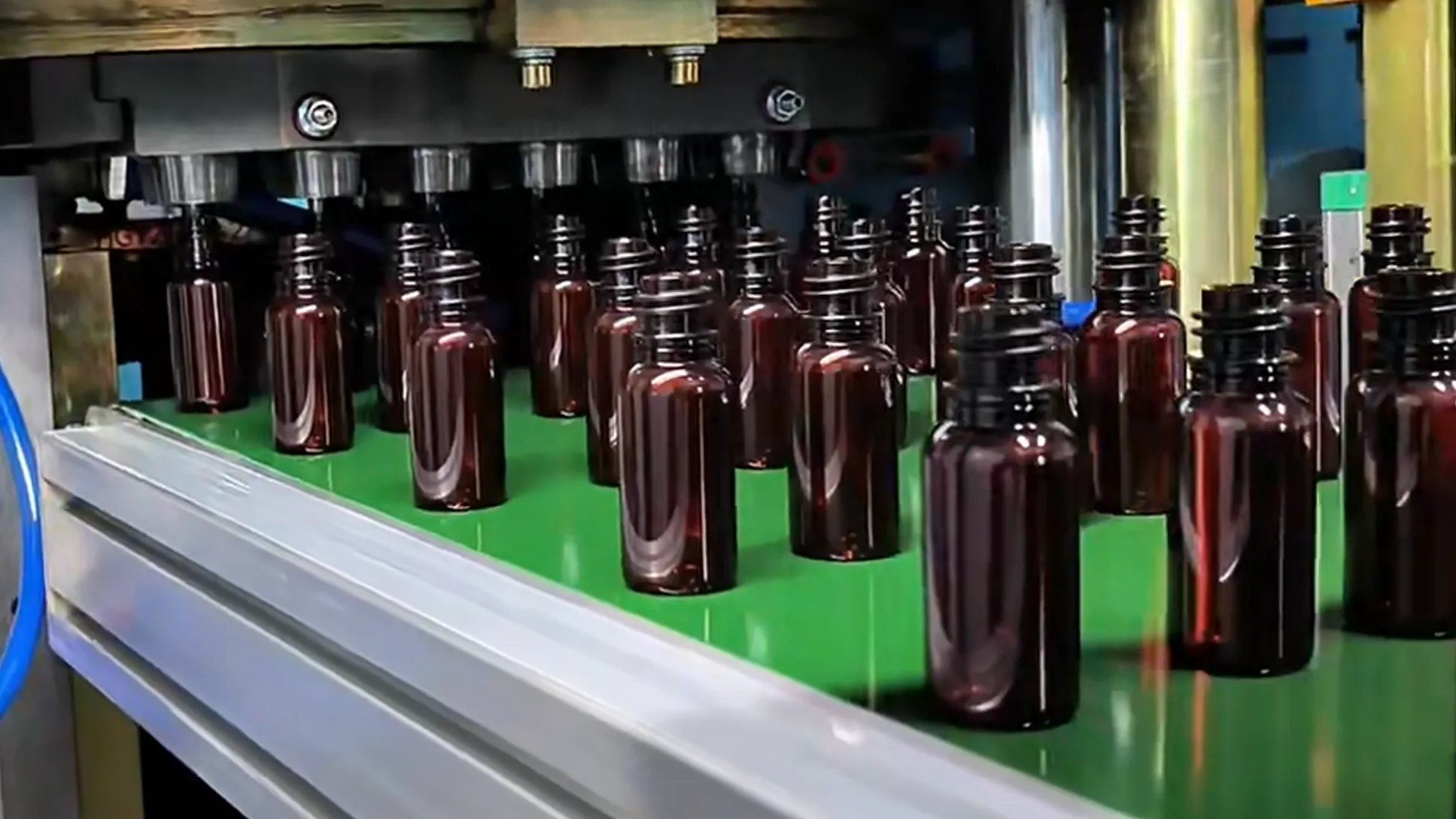
A produção coreana de recipientes para aquicultura e hidroponia utiliza a mesma linha de plataformas ISBM de 4 estações da Ever-Power que outras aplicações industriais coreanas, dimensionadas para o volume específico do recipiente e peso da pré-forma: HGY200-V4 EV para concentrados de nutrientes de 500 ml a 2 L (4 a 6 cavidades), HGY250-V4 EV para recipientes de 3 a 5 L com taxa de aplicação controlada e HGY650-V4 EV para recipientes de 10 a 20 L para fornecimento a granel. O masterbatch com bloqueio UV utilizado nos processos de envase de solução nutritiva na Coreia não requer modificações na máquina — o masterbatch é introduzido em proporções de carregamento padrão e não exige alterações na temperatura do cilindro, pressão de injeção ou parâmetros de condicionamento, além de um pequeno ajuste no índice de refração para o sistema de monitoramento de transparência óptica.
10. Plataforma de contêineres agrícolas Ever-Power da Coreia
A Ever-Power, da Coreia do Sul, oferece suporte à produção para fabricantes coreanos de contêineres industriais (ISBM) que estão entrando no segmento de contêineres para aquicultura e agricultura inteligente — incluindo protocolo de carregamento de masterbatch com bloqueio UV para aplicações de soluções nutritivas na Coreia do Sul, suporte à documentação de registro de contêineres pela RDA e o primeiro teste de produção para a pré-seleção UN 3H1 de contêineres para pesticidas da MAFRA (Autoridade de Agricultura, Alimentação e Assuntos Rurais da Coreia do Sul). Os fabricantes coreanos de contêineres industriais que estão diversificando seus negócios de contêineres industriais para a agricultura inteligente e aquicultura na Coreia do Sul estão bem posicionados — o programa de investimento Smart Farm 2.0 do governo coreano, de 3,3 trilhões de won coreanos (2023–2027), está aumentando diretamente a escala das operações de hidroponia e aquicultura na Coreia do Sul e sua demanda por contêineres industriais especializados.
Perguntas frequentes
Plataforma Agrícola
Fornecemos produtos nutricionais para fazendas inteligentes ou aquicultura na Coreia?
A empresa coreana Ever-Power oferece design de contêiner com bloqueio UV e suporte para documentação RDA.
Desde o protocolo de masterbatch com bloqueio UV até a especificação de contêineres para registro na RDA coreana, a linha HGY200-V4 a HGY650-V4 da Ever-Power da Coreia abrange todo o espectro de tamanhos de contêineres para fazendas inteligentes na Coreia.
Recursos relacionados
Gama de máquinasKorean Ever-Power ISBM de 4 estações com alcance totalHGY200-V4 a HGY650-V4 — a linha completa de contêineres para aquicultura coreana e fazendas inteligentes, de 500ml para concentrado a 20L para granel.
Formato grandeGuia de contêineres coreanos ISBM de alta resistência de 5L a 20LGuia completo de engenharia para contêineres PET coreanos de 5 a 20 litros — espessura da parede, peso da pré-forma e plataforma de máquina aplicáveis a formatos de fornecimento a granel para aquicultura.