
ZQ SERIES · MACHINE SELECTION · BUYER’S GUIDE · KOREA EVER-POWER
IBM Machine Selection Guide:
ZQ Series Buyer’s Guide
Selecting the correct ZQ model for an IBM project determines production unit cost, capital efficiency, regulatory qualification timeline and scale-up flexibility for the machine’s commercial life. This guide walks through the four-step ZQ selection framework — format and volume calculation, three-constraint verification, application-specific requirements and total ownership cost — with selection worked examples across pharmaceutical, food and personal care IBM applications.
ZQ40 → ZQ135 Full Range
TCO and Payback Analysis
KOREA EVER-POWER · ANSAN-SI, GYEONGGI-DO · JULY 2026
SYSTEM REFERENCE · ZQ SERIES RANGE SUMMARY
ZQ40
400 KN
Entry · 9 cav max
ZQ60
600 KN
Mid · 14 cav max
ZQ80 ★
800 KN
Benchmark · 20 cav
ZQ110
1,100 KN
Large · 24 cav max
ZQ135
1,350 KN
Flagship · 30 cav max
SECTION 01
ZQ Series Overview — Five Models, One Architecture
Korea Ever-Power’s ZQ series comprises five IBM machine models — ZQ40, ZQ60, ZQ80, ZQ110 and ZQ135 — all sharing the same 3-station rotating turret architecture, the same European-style angle-divider mechanism, and the same control platform. The differences between models are clamping force, turret diameter, hydraulic motor power and platen size — parameters that determine the maximum cavity count and container size each model can handle. All five models use the same mould set interface standard, meaning mould sets designed for the ZQ80 can be transferred to the ZQ110 without modification — a critical scale-up flexibility advantage for pharmaceutical IBM projects where Korean KFDA machine qualification must be managed across ZQ model upgrades.
SHARED ARCHITECTURE ACROSS ALL ZQ MODELS — WHAT STAYS THE SAME
3-Station Turret
Injection → Blow → Strip on single rotating turret. All three stations simultaneous. Same angle-divider mechanism precision.
Mould Interface
Same mould mounting plate standard. ZQ80 mould sets transfer directly to ZQ110 without modification — scale-up without re-tooling.
Control Platform
Same PLC control architecture. Production recipes from one ZQ model load directly on another model. Operator training transfers across models.
Core Rod Standard
Core rod dimensions standardised within the ZQ mould family. Core rods produced for ZQ80 are compatible with ZQ110 at the same cavity count.
ZQ model selection is a one-time commercial decision with a 7–12 year machine life horizon — choosing correctly at project start determines production unit economics, scale-up options and Korean regulatory qualification costs for the machine’s entire commercial life. The full ZQ machine range for each model is listed on the injection blow molding machine. The four-step selection framework in this guide produces a definitive ZQ model recommendation for any IBM project.
SECTION 02 — STEP 1
Container Format and Volume Requirements
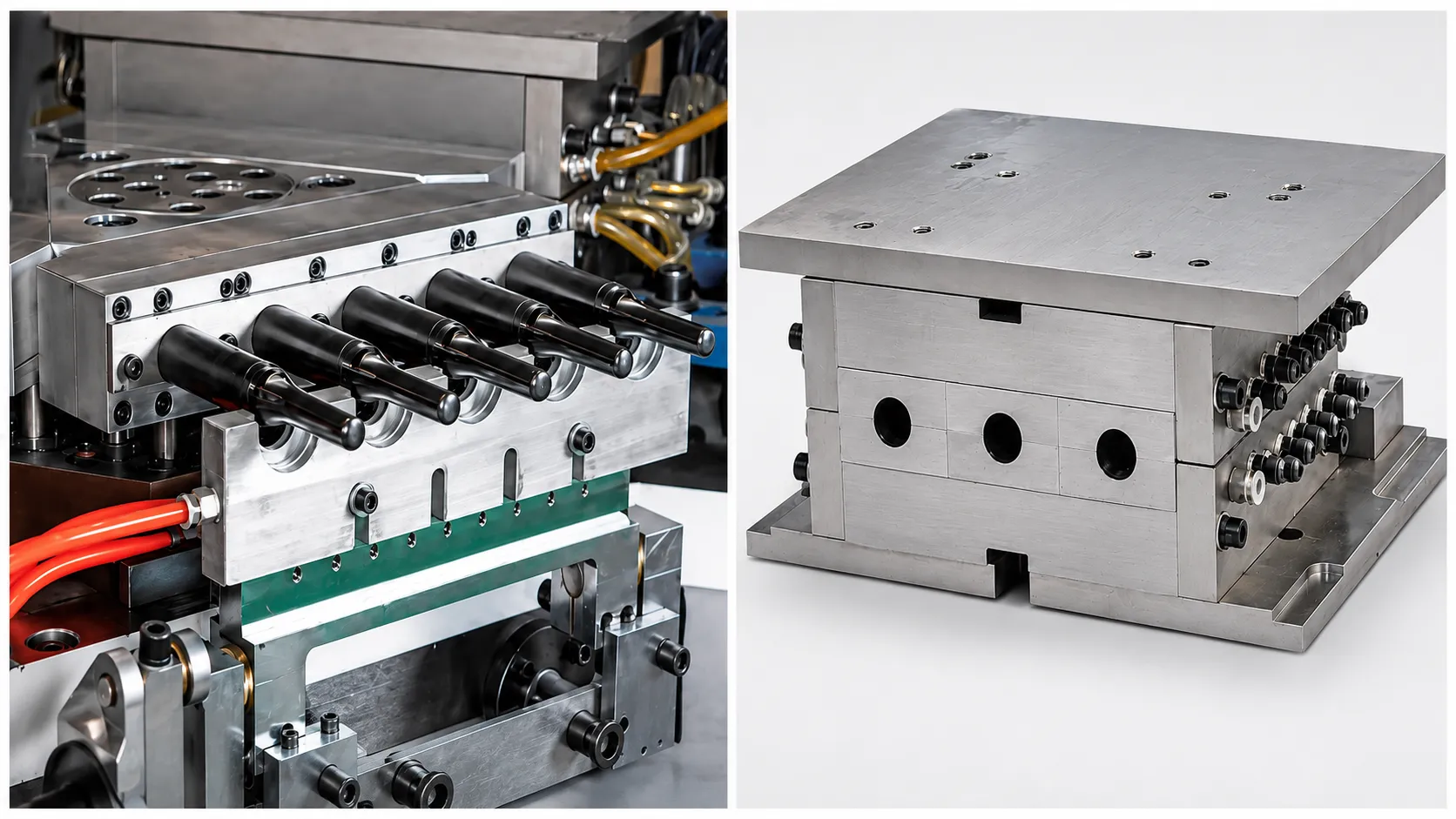
Container format specification has two key dimensions for machine selection: container volume (ml) and body cross-sectional width (mm). Volume determines preform shot weight (which affects injection unit sizing) and blow dwell time (which affects cycle time). Body width determines per-cavity platen footprint (which affects maximum cavity count per ZQ model).
| CONTAINER | BODY WIDTH | PRIMARY CONSTRAINT | ZQ80 MAX CAV | NOTES |
|---|---|---|---|---|
| 10 ml pharma | ~22 mm | Clamping force | 20 | Small body — clamping force limits before platen. ZQ40=9, ZQ60=14, ZQ80=20, ZQ110=24, ZQ135=30 |
| 60 ml oral liquid | ~35 mm | Clamping force | 18 | Still clamping-force-limited at ZQ80. ZQ40=8–10, ZQ60=14–16, ZQ80=18, ZQ110=22 |
| 100 ml cosmetic jar | 58 mm | Platen size | 10–12 | Wide body — platen limits before clamping force. Oval preferred over round to add 1–2 cavities |
| 200 ml soy sauce | 55–65 mm | Platen size | 12–14 | ZQ60 adequate for small volumes. ZQ80 optimum for 15–35M/year Korean food brand OEM |
| 300 ml shampoo | 65–75 mm oval | Platen size | 5–6 | ZQ80 at 5–6 cav limited to ~12M/year. ZQ110 at 6–8 cav recommended for national brand volumes |
SECTION 03 — STEP 2
Annual Production Capacity Calculation
The IBM annual production capacity formula converts machine parameters (cavity count, cycle time) and production schedule parameters (operating hours, efficiency) into a comparable annual output figure. The cavity count guide covers this calculation in detail; the summary formula for ZQ selection is:
ANNUAL CAPACITY FORMULA · ZQ SELECTION BASIS
Annual = N × (3,600 ÷ T) × η × H
N = cavities | T = cycle time (s) | η = efficiency (0.88 = Korean 2-shift standard) | H = annual hours (3,500 for Korean 2-shift)
EXAMPLE A: 10ml PHARMA, ZQ80
20 × (3600÷4.0) × 0.88 × 3500
= 55.4M units/year
EXAMPLE B: 60ml ORAL LIQ, ZQ80
18 × (3600÷4.0) × 0.88 × 3500
= 49.9M units/year
EXAMPLE C: 300ml SHAMPOO, ZQ110
6 × (3600÷5.0) × 0.88 × 3500
= 13.3M units/year
The annual capacity calculation determines the required ZQ model as follows: calculate required annual volume ÷ capacity per machine = number of machines required. If the calculation returns 0.6–0.9 machines (meaning one machine produces more than needed), verify whether a smaller ZQ model at higher cavity count can cover the same volume — often a ZQ60 at higher cavity count is more cost-efficient than a ZQ80 at lower utilisation for volumes in the 20–35M range.
Utilisation target — select for 70–90% machine utilisation: A ZQ model running at 70–90% of its maximum annual capacity at your required volume is economically optimal. Below 70% utilisation: the machine has excess capacity that is not generating revenue — consider a smaller model. Above 90% utilisation: no buffer for format change downtime, maintenance windows or demand spikes — consider a larger model or a second machine. Korean IBM contract packaging factories typically target 80–85% annual utilisation per machine across all mould sets running on that machine — achieved by scheduling multiple format mould sets across the annual calendar to fill the machine’s available hours.
SECTION 04 — STEP 3
Three Machine Constraint Verification
Even if the annual capacity calculation points to a specific ZQ model, three independent machine constraints must be verified before confirming the model — because any one of them can limit the achievable cavity count below what the annual capacity calculation assumed. All three must be satisfied simultaneously.
Clamping Force
Platen Footprint
Shot Weight
Check method:
Max cavities = ZQ clamping force (KN) ÷ per-cavity injection force (KN). Per-cavity force = projected area (cm²) × injection pressure (MPa) ÷ 100. Small containers (10–30 ml): ~35–50 KN/cav. Larger containers scale with body area.
Check method:
Max cavities = available platen area ÷ per-cavity mould footprint (body OD + 15–20 mm spacing). Korea Ever-Power provides the platen layout drawing for each container-model combination at enquiry stage — no manual calculation needed.
Check method:
Total shot weight = container weight (g) × number of cavities. Must be below ZQ model rated shot weight. ZQ40=50g, ZQ60=120g, ZQ80=250g, ZQ110=500g, ZQ135=750g approximate maximums. Large-volume thick-wall containers approach this limit.
The binding constraint is whichever of the three produces the lowest maximum cavity count. If clamping force allows 20 cavities but platen size allows only 14, the practical maximum is 14 — you cannot exceed the binding constraint regardless of the other two having headroom.
SECTION 05 — STEP 4
Application-Specific Requirements
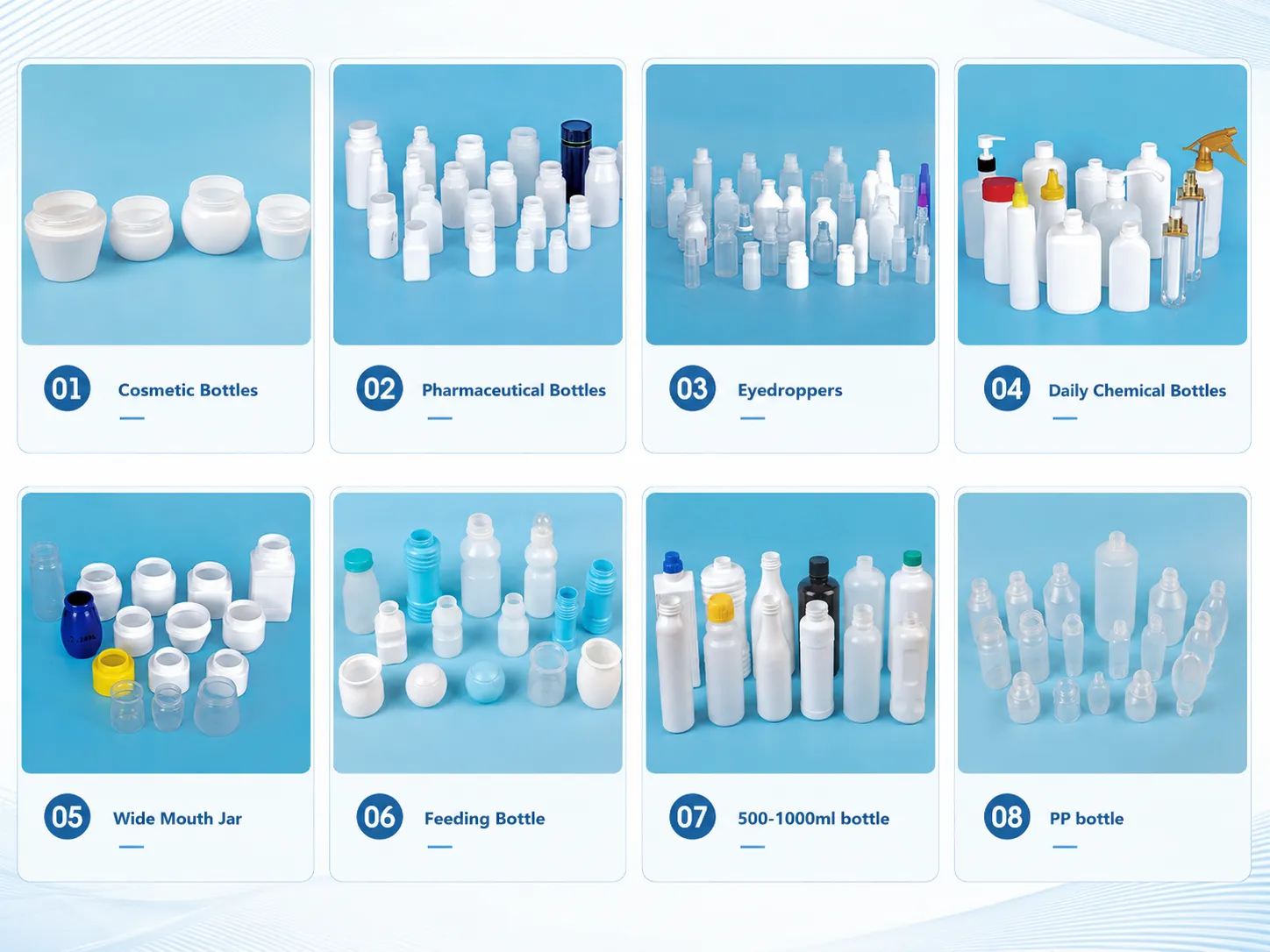
- ▸Select Year 3 production volume — not Year 1. Korean KFDA qualification is machine-specific; under-sizing forces major change notification (3–6 month KFDA review) at scale-up.
- ▸Consider dual-machine pre-qualification strategy: qualify ZQ80 and ZQ110 simultaneously in initial CTF — eliminates all future scale-up regulatory delay. See pharmaceutical IBM guide.
- ▸Korean GMP cleanroom requirements: ZQ80 dual hydraulic reduces heat load and noise in Korean pharmaceutical GMP production environment versus ZQ40/ZQ60 single hydraulic models.
- ▸Multi-format flexibility: Korean food IBM producers typically run 4–8 different food container formats on one machine across the year. ZQ60 handles 100–300 ml food formats optimally; ZQ80 is better for 200–500 ml or multi-format flexibility.
- ▸Seasonal demand: Korean food packaging has strong seasonal peaks (Korean Chuseok gift sets, Korean New Year condiment gift packaging). The ZQ model should handle peak month demand, not average annual demand.
- ▸MFDS food contact certification does not restrict machine model — any ZQ model running the same HDPE grade and mould set produces identical MFDS-compliant containers.
- ▸Korean K-beauty hair care (300–400 ml shampoo/conditioner): ZQ110 is the minimum recommended model — ZQ80 at 5–6 cavities for 300 ml shampoo is borderline for national brand volumes of 15–20M/year.
- ▸Premium cosmetic jars (50–200 ml ABS/PP): ZQ60 or ZQ80 depending on annual volume. ABS processing requires dual-zone mould temperature control — standard on ZQ80+, optional on ZQ60.
- ▸Format change frequency: Korean personal care brands launch 4–8 packaging SKU changes per year. A machine with quick-change mould mounting (standard on ZQ80+) reduces format change time to under 2 hours versus 4–6 hours for manual mould change.
SECTION 06
ZQ Series Side-by-Side Specifications
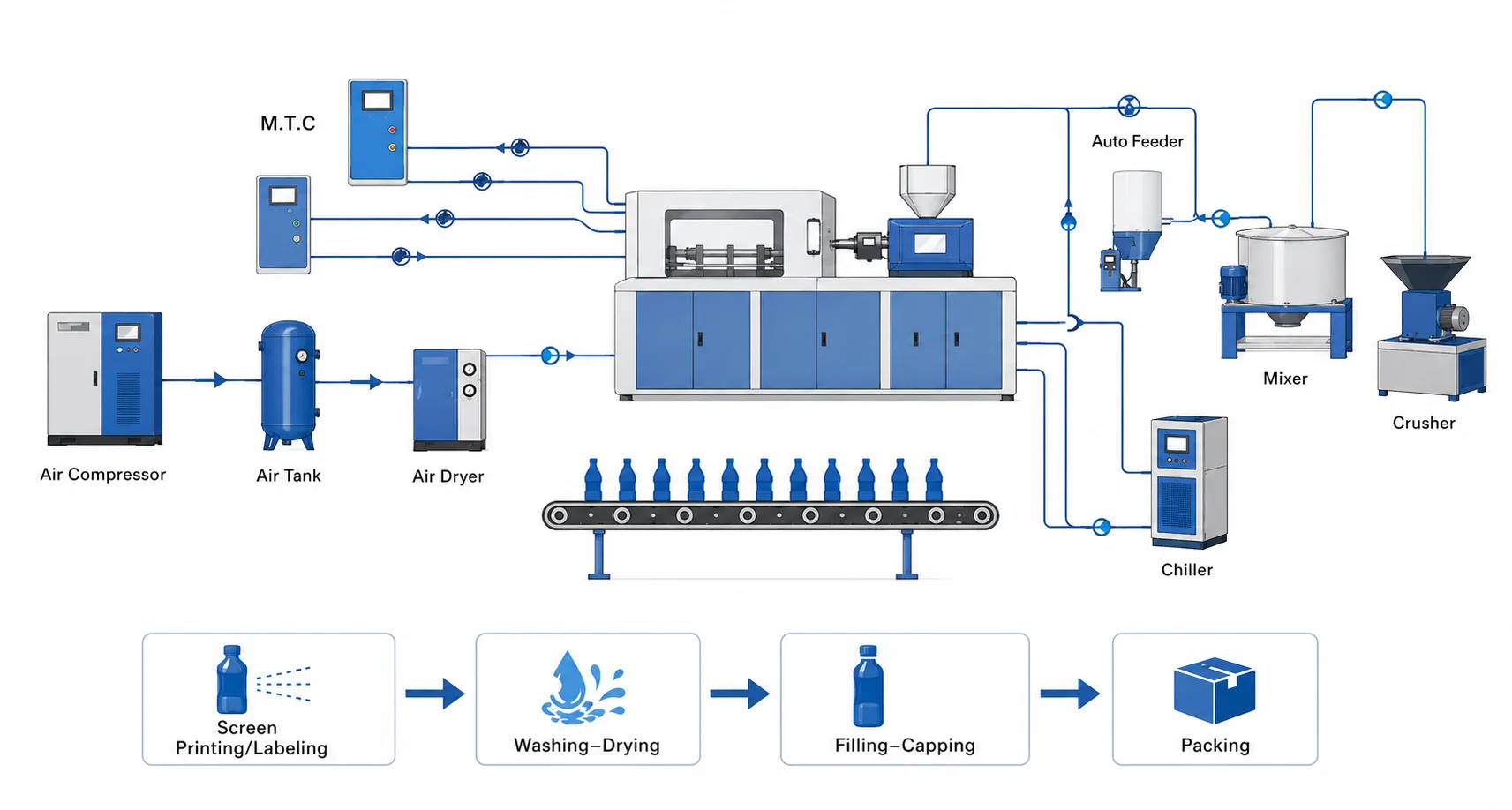
| SPECIFICATION | ZQ40 | ZQ60 | ZQ80 ★ | ZQ110 | ZQ135 |
|---|---|---|---|---|---|
| Clamping force | 400 KN | 600 KN | 800 KN | 1,100 KN | 1,350 KN |
| Max cavities (10ml) | 9 | 14 | 20 | 24 | 30 |
| Hydraulic system | 11 KW single | 15 KW single | 11+11 KW dual | 22+22 KW dual | 37+37 KW dual |
| Annual output (10ml) | 19.8M | 30.8M | 44.0M | 52.8M | 66.0M |
| Annual output (60ml) | ~22M | ~35M | ~50M | ~61M | ~77M |
| Annual output (300ml) | ~8M | ~10M | ~12M | ~18.9M | ~25M |
| Quick-change mould | Optional | Optional | Standard | Standard | Standard |
★ ZQ80 is the Korean IBM production benchmark — balances cavity count, energy efficiency and format flexibility across the widest range of Korean IBM applications. Annual output calculated at 4-second cycle time (10ml), 4-second (60ml), 5-second (300ml), 2-shift 3,500h/year, 88% efficiency.
SECTION 07
Total Cost of Ownership and Payback Analysis
ZQ model selection decisions based solely on machine purchase price consistently produce suboptimal long-term production economics. A ZQ60 at lower purchase price but lower annual output produces a higher unit production cost than a ZQ80 at higher purchase price but proportionally higher annual output — the ZQ80’s higher price is recovered through lower unit cost within 18–24 months at typical Korean IBM production volumes.
TCO ILLUSTRATION · ZQ60 vs ZQ80 AT 60ml ORAL LIQUID IBM (30M UNITS/YEAR REQUIRED)
TCO COMPONENT
Machine purchase price
Mould set (14 cav vs 18 cav)
Machines required @ 30M/yr
Annual energy (electricity)
Annual labour (1 operator/machine)
Production cost per 1,000 units
ZQ60 @ 14 CAVITIES
Index 100
Index 80
Need 1.0 machine (near limit)
Index 75 (smaller hydraulic)
Index 100 (1 operator)
Higher (less headroom buffer)
ZQ80 @ 18 CAVITIES
Index 135 (35% more)
Index 100
0.6 machine (40% buffer capacity)
Index 100
Index 100 (same 1 operator)
Lower — 29% more output/machine
ZQ80 payback on price premium at 30M/year production: the 35% higher machine purchase price is typically recovered within 18–22 months through lower per-unit production cost (fewer machine-hours per unit, lower labour cost per unit, no second machine needed), energy efficiency (dual hydraulic 20–30% energy saving vs single) and 40% capacity buffer absorbing demand spikes and format change downtime without production shortfall.
SECTION 08
Selection Worked Examples
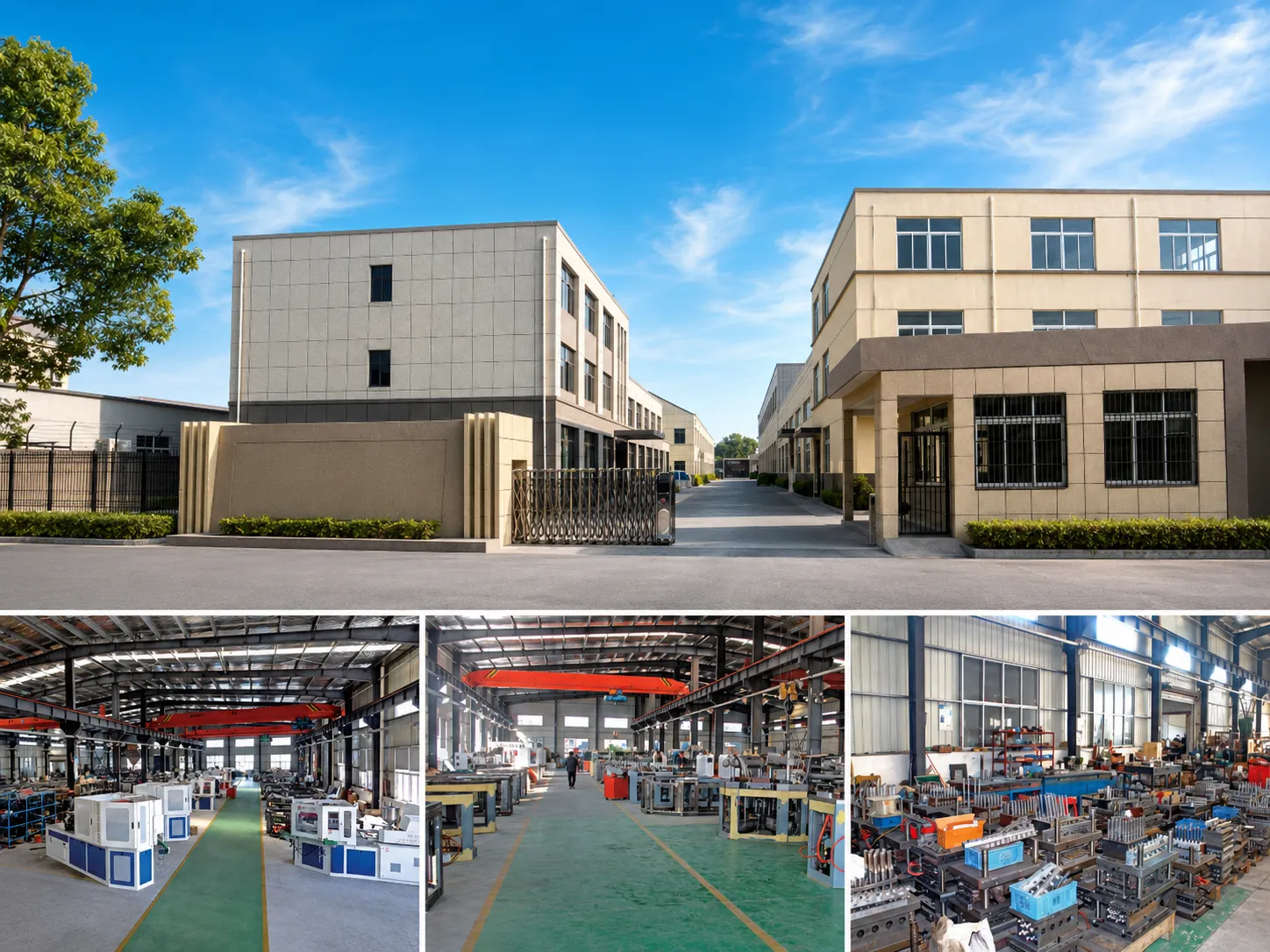
Korean Pharmaceutical Brand — 10 ml Ophthalmic IBM, 25M units/year at Year 3
→ ZQ80
Step 1: Format
10 ml HDPE ophthalmic · body width ~22 mm · 20/400 dropper cap neck
Step 2: Capacity
Required: 25M. ZQ80 at 20 cav, 4.0s = 44.0M/yr — 57% utilisation. ZQ60 at 14 cav = 30.8M/yr — 81% utilisation.
Step 3: Constraints
Clamping: 20 cav × ~40KN = 800 KN — exactly ZQ80. Platen: 20 small cavities fits ZQ80 platen. Shot weight: 20 × 0.8g = 16g — far below ZQ80 limit.
Step 4: Pharma
Pre-qualify ZQ80 (serial #001) + ZQ110 (serial #002) simultaneously in initial Korean KFDA CTF — eliminates 3–6 month KFDA review when scaling to 44M+ at Year 5. ZQ80 selected.
Korean Food Producer — 200 ml Soy Sauce Squeeze IBM, 20M units/year
→ ZQ60
Step 1: Format
200 ml HDPE soy sauce squeeze · oval body 58 mm wide · 20/400 flip-top neck
Step 2: Capacity
Required: 20M. ZQ60 at 12 cav, 4.5s = 18.5M/yr — 108% — too small. ZQ60 at 14 cav = 21.6M/yr — 93% utilisation — adequate with modest buffer.
Step 3: Constraints
Clamping: 14 cav × ~50KN = 700 KN — just above ZQ60 (600 KN). Recalculate: 12 cav × 50KN = 600 KN — exactly ZQ60. Platen: 12 × 58mm bodies. 12-cavity confirmed.
Step 4: Food
3 additional food format mould sets (100ml vinegar, 150ml sesame oil, 300ml condiment) planned on same machine — annual utilisation 80%. ZQ60 selected on production economics.
Korean K-Beauty Brand — 300 ml Shampoo IBM, 22M units/year (shampoo + conditioner)
→ ZQ110
Step 1: Format
300 ml HDPE shampoo · oval body 70 mm wide · 28/410 pump neck. Plus matched 300 ml conditioner on same machine.
Step 2: Capacity
Required: 22M (shampoo) + conditioner = 40M total. ZQ110 at 6 cav, 5s = 13.3M/yr per format × 2 formats = 26.6M per format with format alternating. Adequate with buffer.
Step 3: Constraints
ZQ80 at 300ml = 5–6 cavities (platen-limited) = 12M/yr per format — insufficient for 22M. ZQ110 at 6–8 cav = 13–18M per format — covers requirement. ZQ110 selected.
Step 4: Personal Care
Korean K-beauty brand acceptance requires zero parting line on body — ZQ110 at 6 cav confirmed. Quick-change mould (standard on ZQ110) handles shampoo/conditioner alternation in under 2 hours. ZQ110 confirmed.
SELECTION FAQ
Machine Selection — Buyer Questions
What is the correct approach if the annual volume calculation falls exactly between two ZQ models?
When the required annual volume falls between two ZQ models — where the smaller model is at 90–100% utilisation and the larger model is at 60–70% utilisation — the decision should be made on three criteria in order of importance. First, growth trajectory: if the Korean brand’s volume forecast projects above the smaller model’s 100% utilisation within 18–24 months, choose the larger model at project start to avoid a machine addition decision under Korean production pressure. Second, application-specific regulatory constraints: for pharmaceutical IBM, the larger model should be selected if any volume growth within 5 years would exceed the smaller model’s capacity, because adding a new machine requires a Korean KFDA major change notification that cannot be processed quickly. For food and personal care IBM, a second machine can be added without regulatory constraint, so the smaller model + second machine option is viable. Third, multi-format flexibility: if the Korean production operation plans to run 4+ IBM mould sets on the machine across the year, the larger model provides scheduling flexibility — format change downtime on a machine running at 95% utilisation leaves no buffer for maintenance or Korean seasonal demand peaks, while the same downtime on a machine running at 70% utilisation is absorbed without production shortfall. Korea Ever-Power recommends erring toward the larger model in borderline cases for pharmaceutical applications and erring toward the smaller model (with second machine as planned expansion) for food and personal care applications.
What lead time should be planned from ZQ machine order to first commercial production?
Korea Ever-Power’s ZQ series IBM machine lead time from order confirmation to machine shipment from Ansan-si is typically 10–16 weeks depending on model and order backlog — ZQ40 and ZQ60 at 10–12 weeks, ZQ80 at 12–14 weeks, ZQ110 and ZQ135 at 14–16 weeks. Mould set production lead time (injection mould + blow mould + stripping tool) is typically 8–12 weeks from final container design approval, running in parallel with machine production. The complete project timeline from order to first commercial production at a Korean customer’s facility includes: machine and mould production (14–16 weeks for ZQ80 with mould) + sea freight Korea to customer site (2–3 weeks) + installation and commissioning at customer’s Korean facility (1–2 weeks) + pre-delivery production trial at Korea Ever-Power (included in the 14–16 week machine lead time) + Korean application qualification (4–8 weeks for food contact, 16–28 weeks for pharmaceutical). For Korean pharmaceutical IBM projects, the timeline from machine order to commercial production is therefore: 16 weeks machine + 3 weeks freight + 2 weeks installation + 16–28 weeks Korean KFDA compatibility study = 37–49 weeks minimum from machine order to first commercial pharmaceutical production. Korean pharmaceutical IBM project planners should work backwards from their Korean commercial launch date to confirm that the machine order date provides sufficient lead time for the full qualification sequence — machine purchase is almost never the critical path activity in Korean pharmaceutical IBM projects; the Korean KFDA compatibility study duration is.
How many mould sets can run on a single ZQ machine in a year?
The number of mould sets a single ZQ machine can productively run in a year is limited by available machine hours and format change time — not by any mechanical constraint of the ZQ machine itself. A ZQ80 running Korean 2-shift (3,500 hr/year at 88% efficiency = 3,080 productive hours/year) with 2-hour format changes and 5 mould sets can accommodate: 5 mould sets × 2 hours changeover = 10 hours changeover (negligible vs 3,080 productive hours). In practice, Korean IBM contract packaging factories typically run 3–8 mould sets per machine per year, planned in blocks of 2–6 weeks per mould set aligned with Korean brand production scheduling. The practical limit on mould set quantity per machine is production scheduling complexity and mould storage/maintenance logistics rather than machine capacity. For Korean pharmaceutical IBM, each mould set requires a separate Korean KFDA pharmaceutical container technical file — a separate documentation and qualification exercise per mould set — which adds regulatory overhead to running multiple pharmaceutical mould sets on one machine. For food and personal care IBM, no such regulatory mould set limitation applies; the machine can run as many mould sets as the Korean producer’s scheduling and storage infrastructure can manage. Korea Ever-Power recommends that Korean IBM producers plan their annual mould set schedule at the time of machine purchase to confirm that the ZQ model’s annual capacity (at each format’s cycle time) covers the planned annual volume across all mould sets in the production calendar.
What utilities and floor space does a ZQ80 IBM machine require?
Korea Ever-Power EP-ZQ80 utility requirements: electrical power supply 3-phase 380V/50Hz or 460V/60Hz (confirm local Korean standard at order), total connected load 45–55 KW including injection unit barrel heaters (15 KW), dual hydraulic motors (11+11 KW), mould temperature controller units (4–8 KW, separate supply), compressed air 0.6–0.95 MPa at 5–15 Nm³/hour (for blow air — requires dedicated compressor or plant air at sufficient capacity for the cavity count), cooling water supply 10–25°C at 10–25 L/min for injection mould circuit + separate 15–30°C at 15–30 L/min for blow mould circuit (separate temperature control circuits are standard on ZQ80+). Floor space: ZQ80 machine footprint is approximately 2,800 × 1,600 mm (L × W), with a recommended working clearance of 1,200 mm on all sides for mould change access (total floor area including working space: approximately 5,200 × 4,000 mm). For Korean pharmaceutical GMP production, the ZQ80 production cell additionally requires: HEPA-filtered positive-pressure enclosure around the machine output conveyor (typically 3,000 × 1,000 mm tunnel), separate inlet and outlet access for production operators and material flow, and temperature/humidity monitoring in the GMP production zone. Korean food IBM does not require special environmental controls beyond Korean food hygiene facility standards.
Does Korea Ever-Power provide training for ZQ machine operators?
Korea Ever-Power provides a standard operator training programme as part of every ZQ machine delivery: the training is conducted at Korea Ever-Power’s Ansan-si facility during the pre-delivery production trial, where the customer’s operator team (typically 1–3 operators) trains on the specific ZQ model and mould set that will be delivered. Training covers: ZQ machine control panel operation and production recipe management; mould set installation, alignment and removal; injection unit maintenance (barrel cleaning, screw inspection, hot runner purging); blow mould cavity cleaning and polishing; core rod inspection and replacement procedure; troubleshooting of the most common production defects (Section 5 of this guide’s source material covers station-specific defect identification); and Korean GMP production protocol documentation for pharmaceutical IBM producers. Training duration: 3–5 days at Korea Ever-Power’s facility for standard applications, 5–7 days for pharmaceutical IBM applications where Korean GMP documentation training is included. The training programme is conducted in English and Korean; Korean-language operation manuals and process parameter record templates are provided at delivery. For Korean IBM producers adding a second ZQ machine model (e.g. adding ZQ110 to existing ZQ80 fleet), the training focuses on model-specific differences only — the shared ZQ architecture means operators already familiar with ZQ80 operation require approximately 1–2 days of model-specific training for ZQ110 operation, not a full 5-day programme.
What after-sales support does Korea Ever-Power provide for ZQ series machines in Korea?
Korea Ever-Power provides four categories of ZQ series after-sales support for Korean customers. First, warranty support: ZQ series machines carry a 12-month parts and workmanship warranty from delivery date, covering manufacturing defects in the machine structure, hydraulic system, turret mechanism and control system. Wear parts (core rods, mould seals, barrel screws) are not covered under warranty — they are consumable items whose replacement frequency depends on production volume and material. Second, spare parts supply: Korea Ever-Power maintains a Korean spare parts inventory at Ansan-si (available for same-day dispatch for critical parts) and a Seoul-area distributor inventory for consumable wear parts. Critical spare parts (hydraulic valve kits, turret bearing sets, barrel and screw components) are stocked at Korea Ever-Power’s facility; standard wear parts (core rods, mould seals, heating elements) are stocked at the Korean distributor. Third, remote technical support: Korea Ever-Power provides remote telephone and video-call technical support in Korean and English for ZQ machine troubleshooting and process parameter optimisation. Remote support covers: production defect diagnosis, process parameter adjustment guidance, and mould maintenance scheduling advice. Fourth, on-site technical service: Korea Ever-Power’s Korean service team provides on-site installation, commissioning and planned maintenance visits at Korean customer facilities. Planned annual maintenance visits (recommended once per year for pharmaceutical IBM, once per 18 months for food and personal care IBM) include: core rod dimensional inspection, mould cooling circuit cleaning, hydraulic oil analysis, and production parameter verification against the baseline production trial record. Emergency on-site service in Korea is typically available within 24–48 hours of request.
ZQ MACHINE SELECTION CONSULTATION · KOREA EVER-POWER
Ready to Select Your ZQ Series IBM Machine?
Korea Ever-Power’s applications engineering team provides a free ZQ model recommendation and container design feasibility review for every new IBM project. Provide your container format, volume and application — we return a ZQ model recommendation with cavity count, annual capacity and mould set cost estimate within 3 business days.