Technical Deep Dive  ·  Preform Engineering  ·  Korean ISBM 2026

ISBM Preform Design Engineering:
Weight, L/D Ratio & Gate Geometry — The Framework Korean Bottle Producers Need Before Ordering Any Mould

Every ISBM bottle quality failure — wall thinning, stress whitening, gate vestige, CO₂ barrier underperformance — can be traced to one of three preform design decisions made months before the first shot is run. This guide provides the engineering calculations Korean ISBM producers need to get those decisions right the first time.

±0.3g Weight Tolerance
BBR 8–15 for PET
Gate Vestige ≤0.5mm

±0.3g
Maximum preform weight tolerance for stable ISBM quality
8–15
Optimal biaxial blowup ratio (BBR) for PET
2.8×
Average Korean ISBM development iterations without preform engineering
KRW 6.5M
Average saving per project with upfront preform engineering

1. Why Preform Design Is the Most Consequential Decision in ISBM

Korean ISBM producers routinely invest KRW 15–45M in blow mould cavities and hundreds of millions more in machine platforms — yet allocate fewer than three working days to preform specification. This imbalance is consistently expensive in practice. The preform design determines three things no machine parameter change can override after the mould is built: total material in the bottle, where that material ends up after blow, and whether the gate zone delivers a cosmetically acceptable bottle base at production speed.

The two production defects most frequently misattributed to incorrect machine settings or mould temperature in Korean ISBM operations are uneven wall thickness and stress whitening — both originating from L/D ratios outside the optimal range or gate zone wall specifications that were never properly calculated. Diagnosing these defects at the machine level is always slower and more expensive than preventing them at the preform design stage.

A preform is not merely a “standard part” selected from a catalogue. It is a precision engineered component whose geometry encodes the final bottle’s structural performance. A 0.1mm error in gate zone wall thickness translates into a measurable change in gate vestige height, bottle base crystallinity, and burst pressure. A 0.5mm error in preform body length changes the achievable axial stretch ratio by 3–6% — enough to shift BBR outside the optimal range. Getting preform geometry right before the mould is machined is the highest-leverage quality intervention available to Korean ISBM producers.

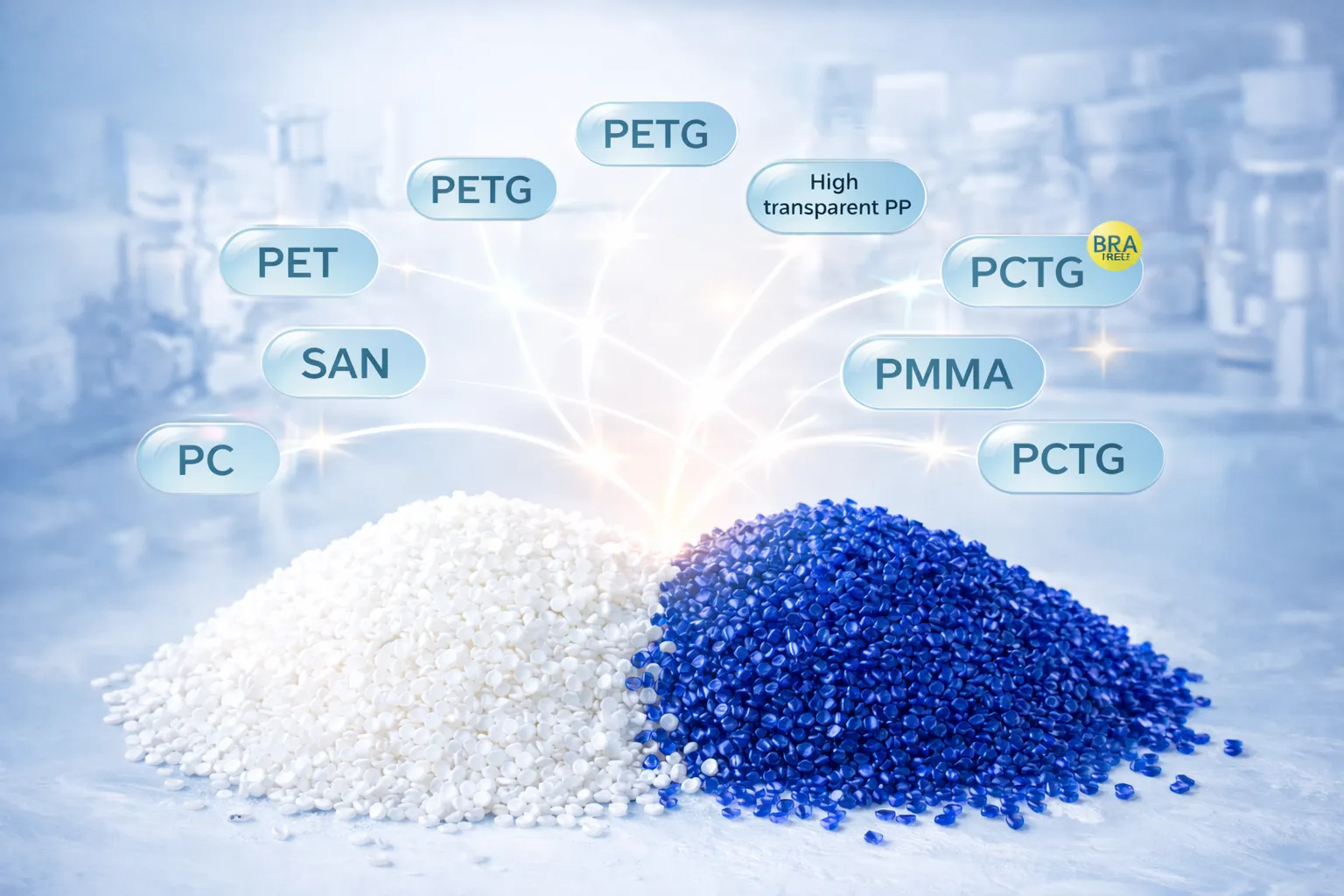
ISBM bottle types produced from different preform designs — Korean Ever-Power
Figure 1. Korean ISBM bottle range — every bottle geometry begins with a preform specification that must be engineered, not guessed.

2. Preform Weight Calculation: The ±0.3g Engineering Standard

Preform weight is calculated from four additive components, each of which must be calculated explicitly rather than estimated: (1) net bottle wall material — the total polymer mass present in the finished bottle; (2) gate zone material allowance — typically 8–12% of net bottle weight for point-gate designs, accounting for the gate vestige and gate transition zone mass; (3) neck support ledge material — the neck zone mass that remains part of the finished bottle and is not stretched; and (4) per-cavity share of hot runner system losses, where applicable.

The ±0.3g tolerance specification exists for economic reasons that compound at scale. On a 20g preform for a 500ml water bottle at current Korean PET pricing of KRW 1,800/kg, the cost difference between a 19.7g and a 20.3g preform is KRW 1.08 per bottle. At 10M annual units, this floating tolerance represents KRW 10.8M in annual material cost variation — a number that disappears from most Korean ISBM P&L analyses because preform weight tolerance is not specified in writing and therefore not measured consistently. The ±0.3g figure is not arbitrary conservatism; it is the threshold above which material cost variance becomes commercially significant at Korean production volumes.

注塑拉伸吹塑成型-1

Korean producers should specify preform weight to two decimal places — “21.45g ±0.3g” — in every mould order, not “approximately 21g.” Mould suppliers who quote preform weight without tolerance have no mechanism to verify their own mould’s injection performance against specification and cannot be held accountable when production weight drifts. Requiring a tolerance in the purchase order is not pedantry; it is the contractual basis for acceptance testing.

One frequently overlooked factor in preform weight calculation is the effect of rPET content. When rPET preform weight tolerance narrows significantly relative to virgin PET — because IV variance in post-consumer rPET causes shot-to-shot viscosity variation that the injection process cannot fully compensate at standard pressure settings — Korean producers who do not adjust their weight tolerance specification for rPET blends consistently experience higher scrap rates than their virgin PET benchmarks would predict.

3. L/D Ratio and the Axial Stretch Ratio Relationship

The preform L/D ratio — body length divided by outer diameter — is the primary design variable controlling the achievable axial stretch ratio (As). A longer, narrower preform of equal weight achieves higher axial stretch in the same cavity than a shorter, wider preform. This matters because As is one of two components of the biaxial blowup ratio (BBR) that determines the orientation-dependent properties of the finished bottle wall: tensile strength, gas barrier, optical clarity, and top-load performance all increase with BBR up to the material’s orientation ceiling.

/* Biaxial Blowup Ratio Formulas */
As (axial stretch ratio)  = H_bottle_body ÷ H_preform_body
Rs (radial stretch ratio) = D_bottle_body ÷ D_preform_body
BBR (biaxial blowup ratio) = As × Rs/* Korean ISBM Optimum Ranges */
PET virgin:  BBR 8–15   (peak = ~11)
PETG:       BBR 6–12   (peak = ~9)
PP:         BBR 4–8    (narrow process window)/* Worked Example — 500ml still water bottle */
As = 140mm ÷ 38mm = 3.68×
Rs = 65mm ÷ 22mm  = 2.95×
BBR = 3.68 × 2.95 = 10.86 ✓ within PET optimum

When BBR falls below 8, the bottle wall does not develop adequate biaxial orientation — the molecular chains remain largely amorphous, producing lower optical clarity in PET, inferior CO₂ barrier in carbonated bottles, reduced tensile strength per unit wall thickness, and compromised top-load performance relative to the bottle’s material investment. When BBR exceeds 15, the gate zone experiences excessive strain rate during the initial stretch phase. Because PET is a strain-hardening material — resistance to stretch increases sharply as orientation accumulates — the gate zone, which undergoes the highest local stretch, reaches strain hardening failure before the body zone achieves its target orientation. The result is gate zone tearing and elevated scrap rates.

For Korean ISBM formats, appropriate L/D ratios range from 1.8 for wide-mouth cosmetic jars to 4.2 for tall pharmaceutical oral liquid bottles. Korean producers developing new SKUs without calculating the target BBR from bottle geometry are effectively guessing — and the rework cost when the guess produces a BBR outside the optimum typically exceeds the cost of the calculation by a factor of 15–25×.

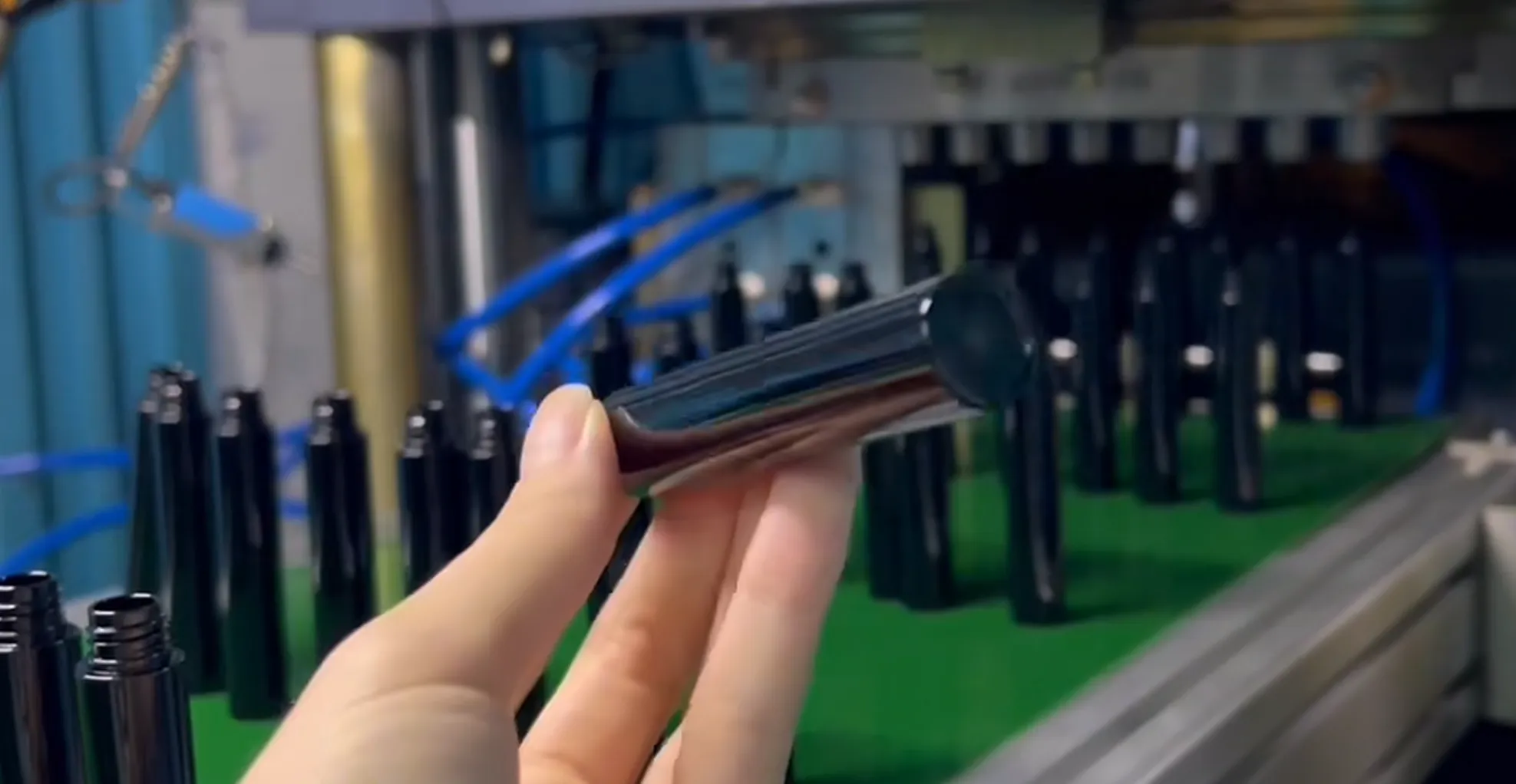
ISBM biaxial molecular orientation process — Korean Ever-Power production
Figure 2. Biaxial molecular orientation in ISBM — the stretch rod controls axial stretch while blow pressure drives radial extension. The ratio of these two stretches (BBR) determines bottle mechanical performance.

4. Wall Thickness Zone Design: Predicting the Bottle from the Preform

A preform wall thickness profile is intentionally non-uniform — it must be designed to compensate for the non-uniform stretch that occurs at different axial positions during blow. Three zones require explicit thickness specification:

Gate transition zone (2.0–2.5× body wall): The highest-stress zone in the blow process. Must supply material to the bottle base at lower local stretch ratios than the body zone. Insufficient gate zone wall produces base thinning; excessive gate zone wall is the single largest source of overweight Korean ISBM bottles. A gate zone wall of 4.2mm on a 20g preform when 3.6mm would suffice adds 0.4–0.6g per preform — equivalent to KRW 5–7M/year in wasted material at 10M units.

Body zone (minimum specification wall): Carries the thinnest wall because this zone undergoes the highest local axial and radial stretch. The minimum acceptable body wall in the finished bottle (typically 0.18–0.28mm depending on application) back-calculates to the required preform body wall via the local BBR. This reverse calculation — from finished bottle minimum wall to required preform body wall — is the fundamental preform design calculation that most Korean mould suppliers do not perform explicitly.

Shoulder transition zone (1.4–1.8× body wall): The geometric constraint at the shoulder-to-neck boundary limits radial stretch, producing a zone of reduced orientation and elevated wall thickness relative to the body. The shoulder transition wall must be specified to prevent excess material accumulation — “shoulder lumps” visible as haze bands in transparent K-Beauty bottles are a classic symptom of shoulder zone over-specification in the preform.

5. Gate Geometry Engineering: Point Gate vs Valve Gate

Gate geometry determines the gate vestige height, gate zone wall transition profile, and the interaction with the hot runner system. Three types are used in Korean ISBM production, each suited to specific applications:

Point Gate (Standard)

Diameter: 0.8–1.5mm · Land length: 0.8–1.2mm

Vestige: 0.2–0.5mm height after gate break. Cannot be eliminated.

Korean use: Beverage, food, personal care, home care PET. Correct for all applications where 0.5mm base vestige is acceptable.

Valve Gate (Premium)

Servo pin closes gate after fill · Near-zero vestige

Vestige: <0.1mm witness mark. Essentially invisible in retail lighting.

Korean use: Premium K-Beauty PETG (Sulwhasoo, The Whoo), pharmaceutical KFDA oral liquid. Required when base vestige cannot exceed 0.2mm.

Side Gate (Speciality)

Off-centre gate position · Adds runner complexity

Vestige: Off-base — visible if bottle is opaque; hidden by base geometry on some designs.

Korean use: Wide-mouth (63mm+) containers where central gate vestige lands in a high-visibility position.

For valve gate applications, the hot runner gate zone timing must be precisely synchronised with valve pin closure — the pin must close while the gate zone material is still fluid enough to seal cleanly, but before the preform releases from the injection cavity insert. A closure timing error of 30ms in either direction produces either a protruding witness mark (too early) or gate zone drag (too late). Korean Ever-Power EV machines support valve gate timing control at 5ms resolution as a standard platform feature.

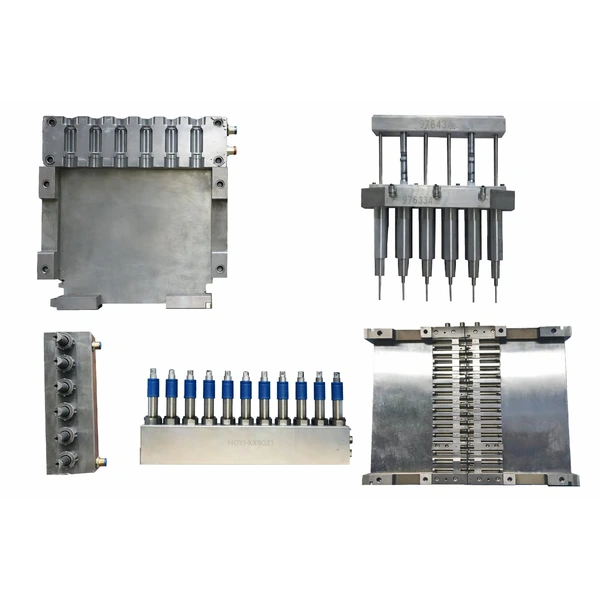
ISBM mould gate zone detail — Korean Ever-Power custom tooling
Figure 3. ISBM mould gate zone cross-section — gate diameter, land length, and wall transition profile are the three geometric variables that determine gate vestige height and gate zone structural performance.

6. Neck Finish Zone Design and Sealing Performance

The neck finish zone is injection-moulded to its final dimension — it does not stretch during blow. Every thread form, support ledge height, transfer bead dimension, and sealing surface flatness is set permanently at the injection station. This means neck finish dimensional accuracy is determined entirely by injection mould cavity geometry and cooling — not by any blow process parameter.

Korean ISBM producers experiencing closure application torque variation above ±15% of target should first verify neck zone cooling channel placement and coolant temperature before assuming the problem is in the closure specification or filling-line equipment. The mechanism: inadequate cooling in the neck finish zone allows the thread form to distort slightly under ejection force. The thread geometry is correct at room temperature when measured cold, but at production temperatures — when the machine is running continuously and the neck ring never fully cools between cycles — cumulative thermal distortion shifts the thread OD by 0.08–0.15mm, which is enough to produce inconsistent pump head or closure application torque at a Korean brand customer’s filling line running at 120 bottles per minute.

Neck zone cooling specification: dedicated coolant channels maintaining neck zone steel temperature at 15–25°C, independent from the preform body zone circuit which runs at 8–15°C for cycle time optimisation. The independence matters — body zone overcooling to accelerate cycle time should not be achieved by diverting coolant flow from the neck zone.

7. Five Korean Bottle Formats — Preform Parameter Reference Table

The following table provides verified starting-point preform parameters for the five most common Korean ISBM bottle formats. These values represent Korean Ever-Power engineering recommendations based on production data from Korean customer lines — they are not theoretical calculations but validated starting points that consistently achieve first-trial BBR within the optimum range.

瓶装 树脂 预成型重量 L/D Ratio Target As Target Rs BBR
100ml K-Beauty PETG serum PETG 9.5–11g 2.4 3.2× 2.6× 8.3
500ml still water (PCO 1881) PET virgin 17–21g 3.2 3.7× 2.9× 10.7
1L edible oil PET (38mm BPF) PET virgin 34–40g 3.5 4.0倍 2.7× 10.8
50ml pharma oral liquid PET PET virgin 5.5–7g 2.1 3.5× 2.5× 8.8
12L water jug (63mm neck) PET virgin 310–360g 1.9 3.3× 3.5× 11.6

Table 1. Korean ISBM preform parameter reference — validated starting points from Korean Ever-Power production data. Final parameters must be confirmed by 8-point wall thickness mapping on 30 production samples. Neck finish weight included in preform weight figures.

8. rPET Preform Design: IV Variance and Tighter Tolerances

Korea’s K-EPR regulation mandates 10% post-consumer rPET from January 2026, rising to 30% in 2027 and 50% by 2030. At each compliance step, the impact of rPET intrinsic viscosity (IV) variance on preform weight consistency increases. Virgin PET is typically supplied at ±0.02 dl/g IV variance within a lot. Post-consumer rPET shows ±0.06–0.12 dl/g variance even within a single SSP-treated lot. This IV variance causes shot-to-shot melt viscosity variation that the injection process cannot fully compensate at standard pressure settings.

Two preform design adjustments are mandatory for rPET blends above 20%: tighten injection pressure control from ±3 bar (acceptable for virgin PET) to ±1.5 bar, and add 10% additional gate zone wall thickness relative to the virgin PET specification to accommodate the lower flowability of higher-IV rPET at the end of the lot’s IV distribution. Korean producers who substitute rPET into an existing virgin PET preform design without these adjustments consistently see gate zone defect rates increase 15–35% on the first rPET trial — entirely predictable and entirely preventable.

The correct approach is to design separate preform specifications for each rPET content level (10%, 30%, 50%) rather than modifying the virgin PET specification incrementally at each compliance step. The gate zone wall and injection pressure window are not the same at 10% and 30% rPET, and treating them as such is a quality risk that grows with each K-EPR step change.

9. The Seven-Step Preform Validation Workflow

The validation workflow converts a preform engineering specification into a production-qualified design with documented evidence at each step. Korean producers who skip steps in this workflow to accelerate project timelines invariably spend more calendar time and KRW in rework than the skipped steps would have cost.

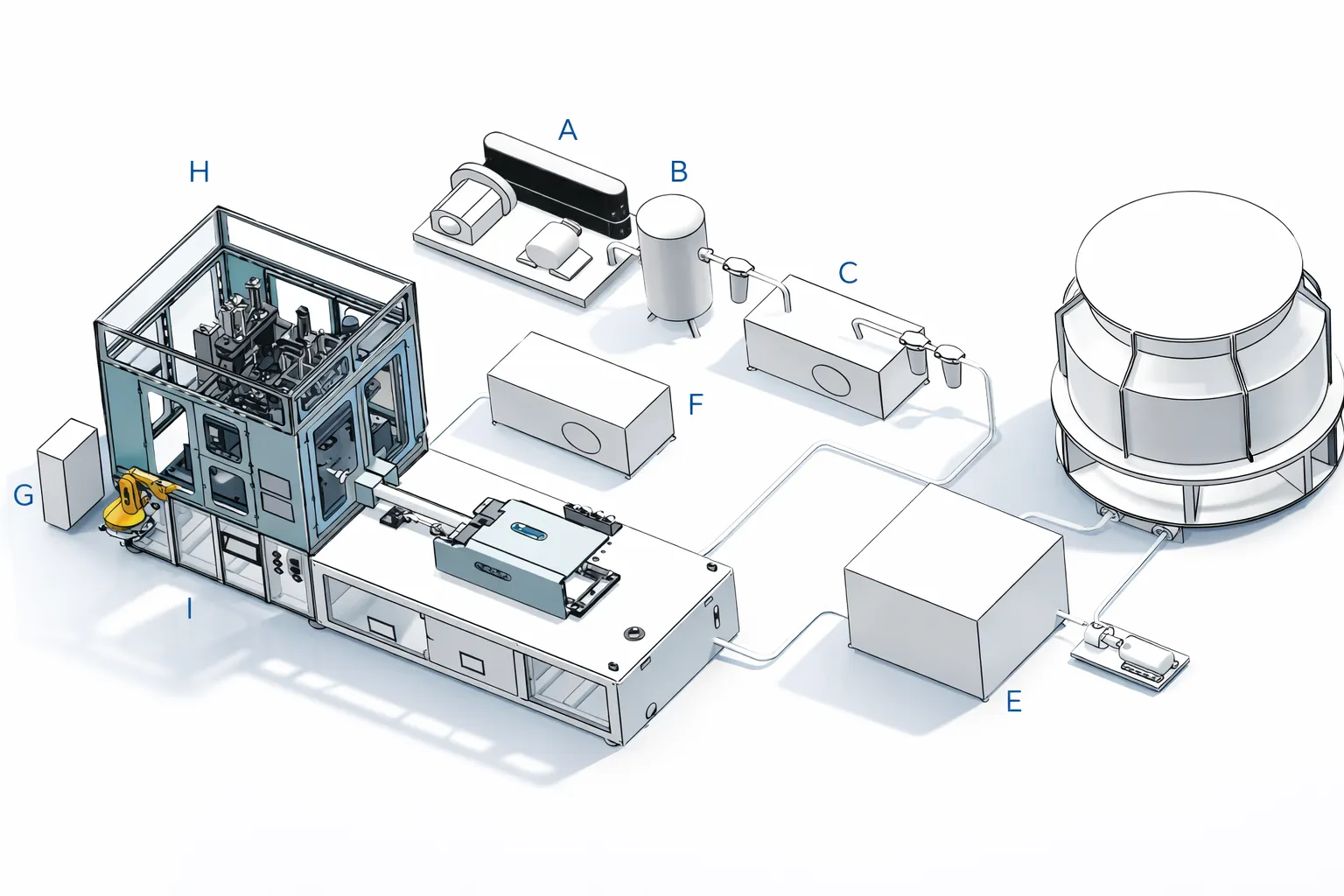
Korean ISBM factory layout and production line — preform validation workflow
Figure 4. Korean ISBM production environment — the seven-step preform validation workflow runs from design specification through first production qualification before any commercial volume is produced.

步骤 1

Define complete bottle specification

Target weight (±0.5g), all dimensions with tolerances, top-load minimum (N), barrier requirement, and neck finish standard. This is the anchor document — all downstream preform decisions reference this spec.

步骤 2

Calculate target BBR and preform geometry

Compute As, Rs, and BBR from bottle and preform dimensions. Confirm BBR within 8–15 for PET, 6–12 for PETG. Adjust L/D ratio if BBR is outside range.

Step 3

Design zone-by-zone wall thickness profile

Gate zone (2.0–2.5× body), body zone (minimum per BBR), shoulder zone (1.4–1.8× body), neck zone (no stretch). Document all wall thicknesses with ±0.05mm tolerance for each zone.

Step 4

Specify gate geometry and hot runner parameters

Gate type selection (point/valve/side), gate diameter, land length, vestige specification. For valve gate: confirm closure timing window and nozzle tip geometry with hot runner supplier before mould machining begins.

Step 5

First article injection trial — 50 preforms minimum

Weigh all 50 preforms on a 0.01g-resolution balance. Record mean and standard deviation — must achieve ±0.3g. Cross-section 5 preforms and measure wall thickness at all zones versus specification.

Step 6

Blow validation — 100 bottles, 8-point wall mapping

Map wall thickness at 8 standardised positions on 30 bottles. Calculate mean and CV% at each position. Confirm no zone below minimum. Verify actual BBR matches design calculation.

Step 7

Performance testing and production sign-off

Top-load test (N), drop test (1.5m, 5 orientations), CO₂ or O₂ barrier measurement as required. 2,000-shot stability run. Final quality records package issued. Preform design released for production tooling commissioning.

10. Korean Ever-Power Preform Engineering Service

Korean Ever-Power provides preform specification development as a structured engineering service — not a free consultation, but a documented deliverable produced by the engineering team before any mould is machined. The package covers BBR calculation with verification, zone-by-zone wall thickness specification, gate geometry recommendation with vestige specification, rPET adjustment parameters for the declared K-EPR content level, and a first-article measurement plan that specifies exactly what must be verified and at what tolerance before the preform is approved for blow trial.

Korean producers who engage this service ahead of mould order consistently reduce first-attempt development iterations from the Korean ISBM industry average of 2.8 trials to 1.2 trials. The saving is not in the engineering service fee — it is in the KRW 1.5–4M rework cost per avoided trial iteration, the 3–8 weeks of development time saved per project, and the elimination of the quality uncertainty that comes from proceeding to production with a preform whose wall thickness distribution was never explicitly calculated.

常见问题解答

Q1 — What happens if a Korean ISBM producer uses the same preform design for both virgin PET and rPET without modification?

Gate zone rejection rates increase 15–35% on the first rPET trial due to IV-driven shot weight variation. The practical fix — 10% additional gate zone wall thickness and injection pressure control tightened to ±1.5 bar — costs nothing if designed in advance and KRW 1.5–3M if it requires mould rework after the fact. Korean producers at the 2026 10% rPET mandate level often do not experience this problem immediately because the IV dilution effect at low rPET fraction is manageable; the problem appears sharply when rPET fraction increases to 30% in 2027.

Q2 — What is the maximum gate vestige height Korean retail buyers and brand customers will accept?

Korean retail channels (Homeplus, Emart, Coupang B2B) accept 0.5mm gate vestige height for consumer-facing transparent bottles. KFDA pharmaceutical inspection standard is 0.3mm maximum. Korean premium cosmetic brands at the Sulwhasoo/The Whoo quality tier specify 0.2mm maximum and require valve gate design to achieve it — point gates cannot consistently deliver below 0.2mm regardless of process optimisation. Korean producers who receive vestige specifications below 0.2mm and try to meet them with point gates waste development time and produce inconsistent results.

Q3 — Can preform weight be adjusted on the machine after the mould has been machined?

Yes, within ±8% of nominal weight through injection pressure and screw position adjustments. Beyond ±8%, the preform wall thickness distribution changes in ways that are no longer predictable from the original design, and the full validation workflow (Steps 5–7) must be repeated. Machine-based weight adjustment is a legitimate production tool for maintaining consistency within a specified preform; it is not a substitute for correct preform design. Korean producers who routinely use machine settings to compensate for preform design deficiencies are accepting unknown wall distribution consequences in production.

Q4 — Why does neck finish cooling affect closure torque consistency in Korean ISBM production?

Inadequate neck zone cooling causes the thread form to distort slightly under ejection force when the mould is running continuously at production temperature. The thread is correct when measured cold immediately after production, but the cumulative thermal distortion at steady-state production temperature shifts the thread OD by 0.08–0.15mm. This is below the drawing tolerance on most Korean ISBM bottle drawings (±0.2–0.3mm) but is enough to produce ±20–30% closure torque variation at a Korean brand customer’s filling line, which is above their 15% acceptance threshold. The root cause is always cooling, not the thread specification.

Q5 — How does a BBR outside the optimal range manifest in Korean ISBM production, and how is it diagnosed?

Low BBR (below 8 for PET): the bottle wall remains largely amorphous — low optical clarity, reduced CO₂ barrier in carbonated applications, lower tensile strength, and reduced top-load performance relative to the bottle’s material weight. Often mistaken for “poor resin quality” or “conditioning temperature problem.” High BBR (above 15): gate zone tearing during stretch initiation, elevated scrap rates, and characteristic “cold ring” whitening at the gate transition. Diagnosis: measure BBR from bottle geometry using the As × Rs formula and compare to the preform specification. If BBR is outside the 8–15 range, the preform geometry — not the machine settings — is the root cause.

Q6 — What is the minimum information Korean ISBM producers need to provide to receive an accurate preform engineering specification?

Four pieces of information are the minimum: (1) bottle drawing with dimensions and tolerances, (2) required neck finish standard (PCO 1881, 28mm BPF, 38mm GPI, etc.), (3) resin type and any rPET content target, and (4) the machine make and model the preform will run on. With these four inputs, Korean Ever-Power’s engineering team can produce a complete preform specification — weight, L/D ratio, zone wall thickness, gate geometry — as a written document before any mould is machined.

Preform Engineering Service

Developing a New ISBM Bottle SKU?
Get a Properly Engineered Preform Specification Before the Mould Is Machined.

Korean Ever-Power delivers a written preform engineering package — BBR calculation, zone wall thickness, gate geometry, rPET adjustment parameters — before any mould investment. No guess-and-rework cycles.

Request Preform Engineering Consultation

编辑:Cxm


工厂虚拟现实之旅

标签: