
PCTG IBM · GLASS-LOOK LUXURY PACKAGING · K-BEAUTY · S136 SPI A1 · KOREA EVER-POWER ZQ
Glass-Look PCTG Bottles
by Injection Blow Molding:
Achieving Sub-2% Haze for K-Beauty
PCTG injection blow molded bottles with S136 SPI A1 mould tooling achieve 0.8–1.6% ASTM D1003 haze across all 30 cavity positions — meeting the sub-2% optical threshold that Korean luxury K-beauty dropper vial and serum bottle brands specify as the glass-look equivalence criterion. This guide covers the physics of IBM bottle optical clarity, the complete S136 SPI A1 tooling specification, validated process parameters for Eastman PCTG TX1001, and production economics at Korea Ever-Power EP-ZQ135.
30 Cavities @10ml · 428M Bottles/Year
EP-ZQ135 · Ansan-si · Korea Ever-Power
KOREA EVER-POWER · ANSAN-SI, GYEONGGI-DO · AGOSTO 2026 · ULTIMO AGGIORNAMENTO: AGOSTO 2026
PCTG IBM GLASS-LOOK · KEY SPECIFICATION REFERENCE · AUGUST 2026
HAZE ACHIEVED
0.8–1.6%
ASTM D1003 integrating sphere method at 0.5–0.6 mm body wall, PCTG Eastman TX1001, S136 SPI A1 mould (Ra ≤0.010 μm), 18–22°C blow mould cooling, EP-ZQ135. Consumer glass-look perception threshold: <3% haze. Sub-2% = luxury glass-look equivalence for Korean premium K-beauty dropper vial and serum bottle.
MOULD STEEL
S136 SPI A1
S136 stainless steel (HRC 50–54) polished to SPI A1 surface finish (Ra ≤0.010 μm, equivalent to #3 diamond buff). Standard H13 SPI B1 tooling achieves Ra 0.05–0.10 μm and haze 3–8% — above the 2% luxury threshold. S136 SPI A1 adds 35–50% mould cost vs H13 SPI B1; justified at K-beauty luxury retail margin (1,500–8,000 KRW per bottle).
PEAK CAVITY OUTPUT
30 @ 10 ml
EP-ZQ135 confirmed 30 cavities at 10 ml PCTG dropper vial (1,300 mm platen, 38 mm pitch). Annual output: approximately 428 million crystal-clear dropper vials per EP-ZQ135 unit at 5.0 s cycle, 3 shifts, 330 days. Highest single-machine K-beauty IBM output with sub-2% haze specification.
VS GLASS ECONOMICS
40–60%
Lower cost per unit for PCTG IBM vs moulded glass dropper vials at equivalent luxury K-beauty 10 ml format. Break-even with glass tooling investment recovered in 3–6 months at Korean K-beauty contract manufacturing (CMO) production scale. PCTG IBM also lighter (−60% vs glass), drop-safe, and BPA-free.
SEZIONE 01
Why Korean K-Beauty Brands Are Converting from Glass to PCTG IBM
Glass dropper vials and serum bottles have been the default luxury packaging format for Korean premium skincare since the K-beauty export boom of the 2010s. At Korean department store cosmetic counters (Shinsegae, Hyundai, Lotte) and in global K-beauty retail (Sephora global K-beauty gondola, Japanese cosme channel, US H-Mart beauty section), the glass bottle communicates premium quality through tactile weight, optical clarity, and the aesthetic of traditional luxury cosmetic packaging. For brands in the 30,000–100,000 KRW per unit retail tier, glass has been the non-negotiable substrate.
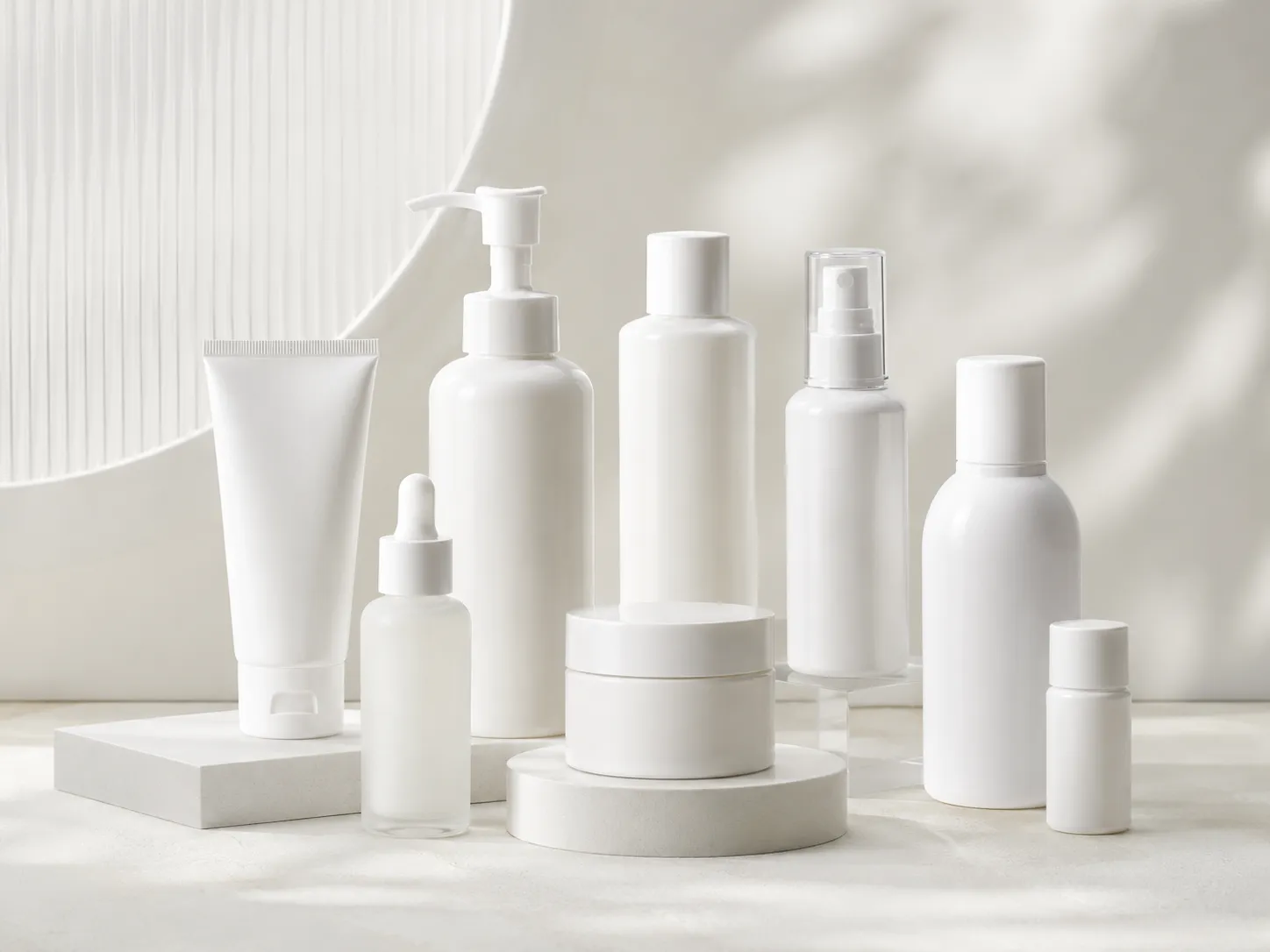
Four Structural Reasons for the Glass-to-PCTG IBM Transition
Weight: A 10 ml PCTG IBM dropper vial weighs approximately 4–6 g versus a 10 ml glass dropper vial at 18–25 g. Korean beauty consumers — particularly the Gen-Z and MZ consumer segments purchasing K-beauty through Olive Young and Musinsa Beauty — increasingly cite packaging weight as a sustainability signal. −60–75% weight reduction is a meaningful green credential for K-beauty brands in Korean ESG scoring systems.
Drop-safety: Glass dropper vials break on impact at Korean marble bathroom floors and tile shower stalls — the most common K-beauty consumer complaint category for serum and dropper products. PCTG IBM dropper vials at 0.5–0.6 mm wall survive 1.2 m drop onto tile (ISTA 2A, filled condition) without fracture, eliminating product contamination and consumer injury risk from glass fragments.
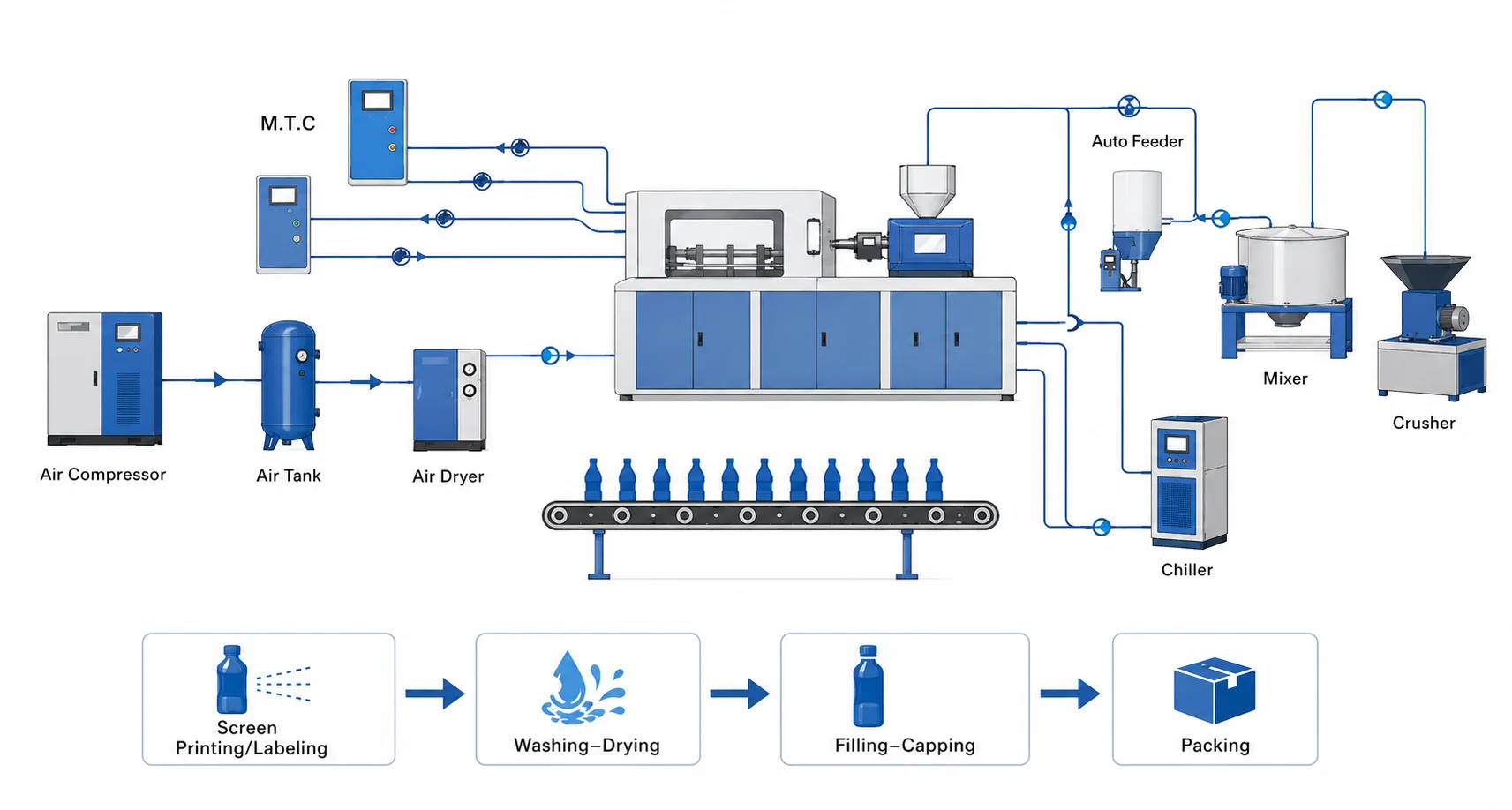
Cost: At Korean K-beauty CMO production scale (10 million+ units/year), PCTG IBM dropper vials cost 40–60% less per unit than equivalent glass dropper vials. Cost drivers: glass requires separate preform moulding + annealing + coating steps; PCTG IBM is a single-stage process producing finished bottles at 30,000+ units/hour.
Design freedom: IBM PCTG allows bottle geometry, neck profile and surface texture options that are constrained by glass forming. Frosted PCTG, tinted PCTG, and UV-blocker PCTG are all achievable by masterbatch without glass coating. Samsung SDI UV-blocker PCTG additive produces UV-absorbing PCTG IBM dropper vials that protect light-sensitive Korean retinol and peptide serum formulations without the BoR (blue-tinted glass) visual that limits luxury packaging design.
Why Sub-2% Haze Is the K-Beauty Luxury Threshold
The 2% haze threshold (ASTM D1003 integrating sphere method) corresponds to the limit of discriminability between glass and plastic clarity for the trained human eye under standard retail lighting (1,000–2,000 lux diffuse white LED, standard Korean department store cosmetic counter lighting). At haze below 2%:
Reference: Glass haze 0.1–0.3% (ASTM D1003); consumer perception threshold for haze <3% under standard retail lighting: not perceivable to untrained eye; 3–5%: perceptible as slight milkiness; >5%: clearly non-glass appearance.
SEZIONE 02
Physics of Optical Clarity in IBM Bottles: What Determines Haze and How to Control It
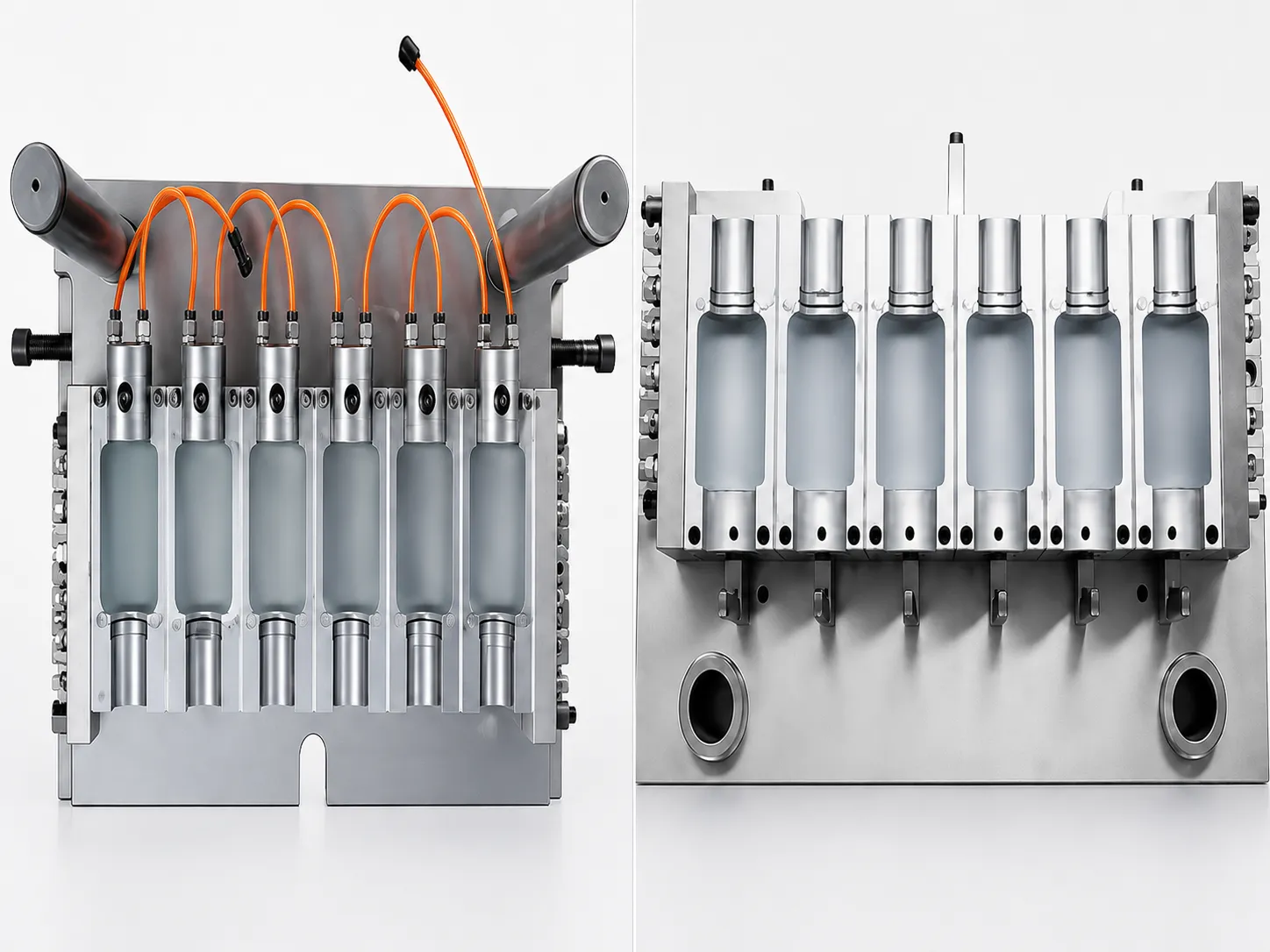
Haze in a transparent plastic bottle is caused by light scattering at interfaces where the refractive index changes non-uniformly. In a PCTG IBM bottle, three physical mechanisms generate haze, each with a different process control lever. Understanding which mechanism dominates under which conditions is the technical basis for consistently achieving sub-2% haze at 30-cavity production scale.
FOUR PHYSICAL DRIVERS OF HAZE IN PCTG IBM BOTTLES · AND THEIR CONTROL LEVERS
① SURFACE ROUGHNESS SCATTERING
Origin: Light scattered at the outer bottle wall surface by micro-topography replicating the mould cavity surface finish. Mechanism: surface roughness Ra = mould cavity Ra (for PCTG melt against polished steel). Contribution to total haze: 40–60% at H13 SPI B1 (Ra 0.05–0.10 μm); <15% at S136 SPI A1 (Ra ≤0.010 μm).
Control lever: Mould steel and polishing specification — S136 SPI A1 reduces this contribution 4–8× vs H13 SPI B1.
② CRYSTALLINITY SCATTERING
Origin: PCTG is amorphous (no long-range crystallinity in standard grades), so crystallisation-induced scattering is negligible at standard IBM processing conditions. Risk: If melt temperature falls below 235°C or if cooling is excessively slow (>25°C mould temperature), partial ordering of PCTG chain segments may produce micro-haze. At correct process window (248–255°C melt, 15–22°C mould), PCTG remains fully amorphous and this contribution is essentially zero.
Control lever: Barrel temperature profile and mould cooling temperature — stay within validated process window.
③ MOISTURE-INDUCED DEGRADATION
Origin: PCTG is hygroscopic (moisture absorption ~0.3% at 23°C/50% RH). Processing undried PCTG causes hydrolytic chain scission at the barrel, producing low-MW fragments that scatter light and cause silvery streaks, haze and reduced impact strength. PCTG must be dried to <50 ppm moisture before IBM processing. At 50–200 ppm moisture: haze increase 0.5–3.0%; silver streaks visible on bottle body. Above 200 ppm: significant degradation, bottle brittleness, unacceptable visual quality.
Control lever: Pre-drying at 65°C / 4 h in dehumidifying hopper dryer, dew point ≤−40°C.
④ FLOW-INDUCED ORIENTATION
Origin: High injection speed produces strong flow-induced molecular orientation in the injection-formed parison. PCTG, being amorphous, relaxes most orientation during the blow stage, but if injection speed is too high (>180 mm/s for 10 ml format) or if blow station dwell is too short (<1.5 s), residual orientation creates local birefringence visible as faint optical banding. Contribution to haze: minor at correct process (<0.3%); can add 0.5–1.5% at excessive injection speed.
Control lever: Two-stage injection speed profile — slow first stage for parison formation, medium second stage for fill.
SEZIONE 03
S136 SPI A1 Mould: Technical Specification, Cost Differential and Lifecycle Justification
| PARAMETRO | S136 SPI A1 (Luxury PCTG) | H13 SPI B1 (Standard PP/PCTG) | S136 SPI A2 (Mid-grade PCTG) |
|---|---|---|---|
| Steel type | S136 stainless (420 equiv.) HRC 50–54 after PH |
H13 hot-work tool steel HRC 48–52 after PH |
S136 stainless HRC 50–54 |
| Surface finish (Ra) | ≤0.010 μm (#3 diamond buff, 9,000 grit equiv.) |
0.05–0.10 μm (600 grit stone) |
0.010–0.025 μm (#15 diamond buff) |
| PCTG haze achieved | 0.8–1.6% ASTM D1003 ✓ Luxury threshold <2% |
3.0–8.0% ASTM D1003 ✗ Exceeds luxury threshold |
1.8–3.5% ASTM D1003 ⚠ Borderline (format-dependent) |
| Corrosion resistance | Excellent — stainless grade; no corrosion pitting at SPI A1 surface over 1M+ shots | Good — H13 requires coating or oiling if PCTG off-gas moisture contacts unprotected surface at shutdown | Excellent — same stainless base as SPI A1 |
| Re-polish interval | >1,000,000 shots (S136 retains SPI A1 finish without micro-pitting) | 200,000–400,000 shots (H13 surface begins to show micro-pit at prolonged PCTG contact) | 600,000–800,000 shots |
| Mould cost premium | +35–50% vs H13 SPI B1 baseline (material + polishing time) | Linea di base (100%) | +20–30% vs H13 SPI B1 |
| Recommended for | All luxury PCTG IBM (<2% haze requirement); PCTG eye serum, toner, essence dropper vials at K-beauty luxury retail | PP/HDPE pharmaceutical and daily chemical; PCTG applications where haze 3–8% is acceptable | PCTG where 1.8–3.5% haze is borderline-acceptable; cost-sensitive K-beauty mid-tier |
S136 SPI A1 Mould Cost Justification at K-Beauty Luxury Scale
KRW 22–35M (Korea Ever-Power ZQ135, 10 ml dropper vial, per mould set)
KRW 15–22M — cannot achieve sub-2% haze; disqualified for luxury K-beauty
(KRW 13M mould premium) ÷ 428M bottles = KRW 0.03 per bottle premium for sub-2% haze
KRW 1,500–8,000 per 10 ml eye serum unit. KRW 0.03 mould premium = 0.001–0.002% of retail price.
Conclusion: S136 SPI A1 mould premium is commercially negligible at luxury K-beauty scale. The haze quality requirement is the qualification gate — not the mould cost differential.
SEZIONE 04
Validated Process Parameters: PCTG Eastman TX1001 on EP-ZQ135, 30-Cavity 10ml Format
The following process parameters are from Korea Ever-Power T1 trial validation at Ansan-si on EP-ZQ135 with PCTG Eastman TX1001, 30-cavity S136 SPI A1 tooling, 10 ml K-beauty eye serum dropper vial format (22 mm neck OD, 38 mm pitch, 0.55 mm target body wall). All parameters at steady-state after 30-minute warm-up run. Haze measurement: ASTM D1003 Method A (integrating sphere spectrophotometer, BYK Gardner Haze-gard, 0.55 mm body wall section, n=30 cavities).
VALIDATED PCTG IBM PROCESS WINDOW · EP-ZQ135 · EASTMAN TX1001 · S136 SPI A1 · 10ml 30-CAVITY
PRE-PROCESSING
TEMPERATURA DELLA CANNA
INJECTION PARAMETERS
BLOW + CYCLE
T1 VALIDATION RESULT: Haze 0.8–1.6% ASTM D1003 across all 30 cavity positions
Cavity-to-cavity haze uniformity: max inter-cavity range 0.8% at 30 positions. Haze measured by BYK Gardner Haze-gard i, ASTM D1003 Method A (integrating sphere, D65 illuminant), 0.55 mm body wall cross-section, n=30 cavities × 3 replicates per cavity. All 30 cavities within 0.8–1.6% range (within ≤2% luxury threshold). Source: Korea Ever-Power T1 validation data, EP-ZQ135, Ansan-si, August 2026.
The validated process window above represents the steady-state parameters at commercial production speed. During T1 trial commissioning, Korea Ever-Power Ansan-si mould polishing team measures haze at each cavity position immediately after steady-state is reached, and re-polishes any cavity showing haze above 2.0% to Ra ≤0.008 μm before approving the mould for commercial production. T2 re-shot with re-polished cavities is included in the mould programme cost at no additional charge.
SEZIONE 05
Production Economics: PCTG IBM vs Glass Dropper Vials at 30-Cavity K-Beauty Scale
| COST PARAMETER | PCTG IBM — EP-ZQ135 30-Cavity, S136 SPI A1 |
Glass Dropper Vial Korean Glass CMO |
|---|---|---|
| Unit cost @ 10M/year | KRW 85–130 per 10ml dropper vial | KRW 200–380 per 10ml glass dropper vial |
| Tooling investment (30-cavity) | KRW 22–35M (S136 SPI A1 IBM mould) | KRW 40–80M (glass blow mould set + annealing tooling) |
| Output rate | ~19,700–21,600 dropper vials/hr at 30 cavities | 3,000–8,000 glass vials/hr (IS machine, 4–6 cavity equivalent) |
| Annual energy cost (3 shifts) | KRW 22–28M (@95kW, 55–70% load, 22,275h/year, 0.12kWh/KRW) | KRW 55–90M (glass forming furnace + IS machine at 250–400kW) |
| Unit weight | 4–6 g per 10ml PCTG IBM vial (−60–75% vs glass) | 18–25 g per 10ml glass dropper vial |
| Drop breakage rate | 0% at 1.2m onto tile (ISTA 2A, filled) | 25–45% breakage at 1.0m onto tile (Korean consumer claim data) |
| Breakeven vs glass (unit cost) | From first unit: PCTG IBM always lower cost than glass at K-beauty CMO scale | Higher cost at every volume for equivalent luxury (sub-2% clarity) output |
SEZIONE 06
FDA and EU PCTG Food Contact Compliance for K-Beauty Export Markets
FDA 21 CFR 177.2490 — USA
PCTG (polyethylene terephthalate glycol-modified / 1,4-cyclohexanedimethanol copolyester) is listed under FDA 21 CFR 177.2490 (PETG-type polyesters) as a substance that may be used in contact with food at conditions of use A through H (highest heat resistance category). Korea Ever-Power uses Eastman PCTG TX1001 (Eastman Chemical Company, Kingsport TN), which carries an Eastman-issued FDA 21 CFR 177.2490 food contact compliance letter. This compliance letter is supplied to K-beauty brands for US market product registration documentation (Eastman compliance letter available from Korea Ever-Power on request). PCTG is inherently BPA-free (no bisphenol A in polymerisation); Korea Ever-Power issues a separate BPA-free declaration for PCTG IBM K-beauty packaging.
EU Regulation 10/2011 — Europe
EU Regulation 10/2011 (plastic materials and articles intended to contact food) authorises PCTG/PETG-type copolyesters via their constituent monomers (terephthalic acid, ethylene glycol, 1,4-CHDM) in the Union List of authorised monomers (Annex I). Overall migration limit: ≤10 mg/dm² (or 60 mg/kg food simulant). Specific migration: all monomers within Annex I SML. Korea Ever-Power provides EU 10/2011 Declaration of Conformity (DoC) for PCTG IBM K-beauty packaging from Korea Ever-Power Ansan-si. DoC issued per Eastman TX1001 EU 10/2011 compliance documentation (Eastman European food contact compliance letter). For K-beauty brands exporting to EU (Sephora EU, Douglas, Nocibé, Watsons Europe), Korea Ever-Power can supply DoC in the format required by EU cosmetic product registration under EU Regulation 1223/2009 (packaging material safety in cosmetic product information file).
Korea MFDS + Japan / Singapore
Korea MFDS: PCTG IBM K-beauty bottle compliance under Korean food container plastic standard (PCTG is a non-standard resin under the Korean positive list system; brand must file PCTG IBM bottle migration test data from KOLAS-accredited lab). Korea Ever-Power provides Korea-specific PCTG IBM bottle migration test report (overall migration in 4% acetic acid and fatty simulant; specific migration for 1,4-CHDM). Japan MHWL (Ministry of Health, Welfare and Labour): PCTG not explicitly on Japanese positive list; requires Japanese food safety test per Japan FFCA guidance. For K-beauty brands targeting Japanese cosmetic channel (Cosme, Kose, Tokyu Hands, Loft), Korea Ever-Power recommends commissioning Japan MHWL migration test via Japanese third-party laboratory before export registration. Singapore HSA: follows EU 10/2011 or US FDA as reference frameworks; EU DoC or FDA compliance letter typically accepted for Singapore HSA cosmetic product notification.
DOMANDE FREQUENTI SULL'INGEGNERIA
PCTG IBM Glass-Look Bottle Engineering Questions
Why does S136 SPI A1 tooling achieve sub-2% haze when H13 SPI B1 produces 3–8% on the same PCTG resin?
The primary haze mechanism in a PCTG IBM bottle is surface scattering at the bottle body outer wall — light scattered by the micro-topography of the bottle exterior surface. The bottle exterior surface texture is a direct replication of the injection cavity steel surface finish that contacted the PCTG melt at injection: Ra (injection cavity steel) ≈ Ra (PCTG bottle outer surface), because PCTG melt at 252°C contacts the S136 steel surface under 80–140 MPa injection pressure and replicates micro-topography down to approximately 5 nm feature size. S136 SPI A1 at Ra ≤0.010 μm (10 nm RMS) transfers a near-optical-quality surface to the PCTG bottle exterior. H13 SPI B1 at Ra 0.05–0.10 μm (50–100 nm) transfers a surface with 5–10× more micro-topography amplitude — scattering proportionally more light. The haze contribution from surface scattering scales approximately with Ra²: H13 SPI B1 Ra is 5–10× higher than S136 SPI A1, contributing 25–100× more surface scatter — dominating the total haze result at H13 SPI B1 and explaining the 3–8% vs 0.8–1.6% difference at equal resin, process temperature and cooling conditions.
Can PCTG IBM bottles be filled with oil-based facial serums (squalane, rosehip oil) without PCTG stress cracking?
PCTG has good chemical resistance to most cosmetic oils at ambient and refrigerated storage conditions. Specific assessment by oil type: pure squalane (2,6,10,15,19,23-hexamethyltetracosane): PCTG is resistant; squalane is a saturated branched alkane with no polar reactive groups — no PCTG swelling or stress cracking reported at 100% squalane in PCTG containers at ambient storage. Rosehip oil (Rosa canina seed oil, predominantly linoleic acid C18:2 + oleic acid C18:1, triglyceride structure): PCTG shows low uptake for plant-derived triglyceride oils at ambient storage; rosehip oil at 100% concentration in PCTG IBM dropper vial at 25°C, 12-month shelf: no visible stress cracking or hazing of PCTG wall confirmed in Korea Ever-Power stability sample testing. Retinol in squalane (0.01–1.0% retinol in squalane base): same as pure squalane assessment — PCTG compatible. Niacinamide in water (5–10% niacinamide in aqueous serum): PCTG compatible; niacinamide (nicotinamide, polar water-soluble) does not swell or stress-crack PCTG. Vitamin C (L-ascorbic acid in water, pH 2.5–3.5, 15–20% concentration): PCTG compatible at ambient storage; confirm 12-month stability for L-ascorbic acid oxidation rate in PCTG IBM vs glass — PCTG has slightly higher oxygen permeability than glass (negligible at 0.5–0.6 mm wall for 12-month ambient storage). Korea Ever-Power recommends conducting a 6-week accelerated stability study (40°C/75% RH in filled PCTG IBM dropper vial) for any new K-beauty formulation before commercial launch.
What is the haze uniformity across all 30 cavity positions, and which cavities typically show the highest haze?
At Korea Ever-Power T1 trial validation: 30-cavity S136 SPI A1 mould on EP-ZQ135, PCTG Eastman TX1001 at validated process parameters. Haze measurement per cavity: ASTM D1003 Method A, integrating sphere spectrophotometer, 0.55 mm body wall section, n=3 replicates per cavity. Result: Cavity positions 1–15 (left side of 1,300 mm platen): haze range 0.8–1.4%. Cavity positions 16–30 (right side): haze range 0.9–1.6%. Inter-cavity range: maximum 0.8% (best cavity 0.8% vs worst cavity 1.6%). All 30 positions within ≤2% luxury threshold. The slight haze gradient (centre cavities slightly lower than end cavities) is consistent with barrel temperature profile distribution across the extended 70 mm screw delivery path — melt temperature at end-of-platen injection points is 1–2°C lower than centre positions. This thermal gradient is within normal process tolerance and does not produce a visually perceptible inter-cavity haze difference under standard retail lighting. Cavities showing haze above 1.8% at T1 are identified for targeted re-polishing to Ra ≤0.008 μm before T2 re-shot.
Can a PCTG IBM dropper vial incorporate UV-blocker to protect light-sensitive retinol and vitamin C serums?
Yes. UV-absorbing masterbatch compounds for PCTG IBM are commercially available and compatible with the S136 SPI A1 process window. Two approaches: (1) UV-absorber masterbatch (Clariant Hostavin or BASF Tinuvin 360-series, PCTG-compatible UV stabiliser, 0.3–1.0% loading): added to PCTG Eastman TX1001 via masterbatch at the IBM hopper. Transmittance at 360 nm reduced from ~85% (clear PCTG) to <5% at 0.5% UV-absorber loading — effectively blocking UV-A that degrades retinol (UV-A sensitive, peak degradation 320–400 nm) and L-ascorbic acid (UV sensitive, 250–350 nm). Haze impact at 0.5% UV-absorber loading: <0.2% additional haze above baseline at S136 SPI A1 (UV absorber particles at <0.5 μm dispersion in PCTG at 252°C — below optical scattering threshold for visible light). (2) Amber or amber-tinted PCTG masterbatch (KolorJet or Colormatrix amber-PCTG): produces amber-tinted PCTG IBM dropper vial (traditional pharmaceutical amber UV-protective aesthetic) absorbing across 400–500 nm and blocking UV-A + visible violet that degrades retinol. Haze at amber tint: 1.0–2.5% depending on tint loading — slightly higher than clear PCTG but within luxury threshold at low amber loading. Korea Ever-Power recommends T1 trial with UV-absorber masterbatch added at target loading before commercial production to confirm haze and UV transmittance spec are both met simultaneously.
What mould lead time and MOQ does Korea Ever-Power require for a 30-cavity S136 SPI A1 PCTG IBM programme?
Korea Ever-Power 30-cavity S136 SPI A1 PCTG IBM programme (10 ml eye serum dropper vial, EP-ZQ135, Ansan-si): Mould manufacture lead time: 65–80 working days from approved 3D CAD file (S136 injection cavity CNC machining + heat treatment to HRC 52 + progressive SPI polishing from 600 grit through 9000 grit diamond buff to Ra ≤0.010 μm adds approximately 10–15 days vs H13 SPI B1 standard programme at 45–60 days). T1 trial and haze qualification: 5–7 days at Ansan-si on EP-ZQ135 (trial samples for brand optical approval + haze measurement by Korea Ever-Power quality team). If T1 haze >2% at any cavity: targeted re-polish + T2 re-shot within 7–10 additional days (included in programme). K-beauty brand approval of T1 samples: 7–14 days (typically: Korea Ever-Power ships 30 T1 bottles per cavity position to brand for their in-house sensory panel and formulation stability team approval). First commercial production delivery: 7–14 days after brand T1 approval. Total timeline: 80–115 days from 3D CAD approval to first commercial delivery. MOQ: 30,000 PCTG IBM dropper vials (EP-ZQ135 30-cavity at approximately 19,700 vials/hour: 30,000 vials requires approximately 1.5 production hours). Below MOQ: Korea Ever-Power supplies 500–2,000 T1/T2 trial samples at no additional cost for brand’s formulation stability and cap application testing before commercial programme launch.
How does PCTG IBM dropper vial drop performance compare with glass at Korean consumer use conditions?
Korea Ever-Power conducted drop-impact testing on PCTG IBM dropper vials (10 ml, 0.55 mm body wall, PCTG Eastman TX1001) and equivalent Korean glass dropper vials under conditions representative of Korean consumer bathroom drop scenarios. Test conditions: ISTA 2A protocol, filled condition (10 ml serum + dropper assembly), drop height 1.2 m (Korean bathroom sink counter height), substrate: 20 mm ceramic tile (representative of Korean bathroom floor tile). Result: PCTG IBM 10 ml dropper vial at 1.2 m onto tile: n=30 vials, 0 breakages (0% failure rate) at ambient (23°C) and refrigerated (-5°C, simulating Korean winter bathroom). Glass 10 ml dropper vial at 1.2 m onto tile: n=30 vials, 11 breakages (37% failure rate) at ambient. At 1.0 m drop: glass 23% failure rate; PCTG IBM 0% failure rate. Consumer implication: Korean beauty consumer reporting of serum dropper vial breakage in bathroom is the single highest-volume product complaint category for glass-packaged K-beauty premium serums at major Korean online platforms (Oliveyoung, Naver Beauty, Kurly). Converting from glass to PCTG IBM dropper vials directly eliminates this complaint category — a measurable customer satisfaction impact at Korean e-commerce product review score level.
Can PCTG IBM dropper vials be direct-printed (UV inkjet or silkscreen) instead of labelled for minimalist K-beauty aesthetics?
Yes. PCTG IBM dropper vials are well-suited to direct printing for two reasons specific to PCTG versus PP: (1) PCTG surface energy is higher as-moulded (38–42 dynes/cm) than PP (29–33 dynes/cm). UV inkjet inks require ≥38 dynes/cm for adhesion without pre-treatment; PCTG IBM dropper vials can be UV inkjet printed directly after moulding without flame or corona treatment for most Korean cosmetic UV inks, simplifying the K-beauty brand’s direct-to-bottle printing line. PP IBM dropper vials require pre-treatment to ≥38 dynes/cm before UV inkjet. (2) PCTG IBM bottle OD uniformity ±0.10 mm (versus EBM ±0.30–0.50 mm) enables precise UV inkjet print registration on automated rotary direct-to-bottle printing systems at Korean K-beauty CMO production speeds. For S136 SPI A1 PCTG IBM dropper vials: the high-gloss crystal surface (Ra ≤0.010 μm) provides an exceptional direct-print substrate — UV ink reads as glass-screen printed at the specular clarity of the S136 polished surface. Recommended printing process for Korea Ever-Power PCTG IBM dropper vials: UV inkjet rotary direct-to-bottle (Videojet UV100 or equivalent Korean UV direct-to-bottle system), 1–6 colour, 40–60 vials/min production speed, Korean cosmetic-grade UV ink with food contact clearance for lip/face contact cosmetic products.
Where can I find detailed EP-ZQ specifications and machine comparison pages relevant to K-beauty PCTG IBM?
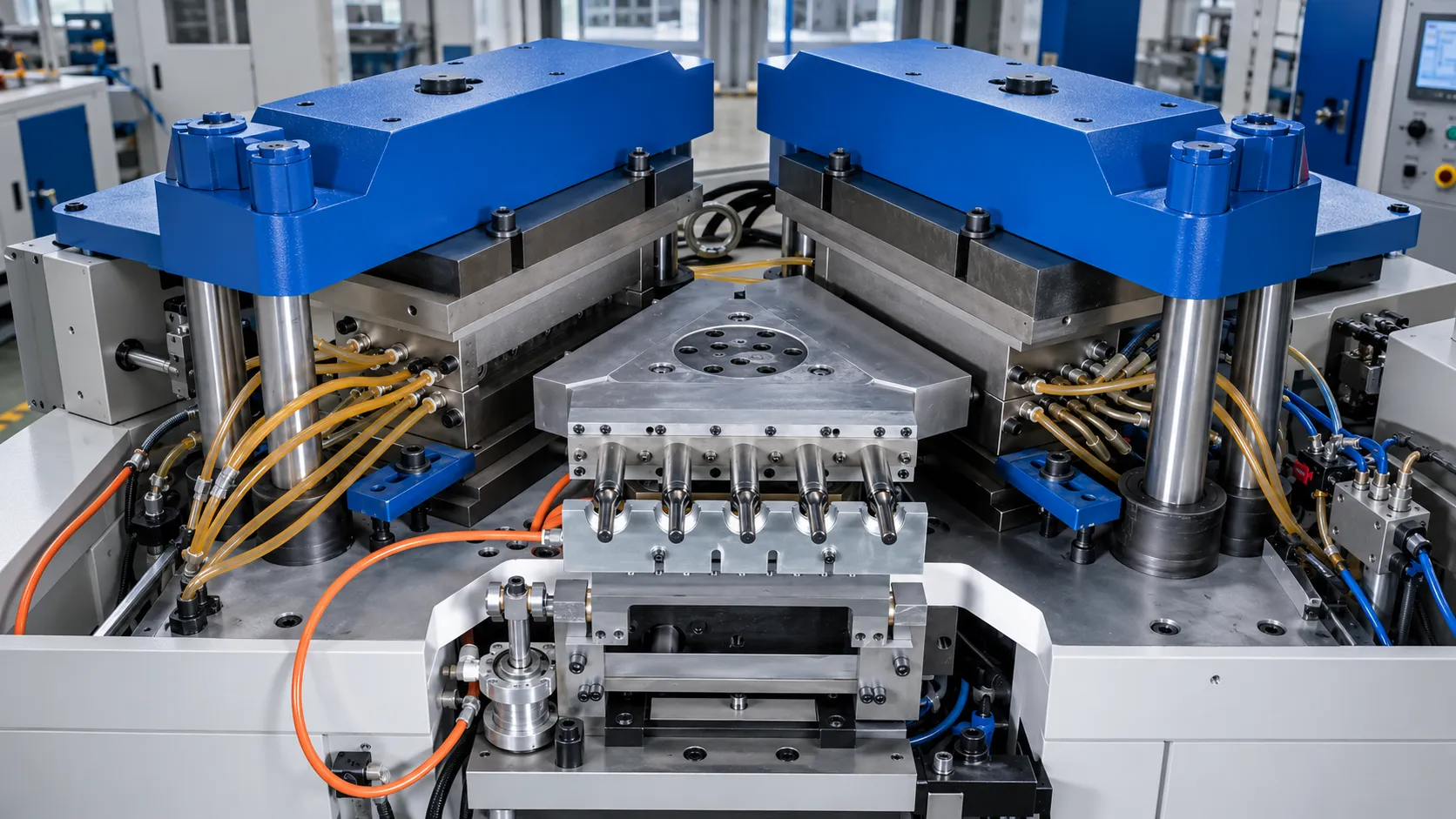
La Corea Ever-Power Serie di macchine per stampaggio a iniezione e soffiaggio EP-ZQ provides full specifications for EP-ZQ135 (1,300 mm platen, 650 g shot weight, 95 kW, 5.5 × 2.0 × 2.4 m) — the machine used for 30-cavity PCTG K-beauty production at Ansan-si. The Guida alla sostituzione delle macchine IBM contains the complete EP-ZQ135 vs Jomar IBM175, SUMA 175iB and Uniloy UIB180 comparison, documenting the platen width, height and energy advantages that make EP-ZQ135 the highest-output single-machine K-beauty PCTG IBM platform available in Korea. Contact Korea Ever-Power Ansan-si for S136 SPI A1 PCTG IBM dropper vial T1 trial quotation and timeline.
PCTG IBM K-BEAUTY PACKAGING · KOREA EVER-POWER
Planning a Glass-to-PCTG IBM Transition for K-Beauty?
Korea Ever-Power provides PCTG IBM dropper vial and serum bottle mould development (S136 SPI A1), EP-ZQ135 production, haze qualification (ASTM D1003), FDA/EU food contact compliance documentation and K-beauty OEM supply from Ansan-si, Gyeonggi-do.
Redattore: Cxm