ASB COMPATIBILITY GUIDE
Is ISBM Compatible with ASB Moulds? Complete Korean Compatibility Guide
Yes — Korean Ever-Power ISBM machines specifically engineer ASB mould compatibility, supporting legacy Nissei ASB-12M, ASB-50MB, and ASB-70DPH mould configurations. This compatibility preserves customer mould investments worth hundreds of millions of KRW when transitioning from Japanese ASB equipment to Korean ISBM platforms. This guide explains the ASB legacy, compatibility specifications, Korean platform matrix, migration strategy, and cost savings calculations.
TL;DR — Quick Answer
Yes — Korean Ever-Power ISBM machines provide documented ASB mould compatibility across the legacy Nissei ASB platform family including ASB-12M (12-cavity small-format), ASB-50MB (mid-format), and ASB-70DPH (double-row platform). This compatibility is engineered into specific Korean platforms designed for Japanese ASB user transition. Korean ISBM machines like the HGY200-V4-B are specifically configured to accept Japanese Aoki-250 and equivalent ASB moulds without modification. The compatibility supports Korean producers transitioning from Japanese Nissei ASB equipment to preserve substantial mould investments (typically hundreds of millions of KRW per facility) while gaining Korean platform advantages: 25-35% capital cost savings, K-EPR rPET integration, and Korean engineering support. Korean Ever-Power also offers direct ASB mould replacement assemblies (15ml, 150ml core moulds for ASB-12M) through dedicated mould product line. This unique value proposition distinguishes Korean Ever-Power from Chinese alternatives that lack ASB compatibility heritage and from Japanese alternatives at substantially higher capital investment.
In This Guide
- The ASB Mould Legacy (Nissei ASB Family)
- Why ASB Compatibility Matters in Korea / Japan
- Korean ISBM Machines Compatible with ASB
- Ever-Power ASB Compatibility Matrix
- ASB Mould Migration Strategy
- Cost Savings Through ASB Compatibility
- ASB Mould Refurbishment Options
- Korean Manufacturing Investment in ASB Compatibility
- Frequently Asked Questions
- Conclusion
1. The ASB Mould Legacy (Nissei ASB Family)
Nissei ASB Machine Co., Ltd. is a Japanese ISBM equipment manufacturer that established global leadership in injection stretch blow molding technology starting in the 1970s. The Nissei ASB platform family — particularly the ASB-12M, ASB-50MB, and ASB-70DPH models — became the de facto industry standard across Korean K-beauty, pharmaceutical, food, and specialty bottle production through the 1990s and 2000s. Korean producers serving premium bottle applications typically operated Nissei ASB equipment as their core production capability.
| Nissei ASB Model | Cavity Configuration | Typical Korean Application |
|---|---|---|
| ASB-12M | 1×6 / 1×12 cavity | K-beauty serums, pharma small-format |
| ASB-50MB | 1×4 / 1×6 cavity | Mid-format K-beauty, pharma |
| ASB-70DPH | 2×4 / 2×6 (double row) | High-volume K-beauty, pharma |
| ASB-150 / 250DP | Mid-large format | Beverage, food, condiment |
| Aoki-250 | Various configurations | Multiple applications |
The ASB platform’s installed base in Korea reaches thousands of units across the Korean industrial corridor in Gyeonggi-do, Ulsan, Cheongju, and other manufacturing centers. Korean producers invested heavily in ASB mould tooling matched to specific bottle SKUs across K-beauty, pharmaceutical, beverage, food, and specialty applications. The accumulated ASB mould investment in Korean manufacturing alone exceeds estimated tens of billions of KRW representing decades of bottle SKU development tied to specific ASB platform geometry.
Many Korean Nissei ASB platforms are now reaching 18-25 year service life, requiring either major refurbishment investment or platform replacement. The decision facing Korean producers is straightforward but consequential: continue with Nissei ASB at premium replacement pricing, transition to Chinese alternatives at lower cost but losing ASB mould compatibility, or transition to Korean Ever-Power ISBM platforms with documented ASB compatibility preserving the substantial mould investment. The Korean Ever-Power option uniquely combines cost savings with mould investment preservation.
2. Why ASB Compatibility Matters in Korea / Japan
ASB mould compatibility represents one of the most strategically valuable capabilities a Korean ISBM manufacturer can offer to existing ASB-equipped customers. The strategic value derives from three interconnected factors: mould investment magnitude, SKU portfolio complexity, and switching cost asymmetry.
| Strategic Value Dimension | Typical Cost Impact | Korean Producer Significance |
|---|---|---|
| Existing mould inventory value | 300M-2B KRW per facility | Direct savings if preserved |
| Mould design / engineering time | 3-6 months per SKU | Eliminated through reuse |
| Customer SKU re-qualification | 2-6 months | Eliminated (existing moulds) |
| Production capacity buffer | 3-6 months ramp | Faster production resumption |
| Customer relationship continuity | Strategic value | Avoid losing customers |
For typical Korean K-beauty contract fillers operating 8-15 SKUs across multiple customer brands, the cumulative mould inventory value reaches 300 million to 2 billion KRW per facility. Replacing this entire mould inventory when transitioning to incompatible platforms creates substantial financial impact and operational disruption that extends 6-18 months as new moulds are designed, manufactured, qualified, and customer-approved through testing protocols.
Customer SKU re-qualification deserves particular emphasis. Korean K-beauty brands like Amorepacific, LG H&H, and pharmaceutical brands require formal qualification protocols when packaging suppliers change production technology, including dimensional verification, material testing, transit testing, and end-customer feedback validation. This qualification process can take 2-6 months per SKU regardless of bottle quality, creating substantial market timing risk during platform transitions. ASB mould compatibility eliminates this re-qualification entirely because the bottles produced are dimensionally identical to existing approved products.
3. Korean ISBM Machines Compatible with ASB
Among Korean ISBM manufacturers, ASB mould compatibility is not universal. Building genuine ASB compatibility requires substantial engineering investment in platform mould interface design, clamp force specifications, mould opening height, ejection systems, and parameter library development matched to specific ASB mould geometry. Korean Ever-Power has invested specifically in this capability creating documented compatibility across the most-installed Nissei ASB platform family.
| Korean ISBM Manufacturer | ASB-12M Compatible | ASB-50MB / 70DPH Compatible | Aoki-250 Compatible |
|---|---|---|---|
| Ever-Power (Korea) | ✓ Yes (documented) | ✓ Yes (documented) | ✓ Yes (HGY200-V4-B) |
| Other Korean manufacturers | Variable | Variable | Variable |
| Chinese ISBM (Tier 1) | No (proprietary mounts) | No | No |
| Chinese ISBM (Tier 2) | No | No | No |
| European (Sidel, KHS) | Limited | Limited | Limited |
| Nissei ASB (Japan) | ✓ Native | ✓ Native | Limited |
Korean Ever-Power and Nissei ASB are the two manufacturers offering native ASB compatibility. The competitive distinction is dramatic: Nissei ASB premium pricing typically runs USD 800K-1.2M for 4-station 8-cavity equivalent platforms while Korean Ever-Power delivers comparable performance with documented ASB compatibility at USD 500-700K — representing 25-35% capital cost savings while preserving the substantial existing mould investment customers have built around ASB platforms.
Chinese alternatives lack ASB compatibility because their proprietary platform designs use different clamp force specifications, mould opening heights, ejection mechanisms, and mounting interface dimensions. Customers transitioning to Chinese platforms must replace their entire ASB mould inventory at substantial cost — typically wiping out the apparent capital savings versus Korean alternatives. The Chinese option only makes economic sense for customers without significant existing mould investment, which is rarely the case for established Korean K-beauty, pharmaceutical, and specialty producers.
4. Ever-Power ASB Compatibility Matrix
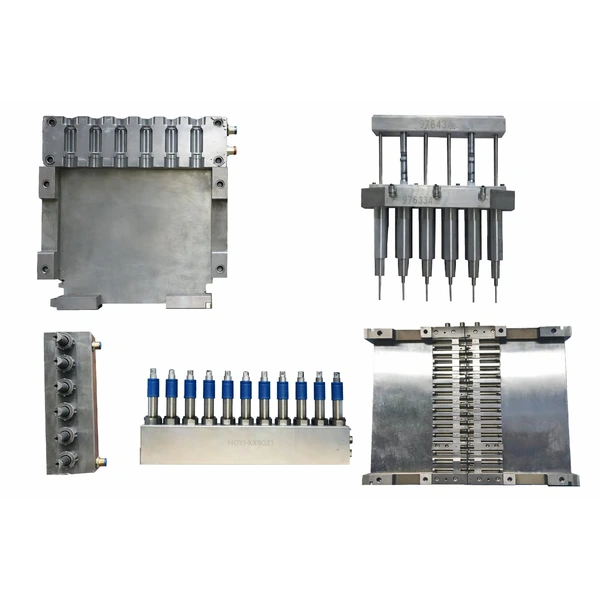
Korean Ever-Power’s ASB compatibility implementation extends beyond marketing claims to specific platform engineering and dedicated ASB-compatible mould product line. Three concrete capabilities anchor the ASB compatibility offering.
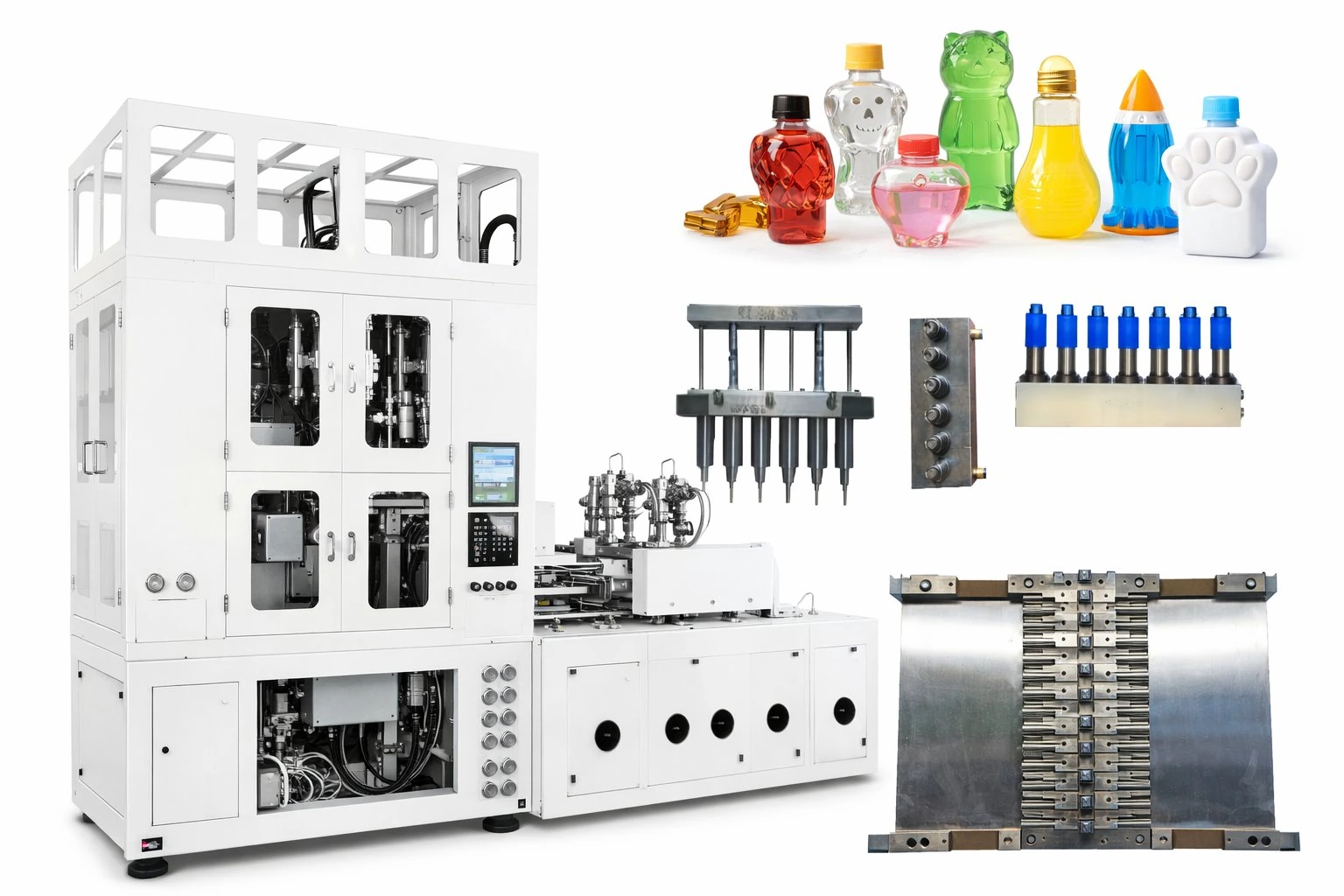
Capability 1: ASB-Compatible ISBM Platform. The HGY200-V4-B 4-station ASB-compatible platform is specifically engineered to accept Japanese Aoki-250 and equivalent ASB moulds without modification. Platform specifications including clamp force, mould opening height, ejection stroke, and mounting interface dimensions match Aoki-250 ASB platform standards exactly. Korean producers transitioning from Aoki-250 equipment can install existing moulds on the HGY200-V4-B and resume production with parameter library matched to existing bottle SKU specifications.
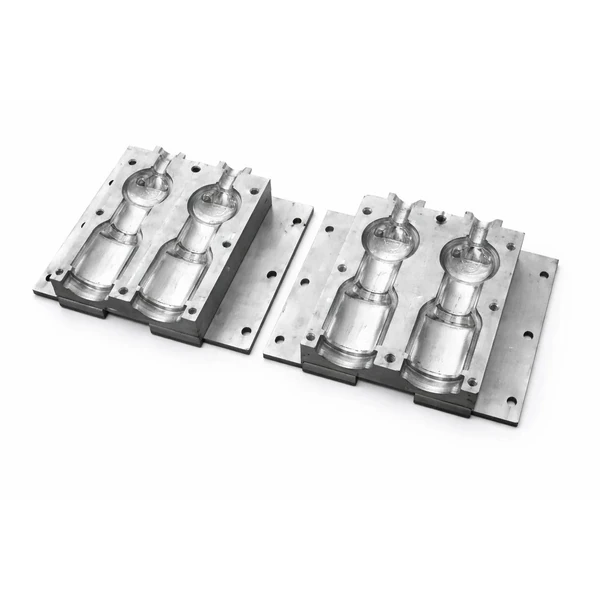
Capability 2: ASB-Compatible Mould Replacement Products. Ever-Power offers dedicated ASB mould replacement products supporting customers who need to refresh aging ASB moulds while continuing production on existing ASB platforms. The product line includes 150ml ISBM mould assembly for ASB-12M (1×12 cavity) for K-beauty toner and lotion applications, and direct replacement 15ml core mould for ASB-12M (1×6 cavity) for K-beauty serum applications. These mould products plug into existing Nissei ASB-12M platforms without machine modification.
Capability 3: ASB Component-Level Replacement. Beyond complete mould assemblies, Ever-Power offers individual ASB mould components supporting partial refurbishment economics. The mould core component (eject core fixing plate) for ASB-12M 15ml 1×6 cavity enables targeted replacement of worn components while preserving the larger mould assembly investment. This component-level approach maximizes mould lifecycle economics through targeted refurbishment rather than complete replacement.
| Customer Scenario | Recommended Ever-Power Solution |
|---|---|
| Aging ASB platform, modern moulds | HGY200-V4-B platform replacement |
| Working ASB platform, worn moulds | ASB mould assembly replacement |
| Working ASB, partial mould wear | Mould component replacement |
| Capacity expansion (existing ASB ops) | Additional HGY200-V4-B + ASB moulds |
| Complete platform modernization | HGY200-V4-B + new Korean moulds |
5. ASB Mould Migration Strategy
For Korean producers planning transition from aging Nissei ASB equipment to Korean Ever-Power platforms, systematic migration strategy maximizes the mould investment preservation value while minimizing production disruption. The recommended approach follows a phased timeline.
| Migration Phase | Duration | Key Activities |
|---|---|---|
| Phase 1: Mould inventory audit | 2-4 weeks | Catalog all moulds, condition, SKU mapping |
| Phase 2: Compatibility verification | 2-4 weeks | Ever-Power engineering review of moulds |
| Phase 3: Platform sizing & quote | 2-3 weeks | HGY200-V4-B specification + commercial |
| Phase 4: Pilot SKU testing | 4-6 weeks | Test 1-2 SKUs on Ever-Power platform |
| Phase 5: Platform installation | 3-4 weeks | Korean engineering team on-site |
| Phase 6: Full SKU rollout | 2-4 months | Progressive transition all SKUs |
| Total Migration Timeline | 5-8 months | Compared to 12-18 months without ASB compatibility |
The total 5-8 month migration timeline represents approximately 50% reduction versus migration without ASB compatibility (which typically requires 12-18 months including new mould design, manufacturing, and customer SKU re-qualification). This time savings translates directly to faster ROI realization, faster capacity restoration, and reduced market disruption during platform transition. For comprehensive guidance on the 10 selection factors that should drive ISBM platform decisions including ASB compatibility, see the 10-factor decision framework.
Pilot SKU testing in Phase 4 deserves particular emphasis. Korean producers transitioning from Nissei ASB to Ever-Power should test 1-2 representative SKUs on the new platform before committing to full migration. The pilot validates dimensional matching, bottle quality consistency, cycle time achievement, and customer feedback before scaling to full production rollout. Korean Ever-Power supports pilot testing at the Ansan-si manufacturing facility or at customer site through engineering team on-site visits.
6. Cost Savings Through ASB Compatibility
The financial impact of ASB compatibility extends across multiple cost dimensions. Quantifying the savings helps Korean producers justify ASB-compatible Korean platform selection over Chinese alternatives that lack ASB heritage.
| Savings Category | Korean Ever-Power vs Chinese | Korean Ever-Power vs Nissei ASB |
|---|---|---|
| Mould investment preservation | 300M-2B KRW saved | Equivalent (both compatible) |
| Platform capital cost | +150-250K USD vs Chinese | -300-500K USD vs Japanese |
| SKU re-qualification | 2-6 months saved per SKU | Equivalent (both eliminate) |
| Production capacity gap | 5-7 months saved | Similar timeline |
| Customer relationship continuity | Strategic protection | Equivalent |
| 15-year TCO advantage | Korean Ever-Power wins | Korean Ever-Power wins |
Korean Ever-Power vs Chinese alternatives: The 150-250K USD additional capital cost versus Chinese platforms is dramatically offset by 300M-2B KRW (USD 215K-1.4M) mould investment preservation. Net economic outcome favors Korean Ever-Power by USD 65K-1.15M depending on customer mould inventory scale. For Korean K-beauty contract fillers operating large mould inventories, the Korean Ever-Power option produces substantially better total economics despite higher upfront platform price.
Korean Ever-Power vs Nissei ASB: Both platforms offer ASB mould compatibility, eliminating the mould investment and SKU re-qualification cost dimensions. The decision reduces to platform capital cost where Korean Ever-Power delivers 300-500K USD savings (25-35% reduction) at comparable operational performance and ASB mould support capability. The capital savings can fund parallel investment in production automation, quality systems, or capacity expansion beyond what Nissei ASB pricing would permit. For comprehensive ROI analysis applicable to ASB migration projects, see the ISBM ROI calculator framework.
7. ASB Mould Refurbishment Options
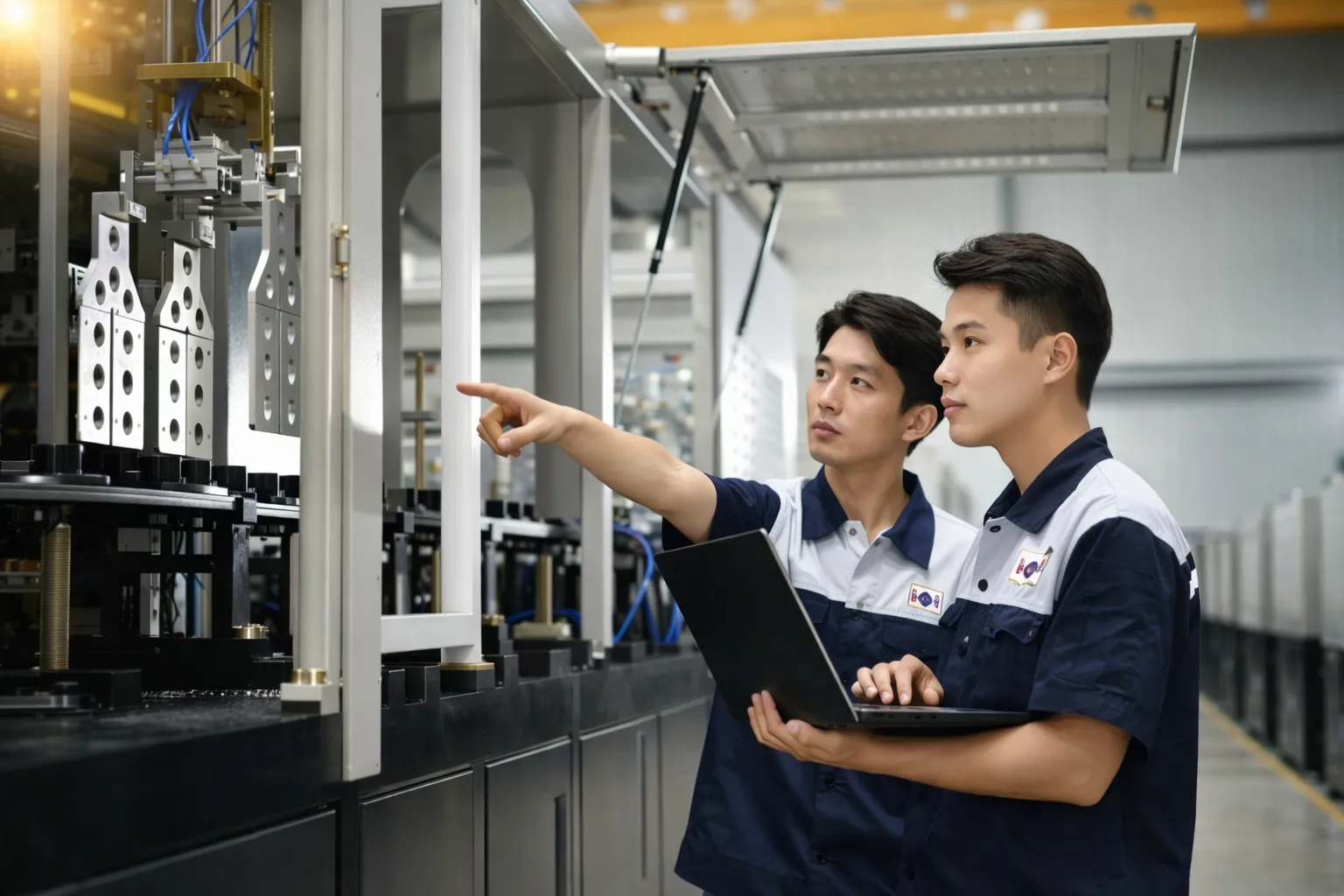
Even before considering platform migration, Korean producers operating ASB equipment frequently need to refurbish aging moulds. ASB moulds typically have 5-15 year operational lifespan depending on bottle SKU complexity and production volume. Mould refurbishment options range from minor component replacement through complete mould rebuild, with corresponding cost and downtime trade-offs.
| Refurbishment Level | Typical Cost | Downtime | Lifespan Extension |
|---|---|---|---|
| Component replacement | USD 5-15K | 2-3 days | 2-4 years |
| Cavity refurbishment | USD 25-50K | 2-4 weeks | 3-5 years |
| Major mould rebuild | USD 60-120K | 6-10 weeks | 5-8 years |
| Complete mould replacement | USD 120-220K | 12-16 weeks | 10-15 years |
Korean Ever-Power supports the full refurbishment spectrum through dedicated ASB mould product line. Component-level replacement uses targeted parts like the eject core fixing plate enabling quick maintenance interventions. Cavity refurbishment involves replacing the cavity insert components while preserving the mould frame and core systems. Major mould rebuild typically replaces both cavity and core components while preserving cooling channels and ejection mechanisms. Complete mould replacement through new Ever-Power-manufactured ASB-compatible moulds delivers fresh tooling with full lifecycle ahead.
For Korean K-beauty operations balancing budget constraints with production continuity, component replacement combined with cavity refurbishment typically delivers optimal economics for moulds in 5-10 year operational range. Production lines facing more substantial mould degradation benefit from major rebuild or complete replacement. Korean Ever-Power engineering team can assess specific mould condition during platform migration consultation to recommend optimal refurbishment-replacement balance for each customer’s mould inventory.
8. Korean Manufacturing Investment in ASB Compatibility
Korean Ever-Power’s ASB compatibility represents substantial multi-year engineering investment that few competitors have made. Understanding the investment magnitude clarifies why Korean Ever-Power can deliver this capability uniquely while Chinese alternatives cannot easily replicate it.
| Investment Area | Korean Ever-Power Capability |
|---|---|
| ASB platform reverse engineering | Comprehensive (multi-year) |
| Mould interface specifications | Documented across ASB family |
| Parameter library development | Validated across customer applications |
| ASB mould product line | 15ml + 150ml + custom assemblies |
| Korean engineering team | ASB experience certified |
| Customer migration support | Dedicated transition team |
For Korean and global producers evaluating ISBM platform options, Korean Ever-Power’s ASB compatibility is more than a marketing claim — it represents documented engineering capability validated through multiple customer migrations from Nissei ASB equipment to Ever-Power platforms. The Korean engineering team at the Ansan-si facility includes specialists with deep ASB platform experience supporting customer migration projects from initial mould inventory audit through full SKU rollout.
For comprehensive ISBM mould selection methodology supporting both ASB-compatible and standard mould investment decisions, see the 9-factor mould selection framework. The framework helps Korean producers systematically evaluate mould investment decisions across both new platform purchases and refurbishment scenarios.
9. Frequently Asked Questions
Q: How can I verify if my existing ASB moulds are compatible with Ever-Power platforms?
Korean Ever-Power offers free ASB mould compatibility assessment as part of pre-purchase engineering consultation. Customers provide existing mould specifications including model designation (ASB-12M, ASB-50MB, ASB-70DPH, Aoki-250), cavity count, neck finish geometry, mould opening height, and mounting interface dimensions. The Korean engineering team verifies compatibility against the appropriate Ever-Power platform configuration (typically HGY200-V4-B for Aoki-250 compatibility) and provides written compatibility confirmation before commercial commitment. This pre-purchase verification eliminates compatibility risk during platform migration.
Q: What if my ASB moulds need refurbishment but my platform is still working?
Korean Ever-Power offers comprehensive ASB mould refurbishment options without requiring platform replacement. The refurbishment spectrum includes component-level replacement (USD 5-15K), cavity refurbishment (USD 25-50K), major mould rebuild (USD 60-120K), and complete mould replacement with new Ever-Power-manufactured ASB-compatible moulds (USD 120-220K). Korean Ever-Power can support customers operating Nissei ASB platforms with mould refurbishment services for years before any platform replacement decision becomes necessary. This flexibility supports gradual capital deployment matching customer cash flow patterns.
Q: Will my existing ASB bottle SKUs require customer re-qualification when transitioning to Ever-Power?
Generally no. Bottles produced on Ever-Power platforms using existing ASB moulds are dimensionally identical to bottles previously produced on the original ASB platform. Korean K-beauty brands like Amorepacific, LG H&H, and pharmaceutical brands typically accept bottles from Ever-Power platforms without re-qualification because the bottle specifications match existing approved products. This eliminates the 2-6 month per-SKU re-qualification timeline that would apply when transitioning to non-ASB-compatible platforms. Some customers may request notification of platform transition for their internal records but full re-qualification is rarely required.
Q: How does Ever-Power’s ASB compatibility compare to Nissei’s own equipment?
Both Nissei ASB and Korean Ever-Power offer native ASB mould compatibility — neither requires any mould modification for migration. The decision reduces to capital cost where Korean Ever-Power delivers 25-35% savings versus Nissei ASB pricing at comparable operational performance benchmarks. For typical 4-station 8-cavity equivalent platforms, Korean Ever-Power runs USD 500-700K versus Nissei ASB at USD 800K-1.2M — representing USD 300-500K savings per platform. The savings can fund parallel investment in production automation, quality systems, additional capacity, or other strategic priorities beyond what Japanese pricing would permit. Korean engineering support and shorter shipping/installation timelines are additional non-cost advantages.
Q: Can I order custom ASB-compatible moulds for new bottle SKU development?
Yes. Korean Ever-Power custom mould engineering supports new ASB-compatible mould development for both legacy ASB platform owners (running Nissei equipment) and Ever-Power platform owners (running HGY200-V4-B and similar ASB-compatible Korean platforms). Custom mould development typically takes 12-16 weeks from specification approval to delivery. The Korean engineering team handles preform mould design, bottle mould design, neck finish specification, ejection system configuration, and quality validation supporting customer SKU launch timelines. For comprehensive custom mould guidance, see the custom one-step ISBM moulds product page.
10. Conclusion
Korean Ever-Power ISBM machines provide documented ASB mould compatibility across the legacy Nissei ASB platform family including ASB-12M, ASB-50MB, ASB-70DPH, and Aoki-250 configurations. This compatibility uniquely positions Korean Ever-Power between Japanese ASB premium pricing (USD 800K-1.2M for comparable platforms) and Chinese alternatives that lack ASB compatibility, delivering 25-35% capital savings versus Japanese while preserving substantial existing mould investments worth hundreds of millions of KRW per facility.
The Ever-Power ASB compatibility offering extends beyond platform engineering to dedicated ASB mould product line including direct replacement assemblies (15ml core mould for ASB-12M, 150ml mould assembly for ASB-12M) and component-level products (eject core fixing plates) supporting customers operating ASB platforms during equipment service life. The HGY200-V4-B 4-station ASB-compatible platform serves customers transitioning from Nissei ASB to Korean ISBM technology with documented compatibility eliminating mould investment loss.
For Korean K-beauty contract fillers, pharmaceutical producers, food brands, and specialty manufacturers operating aging Nissei ASB equipment, the migration decision is straightforward: Korean Ever-Power delivers ASB mould investment preservation plus 25-35% capital cost savings at comparable operational performance and Korean engineering support. The combined value proposition produces durable competitive advantage through equipment lifecycle of 18-25 years on properly maintained Korean platforms. Korean Ever-Power’s ASB compatibility heritage represents a strategic capability investment that few competitors can replicate, creating sustainable differentiation in the Korean and global ISBM market.
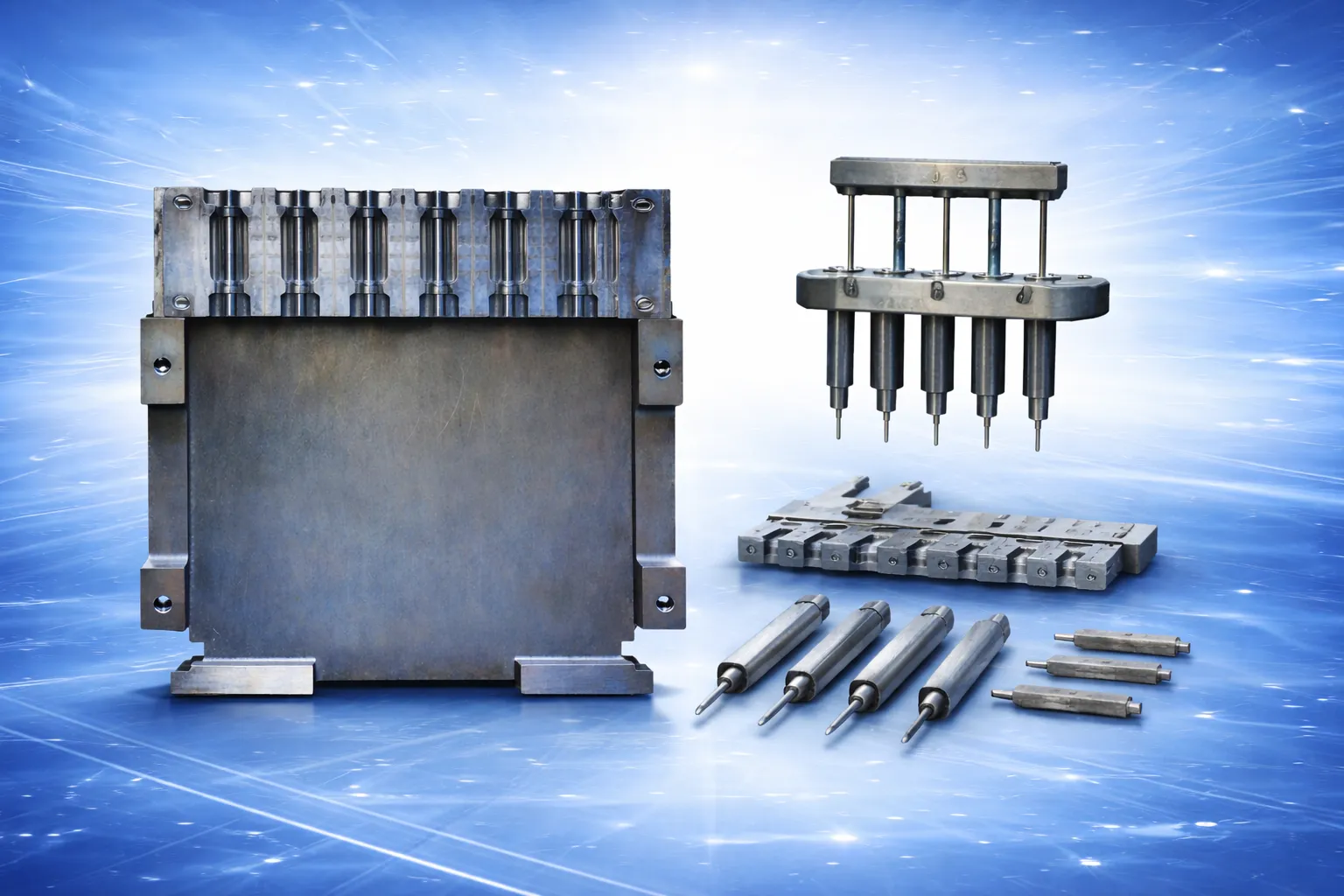
Ready to Verify Your ASB Compatibility?
Share your existing ASB platform model (ASB-12M, ASB-50MB, ASB-70DPH, Aoki-250), mould inventory specifications, and migration timeline. Our Korean engineering team returns ASB compatibility verification, recommended Ever-Power platform configuration, mould refurbishment options, and complete migration project plan within 5 business days.