KEMASAN MAKANAN IBM · HDPE FOOD-GRADE · PRODUKSI KOREA · KOREA EVER-POWER
Kemasan Makanan HDPE IBM:
Kelas Pangan Panduan Kontainer
Kemasan makanan Korea IBM mencakup wadah kecap, saus tomat, minyak wijen, madu, saus salad, dan bumbu masak — sebuah keluarga format di mana ketebalan dinding seragam IBM, interior tanpa sisa cairan, dan leher cetakan injeksi memberikan keunggulan produksi yang terukur dibandingkan EBM dalam fungsi pemerasan, akurasi pengisian, dan kepatuhan kontak makanan MFDS Korea. Panduan ini mencakup pemilihan jenis HDPE food-grade, sertifikasi keamanan pangan Korea, rekayasa botol pemeras, dan pemilihan mesin seri ZQ untuk produksi makanan Korea IBM.
Fungsi Remas dan Pulihkan
Interior Tanpa Kilatan Cahaya
KOREA EVER-POWER · ANSAN-SI, GYEONGGI-DO · JULI 2026
REFERENSI SISTEM · PARAMETER IBM UNTUK KEMASAN MAKANAN HDPE
RENTANG FORMAT
50–500 ml
Rentang volume wadah IBM untuk makanan Korea — dari kecap hingga bumbu
KESERAGAMAN DINDING
±5% CV
Konsistensi ketebalan dinding IBM — dibandingkan dengan EBM ±15–20% — memastikan gaya tekan linier.
BATAS MIGRASI MFDS
≤ 150 ppm
Residu penguapan (n-heptana) — Standar plastik kontak makanan MFDS Korea
OUTPUT ZQ60 @ 200ml
~9.600/jam
12 rongga · ~33,6 juta unit/tahun Korea 2 shift
BAGIAN 01
Industri Makanan Korea dan Kemasan HDPE IBM
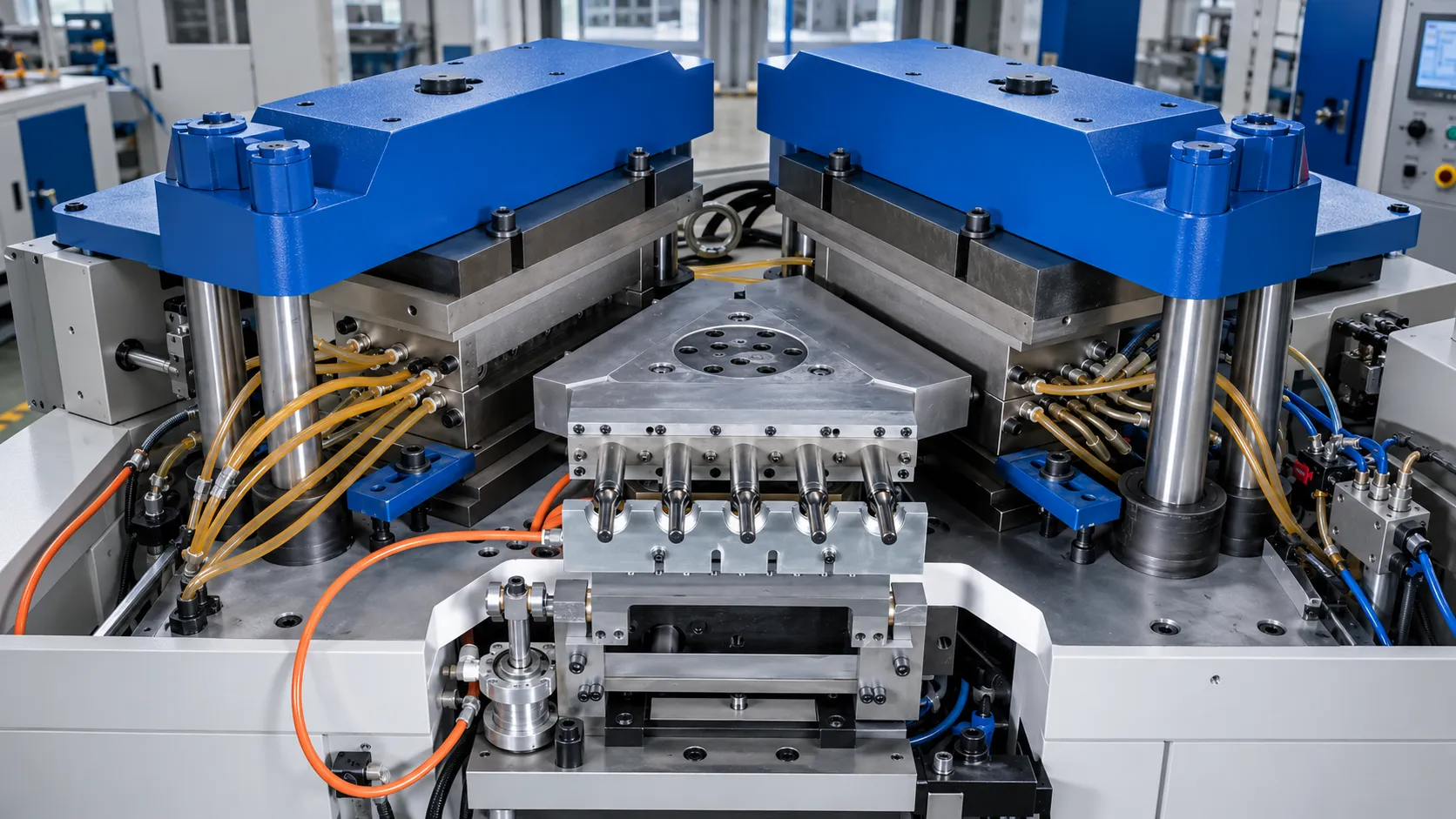
Pasar kemasan makanan Korea yang menggunakan teknologi IBM berpusat pada tiga kategori produk dengan persyaratan wadah yang berbeda, yang secara kolektif menjadikan IBM sebagai proses pencetakan tiup yang lebih disukai daripada EBM pada volume produksi tahunan di atas 1 juta unit per format. Kemasan bumbu Korea — kecap asin (간장), saus doenjang, saus gochujang, minyak wijen (참기름), dan saus berbasis cuka — membutuhkan wadah yang dapat ditekan dan dikeluarkan, di mana ketebalan dinding seragam IBM (±5% CV dibandingkan dengan ±15–20% milik EBM) menghasilkan hubungan gaya tekan-ke-volume pengeluaran yang konsisten dan linier yang ditentukan oleh spesifikasi kualitas merek makanan Korea. Kemasan madu Korea — wadah madu berbentuk beruang dan stoples berukuran 100 hingga 500 ml — adalah spesialisasi tradisional IBM di seluruh dunia, dengan bodi satu bagian tanpa sambungan dan leher cetakan injeksi IBM menghasilkan tampilan bersih dan premium yang digunakan merek madu Korea untuk membedakan produk madu khusus di toko serba ada Korea dan harga premium ritel online. Kemasan minyak goreng Korea ukuran 100–500 ml (minyak wijen, minyak perilla, minyak zaitun) memerlukan bahan HDPE yang sesuai untuk kontak dengan makanan berlemak dan penghalang UV untuk menjaga kualitas minyak goreng Korea agar tetap stabil di rak.
Dasar teknis terperinci untuk pemrosesan HDPE IBM — profil suhu barel, pemilihan MI, perhitungan penyusutan — dibahas dalam Panduan pemrosesan HDPE IBMPanduan ini secara khusus berfokus pada pemilihan jenis HDPE kelas makanan, persyaratan sertifikasi kontak makanan MFDS Korea, dan spesifikasi teknik wadah yang unik untuk aplikasi IBM pengemasan makanan Korea.
BAGIAN 02
Persyaratan HDPE Kelas Pangan untuk IBM
HDPE kelas pangan untuk IBM berbeda dari HDPE kelas farmasi dalam kerangka peraturan dan dari HDPE kelas kimia rumah tangga dalam persyaratan ketahanan kimia. HDPE kelas pangan Korea untuk Kontainer IBM Harus memenuhi Standar Kementerian Keamanan Pangan dan Obat Korea (MFDS) untuk Peralatan, Wadah, dan Kemasan Makanan (식품용 기구 및 용기·포장의 기준 및 규격), yang menetapkan batas migrasi yang kurang ketat daripada standar KP farmasi tetapi mencakup berbagai media kontak makanan yang lebih luas termasuk simulasi makanan asam (asam asetat 4%), simulasi makanan berlemak (n-heptana) dan simulasi makanan berair.
| PERSYARATAN | IBM BERKUALITAS UNTUK MAKANAN | IBM KELAS FARMASI | RUMAH TANGGA IBM |
|---|---|---|---|
| Badan pengatur | Kontak makanan MFDS Korea | Perusahaan farmasi Korea MFDS KP | Undang-undang pelabelan bahan kimia Korea |
| Batas residu penguapan | ≤ 150 ppm (n-heptana) | ≤ 30 ppm (KP — semua media) | Tidak ada batasan ekstraksi. |
| Logam berat (sebagai Pb) | ≤ 100 ppm | ≤ 1 ppm (KP) | Tidak ada batasan langsung |
| Pembatasan pewarna | Daftar positif kontak makanan MFDS Korea | Daftar positif farmasi KFDA Korea | Tidak ada batasan |
| Pembatasan penstabil UV | Dilarang kecuali tercantum | Dilarang | Diizinkan |
| Persyaratan ESCR | Makanan tinggi lemak ESCR | Sedang — farmasi berair | Tinggi — surfaktan ESCR |
Kepatuhan Aditif — Kontak Makanan
- ✓Antioksidan: AO-1010, AO-168, Vitamin E — Terdaftar sebagai bahan kontak makanan menurut MFDS Korea.
- ✓Zat pelumas: erucamide — terdaftar untuk kontak dengan makanan; stearamide — terdaftar
- ✗Penstabil UV (HALS, benzofenon): dilarang untuk HDPE yang bersentuhan langsung dengan makanan menurut standar MFDS Korea.
- ✗Bahan pencerah fluoresen: dilarang untuk wadah plastik yang bersentuhan dengan makanan di Korea.
ESCR untuk Kontak Makanan Berlemak
Kemasan makanan Korea berupa wadah HDPE IBM untuk kontak dengan makanan berlemak (minyak wijen, minyak goreng, saus salad) memerlukan ESCR F50 ≥ 100 jam dalam simulasi makanan tertentu. Kontak dengan makanan berlemak merupakan kondisi ESCR paling agresif dalam kemasan makanan — lipid pada permukaan wadah HDPE memplastiskan daerah amorf pada lapisan permukaan, mengurangi ketahanan terhadap retak tegangan pada dinding samping dan dasar wadah. HDPE dengan densitas rendah (di bawah 0,952 g/cm³) tidak cocok untuk wadah IBM makanan berlemak Korea dengan ketebalan dinding tipikal 0,5–0,9 mm — standar kontak makanan MFDS Korea mencakup persyaratan integritas fisik (tidak ada deformasi, retak, atau pengaburan setelah perendaman simulasi makanan berlemak selama 24 jam) yang mengecualikan jenis dengan densitas rendah.
BAGIAN 03
Teknik Botol Peras IBM
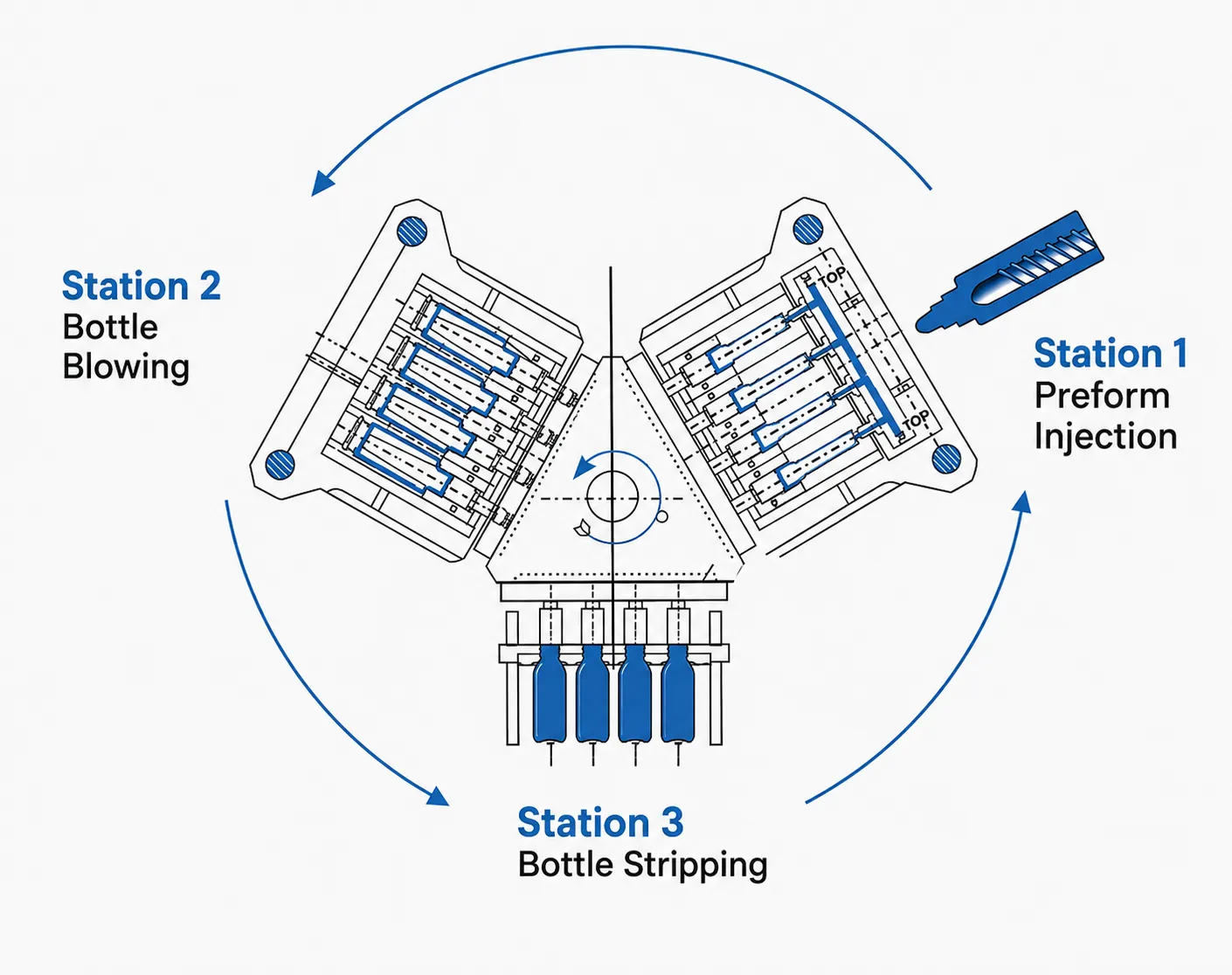
Keunggulan botol tekan IBM dibandingkan EBM terutama terletak pada keseragaman dinding: distribusi dinding yang ditentukan oleh preform IBM menghasilkan ketebalan dinding badan CV% sebesar ±5% per batch produksi, dibandingkan dengan CV% EBM sebesar ±15–20% yang berasal dari variasi ketebalan parison. Untuk botol tekan bumbu makanan Korea, perbedaan keseragaman dinding ini menghasilkan dua perbedaan kualitas yang terlihat oleh pelanggan.
PERBANDINGAN FUNGSI PEMERAS · IBM vs EBM @ BOTOL BUMBU HDPE 200ml
METRIK
Ketebalan dinding CV%
Variasi gaya tekan (lot)
Waktu pemulihan setelah ditekan
Toleransi diameter luar ulir leher
Risiko kilat di dalam ruangan
IBM
±5% — dikontrol oleh preform
±8% di seluruh lot produksi
< 0,5 detik pada ketebalan dinding 0,6 mm
±0,05 mm — dicetak dengan injeksi
Tidak ada — tidak ada operasi pemangkasan
EBM
±15–20% — bergantung pada parison
±25–30% di seluruh lot produksi
0,8–1,5 detik (zona dinding tebal)
±0,15–0,25 mm — dibentuk dengan tiupan
Saat ini — potong ujung pangkalnya
Perbedaan kualitas pertama adalah konsistensi pengeluaran: konsumen botol kecap Korea dan pembeli restoran Korea menilai kualitas botol kecap berdasarkan ketepatan pengalaman pengeluaran "1 kali tekan = volume tetap". Variasi kekuatan tekan IBM ±8% di seluruh lot produksi berarti konsumen Korea mendapatkan volume pengeluaran yang dapat diprediksi per tekan; variasi kekuatan tekan EBM ±25–30% berarti beberapa botol dalam lot mengeluarkan volume yang jauh lebih sedikit per tekan daripada yang lain — perbedaan persepsi kualitas yang diukur dan dilaporkan oleh tim QA merek makanan Korea sebagai ketidaksesuaian kualitas kemasan terhadap pemasok botol mereka.
Perbedaan kualitas kedua adalah kebersihan bagian dalam: wadah IBM diproduksi tanpa sisa potongan (flash trim). Botol bumbu peras EBM memiliki sambungan jepit dasar—dalam produksi normal, sambungan tersebut bersih, tetapi partikel sisa potongan HDPE pada sambungan dapat terlepas di dalam wadah selama operasi pemotongan dasar dan tetap berada di bagian dalam wadah saat pengisian. Standar MFDS makanan Korea mensyaratkan wadah makanan yang telah diisi harus bebas dari bahan asing; setiap partikel sisa potongan HDPE dalam produk makanan merupakan temuan kontaminasi makanan Korea. Produksi tanpa sisa potongan (zero-flash) IBM menghilangkan risiko kontaminasi ini sepenuhnya—sebuah keunggulan kualitas penting bagi produsen bumbu makanan IBM yang terdaftar di MFDS Korea.
BAGIAN 04
Pemilihan Grade HDPE untuk Wadah Makanan Korea IBM
Kemasan makanan Korea IBM menggunakan tiga kategori tingkatan HDPE yang dibedakan berdasarkan rentang MI dan persyaratan ESCR — masing-masing disesuaikan dengan kategori kontak makanan tertentu berdasarkan agresivitas kimia dan fungsi pengeluaran.
PERAS · KECEPATAN · Cuka
MADU · SIRUP · KENTAL
MINYAK GORENG · MINYAK WIJEN
MI / KEPADATAN
0,3–0,6 / 0,952–0,960
MI / KEPADATAN
0,5–0,9 / 0,948–0,958
MI / KEPADATAN
0,4–0,7 / 0,955–0,965
MI rendah untuk ESCR maksimum dalam kontak makanan asam berair (kecap Korea pH 4,5–5,0, cuka Korea pH 2,5–3,5). Pemulihan tekan: HDPE pada MI 0,3–0,6 memiliki elastisitas lebih tinggi, pulih dari kompresi 30% dalam <0,5 detik — penting untuk pengeluaran kecap Korea dengan satu tangan. Migrasi asam asetat MFDS Korea 4% ≤ 30 ppm dikonfirmasi dengan HDPE Grade A pada ketebalan dinding IBM 0,6–0,8 mm.
MI sedang untuk aliran seimbang dan presisi dimensi pada pengisian viskositas tinggi. Wadah madu IBM Korea menggunakan MI sedikit lebih tinggi (0,6–0,9) untuk kompatibilitas pengisian panas hingga 55°C — jalur pengisian madu Korea biasanya mengisi pada suhu 45–55°C untuk mengurangi viskositas dan meningkatkan kecepatan pengisian. Ketebalan dinding 0,8–1,2 mm untuk botol madu premium yang membutuhkan kekakuan struktural pada kondisi pajangan rak ritel Korea (ditumpuk 2–3 tingkat).
Kepadatan lebih tinggi (0,955–0,965) untuk ESCR maksimum dalam kontak makanan berlemak terus menerus — wadah IBM minyak wijen Korea memerlukan ESCR F50 ≥ 200 jam karena komposisi asam lemak tak jenuh minyak wijen menciptakan lingkungan ESCR yang sangat agresif pada dinding wadah HDPE. Wadah IBM minyak perilla dan minyak zaitun Korea juga mensyaratkan HDPE dengan kepadatan tinggi untuk alasan yang sama. Pigmen penghalang UV (karbon hitam 0,1–0,3% atau TiO₂ penghalang UV) ditambahkan dalam pigmen kelas kontak makanan.
BAGIAN 05
Parameter Pemrosesan IBM untuk Wadah Kelas Makanan

| PARAMETER | PERAS/SAUS KEDEL (MI 0,3–0,6) | MADU / KENTAL (MI 0,5–0,9) | MINYAK GORENG (MI 0,4–0,7) |
|---|---|---|---|
| Zona pengukuran barel | 195–210°C | 200–215°C | 198–213°C |
| Nosel injeksi | 205–218°C | 208–220°C | 205–218°C |
| Tekanan injeksi | 100–145 MPa | 90–125 MPa | 95–135 MPa |
| Tekanan udara tiup | 0,50–0,80 MPa | 0,55–0,85 MPa | 0,55–0,85 MPa |
| Suhu cetakan (tubuh) | 18–28°C | 20–30°C | 18–28°C |
| Waktu siklus | 3,5–4,5 detik | 3,8–5,0 detik | 3,5–4,5 detik |
Tidak boleh menggunakan bahan pelepas cetakan — Persyaratan MFDS Korea: Standar MFDS Korea untuk material kontak makanan melarang penggunaan bahan pelepas cetakan pada permukaan bagian dalam wadah kontak makanan. IBM secara inheren tidak menggunakan bahan pelepas cetakan — permukaan batang inti IBM (Ra ≤ 0,10 μm pada zona kontak makanan) dan pelepasan alami material HDPE dari baja yang dipoles menghilangkan kebutuhan akan bahan pelepas kimia apa pun. Ini merupakan keunggulan kepatuhan MFDS Korea dibandingkan beberapa proses pencetakan injeksi di mana bahan pelepas cetakan digunakan untuk pelepasan cetakan geometri kompleks. Panduan bahan kimia rumah tangga IBM mencakup pembersihan dan perawatan permukaan kontak cetakan IBM antara produksi makanan dan non-makanan di Korea — relevan untuk produsen IBM Korea yang menjalankan format IBM HDPE makanan dan non-makanan pada mesin yang sama.
BAGIAN 06
Format Wadah Makanan Korea dan Pemilihan Rongga IBM
| FORMAT KONTAINER | VOLUME | FINISHING LEHER | Rongga ZQ60 | APLIKASI MAKANAN KOREA |
|---|---|---|---|---|
| Perasan kecap asin | 100–200 ml | 20/400 GPI | 14–18 | Kecap asin Korea, saus teriyaki Korea, bumbu marinasi bulgogi Korea |
| Beruang madu / toples ★ | 150–500 ml | 28/400–38/400 | 8–14 | Madu Korea (akasia, pinus, gandum hitam), kemasan hadiah madu premium Korea. |
| Minyak wijen / perilla | 100–300 ml | 24/400 GPI | 12–16 | Minyak wijen Korea (참기름), minyak perilla Korea (들기름), minyak cabai Korea |
| Bumbu/saus salad | 150–500 ml | 24/400–28/400 | 8–12 | Mayones Korea, saus salad Korea, saus tomat Korea, campuran saus Korea |
| Cuka / saus cair | 200–500 ml | 28/400 GPI | 8–10 | Cuka sari apel Korea, cuka beras Korea, saus doenjang cair Korea |
★ Botol madu berbentuk beruang adalah format khusus IBM yang diakui secara global — geometri eksterior berbentuk beruang yang kompleks hanya dapat dicapai di IBM (cetakan tiup menentukan bentuk eksternal apa pun) sambil mempertahankan bodi satu bagian yang mulus tanpa bekas cetakan berlebih pada permukaan bodi beruang. EBM memproduksi botol berbentuk beruang dengan garis pemisah yang terlihat membentang vertikal melalui bodi beruang — yang ditolak oleh merek madu premium Korea.
BAGIAN 07
Sertifikasi Kontak Makanan MFDS Korea untuk Kontainer IBM
Sertifikasi kontak makanan MFDS Korea untuk wadah IBM HDPE diatur oleh Standar Peralatan, Wadah, dan Kemasan Makanan Kementerian Keamanan Pangan dan Obat Korea (식품용 기구 및 용기·포장의 기준 및 규격, Pemberitahuan Kementerian). Proses sertifikasi jauh lebih sederhana dan cepat daripada kualifikasi wadah farmasi KFDA Korea — alasan utama mengapa produsen wadah IBM makanan Korea dapat mencapai kesiapan pasar dalam waktu 8–12 minggu sejak sampel produksi IBM pertama, dibandingkan dengan 16–28 minggu untuk IBM farmasi.
Pemasok resin HDPE menyediakan deklarasi kepatuhan kontak makanan MFDS Korea — yang mengkonfirmasi bahwa semua aditif resin tercantum dalam daftar positif kontak makanan MFDS Korea (Lampiran 1 Standar). Deklarasi ini adalah dokumen utama yang mengkonfirmasi kepatuhan material; dokumen ini disediakan oleh pemasok resin dan tidak memerlukan pengujian oleh produsen wadah IBM. Korea Ever-Power dapat merekomendasikan pemasok resin HDPE Korea dan internasional yang memiliki deklarasi kepatuhan kontak makanan MFDS Korea yang terbaru untuk jenis HDPE farmasi dan makanan mereka.
Wadah IBM yang diproduksi dalam kondisi komersial diuji di laboratorium pengujian makanan terakreditasi MFDS Korea. Media uji migrasi untuk wadah makanan HDPE: air murni (60°C, 30 menit), asam asetat 4% (60°C, 30 menit), n-heptana (25°C, 1 jam). Hasil harus di bawah batas MFDS Korea: residu penguapan ≤ 150 ppm (n-heptana) dan ≤ 30 ppm (asam asetat); timbal ≤ 100 ppm sebagai Pb. Waktu tunggu pengujian: 2–3 minggu sejak pengiriman sampel. Biaya: jauh lebih rendah daripada pengujian farmasi KP Korea.
Produsen wadah IBM mengeluarkan deklarasi kepatuhan bahan kontak makanan (식품용 기구·용기·포장 적합 확인서) kepada merek makanan Korea. Deklarasi ini merujuk pada hasil uji kontak makanan MFDS, deklarasi kepatuhan resin HDPE, dan kondisi produksi wadah IBM (mesin, set cetakan, lokasi produksi). Merek makanan Korea menggunakan deklarasi ini dalam dokumentasi HACCP Korea dan registrasi produk makanan MFDS Korea mereka — tidak diperlukan registrasi wadah MFDS Korea terpisah (tidak seperti kualifikasi KFDA farmasi). Deklarasi diperbarui ketika jenis resin HDPE atau lokasi produksi IBM berubah.
Timeline sertifikasi IBM untuk makanan Korea vs IBM di bidang farmasi: Sertifikasi IBM untuk produk makanan — 4–8 minggu dari sampel produksi pertama hingga deklarasi kepatuhan yang lengkap. Kualifikasi IBM untuk produk farmasi — 16–28 minggu (didorong oleh studi kompatibilitas selama 12–24 minggu). Perbedaan jangka waktu ini berarti produsen IBM makanan Korea dapat menanggapi jadwal peluncuran produk baru merek makanan Korea (biasanya 12–16 minggu dari tahap perencanaan hingga penjualan) tanpa jalur sertifikasi kemasan menjadi penundaan kritis — sebuah keuntungan yang tidak dapat diklaim oleh produsen IBM farmasi Korea untuk peluncuran wadah baru.
BAGIAN 08
Pemilihan Seri ZQ untuk Produksi Makanan Korea oleh IBM
ZQ SELECTION MATRIX · FOOD IBM @ 200ml BOTOL PEMERAS HDPE (MI 0.5)
| MODEL ZQ | CAV @ 200ml | BOTOL/JAM | BATAS TAHUNAN. | PROFIL MAKANAN KOREA |
|---|---|---|---|---|
| EP-ZQ40 | 5–7 | ~4.000–5.600 | ~14–19,6 juta | Startup madu spesial Korea, merek bumbu artisan Korea, edisi terbatas musiman. |
| EP-ZQ60 ★ | 12 | ~9,600 | ~33,6 juta | Produsen OEM merek makanan nasional Korea, produsen kecap Korea, merek madu Korea — tolok ukur |
| EP-ZQ80 | 16 | ~12,800 | ~44,8 juta | Grup makanan besar Korea, OEM bumbu merek pribadi supermarket Korea, multi-format |
| EP-ZQ110 | 20 | ~16,000 | ~56,0 juta | Konglomerat makanan besar Korea memproduksi kecap, dan jaringan supermarket Korea memproduksi merek pribadi dalam skala besar. |
★ ZQ60 dengan 12 rongga — tolok ukur IBM untuk pengemasan makanan Korea. 33,6 juta unit per tahun dengan kemasan 200 ml mencakup rentang volume tahunan pengemasan kecap asin merek nasional Korea dan madu khusus dalam satu mesin. EP-ZQ60 Gaya penjepitan 600 KN mampu menangani format makanan 12–16 rongga dengan volume 100–300 ml secara optimal. Produsen makanan IBM Korea yang mengantisipasi produksi format ganda (bumbu + madu) pada satu mesin sebaiknya memilih ZQ60 dengan pemasangan cetakan cepat ganti untuk perubahan format dalam waktu kurang dari 2 jam.
FAQ TEKNIK
Pengemasan Makanan IBM — Pertanyaan Teknik
Mengapa IBM memproduksi botol madu berbentuk beruang yang lebih baik daripada EBM?
IBM menghasilkan botol madu berbentuk beruang yang lebih unggul daripada EBM karena tiga alasan struktural. Pertama, cetakan tiup IBM sepenuhnya menentukan bentuk wadah eksternal — cetakan tiup berbentuk beruang menghasilkan wadah berbentuk beruang dengan semua detail permukaan (bentuk telinga, kontur perut, emboss posisi mata) persis seperti yang dikerjakan ke dalam rongga cetakan tiup, pada setiap wadah di setiap rongga dalam proses produksi. Badan wadah beruang IBM tidak memiliki garis pemisah — garis pemisah cetakan berada di bagian dasar, di luar permukaan badan yang terlihat, sehingga badan beruang bebas dari sambungan. Wadah beruang EBM memiliki garis pemisah yang menonjol yang membentang secara vertikal melalui badan beruang dari leher ke dasar — sangat terlihat pada permukaan badan beruang yang bulat dan ditolak oleh merek madu premium Korea untuk dipajang di rak. Kedua, wadah beruang IBM memiliki badan satu bagian tanpa sambungan yang dihasilkan dengan meniup preform di dalam rongga berbentuk beruang. Dinding preform didistribusikan ke berbagai area penampang badan beruang (tipis di telinga, lebih tebal di perut) oleh rasio tiup terkontrol IBM — menghasilkan distribusi ketebalan dinding akhir ±5% CV di seluruh badan beruang. Wadah madu berbentuk beruang EBM memiliki ketebalan dinding ±15–20% CV pada permukaan tubuh beruang, menghasilkan penipisan dinding lokal pada lekukan bahu beruang dan persimpangan telinga — terlihat sebagai garis kabut pada HDPE transparan alami yang ditolak oleh inspektur kemasan merek madu Korea. Ketiga, OD ulir leher IBM ±0,05 mm di semua rongga memastikan penutup flip-cap atau disc-top untuk mengeluarkan madu terpasang secara konsisten di semua wadah produksi — kemasan hadiah madu khusus Korea menetapkan flip-cap premium dengan torsi penguncian ±15% dari target, spesifikasi yang hanya dapat dipenuhi oleh OD ulir ±0,05 mm IBM dalam skala besar.
Berapa volume produksi tahunan yang membuat IBM lebih ekonomis daripada EBM untuk kemasan makanan Korea?
Titik balik ekonomi IBM vs EBM untuk wadah kemasan makanan Korea bergantung pada volume wadah dan kompleksitas format. Untuk wadah makanan silinder standar atau oval sederhana dalam kisaran 100–300 ml: titik baliknya sekitar 3–5 juta unit per tahun per format. Di bawah 3 juta unit, investasi perkakas cetakan EBM yang lebih rendah (biasanya 40–60% dari biaya cetakan 3 bagian IBM) dapat menghasilkan total biaya tahunan yang lebih rendah. Di atas 5 juta unit, IBM secara sistematis lebih ekonomis melalui: (1) tingkat produksi yang lebih tinggi — waktu siklus IBM 3–4 detik pada 12–14 rongga (200 ml) menghasilkan 9.600–11.200 botol per jam dibandingkan dengan siklus EBM 5–8 detik pada 4–6 rongga yang menghasilkan 2.700–4.300 botol per jam dengan investasi mesin yang sebanding; (2) tanpa pemangkasan sisa cetakan — IBM menghilangkan operasi pemangkasan dasar EBM dan tenaga kerja terkait (biasanya 1 operator per 2 mesin EBM di pabrik kemasan makanan Korea); (3) Konsumsi resin lebih rendah — Dinding seragam IBM (±5% CV) mencapai ketebalan dinding minimum di semua titik dibandingkan dengan spesifikasi berlebih EBM pada titik desain dinding tipis untuk mengkompensasi variasi ±15–20%; (4) Penerimaan kualitas lebih tinggi — Penerimaan merek makanan Korea pada tingkat kualitas IBM mengurangi pengembalian barang dan biaya pengerjaan ulang. Untuk wadah berbentuk kompleks (madu berbentuk beruang, pola permukaan timbul, bentuk pegangan terintegrasi): Titik impas ekonomi IBM lebih rendah — sekitar 1–2 juta unit per tahun — karena garis pemisah EBM pada bentuk kompleks biasanya memerlukan langkah perawatan kosmetik sekunder yang dihilangkan sepenuhnya oleh IBM.
Bisakah IBM memproduksi botol kecap Korea dengan nosel pengeluaran yang terintegrasi ke leher botol?
Ya — IBM dapat memproduksi botol kecap Korea dengan geometri leher nosel pengeluaran yang sempit yang terintegrasi ke dalam leher cetakan injeksi, sehingga menghilangkan kebutuhan akan ujung nosel sisipan terpisah yang dipasang setelah produksi. Sisipan leher cetakan injeksi IBM menentukan geometri leher secara lengkap, termasuk lubang pengeluaran yang dipersempit, diameter lubang yang terkontrol, arah ujung pengeluaran yang miring, dan transisi internal yang halus dari lubang badan botol ke lubang nosel. Diameter lubang pengeluaran mengontrol lebar aliran dan laju aliran kecap Korea — biasanya berdiameter 3–5 mm untuk kecap Korea (menghasilkan aliran tipis yang dapat dikontrol saat menuang dengan satu tangan). Toleransi pemesinan CNC sisipan leher IBM sebesar ±0,05 mm pada diameter lubang pengeluaran memastikan laju aliran yang konsisten di semua rongga. Merek kecap Korea yang menentukan geometri leher nosel dispenser IBM harus memperhatikan: (1) geometri nosel harus dikomunikasikan kepada tim desain cetakan IBM Korea Ever-Power sebelum pemesinan sisipan leher — diperlukan gambar geometri nosel 2D atau penampang wadah referensi; (2) lubang dispenser harus berada di atas diameter batang inti IBM minimum yang dapat mengakses dan melepaskan cetakan leher — biasanya ≥ 4 mm untuk wadah nosel kecap Korea 200 ml; (3) penutup tutup flip-cap atau push-pull cap yang kompatibel dengan geometri leher nosel IBM harus ditentukan oleh tim pengemasan merek makanan Korea sebelum desain cetakan IBM, karena permukaan penyegelan tutup berinteraksi dengan geometri ujung dispenser leher IBM.
Bisakah mesin ZQ yang sama memproduksi wadah IBM HDPE untuk keperluan makanan dan farmasi?
Ya — perangkat keras mesin ZQ identik untuk produksi IBM HDPE kelas makanan dan farmasi. Mesin ZQ60 atau ZQ80 yang sama dapat memproduksi wadah kecap Korea dan wadah cairan oral farmasi Korea pada hari yang sama dengan penggantian cetakan, menggunakan berbagai jenis HDPE dan resep produksi yang tersimpan dalam sistem kontrol ZQ. Namun, persyaratan peraturan Korea menciptakan kendala operasional pada produksi IBM campuran makanan/farmasi di fasilitas yang sama yang harus dikelola oleh produsen IBM Korea. Produksi IBM farmasi GMP Korea harus dilakukan di area produksi khusus yang memenuhi standar lingkungan GMP farmasi MFDS Korea (pemantauan partikulat dan mikroba, filtrasi HEPA, protokol penggunaan pakaian pelindung). Produksi IBM makanan Korea tidak memerlukan kontrol lingkungan ini — hanya memerlukan standar kebersihan makanan MFDS Korea (ruang bersih yang setara dengan fasilitas pengolahan makanan Korea, tanpa risiko kontaminasi kimia). Dalam praktiknya, pabrik pengemasan kontrak IBM Korea yang memproduksi wadah makanan dan farmasi biasanya mengoperasikan dua ruang produksi terpisah di lantai pabrik yang sama — satu ruang farmasi GMP dengan mesin ZQ farmasi dan satu ruang makanan non-GMP dengan mesin ZQ makanan — daripada menjalankan kedua jenis produk pada mesin yang sama di ruangan yang sama. Pemisahan operasional ini mempertahankan kepatuhan audit GMP farmasi MFDS Korea sekaligus memungkinkan pabrik untuk melayani pelanggan makanan dan farmasi Korea dengan investasi platform mesin ZQ yang sama.
Aplikasi kontainer IBM untuk makanan Korea apa yang pertumbuhannya paling pesat dan mengapa?
Tiga aplikasi kemasan makanan IBM Korea menunjukkan pertumbuhan tahunan di atas rata-rata pada tahun 2024–2026. Pertama, kemasan madu premium Korea dan pemanis alami: Preferensi konsumen Korea terhadap pemanis alami tanpa aditif (madu akasia, madu pinus Korea domestik, sirup agave, sirup beras Korea) mendorong pertumbuhan volume kemasan madu IBM Korea sekitar 12–151 TP3T per tahun. Kemasan madu berbentuk beruang dan stoples tanpa sambungan dari IBM adalah format pilihan untuk merek madu premium Korea yang menargetkan food hall department store Korea dan platform makanan khusus online Korea — tampilan premium tersebut membenarkan harga premium dibandingkan kemasan madu EBM di ritel Korea. Kedua, kemasan minyak wijen dan minyak khusus Korea: Kemasan minyak masak IBM Korea untuk minyak wijen (참기름) dan minyak perilla (들기름) tumbuh sebesar 8–101 TP3T per tahun didorong oleh permintaan konsumen Korea akan minyak masak Korea asli dan berkualitas tinggi dengan harga premium. Wadah IBM berukuran 100–200 ml dengan HDPE amber antioksidan atau HDPE putih dengan pigmen penghalang UV adalah format pilihan untuk merek minyak premium Korea. Ketiga, kemasan bumbu ekspor makanan Korea: Ekspor makanan Korea ke Asia Tenggara, Timur Tengah, dan AS telah mendorong permintaan wadah IBM untuk bumbu Korea — merek kecap, saus gochujang, saus BBQ Korea, dan saus celup Korea yang menargetkan distribusi makanan Korea internasional semuanya menentukan wadah IBM untuk SKU format ekspor mereka, dengan alasan ulir leher IBM yang anti bocor dan pengeluaran yang konsisten sebagai persyaratan kualitas utama untuk logistik ekspor.
Bagaimana IBM menangani wadah makanan Korea yang memerlukan pengisian panas (minyak wijen dipanaskan hingga 60°C selama pengisian)?
Wadah IBM makanan Korea untuk aplikasi pengisian panas — minyak wijen diisi pada suhu 50–65°C, madu diisi pada suhu 45–55°C, saus berbasis cuka Korea tertentu diisi panas untuk sterilisasi pada suhu 65–75°C — memerlukan jenis HDPE dan desain ketebalan dinding tertentu untuk menjaga integritas dimensi wadah dan akurasi volume pengisian pada suhu pengisian. Suhu defleksi panas HDPE pada beban 0,45 MPa adalah sekitar 75–85°C untuk rentang densitas 0,952–0,965 — di atas rentang suhu pengisian panas Korea untuk aplikasi makanan, yang menegaskan bahwa wadah IBM HDPE tidak mengalami deformasi struktural selama pengisian panas makanan Korea. Namun, pemuaian termal wadah HDPE pada suhu pengisian panas (koefisien pemuaian termal linier HDPE ≈ 130–160 × 10⁻⁶/°C) untuk sementara memperbesar volume wadah — wadah HDPE IBM 200 ml pada suhu pengisian 60°C memiliki volume sekitar 1,8–2,0 ml lebih banyak daripada pada suhu 23°C. Untuk memenuhi standar volume pengisian makanan Korea (volume pengisian yang dinyatakan ±3% untuk sebagian besar kategori wadah makanan Korea), pemuaian termal ini harus diperhitungkan dalam pengaturan volume pengisian jalur pengisian Korea — mesin pengisian makanan Korea biasanya dikalibrasi pada suhu pengisian untuk mengeluarkan volume nominal pada dimensi pengisian panas wadah yang mengembang, mencapai volume target setelah wadah mendingin hingga suhu penyimpanan Korea 23°C. Korea Ever-Power dapat menyediakan perhitungan koreksi ekspansi termal untuk desain wadah IBM pengisian panas makanan Korea berdasarkan permintaan, membantu produsen IBM makanan Korea mengkalibrasi jalur pengisian mereka dengan benar agar sesuai dengan volume pengisian MFDS Korea pada suhu pengisian panas spesifik dan volume nominal yang dinyatakan.
KEMASAN MAKANAN IBM ENQUIRY · KOREA EVER-POWER
Merencanakan Produksi Wadah IBM HDPE Food-Grade?
Korea Ever-Power menyediakan desain cetakan IBM HDPE kelas makanan, dokumentasi kepatuhan kontak makanan MFDS Korea, rekayasa dinding botol peras, dan pemilihan mesin seri ZQ untuk produksi kemasan makanan IBM Korea di semua volume produksi tahunan.