IBM Farmasi · KFDA Korea GMP · Korea Ever-Power
Pencetakan Tiup Injeksi untuk
Botol Farmasi
Pencetakan tiup injeksi adalah standar proses untuk kemasan primer farmasi Korea dalam HDPE dan PP. Ini adalah satu-satunya proses pencetakan tiup yang secara konsisten memenuhi persyaratan dimensi GMP KFDA Korea untuk wadah CRC tanpa pemrosesan leher sekunder, menghilangkan risiko kontaminasi partikulat dari pemangkasan sisa cetakan, dan mencapai jumlah rongga yang dibutuhkan untuk ekonomi produksi farmasi Korea pada format 10–100 ml. Panduan ini mencakup format wadah, kualifikasi KFDA Korea, presisi leher, pertimbangan ruang bersih, dan pemilihan mesin untuk produksi IBM farmasi Korea.
Presisi CRC dan Leher
Produksi IBM Bebas Partikel
Korea Ever-Power Engineering Desk · Ansan-si · Juli 2026
Referensi Produksi Farmasi IBM — Korea
±0,05 mm
Toleransi diameter luar leher IBM — Standar kualifikasi KFDA CRC Korea ±0,06 mm
Kilat Nol
Tidak ada stasiun pemangkasan — tidak ada risiko partikulat di ruang bersih farmasi Korea.
Hingga 30
Rongga maksimum pada 10 ml — Perusahaan farmasi raksasa Korea IBM (ZQ135)
KFDA · ICH
Kerangka kualifikasi kontainer IBM untuk perusahaan farmasi Korea, Korea, dan Korea Selatan, serta keselarasan antara kerangka kerja yang sesuai untuk perusahaan farmasi Korea.
1. Mengapa IBM Menjadi Standar Proses Farmasi Korea?

Injection blow molding has established itself as the process standard for Korean pharmaceutical primary packaging in HDPE and PP through the convergence of three process advantages that are uniquely relevant to Korean pharmaceutical production requirements. First, injection-moulded neck precision: IBM produces the bottle neck by injection moulding — the same precision manufacturing process that produces pharmaceutical closure components — achieving ±0.05 mm neck OD tolerance consistently across all cavities and all production cycles. This precision is the enabling capability for Korean pharmaceutical CRC containers, dropper-cap bottles and pump-dispenser primary containers, all of which require closure engagement at dimensional tolerances that extrusion blow molding cannot achieve without secondary neck processing. Second, zero flash and zero particulate generation: IBM produces no flash at any stage of the process, which means no trim station, no mechanical trimming operation, and no plastic particles generated in the production environment. For Korean pharmaceutical cleanroom production where particulate control is a GMP requirement, IBM’s inherent particle-free process is a direct regulatory compliance advantage over EBM. Third, multi-cavity efficiency: IBM’s mesin cetak tiup injeksi Platform ini mampu menghasilkan hingga 30 rongga pada volume 10 ml — jumlah rongga yang memungkinkan produksi farmasi Korea mencapai skala ekonomi mesin tunggal yang tidak dapat dicapai EBM pada format kecil.
Produksi wadah farmasi Korea semakin didorong oleh persyaratan peraturan khusus Korea. Peraturan wadah farmasi KFDA (Kementerian Keamanan Pangan dan Obat-obatan) Korea mensyaratkan dokumentasi kualifikasi wadah yang mencakup kepatuhan dimensi, kompatibilitas kimia, data zat yang dapat diekstrak dan larut, serta pengujian fungsi penutup — yang semuanya dipenuhi oleh wadah IBM melalui protokol kualifikasi yang telah ditetapkan. Merek farmasi Korea, produsen kontrak Korea, dan eksportir farmasi Korea semuanya menentukan wadah IBM untuk kemasan primer farmasi mereka dalam format kecil sebagai hasil dari keselarasan peraturan dan kualitas ini.
2. Persyaratan Kontainer Farmasi KFDA Korea
Persyaratan wadah primer farmasi Korea ditetapkan oleh KFDA Korea (식품의약품안전처) berdasarkan Undang-Undang Urusan Farmasi Korea dan Farmakope Korea (KP). Persyaratan wadah farmasi Korea pada dasarnya selaras dengan spesifikasi ICH Q6A dan standar wadah plastik USP/EP, dengan tambahan khusus Korea untuk jenis format wadah tertentu. Produsen wadah IBM farmasi Korea harus memahami persyaratan KFDA mana yang berlaku untuk format wadah spesifik mereka sebelum memulai proses kualifikasi farmasi Korea.
Standar Wadah Plastik KFDA Korea
Monograf Umum Farmakope Korea (KP) untuk Wadah Plastik untuk Penggunaan Farmasi menetapkan persyaratan pengujian untuk wadah farmasi HDPE dan PP, termasuk: zat terlarut di bawah batas KP dalam air, asam asetat 4%, etanol 20%, heptana, dan media ekstraksi metanol; logam berat di bawah 1 ppm; fenol di bawah 5 ppm; dan absorbansi UV dalam batas yang ditentukan. Wadah IBM harus lulus pengujian ini pada ketebalan dinding yang ditentukan menggunakan resin HDPE atau PP kelas produksi—bukan spesimen uji laboratorium. Produsen IBM farmasi Korea harus melakukan pengujian zat terlarut pada wadah produksi aktual dari mesin IBM mereka pada kondisi produksi mereka, menggunakan resin dari lot komersial yang sama yang akan memasok produksi, untuk memastikan bahwa hasil pengujian mewakili produk komersial yang akan divalidasi oleh merek farmasi Korea.
Badan Pengawas Obat dan Makanan Korea (KFDA) juga mensyaratkan dokumentasi dimensi khusus untuk wadah primer farmasi yang digunakan dengan produk farmasi terdaftar di Korea. Dokumen farmasi Korea (setara dengan NDA Korea) mencakup spesifikasi wadah yang meliputi: volume nominal dengan posisi tanda level isi, diameter luar leher dan diameter lubang dengan toleransi, spesifikasi torsi pengencangan penutup, identifikasi material wadah (jenis resin, tingkatan, status daftar positif KFDA Korea), dan warna (transparan, HDPE alami, HDPE berpigmen jika berlaku). Setiap perubahan pada spesifikasi wadah — termasuk perubahan lot resin, perubahan mesin produksi, atau perubahan jumlah rongga — memerlukan pemberitahuan perubahan wadah kepada KFDA Korea dan mungkin memerlukan pengujian kualifikasi ulang tergantung pada sifat perubahannya.
Persyaratan Format Kontainer Utama
| Format Kontainer | Persyaratan Utama KFDA Korea | Status Kepatuhan IBM |
|---|---|---|
| Oftalmik (tetes mata) | Kompatibilitas pengisian steril, kesesuaian ujung penetes ±0,05 mm, bebas partikulat (standar injeksi KFDA) | Asli — leher injeksi, tanpa kilatan ✓ |
| Botol Obat CRC | Keterikatan tutup CRC sesuai KS M ISO 8317, diameter luar leher ±0,06 mm, diameter luar ulir ±0,05 mm | Asli — leher injeksi ±0,05 mm ✓ |
| Botol Cairan Oral | Kompatibilitas segel induksi, kerataan leher ±0,1 mm, kompatibilitas kimia 24 bulan | Asli — permukaan penyegelan leher datar ✓ |
| Pompa Dispenser Utama | Pengait kerah pompa, lubang leher ±0,08 mm, kompatibilitas kimia | Asli — lubang leher injeksi presisi ✓ |
| Wadah Autoklaf PP | Ketahanan uap 121°C, retensi dimensi pasca-autoklaf, uji plastik KP | PP IBM — diperlukan tingkat tahan panas ✓ |
3. Wadah Farmasi HDPE IBM: Format dan Spesifikasi
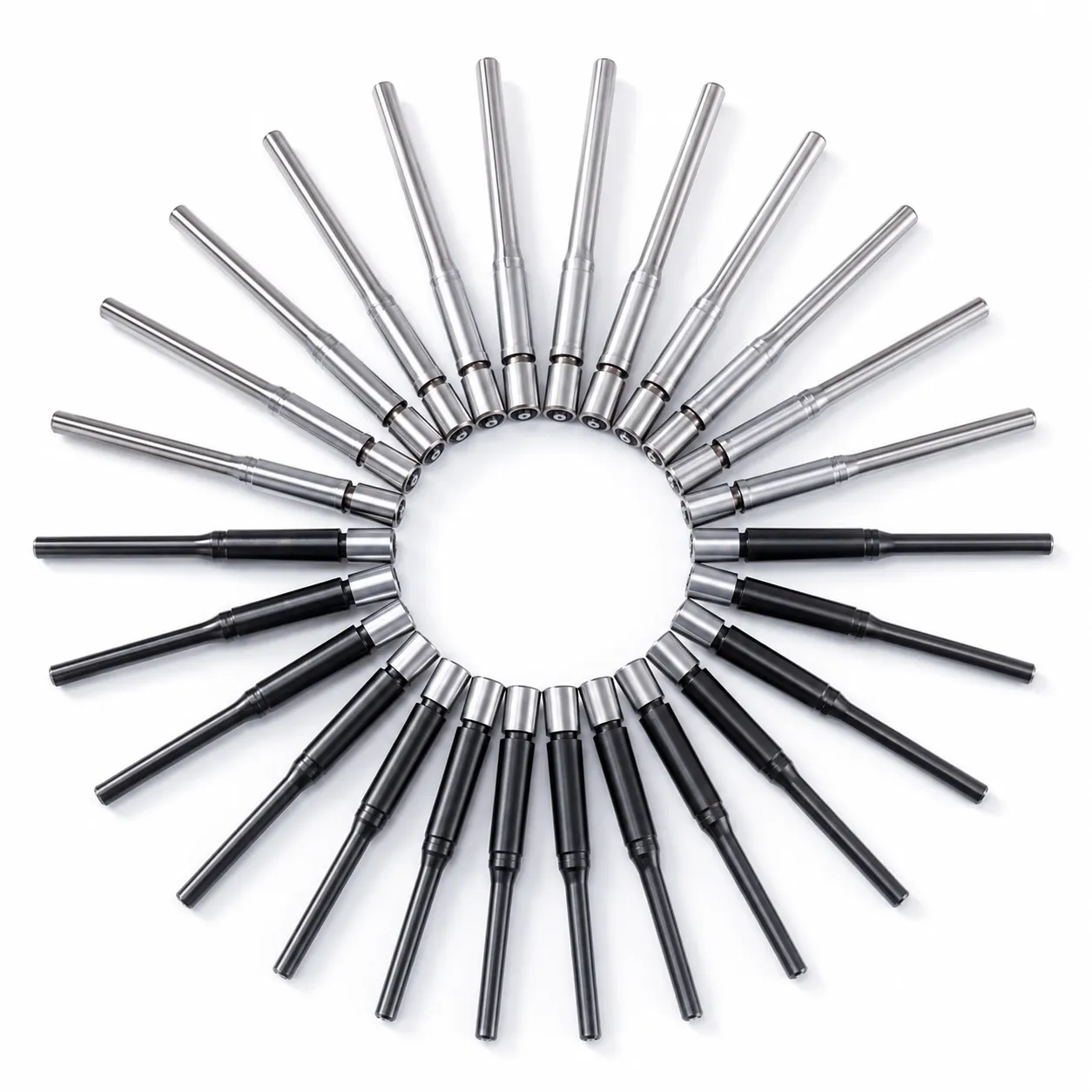
HDPE merupakan material dominan untuk wadah IBM farmasi Korea—mencakup sebagian besar volume produksi wadah primer farmasi Korea dalam IBM HDPE. Panduan lengkap IBM HDPE farmasi dibahas dalam Panduan pemrosesan HDPE IBMBagian ini berfokus pada persyaratan khusus farmasi untuk setiap format wadah HDPE IBM.
Botol Oftalmik 10 ml — Pemimpin Volume IBM Farmasi Korea
Korean 10 ml HDPE ophthalmic containers are the highest-volume pharmaceutical IBM format in Korea — the combination of Korean ophthalmic prescription volume (Korea has one of East Asia’s highest rates of ophthalmic prescription per capita, driven by Korean contact lens use and Korean digital eye fatigue), Korean OTC artificial tear market and Korean pharmaceutical export requirements produces annual Korean ophthalmic container volume above 500 million units. IBM is the process of record for Korean ophthalmic containers because the dropper tip’s aperture, the dropper cap thread engagement and the container body’s sufficient transparency for fill-level inspection all require IBM’s precision that EBM cannot match. HDPE grade for Korean ophthalmic IBM: MI 0.3–0.5, density 0.950–0.960, pharmaceutical-grade additive package per KFDA positive list. Wall thickness: body 0.30–0.40 mm (sufficient transparency for fill-level check), neck 0.9–1.2 mm (closure retention). Production: Korea Ever-Power ZQ80 (20 cavities → ~15,800/hour) and ZQ110 (24 cavities → ~19,000/hour) are the principal Korean ophthalmic IBM platforms.
Vial Cairan Oral 30 ml
Korean 30 ml HDPE oral liquid vials serve unit-dose liquid medications — Korean syrups for paediatric use, Korean liquid vitamin preparations and Korean oral rehydration solutions. These formats require IBM for two specific reasons: the induction seal compatibility of the neck’s flat sealing surface (IBM’s injection mould produces the flat sealing land with Ra ≤ 0.05 μm required for consistent induction seal bonding across all 18–20 cavities) and the fill-level transparency of the HDPE body. At 30 ml, the IBM machine produces 18 cavities on the ZQ80 (approximately 16,200 vials per hour) or up to 22 cavities on the ZQ110 (approximately 19,800 vials per hour) — output rates that match Korean oral liquid pharmaceutical production line speeds without requiring multiple IBM machines for a single product line.
Botol Obat CRC 100 ml
Korean CRC medicine bottles in HDPE at 100 ml are the most demanding pharmaceutical IBM format from a dimensional tolerance perspective. Korean KS M ISO 8317 child-resistant closure testing requires that less than 20% of adult test subjects fail to open the container within 5 minutes (CRC must be child-resistant but adult-accessible). This functional balance is achieved by the CRC cap’s mechanical engagement with the bottle neck’s engagement bead — an engagement that depends on the bead OD being within ±0.06 mm of the CRC cap’s designed engagement diameter. IBM’s ±0.05 mm neck OD tolerance is within this requirement; EBM’s ±0.15–0.25 mm tolerance is not. HDPE grade for CRC IBM: MI 0.5–0.8 for a stiffer bead that resists deformation under CRC cap push-down force; density 0.955–0.965 for maximum bead stiffness at the engagement contact zone.
4. Wadah IBM Farmasi PP: Kapan PP Diperlukan Dibandingkan HDPE
Polypropylene (PP) is required over HDPE for Korean pharmaceutical IBM containers in two well-defined application categories: terminal steam sterilisation (autoclave) and high-temperature pharmaceutical processes. PP’s heat deflection temperature (110–120°C at 0.45 MPa) allows it to retain dimensional integrity through Korean standard autoclave cycles at 121°C for 20 minutes, whereas HDPE begins to deform above 80–85°C under steam pressure and closure torque.
Kontainer IBM PP Autoklaf Korea
Korean terminally sterilised pharmaceutical products — including some Korean ophthalmic preparations, Korean irrigating solutions and Korean topical pharmaceutical formulations — require primary containers that survive the autoclave cycle without dimensional change at the closure engagement zone. PP IBM containers for Korean autoclave use specify: PP copolymer grade (homopolymer PP has better heat resistance but is more brittle; random copolymer PP offers better clarity and impact resistance at a slight reduction in heat resistance — for Korean pharmaceutical autoclave at 121°C, either grade is adequate); melt flow rate 5–15 g/10min at 230°C/2.16 kg (higher MFR than HDPE IBM grades, matching PP’s typically higher flowability); barrel temperature 200–240°C on Korea Ever-Power ZQ series machines (higher than HDPE processing, requiring barrel zone setpoints adjusted from the HDPE baseline); dimensional verification post-autoclave (container neck OD and thread dimensions must be within specification after 3 autoclave cycles at 121°C/20 min — this post-autoclave dimensional verification is a KFDA qualification requirement for terminally sterilised Korean pharmaceutical containers).
Perbedaan Pemrosesan PP vs HDPE IBM pada Mesin Seri ZQ
| Parameter Pemrosesan | HDPE (MI 0,3–0,8) | PP (MFR 5–15) |
|---|---|---|
| Suhu zona pengukuran | 200–215°C | 220–235°C |
| Suhu nosel injeksi | 210–220°C | 230–245°C |
| Tekanan injeksi | 80–140 MPa | 60–110 MPa (viskositas lebih rendah) |
| waktu hembusan | 0,8–1,5 detik | 1,0–2,0 detik (kristalisasi lebih lambat) |
| Suhu cetakan | 15–25°C | 20–40°C (PP membutuhkan pendinginan yang lebih lambat untuk mencegah pemutihan akibat stres) |
| Pemeriksaan dimensi pasca-autoklaf | Tidak diperlukan | Persyaratan — Kualifikasi KFDA Korea |
5. IBM Neck Precision untuk Penutup Farmasi
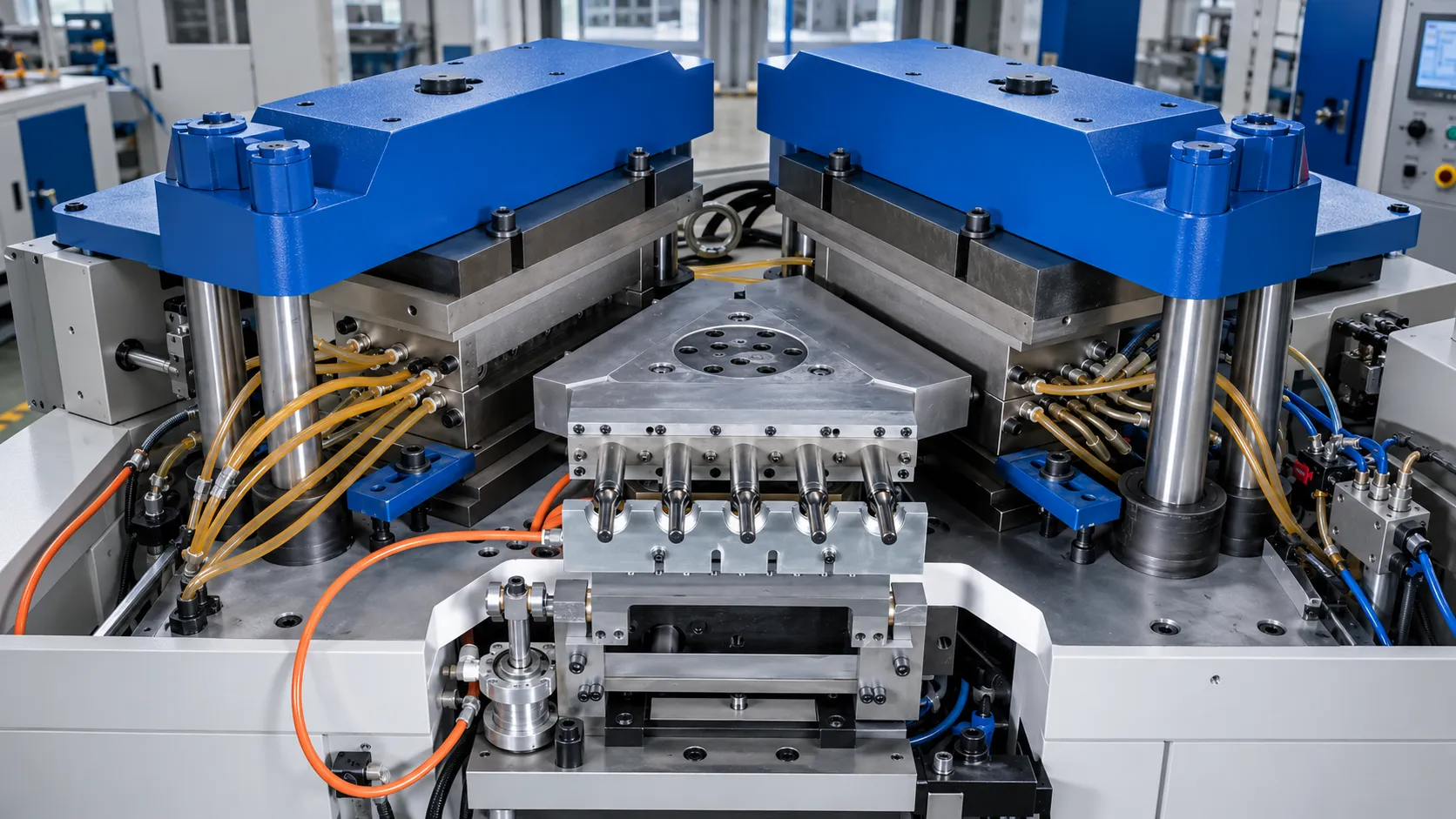
Pharmaceutical closure function is the most demanding test of IBM neck precision. Every Korean pharmaceutical closure system — CRC caps, dropper tips, induction seals, pump collars and spray actuators — specifies dimensional requirements for the container neck that the closure interacts with. IBM’s ±0.05 mm neck OD tolerance is the process characteristic that allows Korean pharmaceutical IBM containers to pass closure function tests across all cavities simultaneously, at production sampling frequencies, without statistical outliers at the tolerance edges.
Persyaratan Leher CRC untuk IBM Farmasi Korea
Korean CRC containers must pass Korean KS M ISO 8317 child-resistant effectiveness testing — a formal protocol where 200 adult test subjects and 200 child test subjects each attempt to open the container under specified conditions. The mechanical function of the push-and-turn CRC cap depends on its ratchet teeth engaging the neck bead at a specific interference fit: too wide (neck OD too high) and the cap cannot be rotated — adult accessibility fails; too narrow (neck OD too low) and the cap can be rotated without depression — child resistance fails. The tolerance window for the neck engagement bead OD in Korean pharmaceutical CRC containers is typically ±0.06 mm from the CRC cap manufacturer’s specified nominal. IBM’s ±0.05 mm neck OD is within this window; EBM’s ±0.15–0.25 mm exceeds it. At 24-cavity production on a ZQ110, all 24 cavities must individually produce neck OD within the ±0.06 mm window on every cycle — a requirement that IBM meets through its injection-moulded neck insert precision, which holds the neck OD regardless of blow air pressure, cycle time variation or mould cooling variation.
Persyaratan Ujung Pipet dan Leher Segel Induksi
Korean ophthalmic dropper caps use a snap-fit aperture control insert that seats inside the bottle neck bore, with the insert’s outer diameter engaging the bore inner surface at a specific interference. IBM’s injection mould core rod defines the bore inner diameter with ±0.04 mm tolerance — directly translating to ±0.04 mm aperture control insert fit variation. For Korean induction seal containers (30 ml oral liquid, 100 ml multi-dose liquid), the neck’s flat sealing land must be flat within 0.1 mm TIR (total indicator runout) for the induction foil to bond uniformly without gaps. IBM’s injection mould produces the sealing land surface with the same precision as a machined engineering component — flatness ±0.05 mm TIR across all cavities — because the sealing land is formed by the injection mould face rather than by a parting line or pinch-off as in EBM.
6. IBM di Lingkungan Ruang Bersih Farmasi Korea
Korean pharmaceutical primary container production is increasingly conducted in ISO Class 8 or better cleanroom environments — particularly for ophthalmic containers, injectable primary packaging, and multi-dose liquid containers where particulate contamination in the container before filling is a KFDA pharmaceutical quality risk. IBM’s zero-flash production is a direct cleanroom compliance advantage because the particle generation mechanisms inherent to EBM — the flash trim station’s mechanical cutting, the flash removal conveyor, and the regrind system — are entirely absent from an IBM production cell.
Korean pharmaceutical cleanroom IBM cell design requirements for ISO Class 8 (equivalent to Korean GMP Grade D) container production: the IBM machine’s mould area — where containers are formed and where the output conveyor receives the containers — should be enclosed under HEPA-filtered positive-pressure supply air at a minimum of 0.45 m/s face velocity and 20 air changes per hour. Korea Ever-Power’s ZQ series machines accommodate HEPA enclosure installation by the Korean customer’s HVAC engineering team, with connection points for supply air ductwork identified in the ZQ machine layout drawings provided at order. The IBM machine’s hydraulic system should be filled with pharmaceutical-compatible food-grade hydraulic oil (specified as an option on ZQ80, ZQ110 and ZQ135) to prevent non-compliant mineral oil contamination if any hydraulic system seepage occurs in the cleanroom environment.
Korea Ever-Power’s dual hydraulic system (standard on the ZQ80 and above) provides a secondary cleanroom benefit: its 20–30% energy saving versus single-circuit competitor IBM machines reduces the waste heat load generated per unit of container output in the cleanroom space, which reduces the HVAC cooling demand required to maintain the cleanroom temperature set point (typically 20–22°C for Korean pharmaceutical cleanrooms). For Korean pharmaceutical factories where cleanroom HVAC energy is a significant operating cost, the ZQ80 and above models’ dual hydraulic energy efficiency contributes to reduced HVAC loads per unit of production output — a compounding benefit on top of the direct machine energy saving.
7. Dokumentasi Kualifikasi GMP untuk Kontainer IBM Farmasi Korea
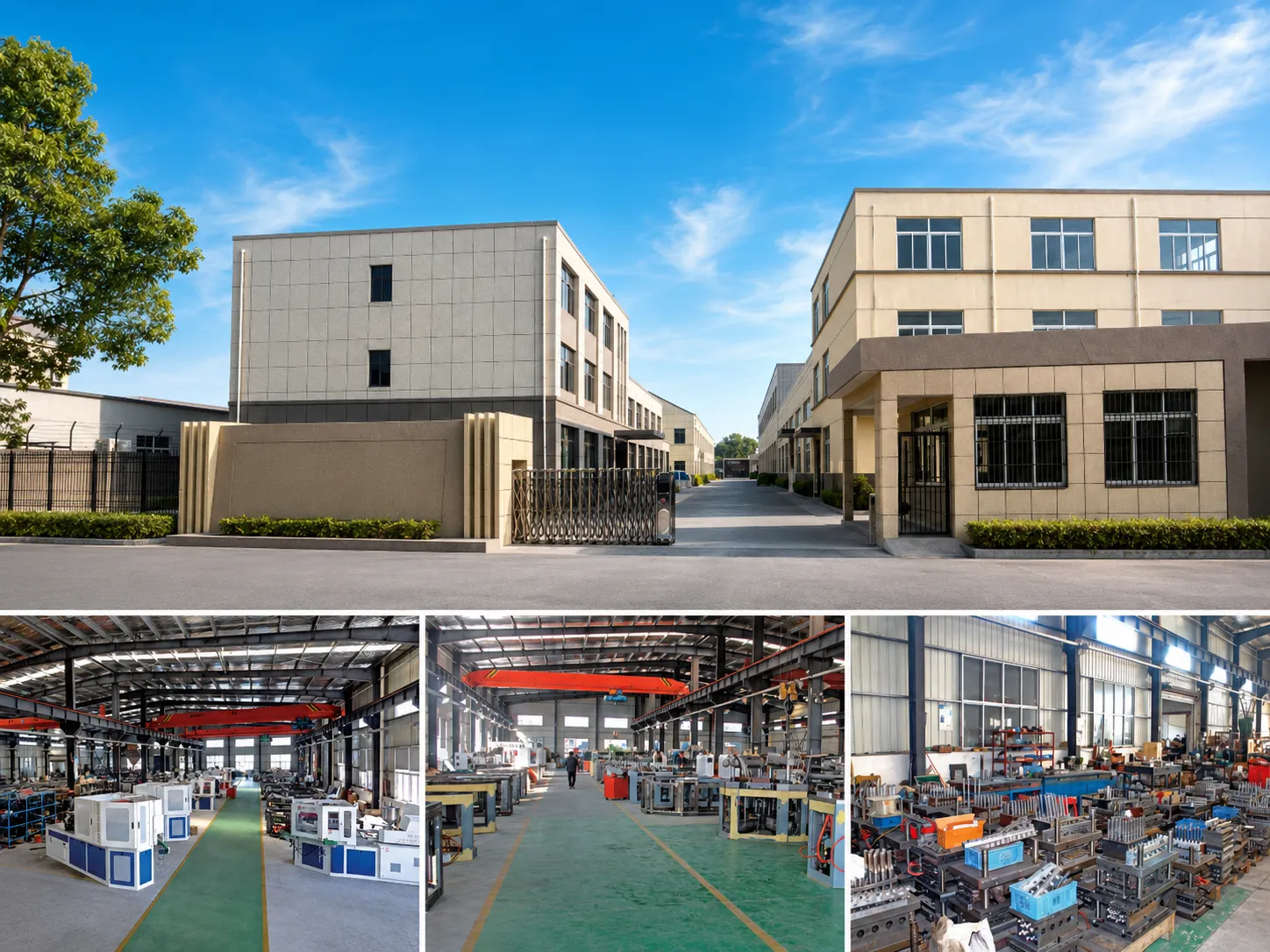
Kualifikasi kontainer IBM farmasi Korea mengikuti jalur dokumentasi terstruktur yang dipersyaratkan oleh merek farmasi Korea dari pemasok kontainer IBM mereka. Memahami jalur ini memungkinkan produsen kemasan IBM Korea untuk mempersiapkan dokumentasi yang benar terlebih dahulu, mengurangi jangka waktu kualifikasi dan menghindari penundaan pengajuan ke KFDA yang disebabkan oleh data teknis yang hilang.
Tahap 1 — Berkas Teknis Kontainer
Lembar spesifikasi material (produsen resin, kelas, MI, densitas, referensi daftar positif KFDA Korea); gambar dimensi kontainer dengan semua dimensi nominal dan toleransi; identifikasi mesin produksi dan cetakan; alamat lokasi produksi dan status fasilitas pengemasan terdaftar KFDA Korea (jika berlaku). Korea Ever-Power menyediakan dokumentasi ini sebagai bagian dari paket pengiriman standar seri ZQ.
Tahap 2 — Pengujian Kualifikasi Kontainer
Korean Pharmacopoeia plastic container test results (extractables from Korean accredited laboratory); dimensional measurement report (cavity-by-cavity, 30 measurements per dimension, 3 production batches); closure engagement test (CRC per KS M ISO 8317, induction seal per ASTM F2096 or equivalent Korean standard, dropper tip insertion torque); chemical compatibility compatibility test (12-week filled stability at 40°C/75% RH with the specific pharmaceutical formulation). Korea Ever-Power provides the cavity-by-cavity dimensional report from pre-delivery production trials as part of standard delivery — reducing the Korean customer’s testing burden at Stage 2.
Tahap 3 — Pemberitahuan Perubahan Kontainer KFDA Korea (jika berlaku)
Untuk produk farmasi Korea yang sudah terdaftar di KFDA tetapi menggunakan pemasok wadah atau spesifikasi wadah yang berbeda: Prosedur pemberitahuan perubahan wadah KFDA Korea berdasarkan Pasal 32 Undang-Undang Urusan Farmasi Korea. Perubahan kecil (kelas material yang sama, jenis wadah yang sama, dalam toleransi dimensi asli) dapat diumumkan sendiri oleh produsen farmasi Korea. Perubahan besar (perubahan material, perubahan jenis penutup, perubahan toleransi dimensi) memerlukan peninjauan dan persetujuan KFDA Korea sebelum digunakan untuk produksi komersial. Jangka waktu: pengumuman sendiri untuk perubahan kecil = segera; peninjauan KFDA untuk perubahan besar = 3–6 bulan dengan kecepatan peninjauan KFDA Korea saat ini.
8. Pemilihan Mesin IBM untuk Produksi Farmasi Korea
Pemilihan mesin IBM untuk industri farmasi Korea mengikuti kerangka volume tahunan yang sama dengan aplikasi IBM lainnya, dengan satu pertimbangan tambahan khusus untuk produksi farmasi: kualifikasi pemasok GMP Korea memerlukan kualifikasi pada mesin tertentu (diidentifikasi berdasarkan nomor seri mesin) dan jumlah rongga. Penggantian ke mesin dengan jumlah rongga yang lebih tinggi setelah kualifikasi awal memerlukan kualifikasi ulang — pertimbangan biaya dan waktu yang membuat pemilihan mesin awal pada skala yang tepat lebih penting untuk IBM farmasi daripada untuk IBM kimia rumah tangga di mana fleksibilitas format lebih tinggi dan persyaratan kualifikasi ulang kurang ketat.
| Volume Tahunan (10 ml farmasi) | Model ZQ | Lubang @10ml | Profil Perusahaan Farmasi Korea |
|---|---|---|---|
| Di bawah 15 juta/tahun | ZQ40 | 9 | Perusahaan rintisan farmasi Korea, pemasok bahan uji klinis Korea, spesialis penyakit langka Korea |
| 15 juta–30 juta / tahun | ZQ60 | 14 | Perusahaan farmasi skala menengah Korea, pemasok rumah sakit regional Korea, kontainer farmasi OTC Korea |
| 30 juta–50 juta / tahun | ZQ80 | 20 | Perusahaan farmasi besar Korea, perusahaan pengemasan farmasi kontrak Korea, eksportir farmasi Korea |
| 50 juta–65 juta / tahun | ZQ110 | 24 | Pengemasan farmasi kontrak skala besar Korea, farmasi multi-produk Korea |
| Di atas 65 juta/tahun | ZQ135 | 30 | Produsen farmasi nasional Korea, pengemasan kontrak rantai pasokan rumah sakit Korea |
Strategi kualifikasi ulang untuk peningkatan skala perusahaan farmasi Korea yang didukung IBM: Korean pharmaceutical IBM producers who anticipate scale-up from ZQ60 to ZQ80 within 3 years should consider qualifying both machines simultaneously at initial installation — qualifying the ZQ60 as the primary production machine and the ZQ80 as the approved secondary machine in the same Korean KFDA container change notification. This pre-emptive dual-machine qualification adds modest documentation cost at initial qualification but avoids the 3–6 month Korean KFDA review period for the machine change notification when the scale-up occurs. Korea Ever-Power’s pharmaceutical application team advises Korean pharmaceutical IBM customers on dual-machine qualification strategy as part of the pre-purchase application consultation for pharmaceutical production lines.
Pertanyaan yang Sering Diajukan
Permintaan Informasi IBM di Bidang Farmasi
Menentukan Kontainer IBM untuk Produksi Farmasi Korea?
Korea Ever-Power menyediakan kualifikasi dimensi kontainer IBM untuk industri farmasi, paket dokumentasi KFDA Korea, konfigurasi mesin ruang bersih, dan pemilihan mesin seri ZQ untuk pengemasan primer farmasi Korea di semua skala produksi.
Sumber Daya Terkait
Mesin Cetak Tiup Injeksi EP-ZQ110
1.100 KN · 24 rongga dengan kapasitas 10 ml untuk produk farmasi · 4+N zona tabung · Hidrolik ganda 22+22 KW · ~50M–65M wadah oftalmik per tahun dengan sistem kerja dua shift di Korea.
Mesin Cetak Tiup Injeksi EP-ZQ135
1.350 KN · 30 rongga @ 10 ml · 6+N zona tabung · 37+37 KW · Pasokan rumah sakit farmasi nasional Korea — 83 juta wadah oftalmik per tahun per mesin.
IBM vs ISBM: Memilih Proses yang Tepat
Mengapa wadah farmasi HDPE dan PP menggunakan IBM sedangkan wadah kosmetik dan minuman PET menggunakan ISBM — perbandingan material, presisi leher wadah, dan tingkat produksi untuk pengambilan keputusan pengemasan farmasi di Korea.