DISH SOAP IBM · DISHWASHING BOTTLE · HDPE ESCR · KOREA EVER-POWER ZQ SERIES
Dish Soap IBM:
Dishwashing Liquid Guide de production des bouteilles
Korean dish soap IBM covers the 200–500 ml HDPE dishwashing liquid bottle market where IBM’s zero flash base, precise 28/410 pump neck (±0.05 mm OD) and surfactant-grade HDPE ESCR performance combine to produce containers that Korean national dish soap brands specify as the production standard. This guide covers HDPE ESCR grade selection, Korean dish soap neck standards, IBM vs EBM container quality comparison and ZQ series selection for Korean dish soap IBM production volumes.
28/410 Pump Neck ±0.05 mm
Zero Flash — No Trim
CORÉE EVER-POWER · ANSAN-SI, GYEONGGI-DO · JUILLET 2026
PROCESS REFERENCE · KOREAN DISH SOAP IBM KEY PARAMETERS
HDPE ESCR TARGET
F50 ≥ 200 h
ASTM D1693 in 10% Igepal CO-630 — minimum for Korean dish soap at 10–35% surfactant
Diamètre extérieur du col de la pompe
±0,05 mm
28/410 GPI standard — IBM injection-moulded neck meets Korean pump supplier thread engagement spec
ZQ80 OUTPUT @ 300ml
~9,000/hr
8 cavities · 4.8 s cycle · ~31.5M units/year Korean 2-shift
WALL MINIMUM
0,60 mm
Body wall minimum for Korean dish soap 1.2 m drop test compliance — shoulder zone critical
SECTION 01
Korean Dish Soap IBM Market and Container Formats
Korean dish soap is one of the highest-volume Korean household IBM container applications — combining high annual unit volumes (Korean households averaging 24–36 dish soap purchases per year at 300–500 ml per purchase), exacting pump neck precision requirements and surfactant ESCR demands that make IBM the preferred Korean dish soap container production process over EBM for the 200–500 ml format range. The broader context of Korean household chemical IBM container production is covered in the household chemical IBM guide.
| FORMAT | COU | FERMETURE | LARGEUR DU CORPS | WEIGHT | KOREAN CHANNEL |
|---|---|---|---|---|---|
| 200 ml | 24/410 | Pump or flip-top | ~55 mm | ~12–14 g | Korean premium organic, gift set, natural fragrance dish soap |
| 300 ml | 28/410 | Pump | ~62 mm | ~16–19 g | Korean convenience store, Korean online grocery, Korean drugstore |
| 500 ml ★ | 28/410 | Pump | ~68–72 mm | ~22–26 g | Korean hypermarket, Korean national brand flagship SKU — highest volume IBM format |
| 1,000 ml+ | 38/400 | Pump or handle EBM | 80–90 mm | 35–50 g | Korean value bulk — typically EBM for handle; IBM only for handleless 1L squeeze design |
★ 500 ml pump is the highest-volume Korean dish soap IBM format — Korean hypermarket (Emart, Homeplus, Lotte Mart) dish soap section is dominated by 500 ml pump formats from Korean national brands. ZQ80 at 6–8 cavities is the production standard for this format.
IBM’s critical advantage for Korean dish soap is in the 200–500 ml pump bottle format: the 28/410 pump neck requires a precision thread OD (nominal 28.0 mm, acceptable range 27.90–28.10 mm by GPI standard) that Korean pump suppliers specify as the engagement dimension for their pump dip tube fitment. IBM injection-moulded neck OD maintains ±0.05 mm across all cavities — within the ±0.10 mm GPI tolerance, providing consistent pump engagement across every container. EBM neck OD variability (±0.15–0.25 mm) frequently produces Korean dish soap containers at the edge of the pump engagement tolerance — causing Korean dish soap pump fitment problems at the Korean filling line that result in consumer complaints and Korean brand quality events.
SECTION 02
HDPE Grade Selection for Dish Soap ESCR
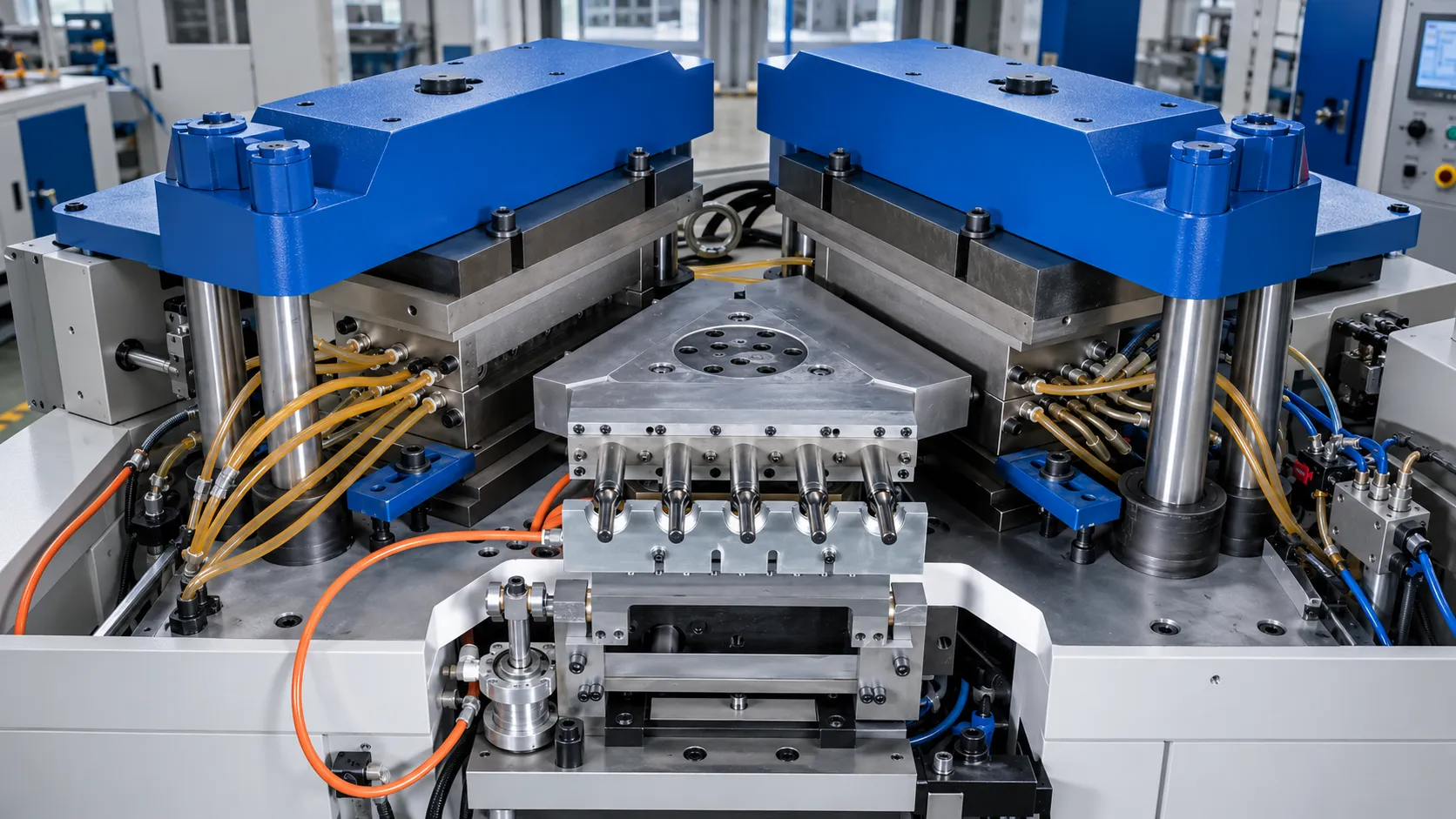
HDPE ESCR is the most commercially critical dish soap IBM specification parameter. Korean dish soap filling at 10–35% anionic surfactant (LAS, AES) concentration creates constant surfactant contact with the container wall during Korean retail shelf life (12–24 months). ESCR failure manifests as stress cracking at high-stress zones — primarily the shoulder-to-body transition and the neck root — producing leaking containers at Korean retail. ESCR failure from an incorrect HDPE IBM grade is the single most common Korean dish soap container field failure mode. Full HDPE IBM grade selection guidance is in the Guide IBM en PEHD.
HDPE GRADE COMPARISON — DISH SOAP IBM ESCR SUITABILITY
MI 3–8 · density 0.960–0.965 g/cm³
Lower molecular weight → fewer tie molecules bridging crystal lamellae → poor ESCR. Preferred by IBM processors for faster cycle time and easier flow — but causes dish soap container stress crack failures at Korean retail. F50 ESCR typically 20–80 h in 10% Igepal — far below 200 h minimum.
MI 1.0–2.0 · density 0.955–0.962 g/cm³
Moderate ESCR — passes ESCR test at ambient temperature but marginal under Korean summer storage conditions (35–40°C Korean warehouse summer temperature accelerates ESCR by 3–5×). F50 ESCR 100–200 h at 23°C. Not recommended for Korean dish soap IBM where 12–24 month shelf life is specified.
MI 0.5–1.0 · density 0.953–0.960 g/cm³
High molecular weight → maximum tie molecule density → excellent ESCR. F50 ≥ 300 h in 10% Igepal at 23°C. Processes slightly slower (injection fill time +0.1–0.2 s vs high MI) but provides margin above the Korean dish soap shelf life ESCR requirement. Korea Ever-Power verifies ESCR grade performance in the pre-delivery production trial.
Korean HDPE grades verified for dish soap IBM ESCR: LG Chem HDPE 5502BN (MI 0.85, ρ 0.955 g/cm³), Hanwha Solutions HDPE HR550 (MI 0.5, ρ 0.953 g/cm³), SK Geo Centric HDPE BF300 (MI 0.8, ρ 0.956 g/cm³). Confirm current Korean MFDS food contact listing with your Korean HDPE supplier at time of production — resin grades are periodically updated.
SECTION 03
Korean Dish Soap Container Design and Neck Standards
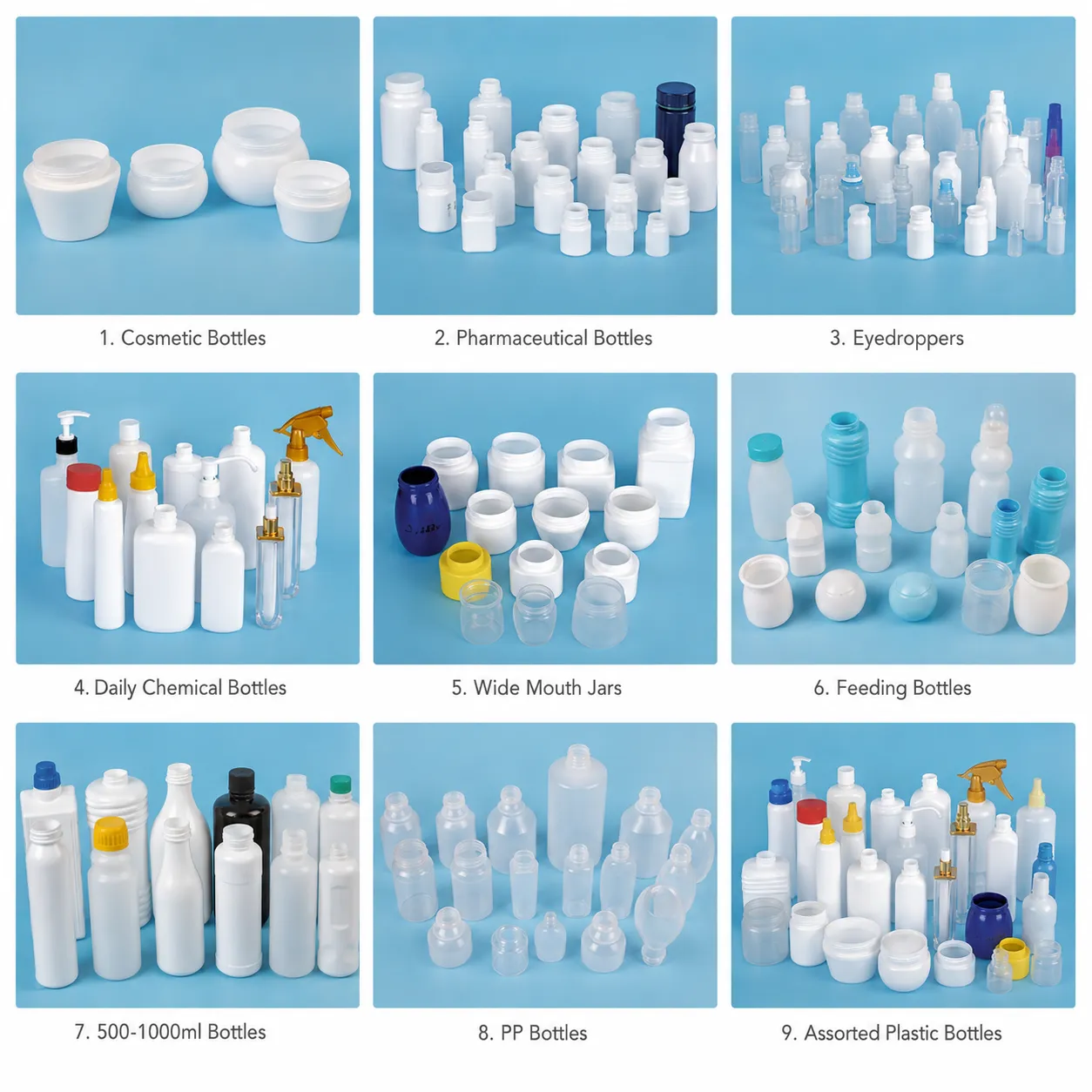
Korean Dish Soap Neck Standards
28/410 GPI — Primary Korean Standard
300 ml and 500 ml Korean dish soap pump bottles. OD nominal 28.0 mm (range 27.90–28.10 mm GPI spec). Height: thread engagement 14 mm minimum. Korean pump suppliers standardised on 28/410 for kitchen dish soap pump fitment. IBM achieves 28.0 mm OD ±0.05 mm — within GPI range on all cavities.
24/410 — Korean Premium/Compact Format
200 ml Korean premium organic dish soap and Korean flip-top compact dish soap. Narrower neck OD 24.0 mm — used with Korean mini pump (110mm dip tube for 200 ml body depth). Korea Ever-Power ZQ mould set accommodates 24/410 neck insert as a drop-in modification to the standard injection mould neck zone.
38/400 — Korean Large Format
1 L Korean value dish soap with wide neck for Korean foaming pump or pour-and-squeeze cap. OD 38.0 mm. ZQ110 typically required at this neck size and body volume combination — wider neck occupies more platen area per cavity, reducing achievable cavity count below ZQ80 maximum.
Korean Dish Soap Body Design Features
Grip Waist
Body narrowed by 8–14 mm at mid-height (approximately 55–60% of container height) for single-hand kitchen grip. IBM blow mould profiles this waist exactly — the preform wall distribution must account for the waist zone’s lower blow ratio requiring less wall material than the full-body zones above and below.
Flat Label Panel
Front face of body flattened over 40–55 mm width for Korean pressure-sensitive label application. IBM blow mould machines this flat zone directly — the flat face has no bow (flatness ≤ 0.3 mm over the label zone) because IBM’s zero-stretch blow process controls body wall distribution precisely enough to prevent flat zone bowing.
Base Standing Stability
Korean dish soap containers are stored and used upright at the kitchen sink — base flatness is critical. IBM’s injection-formed base is flat (±0.2 mm from the mould base face) by default — no secondary base trimming or shaping required. EBM base weld produces slight bow at the weld zone that can cause Korean dish soap containers to rock on the counter surface.
SECTION 04
IBM vs EBM for Korean Dish Soap Containers
The IBM vs EBM selection decision for Korean dish soap containers at 200–500 ml is primarily driven by pump neck precision, not production cost — IBM’s structural 28/410 pump neck OD accuracy eliminates pump fitment quality events that EBM cannot reliably prevent. At 1,000 ml+ with handle, EBM is the correct process.
| QUALITY CRITERION | IBM | EBM | KOREAN DISH SOAP SIGNIFICANCE |
|---|---|---|---|
| Pump neck OD precision | ±0,05 mm | ±0,15–0,25 mm | Korean pump supplier 28/410 GPI tolerance ±0.10 mm. IBM within tolerance on all cavities. EBM frequently at GPI limit — produces pump thread engagement failures at Korean dish soap filling line. |
| Base flash / trim | Zéro | 3–8 mm fin | EBM base trim adds cost (labour, blade) and produces HDPE particles inside container — potential Korean MFDS food contact contamination event at filling. |
| stabilité de la base | ±0,2 mm plat | Base weld bow | Korean consumers place dish soap on uneven ceramic kitchen counter surfaces — base bow causes rocking that Korean brand QA teams document as unacceptable shelf presentation defect. |
| Ligne de raie du corps | None on body | Full-length body | Korean premium dish soap labels are transparent OPP film — EBM body parting line is visible through transparent label. IBM body has no parting line — premium Korean clear-label dish soap specifies IBM. |
| Handle capability | Pas de poignée intégrée | Poignée intégrée | 1 L+ Korean value dish soap with handle: EBM only. IBM is correct for 200–500 ml handleless pump format; EBM is correct for 1 L+ handled format. |
SECTION 05
IBM Process Parameters for Dish Soap HDPE
Dish soap ESCR-grade HDPE (MI 0.5–1.0) processes at the lower injection flow end of the IBM operating window — the higher molecular weight that gives ESCR performance also gives higher melt viscosity that requires careful ZQ machine process parameter setting to achieve complete cavity fill without excessive injection pressure.
KEY PROCESS PARAMETERS — DISH SOAP ESCR HDPE IBM @ ZQ80, 300 ml 8-CAVITY
Température du fût
Zone 1: 195°C · Zone 2: 210°C · Nozzle: 218°C
Slightly higher than standard HDPE IBM due to higher MW — prevents short shots at MI 0.5–1.0
Pression d'injection
95–130 MPa
Higher than standard HDPE for ESCR grade. ZQ80 dual hydraulic provides pressure without cycle time penalty vs ZQ60 single pump.
Injection Mould Temp
18–24°C
ESCR grade HDPE needs slightly warmer mould than standard HDPE to allow molecular relaxation in the preform wall — improves ESCR by reducing residual stress in the injection-moulded neck zone.
Souffler
1,4–2,0 s
300 ml HDPE dish soap at 0.7–0.9 mm wall requires adequate blow dwell for base zone solidification before ZQ80 Station 3 stripping force.
Temps de cycle
4.6–5.2 s
300 ml dish soap body with grip waist — waist zone is the last to fully solidify and drives minimum blow dwell. At 8 cav, 4.8 s: 6,000 cont/hr → 21M units/year 1-shift, 42M 2-shift.
Grip waist preform wall engineering: The grip waist on a Korean 300–500 ml dish soap container creates a lower blow ratio at the waist zone (smaller circumference at the waist = less stretch) than at the full body above and below. The IBM preform wall at the waist zone must be designed with proportionally less wall material than the body zones — otherwise the waist zone wall is over-thick, the container grip is rigid and the Korean ergonomic grip feel is lost. Korea Ever-Power calculates the preform wall profile for each dish soap body design using blow ratio mass balance per axial position — the waist zone wall is typically 10–15% less than the maximum body zone wall at the same container.
SECTION 06
Korean Dish Soap Packaging Trends — Refill and Sustainability

Korean Refill System IBM Requirements
Korean dish soap refill systems (introduced by LG H&H, Aekyung, Henkel Korea from 2022–2024) use a durable IBM primary bottle designed for 8–12 refill cycles over 2–3 years. IBM primary container specifications for Korean refill systems are more demanding than single-use specifications:
- ▸Wall minimum 0.85 mm (vs 0.60 mm single-use) — for repeated pump assembly impact force resistance
- ▸HDPE ESCR F50 ≥ 400 h (vs 200 h single-use) — for 2–3 year continuous surfactant contact during Korean consumer refill use
- ▸Neck thread wear resistance: IBM injection-moulded 28/410 thread in HDPE MI 0.5 survives 12 pump assembly/disassembly cycles without thread OD dimension loss beyond ±0.05 mm GPI limit
Korean ESG Lightweighting Targets
Korean national dish soap brands have set Korean Ministry of Environment packaging weight reduction targets (Korean green label packaging commitments) of 10–20% HDPE weight reduction versus 2020 baseline packaging. IBM dish soap container lightweighting approaches:
- ▸Minimum wall from 0.80 mm to 0.65 mm where drop test allows — IBM’s precise wall distribution enables uniform thin-wall design that EBM’s variable wall cannot achieve
- ▸Rib reinforcement IBM design: vertical ribs on the body wall increase stiffness without increasing wall thickness — IBM blow mould machines ribs directly into the cavity wall at 0.3–0.5 mm depth, 2–3 mm width
- ▸Korean HDPE post-consumer recycled (PCR) blend: Korean Ministry of Environment certified PCR HDPE at 10–30% blend with virgin HDPE is compatible with IBM processing, reducing embodied carbon while meeting Korean ESCR requirements at the blended MI 0.7–1.0 target
SECTION 07
Dish Soap IBM Quality Requirements and Testing
| TEST | METHOD | PASS CRITERION | KOREAN DISH SOAP CONTEXT |
|---|---|---|---|
| HDPE ESCR | ASTM D1693 F50 | ≥ 200 h in 10% Igepal | Minimum for 24-month Korean retail shelf life at Korean LAS 20–35% dish soap concentration |
| Impact de chute | Filled 1.2 m drop × 6 faces | No leakage — all faces | Korean distribution 1.2 m shelf-to-floor drop. IBM base weld-free design — no base weld failure mode under impact loading |
| Pump fitment | GPI 28/410 gauge | OD 27.90–28.10 mm all cav | Go/no-go gauge per cavity every 500 cycles. IBM within GPI range on all cavities — no fitment sorting required at Korean filling line |
| Weight consistency | Continuous in-line weighing | Nominal ±3% per cavity | Korean filling line net weight targets require consistent container tare weight — ±3% across 8 cavities maintained by ZQ80 shot weight control |
| Planéité de la base | Flatness gauge 3-point | ≤ 0.3 mm deviation | IBM injection-formed base: ≤ 0.2 mm deviation typically. Korean brand sink-counter stability acceptance criterion verified at AQL sampling |
SECTION 08
ZQ Series Selection for Korean Dish Soap IBM
| MODÈLE ZQ | 200 ml (cav / hr) | 300 ml (cav / hr) | 500 ml ★ (cav / hr) | KOREAN DISH SOAP PROFILE |
|---|---|---|---|---|
| EP-ZQ40 | 10 / ~8,000 | 6 / ~5,400 | 4 / ~2,900 | Korean organic premium dish soap startup, small-batch 200 ml natural dish soap |
| EP-ZQ60 | 14 / ~11,200 | 10 / ~7,500 | 6 / ~4,300 | Korean mid-volume dish soap OEM, Korean online-direct brand at 10–20M annual units |
| EP-ZQ80 ★ | 18 / ~14,400 | 8–10 / ~7 200 | 6–8 / ~5,760 | Korean national brand flagship 500 ml, Korean hypermarket OEM, refill system primary container |
| EP-ZQ110 | 20+ / ~16,000 | 12–14 / ~10,800 | 8–10 / ~7 200 | Korean major conglomerate dish soap division, Korean contract packaging at 60M+ annual units |
★ 500 ml cycle time basis: 5.0 s (4.8 s blow dwell + turret rotation + strip). Annual capacity calculated at 88% efficiency, 3,500 hr/year (Korean 2-shift). ZQ80 at 8 cav/500 ml: ~40M units/year — adequate for a Korean top-5 dish soap brand’s flagship SKU full volume.
FAQ INGÉNIERIE
Dish Soap IBM — Engineering Questions
What HDPE grade causes ESCR failure in Korean dish soap containers and how can it be identified before production?
The HDPE grade most commonly responsible for Korean dish soap IBM ESCR failures is high-MI commodity HDPE (MI 3–8 g/10min, density 0.960–0.965 g/cm³) that is purchased based on its IBM processability (flows easily, fills cavity quickly, shorter cycle time) rather than its ESCR performance. This grade fails Korean dish soap ESCR requirements because its higher MI corresponds to lower molecular weight, which means fewer tie molecules connecting the HDPE crystalline lamellae — the tie molecule density is the primary determinant of ESCR because tie molecules must bridge the crack opening surfaces to resist crack propagation under surfactant stress. The easiest pre-production identification method is to verify the HDPE grade’s ESCR data sheet value: any HDPE IBM grade with ASTM D1693 F50 below 100 hours (or not stated on the data sheet) should not be used for Korean dish soap IBM. Korean HDPE suppliers list ESCR F50 values on their technical data sheets for grades positioned for blow moulding applications. The grade should also be confirmed as medium-density HDPE (density 0.953–0.960 g/cm³) — high-density HDPE above 0.962 g/cm³ has higher crystallinity that, counterintuitively, can reduce ESCR by increasing the rigidity of the crystalline domains and reducing the interlamellar amorphous zone where tie molecules operate. Korea Ever-Power includes HDPE grade verification in the pre-delivery production trial — production trial containers are submitted for ESCR accelerated testing (ASTM D1693, elevated temperature 50°C/10% Igepal, 24-hour test correlating to approximately 200-hour ambient ESCR) before container dimension qualification is completed, ensuring the production HDPE grade’s ESCR performance is confirmed before Korean brand delivery.
What Korean dish soap surfactant types cause the most severe ESCR stress on IBM containers?
Korean dish soap formulations use three primary surfactant classes in varying concentrations, each with different HDPE ESCR aggressiveness. Linear alkylbenzene sulfonate (LAS, sodium dodecylbenzene sulfonate) is the most common Korean dish soap surfactant at 10–20% concentration — it is the most aggressive HDPE ESCR agent because its aromatic benzene ring allows it to penetrate HDPE crystal interfaces and plasticise the amorphous regions between crystalline lamellae. Alcohol ethoxysulfate (AES, sodium laureth sulfate SLES at 10–20%) is moderately aggressive to HDPE ESCR — ethylene oxide chain moderates the ESCR effect versus LAS, but at 20% concentration in concentrated Korean kitchen dish soap, SLES produces ESCR stress comparable to LAS at 10%. Alcohol ethoxylate (AEO, non-ionic surfactant at 2–5%) is the least ESCR-aggressive Korean dish soap surfactant — the non-ionic structure does not produce the same stress concentration at HDPE crystalline interfaces as anionic surfactants. The most severe Korean dish soap ESCR conditions are produced by combination formulations — LAS at 15% + SLES at 15% + AEO at 3% — a concentration range used by Korean value dish soap brands for concentrated versions. IBM containers for concentrated Korean dish soap (2× or 3× concentration, 30–35% total surfactant) require HDPE ESCR F50 ≥ 400 h because the higher surfactant concentration increases ESCR driving force proportionally.
What Korean labelling and decoration techniques are compatible with IBM dish soap containers?
IBM dish soap containers are compatible with all major Korean label and decoration techniques without any process modification. Pressure-sensitive label (PSL / self-adhesive label): the most common Korean dish soap decoration — OPP, BOPP or PE film labels applied at the Korean filling line to the flat label panel on the IBM container body. IBM’s flat label panel (flatness ≤ 0.3 mm) produces better PSL adhesion and appearance than EBM containers where the body parting line creates a surface discontinuity under transparent OPP labels. Sleeve label (heat shrink sleeve): Korean dish soap sleeve labels are applied over the IBM container body — IBM’s zero body parting line and uniform body diameter produce clean sleeve label conformance without the parting line shadow effect visible under EBM heat-shrink sleeves. In-mould label (IML): not applicable to IBM — IML requires mould cavity label insertion between mould open and close cycles, which IBM’s 3-station rotating turret architecture does not accommodate. Direct screen printing: IBM HDPE body surface (Ra 0.4–0.8 μm from IBM blow mould cavity surface) is compatible with Korean ceramic ink and UV-curable ink screen printing for Korean premium dish soap direct-print decoration — no flame or corona pretreatment required for HDPE printing adhesion in most Korean print systems (verify with Korean ink supplier). Hot stamp foil: applicable to the IBM body flat panel and shoulder zone for Korean premium dish soap brand identification mark stamping — IBM’s flat label panel provides the surface rigidity required for precise Korean hot stamp registration that curved EBM body panels do not provide.
Can IBM produce a dual-colour or opaque-base/transparent-body dish soap container for Korean premium branding?
IBM can produce single-colour containers per IBM production run — colour is set by the masterbatch concentrate added to the HDPE feedstock (typically 2–3% masterbatch). For dual-colour IBM containers (opaque white base + translucent tinted body, or coloured body + natural clear shoulder), IBM would require a multi-layer co-injection injection mould where the preform injection station receives two HDPE melt streams simultaneously from separate injection units — one for the inner layer (white or coloured opaque) and one for the outer layer (translucent or clear). This two-layer IBM preform injection requires the ZQ machine to be configured with a co-injection barrel and manifold, which is an available option but adds capital cost and complexity. The simpler Korean premium dish soap approach is single-colour IBM in a translucent tinted HDPE (RCP colour or HDPE with low opacifier loading at 0.5–1.5% TiO2 instead of the standard 3–5% opaque loading) that produces a semi-translucent body appearance — allowing the Korean dish soap liquid colour to be faintly visible through the container wall. Single-colour translucent IBM at 1.5% TiO2 loading achieves a pearlescent milky white appearance that Korean premium natural dish soap brands have adopted as a clean, minimal aesthetic with a single-colour IBM production process. Full-colour decoration on IBM containers is achieved through sleeve label (360° sleeve provides full-coverage decoration including metallic, gradient and photo-realistic Korean brand imagery) or screen print at the flat label panel.
What is the minimum IBM dish soap container wall thickness and what Korean tests verify it?
The minimum wall thickness for Korean dish soap IBM containers is determined by two converging requirements: drop impact resistance and ESCR. Drop impact minimum: at 1.2 m drop on a 500 ml filled Korean dish soap IBM container, the base zone (IBM injection-formed, no weld) is the most impact-resistant zone and sets the lower bound for IBM dish soap wall at approximately 0.55–0.60 mm minimum at the base transition. The body shoulder zone (shoulder-to-body transition at the grip waist) is the drop impact critical zone — IBM wall at the grip waist shoulder must be minimum 0.65 mm for a 500 ml container (higher for a 300 ml container due to the higher body height-to-OD ratio). ESCR minimum: HDPE ESCR performance is a function of both the HDPE grade (tie molecule density) and the container wall thickness. Thinner walls at high-stress zones (shoulder, grip waist corners) concentrate stress and accelerate ESCR failure. A conservative Korean dish soap IBM minimum wall at stress concentration zones is 0.70 mm — providing both drop impact compliance and ESCR safety margin for 24-month Korean retail shelf life at 20% LAS surfactant concentration. Korea Ever-Power’s pre-delivery production trial verifies dish soap IBM wall thickness at all critical zones by ultrasonic wall gauge measurement (ProStar UWG or equivalent) at 8 measurement points per container: neck root, shoulder transition, upper body, grip waist minimum, mid-body, lower body, base transition, base centre. All 8 points must be within the wall specification range (minimum as above, maximum ≤ 1.5 mm to avoid over-weight) before Korea Ever-Power issues the production trial dimensional approval for Korean brand delivery.
What Korean brand appearance requirements differentiate premium dish soap IBM from standard commodity IBM?
Korean premium dish soap brands (price point KRW 8,000–18,000 per 500 ml, sold at Korean department stores, Korean premium supermarkets and Korean online luxury grocery) specify seven appearance criteria that differentiate premium IBM from commodity IBM, all of which IBM achieves structurally and commodity EBM cannot meet. First, no body parting line: transparent OPP label over IBM body shows no parting line — Korean premium consumer expects an uninterrupted body surface that signals premium moulding quality. Second, base mirror finish: IBM base exterior at Ra ≤ 0.4 μm (from polished blow mould base insert) produces a near-mirror base appearance visible when the Korean consumer lifts the bottle to examine it — commodity EBM base has trim scar at Ra 2–5 μm. Third, neck sealing land gloss: IBM injection-moulded neck sealing land at Ra ≤ 0.05 μm provides the gloss seal seat appearance that Korean premium pump dispenser manufacturers specify for their premium pump fitment range — visible as a bright ring around the pump thread zone. Fourth, colour consistency: Korean premium dish soap brands specify Delta E ≤ 1.5 colour consistency across production batches — IBM’s closed-loop masterbatch dosing system on ZQ machines achieves this; commodity EBM masterbatch hand-dosing produces Delta E 2–5 variation across Korean production runs. Fifth, shoulder taper geometry: IBM blow mould precision at the shoulder taper zone produces the smooth, consistent shoulder-to-body transition radius that Korean premium brands specify in their packaging design standards — EBM shoulder zone has variable wall distribution that produces slight shoulder surface waviness visible under Korean retail shelf lighting. Sixth, zero flash base: premium Korean consumers notice the base of bottles on their kitchen counter — IBM zero flash base signals premium production quality versus EBM trim witness. Seventh, flat label panel flatness: Korean premium dish soap transparent OPP labels require ≤ 0.2 mm label panel flatness for air-bubble-free label application — IBM’s injection-moulded blow mould produces this; EBM’s variable wall distribution produces label panel bow that causes Korean premium label application bubbles at the Korean filling line.
DISH SOAP IBM ENQUIRY · KOREA EVER-POWER
Planning Korean Dish Soap IBM Container Production?
Korea Ever-Power provides dish soap IBM container design, HDPE ESCR grade verification, pump neck dimensional qualification and ZQ machine production trial for Korean national brands and Korean OEM packaging producers.