ANWENDUNGSPRÄSENTATIONSLEITFADEN
Welche Flaschen können mit einer ISBM-Maschine hergestellt werden? Vollständiger Leitfaden 2026
ISBM-Maschinen produzieren Flaschen für verschiedenste Kategorien, darunter Getränke (Wasser, Limonade, Saft, Tee), K-Beauty-Kosmetik (Serum, Lotion, Gesichtswasser, Airless-Flaschen), Pharmazeutika (Sirup, Nahrungsergänzungsmittel, Medizinprodukte), Lebensmittel (Speiseöl, Soßen, Würzmittel), Haushaltschemikalien (Waschmittel, Reinigungsmittel) und industrielle Spezialprodukte (Automobilindustrie, Laborreagenzien). Die Kapazität reicht von 5-ml-Tropfflaschen bis zu 5-Liter-Wasserflaschen und umfasst nahezu jede Flaschenform, darunter runde, ovale, quadratische, asymmetrische und unregelmäßige Sonderformen. Dieser Leitfaden stellt alle wichtigen Flaschenkategorien anhand von Beispielen aus der koreanischen Produktion vor.
TL;DR – Kurze Antwort
ISBM-Maschinen produzieren sechs primäre Flaschenkategorien: (1) Getränkeflaschen von 250 ml Limonade bis 5 Liter Wasser in PET- und rPET-Flaschen. (2) K-Beauty-Kosmetikflaschen Von 30-ml-Serumtropfflaschen bis hin zu 500-ml-Lotionbehältern in PETG-, PET- und Airless-Ausführung. (3) Pharmazeutische Flaschen von 60-ml-Sirupflaschen bis hin zu 1-Liter-Infusionsbehältern für Krankenhäuser aus PET, PP und Tritan. (4) Flaschen für Lebensmittel und Gewürze Von 100-ml-Gewürzflaschen bis hin zu 3-Liter-Speiseölkanistern aus PET, bernsteinfarbenem PET und PP für Heißabfüllanwendungen. (5) Flaschen für Haushaltschemikalien von 250-ml-Sprühflaschen für Reinigungsmittel bis hin zu 3-Liter-Kanistern für Waschmittel, hergestellt aus PP und PET. (6) Industrie- und Spezialflaschen von 100-ml-Laborreagenzflaschen bis hin zu 5-Liter-Kanistern für Kfz-Kühlmittel aus HDPE, PP und bernsteinfarbenem PET. Kapazitätsbereich Die Spanne reicht von 5-ml-Tropfen bis zu 5-Liter-Wassergallonen. Flaschenformen Das Angebot umfasst runde, ovale, quadratische, asymmetrische und unregelmäßige Geometrien. Der Katalog von Korean Ever-Power mit 12 Plattformen deckt das gesamte Spektrum ab – von kompakten 3-Stationen-Präzisionsplattformen für K-Beauty-Produkte im Kleinformat bis hin zu großformatigen 6-Stationen-Plattformen für die Getränkeproduktion in großen Mengen.
In diesem Leitfaden
- ISBM-Flaschenanwendung – Übersicht
- Getränkeflaschen (Wasser, Limonade, Saft, Tee)
- K-Beauty Kosmetikflaschen
- Flaschen für Pharmazeutika und Gesundheitswesen
- Flaschen für Lebensmittel und Gewürze
- Flaschen für Haushaltschemikalien
- Industrie- und Spezialflaschen
- Kapazitätsbereich & Sonderflaschenformen
- Häufig gestellte Fragen
- Abschluss
1. ISBM-Flaschenanwendung – Übersicht
Die ISBM-Flaschenproduktion eignet sich für nahezu alle Premium-Flaschenanwendungen, bei denen optische Klarheit, mechanische Festigkeit, Maßgenauigkeit oder Barriereeigenschaften für das Endprodukt entscheidend sind. Die Technologie dominiert die koreanische und globale Flaschenproduktion in den Bereichen Konsumgüter, Gesundheitswesen, Industrie und Spezialanwendungen. Das Verständnis der breiten Anwendungspalette hilft koreanischen Herstellern, Marktchancen und die erforderlichen Plattformkapazitäten zu identifizieren.
| Flaschenkategorie | Koreanischer Marktanteil | Primärmaterial | Kapazitätsbereich |
|---|---|---|---|
| Getränk | ~45% | PET / rPET | 250 ml - 5 l |
| K-Beauty | ~20% | PETG / PET | 15 ml – 500 ml |
| Pharmazeutische | ~10% | PET / PP / Tritan | 60 ml - 1 l |
| Lebensmittel und Gewürze | ~12% | PET / Amber PET / PP | 100 ml - 3 l |
| Haushaltschemikalien | ~8% | PP / PET | 250 ml - 3 l |
| Industriespezialität | ~5% | HDPE / PP / Bernstein PET | 100 ml - 5 l |
Für koreanische ISBM-Unternehmen, die mehrere Marktsegmente bedienen, ist die Fähigkeit zur Abfüllung mehrerer Produktkategorien zunehmend Standard. Ein typischer koreanischer Lohnabfüller produziert beispielsweise K-Beauty-Produkte für Premiumkunden, Pharmazeutika für Kunden im Gesundheitswesen und Lebensmittel für Kunden mit traditionellen koreanischen Saucen – alles über dieselbe Multiplattform-Anlage. Der koreanische Ever-Power-Plattformkatalog mit 12 Plattformen unterstützt die Anwendungsvielfalt durch konfigurierbare Parameterbibliotheken und ASB-Formenkompatibilität. Dies ermöglicht eine flexible Produktion, die auf die spezifischen Kundenanforderungen in allen sechs Hauptflaschenkategorien abgestimmt ist.
2. Getränkeflaschen (Wasser, Limonade, Saft, Tee)
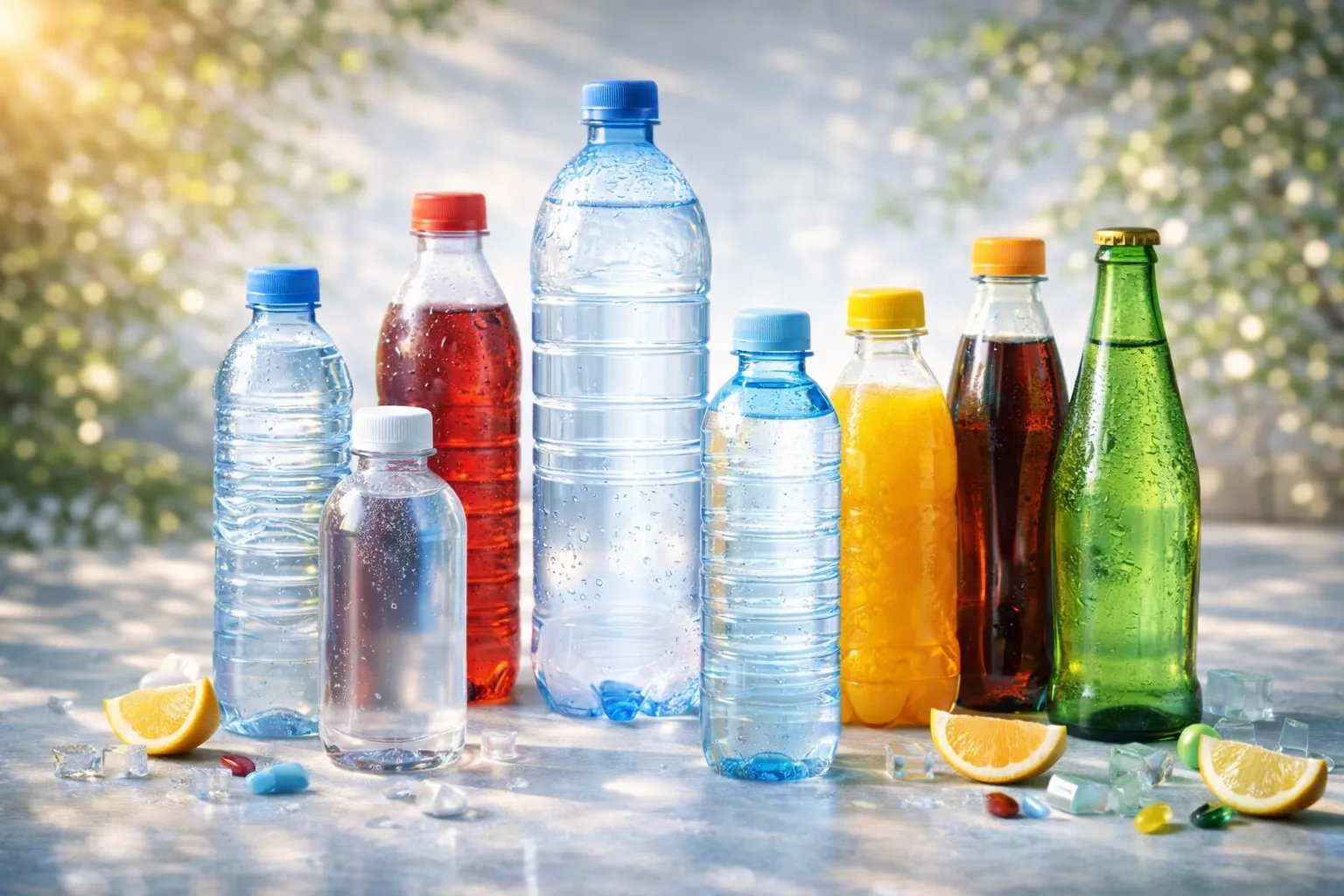
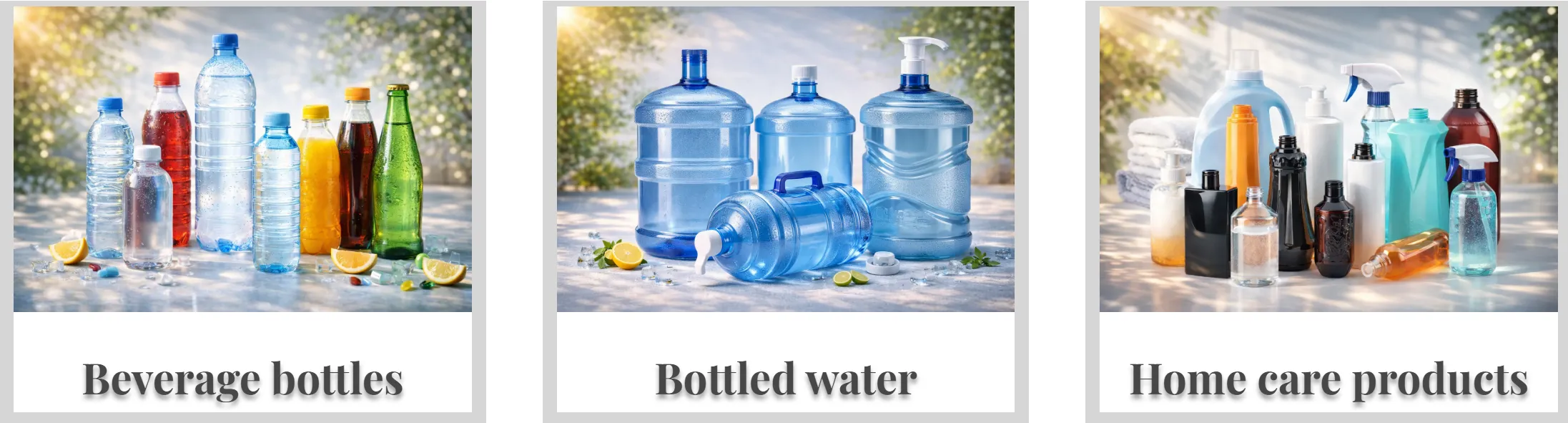
Getränkeflaschen stellen mit rund 451.000 Tonnen den größten Einzelanwendungsbereich für ISBM in Korea dar. Koreanische Abfüller bedienen einen Getränkemarkt mit einem Volumen von 14 Milliarden US-Dollar, der Mineralwasser, kohlensäurehaltige Erfrischungsgetränke, Tee, Säfte, Sportgetränke und trinkfertigen Kaffee umfasst. Führende koreanische Getränkehersteller wie Lotte Chilsung, Coca-Cola Korea, Pepsi Korea, Donga Otsuka und Hite Jinro verfügen über umfangreiche ISBM-Produktionskapazitäten für das gesamte Getränkespektrum.
| Getränke-Unterkategorie | Formatbereich | Material | Koreanische Marken |
|---|---|---|---|
| Mineralwasser | 300 ml, 500 ml, 2 l | PET / rPET | Samdasoo, Crystal |
| Kohlensäurehaltige Erfrischungsgetränke | 350 ml, 500 ml, 1,5 l | PET (hochdruckgeeignet) | Coca-Cola, Pepsi, Chilsung |
| Saft / Fruchtgetränk | 240 ml, 500 ml, 1 l | PET / HS-PET | Minute Maid, Lotte Sac |
| Tee (trinkfertig) | 340 ml, 500 ml, 1,5 l | PET / HS-PET | Pokari Sweat, Geomeun-kong |
| Sportgetränke | 350 ml, 600 ml, 1,5 l | HAUSTIER | Pocari Sweat, Powerade |
| RTD-Kaffee | 240 ml, 280 ml, 470 ml | HS-PET / PP | Maxim, Kanu, Starbucks |
| Wasser in großen Mengen (5 l) | 5L | PET / rPET | Lotte, Coway, Cuckoo |
Die koreanische ISBM-Getränkeproduktion benötigt die leistungsstärksten Plattformen der Branche. Insbesondere kohlensäurehaltige Erfrischungsgetränke erfordern Berstdrücke von 9–12 bar, die dem Kohlensäuredruck von 6–8 bar zuzüglich Stoßbelastungen entsprechen. Daher dominiert ISBM die Produktion kohlensäurehaltiger Getränke, während EBM den Kohlensäuredruck nicht zuverlässig aufnehmen kann. Die Integration von K-EPR rPET schreibt ab Januar 2026 einen rPET-Anteil von 10% für koreanische Getränkehersteller mit hohem Produktionsvolumen vor, der bis 2027 auf 30% und bis 2030 auf 50% steigt.
Für umfassende Spezifikationen zur koreanischen Getränkeproduktion einschließlich aller Unterkategorien mit Plattformempfehlungen siehe Leitfaden zur Herstellung von Getränkeflaschen.
3. K-Beauty Kosmetikflaschen
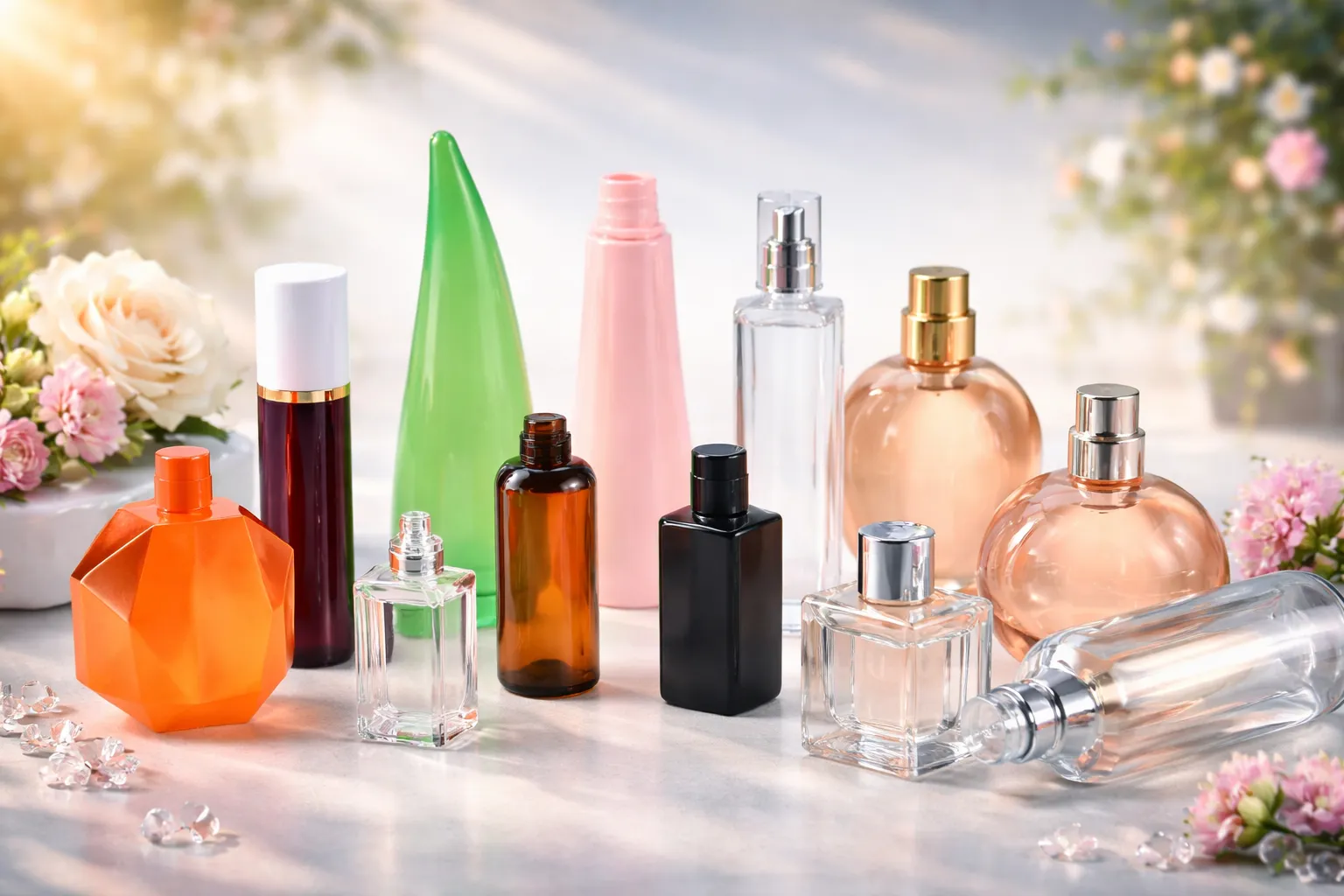
K-Beauty-Kosmetikflaschen stellen Koreas prestigeträchtigste Anwendungskategorie im Rahmen des ISBM-Programms dar und tragen maßgeblich zum angestrebten Kosmetikexportvolumen Koreas von 11,43 Milliarden US-Dollar im Jahr 2025 bei. Die Qualität koreanischer K-Beauty-Flaschen beeinflusst die Markenwahrnehmung der Verbraucher direkt, weshalb Ästhetik, Maßgenauigkeit und Materialtransparenz strategisch entscheidend für die Positionierung einer Premiummarke sind.
| K-Beauty Flaschentyp | Formatbereich | Material | Anwendungsbeispiele |
|---|---|---|---|
| Serumpipetten | 15 ml, 30 ml, 50 ml | PETG / Amber PETG | Vitamin C, Retinol-Seren |
| Tonerflaschen | 100 ml, 150 ml, 250 ml | PET / PETG | Feuchtigkeitsspendende Gesichtswasser, Essenzen |
| Behälter für Lotionen/Cremes | 50 ml, 100 ml, 200 ml | PETG / PP | Feuchtigkeitscremes, Anti-Aging |
| Airless-Pumpflaschen | 30 ml, 50 ml, 100 ml | PETG / PP | Premium-Anti-Aging-Seren |
| Sprühflaschen | 100 ml, 150 ml, 200 ml | PET / PETG | Gesichtswasser, Haarprodukte |
| Flaschen für Körperlotion | 200 ml, 350 ml, 500 ml | PET / PETG | Körperpflege, Handcreme |
| Shampoo / Spülung | 300 ml, 500 ml, 750 ml | PET / HDPE (EBM alt) | Haarpflegemarken |
Koreanische Lohnabfüller für K-Beauty-Produkte, die unter anderem Amorepacific (Sulwhasoo, Innisfree, Laneige), LG H&H (The Whoo, Su:m37°), COSRX, Klairs und Beauty of Joseon sowie ähnliche große K-Beauty-Marken beliefern, betreiben in der Regel vier bis acht ISBM-Plattformen mit vielfältigen Produktportfolios und häufigen Formatwechseln. Die Kombination aus erstklassiger PETG-Transparenz, Maßgenauigkeit für optimale Pumpenkompatibilität und hochwertigen Dekorationsmöglichkeiten definiert die Qualitätsstandards für K-Beauty-Flaschen.
Premium-K-Beauty-Marken verlangen zunehmend nach individuellen Flaschenformen, um sich im hart umkämpften Kosmetikhandel von der Konkurrenz abzuheben. Koreanische Hersteller von ISBM-Produkten, die sich auf die Premium-Positionierung im K-Beauty-Segment konzentrieren, benötigen daher kundenspezifische Formenbaulösungen, die über Standardkatalogformate hinausgehen. Ausführliche Produktionsspezifikationen für K-Beauty finden Sie hier: Leitfaden zur Herstellung von K-Beauty-Kosmetikflaschen.
4. Flaschen für Pharmazeutika und das Gesundheitswesen
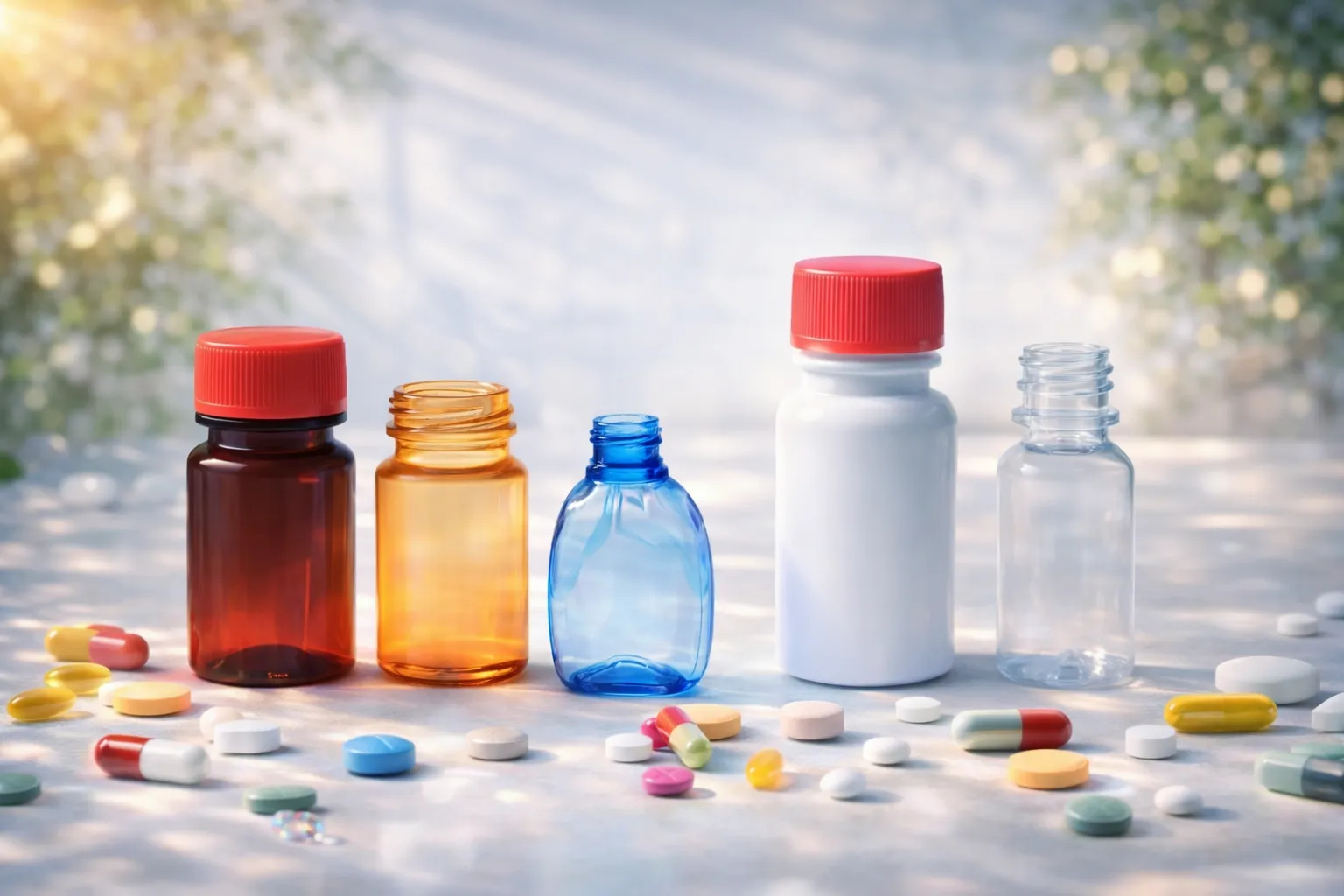
Koreanische Pharmaflaschen umfassen Sirup, Nahrungsergänzungsmittel, Säuglingsnahrung und medizinische Anwendungen, die über GMP-konforme ISBM-Plattformen mit vollständiger regulatorischer Dokumentation hergestellt werden.
Die Herstellung von Pharmaflaschen stellt in Korea die anspruchsvollste Anwendungskategorie im Bereich ISBM dar. Koreanische Pharmahersteller in Osong, Daejeon und Chungju produzieren Flaschen für orale Feststoff- und Flüssigpräparate, Nahrungsergänzungsmittel, Säuglingsnahrung und Spezialdiagnostika gemäß den K-MFDS K-GMP-Richtlinien. Umfangreiche regulatorische Dokumentationen unterstützen den Export an die FDA, die EU-EMA und andere internationale Märkte.
| Pharmaflaschentyp | Formatbereich | Material | Koreanische Marken |
|---|---|---|---|
| Hustensaftflaschen | 60 ml, 100 ml, 200 ml | Amber PET | Daewoong, Yuhan |
| Vitamine / Nahrungsergänzungsmittel | 100 ml, 200 ml, 500 ml | PET / PP | Korea Eundan, Centrum |
| Säuglingsnahrungsflaschen | 120 ml, 240 ml, 360 ml | Tritan / PP | Maeil, Namyang Dairy |
| Nahrungsergänzungsmittel | 100 ml, 150 ml, 250 ml | PET / HS-PET | Bacchus, Vita500 |
| Flüssige Medikamente aus rezeptfreiem Anbau | 60 ml, 100 ml, 200 ml | PET / Amber PET | Antazida, Allergie-Medikamente |
| Diagnostisches Reagenz | 15 ml, 30 ml, 100 ml | PETG / PP | Daejik Pharm, Seegene |
| Krankenhausinfusion | 250 ml, 500 ml, 1 l | PP / PE | JW Pharm, CJ HealthCare |
Die Herstellung von Arzneimittelflaschen erfordert GMP-konforme Dokumentation, Partikelkontrolle gemäß USP , Chargenrückverfolgbarkeit vom Harzwerk bis zur fertigen Flasche sowie Kompatibilität mit kindersicheren Verschlüssen für OTC-Arzneimittel. Koreanische Arzneimittelflaschen für Exportmärkte benötigen Dokumentationen nach mehreren Rechtsordnungen, darunter FDA 21 CFR 211, EU GMP Annex 11 und koreanische MFDS K-GMP-Zertifizierungen.
Die koreanische Babyflaschenproduktion bevorzugt Tritan, da dieses Material BPA-frei ist und somit den globalen Vorschriften für Säuglingspflegeprodukte entspricht. Führende koreanische Babymarken exportieren Tritan-Babyflaschen nach Japan, China, in die USA und in die EU, wo die BPA-freie Zertifizierung eine Premium-Positionierung ermöglicht. Ausführliche Informationen zu den koreanischen Produktionsspezifikationen finden Sie unter [Link einfügen]. Leitfaden zur Herstellung von pharmazeutischen GMP-Flaschen.
5. Flaschen für Lebensmittel und Gewürze
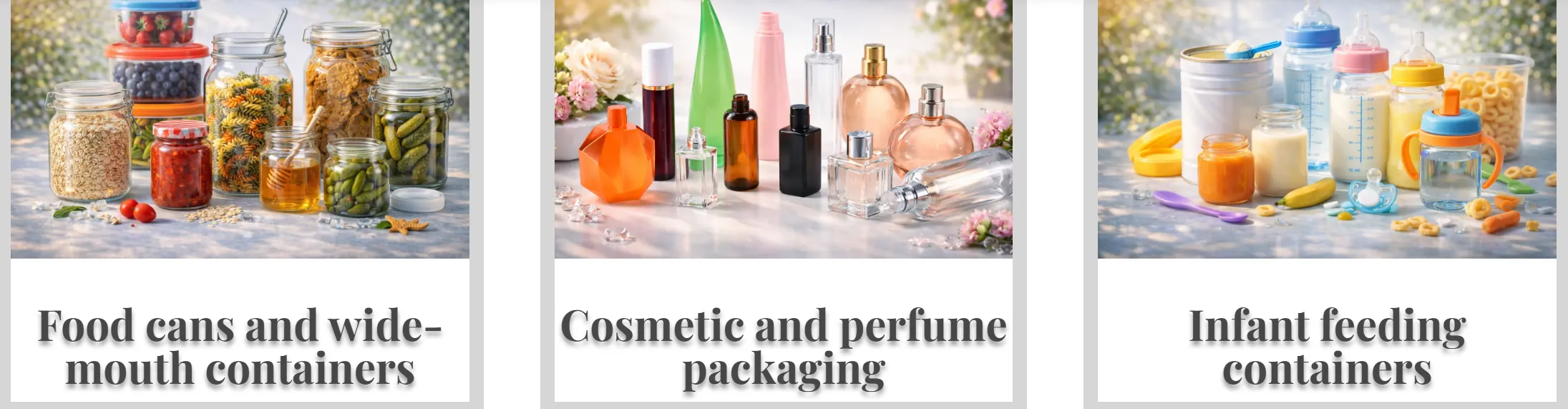
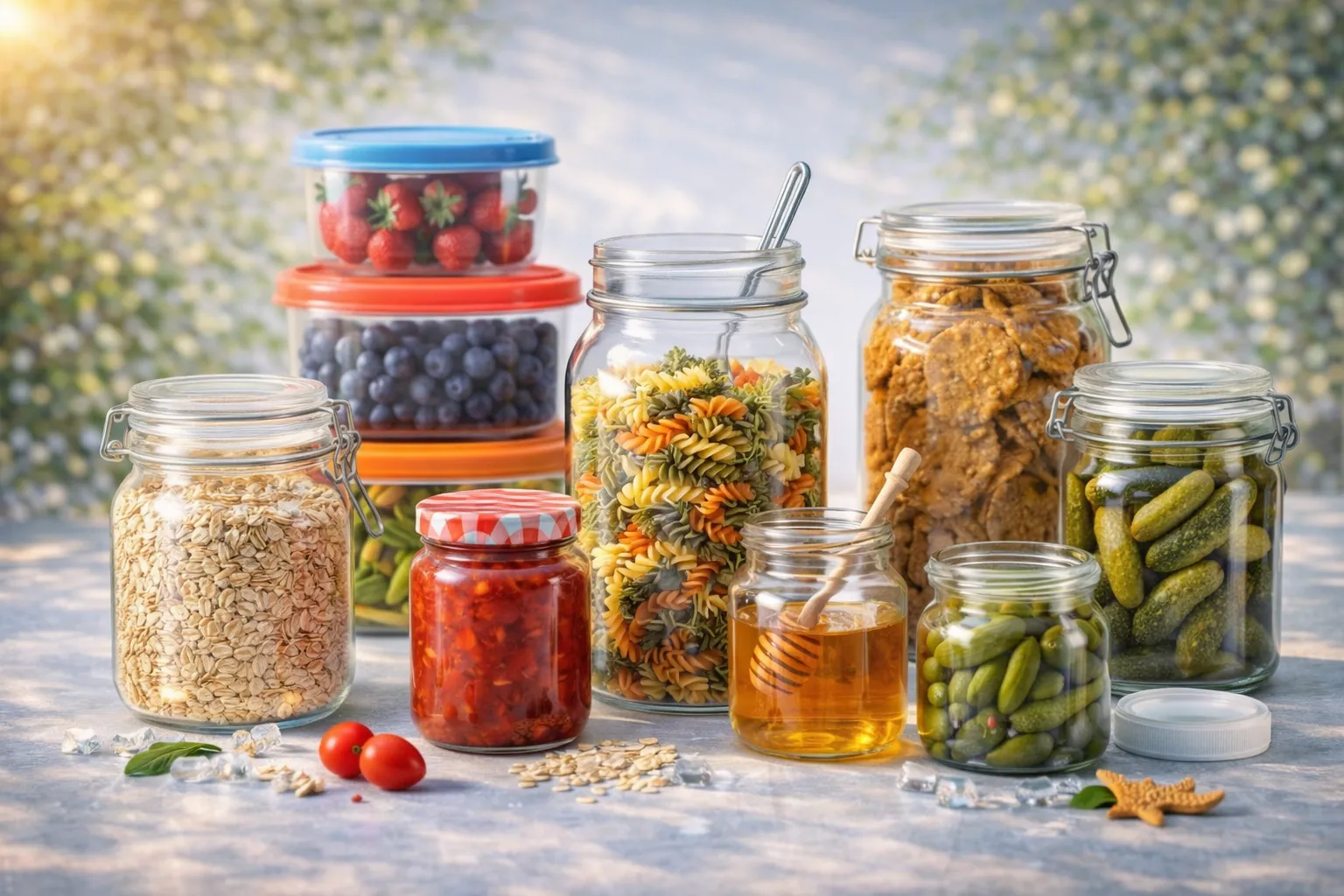
Die koreanische Lebensmittel- und Würzmittelproduktion vereint traditionelle koreanische Anforderungen an die Konservierung von Lebensmitteln mit modernen globalen Standards für Convenience-Food-Verpackungen. Das Sortiment umfasst Speiseöle, traditionelle koreanische Saucen, westliche Würzmittel, Gewürzflaschen, Honig/Sirup, Fertiggerichte und Nahrungsergänzungsmittel.
| Lebensmittelflaschentyp | Formatbereich | Material | Koreanische Marken |
|---|---|---|---|
| Speiseöl (Soja, Mais) | 500 ml, 1 l, 1,8 l, 3 l | HAUSTIER | Sajo, Ottogi, Beksul |
| Sesamöl / Perillaöl | 100 ml, 250 ml, 500 ml | Amber PET / PETG | Sajo, Ottogi, Hai Pyo |
| Koreanische traditionelle Sauce | 250 ml, 500 ml, 1 kg | PP / HS-PET | CJ Bibigo, Daesang, Sempio |
| Sojasauce | 200 ml, 500 ml, 1,8 l | PET / Amber PET | Sempio, Daesang |
| Essig | 350 ml, 500 ml, 900 ml | HAUSTIER | Ottogi, Chungjungone |
| Westliche Gewürze | 300 ml, 500 ml | PET / HS-PET | Heinz, Ottogi (Ketchup) |
| Honig / Sirup | 250 ml, 500 ml | PET / PP | Damtuh, Bio-Marken |
| HMR-Fertiggerichtflaschen | Variable | PP (mikrowellengeeignet) | CJ Bibigo, Hetbahn, Ottogi |
Die koreanische Lebensmittelflaschenproduktion hat sich dank des Wachstums der koreanischen Lebensmittelexporte erheblich ausgeweitet. Traditionelle koreanische Gerichte erreichen durch die Präsenz koreanischer Medieninhalte ein weltweites Publikum. Die koreanischen Lebensmittelexporte überschritten 2024 die Marke von 12 Milliarden US-Dollar. Kimchi im Glas, Gochujang, Doenjang und Spezialsaucen prägen die globale Einzelhandelspräsenz. ISBM-Flaschen für Exportmärkte erfordern regulatorische Dokumentationen aus verschiedenen Ländern, die die Anforderungen der FDA, EFSA, des MHLW und anderer wichtiger Lebensmittelbehörden erfüllen.
Informationen zur Herstellung von koreanischem traditionellem Kimchi, Gochujang und Spezialsaucen in Weithalsgläsern finden Sie unter Anleitung zur Herstellung von Weithals-Einmachgläsern.
6. Flaschen mit Haushaltschemikalien
Haushaltschemikalienflaschen werden an koreanische Marken wie LG H&H, CJ Lion, Aekyung und ähnliche große Hersteller geliefert, die über 601.000 US-Dollar des koreanischen Marktes für Waschmittel, Weichspüler und Sprühreiniger kontrollieren. ISBM ist auf kleinere Haushaltschemikalienflaschen spezialisiert, bei denen die Verträglichkeit mit Tensiden, die Präzision des Sprühkopfes und die Kompatibilität mit kindersicheren Verschlüssen von größter Bedeutung sind.
| Haushaltsflaschentyp | Formatbereich | Material | Koreanische Marken |
|---|---|---|---|
| Sprühreiniger | 500 ml, 750 ml | PP / PET | Kampf, Mr. Muscle, Aekyung |
| Badreiniger | 500 ml, 1 l | PP / PE | Gesichtslos, Mr. Muscle |
| Konzentriertes Waschmittel (klein) | 1 l, 1,5 l, 2 l | PP / PET | LG Tide, CJ Beat |
| Flüssige Handseife | 250 ml, 500 ml | PET / PETG | Aekyung 2080, Saemmul |
| Geschirrspülmittel (Premium) | 500 ml, 1 l | HAUSTIER | Trio, Pril, Saemmul |
| Konzentrierter Weichspüler | 500 ml, 1 l | PE / PP | LG Hancare, CJ Lion |
Für koreanische Haushaltschemikalien in Gebinden zwischen 250 ml und 2 l kommt typischerweise die ISBM-Technologie zum Einsatz. Hierbei ist die Präzision der Flaschen für die Kompatibilität mit Sprühköpfen, die Integration kindersicherer Verschlüsse und ein einheitliches Design für eine ansprechende Präsentation im Einzelhandel entscheidend. Größere Formate (z. B. Waschmittelkanister ab 3 l, Bleichmittelbehälter ab 5 l, Industriefässer) werden in der Regel mit der EBM-Technologie gefertigt, um Griffe integrieren zu können und die Investitionskosten zu senken. Der koreanische Markt für 60%+-Flaschen, der von LG H&H, CJ Lion und Aekyung kontrolliert wird, bietet sowohl ISBM- als auch EBM-Flaschenproduktion an, die auf die jeweiligen Format- und Inhaltsanforderungen abgestimmt ist.
7. Industrie- und Spezialflaschen
Industrie- und Spezialflaschen decken ein breites Spektrum an hochwertigen Anwendungen ab, von Kfz-Ersatzflüssigkeiten über Laborreagenzbehälter und Verpackungen für Agrochemikalien bis hin zu Schmierstoffen und dem Vertrieb von Industriechemikalien. Diese Anwendungen unterliegen in der Regel Gefahrgutvorschriften, einschließlich GHS-Kennzeichnung, UN-Verpackungszertifizierung und koreanischer K-MSDS-Dokumentation.
| Industrieflaschentyp | Formatbereich | Material | Anwendungsbeispiele |
|---|---|---|---|
| Motoröl | 1 l, 4 l, 5 l | HDPE | Hyundai Mobis, GS Caltex |
| Kühlmittel für Kraftfahrzeuge | 1 l, 2 l, 5 l | HDPE / PET | Hyundai Mobis, Kia Service |
| Scheibenwaschanlage | 1 l, 4 l | HAUSTIER | Verschiedene Aftermarket-Produkte |
| Laborreagenz | 100 ml – 2,5 l | PP / HDPE / Bernstein | Daejik Pharm, Forschungslabore |
| Agrochemikalienkonzentrat | 500 ml - 5 l | HDPE / PP | DongBu Farm, KG Chemical |
| Industriechemikalie | 500 ml - 5 l | HDPE | LG Chem, Hanwha Solutions |
| Schmierstoff / Schneidflüssigkeit | 1 l–5 l | HDPE | SK Lubricants, S-Öl |
Die industrielle Spezialflaschenproduktion erfordert eine umfangreiche Infrastruktur für chemische Kompatibilitätsprüfungen, die Zertifizierung nach Gefahrgutstandards (UN-Verpackung, GHS-Kennzeichnung, K-MSDS-Dokumentation) sowie die Unterstützung der Großformatproduktion. Koreanische ISBM-Hersteller, die diese Segmente bedienen, setzen in der Regel spezielle Produktionsanlagen mit getrennter Materialhandhabung ein, um Kreuzkontaminationen mit Lebensmittel- oder Konsumgüteranwendungen zu vermeiden.
8. Kapazitätsbereich & Sonderflaschenformen
Die ISBM-Technologie ermöglicht eine bemerkenswerte Bandbreite an Kapazitäten und Formflexibilität und ist damit die vielseitigste verfügbare Technologie zur Herstellung von Premium-Flaschen. Das Verständnis des Entscheidungsspielraums zwischen Kapazität und Form hilft koreanischen Herstellern, den wirtschaftlichen Vorteil von ISBM gegenüber alternativen Technologien zu erkennen.
| Kapazitätsstufe | Typische Anwendungen | ISBM-Eignung |
|---|---|---|
| 5 ml-30 ml (Mikro) | Pipetten, Proben, Fläschchen | Möglich (spezialisiert) |
| 30 ml–100 ml (klein) | K-Beauty-Seren, Pharma | Exzellent |
| 100 ml–500 ml (klein–mittel) | Kosmetik, Soße, Nahrungsergänzungsmittel | Exzellent |
| 500 ml - 1 l (mittel) | Getränk, Öl, Würzmittel | Ausgezeichnet (optimaler Bereich) |
| 1 l-2 l (mittelgroß) | Speiseöl, Limonade, Wasser | Exzellent |
| 2L-5L (groß) | Wasser in großen Mengen, Automobil | Gut (große Plattform) |
| 5L+ (industriell) | Fässer, industrielle Schüttgut | EBM ist in der Regel besser |
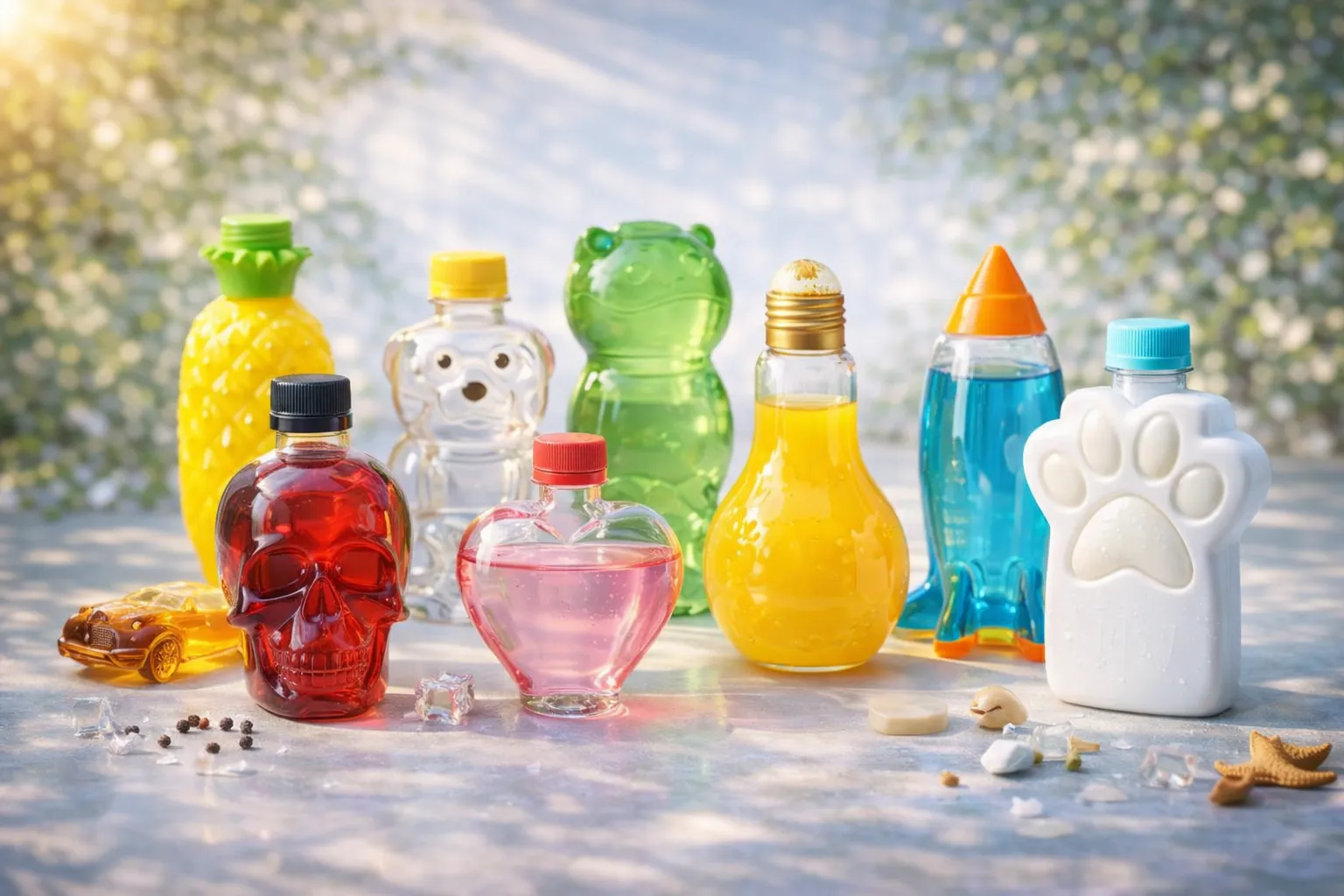
Neben den standardmäßigen zylindrischen Flaschen produziert ISBM diverse Sonderformen, die der Markendifferenzierung und den funktionalen Designanforderungen dienen. Runde Flaschen stellen die gebräuchlichste Geometrie dar – am einfachsten zu formen, geringste Kosten, Dimensionsstabilität für Füllleitungen. Ovale Flaschen Wir positionieren uns im Premiumsegment der K-Beauty-Branche, wo einzigartige Silhouetten die Differenzierung im Regal vorantreiben. Quadratische Flaschen Optimierung der Regalflächennutzung im Einzelhandel, häufig anzutreffen bei pharmazeutischen Produkten und Haushaltschemikalien. Individuelle asymmetrische und unregelmäßige Formen Ermöglichen Sie eine einzigartige Markendifferenzierung durch firmeneigene Flaschenformen.
Weithalsflaschen (Flaschen im Glasformat, deren Halsdurchmesser gleich oder größer als der Flaschenkörperdurchmesser ist) erfordern eine spezielle ISBM-Formenkonstruktion, die die größere Hals-zu-Flaschenkörper-Geometrie unterstützt. Koreanische Kimchi-, Gochujang- und Spezialsaucen-Weithalsgläser verwenden diese spezielle Konfiguration. Hohe, schlanke Flaschen (Höhe-zu-Durchmesser-Verhältnis > 3:1) erfordern eine sorgfältige Vorformlingskonstruktion, die die hohen Dehnungsverhältnisse berücksichtigt. Koreanische K-Beauty-Toner- und Serumflaschen verwenden häufig hohe, schlanke Geometrien für eine hochwertige ästhetische Positionierung.
9. Häufig gestellte Fragen
F: Was ist die kleinste Flasche, die ISBM wirtschaftlich herstellen kann?
ISBM produziert wirtschaftlich bis zu ca. 5 ml Tropfflaschen mithilfe spezieller Kleinformat-Plattformen. Unterhalb von 5 ml ist der Einsatz von Mikro-Spritzgießmaschinen in der Regel wirtschaftlicher – die Kosten pro Flasche werden bei extrem kleinen Größen aufgrund des geringen Durchsatzes pro Zyklus prohibitiv. Der wirtschaftlichste Bereich für ISBM liegt zwischen 30 ml und 2 l, da die Technologie hier die optimale Kombination aus Flaschenqualität, Zykluszeit und Materialwirtschaftlichkeit bietet. Koreanische K-Beauty-Serumflaschen mit 30–50 ml repräsentieren das untere Ende des wirtschaftlichen Spektrums von ISBM. Für Tropfflaschen mit 5–15 ml kompensieren spezielle Plattformen mit 12–16 Kavitäten die Durchsatzbeschränkungen im Kleinformat teilweise.
F: Kann ISBM Flaschen mit integrierten Griffen herstellen?
Nein – dies ist eine grundlegende Einschränkung der ISBM-Technologie. Das vorformbasierte ISBM-Verfahren stellt Flaschen aus zylindrischen Vorformlingen her, die sich beim Blasformen radial dehnen. Die Geometrie erlaubt keine Griffe, da diese asymmetrische Formmerkmale erfordern. Flaschen mit integrierten Griffen (z. B. Waschmittelkanister, Kühlmittelbehälter für Kraftfahrzeuge, Milchflaschen) müssen im Extrusionsblasformverfahren (EBM) hergestellt werden. Koreanische Hersteller, die Anwendungen mit Griffen bedienen, betreiben in der Regel separate EBM-Anlagen parallel zu ISBM-Plattformen, die beide Technologien in einer komplementären Konfiguration unterstützen.
F: Kann dieselbe ISBM-Maschine alle diese Flaschenkategorien herstellen?
Im Allgemeinen ja, innerhalb kompatibler Material- und Größenbereiche. Eine typische koreanische ISBM-Plattform mit 4 Stationen kann durch Formwechsel und Parameteranpassung Flaschen für K-Beauty (30–500 ml), Pharmazeutika (60 ml–1 l), Lebensmittel (100 ml–1 l) und Haushaltschemikalien (250 ml–1 l) herstellen. Für Getränkeanwendungen mit einem Volumen von 1–5 l werden aus wirtschaftlichen Gründen in der Regel spezielle Plattformen mit höherem Volumen (6-Stationen-Konfigurationen) benötigt. Industrielle Anwendungen ab 5 l nutzen häufig spezielle Plattformen oder alternative EBM-Technologien. Der koreanische Ever-Power-Katalog mit 12 Plattformen ermöglicht es koreanischen Herstellern, die optimale Plattformauswahl für unterschiedliche Anwendungsanforderungen zu treffen, wobei jede Plattform optimal auf ihren jeweiligen Anwendungsbereich konfiguriert wird.
F: Wie wirkt sich die Komplexität der Flaschen auf die Preisgestaltung von ISBM aus?
Die Komplexität der Flaschenform beeinflusst die Werkzeugkosten stärker als die Maschinenkosten. Standardmäßige zylindrische Flaschen verwenden einfache Werkzeugkonstruktionen für 8-fach-Werkzeuge zu Kosten von 80.000 bis 150.000 USD. Kundenspezifische asymmetrische Geometrien mit aufwendigen Verzierungen können bei gleicher Kavitätenanzahl aufgrund spezialisierter Werkzeugkonstruktion, der Verwendung hochwertiger Werkzeugstähle und längerer Bearbeitungszeiten 200.000 bis 350.000 USD kosten. Weithalsflaschen, hohe schlanke Flaschen und Flaschen mit unregelmäßigen Formen erfordern in der Regel einen Aufpreis von 25.000 bis 50.000 USD für die Werkzeugkosten im Vergleich zu Standardflaschen. Die Maschine selbst arbeitet unabhängig von der Flaschenform gleich – das Strecksystem der Plattform verarbeitet unterschiedliche Geometrien durch verschiedene Werkzeugkonfigurationen.
F: Welche Flaschentypen sollte ich NICHT mit ISBM herstellen?
Drei Flaschenkategorien nutzen typischerweise alternative Technologien. Erstens: Flaschen mit integrierten Griffen – wie Waschmittel-, Milch- und Kühlmittelbehälter – müssen im EBM-Verfahren hergestellt werden. Zweitens: Sehr große Industriefässer (10–200 l) – wie Chemikalienfässer und Agrarbehälter – werden aufgrund ihrer Wirtschaftlichkeit und der Möglichkeit, Griffe zu integrieren, fast ausschließlich im EBM-Verfahren gefertigt. Drittens: Mehrschichtflaschen mit mehreren Polymerschichten (Sauerstoffsperrbehälter, Premium-Bierflaschen mit EVOH-Innenschicht) verwenden die spezielle Co-Ex-EBM-Technologie. Innerhalb des Anwendungsbereichs von ISBM (5-ml- bis 5-l-Flaschen ohne Griffe, einschichtige Konstruktion, Standardpolymere) bietet die Technologie überlegene Wirtschaftlichkeit und Flaschenqualität für Premiumanwendungen.
10. Schlussfolgerung
ISBM-Maschinen produzieren Flaschen verschiedenster Kategorien für nahezu alle Premium-Konsumgüter- und Spezialanwendungen auf dem koreanischen und globalen Markt. Die sechs Hauptkategorien – Getränke (451.030 Tonnen des koreanischen ISBM-Volumens), K-Beauty (201.030 Tonnen), Lebensmittel und Würzmittel (121.030 Tonnen), Pharmazeutika (101.030 Tonnen), Haushaltschemikalien (81.030 Tonnen) und Industriespezialitäten (51.030 Tonnen) – decken zusammen das gesamte Spektrum der Premium-Flaschenproduktion ab, bei der die Flaschenqualität den kommerziellen Wert bestimmt.
Das Fassungsvermögen reicht von 5-ml-Tropfern bis zu 5-Liter-Wasserkanistern, wobei der wirtschaftlichste Bereich im gängigen Segment von 30 ml bis 2 l liegt. Die Flaschenformen umfassen runde, ovale, quadratische, asymmetrische und unregelmäßige Geometrien, die innerhalb der Grenzen der Machbarkeit des ISBM-Verfahrens liegen. Die Technologie kann keine Griffe integrieren (wodurch Anwendungen mit Griffen auf die EBM-Technologie beschränkt sind) und arbeitet bis zu einem Volumen von ca. 5 l wirtschaftlich (darüber hinaus ist EBM für Großbehälter in der Regel wirtschaftlicher).
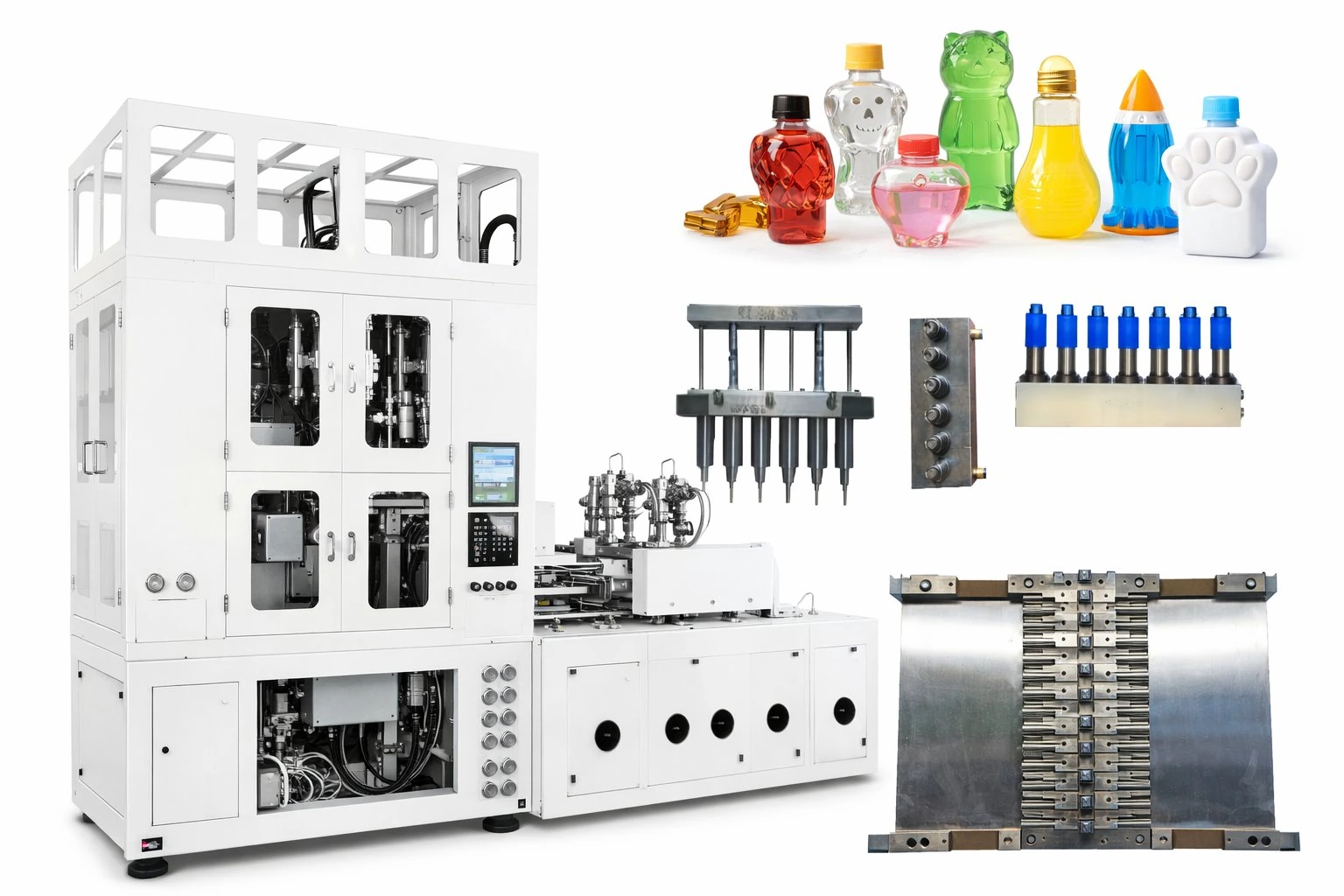
Für koreanische Hersteller bietet ISBM strategischen Mehrwert durch vielseitige Anwendungsmöglichkeiten: Eine einzige 4-Stationen-Plattform bedient mit einem passenden Formenbestand und einer Parameterbibliothek Kunden aus der K-Beauty-Premiumbranche, der Pharmaindustrie, der Lebensmittelindustrie und der Haushaltschemikalienbranche. Der koreanische Ever-Power-Plattformkatalog mit 12 Plattformen deckt das gesamte Spektrum an Flaschenkategorien ab und bietet Plattformkonfigurationen, die auf spezifische Volumen- und Qualitätsanforderungen optimiert sind. In Kombination mit der ASB-Formenkompatibilität, der K-EPR-rPET-Verarbeitbarkeit und den im Vergleich zu japanischen Systemen um 25 bis 351 TP3T geringeren Investitionskosten bieten koreanische ISBM-Plattformen einen nachhaltigen Wettbewerbsvorteil für die Premium-Flaschenproduktion in den vielfältigen Anwendungsbereichen der koreanischen Industriezentren.
Sind Sie bereit, Ihr Flaschenprojekt zu spezifizieren?
Teilen Sie uns Ihre Flaschenkategorie, das gewünschte Volumen, die Formate, die Materialanforderungen und Ihre speziellen Formwünsche mit. Unser koreanisches Ingenieurteam liefert Ihnen innerhalb von 5 Werktagen eine Empfehlung für die ISBM-Plattform, eine auf Ihre Anwendung abgestimmte Werkzeugkonfiguration und vollständige Produktionsspezifikationen.