HDPE Göz Damlası Şişesi IBM:
Kore Üretim Rehberi
Kore'de üretilen 10 ml'lik HDPE oftalmik kaplar, Kore'deki en yüksek hacimli farmasötik IBM formatıdır ve teknik olarak en zorlu olanlardan biridir: damlalık kapağı kavrama hassasiyeti ±0,05 mm, dolum seviyesi şeffaflığı 0,30–0,40 mm gövde duvarı, KFDA oftalmik partikül uyumluluğu ve yüz milyonlarca adetlik yıllık hacim gereksinimleri, ZQ110 ve ZQ135 makinelerini Kore oftalmik ambalaj üretim ekonomisinin merkezine yerleştirmektedir.
Damlatma Kapağı Boyun Hassasiyeti
KFDA Oftalmoloji Yeterlilik Belgesi
Korea Ever-Power Mühendislik Masası · Ansan-si · Temmuz 2026
Kore Oftalmolojisi IBM — Referans Verileri
10 ml
Standart Kore oftalmik kabı — yıllık talebi en yüksek olan IBM formatı
500 milyonun üzerinde
Kore'de tahmini yıllık oftalmolojik ürün ambalajı talebi — kontakt lens, kuru göz, reçeteli lens
±0,05 mm
IBM boyun dış çap toleransı — damlalık kapağı bağlantısı ±0,06 mm aralık gerektirir
~23.800/saat
30 kaviteye sahip ZQ135 — Kore'de tek makineyle üretilen en yüksek oftalmoloji IBM çıktısı.
1. Korean Ophthalmic Market and IBM’s Role

Korea’s ophthalmic pharmaceutical market is among the largest and fastest-growing in East Asia. Three structural factors drive Korean ophthalmic container demand above what Korea’s population size alone would suggest: the world’s highest rate of contact lens wear per capita (approximately 42% of Korean adults aged 20–40 wear contact lenses, generating daily artificial tear and contact lens solution demand), the exceptionally high Korean screen time (Korean workers average 9.4 hours per day of screen exposure, driving rapidly growing dry-eye disease prevalence), and Korea’s nationally covered ophthalmic prescription reimbursement system (Korean National Health Insurance covers most ophthalmic prescription medications, lowering the price barrier to ophthalmic pharmaceutical use). These three factors together produce an estimated 500+ million annual ophthalmic container demand in Korea, split between prescription ophthalmic (antibiotics, anti-inflammatory, antiglaucoma), OTC artificial tears, and contact lens care products — all requiring 10 ml HDPE IBM containers.
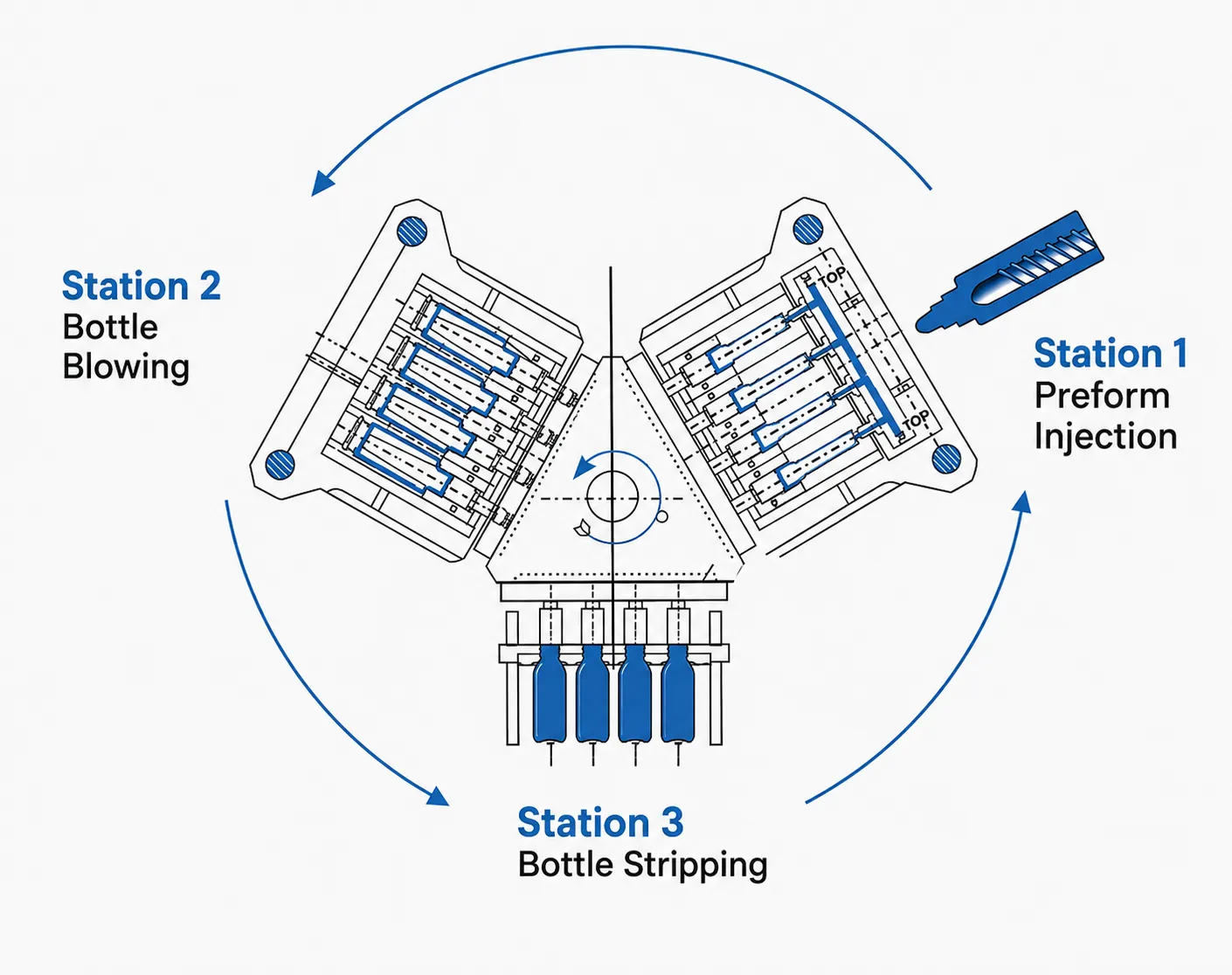
IBM, Kore'de oftalmik kap üretim standardıdır çünkü 10 ml'lik oftalmik format, IBM'in tüm teknik avantajlarından aynı anda benzersiz bir şekilde yararlanır: ±0,05 mm'lik enjeksiyon kalıplı boyun (damlalık kapağı bağlantısı ±0,06 mm gerektirir), sıfır çapak (KFDA oftalmik partikül uyumluluğu), 30'a kadar boşluklu üretim (yıllık 500 milyon adetten fazla talepte üretim ekonomisi) ve 0,30–0,40 mm'lik yarı saydam HDPE gövde duvarı (şeffaflık gereksinimi olmadan dolum seviyesi denetimi). Başka hiçbir şişirme kalıplama işlemi, 10 ml'lik formatta bu dört avantajın tamamını sunmaz. Kore ilaç üretimi için IBM'in daha geniş bağlamı, ilgili bölümde ele alınmıştır. ilaç sektörü IBM kılavuzuBu makale özellikle 10 ml'lik HDPE oftalmik kap üretimini ele almaktadır.
2. 10 ml HDPE Oftalmolojik Kap Özellikleri
Kore'de üretilen 10 ml'lik HDPE oftalmik kaplar, Koreli ilaç markaları genelinde dikkat çekici derecede standartlaştırılmış bir boyut spesifikasyonuna sahiptir. Bu standardizasyon, Koreli damlalık kapağı üreticileri tarafından sağlanan damlalık kapağı sistemleriyle uyumluluk ve standart 10 ml'lik oftalmik format boyutları için optimize edilmiş Koreli ilaç dolum hattı spesifikasyonlarından kaynaklanmaktadır.
| Boyut | Özellikler | İşlev / Gereksinim Esası |
|---|---|---|
| Boyun bitişi | 13/415 GPI | Standart Kore oftalmik damlalık kapağı arayüzü — Kore damlalık kapağı ve CRC oftalmik kapak tedarikçileriyle uyumlu. |
| Boyun dış çap toleransı | 13,00 mm ±0,05 mm | Damlatma kapağı geçmeli bağlantı tolerans aralığı — IBM'e özgü, tüm boşluklarda ±0,05 mm |
| Delik Kimliği | 9,0 mm ±0,04 mm | Damlalık ek parçasının dış çap teması — IBM enjeksiyon kalıbındaki çekirdek çubuğunun dış çapı ile tanımlanır. |
| Konteyner yüksekliği | 42–52 mm | Kore dolum hattı tutucu uyumluluğu ve Kore eczane dağıtım tepsisi boyutları |
| Gövde maksimum çapı | 22–28 mm | Kore eczanelerinde kullanılan tek dozluk ilaç dağıtım tepsilerinin sıra aralığı — standart Kore tepsileriyle uyumluluk için maksimum 28 mm. |
| Gövde duvarı kalınlığı | 0,30–0,40 mm | Dolum seviyesi kontrolü için saydamlık; 10 ml hacimde yeterli HDPE saydamlığı için ≤0,40 mm. |
| Hacim doğruluğu | 10,0 ml ±0,5 ml | Kore Gıda ve İlaç İdaresi (KFDA) oftalmik dolum hacmi toleransı — IBM kabındaki dolum işareti konumu, 23°C'de bu toleransı yansıtmalıdır. |
| Şişe ağırlığı | 2,5–4,5 g | 0,30–0,40 mm gövde duvar kalınlığına sahip HDPE IBM — EBM eşdeğerinden daha hafif; boşluktan boşluğa ağırlık CV% ≤4% spesifikasyonu |
The 13/415 neck finish specification is critical for Korean ophthalmic IBM mould design: the 13 mm nominal neck OD and 415 thread count (15 threads per inch) are the international standard for ophthalmic dropper closures adopted by Korean ophthalmic pharmaceutical brands and Korean dropper cap manufacturers. IBM container moulds for Korean ophthalmic production must specify 13/415 neck inserts in the injection mould to the same dimensional accuracy as the Korean dropper cap tooling — ±0.02 mm on the neck OD at the injection mould neck cavity insert ensures that the finished IBM bottle’s ±0.05 mm neck OD tolerance is achieved with process margin on both sides of the dropper cap engagement window.
3. Damlalık Kapağı Bağlantısı için IBM Boyun Hassasiyeti
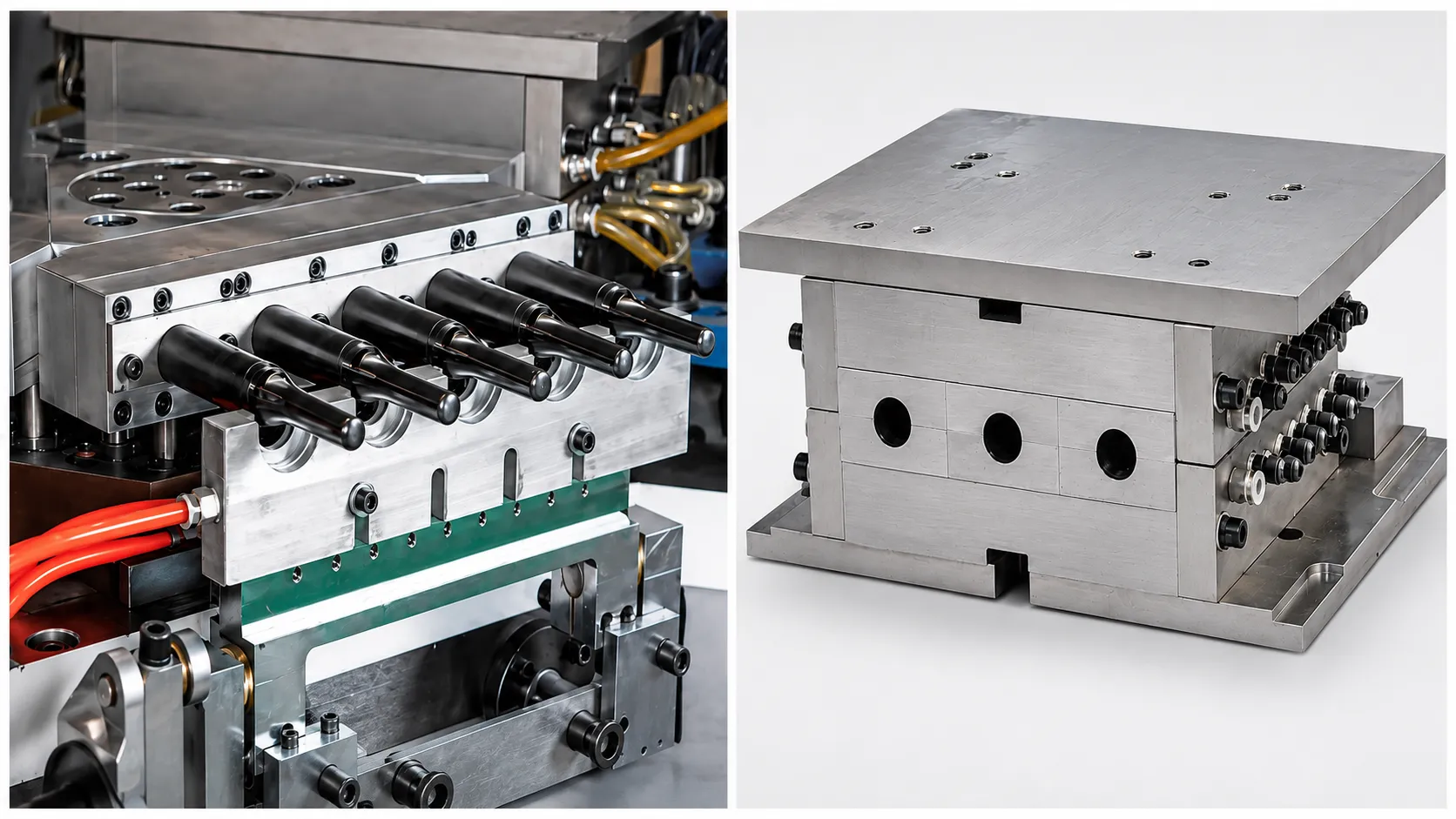
The Korean ophthalmic dropper cap system has two precision interface points with the IBM container neck: the outer snap-fit or thread engagement between the dropper cap skirt and the neck OD, and the inner bore engagement between the dropper insert’s controlled orifice body and the neck bore ID. Both interfaces require dimensional precision that IBM provides natively through its injection mould tooling and core rod mechanism.
Dış Geçmeli Bağlantı Arayüzü: Boyun Dış Çapı ±0,05 mm
Korean ophthalmic dropper caps engage the IBM bottle neck at the 13 mm OD by a circumferential bead on the cap skirt that snaps over the neck’s retaining flange. This snap-fit engagement provides: tamper evidence (the bead breaks an induction seal or deforms the retaining flange on first opening), child resistance (some Korean ophthalmic CRC formats require push-and-turn action), and closure retention during Korean pharmacy dispensing handling (the cap must remain attached to the bottle when tapped on a Korean pharmacy dispensing tray). The snap-fit mechanism’s function depends on the interference between the cap bead inner diameter and the bottle neck flange OD — the designed interference is typically 0.08–0.15 mm (the cap bead is 0.08–0.15 mm smaller in diameter than the neck flange OD). With IBM’s ±0.05 mm neck OD tolerance, the interference varies between 0.08–0.15 mm ±0.05 mm across all cavities — always within the range where snap-fit engagement occurs without cap opening force being excessive for Korean pharmacists or patients. With EBM’s ±0.15–0.25 mm neck OD tolerance, the interference variation of ±0.15–0.25 mm would produce, at the low end, engagement that is either absent (cap falls off) or, at the high end, engagement that requires destructive force to open — neither acceptable in Korean ophthalmic pharmaceutical distribution.
İç Delik Arayüzü: Damlatıcı Uç Deliği ±0,04 mm
The dropper insert — the controlled-orifice component that produces a consistent 25–35 microlitre drop volume per squeeze — seats inside the IBM bottle neck bore, with its outer body in contact with the bore inner surface. The drop volume delivered by the dropper insert depends on two factors: the orifice diameter (controlled by the dropper insert mould tooling) and the bore-insert interference fit (controlled by the IBM bore ID versus the dropper insert OD). If the IBM bore is too small (below nominal), the dropper insert compresses inward and distorts the orifice geometry — producing smaller drop volumes than specified. If the IBM bore is too large (above nominal), the dropper insert can tilt within the bore, creating asymmetric orifice orientation that produces erratic drop trajectory in Korean patient use. IBM’s core rod defines the bore ID at ±0.04 mm across all cavities through the direct mechanical relationship between the core rod OD and the bore it forms during injection — the bore is not blown, not stretched, not dependent on air pressure, and does not vary with process parameter fluctuation at the blow station.
4. Oftalmolojik IBM için HDPE Kalitesi ve İşlemesi
Kore'de kullanılan oftalmik HDPE IBM, genel farmasötik IBM'ye göre daha dar bir reçine spesifikasyonuna sahiptir. İnce gövde duvarı (0,30–0,40 mm), yüksek boşluk sayısı (20–30 boşluk), uzun sıcak yolluk yolları ve Kore KFDA'nın ekstrakte edilebilir madde gereksinimlerinin birleşimi, Kore'deki oftalmik IBM uygulamalarının çoğunluğu için kullanılabilir HDPE kalite aralığını 190°C/2,16 kg'da MI 0,3–0,5 ve yoğunluk 0,950–0,960 g/cm³ ile sınırlandıran bir spesifikasyon seti oluşturmaktadır.
Reçine Kalite Spesifikasyonu
- MI: 0,3–0,5 g/10 dk (190°C / 2,16 kg)
- Yoğunluk: 0,950–0,960 g/cm³
- Katkı maddeleri: Sadece KFDA onaylı listede yer alanlar.
- UV stabilizatörü veya kayganlaştırıcı içermez.
- Antioksidan: AO-1010 veya AO-168 ≤0.05%
- KFDA ilaç temas beyanı gereklidir.
İşleme Parametreleri (ZQ80/ZQ110)
- Namlu: 175→195→210→215→215°C
- Enjeksiyon basıncı: 90–130 MPa
- Dolum süresi: 0,6–1,0 s (ince duvar)
- Bekleme: 50–65% tepe noktası, 0,4–0,8 s
- Hava üfleme basıncı: 0,5–0,8 MPa
- Üfleme bekleme süresi: 0,7–1,2 s
- Kalıp sıcaklığı: 12–22°C
Kritik Kalite Kontrolleri
- Boyun dış çapı: 13,00 ±0,05 mm — tüm boşluklar
- Delik iç çapı: 9,0 ±0,04 mm — tüm boşluklar
- Şişe ağırlığı: ±4% CV% boşluklar arası
- Duvar saydamlığı: görsel dolgu seviyesi kontrolünden geçti.
- Damlatma kapağı bağlantısı: 100% geçmeli bağlantı
- Partikül: KFDA oftalmik standardını karşılamaktadır.
Duvar saydamlığı ve HDPE kalitesi arasındaki etkileşim: Korean ophthalmic containers must allow Korean pharmacists and Korean patients to visually inspect the liquid fill level — a requirement that limits HDPE wall thickness to ≤0.40 mm at the body panel, where HDPE’s semi-crystalline structure transmits sufficient light at this thickness for fill-level judgement. At 0.50 mm body wall, standard HDPE at density 0.955 g/cm³ becomes opaque enough that fill-level inspection is unreliable. The 0.30–0.40 mm body wall is a design constraint that the IBM mould designer must achieve through the preform geometry and blow ratio — and that the IBM operator must verify in production through periodic wall thickness measurement at the minimum body wall location using ultrasonic gauge measurement.
5. Kore Gıda ve İlaç İdaresi (KFDA) Oftalmolojik Ambalaj Yeterlilik Gereksinimleri
Kore Gıda ve İlaç İdaresi'nin (KFDA) oftalmik ilaç ambalajı yeterlilik gereksinimleri, iki özel alanda genel ilaç ambalajı gereksinimlerinden daha katıdır: partikül kontaminasyon standartları ve uyumluluk testi süresi. Bu daha sıkı gereksinimler, oftalmik uygulama yolunu yansıtmaktadır; göz yüzeyi partikül ve kimyasal etkilere karşı oldukça hassastır ve Kore KFDA oftalmik ürün güvenliği standartları buna göre kalibre edilmiştir.
Oftalmolojik Partikül Standartları (KFDA / Kore Farmakopesi)
Korean Pharmacopoeia (KP) aligns with USP <790> for visible particulates in ophthalmic preparations and USP <788> for sub-visible particulate matter in ophthalmic preparations. For Korean IBM ophthalmic container qualification, particulate testing applies in two stages: container wash-extract testing (empty containers filled with purified water, agitated and examined for visible particulate and sub-visible particulate count) and filled product testing (Korean ophthalmic formulation filled into IBM containers examined at end of proposed shelf life). IBM container wash-extract particulate limits per KP ophthalmic container test: visible particles — absent (zero visible particles in wash extract when examined under Korean Pharmacopoeia visible inspection method); sub-visible particles per KP (aligned with USP <788>): ≤25 particles/ml ≥10 μm, ≤3 particles/ml ≥25 μm. IBM’s zero-flash production eliminates the most significant source of sub-visible particulate in blow-moulded pharmaceutical containers — the plastic fines generated by EBM flash trimming. Korea Ever-Power’s pharmaceutical IBM documentation package includes a reference statement on IBM’s zero-flash architecture for use in the Korean pharmaceutical container qualification documentation that addresses Korean KFDA questions on particle contamination prevention during container production.
Oftalmolojik IBM Konteynerleri için Uyumluluk Testi Süresi
Korean KFDA ophthalmic pharmaceutical container compatibility testing requires a 24-month accelerated stability study at 40°C/75% RH — 12 months longer than the 12-month standard for most oral pharmaceutical container compatibility studies. The longer study period reflects the Korean KFDA position that ophthalmic formulations’ complex mixture of active ingredients, preservatives (benzalkonium chloride, thimerosal, or preservative-free buffer systems) and buffering agents creates a more complex extractable interaction profile with HDPE than simple aqueous solutions. Korean IBM ophthalmic packaging producers should plan for 24-month compatibility studies — which means beginning the filled container compatibility study immediately upon first IBM production at qualification conditions, so that the 24-month study result is available within the overall Korean ophthalmic product development timeline without delaying the KFDA submission.
6. Kore Oftalmoloji Üretimi için IBM Temiz Oda Kurulumu
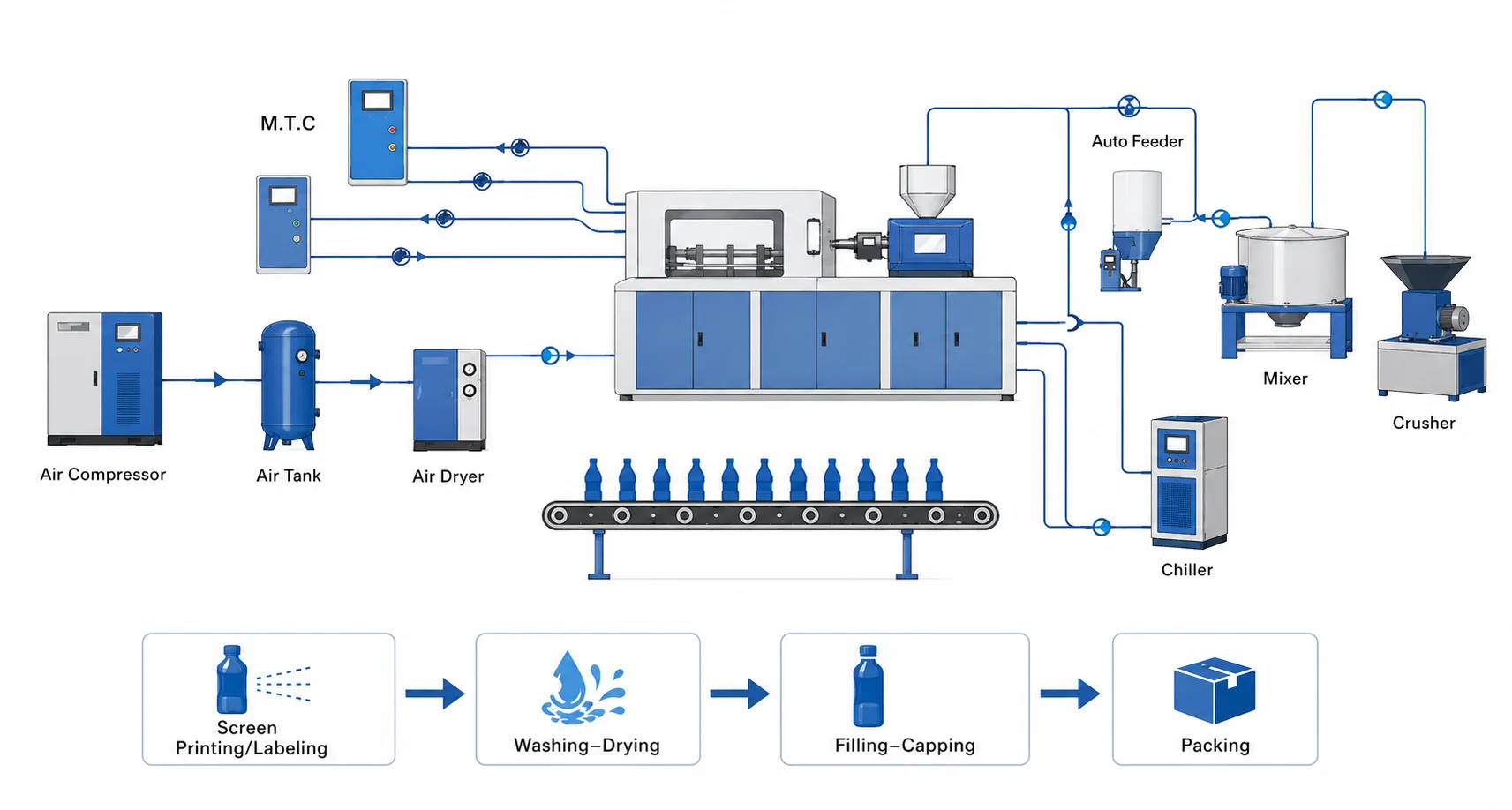
Kore'de oftalmik IBM üretimi genellikle ISO Sınıf 8 (Kore GMP D Sınıfı eşdeğeri) temiz oda ortamlarında gerçekleştirilir. Oftalmik IBM kap üretimi için özel temiz oda gereksinimleri -farmasötik IBM kılavuzunda açıklanan genel farmasötik IBM temiz oda kurulumundan farklı olarak- Kore oftalmik kaplarının daha yüksek partikül hassasiyetini yansıtmaktadır.
- HEPA filtreli küf kontrol istasyonu: The IBM machine’s mould area — where containers are formed and where the core rods deposit finished containers onto the output conveyor — should receive HEPA-filtered supply air at ≥0.45 m/s face velocity downward into the open mould area. This positive-pressure HEPA supply air prevents airborne particles from entering the open container mouth during the time between stripping (Station 3) and cap application at the downstream Korean pharmaceutical filling line. The HEPA enclosure over the mould station is specified as a separate engineering item in the Korean ophthalmic IBM cell design — Korea Ever-Power provides connection points and dimensional data for the HEPA enclosure installation on the ZQ machine outline drawings.
- Yağsız basınçlı hava — zorunlu: Kore'de oftalmik kapların IBM şişirme kalıplama işleminde kullanılan basınçlı hava, kullanım noktasında yağsız olmalıdır — yağ aerosolü ve yağ buharı için ISO 8573-1 Sınıf 0. Şişirme istasyonunda IBM şişirme havasının yağ ile kirlenmesi, şişirme sırasında HDPE ön kalıbın iç kısmına temas eder ve bitmiş kapta çıkarılabilir bir kirletici madde haline gelir. Koreli oftalmik IBM üreticileri, yağsız vidalı kompresörler (aşağı akış filtreli yağlı pistonlu kompresörler değil) belirtmeli ve Kore ilaç basınçlı hava kalitesi izleme protokollerine göre düzenli partikül ve yağ buharı izleme ile makine bağlantı noktasında yağsızlık durumunu doğrulamalıdır.
- Çıkış konveyörü HEPA muhafazası: Kore menşeli oftalmik kaplar, 3 numaralı istasyondaki IBM makinesinden çıktıktan sonra, Kore ilaç dolum hattına taşınmak üzere torbalara veya tepsilere toplanmadan önce bir çıkış konveyöründe ilerler. Bu konveyör bölümü, kapların IBM makinesi çıkışından toplama noktasına kadar temizliğini korumak için HEPA filtreli olmalıdır. Konveyör HEPA muhafazası tipik olarak pozitif basınçlı HEPA besleme havası ve konveyör çıkışında filtrelenmiş egzoz bulunan bir tünel şeklinde kurulur. Konveyör muhafazası olmadan, Kore menşeli oftalmik IBM kapları, konveyör geçişi sırasında havada bulunan partikülleri biriktirebilir; bu partiküller daha sonra açık kap ağzına yerleşir ve dolu kapta gözle görülemeyen partikül sayısına katkıda bulunur.
7. Kore Oftalmoloji IBM için Çürük Sayısının Ekonomisi
Cavity count selection for Korean ophthalmic IBM is the highest-impact single investment decision — because the Korean ophthalmic container market’s 500M+ annual unit demand requires matching machine cavity count to annual production volume with enough precision that the machine runs at 70–90% utilisation (below 60% utilisation wastes capital; above 90% utilisation creates production risk from unscheduled maintenance). The following analysis compares three ZQ models for a Korean ophthalmic contract packaging factory with a specific annual volume requirement.
| Parametre | ZQ80 (20 kav) | ZQ110 (24 kav) | ZQ135 (30 kav) |
|---|---|---|---|
| Şişe/saat (88% eff.) | ~15,840 | ~19,000 | ~23,760 |
| Şişeler/Korece 2 vardiyalı gün (14 saat) | ~221,760 | ~266,000 | ~332,640 |
| Şişe/yıl (250 gün) | ~55,4 milyon | ~66,5 milyon | ~83,2 milyon |
| Yılda 200 milyon adet üretim kapasitesine sahip makineler. | 4 makine | 3 makine | 3 makine (72% util.) |
| KFDA yeterlilik belgesi gereklidir. | 4 makine yeterliliği | 3 makine yeterliliği | 3 makine kalitesi (birim başına en düşük) |
Boşluk sayısı ekonomisi tablosu, yıllık 200 milyon adet 10 ml'lik ünite hedefleyen Koreli bir oftalmik fason paketleme şirketi için, 30 boşluklu ZQ135'in, 24 boşluklu ZQ110 ile aynı sayıda makineye (her iki durumda da 3 makine) ihtiyaç duyduğunu, ancak 72% kullanım oranıyla çalıştığını (ZQ110'da 100%) göstermektedir. Bu da, planlanmamış bakım, format değişikliği nedeniyle oluşan duruş süreleri ve yıllık talep artışı için dördüncü bir makine satın alımına gerek kalmadan üretim payı sağlamaktadır. Ayrıca, daha yüksek boşluk sayısında Kore KFDA makine yeterliliklerinin sayısı da en aza indirilmektedir (ZQ135'te 3 yeterlilik, ZQ80'de 4 yeterlilik) - her makine yeterliliği 16-24 haftalık test süresini ve önemli dokümantasyon maliyetini temsil etmektedir. Üretim yedekliliğini korurken toplam KFDA makine yeterlilik sayısını en aza indirmek isteyen Koreli oftalmik fason paketleme tesisleri için, eşdeğer yıllık üretimde birden fazla ZQ80 makinesine kıyasla ZQ135 veya ZQ110 açıkça doğru yatırımdır. Kore'nin Daimi Gücü EP-ZQ110 Bu, yıllık üretim hacmi makine başına 50M-80M aralığında olan Koreli oftalmoloji fason paketleme şirketleri için en yaygın başlangıç platformudur.
8. Kore Oftalmoloji IBM Üretimi için ZQ Serisi Seçimi
Kore'de oftalmolojik IBM üretiminde, ZQ serisi modeller arasındaki seçim sadece üretim hızı ve sermaye maliyetini değil, aynı zamanda ilaç sektörüne özgü bir hususu da içerir: Kore KFDA onayı, belirli makine modeline ve kavite sayısına bağlıdır. Aşağıdaki kılavuz, bu ilaç sektörüne özgü kısıtlamayı dikkate almaktadır.
Koreli Oftalmoloji Girişim Şirketi / Deneme Üretimi → ZQ60 (14 kavite)
Yıllık hacim 25 milyon adetin altında. Koreli ilaç girişim şirketleri, Koreli oftalmik ürün hattı pilot çalışmaları, Kore pazarına giren uluslararası oftalmik markalar için Koreli CMO deneme üretimi. ZQ60 yatırımı 25 milyon adetin altındaki hacimler için uygundur, ancak dikkatli bir gelecek planlaması gerektirir: Mevcut KFDA tescilli bir Kore oftalmik ürünü için ZQ60'tan ZQ80'e yükseltme, yeni bir Kore KFDA makine değişikliği bildirimi ve yeni makinede kalifikasyon gerektirir - bu da 3-6 aylık bir süreçtir. 3 yıl içinde 30 milyon adetin üzerine çıkmayı hedefleyen Koreli oftalmik ambalaj üreticileri, başlangıçtan itibaren ZQ80'i devreye almalı ve ilk düşük kullanım oranını kabul ederek kalifikasyon geçiş maliyetinden kaçınmalıdır.
Kore Orta Ölçekli Oftalmoloji → ZQ80 (20 kavite, 30M–55M ünite/yıl)
The ZQ80’s dual hydraulic system (20–30% energy saving) and high-precision angle divider (standard at ZQ80+) make it the entry point for Korean ophthalmic production where energy efficiency and inter-cavity consistency are KFDA qualification requirements. At 20-cavity 10 ml production, ZQ80 produces approximately 55M ophthalmic bottles per Korean two-shift year — sufficient for Korean mid-scale pharmaceutical manufacturers serving Korean domestic ophthalmic market without export requirements.
Kore Büyük Ölçekli Oftalmoloji → ZQ110 / ZQ135 (Makine başına yılda 55M–83M+ adet)
Çok uluslu oftalmoloji markalarına hizmet veren Koreli ilaç fason ambalajlama şirketleri, Koreli ilaç ihracatçıları ve Kore hastanelerinin ulusal ölçekteki tedarik zincirlerine hizmet veren Koreli ulusal oftalmoloji üreticileri; iş modellerinin gerektirdiği üretim hacimlerine ve KFDA yeterlilik verimliliğine ulaşmak için ZQ110 veya ZQ135 üretimine ihtiyaç duymaktadır. enjeksiyonlu şişirme kalıplama makinelerinin tam yelpazesi Bu, Kore'deki oftalmoloji üretiminin başlangıç aşamasından ulusal ölçekli ilaç tedarikine kadar tüm ölçeklerini kapsamaktadır.
Sıkça Sorulan Sorular
Oftalmoloji IBM Sorgulaması
Kore'de oftalmolojik konteyner üretimi için IBM planlaması mı yapılıyor?
Korea Ever-Power, Kore oftalmik ilaç ve reçetesiz göz bakım ürünleri ambalajları için yıllık tüm üretim hacimlerinde 10 ml'lik oftalmik IBM kalıp tasarımı, Kore KFDA yeterlilik dokümantasyonu, temiz oda üretim hücresi planlaması ve ZQ serisi makine seçimi hizmetleri sunmaktadır.
İlgili Kaynaklar
EP-ZQ80 Enjeksiyonlu Şişirme Kalıplama Makinesi
800 KN · 10 ml oftalmik kapta 20 bölme · Açılı bölücü + çift hidrolik standart · Kore'de iki vardiyada yılda yaklaşık 55 milyon Kore oftalmik kabı.
EP-ZQ135 Enjeksiyonlu Şişirme Kalıplama Makinesi
1.350 KN · 10 ml oftalmik solüsyon için 30 bölme · 6+N varil bölgesi · 37+37 KW · Yılda ~83 milyon Kore oftalmik solüsyon kabı — Kore ulusal hastane tedarik zinciri ölçeği.
HDPE Enjeksiyon Şişirme Kalıplama: Eksiksiz İşlem Kılavuzu
İlaç ve ev kimyasalları için IBM'in HDPE işleme kılavuzunun tamamı — kalite seçimi (MI 0.3–0.8), varil sıcaklığı ayarı, duvar kalınlığı spesifikasyonu ve ZQ serisi seçimi.