FEEDING BOTTLE IBM · PP & PPSU · BPA-FREE · KOREA EVER-POWER ZQ SERIES
IBM Feeding Bottle Production:
PP and PPSU Baby Bottle Guide
Baby feeding bottles are among the most technically demanding IBM container applications — combining strict food contact regulatory compliance (BPA-free, food-grade polymer), precision neck geometry for silicone teat fitment, sterilisation resistance (121°C steam autoclave for PPSU, boiling water for PP), and near-zero production contamination tolerance. Korea Ever-Power ZQ series IBM machines produce PP and PPSU feeding bottles from 80 ml to 330 ml for Korean, European and global infant formula and baby care brands.
Autoclave Resistant
80-330ml Range
KOREA EVER-POWER · АНСАН-СИ, ГЁНГИ-ДО · ИЮЛЬ 2026
PROCESS REFERENCE · FEEDING BOTTLE IBM KEY PARAMETERS
PRIMARY MATERIAL
PP / PPSU
Polypropylene (BPA-free, boiling-water sterilisable) and polyphenylsulfone (121°C autoclave sterilisable, highest heat resistance) for premium feeding bottle IBM
ДИАПАЗОН ФОРМАТОВ
80-330 ml
Newborn 80-120 ml, standard 150-180 ml and large 240-330 ml feeding bottle IBM formats on Korea Ever-Power ZQ40 and ZQ60
NECK STANDARD
Wide-neck thread
Korean and global standard wide-neck feeding bottle thread (28-36 mm OD, ±0.05 mm) for silicone teat collar fitment and anti-colic collar sealing
STERILISATION
100°C / 121°C
PP IBM feeding bottle: boiling water sterilisation at 100°C. PPSU IBM feeding bottle: steam autoclave at 121°C — highest sterilisation resistance of any IBM feeding bottle material
РАЗДЕЛ 01
Why IBM for Feeding Bottle Production
Injection blow molding is the preferred process for polypropylene and PPSU baby feeding bottle production because IBM’s three-station process delivers the specific quality attributes that feeding bottle applications require — and that extrusion blow molding cannot consistently provide. The feeding bottle neck must fit a silicone teat collar to ±0.05-0.10 mm OD to ensure leak-free baby feeding; IBM’s injection-formed neck achieves this tolerance by design, while EBM’s blown neck cannot meet this specification without post-production trimming and sorting. The feeding bottle base must withstand repeated sterilisation cycles (100-200 autoclave cycles over the product life) without ESCR failure at the base seam; IBM’s injection-solid base has no weld line or pinch seam to initiate sterilisation stress cracking. Korea Ever-Power’s ZQ series IBM machine range produces feeding bottles in PP and PPSU from 80 ml through 330 ml for Korean and global baby care brand customers.
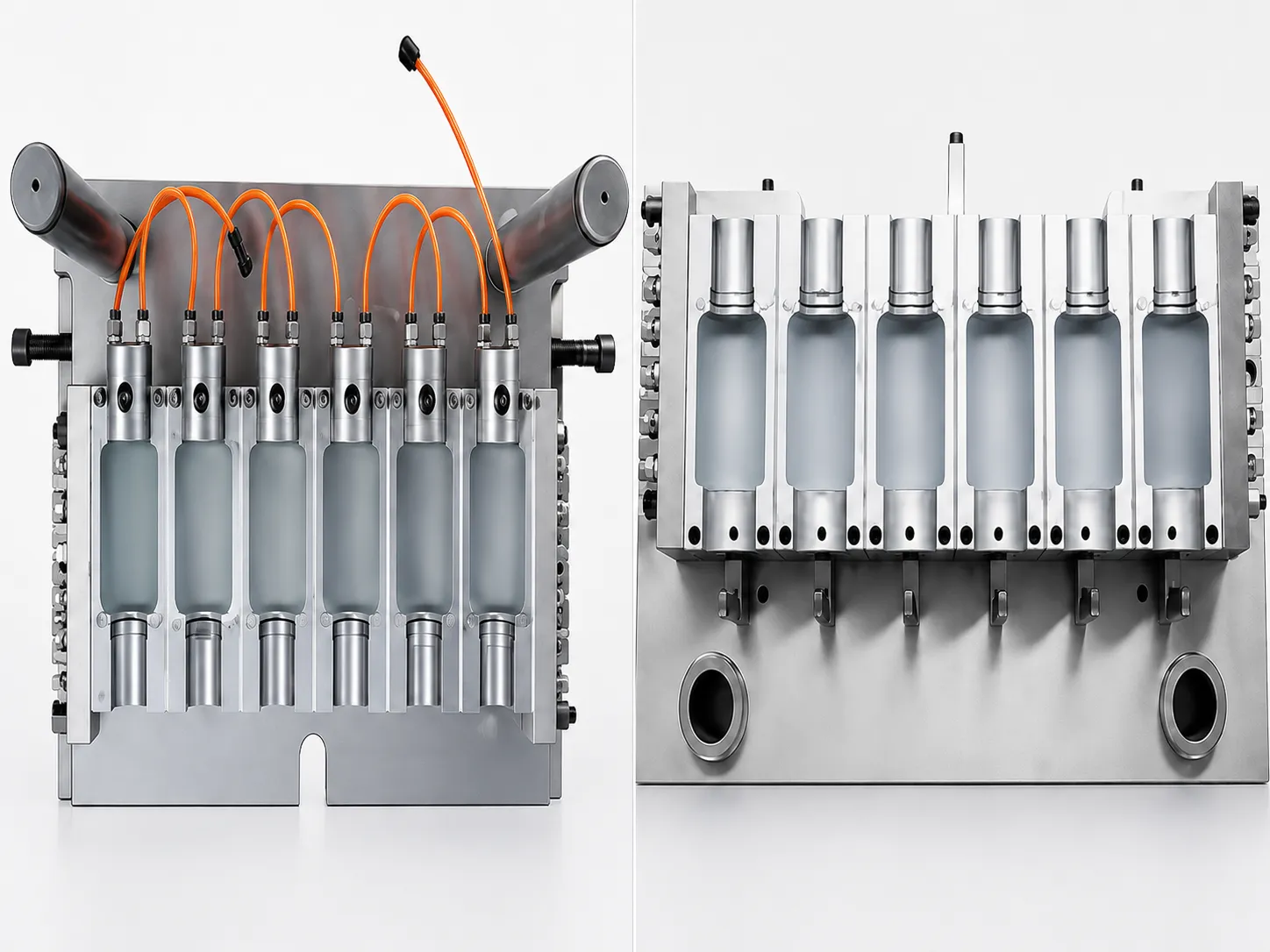
IBM FEEDING BOTTLE QUALITY ADVANTAGES vs EBM AND INJECTION MOULDING + ASSEMBLY
vs EBM
IBM neck precision (±0.05 mm) vs EBM blown neck (±0.15-0.30 mm) — critical for silicone teat collar leak-free fitment. IBM zero-flash base vs EBM pinch-weld base — critical for sterilisation ESCR resistance. IBM zero parison scrap vs EBM 20-30% flash — food-grade PP and PPSU resin cost savings.
vs Injection + Assembly
Some feeding bottle producers assemble two injection-moulded halves (top neck + bottom body) with an ultrasonic weld seam. IBM one-piece bottle has no weld seam — eliminating weld seam as a sterilisation stress failure point and eliminating assembly process contamination risk for food-contact Korean MFDS baby feeding bottle compliance.
Regulatory Position
IBM one-piece seamless feeding bottle body is the preferred container architecture for Korean MFDS baby product registration, EU EN 14350 baby feeding equipment standard and US FDA 21 CFR infant formula contact material compliance — one-piece IBM eliminates the assembly weld seam from the compliance documentation package.
РАЗДЕЛ 02
PP vs PPSU: Material Selection for IBM Feeding Bottles
| СВОЙСТВО | PP IBM ★ | PPSU IBM ★★ |
|---|---|---|
| Содержание БФА | Не содержит бисфенола-А | Не содержит бисфенола-А |
| Sterilisation temperature | 100°C (boiling water) | 121°C (steam autoclave) |
| Colour / Transparency | Translucent white or pigmented opaque | Amber-tinted semi-transparent (natural PPSU colour) |
| IBM barrel temperature | 210-245°C | 340-370°C (high thermal load) |
| Food contact standard | Korean MFDS, EU 10/2011, FDA 21 CFR | Korean MFDS, EU 10/2011, FDA 21 CFR |
| Drop impact (filled, 1.2m) | Good — PP IBM at 0.8 mm wall passes standard drop | Excellent — PPSU highest impact of all IBM feeding bottle materials |
| Price tier | Standard — primary market feeding bottle | Premium — hospital and premium brand feeding bottle |
| Recommended machine | EP-ZQ40 (80-180ml), EP-ZQ60 (180-330ml) | EP-ZQ40 (80-180ml) with PPSU-grade barrel and screw |
РАЗДЕЛ 03
Food Contact Compliance and BPA-Free Requirements
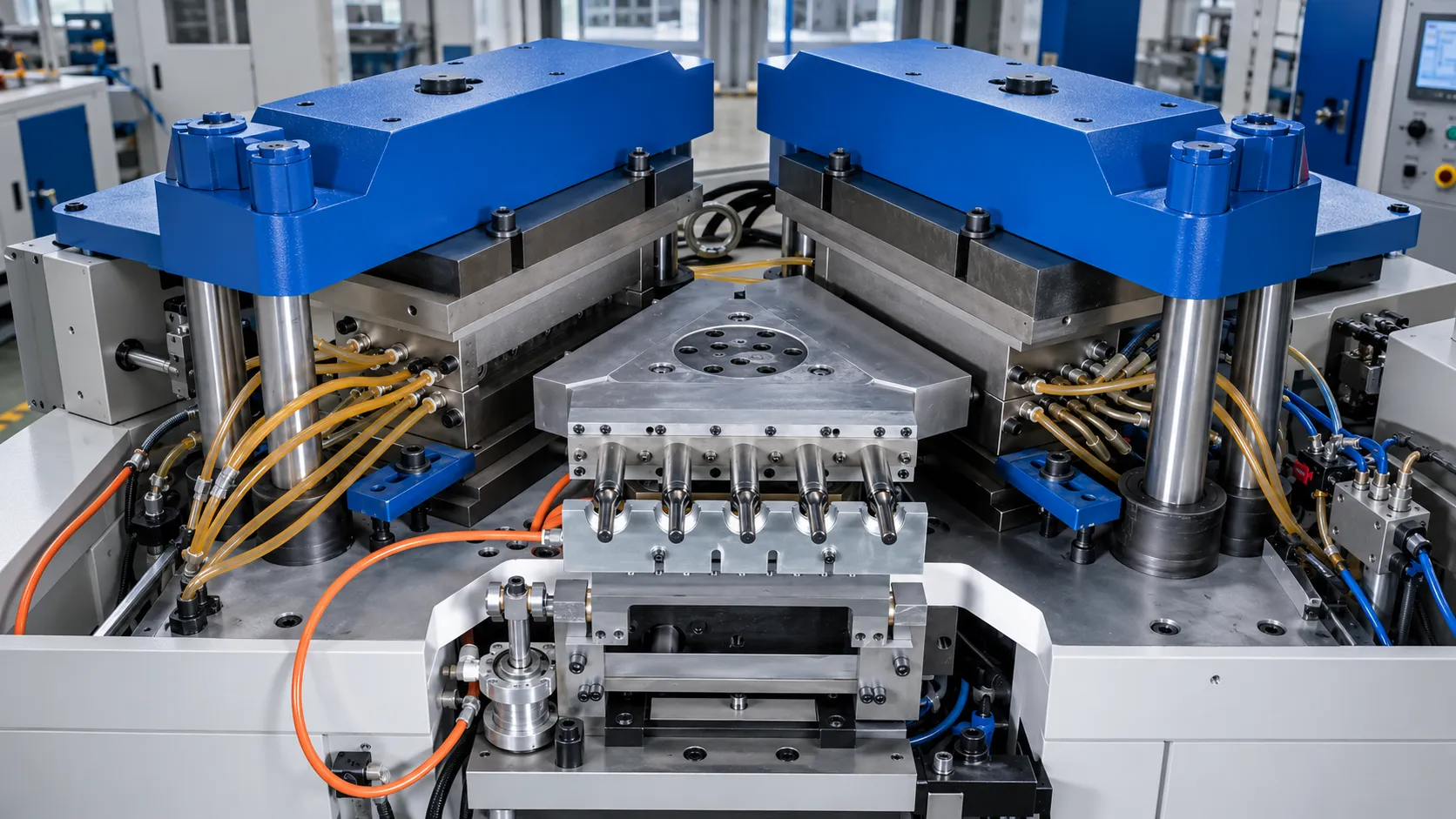
Korean MFDS Feeding Bottle Requirements
Korean MFDS (Ministry of Food and Drug Safety) regulates baby feeding bottles under the Children’s Product Safety Special Act and MFDS Plastic Container and Packaging Material Standards. Key requirements for Korean market PP and PPSU IBM feeding bottles: the polymer resin must be MFDS-approved food contact grade with BPA content below detection limit (<2.5 ppb in 70°C water migration test); the IBM container must pass MFDS migration testing for the specific material (overall migration limit 10 mg/dm² in aqueous food simulant at filling temperature); and the bottle must pass 3-cycle sterilisation stability test (dimensional change below ±1% after 3 autoclave or boiling water cycles). Korea Ever-Power provides PP and PPSU IBM container pre-delivery documentation including polymer resin food contact declaration and production temperature records for Korean MFDS registration support.
EU EN 14350 and FDA 21 CFR for Export
Korean feeding bottle IBM producers exporting to EU and US markets must comply with EU EN 14350 (Children’s equipment — drinking equipment for young children) and US FDA 21 CFR 177.1520 (PP) or 177.2490 (PPSU) for food contact material approval. The key IBM-specific consideration for EU export: EN 14350 requires that the feeding bottle withstand 50 sterilisation cycles (100°C boiling water for PP, 121°C autoclave for PPSU) with less than ±1% dimensional change per cycle. IBM’s injection-solid base structure and preform-controlled wall uniformity provide better dimensional stability across repeated sterilisation cycles than EBM alternatives, making IBM the process architecture more likely to pass EN 14350 50-cycle sterilisation without exceeding dimensional change limits. Korea Ever-Power provides IBM feeding bottle producers with EN 14350 sterilisation test protocol guidance and pre-delivery sample sterilisation cycling data for EU export compliance documentation.
РАЗДЕЛ 04
Feeding Bottle Neck Design: Teat Fitment and Anti-Colic
FEEDING BOTTLE NECK SPECIFICATION — IBM VS DESIGN REQUIREMENT
Standard Neck OD
28-36 mm
Wide-neck feeding bottle standard (28 mm for newborn 80-120 ml format; 36 mm for standard and large format 150-330 ml) — IBM injection cavity produces to ±0.05 mm OD tolerance
Thread Type
Buttress or modified
Korean and international feeding bottle brands use buttress-profile threads for teat collar engagement — IBM injection cavity reproduces buttress thread geometry to full depth without post-trimming, ensuring consistent collar torque and leak-free teat fitment
Anti-Colic Collar Seat
Sealing land
Premium anti-colic feeding bottle systems (Korean Pigeon, Comotomo equivalent designs) require a precision sealing land on the bottle neck flange for the anti-colic valve collar — IBM injection-forms this sealing land to ±0.03 mm flatness in the injection cavity geometry
Neck Wall Thickness
2.5-3.5 mm
Feeding bottle neck wall at 2.5-3.5 mm provides adequate thread engagement depth for silicone teat collar retention during infant feeding pull-off force — IBM neck wall is injection-solid at full thread depth, not blown-thin as in EBM blow-formed neck zones
РАЗДЕЛ 05
Korea Ever-Power ZQ Series for Feeding Bottle IBM
| ФОРМАТ | МАШИНА | КАЛИОЗЫ | ПРОИЗВОДИТЕЛЬНОСТЬ/ЧАС | ПРИМЕЧАНИЯ |
|---|---|---|---|---|
| 80-120 ml newborn | EP-ZQ40 | 8-10 | ~8,000-10,000 | PP or PPSU. Wide neck 28mm IBM. Recommended for Korean newborn feeding bottle brands. |
| 150-180 ml standard | EP-ZQ40 | 6-8 | ~5,000-7,000 | PP or PPSU. Wide neck 36mm IBM. Most common Korean feeding bottle retail format. |
| 240-330 ml large | EP-ZQ60 | 4-6 | ~3,000-4,500 | PP. Wide neck 36mm IBM. Korean toddler cup and large feeding bottle format. |
The complete Korea Ever-Power feeding bottle IBM mould range is available through the IBM mould product catalogue, with feeding bottle-specific S136 stainless injection cavity, buttress-thread core rod and wide-neck blow mould sets for 28 mm and 36 mm standard feeding bottle neck finishes.
РАЗДЕЛ 06
Feeding Bottle IBM Production Economics
PP Feeding Bottle Economics
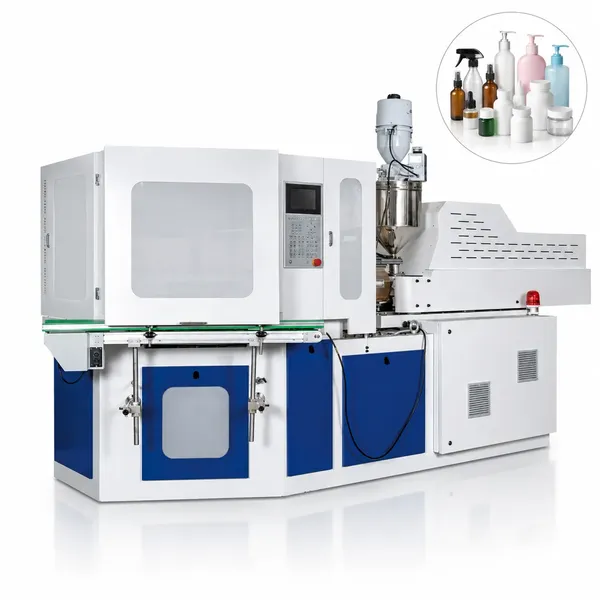
PP feeding bottle IBM on ZQ40 at 8 cavities and 4.2 s cycle: approximately 6,900 bottles/hour. At Korean PP resin cost approximately KRW 1,600/kg and 14 g per 150 ml PP feeding bottle: material cost approximately KRW 22 per bottle. With Korean IBM machine energy at KRW 120/kWh and ZQ40 at 8-12 kWh operating power: energy cost approximately KRW 1.4-2.1 per bottle. Total variable production cost (material + energy) approximately KRW 24-25 per PP feeding bottle at standard Korean 150 ml format on ZQ40.
PPSU Premium Tier Economics
PPSU feeding bottle IBM on ZQ40 runs at longer cycle time than PP (PPSU higher Tg requires longer cooling — approximately 5.5-6.5 s versus PP at 4.0-4.5 s for equivalent wall thickness). PPSU resin cost at KRW 18,000-22,000/kg versus PP at KRW 1,600/kg makes PPSU material cost approximately 12-14x PP at equal container weight. However, PPSU feeding bottles retail at KRW 15,000-40,000 versus PP at KRW 3,000-8,000 — producing substantially higher margin per unit that justifies ZQ40 PPSU production economics for Korean premium baby brand manufacturers and hospital supply channels.
Часто задаваемые вопросы по инженерным вопросам
Feeding Bottle IBM — Engineering Questions
В 01
Why is PPSU preferred over polycarbonate for premium IBM feeding bottles in Korea?
Polycarbonate (PC) was the dominant premium feeding bottle material before 2008 — PC’s glass-like clarity and 120°C heat resistance made it the benchmark premium feeding bottle for Korean and global markets. The shift away from PC to PPSU was driven by the discovery that bisphenol-A (BPA), a PC monomer, migrates from PC feeding bottles into infant formula at detectable levels, particularly at elevated sterilisation temperatures. Korean MFDS banned BPA in feeding bottles in 2012, aligned with EU Directive 2011/8/EU and US FDA guidance on BPA in food contact materials for infants. PPSU was selected as the PC replacement material for premium feeding bottles because PPSU matches PC’s 120°C+ sterilisation resistance and high impact strength — properties that PP cannot match — while being fully BPA-free by polymer chemistry. PPSU is a polycondensate of dihydroxydiphenyl sulfone and dichlorodiphenyl sulfone — neither monomer is BPA or bisphenol-derived, ensuring complete BPA-free compliance. Korea Ever-Power ZQ40 IBM machines process PPSU feeding bottles with appropriate high-temperature barrel configuration (340-370°C), providing Korean premium baby brand manufacturers with the PPSU IBM production platform for the post-PC premium feeding bottle market segment.
В 02
What wall thickness does Korea Ever-Power specify for 150 ml PP feeding bottle IBM?
Korea Ever-Power specifies 0.8-1.0 mm body wall for 150 ml PP feeding bottle IBM on ZQ40, based on the mechanical requirements of Korean market standard feeding bottle specifications: drop resistance (1.2 m filled drop test onto ceramic tile — the standard Korean household floor surface), sterilisation dimensional stability (wall must withstand 100°C boiling water thermal expansion without deformation) and infant squeeze resistance (the bottle must not collapse under 20-30 N lateral squeeze force during infant self-feeding). At 0.8 mm PP IBM wall, the 150 ml feeding bottle passes Korean standard 1.2 m drop test with the current high-flow PP IBM grades (MFR 0.5-2.0 g/10 min, Charpy impact >20 kJ/m²) that Korea Ever-Power specifies for feeding bottle IBM. Wall thickness above 1.0 mm is not recommended for standard 150 ml PP feeding bottle IBM — wall above 1.0 mm increases container weight (increasing PP resin cost per bottle) and cycle time (longer cooling at thicker wall) without a significant additional quality benefit for standard Korean retail feeding bottle specification. Korea Ever-Power customises the PP feeding bottle preform wall design for each customer’s specific bottle height, body diameter and blow ratio to achieve the target 0.8-1.0 mm body wall specification at minimum material weight.
В 03
How many sterilisation cycles can a PP IBM feeding bottle withstand before dimensional change exceeds specification?
PP IBM feeding bottle sterilisation cycle durability depends on PP grade, wall thickness and sterilisation method. For standard food-grade PP IBM at 0.8-1.0 mm wall, boiling water sterilisation at 100°C for 5 minutes per cycle: Korea Ever-Power’s pre-delivery sterilisation cycling test demonstrates PP IBM feeding bottles maintain body OD within ±1% and height within ±0.5% for 50+ boiling water cycles — exceeding EN 14350 requirement of 50 cycles. Beyond 50 cycles, cumulative PP thermal history produces minor stress-whitening in high-stress zones (base-body junction and neck-body transition), but body OD and height dimensional change typically remains within ±1% through 100 cycles for PP IBM at Korea Ever-Power’s recommended wall thickness and PP grade. Steam autoclave sterilisation at 121°C is NOT recommended for PP IBM feeding bottles — PP HDT (heat deflection temperature) at 100-115°C means 121°C autoclave steam can cause PP IBM body distortion in the first cycle. PPSU IBM feeding bottles (HDT 210°C) are specified for 121°C autoclave sterilisation and maintain dimensional stability through 200+ autoclave cycles at Korea Ever-Power’s PPSU IBM wall specification.
В 04
Can the ZQ40 switch between PP and PPSU feeding bottle production in the same machine?
Yes, but with significant changeover requirements driven by PPSU’s 340-370°C processing temperature versus PP at 210-245°C. ZQ40 barrel changeover from PP to PPSU requires: barrel temperature ramp-up from PP range to PPSU range (approximately 30-45 minute temperature equilibration time); purge the barrel with PPSU resin at PPSU processing temperature until purge output shows no PP contamination streaks (typically 15-20 purge shots); mould temperature change from PP standard (55-70°C) to PPSU (80-110°C); and startup inspection of first 10 PPSU production shots per cavity for contamination, colour uniformity and dimensional conformance. The reverse changeover (PPSU to PP) requires a controlled barrel cool-down procedure: reduce barrel temperature from PPSU range to PP range slowly (do not inject PP at PPSU barrel temperature — PP will degrade at 340-370°C); purge with PP at a transitional temperature of 260-280°C to clear PPSU residue before running PP at standard 210-245°C. Korea Ever-Power recommends scheduling PP and PPSU feeding bottle IBM in separate production blocks (weekly or monthly) rather than daily changeover, to minimise total changeover time and barrel wear from the large temperature range cycling. For customers running both PP and PPSU feeding bottles at high volume, Korea Ever-Power recommends dedicated ZQ40 machines for each material grade rather than material-switching on a single ZQ40.
В 05
Does IBM produce round-only feeding bottles or can it produce the wide-bodied flat-oval Korean trend formats?
IBM preform architecture is cylindrical by design — the core rod and injection cavity are both circular cross-section. This means pure oval or flat-oval (very wide oval with major:minor axis ratio above 1.5:1) feeding bottle formats are not efficiently produced by IBM. Standard round and slightly oval (1.05:1 to 1.20:1 major:minor axis) feeding bottle cross-sections are fully achievable by IBM blow mould design — the blow mould cavity can be slightly oval, and the circular preform inflates to the slight oval shape during blow inflation without significant wall uniformity penalty. Korean market feeding bottles in the 80-330 ml standard format range are predominantly round cross-section, making IBM the optimal production process for the main Korean feeding bottle market. For the premium wide-body flat-oval feeding bottle designs offered by some Korean and Scandinavian brands (major:minor axis ratio 1.3-1.6:1), EBM or injection-moulding-plus-assembly architectures are used in preference to IBM. Korea Ever-Power’s feeding bottle IBM programme serves the round and mildly oval standard Korean market format range — contact Korea Ever-Power with the specific cross-section geometry for assessment of IBM production feasibility for non-standard oval feeding bottle formats.
В 06
What printability and decoration options are available for PP IBM feeding bottles for Korean retail?
Korean retail PP IBM feeding bottles use four standard decoration methods aligned with Korean baby product retail presentation standards. Pad printing (tampo printing): the most common Korean feeding bottle decoration method — PP IBM surface accepts pad-printed baby motif inks (cartoon characters, Korean brand logos, measurement scales) with corona pre-treatment at 42-46 mN/m for adhesion. Food contact pad print inks compliant with Korean MFDS baby product decoration material standards are available from Korean specialist ink suppliers. Heat-shrink sleeve: full-body heat-shrink sleeves over PP IBM feeding bottles provide photographic-quality brand artwork at Korean retail shelf — sleeve material (PET or OPS, 45-55 micron) applies at 90-100°C steam tunnel without PP IBM body deformation. Measurement scale silk screen printing: Korean feeding bottle scale markings (ml graduation from 0-180 ml or 0-330 ml) are printed by UV silk screen on the PP IBM body in food-contact-approved UV ink, applied after corona treatment. Integral pigment colour: PP IBM feeding bottle body colour is specified at the PP resin masterbatch stage — standard Korean feeding bottle colours (white, translucent pink, blue, mint) are achieved by Korea Ever-Power’s PP IBM colour masterbatch protocol, providing uniform colour distribution through the preform and blow-inflated body at Korea Ever-Power’s feeding bottle production parameters.
FEEDING BOTTLE IBM ENQUIRY · KOREA EVER-POWER
Planning PP or PPSU Feeding Bottle IBM Production?
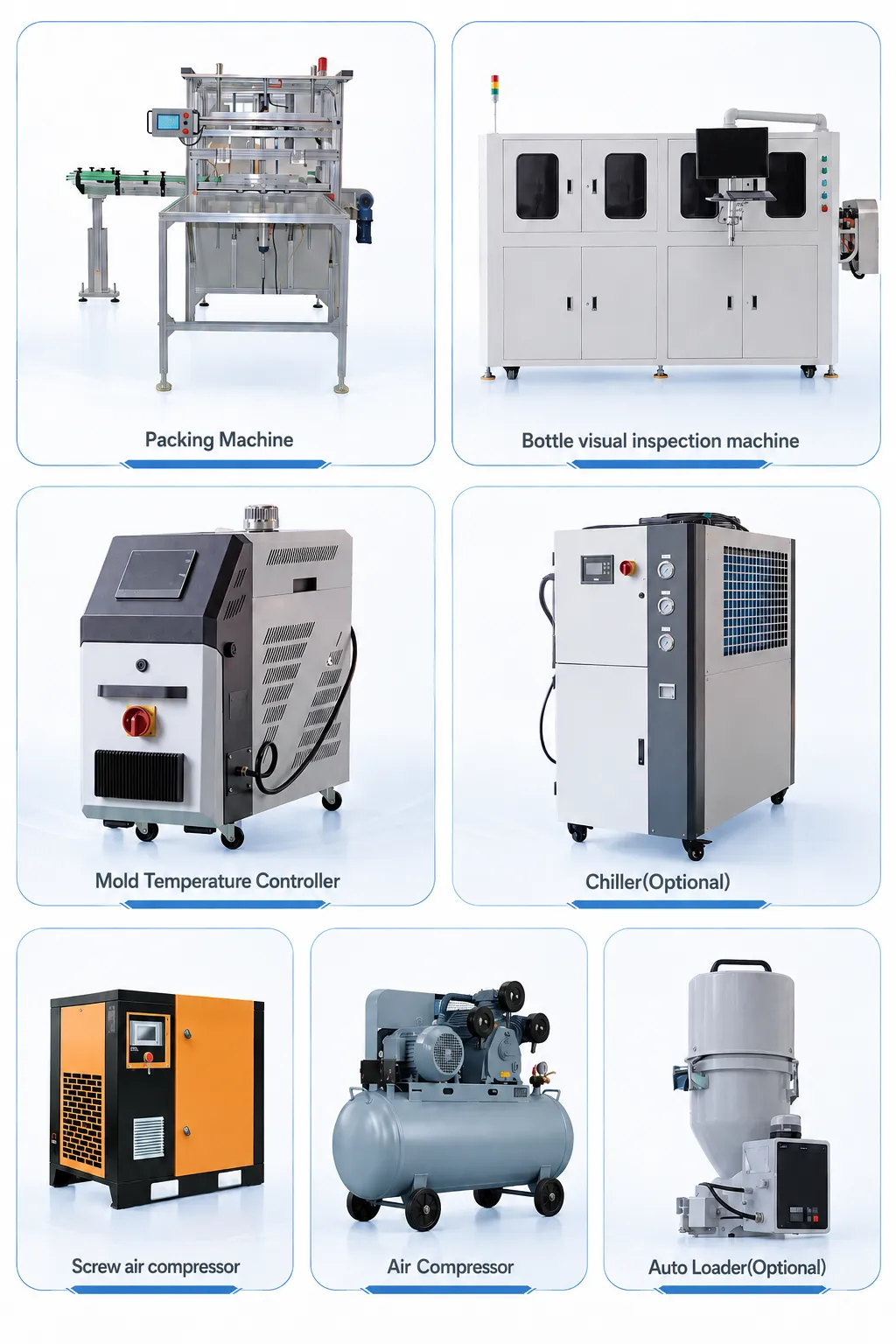
Korea Ever-Power provides ZQ40 and ZQ60 IBM machines with feeding bottle-specific tooling, BPA-free food contact documentation, MFDS compliance support and pre-delivery sterilisation cycle qualification for Korean and global baby feeding bottle IBM programmes.
Редактор: Cxm