BIOPLASTIC IBM · PHA PLA · SUSTAINABLE PACKAGING · KOREA EVER-POWER ZQ SERIES
Bioplastic IBM:
PHA PLA Bio-Based Container Production Guide
Bioplastic IBM for Korean sustainable cosmetic packaging uses PHA (polyhydroxyalkanoate) and PLA (polylactic acid) bio-based polymers to produce IBM containers that satisfy Korean K-beauty brand sustainability positioning and Korean ESG packaging requirements. Korea Ever-Power ZQ40 and ZQ60 have been validated for PHA and PLA IBM production, with specific process modifications required versus commodity polyolefin IBM. This guide covers PHA and PLA material properties, Korean sustainable packaging certification, processing parameters and the commercial case for bioplastic IBM in the Korean cosmetic market.
KOREA EVER-POWER · АНСАН-СИ, ГЁНГИ-ДО · ИЮЛЬ 2026
PROCESS REFERENCE · BIOPLASTIC IBM KEY PARAMETERS
PHA BARREL
165-185°C
PHA IBM narrow processing window — below 165°C incomplete melt; above 190°C PHA thermal degradation begins
PLA BARREL
170-195°C
PLA IBM barrel range — PLA processes similarly to PP but with lower upper temperature limit before hydrolytic degradation at moisture above 0.05%
PHA KEY ADVANTAGE
Marine Biodegradable
PHA biodegrades in marine environment in 6-18 months — strongest Korean K-beauty sustainable packaging claim available
BOTH: PRE-DRYING
Обязательный
PHA and PLA both hygroscopic — mandatory desiccant drying before IBM. PHA: 60-70°C/4h; PLA: 80°C/4-6h
РАЗДЕЛ 01
Korean Sustainable Packaging Market and Bioplastic IBM Overview
Korean K-beauty brands are among the most sustainability-focused cosmetic packaging specifiers in Asia — driven by Korean ESG (Environmental, Social, Governance) corporate commitments, Korean consumer preference for eco-packaging at Korean department stores, and Korean export market requirements from EU Green Deal sustainable packaging regulations. Bioplastic IBM containers (PHA and PLA) allow Korean cosmetic brands to make substantiated marine-biodegradable or bio-based packaging claims that commodity HDPE and ПП IBM cannot support.
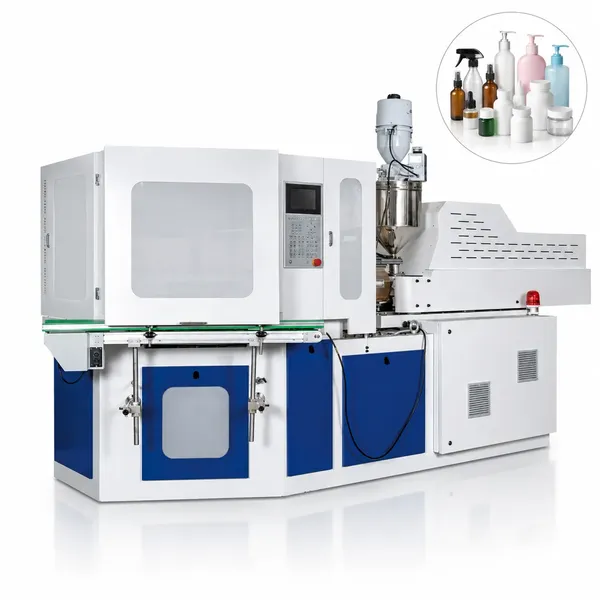
Korea Ever-Power EP-ZQ40 validated for PHA and PLA IBM bioplastic container production. PHA IBM produces marine-biodegradable containers for Korean K-beauty brands targeting Korean ESG packaging commitments and Korean export market EU Green Deal compliance. PLA IBM produces bio-based containers (corn-starch derived) with industrial compostability for Korean zero-waste beauty brands at Korean domestic and Korean export markets.
| BIOPLASTIC | BIO-BASED? | BIODEGRADABLE? | IBM BARREL °C | PRIMARY CLAIM |
|---|---|---|---|---|
| PHA ★ | Yes (sugar, oil) | Marine + industrial | 165-185°C | Marine-biodegradable Korean luxury cosmetic — strongest K-beauty sustainability claim |
| НОАК | Yes (corn, cassava) | Industrial only | 170-195°C | Bio-based carbon claim, industrially compostable Korean zero-waste beauty |
| Bio-PE / Bio-PP | Yes (sugarcane) | Нет | Same as HDPE/PP | Drop-in bio-based alternative for Korean brands wanting sustainability without process change |
РАЗДЕЛ 02
PHA IBM: Marine-Biodegradable Container Production
PHA Properties for IBM
Marine biodegradable
PHA degrades in marine, soil and freshwater environments by microbial action — 6-18 months marine biodegradation (ASTM D7881). The only IBM-processable polymer with verified marine biodegradability for Korean K-beauty brand claim.
HDPE-like rigidity
PHB (polyhydroxybutyrate, simplest PHA): flexural modulus 2,000-4,000 MPa — stiffer than HDPE. PHBV (PHB-co-valerate) copolymer at 8-12% valerate: flexural modulus 800-1,500 MPa — HDPE-comparable stiffness for IBM cosmetic containers.
Narrow process window
PHA degrades above 190°C — only 25°C working window (165-185°C barrel). Requires tight barrel temperature PID control (±3°C) and no barrel idle time above 185°C to prevent PHA degradation.
PHA IBM Applications
Korean luxury cosmetic
PHA IBM 10-100 ml for Korean luxury skincare brand ESG packaging commitment containers — Korean department store packaging where Korean consumers pay premium for Korean brand verified biodegradable packaging. Korea Ever-Power PHA IBM available for Korean K-beauty brands with TUV Austria OK Biodegradable Marine certification requirement.
Korean export EU market
Korean K-beauty brands exporting to EU markets where EU Green Deal Packaging and Packaging Waste Regulation (PPWR 2025) requires eco-design labelling — PHA IBM containers provide substantiated marine biodegradable labelling for Korean EU export compliance.
РАЗДЕЛ 03
PLA IBM: Bio-Based Clear Container Production
PLA Properties for IBM
Bio-based carbon
PLA is derived from fermented corn starch or cassava starch — the polymer carbon is 100% biogenic (carbon captured from atmospheric CO2 by crop growth). Korean K-beauty brand bio-based carbon claim: ISO 16620-2 biobased carbon content 100%.
Near-clear transparency
PLA IBM at 3-8% wall haze (0.6 mm) comparable to PP RCP — translucent-to-near-clear appearance for Korean K-beauty toner, essence and serum containers in bio-based IBM without sacrificing transparency.
Heat resistance limitation
PLA Tg (glass transition temperature) 55-60°C — PLA IBM containers deform above 50-55°C. Not suitable for Korean hot-fill, Korean autoclave sterilisation, Korean summer transport in unrefrigerated Korean logistics above 40°C ambient.
PLA IBM Korean Cosmetic Applications
PLA IBM 10-100 ml for Korean zero-waste beauty brand containers: toner bottles, essence vials and lotion pump bottles where the Korean brand’s sustainability positioning requires bio-based container material with industrial compostability certification. PLA IBM advantages: bio-based carbon claim (100% plant-derived carbon); industrial compostability EN 13432 / ASTM D6400; near-clear visual appearance comparable to PP RCP IBM. PLA IBM limitations: Korean summer supply chain heat resistance concern above 40°C ambient (PLA Tg 55-60°C provides adequate margin for Korean indoor retail at 20-25°C but requires temperature-controlled Korean logistics for direct sun exposure transport).
PLA IBM Korean shelf life limit: Korean K-beauty brands using PLA IBM containers should limit ambient product storage temperature to below 35°C. Korean summer retail shelf (Korean open-shelf retail up to 32°C) is within PLA IBM safe service range with 20-23°C margin below PLA Tg.
РАЗДЕЛ 04
Bioplastic IBM Processing: Narrow Windows and Drying
PHA vs PLA IBM PROCESSING COMPARISON
| ПАРАМЕТР | PHA (PHBV 8-12% valerate) | PLA (PLLA, standard) |
|---|---|---|
| Предварительная сушка | 60-70°C / 4 h desiccant | 80°C / 4-6 ч осушитель |
| Температура бочки | 165-185°C (25°C window) | 170-195°C (25°C window) |
| Температура формы | 20-30°C | 30-50°C (cold enough for clarity) |
| Degradation indicator | Yellowing + crotonate smell | Yellowing + viscosity drop (molecular weight loss) |
| Max idle time at temp | 5 minutes (purge if stopped) | 15 minutes (purge if stopped) |
Bioplastic IBM idle time protocol: Both PHA and PLA degrade rapidly when held at processing temperature without material flow through the barrel. PHA: maximum 5 minutes idle at 165-185°C — if IBM production stops for any reason exceeding 5 minutes, immediately purge the barrel with 3-5 shots of the same PHA resin before restarting production. PLA: maximum 15 minutes idle at 170-195°C. This critical protocol is the primary difference between bioplastic IBM and commodity polyolefin IBM and must be trained into all Korea Ever-Power operators before starting bioplastic IBM production programmes.
РАЗДЕЛ 05
Korean ESG Packaging Certification for Bioplastic IBM
PHA Certification (TUV Austria)
OK Biodegradable MARINE
Highest-value Korean K-beauty sustainability claim — verified marine biodegradability in seawater conditions per ASTM D7881. Requires PHA resin supplier TUV Austria certification + Korea Ever-Power IBM production chain-of-custody documentation.
OK Biodegradable SOIL
Soil biodegradability certification — simpler certification pathway than MARINE, for Korean brands primarily targeting Korean domestic ESG positioning rather than marine-focused claims.
PLA Certification
EN 13432 / ASTM D6400
Industrial compostability certification for PLA IBM containers — disintegration within 12 weeks at industrial composting facility (55-60°C, controlled humidity). Required for Korean zero-waste beauty brand Korean green packaging label compliance.
ISO 16620-2 Bio-based Carbon
100% bio-based carbon content certification (corn/cassava derived PLA) — validates Korean brand’s bio-based packaging carbon claim for Korean ESG reporting and Korean export market EU Green Deal bio-based content labelling.
Korean ESG Documentation Package
Korea Ever-Power provides bioplastic IBM container Korean ESG documentation: bioplastic resin material certification (PHA TUV Austria or PLA ISO 16620-2 certificate); IBM production chain-of-custody declaration (Korea Ever-Power confirms only certified bioplastic resin used in production run); container sample for Korean K-beauty brand third-party biodegradability or bio-based content verification testing; IBM production process declaration (zero-flash, contamination control, clean barrel purge protocol before bioplastic production run). This package enables Korean cosmetic brands to substantiate biodegradable or bio-based container claims at Korean department stores and in Korean ESG annual reporting.
РАЗДЕЛ 06
Bioplastic IBM vs Conventional IBM: Commercial Comparison
| КРИТЕРИЙ | PHA IBM | PLA IBM | HDPE IBM (ссылка) |
|---|---|---|---|
| Resin cost premium | 3-5x HDPE price | 1.5-2.5x HDPE price | Исходный уровень |
| Сложность процесса | High (narrow window) | Середина | Low (standard) |
| Sustainability claim | Marine biodegradable | Bio-based + industrially compostable | Никто |
| Korean brand price positioning | Korean luxury ESG segment | Korean premium sustainable | All price points |
| Korea Ever-Power status | Validated (ZQ40) | Validated (ZQ40) | Full production |
Часто задаваемые вопросы по инженерным вопросам
Bioplastic IBM — Engineering Questions
Q01
What is the difference between biodegradable, compostable and bio-based for Korean K-beauty packaging claims?
Korean K-beauty brands encounter three distinct sustainable packaging claim categories that are frequently conflated in Korean ESG packaging marketing. Bio-based: the polymer carbon originates from biological sources (plants) rather than petroleum. Bio-based does not imply biodegradability — bio-PE (sugarcane polyethylene) is 100% bio-based but is chemically identical to petroleum-PE and does not biodegrade. PLA IBM containers are bio-based (corn starch carbon) and biodegrade only under industrial composting conditions. Biodegradable: the polymer can be broken down by microbial action into CO2, water and biomass. Biodegradability depends on the environment — industrial compostable (EN 13432) means biodegrades only at 55-60°C composting facility conditions; marine biodegradable (ASTM D7881, TUV Austria OK Marine) means biodegrades in seawater at ambient ocean temperature. PLA IBM is industrially compostable but NOT marine biodegradable. PHA IBM is both bio-based AND marine biodegradable — the highest sustainability claim available for IBM containers. Compostable: subset of biodegradable, specifically designed to degrade in composting conditions. All industrially compostable plastics are biodegradable in composting conditions, but most biodegradable plastics (including PHA) are not limited to compostable environments. For Korean K-beauty brand marketing: PHA IBM enables “marine biodegradable” claim (strongest, most consumer-resonant) + “bio-based” claim. PLA IBM enables “bio-based” + “industrially compostable” claims (weaker marine environmental claim but stronger circular economy composting claim).
Q02
Does PHA IBM container shelf life performance equal conventional HDPE IBM for Korean cosmetic 24-month shelf life?
PHA IBM containers provide adequate 24-month shelf life for Korean cosmetic products when stored at Korean ambient retail conditions (15-25°C, 40-60% RH). The critical PHA IBM shelf life limitation is moisture exposure: PHA is susceptible to hydrolytic degradation at elevated temperature and humidity (above 35°C/80% RH for extended periods), which can cause slow molecular weight reduction in the PHA container wall over 18-24 months. In practice, Korean cosmetic retail environments (Korean department stores at 20-22°C, Korean online warehouse at controlled humidity) are well within PHA IBM shelf life conditions. Korea Ever-Power recommends Korean K-beauty brands specifying PHA IBM conduct a real-time 24-month stability study of PHA IBM containers filled with the Korean cosmetic formulation at Korean ambient storage conditions alongside the standard Korean MFDS cosmetic stability protocol — confirming container wall integrity, neck OD dimensional stability and closure leak-proof performance remain within specification across the 24-month Korean cosmetic registered shelf life. For Korean cosmetic products distributed to Korean export markets in tropical Asia (Singapore, Malaysia, Thailand, Indonesia) where ambient storage may reach 32-38°C at high humidity, Korea Ever-Power recommends verifying PHA IBM container stability at 40°C/75% RH/12 months (accelerated tropical storage condition) before confirming PHA IBM selection for Korean tropical export market distribution.
Q03
Why does PHA IBM have a much narrower processing window than HDPE or PP and how does Korea Ever-Power manage it?
PHA IBM’s narrow 25°C processing window (165-185°C) compared to HDPE (195-220°C = 25°C window but at higher baseline), PP (210-245°C = 35°C window) and ABS (210-240°C = 30°C window) arises from PHA’s unique thermal degradation mechanism. PHA undergoes beta-elimination at the ester linkage above 185-190°C: the ester bond in the PHA backbone cleaves, producing crotonic acid and oligomers in a chain-unzipping reaction that rapidly reduces PHA molecular weight. This reaction has a much lower activation energy than HDPE or PP chain scission — meaning PHA degrades more rapidly per degree of overtemperature than HDPE or PP. The 190°C degradation onset is only 25°C above PHA’s melting temperature (165-170°C for PHBV 8-12% valerate), giving PHA the narrowest processing window of all commercial IBM polymers. Korea Ever-Power manages the PHA IBM processing window through three protocol elements: (1) precision barrel temperature control — the ZQ40 barrel zone PID controllers are calibrated to ±2°C setpoint accuracy before PHA IBM production; (2) pre-production thermal stabilisation — allow 30 minutes barrel temperature stabilisation at PHA setpoints before introducing PHA resin to confirm all zone temperatures are stable within ±3°C of setpoint; (3) strict no-idle protocol — maximum 5 minutes barrel idle at PHA temperature before purge, to prevent PHA degradation from barrel thermal soak at the upper end of the processing window. These three protocols together allow Korea Ever-Power ZQ40 to produce PHA IBM containers consistently within the 25°C PHA processing window throughout Korean luxury cosmetic production runs.
Q04
Can bio-PE (sugarcane polyethylene) IBM containers be used as a drop-in HDPE IBM replacement for Korean K-beauty sustainability claims?
Bio-PE (sugarcane-derived bio-polyethylene, commercially available from Braskem “Green PE” and LyondellBasell bio-PE) is produced by fermentation of sugarcane ethanol to ethylene, followed by standard Ziegler-Natta polymerisation — producing a polyethylene polymer chemically identical to petroleum-derived HDPE with the same molecular structure, mechanical properties and processing parameters. Bio-PE IBM on Korea Ever-Power ZQ40 uses exactly the same barrel temperatures (195-220°C), mould temperatures (18-26°C), cycle times and tooling as standard HDPE IBM as covered in the Руководство IBM по полиэтилену высокой плотности (HDPE) — making bio-PE the true drop-in bioplastic IBM solution that requires zero process modification. Korean K-beauty brand claim: ISO 16620-2 certified bio-PE IBM container is 100% bio-based carbon (ethanol from sugarcane), reducing container Scope 3 carbon footprint versus petroleum HDPE IBM. Limitation: bio-PE IBM containers do NOT biodegrade — bio-PE is chemically HDPE and degrades identically (slowly) in all environments. The Korean K-beauty brand bio-PE IBM sustainability claim is limited to bio-based carbon content (renewable feedstock origin) without any biodegradability or compostability claim. Bio-PE IBM is the pragmatic first step for Korean K-beauty brands entering the sustainable packaging space: zero process change cost, zero performance compromise, modest bio-based carbon claim at 1.2-1.8x premium versus petroleum HDPE. Brands seeking the stronger marine-biodegradable or industrial compostability claim must step to PHA IBM (marine biodegradable) or PLA IBM (industrially compostable) with the associated process management requirements and 1.5-5x resin cost premiums.
В 05
What Korean cosmetic formulation compatibility issues arise specifically for PHA IBM containers?
PHA IBM containers have specific cosmetic formulation compatibility considerations that differ from HDPE and PP IBM. Lipophilic ingredient permeation: PHA polymer has a slightly higher permeability to apolar organic molecules (fragrance esters, essential oils, silicone cyclics) than HDPE — Korean cosmetic formulations with high essential oil loading (above 2%) or high silicone fluid loading (above 20%) should be verified by 40°C/90-day permeation loss measurement to confirm the Korean cosmetic active ingredient concentration is maintained within specification across Korean shelf life. pH sensitivity: PHA hydrolyses slowly in strongly acidic conditions (pH below 3) and strongly alkaline conditions (pH above 11) due to PHA ester backbone acid or base catalysed cleavage. Korean cosmetic formulations at normal pH (4.5-8.0) present no PHA hydrolysis concern. Korean vitamin C serum at pH 2.5-3.5 requires a 40°C/90-day hydrolytic stability study for PHA IBM container before Korean brand adoption — PHA ester hydrolysis at pH 2.5-3.0 may reduce container wall integrity below the Korean cosmetic shelf life endpoint. Preservative compatibility: PHA ester groups can moderately adsorb benzyl alcohol and phenoxyethanol at concentrations above 0.5% — similar to but slightly greater than PP IBM. For Korean cosmetic formulations with phenoxyethanol above 0.5% in PHA IBM containers, verify preservative efficacy at 40°C/90 days to confirm phenoxyethanol concentration remains above minimum inhibitory concentration throughout Korean cosmetic shelf life. Standard Korean K-beauty formulations (hyaluronic acid serum pH 5.5-7.0, niacinamide serum, fermentation extract toner, aqueous emulsion moisturiser) are fully compatible with PHA IBM containers for Korean 24-month cosmetic shelf life without special testing requirements.
Q06
What is Korea Ever-Power’s recommended bioplastic IBM development pathway for Korean K-beauty brands entering sustainable packaging?
Korea Ever-Power recommends a phased bioplastic IBM development pathway for Korean K-beauty brands transitioning from conventional HDPE or PP IBM to bioplastic IBM containers, structured to manage technical risk and resin cost premium while establishing the Korean brand’s ESG packaging credentials. Phase 1 — Bio-PE IBM (Year 1): replace Korean K-beauty brand’s highest-volume HDPE IBM container SKU with bio-PE IBM (sugarcane HDPE). Zero process change. Korean brand communicates ISO 16620-2 bio-based carbon claim on Korean packaging. Cost premium: 1.2-1.8x versus petroleum HDPE. This phase establishes Korean brand’s bioplastic IBM production capability at Korea Ever-Power with zero risk. Phase 2 — PLA IBM (Year 1-2): qualify Korea Ever-Power ZQ40 for PLA IBM with Korean brand’s 30-50 ml cosmetic container design. Korean brand communicates industrially compostable + bio-based carbon claim. Korea Ever-Power conducts PLA IBM 24-month real-time stability study in parallel with Korean brand Korean MFDS registration process. Korean brand adopts PLA IBM for Korean flagship sustainability SKU at Korean department store launch with EN 13432 certified PLA IBM containers. Phase 3 — PHA IBM (Year 2-3): qualify Korea Ever-Power ZQ40 for PHBV IBM with Korean brand’s premium ESG container design. PHA IBM development involves Korea Ever-Power ZQ40 operator training on PHA narrow window protocol, resin qualification with TUV Austria OK Biodegradable Marine supply chain documentation, and 12-month accelerated stability study. Korean brand launches PHA IBM luxury container line with TUV Austria marine biodegradable claim at Korean department store and Korean K-beauty export market. This three-phase pathway allows Korean K-beauty brands to enter sustainable packaging IBM in Year 1 with zero technical risk (bio-PE) while building toward the strongest Korean ESG claim available (PHA marine biodegradable) by Year 3 with structured Korea Ever-Power technical support at each phase transition.
BIOPLASTIC IBM ENQUIRY · KOREA EVER-POWER
Planning Korean Sustainable Bioplastic IBM Production?
Korea Ever-Power provides PHA and PLA IBM production on ZQ40 with bioplastic-specific narrow processing window protocols, ESG packaging certification chain-of-custody documentation, formulation compatibility testing and Korean K-beauty brand three-phase sustainable packaging development support.
Редактор: Cxm