BUYER’S GUIDE
One-Step vs Two-Step PET Bottle Production: Which Process Is Right for Your Business?
The choice between one-step and two-step PET bottle production defines your capital investment, energy cost, reject rate, and product quality ceiling for the next decade. For Korean factories producing 3 to 30 million bottles per year, the answer is almost always one-step — but we will explain exactly why, with hard numbers on energy, rejects, floor space, and unit economics.
In This Guide
- What’s the Difference? Quick Overview
- The Two-Step Process Explained
- The One-Step Process Explained
- Energy Consumption: Two-Step Heats Twice
- Reject Rate Comparison
- Floor Space Economics
- Capital Cost vs Operating Cost Math
- When Two-Step Still Makes Sense
- When One-Step Wins Decisively
- Real Korean Factory ROI Comparison
- Making the Switch: What to Plan For
- Conclusion
1. What’s the Difference? Quick Overview
The fundamental architectural divide in PET bottle production is whether injection and blowing occur on the same integrated machine or on two separate pieces of equipment. One-step production keeps the preform on a core rod continuously from injection through blowing, using residual heat and a single integrated control system. Two-step production produces preforms on a dedicated injection line, ships or stores them for days or weeks, then reheats them on a separate reheat-blow machine for the final bottle shaping.
For Korean packaging factories producing between 3 and 30 million bottles per year — which covers the vast majority of regional beverage bottlers, cosmetic contract fillers, pharmaceutical packaging companies, and food-contact jar producers — the answer almost always points to one-step. The economics are clear enough that most Korean contract fillers who evaluated both processes in the 2018-2022 capital investment wave chose one-step, and those who chose two-step are now frequently evaluating conversion as their aging preform injection lines approach end-of-life. This guide explains exactly why the one-step case is so strong, with hard data on energy consumption, reject rates, floor space, and total cost of ownership.
The one exception where two-step still wins is extreme-volume production above roughly 50 million bottles per year on a single SKU, typically mega-volume global beverage brand filling where the per-unit economics of dedicated preform manufacturing outpace the integrated-cycle advantages of one-step. This operational scale is rare in Korea and East Asia outside of a handful of multinational beverage bottlers; for the Korean SME packaging reality, one-step is the correct answer across virtually every production scenario.
2. The Two-Step Process Explained
Two-step PET bottle production separates preform injection and bottle blowing into two distinct manufacturing operations, often at different facilities and with intervening storage of days to weeks.
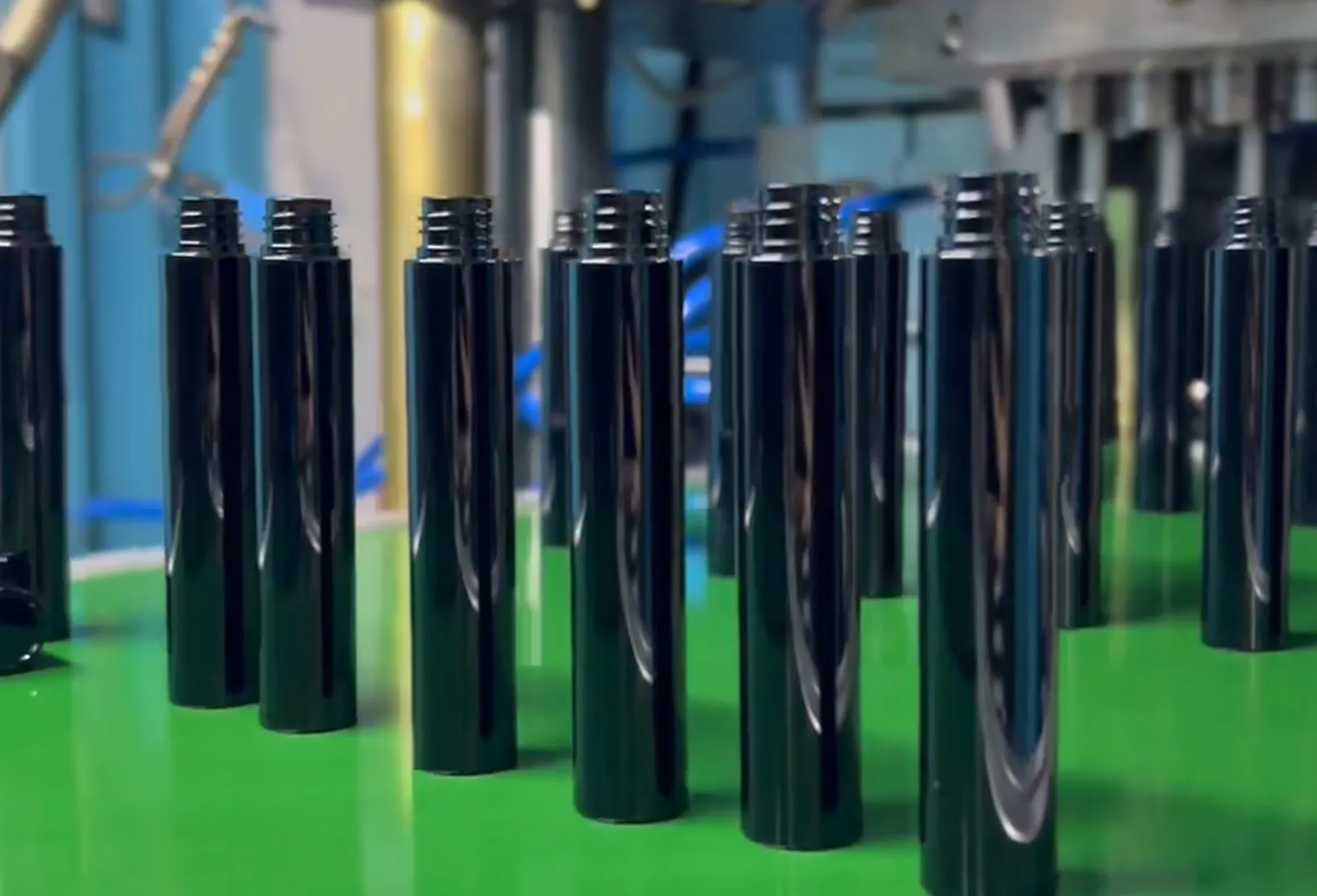
Step 1: Preform Injection. A dedicated preform injection moulding machine produces preforms at high cavity counts (typically 72 to 144 cavities per shot for beverage applications) with fast cycle times of 8 to 12 seconds. The machine is optimized exclusively for preform production, with large-tonnage clamping units capable of handling the very large multi-cavity moulds. Preforms are ejected, cooled to ambient temperature, and typically packaged into bulk gaylord boxes or octabin containers for shipping or storage.
Intermediate Storage. Preforms sit in warehouse storage for days to weeks between production and blowing. Well-run two-step operations control ambient humidity and temperature during storage to minimize preform moisture absorption, but the control is imperfect and some moisture pickup is inevitable. Korean facilities operating in humid summer months (Seoul average relative humidity 75 to 85 percent from June through September) see particularly troublesome moisture absorption during seasonal peak production.
Step 2: Reheat-Blow. Preforms enter a reheat-blow machine where infrared heaters bring them from ambient temperature back up to the blowing window (approximately 95 to 115 Celsius for standard PET). The reheated preforms transfer to blow stations where high-pressure air inflates them against the mould cavity walls to form finished bottles. Typical two-step reheat-blow cycle times run 12 to 20 seconds per bottle depending on cavity count and bottle volume.
3. The One-Step Process Explained
One-step production integrates injection and blowing into a single machine with a rotary carousel that indexes the preform through sequential stations. The preform never leaves the machine between injection and blowing, staying on the core rod continuously as it travels from injection to thermal conditioning to stretch-blow to take-out, as described in detail in our how ISBM works technical guide.
The key architectural advantage is thermal. Instead of injecting preforms, cooling them to ambient, storing them, reheating them back up, and finally blowing them, the one-step machine uses residual injection heat directly for the blowing step. Preforms exit the injection station at roughly 180 to 200 Celsius, are profile-conditioned to the optimal 95 to 115 Celsius blowing window within the machine, and transfer directly to the blow station while still at optimal temperature. No intermediate cooling, no storage, no reheating. The energy and time savings compound into substantial operational advantages.
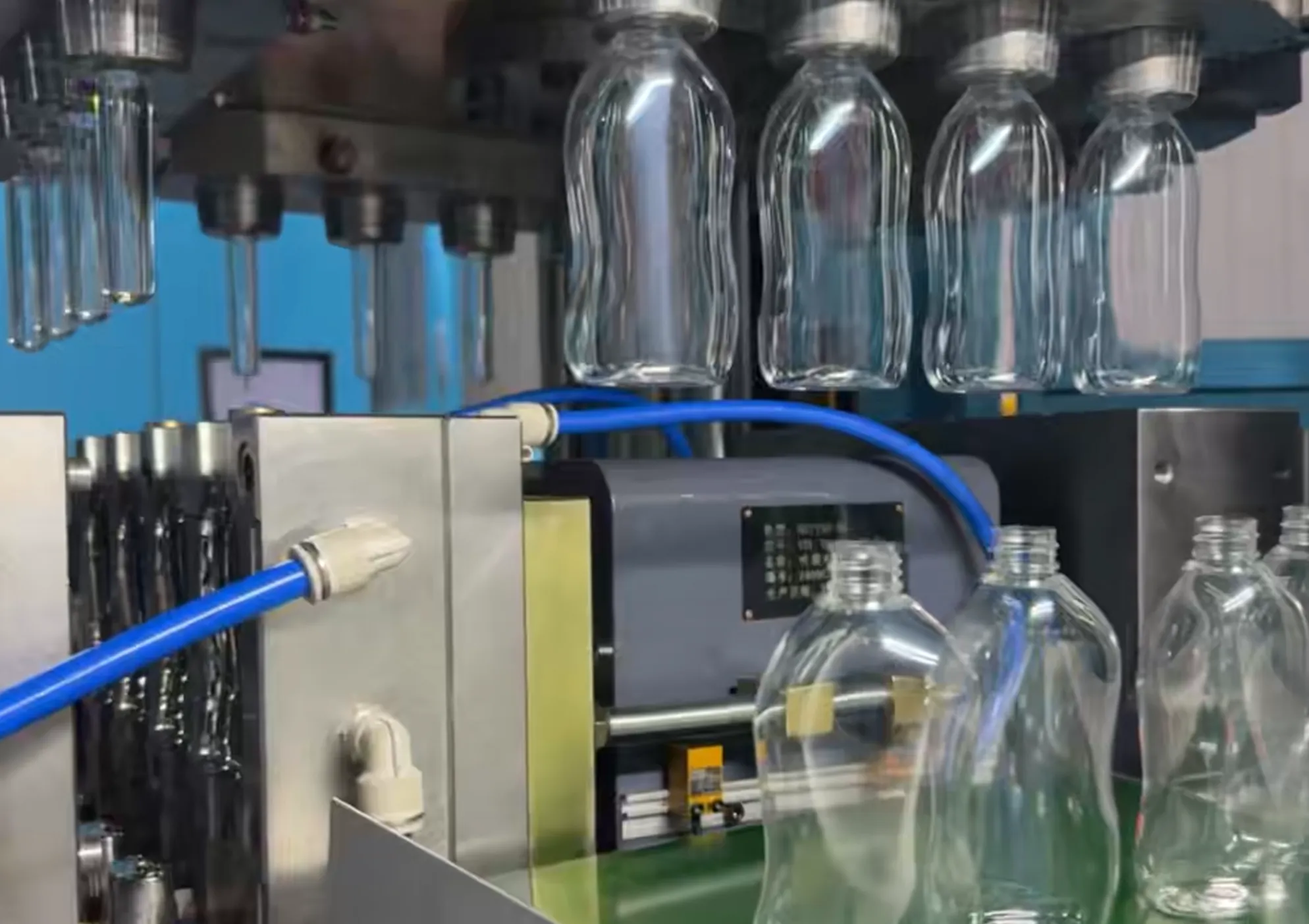
The other key advantage is environmental. In a one-step machine the preform never leaves the enclosed machine housing between melt and take-out, eliminating exposure to ambient dust, moisture, and handling contamination. For Korean pharmaceutical cleanroom applications and premium K-beauty production where surface contamination triggers rejection by brand owners, this enclosed path is a decisive quality advantage. Two-step operations require external clean-handling protocols to maintain equivalent quality standards, which add cost and complexity that most contract fillers find difficult to consistently execute.
4. Energy Consumption: Two-Step Heats PET Twice
Energy economics favor one-step decisively. In two-step production, the PET preform absorbs heat energy during injection (to melt from pellet to liquid state), releases that heat during cooling to ambient, then absorbs heat energy again during reheat (to bring the preform back up to blowing temperature). The thermodynamic reality is that energy is consumed twice for a single finished bottle — first to melt the resin, then to reheat the cooled preform.
One-step production keeps the preform on the core rod at optimal stretch-blow temperature throughout, using residual injection heat rather than reheating cooled preforms. No second heating cycle is required. The energy savings compound into substantial operational advantages measured in direct Korean electricity cost. Based on benchmark data from Korean beverage bottlers operating both architectures, one-step production consumes approximately 30 to 40 percent less energy per 1,000 finished bottles versus two-step equivalent production of matching SKUs.
| Bottle Format | Two-Step Energy (kWh/1000) | One-Step Energy (kWh/1000) | Energy Savings |
|---|---|---|---|
| 500 ml water | 52-58 | 32-38 | ~35% |
| 1 L beverage | 68-75 | 42-50 | ~38% |
| 150 ml cosmetic | 22-26 | 14-18 | ~35% |
| 2 L large beverage | 95-105 | 58-68 | ~37% |
For a mid-size Korean beverage bottler producing 20 million 500 ml bottles annually, the energy savings from one-step versus two-step production amount to approximately 400,000 to 500,000 kWh per year. At typical Korean industrial electricity rates of 130 to 160 KRW per kWh, this translates to 52 to 80 million KRW in direct electricity cost savings annually — substantial operating economics that compound over the 8 to 10 year operational life of the equipment. Additionally, the reduced energy consumption improves the facility’s carbon footprint for ESG reporting, increasingly important for Korean brand owners seeking sustainability certification.
5. Reject Rate Comparison: Surface Defects, Contamination, Moisture
Reject rates differ dramatically between the two architectures. Two-step production exposes preforms to handling scuffs during storage and transit, moisture pickup during ambient storage exposure, and surface contamination from dust and static. Korean facilities operating two-step typically report reject rates of 1 to 3 percent for beverage production, 2 to 4 percent for cosmetic production where surface quality standards are stricter, and up to 5 percent for pharmaceutical applications where any contamination triggers regulatory rejection.
One-step reject rates are consistently and dramatically lower. Because the bottle never leaves the enclosed machine environment between melt and take-out, surface contamination, handling damage, and moisture absorption are essentially eliminated. Korean one-step installations routinely achieve reject rates below 0.5 percent across all application categories — a 3 to 6 times improvement over two-step equivalents. For beverage production this translates to 0.5 to 1.5 million fewer rejected bottles per 20 million produced; for cosmetic production the improvement is even more significant commercially because rejected premium bottles represent higher material and labor investment per unit.
The reject rate advantage also translates to regulatory simplicity. Korean KFDA requirements for pharmaceutical packaging production include validation that the production environment does not introduce contamination. One-step machines satisfy this requirement natively through their enclosed architecture; two-step operations require explicit cleanroom handling protocols for preform storage and transfer that add facility cost and operational complexity. Most Korean pharmaceutical contract manufacturers who evaluated both architectures in the 2020-2024 capital investment wave chose one-step specifically for the regulatory simplification benefit.
6. Floor Space Economics
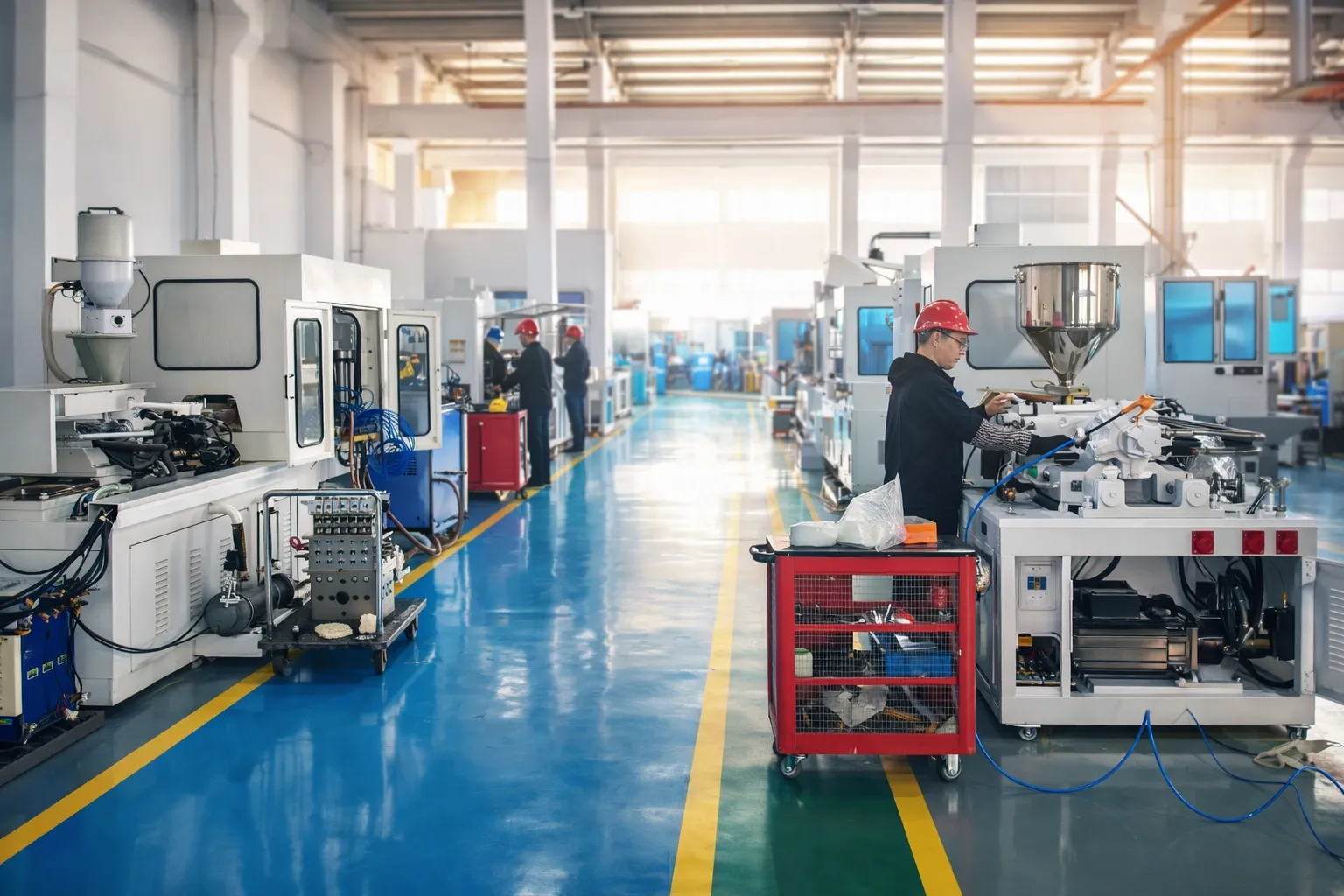
Floor space economics strongly favor one-step for Korean facilities paying premium commercial real estate rates. A complete two-step production setup requires a dedicated preform injection line, a preform storage warehouse, and a separate reheat-blow machine — typically 300 to 500 square meters of total facility space when including material handling, quality control stations, and ancillary equipment. A comparable one-step line producing equivalent annual output fits in under 40 to 50 square meters including auxiliaries.
The floor-space savings translate to direct real estate economics. Korean industrial facility real estate in the Seoul metropolitan area and major port regions (Busan, Incheon) runs 10 to 15 million KRW per square meter for purchase or 80,000 to 150,000 KRW per square meter monthly for lease. A 300 square meter floor-space savings over the 8 to 10 year operational life of production equipment represents substantial economic value — typically equivalent to 30 to 50 percent of the machine’s own capital cost when fully amortized.
For Korean factories operating at space-constrained facilities — common in the Ansan, Gyeonggi-do industrial zones where land availability for expansion is limited — the floor-space consolidation also enables additional production lines to be installed in space that would otherwise be occupied by preform storage. This capacity expansion capability often justifies the conversion from two-step to one-step by itself, independent of the direct operating cost savings.
7. Capital Cost vs Operating Cost Math
Capital cost comparison needs to be evaluated fairly to reach the right conclusion. A single one-step ISBM machine carries higher upfront cost than a reheat-blow machine alone, which has led some Korean buyers to initially dismiss one-step as the more expensive option. But the fair comparison is between one-step and the complete two-step setup: preform injection machine plus preform storage infrastructure plus reheat-blow machine plus material handling. On that apples-to-apples basis, one-step is typically 25 to 40 percent lower total capital cost than equivalent-capacity two-step.
| Cost Category | Two-Step (Complete Setup) | One-Step (Integrated) |
|---|---|---|
| Preform injection machine | $250K-$400K | Not required |
| Reheat-blow machine | $150K-$280K | Not required |
| Integrated one-step ISBM | — | $250K-$450K |
| Preform storage infrastructure | $40K-$80K | Not required |
| Material handling equipment | $25K-$50K | Integrated |
| Total Capital Cost | $465K-$810K | $250K-$450K |
Operating cost differential compounds the capital cost advantage. One-step operations consume 30 to 40 percent less energy, experience 60 to 80 percent lower reject rates, occupy 60 to 80 percent less floor space, and require 30 to 40 percent fewer operators for equivalent production output. Over an 8 to 10 year operational life, these compounding savings typically amount to $800,000 to $1,500,000 USD in reduced total cost of ownership versus an equivalent two-step operation — substantially more than the capital cost difference.
8. When Two-Step Still Makes Sense
Two-step architecture retains advantages in specific high-volume production scenarios where the per-unit economics of dedicated preform manufacturing outpace the integrated-cycle advantages of one-step. Being honest about these scenarios helps Korean buyers make informed decisions about their specific production reality.
The most common scenario where two-step still wins is extreme-volume mega-brand beverage production above 50 to 80 million bottles per year on a single SKU. At this scale, a dedicated 96-cavity or 144-cavity preform injection machine delivers per-preform costs that no one-step architecture can match, because one-step machines are limited to lower cavity counts to maintain their compact integrated architecture. For example, multinational beverage bottlers running 100+ million units per year per SKU of standard water bottle formats legitimately choose two-step because the preform per-unit cost at 144-cavity production dominates all other economic considerations. This operational scale is rare in Korea and East Asia outside of a handful of contract operations serving multinational brand clients.
Another legitimate scenario for two-step is specialized preform supply business models. Some Korean packaging companies operate preform injection as a standalone product, selling raw preforms to other manufacturers who own their own blow-reheat operations. This split business model only works in two-step architecture because one-step machines do not output separable preforms. For these specialized operators, two-step architecture is the core business model, not a trade-off to optimize.
A third niche scenario involves facilities that need bottle production flexibility that exceeds the practical limits of any single one-step machine — for example, contract fillers running hundreds of different SKUs where maintaining one-step tooling for each SKU becomes impractical. These operations sometimes favor two-step because external-supplied preforms can be stocked across many SKU variants while the reheat-blow machine handles the final shape variations.
9. When One-Step Wins Decisively (3-30M Units/Year Range)
The 3 to 30 million units per year per SKU range covers the vast majority of Korean and East Asian packaging production. Within this range, one-step wins decisively on every economic dimension: lower capital cost, lower energy consumption, lower reject rates, lower floor space requirements, lower operator headcount. For Korean beverage bottlers, cosmetic contract fillers, pharmaceutical packaging companies, and food-contact jar producers operating in this volume range, there is effectively no economic argument for two-step.
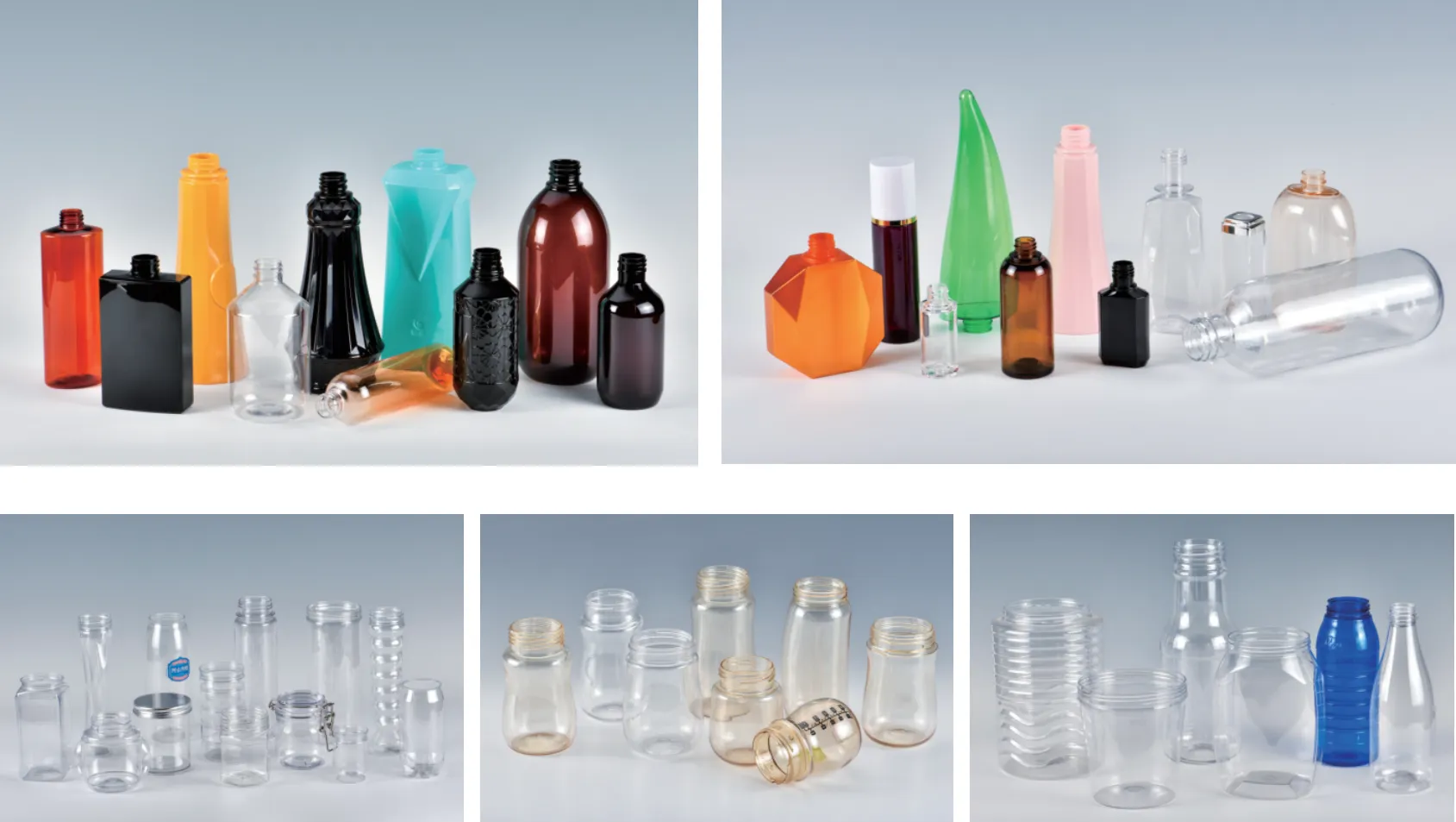
One-step also wins decisively on bottle quality dimensions. The enclosed closed-loop production path eliminates surface contamination that plagues two-step operations, producing consistently higher surface quality that commands price premiums in cosmetic and pharmaceutical applications. The absence of intermediate moisture absorption during preform storage eliminates silver-streak defects that appear sporadically in two-step production. For Korean K-beauty brand owners who specify premium surface quality as a non-negotiable brand standard, one-step architecture is effectively the only option that reliably meets the specification.
For Korean pharmaceutical contract manufacturers navigating KFDA compliance requirements, one-step provides regulatory simplification that materially reduces ongoing compliance overhead. The enclosed architecture satisfies KFDA environmental contamination validation requirements natively, eliminating the ongoing documentation burden of validating two-step preform handling cleanliness. Over the operational life of the equipment, this regulatory simplification typically saves 20 to 30 million KRW annually in compliance overhead.
10. Real Korean Factory ROI Comparison
A practical comparison from a Korean beverage bottler that converted from two-step to one-step in 2024 illustrates the real-world ROI profile. The facility, a mid-size regional bottler in Gyeonggi-do producing 18 million 500 ml water bottles annually, documented the following cost changes in the first full year after conversion.
| Operating Cost Category | Two-Step (Before) | One-Step (After) | Annual Savings |
|---|---|---|---|
| Electricity (KRW) | 145M | 92M | 53M |
| Reject waste (KRW) | 88M | 22M | 66M |
| Operator labor (KRW) | 180M | 105M | 75M |
| Floor space lease (KRW) | 128M | 28M | 100M |
| Maintenance (KRW) | 45M | 28M | 17M |
| Total Annual Operating Savings | — | — | 311M KRW |
Against a capital investment of approximately 620 million KRW for the integrated one-step ISBM machine plus auxiliaries, the annual 311 million KRW operating cost savings delivered 2.0-year payback. This is a representative result for Korean facilities converting from two-step to one-step — typical payback ranges 18 to 36 months depending on specific application, with beverage and cosmetic facilities trending toward the faster end and specialty pharmaceutical applications trending toward the slower end due to lower production volumes.
11. Making the Switch: What to Plan For
For Korean facilities currently operating two-step that want to evaluate conversion to one-step, the transition planning involves four main workstreams running in parallel over a typical 4 to 6 month timeline.
Machine specification. Evaluate station-count architecture , cavity count, resin compatibility, and auxiliary equipment requirements. Choose between our 3-Station, 4-Station, or 6-Station platforms based on your specific application requirements.
Tooling transition. Existing two-step preform tooling typically does not transfer directly to one-step machines due to architectural differences in mould mounting interfaces. New one-step compatible moulds are designed during the procurement timeline, with validation runs on our in-house ISBM machines before shipment. The custom ISBM mould design process takes 35 to 55 working days in parallel with machine delivery.
Facility preparation. One-step machines require different utilities sizing than two-step operations. Chilled water capacity, compressed air supply, electrical service, and floor loading specifications need to be verified and upgraded where necessary before machine arrival. Our engineering team provides complete facility preparation specifications 12 weeks before scheduled machine delivery.
Operator training. One-step machine operation differs from two-step in several key respects — integrated control system, different maintenance schedule, enclosed production path monitoring. Korean language operator training is included with every Ever-Power one-step installation, typically 3 to 5 days on-site plus ongoing remote support during the first 6 months of production.
12. Conclusion
For the Korean SME packaging production reality of 3 to 30 million units per year per SKU, one-step ISBM architecture wins decisively on every economic dimension: lower capital cost, lower energy consumption, lower reject rates, lower floor space requirements, lower operator headcount, lower regulatory compliance overhead. The 30 to 40 percent energy savings, 60 to 80 percent lower reject rates, and 60 to 80 percent smaller floor footprint compound into total cost of ownership advantages of $800,000 to $1,500,000 USD over the 8 to 10 year operational life versus equivalent two-step operations.
Two-step architecture retains advantages only in extreme-volume mega-brand applications above 50 million bottles per year per SKU or specialized preform-supply business models. For everything else in the Korean and East Asian packaging sector, one-step is the clearly correct architectural choice.
If you are currently operating two-step production and evaluating conversion to one-step, Ever-Power’s Korean engineering team can walk you through a complete facility analysis including projected operating cost savings, capital investment requirements, facility preparation specifications, and transition timeline. Share your current production volume, bottle specifications, energy consumption, and floor space, and we return a detailed conversion analysis with projected payback period within 48 hours.
Key Takeaways
- One-step wins decisively for Korean production in the 3-30M bottles/year/SKU range — the vast majority of Korean packaging applications.
- Energy consumption is 30-40% lower on one-step because PET is heated once (not twice as in two-step).
- Reject rates are 60-80% lower on one-step due to enclosed closed-loop production path eliminating contamination, moisture, and handling damage.
- Floor space requirements are 60-80% smaller on one-step — typically under 50m² vs 300-500m² for equivalent two-step output.
- Typical Korean facility payback from two-step to one-step conversion runs 18-36 months based on total cost of ownership analysis.
- Two-step still wins only in extreme-volume (>50M bottles/year/SKU) mega-brand applications or specialized preform-supply business models.
Ready to Evaluate One-Step Conversion?
Share your current production volume, bottle specifications, energy consumption, and floor space. Our Korean engineering team returns a detailed conversion analysis with projected payback period within 48 hours.
Editor: Cxm