TECHNICAL DEEP-DIVE · 15 MIN READ
How Injection Stretch Blow Moulding Works: A Complete Technical Guide
From raw resin pellets to crystal-clear PET bottle in under 20 seconds — this is the single most important manufacturing process in modern beverage, cosmetic, and pharmaceutical packaging. In this 3,500-word guide we break down every stage of the ISBM cycle, the physics behind biaxial stretching, material compatibility across PET, PETG, Tritan, and PC, and the real-world trade-offs between 3-station, 4-station, and 6-station architectures.
In This Guide
- What Is Injection Stretch Blow Moulding?
- The Core ISBM Process: 4 Stages Explained
- Why Biaxial Orientation Matters (The Physics)
- Materials You Can Process on ISBM Machines
- 3-Station vs 4-Station vs 6-Station Trade-offs
- Preform Design Fundamentals
- One-Step vs Two-Step: Why In-Line Production Wins
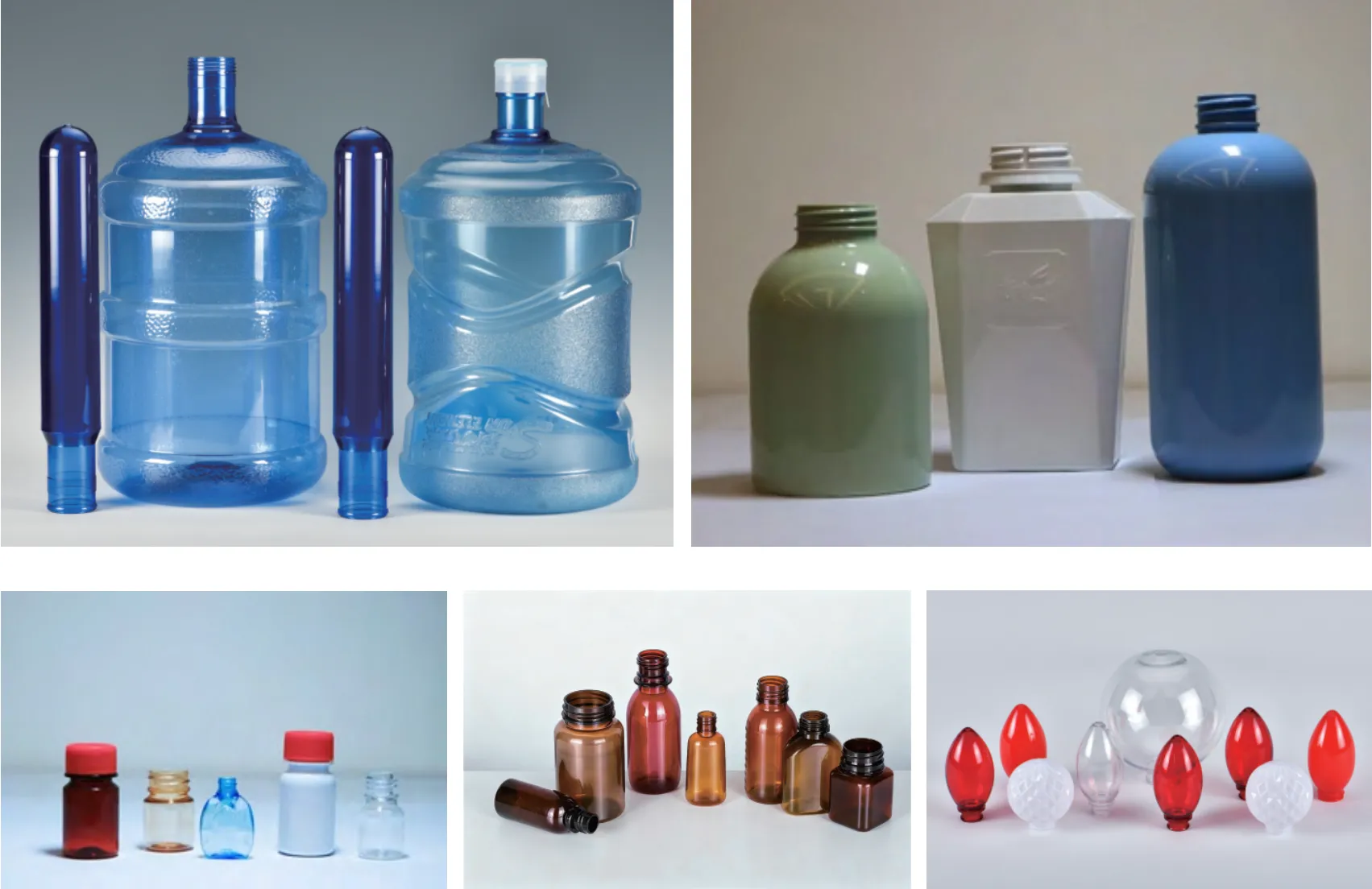
- Common Applications Across Industries
- Typical Production Metrics
- Auxiliary Equipment Beyond the Machine
- The ISBM Advantage for Modern Packaging
1. What Is Injection Stretch Blow Moulding?
Injection stretch blow moulding — usually shortened to ISBM — is the manufacturing process that produces nearly every transparent PET bottle you will find on a Korean or East Asian retail shelf. Water bottles, juice containers, cosmetic flacons, pharmaceutical vials, household chemical bottles, even 5-liter bulk water gallons. If it is made of clear PET and has a threaded neck finish, it was almost certainly produced on an ISBM machine. The process combines two traditionally separate operations — injection moulding and blow moulding — into a single integrated cycle that takes raw resin pellets and delivers a finished bottle in 12 to 25 seconds depending on bottle size and cavity count.
The key word in the name is stretch. Unlike simple extrusion blow moulding (EBM), where molten plastic is inflated against a mould wall, and unlike plain injection blow moulding (IBM), where a preform is blown without axial stretching, ISBM deliberately elongates the preform with a mechanical stretch rod before and during inflation. This biaxial stretching action creates a crystalline molecular structure inside the PET wall that delivers dramatic improvements in drop resistance, top-load strength, and gas barrier properties. We will cover the physics in Module 3, but the takeaway is simple: stretch-blown bottles are stronger, clearer, and lighter than their non-stretched equivalents, and the performance gap is what made ISBM the dominant technology for premium PET packaging worldwide.
ISBM machines come in two fundamental architectures. One-step (also called single-stage) machines, like the ones in our 4-Station ISBM Machine range, perform injection and blowing inside the same machine, keeping the preform on a core rod from melt through to finished bottle. Two-step machines produce preforms on one line and blow them on a separate downstream reheat-blow unit. For Korean factories producing 3 to 30 million bottles per year — which covers the vast majority of regional beverage, cosmetic, and pharmaceutical manufacturers — the one-step approach wins decisively on energy economics, reject rates, and floor space. We will return to this comparison in Module 7.
2. The Core ISBM Process: 4 Stages Explained
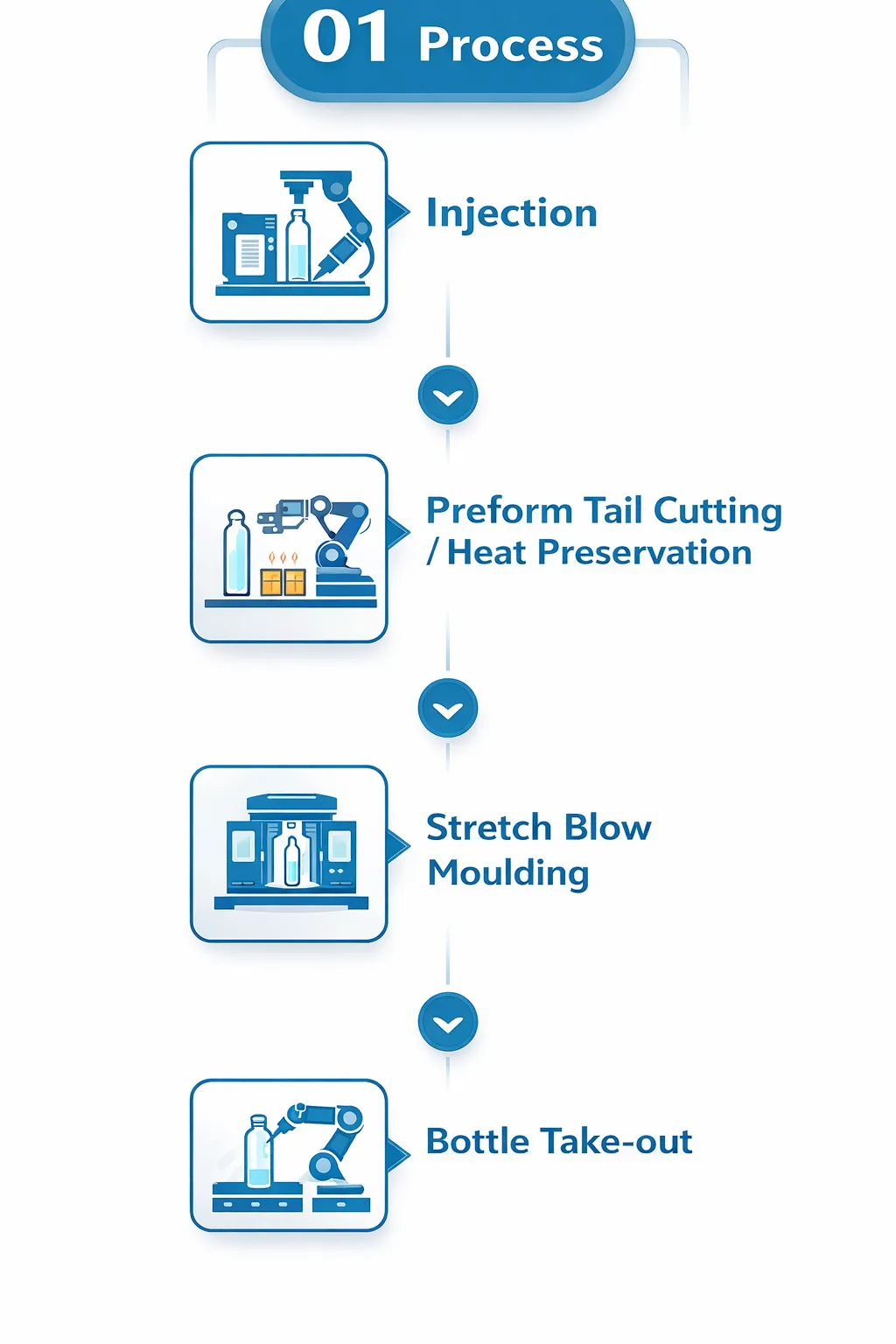
Every one-step ISBM cycle moves through four functional stages, though the machine architecture varies in how many physical stations it uses to deliver them. Here is what happens from raw resin to finished bottle, step by step.
Stage 1 — Injection Moulding the Preform
Raw PET or PETG resin pellets feed from a hopper into a plasticizing screw — typically 40 mm to 60 mm in diameter with a 24:1 length-to-diameter ratio — where controlled heating bands melt the resin at 275 to 290 Celsius for standard PET. The molten plastic is injected at high pressure through a hot runner manifold into a mould cavity that shapes it around a cooled core rod. The result is a preform: a test-tube-shaped intermediate with the fully-formed neck finish at one end and a closed dome at the other. Depending on the target bottle, preforms weigh between 3 grams (for 15 ml eye-drop vials) and 130 grams (for 5-liter water gallons).
The injection clamping force required to hold the mould closed against cavity pressure ranges from 50 KN on compact single-cavity machines up to 785 KN on our heaviest-duty HGY250-V4 and BPET platforms. This is the single most underappreciated spec in ISBM buying, because insufficient clamping force causes flash at parting lines and forces operators to reduce cavity count to work around the limitation.
Stage 2 — Thermal Conditioning (Optional)
On 4-station and 6-station machines, a dedicated conditioning station re-profiles the preform wall temperature after injection. Infrared heaters apply differential heat to specific zones of the preform — typically keeping the body slightly hotter than the neck area — so that the subsequent stretching step produces uniform wall thickness even on oval or asymmetric bottle geometries. This station is what makes 4-station architecture the default choice for premium K-beauty cosmetic bottles and irregularly shaped cosmetic jars. 3-station machines skip this step entirely, relying on the residual heat from injection to carry the preform through to blowing; this works well for round bottles but limits the architecture’s ability to handle complex shapes.
Stage 3 — Stretch Blow Moulding
This is where the magic happens. The thermally prepared preform is indexed into the blow cavity, where a servo-controlled stretch rod descends axially, elongating the preform lengthwise against mechanical stops. Simultaneously, high-pressure air between 2.0 and 3.5 MPa is injected through the stretch rod or through a separate blow port, inflating the preform radially against the chilled blow mould walls. The combined axial and radial stretching creates biaxial molecular orientation — the crystalline lattice we will explore in detail in the next module — and the PET cools against the mould walls in the bottle shape within milliseconds.
Stage 4 — Take-Out and Cooling
A robotic gripper strips the finished bottle from the core rod and places it upright on the exit conveyor. Because the PET is still slightly warm at this stage (typically 45 to 60 Celsius), a minimum 2-meter conveyor run to ambient air allows dimensional stabilization before the bottle reaches any downstream packaging or filling station. For Korean pharmaceutical and food-contact applications, this fully enclosed melt-to-bottle path is what allows ISBM to satisfy GMP cleanroom expectations without additional isolator hardware — no human hand touches the preform or bottle at any point during production.
3. Why Biaxial Orientation Matters (The Physics)
Here is a question that separates ISBM engineers from sales reps: why can a 15-gram PET bottle produced on an ISBM machine withstand a 1.5-meter drop onto a concrete floor, while a 15-gram HDPE bottle produced on an extrusion blow machine cracks on the first impact? The answer has nothing to do with material chemistry and everything to do with molecular orientation.
PET (polyethylene terephthalate) is a semi-crystalline polymer, meaning it can exist in either amorphous (disordered) or crystalline (ordered) molecular arrangements depending on how it is processed. In its amorphous state, PET’s long molecular chains are coiled randomly like cooked spaghetti. In its biaxially oriented state, those chains are straightened and aligned in two perpendicular directions — axial (along the bottle height) and hoop (around the bottle circumference) — forming an interwoven crystalline lattice that gives the bottle its strength.
The stretch ratios required to achieve optimal biaxial orientation are typically 2.5:1 to 3.0:1 axial and 4.0:1 to 4.5:1 hoop, multiplied together to give a total area stretch ratio of 10:1 to 13.5:1. Below these ratios, the polymer chains remain partially disordered and the bottle exhibits stress whitening under impact. Above these ratios, you get what ISBM engineers call over-stretching — a characteristic pearlescent haze that ruins bottle clarity. The narrow window between under-stretching and over-stretching is why preform design (which determines the starting geometry) is so critical, a topic we will cover in Module 6.
The practical benefits of biaxial orientation are measurable and substantial. Top-load strength (the force a bottle can withstand before collapsing under vertical pressure, important for stacking on pallets) increases by roughly 30 percent versus non-oriented PET. Oxygen barrier improves by up to 20 percent, which directly affects shelf life of sensitive products like juice and beer. Impact resistance improves dramatically, which is why a dropped water bottle bounces rather than shatters. And because the oriented PET is stronger per unit weight, brand owners can lightweight their bottles by 10 to 15 percent without losing structural integrity — the single largest cost-saving lever available in packaging economics.
4. Materials You Can Process on ISBM Machines
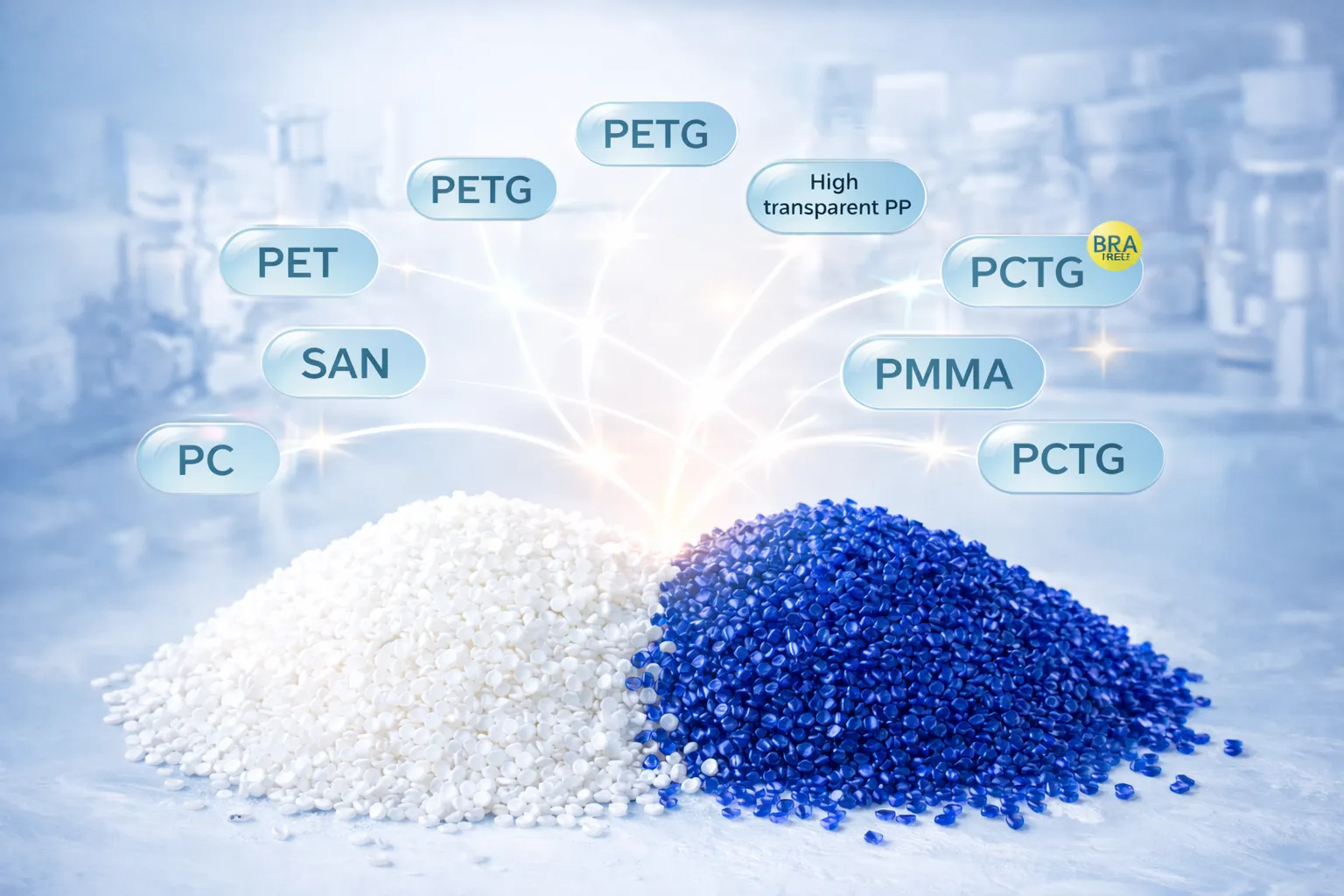
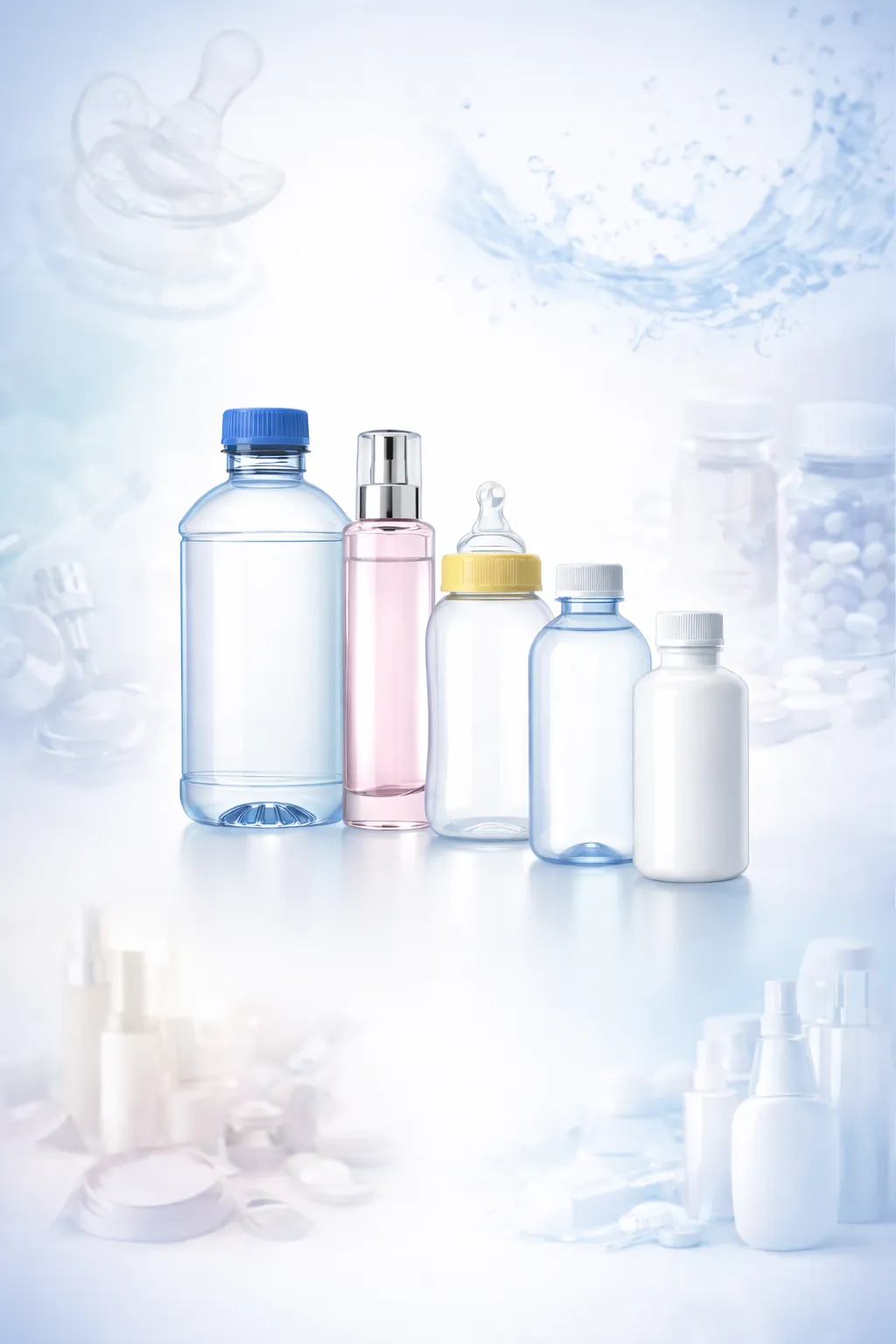
Modern ISBM machines are surprisingly versatile in the resins they handle. Korean factories routinely process seven different engineering plastics on the same chassis, each with its own processing window, stretch ratio requirements, and end-use applications.
| Resin | Melt Temp (°C) | Typical Application |
|---|---|---|
| PET | 275-285 | Water bottles, beverages, standard cosmetic flacons |
| PETG | 225-245 | K-beauty cosmetic jars, premium serum bottles |
| PCTG | 240-270 | Heavy-wall premium cosmetic jars, clear containers |
| PC | 280-310 | Reusable sports bottles, dishwasher-safe containers |
| Tritan | 260-290 | BPA-free baby feeding bottles, child-safe packaging |
| PP | 200-230 | Translucent pharmaceutical flacons, chemical containers |
| PPSU | 310-340 | Autoclave-sterilizable baby bottles, medical containers |
The trade-offs between resins usually come down to three factors: optical clarity, temperature resistance, and cost. PET is the universal default because it delivers 85 percent of the clarity of glass at 20 percent of the cost per kg. PETG and PCTG step up clarity and gloss at the expense of heat resistance, which is why they dominate premium cosmetic packaging but are unsuitable for hot-fill beverage applications. Tritan and PPSU handle repeated sterilization and hot liquids but cost 3 to 5 times more than standard PET, which is why they are reserved for baby bottles and medical applications where regulatory requirements justify the premium.
Recycled PET (rPET) deserves a separate mention because Korean brand owners are increasingly specifying 25 to 50 percent recycled content for sustainability credentials. rPET processes differently from virgin PET — lower IV value, higher moisture sensitivity, variable contamination — and requires specific machine configurations including bimetallic screws and chrome-plated barrel liners when recycled content exceeds 50 percent. We will cover rPET processing in more depth in a dedicated upcoming article.
5. 3-Station vs 4-Station vs 6-Station Trade-offs
ISBM machines are built in three fundamental station-count architectures, and picking the right one for your production is one of the most consequential decisions in equipment selection. The number of stations determines cycle time, energy efficiency, bottle shape flexibility, and capital cost — and each configuration wins decisively in a specific production scenario.
3-station architecture combines injection, stretch-blow, and take-out into three rotary positions, skipping the dedicated thermal conditioning station. This saves roughly 3 to 5 seconds per cycle compared to 4-station designs, translating to 15 to 22 percent higher hourly throughput on standard round bottles. Our 3-Station ISBM Machine family, including the BPET-94V3 with its industry-leading 785 KN injection clamping force, is optimized for high-volume production of round water bottles, beverage bottles, and household chemical containers. The limitation: without conditioning, the machine struggles with complex oval or asymmetric geometries where differential preform heating is needed to prevent thin corners.
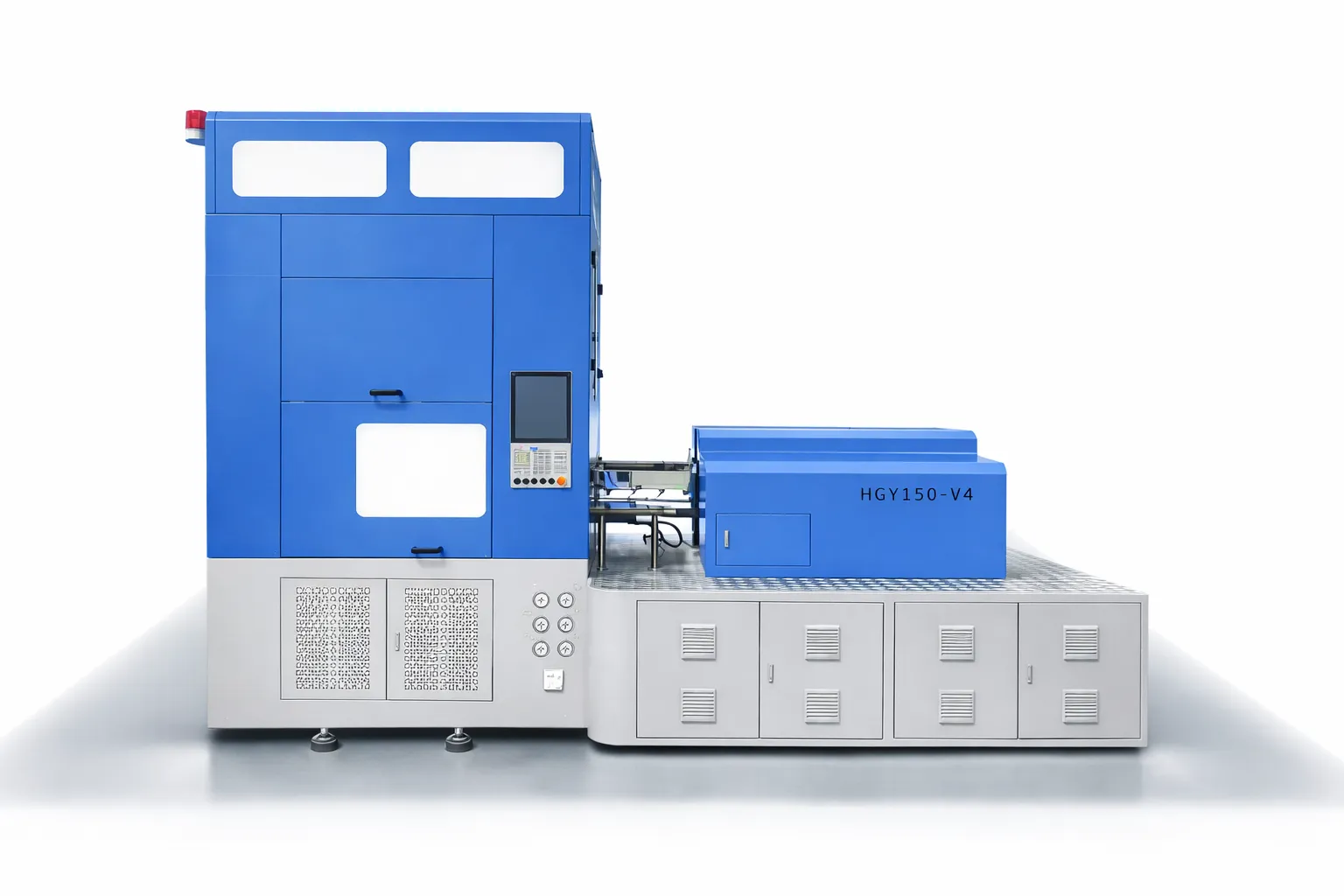
4-station architecture adds a dedicated heating and pre-blowing station between injection and stretch-blow. This extra stage is what allows the machine to produce premium K-beauty cosmetic bottles, pharmaceutical vials with complex neck geometries, and any other bottle where wall thickness uniformity matters more than raw cycle time. The 4-station platform is the Korean market’s default choice for mid-volume cosmetic, pharmaceutical, and food-contact applications. Our BPET-70V4 compact 4-station platform suits pilot and R&D production, while the heavy-duty HGY150-V4 handles mid-volume production lines.
6-station architecture is a more recent innovation that adds a second parallel injection station to the 4-station layout. The twin injection approach effectively doubles the hourly throughput of a conventional 4-station platform while sharing the same blow, conditioning, and take-out infrastructure. For factories producing 5 to 30 million bottles per year on a single SKU, the 6-station design delivers the economics of two smaller machines in the footprint of one. Ever-Power’s flagship HGYS280-V6 is the benchmark implementation of this architecture.
6. Preform Design Fundamentals
Ninety percent of ISBM bottle defects originate at the preform stage. Wall thickness variation, haze, thin corners, neck thread flash — all of these trace back to how the preform was designed before the mould was cut. Yet preform engineering is the least-discussed topic in ISBM buying decisions, which is why we encourage Korean buyers to engage our engineering team early in any new bottle project, before any steel is machined.
A preform has three critical regions. The neck finish is formed at the injection stage and never reshaped during blowing, which means any thread tolerance issue at this stage carries through directly to the finished bottle. Neck finish standards follow industry conventions — PCO 1881 for beverage, 28-400 and 28-410 for cosmetic, 24-415 for pharmaceutical — and our moulds hold neck thread tolerance within 0.02 mm for automated capping compatibility.
The preform body is the cylindrical section that will stretch radially during blowing. Body wall thickness determines the final bottle wall thickness through the hoop stretch ratio, while body length determines the finished bottle height through the axial stretch ratio. For a 500 ml water bottle, a typical preform body measures 22 mm outer diameter, 3 mm wall thickness, and 95 mm length — producing a finished bottle around 90 mm body diameter, 0.3 mm wall, and 220 mm height after biaxial stretching.
The preform gate is where molten resin enters the mould cavity during injection. Gate design affects fill balance across multi-cavity moulds, cycle time, and the risk of gate-area crystallization defects. For most Korean applications we use hot-tip gates with individual PID temperature control per cavity, which is what allows 12-cavity and 16-cavity moulds to deliver bottle-to-bottle weight consistency within 0.3 grams.
One detail that surprises new ISBM buyers: the same finished bottle can be produced with different preform designs, and the choice affects everything downstream. A heavier, shorter preform produces a thicker-wall bottle with better drop resistance but higher resin cost per unit. A lighter, longer preform produces a thinner-wall bottle with lower material cost but requires tighter process control to avoid stress whitening. Our engineering team runs stretch-ratio simulation on every new bottle project before recommending the optimal preform geometry — a service included in our custom ISBM mould design process.
7. One-Step vs Two-Step: Why In-Line Production Wins
The oldest debate in PET bottle production is whether to buy a one-step ISBM machine (integrated injection and blowing) or a two-step setup (separate preform injection line plus downstream reheat-blow machine). For Korean factories producing between 3 and 30 million bottles per year — which includes virtually all regional beverage bottlers, cosmetic contract fillers, and pharmaceutical packaging companies — the answer is almost always one-step. Here is why.
Energy economics favor one-step decisively. In a two-step process, preforms cool down after injection, get stored for days or weeks, then heat back up on a separate reheat-blow machine. Energy is consumed twice for a single bottle. One-step production keeps the preform on the core rod at optimal stretch-blow temperature, using residual injection heat instead of reheating. Korean factories report 30 to 40 percent lower energy consumption per bottle on one-step versus two-step production of equivalent SKUs.
Reject rates also favor one-step. Two-step production exposes preforms to handling scuffs during storage and transit, moisture pickup during ambient exposure, and surface contamination from dust and static. Typical two-step reject rates run 1 to 3 percent, mostly from surface defects. One-step reject rates consistently run below 0.5 percent because the bottle never leaves the enclosed machine environment between melt and take-out.
Floor space economics round out the case. A two-step setup requires an injection line, a preform storage warehouse, and a separate reheat-blow machine — typically 300 to 500 square meters of total facility space. A comparable one-step line fits in under 40 square meters including auxiliaries. For Korean factories paying premium commercial real estate rates, this difference is not trivial.
Two-step still wins at extreme scale — above 50 million bottles per year on a single SKU, the per-unit economics of dedicated preform production become competitive with one-step. But for the Korean SME packaging reality of 3 to 30 million units per year per SKU, one-step ISBM is the straightforward answer.
8. Common Applications Across Industries
ISBM technology serves five distinct industries in Korean and East Asian markets, each with its own technical priorities. Here is how the process plays out across applications.
Beverage & Water Bottling
Water, juice, sports drinks, iced tea — the beverage sector is the largest consumer of ISBM bottles globally. Korean regional bottlers in Daegu, Busan, and Ulsan typically run 4 to 8 cavity tooling on 500 ml to 2 L formats, hitting 2,800 to 3,500 bottles per hour on a mid-size 4-station platform. Bulk 5-liter water gallons for the home and office delivery market run on heavy-duty 1-cavity tooling at around 140 bottles per hour.
K-Beauty & Premium Cosmetic Packaging
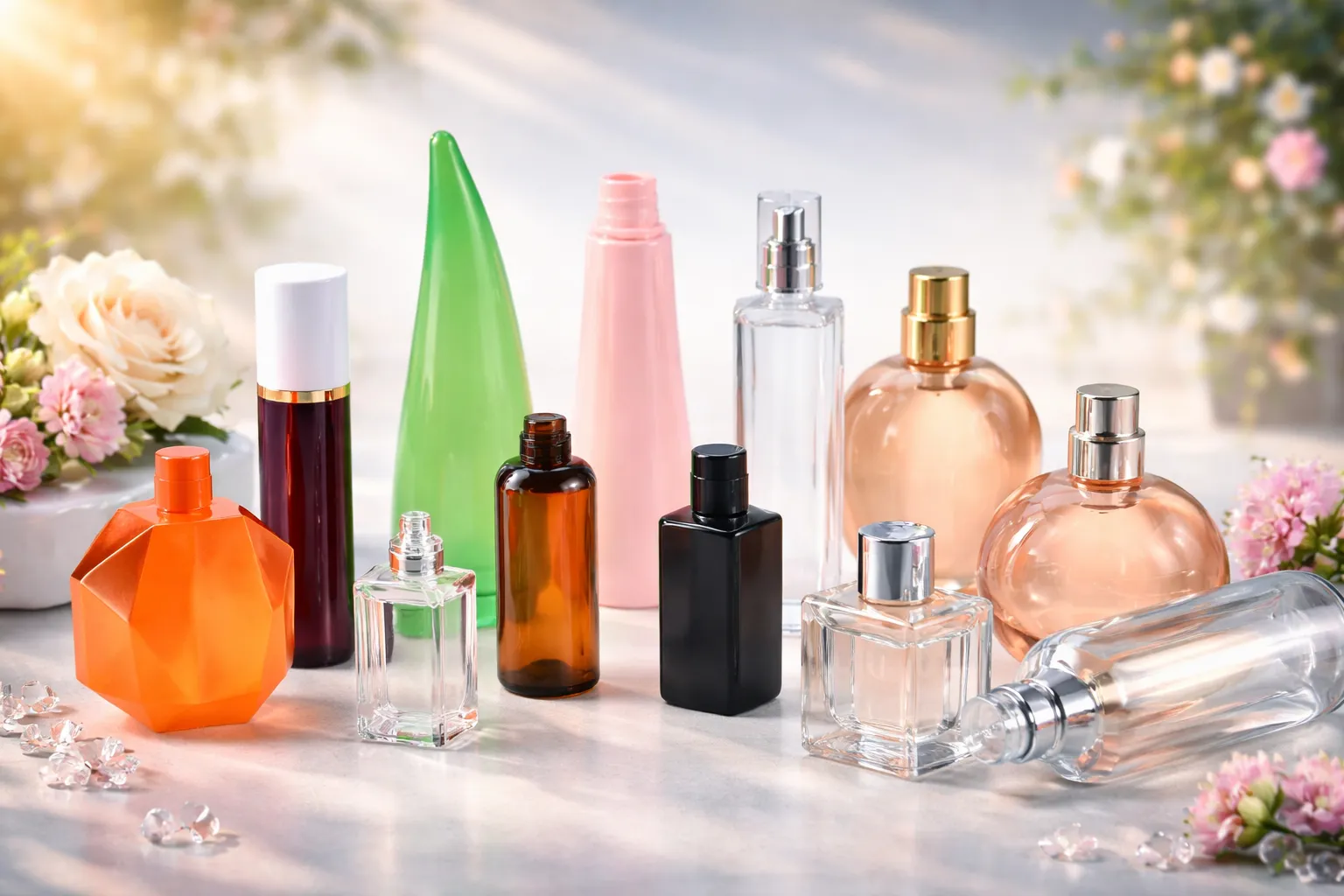
Korean cosmetic brands set the global standard for transparent packaging quality. PETG serum bottles, PCTG cream jars, and complex oval toner flacons demand 4-station architecture with premium S136 mould steel, mirror polish to SPI A-1 finish, and neck thread tolerance within 0.02 mm for automated capping compatibility. Typical production runs are 20,000 to 100,000 units per campaign, driven by the 90-day product launch cycle that defines K-beauty.
Pharmaceutical & Medical Packaging
Eye-drop vials, oral suspension bottles, saline containers — pharmaceutical ISBM production requires cleanroom-compatible closed-loop cycles, strict neck-thread tolerance for tamper-evident sealing, and often PC or PPSU resin for autoclave sterilization. Korean pharmaceutical contract manufacturers in Daejeon and Cheongju routinely run 8 to 16 cavity tooling on 5 ml to 500 ml vials, with reject rates under 0.3 percent to meet KFDA requirements.

Food Packaging & Wide-Mouth Jars
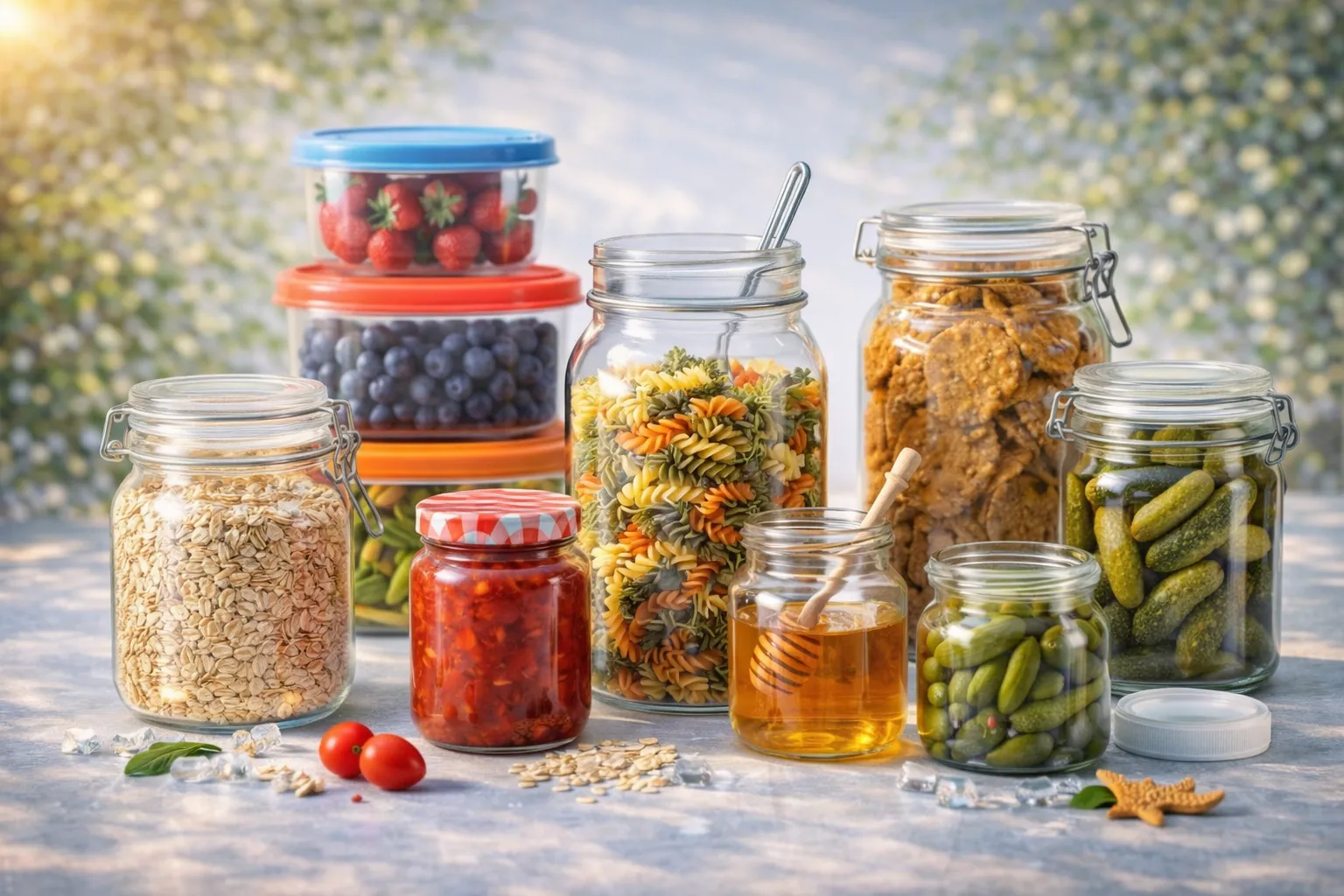
Korean kimchi, gochujang, honey, and cooking oil containers represent a distinct ISBM category because wide-mouth geometries up to 148 mm neck diameter present much larger projected mould areas than standard bottles. Heavy-duty 4-station machines with 685 KN injection clamping and reinforced P20 mould bases handle these applications at 1 to 2 cavity configurations, producing 200 to 400 jars per hour.
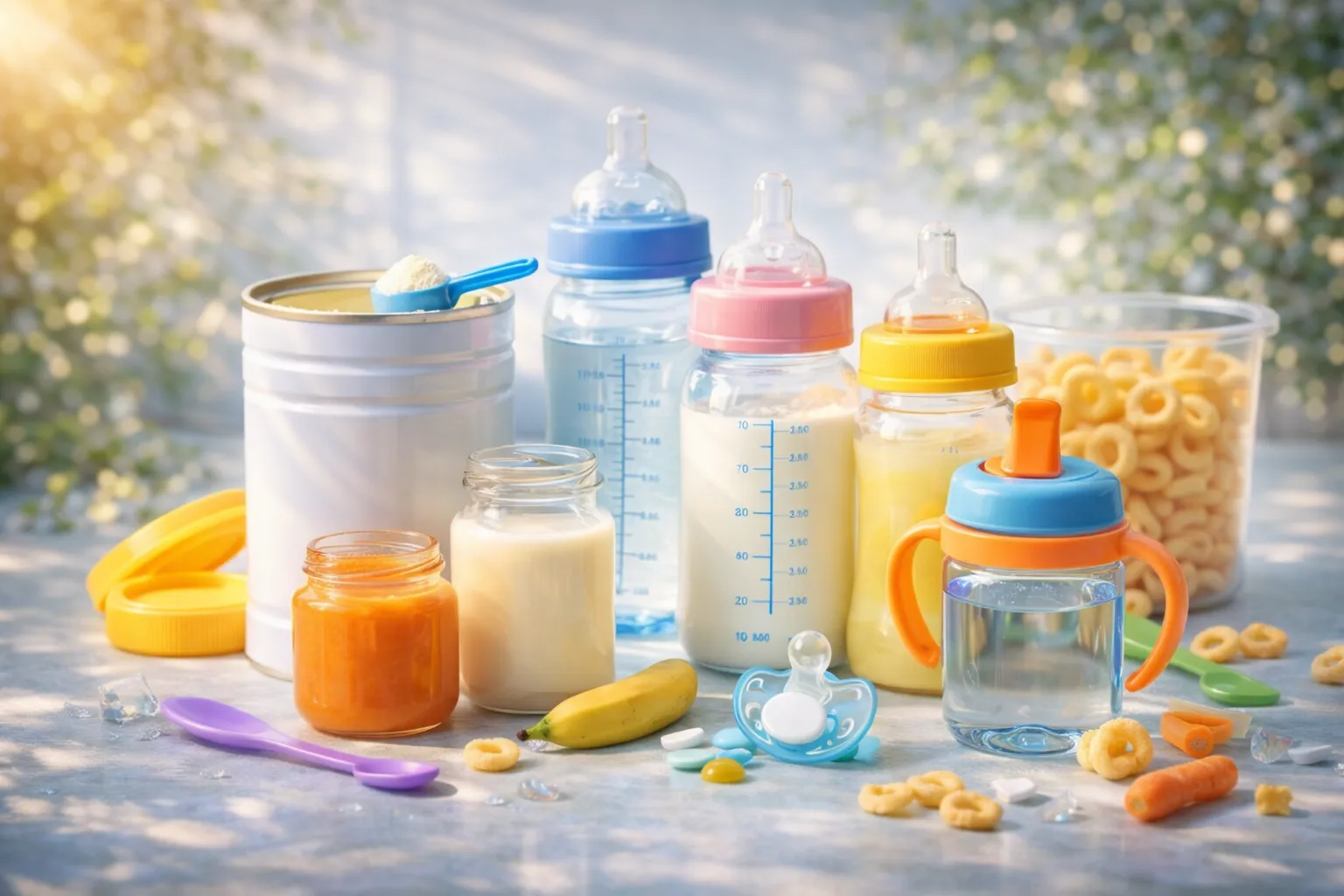
Baby Care & BPA-Free Packaging
Tritan, PCTG, and PPSU baby feeding bottles demand thermally stable hot runner systems with individual PID control per cavity, chrome-plated flow paths to eliminate resin stagnation, and nickel-alloy barrel liners for PPSU applications. Korean baby-care brands in Ulsan and Busan run 4 to 8 cavity tooling on 150 to 330 ml bottles, with zero-yellowing requirements verified at every production shift.
9. Typical Production Metrics: Cycle Time, Energy, Reject Rate
Benchmarking your ISBM operation against industry reality is the first step in understanding whether you are running efficiently. The table below summarizes the metrics we see across Korean and East Asian installations — use these as a reality check on supplier claims and internal performance.
| Metric | 500 ml / 6-Cavity | 1 L / 4-Cavity | 5 L / 1-Cavity |
|---|---|---|---|
| Cycle Time (sec) | 13-15 | 15-17 | 24-26 |
| Hourly Output (bph) | 1,600-1,700 | 900-1,000 | 135-150 |
| Energy / 1000 bottles (kWh) | 28-32 | 42-48 | 210-240 |
| Reject Rate (%) | 0.3-0.5 | 0.3-0.5 | 0.5-0.8 |
| Wall Thickness Variance (mm) | ±0.03 | ±0.04 | ±0.06 |
| Neck Thread Tolerance (mm) | ±0.02 | ±0.02 | ±0.03 |
If your current production is running significantly below these benchmarks, the root cause is usually one of three factors: incorrectly sized auxiliary equipment (chiller capacity is the most common limitation), suboptimal preform design, or machine process parameters that have drifted from initial commissioning settings. A process audit by our engineering team typically recovers 10 to 20 percent of lost throughput on installed machines older than three years.
10. Auxiliary Equipment Beyond the Machine
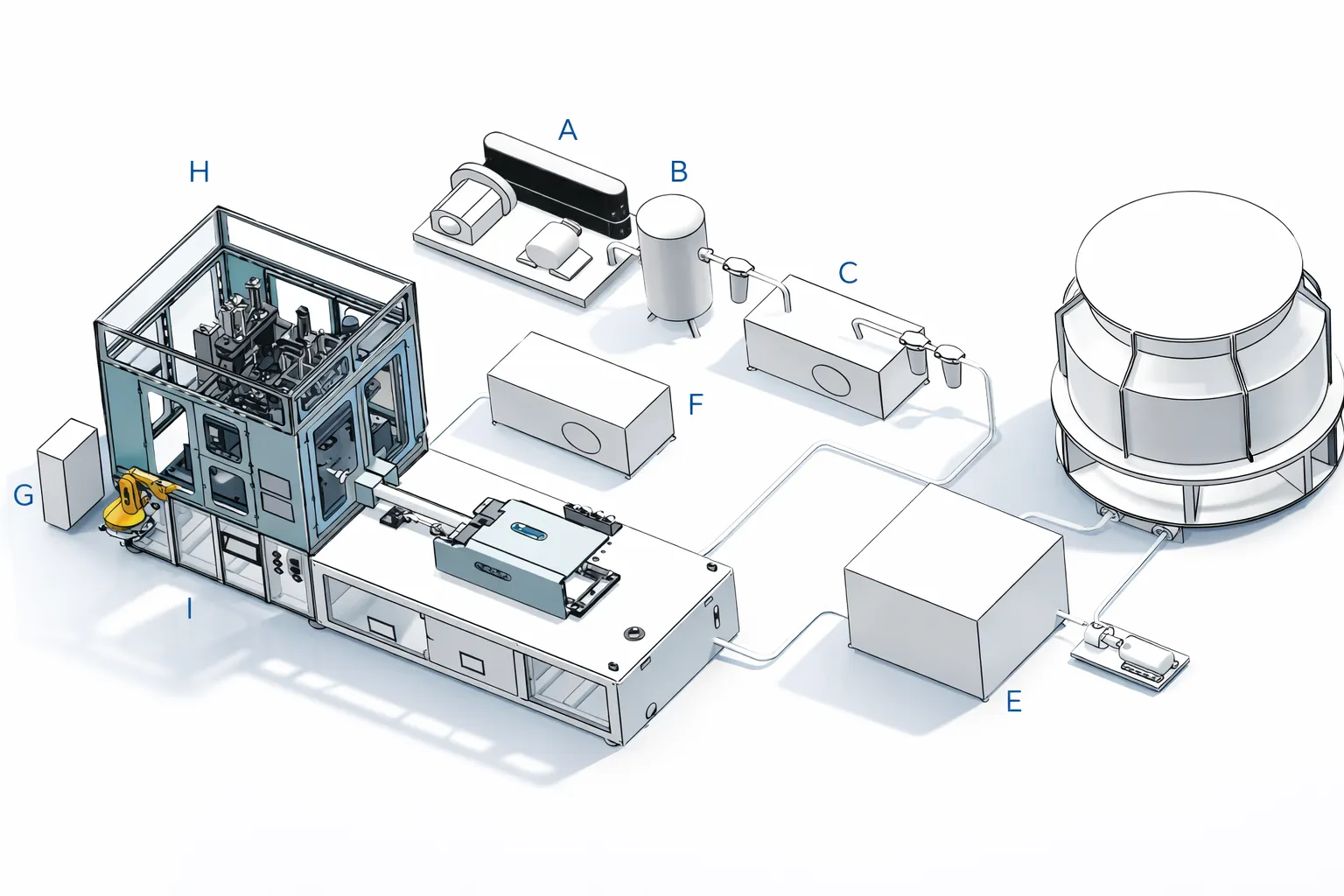
An ISBM machine reaches its rated performance only when the auxiliary equipment around it is correctly sized. Under-sized auxiliaries cause cycle times to extend by 10 to 20 percent, which directly affects your capital payback calculation. Here is what every ISBM line needs beyond the machine itself.
The oil-free screw air compressor is the single most important auxiliary. ISBM requires high-pressure air at 2.0 to 3.5 MPa for the blowing step, plus low-pressure air for pneumatic controls. For food-contact and pharmaceutical applications, Class 0 oil-free certification is mandatory. Sizing depends on bottle volume and cavity count — a typical 6-cavity 500 ml line needs 3 to 4 cubic meters per minute of high-pressure supply.
The chiller and cooling tower provide thermal extraction from the mould cavities and the hydraulic system. Typical chilled water setpoint is 12 Celsius at 80 L/min flow through the mould circuit, while cooling tower water handles hydraulic oil cooling at 200 L/min. Under-sized chillers are the number-one cause of suboptimal cycle times on Korean ISBM installations — we recommend oversizing capacity by 20 percent versus the calculated peak demand.
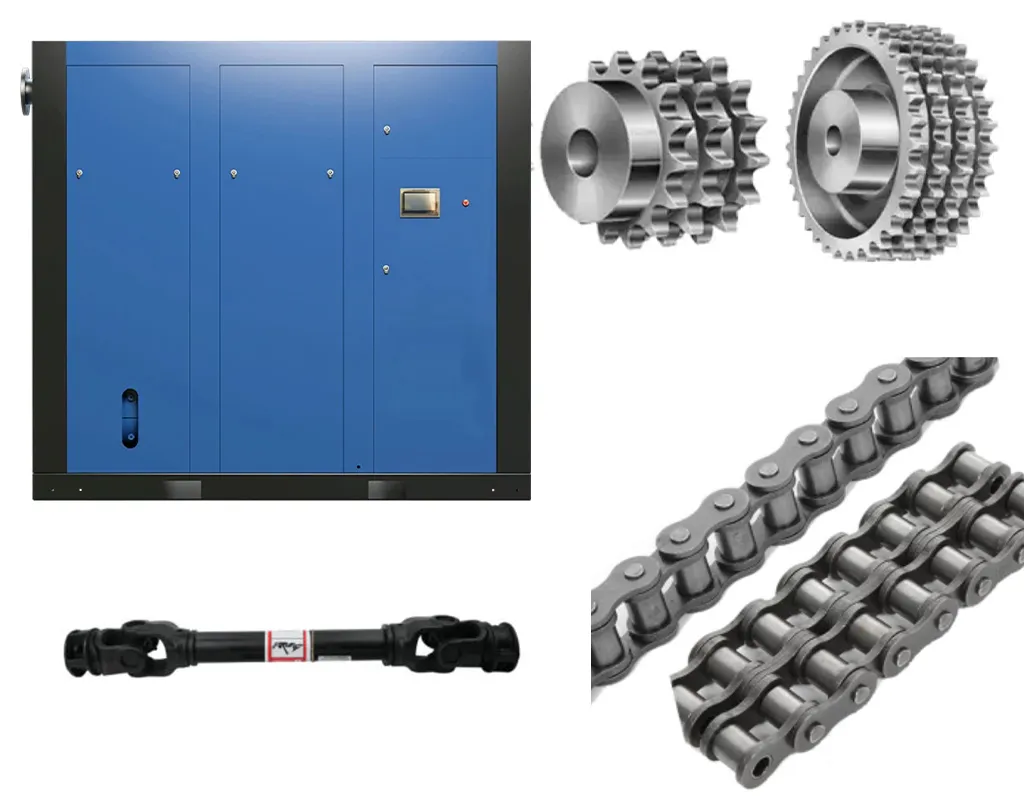
The desiccant resin dryer removes moisture from PET, PC, and PPSU pellets before injection. PET hydrolyzes above 0.02 percent moisture content, producing visible silver streaks in the finished bottle. A 100 to 200 kg hopper dryer with integrated dew-point monitoring is standard on most Korean installations. Mould temperature controllers hold cavity wall temperature between 10 and 18 Celsius for PET and up to 95 Celsius for PC, which is critical for surface finish and dimensional stability.
For high-value pharmaceutical and cosmetic lines, additional auxiliaries include robot takeout conveyors with upright bottle orientation, vision inspection systems that tag out-of-tolerance bottles before they reach filling, and automated palletizers that handle downstream packaging without manual intervention. The complete auxiliary package typically adds 25 to 40 percent to the core machine cost but delivers proportionate improvements in production reliability.
11. The ISBM Advantage for Modern Packaging
Injection stretch blow moulding is the dominant PET bottle production technology for a reason. The combination of biaxial molecular orientation, closed-loop processing, resin flexibility, and cycle-time efficiency delivers bottles that are stronger, clearer, lighter, and cleaner than any competing technology can match. For Korean and East Asian packaging factories producing between 3 and 30 million bottles per year — which includes the vast majority of regional beverage, cosmetic, pharmaceutical, and food-contact applications — one-step ISBM is not just the preferred answer, it is the only answer that delivers competitive unit economics.
The key decisions for any ISBM buyer come down to three factors: station count (3 for high-volume round bottles, 4 for premium and complex shapes, 6 for high-throughput production), cavity count (matched to annual volume targets), and material selection (PET for beverage, PETG for cosmetic, Tritan for baby care, PPSU for medical). Get these three right at the purchasing stage, and the downstream production economics take care of themselves. Get them wrong, and no amount of operational cleverness will recover the loss.
Ever-Power has spent two decades focused exclusively on ISBM technology, with over 500 machines installed across Korea, Japan, Vietnam, Thailand, Indonesia, and beyond. Our engineering team reviews every bottle project before cutting steel, runs stretch-ratio simulation to verify feasibility, and supports onsite commissioning with Korean-speaking engineers. If you are evaluating an ISBM purchase or looking to optimize an existing production line, we would be happy to share the benchmark data and decision frameworks we use with every Korean customer.
Key Takeaways
- ISBM combines injection and blowing into a single integrated cycle, producing a finished bottle in 12-25 seconds.
- Biaxial molecular orientation delivers 30% higher top-load strength and up to 20% better gas barrier versus non-oriented PET.
- Seven engineering plastics process on modern ISBM machines: PET, PETG, PCTG, PC, Tritan, PP, PPSU.
- 3-station architecture wins on speed; 4-station on shape flexibility; 6-station on high-volume throughput.
- One-step production beats two-step on energy (30-40% savings), reject rates (under 0.5% vs 1-3%), and floor space for 3-30M annual production.
- Preform design determines 90% of bottle quality outcomes — invest engineering time here before cutting mould steel.
Ready to Plan Your ISBM Production Line?
Send us your bottle drawing, target annual volume, and resin preference. Our Korean engineering team returns a complete feasibility report within 48 hours, including machine recommendation, cavity count optimization, cycle-time estimate, and transparent pricing.
Editor: Cxm