
기술 가이드 · IBM 시스템 구성 · 한국 에버파워
사출 블로우 성형
충치 개수 선택 가이드
캐비티 수는 IBM 장비 선정에서 가장 중요한 요소 중 하나로, 장비당 연간 생산량, 단위 용량당 투자 비용, 식품의약품안전처(KFDA) 인증 비용 및 생산 유연성을 결정합니다. 이 가이드에서는 연간 생산량에 관계없이 한국 제약, 생활화학 및 화장품 분야의 IBM 장비에 적합한 캐비티 수를 정확하게 계산하는 방법을 안내합니다.
ZQ40 → ZQ135 제품군
한국 공장 경제학
코리아 에버파워 · 경기도 안산시 · 2026년 7월
시스템 참조 · ZQ 시리즈 캐비티 개수 매개변수
최대 용량(10ml 기준)
30
ZQ135 플래그십 모델 · 시간당 약 23,800병 생산 가능
세탁 시간 (건조)
4.0초
모든 ZQ 모델 · 4초 건조 사이클
목표 활용
70–85%
한국의 2교대 연간 생산 목표
효율 계수
88%
용량 계획을 위한 정격 출력에 적용됩니다.
섹션 01
왜 캐비티 개수가 IBM 사양에서 중요한 요소인가?
~ 안에 IBM 머신 selection, cavity count is the primary decision — more consequential than machine clamping force, barrel size or control system specification — because cavity count at a given container format directly determines: annual output per machine-year, capital cost per unit of annual capacity, number of KFDA pharmaceutical qualifications required per production target, and the Korean factory’s production scheduling flexibility. Getting cavity count correct at machine order eliminates the most expensive mistake in Korean IBM investment: either under-specifying cavity count (the machine cannot achieve the required annual output, forcing purchase of a second machine) or over-specifying cavity count (the machine runs below 50% utilisation, producing an unacceptable return on capital).
IBM’s output is structurally different from EBM — in EBM, output rate is primarily determined by cycle time (which varies with machine size and container weight); in IBM, cycle time is essentially fixed at 4 seconds dry across the ZQ series regardless of model, so output is almost entirely determined by the number of cavities running simultaneously. A ZQ40 at 9 cavities and a ZQ135 at 30 cavities both run approximately 4-second cycles — the ZQ135 produces 3.33× more bottles per hour not because it runs faster, but because it produces 3.33× more bottles per cycle. This means cavity count is literally equivalent to production capacity in IBM — every cavity added is a fixed increment of output rate, not an improvement in cycle speed.
한국 IBM 생산 업체들이 특정 용기 규격에 맞는 정확한 캐비티 수를 확인하지 않고 기계 클램핑력(KN)이나 모델 번호에만 의존하여 투자 결정을 내리는 경우가 많아 규격 오류가 발생합니다. 예를 들어, 1,100 KN의 클램핑력을 가진 ZQ110 기계는 10 ml 의약품 용기는 24개의 캐비티를 가동할 수 있지만, 500 ml 생활용품 용기는 6~8개의 캐비티만 가동할 수 있습니다. 동일한 기계에서 완전히 다른 생산량을 구현할 수 있는 것입니다. 본 가이드는 한국 IBM 생산 업체들이 특정 용기 규격, 연간 생산량, 그리고 한국 공장의 근무 일정에 맞춰 캐비티 수를 정확하게 지정할 수 있도록 필요한 계산 체계와 참고 자료를 제공합니다.
섹션 02
IBM 충치 개수 계산 공식
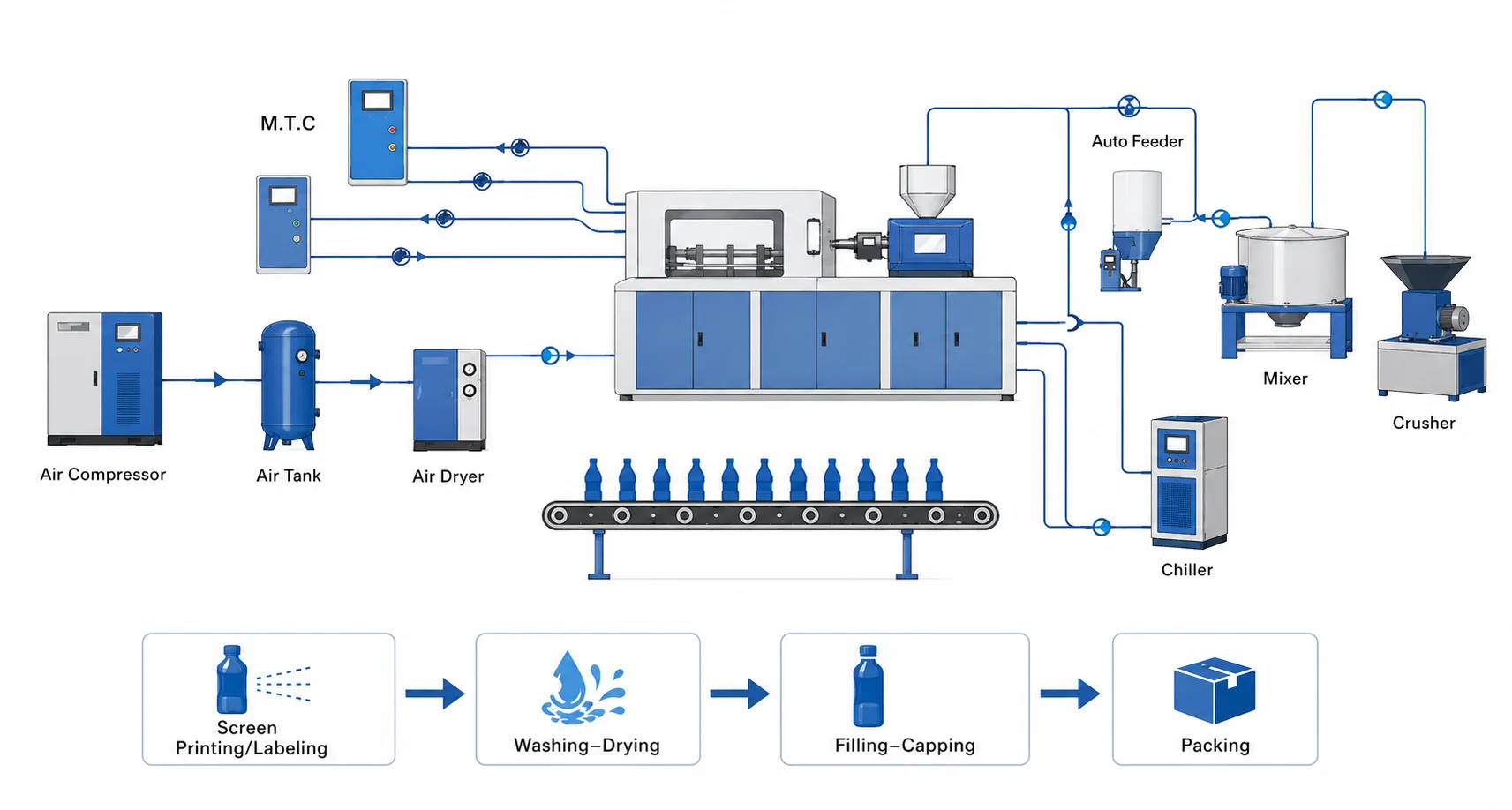
계산 프레임워크 · IBM 용량 계획
1단계 — 필수 연간 판매량
계절별 성수기 완충량을 포함하여 연간 필요량을 산정합니다. 한국 소매점의 판촉 수요 및 생산 설비 유지 보수 가동 중단 시간 완충량을 고려하여 기본 연간 생산량에 15~20%를 추가합니다.
2단계 — 한국 공장 근무 시간표
한국의 2교대 근무는 하루 14시간 생산근무 × 250일 생산일수 = 연간 3,500시간입니다. 한국의 3교대 근무는 하루 21시간 생산근무 × 250일 생산일수 = 연간 5,250시간입니다. 한국의 노동 여건상 3교대 근무가 가능한 경우가 아니라면 2교대 근무를 기준으로 계획을 수립하십시오.
3단계 — 충치 개수 계산 공식
N = V_annual ÷ (3,600 ÷ T_cycle × E × H_annual)
N = 필요한 최소 공동 개수
V_annual = 연간 단위 목표
T_cycle = 4.0초 (ZQ 시리즈)
E = 0.88 (88% 효율)
연간 근무시간 = 3,500시간 (2교대 근무)
4단계 — 활용도 점검
N 값을 다음으로 사용 가능한 ZQ 캐비티 개수로 반올림합니다. 기계 활용률(V_annual ÷ (N × 793/hr × 3,500 h))이 65%와 85% 사이인지 확인합니다. 65% 미만이면 캐비티 개수를 줄여서 다운그레이드합니다. 90% 초과이면 캐비티 개수를 늘려서 업그레이드합니다.
한국 제약회사 · 10ml 안과용제 · 연간 4천만 개 생산 · 2교대 근무
입력
V = 40,000,000
T = 4.0초 · E = 0.88
H = 3,500시간
계산
N = 40M ÷ (793 × 3,500)
N = 4천만 ÷ 2,775,500
N = 14.4 → 20으로 반올림
결과
20개 캐비티의 ZQ80
생산능력: 연간 5540만 개
이용: 72% ✓
헤드룸
연간 1,540만 대 이상
성장 가능
새 기계 없이
섹션 03
ZQ 시리즈 캐비티 개수 참조표
The following table gives the complete cavity count reference for Korea Ever-Power’s ZQ series at the four most common Korean production formats. Annual capacity figures assume Korean 2-shift operation (3,500 productive hours/year) at 88% mechanical efficiency and 4.0 s dry cycle.
| ZQ 모델 | 클램프(KN) | 10ml Cav · M 단위/년 |
30ml Cav · M 단위/년 |
100ml Cav · M 단위/년 |
500ml Cav · M 단위/년 |
|---|---|---|---|---|---|
| EP-ZQ40 입장 · 3+N 구역 |
400 | 9 약 1980만 |
6 약 1320만 |
4 약 880만 |
2~3세 약 440만~660만 |
| EP-ZQ60 표준 · 3+N 구역 |
600 | 14 약 3080만 |
9 약 1980만 |
5~6세 약 1100만~1320만 |
3~4세 약 660만~880만 |
| EP-ZQ80 이중 유압식 · 각도 분할 · 3+N |
800 | 20 약 4400만 |
12~14세 약 2640만~3080만 |
8~10세 약 1760만~2200만 |
5~6세 약 1100만~1320만 |
| EP-ZQ110 이중 유압식 · 65mm 스크류 · 4+N |
1,100 | 24 약 5280만 |
16~18세 약 3520만~3960만 |
12~14세 약 2640만~3080만 |
6~8세 약 1320만~1760만 |
| EP-ZQ135 플래그십 · 70mm · 6+N · 37+37KW |
1,350 | 30 약 6600만 |
20~22세 약 4400만~4840만 |
14~16세 약 3080만~3520만 |
8 약 1760만 |
연간 생산능력: 3,500시간/년(2교대) × 88% 효율 × (3,600 ÷ 4.0초) × 캐비티 수
섹션 04
충치 최대 개수를 제한하는 요인
주어진 용기 형식에서 최대 캐비티 수는 세 가지 독립적인 기계 제한 조건에 의해 제약되며, 이 세 가지 조건을 모두 동시에 충족해야 합니다. 캐비티 수가 증가함에 따라 가장 먼저 도달하는 제한 조건이 우선 적용됩니다.
클램핑력
플래튼 크기
샷 웨이트
ZQ 범위
400~1,350킬로뉴턴
ZQ40 → ZQ135 클램핑 범위
핵심 차원
> 60mm
플래튼 제한이 처음 발생하는 본체 직경
위험 형식
> 1.0 mm
500ml에서 벽이 샷 제한에 가까워지고 있습니다.
최대 사출 클램핑력(KN)을 사출 압력에서의 캐비티당 투영 면적으로 나눈 값입니다. 10ml HDPE 제약 프리폼의 경우, 캐비티당 클램핑 요구량은 약 35~45KN이며, ZQ40(400KN)에는 9개, ZQ135(1,350KN)에는 30개의 캐비티를 사용할 수 있습니다.
컨테이너 본체가 클수록 프리폼의 투영 면적이 커지고, 정격 클램핑력 1kN당 사용 가능한 캐비티 수가 줄어듭니다.
ZQ 터릿 플래튼은 사출 금형의 최대 설치 공간을 물리적으로 제한합니다. 캐비티 개수 또한 플래튼 상의 기하학적 배열에 의해 제한되는데, 인접한 캐비티 사이에는 냉각 채널과 금형 구조적 안정성을 확보하기 위해 충분한 중심 간격이 있어야 합니다.
본체 직경이 60mm를 초과하는 대형 용기는 동일한 ZQ 모델의 클램핑력 한계에 도달하기 전에 플래튼 제한에 걸리게 됩니다.
The screw injection unit has a maximum shot weight per cycle — total HDPE or PP injected across all cavities simultaneously. At large container formats with heavy wall, total shot weight may exceed the ZQ model’s rated barrel capacity before clamping force or platen area is fully utilised.
두꺼운 벽 용기(500ml 기준 본체 두께 > 1.0mm)는 ZQ110에서 8개 미만의 캐비티로 사출량 제한에 근접할 수 있으므로, 대형 포맷의 경우 캐비티 수를 지정하기 전에 사출량 계산을 확인하십시오.
그만큼 제본 주어진 형식에서의 제약 조건은 세 가지 한계 중 먼저 도달하는 한계입니다. 세 가지 한계는 모두 독립적으로 검증해야 하며, 모든 컨테이너 형식 및 ZQ 모델 조합에서 클램핑력이 항상 주요 제약 조건이라고 가정해서는 안 됩니다.
섹션 05
제약 IBM 캐비티 카운트 계획

한국 제약용 IBM 금형의 캐비티 개수 계획에는 비제약용 IBM 금형에는 없는 제약 조건이 있습니다. 바로 캐비티 개수가 식품의약품안전처(KFDA) 인증 기준에 고정되어 있다는 점입니다. IBM 금형 세트의 각 캐비티는 KFDA 의약품 용기 인증 절차에 개별적으로 기록되어 있으며, 최초 KFDA 승인 후 캐비티 개수를 변경하려면 용기 변경 신고를 해야 합니다. 이러한 규제상의 제약으로 인해 한국 제약용 IBM 금형 생산 초기 단계에서 정확한 캐비티 개수를 지정하는 것이 매우 중요하며, 나중에 변경하는 것은 바람직하지 않습니다.
제약 분야의 IBM에 대한 자세한 내용은 제약 IBM 가이드에서 확인할 수 있습니다. 제약용 캐비티 수 결정 규칙은 다음과 같습니다. 1년 차 생산량이 아닌, 예상되는 3년 차 연간 생산량에서 70~80%의 가동률을 달성하는 캐비티 수를 지정해야 합니다. 한국의 제약 생산량 증가는 일반적으로 한국 식품의약품안전처(KFDA) 인증 완료 및 한국 시장 수요 증가에 따라 2~4년 차에 연간 15~25%의 생산량을 추가합니다. 1년 차에 지정된 캐비티 수로 인증을 받으면 3년 차에는 90% 이상의 가동률을 보이게 되므로, 인증 업그레이드 또는 두 번째 장비 도입이 필요하게 되는데, 이는 초기 인증 시 캐비티 수를 한 단계 높게 지정하는 것보다 비용이 더 많이 듭니다.
의약품 충치 개수 결정 매트릭스 · 10ml 안약
3학년 목표
< 25M
→ ZQ60 · 14 캐비티
30.8M 시가총액 · 81% 활용률
3학년 목표
25~38개월
→ ZQ80 · 20 캐비티
4400만 시가총액 · 57~86% 활용률
3학년 목표
38~50개월
→ ZQ110 · 24 캐브
5280만 시가총액 · 72~95% 활용률
3학년 목표
> 50M
→ ZQ135 · 30 캐비티
6600만 시가총액 · 76%+ 활용률
섹션 06
가정용 화학제품 및 화장품 충치 발생률 예측 계획
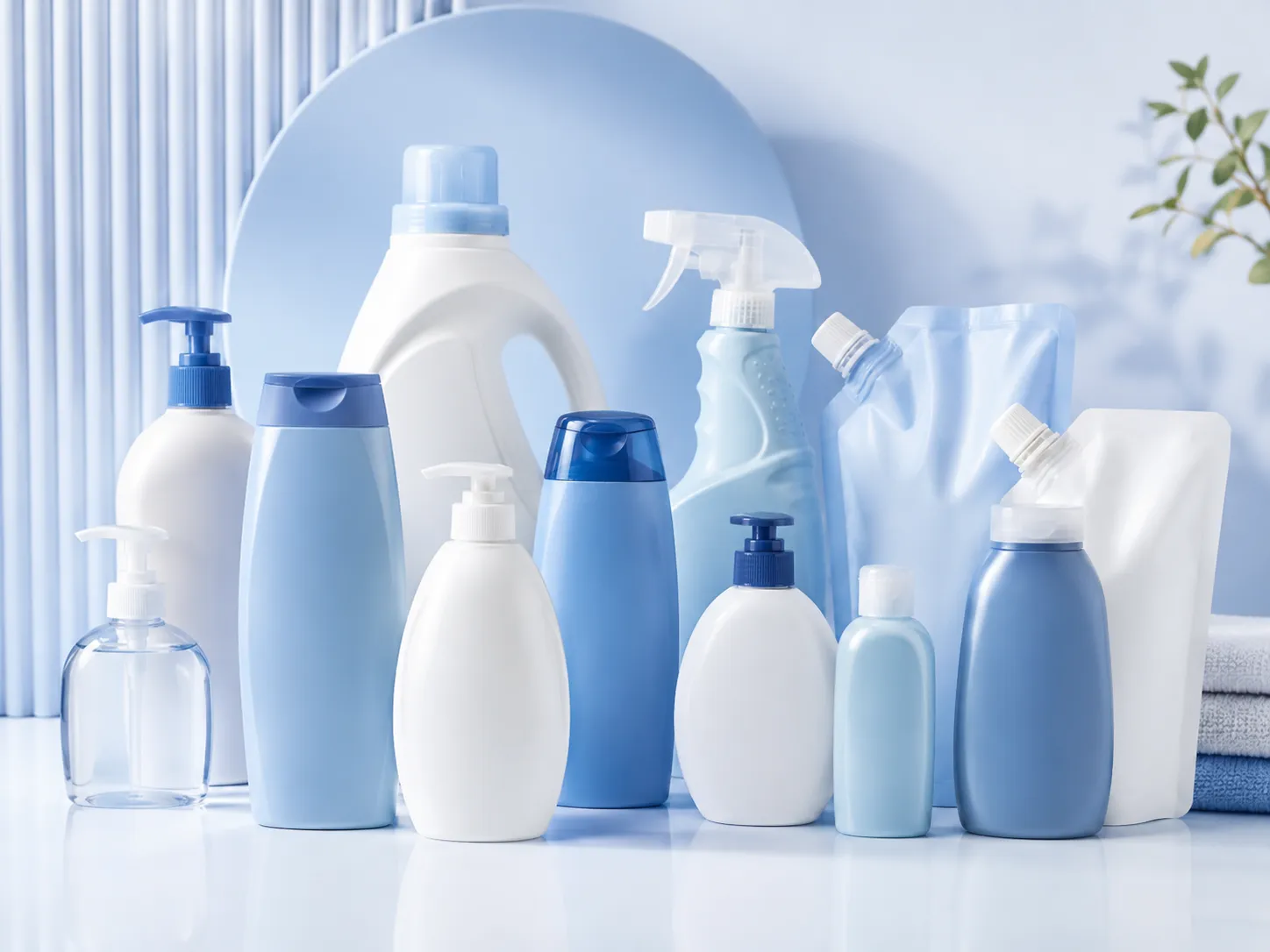
생활화학 및 화장품 IBM 포장기의 캐비티 개수 계획은 제약 제품과 두 가지 주요 측면에서 차이가 있습니다. 첫째, 특정 캐비티 개수에 대한 규제적 제약이 없습니다(식품의약품안전처(KFDA)의 의약품 인증 기준이 적용되지 않음). 둘째, 금형 교체 빈도가 더 높습니다. 한국의 생활화학 위탁포장 공장들은 기계당 연간 8~15회의 금형 교체를 하는 반면, 제약 IBM 포장기는 2~4회 교체에 그칩니다. 따라서 생활화학 및 화장품 IBM 포장기의 캐비티 개수는 연간 생산량뿐 아니라 금형 교체 효율성까지 고려하여 최적화해야 합니다.
500ml 샴푸/가정용 세제
연간 약 950만~1260만 명
연간 약 1580만~1890만 명
연간 약 1890만~2520만 명
연간 약 2520만 명
★ 가장 흔한 한국 샴푸 IBM 구성
100ml ABS 화장품 용기
연간 약 1100만~1320만 명
연간 약 1540만~1760만 명
연간 약 2200만~2640만 명
연간 약 2640만~3080만 명
★ 한국 K뷰티 국가 브랜드 OEM 표준
섹션 07
다중 포맷 머신 캐비티 개수 전략
한국에서 가장 흔한 IBM 상용 구축 방식인 여러 용기 포맷을 동일한 장비에서 처리하는 IBM 위탁 포장 공장에서는 특정 포맷 하나만을 기준으로 최적화하는 것이 아니라, 장비 사용 시간을 공유하는 모든 포맷의 연간 생산량을 가중 평균하여 최적화해야 합니다. ZQ80 장비는 연간 6가지 포맷을 서로 다른 캐비티 수로 처리하는데, 클램핑력과 플래튼 크기가 고정되어 있어 각 포맷별 최대 캐비티 수가 제한됩니다. 따라서 장비 선정 시 모든 계획된 포맷에 걸쳐 이러한 제약 조건을 만족해야 합니다.
| 체재 | 연간 단위 | 최소 충치 개수 (계산) | ZQ80 구매 가능 | 생산에 필요한 시간 | 기계 활용 |
|---|---|---|---|---|---|
| 10ml 안약 | 20,000,000 | 7.2 → 20 기병 | 20 기병 | 1,263시간 | 36% |
| 대장암 치료제 100ml | 8,000,000 | 2.9 → 10 기병 | 10 기병 | 1,009시간 | 29% |
| 500ml 샴푸 | 12,000,000 | 4.3 → 6 cav | 6기병 | 2,222시간 | 63% |
| 총 | ZQ80 ✓ | 4,494시간 | 128% |
⚠ 용량 충돌: Total required production hours (4,494 h) exceeds Korean 2-shift annual hours (3,500 h). This format portfolio requires either a ZQ110 (adding cavity count headroom on the ophthalmic format to reduce ophthalmic hours) or a second ZQ80 dedicated to the shampoo format. Korea Ever-Power’s application engineers run this multi-format analysis for Korean contract packaging factories as part of the pre-order consultation.
섹션 08
충치 치료 비용 및 식품의약품안전처(KFDA) 인증 비용
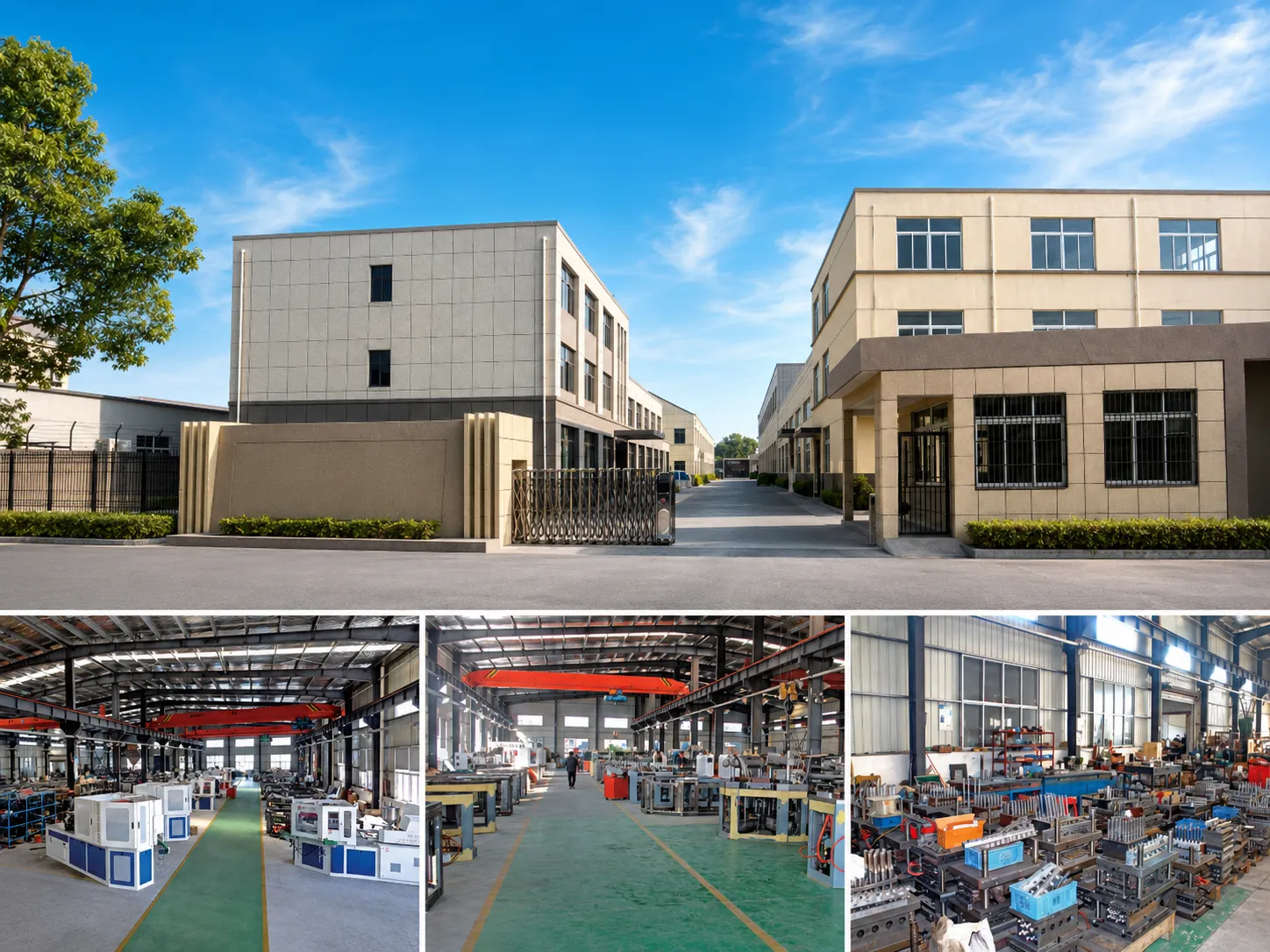
IBM 캐비티 수 선택에 대한 자본 비용 분석은 기계 비용만 비교하는 것이 아니라 연간 생산 능력 단위당 기계 비용과 금형 비용을 합산하여 비교해야 합니다. 캐비티 수가 많은 금형은 세트당 가격이 더 높지만, 캐비티당 추가되는 금형 비용은 다음 ZQ 모델로 업그레이드하여 얻을 수 있는 생산 능력 향상 단위당 기계 비용보다 훨씬 적습니다. ZQ80 금형에 캐비티 4개를 추가하는 것(10ml 용량 기준 16개에서 20개로)은 ZQ80에서 ZQ110으로 업그레이드하는 것보다 비용이 훨씬 적게 들지만, 더 작은 ZQ110 구성과 동일한 생산량 향상을 가져옵니다. 따라서 항상 다음과 같은 질문을 던져야 합니다. 현재 ZQ 모델의 캐비티 수가 포화되는 지점은 어디이며, 업그레이드하기 전에 동일 모델에서 캐비티 수를 늘려 추가적인 생산량 향상을 얻을 수 있을까요?
| 구성 | 연간 용량 | 제약 KFDA 자격 | 상대 자본 지수 | 100만 단위당 자본 |
|---|---|---|---|---|
| 3× ZQ40 · 9 캐비티 · 10ml | 5940만 | 3개의 자격 | 3.0× | 제일 높은 |
| 2× ZQ80 · 20 cav · 10ml | 8800만 | 2개의 자격 | 2.0× | 중간 |
| 1× ZQ135 · 30 cav · 10ml ★ | 6600만 | 1 자격 | 1.0× | 최저 |
| 1× ZQ110 · 24 캐비티 · 10ml | 5280만 | 1 자격 | 1.2배 | 낮은 |
★ Optimal for Korean pharmaceutical producers requiring 50M+ annual ophthalmic units — minimum capital per unit of capacity plus minimum KFDA qualification events. Korea Ever-Power’s EP-ZQ80 4천만~5천5백만 대 규모의 한국 제조업체에게 최고의 비용 효율성 진입점을 제공합니다.
엔지니어링 FAQ
캐비티 개수 관련 공학적 질문
IBM 캐비티 수를 늘려도 사이클 시간이 증가하지 않는 이유는 무엇입니까?
IBM’s 4-second cycle time is determined by the longest sequential process step across the 3 stations — typically the blow cooling dwell at Station 2 for HDPE pharmaceutical thin-wall containers. Adding cavities increases the number of simultaneous operations at each station but does not lengthen any individual station’s process time, because all cavities at a given station operate simultaneously (they are all mounted on the same platen that closes and opens together). A 9-cavity mould at ZQ40 and a 30-cavity mould at ZQ135 both take approximately the same 4-second total cycle — the platen closes and opens once per cycle regardless of cavity count. The only process factor that changes with cavity count is injection fill time: more cavities means more total shot weight, which may require marginally longer fill time at very high cavity counts on marginal barrel capacities — but Korea Ever-Power’s ZQ series barrel sizing ensures this is not a limitation at the rated cavity counts shown in the reference table.
기계의 한계치에 근접하여 캐비티 개수가 최대화될 때 IBM 품질에는 어떤 변화가 발생합니까?
Operating at maximum rated cavity count for a given ZQ model and container format does not inherently reduce quality — Korea Ever-Power’s ZQ series machines are rated at the cavity counts in the reference table under standard Korean pharmaceutical production conditions, meaning these cavity counts are validated production configurations rather than theoretical limits. Quality risk occurs when cavity count exceeds the machine’s rated limit for a format — typically driven by a Korean customer requesting more cavities than the standard configuration to reduce mould investment. At above-rated cavity counts, three quality risk factors emerge: hot runner gate imbalance (more gates at the same manifold pressure produces greater flow variation across the outer versus inner gates of the runner tree); injection clamping margin reduction (less margin against flash at any gate if injection pressure peaks above the per-cavity average); and mould cooling inadequacy (more cavities in the same platen footprint means less cooling channel area per cavity, increasing cycle-to-cycle temperature variation and dimensional variation). Korea Ever-Power does not approve above-rated cavity counts on ZQ series machines — the rated cavity count is the engineering design point verified by Korea Ever-Power’s process engineers at production conditions. Requests for above-rated cavity count at a given format are addressed by recommending the next ZQ model.
IBM ZQ 시리즈 머신에서 동일한 머신으로 서로 다른 시점에 서로 다른 캐비티 개수를 설정하여 작업을 수행할 수 있습니까?
Yes — this is one of IBM’s key commercial advantages for Korean contract packaging factories. The ZQ machine’s machine parameters (injection pressure, barrel temperatures, blow air pressure, cycle timing) are set independently for each mould set, stored as named production recipes in the ZQ control system, and recalled by the operator when a mould set is changed. A ZQ80 that runs a 20-cavity 10 ml pharmaceutical mould set for two shifts, then changes to a 6-cavity 500 ml shampoo mould set, then changes to a 10-cavity 100 ml cosmetic jar mould set — recalls three separate production recipes and operates at different cavity counts, cycle parameters and material temperatures for each format without reconfiguring any machine hardware. The only hardware change during format change is the three-component mould set (injection mould, blow mould, stripping tool) and, if the material changes, the barrel purge between materials. Korea Ever-Power’s ZQ control system stores up to 99 named production recipes, supporting the multi-format Korean contract packaging operations that represent the majority of Korean IBM commercial production environments.
ZQ 시리즈 이중 유압 시스템은 ZQ80 이상 모델의 캐빈 개수 계획에 어떤 영향을 미칩니까?
Korea Ever-Power’s dual hydraulic system (standard on ZQ80, ZQ110 and ZQ135) uses two independent hydraulic circuits — one dedicated to the injection phase and one dedicated to the blow and stripping phases — that operate simultaneously rather than sequentially. This parallel operation has two direct effects on cavity count planning. First, it eliminates the pressure cross-contamination between injection and blow circuits that occurs in single-circuit competitor IBM machines: on single-circuit machines, the hydraulic system must fully complete the injection phase before transitioning to blow phase, and residual injection pressure fluctuation can affect the blow air pressure consistency between cavities. At high cavity counts (20–30), this cross-contamination on single-circuit machines produces inter-cavity weight standard deviation of 5–8% — above the ±4% CV% limit for Korean pharmaceutical IBM containers. Korea Ever-Power’s dual hydraulic system produces inter-cavity weight standard deviation of 2–4% at full rated cavity count — within pharmaceutical specification. Second, the dual hydraulic system delivers 20–30% energy saving versus single-circuit machines at equivalent rated cavity count — documented in Korean customer factory energy measurements — because the dual circuit operates each pump at its optimal efficiency point rather than requiring one pump to serve both the high-pressure injection phase and the lower-pressure blow phase alternately. This energy saving compounds with cavity count: at 30 cavities on the ZQ135, the 20–30% energy saving versus a single-circuit 30-cavity competitor machine saves approximately 15,000–25,000 kWh per Korean two-shift year at full utilisation, reducing Korean factory electricity cost by approximately KRW 2.5–4.0M per year per machine.
IBM 금형의 캐비티당 비용은 얼마이며, ZQ 모델에 따라 어떻게 확장됩니까?
IBM mould cost scales with cavity count approximately linearly per cavity for the injection mould and blow mould components — doubling the cavity count roughly doubles the mould cost, though with some fixed cost amortisation for hot runner manifold design and mould base. The per-cavity mould cost for Korean pharmaceutical 10 ml HDPE IBM moulds (S136 stainless steel, pharmaceutical-grade finish) is approximately KRW 2.5–4.0M per cavity for the complete three-component mould set (injection mould + blow mould + stripping tool), meaning a 20-cavity ZQ80 pharmaceutical mould set costs approximately KRW 50–80M and a 30-cavity ZQ135 mould set costs approximately KRW 75–120M. The per-cavity mould cost decreases slightly at higher cavity counts because the hot runner manifold’s engineering cost is fixed regardless of gate count above 12 cavities — the 19th and 20th gate cost less to add than the 1st and 2nd gate on the same manifold. This means that maximising cavity count within a given ZQ model (using all available clamping force and platen area) produces the lowest capital cost per unit of annual capacity, because the additional mould cost per added cavity is less than the machine stepping cost at the ZQ model boundary. Korea Ever-Power provides itemised mould cost estimates at specific cavity counts for Korean customers evaluating the trade-off between higher-cavity same-model moulds and lower-cavity next-model machines.
한국 제약 공장과 생활화학 공장의 IBM 활용률 적정 범위는 어떻게 될까요?
Target IBM machine utilisation differs between Korean pharmaceutical and Korean household chemical factories due to their different operational profiles. For Korean pharmaceutical IBM factories, target utilisation is 65–80% at full annual production. Below 65%: capital is underutilised and the per-unit cost of amortising the machine and the KFDA qualification is too high. Above 85%: there is insufficient scheduled downtime for Korean GMP equipment maintenance, KFDA-required periodic process verification, and cavity inspection without affecting the production plan. Korean pharmaceutical IBM machines are also typically dedicated to single-product or single-format production for entire campaigns (weeks to months at a time), reducing the format-change downtime that household chemical IBM machines carry. For Korean household chemical IBM factories, target utilisation is 70–85% across all formats combined, with individual format campaigns of 1–5 production days per format change. Korean household chemical IBM machines can tolerate higher utilisation (up to 85%) because their format change and maintenance windows are planned with more scheduling flexibility than pharmaceutical GMP production — a Korean household chemical IBM machine can be pulled for mould change or maintenance without KFDA notification. Above 90% utilisation on a household chemical IBM machine creates Korean OEM supply risk: Korean national brands require 100% on-time delivery performance from their Korean OEM packaging suppliers, and a machine at 90%+ utilisation has no capacity buffer to absorb demand spikes (Korean promotional events, Korean seasonal launches) without customer service failures. Korea Ever-Power’s pre-order consultation includes a production scenario analysis that maps the Korean customer’s specific annual volume forecast and format portfolio against each ZQ model’s capacity. The full 사출 블로우 성형기 ZQ40부터 ZQ135까지의 범위는 스타트업 제약 회사의 9개 캐비티부터 국가 공급 제약 및 소비재 회사의 30개 캐비티에 이르기까지 한국 IBM의 모든 캐비티 수 요구 사항을 충족하며, 제안된 장비와 캐비티 수가 향후 5년간의 계획 기간 동안 70~85% 범위의 목표 활용률을 달성함을 검증합니다.
충치 개수 상담 · 한국 에버파워
정확한 충치 개수를 계산하세요
귀사의 한국 IBM 제품
Korea Ever-Power’s application engineers provide cavity count calculation, annual volume analysis, KFDA qualification strategy and ZQ series machine selection for every Korean IBM application from startup pharmaceutical to national-scale household chemical production.