
GUIDA ALL'ACQUISTO · 10 MINUTI DI LETTURA
Lista di controllo delle apparecchiature ausiliarie ISBM: non dimenticare questi 7 sistemi critici
Una macchina ISBM senza le opportune apparecchiature ausiliarie è un fermacarte da $300K. Compressore, refrigeratore, essiccatore, regolatore di temperatura dello stampo e altro ancora: il pacchetto ausiliario completo aggiunge in genere 25-40% al costo della macchina principale. Ecco la checklist che previene ritardi nella messa in servizio e problemi di produzione.
Richiedi un preventivo completo per le attrezzature ausiliarie →
In questa guida
- Perché le apparecchiature ausiliarie vengono trascurate
- 1. Compressore d'aria senza olio
- 2. Refrigeratore industriale e torre di raffreddamento
- 3. Essiccatore a resina essiccante
- 4. Regolatore della temperatura dello stampo
- 5. Nastro trasportatore di uscita e tester di perdite
- 6. Sistema di ispezione visiva
- 7. Infrastruttura elettrica e qualità dell'energia
- Riepilogo dei costi ausiliari totali
- Conclusione
Perché le apparecchiature ausiliarie vengono trascurate
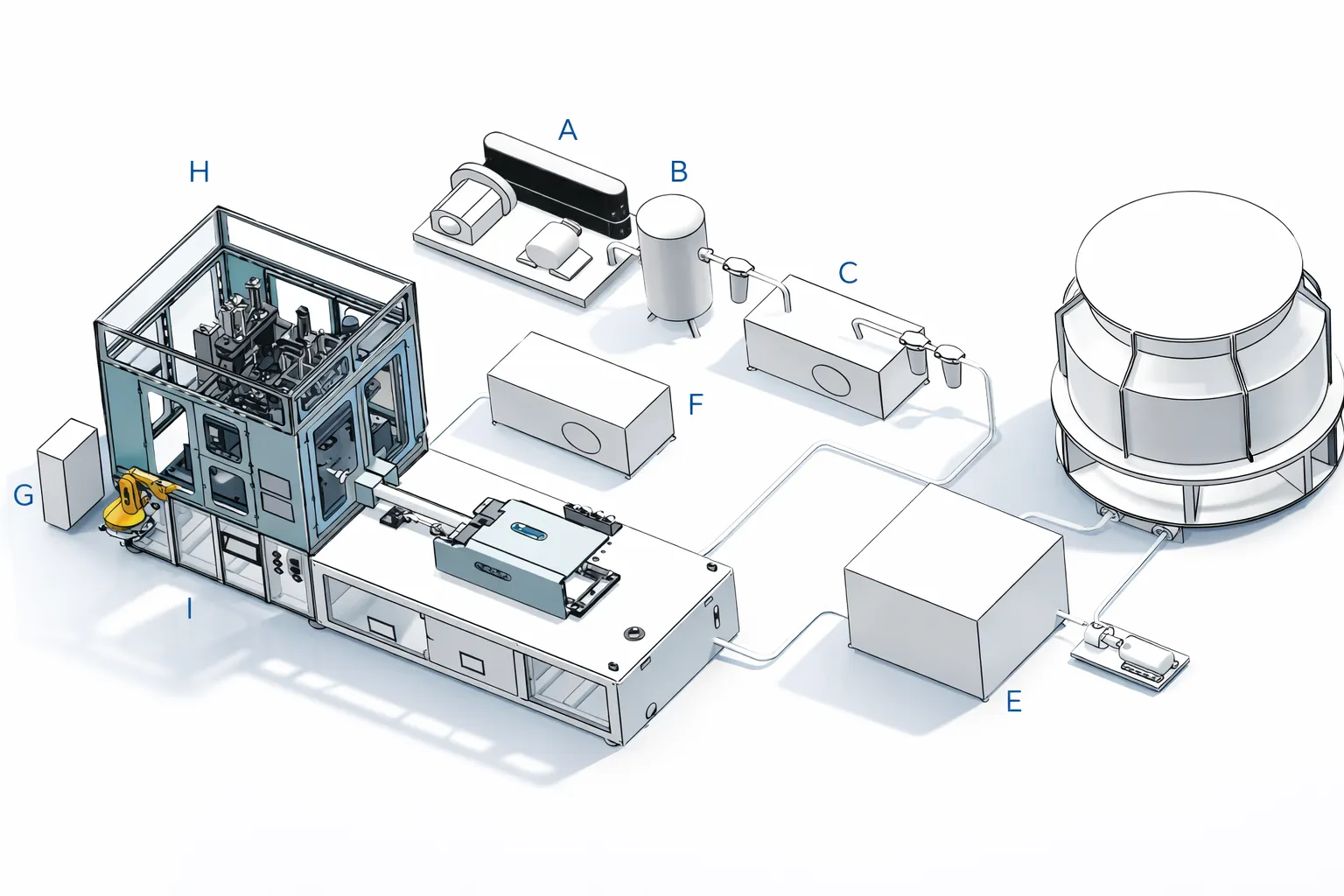
Schema completo della linea di produzione ISBM: le apparecchiature ausiliarie rappresentano 25-40% del costo totale del capitale oltre la macchina principale.
In Corea, gli acquirenti di macchine ISBM pianificano meticolosamente il budget per l'acquisto della macchina principale, confrontando preventivi, negoziando i termini e verificando le specifiche, per poi considerare le apparecchiature ausiliarie come un elemento secondario da definire in fase di installazione. Questa negligenza crea due problemi prevedibili: ritardi nella messa in servizio quando le apparecchiature ausiliarie necessarie non sono pronte all'arrivo della macchina e problemi di qualità della produzione quando le apparecchiature ausiliarie sottodimensionate o con specifiche errate non sono in grado di soddisfare i requisiti operativi effettivi della macchina. Entrambi i problemi sono completamente evitabili con un'adeguata pianificazione preliminare.
Il pacchetto completo di apparecchiature ausiliarie in genere aggiunge dal 25 al 40% al costo della macchina ISBM principale, il che significa che l'acquisto di una macchina $250K comporta un costo di apparecchiature ausiliarie compreso tra $65K e $100K, che devono essere specificate, acquistate, installate e integrate. Gli acquirenti coreani che considerano questo processo come un acquisto di routine anziché come una pianificazione strategica spesso si ritrovano con apparecchiature ausiliarie che soddisfano le specifiche minime ma offrono prestazioni operative compromesse.
Questa checklist illustra i 7 sistemi ausiliari necessari per ogni installazione ISBM in Corea, con indicazioni specifiche per il dimensionamento in base ai volumi di produzione tipici, le specifiche dei marchi consigliati e i punti di integrazione critici tra ciascun sistema ausiliario e la macchina ISBM principale. Seguire questa checklist già in fase di acquisto della macchina, e non dopo il suo arrivo, è fondamentale per garantire una messa in servizio senza intoppi e un avvio della produzione ritardato.
1. Compressore d'aria senza olio
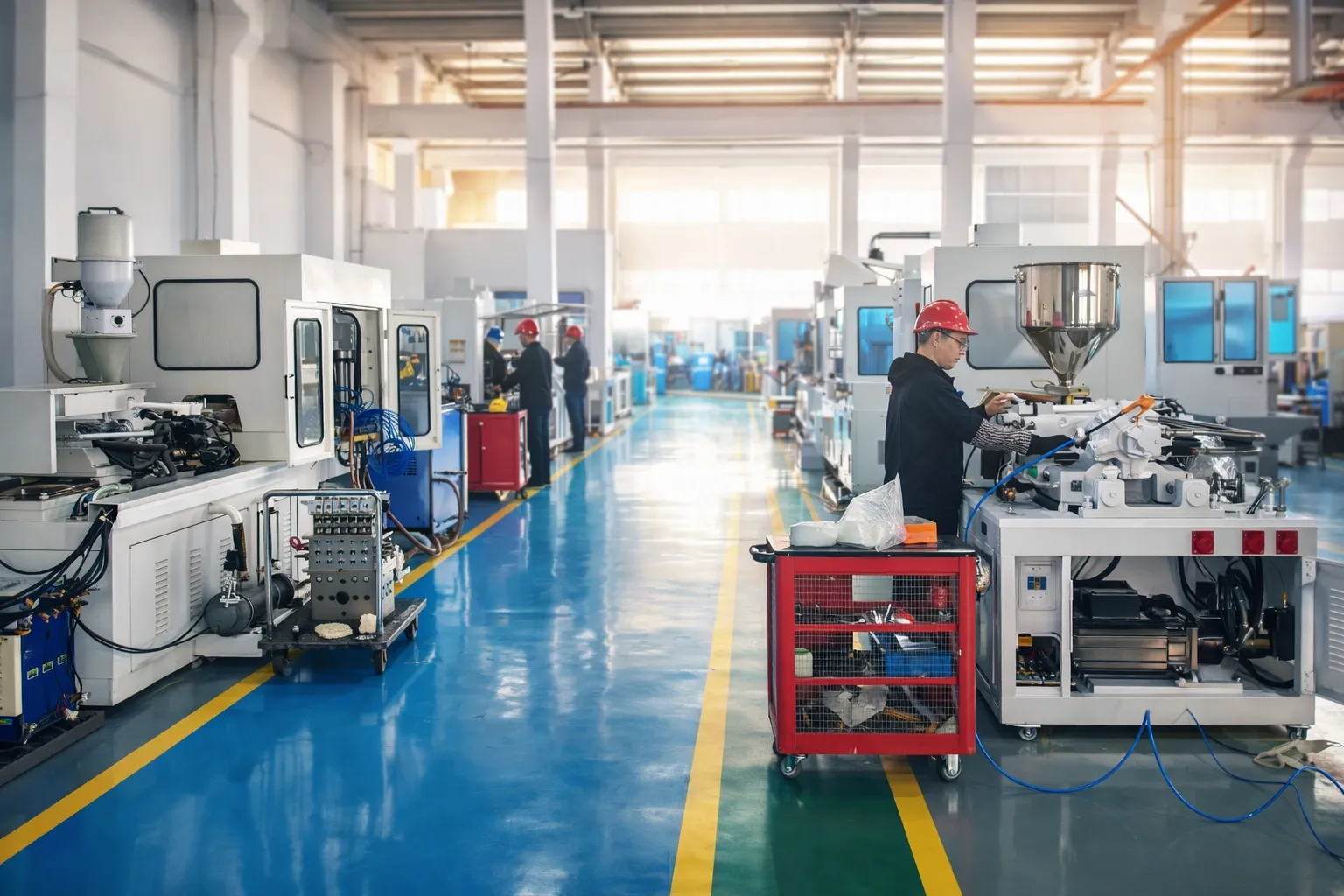
Integrazione dell'impianto idraulico del compressore senza olio e del serbatoio di accumulo in un impianto ISBM coreano: fondamentale per l'erogazione di aria compressa a 40 bar.
Costo più elevato, più critico
Sistema di compressore d'aria senza olio
Il compressore d'aria è il sistema ausiliario più grande e critico per qualsiasi impianto ISBM. Le macchine ISBM richiedono due diverse fonti di aria compressa: aria servoassistita e pneumatica a bassa pressione (0,7-1,0 MPa) e aria di soffiaggio ad alta pressione (2,0-3,5 MPa) per il gonfiaggio tramite soffiaggio a stiramento. L'aria deve essere priva di olio (ISO 8573-1 Classe 0) perché qualsiasi contaminazione oleosa penetra attraverso la parete della preforma durante il soffiaggio e finisce all'interno della bottiglia finita, rappresentando un criterio di scarto immediato per gli imballaggi di bevande, cosmetici e farmaceutici.
Guida al dimensionamento per le tipiche installazioni ISBM coreane:
- ▸Compressore a bassa pressione: Motore a vite senza olio, potenza da 7,5 a 15 kW, pressione nominale di 0,8 MPa.
- ▸Compressore ad alta pressione: Capacità da 22 a 45 kW per 4 cavità, da 45 a 75 kW per 8 cavità, pressione nominale di 4,0 MPa.
- ▸Serbatoi di accumulo per aria compressa: Capacità di 500-1.500 litri per ammortizzare le fluttuazioni di pressione
- ▸Fasi di filtrazione: Filtrazione a 3 stadi, comprendente coalescenza dell'olio, particolato e carbone attivo.
- ▸Essiccatore ad aria refrigerata: Essenziale per le umide condizioni estive coreane, con un punto di rugiada di 3-5 gradi Celsius.
I marchi premium per le applicazioni ISBM coreane includono produttori specializzati di compressori senza olioAtlas Copco, Kaeser e Ingersoll-Rand. Le specifiche dei compressori economici compromettono l'affidabilità della produzione, quindi è essenziale optare per un approvvigionamento di alta qualità. Il costo totale del sistema di compressione per una tipica installazione ISBM coreana varia da $35K a $75K a seconda del numero di cavità e dei requisiti di ridondanza.
2. Refrigeratore industriale e torre di raffreddamento
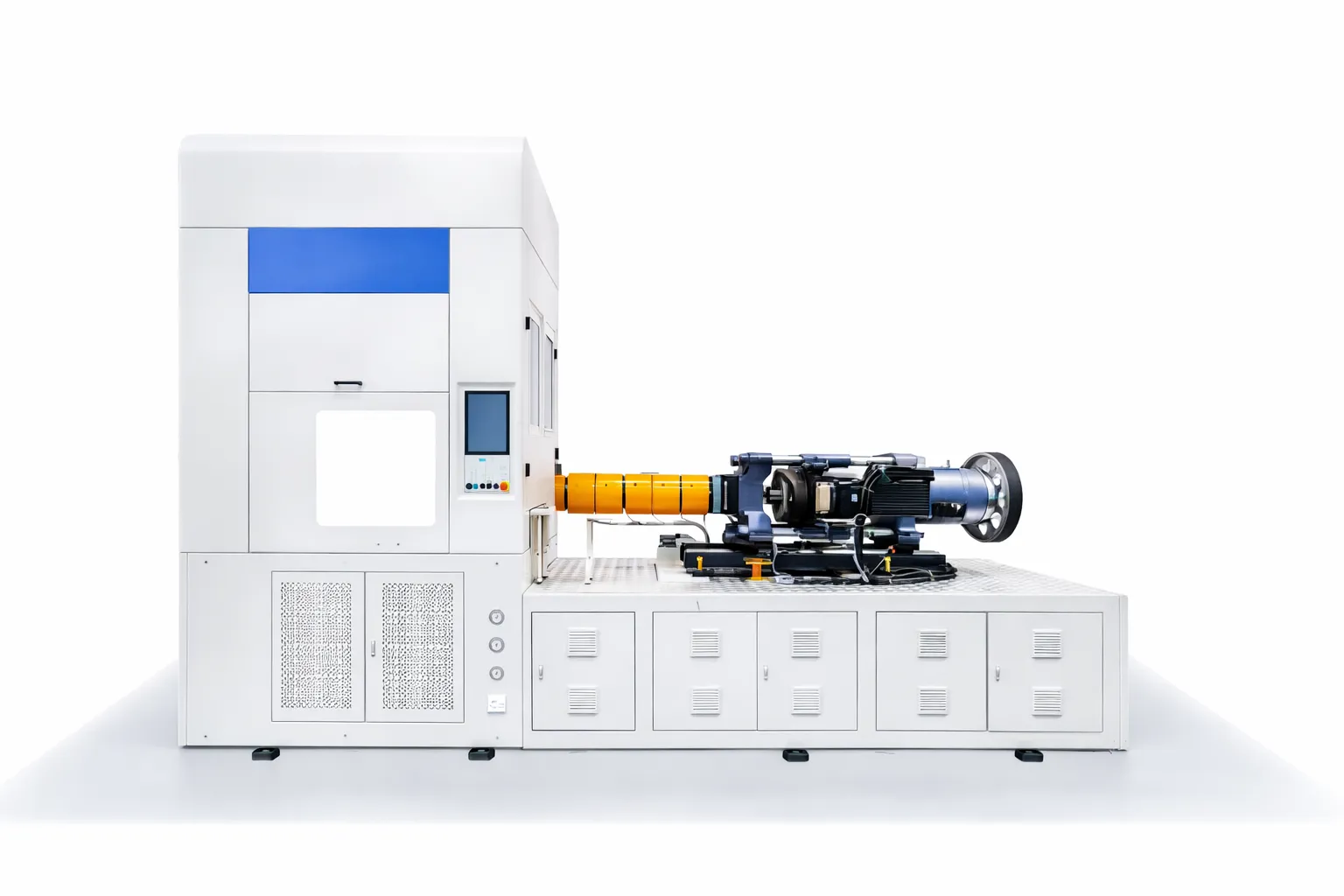
Refrigeratore industriale che fornisce acqua di raffreddamento a 10-18 °C ai canali della cavità dello stampo — modello sovradimensionato 25-30% per le condizioni estive coreane
Spesso di dimensioni insufficienti
Refrigeratore industriale e torre di raffreddamento
Il refrigeratore fornisce acqua refrigerata (tipicamente 10-18 gradi Celsius) ai canali di raffreddamento della cavità dello stampo, che raffreddano rapidamente il polimero al di sotto della temperatura di transizione vetrosa per bloccare l'orientamento biassiale come descritto nel nostro Guida alla fisica dell'orientamento biassialeLa capacità insufficiente dei sistemi di raffreddamento è la causa principale e più comune dei problemi di qualità delle bottiglie nella produzione coreana: opacità perlacea, cristallinità della base e variazioni dello spessore delle pareti sono tutte riconducibili a un raffreddamento inadeguato.
Guida alle taglie:
- ▸Capacità del refrigeratore: Raffreddamento da 40-80 kW per 4 cavità, da 80-150 kW per 8 cavità, da 150-220 kW per 12 cavità
- ▸Portata allo stampo: 60-80 L/min a 12 gradi Celsius per il circuito della cavità dello stampo
- ▸Sistema di backup per la torre di raffreddamento: Indispensabile per l'estate coreana quando la temperatura ambiente supera i 30 gradi Celsius per periodi prolungati.
- ▸Ridondanza: Per una maggiore flessibilità nella manutenzione, si consiglia di valutare due refrigeratori più piccoli anziché un'unica unità di grandi dimensioni.
- ▸Trattamento delle acque: Necessario per prevenire la formazione di incrostazioni nei canali di raffreddamento dello stampo
Tra i marchi di alta gamma per gli impianti coreani figurano Trane, Carrier e i produttori coreani specializzati in refrigeratori industriali. Il costo totale del sistema di refrigerazione, inclusa l'installazione, varia da 18.000 a 55.000 dollari per un sistema $, a seconda della capacità e delle specifiche di ridondanza. Gli stabilimenti coreani dovrebbero sovradimensionare la capacità del refrigeratore del 25-30% rispetto ai requisiti nominali per far fronte al carico termico estivo senza compromettere la qualità delle bottiglie.
3. Essiccatore a resina essiccante
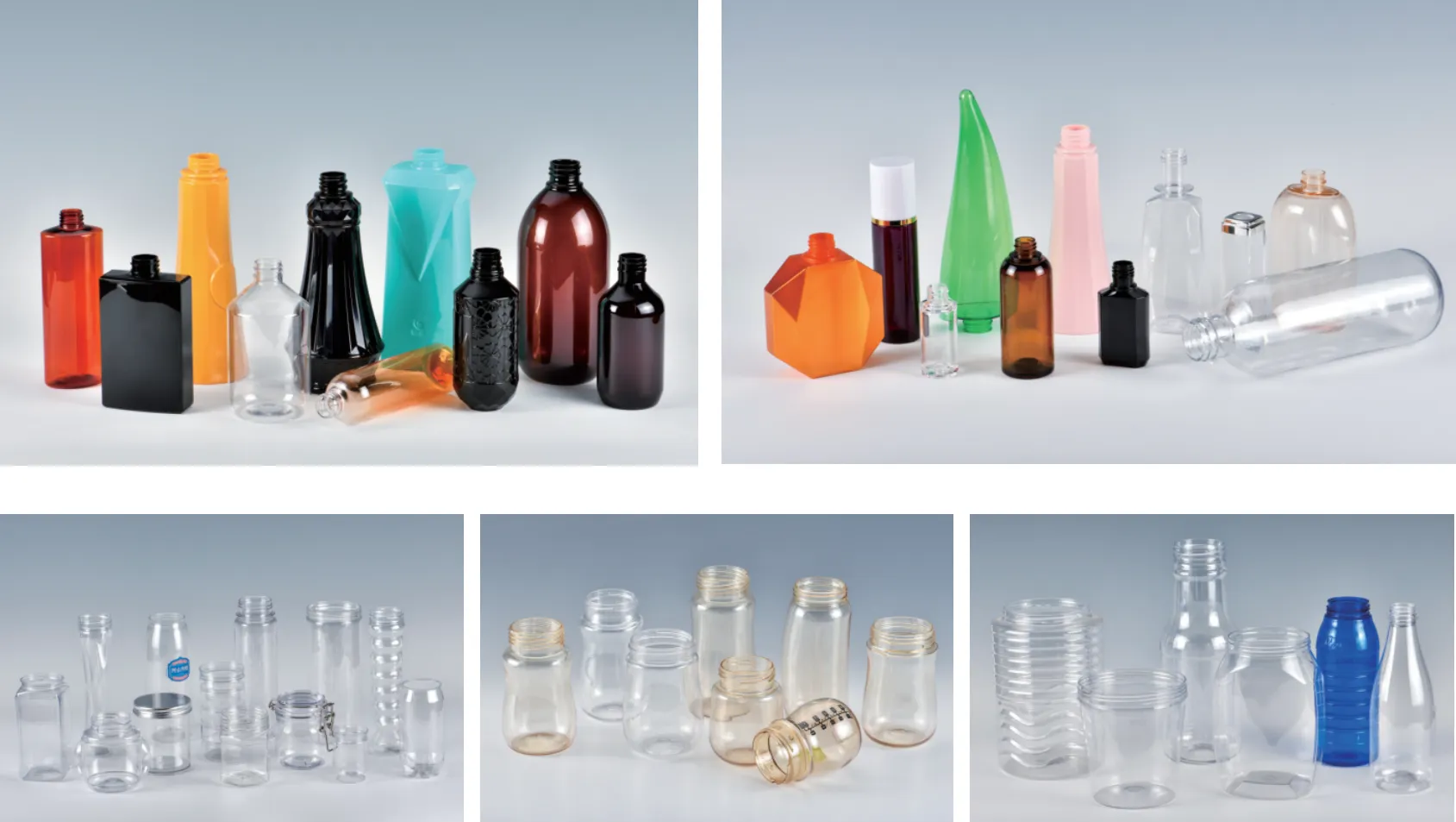
Sistema di essiccazione a disidratante: obbligatorio per ridurre l'umidità del PET al di sotto di 50 ppm durante i mesi estivi umidi in Corea.
Essiccatore a resina essiccante
La resina PET assorbe l'umidità ambientale durante il trasporto e lo stoccaggio, e la lavorazione del PET con un contenuto di umidità superiore allo 0,005% provoca una degradazione idrolitica che produce bottiglie fragili, macchie nere e generazione di acetaldeide. L'essiccazione con essiccante a 180°C per 4-6 ore è obbligatoria prima della lavorazione del PET, con una capacità dell'essiccatore dimensionata in base alla produttività della macchina di plastificazione. L'umidità estiva coreana, pari al 75-85% di umidità relativa, rende questa specifica particolarmente critica.
Guida alle taglie: Capacità di essiccazione di 80-150 kg/h per linee ISBM di medie dimensioni, 150-300 kg/h per operazioni ad alto volume. Punto di rugiada in uscita target -40 gradi Celsius. Costo tipico $12K-$28K. Tra i marchi premium figurano Conair, Piovan e Moretto.
4. Regolatore della temperatura dello stampo
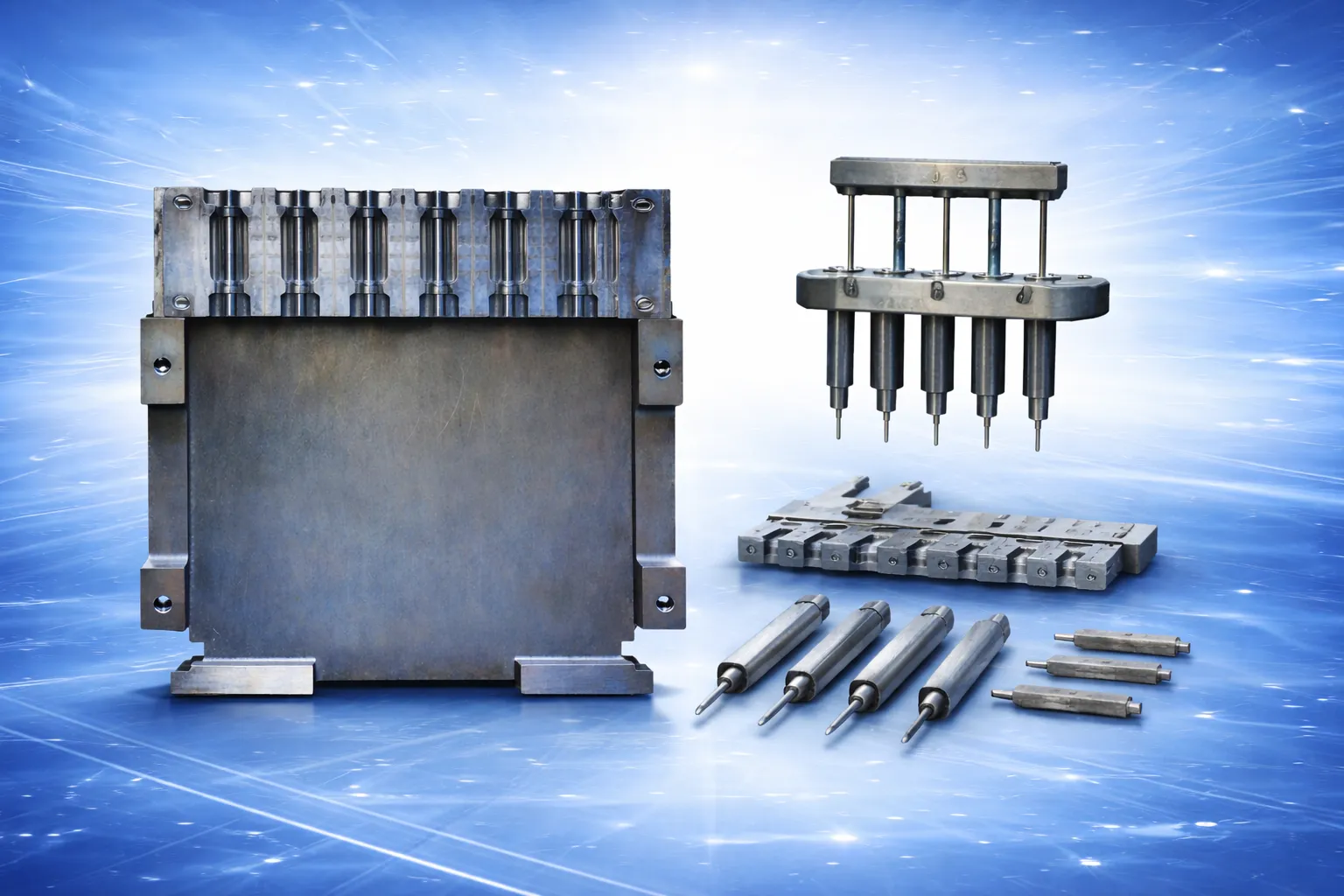
I canali di raffreddamento dello stampo ISBM richiedono MTC dedicati: zone indipendenti per il riscaldamento dell'iniezione e il raffreddamento della cavità di soffiaggio.
Regolatore della temperatura dello stampo (MTC)
Il sistema MTC (Modified Temperature Condition) fornisce acqua o olio riscaldati a specifiche zone dello stampo che richiedono temperature elevate: la zona del collo della preforma (mantenuta a 80-100 °C per evitare un raffreddamento prematuro), la stazione di condizionamento termico nelle architetture a 4 stazioni e le zone di iniezione della preforma che richiedono una precisa profilatura della temperatura. I sistemi MTC si differenziano dai refrigeratori in quanto riscaldano anziché raffreddare, con un intervallo di temperatura tipico di 60-180 °C e portate di 15-40 l/min per circuito.
L'installazione tipica in Corea richiede da 2 a 4 unità MTC. A seconda del numero di stazioni e della complessità della zonizzazione termica. Costo da $3K a $8K per unità MTC. Tra i marchi premium figurano Regloplas, Tool-Temp e HB-Therm.
5. Nastro trasportatore di uscita e tester di perdite

Nastro trasportatore di uscita e tester di tenuta in linea: un collegamento fondamentale tra l'uscita dell'ISBM e la linea di riempimento/tappatura a valle.
Nastro trasportatore per l'asporto e tester di perdite
Il nastro trasportatore di uscita convoglia le bottiglie finite dalla posizione di scarico della macchina ISBM alle operazioni successive: test di tenuta, controllo qualità e confezionamento. Gli impianti coreani moderni combinano in genere il nastro trasportatore con un tester di tenuta in linea che verifica che ogni bottiglia resista al differenziale di pressione appropriato per la sua applicazione (in genere 0,3-0,5 MPa per le bevande, 0,1-0,2 MPa per i cosmetici). I tester di tenuta scartano le bottiglie non conformi prima che entrino nella linea di riempimento, prevenendo così episodi di contaminazione.
Costo tipico: $8K-$20K per sistema integrato di test di tenuta e trasportatore. Tra i marchi premium figurano Krones, Sidel e produttori coreani specializzati in apparecchiature.
6. Sistema di ispezione visiva

L'ispezione visiva rileva difetti della linea di separazione, pareti sottili e opacità a 100% di produzione, essenziale per i flaconi di alta gamma di cosmetici coreani e prodotti farmaceutici.
Sistema di ispezione visiva
L'ispezione visiva automatizzata rileva i difetti visivi alla velocità di produzione: contaminazione del punto di iniezione, variazioni dello spessore delle pareti, danni alla filettatura del collo, incoerenza del colore e contaminazione da particelle estranee. Per la produzione farmaceutica coreana soggetta alla regolamentazione della KFDA, l'ispezione visiva con dati di scarto documentati è di fatto obbligatoria. Per la produzione di cosmetici coreani di alta gamma, l'ispezione visiva impedisce al proprietario del marchio di scartare interi lotti di produzione a causa di flaconi occasionalmente difettosi.
Costo tipico: $15K-$45K a seconda della sofisticatezza dell'ispezione (da sistemi base a telecamera singola fino a sistemi multicamera a 360 gradi con classificazione dei difetti basata sull'intelligenza artificiale). Tra i marchi premium figurano Cognex, Keyence e Omron.
7. Infrastruttura elettrica e qualità dell'energia
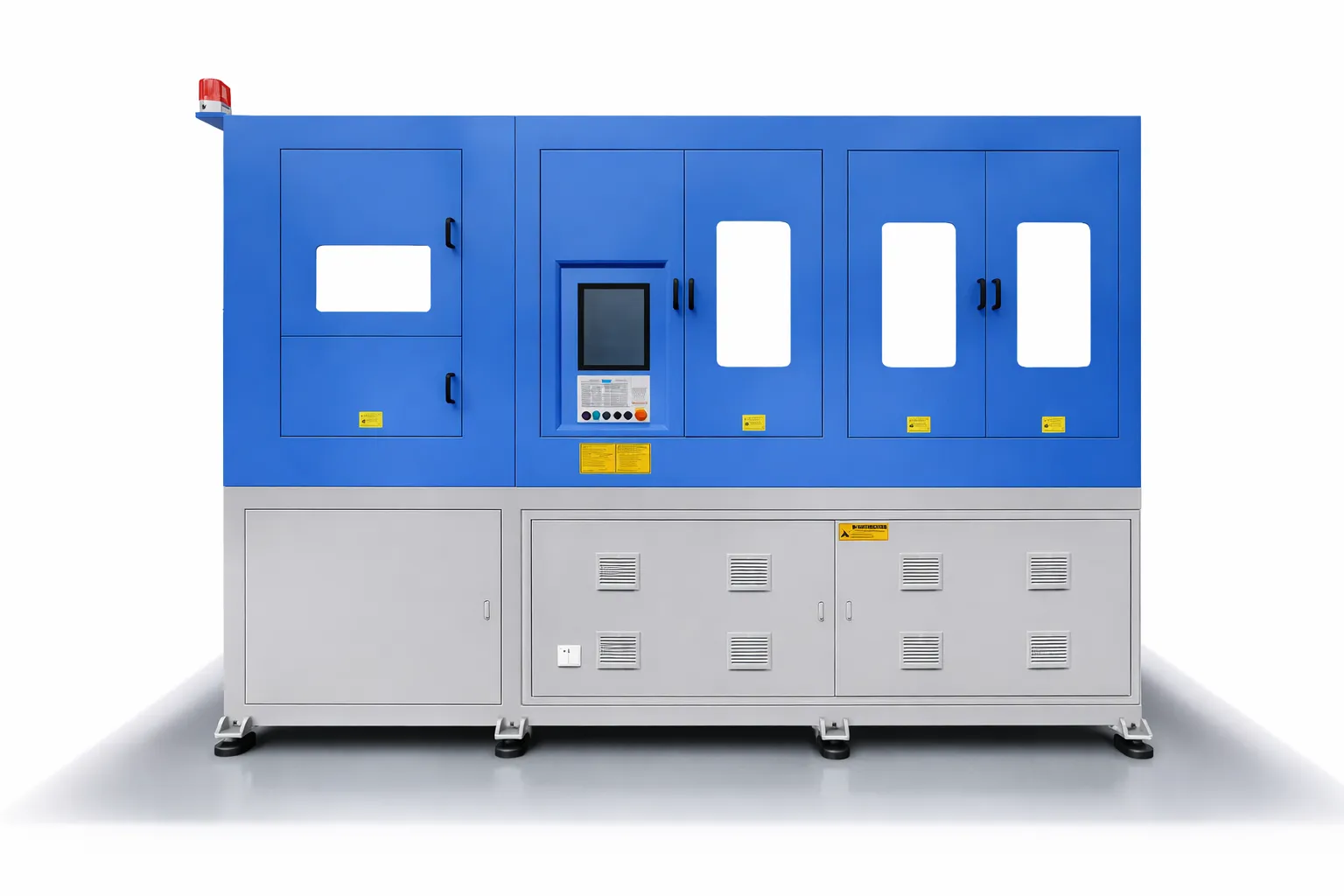
Infrastruttura elettrica nativa a 380 V/60 Hz: le macchine Ever-Power si installano direttamente senza la conversione con trasformatore richiesta dalle piattaforme giapponesi a 200 V/50 Hz.
Infrastruttura elettrica e qualità dell'energia
Le macchine ISBM richiedono un'alimentazione trifase stabile a 380 V/60 Hz con un margine di capacità del 15-20% rispetto alla capacità nominale installata, per far fronte ai transitori di avviamento e ai carichi elevati simultanei. Gli impianti coreani devono verificare che l'impianto elettrico principale sia in grado di supportare l'intero carico delle macchine ISBM e delle apparecchiature ausiliarie, oltre all'installazione di interruttori automatici dedicati, protezione contro le sovratensioni e monitoraggio della qualità dell'energia come parte delle specifiche ausiliarie standard.
Costo tipico di ammodernamento di una struttura in Corea I modelli $8K-$25K sono ideali per la preparazione delle infrastrutture elettriche in caso di necessità di espansione del servizio esistente. Il monitoraggio della qualità dell'energia, integrato con i modelli $3K-$6K, garantisce un rapido ritorno sull'investimento, prevenendo danni ai servomotori causati dai cali di tensione, frequenti nelle zone industriali coreane durante i picchi di domanda estivi.
Riepilogo dei costi ausiliari totali
| Sistema ausiliario | Fascia di costo tipica | Criticità |
|---|---|---|
| Sistema di compressore d'aria senza olio | $35K-$75K | Critico |
| Refrigeratore industriale e torre di raffreddamento | $18K-$55K | Critico |
| Essiccatore a resina essiccante | $12K-$28K | Critico |
| Regolatori di temperatura per stampi (2-4 unità) | $6K-$32K | Importante |
| Nastro trasportatore di uscita e tester di perdite | $8K-$20K | Importante |
| Sistema di ispezione visiva | $15K-$45K | Raccomandato |
| Infrastruttura elettrica e qualità dell'energia | $11K-$31K | Critico |
| Investimento ausiliario totale | $105K-$286K | 25-40% del costo della macchina |
Gli acquirenti coreani che pianificano il budget per l'installazione di una linea ISBM completa dovrebbero considerare il costo totale del progetto, comprensivo di macchina e ausiliari, piuttosto che solo della macchina. Omettere o sottodimensionare le apparecchiature ausiliarie per ridurre i costi iniziali genera sistematicamente problemi operativi, i cui costi di risoluzione superano i risparmi iniziali: una lezione imparata a caro prezzo dagli impianti coreani che hanno proceduto alla messa in servizio prima che i sistemi ausiliari fossero stati completamente specificati.
Conclusione
Il pacchetto di apparecchiature ausiliarie è il componente più spesso trascurato negli impianti ISBM coreani e la causa più comune di ritardi nella messa in servizio e problemi di qualità della produzione. Pianificare questa checklist completa di 7 sistemi già in fase di acquisto della macchina, e non dopo il suo arrivo, previene le costose conseguenze che in genere derivano da acquisti affrettati dettati da vincoli di budget.
Il team di ingegneri di Ever-Power fornisce specifiche complete per le apparecchiature ausiliarie nell'ambito di ogni progetto per i clienti coreani, inclusi il dimensionamento dei compressori, il calcolo della capacità dei refrigeratori, i requisiti dell'infrastruttura elettrica e i disegni di integrazione che gli ingegneri degli impianti coreani utilizzano per la preparazione del sito. Condividete le specifiche delle vostre bottiglie, il volume di produzione target e i dettagli del vostro impianto coreano, e il nostro team vi restituirà le specifiche complete delle apparecchiature ausiliarie con raccomandazioni sui marchi e preventivi di spesa entro 48 ore.
Punti chiave
- ✓7 sistemi ausiliari critici: compressore, refrigeratore, essiccatore, MTC, trasportatore/rilevatore di perdite, ispezione visiva, infrastruttura elettrica.
- ✓L'investimento ausiliario totale è tipicamente compreso tra $105K e $286K, rappresentando un costo della macchina principale pari a 25-40%.
- ✓Il compressore d'aria oil-free di Classe 0 rappresenta l'investimento più importante e non negoziabile per le applicazioni nel settore alimentare, farmaceutico e cosmetico.
- ✓Il refrigeratore è spesso sottodimensionato; per le condizioni estive coreane è sovradimensionato il modello 25-30%.
- ✓L'essiccazione con essiccante a 180 °C è obbligatoria per la lavorazione del PET, soprattutto durante l'estate umida coreana.
- ✓Specificare il pacchetto completo di accessori in fase di acquisto della macchina, non dopo la sua consegna.
Macchine ISBM che richiedono il pacchetto ausiliario completo
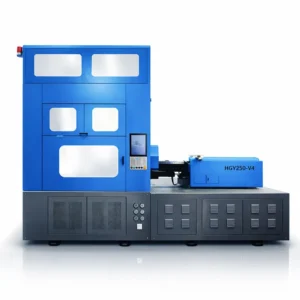
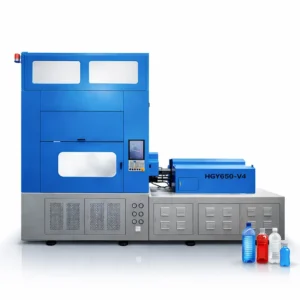
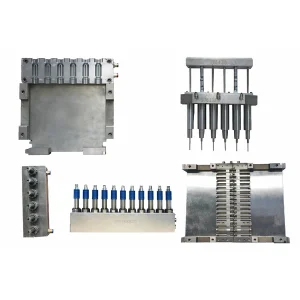
Il dimensionamento delle apparecchiature ausiliarie dipende dalla piattaforma ISBM principale. Consultare le macchine riportate di seguito per i requisiti di potenza/raffreddamento per stazione e per ciclo.
Ottieni le specifiche complete delle apparecchiature ausiliarie
Condividi le specifiche delle tue bottiglie, il volume di produzione previsto e i dettagli del tuo stabilimento in Corea. Il nostro team ti fornirà le specifiche complete delle apparecchiature ausiliarie, con consigli sui marchi e preventivi di spesa entro 48 ore.
Articoli tecnici correlati
Analisi tecnica approfondita
Come funziona lo stampaggio a iniezione e stiro-soffiaggio
Analisi completa del processo ISBM: illustra perché ogni sistema ausiliario è importante.
Analisi tecnica approfondita
Orientamento molecolare biassiale
Perché una capacità di raffreddamento adeguata e un dimensionamento corretto dei canali di raffreddamento sono essenziali per la resistenza delle bottiglie.
Analisi tecnica approfondita
Sistemi a canale caldo negli stampi ISBM
Infrastruttura di controllo della temperatura abbinata a MTC e sistemi ausiliari per refrigeratori.
Scopri altre risorse
Redattore: Cxm