ISBM Agricultural Spray Bottle
Production: Korean Guide
Korean 농약 (agrochemical) container production is governed by some of the most specific packaging regulations in Korean manufacturing — the 농약관리법 (Pesticide Control Act) prescribes container approval requirements, mandatory markings, and collection obligations that ISBM packaging producers must build into their production qualification from day one. This guide provides the complete technical framework for Korean ISBM agricultural spray bottle production — from material chemistry to regulatory compliance to Korean container deposit system readiness.
Chemical Resistance Matrix
빈용기보증금 Compliance
Korean Agricultural ISBM Container Market Reference — 2026
KRW 1.2T
Korean 농약 (agrochemical) retail market 2025
250ml–2L
Korean ISBM agricultural container volume range
KRW 100–300
빈용기 보증금 deposit per container ≥ 300ml
1.0–1.5mm
Target body wall thickness for Korean agricultural ISBM (vs 0.25mm beverage)
1. Det koreanske marked for landbrugsemballage og ISBM's konkurrencemæssige rolle
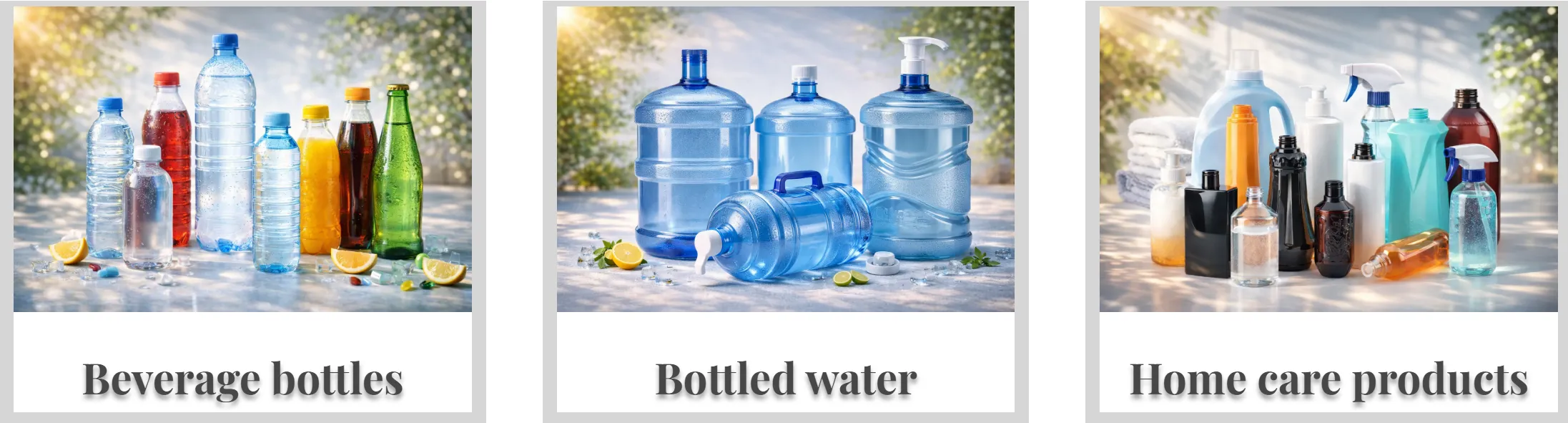
Koreas marked for landbrugskemikalier – vurderet til 1,2 billioner KRW i 2025 fordelt på herbicider (제초제), insekticider (살충제), fungicider (살균제) og vækstregulatorer (생장조정제) – kræver årligt cirka 85 millioner beholderenheder i intervallet 250 ml-2 l til detailhandel og distribution til landbrugsforsyninger. ISBM PET- og PP-beholdere vinder andele fra glas (hurtigt faldende på grund af koreanske sikkerheds- og genbrugskrav til landarbejdere) og fra HDPE (stadig dominerende for oliebaserede formuleringer, men viger til fordel for PET ISBM for vandbaserede formuleringer, hvor ISBM's dimensionelle præcision gør det muligt for koreanske agrokemiske mærker at standardisere på en enkelt lukketype på tværs af flere produktlinjer).
ISBM's specifikke fordele for koreanske landbrugsbeholdere er dimensionsmæssig ensartethed, vægt og orienteringsforbedret kemisk barriere. ISBM PET med en kropsvæg på 1,0-1,5 mm opnår en vægtykkelse CV% ≤ 10% på tværs af alle fire hulrum - hvilket sikrer ensartet kemisk kontaktoverfladeareal, forudsigelige ekstraherbare niveauer og pålidelig lukning med moment-til-forsegling-integritet, som koreanske QA-teams for agrokemiske mærker specificerer i deres beholderkvalifikationskrav. Vægtreduktionen på 40-50% i forhold til glas værdsættes i stigende grad i koreansk landbrugsdistribution, da de koreanske RDA-regler (농촌진흥청, Rural Development Administration) udfaser engangsglasbeholdere i koreanske landbrugsforsyningskæder inden 2027 i henhold til Koreas implementering af 자원순환법 (Ressourcecirkulationloven).
Den tekniske kompleksitet på det koreanske marked for landbrugscontainere for koreanske ISBM-producenter stammer fra tre indbyrdes overordnede faktorer: den kemiske diversitet i koreanske agrokemiske formuleringer (spænder fra vandige herbicider ved pH 3 til petroleumbærerinsekticider), det koreanske reguleringssystems specifikke krav til containergodkendelse (농약관리법 registreringsdokumentation, koreansk RDA-liste over containermaterialer) og det koreanske containerpantprogram (빈용기 보증금 제도), der kræver, at valg af containerdesign - materialeidentifikationsmærkninger, prægning af pantmængde, returkompatible lukninger - indbygges i ISBM-containerspecifikationen inden støbeformfremstilling.
2. Korean 농약관리법 Container Regulatory Framework: What ISBM Producers Must Document
Den koreanske lov om pesticidkontrol (농약관리법, lov nr. 15806) og dens implementeringsforskrifter (농약 등의 안전성 심사에 관한 규정) fastsætter obligatoriske krav til pesticidbeholdere, som den koreanske ISBM-emballageproducent skal opfylde, før deres beholder kan bruges til koreansk registrerede agrokemiske produkter. Disse krav gælder for emballageproducentens dokumentation for produktionskvalifikation – ikke kun for det agrokemiske mærkes produktmærke.
Korean RDA (농촌진흥청) container material approval: Beholdere til koreansk registrerede pesticidprodukter skal bruge materialer fra den koreanske RDA's liste over godkendte beholdermaterialer. For ISBM-beholdere: PET (polyethylenterephthalat) er på den godkendte liste til vandige formuleringer; PP (polypropylen) er på den godkendte liste til oliebaserede og emulgerbare koncentratformuleringer. PETG er ikke eksplicit angivet til koreanske agrokemiske beholdere — koreanske ISBM-producenter bør ikke bruge PETG til agrokemiske anvendelser uden forudgående høring af den koreanske RDA, da PETG's følsomhed over for organiske opløsningsmidler skaber kemiske kompatibilitetsrisici med emulgerbare koncentratpesticidformuleringer, som den koreanske RDA ikke har vurderet for PETG.
Mandatory Korean agrochemical container markings (농약관리법 시행규칙 별표 3): Every Korean agricultural container must bear: (1) Korean resin identification code (삼각형 내 숫자: 1 for PET, 5 for PP) moulded into the container base — minimum 6mm triangle height; (2) Net volume marking moulded into the container (not label-printed) at the nominal fill level — for Korean volume accuracy, the ISBM container at 23°C must hold the declared volume within +2%/−0% tolerance; (3) Korean RDA container approval number (용기·포장 인증번호) embossed on the container shoulder or base — this approval number is issued after the Korean RDA reviews the container material, dimensional, and chemical compatibility documentation; (4) Hazard classification symbol in accordance with Korean GHS (화학물질의 분류·표지에 관한 세계조화시스템, K-GHS) requirements, if applicable to the specific agrochemical product.
UN certification for Korean agrochemical dangerous goods: Korean agrochemical concentrate formulations classified as dangerous goods under Korean Act on Dangerous Goods Safety Management (위험물 안전관리법) require containers meeting UN certification standards — specifically UN 3H1 (HDPE) or UN 3H2 (HDPE with composite) for liquids, or the equivalent PET classification where applicable. For Korean ISBM PET containers of concentrated agrochemical dangerous goods: UN certification tests under UN Recommendations on the Transport of Dangerous Goods include drop test, stacking test, hydraulic pressure test, and leakproofness test. Korean ISBM agricultural producers targeting the concentrated pesticide market (rather than the consumer-strength diluted product market) must obtain UN certification through a Korean Accredited Testing Body (한국산업표준인증원, KAS). Water-based diluted consumer-strength Korean agricultural products (already diluted to end-use concentration before bottling) typically do not require UN certification — this is the segment where Korean ISBM PET has greatest penetration.
3. Material Selection: PET and PP for Korean Agrochemical ISBM Containers
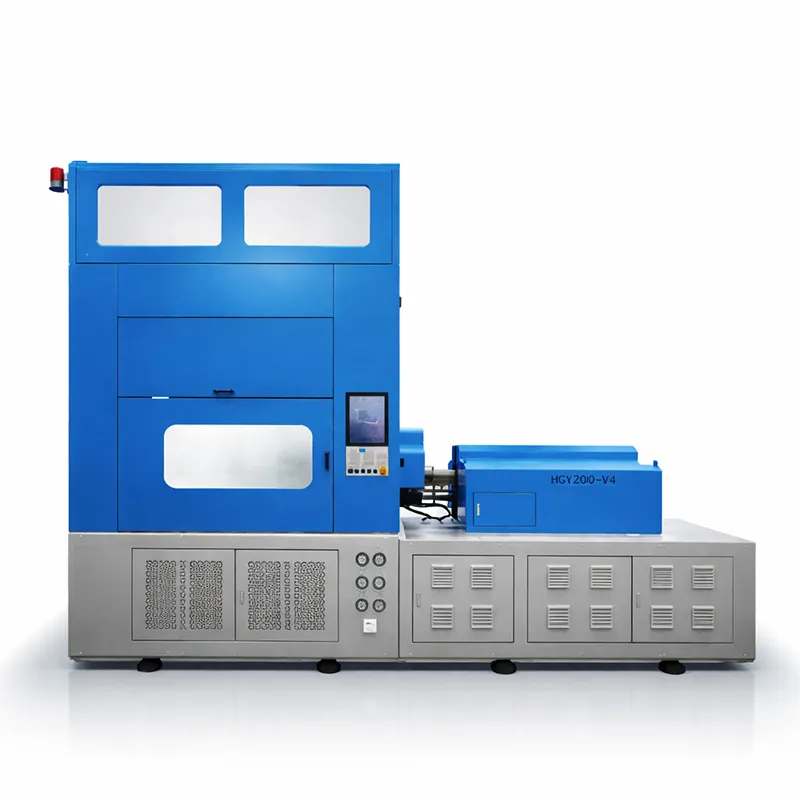
Valg af materiale til koreanske ISBM-landbrugsbeholdere er fundamentalt forskelligt fra valg af ISBM-materiale til koreanske drikkevarer eller kosmetikbeholdere – beslutningen er primært drevet af den agrokemiske formulerings opløsningsmiddelsystem og kemiske aggression mod polymeren, ikke af optisk klarhed eller taktil æstetik. Tre koreanske ISBM-forarbejdelige materialer er relevante: PET, PP og (til meget specifikke anvendelser) PC – hvor PETG specifikt er udelukket fra koreanske agrokemiske anvendelser.
PET for Korean agricultural ISBM: PET (IV 0.78–0.84 dl/g, UV-stabilised grade) is the preferred Korean ISBM material for water-based Korean agrochemical formulations including: aqueous herbicide solutions (glyphosate, 2,4-D, glufosinate at water-based formulation concentrations), water-dispersible granule (WDG) diluents, aqueous fungicide solutions (mancozeb, propiconazole water-based), and water-soluble pouch outer packaging that holds a dry concentrate inside. Korean agricultural PET ISBM uses higher-IV resin than Korean beverage ISBM (IV 0.82–0.86 versus 0.78–0.82 for beverage) to maximise the molecular orientation achieved during blow — higher orientation improves chemical resistance by reducing the diffusion coefficient of agrochemical molecules through the PET wall, particularly important for acidic aqueous formulations (pH 3–5) that can slowly hydrolyse PET at the inner wall surface over the Korean 24-month agricultural product shelf life.
PP for Korean agricultural ISBM: PP ISBM (ved hjælp af koreanske ISBM-platforme med opvarmede formbaseindsatser og konditioneringsstation, der kan klare 120-145 °C) er det passende valg til koreanske agrokemiske emulgerbare koncentrater (EC) og oliebaserede formuleringer, hvor bæreropløsningsmidlet (typisk C9-C11 aromatiske kulbrinteopløsningsmidler, cyclohexanon eller methylnaphthalen) ville forårsage spændingsrevnedannelse i PET i løbet af produktets holdbarhed. PP's overlegne modstandsdygtighed over for organiske opløsningsmidler - fra dets ikke-polære rygrad og mangel på esterbindinger, der kan hydrolysere - gør det til det korrekte koreanske ISBM-valg til koncentrerede organofosfatinsekticider (chlorpyrifos EC, diazinon EC), pyrethroidinsekticider i aromatisk bærer (cypermethrin 10% EC, deltamethrin EC) og koreanske emulgerbare fungicidkoncentrater.
Why PETG is excluded from Korean agricultural ISBM: PETG's glycol-comonomer skaber specifik sårbarhed over for de organiske opløsningsmiddelbærere, der anvendes i koreanske EU-landbrugskemikalieformuleringer – den samme esterbaserede polymerkemi, der gør PETG modtagelig for spændingsrevnedannelse fra koreanske kosmetiske formuleringer med højt ethanolindhold, gør den endnu mere sårbar over for de aromatiske opløsningsmiddelbærere i koreanske EU-landbrugskemikalier. Koreanske ISBM-producenter, der erstatter PET med PETG i landbrugsapplikationer for at opnå optisk klarhed, gør det med høj risiko for stressinduceret beholdersvigt inden for produktets holdbarhed. Den fulde tekniske sammenligning af materialevalg findes i Korean ISBM PET vs PETG resin selection guide.
4. Chemical Resistance: Korean Agrochemical Formulation Categories and Container Compatibility
Korean agrochemical formulations span a wide range of chemical environments — from mildly acidic aqueous solutions that PET handles comfortably to concentrated organic solvent carriers that require PP. Understanding the formulation category is the prerequisite for correct Korean ISBM material selection; requesting the full formulation composition (active ingredient, solvent system, co-formulants, pH) from the Korean agrochemical brand before finalising the material specification is non-negotiable.
| Korean Agrochemical Category | Formulation Type | KÆLEDYR | PP | Key Consideration |
|---|---|---|---|---|
| Herbicide (제초제) — glyphosate, 2,4-D, glufosinate | SL (solution), SG (granule) | ✓ Fremragende | ✓ Fremragende | Water-based pH 3–5. PET preferred for cost and clarity. 24-month shelf life compatible at ambient storage. |
| Fungicide (살균제) — mancozeb, propiconazole, tebuconazole | WP (wettable powder) SC (suspension) | ✓ Good–Excellent | ✓ Fremragende | Aqueous suspension (SC): PET compatible. EC format with organic solvent carrier: PP required. Verify formulation carrier before specifying PET for EC fungicide. |
| Insecticide (살충제) — pyrethroid (cypermethrin, deltamethrin) | EC (emulsifiable concentrate) | ⚠ Verify solvent | ✓ Fremragende | Aromatic hydrocarbon solvents (xylene, Solvesso) in Korean EC pyrethroid formulations cause PET stress cracking within 3–6 months. PP is the correct ISBM choice for EC insecticides. |
| Insecticide — organophosphate (chlorpyrifos, diazinon) | EC (emulsifiable concentrate) | ✗ Not suitable | ✓ Fremragende | Organophosphate EC carriers are strongly incompatible with PET — Korean RDA container approval for organophosphate EC requires PP ISBM or HDPE containers. No exceptions. |
| Growth regulator (생장조정제) — gibberellin, ethephon, mepiquat | SL (solution) | ✓ Fremragende | ✓ Fremragende | Aqueous solution at low concentration. Ethephon (2-chloroethylphosphonic acid) is strongly acidic (pH 1.5–2.5 as supplied) — verify PET compatibility with 12-month accelerated storage at 40°C before commercial commitment. |
Korean agrochemical chemical compatibility testing protocol for Korean ISBM containers: minimum 12-week accelerated compatibility test at 40°C (Korean summer ambient equivalent), measuring: wall thickness loss rate at contact surface (target ≤ 5% over 12 weeks), tensile strength retention (target ≥ 90% of baseline), chemical permeation through the ISBM wall (active ingredient concentration loss in the formulation from migration through the container wall, target ≤ 2% at 12 weeks), and container dimensional change (target: neck OD change ≤ 0.1mm, height change ≤ 0.5%). Korean RDA container approval applications must include the compatibility test results from a Korean accredited laboratory.
5. UV Stability for Korean Outdoor Agricultural Storage Conditions
Korean agricultural containers are stored and used in outdoor environments that create significantly more demanding UV exposure conditions than Korean retail or pharmaceutical packaging — Korean farm supply stores are often corrugated metal roof structures without UV shielding, Korean agricultural cooperative (농협) distribution centres store product outdoors under tarpaulin between April and October, and Korean farmers store agrochemical bottles on open farm shelving exposed to Korean solar radiation of 4.8–5.8 kWh/m²/day (among the highest in East Asia at Korean latitude of 33–38°N).
UV radiation affects Korean ISBM agricultural containers through two mechanisms: (1) polymer chain degradation (UV-induced photo-oxidation that yellows and embrittles the PET container wall, reducing mechanical integrity and chemical barrier); and (2) agrochemical active ingredient photodegradation (UV transmission through the container wall that photo-deactivates UV-sensitive Korean agrochemical active ingredients including pyrethroids, certain herbicides, and biological fungicides).
UV protection strategy for Korean ISBM PET agricultural containers:
- UV-stabilised PET resin grade: Angiv en PET-kvalitet med UV-stabilisatorpakke (hindret amin-lysstabilisator, HALS og UV-absorber-coadditiv) til koreansk landbrugs-ISBM — standard drikkevare-PET uden UV-stabilisering gulner og bliver mekanisk sprød efter 6-12 måneders koreansk udendørs UV-eksponering. Koreanske landbrugs-PET ISBM-harpiksmuligheder omfatter Eastmans industrielle PET-kvaliteter og UV-stabiliserede PET-kvaliteter fra koreanske indenlandske harpiksleverandører (SK Chemicals og Huvis tilbyder begge UV-stabiliserede PET-kvaliteter, der er valideret til brug i koreanske landbrugsbeholdere).
- Pigmented containers for UV-sensitive actives: Koreanske pyrethroider og biologiske agrokemiske produkter, der nedbrydes under UV, skal pakkes i uigennemsigtige eller stærkt pigmenterede koreanske ISBM-beholdere — ravfarvet ISBM PET (ved brug af jernbaseret ravfarvet masterbatch) blokerer cirka 95% UV under 400 nm; hvid ISBM PP (titandioxidpigmenteret) blokerer stort set alt synligt og UV-lys. Angiv den korrekte beholderfarve med formuleringsteamet fra det koreanske agrokemiske mærke, som skal have fotostabilitetsdata for deres aktive ingrediens.
- Korean agricultural UV exposure testing: Korean RDA container approval applications for Korean outdoor agricultural use require UV accelerated ageing testing per ISO 4892-2 (Xenon arc lamp, 300–400nm, 340nm irradiance 0.51 W/m², 500 hours minimum) confirming tensile strength retention ≥ 80% and no visible cracking or yellowing above ΔE 5 on the NCS colour scale after 500-hour exposure.
6. Korean 빈용기 보증금 Container Deposit Compliance: Design Requirements
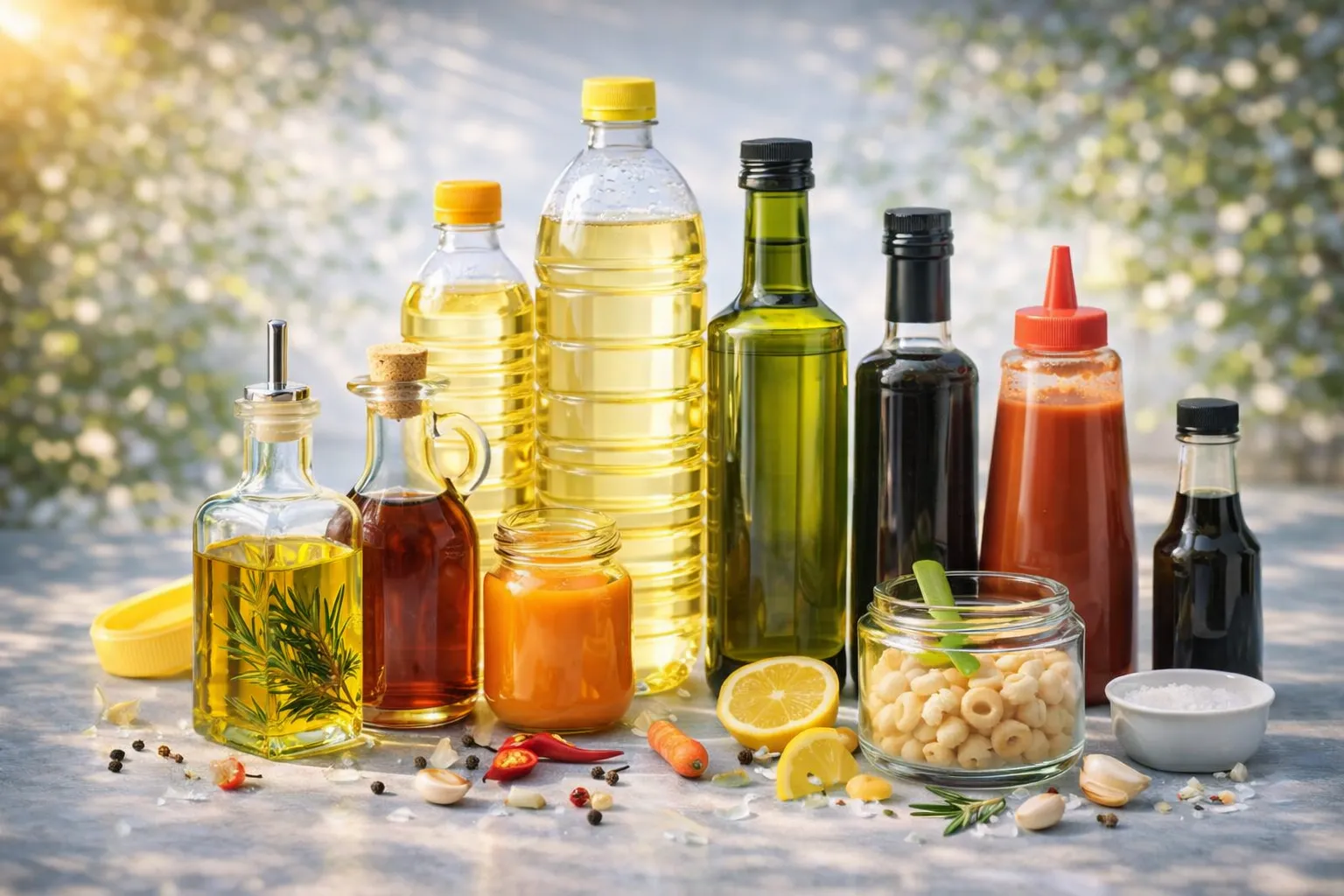
Koreas landbrugscontainerdeponeringssystem — 빈용기 보증금 제도 (Empty Container Deposit System) — administreres af Korea Agro-Fisheries and Food Trade Corporation (한국농수산식품유통공유 통공식 품유통공유, Koreas Electrical Act) og elektronisk udstyr og køretøjer (전기·전자제품 및 자동차의 자원순환에 관한 법률) og de koreanske regler for returnering af pesticidbeholdere. For koreanske ISBM-producenter skaber pantsystemet tre specifikke designkrav, der skal integreres i formspecifikationen:
- Deposit amount moulded-in identification: Korean agricultural containers ≥ 300ml must have the deposit amount (KRW 100, 200, or 300 depending on container volume category) embossed directly into the container surface as a moulded feature — not as a label. The ISBM mould must include this embossed marking in the container body design. Deposit amounts (2026 Korean schedule): containers 300ml–500ml: KRW 100; containers 500ml–2L: KRW 200; containers above 2L: KRW 300.
- Resin identification code: Korean 재활용 identification triangle with resin number (1 for PET, 5 for PP) moulded into the container base — minimum triangle height 6mm as specified in Korean KS M ISO 1043 standard, visible after container is emptied and rinsed at the Korean agricultural cooperative (농협) collection point.
- Rinsability design: Korean agricultural deposit system containers must be rinseable with water to below 1 ppm active ingredient concentration after 3 rinsing cycles — the Korean RDA rinsability specification. Korean ISBM containers designed for rinsability: avoid internal dead zones (no internal ribs that trap agrochemical residue), ensure neck inner diameter ≥ 22mm (allowing rinse water to flow freely from neck to base), and avoid ISBM gate zone designs that create an internal raised ridge at the bottle base that prevents complete drainage of rinsing water.
Koreanske ISBM-producenter, der leverer til koreanske kunder af landbrugsbeholdere, som ønsker at få adgang til det koreanske landbrugskooperativs (농협) distributionsnetværk, skal give deres koreanske kunder af det agrokemiske mærke beholderens koreanske RDA-beholdergodkendelsescertifikat (용기·포장 인증서) og bekræftelse af berettigelse til pantprogrammet – begge udstedt efter koreansk RDA-gennemgang af formspecifikationstegninger og materialedokumentation. 9-faktor-formudvælgelsesrammen, der styrer formdesignbeslutninger til koreanske landbrugsbeholdere (herunder pantprægning, harpiksidentifikation og skylleegenskaber), findes i Koreansk ISBM-formvalgsguide.
7. Tamper Evidence and Safety Feature Engineering for Korean Agricultural ISBM
Koreanske landbrugsbeholdere til registrerede pesticidprodukter skal have en manipulationssikring, der bekræfter, at beholderen ikke har været åbnet siden påfyldning på den koreanske agrokemiske producents anlæg. Koreansk 농약관리법 kræver manipulationssikring på alle koreanske pesticidbeholdere til detailhandel, og koreansk GHS-fareklassificering (K-GHS) for beholdere med akut toksicitet i kategori 1-3 til agrokemikalier kræver yderligere børnesikrede lukkemekanismer (CRC) på beholdere, der kan være tilgængelige for koreanske børn i koreanske landdistrikter.
Korean ISBM agricultural tamper evidence options and their production design implications:
- Breakband (breakaway band) closure: The most common Korean agricultural tamper evidence method — a plastic ring moulded as part of the screw cap that breaks irreversibly when the cap is first opened. The ISBM container design must accommodate the breakband by including a moulded-in retaining bead or ledge on the neck below the thread end — this feature is moulded into the ISBM neck insert and must be included in the mould design specification. Korean agricultural breakband closure thread profile: standard Korean agricultural containers use 28/400 or 38/400 GPI thread with a 4mm retaining bead below the thread finish.
- Induction heat seal liner: An induction-heat-bonded foil liner applied over the container neck after filling — provides hermetic seal in addition to tamper evidence. Korean agrochemical brands using induction seal require ISBM neck finishes with flat sealing surface (GPI F217 style neck liner land) — a flat, smooth, and level sealing surface at the top of the neck that allows the induction seal foil to bond uniformly without gaps. ISBM neck insert surface quality for induction seal: Ra ≤ 0.05μm at the sealing surface, flatness ≤ 0.1mm TIR across the sealing land width.
- Korean child-resistant closure (CRC) compatibility: Koreanske K-GHS-klassificerede agrokemikalier til akut toksicitet kræver børnesikrede lukninger i henhold til KS M ISO 8317-standarden. Koreanske ISBM-beholdere til CRC-applikationer bruger en 38/400 eller 45/400 halsfinish med en push-and-turn (P&T) CRC-hætte, der kræver samtidig nedadgående tryk og rotation for at åbne - en bevægelse, som voksne koreanske landarbejdere finder intuitiv, men som koreanske børn under 5 år ikke kan udføre pålideligt. Koreanske ISBM-halsfinisher til CRC-beholdere kræver en strammere dimensionstolerance (±0,06 mm hals-YD) end standard landbrugsbeholdere, fordi CRC-hættefunktionen afhænger af hættens interferenspasning med halsen - for stram, og voksne koreanske brugere kan ikke åbne den, for løs, og CRC-funktionen ikke består den koreanske KS M ISO 8317-testning.
8. Production Design: Wall Thickness, Volume Range, and Korean Agricultural ISBM Specification
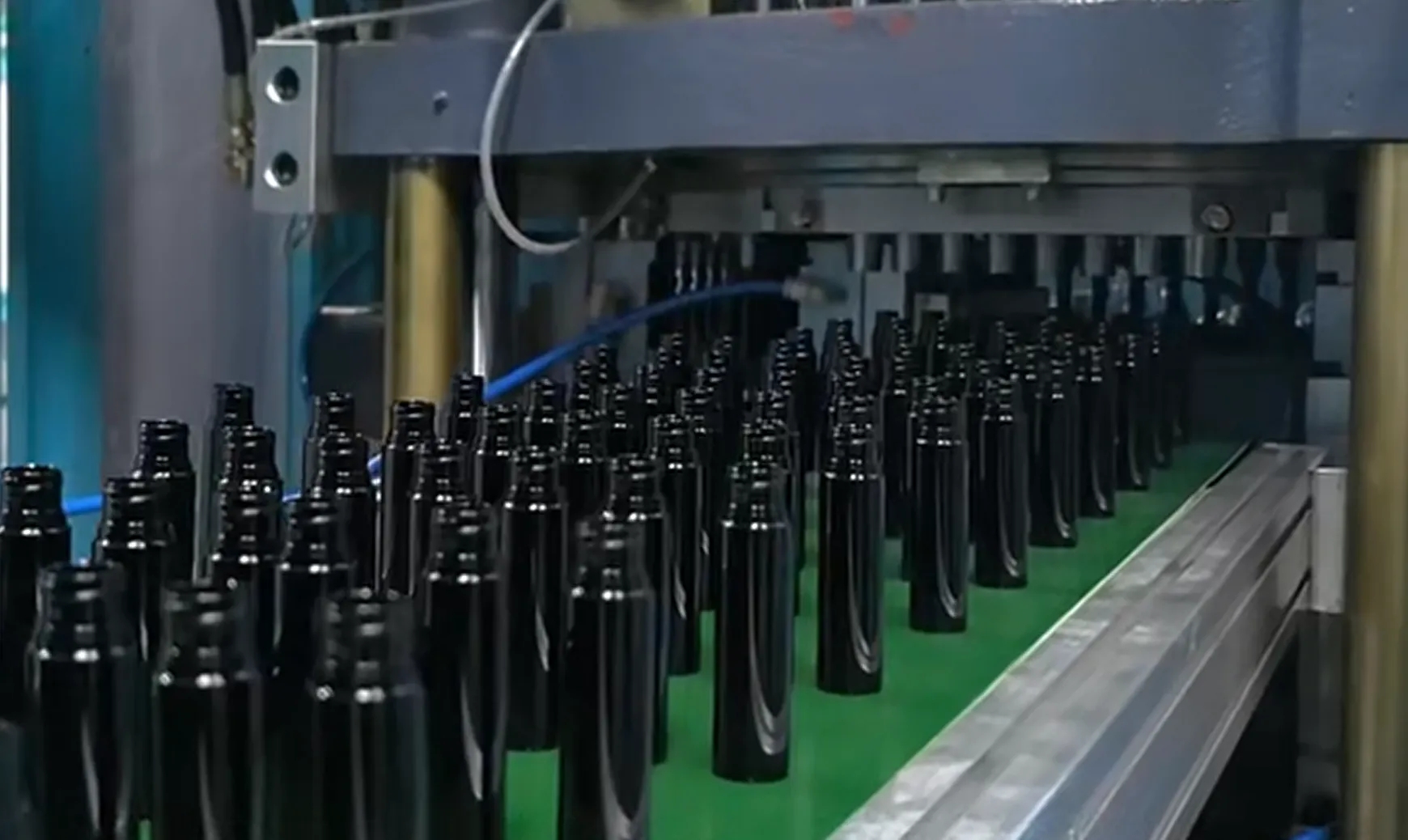
Korean ISBM agricultural container production — 500ml PET (left) and 1L PET (right) for Korean herbicide distribution. Body wall 1.2mm versus Korean beverage 0.25mm (4.8× heavier wall) provides chemical barrier, UV resistance, and the mechanical robustness to survive Korean farm supply chain handling — steel-shelved Korean agricultural cooperative stores, metal-floored Korean delivery trucks, and Korean farm corrugated metal storage floors where containers are occasionally dropped from 1.5–2m height.
Designet af produktionen af koreanske ISBM-landbrugsbeholdere adskiller sig fra koreanske ISBM-drikkevarebeholdere på tre grundlæggende parametre: vægtykkelse, halsprofil og blæsetryk. Hver af dem er drevet af applikationens specifikke krav - kemisk barriere, lukningsmoment og strukturel robusthed - snarere end af vægtminimering eller æstetik.
Korean agricultural ISBM wall thickness specification: Body wall target 1.0–1.5mm (versus Korean beverage 0.22–0.28mm). The heavier wall serves three functions simultaneously: improved chemical barrier (diffusion path length for active ingredient migration through the wall is proportional to wall thickness, so 1.2mm wall has 5× the barrier of 0.25mm beverage wall); UV resistance (more polymer mass absorbs more UV before reaching the contained product); and mechanical robustness (Korean agricultural Korean distribution chain drop resistance — a 500ml PET agricultural bottle at 1.2mm wall absorbs the energy of a 1.5m corner drop onto Korean concrete agricultural cooperative flooring without leakage, where a 0.25mm beverage wall would split). To produce 1.2mm average body wall in Korean ISBM, the preform wall must be proportionally heavier than the standard beverage preform — Korean agricultural ISBM preforms typically weigh 28–35g for a 500ml container versus 14–18g for a Korean 500ml beverage preform.
Korean agricultural ISBM neck profile: Wide-mouth necks (28/400, 38/400, 45/400 GPI finish) are standard for Korean agricultural containers — wider necks reduce the flow resistance when Korean farmers pour concentrated formulations from the bottle into mixing equipment, and they accommodate Korean agricultural CRC closures that are physically larger than Korean beverage closures. Wide-mouth Korean ISBM requires machines with injection clamping force appropriate for the larger preform gate area — the Korean Ever-Power HGY200-V4 (200 kN injection clamping, 63mm maximum neck) is the standard platform for Korean 28–38mm agricultural neck production; the HGY250-V4 (250 kN, 86mm maximum neck) covers Korean 45mm and above agricultural wide-mouth formats.
Korean agricultural ISBM blow pressure: The heavier-wall Korean agricultural ISBM preform requires higher pre-blow and high-blow pressure than Korean beverage production to achieve complete mould contact and orientation at the heavier wall. Korean agricultural ISBM blow pressure targets: pre-blow 7–9 bar (versus 6–8 bar beverage); high-blow 28–34 bar (versus 24–28 bar beverage). The Korean Ever-Power 4-stations ISBM-maskinserie Platformene understøtter alle op til 40 bar højt blæsetryk, hvilket giver tilstrækkelig plads til koreansk produktion af tungvæggede landbrugscontainere uden at nærme sig maskinens maksimale nominelle tryk – der fungerer ved 70-80% nominelt tryk i stedet for 95-100%, hvilket forlænger blæseventilens PTFE-tætnings levetid betydeligt i det koreanske landbrugsproduktionsmiljø med høj cyklus.
Ofte stillede spørgsmål
Agricultural Container Support
Korean Agricultural ISBM Container — Korean RDA Approval Documentation, Chemical Compatibility Testing, or 빈용기 보증금 Design Support?
Korean Ever-Power provides agricultural ISBM container documentation packages for Korean RDA approval, UV-stabilised PET and PP resin selection for Korean agrochemical formulations, and 빈용기 보증금 mould design compliance review.
Relaterede ressourcer
Sprøjtestøbningsmaskine HGY200-V4
250ml–1L Korean agricultural container · UV-stabilised PET and PP · 200 kN injection clamping for 28/400 wide-mouth agricultural neck · Korean RDA qualification documentation support.
Sprøjtestøbningsmaskine HGY250-V4
1-3 l koreansk landbrugsbeholder · Bred åbning på 86 mm hals til koreanske 1 l CRC-landbrugsformater · Tykvægget PP til koreansk EU-insekticidkoncentrat · Understøttelse af koreansk FN-certificeringstest.
Injektionsstrækblæsestøbemaskine HGY650-V4
Højtydende koreansk produktion af landbrugscontainere · Store mængder koreansk 농협 kooperativ levering i stor skala · UV-stabiliseret PET til sæsonbestemt koreansk herbicidproduktionstoppe · Fuld koreansk kvalifikation til 빈용기보증금 containerdesign.