CRC PHARMACEUTICAL IBM · KS M ISO 8317 · KOREAN KFDA · KOREA EVER-POWER
CRC Pharmaceutical IBM:
Child-Resistant Container Guide
Korean child-resistant closure (CRC) pharmaceutical containers are the application where IBM’s ±0.05 mm neck OD precision is not merely an advantage over EBM — it is the prerequisite for Korean KS M ISO 8317 compliance. This guide covers CRC engagement mechanism physics, IBM neck geometry specifications, Korean ISO 8317 test requirements, HDPE grade selection and ZQ series machine selection for Korean CRC pharmaceutical container production.
CRC Bead OD ±0.05 mm
Push-and-Turn Mechanism
KOREA EVER-POWER · ANSAN-SI, GYEONGGI-DO · JULY 2026
SYSTEM REFERENCE · KOREAN CRC PHARMACEUTICAL IBM PARAMETERS
CRC BEAD OD TOLERANCE
±0.05 mm
IBM injection-moulded — Korean ISO 8317 window ±0.06 mm
KS M ISO 8317 ADULT
≥ 85%
Open rate within 5 min — 200 adult test subjects
KS M ISO 8317 CHILD
≤ 20%
Open rate within 10 min — 200 child subjects (42–51 months)
HDPE BEAD STIFFNESS
MI 0.5–0.8
g/10min · density 0.955–0.965 — bead resists CRC push-down deformation
SECTION 01
Korean CRC Pharmaceutical Container Market and IBM
Child-resistant closure (CRC) pharmaceutical containers are mandatory in Korea for a specific and expanding list of pharmaceutical product categories — Korean Health Insurance Review and Assessment Service (HIRA) mandates CRC packaging for all Korean prescription medications containing toxic active substances above specified dosage thresholds, all Korean prescription paediatric liquid formulations distributed to households with children under six, and all Korean OTC analgesics in tablet and liquid form above standard unit-dose packaging. Korean Ministry of Food and Drug Safety (MFDS/KFDA) enforcement of CRC requirements has tightened progressively since 2020, expanding the list of Korean pharmaceutical products requiring CRC primary packaging beyond the original narrow drug category list.
IBM is the exclusive blow molding process for Korean pharmaceutical CRC containers because the push-and-turn CRC mechanism’s engagement tolerance window (±0.06 mm on neck engagement bead OD) falls within IBM’s native ±0.05 mm neck precision but exceeds EBM’s ±0.15–0.25 mm neck tolerance by a factor of 3–5×. No secondary neck processing applied to EBM containers can reliably achieve ±0.06 mm CRC engagement bead OD across 2–4 cavities at the production speed required for Korean pharmaceutical filling lines — the neck processing reaming operation’s own dimensional variation (±0.08–0.12 mm reaming tolerance) exceeds the CRC engagement window. IBM eliminates this process chain by producing the engagement bead at ±0.05 mm in the injection mould neck insert as a primary process capability, not as the result of secondary finishing.
The broader pharmaceutical IBM guide covers Korean pharmaceutical primary container formats comprehensively. This guide focuses specifically on CRC container IBM — the engagement mechanism physics, neck geometry specifications, Korean ISO 8317 compliance, HDPE grade selection and production economics that are unique to the CRC pharmaceutical IBM format.
SECTION 02
CRC Engagement Mechanism and IBM Neck Precision
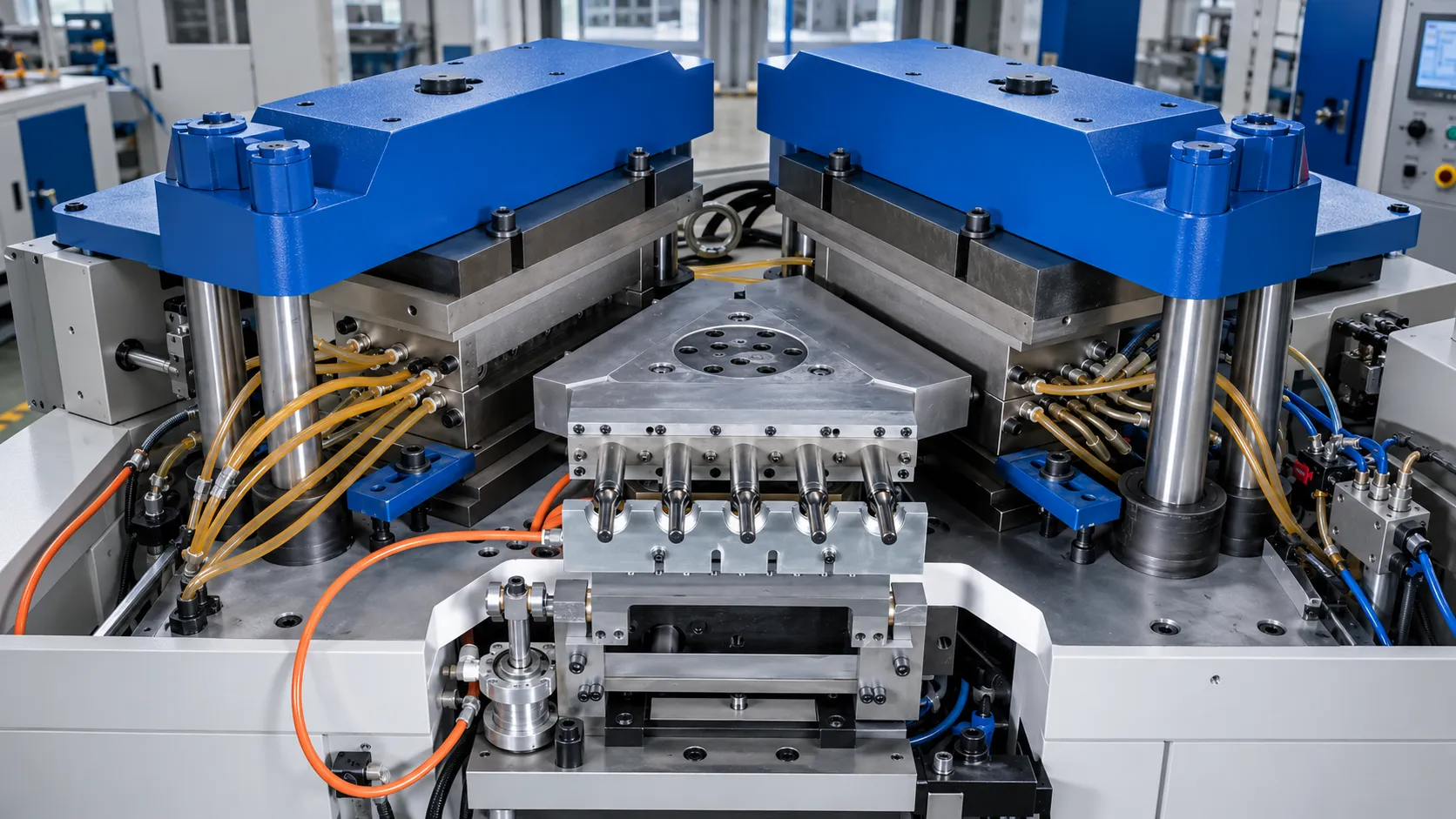
The push-and-turn CRC cap operates through a mechanical interference engagement between a circumferential retention bead on the HDPE IBM bottle neck and a matching engagement ratchet on the inside of the CRC cap skirt. Understanding the engagement mechanism physics is essential for correctly specifying the IBM neck insert geometry.
PUSH-AND-TURN CRC — ENGAGEMENT MECHANICS AND IBM NECK TOLERANCE CHAIN
Step 1 — Push Down
The Korean patient or pharmacist presses the CRC cap downward, compressing the cap skirt’s spring ratchet teeth over the HDPE neck bead. The engagement bead OD determines the interference force: if bead OD is too wide, the required push-down force exceeds Korean elderly patient capability (adult accessibility failure). If bead OD is too narrow, ratchet teeth cannot compress adequately and CRC function is lost.
Step 2 — Turn While Pressed
While maintaining downward pressure, the cap is rotated (typically 30–45°) to align the ratchet teeth with the bottle neck thread engagement start. The thread OD ±0.05 mm IBM tolerance ensures thread engagement start is within 1–2° of the designed engagement point — preventing cross-thread binding that would increase turn force beyond specification and fail adult accessibility testing.
Step 3 — Release and Verify
Cap released — the spring ratchet re-engages the retention bead, locking the cap in the open position (child cannot re-close) or in the closed thread engagement position (product sealed). IBM neck geometry ensures consistent ratchet engagement depth across all production cavities: bead height ±0.05 mm, bead profile radius ±0.03 mm — both produced by the injection mould neck insert and verified in Korea Ever-Power’s pre-delivery production trial.
BEAD OD IBM
±0.05 mm
ISO 8317 WINDOW
±0.06 mm
EBM TOLERANCE
±0.15–0.25 mm
PROCESS MARGIN
+0.01 mm IBM
IBM produces the CRC engagement bead entirely within the injection mould neck insert — a precision-machined steel component that defines the bead OD, bead height, bead profile radius and bead axial position simultaneously in a single injection stroke. The neck insert is manufactured from S136 stainless steel (HRC 50–52) with CNC turning tolerance of ±0.01 mm on all bead geometry dimensions, producing a finished IBM container bead OD at ±0.05 mm across all production cavities after accounting for HDPE shrinkage compensation (0.8–1.2% applied to the mould bead OD dimension during neck insert CNC machining). Korea Ever-Power’s pharmaceutical IBM neck insert design uses finite element simulation of HDPE shrinkage at the bead zone — the bead’s locally higher wall section shrinks differently from the adjacent cylindrical neck — to calculate the correct mould bead OD that produces the specified container bead OD at the HDPE IBM processing temperature and cooling rate.
SECTION 03
Korean KS M ISO 8317 Child-Resistant Effectiveness Testing
Korean KS M ISO 8317 is the Korean national standard for child-resistant packaging, harmonised with ISO 8317:2015. It specifies a human panel test using 200 adult subjects and 200 child subjects to confirm that the CRC container-closure system meets both child-resistance (low child open rate) and adult accessibility (high adult open rate) simultaneously. The test must be conducted using actual filled production containers — not empty containers or laboratory specimens — because fill weight, liquid viscosity and closure application torque all affect CRC function performance in the test.
TEST PARAMETER
CHILD PANEL (42–51 months)
ADULT PANEL (50–70 years)
The Korean KFDA pharmaceutical container technical file must include the Korean KS M ISO 8317 test certificate for every CRC container — a document issued by a Korean KS-accredited testing laboratory that conducted the human panel test using production containers from the IBM machine and mould set identified in the CTF. Korea Ever-Power provides sample CRC IBM containers from the pre-delivery production trial specifically for this test — allowing the Korean pharmaceutical brand to submit the ISO 8317 test samples and the container CTF simultaneously, maximising the probability that the ISO 8317 test pass result and the completed CTF are available at the same time for Korean KFDA GMP qualification review.
SECTION 04
HDPE Grade and Bead Geometry for CRC IBM Containers
Korean CRC pharmaceutical IBM containers require a specific HDPE grade characteristic that non-CRC pharmaceutical IBM does not: the bead zone must resist plastic deformation under CRC push-down force. When the CRC cap is pushed down, it applies approximately 20–50 N downward force on the HDPE engagement bead — the bead must spring back to its original OD after the push-down force is released to maintain consistent child resistance at the next opening attempt. HDPE with insufficient stiffness (too high MI or too low density) permanently deforms under repeated push-down forces, effectively widening the bead OD over time and reducing child resistance below Korean ISO 8317 requirements within the product’s shelf life.
CRC ENGAGEMENT BEAD GEOMETRY · IBM INJECTION MOULD NECK INSERT SPECIFICATION
Bead OD
Nominal ±0.01 mm
Mould cavity (with HDPE shrinkage correction applied)
Bead Height
0.8–1.5 mm
Above nominal neck OD cylinder — Korean CRC cap supplier specific
Bead Profile Radius
R 0.3–0.6 mm
Smooth lead-in for CRC ratchet tooth engagement — sharp radius increases engagement noise and force
Bead Axial Position
±0.20 mm
From neck sealing land face — determines CRC cap closed-position axial location
Korean CRC IBM — Recommended HDPE Grade
MI (190°C/2.16kg)
0.5–0.8
Density (g/cm³)
0.955–0.965
Higher density (0.955–0.965) and lower MI (0.5–0.8) than standard pharmaceutical HDPE IBM — producing a stiffer bead that resists creep deformation under repeated CRC push-down cycles across the Korean 24-month pharmaceutical shelf life. Density ≥ 0.958 is preferred for Korean CRC containers specified to maintain child resistance after 30 push-down cycles (Korean HIRA compliance CRC cycle test).
Bead Deformation Risk Factors
- ▸HDPE MI above 1.0: insufficient molecular weight for bead creep resistance — avoid for Korean CRC pharmaceutical IBM
- ▸Density below 0.952: lower crystallinity reduces bead stiffness; ISO 8317 cycle test failure risk increases after 15+ push-down cycles
- ▸Barrel temperature above 222°C at nozzle: thermal degradation reduces HDPE molecular weight at bead zone — reduces stiffness and creep resistance versus nominal grade properties
- ▸Insufficient hold pressure at bead gate: under-packed bead zone has micro-voids that reduce local density — measure bead zone hardness (Shore D) vs specification as process control indicator
SECTION 05
IBM Processing Parameters for CRC Containers
CRC pharmaceutical IBM processing on Korea Ever-Power ZQ series machines requires two parameter adjustments versus standard pharmaceutical non-CRC IBM: higher hold pressure (to fully pack the engagement bead and ensure dimensional stability) and tighter neck zone cooling (to minimise post-ejection bead OD drift from residual heat in the bead zone). All other parameters follow standard pharmaceutical HDPE IBM guidelines.
| PARAMETER | STANDARD PHARMA IBM | CRC PHARMA IBM — ADJUSTMENT |
|---|---|---|
| Hold pressure | 50–65% of peak | 65–75% of peak — bead zone full packing |
| Hold time | 0.4–0.8 s | 0.6–1.0 s — extended to ensure bead gate seal |
| Neck zone mould temperature | 14–18°C | 12–16°C — tighter cooling at bead zone to fix OD faster |
| Metering zone barrel | 200–215°C | 200–215°C (unchanged) |
| Bead OD measurement frequency | 30 per cavity per batch start | 30 per cavity + mid-batch check every 2 hrs |
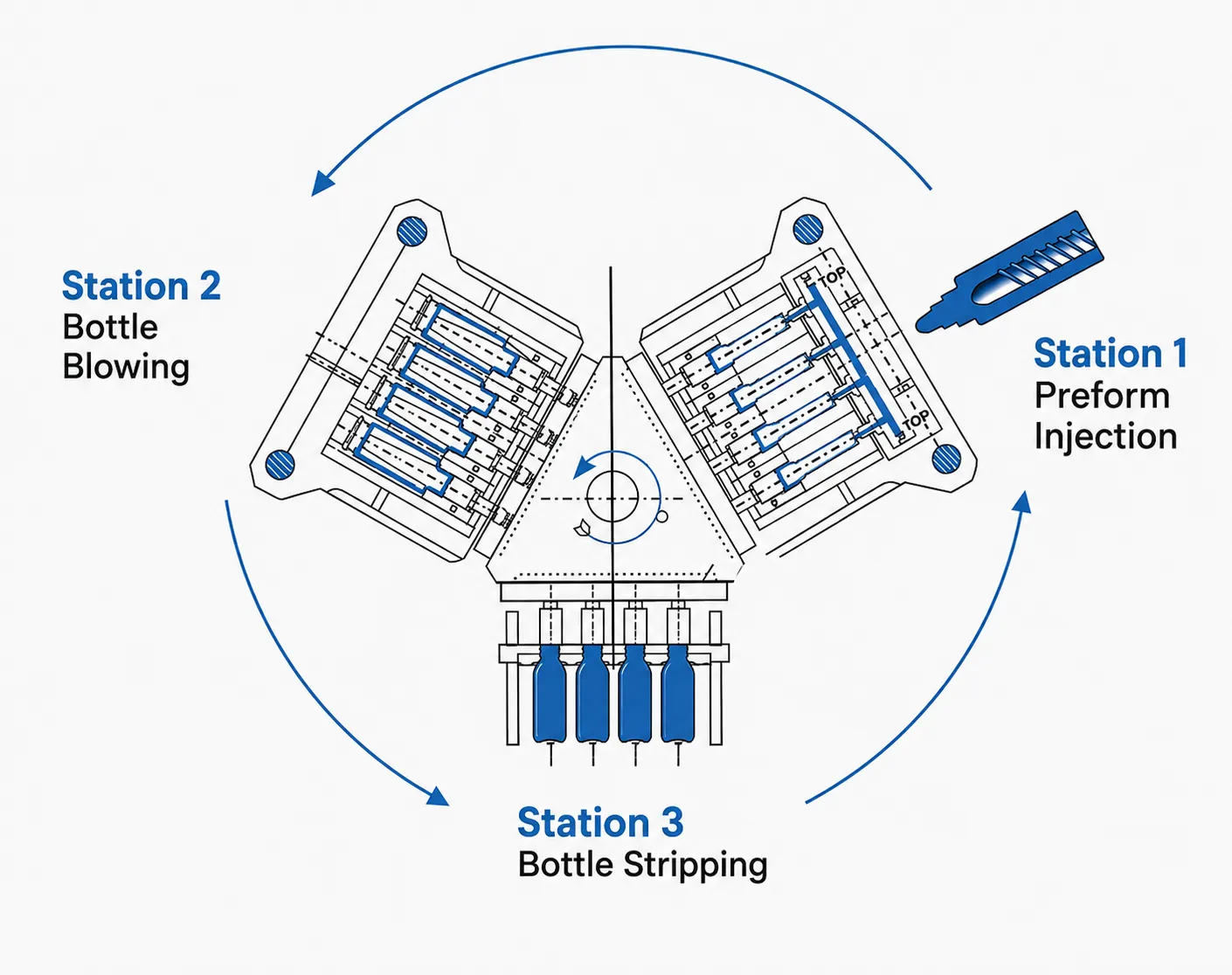
⚠ BEAD OD POST-EJECTION DRIFT: CRC engagement bead OD measured immediately at stripping (Station 3) is typically 0.02–0.04 mm larger than the bead OD measured 30 minutes after ejection — because residual heat in the bead zone at ejection allows continued HDPE crystallisation-induced shrinkage that narrows the bead OD slightly. Bead OD for Korean KFDA qualification measurement must be taken after containers have stabilised at 23°C ±2°C for a minimum of 30 minutes post-ejection. Bead OD sampling immediately at the machine exit conveyor is not a valid qualification measurement for Korean KFDA purposes — it systematically overestimates the stabilised production OD.
SECTION 06
CRC Container Format Range and Neck Finish Selection
| VOLUME | NECK FINISH | CRC TYPE | ZQ80 CAVITIES | KOREAN APPLICATION |
|---|---|---|---|---|
| 30 ml | 24/400 GPI | Push-and-turn | 16–18 | Korean paediatric analgesic, Korean liquid antibiotic unit-dose |
| 60 ml ★ | 28/400 GPI | Push-and-turn | 14 | Korean paediatric syrup CRC (most common Korean CRC format) |
| 100 ml | 33/400 GPI | Push-and-turn | 10–12 | Korean prescription oral antibiotic, Korean adult analgesic liquid |
| 150 ml | 33/400 GPI | Push-and-turn | 8 | Korean prescription multi-dose liquid, Korean antacid suspension CRC |
| 100–150 ml | 33/400 GPI | Squeeze-and-turn | 8–10 | Korean arthritic and elderly patient CRC (lower push-down force than push-and-turn) |
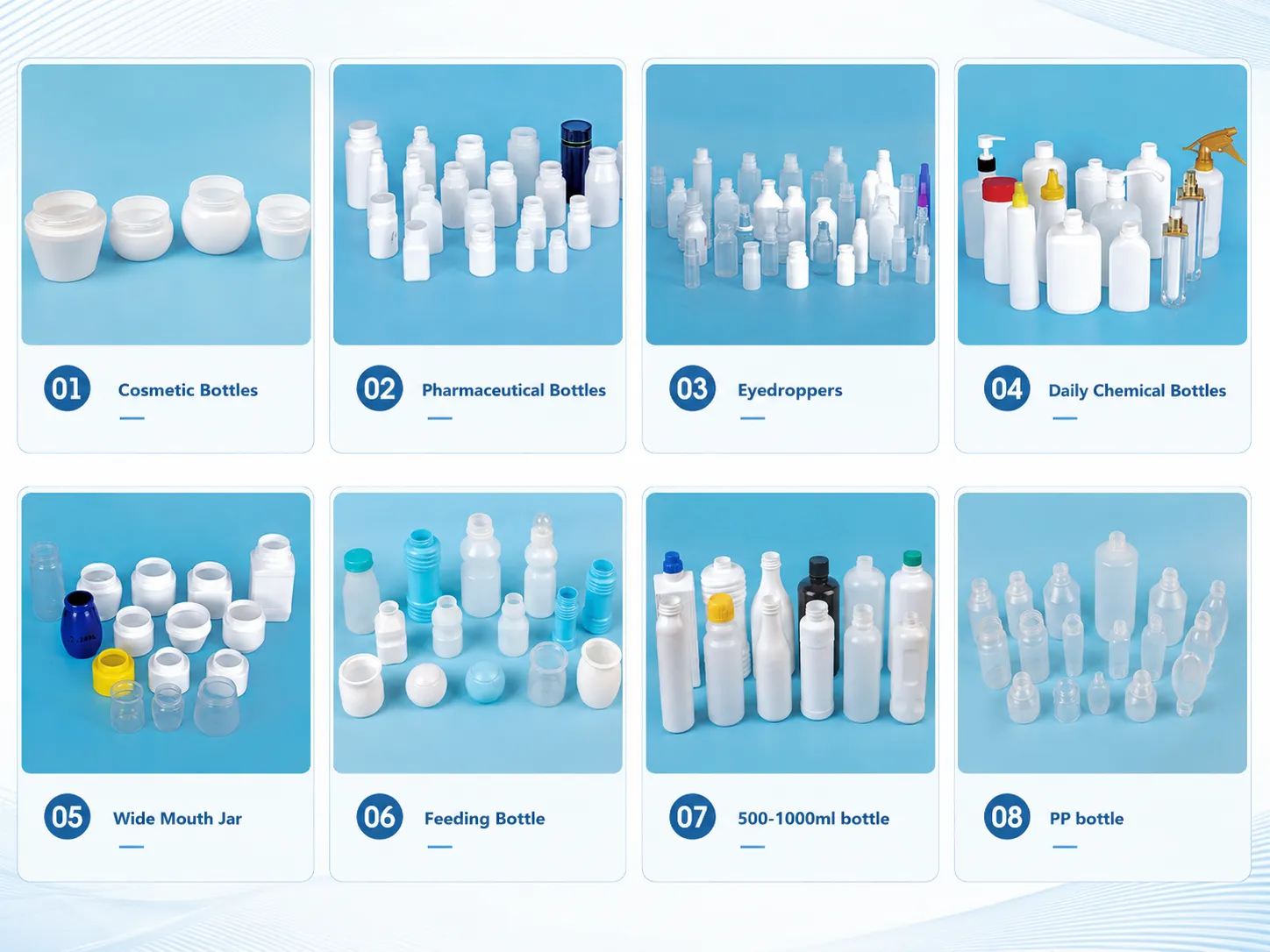
★ 60 ml 28/400 push-and-turn CRC is the Korean pharmaceutical IBM benchmark CRC format — the highest-volume CRC container in Korean paediatric antibiotic prescriptions. Korean IBM producers typically qualify this format first and use it as the reference format for multi-format CRC production planning.
SECTION 07
CRC + Induction Seal Combined Format
The CRC + induction seal combined format — a CRC overcap applied on top of an induction-sealed container — is the most demanding IBM neck precision requirement in Korean pharmaceutical production. The Korean HIRA mandate for paediatric prescription liquid medications increasingly specifies both CRC (child safety) and induction seal (tamper evidence, moisture barrier) simultaneously on the same primary container. This combined specification requires IBM to produce three independent precision features on a single neck insert simultaneously.
CRC Bead OD
Sealing Land Flatness
Thread OD
±0.05 mm
CRC push-and-turn function — ratchet engagement interference within Korean ISO 8317 window
±0.10 mm TIR
Induction foil hermetic bond — full perimeter contact between foil and HDPE sealing land at all 14 cavities
±0.05 mm
CRC thread engagement — Korean pharmacist’s twist-off overcap engagement after induction seal broken
All three requirements are met simultaneously by IBM’s injection mould neck insert — produced in a single S136 stainless steel insert machined to ±0.01 mm on all three geometry features. No secondary processing required. EBM cannot achieve any of the three requirements without secondary neck finishing.
The combined CRC + induction seal IBM container qualification for Korean KFDA requires two separate closure function tests included in the container technical file: the Korean KS M ISO 8317 CRC effectiveness test (human panel, 200 adults + 200 children) and the induction seal integrity test (100% bubble test at 10 kPa, plus peel force ≥ 8 N/15 mm width). Both tests must use production containers from the same IBM production run at the qualified machine and cavity count. Korea Ever-Power’s pre-delivery production trial produces sample containers for both test submissions simultaneously, providing the Korean pharmaceutical brand with all required test samples within a single pre-delivery production batch.
SECTION 08
ZQ Series Selection for Korean CRC IBM Production

ZQ series machine selection for Korean CRC pharmaceutical IBM follows the same annual volume framework as other pharmaceutical IBM formats. The CRC-specific consideration is that CRC containers at the same volume typically allow fewer cavities per ZQ model versus non-CRC containers of the same volume — because the CRC engagement bead’s larger neck OD (bead OD is typically 1.6–3.0 mm larger than the nominal neck OD) increases the per-cavity injection clamping requirement and the platen footprint per cavity.
ZQ SELECTION MATRIX · CRC IBM @ 60 ml 28/400 PUSH-AND-TURN (HDPE MI 0.6)
| ZQ MODEL | CAV @ 60ml CRC | BOTTLES/HR | ANNUAL CAP. | KOREAN CRC PHARMA PROFILE |
|---|---|---|---|---|
| EP-ZQ40 | 6–8 | ~4,800–6,400 | ~16.8–22.4M | Korean pharma startup, Korean CRC clinical trial, Korean rare paediatric disease |
| EP-ZQ60 | 10–12 | ~8,000–9,600 | ~28.0–33.6M | Korean mid-scale paediatric, Korean generic CRC pharmaceutical |
| EP-ZQ80 ★ | 14 | ~11,200 | ~39.2M | Korean national brand paediatric antibiotic CRC OEM — benchmark platform |
| EP-ZQ110 | 18 | ~14,400 | ~50.4M | Korean large pharmaceutical CRC contract packager, Korean major paediatric brand |
| EP-ZQ135 | 22 | ~17,600 | ~61.6M | Korean national paediatric antibiotic supply chain, Korean hospital supply CRC at scale |
The EP-ZQ80 at 14-cavity 60 ml CRC is the Korean pharmaceutical CRC IBM benchmark — covering 39M annual CRC paediatric syrup units per Korean 2-shift year within a single machine qualified for Korean KFDA pharmaceutical GMP. The ZQ80 dual hydraulic system (standard, 20–30% energy saving) reduces HVAC load in Korean pharmaceutical cleanroom CRC production, and the machine’s angle divider mechanism ensures that bead OD cavity-to-cavity standard deviation (±1.8% CV% at 14 cavities on ZQ80) stays well below the ±0.05 mm specification at the 99.7th percentile of the production distribution — confirmed in Korea Ever-Power’s pre-delivery bead OD circularity and cavity-to-cavity dimensional reports provided with every pharmaceutical CRC IBM machine delivery.
ENGINEERING FAQ
CRC Pharmaceutical IBM — Engineering Questions
Why is IBM the only viable blow molding process for Korean pharmaceutical CRC containers?
IBM is the only viable blow molding process for Korean pharmaceutical CRC containers because the Korean KS M ISO 8317 CRC engagement bead OD tolerance requirement (±0.06 mm) falls within IBM’s native process capability (±0.05 mm) but exceeds EBM’s achievable tolerance (±0.15–0.25 mm) by 2.5–4× at best. This is not a marginal difference that secondary neck processing can bridge: EBM neck reaming operations have their own dimensional variation (typically ±0.08–0.12 mm reaming tolerance) that equals or exceeds the entire ±0.06 mm ISO 8317 engagement window. Even if individual EBM containers are reamed to within ±0.06 mm of bead OD nominal, the reaming operation’s inter-cycle variation causes some fraction of the production lot to be outside the window at each end of the tolerance — and Korean KS M ISO 8317 human panel tests all 200 adult and 200 child subjects with the same container type, so any systematic OD variation across the production lot (which EBM + reaming produces) will generate a proportion of containers that either fail child resistance (too wide) or fail adult accessibility (too narrow). IBM eliminates this problem structurally: the IBM injection mould neck insert produces all cavities at nominal ±0.05 mm with no secondary processing, no inter-cycle reaming variation, and no process chain in which a secondary operation can introduce dimensional outliers. This structural advantage is why Korean pharmaceutical regulatory bodies accept IBM CRC containers on the basis of IBM machine and mould qualification dimensional documentation alone, without requiring secondary processing verification — a simplification that EBM + reaming cannot achieve.
What causes a Korean CRC pharmaceutical IBM container to fail adult accessibility testing?
Korean CRC pharmaceutical IBM container adult accessibility failures — where more than 15% of the 200 adult test subjects (aged 50–70) cannot open the container within 5 minutes — trace to three causes from the IBM container side. First, bead OD above specification upper limit: a bead OD higher than nominal + 0.05 mm increases the CRC cap’s push-down engagement force beyond the elderly Korean adult’s hand grip and push-down capability — the container is effectively too child-resistant to pass adult accessibility. Diagnostic: measure bead OD from all cavities with bead OD near or above the specification upper limit. Root cause: injection mould neck insert bead OD above nominal (requires insert re-measurement and possible re-machining); or HDPE shrinkage below expected (occurs when mould temperature is lower than qualified baseline, producing less crystallisation and therefore less shrinkage, and a larger bead OD than shrinkage compensation predicted — increase mould neck zone cooling to intended setpoint). Second, bead profile radius too sharp: an angular bead profile (radius < 0.3 mm) produces a step function in the CRC cap engagement force — the force required spikes sharply as the cap ratchet engages the bead, rather than building gradually, making the engagement feel sudden and resistant. IBM bead profile radius should be R 0.3–0.6 mm as specified in Section 4. Third, HDPE creep enlargement of effective bead OD: if the HDPE IBM container has been stored at elevated temperature before ISO 8317 testing (above 30°C for extended periods), the bead can creep outward under the sustained engagement force from a previously applied CRC cap, effectively widening the bead OD above nominal. Korean pharmaceutical brands should specify that IBM containers used for ISO 8317 testing have not been subjected to temperatures above 25°C after production, and should conduct ISO 8317 testing within 90 days of IBM production to avoid thermally induced bead OD drift in the test sample population.
Does the CRC engagement bead OD need to be specified separately from the Korean CRC cap supplier’s drawing, or does the IBM mould follow the cap supplier’s nominal?
The IBM container engagement bead OD must be specified separately from the Korean CRC cap supplier’s engagement drawing nominal — it cannot simply follow the cap nominal without accounting for the engagement system’s designed interference fit. The push-and-turn CRC mechanism functions by the CRC cap’s retention ratchet engaging the bottle neck bead with a designed interference: the cap’s ratchet engagement diameter is intentionally smaller than the bead OD nominal by the designed interference amount (typically 0.10–0.20 mm, specified by the Korean CRC cap manufacturer). If the IBM container bead OD equals the CRC cap’s engagement ratchet nominal — without the designed interference — the ratchet slides over the bead without snapping engagement, producing a container that passes adult accessibility (easily opened) but fails child resistance (children can also open it trivially). The correct IBM bead OD specification is: Korean CRC cap supplier’s engagement ratchet nominal + designed interference (from the CRC cap supplier’s mating component drawing) = IBM container bead OD nominal, with ±0.05 mm IBM tolerance applied. Korea Ever-Power requires the Korean pharmaceutical brand to provide the Korean CRC cap supplier’s engagement drawing before IBM neck insert CNC machining — the bead OD nominal dimension machined into the neck insert is derived from the CRC cap drawing, not from a generic pharmaceutical IBM standard. Without this cap supplier drawing, the IBM mould neck insert cannot be correctly dimensioned, and ISO 8317 testing failure is likely on the first submission.
Can the same ZQ machine run both CRC and non-CRC pharmaceutical IBM formats?
Yes — the same ZQ series machine can run CRC and non-CRC pharmaceutical IBM formats using different mould sets, with each mould set’s production recipe stored in the ZQ control system and recalled by the operator during mould change. A ZQ80 that runs a 14-cavity 60 ml CRC paediatric syrup mould set (HDPE MI 0.6, hold pressure 70%, neck cooling 13°C) can also run a 20-cavity 10 ml ophthalmic mould set (HDPE MI 0.4, hold pressure 60%, neck cooling 15°C) after a mould change and recipe recall — the machine hardware does not change between formats. The Korean KFDA pharmaceutical container qualification, however, is container-specific: the 60 ml CRC mould set and the 10 ml ophthalmic mould set each require their own separate container technical files with their own cavity-by-cavity dimensional reports — both produced at the same ZQ80 machine serial number but from different mould sets. Korean pharmaceutical IBM producers should identify both mould sets in the machine’s qualification documentation — recording both mould serial numbers against the single ZQ80 machine serial number in their Korean GMP production master file — to support the audit trail for Korean MFDS GMP inspections of multi-format pharmaceutical IBM production on the same machine.
How is the IBM engagement bead OD verified after Korea Ever-Power mould delivery and before Korean KFDA qualification submission?
IBM engagement bead OD verification for Korean KFDA CRC qualification uses a specific measurement protocol that differs from standard pharmaceutical neck OD measurement. Standard pharmaceutical neck OD measurement uses a contact digital caliper or laser OD gauge measuring the neck’s largest diameter in a single plane. CRC engagement bead OD measurement requires: (1) Measurement at 4 angular positions around the bead circumference (0°, 90°, 180°, 270°) per container — confirming bead circularity (out-of-roundness ≤ 0.04 mm TIR) as well as bead OD nominal; (2) Measurement at the maximum bead diameter point (the bead’s highest point above the neck cylinder) — using a step-gauge contact probe rather than a caliper, because caliper jaws that span the full neck diameter measure the neck OD average rather than the bead OD maximum; (3) Statistical analysis: 30 measurements per cavity (120 measurement readings per cavity for the 4-angular-position protocol) across all production cavities, with Cpk ≥ 1.33 confirmation for bead OD at the specification of nominal ±0.05 mm. Korea Ever-Power uses a dedicated bead OD step-gauge contact measurement system during the pre-delivery production trial, with data output directly to the cavity-by-cavity bead OD dimensional report format required for Korean pharmaceutical container technical file submission. This dedicated measurement system is not available at most Korean IBM container producer facilities — Korea Ever-Power provides the pre-delivery bead OD report precisely because this specialised measurement data is typically not reproducible at the Korean customer’s production facility without Korea Ever-Power’s measurement tooling support.
What happens to Korean CRC pharmaceutical IBM container child resistance over the product’s 24-month shelf life?
Korean CRC pharmaceutical IBM container child resistance changes over the 24-month Korean shelf life through two mechanisms: HDPE engagement bead OD drift and CRC cap spring ratchet fatigue. IBM container-side bead OD drift: HDPE crystallisation continues slowly at ambient Korean storage temperatures (15–25°C retail pharmacy storage, 10–30°C Korean household storage) for approximately 6–12 months after production — during this period, the bead OD typically decreases slightly (0.01–0.03 mm) due to continuing crystalline-phase densification. This OD decrease slightly increases the CRC engagement interference, making the container marginally more child-resistant at 6–12 months versus at production — a generally conservative change for Korean KFDA compliance purposes. After 12 months, HDPE crystallisation is complete and bead OD is dimensionally stable for the remainder of the 24-month shelf life under normal Korean pharmaceutical storage conditions. CRC cap spring ratchet fatigue (a cap-side issue rather than IBM container-side): the CRC cap’s polypropylene spring ratchet teeth lose approximately 8–15% of their elastic modulus over 24 months at 20–25°C Korean storage — slightly reducing the push-down force required to depress the ratchet over the bead and potentially increasing the proportion of Korean adult test subjects who could open the container in the ISO 8317 re-test at 24 months. Korean pharmaceutical brands who specify CRC containers for 24-month Korean shelf life should verify with their Korean CRC cap supplier that the cap’s spring ratchet fatigue data (elastic modulus retention at 24 months at Korean storage conditions) supports continued ISO 8317 adult accessibility and child resistance compliance through shelf life — the IBM container’s bead OD stability is not the limiting factor; the cap’s material performance is.
CRC PHARMACEUTICAL IBM ENQUIRY · KOREA EVER-POWER
Planning Korean CRC Pharmaceutical IBM Container Production?
Korea Ever-Power provides CRC engagement bead OD dimensional qualification from the pre-delivery production trial, Korean KS M ISO 8317 test sample containers, KFDA GMP documentation package and ZQ series machine selection for Korean CRC pharmaceutical container IBM production at all annual production volumes.