ISBM Technologietrends 2026-2030: De visie van de Koreaanse producent op AI-gestuurde procesbesturing, volledig elektrische architectuur, slimme mallen en duurzame polymeerverwerking
De Koreaanse ISBM-technologie ontwikkelt zich in de periode 2026-2030 op zes fronten tegelijk. Koreaanse producenten die begrijpen welke trends daadwerkelijke productievoordelen opleveren en welke slechts marketingpraatjes zijn, zullen betere investeringsbeslissingen nemen en meer profiteren van de productiviteits- en duurzaamheidsvoordelen die de volgende generatie machines biedt.
Volledig elektrische architectuur
Slimme mal IoT
1. Hoe de Koreaanse ISBM-technologie zich ontwikkelt: de zes gelijktijdige trends
De Koreaanse ISBM-technologie ontwikkelt zich in 2026 niet op één front, maar tegelijkertijd op het gebied van machinearchitectuur (volledig elektrische systemen), procesintelligentie (AI-gestuurde besturing), gereedschapsconnectiviteit (slimme matrijs-IoT), materiaalmogelijkheden (rPET- en biopolymeerverwerking), productieschaal (hoger aantal matrijsvormen) en digitale integratie (MES- en digitale tweelingsystemen). Koreaanse producenten die zich alleen richten op de trend in machinearchitectuur – de meest zichtbare en meest gepromote trend – missen de economische voordelen en verbeteringen in kwaliteit die de andere vijf trends bieden, vaak tegen lagere investeringskosten dan een upgrade van de machinearchitectuur.
De zes trends staan niet los van elkaar, maar versterken elkaar. AI-gestuurde procesbesturing is het krachtigst in combinatie met een volledig elektrische machine waarvan de aandrijfparameters direct door het AI-systeem kunnen worden aangestuurd. Slimme matrijs-IoT levert de matrijsgegevens die AI-procesbesturing nodig heeft om de kwaliteitscyclus te sluiten. Digitale tweeling-simulatiemodellen profiteren van de nauwkeurige registratie van aandrijfparameters die een volledig elektrische architectuur mogelijk maakt. Inzicht in de interactie tussen deze trends vormt het kader dat Koreaanse ISBM-producenten nodig hebben om te bepalen welke combinatie van technologische investeringen het beste rendement oplevert voor hun specifieke productiecontext.
2. Trend 1 — Volledig elektrische architectuur: van elektrische voertuigen naar volledig regeneratieve systemen
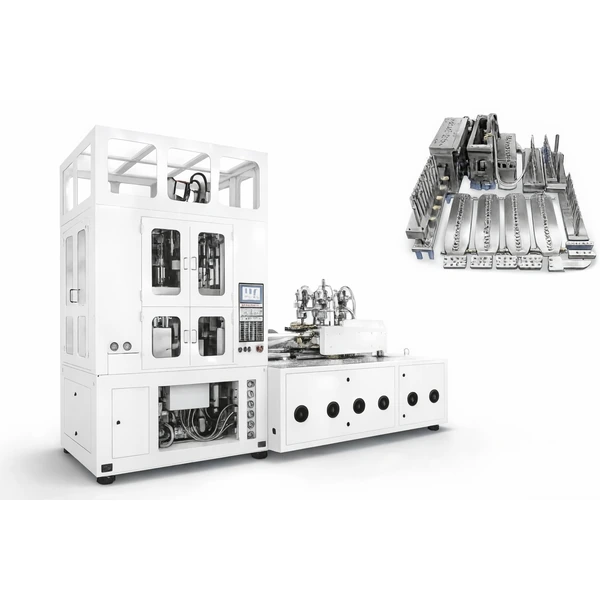
De Energiebesparing van 40%-machines met volledig servo-aangedreven elektrische aandrijving. De hydraulische platforms vertegenwoordigen de huidige Koreaanse ISBM-technologiestandaard. De volgende generatie Koreaanse ISBM-machinearchitectuur – die naar verwachting in 2027-2028 op de Koreaanse markt beschikbaar komt – voegt energieterugwinning toe aan de volledig elektrische architectuur: kinetische energie die wordt teruggewonnen door de vertraging van het klemmechanisme en het intrekken van de trekstang wordt teruggevoerd naar de aandrijfbus en direct gebruikt door andere machineaandrijvingen, in plaats van als warmte te worden afgevoerd in remweerstanden zoals bij de huidige elektrische machines.
De regeneratieve, volledig elektrische architectuur zal naar verwachting een verdere energiebesparing van 15–201 TP3T opleveren ten opzichte van de huidige EV-basislijn. Dit betekent dat de volgende generatie Koreaanse ISBM-machines ongeveer 48–521 TP3T minder energie zal verbruiken dan hydraulische machines. Voor Koreaanse ISBM-producenten die 16–20 uur per dag draaien onder de Koreaanse industriële elektriciteitstarieven (KRW 120–165/kWh in 2026), is deze extra energiebesparing KRW 8–18 miljoen per machine per jaar waard – een aanzienlijke bijdrage aan een snellere terugverdientijd van de machine. Koreaanse ISBM-producenten die in 2026–2027 in nieuwe machines investeren, staan voor een timingvraag: nu het huidige EV-platform aanschaffen en direct profiteren van de 401 TP3T energiebesparing, of 12–18 maanden wachten tot de regeneratieve architectuur beschikbaar is. De 401 TP3T energiebesparing van het huidige EV-platform is nu al beschikbaar. Het uitstellen van de investering in afwachting van de regeneratieve architectuur brengt opportuniteitskosten met zich mee die moeten worden afgewogen tegen de verwachte extra besparing.
3. Trend 2 — AI-gestuurde procesbesturing: kwaliteitsmanagement met gesloten lus
AI-gestuurde procesbesturing – waarbij machine learning-modellen continu de injectietemperatuur, blaasdruk en conditioneringsparameters aanpassen op basis van realtime metingen van de productkwaliteit – maakt de overgang van een Koreaans ISBM-onderzoeksprototype naar commerciële beschikbaarheid in 2026-2027. Het verschil met bestaande SPC-systemen (Statistical Process Control) is fundamenteel: SPC bewaakt procesparameters en waarschuwt operators wanneer deze afwijken; AI-gestuurde closed-loop-regeling past procesparameters autonoom aan om de productkwaliteit binnen de specificaties te houden zonder tussenkomst van de operator.
Momenteel commercieel verkrijgbare AI-procesbesturingstoepassingen in Koreaanse ISBM (beschikbaar op de Koreaanse Ever-Power HGYS280-V6 V6AI-optie): op beeldherkenning gebaseerde inspectie van holtes met terugkoppeling naar individuele temperatuurregeling van de holtes; realtime schatting van de IV-waarde van voorvormen op basis van het injectiedrukprofiel met terugkoppeling naar de temperatuur van de cilinder; en afstemming van de blaasdrukcurve op een gouden referentiemonster met automatische drukaanpassing voor compensatie van de wanddikte. Deze systemen verlagen het afvalpercentage van Koreaanse ISBM van typisch 1,5–3,01 TP3T naar minder dan 0,51 TP3T op productielijnen waar ze zijn geïmplementeerd.
Naar verwachting zal de Koreaanse ISBM AI-procesbesturing tussen 2028 en 2030 volledig geoptimaliseerd zijn voor de productieparameters. Hierbij zal het AI-systeem de machine op het punt van maximale productiviteit laten draaien, binnen alle kwaliteitsbeperkingen tegelijk, in plaats van op de conservatieve, vaste instelpunten die Koreaanse operators gebruiken om een veiligheidsmarge in te bouwen tegen kwaliteitsfouten. Eerste pilotgegevens uit Korea over het HGYS280-V6 V6AI-platform suggereren dat de door AI-optimalisatie gedreven cyclustijdreductie ten opzichte van vaste instelpunten 5 tot 81 ton bedraagt – bescheiden, maar significant op de schaal van grootschalige Koreaanse productie.
4. Trend 3 — Slimme matrijzen en IoT-verbonden gereedschappen
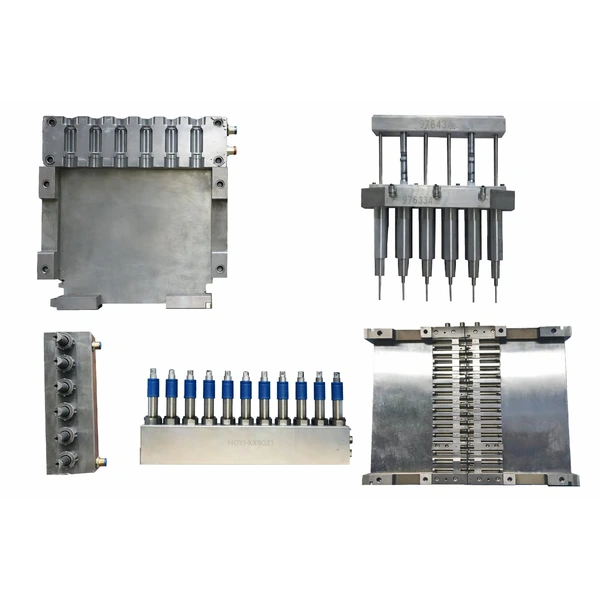
Slimme matrijstechnologie – matrijzen uitgerust met sensoren in de matrijs (temperatuur, druk, koelcircuitdebiet) die realtime gegevens naar de machinecontroller en het productiemanagementsysteem verzenden – wordt in 2026 in Korea commercieel ingezet en zal naar verwachting tegen 2028-2029 een standaardspecificatie worden voor Koreaanse precisie- en farmaceutische ISBM-matrijzen. De gegevens die slimme matrijzen leveren, bieden drie mogelijkheden die standaardmatrijzen niet kunnen bieden:
Procescontrole op holteniveau
De variatie in temperatuur en druk binnen de matrijs – de hoofdoorzaak van de variatie in wanddikte tussen de matrijzen – is alleen detecteerbaar met sensoren in de matrijs zelf. Slimme matrijsdata maken een individuele aanpassing van de matrijscondities mogelijk, waardoor de variatie in wanddikte tussen de matrijzen (CV%) wordt teruggebracht van 3–5% tot onder de 1,5%.
Voorspellend schimmelonderhoud
Verminderde doorstroming in het koelcircuit (door vervuiling of gedeeltelijke verstopping) wordt door slimme matrijsdebietsensoren gedetecteerd voordat dit leidt tot kwaliteitsverlies. Hierdoor kan geplande reiniging plaatsvinden vóórdat er een storing optreedt, in plaats van ongeplande stilstand.
Digitaal malpaspoort
Slimme matrijzen slaan het aantal injecties, de temperatuurcyclusgeschiedenis en onderhoudsgegevens op in het interne geheugen van de matrijs. Zo ontstaat een complete levenscyclusgeschiedenis die ondersteuning biedt bij GMP-conformiteitsdocumentatie en de waardebepaling van de matrijs bij wederverkoop.
5. Trend 4 — Geavanceerde rPET- en multipolymeerverwerkingsmogelijkheden
Het traject van de Koreaanse K-EPR rPET-verplichting (10% 2026 → 30% 2027 → 50% 2030) is de belangrijkste technologische drijfveer voor investeringen in Koreaanse ISBM-machines in de periode 2026-2030, omdat het in feite een capaciteitsdrempel definieert: Koreaanse ISBM-machines die geen 50% rPET-mengsels kunnen verwerken volgens commerciële kwaliteitsspecificaties, zullen na 2030 geen Koreaanse K-EPR-conforme verpakkingen meer kunnen leveren. Het volledige rPET-verwerking in ISBM 2026 complete handleiding Dit document beschrijft de vereisten voor de machinecapaciteit in detail. Kort gezegd komt het erop neer dat volledig servogestuurde EV-machines met actieve IV-compensatie de minimale specificatie zijn voor de productie van 30%+ rPET volgens de Koreaanse kwaliteitsnormen.
Naast rPET zal de commerciële relevantie van PEF (polyethyleenfuranoaat – een biobased PET-alternatief met superieure barrière-eigenschappen), PBAT (polybutyleenadipatetereftalaat – een biologisch afbreekbaar copolymeer) en biobased PET (chemisch identiek aan fossiel PET, maar geproduceerd uit MEG afkomstig van suikerriet) toenemen in de Koreaanse ISBM-markt tussen 2026 en 2030. Deze materialen kunnen worden verwerkt op ISBM-machines met aanpassingen aan de temperatuur van de trommel en de conditioneringsparameters. Ze vertegenwoordigen toekomstige groeimogelijkheden voor Koreaanse ISBM-producenten die investeren in machines met het thermische bereik en de conditioneringsflexibiliteit om deze duurzame polymeren van de volgende generatie te verwerken zodra ze commercieel verkrijgbaar zijn en voldoen aan de Koreaanse regelgeving.
6. Trend 5 — Hoger aantal holtes en micro-pitch architecturen
Het huidige maximum aantal caviteiten voor standaard 4-stationsmachines van de Koreaanse ISBM-machine is 16 (dubbelrijige HGY250-V4-B). De 6-stationsarchitectuur (HGYS280-V6) bereikt momenteel 12 caviteiten voor flessen van klein formaat. De volgende generatie verbeteringen in het aantal caviteiten van de Koreaanse ISBM-machines richt zich op het ontwerpen van matrijzen met een micropitch-afstand – het verkleinen van de hart-op-hartafstand van de caviteiten om meer caviteiten binnen hetzelfde plaatoppervlak mogelijk te maken. Een micropitch-ontwerp vereist strakkere toleranties voor de hotrunner-verdeelstukken en smallere koelcircuitkoppen, beide haalbaar met de huidige Koreaanse bewerkingstechnologie, maar vereisen nieuwe normen voor het matrijsontwerp.
De Koreaanse calculator voor optimalisatie van het aantal gaatjes De technologie zal zich ontwikkelen en micro-pitch configuraties omvatten zodra deze commercieel beschikbaar komen. De fundamentele berekeningslogica (vraag naar volume ÷ cyclustijd × machinebenutting) blijft ongewijzigd, maar het haalbare aantal caviteiten voor een gegeven plaatgrootte neemt toe, waardoor de beslissingen over de machinegrootte voor Koreaanse grootproducenten veranderen. Koreaanse ISBM-producenten die momenteel worden beperkt door het aantal caviteiten (ze draaien in drie ploegen met maximale benutting) zouden de ontwikkelingen op het gebied van micro-pitch moeten volgen als een potentiële manier om de capaciteit uit te breiden tegen lagere investeringskosten dan de aanschaf van een extra machine.
7. Trend 6 — Integratie van digitale tweeling en MES voor Koreaanse ISBM-productie
Digitale tweelingtechnologie – een virtueel model van het ISBM-productieproces dat parallel loopt met de echte machine, parameterwijzigingen simuleert voordat ze in de productie worden toegepast en voorspellende procesoptimalisatie biedt – wordt in 2026 commercieel ingezet op Koreaanse ISBM-platforms als een integratie tussen OPC-UA-data-outputs van machines en Koreaanse productie-uitvoeringssystemen (MES). Koreaanse klanten in de voedingsmiddelen-, farmaceutische en cosmeticasector die de transparantie-eisen van de Koreaanse Industrie 4.0 (스마트 제조 전략) voor de toeleveringsketen implementeren, vragen steeds vaker om MES-integratie van hun Koreaanse ISBM-contractproducenten. De mogelijkheid om elke eenheid te herleiden tot de machineparameters tijdens de productie wordt een kwalificatie-eis voor B2B-verpakkingen in Korea.
Koreaanse ISBM-producenten die investeren in MES-geïntegreerd productiebeheer (Koreaanse MES-platforms van Kepco Solutions, Samsung SDS of LG CNS) verkrijgen een concurrentievoordeel bij het binnenhalen van accounts bij Koreaanse farmaceutische bedrijven, fabrikanten van medische hulpmiddelen en K-Beauty-merken die traceerbaarheid van de productie vereisen. De investering in data-infrastructuur (MES-software en OPC-UA-machine-interface: initiële investering van 30-80 miljoen KRW) is aanzienlijk lager dan de potentiële omzet die behaald kan worden met het binnenhalen van één Koreaans farmaceutisch of premium cosmeticamerk. Dit maakt MES-integratie een van de meest rendabele digitale investeringen voor Koreaanse ISBM-producenten in de periode 2026-2030.
8. Drijfveren voor regelgevingstechnologie in Korea: K-EPR en K-ESG tot 2030
Twee regelgevende initiatieven van de Koreaanse overheid vormen de belangrijkste externe technologische drijfveren voor de investeringsplanning van ISBM in Korea tot 2030:
Koreaanse K-EPR rPET-inhoudsvoorschrift: De eis voor 50% rPET-gehalte in 2030 is de grootste drijfveer achter technologische investeringen in de Koreaanse ISBM-sector. Dit komt doordat er upgrades nodig zijn van de conditioneringsystemen voor de verwerking van IV-variabel rPET, wat niet mogelijk is met oudere Koreaanse hydraulische machines. Koreaanse ISBM-producenten die hydraulische machines of machines van de eerste generatie elektrische machines gebruiken en nog niet zijn geüpgraded, worden geconfronteerd met zowel een deadline voor naleving van de K-EPR-regelgeving als een nadeel qua energiekosten ten opzichte van moderne elektrische platforms. Daarom is de periode 2026-2028 het optimale moment voor een gecombineerde investering in machine-upgrades en rPET-capaciteit.
Koreaanse K-ESG (Environmental, Social, Governance) eisen voor de toeleveringsketen: Grote Koreaanse bedrijven (de belangrijkste Koreaanse conglomeraten en hun toeleveringsketens) implementeren Scope 3-emissierapportage, inclusief de productie van verpakkingen. Dit vereist dat Koreaanse ISBM-contractproducenten geverifieerde gegevens over energieverbruik en CO₂-uitstoot per verpakkingseenheid aanleveren. Koreaanse ISBM-producenten die deze gegevens niet kunnen verstrekken, komen niet in aanmerking voor programma's voor grote Koreaanse bedrijven die vanaf 2027 de K-ESG-rapportagevereisten voor leveranciers zullen invoeren. De energiemetingsmogelijkheid van het Koreaanse EV-platform (realtime meting van kWh per eenheid op Koreaanse elektrische voertuigen) biedt de data-infrastructuur voor K-ESG-rapportage. Dit is een minder voor de hand liggend concurrentievoordeel van investeringen in elektrische voertuigen dat verder reikt dan alleen energiebesparing en ook bijdraagt aan de kwalificatie voor de toeleveringsketen.
9. Het juiste investeringsmoment voor Koreaanse ISBM's: wanneer te upgraden en wanneer te wachten.
De huidige technologische trends zorgen voor een dilemma wat betreft de timing van investeringen in Koreaanse ISBM's: nu investeren in de huidige generatie elektrische voertuigen en profiteren van de bekende voordelen (energiebesparing van 40%, rPET-functionaliteit, K-ESG-gegevens), of de investering uitstellen en wachten op de volgende generatie regeneratieve aandrijvingen en AI-gestuurde processen. Het kader voor deze beslissing:
| Situatie | Aanbeveling voor het juiste investeringsmoment |
|---|---|
| Het gebruik van hydraulische ISBM-machines leidt tot een jaarlijkse energierekening van meer dan 80 miljoen KRW per machine. | Investeer nu in een elektrische auto – alleen al de energiebesparing betaalt zich binnen 3-4 jaar terug, de K-EPR-deadline kan niet worden uitgesteld. |
| Gebruikmakend van het huidige EV-platform, geen tekortkomingen op het gebied van K-EPR-conformiteit, winstgevende productie. | Overweeg om extra investeringen in machines 18-24 maanden uit te stellen om de beschikbaarheid van regeneratieve architectuur te evalueren. |
| We hebben nu capaciteitsuitbreiding nodig om aan de bevestigde klantbestellingen te voldoen. | Investeer altijd nu — gegarandeerde omzetderving tijdens het wachten op technologie is een feit; toekomstige voordelen van technologie zijn waarschijnlijker. |
| Kloof in de naleving van K-EPR rPET-normen (gebruik van 0% rPET, terwijl nu 10% verplicht is) | Investeer nu in een upgrade naar elektrisch rijden — K-EPR-conformiteit is een wettelijke vereiste, geen concurrentievoordeel. |
10. Koreaanse Ever-Power Technologie Roadmap 2026-2030
Het gepubliceerde technologieontwikkelingsprogramma van het Koreaanse Ever-Power voor 2026-2030 omvat: (1) het V6AI-platform voor de HGYS280-V6 met geïntegreerde, op beeldherkenning gebaseerde AI-procesbesturing (commercieel beschikbaar in Korea vanaf het derde kwartaal van 2026); (2) een regeneratieve aandrijfarchitectuur voor de HGY200-V4- en HGY250-V4-platforms (ontwikkeling gepland voor 2027, beschikbaarheid op de Koreaanse markt in 2028); (3) een slim matrijssensorpakket (temperatuur- en koelcircuitstroomsensoren met OPC-UA-data-uitvoer) als fabrieksoptie voor alle nieuwe matrijsbestellingen vanaf het eerste kwartaal van 2027; en (4) een Koreaans Industry 4.0 MES-integratiepakket met standaard OPC-UA-interface en een MES-connector in het Koreaans voor de platforms van Kepco Solutions, Samsung SDS en LG CNS. Koreaanse ISBM-producenten die willen begrijpen hoe deze roadmap-items hun specifieke investerings- en productieplanning beïnvloeden, worden aangemoedigd een Koreaans Ever-Power-technologieconsult aan te vragen. Deze roadmap-planningssessie is een standaarddienst voor Koreaanse EV-platformklanten en biedt een analyse op maat van welke roadmap-items relevant zijn voor de specifieke productiecontext van de klant.
Veelgestelde vragen
Consultatie over de technologische routekaart
Is het plan om tot 2030 te investeren in ISBM in Korea?
Consultatie over de technologische roadmap van Ever-Power in Korea brengt het optimale upgradepad in kaart.
Een actuele analyse van investeringen in EV-platformen, een beoordeling van de K-EPR rPET-capaciteit, een planning voor MES-integratie en een beoordeling van de kwalificatiecriteria voor Koreaanse overheidssubsidies zijn gratis beschikbaar voor klanten die informatie over Koreaanse EV-platformen aanvragen.
Gerelateerde bronnen
6-stations bereikKoreaanse Ever-Power ISBM-reeks met 6 stationsHet 6-stationsplatform – toonaangevende Koreaanse ISBM-technologie met V6AI-optie – vertegenwoordigt de huidige commerciële grens van Koreaanse productie met AI-integratie in ISBM-systemen.
EnergieplatformAll-Servo EV ISBM — 40% EnergiebesparingDe huidige energiebasislijn van het Koreaanse EV-platform — het uitgangspunt voor de incrementele verdere reductie van 15–20% in de volgende generatie regeneratieve architectuur.