技術詳細解説・ネック仕上げエンジニアリング・韓国ISBM 2026

ISBMネック仕上げエンジニアリング:
韓国のボトルガイド

ISBMボトルにおいて、ネック部分は唯一、決して引き伸ばされることのない部分です。最終寸法で射出成形されるため、キャップの嵌合、改ざん防止、およびディスペンシング時のシールにおいて、高い精度が求められます。ネック外径の0.05mmのずれは、キャップ部分で増幅され、キャップのトルク不良、シールの漏れ、そして消費者からのクレームにつながります。韓国のISBMネック仕上げエンジニアリングでは、引き伸ばされていないネック部分を、韓国製ISBM生産ラインにおいて最も寸法精度の高い部分にするための公差、材料、および検査手順を定めています。

PCO 1881 ±0.10mm OD
GPI 28/410 化粧品 ±0.04mm
韓国CRC ±0.03mm


韓国ISBMネック仕上げ標準リファレンス — 2026

ネックスタンダード 外径(mm) OD許容値 韓国のアプリケーション
PCO 1881 27.43 ±0.10mm 2つ星 韓国産ミネラルウォーター、飲料、炭酸飲料、HPPコールドプレスジュース
PCO 1810(旧バージョン) 28.58 ±0.10mm 2つ星 韓国の伝統的な炭酸飲料は、韓国の一部の市場で依然として販売されている。
GPI 28/410 27.43 ±0.04mm 3つ星 韓国製KビューティーPETG、韓国製パーソナルケアポンプ、韓国製ハンドサニタイザー
GPI 24/410 24.08 ±0.04mm 3つ星 韓国製トナーポンプ、韓国製ハンドサニタイザーポンプ、韓国製ルームスプレーポンプ
CRC P&T 28mm 27.43 ±0.03mm 特別CRC 韓国製薬CRC経口液、韓国乳児用粉ミルク
口径63mm以上 63~100 ±0.10mm 広口GPI 韓国のサプリメント瓶、韓国の粉ミルク瓶、韓国のキムチ瓶

1. ネックの仕上げが寸法的に最も重要な部分である理由

In Korean ISBM production, the bottle body undergoes biaxial orientation that reduces dimensional variation — the stretch-blow process is self-correcting in the body zone, where material flows to fill the mould cavity under pressure. The neck finish, however, is not stretched or blown — it is formed entirely by injection moulding in the injection station, before the conditioning and blowing phases. This means the neck finish dimensions are set entirely by the injection mould’s neck insert geometry and the injection process conditions, with no self-correcting blow pressure to compensate for injection variation.

The downstream consequence of neck finish variation is magnified by closure mechanics: a ±0.10mm neck OD variation on a PCO 1881 water bottle creates approximately ±8% variation in closure application torque — acceptable for Korean commodity water. A ±0.04mm variation on a Korean GPI 28/410 cosmetic pump neck creates ±15% variation in pump head engagement force — producing audible play in the pump head and occasional pump head tilt on Korean K-Beauty toner bottles that fails Korean brand incoming inspection. A ±0.03mm variation on a Korean CRC neck creates ±22% variation in child-resistance ratchet engagement force — potentially causing CRC performance test failure (the 85% child resistance rate falling below the Korean KFDA requirement). Every Korean ISBM application tier has a distinct neck OD tolerance that reflects its closure’s sensitivity to dimensional variation, and every Korean ISBM neck insert must be designed, manufactured, and maintained to that tolerance. The preform design geometry that establishes the neck zone wall distribution before the neck insert forms it is in the ISBMプリフォーム設計基礎ガイド.

射出延伸ブロー成形アプリケーション-4

2. 韓国PCO 1881規格:飲料ネックエンジニアリング

Korean ISBM PCO 1881 neck finish dimensional profile — neck OD 27.43mm ±0.10mm, thread start position, T-dimension (thread height), E-dimension (outer thread profile), L-dimension (neck length from support ring to top), and tamper band geometry for Korean still water and beverage ISBM bottle production
韓国ISBM PCO 1881ネック仕上げ寸法プロファイル — PCO 1881規格では、閉止適合性を決定する11の重要な寸法(T、E、L、H、S、I、N、M、F、G、およびねじピッチ)が定義されています。韓国ISBMネックインサートの金型は、PCO 1881の公差範囲内で11の寸法すべてを再現する必要があります。韓国の飲料製造では、重要な外径寸法は通常±0.10mm、T寸法(ねじ高さ)はすべてのキャビティで一貫した閉止トルクを得るために±0.05mmに抑えられています。

PCO 1881(ポリエチレン製キャップおよびクロージャー開口部1881)は、韓国の飲料ネック規格として主流であり、韓国のミネラルウォーター、炭酸飲料、スパークリングウォーター、HPPジュース、および標準的な28mmスクリューキャップを使用するほとんどの韓国飲料に使用されています。PCO 1881規格は、国際飲料技術者協会(ISBT)によって、以前のPCO 1810規格の軽量代替品として開発され、同等のクロージャー性能を維持しながらネック材の重量を約12%削減しています。

Korean ISBM PCO 1881 neck engineering critical parameters: (1) E-dimension (external thread OD) = 27.43mm nominal, ±0.10mm Korean beverage standard tolerance; (2) T-dimension (thread height above pitch line) = 0.97mm nominal, ±0.05mm — determines the radial interference fit between the bottle thread and the closure’s skirt thread; (3) L-dimension (neck length from support ring to sealing surface) = 17.0mm nominal, ±0.30mm — determines the closure’s vertical travel from application to engaged position; (4) Support ring OD = 30.48mm nominal — the flange that supports the bottle on the filling line neck-handling equipment. Korean ISBM beverage bottle quality auditors check E-dimension at all four quadrants (0°, 90°, 180°, 270°) of each cavity — a non-round neck finish (ovality above 0.15mm diameter difference between orthogonal measurements) indicates neck insert wear or uneven cooling and is a standard Korean beverage brand incoming inspection rejection criterion.

ネックゾーン(ブロー方向を受けない)がボディゾーンよりも機械的に弱い理由、そして韓国の飲料ブランドが外径公差に加えてネック壁の最小厚さを指定する理由を説明する分子配向科学は、 二軸分子配向ガイド.

3. GPI 28/410および24/410:韓国パーソナルケアネックエンジニアリング
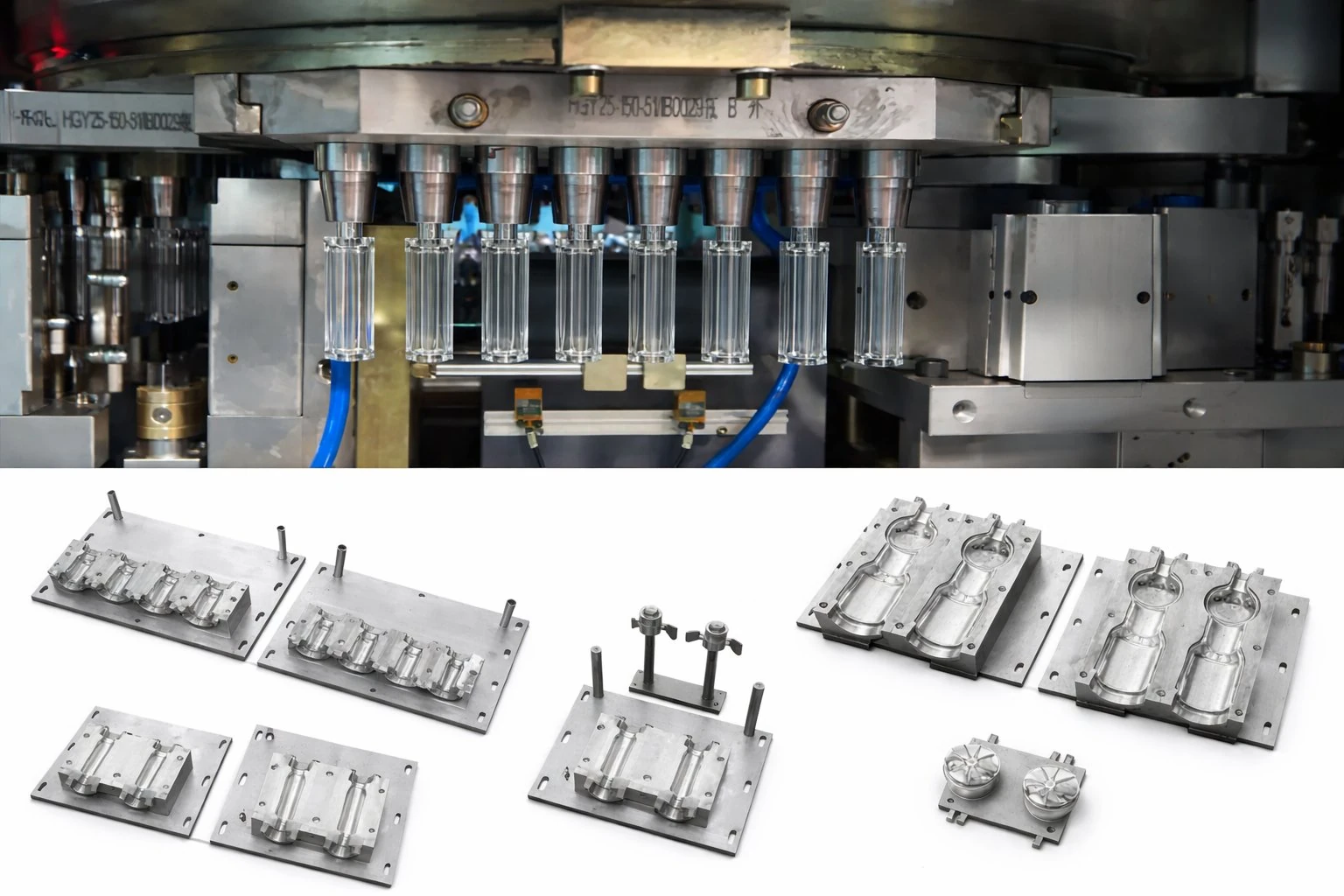
Korean ISBM GPI 28/410 and 24/410 neck insert precision — 2316 stainless steel diamond-lapped neck insert for K-Beauty PETG toner pump and hand sanitizer pump neck finish at ±0.04mm OD tolerance, showing thread start position, thread depth, and seating surface flatness
Korean ISBM GPI 28/410 precision neck insert — 2316 stainless steel (corrosion-resistant for PETG processing environment), diamond-lapped to Ra ≤ 0.05μm, achieving ±0.04mm OD tolerance across all cavities. The 3-start thread profile (three independent thread helices starting 120° apart) provides faster closure application (1/3 turn to engage versus PCO 1881’s full turn) and more consistent closure removal torque — important for Korean K-Beauty consumer experience where pump head replacement must be effortless.

GPI (Glass Packaging Institute) neck standards — used extensively in Korean personal care ISBM — define the 28/410 and 24/410 neck profiles where the first number is the nominal OD in millimetres and the second is the thread depth code. Korean ISBM GPI 28/410 and 24/410 necks are used for pump dispensers, flip caps, and lotion caps across Korean K-Beauty PETG, personal care, hand sanitizer, and room spray applications. The critical difference from PCO 1881: GPI 28/410 uses a 3-start thread (three helices beginning 120° apart around the neck circumference) versus PCO 1881’s 2-start thread. The 3-start thread provides approximately 1/3-turn engagement versus PCO 1881’s 1/2-turn, enabling faster pump head application on Korean filling lines.

韓国ISBM GPI 28/410ネック公差仕様(用途別):韓国の一般消費者向けパーソナルケア製品(シャンプー、コンディショナー、ローション - ポンプ外径24mm):±0.05mm外径 - 標準GPI公差、標準スプリング定数のほとんどの韓国パーソナルケアポンプディスペンサーで許容可能。韓国KビューティーPETGトナーポンプ(ポンプ外径24mm、低粘度トナー):±0.04mm - ポンプヘッドの傾きを防ぐため、一般消費者向け製品よりも厳密。韓国の手指消毒剤エタノール対応ポンプ(24/410、シリコンガスケット):シリコンガスケットの圧縮を一定に保つため、±0.04mm。韓国の医薬品CRC(28/410 P&T機構):±0.03mm - 韓国ISBMネック外径仕様の中で最も厳密。ネックゾーンでの射出充填均一性を決定するホットランナー設計(すべてのキャビティで±0.04mmネック外径を達成するための前提条件)は、 韓国ISBMホットランナーシステムガイド.

4. 韓国ISBMボトル向け改ざん防止バンドデザイン

Tamper evidence on Korean ISBM bottles is achieved through two mechanisms: the closure’s tamper-evident band (a ratcheted ring on the closure skirt that engages the bottle’s transfer bead or ratchet ring below the support ring), and the induction foil seal (a heat-bonded aluminium foil seal over the bottle neck seating surface that is destroyed upon first opening). Korean ISBM bottle neck engineering for tamper-evident closure compatibility focuses on the transfer bead — the raised circumferential bead on the bottle neck below the support ring that the closure’s tamper-evident band ratchet teeth engage during application.

韓国製ISBMトランスファービードの設計: (1) トランスファービードの外径 = 通常、ねじの外径より3~5%大きく、タンパーバンドのラチェット歯が最初のねじり外し時に克服しなければならない機械的干渉を提供します。ビードが小さすぎるとタンパーバンドが確実に噛み合わず、大きすぎるとバンドを適用するために過剰な力が必要になり、クロージャースカートが割れる可能性があります。(2) ネックシャフト上のトランスファービードの高さ = 0.5~1.2mm。0.4mm未満ではラチェット歯がグリップできず、1.5mmを超えると適用中にバンドが過度に伸び、クロージャーに目に見える応力白化が残ります。(3) 下端のトランスファービードの半径 = 0.3~0.6mm。鋭利な下端はタンパーバンドに応力集中を引き起こし、適用トルク中に韓国の充填ラインで早期に破損します。韓国の飲料充填ラインのセットアップ中に改ざん防止バンドのひび割れに遭遇した韓国のISBM製造業者は、まずトランスファービードの下部半径を測定する必要があります。半径が0.25mm未満(ネックインサートの摩耗による)の場合、韓国の飲料充填ラインで韓国のISBM改ざん防止バンドがひび割れる最も一般的な原因となります。

韓国製ISBMネック仕上げの欠陥(トランスファービードでのタンパーバンドリングのひび割れ、最初の開封時にタンパーバンドが分離しない、ねじ山のクロススレッドなど)とその具体的な根本原因診断については、 韓国ISBMボトル欠陥フィールドガイド.

5. ネックインサート材質:韓国ISBM用途向け鋼材選定
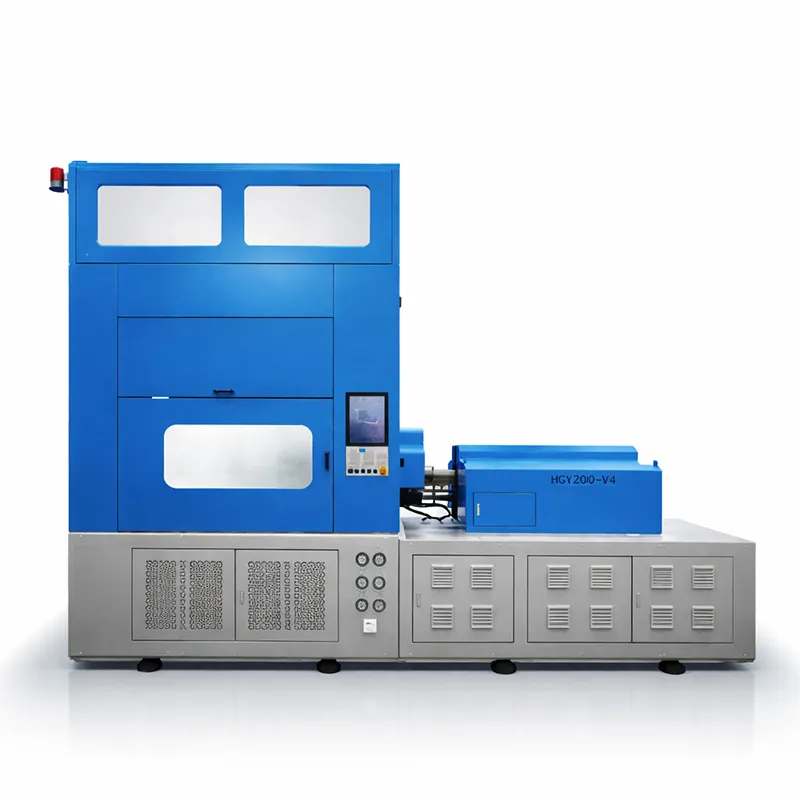
Korean Ever-Power HGY200-V4 ISBM precision platform — P20 neck inserts for Korean PCO 1881 beverage production at ±0.10mm OD tolerance and 2316 stainless steel diamond-lapped neck inserts for Korean GPI 28/410 K-Beauty cosmetic and pharmaceutical applications at ±0.03–0.04mm OD tolerance
韓国のEver-Power HGY200-V4は、用途に応じたネックインサート鋼材の選択が可能です。韓国のPCO 1881飲料ネック外径±0.10mmの標準耐用年数生産には、P20プレ硬化鋼(30~36 HRC)を使用。韓国のGPI 28/410 K-Beauty化粧品ネック外径±0.04mmには、2316マルテンサイト系ステンレス鋼(32~36 HRC、耐食性)を使用。射出圧力下での寸法安定性が最高レベルが求められる韓国のCRCネックインサート(±0.03mm)には、H13熱間加工工具鋼(48~52 HRC)を使用。

韓国製ISBMネックインサートの鋼材選定は、達成可能な寸法精度と、寸法ずれが発生するまでの製品寿命の両方を左右します。韓国製ISBMネックインサート用途には、3種類の鋼種が使用されています。

P20 プレ硬化鋼(硬度30~36HRC)— 韓国PCO飲料規格

P20 is the standard Korean ISBM neck insert steel for PCO 1881 and PCO 1810 beverage applications. At ±0.10mm PCO OD tolerance, P20’s hardness provides adequate dimensional stability for typical Korean beverage production volumes (8–15M shots/year per cavity). P20 does not provide sufficient corrosion resistance for Korean PETG processing — PETG’s slightly acidic melt (pH equivalent from glycol modifier hydrolysis) causes P20 to develop surface oxidation at the thread profile crests after 3–4M shots, increasing thread surface roughness and beginning to affect neck OD dimensional consistency. Acceptable for PET beverage; replace with 2316 for PETG cosmetic applications.

2316マルテンサイト系ステンレス鋼(硬度32~36HRC)—韓国のKビューティーおよび医薬品業界標準

2316ステンレス鋼は、32~36 HRCの硬度(±0.04mm GPI公差での寸法安定性に十分)と316Lと同等の耐食性(PETG溶融物、研磨洗浄剤、韓国の夏の湿気に耐性)を兼ね備えています。韓国のKビューティーPETG化粧品、韓国の医薬品、韓国の手指消毒剤のネックインサートは、標準で2316ステンレス鋼が指定されています。±0.04mm GPI外径での耐用年数:寸法が公差を超える前に、キャビティあたり12~20Mショット。これは、韓国のKビューティーPETGネックインサートの交換の標準間隔です。2316韓国化粧品ネックインサートには、Ra ≤ 0.05μmのダイヤモンドラッピングが標準で、Kビューティーボトルの寸法再現精度と目視によるねじ表面品質の両方を向上させます。

H13熱間加工用工具鋼(硬度48~52HRC)—韓国CRC製薬

H13は、韓国製ISBMネックインサートの中で最高の硬度(48~52 HRC)を誇り、製造期間全体にわたって±0.03mmのCRC寸法安定性が求められる用途に適しています。韓国の製薬業界におけるCRC製造量(年間400万~600万ショット)において、H13 CRCネックインサートは1,000万~1,500万ショットにわたって±0.03mm以内の寸法精度を維持します。これは、同じ外径公差の2316ステンレス鋼の3倍の耐用年数です。H13 CRCインサートのコストは2316ステンレス鋼よりも約35%高くなりますが、製造中に±0.03mmを超える寸法ずれが発生した場合に必要となるCRC性能試験の再認定頻度が低くなるため、そのコストは正当化されます。

韓国のISBM金型鋼の包括的な選定フレームワーク(各韓国アプリケーションにおけるネックインサート鋼、キャビティ本体鋼、ベースインサート鋼の相互作用を含む)は、要因6(ネックインサート鋼)です。 9つの要素から学ぶ韓国製ISBM金型選定ガイド.

6. 韓国製ISBMネック仕上げ不良:原因と診断

欠陥 外観 主な原因 修正
首のODの過許容範囲 閉鎖時に詰まりが発生するか、過剰なトルクが必要となる。ポンプヘッドにガタつきがある。 ネックインサート穴の摩耗拡大、射出成形時の過剰充填、溶融温度が高すぎる インサートボアを測定し、摩耗している場合は交換し、射出保持圧力を5~10%下げます。
ねじ山のバリ/ねじ山の縁 糸の頂部から伸びる薄いPET製のフィン。閉鎖部は交差する糸で構成されている。 ネックインサートのスプリットラインギャップが0.02mm以上摩耗している。射出成形オーバーパッキング インサートの分割線ギャップを測定し、インサートの半分を再装着し、射出圧力を下げます。
ショートショットネック ねじ山の形状が不完全。ねじ山の一部が欠落している。ネック部の壁が薄い。 射出圧力不足、ゲートの汚れ、溶融温度が低すぎる 射出パックの圧力を上げる。ホットランナーゲートを清掃する。バレル温度を3~5℃上げる。
首の楕円形 非円形ネック;ポンプヘッドが垂直からずれた位置に装着;閉鎖トルクの変動 ネックインサートの冷却が不均一。ネックインサートの半分のクランプ力が不均一。 各ネックインサート冷却ポートで冷却水の温度差ΔTを測定し、流量を調整し、インサートの半分の位置合わせを確認します。
座面の傾斜 閉鎖面は片方の端に優先的に接触し、反対側から漏れる。 ネックインサート上面がボア軸に対して垂直でない(0.1°以上の傾斜)。ネックの冷却が不均一。 CMMでネックシート面の垂直度を測定し、0.1°以上の傾きがある場合はインサートを再加工する。

7. ネック仕上げ測定と韓国ISBM品質管理プロトコル

Korean ISBM neck finish quality control — digital calliper neck OD measurement at four quadrants per cavity, go/no-go gauge thread engagement check, seating surface flatness measurement, and ovality calculation for Korean beverage and K-Beauty cosmetic production lot release documentation
韓国ISBMネック仕上げ品質管理プロトコル — 0.001mm分解能のデジタルノギスで、キャビティごとに4象限(0°、90°、180°、270°)の外径を測定。合否ゲージによるねじ込み(韓国規格:1回転以内でねじ込みが完了)。座面の平坦度±0.06mm以下(韓国Kビューティーおよび医薬品向け)。真円度計算(最大外径-最小外径、PCOの場合は≤0.12mm、GPIの場合は≤0.08mm)。この4項目の測定品質管理プロトコルは、1シフトあたり1キャビティにつき5本のボトルを対象とし、韓国プレミアムブランドのネック仕上げロットリリース文書に必要な最低限の要件です。

Korean ISBM neck finish measurement protocol is structured at three levels of frequency and precision. Production shift check (5 bottles per cavity per shift, digital calliper): neck OD at 2 quadrants (0° and 90°), ovality calculation, go/no-go gauge pass; results logged in production quality record. Weekly dimensional audit (10 bottles per cavity, CMM or air gauge): neck OD at 4 quadrants, thread height T-dimension, L-dimension, support ring OD, seating surface flatness; results compared to the Korean brand’s dimensional specification (PCO 1881 ISBT drawing, GPI 28/410 closure supplier print, or brand proprietary drawing). Quarterly neck insert dimensional inspection (coordinate measurement on the neck insert itself, not the bottle): measure insert bore at 4 quadrants, thread profile geometry (depth, pitch, angle), split-line gap, and seating face perpendicularity; compare to original as-manufactured insert dimensions to confirm wear is within the re-serviceable range. Korean ISBM producers who implement this three-level neck finish QC protocol reduce neck-related rejection at Korean brand incoming inspection to below 0.1% of deliveries — compared to 2–4% rejection rates for Korean ISBM producers who only perform cursory shift visual inspection of neck finish quality.

8. 韓国製特別ネック形状:誘導シール、ドロッパー、リードディフューザー

韓国のISBMは、標準的なPCOおよびGPIねじプロファイルに加えて、独自のエンジニアリングアプローチを必要とする3つの特殊なネックプロファイルを製造しています。誘導シールネック(韓国の食品瓶、乳児用粉ミルク、サプリメント瓶、医薬品経口液):座面(アルミニウム箔誘導シールが接着するネック上部の平らな環状面)は、韓国の医薬品/乳児用粉ミルク用途では±0.06mm以内、韓国の食品瓶用途では±0.08mm以内で平坦でなければなりません。座面は、通常幅がわずか2.5~4mmであるため、韓国のISBMで最も寸法に敏感なネックの特徴であり、ネックインサートのわずかな傾き(0.1°以上)によって座面が傾き、箔の溶接強度が不均一になります(低い側ではシールが不十分、高い側では溶接焼けが過剰)。韓国製ドロッパーネック(韓国製エッセンスアンプル、韓国製医薬品経口液、韓国製食用油):ネックの内径がドロッパー先端の圧入を制御します。ドロッパー先端の把持力を一定に保つには、すべてのキャビティで内径を±0.05mmに維持する必要があります。リードディフューザーの細いネック(韓国製家庭用フレグランス、内径14~22mm):リードスティック束の把持を制御する内径が、装飾キャップの係合を制御するねじ外径とは独立しているため、ねじプロファイルインサートとは別に精密なボアインサートが必要です。これらの特殊な韓国製ネックプロファイルの金型設計上の意味、特に誘導シール座面の分割線管理とドロッパーネックとディフューザーネックの別個のボアインサートについては、9つの要素からなる韓国製ISBM金型選定ガイドの韓国製ISBM金型仕様フレームワークで説明されています。

よくある質問

Q1 — 韓国のISBMネックODは、韓国の夏季生産における生産シフトに伴い増加するのはなぜですか?

Korean ISBM neck OD progressive increase over the production shift in Korean summer (July–August, ambient 32–38°C) has one primary cause: thermal expansion of the neck insert assembly as it heats from ambient to steady-state operating temperature during the production shift. The neck insert assembly — steel neck inserts mounted in the injection station cavity — heats progressively from 20°C at Korean morning startup to 65–80°C at steady-state production temperature (the thermal contribution from the PET melt at 280°C conducted into the neck zone). The thermal expansion of the P20 or 2316 stainless steel neck insert over this 45–60°C temperature rise is approximately 0.008–0.012mm OD increase per degree Celsius — at 50°C rise, the insert bore expands by 0.4–0.6mm. This bore expansion translates directly to a 0.4–0.6mm increase in neck OD from Korean morning startup to steady-state production temperature. Korean ISBM producers who perform their shift OD measurement at morning startup and use this measurement for the full production lot may be validating bottles against a cold-insert baseline that does not represent the warm steady-state production. Korean neck finish QC best practice: measure neck OD at 30 minutes after production start (when the neck insert has reached approximately 70% of its steady-state temperature), at 2 hours (near steady-state), and again at 6 hours — the progressive OD increase from these three measurements confirms the thermal expansion behaviour and the steady-state OD that the Korean brand’s closure supplier has calibrated their closure dimensions against.

Q2 — プロセス設定が同じであるにもかかわらず、韓国製ISBMキャビティのネック外径値が異なるのはなぜですか?

Cavity-to-cavity neck OD variation in Korean ISBM multi-cavity production has three primary causes. First — neck insert dimensional variation from manufacture: even when neck inserts are ordered from the same Korean mould maker for a 4-cavity or 6-cavity tool, individual inserts may have bore dimensions that vary by ±0.03–0.06mm from the nominal dimension due to machining tolerance stack-up in the insert manufacturing process. Korean ISBM producers should measure all neck inserts with an air gauge before mould assembly to confirm all inserts are within ±0.02mm of each other — inserts outside this batch consistency target should be reworked before assembly. Second — differential thermal expansion from uneven cooling circuit flow: cavities with higher cooling water flow (lower coolant temperature, shorter circuit path) run cooler, and their neck inserts maintain slightly smaller OD than cavities with restricted flow (higher coolant temperature). A cooling circuit flow balance check (measuring coolant temperature at inlet and outlet of each cavity’s cooling circuit) often reveals ΔT variations of 5–12°C between cavities in Korean multi-cavity production — requiring flow rate balancing with adjustable flow restrictors to equalise cavity temperatures. Third — differential injection fill rate: in multi-cavity hot runner systems, cavities at different distances from the manifold central feed can fill at slightly different rates, creating different packing pressures and different final neck OD dimensions. Korean ISBM hot runner balancing — either geometric (equal runner length) or thermal (independent heated zone per cavity) — is required to achieve consistent cavity-to-cavity neck OD for Korean K-Beauty and pharmaceutical applications.

Q3 — 韓国のISBM製造業者は、韓国ブランドの資格が再取得されることなく、ネックインサートの交換をどのように管理すべきでしょうか?

Korean ISBM neck insert replacement — necessary when insert dimensional drift exceeds the application tolerance from production wear — must be managed without triggering a full Korean brand re-qualification event (which typically requires 4–8 weeks and 30–50 first-article samples). Korean ISBM producers can minimise re-qualification scope by demonstrating that the replacement insert produces neck OD within the original first-article specification range. Protocol: (1) Before replacing, measure the worn insert bore at 8 positions (4 quadrants × 2 heights) and document the wear map — this establishes the dimensional baseline for the wear life record; (2) After inserting the new insert, run 10 qualification shots and measure neck OD at 4 quadrants on each of 5 consecutive bottles per cavity; (3) Confirm the new insert OD is within ±0.01mm of the original first-article mean OD; (4) Submit the dimensional comparison data to the Korean brand quality team as a “component change notification” (부품 변경 통보) rather than a full first-article resubmission — Korean brands who have accepted a pre-agreed component change protocol from their ISBM suppliers allow insert replacement without full re-qualification if dimensional data confirms equivalence. Korean ISBM producers who have not pre-agreed a component change protocol with their Korean K-Beauty or pharmaceutical brand customers are required to submit a full first-article package on every insert replacement — a qualification burden that motivates pre-agreement negotiation during initial supplier qualification.

Q4 — 韓国製ISBMのネック仕上げ仕様は、韓国製静止水ポンプ(PCO 1881)から韓国製トナーポンプ(GPI 24/410)に切り替える際に、どのような変更が必要ですか?

韓国製ISBMマシンをPCO 1881スティルウォーターからGPI 24/410 K-Beautyトナーポンプ生産に切り替えるには、金型本体の完全な変更に加えて、ネックゾーンのハードウェアを3つ変更する必要があります。1つ目はネックインサートの交換です。PCO 1881ネックインサート(27.43mmボア、2条ねじ)をGPI 24/410インサート(24.08mmボア、3条ねじ)に交換する必要があります。これは精密なインサート交換であり、微調整ではありません。GPI 24/410インサートは、ボア径、ねじ形状、および取り付け方法においてPCO 1881インサートとは全く異なります。2つ目はネックインサートの鋼材のアップグレードです。PCO 1881生産がP20鋼インサートで実行されていた場合、GPI 24/410 K-Beautyトナーインサートは2316ステンレス鋼でなければなりません(PETGの耐腐食性と±0.04mm外径精度のため)。 P20 インサートは、韓国の PETG 生産実行期間にわたって ±0.04mm を維持できません。金型交換時にアップグレードすることで、K-Beauty トナーの生産開始後に 2 回目の交換を回避できます。3 番目 - ネック冷却調整: 小型の GPI 24/410 ネックインサートは、PCO 1881 インサートよりも熱容量が小さいため、起動後すぐに定常動作温度に達し、同等の冷却水流量では、PCO 1881 よりもわずかに高い温度で動作します。韓国の ISBM オペレーターは、PCO 1881 から GPI 24/410 に切り替える際に、ネックの定常温度を維持し、切り替え後の PETG 生産の最初の 30 分で小型の GPI インサートを過冷却することによるネックゾーンのショートショットを回避するために、ネック冷却水流量を 10–15% 減らす必要があります。

Q5 — 韓国ブランドの受入検査では、ネック仕上げの外径公差はどのように検証されますか?

Korean brand incoming neck finish inspection uses three methods depending on the application tier. Method 1 — Attribute gauge (go/no-go ring gauge): the most common Korean beverage brand incoming inspection method. A calibrated go ring gauge at nominal OD + tolerance (e.g., PCO 1881 + 0.10mm go) and no-go ring gauge at nominal OD − tolerance (PCO 1881 − 0.10mm no-go) are applied to each sampled bottle — pass if the go gauge slides over the neck threads smoothly, fail if the no-go gauge engages. This method is fast (5 seconds per bottle) and requires no measurement skills, making it practical for Korean filling line incoming inspection at 100 units per delivery lot sample. Method 2 — Variable measurement with digital calliper or air gauge: used by Korean K-Beauty, pharmaceutical, and premium beverage brand quality departments for supplier qualification audits and periodic incoming verification. Records actual OD values at 4 quadrants; enables statistical process capability calculation (Cpk) for supplier assessment. Method 3 — Functional closure engagement test: 20 consecutive bottles are fitted with the production closure and torqued to the Korean brand’s specified application torque (typically 15–20 N·cm for 28mm closures) — all 20 closures must achieve full thread engagement without cross-threading, and all 20 must unseal at a torque within the brand’s specified removal torque range. This functional test is the most commercial test method — it directly validates that the neck finish performs correctly in the Korean brand’s filling and consumer use context, regardless of whether the actual OD measurement is at the tolerance limit or the nominal centre.

Q6 — 韓国の炭酸飲料製造において、韓国のPCO 1881と韓国のMCA 29/25ネックの違いは何ですか?

MCA 29/25 is an alternative Korean CSD neck finish introduced by some Korean beverage equipment manufacturers as a higher-flow alternative to PCO 1881 for Korean 1.5–2.0L CSD bottle formats. PCO 1881 at 27.43mm OD is the dominant Korean CSD neck standard for 250ml–1L formats; MCA 29/25 at 29mm OD with a 25mm inner bore provides approximately 35% larger flow area for faster filling at Korean high-speed CSD filling lines operating above 40,000 bottles per hour. The engineering differences relevant to Korean ISBM neck design: MCA 29/25 has a larger OD (29.0mm versus PCO 1881’s 27.43mm) — requiring a correspondingly larger neck insert bore and a slightly heavier neck weight (+0.4–0.6g per bottle); the MCA 29/25 thread pitch is the same as PCO 1881 (2-start), but the thread depth is slightly greater to accommodate the larger diameter engagement. Korean ISBM producers who supply Korean CSD bottlers who have upgraded their filling lines to MCA 29/25 closures for their 1.5L Korean cola line may receive Korean brand requests to transition their ISBM bottle from PCO 1881 to MCA 29/25 — a neck insert change (not a full mould body change) that requires new inserts and a neck OD re-qualification against the Korean brand’s MCA 29/25 closure supplier’s dimensional specification.

ネック仕上げエンジニアリングサポート

韓国製ブランドのネック外径のずれ、ポンプヘッドの傾き、またはCRC性能試験の不合格?

韓国のEver-Power社は、ネックインサートの寸法監査、±0.03~0.04mmの精度を実現する2316ステンレス鋼またはH13インサートへのアップグレード、韓国の夏季品質管理のための熱膨張プロトコル、合否判定ゲージ仕様、および韓国のKビューティーおよび医薬品のネック仕上げエンジニアリング向けのHGY200-V4-EVプラットフォームを提供しています。

ネック仕上げエンジニアリングサポートを依頼する

関連リソース


ネックプレシジョンプラットフォーム
韓国製エバーパワー HGY200-V4
2316ステンレス鋼製GPI 24/410および28/410ネックインサート。キャビティごとのネック冷却バランス調整。四半期ごとのインサート寸法検査を標準予防保守として実施。±0.03mmのCRC精度に対応。


機械シリーズ
4ステーションISBM射撃場
韓国のEver-Power EVプラットフォームはすべて、キャビティごとにホットランナーによる熱バランス調整機能を備えており、キャビティ間のネック外径の一貫性を確保しています。これは、韓国のKビューティー製品や医薬品のネック仕上げ品質の基盤となっています。


精密ネック加工
カスタムISBM金型設計
PCO 1881、GPI 28/410、GPI 24/410、およびCRC P&T規格に準拠して製造された韓国製ネックインサート。用途に応じて2316ステンレス鋼またはH13ステンレス鋼を使用。すべてのインサートセットにCMM(三次元測定機)による寸法証明書が付属します。

 

編集者: Cxm


工場のVRツアー

タグ: