CRCファーマシューティカル IBM · KS M ISO 8317 · 韓国KFDA · 韓国エバーパワー
CRCファーマシューティカルIBM:
チャイルドレジスタント コンテナガイド
Korean child-resistant closure (CRC) pharmaceutical containers are the application where IBM’s ±0.05 mm neck OD precision is not merely an advantage over EBM — it is the prerequisite for Korean KS M ISO 8317 compliance. This guide covers CRC engagement mechanism physics, IBM neck geometry specifications, Korean ISO 8317 test requirements, HDPE grade selection and ZQ series machine selection for Korean CRC pharmaceutical container production.
CRCビーズ外径±0.05mm
押し回し機構
KOREA EVER-POWER · 京畿道安山市 · 2026年7月
システムリファレンス · 韓国CRC製薬IBMパラメータ
CRCビード外径公差
±0.05 mm
IBM射出成形品 — 韓国ISO 8317規格準拠窓 ±0.06 mm
KS M ISO 8317 成人
≥ 85%
5分以内の開封率 — 成人被験者200名
KS M ISO 8317 子ども
≤ 20%
10分以内の開封率 ― 200名の児童(42~51ヶ月)
HDPEビードの剛性
MI 0.5~0.8
g/10分・密度0.955~0.965 — ビーズはCRCの押し下げ変形に抵抗する
セクション01
韓国CRC医薬品容器市場とIBM
韓国では、特定の拡大する医薬品カテゴリーに対して、チャイルドレジスタントクロージャー(CRC)医薬品容器が義務付けられています。韓国健康保険審査評価院(HIRA)は、規定の投与量閾値を超える毒性有効成分を含むすべての韓国処方薬、6歳未満の子供がいる家庭に配布されるすべての韓国処方小児用液剤、および標準的な単位用量包装を超える錠剤および液剤のすべての韓国OTC鎮痛剤に対してCRC包装を義務付けています。韓国食品医薬品安全処(MFDS/KFDA)によるCRC要件の執行は2020年以降徐々に厳格化され、CRC一次包装を必要とする韓国医薬品のリストは、当初の狭い医薬品カテゴリーのリストを超えて拡大しています。
IBM is the exclusive blow molding process for Korean pharmaceutical CRC containers because the push-and-turn CRC mechanism’s engagement tolerance window (±0.06 mm on neck engagement bead OD) falls within IBM’s native ±0.05 mm neck precision but exceeds EBM’s ±0.15–0.25 mm neck tolerance by a factor of 3–5×. No secondary neck processing applied to EBM containers can reliably achieve ±0.06 mm CRC engagement bead OD across 2–4 cavities at the production speed required for Korean pharmaceutical filling lines — the neck processing reaming operation’s own dimensional variation (±0.08–0.12 mm reaming tolerance) exceeds the CRC engagement window. IBM eliminates this process chain by producing the engagement bead at ±0.05 mm in the injection mould neck insert as a primary process capability, not as the result of secondary finishing.
より広範な医薬品IBMガイドでは、韓国の医薬品一次容器フォーマットを網羅的に解説しています。本ガイドは特にCRC容器IBMに焦点を当て、CRC医薬品IBMフォーマット特有の係合機構の物理的特性、ネック形状の仕様、韓国ISO 8317規格への準拠、HDPEグレードの選定、および生産経済性について解説しています。
セクション02
CRCエンゲージメントメカニズムとIBMネックプレシジョン
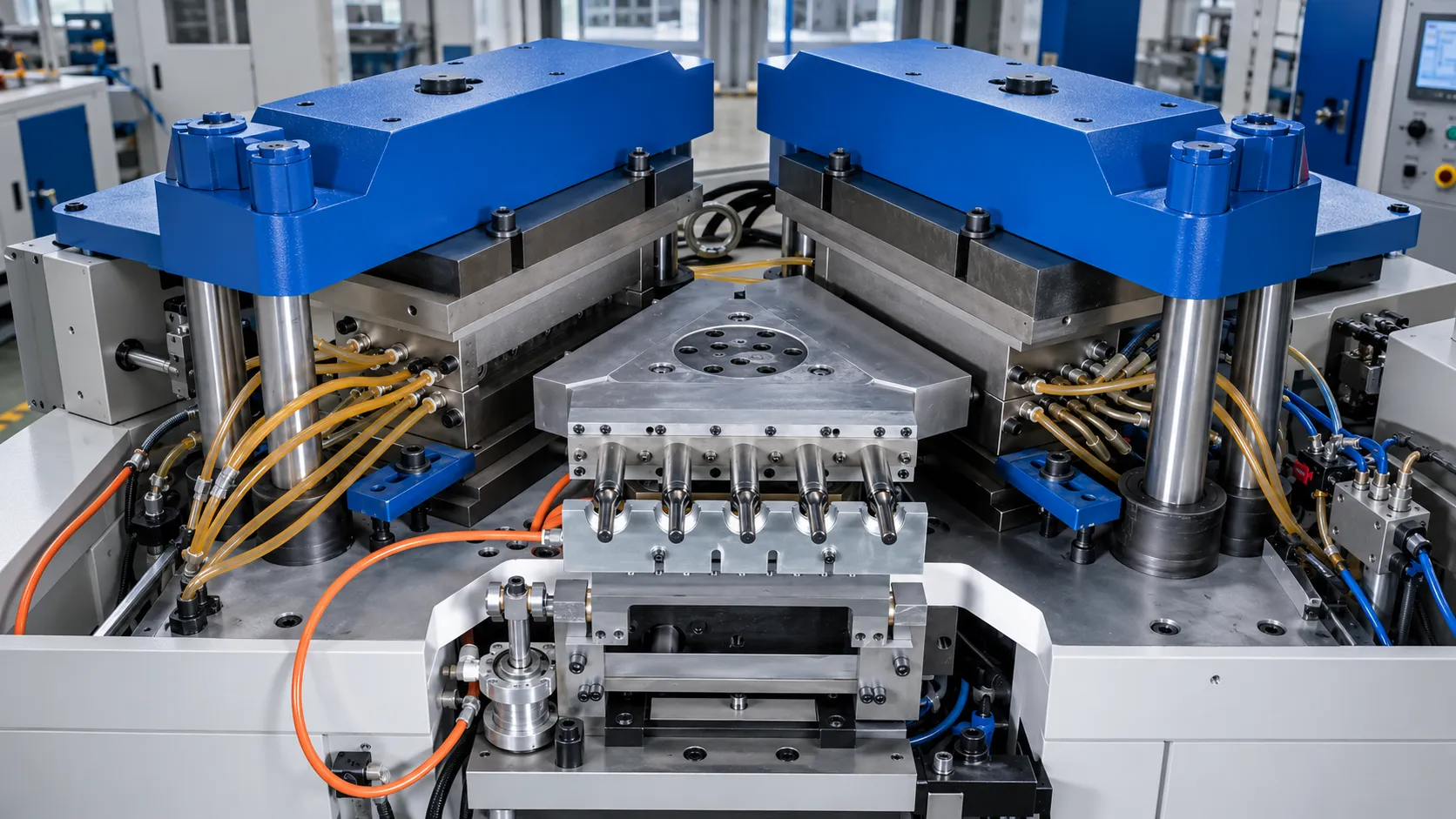
CRCキャップは、押し込み回転式で、HDPE製IBMボトルネックの円周方向保持ビードと、CRCキャップスカート内側の対応するラチェットとの機械的な干渉嵌合によって作動します。この嵌合機構の物理的原理を理解することは、IBMネックインサートの形状を正しく指定するために不可欠です。
プッシュアンドターンCRC - 係合機構とIBMネック公差チェーン
ステップ1 - 押し下げる
The Korean patient or pharmacist presses the CRC cap downward, compressing the cap skirt’s spring ratchet teeth over the HDPE neck bead. The engagement bead OD determines the interference force: if bead OD is too wide, the required push-down force exceeds Korean elderly patient capability (adult accessibility failure). If bead OD is too narrow, ratchet teeth cannot compress adequately and CRC function is lost.
ステップ2 - 押しながら回す
下向きの圧力を維持したまま、キャップを回転(通常30~45°)させて、ラチェットの歯をボトルネックのねじ込み開始位置に合わせます。ねじの外径±0.05mmのIBM公差により、ねじ込み開始位置が設計上の噛み合い点から1~2°以内に収まるため、ねじ山が交差して固着し、回転力が仕様を超えて成人のアクセシビリティテストに不合格となることを防ぎます。
ステップ3 — リリースと検証
Cap released — the spring ratchet re-engages the retention bead, locking the cap in the open position (child cannot re-close) or in the closed thread engagement position (product sealed). IBM neck geometry ensures consistent ratchet engagement depth across all production cavities: bead height ±0.05 mm, bead profile radius ±0.03 mm — both produced by the injection mould neck insert and verified in Korea Ever-Power’s pre-delivery production trial.
ビーズOD IBM
±0.05 mm
ISO 8317 ウィンドウ
±0.06 mm
EBM耐性
±0.15~0.25 mm
プロセスマージン
+0.01 mm IBM
IBM produces the CRC engagement bead entirely within the injection mould neck insert — a precision-machined steel component that defines the bead OD, bead height, bead profile radius and bead axial position simultaneously in a single injection stroke. The neck insert is manufactured from S136 stainless steel (HRC 50–52) with CNC turning tolerance of ±0.01 mm on all bead geometry dimensions, producing a finished IBM container bead OD at ±0.05 mm across all production cavities after accounting for HDPE shrinkage compensation (0.8–1.2% applied to the mould bead OD dimension during neck insert CNC machining). Korea Ever-Power’s pharmaceutical IBM neck insert design uses finite element simulation of HDPE shrinkage at the bead zone — the bead’s locally higher wall section shrinks differently from the adjacent cylindrical neck — to calculate the correct mould bead OD that produces the specified container bead OD at the HDPE IBM processing temperature and cooling rate.
セクション03
韓国のKS M ISO 8317 チャイルドレジスタンス有効性試験
韓国のKS M ISO 8317は、ISO 8317:2015に準拠した、チャイルドレジスタント包装に関する韓国の国家規格です。この規格では、200人の成人被験者と200人の子供被験者を用いた人体パネル試験を実施し、CRC容器・クロージャーシステムがチャイルドレジスタンス(子供の開封率が低い)と成人のアクセス性(成人の開封率が高い)の両方を同時に満たしていることを確認することを規定しています。試験では、充填重量、液体の粘度、クロージャーの締め付けトルクなど、CRCの機能性能に影響を与える要素があるため、空の容器や実験室用サンプルではなく、実際に充填された生産容器を使用して試験を実施する必要があります。
テストパラメータ
児童パネル(42~51ヶ月)
成人パネル(50~70歳)
韓国のKFDA医薬品容器技術ファイルには、CRC容器ごとに韓国KS M ISO 8317試験証明書を含める必要があります。これは、CTFで特定されたIBMマシンと金型セットから製造された容器を使用して人体パネル試験を実施した、韓国KS認定試験機関によって発行された文書です。Korea Ever-Powerは、この試験のために特別に、納入前生産試験からサンプルCRC IBM容器を提供します。これにより、韓国の製薬ブランドはISO 8317試験サンプルと容器CTFを同時に提出でき、ISO 8317試験合格結果と完成したCTFが韓国KFDAのGMP認定審査で同時に利用可能になる可能性が最大限に高まります。
第4節
CRC IBMコンテナ用HDPEグレードおよびビード形状
Korean CRC pharmaceutical IBM containers require a specific HDPE grade characteristic that non-CRC pharmaceutical IBM does not: the bead zone must resist plastic deformation under CRC push-down force. When the CRC cap is pushed down, it applies approximately 20–50 N downward force on the HDPE engagement bead — the bead must spring back to its original OD after the push-down force is released to maintain consistent child resistance at the next opening attempt. HDPE with insufficient stiffness (too high MI or too low density) permanently deforms under repeated push-down forces, effectively widening the bead OD over time and reducing child resistance below Korean ISO 8317 requirements within the product’s shelf life.
CRCエンゲージメントビード形状・IBM射出成形金型ネックインサート仕様
ビーズOD
公称値 ±0.01 mm
金型キャビティ(HDPE収縮補正適用済み)
ビーズの高さ
0.8~1.5 mm
公称ネック外径を超えるシリンダー - 韓国CRCキャップサプライヤー固有の仕様
ビードプロファイル半径
R 0.3~0.6 mm
CRCラチェット歯のかみ合いをスムーズにする導入部 ― 鋭い半径はかみ合い音と力を増加させる
ビードの軸方向位置
±0.20 mm
ネックシーリング面から、CRCキャップの閉位置の軸方向位置を決定します。
韓国CRC IBM — 推奨HDPEグレード
MI(190℃/2.16kg)
0.5~0.8
密度(g/cm³)
0.955~0.965
標準的な医薬品用HDPE IBMよりも高密度(0.955~0.965)かつ低MI(0.5~0.8)であるため、韓国の医薬品保存期間である24ヶ月間、繰り返し行われるCRC押し下げサイクルによるクリープ変形に抵抗する、より剛性の高いビードを形成します。韓国のCRC容器では、30回の押し下げサイクル後もチャイルドレジスタンスを維持することが規定されており(韓国HIRA準拠CRCサイクル試験)、密度0.958以上が推奨されます。
ビーズ変形のリスク要因
- ▸HDPE MI 1.0以上: ビーズクリープ耐性に十分な分子量ではないため、韓国のCRC製薬会社IBMには適さない。
- ▸密度が0.952未満の場合: 結晶化度が低いとビーズの剛性が低下し、ISO 8317サイクル試験では15回以上の押し下げサイクル後に故障リスクが増加する。
- ▸ノズル部におけるバレル温度が222℃を超える場合: 熱分解によりビード部におけるHDPEの分子量が低下し、公称グレードの特性と比較して剛性とクリープ抵抗が低下する。
- ▸ビードゲートでの保持圧力が不十分です。 充填不足のビードゾーンには、局所的な密度を低下させる微細な空隙が存在する。工程管理指標として、ビードゾーンの硬度(ショアD)を仕様値と比較して測定する。
セクション05
IBMのCRCコンテナ処理パラメーター
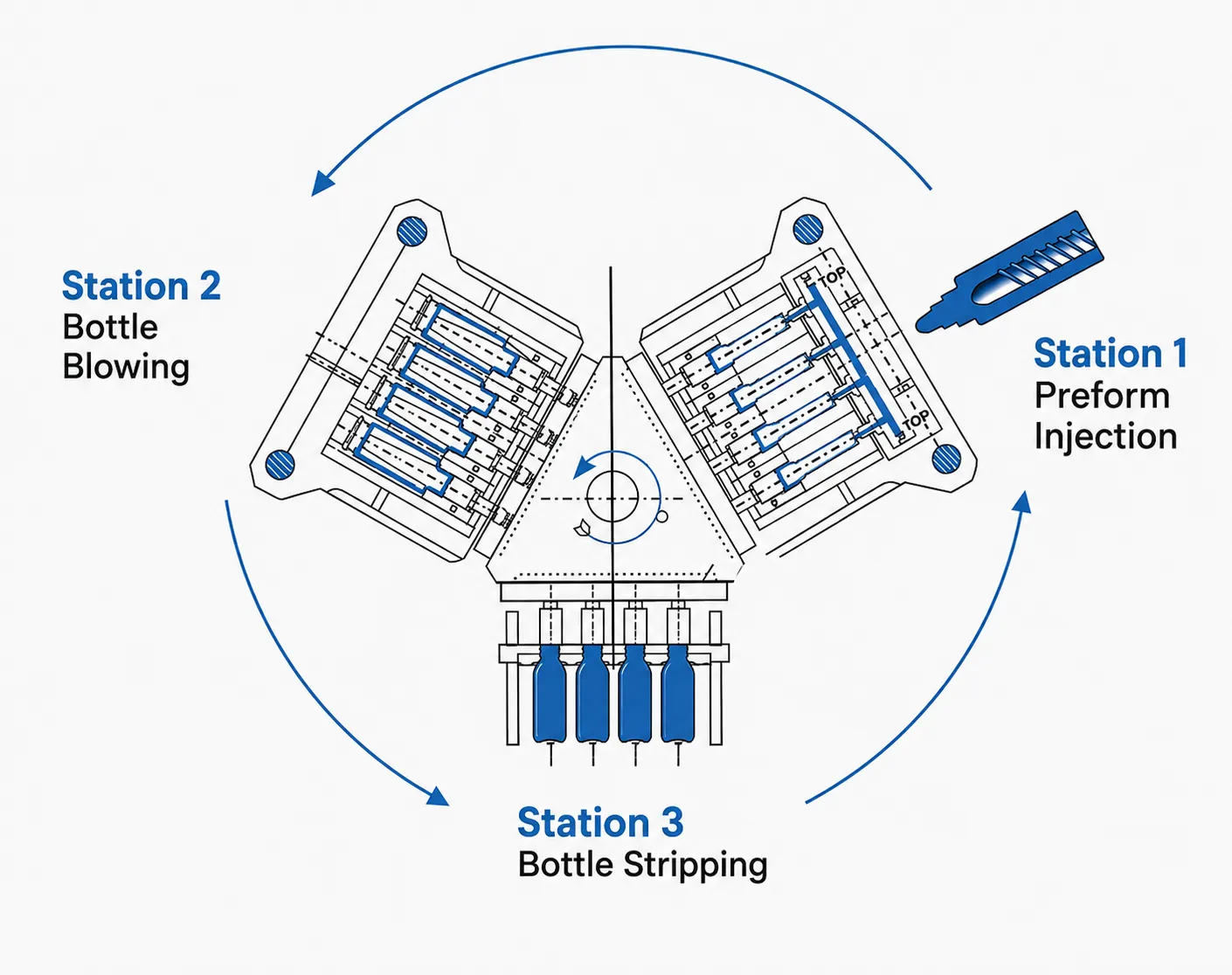
韓国のEver-Power ZQシリーズ機でCRC医薬品用IBM処理を行う場合、標準的な医薬品用非CRC IBM処理と比較して、2つのパラメータ調整が必要です。1つは保持圧力を高く設定すること(エンゲージメントビードを完全に充填し、寸法安定性を確保するため)、もう1つはネックゾーンの冷却を強くすることです(ビードゾーンの残留熱による排出後のビード外径のずれを最小限に抑えるため)。その他のパラメータはすべて、標準的な医薬品用HDPE IBMのガイドラインに従います。
| パラメータ | スタンダードファーマ IBM | CRCファーマ IBM — 調整 |
|---|---|---|
| 圧力を保持する | ピーク時の50~65% | ピークの65~75% - ビーズゾーンの完全充填 |
| 保持時間 | 0.4~0.8秒 | 0.6~1.0秒 — ビードゲートシールを確実にするために延長 |
| ネックゾーンの金型温度 | 14~18℃ | 12~16℃ — ビーズゾーンでの冷却を強化してOD値をより速く固定する |
| 計量ゾーンバレル | 200~215℃ | 200~215℃(変化なし) |
| ビーズ外径測定頻度 | バッチ開始時、キャビティあたり30個 | 1つの空洞につき30ドル+2時間ごとに中間チェック |
⚠ ビード外径の射出後ドリフト: ストリッピング直後(ステーション3)に測定したCRCエンゲージメントビード外径は、排出30分後に測定したビード外径よりも通常0.02~0.04mm大きくなります。これは、排出時のビードゾーンに残留する熱により、HDPEの結晶化による収縮が継続し、ビード外径がわずかに狭まるためです。韓国食品医薬品安全庁(KFDA)の認定測定では、容器が排出後最低30分間23℃±2℃で安定した後にビード外径を測定する必要があります。機械出口コンベアで直ちにビード外径をサンプリングすることは、韓国食品医薬品安全庁(KFDA)の認定測定としては有効ではありません。これは、安定した生産外径を系統的に過大評価することになります。
第6条
CRCコンテナフォーマット範囲とネック仕上げの選択
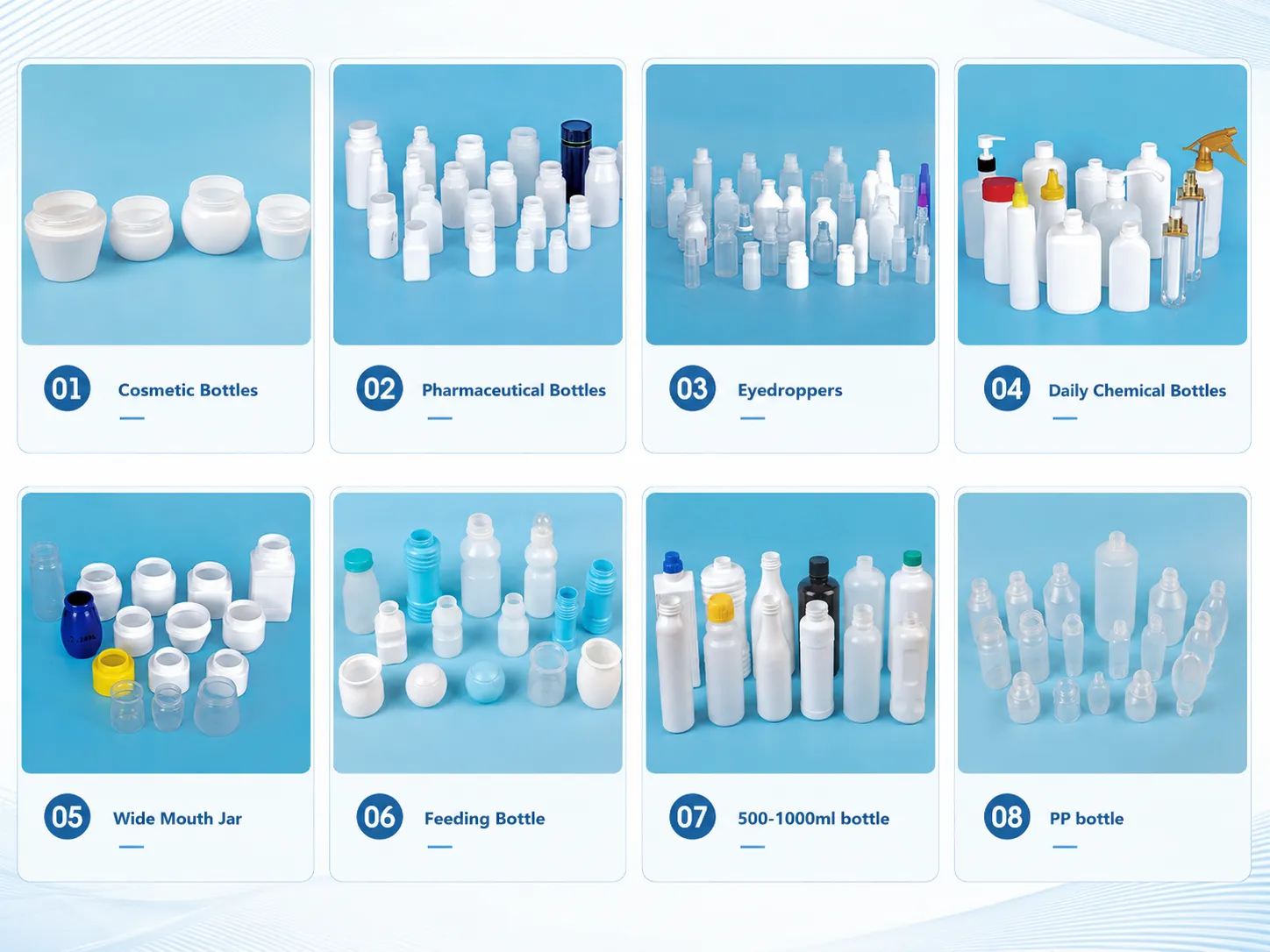
| 音量 | ネック仕上げ | CRCタイプ | ZQ80 虫歯 | 韓国語アプリケーション |
|---|---|---|---|---|
| 30ml | 24/400 GPI | 押して回す | 16~18 | 韓国製小児用鎮痛剤、韓国製液状抗生物質単回投与製剤 |
| 60ml ★ | 28/400 GPI | 押して回す | 14 | 韓国の小児用シロップCRC(最も一般的な韓国のCRCフォーマット) |
| 100ml | 33/400 GPI | 押して回す | 10~12 | 韓国処方経口抗生物質、韓国成人用鎮痛液 |
| 150ml | 33/400 GPI | 押して回す | 8 | 韓国処方箋多回投与液剤、韓国制酸剤懸濁液CRC |
| 100~150ml | 33/400 GPI | 握って回す | 8~10 | 韓国の関節炎患者および高齢患者向けCRC(押し下げる力が押して回すよりも弱い) |
★ 60 ml 28/400プッシュアンドターンCRCは、韓国の製薬業界におけるIBMベンチマークCRCフォーマットであり、韓国の小児用抗生物質処方箋において最も容量の多いCRC容器です。韓国のIBM製造業者は通常、このフォーマットを最初に認定し、マルチフォーマットCRC生産計画の基準フォーマットとして使用します。
第7条
CRC + 誘導シール複合フォーマット
CRC(チャイルドセーフティ)と誘導シールを組み合わせたフォーマット(誘導シールされた容器の上にCRCオーバーキャップを装着する)は、韓国の医薬品製造においてIBMネックの精度が最も要求されるものです。韓国のHIRA(医薬品評価研究院)による小児用処方液剤に関する規制では、CRC(チャイルドセーフティ)と誘導シール(改ざん防止、防湿)の両方を同一の一次容器に同時に搭載することがますます求められています。この複合仕様に対応するためには、IBMは単一のネックインサート上に3つの独立した高精度機能を同時に実現する必要があります。
CRCビーズOD
土地の平坦化を封じる
ネジ外径
±0.05 mm
CRCプッシュアンドターン機能 - ラチェット噛み合い干渉が韓国ISO 8317規格の範囲内
±0.10 mm TIR
誘導箔による気密接合 ― 14箇所すべてのキャビティにおいて、箔とHDPEシーリングランドが完全に周囲接触している。
±0.05 mm
CRC thread engagement — Korean pharmacist’s twist-off overcap engagement after induction seal broken
All three requirements are met simultaneously by IBM’s injection mould neck insert — produced in a single S136 stainless steel insert machined to ±0.01 mm on all three geometry features. No secondary processing required. EBM cannot achieve any of the three requirements without secondary neck finishing.
The combined CRC + induction seal IBM container qualification for Korean KFDA requires two separate closure function tests included in the container technical file: the Korean KS M ISO 8317 CRC effectiveness test (human panel, 200 adults + 200 children) and the induction seal integrity test (100% bubble test at 10 kPa, plus peel force ≥ 8 N/15 mm width). Both tests must use production containers from the same IBM production run at the qualified machine and cavity count. Korea Ever-Power’s pre-delivery production trial produces sample containers for both test submissions simultaneously, providing the Korean pharmaceutical brand with all required test samples within a single pre-delivery production batch.
第8条
韓国のCRC IBMプロダクション向けZQシリーズ選定

ZQ series machine selection for Korean CRC pharmaceutical IBM follows the same annual volume framework as other pharmaceutical IBM formats. The CRC-specific consideration is that CRC containers at the same volume typically allow fewer cavities per ZQ model versus non-CRC containers of the same volume — because the CRC engagement bead’s larger neck OD (bead OD is typically 1.6–3.0 mm larger than the nominal neck OD) increases the per-cavity injection clamping requirement and the platen footprint per cavity.
ZQ選択マトリックス・CRC IBM @ 60 ml 28/400 プッシュアンドターン (HDPE MI 0.6)
| ZQモデル | CAV @ 60ml CRC | ボトル/時間 | 年間上限。 | 韓国CRCファーマのプロフィール |
|---|---|---|---|---|
| EP-ZQ40 | 6~8 | 約4,800~6,400 | 約1680万~2240万人 | 韓国の製薬スタートアップ企業、韓国の大腸がん臨床試験、韓国の小児希少疾患 |
| EP-ZQ60 | 10~12 | 約8,000~9,600 | 約2800万~3360万 | 韓国の中規模小児用医薬品、韓国のジェネリックCRC医薬品 |
| EP-ZQ80 ★ | 14 | ~11,200 | 約3920万 | 韓国のナショナルブランド小児用抗生物質CRC OEM — ベンチマークプラットフォーム |
| EP-ZQ110 | 18 | ~14,400 | 約5040万 | 韓国の大手製薬会社CRC受託包装業者、韓国の大手小児科ブランド |
| EP-ZQ135 | 22 | ~17,600 | 約6160万 | 韓国の小児用抗生物質サプライチェーン、韓国の病院向けCRCの大規模展開 |
その EP-ZQ80 at 14-cavity 60 ml CRC is the Korean pharmaceutical CRC IBM benchmark — covering 39M annual CRC paediatric syrup units per Korean 2-shift year within a single machine qualified for Korean KFDA pharmaceutical GMP. The ZQ80 dual hydraulic system (standard, 20–30% energy saving) reduces HVAC load in Korean pharmaceutical cleanroom CRC production, and the machine’s angle divider mechanism ensures that bead OD cavity-to-cavity standard deviation (±1.8% CV% at 14 cavities on ZQ80) stays well below the ±0.05 mm specification at the 99.7th percentile of the production distribution — confirmed in Korea Ever-Power’s pre-delivery bead OD circularity and cavity-to-cavity dimensional reports provided with every pharmaceutical CRC IBM machine delivery.
エンジニアリングに関するよくある質問
CRCファーマシューティカル IBM — エンジニアリングに関する質問
なぜIBMは韓国の医薬品CRC容器にとって唯一実現可能なブロー成形プロセスなのか?
IBM is the only viable blow molding process for Korean pharmaceutical CRC containers because the Korean KS M ISO 8317 CRC engagement bead OD tolerance requirement (±0.06 mm) falls within IBM’s native process capability (±0.05 mm) but exceeds EBM’s achievable tolerance (±0.15–0.25 mm) by 2.5–4× at best. This is not a marginal difference that secondary neck processing can bridge: EBM neck reaming operations have their own dimensional variation (typically ±0.08–0.12 mm reaming tolerance) that equals or exceeds the entire ±0.06 mm ISO 8317 engagement window. Even if individual EBM containers are reamed to within ±0.06 mm of bead OD nominal, the reaming operation’s inter-cycle variation causes some fraction of the production lot to be outside the window at each end of the tolerance — and Korean KS M ISO 8317 human panel tests all 200 adult and 200 child subjects with the same container type, so any systematic OD variation across the production lot (which EBM + reaming produces) will generate a proportion of containers that either fail child resistance (too wide) or fail adult accessibility (too narrow). IBM eliminates this problem structurally: the IBM injection mould neck insert produces all cavities at nominal ±0.05 mm with no secondary processing, no inter-cycle reaming variation, and no process chain in which a secondary operation can introduce dimensional outliers. This structural advantage is why Korean pharmaceutical regulatory bodies accept IBM CRC containers on the basis of IBM machine and mould qualification dimensional documentation alone, without requiring secondary processing verification — a simplification that EBM + reaming cannot achieve.
韓国のCRC製薬会社が製造するIBM製容器が、成人向けアクセシビリティテストに不合格となる原因は何ですか?
Korean CRC pharmaceutical IBM container adult accessibility failures — where more than 15% of the 200 adult test subjects (aged 50–70) cannot open the container within 5 minutes — trace to three causes from the IBM container side. First, bead OD above specification upper limit: a bead OD higher than nominal + 0.05 mm increases the CRC cap’s push-down engagement force beyond the elderly Korean adult’s hand grip and push-down capability — the container is effectively too child-resistant to pass adult accessibility. Diagnostic: measure bead OD from all cavities with bead OD near or above the specification upper limit. Root cause: injection mould neck insert bead OD above nominal (requires insert re-measurement and possible re-machining); or HDPE shrinkage below expected (occurs when mould temperature is lower than qualified baseline, producing less crystallisation and therefore less shrinkage, and a larger bead OD than shrinkage compensation predicted — increase mould neck zone cooling to intended setpoint). Second, bead profile radius too sharp: an angular bead profile (radius < 0.3 mm) produces a step function in the CRC cap engagement force — the force required spikes sharply as the cap ratchet engages the bead, rather than building gradually, making the engagement feel sudden and resistant. IBM bead profile radius should be R 0.3–0.6 mm as specified in Section 4. Third, HDPE creep enlargement of effective bead OD: if the HDPE IBM container has been stored at elevated temperature before ISO 8317 testing (above 30°C for extended periods), the bead can creep outward under the sustained engagement force from a previously applied CRC cap, effectively widening the bead OD above nominal. Korean pharmaceutical brands should specify that IBM containers used for ISO 8317 testing have not been subjected to temperatures above 25°C after production, and should conduct ISO 8317 testing within 90 days of IBM production to avoid thermally induced bead OD drift in the test sample population.
Does the CRC engagement bead OD need to be specified separately from the Korean CRC cap supplier’s drawing, or does the IBM mould follow the cap supplier’s nominal?
The IBM container engagement bead OD must be specified separately from the Korean CRC cap supplier’s engagement drawing nominal — it cannot simply follow the cap nominal without accounting for the engagement system’s designed interference fit. The push-and-turn CRC mechanism functions by the CRC cap’s retention ratchet engaging the bottle neck bead with a designed interference: the cap’s ratchet engagement diameter is intentionally smaller than the bead OD nominal by the designed interference amount (typically 0.10–0.20 mm, specified by the Korean CRC cap manufacturer). If the IBM container bead OD equals the CRC cap’s engagement ratchet nominal — without the designed interference — the ratchet slides over the bead without snapping engagement, producing a container that passes adult accessibility (easily opened) but fails child resistance (children can also open it trivially). The correct IBM bead OD specification is: Korean CRC cap supplier’s engagement ratchet nominal + designed interference (from the CRC cap supplier’s mating component drawing) = IBM container bead OD nominal, with ±0.05 mm IBM tolerance applied. Korea Ever-Power requires the Korean pharmaceutical brand to provide the Korean CRC cap supplier’s engagement drawing before IBM neck insert CNC machining — the bead OD nominal dimension machined into the neck insert is derived from the CRC cap drawing, not from a generic pharmaceutical IBM standard. Without this cap supplier drawing, the IBM mould neck insert cannot be correctly dimensioned, and ISO 8317 testing failure is likely on the first submission.
同じZQマシンで、CRC形式と非CRC形式の両方の医薬品IBMフォーマットを実行できますか?
Yes — the same ZQ series machine can run CRC and non-CRC pharmaceutical IBM formats using different mould sets, with each mould set’s production recipe stored in the ZQ control system and recalled by the operator during mould change. A ZQ80 that runs a 14-cavity 60 ml CRC paediatric syrup mould set (HDPE MI 0.6, hold pressure 70%, neck cooling 13°C) can also run a 20-cavity 10 ml ophthalmic mould set (HDPE MI 0.4, hold pressure 60%, neck cooling 15°C) after a mould change and recipe recall — the machine hardware does not change between formats. The Korean KFDA pharmaceutical container qualification, however, is container-specific: the 60 ml CRC mould set and the 10 ml ophthalmic mould set each require their own separate container technical files with their own cavity-by-cavity dimensional reports — both produced at the same ZQ80 machine serial number but from different mould sets. Korean pharmaceutical IBM producers should identify both mould sets in the machine’s qualification documentation — recording both mould serial numbers against the single ZQ80 machine serial number in their Korean GMP production master file — to support the audit trail for Korean MFDS GMP inspections of multi-format pharmaceutical IBM production on the same machine.
IBMのエンゲージメントビーズの外径は、韓国Ever-Power社製金型の納入後、韓国食品医薬品安全庁(KFDA)の認証申請前にどのように検証されますか?
IBM engagement bead OD verification for Korean KFDA CRC qualification uses a specific measurement protocol that differs from standard pharmaceutical neck OD measurement. Standard pharmaceutical neck OD measurement uses a contact digital caliper or laser OD gauge measuring the neck’s largest diameter in a single plane. CRC engagement bead OD measurement requires: (1) Measurement at 4 angular positions around the bead circumference (0°, 90°, 180°, 270°) per container — confirming bead circularity (out-of-roundness ≤ 0.04 mm TIR) as well as bead OD nominal; (2) Measurement at the maximum bead diameter point (the bead’s highest point above the neck cylinder) — using a step-gauge contact probe rather than a caliper, because caliper jaws that span the full neck diameter measure the neck OD average rather than the bead OD maximum; (3) Statistical analysis: 30 measurements per cavity (120 measurement readings per cavity for the 4-angular-position protocol) across all production cavities, with Cpk ≥ 1.33 confirmation for bead OD at the specification of nominal ±0.05 mm. Korea Ever-Power uses a dedicated bead OD step-gauge contact measurement system during the pre-delivery production trial, with data output directly to the cavity-by-cavity bead OD dimensional report format required for Korean pharmaceutical container technical file submission. This dedicated measurement system is not available at most Korean IBM container producer facilities — Korea Ever-Power provides the pre-delivery bead OD report precisely because this specialised measurement data is typically not reproducible at the Korean customer’s production facility without Korea Ever-Power’s measurement tooling support.
What happens to Korean CRC pharmaceutical IBM container child resistance over the product’s 24-month shelf life?
Korean CRC pharmaceutical IBM container child resistance changes over the 24-month Korean shelf life through two mechanisms: HDPE engagement bead OD drift and CRC cap spring ratchet fatigue. IBM container-side bead OD drift: HDPE crystallisation continues slowly at ambient Korean storage temperatures (15–25°C retail pharmacy storage, 10–30°C Korean household storage) for approximately 6–12 months after production — during this period, the bead OD typically decreases slightly (0.01–0.03 mm) due to continuing crystalline-phase densification. This OD decrease slightly increases the CRC engagement interference, making the container marginally more child-resistant at 6–12 months versus at production — a generally conservative change for Korean KFDA compliance purposes. After 12 months, HDPE crystallisation is complete and bead OD is dimensionally stable for the remainder of the 24-month shelf life under normal Korean pharmaceutical storage conditions. CRC cap spring ratchet fatigue (a cap-side issue rather than IBM container-side): the CRC cap’s polypropylene spring ratchet teeth lose approximately 8–15% of their elastic modulus over 24 months at 20–25°C Korean storage — slightly reducing the push-down force required to depress the ratchet over the bead and potentially increasing the proportion of Korean adult test subjects who could open the container in the ISO 8317 re-test at 24 months. Korean pharmaceutical brands who specify CRC containers for 24-month Korean shelf life should verify with their Korean CRC cap supplier that the cap’s spring ratchet fatigue data (elastic modulus retention at 24 months at Korean storage conditions) supports continued ISO 8317 adult accessibility and child resistance compliance through shelf life — the IBM container’s bead OD stability is not the limiting factor; the cap’s material performance is.
CRCファーマシューティカル IBMお問い合わせ · 韓国エバーパワー
韓国CRC製薬のIBMコンテナ生産を計画中ですか?
韓国のエバーパワー社は、あらゆる年間生産量において、韓国のCRC医薬品容器IBM生産向けに、納入前生産試験からのCRCエンゲージメントビーズ外径寸法認定、韓国KS M ISO 8317試験サンプル容器、KFDA GMP文書パッケージ、およびZQシリーズ機械の選定を提供しています。