Pencetakan Tiup Injeksi untuk
Botol Kimia Rumah Tangga
Produksi bahan kimia rumah tangga IBM di Korea—sampo, kondisioner, produk pembersih, dan wadah botol rumah tangga bermulut lebar—adalah aplikasi di mana ekonomi tanpa percikan (zero-flash) IBM, presisi leher pompa, dan pemilihan jenis HDPE yang sesuai dengan ESCR memberikan perbedaan paling langsung terhadap biaya operasional pabrik di Korea. Panduan ini membahas jenis HDPE untuk ketahanan terhadap surfaktan, persyaratan dimensi leher pompa, spesifikasi ketebalan dinding, dan ambang batas volume tahunan di mana IBM mengungguli EBM untuk produksi bahan kimia rumah tangga di Korea.
Presisi Leher Pompa
Perbandingan Biaya IBM vs EBM
Korea Ever-Power Engineering Desk · Ansan-si · Juli 2026
IBM, Perusahaan Kimia Rumah Tangga Korea — Referensi Utama
ESCR ≥50 jam
ESCR F50 minimum untuk wadah HDPE IBM kontak surfaktan Korea
5–8 Rongga
Jumlah lubang gigi tipikal IBM dengan 500 ml sampo — dibandingkan dengan 2–4 lubang gigi EBM
Kilat Nol
IBM menghilangkan stasiun pemangkasan flash — menghemat KRW 15–25 juta/tahun dibandingkan EBM yang menghemat 5 juta unit.
±0,05 mm
Diameter luar leher pompa IBM — memungkinkan pemasangan kerah pompa tanpa kebocoran pada jalur pengisian Korea.
1. Pasar Bahan Kimia Rumah Tangga Korea dan Ekonomi IBM
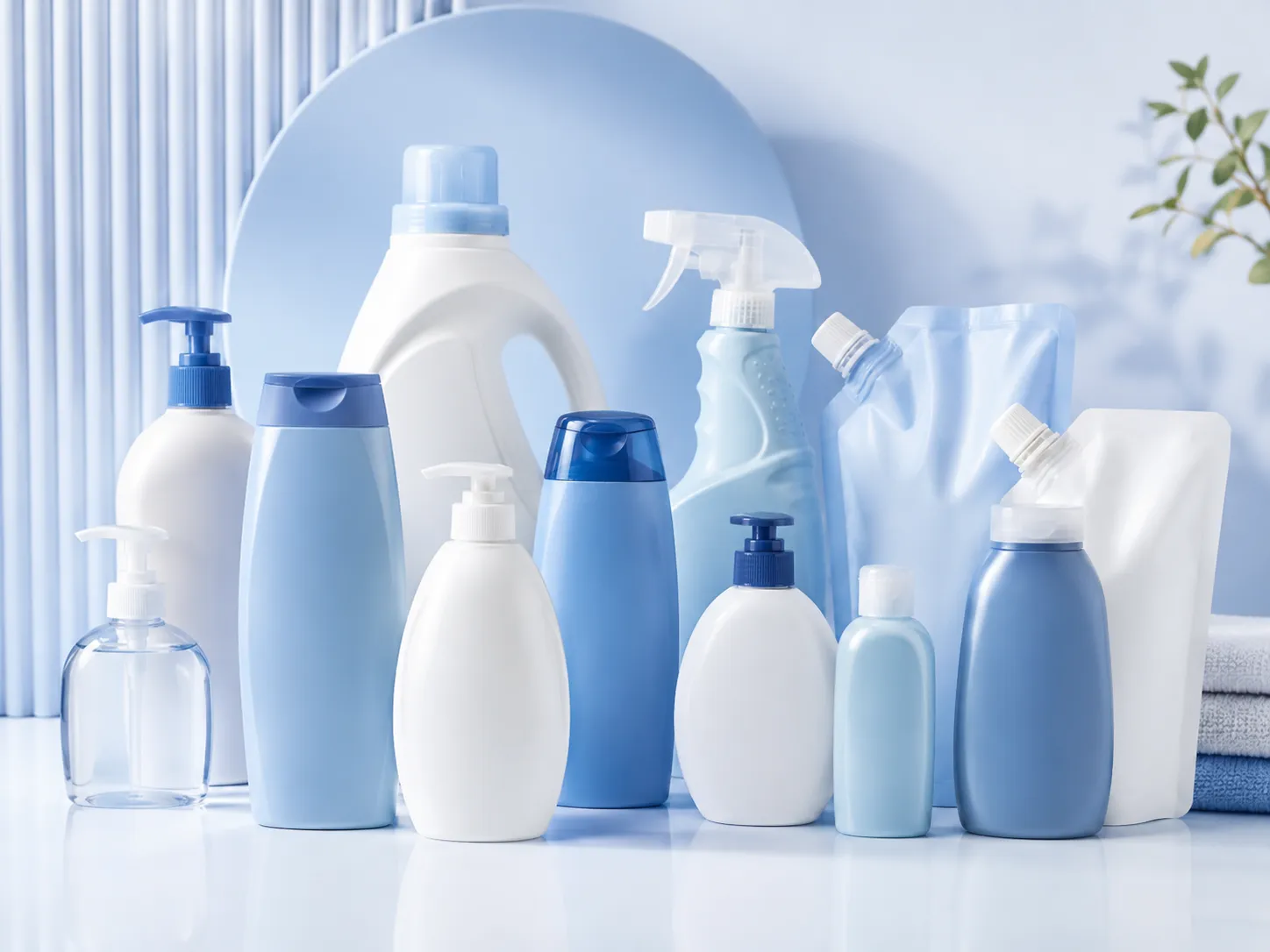
Pengemasan bahan kimia rumah tangga Korea merupakan aplikasi IBM tunggal terbesar berdasarkan volume wadah di luar produksi farmasi — sampo, kondisioner, sabun mandi cair, sabun cuci tangan cair, sabun cuci piring, pelembut pakaian, dan produk pembersih rumah tangga Korea secara kolektif mengonsumsi sekitar 800–1.000 juta wadah HDPE per tahun dalam format 250–1.000 ml. Volume ini terbagi antara produsen merek nasional Korea (LG H&H, AmorePacific, Aekyung, CJ), produsen OEM label pribadi Korea, dan merek pasar massal Korea yang dijual melalui e-commerce Korea dan ritel diskon Korea. IBM secara bertahap menggantikan EBM untuk wadah bahan kimia rumah tangga Korea di atas 2 juta unit per tahun per format — didorong oleh tiga keunggulan komersial IBM yang berlipat ganda seiring dengan skala produksi: efisiensi material tanpa sisa, presisi dimensi leher pompa untuk otomatisasi lini pengisian Korea, dan output jumlah rongga yang lebih tinggi per mesin.
Keuntungan ekonomi dari mesin IBM untuk kemasan kimia rumah tangga Korea dibandingkan dengan mesin EBM mudah diukur: pada 5 juta unit sampo 500 ml per tahun, keuntungan tahunan IBM dibandingkan EBM adalah sekitar KRW 15–25 juta dalam penghematan bahan baku (bahan baku 10% dengan HDPE KRW 1.600/kg), KRW 8–15 juta dalam penghematan biaya operator stasiun pemotongan (satu operator dengan upah minimum Korea + tunjangan), dan KRW 5–10 juta dalam penghapusan peralatan kalibrasi leher botol. Total keuntungan biaya operasional IBM: sekitar KRW 28–50 juta per tahun pada 5 juta unit — dibandingkan dengan premi mesin IBM dibandingkan EBM sekitar KRW 40–80 juta pada level ZQ60. Periode pengembalian modal pada 5 juta unit per tahun biasanya 1,5–3 tahun. Di atas 10 juta unit, periode pengembalian modal memendek di bawah 1 tahun, menjadikan IBM jelas merupakan investasi yang tepat untuk kemasan kimia rumah tangga Korea.
2. Grade HDPE untuk Bahan Kimia Rumah Tangga IBM: ESCR sebagai Penggerak Seleksi Utama
Pemilihan jenis HDPE untuk produk kimia rumah tangga di Korea diatur oleh ketahanan retak akibat tekanan lingkungan (ESCR) — sifat material paling penting untuk wadah HDPE yang bersentuhan dengan produk berbasis surfaktan. ESCR adalah ketahanan HDPE terhadap retak akibat tekanan ketika bersentuhan dengan agen kimia penyebab retak akibat tekanan (seperti surfaktan). Formulasi produk kimia rumah tangga Korea mengandung konsentrasi surfaktan yang dapat mengurangi ESCR efektif HDPE sebesar 40–70% dibandingkan dengan kontak dengan air, sehingga ESCR menjadi sifat material yang menentukan apakah wadah HDPE IBM untuk produk kimia rumah tangga Korea dapat bertahan selama masa simpan produk 18–24 bulan tanpa mengalami kegagalan di lapangan.
| Aplikasi Korea | HDPE MI (g/10 menit) | ESCR F50 Minimum | Alasan |
|---|---|---|---|
| Sampo (berbasis sulfat) | 0,8–1,2 | ≥80 jam | Surfaktan SLS/SLES adalah agen ESCR yang cukup agresif — masa simpan 24 bulan membutuhkan F50 ≥80 jam pada ketebalan dinding 0,6–0,8 mm |
| Kondisioner (kationik) | 0,8–1,5 | ≥50 jam | Surfaktan kationik merupakan agen ESCR yang kurang agresif dibandingkan sulfat anionik — ≥50 jam F50 memadai pada penyimpanan 18 bulan |
| Sabun cuci piring cair (konsentrat) | 0,6–1,0 | ≥100 jam | Sabun cuci piring Korea pekat (25–30% aktif) adalah agen ESCR yang sangat agresif — membutuhkan HDPE dengan berat molekul lebih tinggi agar tahan lama di lapangan. |
| Pelembut kain | 1.0–2.0 | ≥30 jam | Pelembut kain kationik memiliki aktivitas ESCR rendah — ≥30 jam sudah memadai; tingkat MI yang lebih tinggi dapat diterima untuk optimasi pengisian aliran. |
| Pembersih rumah tangga serbaguna | 0,8–1,2 | ≥80 jam | Bahan pembersih pH basa (pH 9–11) yang dikombinasikan dengan surfaktan nonionik — agak agresif; membutuhkan ≥80 jam F50 |
Pengujian ESCR untuk wadah IBM kimia rumah tangga Korea harus dilakukan sebagai pengujian produk yang terisi pada kondisi penyimpanan ritel Korea (40°C, 75% RH selama 12 minggu) daripada hanya mengandalkan standar ASTM D1693 ESCR (uji larutan Igepal), karena campuran surfaktan kimia rumah tangga Korea menghasilkan aktivitas ESCR yang berbeda dari Igepal dan bervariasi secara signifikan antar formulasi produk. Tim QA merek kimia rumah tangga Korea harus memberikan komposisi surfaktan formulasi lengkap kepada pemasok wadah IBM Korea sebelum pemilihan grade HDPE diselesaikan — spesifikasi MI dan ESCR harus ditentukan dari aktivitas ESCR formulasi spesifik, bukan dari pedoman HDPE kimia rumah tangga generik. Kerangka kerja pemilihan grade HDPE terperinci untuk IBM Korea ada di Panduan pemrosesan HDPE IBM.
3. Presisi Leher Pompa IBM untuk Bahan Kimia Rumah Tangga Korea
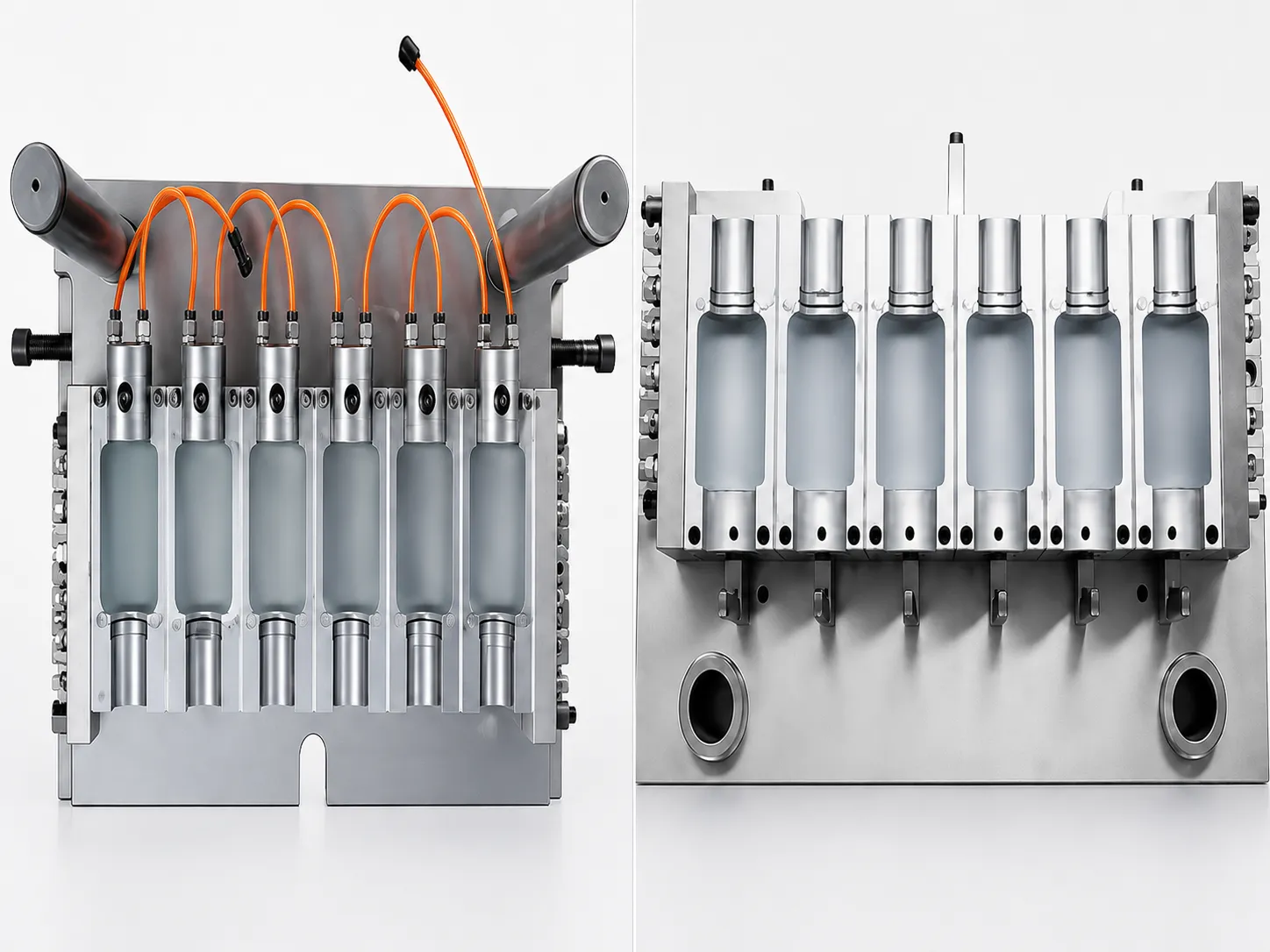
Wadah kimia rumah tangga Korea dengan dispenser pompa — sampo, kondisioner, sabun tangan cair, deterjen cair, dan sabun mandi cair kelas premium — memerlukan presisi OD leher pompa yang sama dengan wadah pompa farmasi, tetapi dengan standar penyelesaian leher yang berbeda. Wadah pompa kimia rumah tangga Korea biasanya menggunakan penyelesaian leher 24/410 GPI (OD 24 mm, jumlah ulir 410) dibandingkan dengan 20/400 yang digunakan untuk perawatan pribadi Korea dan 13/415 yang digunakan untuk oftalmologi Korea — tetapi persyaratan presisi dimensinya sama: ±0,05–0,06 mm OD leher di semua rongga produksi.
Persyaratan Pemasangan Pompa Saluran Pengisian Korea
Lini pengisian bahan kimia rumah tangga Korea beroperasi dengan kecepatan 80–120 botol per menit dengan stasiun pemasangan pompa otomatis yang mengencangkan atau menjepit kerah pompa ke leher botol. Pada kecepatan ini, kepala pemasangan pompa menempel pada setiap leher botol selama kurang lebih 0,5–0,75 detik — waktu yang tidak cukup bagi kepala untuk mengoreksi variasi diameter luar leher dengan menyesuaikan pengunciannya. Kepala pemasangan pompa pada lini pengisian Korea dikalibrasi ke diameter luar leher nominal tertentu (24,00 mm untuk 24/410) dan target torsi pemasangan: jika diameter luar leher botol 0,15 mm lebih besar (toleransi EBM), kerah pompa akan bersentuhan dengan leher dengan interferensi yang lebih tinggi dari yang dirancang dan dapat menyebabkan ulir silang atau gagal menjepit sepenuhnya — menghasilkan pompa yang mengeluarkan produk dari sekitar segel kerah daripada melalui lubang pompa. Diameter luar leher botol IBM ±0,05 mm mencegah hal ini: paling buruk, botol dengan diameter luar leher 24,05 mm mengalami interferensi 0,05 mm lebih banyak pada kepala pompa daripada botol dengan diameter nominal 24,00 mm — perbedaan interferensi yang diserap oleh mekanisme pegas kepala pompa pada lini pengisian Korea tanpa mengubah hasil pemasangan pompa.
Wadah Kimia Rumah Tangga dengan Tutup Ulir dan Tutup Jepit
Wadah bahan kimia rumah tangga Korea yang menggunakan tutup ulir atau tutup jepret, bukan dispenser pompa — pelembut kain, pemutih cair, pembersih serbaguna — memiliki persyaratan diameter luar leher yang sedikit lebih longgar (toleransi ulir tutup ulir biasanya ±0,08–0,10 mm) tetapi tetap mendapatkan manfaat dari presisi IBM untuk penutupan otomatis jalur pengisian Korea. Mesin penutup putar berkecepatan tinggi Korea untuk wadah bahan kimia rumah tangga beroperasi pada pengaturan yang dikontrol torsi di mana variasi diameter luar leher di atas ±0,10 mm menghasilkan torsi aplikasi tutup di luar kisaran target — baik torsi kurang (tutup yang terlepas saat distribusi ritel Korea) atau torsi berlebih (tutup yang tidak dapat dibuka oleh konsumen Korea). Diameter luar leher ±0,05 mm IBM menjaga semua produksi dalam kisaran keterlibatan optimal mesin penutup putar tanpa memerlukan kalibrasi ulang mesin penutup jalur pengisian antar batch produksi.
4. Spesifikasi Ketebalan Dinding untuk IBM Kimia Rumah Tangga Korea
Ketebalan dinding wadah IBM (Integrated Blood Mineral Carbon) untuk produk kimia rumah tangga Korea ditentukan oleh tiga persyaratan yang saling bertentangan: kinerja ESCR (Electric Stress Cracking Resistance) minimum (dinding yang lebih tebal memiliki jalur difusi yang lebih panjang untuk agen peretakan tegangan, sehingga meningkatkan ESCR), kinerja mekanis minimum (ketahanan terhadap jatuh, ketahanan terhadap tekanan untuk pengeluaran melalui pompa), dan biaya material minimum (dinding yang lebih tipis berarti lebih sedikit material per botol). Ketebalan dinding optimal menyeimbangkan ketiga persyaratan ini pada berat minimum yang memenuhi semua kriteria kinerja.
Sampo/Kondisioner 250–500 ml
Ketebalan dinding badan: 0,55–0,75 mm
Ketahanan tekan pompa dispenser memerlukan ketebalan ≥0,55 mm pada panel bodi. ESCR pada kandungan SLS ≥12% memerlukan ketebalan ≥0,60 mm untuk masa simpan 24 bulan. Ketahanan jatuh dari ketinggian 1,0 m ke lantai ritel Korea: minimal ≥0,55 mm pada sudut dasar. Target: rata-rata ketebalan dinding bodi 0,65 mm.
Produk Pembersih Cair 500–1.000 ml
Ketebalan dinding badan: 0,65–0,90 mm
Format yang lebih besar membutuhkan dinding yang lebih tebal untuk kompresi tumpukan muatan atas pada palet distribusi Korea (6+ lapisan untuk kemasan rumah tangga 1.000 ml). Formulasi alkali pekat (pH 10–12) membutuhkan ESCR ≥80 jam — yang dicapai dengan MI 0,8–1,0 pada ketebalan dinding minimum 0,70 mm.
Deterjen Cair Pekat
Ketebalan dinding badan: 0,75–1,00 mm
Deterjen cair pekat Korea (surfaktan aktif 25–35%) merupakan lingkungan ESCR yang paling menuntut untuk wadah IBM rumah tangga Korea. Tingkat MI yang lebih rendah (0,6–0,8) dan ketebalan dinding yang lebih besar (target 0,80 mm) keduanya berkontribusi pada ESCR F50 ≥100 jam yang dibutuhkan untuk masa simpan deterjen pekat selama 18 bulan.
5. Produksi Sampo dan Kondisioner IBM: Skala Ekonomi Korea
Produksi IBM sampo dan kondisioner Korea merupakan aplikasi IBM kimia rumah tangga dengan volume tertinggi — pasar perawatan pribadi Korea menghasilkan sekitar 350–450 juta wadah sampo dan kondisioner HDPE 500 ml per tahun untuk konsumsi domestik Korea dan ekspor perawatan pribadi Korea. IBM dengan 5–8 rongga pada 500 ml mencakup skala produksi OEM merek nasional Korea; IBM dengan 6–8 rongga pada ZQ80 dan ZQ110 adalah konfigurasi IBM sampo Korea yang paling umum.
| Model ZQ | Rongga @ 500 ml | Botol/Jam | Kapasitas Tahunan | Profil Korea |
|---|---|---|---|---|
| EP-ZQ40 | 3 | ~2,700 | ~9,5 juta | Merek salon Korea, sampo khusus Korea, merek pribadi Korea produksi skala kecil. |
| EP-ZQ60 | 3–4 | ~2.700–3.600 | ~9,5–12,6 juta | Merek regional Korea, merek pribadi toko serba ada Korea |
| EP-ZQ80 | 5–6 | ~4.500–5.400 | ~15,8–18,9 juta | OEM merek nasional Korea, pemasok rantai supermarket Korea |
| EP-ZQ110 | 6–8 | ~5.400–7.200 | ~18,9–25,2 juta | OEM merek besar Korea, timbangan kimia rumah tangga e-commerce Korea |
| EP-ZQ135 | 8 | ~7,200 | ~25,2 juta | Produsen bahan kimia rumah tangga utama Korea, merek ekspor Korea berskala nasional. |
Konfigurasi IBM ZQ80 dengan 5–6 rongga untuk sampo 500 ml adalah konfigurasi sampo Korea yang paling umum karena mencakup kisaran 15–19 juta unit per tahun yang mendefinisikan sebagian besar kontrak produksi sampo OEM merek nasional Korea. Pabrik sampo OEM Korea yang memasok merek-merek besar Korea (LG H&H, AmorePacific household care) biasanya menjalankan volume tahunan 20–40 juta unit 500 ml per SKU produk — volume yang dapat dicakup oleh ZQ80 dengan 6 rongga dalam waktu produksi tahunan sekitar 3.700–7.400 jam, yang sesuai dalam satu tahun produksi dua shift di Korea tanpa risiko lembur yang berlebihan.
6. Produk Pembersih dan Peralatan Rumah Tangga Bermulut Lebar IBM
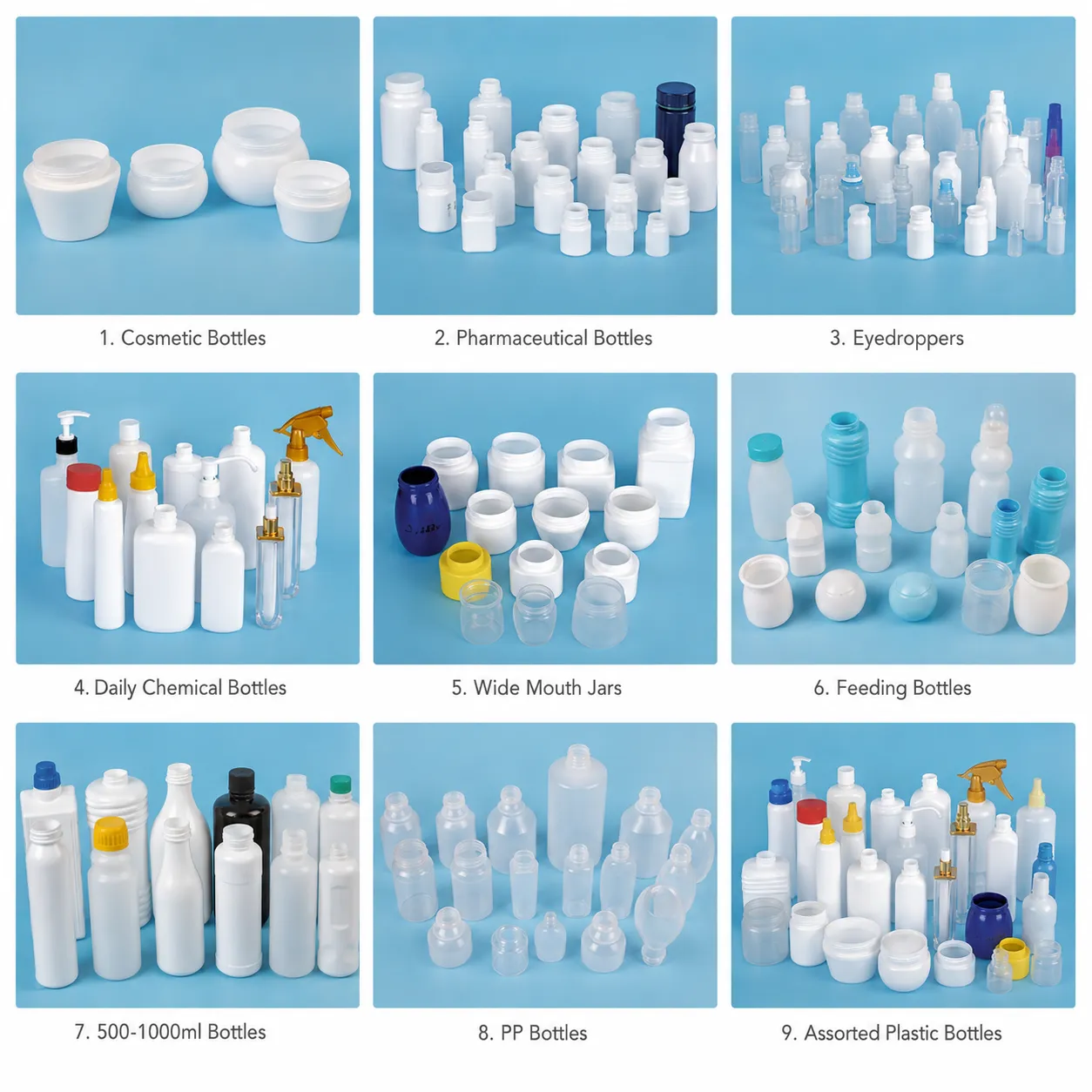
Botol Produk Pembersih Cair (250–1.000 ml)
Pembersih serbaguna Korea, pemutih cair, pembersih toilet cair, dan konsentrat semprot dapur Korea diproduksi dalam wadah HDPE IBM berukuran 250–1.000 ml dengan tutup ulir standar atau tutup flip-top. Keunggulan IBM untuk produk pembersih cair dibandingkan EBM sangat jelas: konsentrat pembersih alkali (pH 9–12) adalah agen ESCR yang cukup agresif yang membutuhkan grade HDPE dengan F50 ≥80 jam, dan sambungan dasar yang dihasilkan EBM menciptakan titik konsentrasi tegangan di zona jepit dasar tempat retak akibat ESCR paling sering terjadi pada wadah produk pembersih alkali. Dasar tanpa sambungan IBM menghilangkan konsentrasi tegangan ini, memperpanjang masa pakai ESCR efektif dari grade HDPE yang sama sebesar 20–40% dibandingkan dengan wadah EBM yang setara dengan ketebalan dinding yang sama — memungkinkan produsen bahan kimia rumah tangga Korea untuk menggunakan grade HDPE dengan MI lebih tinggi (biaya lebih rendah) dalam IBM daripada yang dibutuhkan dalam EBM untuk memenuhi persyaratan masa simpan ESCR yang sama.
Stoples Kimia Rumah Tangga Bermulut Lebar
Wadah HDPE bermulut lebar IBM untuk produk bubuk kimia rumah tangga Korea (tablet penguat deterjen Korea, sachet bubuk pembersih Korea, garam pencuci piring Korea) adalah aplikasi khusus IBM di mana kemampuan mulut lebar asli IBM — yang dibahas dalam mesin cetak tiup injeksi Rentang produk — lebih baik untuk merek-merek kimia rumah tangga Korea dibandingkan alternatif ISBM atau EBM. Pada produksi botol bermulut lebar 250 ml 8 rongga atau 500 ml 5 rongga di ZQ80, IBM menghasilkan sekitar 7.200 atau 4.500 botol bermulut lebar per jam tanpa sambungan dasar yang akan memerangkap residu bubuk pembersih Korea di zona jepit dasar. Merek-merek kimia rumah tangga Korea yang telah beralih dari EBM ke produksi botol bermulut lebar IBM melaporkan penghapusan penggumpalan produk di sambungan dasar EBM sebagai manfaat kualitas yang konsisten — khususnya untuk produk pembersih higroskopis Korea (bubuk asam sitrat, penguat cucian natrium perkarbonat) di mana kelembapan yang terserap di sambungan dasar EBM menyebabkan penggumpalan yang oleh konsumen Korea dikaitkan dengan produk itu sendiri, bukan dengan kemasannya.
7. IBM vs EBM untuk Produk Kimia Rumah Tangga Korea: Perbandingan Volume dan Biaya Tahunan
Keputusan antara IBM dan EBM untuk wadah bahan kimia rumah tangga Korea terutama bersifat ekonomis — kedua proses tersebut secara teknis mampu untuk wadah HDPE berukuran 250–1.000 ml, dan pilihan yang tepat bergantung pada volume produksi tahunan per format dan struktur biaya pabrik Korea untuk manajemen flash, jumlah operator, dan kalibrasi leher botol. Analisis perbandingan biaya di bawah ini didasarkan pada produksi sampo 500 ml Korea dengan HDPE KRW 1.600/kg, biaya operator pabrik Korea KRW 35 juta/tahun (gaji + tunjangan), dan perbandingan antara mesin IBM Ever-Power ZQ80 Korea dengan mesin EBM Korea untuk wadah 500 ml dengan 4 rongga.
Biaya Tahunan EBM pada 5 juta unit/tahun (500 ml)
| Bahan kilat (10%) | KRW 17,6 juta |
| Operator stasiun Trim | KRW 35 juta |
| Peralatan kalibrasi leher | KRW 8 juta |
| Perbaikan kualitas waktu henti | KRW 5 juta |
| Total biaya operasional tahunan EBM | KRW 65,6 juta |
Biaya Tahunan IBM pada 5 juta unit/tahun (500 ml)
| Bahan kilat | KRW 0 |
| Operator stasiun Trim | KRW 0 |
| Peralatan kalibrasi leher | KRW 0 |
| Biaya operasional premium IBM | KRW 8 juta |
| Total biaya operasional tahunan IBM | KRW 8 juta |
Penghematan biaya operasional tahunan: KRW 57,6 juta/tahun pada 5 juta unit. Selisih harga mesin IBM dibandingkan EBM (ZQ80 vs EBM Korea yang sebanding): sekitar KRW 60–80 juta. Periode pengembalian modal: sekitar 12–17 bulan pada 5 juta unit 500 ml per tahun. Di bawah sekitar 2 juta unit per tahun, modal mesin EBM yang lebih rendah mungkin memenangkan perbandingan biaya total — pada volume yang sangat rendah, penghematan operasional tahunan tidak cukup untuk mengembalikan selisih harga mesin IBM dalam jangka waktu pengembalian modal yang wajar. Di atas 5 juta unit per tahun, IBM jelas merupakan pilihan ekonomis yang tepat untuk produksi bahan kimia rumah tangga di Korea.
Keunggulan tingkat produksi IBM memperkuat aspek ekonomi pada volume yang lebih tinggi: pada 10 juta unit per tahun, ZQ80 dengan 6 rongga 500 ml beroperasi sekitar 1.852 jam per tahun (utilisasi 53% pada jadwal dua shift), sedangkan EBM dengan 4 rongga membutuhkan sekitar 2.315 jam (utilisasi 66%) — mesin IBM memberikan ruang produksi yang lebih besar untuk volume tahunan yang sama, artinya merek-merek kimia rumah tangga Korea mengalami lebih sedikit tekanan jadwal dan memiliki kemampuan yang lebih baik untuk merespons lonjakan permintaan promosi ritel Korea tanpa lembur mesin.
8. Pemilihan Seri ZQ untuk IBM Kimia Rumah Tangga Korea
Pemilihan model seri ZQ untuk IBM (Integrated Machine Packaging) produk kimia rumah tangga Korea mengikuti volume produksi tahunan pada format wadah utama, dengan pertimbangan tambahan untuk pabrik pengemasan kontrak produk kimia rumah tangga Korea yang memproduksi beberapa SKU produk pada mesin yang sama — frekuensi perubahan format dan waktu penggantian cetakan lebih penting untuk IBM produk kimia rumah tangga daripada untuk IBM farmasi, karena merek produk kimia rumah tangga melakukan perubahan format yang lebih sering antar SKU produk.
| Volume Tahunan @ 500 ml | Direkomendasikan | Rongga | Konteks Rumah Tangga Korea |
|---|---|---|---|
| Di bawah 12 juta/tahun | ZQ60 | 3–4 | Merek rumah tangga regional Korea, merek pribadi salon Korea, perusahaan rintisan FMCG Korea |
| 12 juta–20 juta/tahun | ZQ80 | 5–6 | OEM merek nasional Korea, pemasok rantai supermarket Korea |
| 20 juta–28 juta/tahun | ZQ110 | 6–8 | OEM merek FMCG besar Korea, skala kimia rumah tangga e-commerce Korea |
| Di atas 28 juta/tahun | ZQ135 | 8 | Produksi sendiri merek nasional Korea, ekspor FMCG rumah tangga Korea dalam skala nasional. |
Bagi pabrik pengemasan kontrak produk kimia rumah tangga Korea yang menjalankan 8–15 format berbeda per mesin per tahun, efisiensi waktu penggantian cetakan sama pentingnya dengan jumlah rongga. Set cetakan kimia rumah tangga ZQ80 dari Korea Ever-Power (5–6 rongga 500 ml, berat sekitar 80–120 kg per set komponen cetakan) dapat diganti dalam waktu sekitar 3,5–4,5 jam dengan dua operator terlatih dan troli penanganan cetakan yang dipasang di lantai — mencapai 3–4 perubahan format per minggu tanpa mengganggu jadwal produksi. EP-ZQ80 adalah platform IBM untuk produk kimia rumah tangga Korea yang paling serbaguna karena kapasitas 5–6 rongga 500 ml-nya mampu mencakup sebagian besar volume SKU merek nasional Korea untuk produk kimia rumah tangga dalam satu shift per perubahan format, menjadikannya platform pilihan bagi pabrik pengemasan kontrak produk kimia rumah tangga Korea dengan portofolio format yang beragam.
Pertanyaan yang Sering Diajukan
Permintaan Informasi IBM tentang Bahan Kimia Rumah Tangga
Mengevaluasi IBM untuk Produksi HDPE Bahan Kimia Rumah Tangga Korea?
Korea Ever-Power menyediakan pemilihan tingkat ESCR, analisis biaya IBM vs EBM, desain cetakan leher pompa, dan pemilihan mesin seri ZQ untuk produksi IBM bahan kimia rumah tangga Korea di semua volume produksi tahunan.
Sumber Daya Terkait
Mesin Cetak Tiup Injeksi EP-ZQ60
600 KN · 3–4 rongga pada 500 ml sampo · Merek regional Korea untuk produk kimia rumah tangga · ~9,5–12,6 juta unit 500 ml/tahun · Tanpa efek kilat dibandingkan EBM.
Mesin Cetak Tiup Injeksi EP-ZQ110
1.100 KN · 6–8 rongga pada 500 ml · 4+N zona barel · Hidrolik ganda 22+22 KW · Merek FMCG utama Korea untuk produk kimia rumah tangga — ~18,9–25,2 juta unit 500 ml/tahun.
IBM vs EBM: 12 Perbedaan Utama
Perbandingan detail IBM vs EBM — presisi leher, tanpa flash, penghilangan sambungan dasar ESCR, tingkat output, dan ekonomi pabrik kimia rumah tangga Korea di 12 faktor.