
Tekninen syväsukellus · Puhallusasemien suunnittelu · Korean ISBM 2026
ISBM:n puhallusaseman suunnittelu:
Korealainen pulloopas
Puhallusasemalla käsitellystä esimuotista tulee pullo – ja jokainen muuttuja puhallusta edeltävästä liipaisimen ajoituksesta korkean puhalluspaineen porrastukseen ja puhallussuuttimen geometriaan määrää, saavuttaako valmiin pullon seinämäjakauman, kristallinkirkkauden ja rakenteellisen eheyden, jotka korealaiset juoma-, lääke- ja K-Beauty-brändit määrittelevät. Puhallusasemien suunnittelu on molekyyliorientaatiotieteen mekaanista kääntämistä tuotantolaitteistoksi.
Korkeapaineinen 24–42 bar
Puhalluksen viiveaika ±0,05 s tarkkuus
Korealainen ISBM-puhallusaseman paineviite — 2026
| Hakemus | Esipuhallus | Korkea isku | Blow Dwell | Kriittisen iskun parametri |
|---|---|---|---|---|
| Korealainen PET-kivennäisvesi | 6–9 baaria | 24–30 baaria | 0,8–1,2 sekuntia | Esipuhallusliipaisin 30–40%-tangon liikkeellä |
| Korealainen K-Beauty PETG | 5–8 baaria | 28–34 baaria | 1,0–1,5 sekuntia | Pidennetty viiveaika PETG:n optiselle laadulle ja sameudelle ≤1.5% |
| Korealainen hiilihapotettu / kuohuviini PET | 8–12 baaria | 38–42 baaria | 1,2–1,8 sekuntia | Korkea puhallus ≥38 bar pakollinen petaloidisen jalan muodostumiselle |
| Korealainen kuumatäytettävä HS-PET | 8–10 baaria | 32–40 baaria | 2,0–3,5 sekuntia | Pitkä viipymä lämpökovettuvalle kiteytymiselle lämmitetyssä muotissa |
| Korealainen Tritan-leveäsuinen | 5–8 baaria | 26–32 baaria | 1,2–1,8 sekuntia | Hellävarainen esipuhallus Tritanin laajemman prosessi-ikkunan saavuttamiseksi |
1. Puhallusaseman rooli korealaisten ISBM-pullojen laadussa
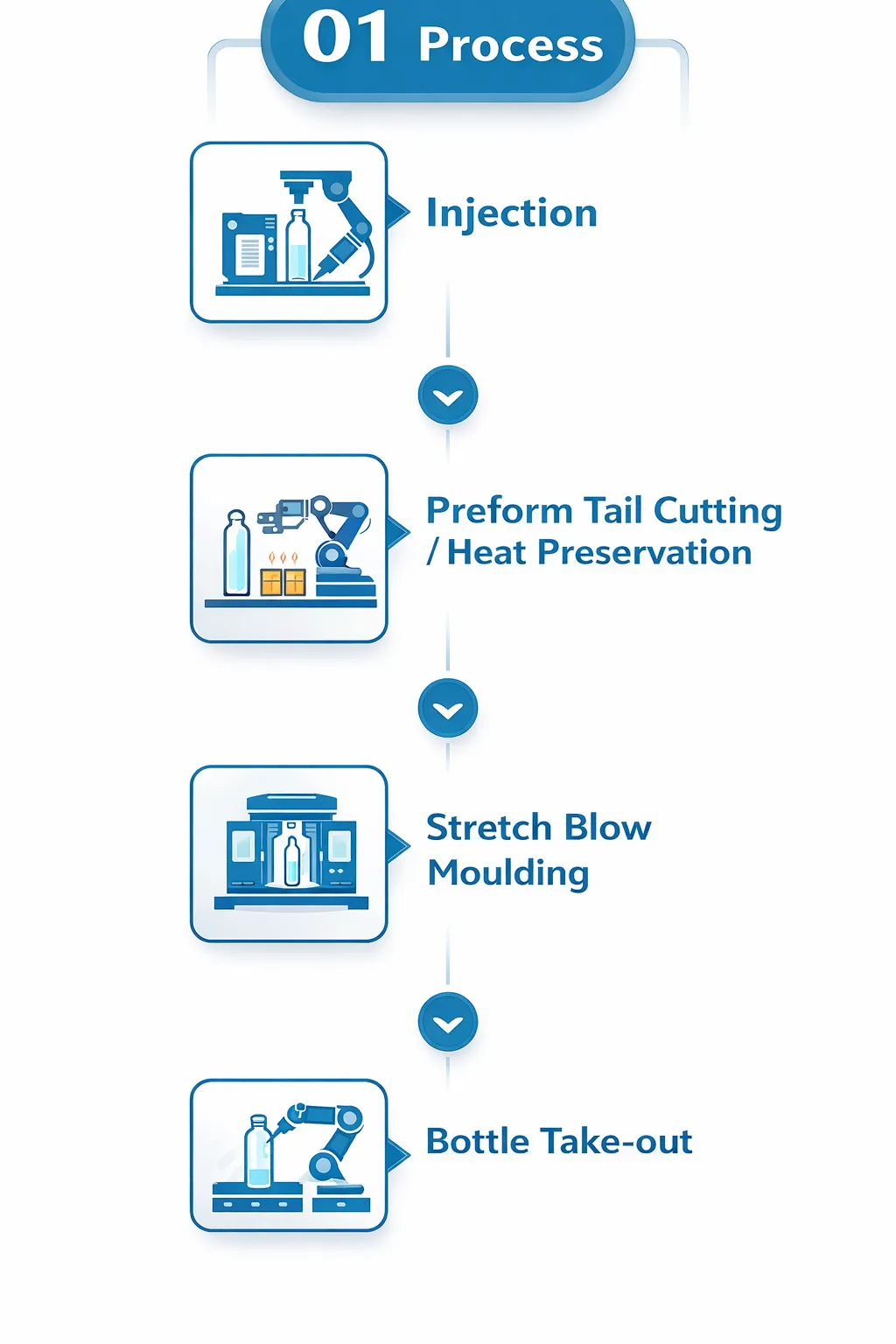
Korealaisen neliasemaisen ISBM:n puhallusasema muuntaa lämpökäsitellyn aihion valmiiksi pulloksi tarkasti järjestetyn kaksivaiheisen pneumaattisen prosessin avulla: matalapaineinen esipuhallus käynnistää säteittäisen laajenemisen synkronoidusti venytystangon kanssa, ja sitä seuraava korkeapaineinen puhallus painaa laajennetun aihion tiukasti muotin seinämiä vasten toistaen jokaisen geometrisen yksityiskohdan. Puhallusaseman laitteisto – esipuhalluspiiri, korkeapaineinen piiri, puhallussuutin ja muotin kiinnitysjärjestelmä – määrittää, siirtyykö käsittelyaseman aihioon valmistama orientaatiomolekyylirakenne oikein pullon lopulliseen seinämän jakaumaan.
Puhallusasemien tekniset viat ilmenevät kahdella tavalla korealaisessa ISBM-tuotannossa. Rakenteelliset viat: petaloidijalkojen muodostumattomuus (riittämätön korkea puhalluspaine), seinämän paksuuden vaihtelu (puhallusta edeltävän liipaisimen ajoitusvirhe), etikettipaneelin kaareutuminen (riittämätön puhalluspaine paneelin alueella), pohjan irtoaminen (riittämätön viive kiteytymiselle kuumatäytteessä). Optiset viat: sameusläiskät (puhalluspaineen pysähtyminen, joka aiheuttaa epätasaisen jäähdytyskosketuksen), kiiltovaihtelut (puhallussuuttimen tiivisteen epätasaisuus, joka aiheuttaa puhallusilman kanavointia). Molemmat vikaantumistyypit voidaan diagnosoida puhallusaseman teknisistä parametreista – ja molemmat voidaan ehkäistä systemaattisella puhallusaseman määrittelyllä ja huollolla. Molekyyliorientaatiotiede, joka määrittää, mitä puhallusaseman on saavutettava – ja mitä tapahtuu, kun se vikaantuu – on... kaksiaksiaalinen molekyyliorientaatio-opas.
2. Esipuhallus: Liipaisimen ajoitus ja paine
Esipuhallus on matalapaineista ilmaa (5–12 bar), joka syötetään aihioon puhallussuuttimen kautta venytyssauvan liikkeen alkuvaiheessa. Esipuhalluksen liipaisimen asento – sauvan liikeprosentti, jossa esipuhallusilma alkaa – on vaikuttavin yksittäinen puhallusaseman parametri korealaiselle ISBM:n seinäjakelun ohjaukselle. Kun esipuhallus alkaa liian aikaisin (ennen 25%-sauvan liikkeen alkamista tavallisessa 500 ml:n PET-aihiossa), säteittäinen laajeneminen johtaa aksiaaliseen venymiseen ja ylimääräistä materiaalia kertyy pullon pohjaan; liian myöhään (50%-sauvan liikkeen jälkeen) aksiaalinen venytys johtaa säteittäiseen laajenemiseen ja materiaalia kertyy olkapäähän, jolloin pohja ohenee.
Korealaisen ISBM:n standardin mukaiset esipuhallusliipaisimen asennot: tyynivesi PET 30–40% -tangon liike; K-Beauty PETG 25–35% (hieman aikaisemmin PETG:n alhaisemman jäykkyyden vuoksi vakiointilämpötilassa); CSD PET 35–45% (hieman myöhemmin, jotta pohjavyöhykkeelle kulkeutuu enemmän materiaalia petaloidin muodostumista varten); kuumatäyttöinen HS-PET 35–45% (sama logiikka kuin CSD:llä – pohjavyöhykkeen materiaali on kriittinen lämpökovetetulle kiteytymiselle). Esipuhalluspaineen määritys: esipuhalluspaineen on oltava riittävä aloittamaan aihion laajenemisen (voittaa esimuotin elastisen vastuksen vakiointilämpötilassa), mutta riittävän alhainen, jotta tanko voi hallita aksiaalista venymäsuhdetta ennen kuin säteittäinen laajeneminen alkaa vallita. Korealaisen standardin mukainen esipuhalluspaine PET:lle: 6–9 bar; PETG:lle: 5–8 bar (PETG:n hieman alhaisempi kimmokerroin vakiointilämpötilassa vaatii alhaisemman esipuhalluspaineen ennenaikaisen säteittäisen ylilaajenemisen estämiseksi). Esimuotin suunnittelu, joka määrittää esipuhalluspaineen ylitettävän elastisen vastuksen, on ISBM-aihiosuunnitteluopas.
3. Suurpaineen vaiheistus ja akkumulaattoritekniikka
Korkea puhalluspaine on ensisijainen puhallusaseman voima, joka painaa paisutettua aihiota muotin ontelon pintaa vasten – mikä määrittää etikettipaneelin tasaisuuden, pinnan kiillon jäljittelyn muotin viimeistelystä ja (CSD/hiilihapotetulle vedelle) petaloid-jalan muodostumisen. Korealainen ISBM:n korkea puhalluspainespesifikaatio on käyttökohdekohtainen: vähintään 24 bar tavalliselle hiilihapottoman veden PET-etikettipaneelin tasaisuusspesifikaatiolle; 28–34 bar korealaiselle K-Beauty PETG -etikettipaneelin tasaisuusspesifikaatiolle; ≥ 38 bar korealaiselle hiilihapotetun veden petaloid-muodostelmalle; ≥ 42 bar korealaiselle CSD-kolalle. Kunkin sovelluksen vähimmäisspesifikaation alapuolella aihio ei kosketa kokonaan muotin pintaa, jolloin jäljelle jää mikroskooppisia ilmataskuja, jotka aiheuttavat sameutta, etikettipaneelin kaareutumista ja epätäydellistä petaloid-jalan geometriaa.
Korkeapaineinen porrastus (jota joskus kutsutaan "2-vaiheiseksi korkeapaineiseksi" edistyneissä korealaisissa sähköajoneuvojen servoalustoissa) tarjoaa kaksi peräkkäistä korkeapainetasoa: kohtalaisen alkupaineen (tyypillisesti 15–20 bar), joka antaa aihion jatkaa venymistä säteittäisesti kontrolloitua vastusta vastaan, ennen kuin lopullinen korkeapaine lukitsee suunnan. Tämä kaksivaiheinen lähestymistapa parantaa seinämän paksuuden jakautumisen tasaisuutta monimutkaisissa pullomuodoissa (voimakkaasti muotoillut K-Beauty-pullot, epäsymmetriset kastikepullot) estämällä alkupaineen pysäyttämästä säteittäistä laajenemista epäsymmetrisesti, kun aihion yksi alue koskettaa ontelon seinämää ennen muita.
Korealainen ISBM:n suurpaineakkutekniikka: akkumulaattori (korkeapaineilmasäiliö, joka on kytketty suurpainepiiriin) on mitoitettava siten, että se tuottaa nimellispainepaineen välittömästi esipuhalluksesta vaihtovaiheessa – riittämätön akkumulaattorin tilavuus aiheuttaa painehäviön, kun puhallusilma täyttää pullon ontelon. Tämä johtaa hetkelliseen matalapainetilaan, joka luo seinämään "painepysähdys"-alueen, jossa suuntaus pysähtyy kesken laajenemisen. Korealaisten CSD- ja HS-PET-sovellusten akkumulaattorin mitoitusvaatimukset määrittävät muotin suunnittelutekijät ovat tekijä 5 (puhalluspainepiirin spesifikaatio) 9-tekijäinen korealainen ISBM-muotin valintaopas.
4. Puhallusviivetekniikka: Jäähdytys, kiteytys ja vapautus
Puhallusviiveellä tarkoitetaan aikaa, jonka pullo pysyy paineistettuna suljetun muotin sisällä korkealla puhalluspaineella sen jälkeen, kun tanko on liikkunut loppuun ja aihio on täysin koskettanut ontelon seinämiä. Puhallusviiveellä on kolme päällekkäistä toimintoa: se pitää pullon seinämän kosketuksessa jäähdytetyn muotin pinnan kanssa lämpösammutusta varten (lukitsee kaksiaksiaalisen suunnan kiteiseen rakenteeseen); se mahdollistaa muotin ontelon geometristen yksityiskohtien (etikettilevyn tasaisuus, petaloidinen pohjaprofiili, pintarakenne) toistamisen pullon seinämässä jatkuvan paineen alaisena; ja korealaiselle kuumatäytteiselle HS-PET-muoville se tarjoaa jatkuvan korkean lämpötilan kosketuksen lämmitetyn muotin sisäosan kanssa, mikä aiheuttaa kiteytymistä pohja- ja runkoalueilla.
Korealainen ISBM:n puhallusviiveen määritys on ensisijainen sykliajan vipu – se on tyypillisesti pisin yksittäinen aikakomponentti korealaisessa ISBM-syklissä ja siksi se on ensimmäinen kohde sykliajan lyhentämiselle, kun korealaiset ISBM-tuottajat optimoivat läpivirtausta. Puhallusviiveen lyhentäminen alle käyttötarkoituksen minimiarvon aiheuttaa kuitenkin välittömiä laatuongelmia: lyhentynyt viive PET-pulloissa aiheuttaa suurempaa jäännösjännitystä (pullot halkeilevat täyttölinjan käsittelyssä); lyhentynyt viive K-Beauty PETG -pulloissa aiheuttaa suurempaa sameutta (riittämätön jäähdytyskosketus ontelon seinämässä tarvittavan pinnan orientaatiolaadun saavuttamiseksi); lyhentynyt viive CSD PET -pulloissa aiheuttaa petaloidisen pohjan muodonmuutosta korealaisessa myymälän hyllyssä (pohjan riittämätön kiteytyminen paineen alaisena ennen ulostyöntöä). Korealainen ISBM:n sykliajan optimointikehys, joka määrittää vähimmäishyväksyttävän puhallusviiveen käyttötarkoitusta kohden – ja tunnistaa, mitä muita sykliajan komponentteja voidaan lyhentää ilman laatuvaikutuksia – on... Korealainen ISBM-syklin keston optimointiopas.
Korealaisen sähkökäyttöisen servomoottorin puhallusviiveen tarkkuus: Sähkökäyttöisten servomoottorien alustat säätävät puhallusviiveen ajoitusta ±0,05 sekunnin tarkkuudella – mikä tarkoittaa, että puhallusviive on tasaisesti ±0,05 sekunnin sisällä asetusarvosta jokaisessa syklissä. Hydrauliset korealaiset ISBM-alustat säätävät puhallusviivettä ±0,20–0,35 sekunnin tarkkuudella – 4–7 kertaa epätarkempi. Korealaisessa kuumatäytteisessä HS-PET-pullossa, jossa kiteytymisaste on suoraan verrannollinen aikaan, jonka pullon seinämä on kosketuksissa lämmitetyn muotin pinnan kanssa, ±0,3 sekunnin viiveen vaihtelu 3,0 sekunnin nimellisellä viiveellä edustaa ±10%:n kiteytymisvaihtelua, joka tuottaa näkyvää peruslaadun vaihtelua syklistä toiseen.
5. Puhallussuuttimien suunnittelu ja tiivisteiden suunnittelu
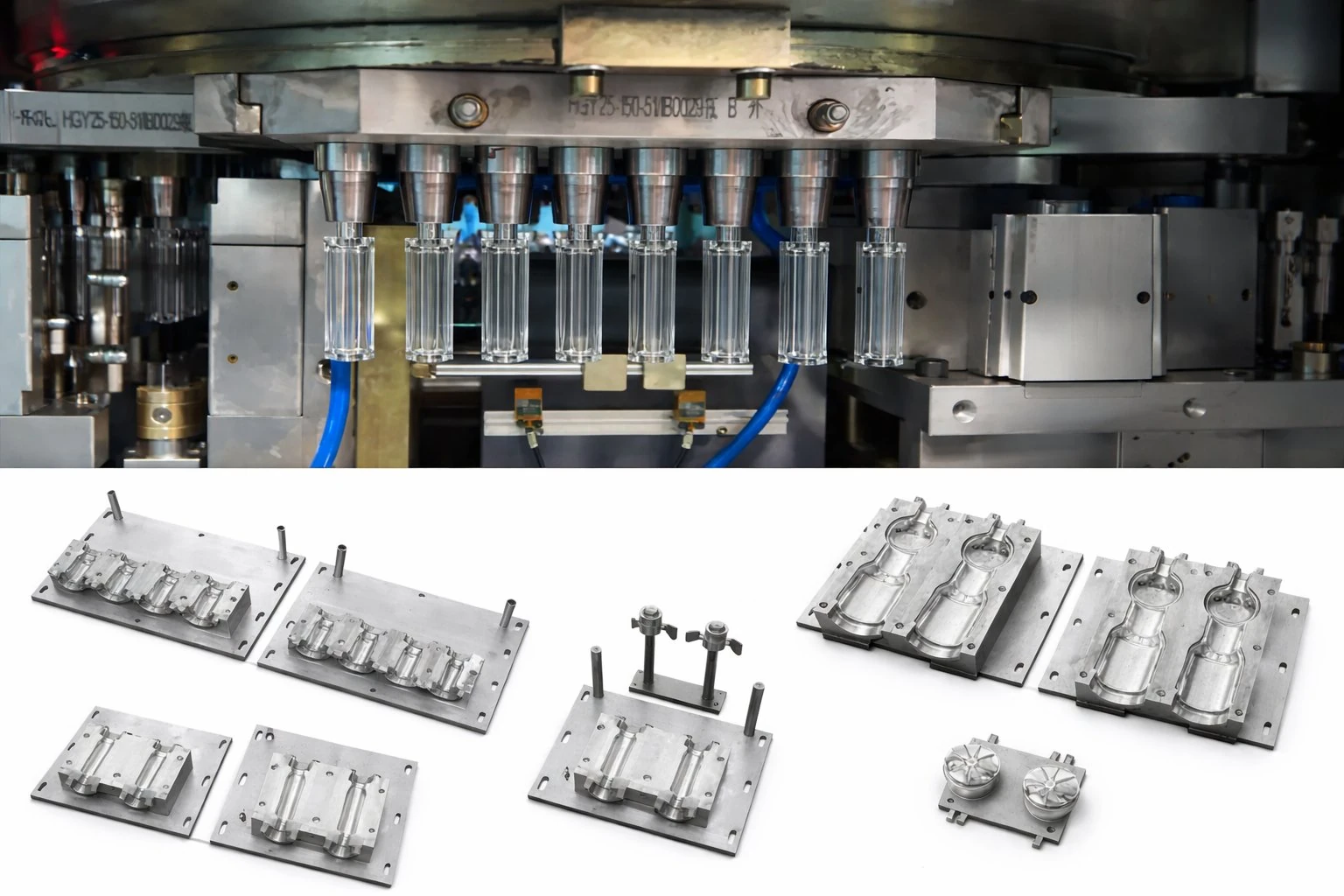
Puhallussuutin on komponentti, joka tiivistää aihion kaulapinnan vasten ja syöttää puhallusilman aihion sisäpuolelle. Korealaisessa ISBM-puhallussuuttimessa käytetään kahta perustiivistysmekanismia: kuulatiivistesuuttimia (pallomainen kärki, joka tiivistää aihion kaulareiän sisäreunaa vasten – yleisin korealaisessa 4-asemaisessa ISBM:ssä, tarjoaa itsekeskittyvän tiivistystoiminnan) ja pintatiivistesuuttimia (tasainen PTFE- tai elastomeeripinta, joka tiivistää aihion kaulapinnan yläpintaa vasten – käytetään leveäsuisissa sovelluksissa, joissa suuttimen ulkohalkaisija on lähellä aihion kaulan ulkohalkaisijaa, mikä rajoittaa tilaa kuulatiivistemekanismille).
Korealaisen ISBM:n puhallussuuttimen tekniset parametrit: suuttimen reiän sisähalkaisija (virtausrajoitus, joka määrittää, kuinka nopeasti puhallusilma pääsee aihioon – liian kapea ja paineen nousunopeus on hidas, mikä aiheuttaa "puhallusviiveen", jonka ansiosta aihio jäähtyy osittain ennen täyden paineen saavuttamista; korealaisen ISBM:n standardin mukainen suuttimen reikä 8–14 mm ontelon tilavuudesta ja puhalluspaineesta riippuen); PTFE-tiivisteen sisäosan geometria (tiivistyspinta, joka koskettaa aihion kaulaa – korealainen ISBM:n standardin mukainen PTFE-sisäosan kovuus Shore A 85–95 tiivistyksen joustavuuden ja kulutuskestävyyden tasapainottamiseksi); suuttimen jatkeen iskunpituus (matka, jonka suutin laskeutuu kaulaan – sähköinen servo-ohjaus ±0,1 mm:n tarkkuudella tasaisen tiivisteen kosketusvoiman saavuttamiseksi).
Korealaisen ISBM:n puhallussuuttimen tiivisteen laatu vaikuttaa suoraan korealaisen K-Beauty PETG -pullon eräkohtaiseen painon tasaisuuteen – kulunut suuttimen tiiviste mahdollistaa mikrovuodon, joka saa puhallusilman osittain ohittamaan pullon sisäosan, mikä heikentää tehokasta puhalluspainetta ja aiheuttaa onteloiden välistä painovaihtelua. Korealaiset ISBM-tuottajat, jotka suorittavat neljännesvuosittaisen suuttimen tiivisteen tarkastuksen (kovuuden mittaus, uran kulumisen silmämääräinen tarkistus) ja vuosittain PTFE-sisäosien vaihdon, pitävät puhalluspaineen tasaisuuden ±0,5 baarin sisällä kaikissa onteloissa – tämä on korealaisen K-Beauty PETG:n sameuskonsistenssin ΔE ≤ 1,0 erää kohden edellyttämä spesifikaatio.
6. Puhalluspiiri: Kompressorin, säätimen ja varaajan mitoitus
Korealainen ISBM-puhalluspiiri – pneumaattinen järjestelmä, joka syöttää esipuhallus- ja korkeapuhallusilmaa määritetyillä paineilla ja virtausnopeuksilla – koostuu neljästä keskeisestä komponentista: korkeapainekompressorista (tuottaa puhallusasemalle käytettävissä olevan suurimman puhalluspaineen), paineensäätimestä (vähentää kompressorin tehon sovelluskohtaiseen puhalluspaineen asetusarvoon), akusta (varastoi korkeapaineilman määrän, joka voidaan toimittaa välittömästi ilman kompressorin virtausnopeutta) ja puhallusventtiilistä (avautuu EV-servosäätimen käskystä toimittaakseen puhallusilmaa suuttimelle).
Korealaisen ISBM-korkeapainekompressorin spesifikaatio: kompressorin on ylläpidettävä puhalluspaineen asetusarvoa koko tuotantosyklin ajan määritellyllä puhallusilman kulutusnopeudella. Korealaiselle 6-pesäiselle 500 ml:n PET-vesisäiliölle 28 baarin puhalluspaineella: puhallusilman kulutus = 6 pesää × 0,5 l pullon tilavuus × (28/1 = 28 × ilmakehän tilavuus) × 6 sykliä/minuutti = noin 504 standardilitraa/minuutti puhallusilmaa. Korealainen ISBM-kompressori, jonka teho on 600 standardilitraa/minuutti 32 baarin paineella, tarjoaa riittävän virtauksen tälle tuotantonopeudelle – alikokoiset kompressorit aiheuttavat asteittaista paineenlaskua tuotannon aikana, mikä ilmenee seinämän paksuuden asteittaisena vaihteluna tuotantovuoron aikana, kun paineakku tyhjenee nopeammin kuin kompressori voi täyttää sitä.
Korealaisen ISBM:n akkumulaattorin mitoitus CSD-tuotantoa varten: akkumulaattorin on sisällettävä riittävästi korkeapaineilmaa syöttääkseen täyden CSD:n korkeapuhalluspaineen (38–42 bar) pulloonteloon 0,05 sekunnin kuluessa puhallusventtiilin avautumisesta. 42 baarin paineessa 250 ml:n CSD-pullolle: tarvittavan korkeapaineilman tilavuus onteloa kohden ≈ 0,25 l × (42 + 1) / 1 = 10,75 standardilitraa. 6-pesäisessä CSD-tuotannossa akkumulaattorin tulisi sisällettää ≥ 65 standardilitraa 45 baarin esitäyttöpaineella syöttääkseen 6 × 10,75 = 64,5 standardilitraa sykliä kohden alle 2 baarin painehäviöllä. Korealaiset ISBM-tuottajat, jotka päivittävät laitteen tavallisesta hiilihapotetun veden tuotannosta (24–28 bar) hiilihapotetun veden/kiihotetun veden tuotantoon (38–42 bar) samalla koneella, on tarkistettava akkumulaattorin mitoitus ennen ensimmäistä hiilihapotetun veden tuotantoajoa – hiilihapotetun veden käyttö hiilihapotetun veden paineelle mitoitetulla akulla aiheuttaa kroonisia puhalluspaineen laskuja, jotka aiheuttavat petaloidisten jalkojen muodostumisongelmia jokaisessa tuotantosyklissä.
7. Puhallusaseman vikatilat ja vianmääritys
| Vikatila | Laatuoire | Diagnoosimenetelmä | Korjaus |
|---|---|---|---|
| Suuttimen tiivisteen kuluminen | Kuuluu puhallusilman suhina; onteloiden välinen painonvaihtelu CV > 1,5%; ajoittaista sameutta K-Beauty PETG:ssä | Tarkasta suuttimen PTFE-sisäosa 5× luupin alla; uran syvyys > 0,3 mm = vaihda | Vaihda PTFE-sisäosa; tarkista puhalluspaine sisäänrakennetulla anturilla vaihdon jälkeen |
| Akun esilataushäviö | Asteittainen petaloidisen jalan heikkeneminen vuoron aikana; seinämän jakautumisen ajautuminen; puhalluspaineen loki näyttää askeleen alaspäin vuoron alussa | Mittaa akun paine koneen käynnistyksen yhteydessä ennen tuotannon aloittamista; laskeva lähtötaso vahvistaa typen esitäyttöhäviön tai ilmarakon vikaantumisen | Täytä akkumulaattori typen esitäyttömäärän mukaisesti; tarkista rakko/kalvo väsymisen varalta |
| Puhallusta edeltävän liipaisimen drift | Systemaattinen seinämän jakautumisen muutos (liian paksu tyvestä, ohut olkapäästä tai päinvastoin); muuttumattomat hoitoparametrit | Kirjaa esipuhallusliipaisinasento EV-servoenkooderista; vertaa lähtötasoon — yli ±0,5 mm:n poikkeama osoittaa, että tangon asentoanturin kalibrointi on tarpeen | Kalibroi tangon asentoanturi uudelleen; tarkista, että esipuhallusliipaisin on nimellisasennossa ja että seinämän asento palautuu lähtötasolle. |
| Puhallusventtiili jumissa auki | Jatkuva ylipainepuhallus; ohut seinämä; äärimmäisissä tapauksissa pullo puhalletaan ulos muotista viipymän aikana | Puhalluspaineanturin loki näyttää painepiikin asetusarvon yläpuolella; venttiili ei tyhjennä kokonaan syklien välillä | Vaihda puhallusventtiilin tiivisteet; tarkista venttiilin käyttösolenoidi; tarkista venttiilin avautumis-/sulkeutumisaika virtausmittarilla |
| Puhalla ilman kosteussaastuminen | Veden tiivistymistä pullojen sisällä; näkyviä vesipisaroita pohjassa; K-Beauty PETG -pinnan sameutta veden aiheuttamasta kosketuksesta | Mittaa puhallusilman kastepiste koneen puhallussisääntulossa; tavoitekastepiste ≤ −20 °C; yli −10 °C osoittaa kuivaimen toimintahäiriön | Huolla puhallusilmakuivain; vaihda kuivausaine; tarkista kastepisteanturin kalibrointi; tarkista, onko puhallusilmassa kompressoriöljyä. |
Tässä taulukossa esitetyt puhallusasemien vikaantumismuodot ja niiden vuorovaikutus korealaisten ISBM-laatuvirheiden – erityisesti seinämän paksuuden vaihtelun, sameuden ja pohjan muodonmuutoksen – kanssa on ristiviittattu kattavassa taulukossa. Korealainen ISBM-pullovirheiden kenttäopas.
8. Puhallusaseman huolto korealaisen ISBM-tuotannon luotettavuuden varmistamiseksi
Korealaisen ISBM-puhallusaseman ennakoiva huolto on jaettu kolmella tiheydellä. Viikoittain: (1) puhalluspainelokin tarkistus – vertaa sähkökäyttöisen servon paineanturin lokia viimeisten viiden tuotantovuoron ajalta; suuntaus kohti alhaisempaa keskimääräistä korkeaa puhalluspainetta osoittaa akun esilatauksen häviötä tai kompressorin tehon heikkenemistä, joka vaatii toimenpiteitä ennen seuraavaa tuotantoviikkoa; (2) puhallusilman vuotojen äänitarkistus – kuuntele suutinalueelta tulevaa sihinää puhalluksen viipymävaiheen aikana; mahdollinen vuotoääni osoittaa suuttimen tiivisteen kulumista, joka pahenee asteittain, jos sitä ei korjata. Neljännesvuosittain: (1) suuttimen PTFE-tiivisteen mittatarkastus – mittaa uran syvyys, kosketusleveys ja Shore A -kovuus; vaihda, jos uran syvyys on yli 0,2 mm tai kovuus alle Shore A 78; (2) akun esilatauspaineen mittaus – varmista, että typen esilataus on ±1 baarin sisällä spesifikaatiosta; (3) puhallusventtiilin toiminta-ajan mittaus – varmista, että venttiili avautuu 20 ms:n kuluessa komennosta ja sulkeutuu 30 ms:n kuluessa; venttiilin vasteaika yli 50 ms osoittaa solenoidin väsymistä, joka vaatii vaihtoa; (4) puhallusilman kastepisteen tarkistus koneen sisääntulossa. Vuosittainen: (1) täydellinen puhalluspiirin tarkastus, mukaan lukien kaikki paineensäätimet, puhallusventtiilien sisäosat, varaajan tarkastus ja kompressorin lähtövirtausnopeuden mittaus; (2) puhallussuuttimen reiän tarkastus suurnopeuksisen puhallusilman aiheuttaman eroosion varalta (reiän eroosio yli 0,3 mm:n ulkohalkaisijan kasvulla vähentää puhallusilman nopeutta ja pidentää puhallusaikaa, mikä heikentää seinämän jakautumista korealaisissa tuotantomäärien mukaisissa sovelluksissa); (3) EV-servosauvan enkooderin kalibroinnin varmennus. Korealaiset ISBM-tuottajat, jotka toteuttavat tätä kolmitaajuista puhallusasemien huolto-ohjelmaa, ylläpitävät puhalluspaineen tasaisuutta ±0,8 baarin sisällä kaikissa onteloissa koko tuotantovuoden ajan – varmistaen tasaisen seinämän jakautumisen, jota korealaiset premium-vesi-, K-Beauty- ja lääkebrändien laatuauditoijat mittaavat vuosittaisissa toimittajien kelpoisuustarkastuksissa.
Usein kysytyt kysymykset
Puhallusaseman tekninen tuki
Korealaisen ISBM:n petaloidin jalan pettäminen, seinäjakauman ajautuminen vai etikettipaneelin kaartuminen?
Korealainen Ever-Power tarjoaa puhalluspainepiirin auditointeja, akkumulaattorin mitoitusta, suuttimen tiivisteiden tarkastuksia, puhallusliipaisimen kalibrointia ja HGY250-V4 CSD -piirin päivityksiä korealaisille ISBM:n hiilihapollisille vesille, energiajuomille ja premium-vesipuhallusasemien suunnittelupalveluille.
Aiheeseen liittyvät resurssit
CSD-iskualusta
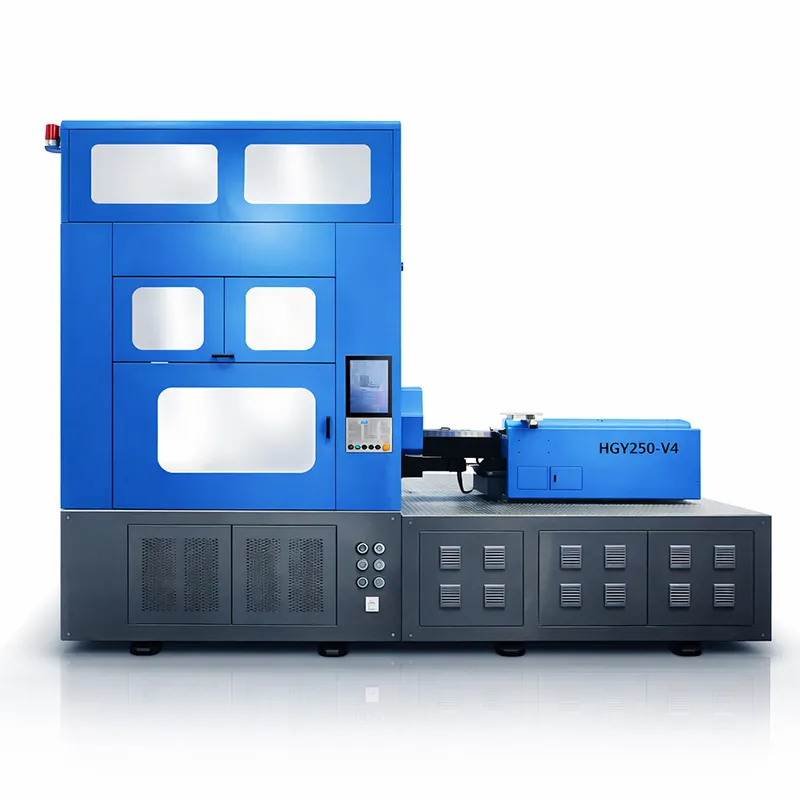
Korealainen Ever-Power HGY250-V4
42 baarin CSD-puhalluspiiri; 6-pesäiselle 250 ml:n CSD-säiliölle mitoitettu akku; sähköisesti säädettävä esipuhallusliipaisin ±0,05 s; puhallusilman kastepistehälytys vakiona.
Konevalikoima
4-asemainen ISBM-alue
Kaikissa korealaisissa Ever-Powerin sähköautoalustoissa on sisäänrakennettu puhalluspaineanturin tiedonkeruu, akun esilatauksen valvonta ja puhallussuuttimen tiivisteen vaihto suunnitellun toimitusajankohdan mukaisesti.
Puhalluspiirin työkalut
Mukautettu ISBM-muottisuunnittelu
Korealaisen muotin puhallusventtiilin suunnittelu on sovitettu puhalluspiirin spesifikaatioihin; ontelon tilavuuden laskeminen varaajan mitoitusta varten; puhalluspainevaatimus vahvistettu ensimmäisen artikkelin hyväksynnän yhteydessä.