
IBM εναντίον EBM: 12 βασικές διαφορές
Εξηγήθηκε
Η χύτευση με έγχυση και η χύτευση με εξώθηση είναι οι δύο κύριες διαδικασίες χύτευσης με εμφύσηση στις κορεατικές συσκευασίες — ωστόσο, εξυπηρετούν διαφορετικές αγορές δοχείων, παράγουν διαφορετική ακρίβεια λαιμού, δημιουργούν διαφορετικά επίπεδα αποβλήτων υλικών και δικαιολογούν διαφορετικές κεφαλαιακές επενδύσεις. Αυτός ο οδηγός συγκρίνει και τις δύο διαδικασίες σε 12 τεχνικούς και εμπορικούς παράγοντες, ώστε οι Κορεάτες μηχανικοί συσκευασίας να μπορούν να επιλέξουν τη σωστή διαδικασία για κάθε απαίτηση παραγωγής χωρίς ασάφειες.
Κορεατική Οικονομία Εργοστασίου
Καλή Παρασκευαστική Πρακτική (GMP) και Φαρμακευτική Συμμόρφωση
Γραφείο Μηχανικών Korea Ever-Power · Ansan-si · Ιούλιος 2026
IBM εναντίον EBM — Με μια ματιά
±0,05 χιλ.
Ανοχή εξωτερικής διαμέτρου λαιμού IBM — έναντι ±0,15–0,25 mm σε EBM
Μηδενικό φλας
Αξιοποίηση υλικού IBM — Το EBM δημιουργεί θραύσματα flash 7–15%
Έως 30
Κοιλότητες IBM στα 10 ml — EBM συνήθως 1–4 κοιλότητες σε μικρό μέγεθος
12
Τεχνικοί και εμπορικοί παράγοντες που συγκρίνονται σε αυτόν τον οδηγό
1. IBM vs EBM: Η θεμελιώδης διαφορά διαδικασιών
Η χύτευση με έγχυση και η χύτευση με εξώθηση παράγουν κοίλα πλαστικά δοχεία φουσκώνοντας μαλακωμένη ρητίνη πάνω σε μια κοιλότητα καλουπιού με πεπιεσμένο αέρα. Εδώ τελειώνει η ομοιότητα. Η θεμελιώδης διαφορά μεταξύ των δύο διαδικασιών έγκειται στον τρόπο με τον οποίο δημιουργείται το προπλάσμα - το ενδιάμεσο σχήμα που στη συνέχεια φουσκώνεται σε μια φιάλη. Στην IBM, το προπλάσμα χυτεύεται με έγχυση γύρω από μια ράβδο πυρήνα με εργαλεία ακριβείας που καθορίζουν ακριβώς τη γεωμετρία του λαιμού. Στην EBM, το προπλάσμα είναι ένας κοίλος σωλήνας από εξωθημένο πλαστικό (το parison) που συσφίγγεται από το καλούπι εμφύσησης και φουσκώνεται, με τη γεωμετρία του λαιμού να σχηματίζεται από τη γραμμή διαχωρισμού του καλουπιού και όχι από ένα ειδικό εργαλείο ακριβείας.
Αυτή η μοναδική διαφορά — το προμορφωμένο με έγχυση έναντι του εξωθημένου παρίσον — καταλήγει σε δώδεκα μετρήσιμες τεχνικές και εμπορικές διαφορές που καθορίζουν ποια διαδικασία είναι η σωστή για τις συγκεκριμένες απαιτήσεις δοχείων ενός κορεατικού εργοστασίου συσκευασίας. Οι δώδεκα διαφορές δεν είναι υποκειμενικές προτιμήσεις. είναι μηχανικές πραγματικότητες που απορρέουν απευθείας από τη φυσική της διαδικασίας. Η κατανόησή τους εξαλείφει την ασάφεια από την απόφαση IBM έναντι EBM για τις κορεατικές φαρμακευτικές, οικιακές χημικές, καλλυντικές και συσκευασίες τροφίμων.
Η IBM και η EBM δεν είναι ανταγωνιστικές διαδικασίες στις περισσότερες εφαρμογές — εξυπηρετούν διαφορετικές αγορές εμπορευματοκιβωτίων. Η IBM κυριαρχεί στα κορεατικά φαρμακευτικά δοχεία μικρού μεγέθους και στις κορεατικές συσκευασίες ακριβούς κλεισίματος. Η EBM κυριαρχεί στα κορεατικά βιομηχανικά δοχεία μεγάλου μεγέθους, στα δοχεία με τζετ και στα δοχεία που απαιτούν ενσωματωμένες λαβές. Η επιλογή της διαδικασίας γίνεται πραγματικά ασαφής μόνο στο μεσαίο εύρος: κορεατικά δοχεία οικιακών χημικών προϊόντων στα 250–1.000 ml, κορεατικά βάζα τροφίμων στα 100–500 ml και κορεατικές συσκευασίες καλλυντικών με ευρύ στόμιο — όπου και οι δύο διαδικασίες είναι τεχνικά ικανές αλλά διαφέρουν ως προς την ποιότητα παραγωγής, το λειτουργικό κόστος και τις κεφαλαιακές απαιτήσεις με τρόπους που οι Κορεάτες μηχανικοί εργοστασίων πρέπει να κατανοήσουν για να λάβουν μια δικαιολογημένη επενδυτική απόφαση.
2. Διαφορές 1 και 2: Ακρίβεια Λαιμού και Μηδενικό Φλας
Διαφορά 1 — Ακρίβεια φινιρίσματος λαιμού: ±0,05 mm έναντι ±0,15–0,25 mm
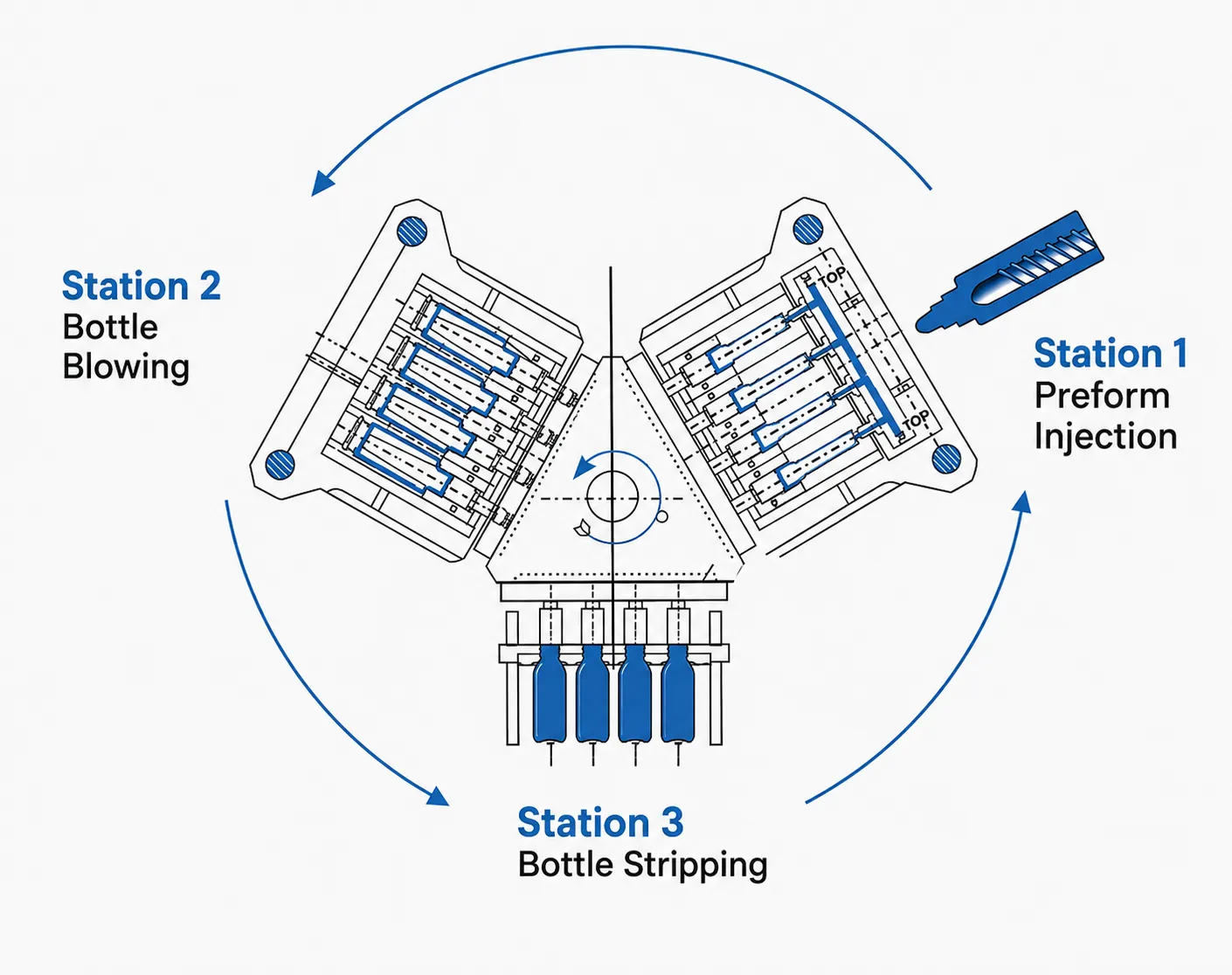
Στο IBM, η κεντρική ράβδος διέρχεται από τη ζώνη του λαιμού τόσο κατά τη φάση έγχυσης όσο και κατά τη φάση εμφύσησης. Η εξωτερική διάμετρος του σπειρώματος του λαιμού, η διάμετρος της οπής, η επιφάνεια στεγανοποίησης και το προφίλ του σπειρώματος ορίζονται όλα στον Σταθμό 1 από το ένθετο καλουπιού έγχυσης — ένα ακριβές χαλύβδινο εργαλείο που διατηρεί ανοχή διαστάσεων ±0,02 mm στην κοιλότητα του λαιμού. Επειδή ο λαιμός σχηματίζεται με έγχυση και η κεντρική ράβδος διατηρεί τη γεωμετρία της καθ' όλη τη φάση εμφύσησης, η πίεση εμφύσησης στον Σταθμό 2 δεν έρχεται ποτέ σε επαφή με τις επιφάνειες του λαιμού. Ο λαιμός της τελικής φιάλης είναι διαστατικά πανομοιότυπος με την κοιλότητα του καλουπιού έγχυσης — ανοχή εξωτερικής διάμετρος ±0,05 mm σε όλες τις κοιλότητες, σε κάθε κύκλο.
Στο EBM, η γεωμετρία του λαιμού σχηματίζεται από τη γραμμή διαχωρισμού του καλουπιού εμφύσησης — τη ραφή όπου τα δύο μισά του καλουπιού εμφύσησης συναντώνται γύρω από το εξωθημένο μάρσιν. Η γραμμή διαχωρισμού πρέπει να κλείνει γύρω από το μάρσιν στη θέση του λαιμού και η ακρίβεια διαστάσεων του λαιμού περιορίζεται από την ακρίβεια κλεισίματος της γραμμής διαχωρισμού και τη διακύμανση στο πάχος του μάρσιν στη ζώνη του λαιμού. Η ανοχή εξωτερικής διαμέτρου του λαιμού του EBM είναι συνήθως ±0,15–0,25 mm — τρεις έως πέντε φορές μεγαλύτερη από την IBM. Για τα κορεατικά φαρμακευτικά πώματα CRC που απαιτούν ανοχή εξωτερικής διαμέτρου λαιμού ±0,06 mm για εμπλοκή ώθησης και περιστροφής, και για τα κορεατικά πώματα αντλίας-διανομέα που απαιτούν εξωτερική διάμετρο λαιμού ±0,08 mm για ακεραιότητα σφράγισης πτύχωσης-δακτυλίου, η ακρίβεια του λαιμού του EBM είναι ανεπαρκής χωρίς δευτερεύουσες λειτουργίες φινιρίσματος λαιμού (γλυφή ή κόψιμο) που προσθέτουν χρόνο κύκλου, κόστος εξοπλισμού και κίνδυνο απόρριψης.
Διαφορά 2 — Δημιουργία φλας: Μηδέν έναντι 7–15% βάρους βολής
Στην IBM, το προφόρμα περιέχει ακριβώς την ποσότητα ρητίνης που απαιτείται για το τελικό μπουκάλι. Δεν υπάρχει περίσσεια υλικού σε κανένα όριο καλουπιού — το καλούπι έγχυσης γεμίζει με ακρίβεια και όταν το προφόρμα φουσκώνεται στον Σταθμό 2, το πολυμερές αναδιανέμεται από το προφόρμα στο μπουκάλι χωρίς υλικό να υπερβαίνει την κοιλότητα του καλουπιού εμφύσησης. Η μηδενική λάμψη είναι ένα δομικό χαρακτηριστικό της διαδικασίας IBM, όχι ένα ποιοτικό επίτευγμα — είναι φυσικά αδύνατο για την IBM να δημιουργήσει λάμψη επειδή δεν υπάρχει περίσσεια υλικού από μάρσιπο που να μπορεί να συμπιεστεί.
Στο EBM, η λάμψη είναι αναπόφευκτη. Το εξωθημένο σμάλτο πρέπει να εκτείνεται πέρα από το πάνω και το κάτω μέρος του καλουπιού εμφύσησης για να επιτρέψει στο καλούπι να κλείσει γύρω του και να αφαιρέσει την περίσσεια. Η λάμψη σχηματίζεται στο σημείο αφαίρεσης του λαιμού (πάνω από το φινίρισμα του σπειρώματος) και στο σημείο αφαίρεσης της βάσης (κάτω από το πλαίσιο της βάσης), αντιπροσωπεύοντας 7–15% του βάρους των βολών ανάλογα με τη γεωμετρία της φιάλης και τον προγραμματισμό του σμάλτου. Αυτή η λάμψη είτε απορρίπτεται ως άχρηστο υλικό είτε επιστρέφεται στον εξωθητήρα ως επαναλείανση — και οι δύο επιλογές έχουν κόστος. Η επαναλείανση αυξάνει το κόστος ρητίνης ανά φιάλη. Η επαναλείανση προσθέτει βήματα επεξεργασίας, καταναλώνει ενέργεια και εισάγει κινδύνους για την ποιότητα της ρητίνης (μείωση μοριακού βάρους, αλλαγή χρώματος, αυξημένη ευθραυστότητα στον τρίτο και τέταρτο κύκλο επαναλείανσης) που επηρεάζουν τις μηχανικές ιδιότητες του τελικού μπουκαλιού. Για την κορεατική φαρμακευτική παραγωγή συγκεκριμένα, η λάμψη από τις λειτουργίες περιποίησης EBM παράγει πλαστικά σωματίδια που αντιπροσωπεύουν κίνδυνο μόλυνσης σε περιβάλλοντα παραγωγής καθαρού χώρου — έναν κίνδυνο που η διαδικασία μηδενικής επαναλείανσης της IBM εξαλείφει εντελώς.
3. Διαφορές 3 και 4: Χρήση υλικού και ομοιομορφία πάχους τοιχώματος
Διαφορά 3 — Χρήση Υλικού: 100% έναντι 85–93%
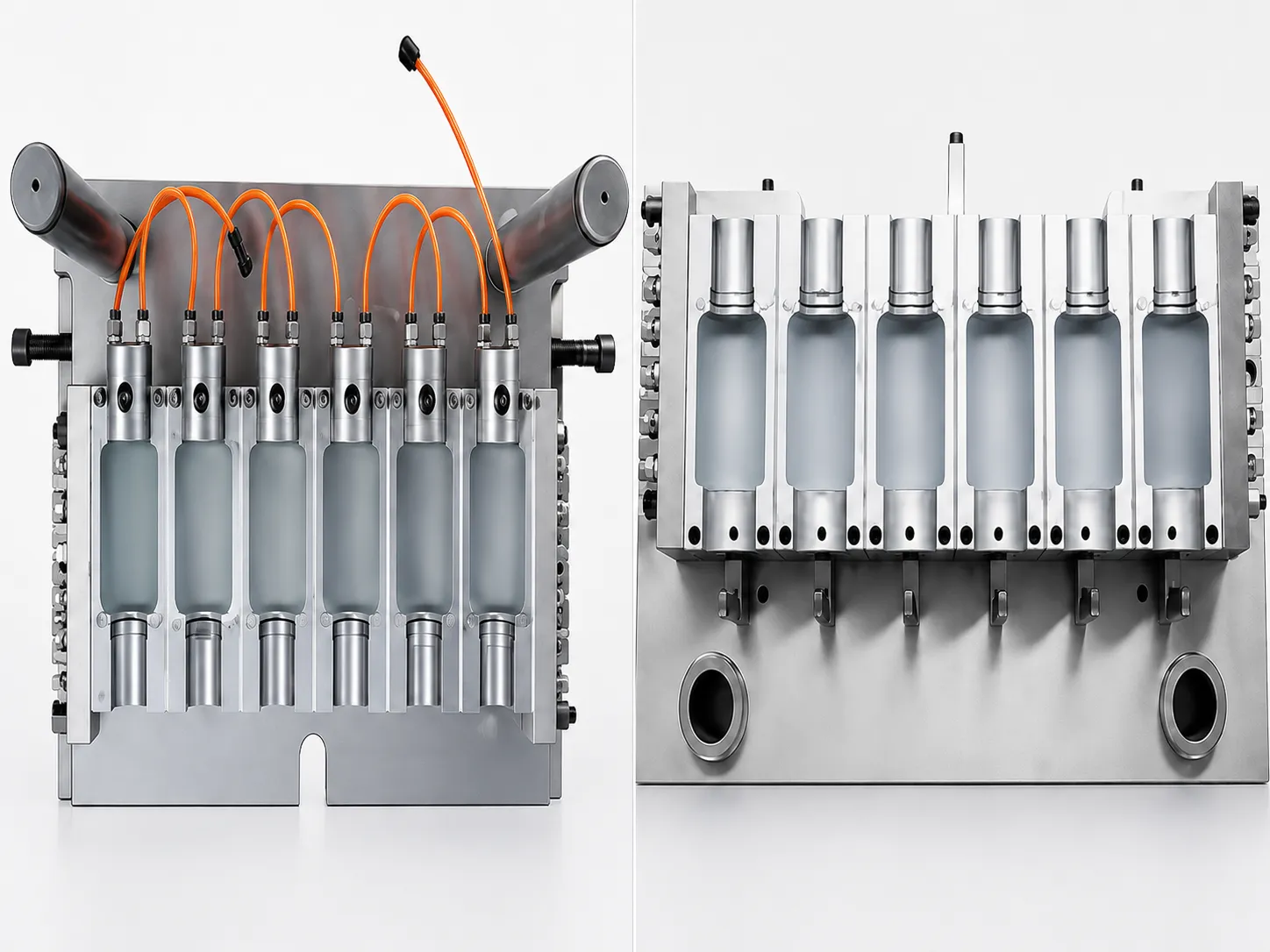
Η παραγωγή μηδενικής έκλαμψης της IBM σημαίνει ότι κάθε γραμμάριο ρητίνης που εγχέεται στον Σταθμό 1 εμφανίζεται στην τελική φιάλη στον Σταθμό 3. Η αξιοποίηση υλικού είναι 100%. Το κόστος της ρητίνης σε μια παραγωγική περίοδο της IBM είναι το κόστος των τελικών φιαλών συν το κόστος του υλικού του συστήματος έγχυσης (το οποίο στα συστήματα θερμών αγωγών συγκρατείται στον πολλαπλασιαστή θερμών αγωγών και δεν στερεοποιείται ποτέ, εξαλείφοντας εντελώς τα απορρίμματα αγωγών). Στην κορεατική φαρμακευτική παραγωγή HDPE, όπου το κόστος της ρητίνης είναι το μεγαλύτερο στοιχείο μεταβλητού κόστους, η αξιοποίηση υλικού 100% αποτελεί σημαντικό λειτουργικό πλεονέκτημα έναντι του EBM.
Η αξιοποίηση του υλικού EBM εξαρτάται από τη γεωμετρία της φιάλης και τον προγραμματισμό parison: οι απλές κυλινδρικές φιάλες με τυπικό άνοιγμα για το λαιμό και τη βάση παράγουν λάμψη που αντιπροσωπεύει 7–10% βάρους βολής. Οι σύνθετες γεωμετρίες με μεγάλα πάνελ βάσης ή οβάλ διατομές μπορούν να δημιουργήσουν λάμψη που πλησιάζει τα 15%. Με τιμές HDPE στην Κορέα 1.400–1.800 KRW/kg και μια κορεατική παραγωγή EBM 1 εκατομμυρίου φιαλών των 500 ml (περίπου 22 τόνοι HDPE στα 22g ανά φιάλη), ένας ρυθμός λάμψης 10% αντιπροσωπεύει περίπου 2,2 τόνους λάμψης HDPE — ένα κόστος υλικού 3,1–4,0 εκατομμυρίων KRW ανά εκατομμύριο φιάλες. Ετησιοποιημένο σε ένα κορεατικό εργοστάσιο οικιακών χημικών που παράγει 20 εκατομμύρια φιάλες των 500 ml ετησίως, το κόστος μόνο του υλικού λάμψης EBM είναι 62–80 εκατομμύρια KRW — ένα επαναλαμβανόμενο ετήσιο κόστος που η IBM εξαλείφει εντελώς.
Διαφορά 4 — Ομοιομορφία πάχους τοιχώματος: Ορισμός προμορφώματος έναντι προγραμματισμού Parison
Στην IBM, η κατανομή πάχους τοιχώματος της τελικής φιάλης ορίζεται από τη γεωμετρία του προπλάσματος — η οποία ορίζεται από τις διαστάσεις της κοιλότητας του καλουπιού έγχυσης και της ράβδου πυρήνα. Το πάχος τοιχώματος του προπλάσματος σε κάθε αξονική θέση καθορίζεται από τα εργαλεία του καλουπιού, όχι από μια δυναμική παράμετρο διεργασίας. Αυτό σημαίνει ότι η συνέπεια του πάχους τοιχώματος της IBM είναι ένα χαρακτηριστικό των εργαλείων: μόλις το καλούπι σχεδιαστεί και κατασκευαστεί σωστά, η κατανομή πάχους τοιχώματος είναι επαναλήψιμη από κύκλο σε κύκλο, από κοιλότητα σε κοιλότητα και από μετατόπιση σε μετατόπιση χωρίς ρύθμιση από τον χειριστή. Ο συντελεστής μεταβολής πάχους τοιχώματος της φιάλης IBM (CV%) είναι συνήθως 3–6% σε όλες τις κοιλότητες σε ένα καλούπι πολλαπλών κοιλοτήτων. Στην EBM, το πάχος τοιχώματος ελέγχεται με προγραμματισμό parison — μια δυναμική διαδικασία όπου το διάκενο μήτρας της κεφαλής εξωθητήρα μεταβάλλεται συνεχώς κατά την εξώθηση parison για να παράγει ένα parison που, όταν φουσκώνεται στο καλούπι εμφύσησης, παράγει το πάχος τοιχώματος-στόχο σε κάθε σημείο. Ο προγραμματισμός Parison είναι μια εξειδικευμένη διαδικασία ρύθμισης που απαιτεί εκπαιδευμένους χειριστές EBM για να τη διατηρήσουν. Το πάχος τοιχώματος CV% στην κορεατική παραγωγή EBM είναι συνήθως 8–15% και υψηλότερο κατά την εκκίνηση και μετά από αλλαγές παρτίδας υλικού. Για κορεατικά δοχεία τροφίμων όπου η ομοιομορφία του πάχους τοιχώματος επηρεάζει άμεσα την αντοχή στη συμπίεση της στοίβας (απαιτείται για την κορεατική παρουσίαση παλετών λιανικής πώλησης) και για κορεατικά φαρμακευτικά δοχεία όπου το πάχος τοιχώματος επηρεάζει τους υπολογισμούς του ρυθμού χημικής διείσδυσης στην κορεατική πιστοποίηση δοχείων KFDA, η ομοιομορφία τοιχώματος που καθορίζεται από τα εργαλεία της IBM αποτελεί μετρήσιμο πλεονέκτημα ποιότητας σε σχέση με τον προγραμματισμό parison που εξαρτάται από τον χειριστή της EBM.
4. Διαφορές 5 και 6: Εύρος όγκου και ρυθμός εξόδου
Οι διαφορές στο εύρος όγκου των κοντέινερ και στον ρυθμό εξόδου μεταξύ της IBM και της EBM αντικατοπτρίζουν τις διαφορετικές αρχιτεκτονικές των δύο διεργασιών — την προσέγγιση ακριβείας πολλαπλών κοιλοτήτων της IBM έναντι της δυνατότητας μεγάλου όγκου εκτύπωσης μεγάλου μεγέθους της EBM.
| Όγκος / Συντελεστής εξόδου | ΙΒΜ | EBM |
|---|---|---|
| Ελάχιστος πρακτικός όγκος | 1 ml — μικροφαρμακευτικό προϊόν | ~30–50 ml — όριο σταθερότητας παρισονίου |
| Μέγιστη ένταση (στάνταρ) | 2.000 ml | 500 L+ (βιομηχανικά βαρέλια) |
| Κοιλότητες στα 10 ml | Έως 30 (ZQ135) | 1–4 (όρια σταθερότητας παρισονίου σε πολλαπλές κοιλότητες) |
| Παραγωγή στα 10 ml (μπουκάλια/ώρα) | Έως ~27.000 | ~3.000–6.000 |
| Κοιλότητες στα 500 ml | 5–8 (IBM) | 2–4 (EBM) |
| Παραγωγή στα 500 ml (μπουκάλια/ώρα) | ~5.400–7.200 (6-8 άτομα) | ~3.200–4.800 (2-4 άτομα) |
Διαφορά 5 — Εύρος Όγκου Δοχείου
Το εύρος του αποτελεσματικού όγκου της IBM είναι 1-2.000 ml, με το κατώτερο άκρο να περιορίζεται από το ελάχιστο πρακτικό βάρος έγχυσης για ένα σταθερό προπλάσμα και το ανώτερο άκρο να περιορίζεται από το μέγεθος του καλουπιού εμφύσησης που μπορεί να χωρέσει στην πλατφόρμα του πυργίσκου. Το κατώτερο όριο όγκου της EBM είναι περίπου 30-50 ml, επειδή πολύ μικρά θραύσματα είναι ασταθή κατά την εξώθηση — κρεμούν, λεπταίνουν ανομοιόμορφα και παράγουν απαράδεκτη διακύμανση στο πάχος του τοιχώματος όταν φουσκώνουν. Κάτω από τα 50 ml, η EBM δεν μπορεί να παράγει αξιόπιστα ομοιόμορφα μπουκάλια. Η IBM είναι η μόνη διαδικασία χύτευσης με εμφύσηση για κορεατικές φαρμακευτικές αμπούλες και μίνι μπουκάλια στα 1-30 ml. Το ανώτερο εύρος όγκου της EBM είναι πρακτικά απεριόριστο — οι βιομηχανικές μηχανές EBM παράγουν δοχεία, βαρέλια και δεξαμενές καυσίμων αυτοκινήτων στα 5-500 λίτρα, τα οποία η IBM δεν μπορεί να προσεγγίσει.
Διαφορά 6 — Ρυθμός εξόδου σε μικρές μορφές
Σε μικρές συσκευασίες (10–100 ml), το πλεονέκτημα πολλαπλών κοιλοτήτων της IBM είναι πιο έντονο. Μια μηχανή IBM 30 κοιλοτήτων στα 10 ml παράγει περίπου 27.000 φιάλες ανά ώρα σε κύκλο 4 δευτερολέπτων — ρυθμός παραγωγής που μια μηχανή EBM με 4 κοιλότητες σε κύκλο 6 δευτερολέπτων παράγει περίπου 2.400 φιάλες ανά ώρα. Αυτή η αναλογία παραγωγής 11 προς 1 στις μικρότερες συσκευασίες σημαίνει ότι ένα κορεατικό φαρμακευτικό εργοστάσιο που απαιτεί 20 εκατομμύρια δοχεία των 10 ml ετησίως χρειάζεται μία μηχανή ZQ135 IBM που λειτουργεί σε δύο κορεατικές βάρδιες, έναντι περίπου δέκα μηχανημάτων EBM σε ισοδύναμες κοιλότητες που λειτουργούν με το ίδιο πρόγραμμα. Η επένδυση της IBM είναι υψηλότερη ανά μηχανή, αλλά δραματικά χαμηλότερη ανά μονάδα ετήσιας χωρητικότητας σε μικρές συσκευασίες. Σε μεγαλύτερες διαστάσεις (500 ml+), το πλεονέκτημα της IBM στον αριθμό κοιλοτήτων μειώνεται: η IBM σε 6 κοιλότητες και η EBM σε 4 κοιλότητες παράγουν απόδοση εντός 30–50% η μία από την άλλη, καθιστώντας τη σύγκριση οικονομικών στοιχείων περισσότερο εξαρτώμενη από τις διαφορές λειτουργικού κόστους (flash, scrap, ικανότητα χειριστή) παρά από τον ρυθμό ακατέργαστης παραγωγής.
5. Διαφορές 7 και 8: Δυνατότητες Σχεδιασμού Εμπορευματοκιβωτίων
Διαφορά 7 — Δυνατότητα ενσωματωμένης λαβής
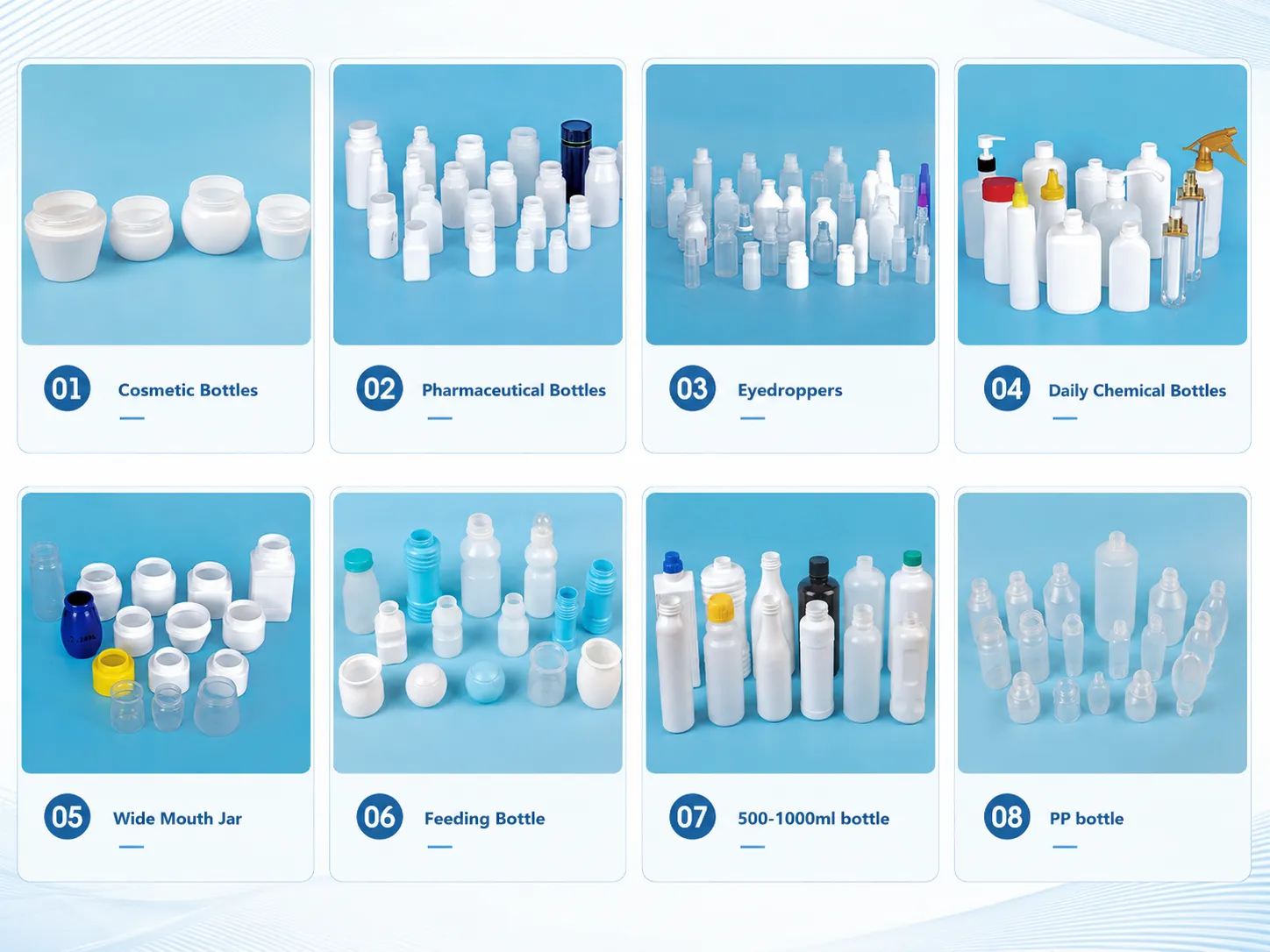
Η αρχιτεκτονική σύσφιξης τύπου parison της EBM επιτρέπει στο καλούπι εμφύσησης να περιλαμβάνει μια κοιλότητα λαβής που είναι ενσωματωμένη στο σώμα της φιάλης — το parison συσφίγγεται ώστε να περιλαμβάνει τη θηλιά λαβής και φουσκώνεται για να γεμίζει ταυτόχρονα τόσο το σώμα της φιάλης όσο και τη λαβή. Αυτό παράγει μια λαβή που είναι δομικά συνεχής με το τοίχωμα της φιάλης, χωρίς γραμμή συγκόλλησης ή κολλητική ένωση — ο σωστός σχεδιασμός για κορεάτικα δοχεία οικιακών χημικών άνω των 2 λίτρων (υγρό καθαρισμού, απορρυπαντικό πλυντηρίων ρούχων, χλωρίνη χύμα) και κορεάτικα δοχεία τροφίμων (μαγειρικό λάδι, ξύδι, σάλτσα σόγιας) στα 2-5 λίτρα, όπου μια λαβή είναι λειτουργικά απαραίτητη και εργονομικά αναμενόμενη από τους Κορεάτες καταναλωτές. Η αρχιτεκτονική περιστροφικού πυργίσκου της IBM δεν επιτρέπει ενσωματωμένες λαβές: η κεντρική ράβδος διέρχεται από το εσωτερικό του δοχείου καθ' όλη τη διάρκεια της διαδικασίας και μια λαβή που γεφυρώνει από τη μία πλευρά του δοχείου στην άλλη θα εμπόδιζε την εξαγωγή της κεντρικής ράβδου στον Σταθμό 3. Τα κορεατικά δοχεία IBM άνω του 1 λίτρου χρησιμοποιούν συνήθως μια λαβή που εφαρμόζεται μετά την παραγωγή (μια ξεχωριστά χυτευμένη λαβή PP που κουμπώνει ή θερμαίνεται στη φιάλη IBM μετά την παραγωγή) αντί για μια ενσωματωμένη λαβή — μια προσέγγιση δύο συστατικών που προσθέτει κόστος συναρμολόγησης και εξαλείφει τη δομική συνέχεια της ενσωματωμένης λαβής EBM. Για τα κορεατικά δοχεία όπου η ενσωματωμένη λαβή είναι η απαίτηση σχεδιασμού, το EBM παραμένει η σωστή διαδικασία ανεξάρτητα από τα άλλα πλεονεκτήματα που προσφέρει η IBM.
Διαφορά 8 — Φινίρισμα επιφάνειας και ραφή βάσης
Τα δοχεία IBM δεν έχουν ραφή βάσης και δεν έχουν σημάδια διαχωριστικής γραμμής στα τοιχώματα του σώματος. Επειδή το καλούπι εμφύσησης IBM δεν έχει γραμμή διαχωρισμού που να τέμνει το σώμα του δοχείου — η κεντρική ράβδος παρέχει την εσωτερική επιφάνεια και το καλούπι εμφύσησης παρέχει μόνο την εξωτερική επιφάνεια της κοιλότητας — το εξωτερικό του μπουκαλιού IBM ορίζεται εξ ολοκλήρου από την επιφάνεια της κοιλότητας του καλουπιού εμφύσησης. Η ποιότητα της επιφάνειας ενός καλουπιού εμφύσησης IBM στο σώμα μπορεί να γυαλιστεί σε Ra ≤ 0,05 μm (φινίρισμα καθρέφτη), παράγοντας ένα σώμα μπουκαλιού που είναι οπτικά δυσδιάκριτο από ένα γυάλινο δοχείο όταν χυτεύεται σε υψηλής διαύγειας PS ή PCTG. Τα δοχεία EBM έχουν μια οριζόντια ραφή βάσης στη γραμμή αποκοπής, μια κάθετη γραμμή διαχωρισμού στο σώμα όπου συναντώνται τα δύο μισά του καλουπιού και, σε ορισμένες περιπτώσεις, ένα σημάδι περικοπής στο λαιμό όπου αφαιρέθηκε το φλάντζα του λαιμού. Αυτές οι γραμμές ραφής είναι αποδεκτές σε συσκευασίες κοινής ωφέλειας (οικιακά χημικά, γεωργικά, βιομηχανικά), αλλά αποτελούν ανησυχία για την οπτική ποιότητα των κορεατικών βάζων καλλυντικών υψηλής ποιότητας και των κορεατικών φαρμακευτικών δοχείων όπου οι ετικέτες έχουν σχεδιαστεί για να καλύπτουν ακριβώς τη γραμμή διαχωρισμού και η ραφή βάσης είναι ορατή από την πλευρά του ραφιού. Το εξωτερικό χωρίς ραφές της IBM αποτελεί πλεονέκτημα ποιότητας σχεδιασμού που υποστηρίζει την τοποθέτηση συσκευασιών υψηλής ποιότητας στην Κορέα χωρίς εργασίες φινιρίσματος της επιφάνειας μετά τη χύτευση.
6. Διαφορές 9 και 10: Κανονιστική Συμμόρφωση και Επένδυση σε Μηχανήματα
Διαφορά 9 — Συμμόρφωση με την Κορεατική Φαρμακευτική ΟΠΠ
Η παραγωγή φαρμακευτικών δοχείων στην Κορέα διέπεται από τους κανονισμούς συσκευασίας φαρμακευτικών προϊόντων του KFDA (Υπουργείο Ασφάλειας Τροφίμων και Φαρμάκων) της Κορέας, οι οποίοι καθορίζουν τις διαστατικές ανοχές για τα φινιρίσματα λαιμού δοχείων που χρησιμοποιούνται με φαρμακευτικά συστήματα κλεισίματος. Τα κορεατικά πρότυπα κλεισίματος φαρμακευτικών προϊόντων — ιδιαίτερα για δοχεία CRC (κλείσιμο ασφαλείας για παιδιά), φιαλίδια με πτύχωση και φαρμακευτικά μπουκάλια με αντλία-διανομέα — απαιτούν ανοχές εξωτερικής διαμέτρου λαιμού ±0,06–0,08 mm για να λειτουργήσει το κλείσιμο όπως προβλέπεται και να περάσει τις δοκιμές πιστοποίησης GMP της Κορέας. Η IBM πληροί με συνέπεια αυτές τις ανοχές ως εγγενής δυνατότητα διεργασίας. Το EBM απαιτεί δευτερεύον φινίρισμα λαιμού (γλυφήνισμα, κόψιμο ή βαθμονόμηση λαιμού μετά τη διαμόρφωση του καλουπιού) για την επίτευξη αυτών των ανοχών, προσθέτοντας εξοπλισμό, χρόνο κύκλου και κίνδυνο απόρριψης στην παραγωγή EBM φαρμακευτικής ποιότητας.
Επιπλέον, τα κορεατικά περιβάλλοντα φαρμακευτικής παραγωγής GMP κατατάσσουν την παραγωγή σωματιδίων ως κίνδυνο μόλυνσης. Η παραγωγή μηδενικής λάμψης της IBM εξαλείφει τον σταθμό κοπής λάμψης που απαιτεί το EBM — μια μηχανική λειτουργία κοπής που παράγει πλαστικά σωματίδια από την αφαίρεση λάμψης. Στα κορεατικά φαρμακευτικά περιβάλλοντα καθαρού χώρου ISO Class 8, η λειτουργία ενός σταθμού κοπής λάμψης EBM απαιτεί ο σταθμός κοπής να είναι κλειστός και να εξάγεται για να αποτραπεί η άφιξη των σωματιδίων στη ζώνη πλήρωσης — μια μηχανική απαίτηση που η παραγωγή της IBM αποφεύγει εντελώς. Οι κορεατικές φαρμακευτικές εγκαταστάσεις συσκευασίας με συμβόλαια που έχουν μεταβεί από το EBM στην IBM αναφέρουν την εξάλειψη των συμβάντων απόρριψης παρτίδων που σχετίζονται με σωματίδια ως κύριο ποιοτικό όφελος παράλληλα με τη βελτίωση της ακρίβειας του λαιμού.
Διαφορά 10 — Επένδυση σε μηχανήματα: IBM vs EBM
Τα μηχανήματα IBM έχουν υψηλότερο κόστος κεφαλαίου εισαγωγικού επιπέδου από τα μηχανήματα EBM ισοδύναμης απόδοσης για την ίδια μορφή. Ένα Korea Ever-Power μηχανή χύτευσης με έγχυση Στο επίπεδο ZQ60 (14 κοιλότητες, 37 KW) η επένδυση αντιπροσωπεύει υψηλότερη επένδυση από μια συγκρίσιμη κορεατική μηχανή EBM σε παραγωγή 2 κοιλοτήτων των 500 ml. Αυτή η διαφορά επένδυσης είναι πιο σημαντική για νεοσύστατα κορεατικά εργοστάσια συσκευασίας με περιορισμένο κεφάλαιο και μεγάλα μήκη παραγωγής σε μία μόνο μορφή — όπου η απλούστερη αρχιτεκτονική της EBM και το χαμηλότερο αρχικό κόστος μπορούν να δικαιολογήσουν το υψηλότερο λειτουργικό κόστος ανά φιάλη για τη διαχείριση της φλας και τον χαμηλότερο ρυθμό παραγωγής. Ο υπολογισμός της επένδυσης IBM έναντι της EBM αλλάζει όταν τα κορεατικά εργοστάσια λαμβάνουν υπόψη: (α) το κόστος του σταθμού κοπής που απαιτεί η EBM αλλά δεν περιλαμβάνεται στην τιμή της μηχανής EBM· (β) το ετήσιο κόστος υλικού φλας σε τιμές κορεατικής ρητίνης· (γ) τον πρόσθετο χειριστή που απαιτείται για τον σταθμό κοπής EBM έναντι της παραγωγής ενός χειριστή της IBM· και (δ) τον εξοπλισμό βαθμονόμησης λαιμού που απαιτεί η κορεατική φαρμακευτική EBM. Όταν περιλαμβάνονται αυτά τα κατάντη κόστη, η σύγκριση του συνολικού κόστους ιδιοκτησίας IBM έναντι της EBM σε ένα 5ετές σχέδιο παραγωγής συνήθως ευνοεί την IBM για κορεατικές φαρμακευτικές εφαρμογές και για κορεατική παραγωγή οικιακών χημικών προϊόντων άνω των 2 εκατομμυρίων μονάδων ετησίως.
| Συντελεστής κόστους | ΙΒΜ | EBM |
|---|---|---|
| Τιμή αγοράς μηχανήματος | Υψηλότερο | Χαμηλότερος |
| Απαιτείται σταθμός περιποίησης | Οχι | Ναι — 15–40 εκατομμύρια KRW επιπλέον |
| Ετήσιο κόστος υλικού φλας (500ml, 5 εκατ. μονάδες) | Μηδέν | 15–25 εκατ. KRW/έτος |
| Χειριστές ανά μηχανή | 1 | 1 μηχανή + 1 σταθμός trim = 2 |
| Συνολικό κόστος ιδιοκτησίας 5 ετών (φαρμακευτική) | Χαμηλότερος | Υψηλότερο όταν περιλαμβάνονται όλα τα λειτουργικά έξοδα |
7. Διαφορές 11 και 12: Ενεργειακή Απόδοση και Αποτύπωμα Άνθρακα
Διαφορά 11 — Κατανάλωση ενέργειας ανά 1.000 φιάλες
Η κατανάλωση ενέργειας ανά 1.000 ολοκληρωμένες φιάλες είναι η πιο σχετική μετρική σύγκρισης ενέργειας για τα κορεατικά εργοστάσια συσκευασίας, επειδή λαμβάνει υπόψη τη διαφορά ρυθμού παραγωγής μεταξύ IBM και EBM — η σύγκριση της συνολικής κατανάλωσης ενέργειας του μηχανήματος χωρίς ομαλοποίηση για την παραγωγή θα έθιγε εσφαλμένα το πιο παραγωγικό μηχάνημα. Με παραγωγή φιαλών σαμπουάν HDPE 500 ml, ένα Korea Ever-Power Μηχανή IBM EP-ZQ60 Η λειτουργία ενός μηχανήματος 3 κοιλοτήτων των 500 ml με συνολική ισχύ 37 KW παράγει περίπου 2.700 φιάλες ανά ώρα — κατανάλωση ενέργειας περίπου 13,7 kWh ανά 1.000 φιάλες. Ένα κορεατικό μηχάνημα EBM που λειτουργεί με 2 κοιλότητες των 500 ml στα 25 KW παράγει περίπου 1.800 φιάλες ανά ώρα — κατανάλωση ενέργειας περίπου 13,9 kWh ανά 1.000 φιάλες. Σε αυτή τη μορφή, η ενεργειακή διαφορά είναι μικρή. Ωστόσο, τα μηχανήματα ZQ80 και άνω της Korea Ever-Power προσθέτουν ένα διπλό υδραυλικό σύστημα που μειώνει την πραγματική ισχύ λειτουργίας σε 52–70% ονομαστικής συνολικής ισχύος κατά την παραγωγή — μετρούμενη από Κορεάτες πελάτες σε 20–30% λιγότερη ηλεκτρική ενέργεια ανά 1.000 φιάλες σε σύγκριση με τα μονοκύκλωμα IBM και EBM του ανταγωνισμού στην ίδια μορφή. Για ένα κορεατικό εργοστάσιο που υπόκειται στους στόχους ενεργειακής απόδοσης του Υπουργείου Βιομηχανίας της Κορέας, αυτό το τεκμηριωμένο ενεργειακό πλεονέκτημα βελτιώνει άμεσα την αναφορά ενεργειακής έντασης του εργοστασίου.
Διαφορά 12 — Αποτύπωμα άνθρακα από το Flash και το Regrind
Η παραγωγή μηδενικής έκλυσης άνθρακα της IBM εξαλείφει το κόστος άνθρακα που συνεπάγεται η EBM σε κάθε κύκλο παραγωγής: τον ενσωματωμένο άνθρακα στο υλικό έκλυσης που είτε διαλύεται είτε επανεπεξεργάζεται. Η έκλυση HDPE από μια τυπική κορεατική εγκατάσταση EBM αντιπροσωπεύει σπατάλη ενσωματωμένου άνθρακα από την παραγωγή, τη μεταφορά και την επεξεργασία ρητίνης — περίπου 1,9 kg CO₂e ανά kg HDPE σύμφωνα με τα δεδομένα της κορεατικής LCA (Life Cycle Assessment) για συσκευασίες HDPE. Με 10% έκλυση σε μια κορεατική φιάλη EBM 500 ml (βάρος φιάλης 22 g, 2,2 g έκλυση ανά φιάλη), σπαταλώνται περίπου 4,2 g CO₂e ανά φιάλη μόνο σε υλικό έκλυσης. Με 20 εκατομμύρια φιάλες ετησίως, αυτό αντιστοιχεί σε περίπου 84 τόνους CO₂e ετησίως — μια εκπομπή Scope 3 που οι κορεατικές μάρκες συσκευασίας πρέπει όλο και περισσότερο να λαμβάνουν υπόψη στις κορεατικές αναφορές ESG. Η IBM εξαλείφει πλήρως αυτό το κόστος έκλυσης άνθρακα, δίνοντας στους Κορεάτες παραγωγούς συσκευασιών της IBM ένα συγκεκριμένο και ποσοτικοποιήσιμο πλεονέκτημα άνθρακα για την αποκάλυψη της κορεατικής εταιρικής αλυσίδας εφοδιασμού ESG, το οποίο οι συσκευασίες EBM δεν μπορούν να αντισταθμίσουν.
8. Πλαίσιο Αποφάσεων IBM vs EBM για Κορεατικά Εργοστάσια Συσκευασίας
Οι δώδεκα παραπάνω διαφορές ανάγονται σε ένα απλό πλαίσιο λήψης αποφάσεων για τα κορεατικά εργοστάσια συσκευασίας. Το πλαίσιο έχει τρεις πύλες — απαντήστε σε κάθε μία με τη σειρά και σταματήστε στην πρώτη οριστική απάντηση.
Πύλη 1: Απαιτείται ενσωματωμένη λαβή;
Εάν ΝΑΙ — χρησιμοποιήστε EBM. Η IBM δεν μπορεί να παράγει ολοκληρωμένες λαβές. Κανένας άλλος παράγοντας δεν υπερισχύει αυτού. Εάν ΟΧΙ — προχωρήστε στην Πύλη 2.
Πύλη 2: Είναι ο όγκος του δοχείου πάνω από 2.000 ml;
Εάν ΝΑΙ — χρησιμοποιήστε EBM. Το πρακτικό όριο της IBM είναι 2.000 ml. Πάνω από αυτό, απαιτούνται μηχανήματα μεγάλου μεγέθους EBM ή ISBM. Εάν ΟΧΙ — προχωρήστε στην Πύλη 3.
Πύλη 3: Απαιτεί το δοχείο ακρίβεια λαιμού GMP της Κορέας Φαρμακευτικής, μηδενική λάμψη ή υψηλό αριθμό κοιλοτήτων σε μικρό μέγεθος;
Αν ΝΑΙ σε οποιαδήποτε από τις δύο περιπτώσεις — χρησιμοποιήστε την IBM. Τα κορεατικά φαρμακευτικά δοχεία, οι κορεατικές συσκευασίες ακριβούς κλεισίματος και η κορεατική παραγωγή μεγάλου όγκου μικρού μεγέθους καταλήγουν στην IBM μέσω της Πύλης 3. Αν ΟΧΙ σε όλες — συγκρίνετε το συνολικό κόστος ιδιοκτησίας της IBM και της EBM για τη συγκεκριμένη μορφή και τον ετήσιο όγκο, καθώς και τα δύο είναι τεχνικά βιώσιμα και η απόφαση είναι οικονομική.
Για τα κορεατικά εργοστάσια στην ασαφή ζώνη — κυρίως κορεατικά χημικά οικιακής χρήσης στα 250–1.000 ml και κορεατικά βάζα καλλυντικών με φαρδύ στόμιο στα 50–250 ml — η οικονομική σύγκριση θα πρέπει να περιλαμβάνει: τιμή μηχανής IBM έναντι τιμής μηχανής EBM συν σταθμό κοπής· ετήσιο κόστος υλικού φλας στον όγκο παραγωγής και την κορεατική τιμή HDPE· αριθμό εργαζομένων χειριστών (IBM: ένας ανά μηχανή· EBM: ένας μηχανισμός + ένας σταθμός κοπής)· εξοπλισμό βαθμονόμησης λαιμού για κορεατικό EBM φαρμακευτικής ποιότητας· και την 5ετή απόσβεση καλουπιού για κάθε διαδικασία. Οι μηχανικοί εφαρμογών της Korea Ever-Power παρέχουν ένα μορφοποιημένο πρότυπο σύγκρισης κόστους IBM έναντι EBM για κορεατικά εργοστάσια που αξιολογούν αυτήν την απόφαση σε συγκεκριμένους όγκους παραγωγής — διαθέσιμο μέσω της διαδικασίας έρευνας της Korea Ever-Power. Για το πλήρες φάσμα των επιλογών μηχανών IBM της Korea Ever-Power, από εισαγωγικό έως ναυαρχίδα, το Σειρά μηχανημάτων ISBM 4 σταθμών Καλύπτει εφαρμογές που βασίζονται σε PET όπου απαιτείται κρυσταλλική διαύγεια και όχι επεξεργασία HDPE/PP.
Συχνές ερωτήσεις
Ερώτηση για Μηχανή IBM
Αξιολόγηση της IBM έναντι της EBM για την κορεατική γραμμή παραγωγής σας;
Η Korea Ever-Power παρέχει ανάλυση συνολικού κόστους ιδιοκτησίας IBM έναντι EBM, σχεδιασμό μέτρησης κοιλοτήτων και σύγκριση οικονομικών στοιχείων γραμμής παραγωγής για συγκεκριμένες κορεατικές μορφές εμπορευματοκιβωτίων και ετήσιους όγκους παραγωγής.
Σχετικοί Πόροι
Μηχανή χύτευσης με έγχυση EP-ZQ80
800 KN · 20 κοιλότητες στα 10 ml · Μηδενική αναλαμπή · Τυπική διπλή υδραυλική αντλία · Παράγει περίπου 15.800 φιάλες/ώρα στα 10 ml — έναντι 2.400–4.000/ώρα του EBM σε αντίστοιχη μορφή.
Μηχανή χύτευσης με έγχυση EP-ZQ110
1.100 KN · 24 κοιλότητες στα 10 ml · 4 ζώνες κυλίνδρου + N · 22 + 22 KW διπλό υδραυλικό · Η μία μηχανή αντικαθιστά 8–10 μηχανές EBM σε φαρμακευτική απόδοση 10 ml.
Τι είναι η χύτευση με έγχυση και εμφύσηση; Πλήρης οδηγός της IBM
Πλήρης επεξήγηση της διαδικασίας της IBM — Αρχή λειτουργίας 3 σταθμών, υλικά, εφαρμογές και οδηγός επιλογής μηχανημάτων ZQ για κορεατικά φαρμακευτικά και οικιακά χημικά εργοστάσια.