
INGEN FLASH · INGEN TRIMNING · IBM PROCES FORDEL · KOREA EVER-POWER
Zero Flash IBM:
Ingen trimning Vejledning til containerproduktion
Zero flash er en af IBMs tre strukturelt iboende procesfordele – det eliminerer EBM-basale pinch-trim-operationer og alle dens efterfølgende konsekvenser: trimningslønomkostninger, trimningsudstyrskapital, flash-genformalingsskrot, flashpartikelkontaminering inde i beholderen og trim-vidnesmærket på beholderens yderside. Denne vejledning kvantificerer zero flash-fordelen på tværs af koreanske farmaceutiske, fødevare- og personlig pleje-IBM-applikationer.
Ingen trimning
Nul flashkontaminering
KOREA EVER-POWER · ANSAN-SI, GYEONGGI-DO · JULI 2026
SYSTEMREFERENCE · ZERO FLASH IBM vs EBM FLASH TRIM IMPACT
FLASH PRODUCERET
Nul
IBMs strukturelle basis — ingen klemme svejsning, ingen trimning, ingen flash på nogen containerbase
EBM BASE FLASH
3–15 mm
Basisflashfinnebredde, der kræver sekundær trimning på hver EBM-container
TRIMNINGSARBEJDE SPARET
1 operatør
Pr. 2-4 EBM-maskiner — IBM fjerner trimningsstationen helt
TAB VED FLASH-GENSLIBNING
2–8%
EBM flashvægt som % af beholdervægt — HDPE tabt til genformaling eller skrot
SEKTION 01
Hvad er Flash, og hvorfor EBM producerer det
EBM-FLASHDANNELSE — HVORFOR DET ER STRUKTURELT UUNDGÅELIGT VED EKSTRUDERING BLÆSESTØBNING
Parison Ekstrudering
EBM ekstruderer et hult plastrør (parison) fra matricehovedet. Parisonen er et åbent rør - det har en åben bundende, der hænger under blæseformen. Parisonens diameter og vægtykkelse kontrolleres, men varierer langs dens længde på grund af variationer i ekstrudatets svulmning.
Lukning af blæseform = Flash
Blæseformen lukker sig og klemmer parisonen i dens nederste ende for at danne beholderbundens svejsning. De to formhalvdele klemmer parisonmaterialet sammen – materialet inde i formhulrummet danner beholderbunden; materialet uden for formhulrummet klemmes fladt og bliver bundens flashfinne. Denne flashdannelse er uundgåelig: hver EBM-beholder kræver en klemme for at forsegle bunden.
Trimningsoperation påkrævet
Efter blæsestøbning skal basens flashfinne fjernes i en sekundær trimningsoperation. I automatiserede EBM-linjer fjerner en trimmekniv ved beholderens bund flashen, når beholderen forlader blæsestøbeformen. I manuelle eller halvautomatiske linjer trimmer en operatør flashen manuelt. Trimningsoperationen tilføjer: udstyrsomkostninger, lønomkostninger, cyklustid, flashskrot og - afgørende - risikoen for flashrester inde i beholderen.
EBM-basens flashfinnedimensioner ved en 200 ml HDPE-husholdningsbeholder: 3-8 mm bred × 0,5-1,5 mm tyk × beholderens bunds omkredslængde. Flashvægt: 0,8-2,5 g pr. beholder = 3-8% beholdervægt. Ved 10 millioner beholdere/år: 8-25 tons flash-HDPE pr. år til bortskaffelse eller omformulering.
Flash er ikke en EBM-procesfejl – det er en uundgåelig konsekvens af EBM's parison-pinch-arkitektur. Alle EBM-beholdere, der nogensinde er produceret, har flash. EBM-industrien har optimeret flashvægt (tyndere flash = mindre materialespild) og trimautomatisering (inline-trim = lavere lønomkostninger), men har ikke og kan ikke eliminere flash – fordi flashdannelse er den mekanisme, hvormed EBM forsegler beholderbunden. Ingen EBM-procesoptimering, ingen dyeprogrammering, ingen parisonprogrammering kan undgå det grundlæggende pinch-and-seal-trin, der skaber flash.
IBM producerer nul flash – ikke som en kvalitetspræstation eller et resultat af procesoptimering, men som en strukturel konsekvens af IBMs sprøjtestøbningsarkitektur. For at forstå, hvorfor IBM i sagens natur er flashfri, kræver det forståelse af, hvordan IBM danner containerbasen, hvilket forklares i IBMs procesvejledning.
AFSNIT 02
IBM-arkitektur, der eliminerer Flash
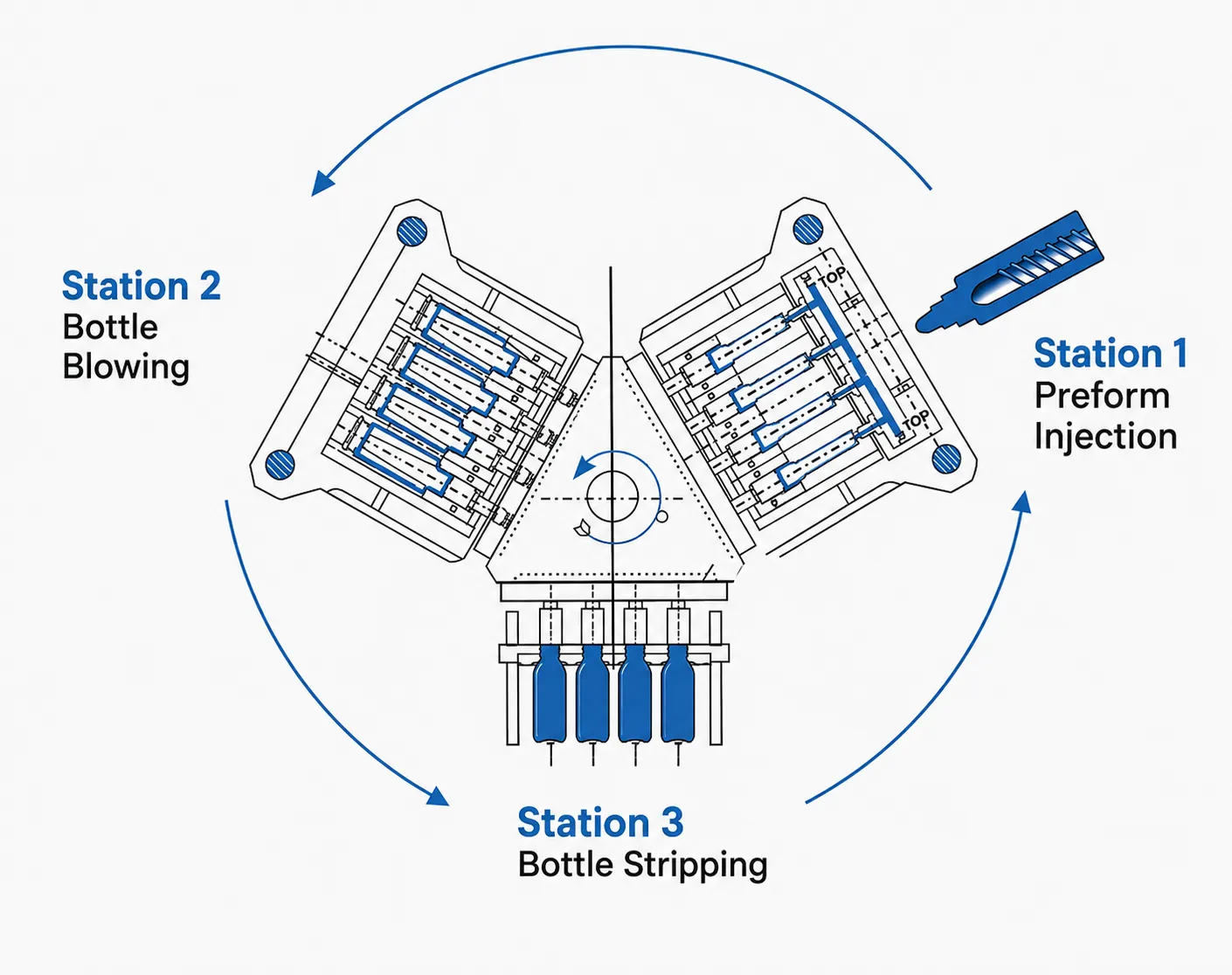
Injektionsforseglet — ingen klemme nødvendig
IBMs kernestangspids forsegler præformbasen under sprøjtestøbning på Station 1. Kernestangspidsen er hansiden af injektionsporten - smeltet HDPE sprøjtes ind omkring kernestangen og fylder præformhulrummet fra hals til bund, hvor kernestangspidsen fungerer som basisform. Resultatet er et præformrør med lukket bund og en sprøjtestøbt solid base. Denne base behøver aldrig at blive klemt - den blev dannet lukket under injektionen. På Station 2 kommer blæseluft ind gennem en boring i kernestangspidsen og puster præformlegemet udad, så den sprøjtestøbte base bliver på plads. Resultat: en beholder med en glat, svejsefri og gnistfri base med kun et lille rest af injektionsporten i midten af den indvendige base - ikke synlig udefra.
Klemmesvejset — flash uundgåelig
EBMs ekstruderede parison er et åbent rør - det har ingen forseglet bund, når det forlader matricen. Blæseformen skal mekanisk klemme parisonen sammen i dens nederste ende for at forsegle beholderens bund. Klemningen skaber: (1) en svejselinje i basis - en strukturelt svagere zone sammenlignet med den omgivende beholdervæg; (2) svejselinje i basis - HDPE'en, der er klemt ud over formens skillelinje, danner en finne, der skal trimmes; (3) trimmede rester - hurtig trimning producerer HDPE-partikler, der kan falde ind i beholderen gennem den åbne top (før de lukkes ved påfyldningslinjen).
Basissvejsningen er strukturelt svagere end beholderens sidevæg — bundsvejsefejl er den mest almindelige EBM-beholders fald-påvirkningsfejltilstand. IBMs sprøjtestøbte base har ingen svejsning og fejler ikke i denne tilstand.
IBM-containerens ydre – set nedefra – viser en glat, kontinuerlig HDPE-overflade uden skillelinje, svejsemærke og afskæringsmærke. Det eneste synlige træk er indsprøjtningsportpunktet i bundens midte og indvendige: et lille cirkulært mærke (typisk 1,5-3,0 mm i diameter) ved kernestangens udblæsningsluftudgangspunkt. Dette portspor er i niveau med eller let forsænket under den omgivende bundflade – aldrig fremspringende, aldrig skarpt og aldrig i kontakt med beholderens fyldningsindhold.
AFSNIT 03
Kvantificerede besparelser i produktionsomkostninger
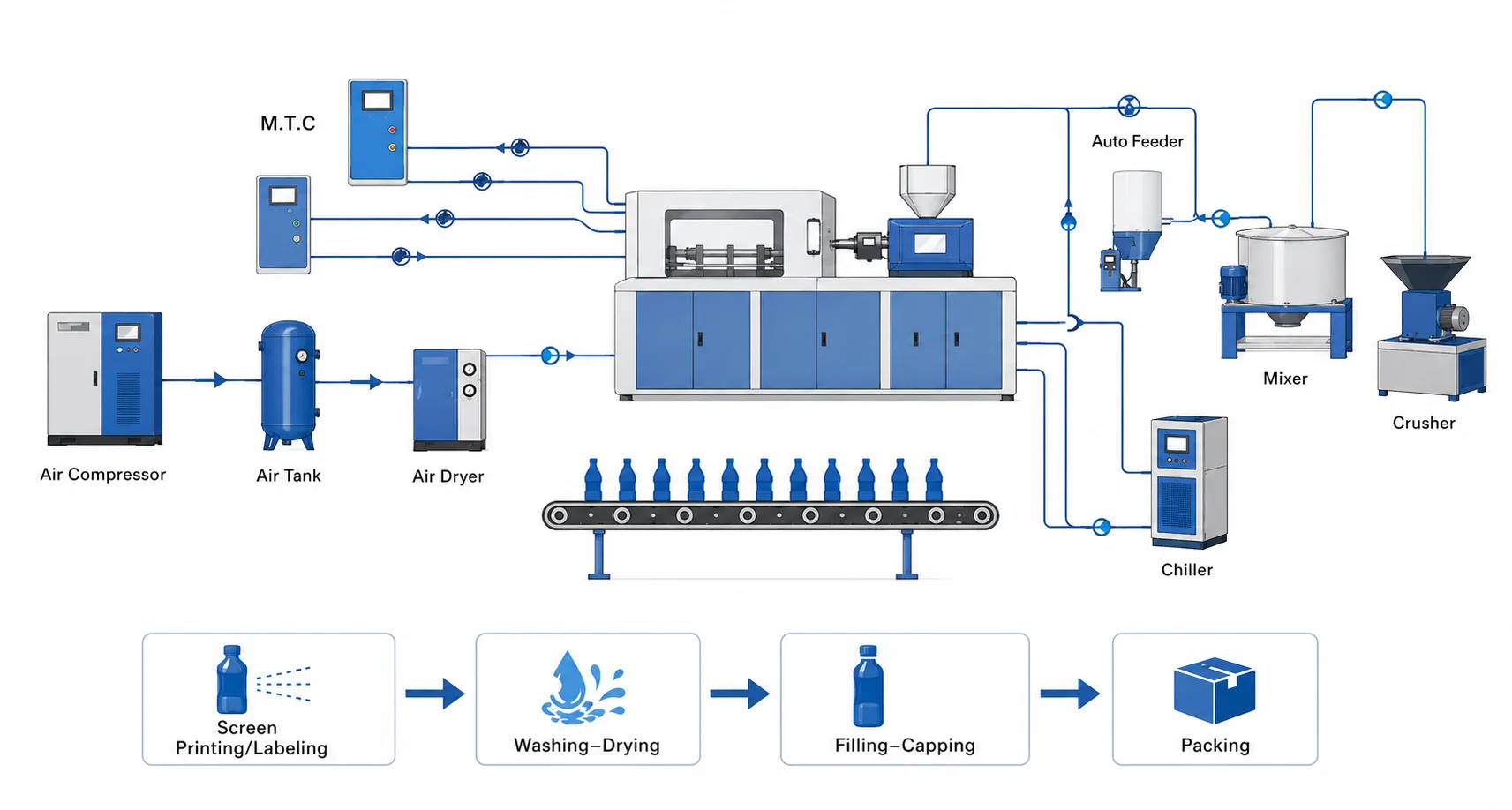
Fordelen ved nul flash-effekter omsættes til kvantificerbare produktionsomkostningsbesparelser i enhver IBM-produktionsskala. Den følgende omkostningsanalyse bruger koreanske IBM-produktionsparametre ved 200 ml HDPE-husholdningskemikaliebeholdere som referenceformat — beregningerne skaleres proportionalt for andre beholderstørrelser.
| OMKOSTNINGSKATEGORI | EBM (med beklædning) | IBM (nul flash) | IBM SPARINGSGRUNDLAG |
|---|---|---|---|
| Trim udstyrskapital | KRW 15-30 mio. pr. linje | Nul | Integration af trimmeknivenhed + transportbånd er ikke påkrævet ved IBM-produktionslinje |
| Udskiftning af trimblad | 200.000–500.000 KRW/måned | Nul | Ingen trimning af klinger, ingen slibeservice, ingen nedetid for klingerskift |
| Trim operatørens arbejdskraft | 1 operatør pr. 2-4 EBM-maskiner | Nul | IBM-operatør overvåger maskine + output — intet dedikeret personale til trimstationen |
| Flash HDPE-affald | 3–8% containervægt | Nul | 100% injiceret HDPE bliver til beholder — ingen omkostninger til hurtig omformaling eller bortskaffelse |
| Flash-genopslibningsbehandling | Genkværnskapital + drift | Nul | Farmaceutiske og fødevarebaserede IBM kan ikke bruge genformaling — EBM flash er rent skrot i disse applikationer |
| Containerinspektion for flash | Tilføjet inspektionsstation | Nul | Ingen inspektion af base flash-trimning kræves — basekvaliteten er en del af IBM-processen |
BESPARELSE PÅ PRODUKTIONSUDGIFTER UDEN FLASH — ZQ60 IBM vs. TILVÆRENDE EBM @ 200 ml HDPE, 20 MILLIONER ENHEDER/ÅR
Trimudstyr
20 millioner KRW sparet
Engangskapital
Årlig arbejdskraft
Sparet 28 mio. KRW/år
0,5 trimoperatør × 56 mio. KRW/år
Flash HDPE-skrot
Sparet 18 mio. KRW/år
4% × 20M × 4g/indhold × KRW 2.800/kg
Klinger + Vedligeholdelse
Sparet 4 mio. KRW/år
Udskiftning af trimmeklinge + nedetid
Samlet årlig besparelse
KRW ~50 mio./år
≈ KRW 2,5 pr. container ved 20 mio./år
AFSNIT 04
Nul flash-interiør — Eliminering af kontaminering
Den mest kommercielt betydningsfulde konsekvens af EBM-flash er ikke den synlige ydre flashfinne – det er det usynlige flashrester, som trimningen aflejrer inde i beholderen. Forståelsen af kontamineringsmekanismen forklarer, hvorfor farmaceutiske og koreanske fødevaremærker specificerer IBM-containere af kvalitetsmæssige årsager, der går ud over produktionsomkostningerne.
Lynfinbrud under trimning
Når trimmekniven berører den nederste flashfinne, genererer skærefunktionen mikropartikler af HDPE ved skærekanten. På automatiserede EBM-trimmestationer genereres disse partikler ved trimmepunktet - cirka 5-20 mm fra den åbne beholdertop (før låget påsættes ved påfyldningslinjen). Ved EBM-produktionshastigheder (500-2.000 beholdere/minut) skaber luftstrømmen omkring trimmestationen turbulens, der kan føre HDPE-mikropartikler opad i den åbne beholderhals. Partikelstørrelser genereret af HDPE-knivtrimning: 20-500 μm i diameter, usynlige for det blotte øje. Disse partikler kan ikke detekteres ved standard visuel inspektion ved 500 lux - de er kun delvist synlige under normale produktionsinspektionsforhold.
Lynfastgørelse til beholderens indre
EBM-baseflash, der ikke er rent trimmet – en tilstand, der opstår, når trimmeknive er slidte eller forkert justerede – efterlader en resterende flashtag fastgjort til basens svejsezone. Under transport af beholderen fra EBM-maskinen til påfyldningslinjen (typisk via transportbånd, akkumuleringsbord og bulkemballage) kan denne resterende flashtag rive sig løs fra svejsezonen. Hvis taggen river sig løs, efter at beholderen er fyldt og lukket – som det kan ske ved gentagne fald- og stødpåvirkninger under distribution – bliver flashtaggen til en fritflydende HDPE-partikel inde i den fyldte beholder. Dette er en produktkontamineringshændelse, der kræver tilbagekaldelse af et koreansk produkt i henhold til det koreanske ministerium for fødevare- og lægemiddelsikkerhedsregler, hvis beholderen er et lægemiddel eller en fødevare.
Strukturel basis — ingen beskæring, ingen partikler
IBM-containere har ingen trimningsoperation – der er ingen trimmekniv, ingen trimningsstation og ingen flashpartikler genereret på noget tidspunkt i IBM-produktionsprocessen. IBM-containerens indre er dannet udelukkende af kernestangens overflade (glat, poleret, ingen partikelgenererende operationer) og præformlegemet, der er oppustet udad – begge operationer er indeholdt i den lukkede IBM-maskine uden partikelgenerering. IBM-containere forlader Station 3 som færdige, forseglede containere uden efterfølgende operationer, der kan generere indvendige forurenende stoffer, før containerne når den koreanske påfyldningslinje.
AFSNIT 05
Zero Flash i koreansk farmaceutisk IBM

Det koreanske farmaceutiske firma IBM har de strengeste kvalitetskrav til nul-flash af alle IBM-applikationer – fordi de koreanske KFDA GMP-regler klassificerer HDPE-flashpartikler i en farmaceutisk beholder som en potentiel patientsikkerhedsrisiko (kontaminering af fremmedlegemer), der, hvis de findes i et fyldt farmaceutisk produkt, kræver en koreansk produkttilbagekaldelse og en koreansk KFDA-kontamineringsundersøgelse.
Koreansk KP-partikelstandard
Den koreanske farmakopé (KP) generelle meddelelse om oftalmiske præparater kræver grænseværdier for subsynlige partikler: ≤ 25 partikler/ml ≥ 10 μm og ≤ 3 partikler/ml ≥ 25 μm pr. USP-tilpasset specifikation. IBM-beholdere uden afskårne partikler opfylder denne standard uden beholdervask. EBM-beholdere, der anvendes til koreanske oftalmiske præparater, skal gennemgå en 100% luftskylnings- eller vandskylningsoperation på den koreanske farmaceutiske påfyldningslinje for at reducere partikelniveauer - en operation, som IBM-beholdere ikke kræver, hvilket sparer cirka 15-25 millioner KRW i skylleudstyr og 8-12 millioner KRW/år i forbrugs- og vedligeholdelsesomkostninger på en typisk koreansk oftalmisk IBM-påfyldningslinje.
Koreansk KFDA GMP-dokumentation
For at opnå koreansk GMP-kvalificering for farmaceutiske produkter skal den tekniske fil for containere (CTF) dokumentere beholderens produktionsprocessen, inklusive eventuelle partikelgenererende operationer. IBMs beskrivelse af produktionsprocessen i den koreanske CTF indeholder ingen trimningsoperation – fraværet af trim er en dokumenteret kvalitetsfordel, der forenkler det koreanske farmaceutiske mærkes vurdering af kontamineringsrisiko (PFMEA) for den primære beholder. Koreanske KFDA GMP-inspektører vurderer risikoen for kontaminering af den primære beholder som en del af inspektioner af farmaceutiske GMP-faciliteter – IBMs dokumenterede nul-trim-arkitektur er en ligetil risikoeliminering, som EBM-med-trim ikke kan opnå.
AFSNIT 06
Nul flash i koreansk mad IBM
Det koreanske ministerium for fødevare- og lægemiddelsikkerhed (MFDS) kræver, at beholdere til fødevarekontakt er fri for fremmedlegemer – en koreansk fødevaresikkerhedsforordning, der gør EBM-affald fra trimflash inde i en fødevarebeholder til en koreansk MFDS-lovovertrædelse. IBMs nul-flash-produktion er en strukturel fordel i forhold til overholdelse af koreanske MFDS-fødevarekontaktregler for koreanske IBM-producenter af fødevareemballage, der leverer koreanske MFDS-registrerede fødevaremærker.
Koreansk sojasauce fyldes ved pH 4,5-5,0 på koreanske automatiserede fyldelinjer, der kører med 80-120 flasker i minuttet. Ved denne fyldehastighed fordeles enhver HDPE-partikel inde i sojasaucebeholderen før fyldning straks i sojasaucen ved fyldning – hvilket gør det umuligt at detektere og fjerne partikler efter fyldning. Koreanske sojasaucemærker specificerer IBM-beholdere (via deres koreanske beholderleverandørs IBM-udstyr) specifikt for at eliminere risikoen for EBM-flashkontaminering. En enkelt koreansk fødevarekontamineringshændelse, der involverer detektion af plastpartikler i et koreansk sojasauceparti i koreansk detailhandel, kræver: tilbagekaldelse af koreansk produkt til en anslået pris på 300-600 millioner KRW, undersøgelse af koreanske MFDS-kontamineringssystemer (3-6 måneder) og potentiel skade på det koreanske mærkes omdømme. IBMs fordel ved nul flashkontaminering gør denne hændelse strukturelt umulig.
Koreanske premium honning IBM-beholdere (bjørneformede og krukkeformede, 150-500 ml) er en zero-flash IBM-applikation, hvor fraværet af et base trim-mærke er en synlig kvalitetsindikator for koreanske premium honningforbrugere. Koreanske honningmærker, der sælges til KRW 15.000-50.000 pr. 500 ml i koreanske stormagasiners fødevarehaller, specificerer IBM-beholdere af tre zero-flash-årsager: (1) intet base trim-vidnemærke - den koreanske forbruger undersøger bjørne- eller krukkebunden som en del af premiumproduktevalueringen; (2) ingen flash-rester i honningen - koreansk premium honning forbruges direkte uden filtrering; (3) det rene IBM-baseudseende signalerer produktionskvalitet til den koreanske premiumpris. IBM-vejledningen til husholdningskemikalier dækker, hvordan IBMs zero-flash-fordel gælder for daglige kemikaliebeholdere som en omkostnings- og kvalitetsfordel, men IBM-guide til husholdningsbrug adresserer også kontamineringsrisikoen i husholdningskemikalier.
AFSNIT 07
Zero Flash i koreansk personlig pleje og kosmetik IBM
Inden for koreansk personlig pleje og kosmetik hos IBM giver "zero flash" en anden type fordel: udseendekvalitet på beholderens bund og krop. Inspektion af emballagegodkendelse for koreanske premiummærker udføres under retningsbestemte lysforhold, der afslører trim-vidnesbyrd, der er usynlige under diffust lys - hvilket gør IBMs "zero-trim"-baseudseende til et koreansk premiummærke-acceptkriterium i sig selv.
GRUNDLÆGGENDE UDSEENDE · IBM vs EBM VED KOREANSK PREMIUM MÆRKEACCEPTANSINSPEKTION
INSPEKTIONSFUNKTION
Basissvejselinje
Trim vidnemærke
Bundplanhed
Basishjørners radius
Basisoverfladefinish
IBM (Zero Flash)
Ingen — sprøjtestøbt base, ingen svejsning
Ingen — ingen trimning udført
Flad — sprøjtestøbt base præcision
Sharp R som designet — blæseformhulrum
Glat — overfladen af blæseformens hulrum
EBM (med trim)
Til stede — synlig under 45° retningsbestemt lys
Til stede — afskæringskant synlig ved bunden
Variabel — svejsezonen kan forårsage en let bøjning af basen
Afrundet ved svejsezonen på grund af klemmemekanik
Lidt ru ved skærekanten
Koreanske premium-kosmetikmærker (premium-ansigtscreme, luksuriøse body butter-beholdere, K-beauty-gavesætemballage) er de strengeste kunder hos IBM med et nul-flash-udseende. Koreanske inspektører for godkendelse af kosmetikemballage undersøger beholderens bund nedefra ved hjælp af et retningsbestemt lys på 500-1.000 lux ved en indfaldsvinkel på 45° - den samme synsvinkel, som koreanske stormagasinhylder skaber, når en forbruger tager et produkt op og inspicerer det nedefra. Under disse forhold er svejselinjer og kantmærker på EBM-basen synlige som hævede lineære mærker og en uregelmæssig overfladetekstur i midten af basen - træk, som koreanske kvalitetsteams for luksuskosmetikmærker dokumenterer som kosmetiske defekter og bruger til at afvise EBM-beholdere som ikke-overensstemmende med standarderne for premium-mærkeemballage.
AFSNIT 08
ZQ60 — Zero Flash-platform til koreansk mellemstor IBM
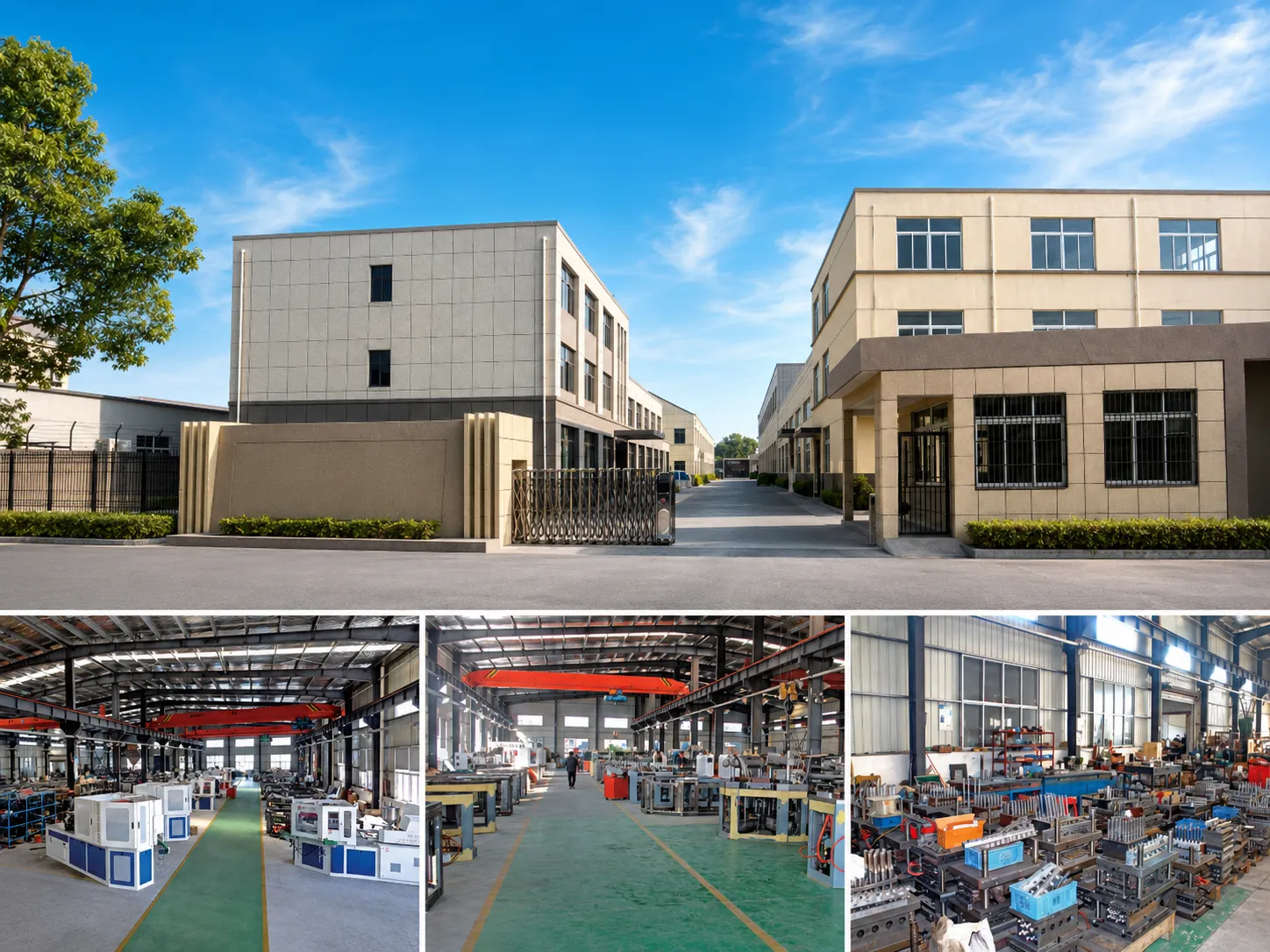
De EP-ZQ60 er den mest almindelige koreanske Ever-Power IBM-maskine til koreansk IBM-produktion i mellemstore mængder til fødevarer, husholdningsartikler og personlig pleje i formatområdet 100-300 ml - et volumenområde, hvor fordelen ved nul flash giver den største relative besparelse i produktionsomkostninger i forhold til EBM, fordi det også er i dette formatområde, at EBM-trimningsoperationer er mest arbejdskrævende (lille kropsdiameter × lang baseflashfinneperimeter = højere trimningsarbejde pr. enhed end beholdere i store formater).
35–40%
Besparelse af gulvareal i produktionscelle sammenlignet med sammenlignelig EBM-linje med trimstation
KRW 50 mio.
Estimeret årlig nul flashbesparelse ved 20 millioner enheder/år 200 ml HDPE-fødevarebeholder
Nul
Risikoen for flashkontaminering i IBMs produktionshistorik for farmaceutiske og fødevarebeholdere
100%
Udnyttelse af HDPE-materiale — al injiceret polymer bliver til beholder, intet bliver til flash-skrot
INGENIØR OFTE STILLEDE SPØRGSMÅL
Zero Flash IBM — Ingeniørspørgsmål
Producerer IBM absolut ingen flash nogen steder på containeren – inklusive halsområdet?
IBM producerer ingen afskalning på noget punkt på beholderens yderside, der kræver beskæring. Præciseringen er vigtig: IBM producerer et lille spor af injektionsporten på beholderens inderside - et cirkulært mærke med en diameter på 1,5-3,0 mm ved kernestangens blæseluftspids, hvor HDPE-injektionsporten frøs af. Dette spor af porten er: (1) på den indvendige bund, ikke på ydersiden; (2) i niveau med eller let forsænket under den omgivende bundoverflade - det er ikke en fremspring; (3) ikke beskåret, fordi det ikke kræver beskæring - det er et glat, ikke-skarpt sprøjtestøbningsspormærke uden partikelgenererende egenskaber; og (4) ikke synligt fra beholderens yderside. Ved halsområdet: IBM har en halsskillelinje fra sprøjtestøbeformens todelte halsindsats - en fin linje ved halsens yderdiameterflade ved formens skilleplan. Denne halsskillelinje er ekstremt fin (typisk 0,03-0,08 mm mærkebredde) og kræver ingen beskæring. Den adskiller sig fra EBMs skillelinje (som løber i hele beholderens kropslængde) — IBMs halsskillelinje er kun begrænset til halszonen (3-8 mm højde på halscylinderen) og er det eneste skillemærke på hele beholderen. Resumé: IBM producerer ingen flash, der kræver trimning på noget punkt på beholderen. Portresterne og halsskillelinjen er kosmetiske træk, der er iboende i sprøjtestøbningsprocessen — ikke flash, ikke trimrester, ikke kvalitetsfejl.
Kan EBM eliminere flash gennem procesoptimering — tyndere parison, strammere klemgeometri?
EBM-flash kan ikke elimineres gennem procesoptimering – det kan kun minimeres. Den teoretiske minimums-EBM-flash er en klemmevejsning med nul bredde, hvilket ville kræve, at de to blæseformhalvdele lukker med nul spillerum mellem dem i klemmezonen – en fysisk umulig tilstand, fordi formstålet skal have en vis spillerum for at undgå metal-mod-metal-kontaktslid. I praksis opnår optimeret EBM-baseklemmeometri minimumsflashvægte på ca. 0,5-1,0 g for en 200 ml HDPE-beholder – en forbedring i forhold til ikke-optimeret EBM-flash (2,5-5,0 g), men ikke nul. Selv ved minimal flashvægt er EBM-basevejslinjen til stede (det er det strukturelle ar fra klemmelukningen uanset flashvægt), trimningsoperationen er stadig påkrævet (0,5 g flash kræver stadig trimning), og risikoen for trimpartikelkontaminering er stadig til stede (trimningsoperationen ved enhver flashvægt genererer HDPE-mikropartikler ved skærekanten). Strammere parisonprogrammering og optimering af matricegeometri reducerer flashvægten og forbedrer basevejsningens kvalitet – de eliminerer ikke og kan ikke eliminere flash som en strukturel EBM-procesfunktion. IBMs fordel ved nul flash er ikke en forskel i produktionskvaliteten mellem bedre og dårligere processer; det er en arkitektonisk forskel mellem processer, der kræver base pinching (EBM, alle blæsestøbningsprocesser, der bruger parisoner), og IBM, som ikke gør det.
Er IBM-indsprøjtningsportens rester i containerens bund et problem med hensyn til fødevaresikkerhed for koreanske MFDS'er?
Nej — IBM-indsprøjtningsportens rester på beholderens bunds inderside er ikke et problem for fødevaresikkerheden i forbindelse med koreanske MFDS-fødevarebeholdere og er ikke blevet nævnt som et fødevaresikkerhedsproblem i registrerings- eller inspektionsdokumentation for koreanske MFDS-fødevarebeholdere. Portens rester er en glat HDPE-overfladefunktion — ikke en partikel, ikke en fremspring og ikke et materiale, der adskiller sig fra det omgivende HDPE-basismateriale. Det dannes under injektion som en del af den kontinuerlige HDPE-bundvæg — resterne er den samme HDPE-polymer som resten af beholderen, fuldt bundet til basisoverfladen uden potentiale for at løsne sig som en partikel. I modsætning hertil er EBM-trimflashrester en løsnet HDPE-partikel, der produceres ved mekanisk skæring under trimningen — det er et fysisk separat stykke HDPE, der ikke er bundet til beholderen og kan migrere ind i den fyldte beholder. Koreanske regler for kontaminering af MFDS-fødevarebeholdere vedrører specifikt fremmedpartikler, der kan løsne sig og kontaminere fødevareindholdet — IBM-portens rester opfylder ikke dette kriterium. Koreanske farmaceutiske KFDA GMP-kontamineringsregler anvender den samme logik: IBM-portens rester er en kontinuerlig overfladefunktion, ikke en partikel. Korea Ever-Powers tekniske dokumentation for farmaceutiske IBM-containere omhandler eksplicit resterne af injektionsporten og bekræfter dens materialeidentitet (samme HDPE-polymer som beholderen), dens bundne natur (ingen risiko for løsrivelse) og dens placering (bundens indre, væk fra fyldningsindholdszonen for alle standardbeholderorienteringer). Denne bekræftelse er blevet accepteret af alle koreanske QA-teams for farmaceutiske mærker, der har gennemgået de tekniske filer for Korea Ever-Power IBM-containere uden at anmode om yderligere test eller dokumentation vedrørende resterne af injektionsporten.
Tillader zero flash IBM højere brugshastigheder for HDPE-genslibning end EBM for samme kvalitetsniveau?
Zero flash IBM eliminerer én kategori af interne overvejelser om genformaling, der komplicerer styringen af EBM-genformaling: flash-genformalingskvaliteten. I EBM er basisflashen en HDPE med en anden termisk historie end beholdervæggen - flashzonen var udsat for højere forskydningsspænding (klemkompression) og længere termisk eksponering (parisonvarme + kompressionsvarme) end beholderens kropsvæg. Dette betyder, at EBM flash-genformaling har et andet smelteindeks og oxidativ historie end det nye HDPE-råmateriale, og tilsætning af flash-genformaling til det nye HDPE-råmateriale ændrer genformalingsblandingens MI og termiske stabilitet på måder, der kan påvirke beholderkvaliteten. For farmaceutisk og fødevare-IBM kan EBM flash-genformaling ikke anvendes, fordi: (1) Koreansk KFDA-kvalificering af farmaceutiske beholdere specificerer HDPE-kvaliteten og harpikskvaliteten - tilsætning af genformaling udgør en væsentlig ændring, der kræver en koreansk KFDA-ændringsmeddelelse; og (2) koreanske MFDS-fødevarekontaktregler tillader ikke brugen af HDPE-genformaling efter produktion i fødevarekontaktbeholdere uden separat lovgivningsmæssig gennemgang. IBMs nul-flashproduktion eliminerer denne komplikation fuldstændigt for farmaceutiske og fødevareapplikationer - der er ingen IBM-flash at håndtere. For IBM til husholdnings- og personlig pleje (hvor brug af genslibning er tilladt) betyder IBMs fravær af flash-genslibning, at den eneste genslibede overvejelse er produktionsrensningsmateriale (fra maskinopstart og farveændringsrensning) - en meget mindre og mere kontrolleret genslibningsstrøm end EBM-flash, typisk 0,2-0,5% produktionsvolumen versus EBM-flash ved 3-8%.
Hvordan påvirker zero flash IBM containerens CO2-aftryk og den koreanske ESG-rapportering?
IBMs nul-flash-produktion reducerer beholderens Scope 3-indlejrede CO2-aftryk i forhold til EBM på tre målbare måder. For det første, materialeeffektivitet: 100% injiceret HDPE bliver til beholderen - nul flash betyder nul HDPE-spild. Ved EBM bliver 3-8% HDPE til flash, der enten genformales (med dens ekstra forarbejdningsenergi) eller skrot. For et koreansk fødevaremærke, der producerer 20 millioner 200 ml HDPE-beholdere om året med en gennemsnitsvægt på 4 g: EBM-flash-affald ved 5% = 4 tons HDPE om året, som IBM ikke producerer. Ved 2,3 kg CO₂-ækvivalent pr. kg HDPE (HDPE cradle-to-gate-kulstoffaktor) svarer disse 4 tons flash-eliminering til cirka 9,2 tons CO₂e sparet årligt - direkte tilskrevet IBMs nul-flash-proces. For det andet, energieffektivitet: EBM-flash kræver enten genformalingsenergi (ekstrudering + pelletering ved ~0,3-0,5 kWh/kg) eller bortskaffelsesenergi. IBM eliminerer fuldstændigt dette downstream-energikrav. For det tredje, koreansk ESG-dokumentation: Koreanske mærker, der offentliggør Scope 3-emballages CO2-aftryksdata i deres koreanske ESG-rapporter, kan direkte tilskrive IBMs flash-eliminering til deres program til reduktion af CO2-udledning fra emballagen – med flashvægten elimineret og HDPE-kulstoffaktoren som simple, kontrollerbare input. Koreanske fødevare- og personlig plejemærker, der underkaster sig det koreanske miljøministeriums grønne produktcertificering (환경표지 GR 인증), rapporterer i stigende grad IBM-beholderes nul flash-materialeeffektivitet som et bæredygtighedskriterium i produktionen i deres produktcertificeringsdokumentation.
Hvad er den korrekte måde at verificere, at en IBM-containerleverandør rent faktisk bruger IBM i stedet for EBM?
Koreanske købere kan verificere IBM- versus EBM-containerproduktion gennem tre inspektionsmetoder, der ikke kræver laboratorieudstyr. For det første, baseinspektion: Undersøg containerbunden nedefra under retningsbestemt lys (en lommelygte med en indfaldsvinkel på 45° er tilstrækkelig). IBM-basens egenskaber: Glat, svejsefri, flad bund med et lille cirkulært gate-mærke (1,5-3,0 mm i diameter) i midten. EBM-basens egenskaber: Et synligt lineært svejsemærke, der løber på tværs af basens centrum (klemmesvejselinjen), med let hævet materiale ved svejsezonen, der er synligt under retningsbestemt lys; en trimskåret kant ved basens omkreds, hvor flashen blev fjernet (en lille diskontinuitet i hjørneradiusen mellem base og sidevæg). For det andet, basehjørneinspektion: EBM-hjørnet fra base til sidevæg viser en lille flad zone på de to positioner, hvor blæseformhalvdelene mødtes ved basisklemmen - IBMs basehjørner er ensartet radiusformede rundt om hele basens omkreds. For det tredje, sporing af basens skillelinje: Stil containeren på en plan overflade, og drej den 360° under retningsbestemt lys ved basezonen. EBM-containere viser en let forhøjet linje, der løber på tværs af bunden fra de to skillelinjepositioner; IBM-containere viser ingen linje – bundfladen er kontinuerlig. For koreanske farmaceutiske og fødevareindkøbsteams er disse visuelle verifikationsmetoder tilstrækkelige til at bekræfte IBM- versus EBM-produktion ved inspektion af indgående containere uden at kræve maskinregistreringer eller produktionsdokumentation fra containerleverandøren.
IBM-FORESPØRGELSE MED NUL FLASH · KOREA EVER-POWER
Planlægger du produktion af IBM-containere med nul flash?
Korea Ever-Power leverer produktion af IBM-containere uden flash til farmaceutiske produkter, fødevarer, husholdninger og personlig pleje. Alle maskiner i Korea Ever-Power ZQ-serien leverer strukturelt flashfri beholdere uden behov for sekundær trimning.