Koreansk ISBM til shampoo- og balsamflasker: Designteknik, rPET-overholdelse og rammeværket for storproduktion til koreansk personlig pleje
Shampoo- og balsamflasker er koreanske ISBM's største anvendelsesområde inden for personlig pleje — formater fra 200 ml til 1 l med en produktion på 6-8 kaviteter med cyklusser på 8-12 sekunder, der betjener koreanske hårplejemærker fra massemarkedet (Elastine, Pantene Korea) til premium-saloner (MOREMO, Dr.FORHAIR). Koreanske K-EPR rPET-mandater gør 2026-2030 til en kritisk investeringsperiode for alle koreanske producenter af shampooflasker.
K-EPR rPET 2026–2030
Flip-Top & Pumpelukning
Koreansk Ever-Power Engineering Desk · Ansan-si, Gyeonggi-do · Maj 2026
1. Koreansk marked for shampooflasker: Volumen, mærkeniveauer og ISBM-andel
Det koreanske marked for shampoo- og balsamflasker er den største enkeltstående ISBM-kategori inden for personlig pleje i Korea – anslået til over 800 millioner enheder årligt på tværs af alle formater fra 200 ml til 1 l. Koreanske ISBM'er har en produktionsvolumen på cirka 751 TP3T af den koreanske shampooflasker (hvor HDPE-ekstruderingsblæsestøbning tegner sig for resten i uigennemsigtige formater). Det koreanske marked for ISBM'er til shampooflasker er opdelt i tre niveauer med forskellige kvalitets- og produktionskrav: massemarkedsmærker til koreanske detailhandlere (Elastine, Pantene Korea, CLEAR Korea – der sælges til 5.000-15.000 KRW pr. flaske), mellemstore premiummærker (Mise en Scene, TS Shampoo, Ryo – 15.000-35.000 KRW) og premium salonmærker (MOREMO, Dr.FORHAIR, Amos Professional – 35.000-80.000+ KRW).
Tredelsstrukturen betyder, at den koreanske ISBM-shampooflaskeproduktion spænder over hele spektret fra råvareproduktion med maksimal output (massemarked, 8 hulrum, hurtigste cyklustid) til produktion i små serier af premium-kvalitet (salonmærker, 4 hulrum, kompleks geometri, PET med høj klarhed). Koreanske ISBM-producenter, der betjener begge niveauer, opretholder separate produktionslinjer – at forsøge at køre massemarkeds- og salonproduktion på den samme maskine kompromitterer begge dele: Massemarkedsforretningen kræver prioritering af outputhastighed, hvilket skader det kvalitetsfokus, som salonproduktionen kræver.
2. Formatområde: 200 ml til 1 l Koreanske designstandarder for shampooflasker
| Format | Typisk præformvægt | Hulrumsantal (typisk) | Koreansk markedssegment |
|---|---|---|---|
| 200 ml | 18–22 g | 8 | Rejsestørrelse, hotelfaciliteter, salon til engangsbrug |
| 300 ml | 28–34 g | 6–8 | Standard koreansk detailhandel — enkeltbruger, mellempremium |
| 400 ml | 38–44 g | 6 | Standard koreansk detailhandel — familiestørrelse |
| 500 ml | 48–55 g | 4–6 | Salon professionel, familieøkonomipakke |
| 1L | 90–110 g | 2–4 | Professionel salon i bulk, koreansk butiksøkonomi |
3. Ergonomisk design: Grebpanel, hældebalance og stabilitet på badeværelseshylden
Det ergonomiske design af den koreanske shampooflaske dikteres af den endelige anvendelseskontekst: brug med én hånd i et vådt brusebad, ofte med lukkede øjne eller hår, der skjuler udsynet. Tre designelementer tjener direkte denne kontekst og er opnåelige i koreansk ISBM: grebspaneler, afbalanceret hældegeometri og antirullebasedesign.
Gribepaneler: Forsænkede gribepaneler på sidevæggen af huset giver et sikkert enhåndsgreb om en våd, sæbefilmbelagt flaske. Koreanske ISBM-blæseforme kan producere gribepaneldybder på op til 4 mm – dybere gribepaneler kræver præformens vægtykkelse, der imødekommer den lokale udtynding i den forsænkede zone uden at falde under den minimale strukturelle væg. Den korrekte præformvægt og L/D-forholdsteknik til gribepanelzoner forhindrer for tidlig udtynding ved gribefordybninger.
Hældningsbalance: Tyngdepunktet for en fuld koreansk shampooflaske skal forblive under tyngdepunktet for basens fodaftryk ved alle hældevinkler op til 75° fra lodret - ellers vælter flasken under hældning. Koreanske ISBM-flaskedesignere opnår dette gennem brede konusforhold mellem base og skulder og ved at sikre, at tyngdepunktet ved fuld påfyldning er placeret inden for flaskegeometriens stabilitetszone. Minimumdimensioner for basens fodaftryk for koreanske shampooflasker: 45 mm minimumdimension for 300 ml, skalering til 55 mm for 500 ml.
4. Koreansk K-EPR rPET-overholdelse af shampoo- og balsamflasker 2026-2030
Det koreanske K-EPR-mandat for emballage til personlig pleje (shampoo, balsam, body wash) kræver 10% rPET-indhold fra 2026, 30% inden 2027 og 50% inden 2030 - samme tidslinje som drikkevareemballage. Overholdelse af K-EPR for koreansk emballage til personlig pleje håndteres anderledes end drikkevarer, fordi den koreanske forsyningskæde til personlig pleje omfatter både koreansk mærkeejet produktion og koreansk kontrakt-ISBM-produktion: K-EPR-forpligtelsen påhviler den koreanske mærkevirksomhed (som produktproducent), men den koreanske ISBM-kontraktproducent skal levere rPET-holdige flasker, der gør det muligt for mærkevirksomheden at nå sit K-EPR-mål.
rPET-produktion af koreanske shampooflasker tilføjer tre procesvariabler, som koreanske ISBM-teams skal håndtere: IV-variation (rPET IV varierer fra 0,72-0,82 dl/g versus 0,80-0,84 dl/g for jomfruelig PET, hvilket forårsager viskositetsvariation i injektionsbeholderen), farvetone (rPET har et grågrønt farveskær, der viser sig i transparente zoner af flasken - håndteres med blå tonermasterbatch eller ved at køre uigennemsigtige farvede flasker, hvor farvetonen maskeres af flaskens farve) og kontamineringsrisiko (rPET fra blandet koreansk indsamling indeholder lejlighedsvis ikke-PET-fragmenter - koreanske ISBM-producenter, der bruger rPET, skal kræve filtreringscertificering fra deres rPET-leverandør). rPET-behandling i ISBM 2026 komplet guide dækker det fulde koreanske K-EPR rPET-styringsrammeværk til personlig pleje.
Produktion af rPET-produkter til shampooflasker i Korea er teknisk set nemmere end produktion af rPET-produkter til drikkevarer på én vigtig måde: De fleste koreanske shampooflasker er uigennemsigtige eller semi-uigennemsigtige (ved brug af farvemasterbatch) – hvilket betyder, at den rPET-farvetone, der er problematisk for klare drikkevareflasker, er fuldstændig maskeret af flaskens farve. Koreanske ISBM-producenter kan derfor bruge højere rPET-fraktioner (op til 50%) i produktionen af shampooflasker i Korea uden den kompleksitet i farvestyring, der kræves til produktion af gennemsigtige drikkevarer, og dermed nå K-EPR-målene for 2030 forud for tidsplanen i shampookategorien.
5. Kompatibilitet med overfladeaktive stoffer: PET-flaskenes ydeevne med koreanske shampooformler
Koreanske shampooformuleringer er overvejende baseret på anioniske overfladeaktive stoffer (natriumlaurylsulfat, natriumlaurethsulfat) ved 10-20%-koncentration, pH 4,5-6,5 - forhold hvor PET ISBM har fremragende kompatibilitet. Koreanske balsamformuleringer er baseret på kationiske overfladeaktive stoffer (cetrimoniumchlorid, behentrimoniumchlorid) ved 1-5%-koncentration, pH 4,0-5,5 - også kompatible med PET ved typiske opbevaringstemperaturer og den koreanske holdbarhed på 18-24 måneder.
Koreanske ISBM-producenter, der går ind i premium-segmentet for koreanske shampooer, bør være opmærksomme på, at højtydende koreanske salonshampooer i stigende grad indeholder silikoneforbindelser (dimethicone, amodimethicone), der historisk set har vist mindre permeation gennem PET-vægge med lav krystallinitet ved høje koncentrationer. Koreanske ISBM EV-platformmaskiner, der producerer PET-shampooflasker ved optimale konditioneringsparametre (der opnår en biaxial krystallinitet på 28-32%), producerer flaskevægge med tilstrækkelig krystallinitet til at begrænse silikonepermeationen til under detektionsgrænserne ved 24 måneders opbevaring - men koreanske ISBM-producenter, der bruger maskiner med dårlig konditioneringstemperaturkontrol, og som producerer underkrystalliserede PET-vægge, kan opleve problemer med silikonepermeation med koreanske salonshampooer med højt silikoneindhold.
6. Lukningsvalg: Flip-Top, skivehætte og pumpedispenser til koreansk shampoo
Udvalget af koreanske shampooflaskelukninger er en vigtig differentieringsfaktor mellem de koreanske markedsniveauer:
Flip-top låg (28 mm)
Standard til koreansk massemarkedshampoo. Åbnes med én hånd i brusebadet. Koreansk PCO 1881 eller 28 mm GPI halsfinish. Mest omkostningseffektiv pr. enhed. KRW 25-45 pr. kapsel.
Skivekappe (38 mm)
Koreansk shampoo i mellemklassen. Bredere åbning muliggør hældning uden at produktet kan trækkes langs halsens indvendige vægge. Kræves til balsam med højere viskositet. KRW 40-65 pr. kapsel.
Pumpedispenser (28 mm)
Premium koreansk salonshampoo. Doseret dosis, intet spild. Kræver forstærket halszone (minimum 1,8 mm). Pr. dosis: 1-3 ml. KRW 120-250 pr. pumpeenhed.
7. Koreansk ISBM-maskinplatform til produktion af shampoo i store mængder
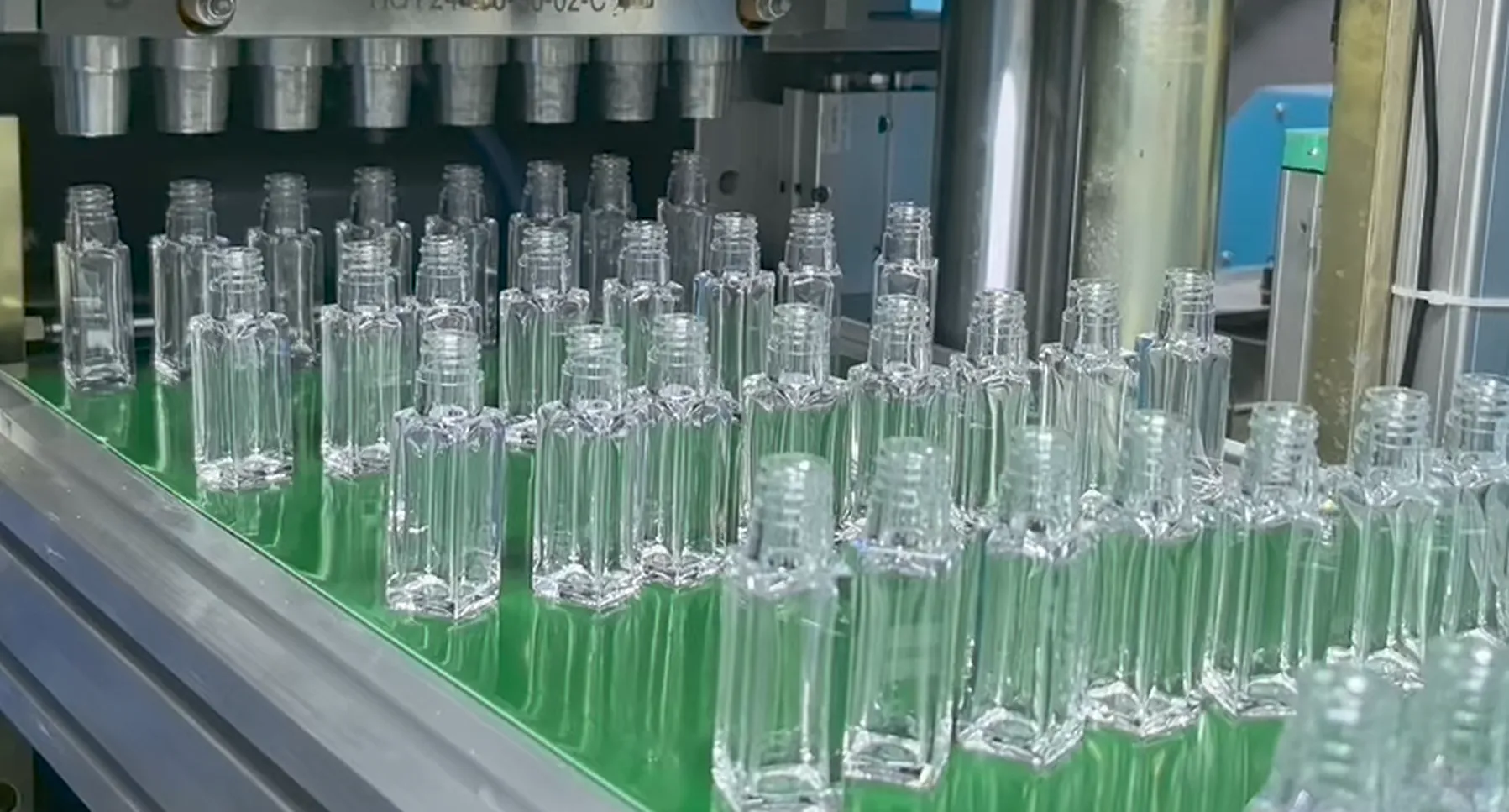
Til masseproduktion af shampooflasker i koreansk prisklasse og mellemklasse (200 ml-500 ml, 6-8 hulrum) er HGY200-V4 EV den mest anvendte koreanske ISBM-platform – den håndterer præformvægte på op til 200 g med den præcision, der kræves til rPET-produktion ved K-EPR-mandaterede blandingsfraktioner. Optimering af kavitetsnummer til koreanske produktionsvolumener løses typisk til 6-hulrum for koreanske shampoomærker med årlige volumener på 4-8 millioner enheder pr. SKU, og 8-hulrum for koreanske kontrakt-ISBM-producenter, der aggregerer flere shampoomærkevolumener på standardiserede halsfinishformater.
Til koreansk produktion af premium salonshampoo (300 ml-500 ml, 4 hulrum, kompleks grebspanelgeometri) leverer HGY150-V4 EV tilstrækkelig præformvægtkapacitet med den præcisionsbehandling, der kræves til transparente eller semitransparente salonflaskeformater. Koreanske ISBM-producenter, der ønsker at betjene både massemarkeds- og premium-salonshampooniveauer, bør opretholde separate maskinaktiver - produktionsplanlægningskonflikten mellem højhastigheds-råvareproduktion og præcisionsproduktion i lav volumen i saloner skaber omstillingskonflikter, der reducerer effektiviteten på begge produktkategorier, når de kører på den samme maskine.
8. Etiket- og ærmemuligheder til dekoration af koreanske shampooflasker
Trykfølsomme etiketter (PSL): Standarddekoration for de fleste koreanske shampooflasker. Etiketpanelzonen skal være flad eller enkeltkrum med en krumningsradius på over 100 mm til PSL-påføring uden luftbobler. Koreanske ISBM-flasker til PSL skal undgå panelkonusvinkler på over 3°, der forårsager løft af PSL ved etiketkanten i løbet af koreansk detailhandelsholdbarhed.
Krympemuffe (hel eller delvis): Bruges af koreanske masseproducerede shampoomærker (Elastine, CLEAR) til 360° grafisk indpakning af hele flaskens overflade, inklusive bundzonen. Koreanske shampooflasker med krympemuffer skal have en flaskegeometri uden overfladefunktioner (ribber, fordybninger, håndtag), der ville forårsage deformation af krympemuffen ved krympetunnelen — komplekse grebpanelgeometrier, der fungerer med PSL, er ofte uforenelige med krympemuffer til hele flasken. Koreanske ISBM-flaskedesignere skal vide, hvilken dekorationsmetode den koreanske mærkekunde vil bruge, før de færdiggør flaskegeometrien.
9. Koreansk salon vs. massemarkedshampoo: Produktionsforskelle
Koreanske salonshampooflasker (MOREMO, Dr.FORHAIR, Amos, Mise en Scene Premium) adskiller sig fra koreanske massemarkedsflasker på fire produktionsrelevante måder: (1) typisk transparente eller semitransparente PET/PETG versus uigennemsigtige massemarkedsformater — hvilket kræver bedre temperaturkontrol for at sikre klarhed i væggene; (2) mindre volumener pr. SKU (500.000–3 millioner enheder versus 5–20 millioner til massemarked) — hvilket kræver hurtigere omstilling; (3) mere kompleks geometri (skulptureret skulder, grebstalje, premium-bundform) — hvilket kræver støbeværktøj med højere specifikation; og (4) højere værdi pr. enhed (KRW 50–150 pr. flaske versus KRW 25–55 til massemarked) — hvilket retfærdiggør højere støbeinvesteringer pr. hulrum, men også øger omkostningerne ved kvalitetsfejl.
Kvalitetskravene fra koreanske salonmærker er højere end fra massemarkedet på to specifikke områder: optisk klarhed (specifikation for disniveau under 1,5% vs. 4% for massemarkedet) og dimensionel ensartethed (tolerance for halsfinishens ydre diameter ±0,08 mm for premium pumpehætte-pasform vs. ±0,20 mm for standard flip-top). Koreanske ISBM-producenter, der betjener begge markedsniveauer, bør etablere separate kvalitetsacceptkriterier pr. niveau og ikke forsøge at anvende salonspecifikationer på massemarkedsproduktion (unødvendigt restriktivt) eller massemarkedsspecifikationer på salonproduktion (utilstrækkeligt til premiumkundernes krav).
10. Koreansk Ever-Power personlig pleje volumenplatform
Koreanske Ever-Powers HGY200-V4 EV er den anbefalede platform til koreansk volumenproduktion af shampoo og balsam — fuld servo-konditioneringsstabilitet for rPET-konsistens, kapacitet på 6-8 hulrum for den volumenøkonomi, der kræves på koreansk shampoomærkeskala, og EV-energieffektivitet, der gør 40%'s lavere energiforbrug særligt værdifuldt for koreanske kontrakt-ISBM-producenter, der kører 16-20 timer om dagen på shampooproduktion. Koreanske ISBM-producenter, der har brug for at omstille eksisterende shampooproduktion fra jomfruelig PET til K-EPR rPET-blandet PET, kan anmode om Koreanske Ever-Powers rPET-overgangssupporttjeneste — en 4-timers produktionstest på den koreanske Ever-Power EV-demonstrationsmaskine på Ansan-si-anlægget ved hjælp af kundens specifikke rPET-blandingsfraktion og eksisterende støbeværktøjer.
Ofte stillede spørgsmål
Platform til personlig pleje
Skalering af produktionen af shampooflasker i Korea eller overgang til K-EPR rPET?
Den koreanske Ever-Power EV-platform leverer begge dele i stor skala.
rPET-overgangstestservice, konfiguration af 6-8 kaviteter til koreansk shampoo-volumenøkonomi og support til K-EPR-batchdokumentation — alt inkluderet i levering af den koreanske HGY200-V4 EV-platform.
Relaterede ressourcer
MaskinserieKoreansk Ever-Power 4-stations ISBM-skydebaneFuldt udvalg af koreansk personlig pleje — HGY150-V4 til salonpræcision til HGY250-V4 til førsteklasses personlig pleje med høj volumen.
PræformteknikISBM-præformdesign — Vægt, L/D-forhold og gate-geometriKoreansk shampooflaskegrebskonstruktion kræver specifik beregning af præformens L/D- og gate-geometri for at forhindre udtynding af forsænkede grebszoner.