ENDÜSTRİ UYGULAMASI
İçecek Şişesi Üretimi: Koreli Şişe Üreticileri için ISBM Platformları
Koreli şişeleme şirketleri, maden suyu, gazlı meşrubatlar, çay, meyve suyu ve spor içeceklerini kapsayan 14 milyar ABD doları değerindeki içecek pazarına hizmet vermektedir. Bu kılavuz, Eumseong, Cheongwon ve Wonju'daki şişeleme şirketlerinin Lotte Chilsung, Woongjin, Coca-Cola Korea ve Nongshim için büyük ölçekte PET içecek şişeleri üretmek için kullandıkları ISBM spesifikasyonlarını, hafifletme stratejilerini, sıcak dolum kapasitelerini ve gazlı içecek basınç gereksinimlerini kapsamaktadır.
Bu Kılavuzda
- Kore İçecek Pazarına Genel Bakış
- İçecek Kategorisi Manzarası
- Önerilen ISBM Platformları
- Hafifletme Stratejisi ve Ekonomisi
- Sıcak Dolum ve Soğuk Dolum Üretimi Karşılaştırması
- Gazlı Meşrubat Basıncı
- İçecekler için Ön Kalıp Tasarımı
- Kore Şişeleme Kümesi Vakaları
- K-EPR ve Sürdürülebilirlik Uyumluluğu
- Çözüm
1. Kore İçecek Pazarına Genel Bakış
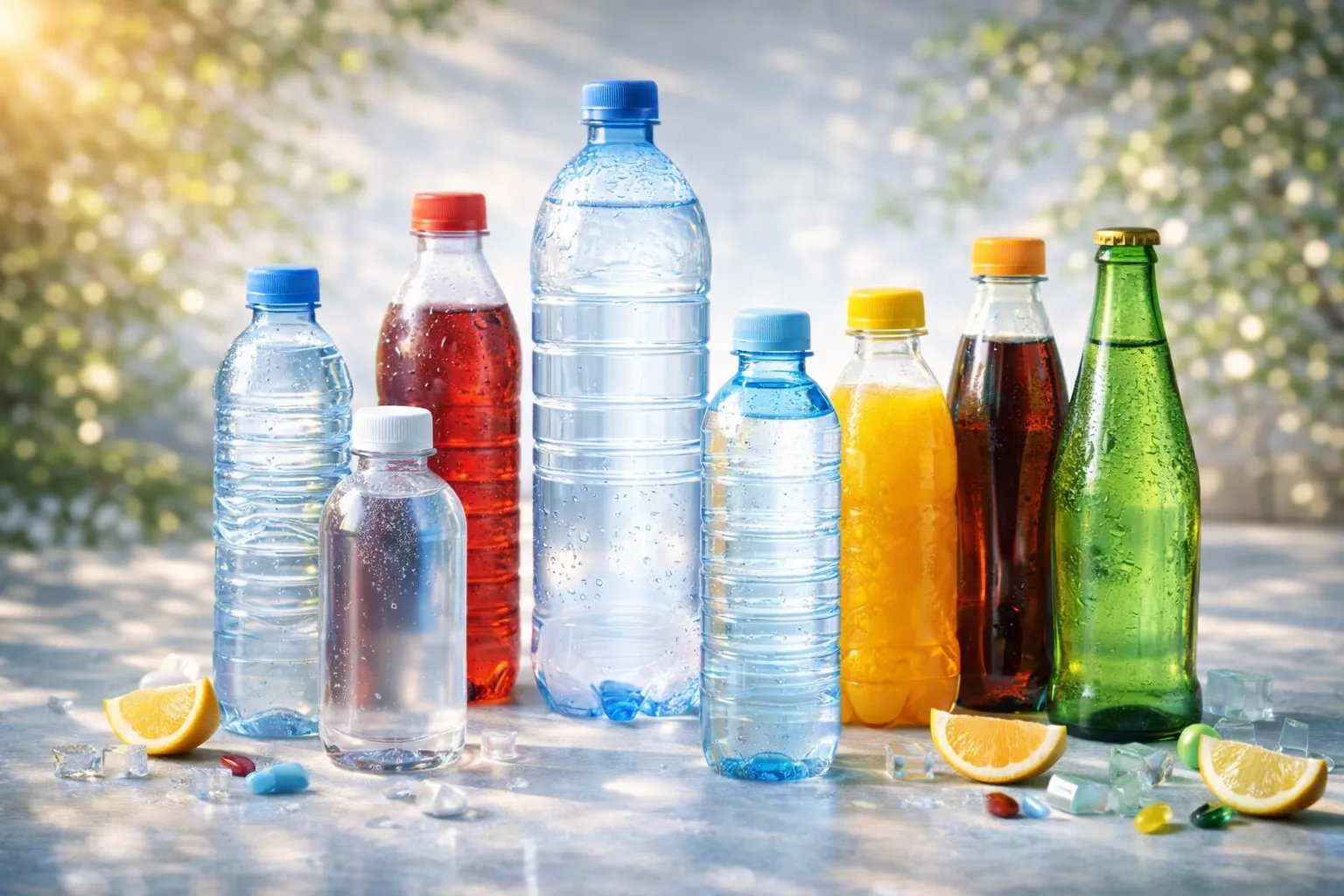
Kore'de PET şişelerde satılan içecekler; su, çay, meyve suyu, spor içeceği ve gazlı meşrubat formatlarında olup, başlıca üretim merkezleri Eumseong ve Cheongwon şişeleme bölgeleridir.
Kore içecek pazarı, 2024 yılında yaklaşık 14 milyar ABD doları perakende değerine ulaşarak, tüm formatlarda yıllık yaklaşık 8,5 milyar PET içecek şişesi üretimi gerçekleştirdi. Şişelenmiş su, 3,8 milyar ABD doları değeriyle kategorinin lideri konumunda yer alırken, onu gazlı meşrubatlar (2,9 milyar), hazır kahve ve çay (2,4 milyar), meyve suları (1,9 milyar) ve spor/enerji içecekleri (1,6 milyar) takip ediyor. Kategori, üç bölgesel şişeleme merkezi üzerinden şekilleniyor: Chungcheongbuk-do'daki Eumseong ve Cheongwon, Gangwon-do'daki Wonju ve Seul metropol bölgesine hizmet veren Gyeonggi-do'daki çok sayıda tesis.
Önde gelen Koreli şişeleme şirketleri (Lotte Chilsung, Woongjin, Coca-Cola Korea, Nongshim, Haitai), saatte 35.000-80.000 şişe üreten entegre dolum hatları içinde büyük ölçekli ISBM (Entegre Şişeleme ve Kalıplama) üretimi yapmaktadır. İçecek üretimi, ISBM spektrumunun en yüksek verimlilik seviyesinde gerçekleşmektedir: kalıp başına 2,8-4,5 saniyelik çevrim süreleri, 7/24 kesintisiz çalışma ve yıllık 200-800 milyon şişe üretiminde gram düzeyinde ön kalıp ağırlığı azaltmayı hedefleyen hafifletme disiplini.
İçecek üretim disiplini, kozmetik ve özel gıda ISBM'sinden temel olarak farklıdır. Başarı ölçümü, görsel kalite yerine verimlilik, birim maliyet ve tutarlı üstten yükleme performansına öncelik verir. Teknik zorluk, ISBM platform mimarisinin desteklediği en yüksek üretim hızlarında spesifikasyona uygun çıktıyı sürdürmektir.
2. İçecek Kategorisi Genel Bakış
Kore içecek üretimi, ürün türüne göre beş kategoriye ayrılıyor. Her kategori, ürün kimyası, dolum sıcaklığı ve tüketim şekline bağlı olarak farklı şişe spesifikasyon gereksinimleri getiriyor.
KATEGORİ A
Durgun su
300-2.000 ml
Şişelenmiş maden suyu. Hafif (6-18 g ön kalıp). En büyük hacim. 500 ml ve 2 litrelik kullanışlı boyutlar.
KATEGORİ B
Gazlı Meşrubatlar
300-1.500 ml
Kola, soda, meyve aromalı gazlı içecekler. Karbonasyon basıncı için daha ağır ön kalıp (22-38 g). Petaloid taban.
KATEGORİ C
Çay ve Kahve Hazır İçecekler
340-500 ml
Sıcak dolum pastörize çay ve kahve. Isıya dayanıklı PET gereklidir. Soğutma basıncı için vakum panelleri.
KATEGORİ D
Meyve Suyu ve Meyve İçecekleri
200-1.500 ml
Meyve suyu, meyve aromalı içecekler. Sıcak veya soğuk dolum aseptik. Kaliteyi korumak için oksijen bariyeri.
KATEGORİ E
Spor ve Enerji İçecekleri
350-600 ml
Spor içecekleri, vitaminli içecekler, enerji içecekleri. Ergonomik tutma profilleri. Spor kapaklı boyun kısımları.
3. Önerilen ISBM Platformları
İçecek üretimi genellikle orta boy şişeler için yüksek boşluklu 4 istasyonlu platformlarda, en yüksek hacimli formatlar için ise 6 istasyonlu platformlarda gerçekleştirilir. Kore içecek sektöründe üç adet Ever-Power platformu kullanılmaktadır.
| HGY200-V4 | HGY250-V4 | EP-HGYS280-V6 | |
|---|---|---|---|
| Segment | Küçük-Orta Boy Format | Orta-Büyük Format | Yüksek Hacimli 6 İstasyonlu |
| Şişe Hacmi | 200-600 ml | 500 ml-2 L | 300-600 ml |
| İstasyon Mimarisi | 4 istasyonlu | 4 istasyonlu | 6 istasyonlu |
| Boşluk Aralığı | 6-8 boşluk | 4-6 boşluk | 8-12 boşluk |
| Verim | 5.500-8.000 bph | 3.500-5.500 bph | 8.000-14.000 bph |
| Isı Ayarı Seçeneği | Evet | Evet | Evet |
| Tipik Müşteri | Bölgesel şişeleme şirketleri | 2 litrelik su üreticileri | Büyük şişeleme şirketleri |
| Ürün Sayfası | Teknik Özellikleri Görüntüle → | Teknik Özellikleri Görüntüle → | Teknik Özellikleri Görüntüle → |
4. Hafifletme Stratejisi ve Ekonomisi
Hafifletme, içecek üretiminde birincil birim maliyet optimizasyon mekanizmasını yönlendirir. Kore'de 500 ml'lik durgun su şişelerinin ortalama ön kalıp ağırlığı, on yıl önce 18-20 gramdan günümüzde 9-11 grama düştü. Yılda 600 milyon şişe üreten tek bir şişeleme şirketi için, 2 gramlık bir ön kalıp ağırlığı azalması, yıllık PET reçine harcamalarında yaklaşık 1,2 milyon ABD doları tasarruf anlamına gelir.
Hafifletme, birlikte çalışan üç teknik disiplin gerektirir. Ön kalıp tasarım optimizasyonu, daha sıkı başlangıç malzemesine rağmen tutarlı şişe duvar kalınlığı için azaltılmış malzeme kütlesini dağıtır. Proses hassasiyeti, azaltılmış malzeme rezervini telafi etmek için germe oranlarını daha dar aralıklarda tutar. Kalite kontrolü, yeni minimum spesifikasyon sınırında üstten yükleme performansını izler.
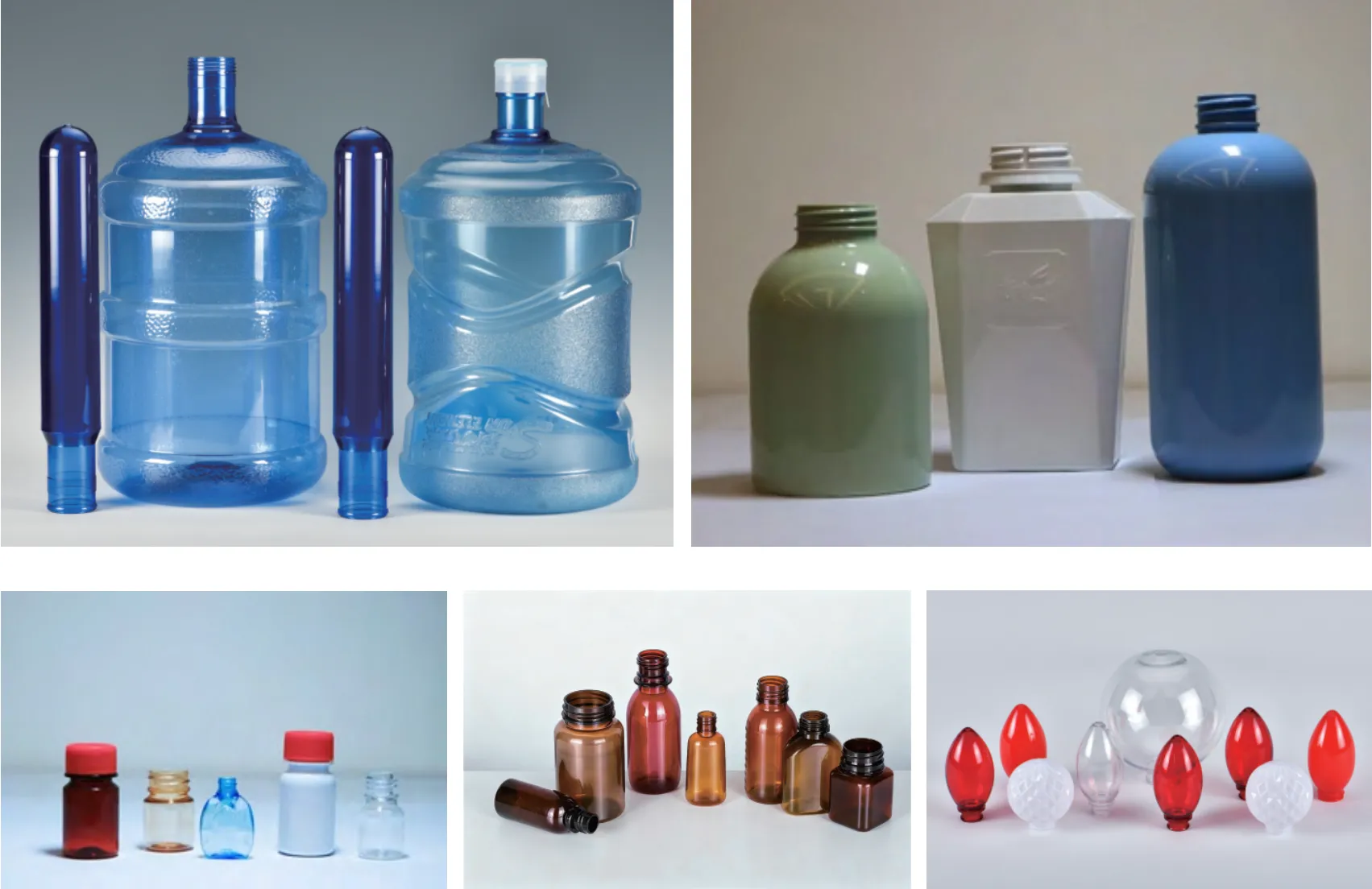
- ▸500 ml durgun su: 9-11 g ön şekillendirme, 0,20-0,25 mm gövde duvarı, 12-18 kg üstten yükleme özelliği
- ▸2 litre durgun su: 42-48 g ön şekillendirme, 0,25-0,30 mm gövde duvarı, 30-40 kg üstten yükleme özelliği
- ▸500 ml CSD: 22-28 g ön şekillendirilmiş, 0,35-0,45 mm gövde duvar kalınlığı, 6 bar basınca dayanıklı.
- ▸500 ml sıcak demlik çay: Isıl işlem görmüş, vakumlu panellere sahip, 95°C termal kararlılığa sahip 26-32 g ön şekillendirilmiş malzeme.
5. Sıcak Dolum ve Soğuk Dolum Üretimi Karşılaştırması
İçecek kategorisi, soğuk dolum ve sıcak dolum üretimi arasında net bir şekilde ayrılıyor. Durgun su ve gazlı içecek üretiminde standart PET ile soğuk dolum kullanılır. 85-90°C'de pastörize edilen çay, kahve, meyve suyu ve spor içecekleri ise, boyut bozulması olmadan dolum sıcaklığına dayanabilen ısıya dayanıklı PET gerektirir.
Isıl işlemle üretim, standart PET şişirme kalıplama yönteminden üç temel işlem alanında farklılık gösterir. Kalıp sıcaklığı, çift eksenli yönlenmeyi yerinde kilitleyen termal kristalleşmeyi sağlamak için 120-150°C'ye (soğuk dolumda 10-18°C'ye karşılık) çıkarılır. Uzatılmış ısıl işlem bekleme süresi nedeniyle, şişe başına çevrim süresine 3-5 saniye eklenir. Şişe duvarı, sıcak ürün kapalı şişenin içinde soğudukça oluşan 25-35 kPa negatif basıncı karşılamak için vakum panelleri içerir.
Kore'de çay ve meyve suyu ürünleri üreten şişeleme şirketleri, genellikle karma kullanımlı makineleri dönüştürmek yerine, özel ısıtma hatları kullanmaktadır. Altyapı yatırımı (ısıtma ekipmanı, çift sıcaklıklı MTC, sıcak yağ ısıtıcısı), sıcak dolum yöntemiyle üretilen raf ömrü uzun ürünlerin, sadece soğutma gerektiren alternatiflere kıyasla daha yüksek fiyatlandırmasıyla kendini amorti etmektedir.
6. Gazlı Meşrubat Basınç Gereksinimleri
Gazlı içecek şişeleri, durgun su şişelerinde bulunmayan bir karbonasyon basıncına sahip olmalıdır. Kore gazlı içecek ürünleri tipik olarak 3,5-4,5 hacim CO2'ye kadar karbonatlanır ve ortam depolama sıcaklığında 4-6 bar iç şişe basıncı oluşturur. Dört şişe spesifikasyonu bu basınç yüklemesini ele almaktadır.
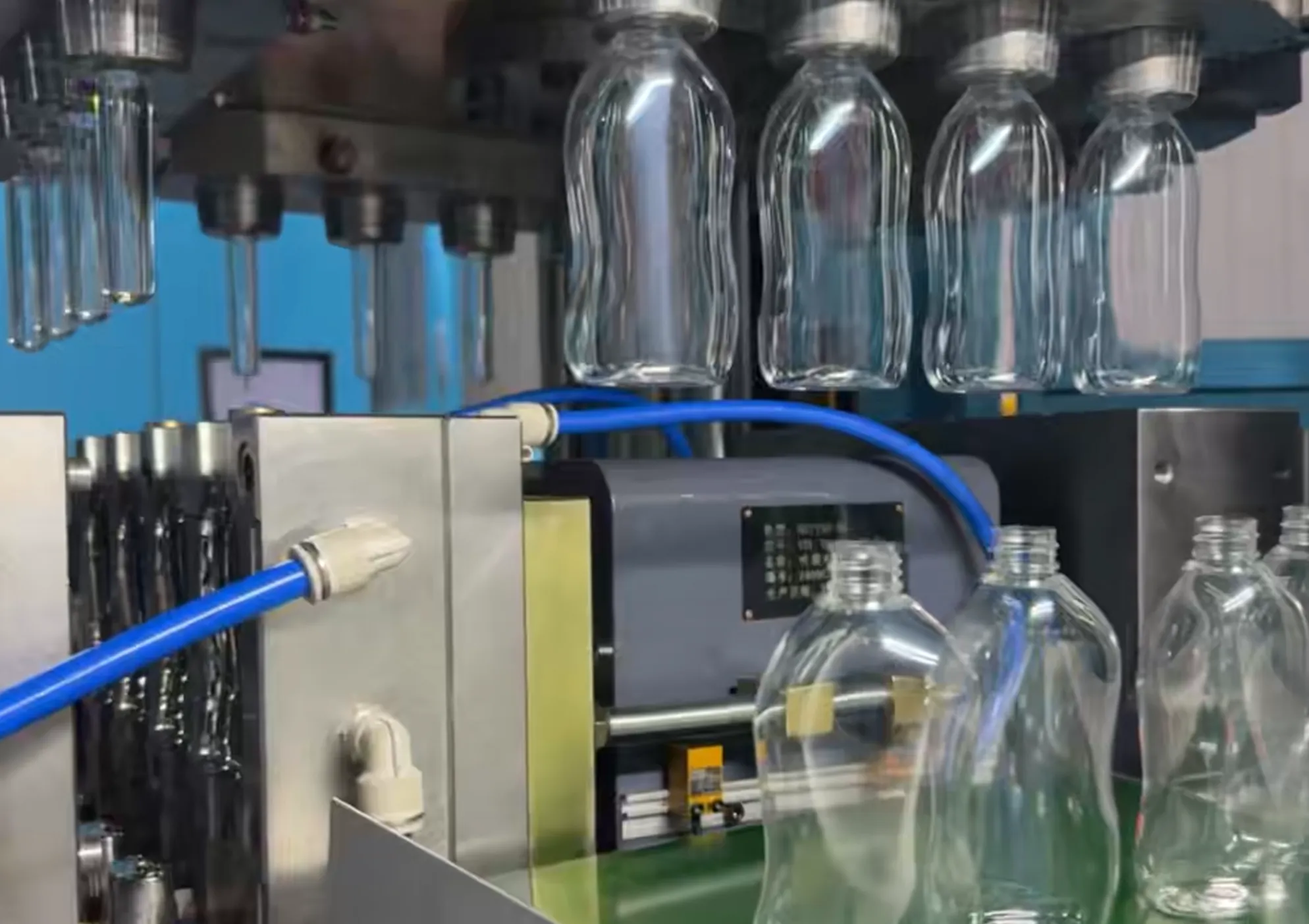
- ▸Daha yüksek ön şekillendirme ağırlığı: 500 ml-1,5 L formatlar için 22-38 g, basınca dayanıklılık için daha kalın duvar (0,35-0,45 mm) sağlar.
- ▸Petaloid taban mimarisi: 5-7 fitlik bir mesafe, iç basınç yükünü taban merkezinde yoğunlaştırmak yerine vücut duvarlarına dağıtır.
- ▸Tam çift eksenli yönelim: Toplam 10-14 kat gerilme oranları, basınca dayanıklılık için maksimum moleküler güç üretir.
- ▸Basınç testi doğrulaması: Parti başına 30 şişelik numuneler üzerinde 12 bar patlama basıncı testi yapılacaktır; tüm numunelerin minimum 10 bar'ı aşması gerekmektedir.
Koreli gazlı içecek üreticileri, taşıma sırasında oluşabilecek ani yüklenmeler, sıcaklık değişimleri ve tüketici düşme olayları için pay bırakmak amacıyla, genellikle gerçek iç basınca kıyasla 2,0 kat patlama basıncı güvenlik faktörü belirtirler. Basınca dayanıklı PET şişelerin polimer bilimi hakkında daha fazla bilgi için lütfen sayfamıza bakın. çift eksenli moleküler yönlendirme kılavuzu.
7. İçecekler için Ön Kalıp Tasarımı
İçecek ön kalıp tasarımında üç değişken optimize edilir: malzeme kütlesi (birim maliyeti belirler), duvar dağılımı (gerilme homojenliğini belirler) ve boyun bitişi (kapaklama hattı aletleriyle uyumlu). Kore içecek üretiminde çoğu formatta standartlaştırılmış boyun bitişleri kullanılır: durgun su ve gazlı içecekler için 28 mm PCO 1881, meyve suyu ve sıcak dolum çay için 38 mm ve büyük boy 2 litrelik aile boyu şişeler için 43 mm veya 48 mm.
| Şişe Formatı | Boyun Bitirme | Ön Şekil Ağırlığı | Şişe Ağırlığı |
|---|---|---|---|
| 500 ml durgun su | PCO 1881 | 9-11 g | 9-11 g |
| 2 litre durgun su | PCO 1881 | 42-48 g | 42-48 g |
| 500 ml CSD | PCO 1810 veya 1881 | 22-28 g | 22-28 g |
| 500 ml sıcak çay demliği | 38 mm | 26-32 g | 26-32 g |
| 1 litre sıcak meyve suyu dolumu | 38 mm | 48-58 g | 48-58 g |
Şişe kalitesini etkileyen ön şekillendirme geometrisi detayları için lütfen sayfamıza bakın. Ön şekillendirme tasarımının temelleri kılavuzu.
8. Kore Şişeleme Kümesi Vakaları
Eumseong Durgun Su Şişeleme Tesisi
500 ml Durgun Su Hattı Yenileme (450 milyon ünite/yıl)
Meydan okumak: Büyük bir Koreli şişeleme şirketi, K-EPR uyumluluk girişimi kapsamında, hem 30% rPET içeriği kapasitesi hem de ön kalıp ağırlığının 12g'dan 10g'a düşürülmesi gerekliliği nedeniyle, eskiyen 4 istasyonlu üretim hattını modernize ediyor. Mevcut hat saatte 6.800 şişe üretim kapasitesine sahipti; hedef ise saatte 8.500+ şişe üretim kapasitesi.
Ever-Power Sonucu: 10 boşluklu kalıplama takımı ve rPET uyumlu işleme profiline sahip EP-HGYS280-V6 6 istasyonlu platform, 10 g ön kalıp ile saatte 13.200 adet üretim kapasitesi sağladı. K-EPR 30% uyumluluğu planlanan zamanda elde edildi. Yıllık üretim kapasitesi aynı fabrika alanında 360 milyon adetten 450 milyon adede çıkarıldı.
Cheongwon Hazır Çay Üreticisi
500 ml Sıcak Dolum Yeşil Çay Hattı (180 milyon adet/yıl)
Meydan okumak: Önde gelen Koreli çay markası, oda sıcaklığında saklanabilen yeşil çay üretimini yıllık 90 milyon adetten 180 milyon adede çıkarıyor. Bu amaçla, 90°C dolum sıcaklığında ısıtmalı PET üretimi ve 14 aylık raf ömrü boyunca 30 kPa basınç korumasını destekleyen 8 panelli vakum tasarımına ihtiyaç duyulmaktadır.
Ever-Power Sonucu: 6 boşluklu kalıplama sistemine sahip HGY200-V4 ısıtmalı üretim platformu, ortalama 28 kPa vakum tutma kapasitesiyle teknik özelliklere uygun üretim sağladı. Ortam sıcaklığındaki perakende satış kanalı genişlemesi planlandığı gibi ilerledi; 14 aylık raf ömrü hızlandırılmış testlerle doğrulandı.
Wonju CSD Sözleşme Doldurucu
1,5 litrelik Gazlı İçecek Ailesi Formatı Serisi (240 milyon adet/yıl)
Meydan okumak: Küresel çapta önde gelen bir gazlı içecek markası, Kore iç pazarı için 1,5 litrelik aile boyu şişe üretimi için fason dolum tesisi siparişi verdi. %4,2 hacim CO2 karbonasyon kapasitesi, 12 bar patlama basıncı doğrulaması ve yüksek hızlı konveyör taşıma yoluyla petaloid taban bütünlüğünün sağlanması gerekiyordu.
Ever-Power Sonucu: 4 boşluklu petaloid taban kalıbı ve 38g ön şekillendirme spesifikasyonuna sahip HGY250-V4, 10 milyon şişelik doğrulama çalışması boyunca sıfır taban patlama arızasıyla ortalama 14 bar patlama basıncı sağladı. Yıllık 240 milyon adetlik sipariş taahhüdüyle sözleşme imzalandı.
9. K-EPR ve Sürdürülebilirlik Uyumluluğu
Kore'deki içecek PET üretimi, 2023'te 15%, 2026'da (mevcut) 30%, 2028'de 40% ve 2030'da 50%'ye ulaşan K-EPR (Genişletilmiş Üretici Sorumluluğu) rPET içeriği zorunlulukları altında faaliyet göstermektedir. İçecek şişeleme şirketleri, en yüksek hacimli PET ambalaj akışını temsil ettiği için en sıkı uyumluluk denetimiyle karşı karşıyadır.
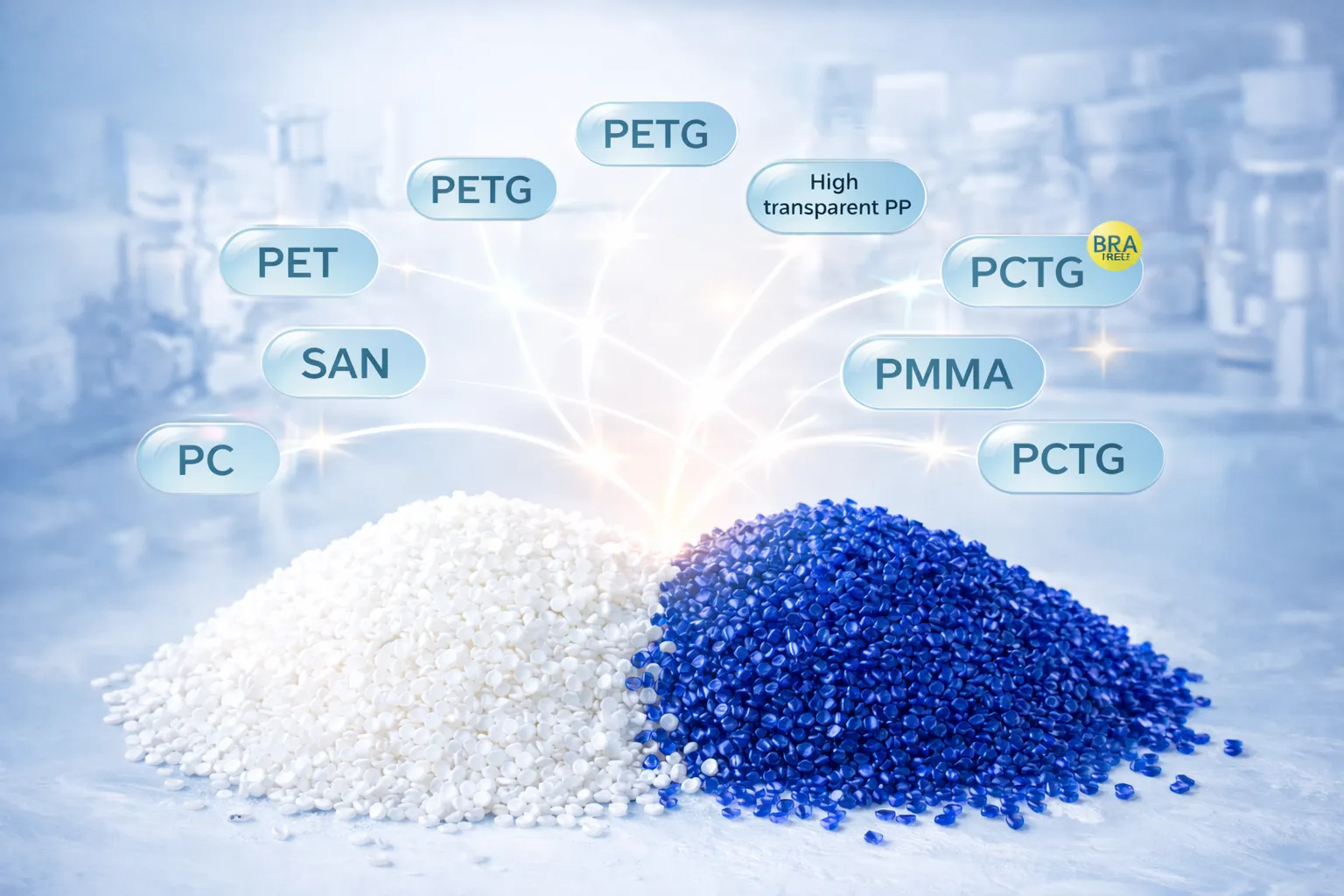
Kore K-EPR
30% rPET akımı
KFDA
gıda teması
ABD FDA 21 CFR 177
İçecek PET
AB 10/2011
Plastik gıda teması
APR Tasarım®
Geri dönüştürülebilirlik
Hedeflenen seviyenin üzerinde rPET içeriğine ulaşan Koreli şişeleme şirketleri, EPR ücretlerinde indirim (5-25% ölçeğinde) kazanıyor ve sürdürülebilirlik bilincine sahip perakende kanallarında rekabetçi marka konumlandırması elde ediyor. Başlıca markalar (Lotte Chilsung Baeksansoo premium, Jeju Samdasoo amiral gemisi), konumlandırma farklılaştırması olarak, zorunlu tarihten 2-3 yıl önce 50% rPET içeriğine ulaşmayı taahhüt ediyor.
10. Sonuç
Kore'deki içecek PET üretimi, ISBM spektrumunun yüksek hacimli, maliyet optimizasyonlu ucunda faaliyet göstermektedir. Beş kategori segmenti (durgun su, gazlı içecekler, hazır çay/kahve, meyve suyu, spor içecekleri) her biri farklı ön kalıp tasarımı, esneme oranı ve sıcak dolum veya basınç derecelendirme gereksinimlerini belirler. Eumseong, Cheongwon ve Wonju'daki Koreli şişeleme şirketleri, ulusal içecek tüketimini destekleyen ve büyüyen Kore içecek ihracat hacmini artıran, hafifletilmiş şişeler üreten ISBM üretim platformlarıyla 14 milyar ABD doları değerinde bir pazara öncülük etmektedir.
Ever-Power'ın Koreli mühendislik ekibi, platform seçiminden K-EPR uyumluluk dokümantasyonuna kadar içecek şişesi geliştirme sürecinin tamamını destekleyerek, tüm içecek kategorilerindeki ana akım şişeleme şirketlerine ve sürdürülebilirlik odaklı premium markalara hizmet vermektedir.
İçecek PET üretim hattınızı büyütmeye hazır mısınız?
İçecek kategorinizi (su/gazlı içecek/çay/meyve suyu/spor içeceği), şişe formatınızı, hedef rPET içeriğinizi ve yıllık hacminizi paylaşın. Kore ekibimiz 48 saat içinde K-EPR uyumluluk planı içeren eksiksiz bir platform önerisi sunacaktır.
İlgili Teknik Makaleler
Teknik
İki Eksenli Moleküler Yönelim
Hafifletilmiş PET içecek ambalajlarında üstten yükleme dayanımını sağlayan polimer fiziği.
Teknik
Ön Kalıp Tasarımını Anlamak
Hafif içecek şişeleri ve gazlı içecek basıncı için ön şekillendirme optimizasyonu
Teknik
Sıcak Yolluk Sistemleri
8-12 gözlü içecek üretimi için yüksek gözlü sıcak yolluk mühendisliği
Daha Fazla Kaynağa Göz Atın
Editör: Cxm