Application of ISBM · Household Chemicals · Korean Market 2026

ISBM Korean Household Chemical
Bottle Guide

Korean household chemical packaging requires resins, mould materials, and production processes that resist the exact chemical formulations inside the bottle — not generic “chemical resistant” claims. A PP bottle that fails after 3 months of 5% NaOH exposure, or a PET bottle that stress-cracks in 10% ethanol cleaning solution, creates a recall event, not just a quality complaint.

PP · PET · HDPE Comparison
GHS/CLP Compliance 2026
Child-Safe Closure Standards

Korean Ever-Power Engineering Desk · Ansan-si · May 2026


KRW 2.6T

Korean household chemical market 2025

68%

Korean cleaning products in plastic bottles (vs pouches/aerosols)

K-EPA 2026

New child-safety closure mandate for household chemical products

PP > PET

Dominant ISBM resin for Korean household chemical bottles

1. Why Chemical Compatibility Is the First ISBM Design Decision

Korean household chemical ISBM packaging cannot be specified starting from aesthetics or volume — it must start from chemical compatibility. The bottle wall is the primary barrier between a product that may contain alkali concentrations up to 5% NaOH (drain cleaners), acidic concentrations up to 9% HCl (toilet bowl cleaners), or surfactant blends at 15–40% active matter (concentrated detergents), and the consumer’s home environment. A material that is technically adequate for 500ml still water offers no meaningful assurance for 750ml concentrated laundry detergent.

The failure modes of chemically incompatible plastic are specific and predictable. PP in concentrated nitric acid stress-cracks within days. PET in sodium hypochlorite (bleach) solutions above 3% concentration shows visible yellowing and embrittlement within 6 weeks. PETG in ethanol above 40% swells and loses dimensional stability within 30 days. These failures are not gradual quality degradation — they are sudden structural failures that cause leakage, spillage, or catastrophic bottle rupture in consumer use, triggering product liability claims under the Korean Product Liability Act (제조물 책임법).

ボトル3

For Korean ISBM producers, chemical compatibility validation is not a documentation formality — it is the specification step that determines the entire production decision tree. A Korean laundry brand switching from HDPE to ISBM PP bottles requires explicit chemical compatibility testing of the specific ISBM PP grade against their exact formulation — not a generic “PP is chemically resistant” declaration. The broader household chemical market context, including Korean brand landscape and regulatory environment, is covered in the Korean household chemical ISBM production guide.

2. Chemical Resistance Matrix: PP vs PET vs PETG

Chemical / Application Conc. PP ISBM PET ISBM PETG ISBM Typical Korean Product
Anionic surfactants (LAS) 5–30% ✓ Excellent ✓ Good ⚠ Moderate Laundry detergent, dishwash
Sodium hypochlorite (NaOCl) 3–5% ✓ Excellent ✗ Poor ✗ Poor Bleach, bathroom cleaner
Sodium hydroxide (NaOH) 1–5% ✓ Excellent ✓ Good ⚠ Moderate Drain cleaner, oven cleaner
Hydrochloric acid (HCl) 5–10% ✓ Good ⚠ Moderate ✗ Poor Toilet bowl cleaner, tile cleaner
Ethanol / IPA 50–75% ✓ Excellent ✓ Good ✗ Poor Hand sanitiser, surface disinfectant
Citric acid 5–15% ✓ Excellent ✓ Excellent ✓ Good Limescale remover, eco cleaner
Cationic disinfectant (QAC) 1–5% ✓ Excellent ✓ Excellent ⚠ Moderate Kitchen disinfectant, surface spray

✓ Excellent = no observable degradation at 6 months, 23°C. ✓ Good = minor surface gloss reduction only. ⚠ Moderate = acceptable at <3 month shelf life with confirmation test. ✗ Poor = not recommended — structural failure risk within weeks. All ratings at standard consumer product concentrations; verify against your exact formulation before production approval.

The critical takeaway from this matrix for Korean ISBM producers: PP is the universal choice for oxidising cleaning agents (bleach, hypochlorite) and alkaline products (drain cleaner, oven cleaner) — PET and PETG simply cannot contain these formulations safely. For non-oxidising surfactant-based cleaners (laundry detergent, dishwash), PET is viable and offers the optical clarity advantage that PP cannot provide. For Korean premium eco-cleaners using citric acid and plant-based surfactants, both PET and PP are acceptable — the brand makes the selection based on aesthetic preference. The full material decision framework for PP versus PET in Korean chemical applications is covered in the PP vs PET material selection guide.

3. Korean Household Chemical Product Categories and Bottle Specifications

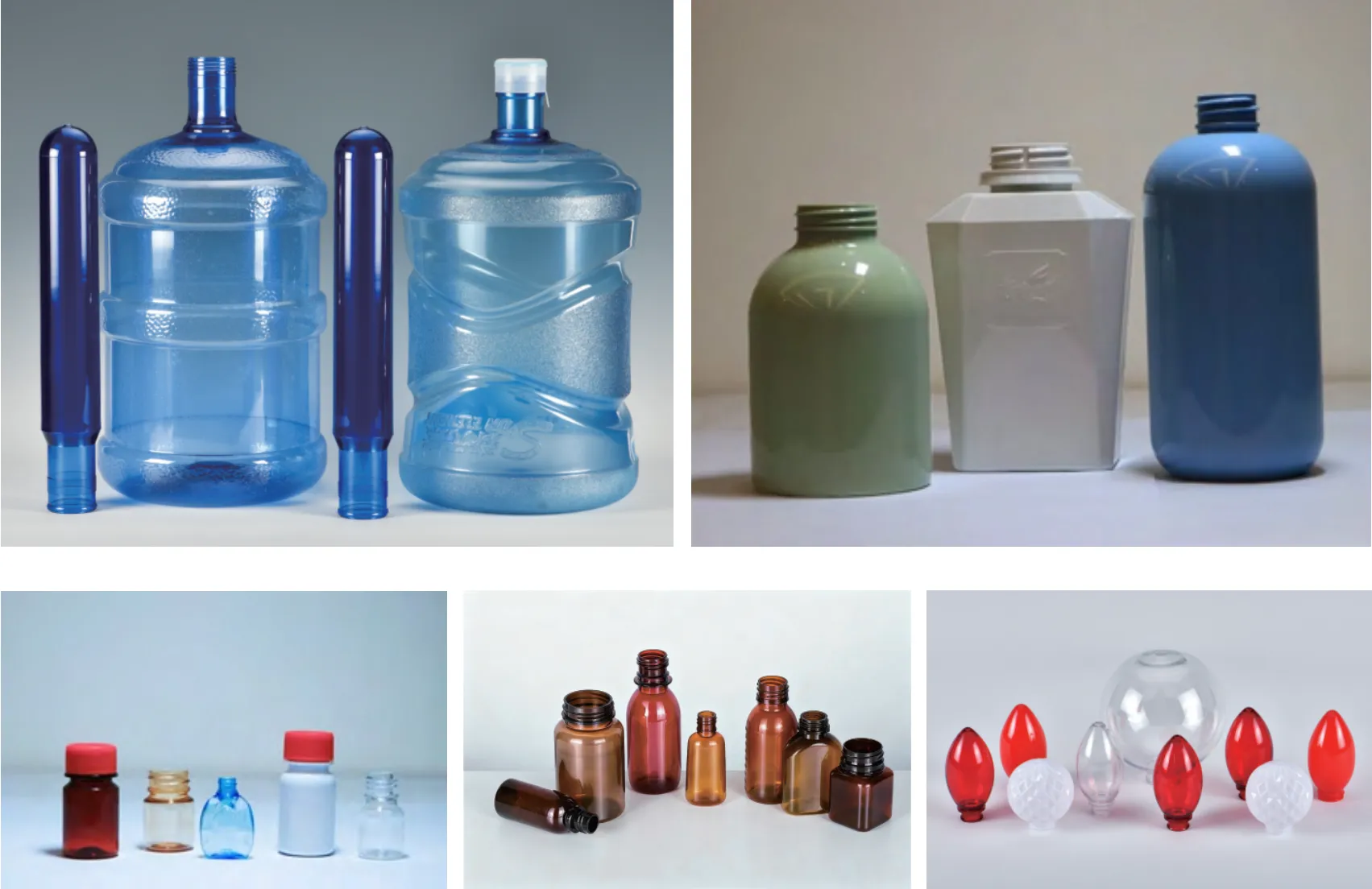
Korean ISBM household chemical bottles — PP laundry detergent, PET dish soap, and multi-surface spray bottles for Korean cleaning product brands
Korean ISBM household chemical bottle range — PP for bleach and alkaline cleaners, PET for surfactant-based detergents requiring clarity, and multi-format dispensing profiles for Korean Aekyung, LG H&H, and SC Johnson Korea brands.

Laundry Detergent — PP ISBM, 750ml–2L, trigger or pouring cap

Korea’s most competitive cleaning bottle category. Dominant brands (LG H&H Ecovista, Aekyung Le Chatelier, SK E&S Greenmate) drive KRW 850B in annual sales. Bottle requirements: PP ISBM for surfactant and enzyme compatibility; opaque or translucent white/colour to mask product yellowing over shelf life; flip-top or trigger dispensing; GHS Category 3 irritant labelling integration.

Key Specs

Resin: PP homo/copo
Neck: 28mm or 38mm
Min wall: 0.32mm
Top-load: ≥120N
Chemical: LAS + enzyme OK

Bleach / Disinfectant — PP ISBM, 500ml–1.5L, pour or flip-top

The most chemically demanding ISBM application. Korean brands (Yuhanrox, SK Clenni) sell sodium hypochlorite at 3–5% concentration — a formulation that destroys PET and PETG within weeks. Only PP ISBM provides adequate resistance. White or translucent PP with UV stabiliser is standard because NaOCl is photodegraded by UV exposure. Bottle must meet K-EPA child-safety closure requirements from 2026 (see Section 5).

Key Specs

Resin: PP + UV stabiliser
Neck: 28mm (child-safe)
Min wall: 0.35mm
Top-load: ≥100N
Chemical: NaOCl 5% OK

Premium Eco Cleaner — clear PET ISBM, 300–750ml, spray or pump

The fastest-growing Korean household chemical ISBM sub-category, driven by K-EPA green product certification (녹색제품) and Korean parent demand for safe-home cleaning products. Citric acid and plant-derived surfactant formulations are PET-compatible, allowing Korean eco brands (Good Base, Toss & Wash, Creamo) to specify clear PET ISBM bottles that display the naturally pale product colour as a quality signal — a K-Beauty-adjacent aesthetic strategy applied to cleaning products.

Key Specs

Resin: Clear PET
Neck: 28mm spray
Min wall: 0.22mm
Gloss: ≥88 GU
Chemical: Citric acid OK

4. GHS/CLP Labelling Requirements and Korean Bottle Design

Korea’s Chemical Products and Biocides Control Act (생활화학제품 및 살생물제의 안전관리에 관한 법률, enacted 2019, fully effective 2021) mandates GHS-aligned hazard labelling on all household chemical products — including the pictogram, signal word (위험/경고), and hazard/precautionary statements that must be displayed on the primary packaging. For ISBM bottle designers, the GHS labelling mandate has three direct packaging implications:

Label Panel Area

GHS requires that all required label elements fit on the primary label without crowding. Korean household chemical bottles must provide a minimum label panel area of 40cm² for products ≤500ml and 60cm² for 500ml–3L. This drives minimum body diameter and label panel height requirements that ISBM mould designers must accommodate in the bottle silhouette from the outset — aftermarket label area modifications on ISBM bottles are not possible.

Pictogram Visibility

GHS pictograms require a minimum 1.0cm² area each on bottles 500ml–3L. The label panel surface finish must support permanent ink printing or pressure-sensitive label adhesion under the specific chemical exposure conditions the product creates (a bottle of 5% NaOCl will challenge label adhesion — the label specification must account for this). PP bottle surfaces for strong alkaline products should specify surface corona treatment for improved label adhesion.

Colour and Opacity

Korean household chemical regulations recommend against clear/transparent primary containers for products classified as GHS Category 1 or 2 acute oral toxicity — the visual similarity to beverage bottles creates accidental ingestion risk. Korean ISBM producers serving brands with Category 1/2 formulations should specify at minimum a tinted, semi-opaque bottle rather than glass-clarity PET — regulators have flagged this in K-EPA household chemical safety audits since 2023.

5. Child-Safety Closure Compatibility: K-EPA 2026 Standard

Korea’s Ministry of Environment (MOE) issued the K-EPA household chemical child-safety closure requirement that took effect January 2026, mandating that household chemical products classified as acutely toxic (GHS Category 1–3) or corrosive must be supplied in child-resistant closure (CRC) packaging. The standard referenced is KS M ISO 8317 (equivalent to ISO 8317, the international child-resistant closure standard), requiring that the closure passes the standard child-panel test (5-year-old child cannot open within 5 minutes) while adult-accessible within 60 seconds.

For Korean ISBM producers, the child-safety closure mandate creates a neck finish compatibility requirement that must be specified at the mould design stage. CRC closures for Korean household chemical bottles use one of two mechanisms: push-and-turn (requires a specific neck thread geometry with an interrupted thread profile that the closure latches into) or squeeze-and-turn (requires a neck OD and thread profile that allows the squeeze-deflect mechanism to engage). Both mechanisms require neck finish geometry that differs from standard food or beverage closures — and the Korean ISBM mould must be designed with the specific CRC closure supplier’s neck finish specification, not a standard GPI neck profile.

Korean ISBM producers entering the household chemical segment should confirm the CRC closure supplier before finalising neck finish tooling — the closure supplier provides the bottle neck finish specification drawing that the mould must match. The three Korean CRC closure suppliers who serve the household chemical market (Bericap Korea, Silgan Korea, Closure Systems International Korea) each have slightly different neck finish specifications for their push-and-turn mechanisms, and these are not interchangeable. The 9-factor mould selection framework includes neck insert specification as a critical procurement checkpoint — documented in the Korean ISBM mould selection guide.

射出延伸ブロー成形アプリケーション6

6. Dosing and Dispensing: Neck Profiles for Korean Household Chemical Formats

Korean household chemical products use a wider range of dispensing mechanisms than beverage or personal care products, and each dispensing format requires a specific neck finish that Korean ISBM mould designers must accommodate. The four primary dispensing formats in Korean household chemicals and their neck finish requirements:

Format Neck Profile CRC Required? Korean Application
Flip-top cap 28mm or 38mm CT GHS Cat 1–3: Yes Laundry detergent, fabric softener
Trigger spray 28mm (DIN 28mm) GHS Cat 1–3: Yes Surface cleaner, disinfectant spray
Dosing cap (measuring) 38mm or 48mm Cat 4: Depends Concentrated laundry, dishwasher
Pouring neck (angled) 38mm or 48mm Cat 4–5: Optional Drain cleaner, toilet descaler

Korean trigger spray bottles for cleaning products present a specific ISBM tooling challenge: the 28mm DIN neck profile used for Korean trigger spray closures (standard for most Korean household spray brands) has slightly different dimensional tolerances from the standard 28mm GPI beverage neck — the DIN profile has a shorter thread engagement depth (2.5 turns versus 3.5 turns GPI) designed for the one-quarter-turn attach-detach action of trigger spray assemblies. Korean ISBM mould suppliers without household chemical experience occasionally supply standard 28mm GPI tooling for trigger spray applications — creating closures that are technically interchangeable but have different torque characteristics that cause consumer complaints about trigger heads loosening during use.

7. Korean Market Leaders and Supply Qualification Requirements

Korea’s household chemical market is dominated by four major brand groups: Aekyung (애경산업, owner of 2080 brand and Sparkle), LG H&H (LG생활건강, owner of Vim, Petal, Tech), SK E&S (household chemical division), and P&G Korea (Ariel, Fairy, Flash). Below this tier, a significant and growing cohort of Korean domestic natural cleaning brands (Sonmat, Clean & Clear, Forest Life) serve the premium eco-segment through Coupang and the Maeil Dairy-adjacent home care channel.

Tier 1 Korean household chemical brands (Aekyung, LG H&H) run supplier qualification processes lasting 12–20 weeks that include: chemical compatibility testing against each brand’s specific formulation (the supplier must submit 50 sample bottles for 90-day fill-and-store testing at 40°C before approval); K-EPA household chemical product labelling compliance review (the packaging must support all GHS required elements at their specified minimum sizes); CRC closure functional test with the brand’s approved closure supplier; and a facility audit focused on production consistency (cavity-to-cavity weight balance, process control documentation). Korean ISBM producers who are entering Tier 1 household chemical supply for the first time should engage a Korean regulatory consultant to prepare the compliance documentation package — the documentation requirements are more extensive than food or personal care packaging and have higher error cost (failing a chemical compatibility test after 90 days is expensive in both time and sample material). The production quality system that supports this level of documentation consistency is built on the scrap rate control framework at the Korean ISBM scrap rate reduction guide.

8. Machine Platform Selection for Korean Household Chemical ISBM

PP ISBM for Korean household chemicals runs at lower conditioning temperatures (15–40°C for PP versus 95–112°C for PET) and requires different stretch rod and blow nozzle setups compared to PET production. Korean ISBM producers planning to run both PET food/beverage and PP household chemical production on the same machine must verify that their machine platform supports the full conditioning temperature range from PP (15°C — near-ambient) to PET (110°C) — a 95°C span that requires both effective heating and effective cooling in the conditioning system.

The HGY250-V4 is the recommended Korean household chemical ISBM platform for the 750ml–2L laundry and cleaning product formats because of its higher clamping force (250kN) and preform weight capacity (250g) that accommodate the heavier PP preforms required for chemical resistance thickness requirements. PP density (0.905 g/cc) is lower than PET (1.37 g/cc), meaning a PP preform at equivalent wall thickness weighs approximately 34% less — but PP chemical resistance bottles require thicker walls than food-grade PET, so the actual preform weight differential is smaller in practice. The 10-factor machine selection framework that properly evaluates household chemical ISBM requirements, including PP processing capability, is in the Korean ISBM machine selection guide.

射出延伸ブロー成形機 - アプリケーション-1-3

よくある質問

Q1 — Why can’t PET be used for Korean bleach bottles when it is used for many other cleaning products?

Sodium hypochlorite (NaOCl, the active ingredient in bleach) attacks PET through a dual mechanism. First, the strongly oxidising hypochlorite ion oxidises the ester groups in the PET polymer backbone, cleaving chains and progressively reducing molecular weight — manifesting as yellowing, brittleness, and finally structural failure. Second, residual chlorine gas released from hypochlorite solutions in the headspace creates a chlorine atmosphere inside the bottle that attacks the PET surface from the inside. PP’s polyolefin chemistry does not contain ester groups susceptible to oxidative attack, making it inherently resistant to hypochlorite at consumer-use concentrations. Korean bleach producers should not under any circumstances substitute PET or PETG ISBM bottles for PP in hypochlorite-containing products, regardless of any other commercial pressure.

Q2 — How should a Korean ISBM producer conduct chemical compatibility testing for a new household chemical customer?

The standard chemical compatibility test protocol for Korean household chemical ISBM qualification: produce 60 sample bottles in the specified resin and wall specification; fill 20 bottles with the actual product at ambient temperature, 20 at 40°C (accelerated), and retain 20 as unfilled controls; seal all bottles with the production closure at standard torque; store all groups at 40°C/65% RH for 90 days; evaluate at 30, 60, and 90 days against criteria: no visible deformation, no weight loss exceeding 0.5% (indicating product permeation through wall), no closure torque reduction exceeding 20% from initial, no visual discolouration or surface change beyond the control group. Pass/fail at 90 days is the standard Korean Tier 1 household chemical brand compatibility acceptance criterion. Third-party testing at accredited Korean laboratories (KIST, KOTRA certified labs) provides documentation acceptable to Korean regulatory authorities for K-EPA household chemical product registration.

Q3 — Is ISBM PP able to run the same mould tooling as HDPE injection-blown bottles?

No — ISBM PP production requires ISBM-specific mould tooling that is not compatible with extrusion blow mould (EBM) tooling designed for HDPE. The fundamental difference is the production process: ISBM injects a preform and then stretch-blow moulds it in a 4-station rotary cycle; EBM for HDPE extrudes a hollow parison and closes a split mould around it. The mould cavity geometries, parting line positions, neck insert formats, and machine interfaces are completely different. Korean household chemical producers transitioning from HDPE to ISBM PP require new mould tooling investment — but the investment delivers the dimensional precision, optical quality (for transparent eco cleaner bottles), and wall thickness consistency that HDPE EBM cannot achieve.

Q4 — What PP grade is recommended for Korean household chemical ISBM bottles?

Korean ISBM PP household chemical bottles use either PP homopolymer (for maximum chemical resistance and stiffness — appropriate for bleach and alkaline cleaner bottles where transparency is not required) or PP random copolymer (for improved clarity and reduced haze — appropriate for translucent surfactant-based cleaner bottles where visual quality matters). PP homopolymer MFI 8–12 g/10min (230°C/2.16kg) is the standard ISBM processing grade; PP random copolymer MFI 6–10 g/10min is used for clearer applications. Both grades must be food-contact compliant (KFDA Chapter 2) for household cleaning products that will contact food preparation surfaces. Korean ISBM-grade PP is available domestically from LG Chem (PP RP3005 and equivalents) and SK Geo Centric.

Q5 — How does K-EPA’s child-safety closure requirement apply to eco-certified cleaning products?

Korean K-EPA green certification (녹색제품 인증) applies to the environmental impact of the formulation and packaging — it covers recyclability, biodegradability, and reduced hazardous ingredient content. It does not exempt the product from CRC requirements if the formulation is classified as GHS Category 1–3 acute oral toxicity or corrosive. Interestingly, most Korean eco-certified cleaning products use citric acid and plant-based surfactant formulations that classify as GHS Category 4 or Category 5 (lower hazard) — meaning CRC is optional rather than mandatory for these products under the 2026 K-EPA standard. Korean eco-cleaning brands should confirm their exact GHS classification before investing in CRC tooling — many do not require CRC and can specify standard screw caps, which simplifies the bottle neck finish design and reduces tooling cost.

Q6 — What annual production volume justifies in-house ISBM for Korean household chemical brands?

The in-house ISBM breakeven for Korean household chemical brands is typically 5–8 million units annually per bottle SKU — higher than for food or personal care ISBM because household chemical production requires dedicated PP machinery and mould tooling that cannot be shared with food-grade PET production without extensive cleaning and qualification. Korean household chemical brands below this volume threshold typically source from Korean ISBM contract packaging specialists who run dedicated PP lines for chemical applications, amortising the dedicated equipment cost across multiple customer brands. Korean ISBM contract packagers specialising in household chemicals represent a growing segment as the CRC mandate and GHS labelling requirements create supply chain barriers that favour specialist producers over general packaging converters.

Household Chemical Packaging Support

Planning a Korean Household Chemical ISBM Bottle Programme?

Korean Ever-Power provides chemical compatibility resin selection, CRC closure neck finish specification, K-EPA compliance documentation support, and PP ISBM machine configuration for Korean household chemical packaging contracts.

Request Household Chemical Packaging Consultation

Related Resources


編集者: Cxm


工場のVRツアー

タグ: