Wadah Makanan Bayi IBM · Stoples Mulut Lebar PP · Bebas BPA · Makanan Bayi · Korea Ever-Power
Wadah Makanan Bayi
IBM ManufacturingPanduan Toples Mulut Lebar PP
Stoples makanan bayi dan wadah susu formula bayi membutuhkan kepatuhan kontak makanan yang paling ketat dibandingkan aplikasi kemasan makanan IBM lainnya — bahan bebas BPA, sertifikasi kontak makanan FDA dan EU, rekayasa penutup yang presisi dan anti-rusak, stabilitas pengisian panas untuk bubur bayi yang dipasteurisasi, dan risiko kontaminasi garis pemisah nol. Mesin IBM seri ZQ Ever-Power Korea memproduksi stoples makanan bayi PP bebas BPA bermulut lebar dari 80ml hingga 350ml untuk pasokan OEM merek makanan bayi global.
Botol Bayi 80ml – 350ml
ZQ40 • ZQ60 • ZQ80 IBM
KOREA EVER-POWER · ANSAN-SI, GYEONGGI-DO · JULI 2026
MAKANAN BAYI STOPLES IBM · REFERENSI SPESIFIKASI UTAMA
RENTANG VOLUME
80ml – 350ml
Rentang kemasan makanan bayi IBM: kemasan bubur bayi sekali saji 80ml (ZQ40, 10 rongga) hingga kemasan makanan balita 350ml (ZQ80, 6 rongga). Format inti makanan bayi IBM global: 100ml (bubur Tahap 1, 4–6 bulan), 125ml (Tahap 2, 6–8 bulan), 190ml (Tahap 3, 8–12 bulan), 250ml (makanan balita, 12 bulan ke atas). Kepatuhan terhadap standar tahapan makanan bayi MFDS Korea berlaku untuk format kemasan makanan bayi IBM di pasar Korea.
PERSYARATAN MATERIAL
PP #5 Bebas BPA
Bahan wadah makanan bayi IBM: PP (polipropilen) adalah bahan wadah makanan bayi yang paling disukai secara global karena formulasinya bebas BPA (PP tidak mengandung bisphenol-A), sesuai dengan standar kontak makanan FDA 21 CFR 177.1520, dan tidak ada kekhawatiran zat pengganggu endokrin pada standar peraturan makanan bayi global (UE, FDA AS, MFDS Korea, FSANZ Australia, MHLW Jepang). Wadah makanan bayi PP #5 aman untuk mesin pencuci piring pada suhu maksimum 65°C dan aman untuk microwave untuk menghangatkan makanan oleh orang tua.
PERSYARATAN PENGISIAN PANAS
75–85°C
Suhu pengisian panas bubur makanan bayi: 75–85°C (pasteurisasi bubur sayuran dan buah pada jalur pengisian merek makanan bayi). Stoples makanan bayi PP IBM (homopolimer PP, HDT 100–110°C pada 0,45 MPa) tahan terhadap pengisian panas 85°C tanpa deformasi dimensi dengan ketebalan dinding badan minimal 1,0 mm dan dinding bahu 1,3 mm. Penyegelan vakum dengan tutup terpasang setelah pengisian memastikan makanan bayi tetap stabil pada suhu ruangan selama 12–24 bulan masa simpan jika belum dibuka sesuai spesifikasi merek makanan bayi global.
REKOMENDASI ZQ
ZQ40 / ZQ60
ZQ40: Stoples makanan bayi 80–150ml (8–12 rongga). ZQ60: Stoples makanan bayi 125–250ml (6–10 rongga). ZQ80: Stoples makanan balita 250–350ml (4–8 rongga). ZQ60HE serba listrik direkomendasikan untuk produksi stoples PP IBM ruang bersih merek makanan bayi premium di mana presisi injeksi servo dan konsumsi energi rendah memastikan dokumentasi kualitas produksi merek makanan bayi premium.
BAGIAN 01
Stoples Makanan Bayi IBM: Bahan PP Bebas BPA dan Kerangka Keamanan Regulasi
Wadah makanan bayi menghadapi persyaratan keamanan bahan kontak makanan yang paling ketat di industri pengemasan makanan global — konsumen produk adalah bayi yang rentan yang sistem organnya yang sedang berkembang memiliki toleransi paparan bahan kimia yang lebih rendah daripada orang dewasa, dan regulator keamanan makanan bayi global menerapkan standar keamanan kimia pencegahan yang melebihi persyaratan bahan kontak makanan standar. Stoples makanan bayi PP IBM memenuhi standar keamanan yang tinggi ini karena PP (polipropilen) secara inheren bebas BPA, tidak mengandung plasticizer ftalat, tidak mengandung penstabil termal logam berat, dan tidak mengandung bahan kimia klorin terkait PVC, menjadikan PP sebagai bahan wadah utama yang paling disukai secara global untuk makanan bayi. Korea Ever-Power's Mesin IBM seri ZQ Memproduksi stoples makanan bayi PP dengan spesifikasi PP minimal aditif yang dipersyaratkan oleh standar keamanan kemasan merek makanan bayi global.

Minimisasi Aditif PP untuk Makanan Bayi dalam Toples IBM
Produksi toples PP IBM untuk makanan bayi di Korea Ever-Power Ansan-si menggunakan jenis PP dengan kandungan aditif minimal yang secara khusus memenuhi syarat untuk aplikasi kontak makanan bayi. Aditif yang dibatasi atau dihilangkan untuk PP IBM makanan bayi: zat pelumas oleamida (nol oleamida — merek makanan bayi secara universal mensyaratkan PP bebas pelumas untuk wadah makanan bayi; migrasi oleamida ke dalam bubur makanan bayi pada tingkat jejak merupakan kekhawatiran orang tua terlepas dari ambang batas kepatuhan peraturan); kandungan PP daur ulang (nol — PP IBM makanan bayi harus berupa PP murni 100% tanpa kandungan daur ulang pasca-konsumen atau pasca-industri untuk pasokan merek makanan bayi); erucamide (zat pelumas alternatif, dibatasi hingga <0,05% dalam jenis PP makanan bayi); penstabil UV (diminimalkan hanya pada antioksidan esensial, tanpa penyerap UV HALS kecuali diperlukan untuk spesifikasi rak merek makanan bayi tertentu). Korea Ever-Power memenuhi syarat untuk produk PP kelas IBM untuk makanan bayi dengan homopolimer LG Chem H5300 (kelas PP kontak makanan bayi dengan aditif rendah, MFR 8–12 g/10min, nol oleamida, FDA 21 CFR 177.1520 dengan pengungkapan aditif merek makanan bayi tertentu) untuk produksi kemasan makanan bayi ZQ40 dan ZQ60 di Ansan-si.
Stoples Makanan Bayi PP IBM: Tanpa Garis Pemisah dan Dasar Tanpa Sambungan untuk Kebersihan
Keunggulan higienis toples makanan bayi IBM PP dari konstruksi tanpa sambungan sangat signifikan untuk aplikasi makanan bayi di mana retensi residu bubur makanan bayi pada cacat permukaan wadah menimbulkan risiko keamanan makanan bayi. Dasar toples makanan bayi IBM PP tanpa sambungan: stasiun peniupan IBM membentuk dasar toples makanan bayi sebagai kubah PP kontinu tanpa sambungan jepit — tidak ada alur sambungan dasar yang tertekan di mana bubur makanan bayi dapat menumpuk dan sulit dibersihkan di stasiun pencucian wadah merek makanan bayi (tempat wadah yang dapat digunakan kembali dibersihkan) atau di mesin pencuci piring rumah orang tua. Badan toples makanan bayi IBM PP: stasiun peniupan IBM membentuk badan toples dari dalam ke luar melawan rongga cetakan tiup — tidak ada tonjolan garis pemisah di bagian dalam badan toples makanan bayi tempat residu bubur menumpuk. Bagian dalam toples makanan bayi IBM PP halus Ra ≤0,4μm (dikontrol oleh rongga injeksi ZQ dan kualitas permukaan batang inti di Stasiun IBM 1), memenuhi spesifikasi higienis bagian dalam wadah merek makanan bayi untuk drainase isi bubur penuh dan inspeksi visual bebas residu saat digunakan konsumen.
BAGIAN 02
IBM vs Kaca untuk Wadah Makanan Bayi: Perbandingan Proses dan Keamanan
| PARAMETER | Stoples Makanan Bayi PP IBM | STOPLES MAKANAN BAYI KACA |
|---|---|---|
| Risiko hancur | Tidak ada — Toples makanan bayi PP IBM tahan pecah; tidak ada risiko cedera bayi akibat pecahan kaca saat terjatuh di rak toko atau di dapur konsumen. | Risiko tinggi — pecahnya botol kaca makanan bayi di rak toko atau di tempat pemberian makan oleh orang tua menciptakan risiko cedera bayi akibat pecahan kaca dan kewajiban penarikan merek. |
| Status bebas BPA | Bebas BPA berdasarkan kimia material — PP tidak mengandung bisphenol-A. | Bebas BPA (kaca inert) — tetapi lapisan penutup kaca mungkin mengandung BPA dalam beberapa formulasi penutup logam lama; lapisan penutup kaca makanan bayi modern bebas BPA. |
| Berat (stoples 100ml) | Stoples PP IBM ~12–16g (distribusi 8× lebih ringan daripada stoples kaca) | stoples kaca ~80–120g |
| Biaya kontainer | Lebih rendah — PP IBM sekitar 30–55 KRW/stoples (100ml, 10 rongga ZQ40 pada 1 juta pcs/tahun) | Lebih tinggi — stoples makanan bayi kaca ~KRW 80–150/stoples dengan jumlah setara 1 juta pcs/tahun termasuk tutup kaca. |
| Visibilitas (puree) | PP alami: tembus cahaya (warna puree sebagian terlihat). PCTG IBM: sebening kristal | Kejernihan penuh — gelas sepenuhnya transparan untuk visibilitas warna dan tekstur puree yang sempurna. |
| Pemanasan ulang dengan microwave | PP aman untuk microwave — orang tua dapat memanaskan kembali makanan bayi dalam wadah PP IBM langsung di dalam microwave (tutup dilepas). | Tidak aman untuk microwave — toples kaca di dalam microwave dapat memanas secara tidak merata; tutup logam tidak aman untuk microwave. |
BAGIAN 03
Teknologi Pengisian Panas dan Penutup Anti-Rusak untuk Toples Makanan Bayi IBM
Rekayasa Toples IBM untuk Makanan Bayi Isi Panas
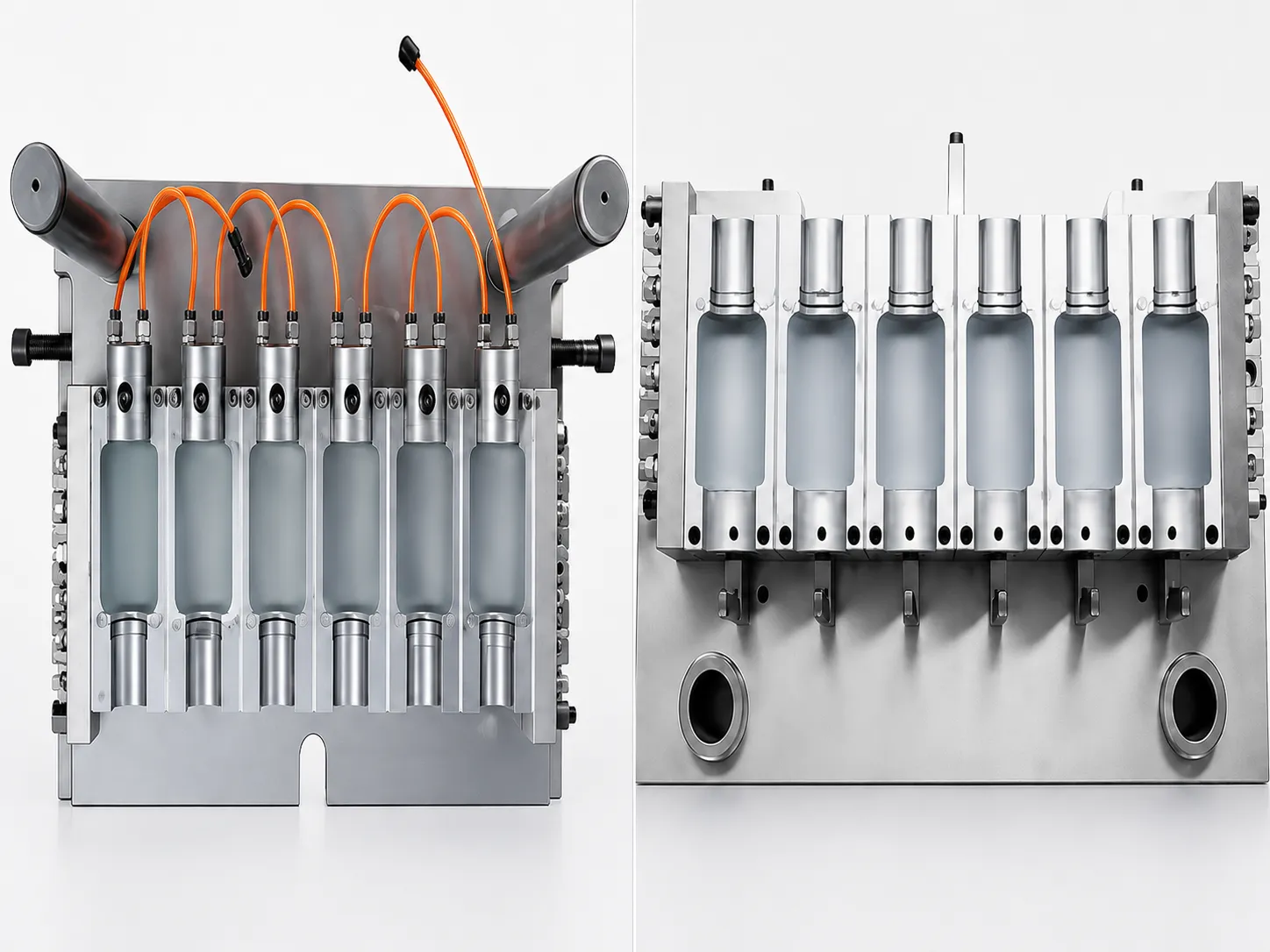
Pengisian bubur bayi panas pada suhu 75–85°C ke dalam stoples PP IBM bermulut lebar memerlukan rekayasa stoples IBM khusus untuk stabilitas dimensi selama paparan suhu pengisian panas. Parameter rekayasa pengisian panas stoples makanan bayi PP IBM: dinding badan minimal 1,0 mm homopolimer PP (kelas PP kaku, modulus lentur ≥1.600 MPa, MFR 8–12 g/10 menit) untuk menahan pengisian panas 85°C tanpa defleksi panel badan. Dinding bahu minimal 1,3 mm (bahu stoples makanan bayi adalah zona konsentrasi tegangan termal pada pengisian panas, karena bubur yang diisi bersentuhan dengan permukaan bagian dalam bahu stoples di bawah ketinggian pengisian). Toleransi diameter luar mulut ±0,05 mm pada paparan termal pasca-pengisian 85°C: Diameter luar mulut toples makanan bayi PP IBM dikonfirmasi stabil secara dimensi setelah simulasi pengisian panas (isi dengan air 85°C, tutup, diamkan selama 10 menit, ukur diameter luar mulut) di tahap FAI Korea Ever-Power ZQ40 — diameter luar mulut harus tetap dalam ±0,05 mm setelah siklus termal pengisian panas untuk keterlibatan penutupan yang konsisten dan anti-rusak pada stasiun penutupan jalur pengisian otomatis merek makanan bayi. Pembentukan vakum pasca-pengisian: kontraksi bubur makanan bayi selama pendinginan dari 85°C ke 25°C menciptakan vakum internal (0,02–0,05 bar) yang menarik lapisan segel foil induksi dengan kuat ke permukaan leher toples makanan bayi — kerataan leher toples makanan bayi PP IBM (±0,05 mm) memastikan penarikan vakum yang seragam di seluruh perimeter segel induksi untuk integritas segel yang sempurna.
Desain Penutup Anti-Rusak untuk Toples Makanan Bayi IBM
Segel pengaman anti-rusak pada toples makanan bayi IBM merupakan sinyal utama keputusan pembelian orang tua di tingkat ritel — segel pengaman anti-rusak yang utuh meyakinkan orang tua bahwa toples makanan bayi belum dibuka atau terkontaminasi antara pengisian merek makanan bayi dan pembelian konsumen. Format segel pengaman anti-rusak toples makanan bayi IBM PP: segel foil induksi (toples makanan bayi IBM yang paling umum di dunia): foil aluminium + lapisan segel panas PP yang diikat secara induksi ke permukaan leher toples makanan bayi IBM PP di bawah tutup ulir. Segel foil induksi menghasilkan suara letupan yang khas saat pertama kali dibuka (pelepasan vakum), memberikan bukti anti-rusak yang terdengar yang diakui orang tua di seluruh dunia sebagai konfirmasi keamanan makanan bayi. Kerataan permukaan leher toples makanan bayi IBM PP ±0,05 mm dan Ra ≤0,4 μm sangat penting untuk ikatan segel induksi yang lengkap di seluruh diameter leher toples makanan bayi (segel parsial dari ketidakrataan permukaan leher menyebabkan kegagalan segel anti-rusak pada posisi kebocoran sudut). Tutup PP pengunci yang dapat dilepas (alternatif untuk pasar makanan bayi Asia): tutup PP satu bagian yang dapat dilepas dengan segel pengaman yang harus dipatahkan saat pertama kali dibuka — Geometri alur tutup pengunci toples makanan bayi PP IBM dibentuk dengan injeksi di Stasiun ZQ 1 pada OD ±0,05mm untuk gaya retensi tutup pengunci yang konsisten dan keterlibatan segel pengaman yang terlihat pada rak ritel makanan bayi.
BAGIAN 04
Kepatuhan Regulasi Wadah Makanan Bayi Global: Uni Eropa, AS, Korea, Jepang
Kepatuhan IBM terhadap Kemasan Botol Makanan Bayi di Uni Eropa dan AS
Kerangka kepatuhan wadah PP IBM makanan bayi Uni Eropa: Peraturan Uni Eropa 10/2011 tentang bahan kontak makanan plastik (kepatuhan Daftar Uni Eropa untuk resin PP dan aditif); Arahan Uni Eropa 2006/52/EC tentang aditif makanan (tidak ada aditif terlarang dalam PP kontak makanan bayi); Arahan Uni Eropa 1999/21/EC tentang makanan diet untuk keperluan medis khusus (dirujuk oleh merek makanan bayi Uni Eropa untuk standar bahan wadah makanan bayi); batas migrasi spesifik (SML) untuk zat aditif PP pada batas yang lebih ketat dari peraturan makanan bayi Uni Eropa dibandingkan dengan kontak makanan standar (SML wadah makanan bayi Uni Eropa untuk minyak mineral dan hidrokarbon sintetis: tidak terdeteksi oleh LC-GC/FID internal merek makanan bayi Uni Eropa pada batas deteksi 5 mg/kg). Kepatuhan wadah IBM makanan bayi FDA AS: FDA 21 CFR 177.1520 kontak makanan PP ditambah panduan wadah makanan bayi FDA (peraturan Susu Formula Bayi FDA 21 CFR Bagian 107 referensi kepatuhan kontak makanan bahan wadah untuk wadah susu formula bayi); tidak ada BPA (dikonfirmasi oleh kimia bahan PP — PP tidak mengandung bisphenol-A); Kepatuhan terhadap California Proposition 65 untuk semua aditif PP pada skenario paparan kontak makanan bayi. Korea Ever-Power menyediakan Deklarasi Kepatuhan EU 10/2011 dan surat kepatuhan FDA 21 CFR 177.1520 untuk toples makanan bayi PP IBM di produksi Ansan-si untuk pasokan OEM merek makanan bayi global.
Kepatuhan Wadah Makanan Bayi terhadap Standar MFDS Korea dan MHLW Jepang
Kepatuhan wadah makanan bayi menurut MFDS Korea: MFDS Korea mengatur bahan wadah makanan bayi berdasarkan Undang-Undang Sanitasi Makanan Korea (식품위생법) dan Standar dan Spesifikasi Korea untuk Wadah dan Kemasan Makanan (식품용 기구 등의 기준 및 규격). Stoples makanan bayi PP IBM harus memenuhi standar wadah plastik PP MFDS Korea: residu penguapan n-heptana ≤150 mg/L (simulasi makanan berlemak Korea untuk kandungan lemak makanan bayi); residu penguapan asam asetat 4% ≤30 mg/L (simulasi asam Korea untuk makanan bayi bubur buah); reduksi kalium permanganat ≤10 mg/L; logam berat (Pb ≤1 ppm, Cd ≤1 ppm); Khusus untuk wadah makanan bayi PP, MFDS Korea mensyaratkan tidak adanya ftalat DINP, DEHP, DBP (pembatasan ftalat MFDS Korea untuk produk bayi plastik dan wadah makanan untuk bayi). Korea Ever-Power menyediakan laporan kepatuhan kontak makanan MFDS Korea untuk toples makanan bayi PP ZQ IBM untuk pasokan merek makanan bayi domestik Korea. Toples makanan bayi MHLW Jepang: Kepatuhan daftar positif PP Notifikasi MHLW 370; spesifikasi PP JHOSPA; residu penguapan dalam air dan asam asetat sesuai standar wadah makanan bayi Jepang. Korea Ever-Power menyediakan data kepatuhan JHOSPA untuk pasokan ekspor toples PP merek makanan bayi IBM Jepang.
BAGIAN 05
Data Output Toples Makanan Bayi IBM: Tingkat Produksi ZQ40 dan ZQ60
| FORMAT | MODEL ZQ | LUBANG | STOPLES/JAM | JAR/HARI (16 JAM) |
|---|---|---|---|---|
| Kemasan bubur bayi 80ml tahap 1 (PP putih) | ZQ40 | 12 | ~6,200 | ~99,200 |
| Kemasan bubur bayi tahap 1 100ml (PP putih) | ZQ40 | 10 | ~5,400 | ~86,400 |
| Stoples makanan bayi tahap 2 125ml (PP putih) | ZQ40 | 8 | ~4,400 | ~70,400 |
| Stoples makanan bayi tahap 3 190ml (PP putih) | ZQ60 | 8 | ~3,200 | ~51,200 |
| Stoples makanan balita 250ml (PP putih) | ZQ60 | 6 | ~2,200 | ~35,200 |
BAGIAN 06
Pasar Makanan Bayi Korea IBM: Kepatuhan MFDS dan Ekspor K-Baby
Merek Makanan Bayi Korea, IBM Supply
Merek makanan bayi Korea (Namyang Dairy, Maeil Dairies, Ildong Foodis, Puresome Organic Baby Food) dan produsen ODM makanan bayi Korea (Korea Kolmar, divisi Cosmax Baby) memproduksi bubur bayi dan makanan balita yang membutuhkan stoples makanan bayi IBM PP untuk ritel domestik Korea (E-Mart, Lotte Mart, bagian bayi Olive Young) dan ekspor K-baby (ekspor makanan bayi premium Korea ke Asia Tenggara dan Tiongkok melalui saluran distribusi premium makanan bayi Korea). Pasokan stoples IBM makanan bayi Korea dari Korea Ever-Power Ansan-si: Produksi IBM ZQ40 dan ZQ60 di Ansan-si untuk stoples makanan bayi PP putih 100ml, 125ml, 190ml, dan 250ml untuk pasokan OEM merek Korea. Korea Ever-Power menyediakan laporan kepatuhan kontak makanan MFDS Korea, catatan batch produksi (lot resin PP, mesin ZQ, tanggal produksi), dan laporan FAI dimensi stoples makanan bayi dalam format bahasa Korea kepada pelanggan merek makanan bayi Korea untuk penerimaan QC masuk merek makanan bayi Korea di lokasi produksi makanan bayi Korea.
K-Baby Export: Botol Makanan Bayi IBM Korea untuk Pasar Makanan Bayi Global
Merek makanan bayi premium Korea yang mengekspor ke pasar global (Namyang Organic Baby Food ke China, Korea Kolmar baby food ODM ke Asia Tenggara, makanan bayi organik Korea ke Australia dan Selandia Baru) memerlukan stoples makanan bayi IBM PP yang memenuhi persyaratan peraturan makanan bayi global secara bersamaan — FDA 21 CFR (pasar AS), EU 10/2011 (UE dan Inggris), standar kontak makanan FSANZ Australia (pasar Australia) dan kepatuhan MFDS Korea (domestik Korea) dari batch produksi stoples IBM PP yang sama. Korea Ever-Power menyediakan paket dokumentasi kepatuhan multi-pasar untuk program stoples IBM makanan bayi ekspor K-baby global: satu batch produksi IBM Korea dengan deklarasi kepatuhan FDA, EU 10/2011, MFDS Korea, dan JHOSPA yang mencakup seluruh jangkauan pasar ekspor makanan bayi Korea. Korea Ever-Power merekomendasikan merek makanan bayi Korea untuk mengekspor produk mereka ke Tiongkok menggunakan wadah makanan bayi IBM PP (bukan kaca) khusus untuk ekspor ke Tiongkok karena risiko kerusakan wadah makanan bayi melalui pengiriman e-commerce di Tiongkok. Kerusakan wadah makanan bayi kaca dalam pengiriman kurir e-commerce di Tiongkok merupakan keluhan signifikan dari pelanggan merek makanan bayi Korea, dan wadah makanan bayi IBM PP anti pecah dapat menghilangkan risiko tersebut. Hal ini mendukung saluran penjualan langsung ke konsumen merek makanan bayi Korea di Tmall dan JD.com di Tiongkok tanpa kerumitan pengembalian dana dan logistik terkait kerusakan.
FAQ TEKNIK
Pertanyaan Teknik IBM tentang Wadah Makanan Bayi
Pertanyaan 01
Apa saja pilihan warna PP yang tersedia untuk stoples makanan bayi IBM, dan apakah masterbatch berwarna aman untuk kontak dengan makanan bayi?
Stoples makanan bayi PP IBM untuk pasokan merek makanan bayi global diproduksi dalam warna putih (putih buram dengan masterbatch TiO2), natural (PP transparan tanpa pigmen), dan kadang-kadang warna pastel (biru muda, hijau muda, kuning muda untuk pengkodean warna merek makanan bayi dari berbagai rasa bubur). Keamanan masterbatch untuk stoples IBM yang bersentuhan dengan makanan bayi: Korea Ever-Power hanya menggunakan masterbatch kelas makanan, sesuai dengan FDA 21 CFR dan EU 10/2011 untuk stoples makanan bayi IBM berwarna apa pun. Masterbatch TiO2 putih: Pigmen TiO2 (CI Pigment White 6) dalam pembawa PP dengan penambahan 2,0–2,5% untuk stoples makanan bayi IBM putih buram — TiO2 disetujui FDA sebagai pewarna kontak makanan dalam 21 CFR 178.3297 tanpa kekhawatiran migrasi pada penambahan 2,0–2,5% di dinding stoples PP IBM pada kondisi uji kontak makanan standar. PP alami (tanpa pigmen): tidak memerlukan masterbatch — pilihan warna teraman untuk kemasan makanan bayi IBM dengan menghilangkan semua kekhawatiran migrasi pewarna; kemasan makanan bayi IBM PP alami berwarna putih susu transparan. Masterbatch warna pastel: masterbatch pastel berbasis PP dengan pigmen yang terdaftar di FDA (oksida besi untuk warna pastel, ftalosianin terbatas pada kepatuhan EU 10/2011 SML untuk migrasi spesifik ke dalam simulasi makanan bayi) dengan penambahan ≤1,5%. Korea Ever-Power mensyaratkan spesifikasi mutu masterbatch yang disetujui merek makanan bayi (jenis pigmen, muatan, kepatuhan FDA/EU) untuk setiap kemasan makanan bayi IBM berwarna sebelum dimulainya produksi, dan mengkonfirmasi kepatuhan masterbatch dengan kebijakan keamanan bahan produk bayi merek makanan bayi tersebut.
Pertanyaan 02
Apakah stoples makanan bayi IBM dapat disterilkan untuk digunakan dalam jalur pengisian makanan bayi aseptik?
Stoples makanan bayi IBM PP dapat disterilkan permukaannya menggunakan metode sterilisasi yang umum digunakan pada lini pengisian makanan bayi aseptik dan perawatan tinggi, tetapi batas materialnya harus dikonfirmasi untuk setiap metode sterilisasi. Sterilisasi UV (standar untuk sterilisasi wadah PP aseptik pada lini pengisian makanan bayi): Radiasi UV-C (253,7 nm, 15–40 mJ/cm²) adalah metode sterilisasi yang disukai untuk stoples makanan bayi PP IBM pada lini pengisian aseptik — UV-C mensterilkan permukaan bagian dalam dan luar stoples IBM tanpa tekanan termal (tanpa paparan suhu), tanpa residu kimia, dan tanpa degradasi material PP pada dosis UV-C standar lini pengisian aseptik. Stoples makanan bayi IBM PP Korea Ever-Power memiliki permukaan bagian dalam yang halus dengan Ra ≤0,4 μm yang memaksimalkan efektivitas pengurangan log UV-C dengan meminimalkan zona bayangan permukaan tempat bakteri dapat terlindungi dari paparan UV. Sterilisasi uap H2O2 (digunakan pada beberapa jalur pengisian makanan bayi aseptik Eropa di 35% uap H2O2, paparan 30–60 detik): Stoples makanan bayi PP IBM memiliki ketahanan kimia yang sangat baik terhadap uap H2O2 pada suhu paparan ≤40°C. Konsentrasi H2O2 dan waktu kontak harus divalidasi oleh merek makanan bayi pada sampel stoples PP IBM (residu H2O2 ≤0,5 ppm dalam stoples makanan bayi setelah sterilisasi H2O2 dan pembersihan udara, sesuai dengan panduan kebersihan pengolahan makanan bayi Uni Eropa). Sterilisasi uap (autoklaf pada 121°C/15 menit): TIDAK cocok untuk stoples makanan bayi PP IBM — PP melunak di atas 100°C pada tegangan rendah dan stoples makanan bayi IBM akan berubah bentuk pada kondisi autoklaf 121°C. Merek makanan bayi yang memerlukan sterilisasi autoklaf harus menentukan bahan wadah yang berbeda untuk proses sterilisasinya (kaca, HDPE untuk beberapa aplikasi) atau beralih ke metode sterilisasi UV-C atau H2O2 yang kompatibel dengan wadah makanan bayi IBM PP.
Pertanyaan 03
Berapa lama masa simpan yang dapat dicapai dengan stoples makanan bayi PP IBM dibandingkan dengan stoples kaca untuk bubur bayi yang dipasteurisasi?
Masa simpan toples makanan bayi PP IBM untuk bubur bayi yang dipasteurisasi (pengisian panas 80–85°C, segel induksi + penutup tutup ulir, penyimpanan suhu ruangan) ditentukan oleh kombinasi pengurangan log pasteurisasi pengisian panas, kinerja penghalang segel induksi, dan laju transmisi oksigen dan uap air (OTR dan MVTR) dinding PP. Masa simpan tipikal untuk toples makanan bayi PP IBM pengisian panas dengan segel induksi: 12–18 bulan pada penyimpanan suhu ruangan (20–25°C) untuk makanan bayi bubur sayuran dan buah standar. Masa simpan ini sedikit lebih pendek daripada toples makanan bayi kaca (OTR dan MVTR kaca pada dasarnya nol, memungkinkan 18–24 bulan untuk makanan bayi dalam toples kaca). OTR toples makanan bayi PP IBM (transmisi oksigen): OTR dinding PP sekitar 800–1.200 cc/m²/hari/atm pada ketebalan dinding 1,0 mm — jauh lebih tinggi daripada kaca (OTR mendekati nol). Untuk produk makanan bayi yang sensitif terhadap degradasi kualitas oksidatif akibat oksigen (hilangnya kandungan vitamin C, penggelapan warna), OTR PP yang lebih tinggi dibandingkan kaca berarti masa simpan toples makanan bayi PP IBM mungkin memerlukan pembilasan ruang kepala nitrogen pada jalur pengisian makanan bayi (pembersihan nitrogen pada toples makanan bayi sebelum pengisian, pengisian panas, penutupan tutup segera) untuk mengganti oksigen di ruang kepala dengan nitrogen, memperpanjang masa simpan toples makanan bayi PP IBM hingga 18–24 bulan untuk formulasi bubur yang sensitif terhadap oksigen. OTR segel foil induksi: lapisan segel induksi foil aluminium yang diaplikasikan di atas leher toples makanan bayi PP IBM menambahkan lapisan penghalang OTR mendekati nol pada bukaan toples makanan bayi — segel induksi adalah penghalang oksigen utama dalam sistem toples makanan bayi PP IBM, dan integritasnya dikonfirmasi oleh uji kebocoran segel induksi (metode penetrasi pewarna atau peluruhan vakum) pada QC inline jalur pengisian merek makanan bayi sebelum pengemasan karton toples makanan bayi.
Pertanyaan 04
Bisakah Korea Ever-Power memproduksi toples makanan bayi IBM dengan nomor tahapan atau indikator perkembangan yang tercetak di dalam toples?
Nomor tahapan, indikator usia, dan teks perkembangan dapat diintegrasikan ke dalam desain toples makanan bayi IBM PP melalui dua metode pada mesin IBM ZQ Korea Ever-Power. Teks timbul pada badan toples IBM (embossing dalam cetakan): Nomor tahapan mesin Korea Ever-Power (misalnya “Tahap 1”, “6m+”) atau teks indikator perkembangan sebagai emboss timbul pada permukaan bagian dalam rongga cetakan tiup IBM di Korea Ever-Power Ansan-si. Selama inflasi stasiun tiup ZQ, preform PP menekan pola rongga cetakan tiup di bawah tekanan udara tiup dan mereplikasi teks timbul ke bagian luar badan toples makanan bayi IBM sebagai teks timbul permanen. Rekomendasi kedalaman teks timbul: emboss timbul 0,3–0,5 mm untuk toples makanan bayi IBM pada ketebalan dinding badan 1,0–1,2 mm — teks dapat dibaca oleh orang tua di toko ritel tanpa risiko penipisan dinding PP di belakang puncak timbul. Teks timbul pada area leher cetakan injeksi (emboss leher dalam cetakan): indikator usia atau tahap yang diembos pada rongga injeksi IBM membentuk teks pada bagian luar leher toples makanan bayi — emboss rongga injeksi menghasilkan teks yang lebih tajam daripada emboss rongga cetakan tiup karena tekanan pengisian injeksi (lebih tinggi daripada tekanan tiup), memungkinkan karakter teks yang lebih kecil (font 2–3mm) pada area bahu leher toples makanan bayi. Kedua metode emboss bersifat permanen (tidak dapat dihapus atau dipalsukan seperti indikator tahap yang ditempelkan pada label), memberikan nilai anti-pemalsuan merek makanan bayi untuk pasokan toples makanan bayi IBM pasar makanan bayi premium Korea dan global. Korea Ever-Power menyertakan pemesinan teks timbul dalam lingkup pengembangan cetakan toples makanan bayi IBM tanpa waktu tunggu tambahan untuk teks timbul standar (hingga 20 karakter, ukuran font 3mm+ pada rongga cetakan tiup, 2mm+ pada rongga injeksi).
Pertanyaan 05
Berapakah volume tahunan minimum yang dibutuhkan Korea Ever-Power untuk mengembangkan cetakan IBM khusus untuk merek makanan bayi?
Volume tahunan minimum Korea Ever-Power untuk pengembangan cetakan toples makanan bayi IBM khusus untuk merek makanan bayi bervariasi tergantung format toples dan jumlah rongga: toples makanan bayi PP standar 125ml pada ZQ40 (cetakan 10 rongga, investasi cetakan KRW 12–16 juta): komitmen volume tahunan minimum 500.000 toples/tahun direkomendasikan untuk membenarkan investasi cetakan 10 rongga selama amortisasi umur cetakan 5 tahun (biaya cetakan per toples pada 500.000/tahun: KRW 4,8–6,4/toples selama 5 tahun, menambahkan sekitar 10–151 TP3T ke total biaya unit wadah pada volume ini). Untuk volume merek makanan bayi di bawah 500.000 botol/tahun, Korea Ever-Power menawarkan dua alternatif investasi yang lebih rendah: program botol makanan bayi cetakan stok Korea Ever-Power (produksi ZQ40 pada cetakan botol makanan bayi PP standar 100ml dan 125ml Korea Ever-Power berwarna putih, dengan dekorasi label merek makanan bayi, tanpa investasi cetakan merek Korea dan pesanan minimum 20.000 botol); atau program berbagi (Korea Ever-Power mempertahankan cetakan botol makanan bayi IBM dan mengamortisasi biaya cetakan di seluruh volume tahunan merek makanan bayi melalui biaya tambahan amortisasi cetakan per botol, dimulai dari minimum 50.000 botol/tahun dengan biaya tambahan cetakan KRW 15–25/botol yang menurun menjadi KRW 2–4/botol pada 500.000+ botol/tahun). Untuk program OEM merek makanan bayi global dengan volume 2–10 juta botol/tahun, Korea Ever-Power merekomendasikan cetakan botol makanan bayi IBM 10–12 rongga pada ZQ40 (cetakan milik pelanggan) dengan slot produksi ZQ40 khusus di Ansan-si dan jadwal produksi botol makanan bayi bergulir setiap kuartal, yang memberikan keamanan pasokan dan kepastian biaya bagi merek makanan bayi untuk program pengemasan makanan bayi global bervolume tinggi.
Pertanyaan 06
Apakah Korea Ever-Power memiliki ruang bersih atau lingkungan terkontrol untuk produksi botol makanan bayi IBM?
Produksi botol makanan bayi IBM Korea Ever-Power Ansan-si beroperasi dalam lingkungan manufaktur terkontrol yang sesuai untuk produksi wadah yang bersentuhan dengan makanan, dengan kontrol kebersihan dan higienis berikut yang diterapkan pada area produksi botol makanan bayi IBM ZQ. Kebersihan area produksi: Area produksi botol makanan bayi IBM ZQ Korea Ever-Power dijaga di bawah tekanan udara positif dengan pasokan udara yang disaring HEPA untuk mencegah kontaminasi partikulat udara pada botol makanan bayi IBM di konveyor keluaran ZQ. Protokol pembersihan area produksi secara teratur (sanitasi harian bagian luar mesin ZQ, konveyor keluaran, permukaan stasiun pengemasan yang bersentuhan dengan botol makanan bayi) didokumentasikan dalam rencana higienis manufaktur kontrak makanan bayi Korea Ever-Power. Kebersihan personel: Operator mesin ZQ dan inspektur QC yang menangani produksi botol makanan bayi IBM mengenakan sarung tangan sekali pakai, jaring rambut, dan APD yang sesuai untuk area makanan selama produksi dan pengemasan botol makanan bayi IBM. Tidak diperbolehkan membawa makanan, minuman, atau barang pribadi ke area produksi botol makanan bayi IBM ZQ selama produksi. Pengemasan wadah: Stoples makanan bayi IBM dikemas langsung ke dalam lapisan kantong polietilen kelas makanan di dalam karton pengiriman bergelombang di stasiun keluaran ZQ tanpa penanganan wadah terbuka secara manual — konveyor keluaran IBM otomatis dan stasiun pengemasan karton meminimalkan kontak tangan operator dengan permukaan bagian dalam stoples makanan bayi selama pengemasan. Ruang bersih ISO: Korea Ever-Power Ansan-si bukanlah fasilitas ruang bersih bersertifikasi ISO Kelas 7 atau Kelas 8. Merek makanan bayi yang membutuhkan produksi IBM di ruang bersih ISO (biasanya perusahaan susu formula bayi global Tier-1) harus menentukan pengoperasian mesin ZQ60HE serba listrik di area ruang bersih khusus di fasilitas produksi mereka sendiri atau produsen kontrak IBM Korea dengan sertifikasi ruang bersih ISO. Korea Ever-Power menyediakan pasokan dan komisioning mesin ZQ60HE untuk produksi stoples makanan bayi IBM di ruang bersih di fasilitas ruang bersih merek makanan bayi Korea atau produsen kontrak makanan bayi Korea.
PENYELIDIKAN STOPLES MAKANAN BAYI IBM · KOREA EVER-POWER
Merencanakan Program IBM untuk Wadah Makanan Bayi?
Korea Ever-Power menyediakan pengembangan cetakan toples makanan bayi PP IBM bebas BPA, produksi ZQ40/ZQ60, dokumentasi kepatuhan kontak makanan global, dan dukungan kepatuhan MFDS Korea untuk pasokan OEM merek makanan bayi dan balita dari Ansan-si, Gyeonggi-do.
Editor: Cxm