
Analisis Teknis Mendalam · Rekayasa Proses · ISBM Korea 2026
Suhu Pengkondisian ISBM:
Panduan Jendela Proses Korea
Suhu pengkondisian adalah satu-satunya parameter yang paling sering disesuaikan oleh sebagian besar operator ISBM Korea, namun paling kurang dipahami secara tepat. Parameter ini mengontrol kualitas orientasi, kejernihan, distribusi dinding, dan waktu siklus secara bersamaan — dan rentang prosesnya lebih sempit daripada yang diasumsikan oleh sebagian besar tim produksi Korea. Panduan ini memetakan rentang tersebut untuk PET, PETG, dan PP dengan presisi yang dapat dicapai oleh mesin servo EV.
PETG: Jendela Suhu 75–92°C
Presisi Servo EV ±0,3°C
Jendela Proses Suhu Pengkondisian — ISBM Korea 2026
| Damar | Tg (°C) | Batas Bawah | Pusat Optimal | Batas Atas | Lebar Jendela | Kegagalan Suhu Rendah |
|---|---|---|---|---|---|---|
| PET (standar) | 72–80°C | 95°C | 103°C | 112°C | ~17°C | Bahu tipis, beban atas buruk |
| PET (CSD, orientasi tinggi) | 72–80°C | 100°C | 106°C | 112°C | ~12°C | Peluncuran basis, pengurangan CO₂ |
| PETG | 78–82°C | 75°C | 83°C | 92°C | ~17°C | Kabut, kejernihan buruk |
| Tritan (TX1001) | 110–115°C | 80°C | 88°C | 98°C | ~18°C | Bodi tipis, daya cengkeram tinggi |
| PP (kopolimer acak) | −20 hingga 0°C | 15°C | 28°C | 40°C | ~25°C | Dinding tebal, kejernihan buruk |
Semua suhu diukur pada permukaan preform di stasiun pengkondisian dalam kondisi produksi stabil (bukan selama 15 menit pertama produksi). Sistem servo EV mempertahankan ±0,3°C pada titik pengaturan; sistem hidrolik biasanya menunjukkan variasi ±1,5–2,5°C. Nilai lebar jendela mewakili rentang di mana kualitas botol memenuhi spesifikasi komersial standar — bukan rentang untuk aplikasi premium.
1. Apa yang Sebenarnya Dikendalikan oleh Suhu Pengkondisian?
Stasiun pengkondisian dalam ISBM 4 stasiun Korea melakukan satu fungsi: menaikkan suhu preform dari suhu injeksi (biasanya 5–15°C di atas suhu sekitar pada saat tiba di pengkondisian) ke suhu orientasi — suhu spesifik di mana rantai polimer plastik cukup mobile untuk meregang dan berorientasi tanpa gagal (terlalu dingin) atau mengalir tak terkendali (terlalu panas). Suhu di mana keadaan "Goldilocks" ini ada ditentukan oleh suhu transisi kaca (Tg) resin — batas antara perilaku polimer yang kaku (rapuh, mudah patah) dan yang kenyal (lunak, mudah diregangkan).
Yang membuat suhu pengkondisian begitu ampuh adalah karena secara simultan mengontrol empat parameter kualitas botol yang independen: (1) kualitas orientasi dan karenanya kekuatan botol — suhu orientasi yang lebih tinggi umumnya menghasilkan kristalinitas dan keselarasan rantai yang lebih baik pada PET; (2) distribusi ketebalan dinding — suhu pengkondisian mengontrol seberapa mudah material mengalir selama peregangan batang; (3) kejernihan optik — pengkondisian berlebihan menyebabkan kristalisasi permukaan yang menghasilkan kekeruhan, sementara pengkondisian kurang menyebabkan orientasi yang tidak cukup untuk kejernihan yang dibutuhkan PETG K-Beauty; (4) waktu siklus — suhu pengkondisian secara langsung memengaruhi waktu penahanan pengkondisian minimum yang dibutuhkan sebelum peniupan, yang merupakan komponen utama waktu siklus. Menyesuaikan suhu pengkondisian untuk meningkatkan satu parameter selalu memengaruhi tiga parameter lainnya — memahami interaksi ini mencegah penyesuaian parameter coba-coba yang menghabiskan waktu produksi ISBM Korea. Ilmu molekuler yang mendasari keadaan orientasi dijelaskan dalam panduan orientasi molekul biaxial.
Suhu preform di stasiun pengkondisian diukur pada permukaan preform — tetapi parameter yang mendorong perilaku orientasi adalah suhu massa preform (suhu rata-rata melalui dinding). Untuk preform berdinding tipis (dinding ≤ 3,0 mm), suhu permukaan dan massa mencapai keseimbangan dengan cepat (dalam 8–12 detik pengkondisian pada suhu tersebut). Untuk preform berdinding tebal (dinding ≥ 4,5 mm, tipikal untuk CSD dan botol format besar), gradien termal antara permukaan dan inti dapat tetap 8–15°C bahkan setelah 18–22 detik pengkondisian — artinya permukaan mungkin berada pada suhu orientasi yang tepat sementara inti masih di bawah Tg, menghasilkan orientasi yang tidak memadai pada lapisan dinding bagian dalam. Produsen CSD dan ISBM format besar Korea harus memperhitungkan gradien ini dalam spesifikasi waktu pengkondisian mereka, bukan hanya spesifikasi suhu pengkondisian mereka.
2. Jendela Proses PET: Suhu 17°C yang Memisahkan Kualitas dari Sampah
Standar PET ISBM memiliki rentang suhu proses pengkondisian sekitar 95–112°C — rentang 17°C yang mewakili kisaran penuh dari "orientasi yang hampir tidak memadai" hingga "kekeruhan akibat kristalisasi." Dalam rentang ini, operator ISBM Korea memiliki kualitas optimal yang bervariasi tergantung format botol:
95–99°C — Batas Bawah Rentang Suhu
Preform berada pada suhu minimum untuk orientasi biaxial yang bermakna. Material mengalir dengan lambat di bawah gaya batang peregang, memusatkan distribusi ke arah bagian bawah badan. Dinding zona bahu tipis. Kinerja pemuatan atas berada di ambang batas. Kejernihan sangat baik (tingkat kristalisasi rendah pada suhu ini). Produsen Korea yang beroperasi pada suhu ini untuk memperpanjang umur pemanas pengkondisian atau mengurangi konsumsi energi membayar harga dalam tingkat kegagalan pemuatan atas yang lebih tinggi, terutama pada format yang sangat penting untuk bagian bahu seperti botol kosmetik K-Beauty.
100–107°C — Zona Produksi Optimal (sebagian besar aplikasi PET di Korea)
Preform memiliki mobilitas orientasi yang sangat baik. Distribusi dinding merata. Beban atas memenuhi spesifikasi. Waktu siklus berada pada atau mendekati minimum untuk geometri preform. Kejernihan tinggi (kristalinitas sedang berkembang tetapi ambang batas kekeruhan belum tercapai untuk ketebalan dinding standar). Di sinilah produksi daya terus-menerus Korea ditargetkan untuk format PET standar untuk makanan, minuman, dan perawatan pribadi. Produsen Korea yang beroperasi dalam kisaran ini pada mesin servo EV seharusnya melihat berat botol CV% yang konsisten di bawah 4% di Zona 4 dan di bawah 6% di Zona 6.
108–112°C — Batas Atas Rentang Suhu
Preform mendekati zona over-conditioning. Material mengalir sangat bebas, meningkatkan distribusi bahu dan top-load — tetapi kristalisasi permukaan dimulai, yang bermanifestasi sebagai kekeruhan putih di zona transisi bahu dan leher pada produksi K-Beauty PETG. Untuk botol minuman PET bening standar, kekeruhan kurang terlihat (tingkat kristalisasi lebih rendah pada PET dibandingkan PETG pada suhu yang setara), tetapi kejernihan terukur lebih rendah daripada pada suhu 100–107°C. Produsen Korea tidak boleh menargetkan zona ini sebagai titik operasi standar — ini adalah zona koreksi darurat untuk cacat bahu tipis yang terus-menerus yang tidak merespon penyesuaian waktu dan kecepatan batang.
Modus kegagalan pengkondisian berlebihan — khususnya kabut di bagian bahu botol — disebabkan oleh timbulnya kristalisasi akibat regangan pada suhu di atas 108°C dalam PET. Kristal yang terbentuk pada suhu pengkondisian berlebihan berukuran halus dan banyak, menyebarkan cahaya dan menghasilkan tampilan "berwarna susu" yang khas di zona leher-bahu botol yang langsung dikenali oleh auditor merek K-Beauty Korea. Kabut ini tidak dapat dihilangkan dalam proses pasca-produksi; hal ini memerlukan koreksi proses (mengurangi suhu pengkondisian 3–5°C) dan penolakan atau penurunan kualitas semua botol yang diproduksi dalam kondisi pengkondisian berlebihan. Cacat kabut akibat pengkondisian berlebihan dan diagnosisnya dikatalogkan dalam Panduan lapangan cacat botol ISBM Korea.
3. PETG: Lebar Serupa, Sensitivitas Lebih Tinggi
Kisaran suhu pengkondisian PETG (75–92°C) memiliki lebar absolut yang mirip dengan PET (sekitar 17°C), tetapi konsekuensi dari penyimpangan di luar kisaran tersebut lebih parah untuk aplikasi K-Beauty Korea di mana kejernihan optik adalah spesifikasi kualitas utama. PETG tidak mengembangkan kristalinitas yang diinduksi regangan dengan cara yang sama seperti PET — komonomer glikol mengganggu kristalisasi — tetapi memiliki sensitivitas yang berbeda: pada suhu di bawah 78°C, efisiensi orientasi PETG menurun tajam, menghasilkan botol dengan pemutihan akibat regangan yang terlihat di zona bahu karena keselarasan rantai yang tidak memadai (rantai tidak dapat berorientasi pada suhu sedekat ini dengan Tg). Pada suhu di atas 88°C, PETG melunak berlebihan dan garis-garis aliran leleh halus yang selalu ada dalam lelehan PETG (dari jalur pengisian gerbang) menjadi terlihat secara permanen sebagai garis-garis atau "garis harimau" di dinding botol, terlihat di bawah cahaya langsung di toko ritel.
Untuk produksi PETG K-Beauty Korea, rentang suhu efektif yang dapat digunakan lebih sempit daripada rentang suhu absolut — sekitar 80–87°C adalah rentang di mana kriteria kualitas optik (tidak ada pemutihan akibat tekanan, tidak ada garis-garis) dan kinerja mekanis (beban atas yang memadai, dampak jatuh yang memadai) dapat dicapai secara bersamaan. Rentang suhu efektif 7°C ini membutuhkan kontrol suhu pengkondisian servo EV pada ±0,3°C agar tetap konsisten di dalamnya — pada mesin hidrolik dengan variasi suhu ±2°C, rentang suhu efektif tersebut habis karena variasi mesin saja, dan produksi berganti-ganti secara tidak terduga antara pemutihan akibat tekanan dan garis-garis tanpa intervensi operator.
Perbedaan mendasar antara PET dan PETG yang menyebabkan perbedaan sensitivitas suhu — khususnya efek modifikasi glikol pada mobilitas rantai dan kinetika kristalisasi — dijelaskan secara rinci dalam Panduan pemilihan resin PET vs PETG, yang memberikan konteks kimia molekuler untuk perbedaan jendela proses.
4. Pengkondisian Tritan: Bekerja di Bawah Tg dengan Presisi
Suhu transisi gelas (Tg) Tritan jauh lebih tinggi daripada PET dan PETG (110–115°C untuk Eastman TX1001), yang menciptakan paradoks suhu pengkondisian yang penting: Tritan dikondisikan dan ditiup pada suhu 80–98°C — yang berada di bawah Tg-nya. Hal ini tampaknya bertentangan dengan prinsip dasar bahwa orientasi terjadi di atas Tg. Penjelasannya adalah bahwa rentang suhu relaksasi amorf Tritan yang luas berarti transisi beta sekunder (di bawah puncak Tg utama) memberikan mobilitas rantai yang cukup untuk orientasi biaxial pada suhu 12–30°C di bawah Tg utama — suatu sifat yang memungkinkan ketahanan Tritan terhadap sterilisasi uap (jaringan yang terorientasi menahan deformasi di bawah Tg) sambil tetap memungkinkan pemrosesan ISBM.
Secara praktis, ini berarti Tritan ISBM Korea beroperasi di zona pengkondisian di mana preform terasa lebih kaku daripada PET pada suhu pengkondisian yang setara — membutuhkan gaya batang peregang yang lebih tinggi dan menciptakan rentang yang lebih sempit antara "tidak diregangkan" dan "terlalu dipaksa". Umpan balik gaya batang peregang servo EV pada platform Ever-Power EV Korea memberikan data untuk mengelola hal ini secara tepat: pemantauan arus servo selama perpanjangan batang peregang memberikan data resistansi preform secara real-time yang menunjukkan apakah suhu pengkondisian menghasilkan material yang cukup mudah bergerak. Peningkatan mendadak pada arus servo batang peregang pada suhu konstan menunjukkan bahwa preform telah mendingin di bawah zona orientasi efektif — suatu kondisi yang biasanya mendahului kejadian pecahnya gelembung atau cacat bahu tipis. Lingkaran umpan balik real-time ini adalah kemampuan sistem EV yang diandalkan oleh produksi Tritan ISBM, dan tidak tersedia pada platform hidrolik standar.
5. PP: Pengkondisian Mendekati Suhu Sekitar dan Paradoks Kristalisasi
Suhu pengkondisian PP ISBM beroperasi mendekati suhu ruangan — 15–40°C untuk kopolimer acak PP — yang menciptakan tantangan pengkondisian yang berlawanan dengan PET: stasiun pengkondisian harus menyediakan pendinginan terkontrol daripada pemanasan. Mesin PP ISBM Korea menggunakan pengkondisian air dingin (biasanya suhu air 10–18°C) untuk menurunkan suhu preform PP dari suhu injeksinya (sekitar 50–70°C di atas suhu sekitar pada saat tiba di pengkondisian) ke zona orientasi.
Perilaku kristalisasi PP selama pengkondisian menciptakan paradoks: PP mengkristal lebih cepat daripada PET dalam kisaran suhu 30–80°C (waktu paruh kristalisasi untuk PP sekitar 2–8 menit pada 30°C dibandingkan 6–12 menit untuk PET). Ini berarti jika preform PP terlalu lama berada pada suhu pengkondisian sebelum ditiup, kristalinitas meningkat dan kualitas orientasi menurun — kebalikan dari PET, di mana pengkondisian yang lebih lama meningkatkan kualitas orientasi. Oleh karena itu, waktu tinggal pengkondisian PP ISBM Korea harus diminimalkan (biasanya 6–10 detik pada 20–30°C) untuk meniup PP sebelum kristalinitas berlebihan berkembang.
Konsekuensi praktisnya adalah waktu siklus PP ISBM Korea cenderung lebih pendek daripada produksi PET yang setara — bukan karena suhu pengkondisian PP lebih rendah, tetapi karena waktu penahanan pengkondisian diminimalkan untuk mencegah kristalisasi. Waktu penahanan yang lebih pendek ini sebagian mengimbangi kekurangan waktu siklus PP lainnya (penerimaan tekanan tiup yang lebih rendah, pendinginan yang lebih lambat karena konduktivitas termal yang lebih rendah daripada PET). Hubungan antara waktu pengkondisian, waktu siklus, dan ekonomi produksi dimodelkan dalam Kerangka optimasi waktu siklus ISBM Korea 5-tuas.
6. Kontrol Suhu Zona demi Zona di Stasiun Pendingin Udara
Stasiun pengkondisian ISBM 4 stasiun Korea membagi ketinggian preform menjadi 3 zona suhu independen: zona dasar (30% bagian bawah preform, meliputi area gerbang dan material pembentuk dasar), zona badan (45% bagian tengah preform, meliputi dinding badan utama), dan zona bahu (25% bagian atas preform, meliputi material yang akan membentuk bahu dan badan bagian atas). Setiap zona dikontrol secara independen, memungkinkan gradien suhu aksial yang disengaja untuk mengkompensasi geometri preform dan persyaratan distribusi dinding.
| Daerah | Penetapan Standar (PET) | Koreksi Bahu Tipis | Koreksi Dasar Tebal | Pengaruh Peningkatan Zona |
|---|---|---|---|---|
| Zona dasar (Z1) | 100–103°C | −2 hingga −3°C | +2 hingga +4°C | Lebih banyak material mengalir ke arah dasar → dasar lebih tebal, badan lebih tipis |
| Zona tubuh (Z2) | 103–106°C | ±0 (referensi) | ±0 (referensi) | Kontrol kualitas orientasi utama — jangan melakukan penyesuaian tanpa perlu. |
| Zona bahu (Z3) | 106–109°C | +3 hingga +5°C | −2 hingga −3°C | Lebih banyak material mengalir ke arah bahu → bahu lebih tebal, pemuatan atas lebih baik. |
Tabel gradien suhu zona di atas menunjukkan bahwa koreksi bahu tipis pada ISBM Korea terutama dicapai dengan meningkatkan suhu zona bahu (Z3) relatif terhadap zona badan (Z2) — bukan dengan meningkatkan suhu pengkondisian rata-rata keseluruhan. Pendekatan diferensial zona ini mengoreksi masalah distribusi tanpa memasuki zona pengkondisian berlebih yang menyebabkan kekeruhan bahu. Produsen ISBM Korea yang menyelesaikan masalah bahu tipis dengan meningkatkan suhu pengkondisian keseluruhan — "solusi cepat" yang paling umum — menukar masalah distribusi dengan masalah kejernihan. Koreksi selektif zona adalah solusi yang direkayasa; peningkatan suhu keseluruhan adalah solusi sementara yang menciptakan konsekuensi tersendiri. Fondasi desain preform yang menentukan distribusi yang dapat dicapai dari profil suhu zona tertentu ada di Panduan desain preform ISBM.
7. Kondisi Berlebihan dan Kurang: Identifikasi Mode Kegagalan
8. Servo EV vs Hidrolik: Mengapa Perbedaan ±0,3°C Mempengaruhi Ekonomi Produksi
Argumen ekonomi produksi untuk sistem penggerak EV servo sepenuhnya di ISBM Korea biasanya didasarkan pada penghematan energi (konsumsi energi 35–45% lebih rendah) dan umur mesin yang lebih panjang. Argumen presisi suhu pengkondisian sama menariknya tetapi kurang banyak dikuantifikasi. Operasi ISBM Korea yang menjalankan mesin hidrolik dengan variasi suhu pengkondisian ±2°C pada jendela proses PET selebar 17°C kehilangan sekitar 23% dari jendela tersebut hanya karena variasi mesin — menghabiskan 23% waktu produksinya di luar zona optimal, menghasilkan botol dengan kualitas yang kurang baik yang mungkin atau mungkin tidak lolos QC akhir.
Untuk produksi PETG K-Beauty dengan jendela suhu efektif 7°C, variasi ±2°C dari sistem hidrolik menghabiskan 57% dari jendela suhu tersebut — mesin menghabiskan lebih dari setengah waktunya di luar zona yang secara bersamaan memenuhi persyaratan kejernihan dan kinerja mekanis. Tingkat cacat yang dihasilkan (kejadian kabut di bagian bahu, batch dengan garis-garis seperti harimau, episode pemutihan akibat tekanan) menciptakan biaya barang rusak dan penolakan kualitas yang biasanya melebihi penghematan energi dan premi depresiasi mesin servo EV dalam waktu 18–30 bulan produksi. Perhitungan ini harus dinyatakan secara eksplisit dalam analisis ROI mesin EV vs hidrolik Korea untuk K-Beauty dan investasi tambahan premium ISBM.
Argumen presisi suhu pengkondisian adalah salah satu dari 10 faktor yang dievaluasi dalam Kerangka pemilihan mesin ISBM KoreaUntuk aplikasi di mana lebar jendela pengkondisian di bawah 10°C (PETG K-Beauty, Tritan, CSD PET), servo EV adalah spesifikasi yang tepat terlepas dari volumenya. Untuk aplikasi di mana jendela di atas 15°C dan spesifikasi produk adalah kualitas minuman standar, hidrolik tetap menjadi pilihan platform yang ekonomis dan dapat dipertahankan.

Pertanyaan yang Sering Diajukan
Dukungan Teknik Proses
Masalah Bahu Kusam, Pemutihan Akibat Stres, atau Bahu Tipis pada Garis Rambut Korea Anda?
Para insinyur proses Ever-Power Korea mendiagnosis masalah suhu pengkondisian dari jarak jauh menggunakan data produksi Anda — melakukan pembacaan suhu IR, data zona ketebalan dinding, dan foto cacat botol — dan menyediakan program koreksi suhu zona spesifik dalam waktu 48 jam.
Sumber Daya Terkait
Platform ±0,3°C
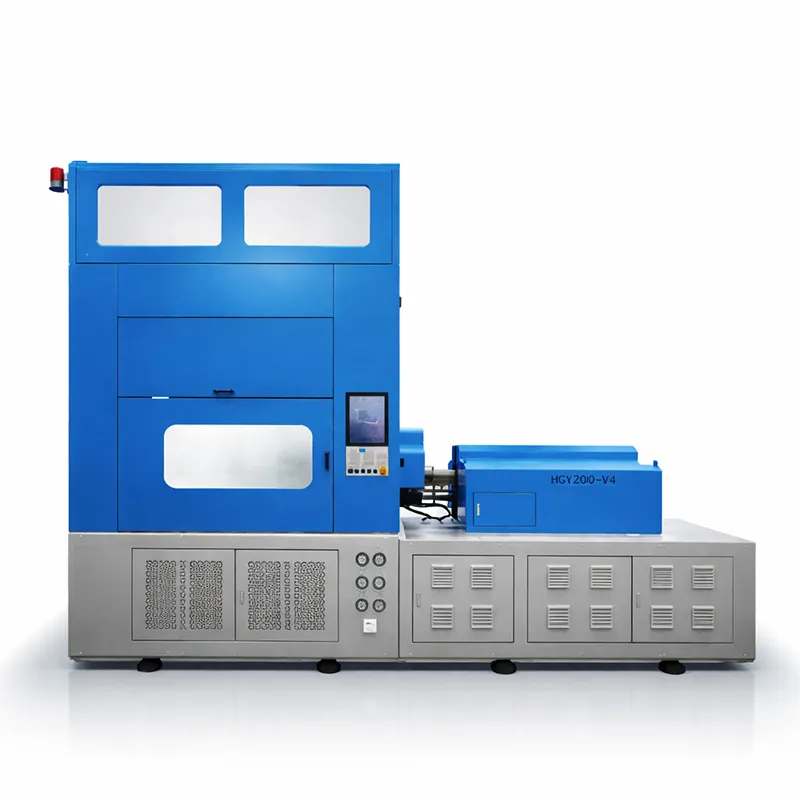
Ever-Power HGY200-V4 Korea
Sistem pengkondisian EV serba servo yang memberikan stabilitas suhu ±0,3°C — standar presisi untuk produksi K-Beauty PETG dan Tritan ISBM.
Rentang Mesin EV
Rangkaian Mesin ISBM 4 Stasiun
Semua mesin Ever-Power seri EV buatan Korea menyertakan kontrol suhu pengkondisian independen zona demi zona sebagai standar.
Panduan Pemilihan Mesin ISBM 10 Faktor
Ketepatan suhu pengkondisian (Faktor 2) — bagaimana mengevaluasi sistem pengkondisian EV vs hidrolik dalam pengadaan mesin ISBM Korea.