Aplicación de ISBM · Bebidas funcionales y de bienestar coreanas · 2026
ISBM Bebida de bienestar coreana y
Guía de botellas pequeñas
Las bebidas coreanas de bienestar —bebidas funcionales concentradas de 20 a 120 ml que contienen péptidos de colágeno, probióticos, vitaminas, ginseng y extractos de plantas— constituyen la categoría de bebidas ISBM coreanas de mayor crecimiento, con un crecimiento anual de +341 TP3T. El formato pequeño representa una gran oportunidad: a un precio de contrato por unidad de entre 2800 y 6500 KRW por botella de 50 ml, es el más alto en la producción de envases ISBM en Corea.
Precio del contrato: 90–180 KRW
+34% Crecimiento anual
Departamento de Ingeniería de Ever-Power en Corea · Ansan-si · Mayo de 2026
KRW 680B
Mercado coreano de bebidas energéticas para el bienestar en 2025 (incluidas las bebidas funcionales para la salud)
+34%
Crecimiento anual de las bebidas energéticas coreanas para el bienestar (2023-2025)
50 ml
Formato estándar de bebida energética coreana (porción individual concentrada)
90–180 KRW
Precio contractual por botella de 50 ml: categoría ISBM coreana con el margen más alto.
PETG + PET
PETG para una claridad óptica superior; PET para tomas funcionales estándar.
1. Mercado coreano de bebidas energéticas: La oportunidad de las microbebidas premium
Las bebidas coreanas para el bienestar tienen su origen en la cultura tradicional coreana de bebidas saludables: las bebidas con extracto de ginseng (홍삼음료), los tónicos de vinagre fermentado y los concentrados de hierbas tradicionales han formado parte de las prácticas de salud preventiva coreanas durante generaciones. El mercado moderno de bebidas coreanas para el bienestar —envases en ampollas de PETG de 50 ml, transparentes y recubiertas de péptidos de colágeno, ácido hialurónico, vitamina C, probióticos y extractos botánicos— es la convergencia de esta cultura tradicional de bebidas saludables con el principio de la belleza coreana de que la nutrición interna es tan importante como el cuidado tópico de la piel.
Las marcas coreanas de bebidas energéticas (CJ Innovation, la división de bienestar de Kolmar Korea, Dongwon F&B y más de 120 marcas emergentes de bienestar coreano en Coupang Rocket) compiten en pureza de ingredientes, ciencia de la formulación y calidad del envase, en ese orden. El papel del envase es comunicar la calidad de los ingredientes a través de la claridad óptica (los consumidores coreanos interpretan un líquido cristalino en una botella de PETG transparente como una concentración pura y sin diluir de los ingredientes), la integridad funcional (la botella debe proteger los ingredientes funcionales sensibles, como probióticos, péptidos de colágeno y complejos vitamínicos oxidables, durante toda la vida útil del producto) y la estética premium (la forma de ampolla, tomada de la estética farmacéutica, comunica la eficacia clínica).
El contexto más amplio del mercado coreano de bebidas funcionales es el siguiente: Guía de producción de bebidas ISBM coreanas.
2. Formatos y especificaciones de las botellas de chupitos de bienestar coreanos

| Formato | Volumen | Resina | Perfil del cuello | Muro mínimo | Ingrediente/producto coreano |
|---|---|---|---|---|---|
| Ampolla probiótica | 20–30 ml | PETG | Punta de presión / 18 mm | 0,30 mm | Concentrado de lactobacilos, prebióticos — envasado en frío, barrera de O₂ estricta |
| Inyección de colágeno | 50 ml | PETG cristalino | 24 mm de rosca | 0,28 mm | Colágeno marino 1.000–5.000 mg, vitamina C, ácido hialurónico |
| Inyección de vitaminas y minerales | 50–100 ml | PET o PETG | 24–28 mm | 0,25 mm | Complejo B, vitamina D3, magnesio; a menudo de color ámbar/tintado para protección UV. |
| Tónico de ginseng rojo | 30–50 ml | Ámbar PET / PETG | 20–24 mm | 0,30 mm | ginsenósidos 홍삼 — extracto alcohólico (se requiere el cumplimiento de la normativa sobre simuladores de etanol) |
| Disparo de energía funcional | 50–100 ml | MASCOTA | 24–28 mm | 0,22 mm | Cafeína + taurina + vitaminas B: formato monodosis para un aporte extra de energía. |
3. Protección de ingredientes funcionales: Sensibilidad al O₂ y a los rayos UV
Los ingredientes de los shots de bienestar coreanos se encuentran entre los componentes en contacto con alimentos más sensibles al oxígeno en los envases ISBM. Los péptidos de colágeno en concentraciones superiores a 500 mg/50 ml comienzan a decolorarse, pasando de transparentes a amarillo-marrón, cuando el oxígeno disuelto en el producto supera las 0,5 ppm. Las marcas coreanas de shots de colágeno que especifican una apariencia "dorada y transparente" como estándar de calidad están aplicando un límite de oxígeno disuelto mucho más estricto que cualquier requisito para alimentos o bebidas. La vitamina C se oxida con oxígeno disuelto superior a 0,2 ppm, acelerando su transformación de ácido L-ascórbico (bioactivo) a ácido dehidroascórbico (inactivo), con una vida media de 4 a 8 semanas a 23 °C en condiciones típicas de oxígeno en el punto de venta.
El sistema de gestión de oxígeno para las botellas de ISBM de bebidas energéticas coreanas se compone de cuatro elementos de protección: la tasa de transmisión de oxígeno (OTR) de la pared de la botella (el PETG con una pared de 0,28 mm alcanza aproximadamente 0,025–0,040 cc/día para una botella de 50 ml, significativamente mejor que el PET estándar con un grosor de pared equivalente); la barrera de oxígeno del revestimiento del cierre (los revestimientos de cierre laminados con papel de aluminio son estándar para las bebidas energéticas de colágeno coreanas de alta gama); la gestión del gas del espacio de cabeza durante el llenado (el nitrógeno reemplaza el oxígeno del espacio de cabeza antes del cierre); y el embalaje exterior (la mayoría de las bebidas energéticas de colágeno coreanas se venden en bolsas individuales de aluminio dentro de la caja de PETG; la bolsa de aluminio es la barrera de oxígeno primaria; la botella de PETG es la barrera secundaria y la presentación visual). Los productores coreanos de ISBM que suministran a las marcas de bebidas energéticas de colágeno deben analizar el sistema completo de gestión de oxígeno del embalaje con la marca antes de especificar el grosor de la pared de la botella; la OTR de la pared de la botella debe calibrarse con respecto a la protección total del sistema para alcanzar el presupuesto de oxígeno de la vida útil de la marca.
La sensibilidad a la luz es el segundo requisito de protección. Los shots coreanos de vitaminas y ginseng para el bienestar suelen especificar PETG tintado o ámbar para proteger los ingredientes fotolábiles (riboflavina, betacaroteno, algunos ginsenósidos) de la exposición a los rayos UV en los estantes de venta. La base de selección de materiales para decidir si el PETG transparente, el PETG ligeramente tintado o el PETG ámbar es apropiado para una formulación específica de bienestar coreana se encuentra en el Guía de selección de resinas PET vs PETG.
4. Ingeniería ISBM de pequeño formato: Desafíos por debajo de 100 ml
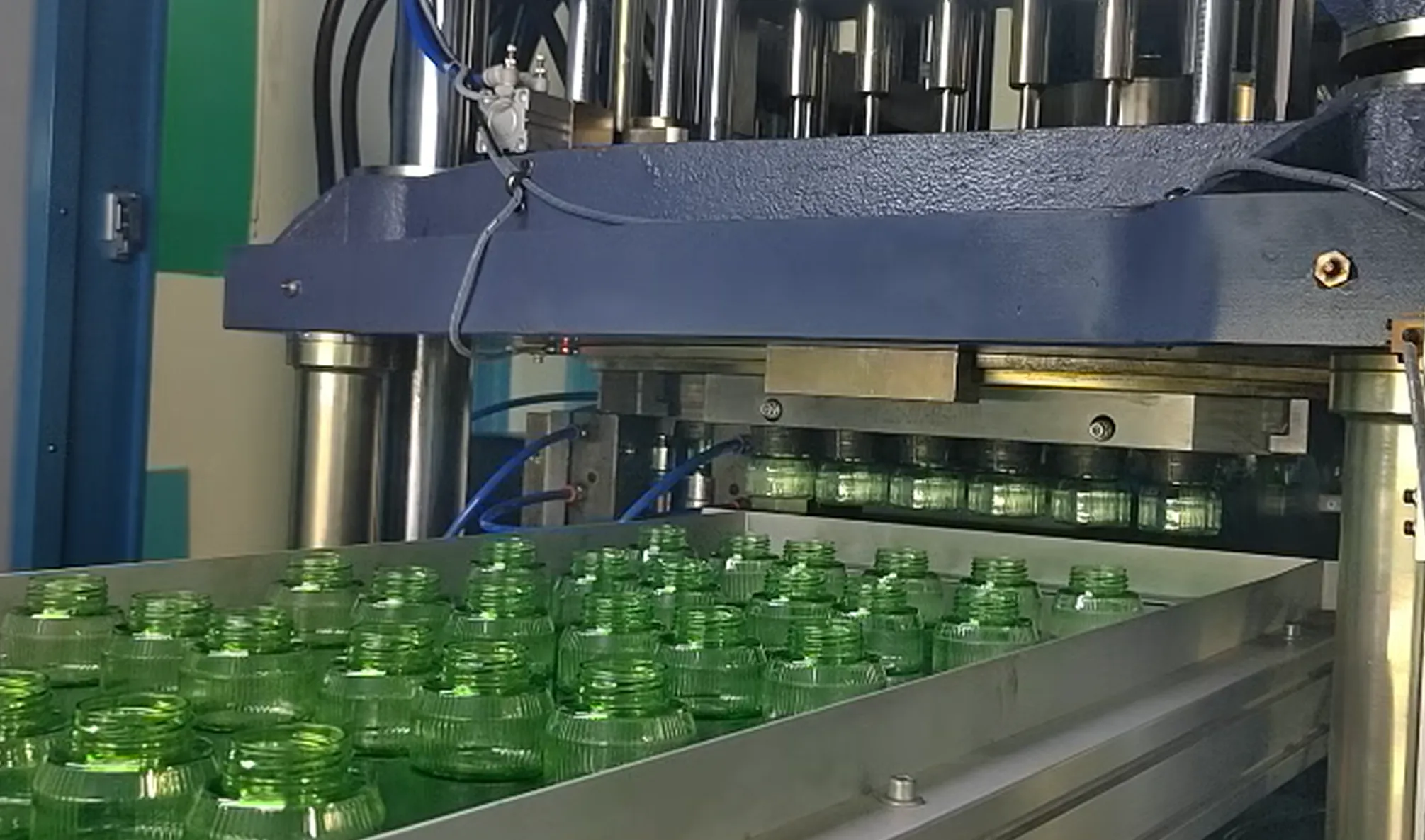
La producción coreana de botellas de shots de bienestar de 20 a 100 ml presenta desafíos de ingeniería que la distinguen de la fabricación estándar de botellas de bebidas. El principal desafío es la alta relación entre el diámetro de la preforma y el de la botella en formatos pequeños: una botella de 50 ml con un diámetro de cuerpo de 22 mm, soplada a partir de una preforma de cuello de 24 mm, tiene una relación de estiramiento axial de solo 2,5 a 3,0×, significativamente menor que las 3,5 a 4,5× típicas de las botellas de bebidas estándar de 500 ml. Este menor estiramiento implica que la calidad de la orientación biaxial es menor para ajustes equivalentes de temperatura de acondicionamiento y presión de soplado, lo que requiere ajustar ambos parámetros para lograr una claridad óptica adecuada en la zona estrecha del cuerpo.
Las botellas pequeñas de bebidas energéticas también tienen una mayor relación superficie-volumen que las botellas grandes: una botella de PETG de 50 ml con un grosor de pared de 0,28 mm tiene aproximadamente 1,8 veces la superficie por unidad de volumen de una botella equivalente de 500 ml con el mismo grosor de pared. Esta mayor relación superficie-volumen implica que una determinada tasa de transmisión de oxígeno (OTR, por sus siglas en inglés) representa una entrada de oxígeno proporcionalmente mayor por mililitro de producto, lo que hace que la especificación de OTR para las bebidas energéticas de 50 ml sea más estricta por mililitro que para 500 ml de agua sin gas con niveles equivalentes de sensibilidad a los ingredientes funcionales.
El pequeño peso de la preforma (4–9 g para formatos de shots de bienestar de 50 ml frente a 22–32 g para bebidas estándar) significa que el requisito de precisión del peso de la estación de inyección (CV% ≤ 1,5%) se vuelve más exigente en términos absolutos de gramos: ±0,07 g en una preforma de 4,5 g es una variación de peso de ±1,5% que requiere la condición de anillo de retención más ajustada y la alimentación de tolva más estable de cualquier aplicación ISBM coreana. La economía de producción del ISBM coreano de shots de bienestar en estos formatos pequeños, incluidas las decisiones sobre el número de cavidades que hacen que la producción de 20–50 ml sea económicamente viable, se tratan en el Guía para calcular el número de cavidades según la ISBM coreana.
5. Cumplimiento de la normativa de la KFDA sobre alimentos funcionales para bebidas de bienestar coreanas
Las bebidas coreanas para el bienestar registradas como 건강기능식품 (alimentos funcionales para la salud) bajo la Ley de Alimentos Funcionales para la Salud de la KFDA (건강기능식품에 관한 법률) requieren la documentación de cumplimiento de envasado más rigurosa del mercado coreano de ISBM, equivalente en profundidad de documentación al envasado farmacéutico. Los requisitos de envasado de alimentos funcionales para la salud de la KFDA para los envases ISBM de bebidas coreanas para el bienestar son los siguientes:
Informe de cumplimiento de la lista positiva de la KFDA sobre simulantes alimentarios
El PETG y el PET figuran en la lista positiva del Capítulo 2 de la KFDA. Las pruebas de migración deben utilizar el simulante alimentario adecuado para el producto; para la mayoría de las bebidas coreanas para el bienestar (con pH acuoso de 3,5 a 6,5), se utiliza el simulante de ácido acético 3%. El informe de la prueba de migración debe ser específico para la categoría del producto; un informe con simulante de agua de una aplicación estándar para bebidas no cumple con el requisito de la KFDA para el envasado de alimentos funcionales para la salud.
Declaración de proveedores y auditoría de cualificación
Las plantas de producción de alimentos funcionales coreanos se someten a auditorías anuales de Buenas Prácticas de Fabricación (BPF) de la KFDA, que incluyen la evaluación de los proveedores de envases primarios. Los proveedores de ISBM para estas marcas deben demostrar: documentación de conformidad de materiales, sistema de calidad de producción (ISO 9001 o equivalente) y trazabilidad a cada lote de producción para cada envío de botellas. Los registros de producción a nivel de lote deben conservarse durante un mínimo de 3 años.
Pruebas de compatibilidad de ingredientes funcionales
Las marcas de alimentos funcionales para la salud, según la KFDA, deben demostrar que el envase no degrada el ingrediente funcional durante su vida útil declarada. En el caso de las inyecciones de colágeno, esto significa que la integridad del péptido de colágeno (distribución del peso molecular mediante GPC) debe mantenerse dentro del rango de tamaño de péptido registrado por la KFDA durante los 18 meses de vida útil en el envase de PETG. Los productores coreanos de ISBM deben tener en cuenta que esta prueba de compatibilidad funcional es responsabilidad de la marca, pero esta la realizará utilizando envases de producción del proveedor de ISBM, por lo que el cumplimiento de las dimensiones y la OTR de la primera muestra es fundamental.
La infraestructura del sistema de calidad de grado farmacéutico que sustenta el cumplimiento de los alimentos funcionales para la salud en el envasado de ISBM coreano es muy similar a la documentación de GMP farmacéutica descrita en el documento. Guía de producción de botellas GMP para la industria farmacéutica coreanaLos productores coreanos de ISBM que ya han superado los trámites de cumplimiento con la KFDA farmacéutica encontrarán que el cumplimiento con la normativa sobre alimentos funcionales para la salud es un marco de documentación familiar.
6. Estética de la ampolla: lenguaje visual de las inyecciones de bienestar coreanas
La estética de los envases de los shots de bienestar coreanos se inspira en dos lenguajes visuales distintos. La ampolla farmacéutica (앰플), un tubo de vidrio sellado utilizado en medicamentos inyectables, comunica eficacia clínica y dosificación precisa. La ampolla de belleza coreana (el sérum concentrado en un pequeño frasco de vidrio o PETG con gotero) comunica cuidado de la piel de alta gama y lujo. Las marcas coreanas de shots de bienestar hacen referencia deliberadamente a ambos códigos estéticos en el diseño de sus envases, utilizando la silueta de la ampolla para posicionar su shot de colágeno o vitaminas de 50 ml como clínicamente eficaz (referencia farmacéutica) y lujosamente indulgente (referencia de belleza coreana).
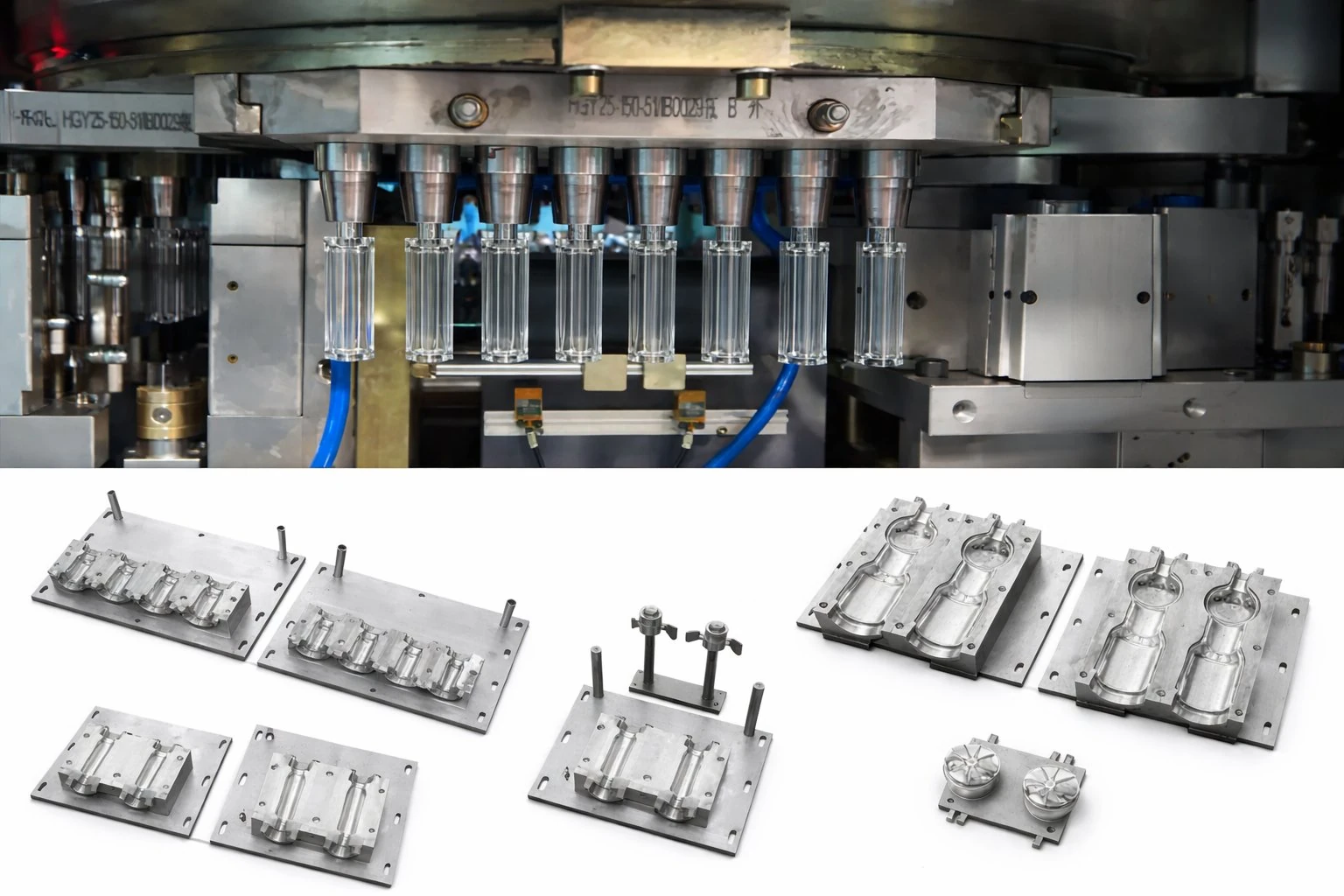
La tecnología ISBM permite obtener la silueta de ampolla en plástico: el cuerpo cónico, el cuello estrecho y las elegantes proporciones de la forma de ampolla farmacéutica se pueden lograr en PETG con una precisión ISBM que el moldeo por inyección por sí solo no puede replicar. La ampolla de cintura estrecha requiere un diseño de preforma con una relación L/D mayor que la de los frascos de dosis estándar, y la geometría de la pared cónica requiere una gestión cuidadosa de la relación de estiramiento para mantener la uniformidad del espesor de la pared a lo largo del cono. Los productores coreanos de ISBM que ingresen al segmento de dosis de bienestar deben prever una inversión de 4 a 6 semanas en el desarrollo del proceso para la calificación del formato de ampolla; el formato es realmente diferente de los frascos cilíndricos estándar y recompensa a los productores que invierten en la optimización del proceso específica del formato con los precios contractuales más altos en la producción coreana de ISBM.
7. rPET en botellas de bebidas energéticas coreanas: sostenibilidad frente a pureza
Las marcas coreanas de bebidas energéticas se enfrentan a un dilema de comunicación sobre sostenibilidad: su posicionamiento premium en el sector de la salud exige un envase puro (PETG virgen, cadena de suministro limpia, sin contenido reciclado que pueda introducir contaminantes traza), pero su base de consumidores coreanos está cada vez más concienciada con la sostenibilidad y espera credenciales ecológicas de las marcas premium de salud. La solución en 2026: la mayoría de las marcas coreanas de bebidas energéticas de colágeno y vitaminas especifican PETG virgen 100% para sus envases de producto principal, pero utilizan el cartón exterior (cartón reciclado 100%) y el embalaje de transporte (cartón ondulado reciclado 100%) para comunicar la sostenibilidad. El requisito mínimo de 10% del K-EPR rPET se aplica solo al PET, no al PETG; el PETG no figura actualmente en la lista de contenido reciclado obligatorio del K-EPR coreano para 2026. Las marcas coreanas de bebidas energéticas que utilizan PETG están actualmente exentas del requisito de rPET, aunque esto podría cambiar en la revisión del K-EPR de 2028. Los productores coreanos de ISBM que suministran marcas de bebidas energéticas en PET (bebidas energéticas funcionales, bebidas vitamínicas estándar) deben cumplir con el mandato K-EPR; el marco de documentación rPET se encuentra en el Guía coreana para el procesamiento de rPET.
8. Economía de producción de la bebida de bienestar coreana ISBM
La economía de producción de bebidas energéticas coreanas ISBM es fundamentalmente diferente de la producción de bebidas estándar porque el alto precio contractual por unidad (90–180 KRW por botella de 50 ml frente a 28–45 KRW para una bebida estándar de 500 ml) significa que incluso con volúmenes anuales más bajos (1M–10M de unidades frente a más de 50M para bebidas comerciales), los ingresos por hora de máquina son comparables o superiores a la producción de productos básicos. Una máquina coreana HGY150-V4 de 8 cavidades que procesa botellas de bebidas energéticas de 50 ml con un ciclo de 9 segundos genera aproximadamente 12,8 millones de botellas al año en jornadas de 16 horas; a un promedio de 110 KRW/botella, esto representa 1.400 millones de KRW de ingresos anuales de una sola máquina. La inversión en la máquina, la inversión en moldes y el costo operativo para esta configuración producen márgenes operativos de 22–32% para los productores coreanos de ISBM con la capacidad de documentación para servir a las marcas coreanas de alimentos funcionales para la salud, entre los márgenes más altos en la industria coreana de ISBM. El marco completo de ROI de la inversión se encuentra en el Guía para calcular el retorno de la inversión (ROI) de las máquinas ISBM coreanas.
Preguntas frecuentes
Soporte para el empaquetado de bebidas de bienestar
¿Desarrollando botellas de colágeno coreano, probióticos o vitaminas ISBM?
La empresa coreana Ever-Power ofrece cualificación de procesos de PETG con turbidez ≤0,5%, apoyo en la documentación de alimentos funcionales para la salud según la KFDA, ingeniería de especificaciones de barrera de O₂ para probióticos y diseño de moldes para ampollas para contratos ISBM de bebidas de bienestar coreanas.
Solicitar consulta sobre el empaquetado de bebidas de bienestar
Recursos relacionados
Plataforma de formato pequeño
Ever-Power HGY150-V4 coreano
Plataforma de precisión ISBM compacta de 4 estaciones para la producción de ampollas para bebidas energéticas coreanas de 20 a 120 ml con configuración de 6 a 8 cavidades.
Gama de máquinas
Campo de tiro ISBM de 4 estaciones
HGY150-V4 a HGY200-V4 EV para formatos de bebidas de bienestar coreanas: la precisión del servo EV es obligatoria para la producción de PETG con turbidez ≤0,5%.
Herramientas para ampollas
Diseño de moldes ISBM personalizados
Moldes coreanos para ampollas de bebidas de bienestar: cavidades Böhler 738H pulidas con diamante para PETG con turbidez ≤0,5%, ingeniería de silueta de ampolla estrecha, verificación de barrera de O₂ del primer artículo.