
IBM vs ISBM · COMPARACIÓN DE PROCESOS · MATERIAL · TIPO DE CONTENEDOR · KOREA EVER-POWER ZQ
IBM vs ISBM:
Moldeo por inyección-soplado frente a moldeo por inyección-estirado-soplado
IBM (Moldeo por Inyección-Soplado) e ISBM (Moldeo por Inyección-Estirado-Soplado) son dos procesos de moldeo por soplado distintos que suelen confundirse entre compradores de envases, ingenieros de empaquetado de marcas y especificadores de máquinas de moldeo por soplado. La diferencia clave es mecánica: IBM infla una preforma utilizando únicamente presión de aire; ISBM primero estira mecánicamente la preforma axialmente con una varilla de estiramiento y luego la infla. Esta única diferencia genera propiedades de envase, compatibilidad de materiales, rentabilidad y perfiles de inversión en maquinaria fundamentalmente distintos.
Guía de materiales PP • PET • PCTG
Selección de contenedores • Comparación de costos
COREA SIEMPRE PODEROSA · ANSAN-SI, GYEONGGI-DO · JULIO DE 2026
IBM vs ISBM · PRINCIPALES DIFERENCIAS DE UN VISTAZO
DIFERENCIA CLAVE DEL PROCESO
Barra de estiramiento
ISBM inserta una varilla de estiramiento mecánica en la preforma para alargarla axialmente antes o durante el inflado por soplado de aire. IBM no tiene varilla de estiramiento; solo la presión del aire infla la preforma. Este estiramiento mecánico en ISBM es la fuente de todas las diferencias de proceso, material y propiedades entre IBM e ISBM.
MATERIAL PRIMARIO
IBM: PP • ISBM: PET
IBM procesa PP, PCTG, PE, HDPE y otros polímeros no orientados al estiramiento. ISBM procesa PET (primario), PP (orientado biaxialmente), PLA, PC y otros materiales sensibles al estiramiento. La diferencia de materiales se debe al proceso: la orientación al estiramiento requiere polímeros que se endurezcan por deformación bajo estiramiento biaxial, lo cual el PET hace fuertemente y el PP moderadamente.
APLICACIONES DE CONTENEDORES
IBM: Cosméticos • ISBM: Bebidas
IBM: tarros de crema cosmética, botellas de loción, botellas farmacéuticas, envases de boca ancha, envases de PP donde se requiere reciclabilidad de monomaterial. ISBM: botellas de PET para bebidas carbonatadas, botellas de agua, botellas de aceite comestible, envases de bebidas de gran formato donde se requiere alta resistencia axial y barrera contra el CO2.
TIPO MÁQUINA (COREA EVER-POWER)
Serie ZQ (IBM)
Korea Ever-Power fabrica máquinas IBM de la serie ZQ (desde la ZQ40 hasta la ZQ135 y la ZQ60HE totalmente eléctrica). Korea Ever-Power no fabrica máquinas ISBM. Las máquinas ISBM para la producción de botellas de PET son fabricadas por Sidel, Krones, Husky y Nissei ASB (para ISBM de una etapa). Las máquinas IBM ZQ producen envases de PP y PCTG para cosméticos, productos farmacéuticos y productos de cuidado personal.
SECCIÓN 01
IBM vs ISBM: Explicación de la diferencia en el proceso mecánico
La diferencia fundamental entre IBM e ISBM radica en un componente mecánico: la varilla de estiramiento. En ISBM, una varilla metálica se inserta en la preforma calentada en la estación de soplado y la alarga físicamente de forma axial (normalmente entre 2,5 y 4 veces la longitud original de la preforma para botellas de agua de PET) antes o simultáneamente con el inflado radial de aire. En IBM, no hay varilla de estiramiento: la preforma calentada se infla únicamente mediante presión de aire, expandiéndose radialmente contra la cavidad del molde de soplado. Este estiramiento mecánico en ISBM orienta biaxialmente las moléculas de polímero (tanto el estiramiento axial de la varilla como el estiramiento radial del inflado de aire), produciendo una pared de envase con una resistencia a la tracción, propiedades de barrera y transparencia sustancialmente mayores que las del mismo polímero procesado sin estiramiento mediante IBM. Máquinas de moldeo por inyección-soplado de la serie ZQ Se trata de máquinas IBM: utilizan inflado por presión de aire sin varilla de estiramiento, produciendo envases de PP y PCTG para aplicaciones cosméticas, farmacéuticas y de cuidado personal, donde las características del proceso de IBM son la elección de ingeniería correcta.
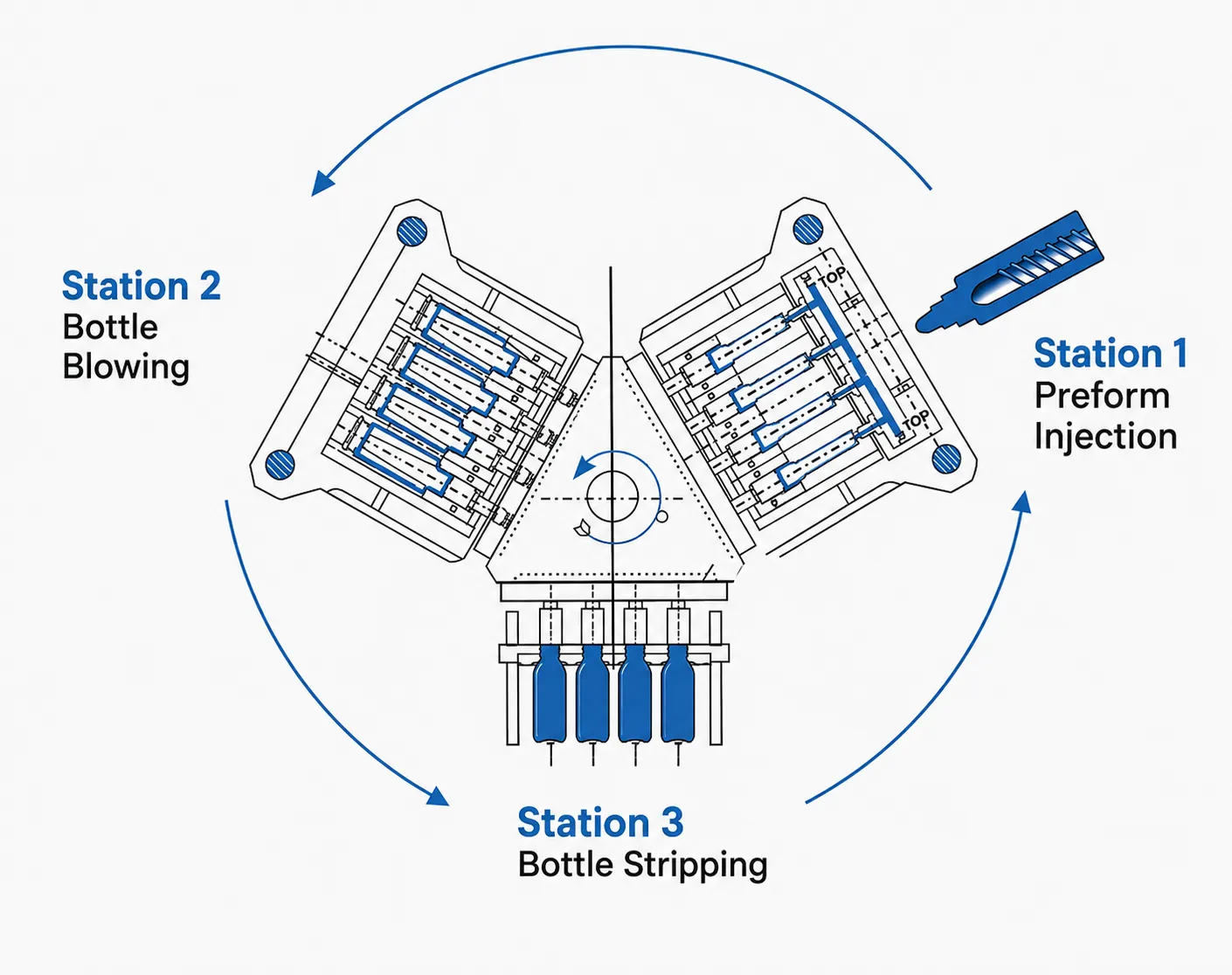
Cómo funciona IBM (3 estaciones, sin varilla de estiramiento)
El IBM (Moldeo por Inyección y Soplado) opera en 3 estaciones sobre una mesa giratoria indexada. Estación 1 — Inyección: el polímero (PP, PCTG, PE, HDPE) se inyecta desde el cilindro de la máquina IBM en la cavidad de inyección cerrada que rodea la varilla central, formando una preforma (parisina) precisa alrededor de la varilla central. La geometría de la preforma (espesor de pared, longitud, perfil de rosca del cuello) se controla mediante las dimensiones de la cavidad de inyección y la varilla central. Estación 2 — Soplado: la varilla central indexada (con la preforma aún adherida) se mueve a la estación de soplado. El molde de soplado se cierra alrededor del conjunto de preforma + varilla central. Se inyecta aire a través de la punta de la varilla central, inflando la preforma radialmente hacia afuera contra la pared de la cavidad del molde de soplado. No entra ninguna varilla de estiramiento: la punta de la varilla central suministra el aire de soplado y la preforma se expande contra el molde de soplado desde el interior. Estación 3 — Desmoldeo: el molde de soplado se abre y el envase terminado se desmolda mecánicamente de la varilla central. Los contenedores de IBM tienen un cuello formado con precisión en la estación de inyección (la varilla central y la cavidad de inyección definen todas las dimensiones del cuello) y un cuerpo y una base sin costuras formados en la estación de soplado.
Cómo funciona ISBM (de 2 etapas o de 1 etapa, con varilla de estiramiento)
ISBM (Injection Stretch Blow Moulding) agrega una varilla de estiramiento mecánica a la estación de soplado del proceso IBM, produciendo una orientación molecular biaxial en la pared del contenedor. ISBM de dos etapas (proceso más común para botellas de agua de PET): Etapa 1: las preformas se moldean por inyección en una máquina de moldeo por inyección separada (alta cantidad de cavidades, 96–144 cavidades) y se enfrían a temperatura ambiente. Etapa 2: las preformas se recalientan en un horno de máquina de soplado de recalentamiento (Sidel, Krones) hasta el rango de temperatura de orientación de estiramiento del polímero (PET: 95–110 °C), luego se transfieren a la estación de soplado donde una varilla de estiramiento se extiende dentro de la preforma y la estira axialmente mientras que el pre-soplado de aire simultáneo y el soplado principal expanden radialmente la preforma contra la cavidad del molde ISBM. ISBM de una etapa (tipo Nissei ASB): el moldeo por inyección y el soplado de estiramiento ocurren en el mismo ciclo de máquina sin enfriamiento intermedio: la preforma se mantiene a la temperatura de inyección y se transfiere inmediatamente a la estación de soplado de estiramiento, eliminando el paso de recalentamiento. La tecnología ISBM de una sola etapa se utiliza para el PP ISBM (PP biaxialmente orientado: botellas de BOPP para aplicaciones de condimentos y cosméticos) y para programas de envases de PET más pequeños donde el volumen de la máquina de soplado con recalentamiento es demasiado alto.
SECCIÓN 02
IBM vs ISBM: Tabla comparativa completa de propiedades y economía
| PARÁMETRO | IBM (Ever-Power ZQ de Corea) | ISBM (PET de 2 etapas / PP de 1 etapa) |
|---|---|---|
| Barra de estiramiento | Ninguno: solo inflado con aire. | Sí, estiramiento mecánico axial antes/durante el golpe |
| Material primario | PP, PCTG, PE, HDPE, LDPE | PET (2 etapas), PP-BOPP, PLA, PC (1 etapa) |
| Orientación de la pared | Solo radial (inflación monoaxial) — orientación limitada | Biaxial (axial + radial) — alta orientación molecular |
| Resistencia a la tracción de la pared | PP IBM: 25–35 MPa (sin orientación) | PET ISBM: 150–200 MPa (orientado biaxialmente) |
| barrera de CO2 (para bebidas carbonatadas) | Deficiente: el compuesto IBM PP/PCTG no es apto para bebidas carbonatadas. | Excelente: PET biaxialmente orientado: pérdida de CO2 <15% por año |
| Tolerancia del diámetro exterior del cuello | ±0,05 mm (la varilla central controla el cuello en las 3 estaciones) | ±0,10–0,15 mm (2 etapas: el cuello se ajusta en el momento de la inyección, puede variar durante el recalentamiento) |
| Relación de soplado (diámetro exterior del cuerpo/cuello) | 1,2–3,5:1 (IBM opera con una relación de soplado baja a moderada) | 2,5–5,0:1 (ISBM opera con una relación de soplado más alta para la orientación del PET) |
| Recipientes de boca ancha | Excelente: tarros de crema IBM con boca de 100 mm de diámetro exterior en máquina ZQ. | No apto: la orientación de estiramiento ISBM requiere una alta relación de soplado (cuello estrecho en relación con el cuerpo). |
| Gastos de capital para maquinaria | ZQ40: entre 35.000 y 55.000 USD aproximadamente • ZQ110: entre 120.000 y 180.000 USD aproximadamente | Soplado con recalentamiento en 2 etapas: USD 250.000–1,2 millones • Línea de preformas de inyección adicional |
| Mercado objetivo | Envases de boca ancha para cosméticos, productos farmacéuticos y cuidado personal, y envases de precisión de volumen pequeño a mediano. | Bebidas (agua PET, refrescos, zumos), aceite comestible, envases de alimentos de gran formato, alto volumen >100 millones de unidades/año |
SECCIÓN 03
Compatibilidad de materiales: qué pueden y qué no pueden procesar IBM e ISBM
MATRIZ DE COMPATIBILIDAD DE MATERIALES: IBM vs ISBM
PP (Polipropileno)
IBM ✓ — Material principal para IBM. PP RCP (MFR 15–25 g/10 min) para tarros de crema, frascos de loción y frascos farmacéuticos en ZQ40–ZQ135. El PP no se puede orientar biaxialmente de forma eficaz en ISBM de 2 etapas (la ventana de recalentamiento del PP es estrecha y sensible a la temperatura).
ISBM (solo de 1 etapa) — El PP se puede moldear por soplado y estirado en un proceso ISBM de una etapa (tipo Nissei ASB) para producir botellas de PP biaxialmente orientado (BOPP) con mayor transparencia. El proceso ISBM de dos etapas no es adecuado para el PP debido a la inestabilidad del PP al recalentarse.
PET (tereftalato de polietileno)
IBM ✗ — El PET no es adecuado para el proceso IBM. El PET debe estirarse biaxialmente para desarrollar sus propiedades características de barrera y resistencia; el proceso IBM sin una varilla de estiramiento produce envases de PET amorfos, quebradizos y opacos con una barrera deficiente contra el CO2, lo que resulta comercialmente inaceptable para aplicaciones en botellas de bebidas de PET.
ISBM ✓ — Proceso principal del PET. Proceso ISBM de 2 etapas para botellas de PET de gran volumen para agua, refrescos y zumos. La orientación biaxial a 95–110 °C confiere al PET una excelente barrera contra el CO2 y una gran resistencia a la tracción.
PCTG / PETG
IBM ✓ — PCTG (Eastman TX1001) procesado por IBM en la serie ZQ a 240–275 °C. Produce envases cosméticos transparentes de alta claridad (frascos de loción, tónico y suero) donde la claridad óptica es el requisito de diseño principal. El PCTG requiere un secador deshumidificador (punto de rocío de −40 °C).
ISBM (limitado) El PETG (PET amorfo modificador) se puede moldear por soplado y estirado en una sola etapa mediante moldeo por soplado y estirado, pero no desarrolla la alta barrera al CO2 del PET moldeado por soplado y estirado. Se utiliza en bebidas no carbonatadas y aplicaciones cosméticas donde se requiere transparencia, pero la barrera no es el requisito principal.
HDPE / LDPE
IBM ✓ — HDPE y LDPE procesados por IBM para envases farmacéuticos y químicos de boca ancha, tubos flexibles y frascos de cuidado personal que requieren resistencia química al HDPE. IBM produce envases opacos de HDPE con buena resistencia a los solventes para el envasado de productos químicos y agroquímicos.
ISBM ✗ — El HDPE/LDPE no se puede moldear eficazmente con orientación por estiramiento mediante ISBM; el comportamiento de cristalización del polímero impide una orientación biaxial efectiva en la ventana de estiramiento de ISBM. El HDPE se procesa mediante EBM (moldeo por extrusión-soplado) para la producción de botellas de HDPE, no mediante ISBM.
SECCIÓN 04
Decisión sobre el tipo de contenedor: ¿Cuándo elegir IBM o ISBM?
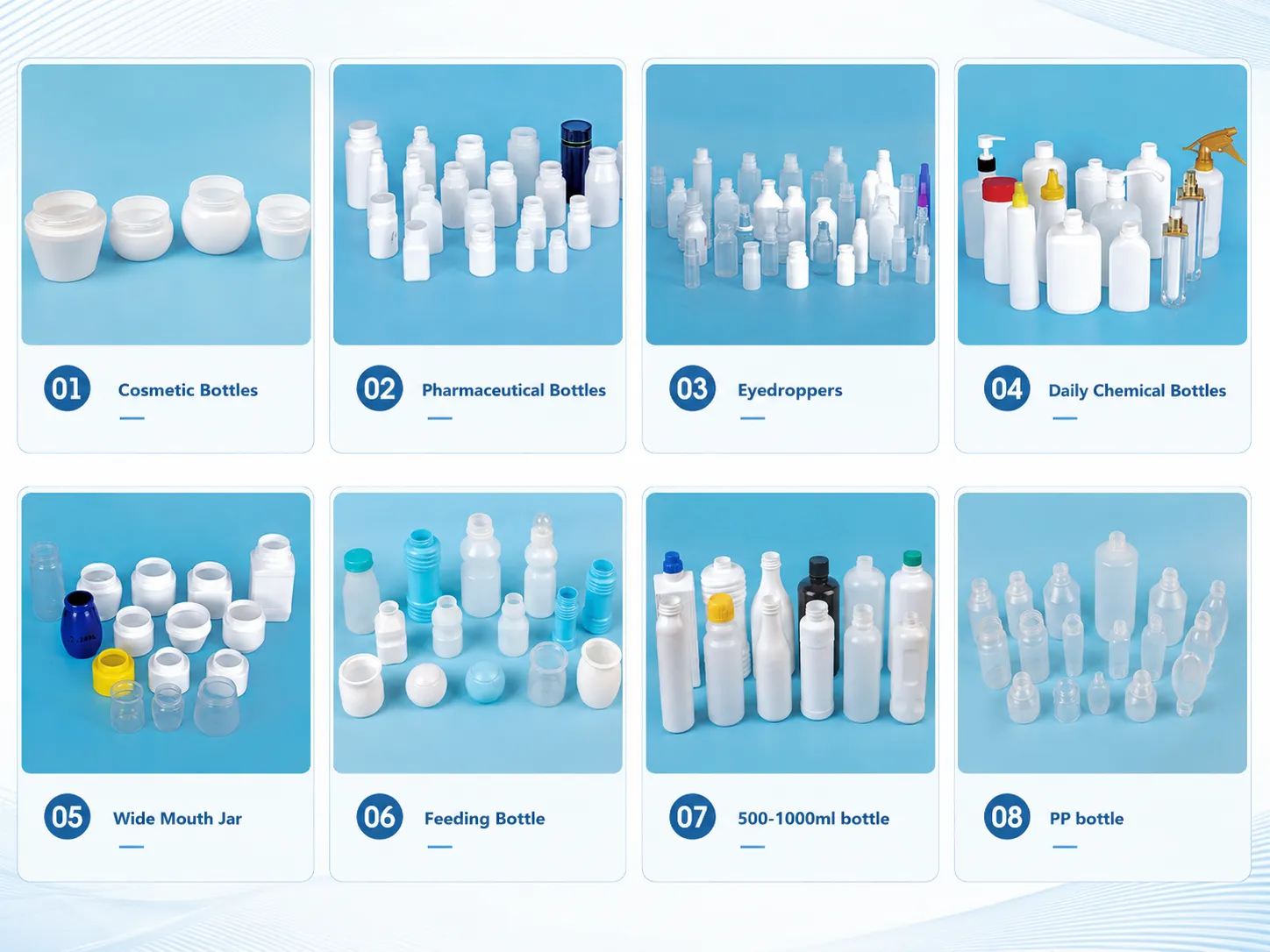
Elija IBM cuando:
IBM (Korea Ever-Power ZQ) es la opción de proceso correcta cuando la especificación del envase incluye uno o más de: requisito de material PP (PP monomaterial para reciclabilidad EPR coreana o resistencia química del PP a formulaciones cosméticas); formato de envase de boca ancha (tarro de crema, tarro de farmacia, tarro de suplemento alimenticio con diámetro exterior de boca ≥40 mm: ISBM no puede producir envases de boca ancha con una relación de soplado baja); alta precisión del diámetro exterior del cuello (±0,05 mm o más ajustada para ajuste de bomba cosmética coreana, cierre farmacéutico, tapa a prueba de niños) del cuello controlado por varilla central de IBM; envase cosmético transparente PCTG donde la claridad de un solo componente (sin línea de costura) y la estética del envase de la marca cosmética requieren la construcción sin costuras de IBM; envase farmacéutico que requiere certificación de monomaterial PP para la superficie de contacto con el producto farmacéutico; Volumen de producción de 500.000 a 50.000.000 por año, donde el Capex de la máquina IBM ZQ (USD 35.000–180.000) es proporcional a la economía del programa de envases (el Capex de la línea de soplado de recalentamiento PET ISBM de USD 250.000–1,2 millones no está justificado económicamente para programas de envases cosméticos en estos volúmenes); y envase de marca coreana K-belleza para el mercado coreano, donde el envase de monomaterial PP logra la puntuación de reciclabilidad EPR más alta de Corea.
Elija ISBM cuando:
ISBM (soplado con recalentamiento de PET en 2 etapas o ISBM en 1 etapa) es la opción de proceso correcta cuando la especificación del envase requiere: material PET para bebidas carbonatadas (CSD) o botellas de agua (la barrera de CO2 es un requisito estricto: el PP/PCTG de IBM tiene una barrera de CO2 inadecuada); alto volumen anual (>50 millones de unidades de PET por año) donde la economía de la línea de soplado con recalentamiento ISBM en USD 250 000–1,2 M Capex se justifica por el volumen y la eficiencia del costo del material PET por unidad; orientación biaxial del PET para envases ligeros de alta resistencia (la pared de PET ISBM con una resistencia a la tracción de 150–200 MPa permite una pared de 0,2–0,4 mm en una botella de agua de 500 ml; el PP de IBM a 25–35 MPa requeriría una pared de 0,8–1,0 mm para una rigidez de envase equivalente); Envase de PET de gran formato (bebidas de 1,5 L, 2 L, 5 L; las máquinas IBM ZQ están diseñadas para envases IBM de hasta aproximadamente 1000 ml, no para botellas de bebidas de PET de gran formato); o botella de BOPP donde la marca especifica una orientación de estiramiento ISBM PP de 1 etapa para botellas de PP con mayor claridad que el PP de IBM (botellas de condimentos, botellas de PP para cosméticos con una claridad casi similar a la del PET para aplicaciones de marcas premium).
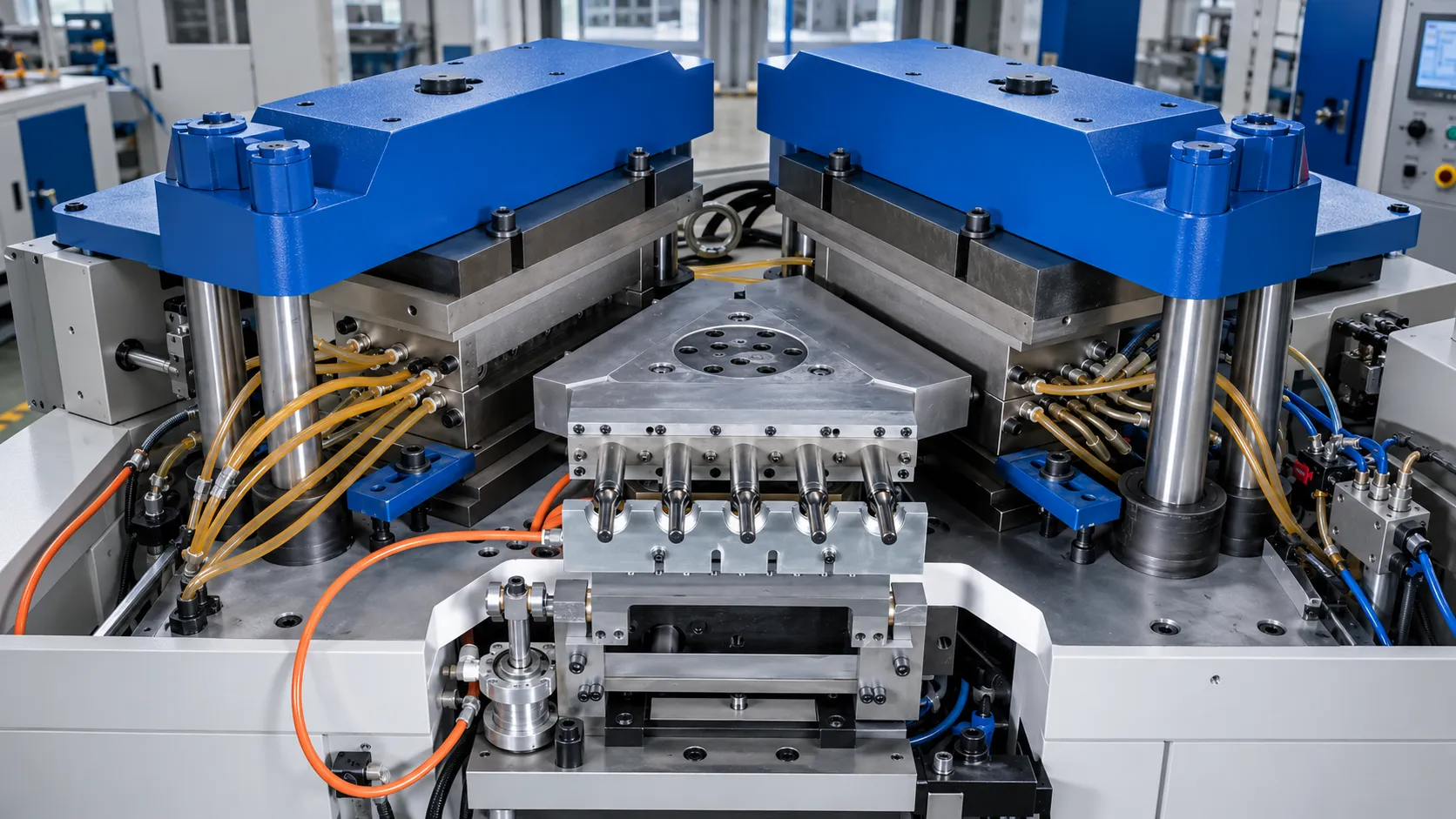
SECCIÓN 05
IBM vs ISBM: Comparación de herramientas de moldeo, número de cavidades y gastos de capital
| FACTOR DE COSTO | IBM (Ever-Power ZQ de Corea) | ISBM (Soplado con recalentamiento de PET en 2 etapas) |
|---|---|---|
| Gastos de capital para maquinaria | ZQ40: ~USD 35.000–55.000 ZQ80: entre 80.000 y 120.000 dólares estadounidenses. |
Línea de soplado y preformado con recalentamiento: USD 500.000–2.000.000+ |
| Costo del juego de moldes | Entre 7 y 18 millones de wones coreanos (entre 5.000 y 14.000 dólares estadounidenses) por un juego de moldes cosméticos IBM de 8 a 12 cavidades. | Molde para preformas de PET (96–144 cavidades): USD 200.000–500.000 + juego de moldes de soplado: USD 15.000–60.000 |
| Recuento de caries | 4–16 cavidades (ZQ40 – ZQ135) Limitado por el tamaño de la tabla de indexación de IBM. |
Preformado: 96–192 cavidades por prensa de inyección Soplado: 6–30 cavidades por máquina de soplado |
| Producción (unidades/hora) | 1.600–8.600 (envases de cosméticos IBM) | 12.000–80.000+ (botellas de agua/refrescos de PET con 20–30 cavidades de soplado) |
| Volumen de equilibrio económico | 500.000–5.000.000 unidades/año por máquina | 50.000.000–500.000.000 unidades/año por línea para justificar el Capex |
SECCIÓN 06
Máquinas IBM Ever-Power ZQ en Corea: Donde IBM es la elección correcta
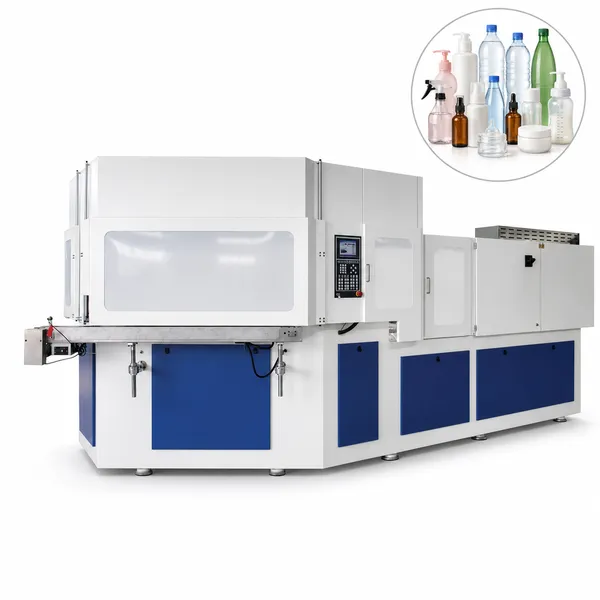
Selección de máquinas ZQ según la aplicación del contenedor.
Corea Ever-Power Máquinas IBM de la serie ZQ Cubre toda la gama de aplicaciones de contenedores IBM donde IBM es el proceso técnicamente correcto: ZQ40 (400 KN, tornillo de 40/45 mm): contenedores cosméticos de PP y PCTG de 10 a 100 ml, de 4 a 12 cavidades. Tarros de crema cosmética (15 a 50 ml), botellas de loción (50 a 150 ml), botellas de tónico (30 a 100 ml), botellas farmacéuticas (10 a 100 ml). ZQ60 (600 KN, tornillo de 45/50 mm): contenedores cosméticos y de cuidado personal de PP de 50 a 200 ml, de 6 a 10 cavidades. Botellas de loción (100 a 200 ml), botellas de champú (150 a 250 ml), loción corporal (200 a 300 ml). ZQ80 (800 KN, tornillo de 55 mm): productos de cuidado personal y farmacéuticos de PP de 150 a 500 ml, de 4 a 8 cavidades. Loción corporal (200–300 ml), frascos de suplementos (200–500 ml), tarros farmacéuticos de boca ancha. ZQ110 (1100 KN, tornillo de 65 mm): grandes contenedores IBM de 300–1000 ml, 2–6 cavidades. Contenedores industriales, grandes frascos farmacéuticos, tarros de boca ancha para suplementos y proteína en polvo. ZQ135 (1350 KN, tornillo de 70 mm): la máquina IBM Ever-Power más grande de Corea para contenedores IBM de hasta 1000 ml en 2–4 cavidades. Todas las máquinas ZQ producen contenedores IBM en PP, PCTG, HDPE y PE; ninguna produce contenedores ISBM de PET.
Máquinas totalmente eléctricas IBM ZQ60HE frente a máquinas totalmente eléctricas ISBM
La ZQ60HE de Korea Ever-Power es la variante totalmente eléctrica de la máquina ZQ60 IBM, que cuenta con ejes de inyección (22 KW), alimentación (18 KW), sujeción (15+15 KW) e indexación rotativa (2,9 KW) accionados por servomotores para un consumo de energía aproximadamente 30% menor en comparación con la ZQ60 IBM hidráulica a una producción equivalente, un tiempo de ciclo en seco de 2,5 segundos y compatibilidad con salas limpias ISO Clase 7/8. La ZQ60HE se posiciona frente a las máquinas ISBM totalmente eléctricas (Sidel Evos All-Electric, Husky HyPET) en las discusiones de mercado, pero compite en un segmento de envases diferente: la ZQ60HE IBM produce envases cosméticos de PP y PCTG de 2 a 8 cavidades para 50 a 200 ml; las máquinas ISBM totalmente eléctricas producen envases de bebidas de PET de 6 a 30 cavidades para 0,33 a 2,0 L a 10.000 a 50.000 botellas/hora. La comparación entre ZQ60HE y ISBM totalmente eléctrico solo es apropiada cuando un comprador de contenedores está evaluando tanto PP IBM como PET ISBM como posibles soluciones para una aplicación específica de contenedores. Korea Ever-Power recomienda ZQ60HE IBM para todas las aplicaciones de contenedores cosméticos y farmacéuticos de PP y PCTG donde IBM sea el proceso correcto, y no posiciona a ZQ60HE como un competidor de PET ISBM para la producción de botellas de bebidas carbonatadas o de agua.
PREGUNTAS FRECUENTES DE INGENIERÍA
Preguntas de ingeniería y selección de IBM vs. ISBM
P 01
¿Se puede modificar una máquina IBM ZQ Ever-Power de Corea para añadirle una varilla de estiramiento y realizar ISBM?
No, las máquinas IBM de la serie ZQ de Korea Ever-Power no se pueden modificar para añadir una varilla de estiramiento y realizar ISBM. La diferencia fundamental en la arquitectura de la máquina entre IBM e ISBM no radica en un único componente adicional: ISBM requiere un mecanismo actuador de varilla de estiramiento independiente en la estación de soplado (varilla hidráulica o servoaccionada que entra en la preforma desde la base del molde de soplado), un diseño de molde de soplado que se adapte a la trayectoria de entrada y retracción de la varilla de estiramiento, una geometría de preforma optimizada para la orientación de estiramiento (preforma más larga y de pared más delgada en comparación con la preforma IBM) y una secuencia de temporización de soplado que coordine la extensión de la varilla de estiramiento con el aire de pre-soplado y soplado principal. La mesa de indexación de 3 estaciones de la máquina IBM ZQ, con varillas centrales fijas en las tres estaciones, es fundamentalmente diferente del diseño de la estación de soplado ISBM, donde la varilla de estiramiento entra en el interior de la preforma (la varilla central de IBM, que ocupa el interior de la preforma en la estación de soplado, entraría en conflicto con una varilla de estiramiento). Korea Ever-Power diseña y fabrica exclusivamente máquinas IBM; la gama ZQ está diseñada para la producción de contenedores IBM de PP, PCTG y PE. Los compradores que necesiten ISBM para la producción de botellas de PET deben ponerse en contacto con los fabricantes de máquinas ISBM (Sidel, Krones, Netstal para 2 etapas; Nissei ASB, ADS para 1 etapa).
P 02
¿Por qué se prefiere IBM a ISBM para la producción de tarros de cremas cosméticas y botellas de loción en Corea?
IBM es preferido sobre ISBM para la producción de tarros de crema cosmética coreana y botellas de loción por tres razones fundamentales arraigadas en el proceso y los requisitos de geometría del envase de K-belleza coreana. Geometría de boca ancha: los tarros de crema cosmética coreana (15–200 ml, 40–100 mm de diámetro exterior de la boca) y las botellas de loción coreanas (50–300 ml, 20–28 mm de cuello) tienen bajas relaciones de soplado de 1,2–2,5:1. ISBM requiere una alta relación de soplado (≥2,5–3,0:1) para que la varilla de estiramiento tenga una longitud de preforma adecuada para estirarse antes del inflado radial. En las bajas relaciones de soplado de los formatos de tarros de crema coreana, la extensión de la varilla de estiramiento de ISBM doblaría la preforma en lugar de estirarla, lo que hace que IBM (sin varilla de estiramiento, solo inflado de aire) sea el único proceso de moldeo por soplado aplicable para los envases cosméticos coreanos de boca ancha. Compatibilidad del material PP: los requisitos de cumplimiento de EPR de la marca cosmética coreana y de compatibilidad de formulación impulsan la producción de tarros de crema y botellas de loción coreanas al monomaterial PP. IBM procesa PP de forma limpia; El ISBM de 2 etapas no procesa PP (inestabilidad de recalentamiento de PP en el proceso de soplado con recalentamiento de 2 etapas). Si bien el ISBM de 1 etapa puede procesar PP (botellas de BOPP), las limitaciones de Capex de la máquina ISBM de 1 etapa y la geometría de la preforma lo hacen comercialmente inferior a la serie IBM ZQ para volúmenes de envases de PP para cosméticos coreanos de 500,000 a 50,000,000 unidades por año. Precisión del OD del cuello: el ajuste de la bomba cosmética coreana requiere un OD del cuello de ±0.05 mm, que se puede lograr de manera consistente con la geometría del cuello controlada por la varilla central de IBM. El recalentamiento de 2 etapas del ISBM puede introducir una variación del OD del cuello de ±0.10–0.15 mm debido a la variabilidad de la temperatura de recalentamiento, lo que excede la tolerancia de ajuste de la bomba cosmética coreana y causa rechazos de la aplicación de la bomba de la línea de llenado coreana.
P 03
¿Puede IBM fabricar botellas de PET, incluso para bebidas no carbonatadas?
IBM puede técnicamente procesar PET en una máquina ZQ, pero el contenedor de PET de IBM resultante es comercialmente inferior al PET de ISBM para prácticamente todas las aplicaciones de contenedores de PET y no es recomendado por Korea Ever-Power para la producción de botellas de PET. La razón es fundamental para la física del polímero PET: el PET logra su claridad característica, resistencia a la tracción, barrera de CO2 y baja turbidez solo cuando se procesa en el estado orientado biaxialmente, lo que requiere la extensión de la varilla de estiramiento de ISBM en la ventana de temperatura de orientación de estiramiento del PET (95–110 °C). El PET de IBM (sin varilla de estiramiento, solo inflado de aire) produce un contenedor de PET amorfo en el que las cadenas de polímero del PET no están orientadas biaxialmente; el contenedor resultante tiene: alta turbidez (turbidez de 15–40% frente a <5% para el PET de ISBM); baja resistencia a la tracción (PET amorfo 50–70 MPa frente a PET orientado biaxialmente 150–200 MPa); baja barrera de CO2 (no apto para bebidas carbonatadas o cualquier aplicación que requiera baja transmisión de gas); y una baja resistencia al impacto por caída (el PET amorfo es quebradizo con los espesores de pared IBM típicos de los envases de cosméticos). Para agua sin gas o zumo en PET, ISBM sigue siendo la opción preferida porque la claridad y la ligereza de la pared del envase de PET (posibilitadas por la orientación biaxial de ISBM) no se pueden lograr con IBM PET, incluso para aplicaciones sin gas. Korea Ever-Power no recomienda las máquinas ZQ IBM para la producción de envases de PET; las máquinas ZQ IBM están diseñadas y optimizadas para la producción de envases de PP, PCTG y HDPE, donde IBM es el proceso adecuado.
P 04
¿Cuál es la diferencia entre IBM, EBM e ISBM y qué proceso es el mejor para frascos farmacéuticos?
IBM (moldeo por inyección-soplado), EBM (moldeo por extrusión-soplado) e ISBM (moldeo por inyección-estirado-soplado) son los tres procesos principales de moldeo por soplado, cada uno con formas de material de partida, secuencias de proceso y características de calidad de envase distintas. EBM se diferencia de IBM e ISBM en que EBM parte de un tubo de polímero extruido (preforma) en lugar de una preforma inyectada; la preforma extruida se coloca entre las mitades del molde de soplado y se infla, produciendo un envase con una línea de separación visible en el cuerpo y la base del envase (debido al cierre del molde) y una geometría de cuello menos precisa (diámetro exterior del cuello de ±0,15–0,3 mm frente a ±0,05 mm de IBM). EBM se utiliza para jarras de leche de HDPE, botellas de productos químicos domésticos de HDPE, envases de fluidos para automóviles y envases grandes donde se prioriza el bajo coste de utillaje y la alta producción de EBM sobre la precisión del envase y la calidad de la superficie. En el caso específico de los frascos farmacéuticos, IBM se prefiere generalmente a EBM e ISBM: el frasco farmacéutico de PP fabricado con IBM no tiene rebabas en la línea de separación (desventaja de EBM), un diámetro exterior del cuello preciso de ±0,05 mm para un ajuste seguro a prueba de niños (EBM no puede igualar la precisión del cuello de IBM), una superficie de contacto con el fármaco de monomaterial PP (FDA 21 CFR) y no presenta problemas de hidrólisis del PET (los productos farmacéuticos con actividad de agua o sensibilidad a la humedad pueden causar opacidad en la pared del frasco de PET ISBM durante su vida útil en algunas formulaciones). Las máquinas IBM ZQ80 y ZQ110 de Korea Ever-Power producen frascos farmacéuticos de PP (100–500 ml) y frascos farmacéuticos de boca ancha (200–1000 ml) para clientes fabricantes farmacéuticos coreanos y globales, cumpliendo con las especificaciones de los envases farmacéuticos de HDPE/PP y los requisitos de la MFDS coreana para la certificación del material del envase primario.
P 05
¿Es el PCTG IBM comparable al PET ISBM en cuanto a la claridad de los frascos de cosméticos transparentes?
Tanto el PCTG IBM como el PET ISBM producen envases transparentes, pero sus características de claridad difieren en aspectos relevantes para las especificaciones de envasado de las marcas de cosméticos coreanas. Comparación de turbidez: el PCTG IBM en condiciones óptimas de procesamiento ZQ (barril 240–275 °C, enfriamiento del molde 8–12 °C, PCTG completamente secado a un punto de rocío de −40 °C) alcanza una turbidez de 1,5–3,0% en una pared de 3 mm. El PET ISBM en condiciones estándar de soplado de recalentamiento de 2 etapas alcanza una turbidez de 0,5–1,5% en una pared de 0,3–0,5 mm para una botella de agua de 500 ml; el PET ISBM es notablemente más claro que el PCTG IBM en una medición de turbidez de pared equivalente. Transmisión de luz: el PCTG IBM alcanza una transmisión de luz >87% en una pared de 3 mm; el PET ISBM alcanza >90% en una pared de 0,5 mm. Para aplicaciones cosméticas coreanas, el PCTG IBM con una opacidad de 1,5–3,0% es visualmente transparente para el consumidor coreano con el grosor típico de pared de un frasco de loción cosmética (0,9–1,2 mm); el control de calidad de las marcas cosméticas coreanas suele especificar una opacidad ≤2,0% para frascos de loción o tónicos transparentes de PCTG, que el PCTG IBM en ZQ60HE puede lograr en condiciones óptimas de procesamiento ZQ. Comparación de forma y grosor del envase: el PET ISBM logra claridad con un grosor de pared de 0,3–0,5 mm (frasco ligero de pared delgada); el frasco de cosméticos PCTG IBM suele tener una pared de 0,9–1,3 mm. Con el mismo grosor de pared, el frasco de cosméticos PCTG IBM y el frasco de cosméticos PET ISBM tienen una transparencia visual comparable; la diferencia de opacidad con un grosor de pared equivalente es pequeña para los fines de exhibición de las marcas cosméticas coreanas. Korea Ever-Power recomienda el sistema PCTG IBM en la serie ZQ para botellas transparentes de lociones, tónicos y sueros cosméticos coreanos, donde las ventajas del proceso IBM (compatibilidad con boca ancha, opción de monomaterial PP/PCTG, precisión del cuello, inversión de capital de la máquina ZQ) superan la ventaja marginal de claridad del sistema PET ISBM con un grosor de pared equivalente en la botella cosmética.
P 06
¿Cuál es la diferencia entre una máquina IBM de 3 estaciones y una máquina IBM de 4 estaciones?
Las máquinas IBM de 3 estaciones (configuración estándar de la serie ZQ de Ever-Power de Corea) y las máquinas IBM de 4 estaciones son ambas máquinas de moldeo por inyección-soplado (ninguna es ISBM), pero difieren en el número de estaciones en la mesa giratoria indexada, lo que afecta el tiempo de ciclo, el tipo de envase y el tamaño de la máquina. IBM de 3 estaciones (ZQ40, ZQ60, ZQ80, ZQ110, ZQ135): Estación 1 Inyección, Estación 2 Soplado, Estación 3 Desmoldeo. La máquina IBM de 3 estaciones realiza las tres operaciones simultáneamente: mientras un conjunto de varillas de núcleo está en la estación de inyección formando nuevas preformas, el conjunto anterior está en la estación de soplado formando envases, y el conjunto anterior a ese está en la estación de desmoldeo liberando envases terminados. El tiempo de ciclo típico de la IBM de 3 estaciones es de 3,5 a 5,0 segundos para envases cosméticos de PP estándar en ZQ40/ZQ60. Las máquinas IBM de 4 estaciones (menos comunes; utilizadas por algunos fabricantes de máquinas IBM para aplicaciones específicas) añaden una cuarta estación entre la inyección y el soplado (o entre el soplado y el desmoldeo) para un paso adicional de acondicionamiento o ecualización de temperatura. La cuarta estación se puede utilizar para: acondicionamiento de temperatura de la preforma de PP antes del soplado (útil para preformas de PP de pared muy gruesa donde el gradiente de temperatura entre la pared interior enfriada por la varilla del núcleo y la pared exterior calentada por la cavidad de inyección necesita ecualizarse antes del soplado); tiempo de enfriamiento adicional (para contenedores de gran volumen donde el tiempo de enfriamiento de soplado de 3 estaciones es insuficiente para el enfriamiento del HDPE). Gama de máquinas IBM de 4 estaciones Incluye modelos ZQ configurados para operación en 4 estaciones para aplicaciones específicas de contenedores IBM en los sectores cosmético, farmacéutico y de cuidado personal, donde el proceso IBM de 4 estaciones proporciona ventajas en cuanto a la calidad del contenedor o el tiempo de ciclo en comparación con el proceso IBM de 3 estaciones.
IBM MACHINE ENQUIRY · KOREA EVER-POWER ZQ SERIES
¿Necesita IBM para la producción de contenedores de PP o PCTG?
Las máquinas IBM de la serie ZQ de Ever-Power de Corea procesan envases de PP, PCTG y HDPE de 10 ml a 1000 ml para aplicaciones cosméticas, farmacéuticas y de cuidado personal. Contacte con Ansan-si para obtener recomendaciones sobre el modelo ZQ más adecuado según las especificaciones de su envase.
Editor: Cxm