Application of ISBM · Children’s Products · Korean Market 2026
ISBM Korean Children’s Product Bottles:
Οδηγός ασφαλείας χωρίς Tritan & BPA
Korean parents are the most specification-aware children’s packaging buyers in East Asia. BPA-free documentation, steam sterilisation certification, drop-test performance, and KFDA material compliance are evaluated before purchase — not after. Korean ISBM producers who understand this specification landscape access a market where premium pricing is secure and brand relationships are multi-year.
Βαθμολογία αποστείρωσης με ατμό
Δοκιμή πτώσης από σκυρόδεμα 1,5 m
Γραφείο Μηχανικής Κορέας Ever-Power · Ansan-si · Μάιος 2026
Korean Children’s Product Bottle Safety Certification Timeline
2008
Η Κορέα απαγορεύει την BPA στα μπιμπερό — η πρώτη ρυθμιστική αρχή της Ανατολικής Ασίας που το κάνει αυτό
2016
KC Mark mandatory for children’s plastic containers — formal safety certification requirement
2022
Η KFDA επεκτείνει τις δοκιμές μετανάστευσης θετικής λίστας ώστε να περιλαμβάνει πλήρες πάνελ αναλόγων δισφαινόλης (BPA, BPF, BPS)
2026
K-EPR rPET mandate — children’s product manufacturers seeking rPET solutions with bisphenol-clean supply chain
1. The Korean Children’s Product Packaging Market in 2026
Korea’s below-replacement birth rate (0.72 in 2024) has produced a paradox in the children’s product market: fewer children, higher per-child spending. Korean parents in 2026 spend more per child on premium baby and children’s products than any other East Asian demographic — a dynamic reinforced by single-child family norms, dual-income households with discretionary income, and the Korean cultural expectation that parenting quality is demonstrated through product quality choices. The result is a children’s product packaging market worth approximately KRW 850 billion annually, where the KRW 120–350 per-bottle contract price tier for premium children’s product ISBM containers substantially outperforms the economics of commodity food or beverage packaging.
Korean ISBM packaging producers who target this market need to understand its specific structure: the market is driven by Korean K-baby brands (Comotomo Korea, Pigeon Korea, Dr. Brown’s Korean distribution, Nuk Korea) and by premium Korean domestic brands (Cozybag, Bebe Confort, BabyMom) who compete primarily on safety documentation rather than price. A Korean ISBM producer who can demonstrate verifiable BPA-free documentation, comprehensive bisphenol analogue testing, and drop-impact certification commands pricing premiums that justify the Tritan resin cost and higher specification overhead. The BPA-free baby bottle ISBM engineering framework — covering material selection and process parameters — is documented in depth in the Οδηγός κατασκευής μπιμπερό χωρίς BPA.
Beyond traditional baby bottles, the Korean children’s product ISBM market in 2026 encompasses: toddler sipper cups and training cups (Tritan or PET, 150–350ml, K-baby brand specified), children’s supplement bottles (vitamins, probiotics, omega-3 in wide-mouth PETG jars), reusable children’s drinking bottles (Tritan, 400–750ml, BPA-free certification mandatory), and children’s skincare containers (lotion, shampoo in PET with BPA-free documentation). Each sub-category has distinct material and certification requirements that this guide addresses systematically.
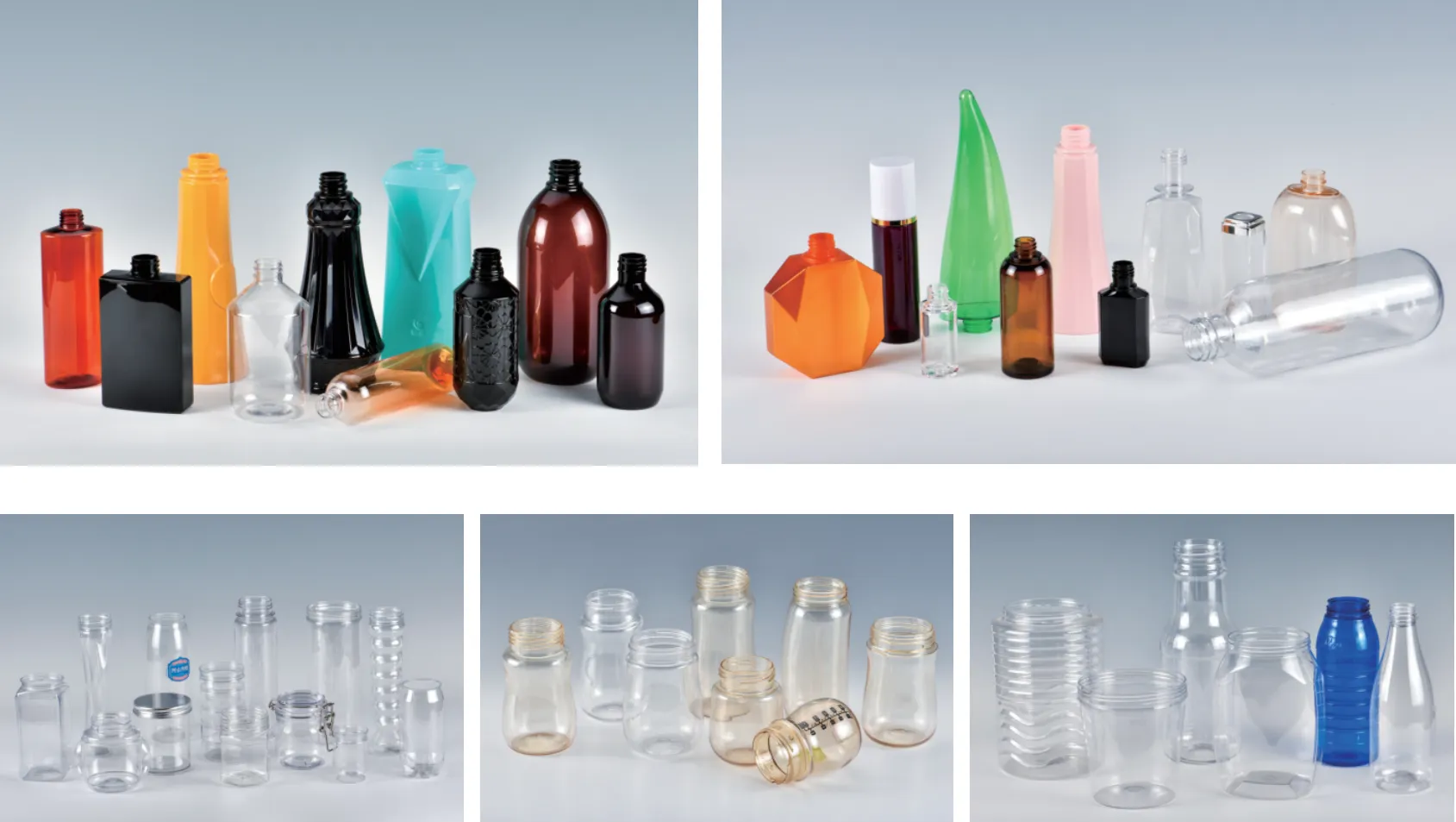
2. Korea’s BPA-Free Regulatory Landscape: Beyond the Basic Declaration
Korea’s 2008 BPA ban in baby bottles was pioneering in East Asia, but the 2022 KFDA expansion to include the full bisphenol analogue panel (BPA, BPF, BPS, and BPAF) reflects the scientific consensus that several common BPA substitutes carry similar endocrine-disrupting potential. This expanded panel has commercial implications for Korean ISBM producers: a “BPA-free” declaration based solely on non-detection of BPA is no longer sufficient for Korean premium children’s brand purchasing requirements — the documentation must confirm non-detection of the full bisphenol panel.
For Korean ISBM producers, the practical BPA documentation requirements for children’s product contracts in 2026 are: KFDA positive list compliance certificate for the resin (confirming no bisphenol additives in the resin formulation); third-party migration test report using the full bisphenol analogue panel at the food-contact simulant relevant to the product (water, 3% acetic acid, 15% ethanol depending on the children’s product type); and a “material safety declaration” signed by the ISBM producer’s quality manager confirming no polycarbonate use in the production process for the specific bottle type. The polycarbonate cross-contamination declaration is required because some Korean ISBM production facilities run both Tritan (BPA-free) and polycarbonate (BPA-containing) on the same machines for different customer applications — the declaration confirms segregated production that prevents cross-contamination.
Tritan copolyester (Eastman Chemical) and PETG (polyethylene terephthalate glycol) are the two resins that Korean children’s product ISBM producers use to meet the full bisphenol analogue panel requirement — both are inherently free from all bisphenol compound classes because they do not use bisphenols in their synthesis chemistry. The technical comparison of these two options — including clarity, sterilisation performance, and processing differences — is covered in the Οδηγός σύγκρισης υλικού Tritan έναντι πολυανθρακικού.
3. Korean Children’s ISBM Bottle Categories and Specifications
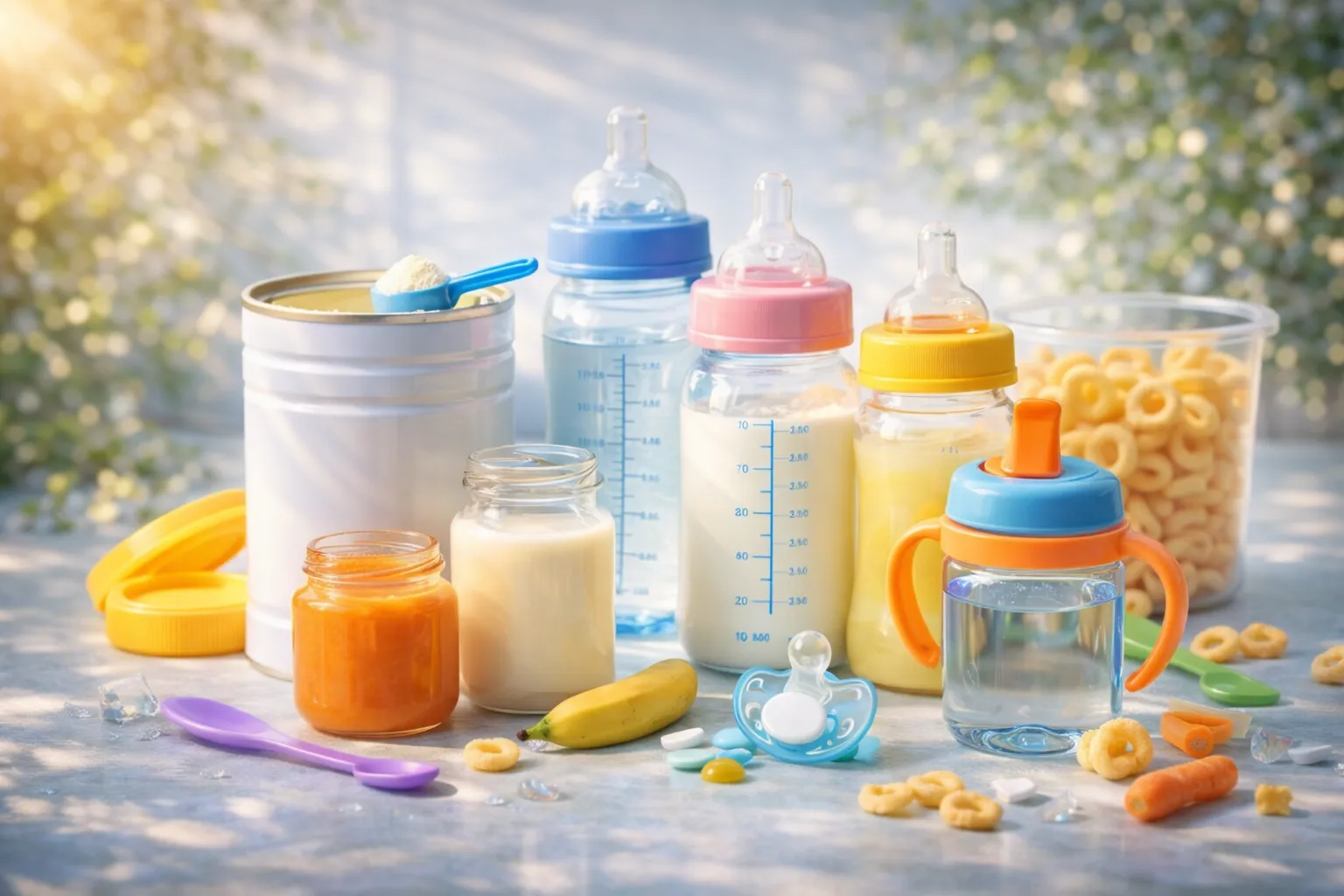
Korean ISBM children’s product bottle range — Tritan baby bottles, PETG supplement jars, and BPA-free toddler sipper cups represent the three primary categories in Korean K-baby packaging. KFDA full bisphenol analogue panel compliance is mandatory across all categories; sterilisation-grade performance is required for baby bottle applications.
4. Επεξεργασία Tritan ISBM: Παράθυρα θερμοκρασίας και απαιτήσεις ποιότητας
Ο συμπολυεστέρας Eastman Tritan (TX1001, MX711 και τα παράγωγά τους) επεξεργάζεται σε κορεατικό ISBM 4 σταθμών σε συνθήκες διαφορετικές από το PET και το PETG. Οι θερμοκρασίες του κυλίνδρου είναι ενδιάμεσες (260–285°C, μεταξύ PETG στους 240–265°C και PET στους 275–295°C), αλλά το προφίλ θερμοκρασίας προετοιμασίας είναι μοναδικό: Το Tritan έχει ένα ευρύτερο χρησιμοποιήσιμο παράθυρο θερμοκρασίας προσανατολισμού (80–100°C) από το τυπικό PET (92–110°C), επιτρέποντας πιο εύκολη διαχείριση προετοιμασίας για τους κορεάτες παραγωγούς ISBM που είναι νέοι στην επεξεργασία Tritan.
Tritan’s two most commercially significant processing requirements in Korean ISBM: First, thorough drying is more critical for Tritan than for PET or PETG. Tritan absorbs moisture at approximately 0.05% per hour at ambient conditions — double the rate of standard PET. Undried Tritan produces hydrolytic degradation products that cause clarity loss and reduced molecular weight, manifesting as hazy bottles and reduced mechanical performance. Korean ISBM producers must dry Tritan at 65°C/4–5 hours in a dehumidifying dryer (not just a hot air dryer) to achieve the <50 ppm moisture content required for optical-clarity ISBM production.
Second, regrind management for Tritan is more restricted than PET: Eastman’s Tritan processing guidelines specify zero regrind in food-contact production and a maximum of 5% regrind in non-food-contact applications. Korean children’s product ISBM production is food-contact — so all Tritan production for Korean children’s bottles must be 100% virgin resin, no regrind. This zero-regrind requirement increases material cost per bottle but is non-negotiable under KFDA food-contact regulations for children’s products and under Eastman’s own Tritan food-contact certification programme. The broader material selection considerations — including why PETG is chosen for some categories where Tritan’s higher cost is not justified — are covered in the Οδηγός επιλογής ρητίνης PET έναντι ρητίνης PETG.
5. KC Mark Certification for Korean Children’s Product Bottles
The KC Mark (Korea Conformity Mark, 한국건강관리협회 안전인증) is the mandatory safety certification for children’s plastic containers sold in Korea under KC 62368-1 equivalent standards for children’s product safety. For ISBM bottles in the baby and toddler category (Category A and B above), KC Mark certification is legally required for domestic Korean retail sale and must be obtained by the product manufacturer (the children’s brand, not the packaging supplier).
Korean ISBM packaging producers are not directly required to hold the KC Mark — it is the children’s brand’s responsibility. However, ISBM producers can dramatically accelerate their customers’ KC Mark application process by providing a complete “Children’s Packaging Technical File”: a pre-compiled documentation package that includes KFDA food-contact compliance certificates, full bisphenol analogue migration test reports, physical safety test reports (drop, compression, sharp edge), and production quality system documentation. Korean children’s brands who receive this complete package from their ISBM supplier typically complete KC Mark certification in 8–12 weeks versus the 18–24 weeks typical when documentation must be assembled piecemeal from multiple suppliers.
For export-market Korean children’s product packaging, CE marking (EU) and CPSC compliance (US) are increasingly required alongside KC. CE marking for children’s plastic containers in the EU follows EN 71-3 (migration of certain chemical elements from toys) and the EU Food Contact Materials Regulation (EC) 10/2011. CPSC compliance requires conformance with CPSIA Section 108 (BPA restriction) and ASTM F963 for toys/children’s products. Korean ISBM producers building an export-focused children’s packaging capability should engage a Korean testing laboratory (SGS Korea, TÜV SÜD Korea, Intertek Korea) early in product development to plan the simultaneous KC + CE + CPSC certification pathway, rather than sequencing these certifications — simultaneous testing on the same samples reduces total certification time from 18+ months to 10–14 months. The quality system infrastructure for this level of documentation is analogous to, though less intensive than, the pharmaceutical-grade documentation described in the Κορεατικός φαρμακευτικός οδηγός παραγωγής φιαλών GMP.
6. Απόδοση σε περίπτωση πτώσης: Μηχανική πέρα από το ελάχιστο πρότυπο
The Korean standard for children’s bottle drop impact testing is a 1.5m drop onto a concrete surface from multiple orientations (base, shoulder, side, and inverted). This test defines the minimum acceptable performance for KC Mark certification. Korean premium K-baby brands — and particularly the K-baby import brands (Philips Avent, Tommee Tippee, MAM) whose Korean distributors require local certification — specify a more demanding internal brand standard: 1.8m drop onto hardwood flooring, no functional failure (no liquid leakage, no structural crack), with a maximum 3 acceptable small surface scratches per bottle.
Η κατανομή του πάχους τοιχώματος ISBM στις ζώνες ώμου και βάσης είναι ο κύριος μηχανικός μοχλός για την απόδοση σε περίπτωση πτώσης — συγκεκριμένα στη ζώνη πτέρνας (Ζώνη 2 στο πρωτόκολλο πάχους τοιχώματος 7 ζωνών) και στη μετάβαση από τον ώμο στον λαιμό (Ζώνη 7). Οι Κορεάτες παραγωγοί ISBM που έχουν εφαρμόσει το πρωτόκολλο μέτρησης πάχους τοιχώματος 7 ζωνών γνωρίζουν ποιες προσαρμογές παραμέτρων διεργασίας αυξάνουν το πάχος της ζώνης πτέρνας σε σταθερό βάρος μπουκαλιού. Για το Tritan συγκεκριμένα, η απόδοση σε περίπτωση πτώσης συσχετίζεται έντονα με το πάχος τοιχώματος CV% στη Ζώνη 2: τα μπουκάλια με Ζώνη 2 CV% κάτω από 5% περνούν σταθερά το πρότυπο μάρκας 1,8m. Τα μπουκάλια με Ζώνη 2 CV% πάνω από 8% εμφανίζουν περιστασιακές ρωγμές στη βάση της πτέρνας στη δοκιμή 1,8m, ακόμη και όταν το μέσο πάχος τοιχώματος είναι εντός των προδιαγραφών. Αυτός είναι ο λόγος για τον οποίο η πειθαρχία μέτρησης που περιγράφεται στον οδηγό μηχανικής πάχους τοιχώματος αποτελεί τη βάση παραγωγής για τις κορεατικές συμβάσεις προμήθειας μπιμπερό K-baby.
7. Πλατφόρμα Μηχανής και Οικονομικά Παραγωγής για Κορεατικό ISBM K-Baby
Korean children’s product ISBM production economics differ from standard beverage or personal care production in two structural ways: Tritan resin cost (KRW 3,800–5,200/kg versus KRW 1,200–1,600/kg for standard PET) represents a much higher variable cost proportion, and the zero-regrind policy eliminates the material recovery that standard beverage production relies on for yield optimisation. These structural differences require a machine platform that achieves the lowest possible scrap rate — any shot that produces an out-of-specification bottle is pure raw material loss at Tritan prices, with no regrind recovery pathway.
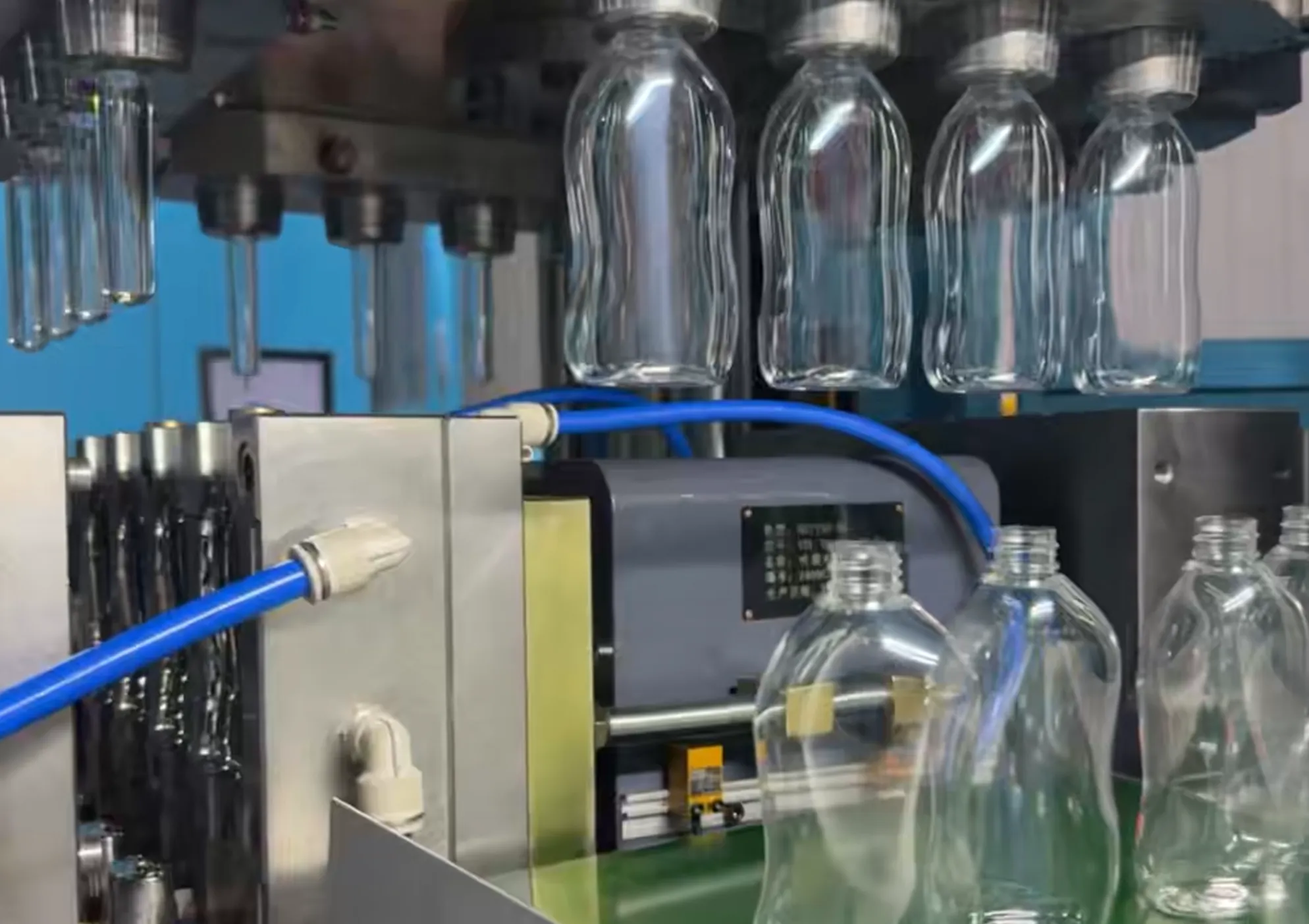
The all-servo EV drive system is non-negotiable for Korean Tritan children’s bottle production: the ±0.3°C conditioning temperature control that EV servo provides is the platform capability that keeps Tritan bottles within the narrow process window where both optical clarity (requires adequate conditioning temperature) and drop impact performance (requires adequate orientation, which is damaged by over-conditioning) are simultaneously achieved. A hydraulic-drive machine with ±1.5°C conditioning variation will produce Tritan bottles with inconsistent wall thickness distribution — some clear and strong, some hazy and brittle — creating quality variability that no downstream inspection system can economically manage given Tritan resin cost. The HGY150-V4-EV is the standard Korean K-baby production platform for 100–350ml bottles at 4-cavity; the HGY200-V4 EV at 4–6 cavity serves the toddler sipper and supplement jar categories.
Ο υπολογισμός της απόδοσης επένδυσης (ROI) για μια κορεατική επένδυση ISBM που στοχεύει ειδικά σε συμβόλαια K-baby απαιτεί μοντελοποίηση του υψηλότερου κόστους ρητίνης, του χαμηλότερου ετήσιου όγκου ανά SKU και της τιμολόγησης συμβολαίων premium — ένα πλήρες οικονομικό μοντέλο με κατάλληλες παραδοχές μεταβλητού κόστους ειδικά για το Tritan παρέχεται στο Οδηγός αριθμομηχανής ROI για κορεατικά μηχανήματα ISBMΤο κύριο εύρημα: μια κορεατική επιχείρηση ISBM K-baby Tritan με στόχο 4-6 εκατομμύρια ετήσιες μονάδες σε 8-12 SKU επιτυγχάνει μικτό περιθώριο κέρδους 55-90 KRW ανά φιάλη με την κορεατική συμβατική τιμολόγηση του 2026 — απόσβεση απόδοσης επένδυσης 18-28 μηνών, ταχύτερη από την ISBM ποτών εμπορευμάτων, παρά το υψηλότερο κόστος κεφαλαίου ανά μονάδα, λόγω της βαθμίδας τιμολόγησης premium που διαθέτει το τμήμα K-baby. Το παρακείμενο τμήμα premium K-Beauty που μοιράζεται παρόμοιες αξίες προϊόντων και απαιτήσεις τεκμηρίωσης χαρτογραφείται στο Οδηγός κατασκευής μπουκαλιών καλλυντικών K-Beauty.
8. Τοποθεσία Κορεατικής Μάρκας K-Baby και Είσοδος στην Εφοδιαστική Αλυσίδα
Korean K-baby brands operate a longer supplier qualification process than any other Korean packaging category — typically 16–28 weeks from first sample to approved production start. The extended timeline reflects the gravity of safety decisions: a wrong packaging material causing harm to a Korean infant has consequences that go beyond commercial loss to include criminal liability under the Product Liability Act (제조물 책임법) and sustained brand damage. Korean ISBM producers entering the K-baby market should treat the supplier qualification process as an investment rather than an obstacle: the 16–28 weeks spent providing samples, documentation, and facility audits to Korean K-baby brands is the qualification barrier that excludes less-capable suppliers and protects the premium pricing of approved suppliers who are inside the barrier. Korean ISBM producers who successfully complete qualification with one major Korean K-baby brand (Comotomo, Pigeon, Dr. Brown’s Korea) typically find that subsequent K-baby brand qualifications take 8–12 weeks rather than 16–28 — because the documentation infrastructure and track record exist, and only the brand-specific testing needs to be completed for each new customer.
Συχνές ερωτήσεις
Υποστήριξη Συσκευασίας K-Baby
Αναπτύσσω ένα κορεατικό πρόγραμμα παραγωγής μπιμπερό K-Baby Tritan;
Η Korean Ever-Power παρέχει βελτιστοποίηση επεξεργασίας Tritan ISBM, πλήρη πακέτα τεκμηρίωσης αναλόγων δισφαινόλης, υποστήριξη προετοιμασίας τεχνικών αρχείων KC Mark και διαμόρφωση πλατφόρμας HGY150-V4-EV για κορεατικά συμβόλαια K-baby σε ετήσια κλίμακα μονάδων 4–8 εκατομμυρίων.
Σχετικοί Πόροι
Πλατφόρμα K-Baby
HGY150-V4-EV Premium ISBM
Η πλατφόρμα ακριβείας EV με όλα τα σερβομηχανισμούς για την παραγωγή κορεατικού μπιμπερό Tritan και κυπέλλου για νήπια — απαιτείται σταθερότητα θερμοκρασίας ±0,3°C για ποιότητα Tritan μηδενικής επαναλέσης.
Εύρος μηχανημάτων
Πεδίο βολής ISBM 4 σταθμών
Full Korean Ever-Power 4-station range — HGY150-V4-EV through HGY650-V4 for K-baby, toddler, and children’s supplement applications.
Εργαλεία Tritan
Σχεδιασμός καλουπιού ISBM κατά παραγγελία
Tritan baby bottle and children’s product moulds — 738H cavity steel for optical clarity, with first-article drop-test qualification included.